

What do you think?
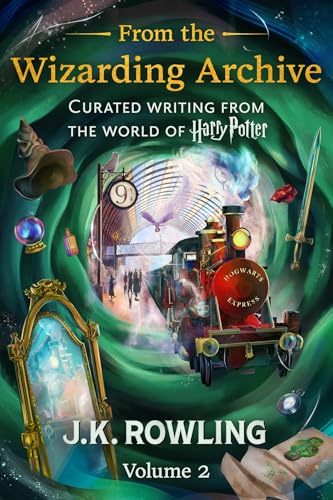
Pottermore Presents #1-3
From the Wizarding Archive (Volume 2): Curated Writing from the World of Harry Potter
The Hogwarts Collection gathers together three Pottermore Presents volumes. Rediscover the stories of Remus Lupin and Minerva McGonagall in Heroism, Hardship and Dangerous Hobbies; delve into Horace Slughorn's early years in Power, Politics and Pesky Poltergeists; and venture into the Hogwarts grounds in Hogwarts: An Incomplete and Unreliable Guide.
140 pages, Kindle Edition
First published January 2, 2017
About the author
J.K. Rowling
724 books237k followersSee also: Robert Galbraith
Although she writes under the pen name J.K. Rowling, pronounced like rolling, her name when her first Harry Potter book was published was simply Joanne Rowling. Anticipating that the target audience of young boys might not want to read a book written by a woman, her publishers demanded that she use two initials, rather than her full name. As she had no middle name, she chose K as the second initial of her pen name, from her paternal grandmother Kathleen Ada Bulgen Rowling. She calls herself Jo and has said, "No one ever called me 'Joanne' when I was young, unless they were angry." Following her marriage, she has sometimes used the name Joanne Murray when conducting personal business. During the Leveson Inquiry she gave evidence under the name of Joanne Kathleen Rowling. In a 2012 interview, Rowling noted that she no longer cared that people pronounced her name incorrectly.
Rowling was born to Peter James Rowling, a Rolls-Royce aircraft engineer, and Anne Rowling (née Volant), on 31 July 1965 in Yate, Gloucestershire, England, 10 miles (16 km) northeast of Bristol. Her mother Anne was half-French and half-Scottish. Her parents first met on a train departing from King's Cross Station bound for Arbroath in 1964. They married on 14 March 1965. Her mother's maternal grandfather, Dugald Campbell, was born in Lamlash on the Isle of Arran. Her mother's paternal grandfather, Louis Volant, was awarded the Croix de Guerre for exceptional bravery in defending the village of Courcelles-le-Comte during the First World War.
Rowling's sister Dianne was born at their home when Rowling was 23 months old. The family moved to the nearby village Winterbourne when Rowling was four. She attended St Michael's Primary School, a school founded by abolitionist William Wilberforce and education reformer Hannah More. Her headmaster at St Michael's, Alfred Dunn, has been suggested as the inspiration for the Harry Potter headmaster Albus Dumbledore.
As a child, Rowling often wrote fantasy stories, which she would usually then read to her sister. She recalls that: "I can still remember me telling her a story in which she fell down a rabbit hole and was fed strawberries by the rabbit family inside it. Certainly the first story I ever wrote down (when I was five or six) was about a rabbit called Rabbit. He got the measles and was visited by his friends, including a giant bee called Miss Bee." At the age of nine, Rowling moved to Church Cottage in the Gloucestershire village of Tutshill, close to Chepstow, Wales. When she was a young teenager, her great aunt, who Rowling said "taught classics and approved of a thirst for knowledge, even of a questionable kind," gave her a very old copy of Jessica Mitford's autobiography, Hons and Rebels. Mitford became Rowling's heroine, and Rowling subsequently read all of her books.
Rowling has said of her teenage years, in an interview with The New Yorker, "I wasn’t particularly happy. I think it’s a dreadful time of life." She had a difficult homelife; her mother was ill and she had a difficult relationship with her father (she is no longer on speaking terms with him). She attended secondary school at Wyedean School and College, where her mother had worked as a technician in the science department. Rowling said of her adolescence, "Hermione [a bookish, know-it-all Harry Potter character] is loosely based on me. She's a caricature of me when I was eleven, which I'm not particularly proud of." Steve Eddy, who taught Rowling English when she first arrived, remembers her as "not exceptional" but "one of a group of girls who were bright, and quite good at English." Sean Harris, her best friend in the Upper Sixth owned a turquoise Ford Anglia, which she says inspired the one in her books.
Although she writes under the pen name J.K. Rowling, pronounced like rolling, her name when her first Harry Potter book was published was simply Joanne Rowling. Anticipating that the target audience of young boys might not want to read a book written by a woman, her publishers demanded that she use two initials, rather than her full name. As she had no middle name, she chose K as the second initial of her pen name, from her paternal grandmother Kathleen Ada Bulgen Rowling. She calls herself Jo and has said, "No one ever called me 'Joanne' when I was young, unless they were angry." Following her marriage, she has sometimes used the name Joanne Murray when conducting personal business. During the Leveson Inquiry she gave evidence under the name of Joanne Kathleen Rowling. In a 2012 interview, Rowling noted that she no longer cared that people pronounced her name incorrectly.
Rowling was born to Peter James Rowling, a Rolls-Royce aircraft engineer, and Anne Rowling (née Volant), on 31 July 1965 in Yate, Gloucestershire, England, 10 miles (16 km) northeast of Bristol. Her mother Anne was half-French and half-Scottish. Her parents first met on a train departing from King's Cross Station bound for Arbroath in 1964. They married on 14 March 1965. Her mother's maternal grandfather, Dugald Campbell, was born in Lamlash on the Isle of Arran. Her mother's paternal grandfather, Louis Volant, was awarded the Croix de Guerre for exceptional bravery in defending the village of Courcelles-le-Comte during the First World War.
Rowling's sister Dianne was born at their home when Rowling was 23 months old. The family moved to the nearby village Winterbourne when Rowling was four. She attended St Michael's Primary School, a school founded by abolitionist William Wilberforce and education reformer Hannah More. Her headmaster at St Michael's, Alfred Dunn, has been suggested as the inspiration for the Harry Potter headmaster Albus Dumbledore.
As a child, Rowling often wrote fantasy stories, which she would usually then read to her sister. She recalls that: "I can still remember me telling her a story in which she fell down a rabbit hole and was fed strawberries by the rabbit family inside it. Certainly the first story I ever wrote down (when I was five or six) was about a rabbit called Rabbit. He got the measles and was visited by his friends, including a giant bee called Miss Bee." At the age of nine, Rowling moved to Church Cottage in the Gloucestershire village of Tutshill, close to Chepstow, Wales. When she was a young teenager, her great aunt, who Rowling said "taught classics and approved of a thirst for knowledge, even of a questionable kind," gave her a very old copy of Jessica Mitford's autobiography, Hons and Rebels. Mitford became Rowling's heroine, and Rowling subsequently read all of her books.
Rowling has said of her teenage years, in an interview with The New Yorker, "I wasn’t particularly happy. I think it’s a dreadful time of life." She had a difficult homelife; her mother was ill and she had a difficult relationship with her father (she is no longer on speaking terms with him). She attended secondary school at Wyedean School and College, where her mother had worked as a technician in the science department. Rowling said of her adolescence, "Hermione [a bookish, know-it-all Harry Potter character] is loosely based on me. She's a caricature of me when I was eleven, which I'm not particularly proud of." Steve Eddy, who taught Rowling English when she first arrived, remembers her as "not exceptional" but "one of a group of girls who were bright, and quite good at English." Sean Harris, her best friend in the Upper Sixth owned a turquoise Ford Anglia, which she says inspired the one in her books.
Ratings & Reviews
Friends & Following
Create a free account to discover what your friends think of this book!
Community Reviews
Displaying 1 - 30 of 313 reviews

November 24, 2024
Me lo he pasado muy bien con estos textos sobre temas diversos de la saga. Lo primero es decir que, estos dos libros sólo se los recomiendo a los que, como yo, sean muy fans de la serie.
En ellos vamos a encontrar respuestas a muchas de las preguntas que los lectores nos hicimos a medida que leíamos los libros. Es notable el cómo la autora creó todo un universo de cara al desarrollo de cada novela y más notable aún que no sintiera la necesidad de incluir hasta la última coma de ese universo en sus libros (tome nota señor Sanderson con aquello de su Cosmere).
Y no digo más. Se leen en un pis pas y se compaginan de maravilla con cualquier otra lectura. Si eres fan de la saga hazles un hueco.
En ellos vamos a encontrar respuestas a muchas de las preguntas que los lectores nos hicimos a medida que leíamos los libros. Es notable el cómo la autora creó todo un universo de cara al desarrollo de cada novela y más notable aún que no sintiera la necesidad de incluir hasta la última coma de ese universo en sus libros (tome nota señor Sanderson con aquello de su Cosmere).
Y no digo más. Se leen en un pis pas y se compaginan de maravilla con cualquier otra lectura. Si eres fan de la saga hazles un hueco.

July 26, 2017
Read all three and just loved them all. If you want more details about the Harry Potter world then make sure to pick this one up. Rowling goes into a bit of detail and even adds some back stories to secondary characters like Professor McGonagall and Professor Lupin. I particularly like the last volume since it was all about Hogwarts ✋️

March 2, 2017
I feel a bit misled. I thought this was full of short stories about characters from the Potterverse. However, it has more of a historical background nature to it. It's almost like an encyclopedia for the Harry Potter books. There's still interesting tidbits in it, directly from J.K. Rowling but I wasn't immersed in it like I would be from one of her books.

March 11, 2017
I can't emphasize it enough: if you are a fan of the Harry Potter series, READ THIS. I don't know why I'd not heard of it- I only found it searching through books labelled "Harry Potter" in my libraries Overdrive collection. As fans may well know J.K.Rowling thought up a lot more detail and background to Harry's world than is fully explored in the books, and these collections delve into a lot of that information. It was so wonderful being immersed in the world again and learning new things- almost as if one were reading one of the books again for the first time!

March 17, 2018
Back in the summer of 2011, I was one of the million Potterheads who successfully completed a scavenger hunt and quiz that allowed us to register to Pottermore and test the beta version before it opened to the general public. Back then, it was still an interactive site, and you could go through the books chapter by chapter, collecting potion ingredients, chocolate frog cards, galleons, and other things along the way, as well as duel and brew potions to gain House Points. As you progressed through the site, exclusive and previously unreleased writing was unlocked. I started a re-read to go along with the previously unpublished material, but I only got halfway through book two before I lost interest as the content updates were few and far between.
When, after a major update, the interactive, fun side of Pottermore ceased to exist, they compiled (some) of the exclusive content into three ebooks, exclusively sold on the site. Pottermore Presents is a collection of short writings and thoughts by J. K. Rowling, originally featured on the site, with some new additions. It's perhaps important to note that while Rowling wrote the original snippets, the writing is curated by the Pottermore team, and these were never full-fledged stories, despite what the titles imply, but rather mini-biographies and character sketches.
Short Stories from Hogwarts of Heroism, Hardship and Dangerous Hobbies starts out with the life of McGonagall before nicely tying in to a short chapter on Animagi. This is the most detailed background info on any of the characters that you're going to get in these ebooks, but a lot of it felt gratuitous to me, since it wasn't hinted at anywhere in the books; the bits about her early career and love life didn't feel organic to the canon, to be perfectly honest. We then move on to Remus Lupin, his family background, how he came to be bitten by Fenrir Greyback, and how he subsequently suffered throughout childhood, and how he coped in later life. This chapter also goes on a tangent on lycanthropy and the available methods to keep the condition in check. Most of this chapter felt rooted in the actual books and didn't come from nowhere, which made it, in my eyes, the most well-rounded. The most interesting things about the (main) character vignettes are Rowling's short thoughts after each, like what mythological or historical figures she took inspiration from to make up their names, and the fact that with Lupin, she set out to draw a parallel to the stigma surrounding being HIV positive through his experiences as a werewolf, which is really cool to me. The latter fifth closes out with a short chapter on Trelawney and the practice of "Naming Seers", and one on Silvanus Kettleburn, the Care of Magical Creatures teacher before Hagrid, who was only briefly mentioned in Prisoner of Azkaban.
Short Stories from Hogwarts of Power, Politics and Pesky Poltergeists mostly concerns itself with characters who were seduced by power, and was my least favorite and certainly weakest of the three. We begin with our favorite villain, Dolores Umbridge, and continue on to a short history of every Minister for Magic there's ever been, and the changes Azkaban prison underwent under different leadership. Slughorn's chapter didn't contain much new information, but was instead a summary of the info scattered throughout the books, re-packaged into a timeline. It ties in to a chapter on Potions as a magical subject, and then specifically Polyjuice Potion and freaking cauldrons—this volume was a prime example of what I mean when I said that the coherence of these books divided up by "subject" is flimsy at best.... the collection ends with chapters on Professor Quirrell and, I'm assuming for reasons of title alliteration (?!) Peeves the Poltergeist.
Hogwarts: An Incomplete and Unreliable Guide was probably the most cohesive in the way the tidbits were all tied together, and concerned everything relating to Hogwarts, starting with the journey to get there, the Sorting, the castle and its grounds, a very short chapter on lessons, since most have been covered in the other books, as well as its resident ghosts and portraits, and "secrets", i.e. the Chamber of Secrets and rare magical objects which were housed there, such as the Mirror of Erised, the Pensieve, the Philosopher's Stone, and the Sword of Gryffindor. It also reinforced my strong suspicion that it wasn't Rowling that so royally fucked up Cursed Child, since she quite obviously isn't very fond of Time Turners. Finally, I suppose they wanted to keep the three ebooks somewhat comparable in length, but the bit on Peeves would've fit in this collection much better.
To sum them up... The Cursed Child screenplay was a dumpster fire, while these are, for the most part, if not really interesting, at least inoffensive. They could've easily been collected into one larger volume (which would still be slim at just over 200 pages) instead of forcing them into a pseudo-order with the aid of blurbs by the Pottermore team to try and make them "flow", though, and for that reason I don't think they're worth what's being charged for them, especially since the content was previously available for free. Perhaps I'd feel differently if proceeds were going to charity, as with the Comic Relief editions of Quidditch Through the Ages and Fantastic Beasts, but being ebooks and the dry and shallow vignettes that they are, it's really nothing short of a money grab. I'd only recommend them to the most hardcore of fans as they don't add much of value to the existing canon, and you won't be missing out if you skip them.
When, after a major update, the interactive, fun side of Pottermore ceased to exist, they compiled (some) of the exclusive content into three ebooks, exclusively sold on the site. Pottermore Presents is a collection of short writings and thoughts by J. K. Rowling, originally featured on the site, with some new additions. It's perhaps important to note that while Rowling wrote the original snippets, the writing is curated by the Pottermore team, and these were never full-fledged stories, despite what the titles imply, but rather mini-biographies and character sketches.
Short Stories from Hogwarts of Heroism, Hardship and Dangerous Hobbies starts out with the life of McGonagall before nicely tying in to a short chapter on Animagi. This is the most detailed background info on any of the characters that you're going to get in these ebooks, but a lot of it felt gratuitous to me, since it wasn't hinted at anywhere in the books; the bits about her early career and love life didn't feel organic to the canon, to be perfectly honest. We then move on to Remus Lupin, his family background, how he came to be bitten by Fenrir Greyback, and how he subsequently suffered throughout childhood, and how he coped in later life. This chapter also goes on a tangent on lycanthropy and the available methods to keep the condition in check. Most of this chapter felt rooted in the actual books and didn't come from nowhere, which made it, in my eyes, the most well-rounded. The most interesting things about the (main) character vignettes are Rowling's short thoughts after each, like what mythological or historical figures she took inspiration from to make up their names, and the fact that with Lupin, she set out to draw a parallel to the stigma surrounding being HIV positive through his experiences as a werewolf, which is really cool to me. The latter fifth closes out with a short chapter on Trelawney and the practice of "Naming Seers", and one on Silvanus Kettleburn, the Care of Magical Creatures teacher before Hagrid, who was only briefly mentioned in Prisoner of Azkaban.
Short Stories from Hogwarts of Power, Politics and Pesky Poltergeists mostly concerns itself with characters who were seduced by power, and was my least favorite and certainly weakest of the three. We begin with our favorite villain, Dolores Umbridge, and continue on to a short history of every Minister for Magic there's ever been, and the changes Azkaban prison underwent under different leadership. Slughorn's chapter didn't contain much new information, but was instead a summary of the info scattered throughout the books, re-packaged into a timeline. It ties in to a chapter on Potions as a magical subject, and then specifically Polyjuice Potion and freaking cauldrons—this volume was a prime example of what I mean when I said that the coherence of these books divided up by "subject" is flimsy at best.... the collection ends with chapters on Professor Quirrell and, I'm assuming for reasons of title alliteration (?!) Peeves the Poltergeist.
Hogwarts: An Incomplete and Unreliable Guide was probably the most cohesive in the way the tidbits were all tied together, and concerned everything relating to Hogwarts, starting with the journey to get there, the Sorting, the castle and its grounds, a very short chapter on lessons, since most have been covered in the other books, as well as its resident ghosts and portraits, and "secrets", i.e. the Chamber of Secrets and rare magical objects which were housed there, such as the Mirror of Erised, the Pensieve, the Philosopher's Stone, and the Sword of Gryffindor. It also reinforced my strong suspicion that it wasn't Rowling that so royally fucked up Cursed Child, since she quite obviously isn't very fond of Time Turners. Finally, I suppose they wanted to keep the three ebooks somewhat comparable in length, but the bit on Peeves would've fit in this collection much better.
To sum them up... The Cursed Child screenplay was a dumpster fire, while these are, for the most part, if not really interesting, at least inoffensive. They could've easily been collected into one larger volume (which would still be slim at just over 200 pages) instead of forcing them into a pseudo-order with the aid of blurbs by the Pottermore team to try and make them "flow", though, and for that reason I don't think they're worth what's being charged for them, especially since the content was previously available for free. Perhaps I'd feel differently if proceeds were going to charity, as with the Comic Relief editions of Quidditch Through the Ages and Fantastic Beasts, but being ebooks and the dry and shallow vignettes that they are, it's really nothing short of a money grab. I'd only recommend them to the most hardcore of fans as they don't add much of value to the existing canon, and you won't be missing out if you skip them.
March 9, 2021
4 Stars
It's nice to learn more about the adult characters in the series.
It's nice to learn more about the adult characters in the series.

September 16, 2019
A must read for any Potter fan!!! :)
So much extra interesting information on Remus Lupin and Minerva McGonagal.
JK actually wrote more than what was in the Harry Potter books and she also had different drafts of the books which is shared a bit in this book. It's really interesting.
I like how they went over the whole time change issue I had with The Prisoner of Azkaban. JK also shares how she came up with characters names and places and objects. It's really insightful to hear her perspective and train of thought while she wrote the series.
So much extra interesting information on Remus Lupin and Minerva McGonagal.
JK actually wrote more than what was in the Harry Potter books and she also had different drafts of the books which is shared a bit in this book. It's really interesting.
I like how they went over the whole time change issue I had with The Prisoner of Azkaban. JK also shares how she came up with characters names and places and objects. It's really insightful to hear her perspective and train of thought while she wrote the series.

July 10, 2021
I read pretty much everything on Pottermore already, but was a nice refresher.

April 22, 2017
Actual Rating: 4.5 stars and 100 points to Gryffindor.

Find background stories, trivia and interesting thoughts galore in this magnificent collection of shorts. Hey-yo!
I didn't think that this collection would impact me quite so much. I mean I already know, and have processed the books. Right? Boy was I wrong. J.K. had me with McGonagall, Lupin and even Slughorn. I was tearing up for real y'all. Thanks a bunch J.K.
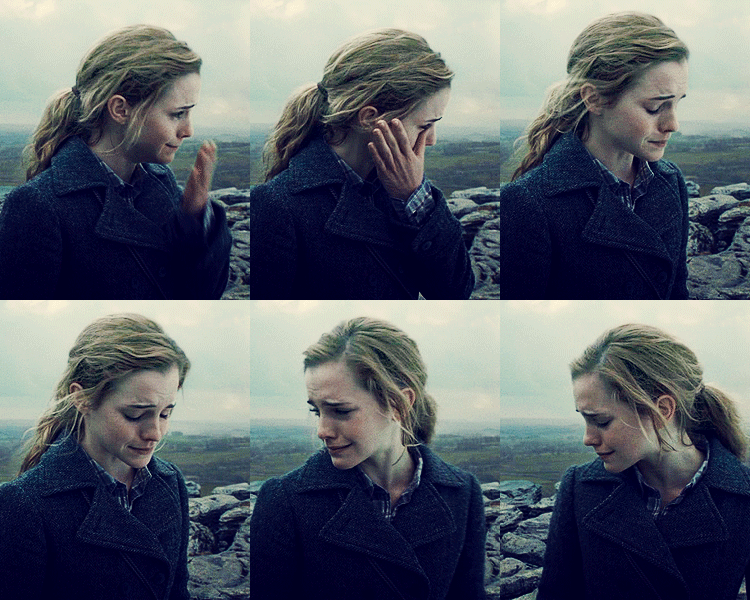
That tidbit about Neville's sorting. OHMERGARD! Have you read a more gosh darned thing. Let me hug you Neville.
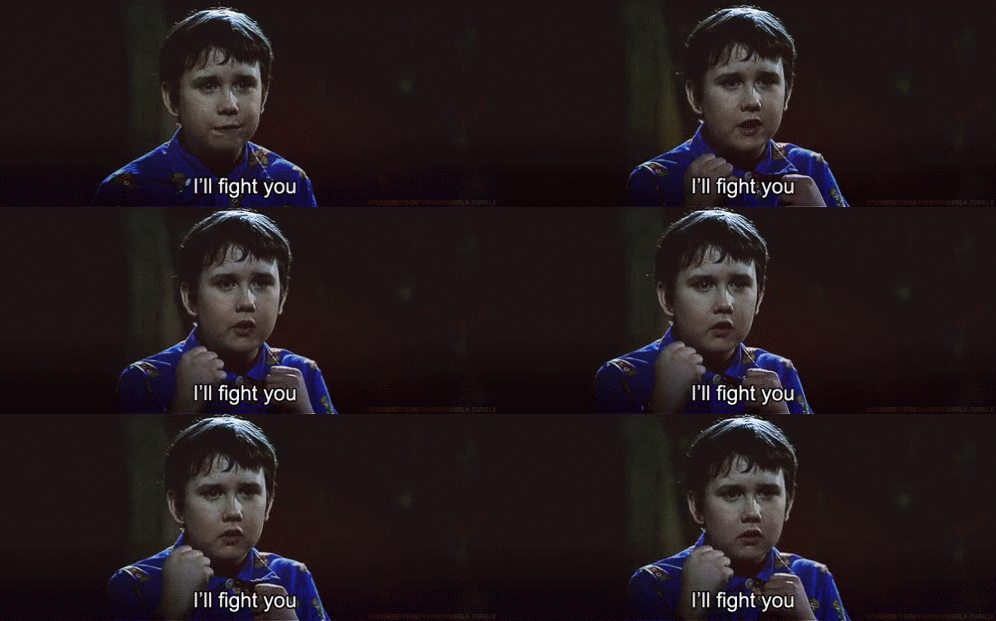
I loved the format of this collection. Plenty of feels. Kay, bye.
Find background stories, trivia and interesting thoughts galore in this magnificent collection of shorts. Hey-yo!
I didn't think that this collection would impact me quite so much. I mean I already know, and have processed the books. Right? Boy was I wrong. J.K. had me with McGonagall, Lupin and even Slughorn. I was tearing up for real y'all. Thanks a bunch J.K.
That tidbit about Neville's sorting. OHMERGARD! Have you read a more gosh darned thing. Let me hug you Neville.
I loved the format of this collection. Plenty of feels. Kay, bye.

March 22, 2020
It gave me information I knew about the world of Harry Potter and information I did not know. It’s good if you are wanting to go in the depth about certain things about the series. Only thing is it doesn’t go to deep. It just scratches the surface.

December 27, 2016
Voy a repetir lo que vengo diciendo en los comentarios. Superó lo que yo había pensado que iba a ser, es más que un conjunto de textitos: para hacer estos ebooks, no agarraron los relatos que encontraron y los pegaron uno a continuación del otro, sino que se preocuparon por ver cómo organizarlos y enlazarlos para que hubiera un hilo.
Sigo sin estar de acuerdo con que sean tres (por eso yo elegí esta "edición" para poner acá, y los cuento como uno). Podría ser un libro con tres partes tranquilamente.
Lo último: ya comenté que me encantaría verlo impreso en una "enciclopedia ilustrada" y sí, yo lo compraría y sé que muchos de ustedes también, aunque la otra parte del planeta diga que es una pavada y una forma de seguir robando. Pese a todo, debo admitir el diseño que tienen como libros digitales es hermoso: lo primero que dije cuando me enteré de que iban a salir fue que esas portadas merecían ser impresas; y el diseño de los capítulos también es bello bello.
Obviamente, solo recomendado si sos fan fan y te interesa enterarte de detalles del mundo creado por Rowling, ya que no hay una historia o aventura que seguir.
Sigo sin estar de acuerdo con que sean tres (por eso yo elegí esta "edición" para poner acá, y los cuento como uno). Podría ser un libro con tres partes tranquilamente.
Lo último: ya comenté que me encantaría verlo impreso en una "enciclopedia ilustrada" y sí, yo lo compraría y sé que muchos de ustedes también, aunque la otra parte del planeta diga que es una pavada y una forma de seguir robando. Pese a todo, debo admitir el diseño que tienen como libros digitales es hermoso: lo primero que dije cuando me enteré de que iban a salir fue que esas portadas merecían ser impresas; y el diseño de los capítulos también es bello bello.
Obviamente, solo recomendado si sos fan fan y te interesa enterarte de detalles del mundo creado por Rowling, ya que no hay una historia o aventura que seguir.

January 17, 2020
A great read for any Harry Potter fan, The Hogwarts Collection provides some interesting facts about characters like Minerva McGonagall, Remus Lupin and Dolores Umbridge, as well as some of the magical objects mentioned throughout the series.
I personally picked it up as soon as I read 'Minerva McGonagall', as she's one of my favorite characters. The stories are a bit curt, obviously written in more of an article form, but aside from that, I can't fault anything which expands the wondrous Harry Potter universe. 🧙
I personally picked it up as soon as I read 'Minerva McGonagall', as she's one of my favorite characters. The stories are a bit curt, obviously written in more of an article form, but aside from that, I can't fault anything which expands the wondrous Harry Potter universe. 🧙

May 25, 2017
absolutely loved reading about Hogwarts...
July 1, 2022
Nostalgic, cozy and soothing. Loved to be back in my favorite imaginary world :)

September 7, 2016
Basically just all the info already given to us on Pottermore, but in a convenient 3 mini-ebook format. Also, rereading all of this made it even more clear that JK Rowling def didn't really write Cursed Child- SHE HATES TIME TURNERS.

February 15, 2022
I miss the Harry Potter universe. It has one of the best fantasy world-building ever created and the most compelling characters. I was therefore really glad to be able to re-visit Hogwarts and learn more about the details that never made it into the novels. I enjoyed every single sentence in the collection.
I might or might not have cried when learning more about two of my favourite characters, Minerva McGonagall and Remus Lupin.
I might or might not have cried when learning more about two of my favourite characters, Minerva McGonagall and Remus Lupin.
September 26, 2016
Estos tres libros cortos me parecieron muy meh...La verdad es que si bien es interesante leer más sobre ciertos personajes o temas creo que hacer libros sobre, aunque sean cortos, fue demasiado...(y más aún venderlos :S) Pero bueno, nunca está mal leer más de Harry Potter y su mundo :D.

April 28, 2026
Short Stories from Hogwarts of Heroism, Hardship and Dangerous Hobbies: ⭑★⭑⭒⭒
So much info on Minnie & Remus but so little on Trelawney & Kettleburn and I really wanted to learn about them :(
Short Stories from Hogwarts of Power, Politics and Pesky Poltergeists: ⭑★⭑⭑⭒
Much better, a lot more elaborate. Not much on Quirrell but I don't care for him.
I can't really rate these that badly because these are compilations of short stories on Pottermore, not actually well thought out books. Although, she could have elaborated more when turning it into a book instead of just slapping it together.
Hogwarts: An Incomplete and Unreliable Guide: ⭑★⭑⭑⭑
My #1 complaint is that the chapters are short and there isn't as much info as I'd like but it's literally called An Incomplete and Unreliable Guide. I can't complain. As someone who has been an HP fan for 15 years, I didn't learn anything that I didn't already know via the Harry Potter wiki, but for new fans, I think it'd be a fun read.
So much info on Minnie & Remus but so little on Trelawney & Kettleburn and I really wanted to learn about them :(
Short Stories from Hogwarts of Power, Politics and Pesky Poltergeists: ⭑★⭑⭑⭒
Much better, a lot more elaborate. Not much on Quirrell but I don't care for him.
I can't really rate these that badly because these are compilations of short stories on Pottermore, not actually well thought out books. Although, she could have elaborated more when turning it into a book instead of just slapping it together.
Hogwarts: An Incomplete and Unreliable Guide: ⭑★⭑⭑⭑
My #1 complaint is that the chapters are short and there isn't as much info as I'd like but it's literally called An Incomplete and Unreliable Guide. I can't complain. As someone who has been an HP fan for 15 years, I didn't learn anything that I didn't already know via the Harry Potter wiki, but for new fans, I think it'd be a fun read.

April 23, 2017
McGonagall is bae

December 14, 2017
My actual rating: 4.5
October 9, 2019
nice little collection of background information about the world of harry potter. as a fan, i just always love an excuse to dive into this world, even if it's not all brand new information and the chapters are sometimes a little clumsily connected.
October 26, 2018
Clever additions to the fantastic world created by J.K. Rowling. They add depth to the existing 7-part story of Harry Potter (and the developing story of Newt Scamander) and rekindles a desire to re-read the Harry Potter saga.

April 23, 2018
On average, these novellas got a 3.65, so I'll round up the collection because, hello, Harry Potter. (I'm surprised I'm not giving it a 5, to be honest.) It was interesting to learn more tidbits into the wizarding world, even though sometimes I a little bit think that JKR is going to milk this cow dry. And yet, I'll still read anything about it, soooo... ¯\_(ツ)_/¯
Novella ratings:
Short Stories from Hogwarts of Heroism, Hardship and Dangerous Hobbies - read April 16, 2018: Three stars, Professor McGonagall's story is the highlight.
Short Stories from Hogwarts of Power, Politics and Pesky Poltergeists - read April 17-18, 2018: Three stars, the fact that it took me two days to read and I can't remember much says a lot about this.
Hogwarts: An Incomplete and Unreliable Guide - read April 23, 2018: Five stars, a gem, filled with interesting new information.
An interesting collection, though I might only ever reread the Hogwarts book in the future. Though reading this definitely made me realize that I'm waaaaay overdue for a Harry Potter reread, and made me anxious to get back into the wizarding world.
Novella ratings:
Short Stories from Hogwarts of Heroism, Hardship and Dangerous Hobbies - read April 16, 2018: Three stars, Professor McGonagall's story is the highlight.
Short Stories from Hogwarts of Power, Politics and Pesky Poltergeists - read April 17-18, 2018: Three stars, the fact that it took me two days to read and I can't remember much says a lot about this.
Hogwarts: An Incomplete and Unreliable Guide - read April 23, 2018: Five stars, a gem, filled with interesting new information.
An interesting collection, though I might only ever reread the Hogwarts book in the future. Though reading this definitely made me realize that I'm waaaaay overdue for a Harry Potter reread, and made me anxious to get back into the wizarding world.

July 1, 2017
What more can I say? Except The Cursed Child (which we all agree should never exist), I am in love with every single story in the Harry Potter universe. Reading anything from this series makes me believe that reading slump is a myth or I suddenly obtain the superpower to read non-stop.
But of course, my reading nirvana is temporary because as soon as I step out from this world, I am back to my temperamental and a slightly lazy reader self.
But of course, my reading nirvana is temporary because as soon as I step out from this world, I am back to my temperamental and a slightly lazy reader self.

January 20, 2017
As a die-hard Harry Potter fan, I love anything about Harry Potter, except cursed child. This book is neat, informative and fun to read.

March 26, 2020
Five starts for J.K.Rowling. Always.

November 17, 2024
Great for futher insights
Nice to read some backstories on characters from the books. I just love the Harry Potter world and this gives a closer look at it
Nice to read some backstories on characters from the books. I just love the Harry Potter world and this gives a closer look at it

September 4, 2017
2.5
I enjoyed parts of this collection, but by no means all of it. A fair bit (especially with regard to characters prominently featured in the book) featured a lot of information that wasn't new. It was either explicitly stated in the books or strongly implied. There were some backstories and origins to various characters and magical objects that I was interested in reading about, and I particularly liked the parts of the book called "J.K.'s thoughts" where she went into how she got the ideas for different aspects of the book.
I had been hoping to learn more of the history behind Olivander's family and their craft too, since wand making is one of the most interesting elements of the wizarding world to me. Unfortunately, he is not featured in the collection.
I guess I just wanted more from the collection than I got. For example, I wanted to know the lore behind grindylows and merpeople living in the lake, how they came to be there not just that they existed there. So that was sort of a let-down for me.
I enjoyed parts of this collection, but by no means all of it. A fair bit (especially with regard to characters prominently featured in the book) featured a lot of information that wasn't new. It was either explicitly stated in the books or strongly implied. There were some backstories and origins to various characters and magical objects that I was interested in reading about, and I particularly liked the parts of the book called "J.K.'s thoughts" where she went into how she got the ideas for different aspects of the book.
I had been hoping to learn more of the history behind Olivander's family and their craft too, since wand making is one of the most interesting elements of the wizarding world to me. Unfortunately, he is not featured in the collection.
I guess I just wanted more from the collection than I got. For example, I wanted to know the lore behind grindylows and merpeople living in the lake, how they came to be there not just that they existed there. So that was sort of a let-down for me.
December 31, 2021
An interesting look into further details of the wizarding world, and some of its characters, but in the end this collection fell somewhat short considering it was only a listing of facts and details and not one short story in sight
The wizarding world is a rich context and as a fan of the Harry Potter books it's always fun to learn more about that world. This collections gives new background information and insights. My favourite probably being a ballad about how Nearly Headless Nick lost his head, which was scrapped from The Chamber of Secrets.
I loved reading more about McGonnagal and Lupin because who doesn't love those characters. But in the end I was disappointed as I had expected the collection to contain at least one or two short stories from some characters we love.
Furthermore, it grated me how often this collection had to mention "by J. K. Rowling" for each written piece. Like yes, I get it, she wrote it. No need to beat me over the head with it.
Still I enjoyed hearing the thoughts on how things came to be in the writing process. As someone who liked to write for fun, seeing those little insight were very nice to see.
So overall, a fun addition to the world, but not one that is a must read.
The wizarding world is a rich context and as a fan of the Harry Potter books it's always fun to learn more about that world. This collections gives new background information and insights. My favourite probably being a ballad about how Nearly Headless Nick lost his head, which was scrapped from The Chamber of Secrets.
I loved reading more about McGonnagal and Lupin because who doesn't love those characters. But in the end I was disappointed as I had expected the collection to contain at least one or two short stories from some characters we love.
Furthermore, it grated me how often this collection had to mention "by J. K. Rowling" for each written piece. Like yes, I get it, she wrote it. No need to beat me over the head with it.
Still I enjoyed hearing the thoughts on how things came to be in the writing process. As someone who liked to write for fun, seeing those little insight were very nice to see.
So overall, a fun addition to the world, but not one that is a must read.
June 9, 2020
I enjoyed the 2nd (Power, Politics, and Pesky Poltergeists) and 3rd (An Incomplete and Unreliable Guide) book in this collection more than I did the 1st (Heroism, Hardship, and Dangerous Hobbies). Looking into Lupin and McGonagall's backstory was awesome, but for me, learning about Azkaban, the Ministers of Magic, the history of King's Cross Station and how Platform 9 3/4 was created, Hatstall, the Hogwarts Portraits, and Sir Cadogan definitely intrigued me more. I will always want to know more when it comes to the amazing cleverness of J. K. Rowling's magical world.
Displaying 1 - 30 of 313 reviews