

What do you think?
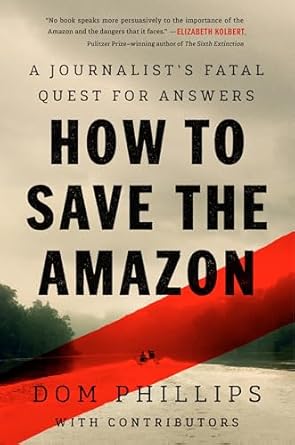
How to Save the Amazon: A Journalist's Fatal Quest for Answers
'Ultimately as inspiring and devastating as the Amazon itself' The Guardian
'Bold, pacy, bursting with optimism and filled with vivid descriptions, this is the work of an indomitable soul' - Guy Shrubsole
A brilliantly colourful work of reportage ... a haunting and truly important read' - The Telegraph
RECIPIENT OF A WHITING FOUNDATION AWARD
On 5 June 2022, award-winning journalist Dom Phillips was working on this book, alongside the indigenous expert Bruno Pereira, when they were both shot. They are believed to have been assassinated by one of the criminal networks whose ecological exploitation they were working to expose.
As the world becomes more aware of the significance of the Amazon, home to nearly 400 billion trees, working in this vast region has become ever more dangerous for activists and journalists. Fires, land grabs, and the invasion of reserves have all spiked over recent decades, pushing the world's biggest forest ever closer to a point of no return. The last few years have seen efforts to reduce deforestation, but the question remains; can we save this globally essential ecosystem before it is too late?
A group of expert writers took up Phillips' partially completed manuscript, committed to his mission of uncovering the truth about deforestation and searching for solutions. Blending in-depth reporting and encounters with indigenous activists, ecologists, farmers, and political figures, How to Save The Amazon is a dazzling account of how we can fight ecological destruction and stand in solidarity with the Earth's environmental defenders.
'Bold, pacy, bursting with optimism and filled with vivid descriptions, this is the work of an indomitable soul' - Guy Shrubsole
A brilliantly colourful work of reportage ... a haunting and truly important read' - The Telegraph
RECIPIENT OF A WHITING FOUNDATION AWARD
On 5 June 2022, award-winning journalist Dom Phillips was working on this book, alongside the indigenous expert Bruno Pereira, when they were both shot. They are believed to have been assassinated by one of the criminal networks whose ecological exploitation they were working to expose.
As the world becomes more aware of the significance of the Amazon, home to nearly 400 billion trees, working in this vast region has become ever more dangerous for activists and journalists. Fires, land grabs, and the invasion of reserves have all spiked over recent decades, pushing the world's biggest forest ever closer to a point of no return. The last few years have seen efforts to reduce deforestation, but the question remains; can we save this globally essential ecosystem before it is too late?
A group of expert writers took up Phillips' partially completed manuscript, committed to his mission of uncovering the truth about deforestation and searching for solutions. Blending in-depth reporting and encounters with indigenous activists, ecologists, farmers, and political figures, How to Save The Amazon is a dazzling account of how we can fight ecological destruction and stand in solidarity with the Earth's environmental defenders.
396 pages, Kindle Edition
Published May 27, 2025
Ratings & Reviews
Friends & Following
Create a free account to discover what your friends think of this book!
Community Reviews
Displaying 1 - 22 of 22 reviews

July 17, 2025
A Testament to Courage and Hope: "How to Save the Amazon" Shines as Essential Reading
Reading "How to Save the Amazon: A journalist's fatal quest for answers" left me profoundly moved and forever changed. This isn't just another environmental book—it's a powerful reminder that some stories are too important to be silenced, even by death.
Dom Phillips was the kind of journalist I deeply admire. He started his career covering techno clubs and writing about music, but something drew him to Brazil and to the Amazon's urgent story. What strikes me most about his approach is how he refused to be just another foreign correspondent parachuting in for dramatic headlines. Instead, he spent years building relationships, learning from Indigenous communities, and genuinely seeking solutions rather than just documenting problems.
The tragic circumstances surrounding this book's completion make it even more compelling. When Phillips and Indigenous expert Bruno Pereira were murdered by the very criminals they were investigating, I initially worried their vital work would be lost. Instead, witnessing how their colleagues and friends rallied to finish the book restored my faith in the power of journalistic solidarity. The fact that twenty writers, editors, and experts donated their time while refusing any royalties speaks volumes about the impact Phillips had on those who knew him.
What I love most about this book is its relentless focus on hope and solutions. Every chapter feels like Phillips asking, "Okay, we know things are bad—but what can actually work?" He explores agroforestry, sustainable tourism, and bioeconomy initiatives with the same rigor he applies to exposing illegal logging and cattle ranching. This balance keeps the book from becoming another depressing catalog of environmental destruction.
The Indigenous voices Phillips amplifies throughout the book are its heart and soul. His central insight—that we need to listen to the people who have successfully protected these lands for centuries—seems obvious once stated, but it's revolutionary in its simplicity. These aren't abstract policy recommendations; they're practical wisdom from communities who have lived sustainably in the Amazon for generations.
Reading the early chapters written by Phillips himself, I can feel his passion bleeding through every page. His writing style is engaging and accessible, mixing personal anecdotes with serious research in a way that kept me turning pages late into the night. The later chapters, completed by his collaborators using his notes and interviews, maintain that same energy while honoring his vision.
This book challenged my own assumptions about environmental activism. Phillips shows that saving the Amazon isn't about stopping all development—it's about supporting the right kind of development led by the right people. The Indigenous communities, traditional populations, and local environmental defenders he profiles aren't obstacles to progress; they're the key to a sustainable future.
The collaborative nature of this book's completion gives me hope for journalism itself. In an era when reporters face increasing dangers worldwide, seeing an entire community come together to ensure a fallen colleague's work survives feels like a small victory against those who would silence the truth.
By the final pages, I felt both heartbroken and inspired. Phillips and Pereira paid the ultimate price for their commitment to environmental justice, but their message rings clear: there is still time, there are still solutions, and there are still people willing to fight for them. As Phillips believed, everyone can do something—and this book shows us exactly what that something might look like.
"How to Save the Amazon" is more than essential reading; it's a call to action wrapped in one of the most moving tributes to journalistic courage I've ever encountered. It's a book that demands to be read, shared, and acted upon.
Reading "How to Save the Amazon: A journalist's fatal quest for answers" left me profoundly moved and forever changed. This isn't just another environmental book—it's a powerful reminder that some stories are too important to be silenced, even by death.
Dom Phillips was the kind of journalist I deeply admire. He started his career covering techno clubs and writing about music, but something drew him to Brazil and to the Amazon's urgent story. What strikes me most about his approach is how he refused to be just another foreign correspondent parachuting in for dramatic headlines. Instead, he spent years building relationships, learning from Indigenous communities, and genuinely seeking solutions rather than just documenting problems.
The tragic circumstances surrounding this book's completion make it even more compelling. When Phillips and Indigenous expert Bruno Pereira were murdered by the very criminals they were investigating, I initially worried their vital work would be lost. Instead, witnessing how their colleagues and friends rallied to finish the book restored my faith in the power of journalistic solidarity. The fact that twenty writers, editors, and experts donated their time while refusing any royalties speaks volumes about the impact Phillips had on those who knew him.
What I love most about this book is its relentless focus on hope and solutions. Every chapter feels like Phillips asking, "Okay, we know things are bad—but what can actually work?" He explores agroforestry, sustainable tourism, and bioeconomy initiatives with the same rigor he applies to exposing illegal logging and cattle ranching. This balance keeps the book from becoming another depressing catalog of environmental destruction.
The Indigenous voices Phillips amplifies throughout the book are its heart and soul. His central insight—that we need to listen to the people who have successfully protected these lands for centuries—seems obvious once stated, but it's revolutionary in its simplicity. These aren't abstract policy recommendations; they're practical wisdom from communities who have lived sustainably in the Amazon for generations.
Reading the early chapters written by Phillips himself, I can feel his passion bleeding through every page. His writing style is engaging and accessible, mixing personal anecdotes with serious research in a way that kept me turning pages late into the night. The later chapters, completed by his collaborators using his notes and interviews, maintain that same energy while honoring his vision.
This book challenged my own assumptions about environmental activism. Phillips shows that saving the Amazon isn't about stopping all development—it's about supporting the right kind of development led by the right people. The Indigenous communities, traditional populations, and local environmental defenders he profiles aren't obstacles to progress; they're the key to a sustainable future.
The collaborative nature of this book's completion gives me hope for journalism itself. In an era when reporters face increasing dangers worldwide, seeing an entire community come together to ensure a fallen colleague's work survives feels like a small victory against those who would silence the truth.
By the final pages, I felt both heartbroken and inspired. Phillips and Pereira paid the ultimate price for their commitment to environmental justice, but their message rings clear: there is still time, there are still solutions, and there are still people willing to fight for them. As Phillips believed, everyone can do something—and this book shows us exactly what that something might look like.
"How to Save the Amazon" is more than essential reading; it's a call to action wrapped in one of the most moving tributes to journalistic courage I've ever encountered. It's a book that demands to be read, shared, and acted upon.

May 29, 2026
i have wanted to read this book for a while, as soon as i read the blurb it bounced around the back of my mind. i was in a bit of reading rut, where i picked up books but just couldn’t finish them, or really find the will to want to read them. but i think that this book has helped me get out of it.
first, i want to acknowledge my favorite part of this book. i really like reading this kind of book- non-fiction, journalistic, highlighting a specific issue. as someone interested in global affairs it makes sense. but i am also very much a pessimist. so often i feel exhausted and grief stricken by the end. and don’t get me wrong, throughout the book i grieved for many things- those killed, those who find that exploiting the common heritage of mankind is the only way to feed their family, the devastation of colonialism, and an alternate past that never existed just to name a few. but somehow, i left this book also feeling that despite the challenges, there is (or has to be) a way forward. weirdly optimistic for me.
this book serves its purpose well. it delves into the many roadblocks and threats faced by the amazon and those who wish to conserve it. it could, of course, stand to go a lot deeper on each issue (in fact the topic of each chapter could probably be a book on its own). but to me this book is a call to action. i think about how the environment has really taken a back seat in recent times, to wars of ego and destruction and really distraction. and how we really don’t have much time. not only for the amazon, but all of us.
as the book points out time and time again- the majority of the deaths of those who seek to protect the amazon go unacknowledged as many are often indigenous to the region. i found myself grappling with this while reading the book- the deaths of dom, bruno, sister dorothy are tragic. but it deeply saddens and frustrates me that the death of white activists, often from wealthier nations cause an uproar that is disproportionate to those native to the region. why is it that white, wealthy, developed suffering possesses such a premium? why do we only pay attention then? i find this echoed in situations such as the treatment of the activists on the most recent flotilla headed to gaza. this is not to try and discredit philipps, or anyone else. i do find their work important- particularly due to the attention that it tends to bring, it is just frustrating to witness.
as someone who didn’t know much about brasil’s violent and authoritarian history, i found myself particularly gripped by this aspect of the book- how this and the exploitation of the amazon seem so interconnected. but at the same time, i think about what dom philipps wrote in his notes about the people- not the corporations, or the dictatorship or its cronies. those who often have very little (both in material goods and choices). we really cannot judge people so harshly when all they are trying to do is feed their families. and he’s right- i am paraphrasing and definitely not remembering the quote right, but it goes something like: the poorer you are, the more likely you are to liquidate your assets. as someone who cares very much about our climate, we really have to acknowledge that to solve this issue we need to serve justice in all senses of that word. economic justice- abolishing inequality- is at the core. you can’t really care about the future when you are hungry in the present. it is also necessary to acknowledge that this kind of desperation and poverty itself comes from the extractionist nature of the core- whether that be the wealthy of the nation, wealthier nations, corporations, etc.
another thing that really struck me was the need for a localized approach. it would have been nice to hear more from an indigenous perspective. i think we often forget that empire exists everywhere we turn. especially outside of western countries.
this book made me think about thailand- the place i call my home, as i was born and raised there. i spent many years of my life dedicated to its marine life, although i can’t say that its situation is as dire as the amazons’ or my pursuits as daring as those who put their lives on the line to defend it.
first, i want to acknowledge my favorite part of this book. i really like reading this kind of book- non-fiction, journalistic, highlighting a specific issue. as someone interested in global affairs it makes sense. but i am also very much a pessimist. so often i feel exhausted and grief stricken by the end. and don’t get me wrong, throughout the book i grieved for many things- those killed, those who find that exploiting the common heritage of mankind is the only way to feed their family, the devastation of colonialism, and an alternate past that never existed just to name a few. but somehow, i left this book also feeling that despite the challenges, there is (or has to be) a way forward. weirdly optimistic for me.
this book serves its purpose well. it delves into the many roadblocks and threats faced by the amazon and those who wish to conserve it. it could, of course, stand to go a lot deeper on each issue (in fact the topic of each chapter could probably be a book on its own). but to me this book is a call to action. i think about how the environment has really taken a back seat in recent times, to wars of ego and destruction and really distraction. and how we really don’t have much time. not only for the amazon, but all of us.
as the book points out time and time again- the majority of the deaths of those who seek to protect the amazon go unacknowledged as many are often indigenous to the region. i found myself grappling with this while reading the book- the deaths of dom, bruno, sister dorothy are tragic. but it deeply saddens and frustrates me that the death of white activists, often from wealthier nations cause an uproar that is disproportionate to those native to the region. why is it that white, wealthy, developed suffering possesses such a premium? why do we only pay attention then? i find this echoed in situations such as the treatment of the activists on the most recent flotilla headed to gaza. this is not to try and discredit philipps, or anyone else. i do find their work important- particularly due to the attention that it tends to bring, it is just frustrating to witness.
as someone who didn’t know much about brasil’s violent and authoritarian history, i found myself particularly gripped by this aspect of the book- how this and the exploitation of the amazon seem so interconnected. but at the same time, i think about what dom philipps wrote in his notes about the people- not the corporations, or the dictatorship or its cronies. those who often have very little (both in material goods and choices). we really cannot judge people so harshly when all they are trying to do is feed their families. and he’s right- i am paraphrasing and definitely not remembering the quote right, but it goes something like: the poorer you are, the more likely you are to liquidate your assets. as someone who cares very much about our climate, we really have to acknowledge that to solve this issue we need to serve justice in all senses of that word. economic justice- abolishing inequality- is at the core. you can’t really care about the future when you are hungry in the present. it is also necessary to acknowledge that this kind of desperation and poverty itself comes from the extractionist nature of the core- whether that be the wealthy of the nation, wealthier nations, corporations, etc.
another thing that really struck me was the need for a localized approach. it would have been nice to hear more from an indigenous perspective. i think we often forget that empire exists everywhere we turn. especially outside of western countries.
this book made me think about thailand- the place i call my home, as i was born and raised there. i spent many years of my life dedicated to its marine life, although i can’t say that its situation is as dire as the amazons’ or my pursuits as daring as those who put their lives on the line to defend it.

November 28, 2025
The writer was murdered in Javari Valley region of the Amazon while writing the book so only the first half is written by him. He does a good job of highlighting people and projects within the Amazon that inspire hope for the future. Most intriguing ideas to me were the ability to track deforestation live with satellites (this technology will only get better with time), ecological research and field trials to promote the bioeconomy and biomedical industries, and agroforestry through indigenous practices.
Cattle ranching and agribusiness still pose the biggest threat to the forest and I’m not totally convinced there is a clear solution here. Intensification seemed somewhat promising, regen grazing isn’t really economically feasible or scalable, and international bans on beef from deforestation isn’t working in the slightest.
My qualms — the title of the book bugs me and I don’t think the solutions were explored at a real depth. Saving the Amazon seems a very colonial language and viewpoint. Plus only the last 20 pages featured an actual Indigenous perspective. Would’ve like to hear directly from that side.
Also it only touches on the Brazilian Amazon, which even though it’s the country with the largest portion, it’s only 1 of 9 countries in SA that contain the Amazon.
Cattle ranching and agribusiness still pose the biggest threat to the forest and I’m not totally convinced there is a clear solution here. Intensification seemed somewhat promising, regen grazing isn’t really economically feasible or scalable, and international bans on beef from deforestation isn’t working in the slightest.
My qualms — the title of the book bugs me and I don’t think the solutions were explored at a real depth. Saving the Amazon seems a very colonial language and viewpoint. Plus only the last 20 pages featured an actual Indigenous perspective. Would’ve like to hear directly from that side.
Also it only touches on the Brazilian Amazon, which even though it’s the country with the largest portion, it’s only 1 of 9 countries in SA that contain the Amazon.
July 17, 2025
Um Testemunho de Coragem e Esperança: "Como Salvar a Amazônia" Brilha como Leitura Essencial
Ler "Como Salvar a Amazônia: A busca fatal de um jornalista por respostas" me deixou profundamente tocado e para sempre transformado. Este não é apenas mais um livro sobre meio ambiente—é um lembrete poderoso de que algumas histórias são importantes demais para serem silenciadas, mesmo pela morte.
Dom Phillips era o tipo de jornalista que eu admiro profundamente. Ele começou sua carreira cobrindo clubes de música eletrônica e escrevendo sobre música, mas algo o atraiu para o Brasil e para a história urgente da Amazônia. O que mais me impressiona sobre sua abordagem é como ele se recusou a ser apenas mais um correspondente estrangeiro chegando de paraquedas em busca de manchetes dramáticas. Em vez disso, ele passou anos construindo relacionamentos, aprendendo com comunidades indígenas e genuinamente buscando soluções em vez de apenas documentar problemas.
As circunstâncias trágicas que cercam a conclusão deste livro o tornam ainda mais convincente. Quando Phillips e o especialista indígena Bruno Pereira foram assassinados pelos próprios criminosos que estavam investigando, inicialmente me preocupei que seu trabalho vital se perdesse. Em vez disso, testemunhar como seus colegas e amigos se uniram para terminar o livro restaurou minha fé no poder da solidariedade jornalística. O fato de que vinte escritores, editores e especialistas doaram seu tempo recusando qualquer direito autoral fala muito sobre o impacto que Phillips teve naqueles que o conheciam.
O que mais amo neste livro é seu foco incansável na esperança e nas soluções. Cada capítulo parece Phillips perguntando: "Certo, sabemos que as coisas estão ruins—mas o que pode realmente funcionar?" Ele explora agrofloresta, turismo sustentável e iniciativas de bioeconomia com o mesmo rigor que aplica para expor o desmatamento ilegal e a pecuária. Esse equilíbrio impede que o livro se torne mais um catálogo deprimente de destruição ambiental.
As vozes indígenas que Phillips amplifica ao longo do livro são seu coração e alma. Sua percepção central—de que precisamos ouvir as pessoas que protegeram com sucesso essas terras por séculos—parece óbvia uma vez declarada, mas é revolucionária em sua simplicidade. Estas não são recomendações políticas abstratas; são sabedoria prática de comunidades que viveram de forma sustentável na Amazônia por gerações.
Lendo os primeiros capítulos escritos pelo próprio Phillips, posso sentir sua paixão transbordando em cada página. Seu estilo de escrita é envolvente e acessível, misturando anedotas pessoais com pesquisa séria de uma forma que me manteve virando páginas até altas horas da noite. Os capítulos posteriores, completados por seus colaboradores usando suas anotações e entrevistas, mantêm a mesma energia enquanto honram sua visão.
Este livro desafiou minhas próprias suposições sobre ativismo ambiental. Phillips mostra que salvar a Amazônia não é sobre parar todo desenvolvimento—é sobre apoiar o tipo certo de desenvolvimento liderado pelas pessoas certas. As comunidades indígenas, populações tradicionais e defensores ambientais locais que ele retrata não são obstáculos ao progresso; eles são a chave para um futuro sustentável.
A natureza colaborativa da conclusão deste livro me dá esperança para o próprio jornalismo. Numa era em que repórteres enfrentam perigos crescentes mundialmente, ver uma comunidade inteira se unir para garantir que o trabalho de um colega caído sobreviva parece uma pequena vitória contra aqueles que silenciariam a verdade.
Nas páginas finais, me senti ao mesmo tempo desolado e inspirado. Phillips e Pereira pagaram o preço final por seu compromisso com a justiça ambiental, mas sua mensagem ressoa clara: ainda há tempo, ainda há soluções, e ainda há pessoas dispostas a lutar por elas. Como Phillips acreditava, todos podem fazer algo—e este livro nos mostra exatamente o que esse algo pode ser.
"Como Salvar a Amazônia" é mais que leitura essencial; é um chamado à ação envolvido em uma das homenagens mais tocantes à coragem jornalística que já encontrei. É um livro que exige ser lido, compartilhado e posto em prática.
Ler "Como Salvar a Amazônia: A busca fatal de um jornalista por respostas" me deixou profundamente tocado e para sempre transformado. Este não é apenas mais um livro sobre meio ambiente—é um lembrete poderoso de que algumas histórias são importantes demais para serem silenciadas, mesmo pela morte.
Dom Phillips era o tipo de jornalista que eu admiro profundamente. Ele começou sua carreira cobrindo clubes de música eletrônica e escrevendo sobre música, mas algo o atraiu para o Brasil e para a história urgente da Amazônia. O que mais me impressiona sobre sua abordagem é como ele se recusou a ser apenas mais um correspondente estrangeiro chegando de paraquedas em busca de manchetes dramáticas. Em vez disso, ele passou anos construindo relacionamentos, aprendendo com comunidades indígenas e genuinamente buscando soluções em vez de apenas documentar problemas.
As circunstâncias trágicas que cercam a conclusão deste livro o tornam ainda mais convincente. Quando Phillips e o especialista indígena Bruno Pereira foram assassinados pelos próprios criminosos que estavam investigando, inicialmente me preocupei que seu trabalho vital se perdesse. Em vez disso, testemunhar como seus colegas e amigos se uniram para terminar o livro restaurou minha fé no poder da solidariedade jornalística. O fato de que vinte escritores, editores e especialistas doaram seu tempo recusando qualquer direito autoral fala muito sobre o impacto que Phillips teve naqueles que o conheciam.
O que mais amo neste livro é seu foco incansável na esperança e nas soluções. Cada capítulo parece Phillips perguntando: "Certo, sabemos que as coisas estão ruins—mas o que pode realmente funcionar?" Ele explora agrofloresta, turismo sustentável e iniciativas de bioeconomia com o mesmo rigor que aplica para expor o desmatamento ilegal e a pecuária. Esse equilíbrio impede que o livro se torne mais um catálogo deprimente de destruição ambiental.
As vozes indígenas que Phillips amplifica ao longo do livro são seu coração e alma. Sua percepção central—de que precisamos ouvir as pessoas que protegeram com sucesso essas terras por séculos—parece óbvia uma vez declarada, mas é revolucionária em sua simplicidade. Estas não são recomendações políticas abstratas; são sabedoria prática de comunidades que viveram de forma sustentável na Amazônia por gerações.
Lendo os primeiros capítulos escritos pelo próprio Phillips, posso sentir sua paixão transbordando em cada página. Seu estilo de escrita é envolvente e acessível, misturando anedotas pessoais com pesquisa séria de uma forma que me manteve virando páginas até altas horas da noite. Os capítulos posteriores, completados por seus colaboradores usando suas anotações e entrevistas, mantêm a mesma energia enquanto honram sua visão.
Este livro desafiou minhas próprias suposições sobre ativismo ambiental. Phillips mostra que salvar a Amazônia não é sobre parar todo desenvolvimento—é sobre apoiar o tipo certo de desenvolvimento liderado pelas pessoas certas. As comunidades indígenas, populações tradicionais e defensores ambientais locais que ele retrata não são obstáculos ao progresso; eles são a chave para um futuro sustentável.
A natureza colaborativa da conclusão deste livro me dá esperança para o próprio jornalismo. Numa era em que repórteres enfrentam perigos crescentes mundialmente, ver uma comunidade inteira se unir para garantir que o trabalho de um colega caído sobreviva parece uma pequena vitória contra aqueles que silenciariam a verdade.
Nas páginas finais, me senti ao mesmo tempo desolado e inspirado. Phillips e Pereira pagaram o preço final por seu compromisso com a justiça ambiental, mas sua mensagem ressoa clara: ainda há tempo, ainda há soluções, e ainda há pessoas dispostas a lutar por elas. Como Phillips acreditava, todos podem fazer algo—e este livro nos mostra exatamente o que esse algo pode ser.
"Como Salvar a Amazônia" é mais que leitura essencial; é um chamado à ação envolvido em uma das homenagens mais tocantes à coragem jornalística que já encontrei. É um livro que exige ser lido, compartilhado e posto em prática.

February 19, 2026
Why does it take the death of a British journalist (Dom Phillips, who died on the same date my birthday falls) for the words of indigenous people to reach us? How to save the Amazon, as concluded by this book, is a presumptuous question when we have had contact with people who have lived there for generations telling us how to do so, only to be silenced in horrific and brutal ways.
One of my favourite ideas from this book that I will take away with me, as well as my renewed belief that I have a right to want a future earth that is made of itself and not of human wasteland, is the bid to reframe the phrase ‘climate crisis’ to ‘Earth’s revenge’. It is not the climate causing a crisis, it is our doing, our greed, our destructive pathways.
There’s a lot in this book. Cattle laundering is not something I’ve ever thought about in detail before, nor is bio economy, nor land grabbing and the violence that comes with it. Although I am going to have to read much more to be even a smidge informed on Brazilian politics, global politics, and how these feed into the dire state the Amazon rainforest finds itself in, this book was an engaging and comprehensive starting point with plenty of follow up resources to choose from when it comes to understanding how we have found ourselves here and now. I look forward to learning more, and I thank this book for giving me gateway access to stories, views and peoples’ experiences I do not usually get access to.
One of my favourite ideas from this book that I will take away with me, as well as my renewed belief that I have a right to want a future earth that is made of itself and not of human wasteland, is the bid to reframe the phrase ‘climate crisis’ to ‘Earth’s revenge’. It is not the climate causing a crisis, it is our doing, our greed, our destructive pathways.
There’s a lot in this book. Cattle laundering is not something I’ve ever thought about in detail before, nor is bio economy, nor land grabbing and the violence that comes with it. Although I am going to have to read much more to be even a smidge informed on Brazilian politics, global politics, and how these feed into the dire state the Amazon rainforest finds itself in, this book was an engaging and comprehensive starting point with plenty of follow up resources to choose from when it comes to understanding how we have found ourselves here and now. I look forward to learning more, and I thank this book for giving me gateway access to stories, views and peoples’ experiences I do not usually get access to.
May 17, 2026
Everyone should read this vital and important book.
Fascinating not only for its ambitious subject matter but also its tragic circumstances.
Dom and his friend/colleague Bruno were brutally murdered while this book was being written. The book was then finished using Dom's notes.
The book does not pretend to have all the answers and approaches the task of how to save the Amazon from different angles, ultimately rejecting both the white saviour mindset and the notion that the market will fix itself.
Instead we learn that indigeneous people must be empowered and protected, that saving the Amazon comes down to protecting indigeneous human rights, and that we could all do well to break free from colonial, western, capitalist mindsets where we see nature as a resource rather than as life itself.
Fascinating not only for its ambitious subject matter but also its tragic circumstances.
Dom and his friend/colleague Bruno were brutally murdered while this book was being written. The book was then finished using Dom's notes.
The book does not pretend to have all the answers and approaches the task of how to save the Amazon from different angles, ultimately rejecting both the white saviour mindset and the notion that the market will fix itself.
Instead we learn that indigeneous people must be empowered and protected, that saving the Amazon comes down to protecting indigeneous human rights, and that we could all do well to break free from colonial, western, capitalist mindsets where we see nature as a resource rather than as life itself.

November 8, 2025
Dom Philips was a BBC journalist and was writing this book when got brutally murdered. He asked the people of Amazonia for possible solutions how to keep the forest standing. Instead of only mourning staying in silence, his friends, colleagues and relatives finished the book - following the notes left behind.
December 4, 2025
A profound and interesting book that highlights one of the most important issues with our planet. The concept is incredible, gaining insights from people with real experience in the Amazon. The whole book was very well put together and leaves the reader with many questions answered and knowledge about the situation.
May 13, 2026
While this book was full of great information, it was unfortunately quite boring. The information felt more like a checklist of critical information versus a story of key knowledge. If you’re highly motivated to learn more about the Amazon then give it a read, but if you only have vague interest I would look for something more engaging.

August 14, 2025
A very moving book.

September 19, 2025
I got through about half of this book. The content is fascinating, but the book is REALLY repetitive. The book could have been half the size and conveyed the same ideas.
February 17, 2026
The writing style wasn't my favorite for the parts written completely by Dom, but his dedication to the forest and the people who protect it can't be seen as anything other than admirable

August 7, 2026
I liked this group of vignettes, and the collective project is very moving
July 17, 2025
A Testament to Courage and Hope: "How to Save the Amazon" Shines as Essential Reading
Reading "How to Save the Amazon: A journalist's fatal quest for answers" left me profoundly moved and forever changed. This isn't just another environmental book—it's a powerful reminder that some stories are too important to be silenced, even by death.
Dom Phillips was the kind of journalist I deeply admire. He started his career covering techno clubs and writing about music, but something drew him to Brazil and to the Amazon's urgent story. What strikes me most about his approach is how he refused to be just another foreign correspondent parachuting in for dramatic headlines. Instead, he spent years building relationships, learning from Indigenous communities, and genuinely seeking solutions rather than just documenting problems.
The tragic circumstances surrounding this book's completion make it even more compelling. When Phillips and Indigenous expert Bruno Pereira were murdered by the very criminals they were investigating, I initially worried their vital work would be lost. Instead, witnessing how their colleagues and friends rallied to finish the book restored my faith in the power of journalistic solidarity. The fact that twenty writers, editors, and experts donated their time while refusing any royalties speaks volumes about the impact Phillips had on those who knew him.
What I love most about this book is its relentless focus on hope and solutions. Every chapter feels like Phillips asking, "Okay, we know things are bad—but what can actually work?" He explores agroforestry, sustainable tourism, and bioeconomy initiatives with the same rigor he applies to exposing illegal logging and cattle ranching. This balance keeps the book from becoming another depressing catalog of environmental destruction.
The Indigenous voices Phillips amplifies throughout the book are its heart and soul. His central insight—that we need to listen to the people who have successfully protected these lands for centuries—seems obvious once stated, but it's revolutionary in its simplicity. These aren't abstract policy recommendations; they're practical wisdom from communities who have lived sustainably in the Amazon for generations.
Reading the early chapters written by Phillips himself, I can feel his passion bleeding through every page. His writing style is engaging and accessible, mixing personal anecdotes with serious research in a way that kept me turning pages late into the night. The later chapters, completed by his collaborators using his notes and interviews, maintain that same energy while honoring his vision.
This book challenged my own assumptions about environmental activism. Phillips shows that saving the Amazon isn't about stopping all development—it's about supporting the right kind of development led by the right people. The Indigenous communities, traditional populations, and local environmental defenders he profiles aren't obstacles to progress; they're the key to a sustainable future.
The collaborative nature of this book's completion gives me hope for journalism itself. In an era when reporters face increasing dangers worldwide, seeing an entire community come together to ensure a fallen colleague's work survives feels like a small victory against those who would silence the truth.
By the final pages, I felt both heartbroken and inspired. Phillips and Pereira paid the ultimate price for their commitment to environmental justice, but their message rings clear: there is still time, there are still solutions, and there are still people willing to fight for them. As Phillips believed, everyone can do something—and this book shows us exactly what that something might look like.
"How to Save the Amazon" is more than essential reading; it's a call to action wrapped in one of the most moving tributes to journalistic courage I've ever encountered. It's a book that demands to be read, shared, and acted upon.
Reading "How to Save the Amazon: A journalist's fatal quest for answers" left me profoundly moved and forever changed. This isn't just another environmental book—it's a powerful reminder that some stories are too important to be silenced, even by death.
Dom Phillips was the kind of journalist I deeply admire. He started his career covering techno clubs and writing about music, but something drew him to Brazil and to the Amazon's urgent story. What strikes me most about his approach is how he refused to be just another foreign correspondent parachuting in for dramatic headlines. Instead, he spent years building relationships, learning from Indigenous communities, and genuinely seeking solutions rather than just documenting problems.
The tragic circumstances surrounding this book's completion make it even more compelling. When Phillips and Indigenous expert Bruno Pereira were murdered by the very criminals they were investigating, I initially worried their vital work would be lost. Instead, witnessing how their colleagues and friends rallied to finish the book restored my faith in the power of journalistic solidarity. The fact that twenty writers, editors, and experts donated their time while refusing any royalties speaks volumes about the impact Phillips had on those who knew him.
What I love most about this book is its relentless focus on hope and solutions. Every chapter feels like Phillips asking, "Okay, we know things are bad—but what can actually work?" He explores agroforestry, sustainable tourism, and bioeconomy initiatives with the same rigor he applies to exposing illegal logging and cattle ranching. This balance keeps the book from becoming another depressing catalog of environmental destruction.
The Indigenous voices Phillips amplifies throughout the book are its heart and soul. His central insight—that we need to listen to the people who have successfully protected these lands for centuries—seems obvious once stated, but it's revolutionary in its simplicity. These aren't abstract policy recommendations; they're practical wisdom from communities who have lived sustainably in the Amazon for generations.
Reading the early chapters written by Phillips himself, I can feel his passion bleeding through every page. His writing style is engaging and accessible, mixing personal anecdotes with serious research in a way that kept me turning pages late into the night. The later chapters, completed by his collaborators using his notes and interviews, maintain that same energy while honoring his vision.
This book challenged my own assumptions about environmental activism. Phillips shows that saving the Amazon isn't about stopping all development—it's about supporting the right kind of development led by the right people. The Indigenous communities, traditional populations, and local environmental defenders he profiles aren't obstacles to progress; they're the key to a sustainable future.
The collaborative nature of this book's completion gives me hope for journalism itself. In an era when reporters face increasing dangers worldwide, seeing an entire community come together to ensure a fallen colleague's work survives feels like a small victory against those who would silence the truth.
By the final pages, I felt both heartbroken and inspired. Phillips and Pereira paid the ultimate price for their commitment to environmental justice, but their message rings clear: there is still time, there are still solutions, and there are still people willing to fight for them. As Phillips believed, everyone can do something—and this book shows us exactly what that something might look like.
"How to Save the Amazon" is more than essential reading; it's a call to action wrapped in one of the most moving tributes to journalistic courage I've ever encountered. It's a book that demands to be read, shared, and acted upon.
July 17, 2025
A Testament to Courage and Hope: "How to Save the Amazon" Shines as Essential Reading
Reading "How to Save the Amazon: A journalist's fatal quest for answers" left me profoundly moved and forever changed. This isn't just another environmental book—it's a powerful reminder that some stories are too important to be silenced, even by death.
Dom Phillips was the kind of journalist I deeply admire. He started his career covering techno clubs and writing about music, but something drew him to Brazil and to the Amazon's urgent story. What strikes me most about his approach is how he refused to be just another foreign correspondent parachuting in for dramatic headlines. Instead, he spent years building relationships, learning from Indigenous communities, and genuinely seeking solutions rather than just documenting problems.
The tragic circumstances surrounding this book's completion make it even more compelling. When Phillips and Indigenous expert Bruno Pereira were murdered by the very criminals they were investigating, I initially worried their vital work would be lost. Instead, witnessing how their colleagues and friends rallied to finish the book restored my faith in the power of journalistic solidarity. The fact that twenty writers, editors, and experts donated their time while refusing any royalties speaks volumes about the impact Phillips had on those who knew him.
What I love most about this book is its relentless focus on hope and solutions. Every chapter feels like Phillips asking, "Okay, we know things are bad—but what can actually work?" He explores agroforestry, sustainable tourism, and bioeconomy initiatives with the same rigor he applies to exposing illegal logging and cattle ranching. This balance keeps the book from becoming another depressing catalog of environmental destruction.
The Indigenous voices Phillips amplifies throughout the book are its heart and soul. His central insight—that we need to listen to the people who have successfully protected these lands for centuries—seems obvious once stated, but it's revolutionary in its simplicity. These aren't abstract policy recommendations; they're practical wisdom from communities who have lived sustainably in the Amazon for generations.
Reading the early chapters written by Phillips himself, I can feel his passion bleeding through every page. His writing style is engaging and accessible, mixing personal anecdotes with serious research in a way that kept me turning pages late into the night. The later chapters, completed by his collaborators using his notes and interviews, maintain that same energy while honoring his vision.
This book challenged my own assumptions about environmental activism. Phillips shows that saving the Amazon isn't about stopping all development—it's about supporting the right kind of development led by the right people. The Indigenous communities, traditional populations, and local environmental defenders he profiles aren't obstacles to progress; they're the key to a sustainable future.
The collaborative nature of this book's completion gives me hope for journalism itself. In an era when reporters face increasing dangers worldwide, seeing an entire community come together to ensure a fallen colleague's work survives feels like a small victory against those who would silence the truth.
By the final pages, I felt both heartbroken and inspired. Phillips and Pereira paid the ultimate price for their commitment to environmental justice, but their message rings clear: there is still time, there are still solutions, and there are still people willing to fight for them. As Phillips believed, everyone can do something—and this book shows us exactly what that something might look like.
"How to Save the Amazon" is more than essential reading; it's a call to action wrapped in one of the most moving tributes to journalistic courage I've ever encountered. It's a book that demands to be read, shared, and acted upon.
Reading "How to Save the Amazon: A journalist's fatal quest for answers" left me profoundly moved and forever changed. This isn't just another environmental book—it's a powerful reminder that some stories are too important to be silenced, even by death.
Dom Phillips was the kind of journalist I deeply admire. He started his career covering techno clubs and writing about music, but something drew him to Brazil and to the Amazon's urgent story. What strikes me most about his approach is how he refused to be just another foreign correspondent parachuting in for dramatic headlines. Instead, he spent years building relationships, learning from Indigenous communities, and genuinely seeking solutions rather than just documenting problems.
The tragic circumstances surrounding this book's completion make it even more compelling. When Phillips and Indigenous expert Bruno Pereira were murdered by the very criminals they were investigating, I initially worried their vital work would be lost. Instead, witnessing how their colleagues and friends rallied to finish the book restored my faith in the power of journalistic solidarity. The fact that twenty writers, editors, and experts donated their time while refusing any royalties speaks volumes about the impact Phillips had on those who knew him.
What I love most about this book is its relentless focus on hope and solutions. Every chapter feels like Phillips asking, "Okay, we know things are bad—but what can actually work?" He explores agroforestry, sustainable tourism, and bioeconomy initiatives with the same rigor he applies to exposing illegal logging and cattle ranching. This balance keeps the book from becoming another depressing catalog of environmental destruction.
The Indigenous voices Phillips amplifies throughout the book are its heart and soul. His central insight—that we need to listen to the people who have successfully protected these lands for centuries—seems obvious once stated, but it's revolutionary in its simplicity. These aren't abstract policy recommendations; they're practical wisdom from communities who have lived sustainably in the Amazon for generations.
Reading the early chapters written by Phillips himself, I can feel his passion bleeding through every page. His writing style is engaging and accessible, mixing personal anecdotes with serious research in a way that kept me turning pages late into the night. The later chapters, completed by his collaborators using his notes and interviews, maintain that same energy while honoring his vision.
This book challenged my own assumptions about environmental activism. Phillips shows that saving the Amazon isn't about stopping all development—it's about supporting the right kind of development led by the right people. The Indigenous communities, traditional populations, and local environmental defenders he profiles aren't obstacles to progress; they're the key to a sustainable future.
The collaborative nature of this book's completion gives me hope for journalism itself. In an era when reporters face increasing dangers worldwide, seeing an entire community come together to ensure a fallen colleague's work survives feels like a small victory against those who would silence the truth.
By the final pages, I felt both heartbroken and inspired. Phillips and Pereira paid the ultimate price for their commitment to environmental justice, but their message rings clear: there is still time, there are still solutions, and there are still people willing to fight for them. As Phillips believed, everyone can do something—and this book shows us exactly what that something might look like.
"How to Save the Amazon" is more than essential reading; it's a call to action wrapped in one of the most moving tributes to journalistic courage I've ever encountered. It's a book that demands to be read, shared, and acted upon.

December 8, 2025
A obra póstuma de Dom Phillips reúne reportagem rigorosa e vivências de campo para revelar um retrato contundente da Amazônia contemporânea. O autor denuncia como a ausência de formação ambiental favorece a tolerância a crimes ecológicos e como projetos de poder, de diferentes governos, reforçaram a falsa narrativa de que comunidades locais dependem dessas práticas para sobreviver. Ao revisitar políticas recentes, Dom mostra que concessões e omissões oficiais ampliaram o avanço de atividades predatórias.
Entre encontros com lideranças indígenas e moradores ribeirinhos, o livro destaca que as respostas para a crise já estão presentes na própria floresta e no conhecimento acumulado por quem a habita. A obra jornalística defende que a escuta ativa desses povos, aliada a escolhas cotidianas mais responsáveis, do consumo de madeira certificada à redução de descartáveis, pode inaugurar um novo pacto de preservação.
A segunda metade do livro conta com as contribuições de amigos e colaboradores do autor, que, a partir das anotações deixadas por Dom, além de respectivas investigações de campo, continuam a desenvolver os temas centrais da obra. Essa transição de autoria, embora notável na diferença de estilo e abordagem, não prejudica o impacto da mensagem central.
O resultado é uma leitura essencial, que expõe ameaças urgentes e aponta caminhos concretos para garantir a sobrevivência do maior bioma tropical do planeta.
Entre encontros com lideranças indígenas e moradores ribeirinhos, o livro destaca que as respostas para a crise já estão presentes na própria floresta e no conhecimento acumulado por quem a habita. A obra jornalística defende que a escuta ativa desses povos, aliada a escolhas cotidianas mais responsáveis, do consumo de madeira certificada à redução de descartáveis, pode inaugurar um novo pacto de preservação.
A segunda metade do livro conta com as contribuições de amigos e colaboradores do autor, que, a partir das anotações deixadas por Dom, além de respectivas investigações de campo, continuam a desenvolver os temas centrais da obra. Essa transição de autoria, embora notável na diferença de estilo e abordagem, não prejudica o impacto da mensagem central.
O resultado é uma leitura essencial, que expõe ameaças urgentes e aponta caminhos concretos para garantir a sobrevivência do maior bioma tropical do planeta.

March 15, 2026
Escrito por um homem couragoso que morreu covardemente assassinado para defender suas ideias, esse livro é sem duvidas uma emocinante homenagem a sua vida interrompida. O leitor encontrará porem poucas ideias novas sobre o desenvolvimento sustentavel que tanto preciso essa região esquecida pelo progresso economico e social dos seus 20 milhões de habitantes, seja nas suas grandes ou pequenas cidades, seja nas suas comunidades isoladas caboclas, quilombolas ou indigenas. Defendendo uma economia de subsistência financiada por países estrangeiros e gerenciadas por organizacões nao democraticamente eleitas não pode ser uma solução aceita nem pela soberania brasileira, nem pelos moradores da região que lutam para uma melhoria das suas difíceis condições de vida, esperando saude, educacao, energia e perspectivas para seus filhos.
July 19, 2025
An informative and engaging book. A fitting tribute to Dom Phillips and his friend/colleage Bruno Pereira.
I learnt a lot and feel I know apprepiate and understand a lot more about the Amazon region.
Dom Phillips chapters, and those after are very different. Whilst there is an element of repetitiveness, the different perspectives allow issues to be addressed from new angles.
I don't know that the question of how to save the Amazon is answered, but important alternative perspectives are given space to be explored and communicated.
I learnt a lot and feel I know apprepiate and understand a lot more about the Amazon region.
Dom Phillips chapters, and those after are very different. Whilst there is an element of repetitiveness, the different perspectives allow issues to be addressed from new angles.
I don't know that the question of how to save the Amazon is answered, but important alternative perspectives are given space to be explored and communicated.
July 17, 2025
Livro forte, corajoso e sensível.Para quem quer entender o que está em jogo na Amazônia. É informativo, emocionante e feito com muito respeito pelas pessoas da floresta. E mais incrível, é dar sequência ao sonho de Dom, que teve sua vida interrompida pelo seu trabalho.

October 21, 2025
God bok, mer aktuell enn noensinne. Mer her https://www.linkedin.com/posts/marian...

August 13, 2025
amazônia, sua linda
November 5, 2025
We all know only a little about the Amazon. This book will surprise you in how much you didn’t know but you’ll feel like you should have known. Brilliantly written. Can’t put it down.
Displaying 1 - 22 of 22 reviews