Passion and An Irish Orphan's Struggle in 1854 Manhattan
MANHATTAN, 1854: Orla, an orphan of the Irish Famine, is musically talented, but traumatised by the brutal eviction of her family from Theodore Royce's lands. She was adopted by Dr William Doughty and his wife Jane, but now adolescence is changing her and they fear for her future. They ask their friend Anna, a schoolmistress, to help.
William's colleague Joseph Murphy, an Irish surgeon, has never forgotten Anna. Years ago in Dublin, her beauty and kindness touched his heart. Yet Jane and William prefer to keep them apart.
Joseph knows the guilty secret from his Irish rebel past that forced him into exile. When he sees his likeness in a murder victim in the morgue at Bellevue Hospital, his investigations take him to the saloon owned by Spiker O'Shea, the one Irishman that he does not want to meet.
Alex Royce, Theodore's son and Anna's former fiancé, courts her again. But the bold and handsome cavalry officer, embittered by the assassination of his father, struggles with his desire for revenge. . .
The harrowing events of the Famine warped all their lives. Now they must face what connects a past they would rather forget.
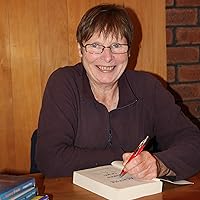
Maybelle is a graduate of St Bartholomew’s Hospital Medical College, University of London. A paediatrician who spent much of her career in England, she now works in Ireland.
In the DOUGHTY TRILOGY, Maybelle Wallis draws inspiration from the history of medicine and from her own experience to evoke a past that holds a mirror to the present. She believes that times may change, but human nature does not. Her first novel, HEART OF CRUELTY, explores themes of passion, deception and corruption, in the Dickensian setting of 1840s Birmingham. Its sequel, THE PIANO PLAYER, is a story of medicine and murder set in cholera-stricken Dublin during the Great Famine. DAUGHTER of STRANGERS, about reconciling the traumas of the past, is set in 1850s Manhattan.
I had no expectations going into this, and it was rather enjoyable. I have the unique background of having Irish potato famine survivor ancestors as well as being married to a doctor myself, so this felt like a good fit.
Things I Enjoyed: - The setting. The author did a good job of description without overdoing it. The subject matter and location were interesting and captivating. You can tell she did a lot of research. - Descriptions of grief. I think this is where the author really shone - Length. The book was a good length for the story it was telling. - The opening scene with Orla. Powerful and a great hook!
Things I Struggled With: - Some hyper-descriptive elements of medical procedures or bodily functions. Reading about newborn poop while drinking my coffee was... eh - The stories were very disjointed until the end. While it was resolved, it felt like whiplash between chapters, especially after the strong emotional opening - a personal pet peeve of mine is reading about signing. I have a hard time connecting words to my imagination when there are lyrics - sex before marriage being on the same level as murder? - the ending felt rushed. Alex just dies? Anna and Joseph agree to get married? Orla is an opera singer? It felt very sudden, though I don't dislike the ideas - I wanted more intrigue around the murder! So much time spent on things that were objectively less exciting
Overall, I think this novel was good. I was really excited to read about a subject I care so much about - there doesn't seem to be much historical fiction about the Irish famine/genocide and I wish there were more authors trying to engage with the subject, as Wallis has done. I would read her other novels.
This entire review has been hidden because of spoilers.
The novel kicks off with a pretty intense scene of Orla's family being evicted from their home in Ireland. It's a pretty traumatic experience that sets the stage for the rest of her journey. When Orla arrives in New York, she has a tough time adjusting, but she finds hope in her singing talent. Orla's voice is both sweet and powerful, and it becomes a metaphor for her resilience and potential.
Orla's relationship with her adoptive parents is a key part of the story. Her initial resistance and their struggles to understand her needs result in numerous confrontations and heartfelt moments. These interactions look at themes of trauma, recovery, and the search for identity and belonging.
I found Daughter of Strangers by Maybelle Wallis to be engaging and well-written, but there were a few aspects that I felt could be improved. The pacing is a bit slow at times because of the detailed descriptions, which can affect the story's momentum. Some of the secondary characters, like William and Jane, don't get enough development, which makes their interactions with Orla less emotional.
The book is very focused on trauma and recovery, which can feel repetitive at times. Some parts, like Orla's journey as a singer, feel a bit predictable. Some unexpected twists could add more intrigue. On top of that, the overall emotional tone is pretty intense, and some moments of levity could help create a more balanced experience.
This entire review has been hidden because of spoilers.
I enjoyed this read. The story is told alternately from the points of view of Anna, a teacher, and Joseph, a doctor, both of whom arrived in America from post-famine Ireland and who knew each other slightly in the past. Both characters are well drawn and sympathetic and each has something to hide. Anna is torn between Joseph and the wealthier, higher-born Alex, a former landowner from Ireland, who is seeking revenge for the murder of his father. It’s an interesting time period and I enjoyed learning about mid-19th Century New York society, from its salons, opera house and charity bazaars, to its seedier aspects in the saloons and tenements down by the docks. I also liked learning about the development of female education and the state of medicine and pathology. I was completely transported to that time and place. The book is well-researched yet wears its research lightly. The plot was intricate, weaving many subplots together, while elaborating on the post-famine Irish question. I particularly enjoyed the subplot about Orla, who was orphaned in the Irish famine, and about how her grief and trauma manifested itself in an interesting medical condition. The book held my interest throughout and had plenty of tension. All in all, this is a fluid and worthwhile read.
It was an engaging read though it took me a bit to get into. This didn't help because I hadn't read the fist two books. Ftom them I would have understood more about Jane/William Anna/Joseph's back story. The author might want to link these books on Goodreads or Amazon. I think the first one I missed was Jane/William's story https://www.goodreads.com/book/show/5... and their story continues in https://www.goodreads.com/book/show/5.... This story has dark memories of the famine and mass emigration in Eire. With disease and a murder thrown in for good measure. There's a good description of the effects of pre eclampsia and I worried for the mother and babe in those times. I was left wondering what happened next to the four characters.
I voluntarily read and reviewed an advanced copy of this book. All thoughts and opinions are my own
A beautifully written historical novel.. I found this book very enjoyable and thrilling. Although I discovered it was part of a series, it could have well been a stand alone book. It was a very enjoyable read, a story about trauma and redemption and coming back from one’s past. The realities of what Irish immigrants experienced after the potato famine when coming to the United States was realistically portrayed. Orla ,Anna and Joseph were characters that were thoughtfully depicted and as a whole,utterly unique and diverse characters. I loved the original story aspect,I’ve not seen a book written about this before, and the opening scene really drew me in. I did receive this book as an advanced copy and all opinions are my own.
Orla is an orphan of the Irish famine, taken in by a couple now residing in New York. She has a beautiful singing voice, but past trauma surfaces and renders her mute. A teacher and a physician, both with secrets, seek to help her, but both are suffering from trauma as well.
This is the third book in a series, and reading the other two books would have been helpful. There was a lot about the adoptive couple that it would have been good to know. Parts of the book were rather slow, and it seemed overly coincidental that all the Irish immigrants involved in the traumatic situation should have 'found' each other in New York. Nevertheless, I enjoyed the story and the hopeful ending.
The story is set during and after the potato famine in Ireland, depicting its devastating aftermath. It's a work of historical fiction set during a tumultuous period in Irish history when many people had to leave the country in search of better opportunities. However, the pacing issues made it difficult for me to stay engaged with the book or care about the characters. The writing was okay, but the plot felt disjointed, and I sometimes found myself bored of it. This one of my favorite genres but this was a miss for me.
Thank you BooksGoSocial for sharing the book through @netgalley all opinions shared are my own.
This third book in an excellent historical trilogy by Maybelle Wallis takes her characters from famine Ireland ('The piano player') to 1850s New York. Post-trauma difficulties and the legacy of desperate deeds afflict several of the characters who take centre stage in this satisfying and suspenseful conclusion. As before, Maybelle Wallis combines rounded believable characters, historical authenticity, and evocative scene-setting with deliciously dark gothic overtones to deliver another page turner.
Firstly thank you to NetGalley and the publishers for the copy of this book in return for my honest opinion.
I did not realise this book was part of a series and now having finished it I did not feel like I missed anything in the previous books. I did enjoy this story of revenge grief and loss set in the Irish potato famine era. I finished the book in one day as I found the writing style really easy to read . My one criticism is I found the ending a little rushed but on the whole would recommend.
This was not only really good but also interesting! Indeed, the plot was complex and original while being thrilling. I also found fascinating the information about electricity in medicine as well as its use regarding the cure of trauma. The story is also about redemption: is redemption actually a possibility? Can a criminal act be justified? A very good read! I received a digital copy of this novel from NetGalley and I have voluntarily written an honest review.
An enjoyable historical fiction set after the Irish potato famine it revolves around several characters that are all linked by their history in some shape or form. Part romance part revenge part medical and the rest historical I found the story really engaging and read it in 24 hours. Thanks to Netgalley for the ARC
This is the 3rd book of a series, but can be read alone. I liked the histor icalsetying, a period of time I was unaware of, so it was educational. Each character, Orla, Anna and Joseph have experienced trauma of some sort and overcome or resolve it to get a happy end8ng. At times, this book was a little slow, but overall was a unique read.
The book is set somewhat after the potato famine. It shows the struggle of various immigrant characters who deal with a gruesome and highly traumatic past. Orla, an orphan who has lost her whole family; William and Jane, her adoptive parents; Dr. Joseph Murphy, who carries a dark secret; Anna who has her regrets.
Anna and Joseph help Orla heal while a lot of things turn in place. Joseph investigates the murder of a certain Dr.Noonan who looks a lot like him.
What I liked: - The writing style was great, there were certain times where characters thought what I would have in a similar situation. - I liked Dr Joseph and Orla mostly, since to me their actions were most transparent Plot: - The emotion-packed scenes such as when Jane was giving birth, or when Orla bit Alex. - How disgusting Alex was and how Anna had some behaviours she couldn’t totally let go of in his presence. How she was always on the edge with him. It helped really villainise the character - In the end when Orla held Alex at gunpoint, and she was serious. I loved Orla lmao.
What I disliked: - The murder of Dr. Noonan was not as engaging as I would have wanted. - I felt William and Jane to be a not as involved? - Alex Royce dropped dead at the end out of nowhere? I felt it was an easy and rushed at the end. - I liked how fluidly the tale of Finton the wise and story of the Famine was narrated
The book was great, with its focus on trauma recovery and the need to face your traumas to move on from them.
This entire review has been hidden because of spoilers.