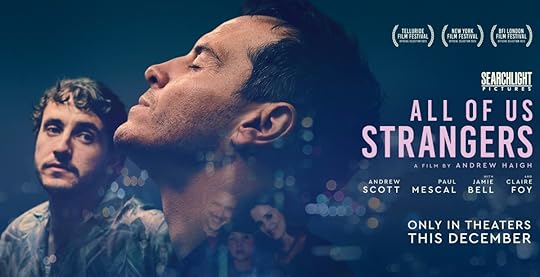
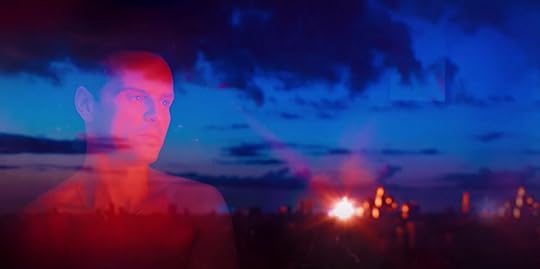
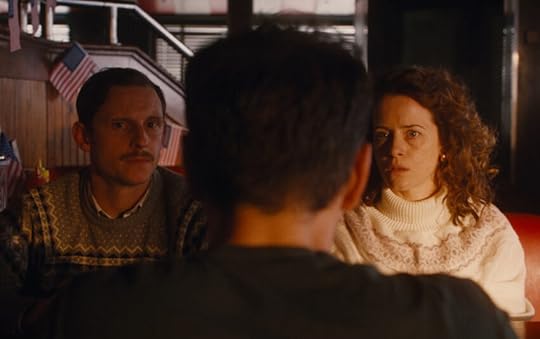
In the anticipation of the upcoming film “All of us Strangers” adapted and directed by Andrew Haigh, who has directed one of my favorite films of all time, the immortal and intimate “Weekend” about a queer love affair set in working class England 2011.
I quickly bought this book to read how Haigh planned on adapting a heterosexual love story set in 1980s Japan, in transplanting it to the 1980s England of his youth. It also stars Andrew Scott, Paul Mescal, Claire Foy and Jaime Bell, so I am truly excited to see the upcoming LGBTQ adaptation of this ghost story for the 2023 Oscar Season time.
Strangely enough, this book began tepidly. This is the story of lonely TV writer, Hideo who is approaching middle age. Set in Japan during the 1980s outside of Kyoto, Hideo lives a mundane life of where everything seems to be all laid out for him. Estranged from his son, Shigeki, at odds with his ex-wife Ayako for dating who’s now engaged to his occasional friend and co-worker, Mamiya, Hideo spends his time in solitude, concealing his feelings—whether it be anger, or confusion.
We learn his life’s been marked by constant tragedy: he loses his parents when he was 12 to an accident; he lives with his grandfather out in the country, eventually losing him too. Finally, it is an uncle of his who helps him with his college tuition as he comes of age without much of a family unit to complete him.
In reading these early scenes, it reminded me too much of films or books where it is usually about a lonely male protagonist who finds himself in a noirish situation where he falls for a mysterious woman who awakens what’s dead inside.
I was partially correct: Hideo is entranced by his waiflike neighbor Kei and the two begin an affair. Hideo loves touching Kei’s bottom parts complete with moles that show his desire to love physically.
I shuddered thinking this would become a book about the exposure of male glaze that I was fearing. So, this is the moment where Hideo falls for Kei, at least physically.
But the book shifts into a ghost story of sorts- of unbearable, and melancholy suspense. Hideo meets a man who eerily resembles his dead father at 39 and drives out to Asakusa to see where he lives. Hideo is also introduced to a woman who looks like his deceased mother. He immediately bonds with where the three of them make up for lost time.
Hideo is 47, his parents are 39 and 35. Spending evenings with them cooking meals, playing catch with his father, and his parents praising Hideo’s success drive the plot into the surreal. Surely this is Hideo trying to cope and process pent up feelings of grief and loss? Surely this is his head trying to make up for lost time and to desperately, yet ironically and organically create the family unit that he lost as a child.
As he spends time with them, as well as Kei- she notices Hideo’s turning into a skeletal figure. Losing weight, his hair greying rapidly, she begins to fear that perhaps sinister forces are sucking the life out of Hideo. Mamiya is also concerned, and he fears that it might be Kei who is contributing to Hideo’s physical deterioration.
As Mamiya does what he can to advise Hideo to break things off with Kei, Kei asks Hideo to stop seeing his parents. But the book is about what the heart wants in its most primal- the need to love, and to stop the constant grief that makes him not feel whole.
As the book turns from character study to an eerie ghost story, I realized that I found myself invested in Hideo’s relationship with his parents.
In one heartbreaking scene where Hideo and his parents decide to eat out for dinner at an expensive restaurant, Mr. Yamada creates a chapter of unbearable heartbreak and finality that makes this novel worth reading.
I did not expect this scene to come out so affectingly, but it is the best part of the novel.
I understood all at once that although goodbyes must be made—it’s never easy to write the least.
I made connections with my own life and experiences of the deaths of my loved ones as I read this. I certainly had empathy for Hideo- and wish that I could somehow turn back the clock to see and say goodbye to loved ones as well. Mr. Yamada makes this fantasy possible in his book, and this fantastical possibility is what makes this book one of the saddest I’ve recently read.
It’s intimate scenes between Hideo and his parents, as well as that of Hideo and Kei, and intimate friendship between Hideo and Mamiya all make sense as to why Andrew Haigh, a filmmaker drawn to melancholy and lost love, would want to change this universal story in the search of family into a queer story. I cannot wait to see how the film goes.
Postscript: I did see the film “All of us Strangers”, and it does this novel justice, and adds a gay sensibility that makes the film even more wrenching than the book.
Andrew Scott gives a breathtaking leading performance as Adam, Hideo’s character. His scenes of loneliness and inability to process will break your heart forever.
Paul Mescal is the Kei role, renamed Harry. Mysterious and a hopeless romantic, he’s the perfect foil to Adam’s introverted, haunted man. They both yearn for so much- Adam for his past, Harry for a hopeful future, complete with gorgeous, sad puppy eyes.
The film also removes the chilly, horror, supernatural aspects of the novel in order to give a film that captures a man reflecting on his rediscovered past, yet forgetting about a present in which leaves behind a man like Harry- who’s so in love with him, that Adam does not realize that Harry’s mental health is hanging in a precarious balance. This leads up to the movie’s devastating finale, where Frankie Goes to Hollywood’s most soulful ballad, The Power of Love” bookends the final curtain.
Finally, Claire Foy and Jaime Bell give career best performances as Adam’s parents that are so honest and true.
I do hope that somehow all four of these actors are nominated for Oscars because they clearly have done something so special and beautiful that it deserves to be recognized.
**Another postscript**
Extremely disappointed the Oscars did not nominate "All of Us Strangers" for any of its amazing actors, or its heartfelt screenplay.... sad.