The stunning debut of a brilliant nonfiction writer whose vivid account of his grandparents’ lives in Egypt, Tunisia, Palestine, and Los Angeles reclaims his family’s Jewish Arab identity.
There was a time when being an “Arab” didn’t mean you were necessarily Muslim. It was a time when Oscar Hayoun, a Jewish Arab, strode along the Nile in a fashionable suit after Shabbat services on his way to bring tobacco to his dying grandfather, long before Oscar and his father arrived at the port of Haifa to join the Zionist state only to find themselves first hosed down with DDT then left unemployed on the margins of society. In that time, Arabness was a mark of diverse cosmopolitanism, of intellectualism. Today, in the age of the Likud and ISIS, Massoud Hayoun, the Jewish Arab journalist that Oscar raised in Los Angeles, finds his voice by telling his family’s story.
To reclaim a cosmopolitan, nuanced Arab identity is, for Hayoun, part of the larger project to recall a world before ethnic identity was mangled for political ends. It is also a journey deep into a lost age of sophisticated innocence in the Arab world; an age that until now could be witnessed only in the films his family treasured but that are now nearly lost amid the flood of culture.
When We Were Arabs, a stunning debut that showcases the gorgeous prose of writer Massoud Hayoun, tells the stories of Oscar and Daida, bringing their worlds alive in vivid poetic prose, and in so doing shattering our contemporary understanding of what makes an Arab, what makes a Jew, and how we draw the lines between us over which we do battle.
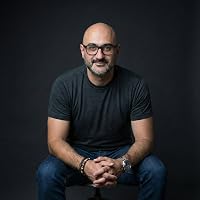
Massoud Hayoun is a journalist who lives in Los Angeles. He has reported for Al Jazeera, Pacific Standard Magazine, Anthony Bourdain’s Parts Unknown online, The Atlantic, and Agence France-Presse. He speaks and works in several languages.
In my circles we are taught that a Jew is a Jew regardless of background. This message comes in handy for my kids with the last name Gonzalez as people do a double take when I tell them both my name and where my husband is from. There are many Jews of Hispanic origins just as there are Jews of Arabic origins. Other than the Persian and Sephardic communities; however, Arabic Jews are often overlooked and even denigrated by Ashkenazic Jews who will turn up their noses at their assumed less sophisticated brothers. Massoud Hayoun is from Tunisian, Moroccan, and Egyptian heritage. In We Were Arabs, Hayoun explores his family heritage and looks to debunk the gulf that has widen between Jews and others of Arabic origin.
Massoud Hayoun was raised in Los Angeles by his mother Nadia and her parents Oscar and Daida. Coming from Egypt and Tunisia, the Hayoun family observed Judaism in a manner unique to Jews of Northern Africa, mixing in what westerners mislabel as Sephardic customs along with Arabic and Islamic traditions that they had picked up along the way. In the Hayoun home in Los Angeles, the family spoke Egyptian Arabic and French; Hebrew was reserved for praying and English for school. Having brownish skin, Massoud’s classmates mistaken him for being Mexican or of other Hispanic origin, yet he was as Jewish as his Ashkenazic peers just originating from a different part of the world. Massoud attended Oscar’s Arabic shul and had his bar mitzvah there, giving Oscar much “nachas” (Jewish pride). The family ate homemade Tunisian and Moroccan dishes and Nadia and Massoud spoke fluent Arabic, until after 9-11 when Oscar nervously spoke it in whisper and the home language was replaced by English. Yet, until his grandparents approached the end of their lives, it did not occur to Massoud to explore deeper into the Hayoun family history and visit the cities in Tunisia and Egypt where his grandparents grew up. In homage to them, Massoud chose to tell their story.
Oscar Hayoun grew up in French controlled Egypt, considered the Paris of Africa prior to World War II. His family had immigrated from Morocco and spoke Arabic with such dialogues. Oscar was born in 1927 in a vibrant Jewish community in Alexandria, and it was common for Jews and Muslims and Coptic Christians to intermingle and form friendships, melding each other’s traditions and blending Hebrew and Arabic in prayer services. Daida Khadbouza was born to years later in Tunis. Her father was one of the leaders of the Jewish community in Tunisia, a business man in charge of a barrel factory. It is possible that the family descended from Berbers who had converted to Judaism centuries earlier. Like their Egyptian counterparts, Tunisian Jews intermingled with their Muslim neighbors prior to World War II. The Khadbouzas listed as close friends prominent Muslim members of the government, and the families would attend each other’s family and religious festivals. Both Oscar and Daida considered themselves closer to the Arabic culture of Northern Africa than the western Jewish culture that played a prominent role in establishing the state of Israel.
After World War II and the 1954 take over of Egypt by religious Muslims, the Hayoun family as well as the majority of Jewish Egyptians left for Israel, France, or the United States. Oscar’s father Yaquob settled in Israel; however, the early Zionists and government leaders looked down on their African brothers, relegating them to tent cities, a small step up from the Muslims in the country. Oscar saw no future in Israel and desired to leave. Daida’s family suffered a similar fate in France as all new African immigrates were sprayed with DDT. In Paris, she was expected to provide for her parents and also expected to marry a Jew from Tunisian origins. As fate would have it, she met Oscar at a party and decided that she would marry him. Tunisians viewed Egyptians as inferior even though they were both Jewish, yet Daida’s determination won out over her family, and she was allowed to marry Oscar. With little future available to them in France or Israel, the couple and their two daughters immigrated again to the one country with an opportunity for all comers, the United States.
As with many immigrant stories, eventually the Hayouns assimilated into American society. They were fortunate to find an Arabic synagogue in Los Angeles so Oscar could enjoy his traditions and speak his language. Daida eventually attended night school and went to work in a bank, achieving her slice of the American dream. Over time, she even found her native foods in American grocery stores, saving her hours from preparing pita from scratch. Massoud Hayoun grew up in this home that is a nexus of Jewish, Arabic, Muslim, and American cultures. Today he works for Al-Jezeerah, enough for an Ashkenazic Jew like myself to do a double take until I read his compelling story. With the world being what it is today, the Hayoun story should be a must read for religious schools and those looking to teach a higher level of religious tolerance.
We Arabs have a saying t3ishoo w traboo, which serves as the ultimate compliment one can give about the parenting of a child. When We Were Arabs, is testimony to the young man that Oscar, Daida, and Nadia raised to be this sweet, kind, generous, humble, delightful, intelligent, cultured young man who by writing this celebratory love story to his family embraces their teaching of the Jewish concept of Tikkun Olam. Hayoun writes a thoughtful, empowering story that serves to make this world a more harmonious place. No longer the separation of Arab and Jew, we have an engrossing understanding of the Jewish Arab. This is a definite must read! #Hayyoun2019 #WhenWeWereArabs
There is an arabic saying I grew up with, and it is one that i often use: Ibn Khaldun once said “اتفق العرب على ألا يتفقوا” which translates to “Arabs agreed to disagree” which is - more often than not - true. However, there are instances which prove this saying wrong. When We Were Arabs by Massoud Hayoun tells the story of a time when Arabs agreed that they were all Arabs regardless of their faith.
WWWA is without doubt my favorite non-fiction of 2019! Massoud Hayoun, an Arab-American Jewish journalist reclaims his identity as Jewish Arab an identity his grandparents lived and experienced, but one he was denied. He starts the novel with the following sentence: ‘I am a Jewish Arab. For many, I’m a curiosity or a detestable thing. Some say I don’t exist, or if I did, I no longer do.’ For there was a time when Arabs were united and with this thoroughly researched book, part journalistic part memoir, Massoud Hayoun seeks a rebirth of that Arab unity. The book follows a chronological order and is divided into 6 chapters; Massoud digs deep into the roots of his Jewish Arab identity from the Origins of Arab people to the creation of the “Israelite” Nation to the Rupture of his identity. Those titles are also written in different languages depending on the time referred to. The 1st chapter is entitled Origins and since it deals with the origins of Arab identity it is written in Arabic. The 5th chapter Darkness is written in Hebrew as the evolution of the “Isrealite” identity is explored through Oscar’s life between France and Palestine. However the book ends on a title that is translated into Arabic, Memory (الذكرة) which I believe is a way for the author to reassert his Arab identity that was passed down through his grandparents’ memories among other things.
Massoud delves into the Jewish Arab identity through its different facets combining history, culture, politics, storytelling. He generously shares his grandparents’ stories who are in my opinion the backbone of this book as well as the Jewish Arab identity. Oscar (Egyptian-Moroccan) and Daida (Tunisian) are the proof that a time of unity existed. But their stories are also used to illustrate the “Rupture”, the split into this identity, how colonialism worked at stripping Jewish Arabs of their Arabness, imposing a new nation, a new identity that of “The Nation”. Daida for instance was taught at school that she was not Tunisian but an “Israelite”. Massoud Hayoun’s grandparents are people you easily get attached to and I am grateful for allowing us within his family. WWWA sheds light on indeed a ‘forgotten history’ as mentioned in the title, and thus it revives that history
Fascinating. This was a real education for me about Arab, Middle Eastern, and North African Jewry and the mass expulsion from their homelands. The author, who identifies as Jewish Arab American, goes in search of himself through his family’s North African heritage and subsequent displacement. He lambasts French and British colonialism, Zionism, modern Israeli politics, white supremacy and in particular European Jewish white supremacy, for creating the separation, disenfranchisement, and statelessness of this people. To me this is a definitive contribution to the cause of raising awareness of this somewhat overlooked aspect of history. While not particularly well written, and not particularly sophisticated, I give it a 4 because of its educational and impactful content.
After finishing the first chapter, The origins, as a Muslim Algerian, Messoud Hayoun opened my mind to many subjects about my identity as an Algerian, my Arabness, and my history, particularly in passages where he evokes Tunisia, which has a lot of similarities with my country. Through his family's journey, and its origin treated in this chapter, mainly the Tunisian part, I can see my ancestors, Muslims living side by side with their other cocitizens non-Muslims, particularly Jews. Those latters have, unsurprisingly, contributed a lot to my culture, cuisine, art and crafts, after all, it was their land and their culture as well. For instance, Algerian Chaabi and Andaloussi music have known big figures such as Medioni (a whole area is named after him in Oran), Cheikh Raymond, Lili Labassi, Salim Halali, Gaston Ghrenassia...etc. The part where he talks about Nassim Shemama reminds of two Jewish Algerian merchants, Bakri and Busnak, who leading the cereal business in Algiers, supplied France, then in war, with important quantities of wheat, which remained unpaid for over 30 years, thus causing deterioration of the relations between the two countries. As I re-read the very beginning of the introduction "I am a Jewish Arab. For many, I'm a curiosity or a detestable thing. Some say I don't exist, or if I did, I no longer do", and recalling the presence of Darb Lihoud (the trail of the jews) in almost each big Algerian city, the few Jewish cemeteries and the rare synagogues, that people don't even know they exist, I can say that a Jewish Algerian have truly existed, but I can't deny the validity of the rest of the paragraph.
This is a mesmerizing book and I highly recommend it.
Growing up in Iraq, I've heard so many stories about the Jewish communities that used to live there before they were forced to leave the country after Nazi Germany influenced Iraq to oppress the Iraqi Jews. When I was a child my mother told me stories about her Jewish best friends in her neighborhood and how they lived in harmony together with no problems for a very long time.
The stories I had heard from my parents about Iraqi Jews prompted me to ask questions. That was not something you could easily discussed in Iraq under the rule of the dictator Saddam Hussein in the 1980s! I could not buy books or even dear to read or discuss anything about it. After Saddam was ousted, I was able to learn more about the Jewish Exodus from Iraq. In 2006, when I came to the US to do my Master's in Writing Studies, I met an 80-year-old Iraqi Jew who was kind enough to tell me his family's ordeal and exodus from Iraq in the 1940s. With his permission, I turned his story into a long-form piece I submitted for my narrative journalism class. He spoke with me in Arabic, yearning to his childhood in Baghdad.
This book is continuation of my quest to read about the exodus and the horrific and systematic oppression against Arab Jews from their homelands. It's so important to keep having those stories heard and mentioned when possible so they can stand as lessons for countries, peoples and communities to never let it happen to anyone again because sadly, it's still happening to communities like in Myanmar and China.
The author's brilliant writing style painted his grandparent's background and stories in a way that makes you feel like you're watching a classic, nostalgic movie in black and white. Through his words I was able to picture them, feel them and even hear them as they spoke Arabic, French and English! It's not easy to write this way but the author handled it brilliantly!
This book is for anyone interested in the Middle East and North African history, as well as the Arab identity and pride. It's for memoir and biography lovers and I cannot recommend it enough.
This was a near-unreadable mess of polemic, history, family history, and memoir. It's poorly organized and written, jumps around in a scattered and unedited way, and ultimately is a chore to get through. I think the author has a story to tell and a point--or several--to make, but those aren't served well in the current state this book is in.
What it means to be Arab is a question that is a lot more complex than one might assume. As someone of Christian Arab ancestry it wasn't until two years ago that I was even made aware of the fact that Arab did not necessarily mean muslim. I've spent a lot of time learning about Arab history and the diverse amount of backgrounds and opinions that make up the Arab architype.
Author Massoud Hayoun explores this topic from his own family narrative. Being Jewish Arab may seem an anomoly or a contradiction to many who are either politically opposed to it or just uninformed on the history or North Africa and the Middle East. When We Were Arabs explores this history through Hayoun's family, detailing their lives and how their nationality, ethnicity, and religion informed how they were preceived; whether it be in a colonial context or abroad in more modern times.
This information is highly informative and really showcases how Jewish Arabs lived throughout North Africa and the diaspora. When I read A History of Arab Peoples by Albert Hourani at the beginning of this year my biggest disapointment was the lack of information on Arab people's outside of the birth of Islam and the postcolonial late 20th century. It's not that these other subjects were ignored entirely but overall it felt like a lot was not given its proper portrayal. When We Were Arabs definitely helped satisfy this desire to learn more about other people and time periods of Arab people.
My biggest issue with the book is its structure and length. This book is under 300 pages and has about six chapters. The way information is organized is very disconjointed and it jumps around from subject to subject within chapters. This book is part family memoir, part personal memoir, part historical account of North African Jews, and part historical evaluation of zionism. Especially with how short this book is, it doesn't feel like any of these subjects are really given their proper treatment. If it wasn't for the subject matter being so unique and how much there is to learn from the information in this book I don't think I would be as favorable of it.
Overall there is still a lot of great information on the subject of Jewish Arabs and life in colonial and post colonial North Africa. I would still recommend this book to anyone looking to learn more about Arab people and history as I haven't found another book that covers a subject like this.
**Be wary of some "reviews" on this book and please take some with a grain of salt. You will find many folks in the comments giving the book one star because it does not go into details about the history and change in relationship between the two main identities of the author, and complaints that it is anti-Zionist, or not supportive of Israel, and those are the reasons for the scathing review. You will also find a couple that are just angry that the book is about Jewish people and they are disgusted that a Jewish person would want to be Arab, so either anti-semetic &or anti-Arab. So, these are quite biased and sometimes bigoted "reviews." It's not surprising at all given the nature of the book, but please be mindful of this while you are scrolling through :)
Anyways: The book itself is a bit disorganized mashing together his family timeline, personal anecdote, and a little history throughout. There were points and perspectives I wish he fleshed out more, or provided some more historical evidence and discussion, but over all it is a very important read and perspective to get out there. It is so frustratingly rare to find the perspective and identity that Hayoun has in a published work, especially in the west. It is refreshing, and this representation of Jewish Arabs (who are not necessarily Israeli or singing the praises of /definding israel) is absolutely necessary. Folks like Hayoun are vastly underrepresented and often suppressed by their own communities especially in the US. It is true that over the last century there has been active efforts to erase Jewish Arab identity and culture which has only been exacerbated by assimilation of Jewish Arabs to the dominant culture in diaspora (as with many diaspora communities). So I highly recommend this book especially to anyone who identifies as Arab or Jewish, or if you are like us, someone with mixed heritage or has an intersectional identity.
reading this book took me forever, despite it not being complex nor long. it felt heavy on my heart, the grief was palpable and every experience he narrated was ripping my heart. as should every arab reading this memoir, or at the mention of the jewish arab communities. I think that we as societies lost a lot by the disappearance of this essential part of our community. the MENA Jewish communities preserved and even thrived per moments during all these centuries, it's a vital part of the fabric of these lands. and suddenly in less than 100 years, majority got kicked out or self-exiled. the grief Massoud Hayoun is writing about is mirrored in my heart too. he lost his people, I lost my people too. the details on why and how are also all so maddening, from the French deep involvement, to the spread of the zionist movement, to the local variety of antisemitism that got accentuated during that time, to the absolute failure of arab authorities to manage the situation. I liked this book, it was emotional to me, there's nothing that I didn't know about the history, but the personal history was important and meaningful
I loved it. Never enjoyed reading a book as much as this one.. Britain, France and Zionism destroyed Jewish Arab lives. Uprooted people to pursue a most racist endeavor.
I haven't read the book yet but I have to comment that from the synopsis that's exactly why we have problems with the jews. As Arabs we never had problems with diversity and as Muslims we always held our brothers from Christianity (and other religions might I add) with love and respect. Our problem with Jews isn't based on their religion until they made it a problem when they enforced their beliefs on everyone in the area, our main problem with them has always been about Israel and occupation. So don't mix fighting the enemy with racism. They are not the same. Also STOP saying Islam is ISIS when people from ISIS are people with problems and don't represent Islam, but Israel DOES represent the Jews.
Overall both informative and emotionally captivating, especially regarding how the french colonial apparatus instrumentalised north african jewish communities İ learned new things. However İ do feel like the element mix of informative nonfiction and family novel that works perfectly well in a newspaper column was slightly detrimental here as neither side was realised to its fullest potential. There was a certain lack of political perspective at times that felt mismatched with the urgency of the text.
Massoud Hayoun combines two shorter books into one with his debut nonfiction When We Were Arabs. It’s a family memoir, a political history, and a commentary. He uses his own family’s experience, primarily that of his maternal grandparents, to illustrate a wide variety of political, religious, social, racial, and historical issues among Jewish Arabs and the rest of the world.
It’s an ambitious project that unfortunately falls down in the execution. I thought his family’s story of multiple immigration experiences was mostly quite interesting. And parts of the other topics were well drawn and also informative. But the great quantity of the book needed better writing, editing, and organization. Therefore, I truly struggled to finish it.
Hayoun comes from both Tunisian and Egyptian heritage. His grandmother was born in Tunisia, and his grandfather in Egypt. The 20th century was tumultuous for both of them. Separately and together they emigrated to Israel, France, and the United States. Each time they faced different challenges, which tested their resiliency. But because they started life as Jews in colonized Arabic countries, difficulties were just normal life for them.
Hayoun bases the memoir sections on autobiographical notebooks kept by both grandparents. He then takes the information and adds his own commentary. His grandparents essentially raised him, so they often told him of their experiences as well.
In addition to his family history, Hayoun explains historical events from the 1300s until present day. It’s probably not comprehensive, but I’m not knowledgeable enough to judge that. On the other hand, it’s certainly full of details, which simply bog down the book’s narrative. Hayoun tries to explain injustices and challenges suffered by Jewish Arabs throughout the centuries. It’s just way too wide ranging.
My conclusions The reason I picked this book at NetGalley was because of Promised Land by Martin Fletcher. In that book, I learned about the plight of Jewish Arabs in the early days of the state of Israel. Of course, Jews are indigenous to these lands, just as people of other religions are. But I didn’t fully understand the complexity of racial prejudices and injustices happening there.
Reading When We Were Arabs taught me about depth of these issues. For that reason, I’m glad I read it. I just wish it wasn’t such a difficult slog to get through. Truthfully, if Hayoun focused on the powerful family memoir with some explanation and commentary that would have worked for me. As it was, reaching a history section meant groaning internally and skimming the text.
I’m well versed in the political issues of my own country, but am always open to learn about politics in other countries and regions. Unlike a lot of my reads, I have no personal stake in the sides of this political divide. But I appreciate the commentary on how two separate and distinct faiths can live side-by-side. And also how they’re quite divided in other, less obvious, ways.
Hayoun also spends considerable time discussing European colonialism, which he clearly disdains. I think those issues should continue to be raised, as colonialist behavior happens often today.
Unfortunately, I can’t give this book a strong recommendation (2.5 stars). I suspect there are other books that cover these issues with more clarity and less frustration. But I applaud the author’s effort and his family’s persistence.
Acknowledgements Many thanks to NetGalley, The New Press, and especially the author for the opportunity to read a digital advanced readers copy in exchange for this honest review.
'Arabeness is a personal identity, it is my politics, my inheritance, how I was raised, my relationship and bond to others who share in that legacy, the soil from which I emerge. Judaism is my faith and my understanding of metaphysical things. (...) I am Arab first and last. Judaism is an adjective that modifies my Arabness'.
After all, identity is a matter of personal choice and in the 21st century we are provided with a richness of conceptual frameworks and ideas to create our very specific identity. It is a matter a choice and of taste, after all.
In When We Were Arabs. A Jewish Family's Forgotten History, Massoud Hayoun wrote a memoir about his grandparents story and experiences as Jews living in Tunisia and Egypt. Interesting narratives that completes the landscape of Jewish identities in the Middle East. Which is not that easy as it might be and far from being black-and-white. However, focus to built his 'Arabeness', Hayoun is ignoring some important details while in some cases takes for granted anti-Semitic propaganda from the yellow Arab media.
He is unhapppy with the 'de-Arabization' of the young Jews from Northern Africa, that followed the directions of the various French Zionist organisations from the end of the 19th century. Those organisations preached - through the French language - a Westernization of those cultures, that affected not only their dressing style but also the state system. Further on the Jews were used to 'colonize' the Muslim world. The critics against 'Westernization' are common at the beginning of the 20th century all over the Far and the Middle Eastern. The 'third-world'/'tiers-monde', to follow the French Marxists discourse has to do with those critics as well. But it is worth to evaluate negativelly those influences. Was it exclusively a one sided approach? What about the fact that thanks to this 'Westernization', the education for girls was made possible? Those details are not discussed at all by Hayoun.
Hayoun is also excessively using the metaphor of the 'peaceful Arab-Jewish co-existence' in those areas. The truth is that sometimes it worked, sometimes not. Perfect peace was not and when the situation is not evaluated on a case-by-case basis it does not bring any value to an eventual understanding the Arab-Jewish relations in the Arab world. What Hayoun mentions more than once is that many problems appear following the creation of the Jewish state and sometimes even 'Zionist' themselves created such skirmishes in order to speed up the migration to Israel. Nothing, for instance, about the alliances between Nazi Germany and some states and religious leaders in the area. Or, about how the anti-Semitism originated in those areas - yes, it is an example of 'Westernization' that Hayoun aparently missed when preparing his research.
Plus, there is the clear bias that I've seen repeated ad nauseam about the anti-Mizrahim attitude of the founders of the state of Israel. Indeed, someone coming from a Polish shtetl,for instance, might have had difficulties in understanding the mentality of let's say, a Jew from Yemen, and the other way round. But there were and are so many nuances and special stories that deserve more than being omitted in the sea of injustice and frustration.
This clear bias affects at a great extent the quality of the memoir, which has a couple of interesting information about the specific Jewish communities in Egypt and Tunisia. Unfortunatelly the 'ideological' parts are unfortunatelly the only coherent ones, as the story of his grandparents is lost among irrelevant details about half-baked cultural theories. And this is exactly why I was interested in reading this book, for revealing the richness of particular communities and the stories of its people.
Disclaimer: Book offered by the publisher in exchange for an honest review
A couple of years back, my aunt's husband told me about my maternal family history, my mom's ancestors were Jews who "migrated" from Spain to Egypt and later converted to Christianity and then Islam (as one does). My family's history is so diverse yet not unfamiliar to many Egyptians. Unfortunately, it is also so forgotten as Egypt is now almost a homogenous society with little to no recollection of our multi-faith, multi-cultural days thanks to colonial erasure. Some would even deny these days as the author mentions. The entire world (including Arabs themselves) is so keen to divide and conquer us but books like these are proof that we aren't at all that different and we have lived in harmony before and I believe we can do it again. Anyway, I was fascinated of course and wanted to know more about my ancestors. I hoped I would find it in this book and I sort of did. However, some parts of book are so badly written, organised, and edited, that it does absolutely no justice to the story. I think the book should have a had a historical timeline first then the author could have spoken about his family. All this mixing and repetition just confuses and misleads anyone (who might not even know about Jewish Arabs) who wants to learn more about a heritage that's almost extinct. Even I, an Egyptian, struggled to keep up at times.
Really good book! It wove personal and generational family narrative into a concise history of Jewish Arabs and their displacement over time. This book was a real eye-opener to the divisiveness of the Zionist project across the Arab world - it really reinforces the fact that the Israeli occupation of Palestine has nothing to do with uniting people of a common faith and has everything to do with promoting racist hostility and violence.
A memory of my people in their search of home and confiscated identity. A missing part of our history, the history of Arab or North African Jews. It talks about the thoughts that I share and discuss with my friends about our identities and how the world excludes us as Arabs and Muslims as well as our Jewish fellow citizens.
When We Were Arabs: A Jewish Family’s Forgotten History by Massoud Hayoun is a unique perspective on the human impact of the creation of the State of Israel. There are many books that describe the European Zionists who created the State of Israel. And there are other books that describe the fate of the Palestinians who lost their homes when Israel was created. This is a rare book that describes the fate of two Jewish families living in Arab countries whose lives were forever changed first, because of European colonization, and then, because of the Arab response to Zionism.
Hayoun says that he wrote this book to “breath new life” into the story of his maternal grandparents, Daida and Oscar. Hayoun based his book on diary entries written by his grandparents, stories told to him by his grandparents and old Arab movies that he watched with his grandparents. In essence, this is a memoir of Hayoun’s grandparents as told to the author.
The family of Hayoun’s grandmother, Daida, was from Tunisia. The family of Hayoun’s grandfather, Oscar, was from Morocco by way of Egypt. According to Hayoun, Daida’s and Oscar’s families lived in Arab lands for many centuries. He explains that, although they freely practiced their Judaism, they enjoyed friendly relations with their Muslim neighbors and shared their taste in dress, entertainment and culture in general. He makes clear that the culture of the Arabian Jews was nothing at all like the culture of the Ashkenazi Jews living in Europe.
The point of Hayoun’s story is that Jews living in the Arab countries were doing just fine before French colonization, the British Mandate and the creation of the State of Israel. And that is especially true for his grandparents’ families. His grandparents’ families were moderately successful and they each expected to continue to live successful and peaceful lives like their parents and grandparents.
But that all changed when the French took control of North Africa. Hayoun derisively refers to the French, the British and the Zionists collectively as the “colonizers”. He says that the French drove a wedge between the Arab Jews and their Muslim neighbors and that the British and the Zionists caused a backlash against the Jews by their local governments. As a result, Daida and Oscar were forced to leave their expected lives behind and to emigrate to Israel, then to France and finally to the United States where they traded their rich Arab culture for a Western way of life.
I found this book to be very well written and enjoyable. I certainly cannot blame Hayoun’s grandparents for resenting the fact that they were forced to leave their native lands and their expected lives. But I was left wondering whether their lives, before the arrival of the colonizers, were actually as peaceful and carefree as described by Hayoun. I wonder whether, after losing their expected lives, they may have inadvertently idealized their recollections of the lives of Jews in the Arab lands. The author does not confront this possibility. Instead he accepts and relates their stories exactly as he received them. For this reason I give this book 3 stars.
"Memory can subvert colonial authority, it can frighten the colonizers because it allows us to reconfigure this miserable world we live in now, depose the white supremacist, topple his statue in the public square, and approach the European sector with open eyes, ready to disassemble empire."
This was so immensely interesting and it taught me so much that I wasn't aware of. Admittedly, the first two parts were very slow and I found them hard to get through, but the rest was quite gripping. I loved that the author included the photos he was describing; I love looking at black and white photos of the Arab world. I would really recommend this book cause it provides a perspective that we never hear about, especially its focus on how Israel is only a "safe haven" for white Jewish people and how the racism it teaches and upholds extends to Jewish Arabs, as well.
Whenever I'm in Cairo and I drive by/visit synagogues, I always find myself imagining a time when those synagogues weren't just semblances of a time long past and which now need to be heavily guarded. Western imperialism and colonialism has taken so much from us and the word "tragic" doesn't even begin to describe what it feels like to know and feel the effects of that to this day. Though I'm not Jewish, I could really relate to the author's description of the self-hatred that many Arabs have today, which was/is ingrained in us by the West's continued demonization of anything Arab. It's something that feels hard to detach from, until you grow up and realize that the so-called progressive West isn't anything to look up to.
beautifully written through the lens of the author's own family history and what being arab means, as well as the impact of western colonization on the identity of individuals through generations (specifically jewish arabs)
I let this sit with me for a while before reviewing. At the time, I hadn't wanted to react hastily, since my feelings about it are complex, but now I wish I had done so sooner, since I recalled more specific passages. On one hand, the book is important in that sheds light on a grievously overlooked culture, and the author's description of the nuanced cultures of both his grandparents are not only beautiful in his profound love and affection, but contribute meaningfully to an understanding of people that have been given little consideration by those of us who are not Jewish/Tunisian or Jewish/Egyptian in origin. Certainly, it is important for Jews in America and indeed, Americans in general, to learn about Jewish cultures other than Ashkenazi; I hesitate to characterize the author as "Mizrahi", since he makes a cogent argument for not doing so early on in the book, although later on he seems to include himself among the people who do identify as such. However, while I do not bedgrudge the author in the least for fusing his personal identity with his politics, the portions of the book that are expressly political are, unfortunately, not well-supported by evidence provided within the bounds of the book. The author makes broad statements condemning heinous acts undertaken by Israeli intelligence for turning the Arab world against Arab Jews, but provides few citations, and it seems to acknowledge that his primary source of evidence of this are rumors and general impressions which he finds credible. It felt as if the author, who is a journalist, blurred the distinction between his obligations as a journalist vs. as a memoirist; personal impressions suit a memoir, but political statements, less-so.
Returning to the memoir side of the ledger, the author's grandmother seems to have a political about-face towards the end, which is not explained, and there is notably no connection drawn between the discomfort that the grandfather experienced as a Jew in the Arab world in the WW II era and anti-Jewish sentiment in the Arab world today. The author's self-identity as a Jew is also confusing; on one hand, he declines to identify as Jewish to a caretaker of a synagogue, but then says at another point that he observes the religion. This seems relevant considering that his self-identity is pertinent to both the memoir and and political aspects of the book. The result is, unfortunately, while the family narrative is rich and important, as is the political perspective of the journalist-author, the book just feels somewhat jumbled and confused. Perhaps a firmer hand with editing might have helped, or perhaps it is two books, or one much longer book. In any case, I was left with the disheartening wish that this were the first draft of a book which I could read in full when it was complete.
The author didn't do his research. He assumed that his family memories were the only acceptable reality, and jumped to conclusions. Searching the archives from the XIXth and the XXth centuries shows quite clearly that Jews were persecuted in Arab countries, and were not allowed to call themselves Arabs. It is quite ironic to claim this identity back, after centuries and centuries where Jews were forced to identify as strangers in their land and had to build their identity based on that. The title itself is misleading: Jews were never Arabs. They were not allowed to. And this idyllic recollection of memories is very far from the reality of their condition back then.
For Jews from Arab countries, just like Jews from Eastern Europe, the country of origin was the theatre of persecutions and Jewish communities were forced to identify themselves as a separate group. No wonder it became difficult for an Ashkenazi to consider himself Polish, or for a Mizrahi to consider himself Arab.
Given what happened in the past, expecting Mizrahi Jews to considere themselves Arab, is really a new form of colonisation: make a small group (Jews) disappear in the bigger group (Arabs) that oppressed them. It is important to remember that not only they were considered as strangers back then, but also that considering themselves Jewish before all was the only key for their survival as a people despite the surrounding hatred.
Identity is a very complex notion. I think this book overlooked this complexity. It is conceptually quite poor. What is identity? Is it ethnicity? In Morocco, for instance, Moroccan people consider themselves Arabs whereas technically they are 99% Berber. Tackling identity through ethnicity therefore seems weak. Ethnically speaking also, Jews from Arab countries are not Arab but either European (Spain/Italy/Portugal) or Middle Eastern (Turkey, Palestine). And in Morocco, especially in Fes, many of these Jews from Europe converted to Islam to survive. Today, they are Muslim families with Jewish-sounding names. So what are they? Europeans? Jews? Arabs? All three? The identity that counts is probably the one you chose for yourself. And if Jews decided not to consider themselves Arab, because it is not their ethnicity and because they were forced to be strangers in their own land, perhaps Massoud Hayoun should respect that .
Also, it is quite interesting to notice no "When we were Polish" "When we were Lituanian" "When we were Russian" book exists from Ashkenazi writers. Why?
Young author Massoud Hayoun has an interesting background, he's traveled the world, grown up hearing stories from family members from many corners of the earth, and as a freelance journalist he presumably has researching skills. I like his usage of film and fashion to describe Arab-Jewry throughout place and time, and I learned the meanings of many Arabic and Jewish words I've heard before but without context: Sephardi is Hebrew for Spanish, Mizrahi is Hebrew term for Eastern, the Berbers are the Amazigh meaning Free People, the Jewish Bible is called Tanakh, HamdelA means Thank God, qaid is an official or chieftan, Scots were known as Jock and the Welsh as Taffy, Mabrouk means May it be blessed. The sad theme of this book seems to be that every race has a biological proclivity toward racism and megalomania.
What this collection of vast and impressive facts and first-hand experiences is in need of, is editing. I felt this opened as a barrage of definitions and historical data, followed by a section that would make several great essays with some editing, and then at the end there were questions posed that answered my wondering, "what is this book about/trying to accomplish?" that would have been more useful presented in the beginning, or even used throughout as a unifying premise. I basically felt like this book had been written without an outline.
As interesting as the topic was, I really did not enjoy reading this book. I think it could have benefited from much more editing and structure. It jumped back and forth between Tunisia and Egypt and between his family's stories and more general history. Some details were repeated unnecessarily at different points in the book. I enjoyed the stories of the author's family much more than the general historical information, which was a slog to get through. While I'm happy to have learned about Jewish Arab identity and the history of the region, I think the author could have done a better job of integrating the information with his telling of his own family history. Thank you to NetGalley and The New Press for providing me with an early review copy of this book in exchange for my honest opinion.
I was so looking forward to reading this book, but alas, when I finally retrieved it from the library and began reading it, I was dismayed. I could barely get through the first chapter. The prose is impenetrable, dense, laborious, and boring. I never skip any section, normally, but I did with this book, and went ahead to read one chapter about his family. Needless to say, after being turned off by the writing, immediately, I lost interest completely, closed the book and brought it back to the library. Too bad. I almost feel like somebody else should write about Massoud Hayoun's life and present it in a more palatable and pleasing way. I cannot recommend this book to anyone.
A memoir with a bite, in which Massoud Hayoun, a member of the Arab diaspora and a Jew, chronicles his family history in a tale that spans continents and epochs, and weaves that history with politics. He uses his grandparents’ stories to explore the history of a once thriving Arab Jewish community. It’s very much a celebration of a rich and diverse heritage but it’s also a diatribe against colonialism and Zionism, of which he is a fierce critic. He documents the suppression of native culture by both the British and French and he is particularly angry when it comes to Israel and Zionism. The book is a well-researched and intelligent history of the complex situation in the Middle East, but not particularly well-written. It jumps about too much in time and place, and the lack of structure makes the narrative difficult to follow at times. Hayoun is an angry man, with justification, but a polemic doesn’t always make for good reading. However, I did enjoy the book overall, and particularly appreciated being made more aware that being Arab doesn’t automatically mean being Muslim, and that there are many Jewish Arabs as well.
This was a fascinating account of the modern history of North African countries from the perspective of Jewish families whose roots are there. From the impact of British and French colonialism to WWII and the creation of the State of Israel, to the push factors that led to their physical rupture from the region, to the new generation (the author) finding his identity as a Jewish Arab American, this book was enlightening. It dragged a bit in the middle for me, but I was glad I saw it through. As an Ashkenazi Jewish person, this was an important read.
Story of the author's family history, focusing on his grandparents' lives in their native countries of Egypt and Tunisia, and how it was they ended up in Los Angeles. Contextualizes their lives in the history of the middle east & North Africa. Contains a great many personal stories and details about daily life in early to mid-20th century Tunis & Alexandria. Focuses on Jewish Arabic culture and its long history. A main idea of this book is that many of the religious divisions of the Arab world were created as part of divide & rule strategies by European colonial powers, including the Zionist movement. Makes me want to read further about Ottoman & pre-colonial era North Africa.