

What do you think?

The City without Jews: A Novel of Our Time
The subtitle of "The City Without Jews," A Novel of our Time, remains unfortunately true. Bettauer takes as his subject one of the oldest themes in Jewish exile. Exile appears constantly in Jewish literature and history. Written in 1923, the author imagines that anti-Semitism leads Austria to expel all Jews. He describes the expulsion, but does not linger over the suffering, humiliation, and trauma such expulsions have historically caused. Families may be split, and lovers torn from each other, proprietors may be forced to sell their businesses at ridiculously low prices, but Bettauer is less concerned with what happens to any one individual than with taking an idea and carrying to its ultimate conclusion no matter how ridiculous it may seem. This is very much a novel of ideas, not of character. One of the ideas is that the consequences of expulsion are as bad or worse for the country which throws out its Jews as they are for the Jews themselves.
188 pages, Paperback
First published January 1, 1922
About the author
Hugo Bettauer
137 books10 followersMaximilian Hugo Bettauer (1872 - 1925) was an Austrian writer, journalist, and playwright of Jewish descent.
Bettauer was shot and killed by dental technician Otto Rothstock because of his satire against anti-semitism, City without Jews.
Bettauer was shot and killed by dental technician Otto Rothstock because of his satire against anti-semitism, City without Jews.
Ratings & Reviews
Friends & Following
Create a free account to discover what your friends think of this book!
Community Reviews
Displaying 1 - 30 of 48 reviews

August 21, 2026
This darkly humorous political fable which imagines Vienna expelling all of its Jewish citizens, is an unsettling warning about the destructive consequences of hatred, prejudice, bigotry and scapegoating.
Written long before the Holocaust, the novel feels shockingly prophetic. The most haunting aspect of the novel is how closely its fictional vision resembles what would happen in Austria and much of Europe only a few years later under Nazi rule. Only with one difference: unlike what happened later, Bettauer gives his story a hopeful ending, with the Jews welcomed back after the country realizes its terrible mistake.
Reality, of course, was far more tragic.
Bettauer wrote this book in 1922. In 1925, because of his outspoken criticism of antisemitism, he was murdered by a Nazi sympathizer.
He is considered the first victim of National Socialist political murder in Austria.
Written long before the Holocaust, the novel feels shockingly prophetic. The most haunting aspect of the novel is how closely its fictional vision resembles what would happen in Austria and much of Europe only a few years later under Nazi rule. Only with one difference: unlike what happened later, Bettauer gives his story a hopeful ending, with the Jews welcomed back after the country realizes its terrible mistake.
Reality, of course, was far more tragic.
Bettauer wrote this book in 1922. In 1925, because of his outspoken criticism of antisemitism, he was murdered by a Nazi sympathizer.
He is considered the first victim of National Socialist political murder in Austria.

September 9, 2026
The Day After Tomorrow
The novel’s premise possesses the chilling simplicity of a referendum: a metropolis concludes its failures are the Jew’s fault, codifying hatred into law and giving forced exile the diction of justice.
Vienna, of all cities, understood atmosphere: how culture could be made to waltz gracefully above politics. Yet Vienna was also a city that, long before the Anschluss, learned to make resentment wear gloves. By the eve of the First World War, Jews made up roughly a tenth of Vienna’s population, drawing talent and intellectual vigor from across the Habsburg world. In the years after the war, with the empire dissolved and hyperinflation rising, Vienna—still home to more than two hundred thousand Jews—became a laboratory for moods. One of those moods was the conviction that "the Jew" explained modern life’s humiliations: money, housing, unemployment, foreignness, and the press. Antisemitism became a cabinet of passions, each with its own label: religious residue, political opportunism, envy disguised as patriotism. "The Jew" became a scapegoat elastic enough to fit every grievance—simultaneously capitalist and Bolshevik, cosmopolitan corrupter and clannish tribalist.
Enter Hugo Bettauer: a muckraking journalist, champion of progressive causes, and one of the most agile mockers of Viennese hypocrisy. In 1922, Bettauer published what he called "a very amusing little novel," The City Without Jews. He subtitled it "A novel of the day after tomorrow" (Ein Roman von Übermorgen)—a subtitle that would turn out to be anything but amusing.
"A human wall encircled the beautiful, calm, and noble parliament building," the book begins. Vienna has gathered to witness a historical event, and from the cross-class crush comes the unified call: "Out with the Jews!" In Bettauer’s vision, Vienna does not immediately collapse into barbarism with operatic grandeur; it simply passes a law. A classification system—eerily foreshadowing the Third Reich’s Nuremberg Laws of September 1935—is enacted. The state begins deporting families with the officious calm of bureaucracy doing its job.
Yet, in Bettauer’s satire, Vienna soon regrets the expulsion—not because the city undergoes a moral awakening, but because it becomes unbearably dull. The city sinks into a drab torpor. "Vienna resembled a parish fair rather than a city," Bettauer writes. Theaters, forbidden to stage plays by "Israelites," degenerate into provincial playhouses; audiences hiss at "Aryan operettas" because they are rubbish. Cafés empty out. "Vienna’s going down the drain without the Jews," someone remarks. But something even more valuable than economic sparkle is lost: the scapegoat itself. Misery and unemployment increase, and demagogues find themselves at a loss because there is no one left to blame.
The Anatomy of a Wrong Decision
To understand why the expulsion in The City Without Jews is fundamentally catastrophic from its inception, one must look far beyond the immediate economic collapse. Bettauer’s novel belongs to an old European genre of mercantile remorse—we expelled them, and now our economy suffers, our sparkle dims. But examining the premise through the lenses of sociology, ethics, and political theory reveals that mass expulsion is not a surgical operation; it is a self-inflicted amputation that destroys the host society’s internal mechanics.
Populist movements routinely claim that removing a targeted minority will yield a harmonious, unified culture. Sociology demonstrates the exact opposite: homogeneity breeds rapid decay. By removing its Jewish population, Vienna severed the vital social friction, diversity of thought, and cultural hybridization that had driven its famous fin-de-siècle intellectual vitality.
Decades of accumulated social capital—trust, neighborhood networks, and shared civic spaces—are instantly vaporized, leaving an atomized society where neighbors watched neighbors get rounded up.
Furthermore, a real society undergoing such an expulsion faces deep, generational trauma. The non-Jewish intelligentsia—writers, free-thinkers, and academics of all backgrounds—rarely remain in a regime that censors and expels its population. The immediate loss of Jewish thinkers triggers a secondary, permanent flight of the broader intellectual class.
Ethically, the decision to legislate expulsion represents a total collapse of moral responsibility, shifting a society from a framework of universal human rights to one of utilitarian tribalism. The fundamental ethical flaw lies in the premise that citizenship and the right to exist in one's home are conditional upon ethnic or religious identity. By passing the expulsion law, the state declares that human rights are not inherent, but are merely privileges that can be revoked by a majority vote. A populace that participates in or quietly tolerates mass expulsion suffers profound moral degradation. Even if ordinary citizens do not view themselves as evil, their ongoing complicity requires a psychological flattening of empathy. To live in the homes and take over the storefronts of the expelled requires rationalizing theft and persecution, permanently warping the moral compass of the remaining population. In this environment, the legal system ceases to be an instrument of justice and turns into a mechanism for state-sanctioned violence. When the law itself becomes unethical, the rule of law loses all moral authority, paving the way for total lawlessness.
Politically, the expulsion represents the ultimate failure of governance—substituting complex systemic problem-solving with performative, destructive populism. The political leaders in Bettauer's book use expulsion as a shortcut to temporary popularity. Instead of tackling structural crises like post-war inflation, severe housing shortages, or geopolitical instability, they offer a single, visible enemy. This is politically fatal because it trains the electorate to expect simplistic, tribal answers to intricate structural problems. Such hyper-nationalist policies are inherently unstable. Demagogues ride a wave of populist euphoria, but once the expulsion is fully executed, their political capital is spent. When the economy continues to crater and daily life grows worse, the regime faces an immediate legitimacy crisis—often forcing it to become even more totalitarian to maintain its grip on power. Internationally, such an egregious violation of basic human rights isolates the state, destroying geopolitical trust and turning the city into a global pariah.
In Bettauer’s satirical universe, the Jews eventually return and everyone celebrates. In real history, a return is fraught with immense tension. The returning population faces the trauma of total betrayal, while the local population faces the acute anxiety of having to return stolen property, relinquish seized jobs, and confront their own complicity. True reconciliation is a grueling, multi-generational process, not a sudden happy ending.
The Authorial Cost
Hugo Bettauer wrote his novel as a satirical warning, genuinely believing that laying bare the absurdity of antisemitism would force reasonable people to see sense. Tragically, he severely underestimated the bloodthirsty fanaticism of the rising far-right.
Bettauer was a highly visible target in 1920s Vienna. Not only was he a Jewish-born convert to Protestantism writing sharp anti-nationalist satire, but he was also an investigative journalist and editor of a progressive magazine that openly advocated for sexual liberation, abortion rights, and the decriminalization of homosexuality. Right-wing and Nazi publications launched a vicious smear campaign against him, labeling him an "erotic pest" and a "corrupter of youth," while openly inciting violence against his person.
On March 10, 1925—less than three years after the publication of The City Without Jews—a twenty-year-old Nazi and former dental technician named Otto Rothstock walked into Bettauer’s editorial office in Vienna’s eighth district and shot him five times. Bettauer succumbed to his wounds sixteen days later. Bettauer’s novel had gone through more than fifty printings and sold an astonishing quarter of a million copies in its first year. But, as its English translator dryly noted, those fatal bullets were the author’s only real royalty.
The aftermath of the murder was a chilling preview of the legal corruption to come. The right-wing press all but argued that the victim had brought it upon himself. The Reichspost opined that Bettauer had "openly encouraged the Christian population to be happy to have Jews." At his trial, Rothstock unabashedly declared: "Hugo Bettauer mocked everything that is German. I am blameless... I killed him to save Christian culture from Jewish corruption." Influenced by the heavily poisoned political atmosphere, the court declared Rothstock "temporarily insane" and committed him to the Am Steinhof mental asylum. He was released as a completely free man in 1927, serving less than two years, and was widely celebrated as a hero by the far-right. His defense lawyer was none other than Walter Riehl, a founder of the Austrian Nazi movement.
Bettauer’s death was a terrifying real-world proof of his own book's underlying thesis: the political and social climate had become so systematically degraded that extrajudicial violence against Jews was not merely tolerated, but legally excused. The cruelty did not end with the author: Bettauer’s son, Hellmuth, was subsequently murdered in Auschwitz in April 1944.
In July 1938, thirteen years after the murder and a few months after the Nazi Anschluss, Otto Rothstock published an article under the mocking headline "Vienna, the City Without Jews":
"Anyone who walks through the city today with their eyes open will be able to see that the NSDAP has approached the de-Jewification of Vienna with gratifying enthusiasm…when the seemingly clairvoyant 'premonition' of Hugo Bettauer... will become truth in the best sense. "
The Historical Reality
In real life, the path to the destruction of Austria’s Jewish community did not occur through a single, neat legislative vote as depicted in Bettauer's novel. Instead, it was executed across two distinct phases during the interwar period: a gradual, systemic "cold" antisemitism enforced by the First Austrian Republic throughout the 1920s and 1930s, followed by the immediate, explosive "hot" violence of the Nazi Anschluss in 1938.
The first phase was defined by bureaucratic estrangement and social exclusion following the collapse of the Austro-Hungarian Empire. Plagued by extreme economic hardship and hyperinflation, politicians across virtually the entire political spectrum used antisemitism to deflect blame. Immediately after World War I, tens of thousands of Jewish refugees from Galicia fled to Vienna to escape war and pogroms. As early as 1920–1921, the Austrian government established internment camps to detain unemployed migrant Jewish men specifically to deport them. Concurrently, right-wing parties demanded a numerus clausus—a strict cap limiting Jews to no more than 10 percent of positions in medicine, law, banking, and civil service, matching their demographic proportion in Vienna. Major professional boards, trade unions, and private organizations adopted "Aryan-only" clauses. When Chancellor Engelbert Dollfuss established a right-wing, Catholic dictatorship (Austrofascism) in 1934, the state systematically pushed Jewish citizens out of public life, firing employees and prioritizing Catholic citizens despite constitutional guarantees of equality.
The second phase erupted with the Nazi annexation during the Anschluss on March 12, 1938. What had taken five years of gradual legislative implementation in Germany happened in Austria within a matter of weeks because the local population and bureaucracy eagerly self-mobilized. The initial violence was uniquely public and sadistic, punctuated by the infamous Reibpartien (scrubbing parties), where Viennese citizens forced their Jewish neighbors—doctors, lawyers, academic professionals, and the elderly—onto their hands and knees to scrub political slogans off the pavement with toothbrushes or lye while surrounding crowds cheered.
Austrian Nazis and opportunistic neighbors walked directly into Jewish-owned shops and private apartments, declaring them their own property—an act later institutionalized by the state through the freezing of all Jewish bank accounts and corporate assets. Unlike Bettauer's fiction where Jews were simply ordered to leave, the Nazi regime turned emigration into a lucrative extortion scheme through the "Reich Flight Tax." Between 1938 and 1940, roughly 117,000 Jews managed to flee Austria, stripped of everything they owned. For those who could not leave, policy shifted to systematic murder, resulting in over 65,000 Austrian Jews being deported and murdered in Eastern European death camps.
Bettauer’s fiction assumed that if you removed the Jews, the economy would break, the citizens would miss them, and they would politely ask them back. Real history proved far darker: when the Austrian state and its populace removed its Jewish community, society did not regret it—they absorbed the stolen wealth, normalized the cruelty, and spent the post-WWII decades claiming they were "Nazism's first victim" rather than active participants.
Intellectual Incubator of Exclusion
Founded in 1365 by Duke Rudolf IV, the University of Vienna is one of Europe's oldest academic institutions, long celebrated as a global intellectual hub.
The university's entanglement with anti-Jewish violence stretches back to its medieval roots. During the Vienna Gesera of 1421, Vienna's entire Jewish community was destroyed, exiled, or murdered via mass burning. The University of Vienna actively profited from this atrocity, taking the foundation stones of the razed synagogue to construct its new faculty building.
By the late 1800s, despite opening its doors to Jewish students during the Enlightenment, the university became a breeding ground for "racial" antisemitism. Prominent academic figures, such as surgeon Theodor Billroth, published foundational texts arguing that Jewish students constituted an unassimilable "foreign element" on campus. Throughout the 1920s and 1930s, long before Adolf Hitler annexed Austria, the main campus building was the site of regular right-wing riots where Jewish students and professors were physically beaten and thrown down the stairs. In 1930, university rectors implemented the Gleispach regulation, attempting to force Jewish students to register under a separate "nation" category to disenfranchise them from campus politics.
Following the Anschluss, the university was instantly purged. More than 2,500 Jewish students and faculty members were expelled. The Faculty of Medicine was hit the hardest, immediately firing over half of its medical staff and consultants simply because they were Jewish or married to a Jewish person. Many of these ousted academics later perished in concentration camps. For decades following World War II, the university deflected its role in the Holocaust, hiding under the narrative of being "Nazism's first victim," before recent decades forced a shift toward institutional transparency.
Antisemitism in Modern Austria
Antisemitism in contemporary Austria exists at a historical crossroads. While it no longer manifests as the state-sanctioned legislation of Hugo Bettauer’s era, it remains highly visible across both urban centers and academic spaces.
Data from the Antisemitism Reporting Office of the Jewish Community of Vienna (IKG Wien) reveals a sharp escalation in incidents, logging a record-breaking 1,532 antisemitic incidents across the country in 2025—the highest number since tracking began. Modern Austrian antisemitism presents as an intersection of traditional far-right nationalist tropes, structural bias, and geopolitical spillover.
In academic and institutional spaces, Austrian universities face modern ideological challenges where anti-Israel activism frequently crosses into overt antisemitism and rhetoric of exclusion. Concurrently, traditional and highly conservative student fraternities known as Burschenschaften continue to operate as networking hubs for right-wing political parties like the FPÖ, with investigations routinely revealing members exchanging antisemitic memes, neo-Nazi songs, and Holocaust-denying literature behind closed doors. Hostility also impacts younger demographics, evidenced by incidents such as the severe bullying and physical assault of a 12-year-old Jewish student in Vienna in late 2025.
In urban centers like Vienna—where roughly 8,000 to 10,000 Jewish residents live today—antisemitism directly impacts daily life. Infrastructure targets remain vulnerable, with 205 distinct cases of antisemitic property damage documented in 2025, ranging from swastika graffiti on synagogues to cemetery desecration. Wearing visible markers of Jewish identity, such as a kippah or a Star of David necklace, carries distinct safety risks on public transit and crowded streets.
Furthermore, entrenched stereotypes remain embedded within mainstream professions, illustrated by a late 2025 incident where a senior physician at an Austrian hospital was fired after telling an obese patient that "only Auschwitz would help" with weight loss. In response, the Austrian parliament unanimously backed the updated National Strategy against Antisemitism (NAS 2.0) through 2030, funding infrastructure security and education—proving that while the city is no longer "without Jews," protecting its community remains an ongoing struggle.
Bettauer’s novel concludes on a note of triumphant, absurd satire:
"The sound of fanfares and trumpets announced the arrival of Mayor Karl Maria Laberl. He stepped onto the balcony, made a sign of blessing, and started his brilliant speech with the words: 'My dear Jew! '"
It is a classic comic ending: the foolish city realizes its error, welcomes its victims back, and pretends the madness was merely a temporary lapse in judgment. But reading those lines today offers no comic relief.
The reality of 2026 offers a far darker verdict. History demonstrated that when the fanfares finally stopped and the trumpets blew in the real Vienna, there was no mayor waiting on the balcony to issue a warm, apologetic welcome. There was only the cold efficiency of administrative theft, the laughter of crowd-sanctioned cruelty, and the silence of empty apartments. Bettauer’s ultimate tragedy was not that his vision was too outlandish, but that his satire was far too generous to human nature.
The novel’s premise possesses the chilling simplicity of a referendum: a metropolis concludes its failures are the Jew’s fault, codifying hatred into law and giving forced exile the diction of justice.
Vienna, of all cities, understood atmosphere: how culture could be made to waltz gracefully above politics. Yet Vienna was also a city that, long before the Anschluss, learned to make resentment wear gloves. By the eve of the First World War, Jews made up roughly a tenth of Vienna’s population, drawing talent and intellectual vigor from across the Habsburg world. In the years after the war, with the empire dissolved and hyperinflation rising, Vienna—still home to more than two hundred thousand Jews—became a laboratory for moods. One of those moods was the conviction that "the Jew" explained modern life’s humiliations: money, housing, unemployment, foreignness, and the press. Antisemitism became a cabinet of passions, each with its own label: religious residue, political opportunism, envy disguised as patriotism. "The Jew" became a scapegoat elastic enough to fit every grievance—simultaneously capitalist and Bolshevik, cosmopolitan corrupter and clannish tribalist.
Enter Hugo Bettauer: a muckraking journalist, champion of progressive causes, and one of the most agile mockers of Viennese hypocrisy. In 1922, Bettauer published what he called "a very amusing little novel," The City Without Jews. He subtitled it "A novel of the day after tomorrow" (Ein Roman von Übermorgen)—a subtitle that would turn out to be anything but amusing.
"A human wall encircled the beautiful, calm, and noble parliament building," the book begins. Vienna has gathered to witness a historical event, and from the cross-class crush comes the unified call: "Out with the Jews!" In Bettauer’s vision, Vienna does not immediately collapse into barbarism with operatic grandeur; it simply passes a law. A classification system—eerily foreshadowing the Third Reich’s Nuremberg Laws of September 1935—is enacted. The state begins deporting families with the officious calm of bureaucracy doing its job.
Yet, in Bettauer’s satire, Vienna soon regrets the expulsion—not because the city undergoes a moral awakening, but because it becomes unbearably dull. The city sinks into a drab torpor. "Vienna resembled a parish fair rather than a city," Bettauer writes. Theaters, forbidden to stage plays by "Israelites," degenerate into provincial playhouses; audiences hiss at "Aryan operettas" because they are rubbish. Cafés empty out. "Vienna’s going down the drain without the Jews," someone remarks. But something even more valuable than economic sparkle is lost: the scapegoat itself. Misery and unemployment increase, and demagogues find themselves at a loss because there is no one left to blame.
The Anatomy of a Wrong Decision
To understand why the expulsion in The City Without Jews is fundamentally catastrophic from its inception, one must look far beyond the immediate economic collapse. Bettauer’s novel belongs to an old European genre of mercantile remorse—we expelled them, and now our economy suffers, our sparkle dims. But examining the premise through the lenses of sociology, ethics, and political theory reveals that mass expulsion is not a surgical operation; it is a self-inflicted amputation that destroys the host society’s internal mechanics.
Populist movements routinely claim that removing a targeted minority will yield a harmonious, unified culture. Sociology demonstrates the exact opposite: homogeneity breeds rapid decay. By removing its Jewish population, Vienna severed the vital social friction, diversity of thought, and cultural hybridization that had driven its famous fin-de-siècle intellectual vitality.
Decades of accumulated social capital—trust, neighborhood networks, and shared civic spaces—are instantly vaporized, leaving an atomized society where neighbors watched neighbors get rounded up.
Furthermore, a real society undergoing such an expulsion faces deep, generational trauma. The non-Jewish intelligentsia—writers, free-thinkers, and academics of all backgrounds—rarely remain in a regime that censors and expels its population. The immediate loss of Jewish thinkers triggers a secondary, permanent flight of the broader intellectual class.
Ethically, the decision to legislate expulsion represents a total collapse of moral responsibility, shifting a society from a framework of universal human rights to one of utilitarian tribalism. The fundamental ethical flaw lies in the premise that citizenship and the right to exist in one's home are conditional upon ethnic or religious identity. By passing the expulsion law, the state declares that human rights are not inherent, but are merely privileges that can be revoked by a majority vote. A populace that participates in or quietly tolerates mass expulsion suffers profound moral degradation. Even if ordinary citizens do not view themselves as evil, their ongoing complicity requires a psychological flattening of empathy. To live in the homes and take over the storefronts of the expelled requires rationalizing theft and persecution, permanently warping the moral compass of the remaining population. In this environment, the legal system ceases to be an instrument of justice and turns into a mechanism for state-sanctioned violence. When the law itself becomes unethical, the rule of law loses all moral authority, paving the way for total lawlessness.
Politically, the expulsion represents the ultimate failure of governance—substituting complex systemic problem-solving with performative, destructive populism. The political leaders in Bettauer's book use expulsion as a shortcut to temporary popularity. Instead of tackling structural crises like post-war inflation, severe housing shortages, or geopolitical instability, they offer a single, visible enemy. This is politically fatal because it trains the electorate to expect simplistic, tribal answers to intricate structural problems. Such hyper-nationalist policies are inherently unstable. Demagogues ride a wave of populist euphoria, but once the expulsion is fully executed, their political capital is spent. When the economy continues to crater and daily life grows worse, the regime faces an immediate legitimacy crisis—often forcing it to become even more totalitarian to maintain its grip on power. Internationally, such an egregious violation of basic human rights isolates the state, destroying geopolitical trust and turning the city into a global pariah.
In Bettauer’s satirical universe, the Jews eventually return and everyone celebrates. In real history, a return is fraught with immense tension. The returning population faces the trauma of total betrayal, while the local population faces the acute anxiety of having to return stolen property, relinquish seized jobs, and confront their own complicity. True reconciliation is a grueling, multi-generational process, not a sudden happy ending.
The Authorial Cost
Hugo Bettauer wrote his novel as a satirical warning, genuinely believing that laying bare the absurdity of antisemitism would force reasonable people to see sense. Tragically, he severely underestimated the bloodthirsty fanaticism of the rising far-right.
Bettauer was a highly visible target in 1920s Vienna. Not only was he a Jewish-born convert to Protestantism writing sharp anti-nationalist satire, but he was also an investigative journalist and editor of a progressive magazine that openly advocated for sexual liberation, abortion rights, and the decriminalization of homosexuality. Right-wing and Nazi publications launched a vicious smear campaign against him, labeling him an "erotic pest" and a "corrupter of youth," while openly inciting violence against his person.
On March 10, 1925—less than three years after the publication of The City Without Jews—a twenty-year-old Nazi and former dental technician named Otto Rothstock walked into Bettauer’s editorial office in Vienna’s eighth district and shot him five times. Bettauer succumbed to his wounds sixteen days later. Bettauer’s novel had gone through more than fifty printings and sold an astonishing quarter of a million copies in its first year. But, as its English translator dryly noted, those fatal bullets were the author’s only real royalty.
The aftermath of the murder was a chilling preview of the legal corruption to come. The right-wing press all but argued that the victim had brought it upon himself. The Reichspost opined that Bettauer had "openly encouraged the Christian population to be happy to have Jews." At his trial, Rothstock unabashedly declared: "Hugo Bettauer mocked everything that is German. I am blameless... I killed him to save Christian culture from Jewish corruption." Influenced by the heavily poisoned political atmosphere, the court declared Rothstock "temporarily insane" and committed him to the Am Steinhof mental asylum. He was released as a completely free man in 1927, serving less than two years, and was widely celebrated as a hero by the far-right. His defense lawyer was none other than Walter Riehl, a founder of the Austrian Nazi movement.
Bettauer’s death was a terrifying real-world proof of his own book's underlying thesis: the political and social climate had become so systematically degraded that extrajudicial violence against Jews was not merely tolerated, but legally excused. The cruelty did not end with the author: Bettauer’s son, Hellmuth, was subsequently murdered in Auschwitz in April 1944.
In July 1938, thirteen years after the murder and a few months after the Nazi Anschluss, Otto Rothstock published an article under the mocking headline "Vienna, the City Without Jews":
"Anyone who walks through the city today with their eyes open will be able to see that the NSDAP has approached the de-Jewification of Vienna with gratifying enthusiasm…when the seemingly clairvoyant 'premonition' of Hugo Bettauer... will become truth in the best sense. "
The Historical Reality
In real life, the path to the destruction of Austria’s Jewish community did not occur through a single, neat legislative vote as depicted in Bettauer's novel. Instead, it was executed across two distinct phases during the interwar period: a gradual, systemic "cold" antisemitism enforced by the First Austrian Republic throughout the 1920s and 1930s, followed by the immediate, explosive "hot" violence of the Nazi Anschluss in 1938.
The first phase was defined by bureaucratic estrangement and social exclusion following the collapse of the Austro-Hungarian Empire. Plagued by extreme economic hardship and hyperinflation, politicians across virtually the entire political spectrum used antisemitism to deflect blame. Immediately after World War I, tens of thousands of Jewish refugees from Galicia fled to Vienna to escape war and pogroms. As early as 1920–1921, the Austrian government established internment camps to detain unemployed migrant Jewish men specifically to deport them. Concurrently, right-wing parties demanded a numerus clausus—a strict cap limiting Jews to no more than 10 percent of positions in medicine, law, banking, and civil service, matching their demographic proportion in Vienna. Major professional boards, trade unions, and private organizations adopted "Aryan-only" clauses. When Chancellor Engelbert Dollfuss established a right-wing, Catholic dictatorship (Austrofascism) in 1934, the state systematically pushed Jewish citizens out of public life, firing employees and prioritizing Catholic citizens despite constitutional guarantees of equality.
The second phase erupted with the Nazi annexation during the Anschluss on March 12, 1938. What had taken five years of gradual legislative implementation in Germany happened in Austria within a matter of weeks because the local population and bureaucracy eagerly self-mobilized. The initial violence was uniquely public and sadistic, punctuated by the infamous Reibpartien (scrubbing parties), where Viennese citizens forced their Jewish neighbors—doctors, lawyers, academic professionals, and the elderly—onto their hands and knees to scrub political slogans off the pavement with toothbrushes or lye while surrounding crowds cheered.
Austrian Nazis and opportunistic neighbors walked directly into Jewish-owned shops and private apartments, declaring them their own property—an act later institutionalized by the state through the freezing of all Jewish bank accounts and corporate assets. Unlike Bettauer's fiction where Jews were simply ordered to leave, the Nazi regime turned emigration into a lucrative extortion scheme through the "Reich Flight Tax." Between 1938 and 1940, roughly 117,000 Jews managed to flee Austria, stripped of everything they owned. For those who could not leave, policy shifted to systematic murder, resulting in over 65,000 Austrian Jews being deported and murdered in Eastern European death camps.
Bettauer’s fiction assumed that if you removed the Jews, the economy would break, the citizens would miss them, and they would politely ask them back. Real history proved far darker: when the Austrian state and its populace removed its Jewish community, society did not regret it—they absorbed the stolen wealth, normalized the cruelty, and spent the post-WWII decades claiming they were "Nazism's first victim" rather than active participants.
Intellectual Incubator of Exclusion
Founded in 1365 by Duke Rudolf IV, the University of Vienna is one of Europe's oldest academic institutions, long celebrated as a global intellectual hub.
The university's entanglement with anti-Jewish violence stretches back to its medieval roots. During the Vienna Gesera of 1421, Vienna's entire Jewish community was destroyed, exiled, or murdered via mass burning. The University of Vienna actively profited from this atrocity, taking the foundation stones of the razed synagogue to construct its new faculty building.
By the late 1800s, despite opening its doors to Jewish students during the Enlightenment, the university became a breeding ground for "racial" antisemitism. Prominent academic figures, such as surgeon Theodor Billroth, published foundational texts arguing that Jewish students constituted an unassimilable "foreign element" on campus. Throughout the 1920s and 1930s, long before Adolf Hitler annexed Austria, the main campus building was the site of regular right-wing riots where Jewish students and professors were physically beaten and thrown down the stairs. In 1930, university rectors implemented the Gleispach regulation, attempting to force Jewish students to register under a separate "nation" category to disenfranchise them from campus politics.
Following the Anschluss, the university was instantly purged. More than 2,500 Jewish students and faculty members were expelled. The Faculty of Medicine was hit the hardest, immediately firing over half of its medical staff and consultants simply because they were Jewish or married to a Jewish person. Many of these ousted academics later perished in concentration camps. For decades following World War II, the university deflected its role in the Holocaust, hiding under the narrative of being "Nazism's first victim," before recent decades forced a shift toward institutional transparency.
Antisemitism in Modern Austria
Antisemitism in contemporary Austria exists at a historical crossroads. While it no longer manifests as the state-sanctioned legislation of Hugo Bettauer’s era, it remains highly visible across both urban centers and academic spaces.
Data from the Antisemitism Reporting Office of the Jewish Community of Vienna (IKG Wien) reveals a sharp escalation in incidents, logging a record-breaking 1,532 antisemitic incidents across the country in 2025—the highest number since tracking began. Modern Austrian antisemitism presents as an intersection of traditional far-right nationalist tropes, structural bias, and geopolitical spillover.
In academic and institutional spaces, Austrian universities face modern ideological challenges where anti-Israel activism frequently crosses into overt antisemitism and rhetoric of exclusion. Concurrently, traditional and highly conservative student fraternities known as Burschenschaften continue to operate as networking hubs for right-wing political parties like the FPÖ, with investigations routinely revealing members exchanging antisemitic memes, neo-Nazi songs, and Holocaust-denying literature behind closed doors. Hostility also impacts younger demographics, evidenced by incidents such as the severe bullying and physical assault of a 12-year-old Jewish student in Vienna in late 2025.
In urban centers like Vienna—where roughly 8,000 to 10,000 Jewish residents live today—antisemitism directly impacts daily life. Infrastructure targets remain vulnerable, with 205 distinct cases of antisemitic property damage documented in 2025, ranging from swastika graffiti on synagogues to cemetery desecration. Wearing visible markers of Jewish identity, such as a kippah or a Star of David necklace, carries distinct safety risks on public transit and crowded streets.
Furthermore, entrenched stereotypes remain embedded within mainstream professions, illustrated by a late 2025 incident where a senior physician at an Austrian hospital was fired after telling an obese patient that "only Auschwitz would help" with weight loss. In response, the Austrian parliament unanimously backed the updated National Strategy against Antisemitism (NAS 2.0) through 2030, funding infrastructure security and education—proving that while the city is no longer "without Jews," protecting its community remains an ongoing struggle.
Bettauer’s novel concludes on a note of triumphant, absurd satire:
"The sound of fanfares and trumpets announced the arrival of Mayor Karl Maria Laberl. He stepped onto the balcony, made a sign of blessing, and started his brilliant speech with the words: 'My dear Jew! '"
It is a classic comic ending: the foolish city realizes its error, welcomes its victims back, and pretends the madness was merely a temporary lapse in judgment. But reading those lines today offers no comic relief.
The reality of 2026 offers a far darker verdict. History demonstrated that when the fanfares finally stopped and the trumpets blew in the real Vienna, there was no mayor waiting on the balcony to issue a warm, apologetic welcome. There was only the cold efficiency of administrative theft, the laughter of crowd-sanctioned cruelty, and the silence of empty apartments. Bettauer’s ultimate tragedy was not that his vision was too outlandish, but that his satire was far too generous to human nature.

November 11, 2007
AMAZING. speculative fiction from 1933 that got the author murdered by a fascist, among other impacts. the author, not Jewish, imagines the story of vienna expelling all Jews and the impacts (devastating for the city). I really want other people I know to read this so we can talk about it - such a brilliant illumination of the role of philo-Semitism in antisemitic arsenals, but the book itself seems dangerously philo-semitic, too. the history of this book is referred to in "Virtually Jewish" as a metaphor for the way E. Europe actually did rid itself of Jews but now welcomes Jews back lovingly (but is it really lovingly? or exploitatively!?) as a tourist industry. at least in this book the Jews have power and agency in the negotiation of what happens after the calamity.

August 9, 2020
Eric Kandel, nato a Vienna nel 1929, neurobiologo di origine ebraica e premio Nobel nel 2000, costretto a rifugiarsi con la famiglia negli Stati Uniti nel 1939 a causa delle leggi razziali, scrive nella sua autobiografia
Alla ricerca della memoria: La storia di una nuova scienza della mente
che “L’odierna situazione di Vienna mi fa venire in mente il romanzo satirico di Hugo Bettauer ‘La città senza ebrei: un romanzo di dopodomani’, scritto nel 1922. Bettauer descrive la Vienna del futuro come una città nella quale il governo antisemita ha espulso tutti i cittadini ebrei, compresi gli ebrei che si erano convertiti al cristianesimo, perché nemmeno di loro ci si può fidare. Senza ebrei, la vita intellettuale e sociale di Vienna si era deteriorata, e anche la sua economia. Uno dei personaggi così commenta la città rimasta senza ebrei: ‘Io tengo sempre gli occhi e le orecchie aperte sia quando la mattina vado a fare compere, sia al concerto o in teatro o nel tram. E sento come la gente rimpiange sempre di più il passato e ne parli come di una cosa molto bella. «Una volta, quando c’erano ancora gli ebrei», lo si può sentire dieci volte al giorno in tutti i toni, mai però con astio. Sai, credo che la gente abbia veramente nostalgia degli ebrei!’. Nel romanzo di Bettauer, ai notabili della città non rimane altra scelta che quella di supplicare gli ebrei di ritornare a Vienna. Purtroppo, un finale non realistico, oggi come 80 anni fa.”
La città senza ebrei, pubblicato nel 1924, è insieme un romanzo distopico e una commedia satirica che Bettauer costruisce con tutti gli elementi e i segnali che allora incominciavano a prendere forma, l’antisemitismo era già ampiamente diffuso.
Bettauer immagina che nel 1920 ci sia stata la promulgazione di una legge che impone agli ebrei di lasciare l’Austria, legge che il cancelliere Schwertfeger presenta in parlamento dicendo ”O noi o gli ebrei! O noi, che siamo i nove decimi della popolazione, dobbiamo andare in rovina, o gli ebrei devono sparire! E visto che finalmente abbiamo in mano il potere saremmo pazzi, no anzi, colpevoli verso di noi e i nostri figli, se non ne facessimo uso e non volessimo scacciare quella piccola minoranza che ci annienta. Qui non si tratta di slogan o di belle frasi come umanità, giustizia, tolleranza, ma della nostra esistenza, della nostra vita, della vita delle generazioni future! Gli ultimi anni hanno moltiplicato per mille la nostra miseria, andiamo incontro alla dissoluzione, ancora un paio di anni e i nostri vicini, con la scusa di dover fare ordine, ci assaliranno e faranno a pezzi il nostro paese, ma neppure sfiorati da ciò che succede gli ebrei continueranno a prosperare, a estendersi, a dominare la situazione e, poiché in fondo al cuore non sono mai stati tedeschi, a rimanere i padroni anche in condizioni cambiate, mentre noi saremo schiavi!”
L’odio antisemita è utilizzato per incanalare il disagio e la miseria determinati dall’impoverimento e dalla crisi economico-sociale, ”Ben presto si vide che tutti questi partiti, i cristianosociali e i nazionalsocialisti, si basavano solo sul presentare alle masse gli ebrei come spirito maligno, come spauracchio e capro espiatorio. Non essendoci più in Austria né ebrei né discendenti di ebrei, ciò non aveva più senso e la politica dei partiti divenne ancor più squallida e noiosa di prima. Miseria, svalutazione, disoccupazione crebbero, e i capi si trovavano in grande imbarazzo perché non sapevano a chi dare la colpa. I ricchi infatti erano ormai buoni cristiani, anche gli sfruttatori e gli strozzini, il che voleva dire che di queste persone non si poteva proprio parlare, altrimenti si sarebbe dovuto ammettere che esistono anche strozzini e sfruttatori cristiani proprio come gli ebrei.”
L’attualità di questo romanzo va oltre all’ambientazione storica, sembra di sentire gli echi dei discorsi populisti odierni, da padroni a casa nostra a prima gli…, americani o italiani che siano, ed è in questo che il libro diventa premonitore nel senso più ampio.
Per molte caratteristiche ricorda il libro di Sinclair Lewis, posteriore di qualche anno, Da noi non può succedere .
Nel 1924 dal libro fu tratto un film muto con lo stesso titolo, la cui unica versione integrale ancora esistente fu rinvenuta in mercato delle pulci a Parigi nel 2015 e restaurata (Alias, supplemento del 12 gennaio 2019); la scheda del film (Die Stadt one Juden, 1924) può essere consultata sul sito A cinema history. A chronological review of the best films worldwide. La scheda riporta anche il link alla versione digitale del film (durata 1:19:45).
Hugo Bettauer fu ucciso da un nazista nel 1925.
link alla scheda film:
http://www.acinemahistory.com/2019/07...
La città senza ebrei, pubblicato nel 1924, è insieme un romanzo distopico e una commedia satirica che Bettauer costruisce con tutti gli elementi e i segnali che allora incominciavano a prendere forma, l’antisemitismo era già ampiamente diffuso.
Bettauer immagina che nel 1920 ci sia stata la promulgazione di una legge che impone agli ebrei di lasciare l’Austria, legge che il cancelliere Schwertfeger presenta in parlamento dicendo ”O noi o gli ebrei! O noi, che siamo i nove decimi della popolazione, dobbiamo andare in rovina, o gli ebrei devono sparire! E visto che finalmente abbiamo in mano il potere saremmo pazzi, no anzi, colpevoli verso di noi e i nostri figli, se non ne facessimo uso e non volessimo scacciare quella piccola minoranza che ci annienta. Qui non si tratta di slogan o di belle frasi come umanità, giustizia, tolleranza, ma della nostra esistenza, della nostra vita, della vita delle generazioni future! Gli ultimi anni hanno moltiplicato per mille la nostra miseria, andiamo incontro alla dissoluzione, ancora un paio di anni e i nostri vicini, con la scusa di dover fare ordine, ci assaliranno e faranno a pezzi il nostro paese, ma neppure sfiorati da ciò che succede gli ebrei continueranno a prosperare, a estendersi, a dominare la situazione e, poiché in fondo al cuore non sono mai stati tedeschi, a rimanere i padroni anche in condizioni cambiate, mentre noi saremo schiavi!”
L’odio antisemita è utilizzato per incanalare il disagio e la miseria determinati dall’impoverimento e dalla crisi economico-sociale, ”Ben presto si vide che tutti questi partiti, i cristianosociali e i nazionalsocialisti, si basavano solo sul presentare alle masse gli ebrei come spirito maligno, come spauracchio e capro espiatorio. Non essendoci più in Austria né ebrei né discendenti di ebrei, ciò non aveva più senso e la politica dei partiti divenne ancor più squallida e noiosa di prima. Miseria, svalutazione, disoccupazione crebbero, e i capi si trovavano in grande imbarazzo perché non sapevano a chi dare la colpa. I ricchi infatti erano ormai buoni cristiani, anche gli sfruttatori e gli strozzini, il che voleva dire che di queste persone non si poteva proprio parlare, altrimenti si sarebbe dovuto ammettere che esistono anche strozzini e sfruttatori cristiani proprio come gli ebrei.”
L’attualità di questo romanzo va oltre all’ambientazione storica, sembra di sentire gli echi dei discorsi populisti odierni, da padroni a casa nostra a prima gli…, americani o italiani che siano, ed è in questo che il libro diventa premonitore nel senso più ampio.
Per molte caratteristiche ricorda il libro di Sinclair Lewis, posteriore di qualche anno, Da noi non può succedere .
Nel 1924 dal libro fu tratto un film muto con lo stesso titolo, la cui unica versione integrale ancora esistente fu rinvenuta in mercato delle pulci a Parigi nel 2015 e restaurata (Alias, supplemento del 12 gennaio 2019); la scheda del film (Die Stadt one Juden, 1924) può essere consultata sul sito A cinema history. A chronological review of the best films worldwide. La scheda riporta anche il link alla versione digitale del film (durata 1:19:45).
Hugo Bettauer fu ucciso da un nazista nel 1925.
link alla scheda film:
http://www.acinemahistory.com/2019/07...

October 10, 2023
Il contrasto tra l'argomento tragico e la prosa lieve ed ironica rende questo testo sorprendente e purtroppo profetico. Se penso che è stato scritto nel 1922 non mi meraviglio che il povero Bettauer abbia fatto una bruttissima fine.

March 12, 2012
I really liked the book "The City Without Jews". I think, after reading it, you can imagine the political situation of the 30s in Austria and the big problem of anti- Semitism.
There's just one thing, I couldn't agree with the author.
The way he describes the role jews played in Austria just fits with the anti- Semitic prejudice, of a jewish world conspiracy and I think it just increase Anti- Semitism.
After reading the book, you might think banishing jews would be a bad idea, because many of them are important persons in economy and culture and if they were gone, these parts of society would suffer.
My opinion is, that discriminating people because of their religion, should always be critiziesed - not just, if some of them are important writers, filmmakers, etc.
There's just one thing, I couldn't agree with the author.
The way he describes the role jews played in Austria just fits with the anti- Semitic prejudice, of a jewish world conspiracy and I think it just increase Anti- Semitism.
After reading the book, you might think banishing jews would be a bad idea, because many of them are important persons in economy and culture and if they were gone, these parts of society would suffer.
My opinion is, that discriminating people because of their religion, should always be critiziesed - not just, if some of them are important writers, filmmakers, etc.

May 4, 2015
In 1926, Hugo Bettaur wrote a fictional account of an Austria where Jews were exiled and banned from returning. The anti-Semites took power and property but they did not fully comprehend the effect it would have upon their country and their daily lives. Sadly, the author was assassinated within a year after the book was written and the book was almost lost to history. Only six copies are listed in libraries across the U.S. , but should you be lucky enough to find one, READ IT! It is not high literature but a missed warning to the world.

June 29, 2023
ספר מרתק, שנכתב ב1922 ותורגם רק לאחרונה.
באוסטריה הוחלט לחוקק חוק שלפיו ליהודים ולצאצאים ליהודים אסור להיות במדינה (גם לא כתיירים). עליהם להגר למדינות אחרות.
וינה מתרוקנת מיהודים, והתוצאה איומה - משבר כלכלי, משבר חברתי...
מדובר בספר סאטירי אך הרלוונטיות והנבואיות שבו מצמררות. כמובן שהמציאות בפועל הייתה הרבה הרבה יותר קשה.
באוסטריה הוחלט לחוקק חוק שלפיו ליהודים ולצאצאים ליהודים אסור להיות במדינה (גם לא כתיירים). עליהם להגר למדינות אחרות.
וינה מתרוקנת מיהודים, והתוצאה איומה - משבר כלכלי, משבר חברתי...
מדובר בספר סאטירי אך הרלוונטיות והנבואיות שבו מצמררות. כמובן שהמציאות בפועל הייתה הרבה הרבה יותר קשה.

May 24, 2018
Im Hinblick darauf, dass das Buch schon 1922 geschrieben wurde, ist es schon ein wenig gruselig, dass der Autor die (hauptsächlich friedliche) Ausgrenzung der Juden aus einem Land/Stadt zu diesem Zeitpunkt vorausgesehen hat. Dieses Szenario hat er am Beispiel von Wien einmal "durchgespielt".
In seinem Buch mit sehr negativen Folgen wie Niedergang der Währung, des fast kompletten gesellschaftlichen Lebens sowie der Wirtschaft und vielem mehr.
In seinem Buch mit sehr negativen Folgen wie Niedergang der Währung, des fast kompletten gesellschaftlichen Lebens sowie der Wirtschaft und vielem mehr.

July 27, 2021
Non so che dire di questo libro, sinceramente a me non e' piaciuto ma mi sembra quasi un affronto dirlo. Immagino che Bettauer abbia scritto un "divertissement" ovviamente non immaginando che da li' a poco la questione ebraica sarebbe stata risolta dai nazisti in altri piu' nefasti termini (infatti fu ucciso da un nazista). E non credo abbia reso un bel servizio ai suoi correligionari, con l'aver dipinto tutti i cristiani come sciocchi e manovrabili da un unico ebreo furbo sotto false spoglie.
Mi consolo pensando che Karl Kraus non sopportava l'arroganza di Bettauer...
Mi consolo pensando che Karl Kraus non sopportava l'arroganza di Bettauer...

Want to Read
March 15, 2017Lost Austrian film from 1924, based on this novel and predicting rise of nazism, restaured and relaunched : https://www.theguardian.com/world/201...

April 27, 2024
מה שנקרא הספר הנכון בזמן העצוב שנכון

May 31, 2024
עיר בלי יהודים / הוגו בטאואר
הרומן הסאטירי "עיר בלי יהודים" יצא לאור ב-1922, אבל הוא רלוונטי גם בחלוף מאה שנים. בטאואר חזה את עלייתה של התפיסה האנטישמית והשלכותיה ההרסניות על החברה באוסטריה. העלילה, שבה אוסטריה מגרשת את כל יהודיה ונקלעת למשבר כלכלי ותרבותי עמוק, מציגה באופן סאטירי את חוסר ההיגיון שבגזענות.
הסיפור נפתח בנאומו המרגש של מנהיג מפלגת הנוצרים הסוציאליסטים, זמן קצר אחרי סיום מלחמת העולם הראשונה. המנהיג מבשר קבל עם על הפתרון שישפר את חיי האוסטרים ויחזיר את השגשוג למדינתם - גירוש היהודים, שכידוע הם אנשים נתעבים, רודפי בצע וגוזלים מן האוסטרי הישר את פרי עמלו ואת כבודו. הבשורה מתקבלת בתשואות והגירוש יוצא לדרך.
החוק החדש מתייחס גם לזוגות מעורבים וגם לכאלה שהתנצרו וגוזר למשל על דור שני לעזוב ומתיר לדור השלישי להישאר. כך נקרעות משפחות - הורים שנאלצים להיפרד מילדיהם, סבים שנאלצים להיפרד מנכדותיהם - כולל בני משפחות של בכירים במדינה, שהעדיפו לשכוח שיש במשפחתם יהודים, או יהודים במקור.
עם עזיבתם של היהודים, החגיגות בשיאן - אופוריה של וינה שטוהרה, של כל אוסטריה שמחזירה עטרה ליושנה. היהודים, שהיגרו לפראג, לבודפשט, לפריז ולשאר הערים הגדולות באירופה, כבר לא מזהמים את אדמת אוסטריה.
אלא שאז מתחילות הבעיות: בנק אחר בנק ומפעל אחר מפעל פושטים רגל עם יציאת ההון ושל מי שידעו לנהל אותו, בתי האוכל הופכים דלים, היצע הטקסטיל דועך, האופנה מצטמצמת לבגדים אוסטריים מסורתיים מלבד פשוט וחדגוני. התיאטראות מציגים מחזות משעממים וצפויים של אותם שני מחזאים נוצרים ואפילו היצאניות בעיר סובלות מירידה בהכנסות ומתקשות לשרוד ללא תומכיהן הנדיבים שגורשו.
ברקע מתפתח סיפור אהבה בין בתו של חבר המועצה הלאומית לבין צעיר יהודי, אמן מוכשר, שנאלץ להגר לפריז ושם עושה חיל ואז חוזר בזהות בדויה לוינה, מבלה שעות גנובות עם אהובתו תוך סיכון חייו ולבסוף מציל את אוסטריה - מעצמה.
הרומן לא רק מראש את האסון שהמיט הנאציזם על העולם, אלא גם מדגים בצורה מבריקה את הפגמים המובנים בתפיסות גזעניות - כיצד הן פוגעות בחברה כולה ולא רק בקבוצה המוגדרת כ"אחר".
בטאואר נרצח ב1925 על ידי קיצוני, בגלל התנגדותו לאנטישמיות.
הרומן הסאטירי "עיר בלי יהודים" יצא לאור ב-1922, אבל הוא רלוונטי גם בחלוף מאה שנים. בטאואר חזה את עלייתה של התפיסה האנטישמית והשלכותיה ההרסניות על החברה באוסטריה. העלילה, שבה אוסטריה מגרשת את כל יהודיה ונקלעת למשבר כלכלי ותרבותי עמוק, מציגה באופן סאטירי את חוסר ההיגיון שבגזענות.
הסיפור נפתח בנאומו המרגש של מנהיג מפלגת הנוצרים הסוציאליסטים, זמן קצר אחרי סיום מלחמת העולם הראשונה. המנהיג מבשר קבל עם על הפתרון שישפר את חיי האוסטרים ויחזיר את השגשוג למדינתם - גירוש היהודים, שכידוע הם אנשים נתעבים, רודפי בצע וגוזלים מן האוסטרי הישר את פרי עמלו ואת כבודו. הבשורה מתקבלת בתשואות והגירוש יוצא לדרך.
החוק החדש מתייחס גם לזוגות מעורבים וגם לכאלה שהתנצרו וגוזר למשל על דור שני לעזוב ומתיר לדור השלישי להישאר. כך נקרעות משפחות - הורים שנאלצים להיפרד מילדיהם, סבים שנאלצים להיפרד מנכדותיהם - כולל בני משפחות של בכירים במדינה, שהעדיפו לשכוח שיש במשפחתם יהודים, או יהודים במקור.
עם עזיבתם של היהודים, החגיגות בשיאן - אופוריה של וינה שטוהרה, של כל אוסטריה שמחזירה עטרה ליושנה. היהודים, שהיגרו לפראג, לבודפשט, לפריז ולשאר הערים הגדולות באירופה, כבר לא מזהמים את אדמת אוסטריה.
אלא שאז מתחילות הבעיות: בנק אחר בנק ומפעל אחר מפעל פושטים רגל עם יציאת ההון ושל מי שידעו לנהל אותו, בתי האוכל הופכים דלים, היצע הטקסטיל דועך, האופנה מצטמצמת לבגדים אוסטריים מסורתיים מלבד פשוט וחדגוני. התיאטראות מציגים מחזות משעממים וצפויים של אותם שני מחזאים נוצרים ואפילו היצאניות בעיר סובלות מירידה בהכנסות ומתקשות לשרוד ללא תומכיהן הנדיבים שגורשו.
ברקע מתפתח סיפור אהבה בין בתו של חבר המועצה הלאומית לבין צעיר יהודי, אמן מוכשר, שנאלץ להגר לפריז ושם עושה חיל ואז חוזר בזהות בדויה לוינה, מבלה שעות גנובות עם אהובתו תוך סיכון חייו ולבסוף מציל את אוסטריה - מעצמה.
הרומן לא רק מראש את האסון שהמיט הנאציזם על העולם, אלא גם מדגים בצורה מבריקה את הפגמים המובנים בתפיסות גזעניות - כיצד הן פוגעות בחברה כולה ולא רק בקבוצה המוגדרת כ"אחר".
בטאואר נרצח ב1925 על ידי קיצוני, בגלל התנגדותו לאנטישמיות.

December 27, 2025
This book was published in 1922, many years before the Nazis came to power in Germany and Austria. It is a satire about antisemitism in Austria, telling the readers about what would happen if all Jews were to be expelled from the country.
Obviously, the economy collapsed, mass unemployment ensued and the value of the Austrian Krone devaluated.
Sounds familiar? Just ten to twenty years later exactly that happened.
The author wasn’t able to witness how his satire became reality, because he was murdered by a Nazi three years after the publication of this novella.
The parallels with current events are clear, if you replace “Jews” with “illegal aliens” or “immigrants” or “muslims” in certain countries. Let this be a lesson.
Obviously, the economy collapsed, mass unemployment ensued and the value of the Austrian Krone devaluated.
Sounds familiar? Just ten to twenty years later exactly that happened.
The author wasn’t able to witness how his satire became reality, because he was murdered by a Nazi three years after the publication of this novella.
The parallels with current events are clear, if you replace “Jews” with “illegal aliens” or “immigrants” or “muslims” in certain countries. Let this be a lesson.

September 15, 2015
Eine Satire, die bissig und bitterböse ganz schön an die Substanz geht und beim Leser ein permanentes Unwohlgefühl hervorruft - und genau darin liegt die Stärke der politischen Aussage.
Satire heißt schließlich nicht, dass man lacht - sondern dass eine Gesellschaft überspitzt dargestellt wird mit allen daraus entspringenden Konsequenzen. Und die hier gezeigte Gesellschaft gibt sich ganz schön beklemmend.
Satire heißt schließlich nicht, dass man lacht - sondern dass eine Gesellschaft überspitzt dargestellt wird mit allen daraus entspringenden Konsequenzen. Und die hier gezeigte Gesellschaft gibt sich ganz schön beklemmend.

December 6, 2007
OK, this was a little work-related, but it was a lot of fun. It's a novel that imagines that the Jews are expelled from Vienna in 1923 and describes the city's subsequent decline. The economy collapses, people are horribly unfashionable, art and music deteriorate into kitsch, etc.
The author was assassinated by a fascist in 1925.
The author was assassinated by a fascist in 1925.

March 2, 2017
I really, really enjoyed this book, much more than I thought I would! It was a very interesting look at an alternative history that could very well have happened following World War II. I highly recommend it to all lovers of alternative history and speculative fiction. :D

September 14, 2018
Ein unglaubliches Gefühl hatte ich während des Lesens... die Geschichte wurde in den frühen 20er Jahren geschrieben... mit lockerem Witz und Ironie als Fingerzeig gegen die Stimmen von rechts... gedacht als eine aberwitzige, in die Zukunft gesponnene Geschichte wenn die Rechten das umsetzen würden, was sie fordern... dass sie nicht mal 20 Jahre später die Geschichte in aller Grausamkeit umsetzen, daran war noch nicht zu denken
... mit Gänsehaut habe ich diese "Zukunftsfiktion" gelesen... das Happy End macht Spaß, rührt mit unserem heutigen Rückblick aber traurig an. Wichtiges Buch!
... mit Gänsehaut habe ich diese "Zukunftsfiktion" gelesen... das Happy End macht Spaß, rührt mit unserem heutigen Rückblick aber traurig an. Wichtiges Buch!

January 28, 2026
ENG / GER
This is an excellent exploration of the importance of Jewish people for their communities and the political climate of the times - with sad foresight. It talks about aspects that were regularly negated, such as the impact of Jewish people on cultural life or science, understanding them as an integral part of society and culture, not existing separately on its fringes. And what some seem to miss here in their reviews is that it still subverts the stereotypes it seems to portray with humor and in completely reversing their meaning in current discourse. The stereotype of a rich Jew, skilled in trade, can't be inspected on its own but in the context of the argument that these kinds of people would take from the rest of the population. Here, it's shown as something the entire country profits from.
Now, of course, that doesn't mean that from today's perspective this work doesn't leave anything to wish for. Though important for its time, where the idea of Jewish people, despite being integral to society, is that they are mere bloodsuckers whose absence would be an improvement, nowadays the argument of 'usefulness' feels... too weak. No, human rights should not be based on someone's "worth" for society, and even if Jews didn't contribute all that Bettauer described, it would still be wrong to expel them. Or any other group of people, at that.
And the book has a blind spot for quite some perspectives, such as that of Jewish women or working-class people, not just rich Bildungsbürger. I wouldn't say, however, that this should take away from the meaning of these arguments made and presented in these times.
Looking at it from a post-Shoa perspective, despite the darkness and tragedy lurking underneath the satirical tones, it all seems quite ... tame, after all, but perhaps this only shows how the sheer amount of hatred and violence was really beyond most people's imagination at this point.
3.5 stars
___
Im Zentrum des Romans steht die Bedeutung der jüdischen Bevölkerung für die Gesellschaften, in denen sie leben - wirtschaftlich, kulturell, wissenschaftlich, ... - und das mit einer gewissen unheimlichen Voraussicht auf das, was sich ein Jahrzehnt nach Veröffentlichung noch ereignen würde. Es spricht diese Bedeutung an, die regelmäßig negiert wurde, jüdische Menschen an den Gesellschaftsrand verschob, statt als integralen Teil dessen verstand, was wir "österreichische Kultur nennen" und schlimmstenfalls noch als Blutsauger inszenierte, die die übrige Bevölkerung ausbeuten. Bettauer spielt mit jeglichen Stereotypen mit humoristischem Ton und subversiert sie in Teilen, indem er etwa gerade den Geschäftssinn als profitabel für das Land inszeniert, statt geradezu parasitär davon lebend.
Das bedeutet nicht, dass seine Argumentation aus heutiger Sicht nichts zu wünschen übrig lässt. So recht dekonstruiert werden viele Stereotype nicht - nur eben in ihrer Bedeutung signifikant verkehrt - und in heutigen Zeiten hinterfragen wir natürlich zu Recht, ob die "Nützlichkeit" von Menschen als Argument für irgendeine Bevölkerungsgruppe angebracht ist. Etwas, woran Menschenrechte nicht geknüpft sein sollten. Dazu kommen gewisse blinde Flecken des Buchs: Es beschränkt sich stark auf ein wohlhabendes Bildungsbürgertum, kaum die Arbeiterschaft, und auch die weibliche Perspektive, also von Jüdinnen, bleibt bestenfalls marginal. Das sollte allerdings nicht die Bedeutung des Werks im Kontext seiner Zeit schmälern.
Aus einer post-Schoa-Perspektive wirkt natürlich auch einiges seltsam ... harmlos, selbst wenn man hinter den Humor blickt und die doch sehr düsteren Gedanken dort sieht. Vielleicht zeigt das aber nur deutlicher, dass selbst zu dieser Zeit das schiere Ausmaß von Hass, Gewalt und Grauen der 30er und 40er für die meisten schlicht die Vorstellungskraft überstieg.
3,5 Sterne
This is an excellent exploration of the importance of Jewish people for their communities and the political climate of the times - with sad foresight. It talks about aspects that were regularly negated, such as the impact of Jewish people on cultural life or science, understanding them as an integral part of society and culture, not existing separately on its fringes. And what some seem to miss here in their reviews is that it still subverts the stereotypes it seems to portray with humor and in completely reversing their meaning in current discourse. The stereotype of a rich Jew, skilled in trade, can't be inspected on its own but in the context of the argument that these kinds of people would take from the rest of the population. Here, it's shown as something the entire country profits from.
Now, of course, that doesn't mean that from today's perspective this work doesn't leave anything to wish for. Though important for its time, where the idea of Jewish people, despite being integral to society, is that they are mere bloodsuckers whose absence would be an improvement, nowadays the argument of 'usefulness' feels... too weak. No, human rights should not be based on someone's "worth" for society, and even if Jews didn't contribute all that Bettauer described, it would still be wrong to expel them. Or any other group of people, at that.
And the book has a blind spot for quite some perspectives, such as that of Jewish women or working-class people, not just rich Bildungsbürger. I wouldn't say, however, that this should take away from the meaning of these arguments made and presented in these times.
Looking at it from a post-Shoa perspective, despite the darkness and tragedy lurking underneath the satirical tones, it all seems quite ... tame, after all, but perhaps this only shows how the sheer amount of hatred and violence was really beyond most people's imagination at this point.
3.5 stars
___
Im Zentrum des Romans steht die Bedeutung der jüdischen Bevölkerung für die Gesellschaften, in denen sie leben - wirtschaftlich, kulturell, wissenschaftlich, ... - und das mit einer gewissen unheimlichen Voraussicht auf das, was sich ein Jahrzehnt nach Veröffentlichung noch ereignen würde. Es spricht diese Bedeutung an, die regelmäßig negiert wurde, jüdische Menschen an den Gesellschaftsrand verschob, statt als integralen Teil dessen verstand, was wir "österreichische Kultur nennen" und schlimmstenfalls noch als Blutsauger inszenierte, die die übrige Bevölkerung ausbeuten. Bettauer spielt mit jeglichen Stereotypen mit humoristischem Ton und subversiert sie in Teilen, indem er etwa gerade den Geschäftssinn als profitabel für das Land inszeniert, statt geradezu parasitär davon lebend.
Das bedeutet nicht, dass seine Argumentation aus heutiger Sicht nichts zu wünschen übrig lässt. So recht dekonstruiert werden viele Stereotype nicht - nur eben in ihrer Bedeutung signifikant verkehrt - und in heutigen Zeiten hinterfragen wir natürlich zu Recht, ob die "Nützlichkeit" von Menschen als Argument für irgendeine Bevölkerungsgruppe angebracht ist. Etwas, woran Menschenrechte nicht geknüpft sein sollten. Dazu kommen gewisse blinde Flecken des Buchs: Es beschränkt sich stark auf ein wohlhabendes Bildungsbürgertum, kaum die Arbeiterschaft, und auch die weibliche Perspektive, also von Jüdinnen, bleibt bestenfalls marginal. Das sollte allerdings nicht die Bedeutung des Werks im Kontext seiner Zeit schmälern.
Aus einer post-Schoa-Perspektive wirkt natürlich auch einiges seltsam ... harmlos, selbst wenn man hinter den Humor blickt und die doch sehr düsteren Gedanken dort sieht. Vielleicht zeigt das aber nur deutlicher, dass selbst zu dieser Zeit das schiere Ausmaß von Hass, Gewalt und Grauen der 30er und 40er für die meisten schlicht die Vorstellungskraft überstieg.
3,5 Sterne
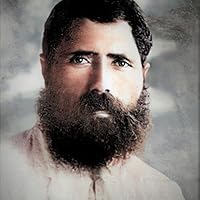
July 21, 2026
Vienna, once the decadent nerve center of Central Europe, conducts history's first full-scale experiment in bigotry-as-governance, expelling its Jewish population with the bureaucratic smugness of a nation signing its economic death warrant in fountain pen flourish. The Jewish community that had transformed Vienna into a cultural powerhouse suddenly vanished from its streets, leaving only empty storefronts and hollow intellectualism in their wake.
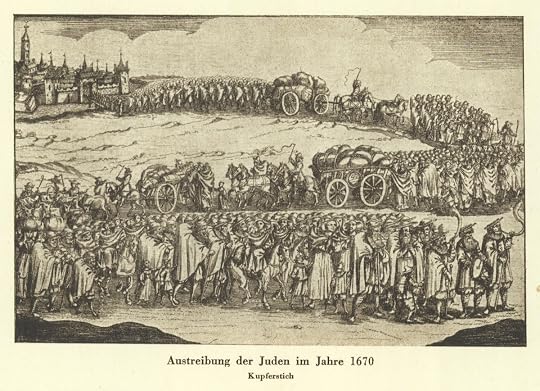
Hugo Bettauer, writing in 1922 with a columnist's flair and Cassandra's foresight, crafts his grotesque satire from baroque irony and brutal fact. "We shouted, 'Out with the Jews!' not long ago, but now it is time to shout, 'In with the honest and faithful Jews who want to work together with us'," read clandestine posters haunting Vienna's walls like desperate prayers from an abandoned temple. These Jewish citizens, architects of Vienna's medical advances, artistic triumphs, and economic prosperity, now haunt the city as ghosts of a murdered potential.
Chancellor Dr. Schwertfeger orchestrates the purge with the self-satisfaction of a man swatting flies at a banquet he doesn't realize they're catering. The crowds cheer; banks shutter; theaters empty; and the haute-bourgeoisie discovers, to their horror, that silk doesn't magically leap from shelves into shopping bags. Jewish creativity, financial acumen, and cultural sophistication, previously dismissively labeled as "Jewish cleverness", reveal themselves as essential components of civilized society, not liabilities.
In one brilliant moment, a newly-promoted department store magnate, formerly a mere floor clerk, puzzles to his aide: "When the Jews were still here, we had plenty of Christian customers! Where on earth did they go?" The aide delivers the sort of deadpan truth that would get him canceled today: "We never had many Christian customers. And those Christian women who did shop here? Their Christianity came with an asterisk." The scene crystallizes how Jewish entrepreneurship created opportunities that benefited everyone in the ecosystem, not just their own community.
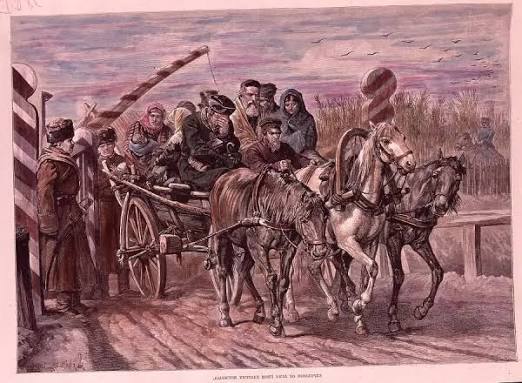
Bettauer's Vienna teems with absurdities. A publisher with "pronounced Jewish features" declares himself "a hundred percent goy," only to be mistaken for his own grandfather and nearly deported. A poet chooses a bullet at a lakeside over freezing in exile. A fashion house collapses because its customers, mistresses of Jewish bankers, have vanished along with their generous patrons. The Jewish patrons who once supported Vienna's arts, sciences, and charities vanish, leaving behind cultural institutions that wither like plants without water. A cabaret girl threatens a career change to lavatory attendant if the Jews aren't reinstated. "Only the Jews fork out money," she sobs, summarizing the economics of erotic survival with terrible clarity.
Even Leo Strakosch, a Jewish intellectual in love with a Christian girl, must cosplay Frenchness and risk execution simply to steal back into her garden for a kiss and some revolutionary pamphlet distribution. His brilliance and passion represent exactly the kind of innovative thinking Vienna has exiled to its own detriment. "The beard made us look so similar," he boasts of his disguise, "that he could risk making a passport with my photograph in it." Their romance, however passionate, unfolds like a Greek tragedy performed by the Marx Brothers. Doom with a punchline. Bettauer, himself assassinated by a Nazi the year after publication, wasn't writing dystopia; he was drafting tomorrow's obituaries with today's ink.
This novel holds a cracked mirror to anyone who ever thought homogeneity could substitute for complexity. In our age of reactionary flirtations and post-truth populism, it reads like a manual for national suicide, with footnotes in sarcasm and margin notes in rage. The Jewish intellectual tradition that valued questioning, debate, and multiple perspectives is precisely what protects societies from such deadly oversimplification.
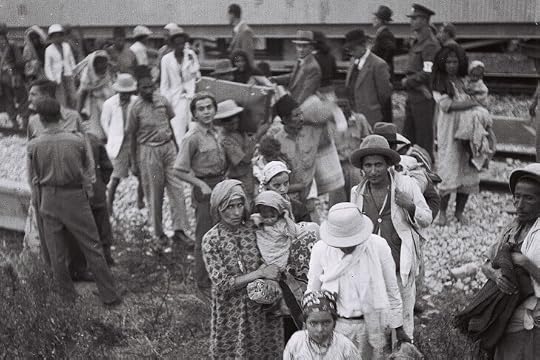
It's a fable whose bite draws blood because of its verisimilitude: a city that chooses ideology over interdependence and desperately tries to replace fashion designers with farmers, bankers with blowhards, and artists with accountants. The Jewish contributors to Vienna's golden age, Freud, Mahler, Zweig, Schnitzler, represent precisely the intellectual diversity that made the city shine. "Vienna's becoming rural!" proclaim the posters; by the end, it's more cow-pasture than cultural capital, the gilded cafés replaced by village taverns serving mediocrity on tap.
The book recalls Hašek's Švejk in its bureaucratic absurdity and Orwell's Animal Farm in its savage irony. Economic consequences as social parables.
But unlike those works, Bettauer's humor feels like tap-dancing on a minefield. His caricatures provoke laughter that catches in your throat. The lesson cuts to bone: exile genius, inherit mediocrity. Deport those who create culture, and you're left selling lederhosen to tourists who came for Mozart.
If satire were taxed, Bettauer's estate would still be paying royalties. Four and three-quarter stars. For every train that left and for every Austrian who stayed behind, sweeping up the ashes of prejudice while wondering why their coffee suddenly tastes so bitter.
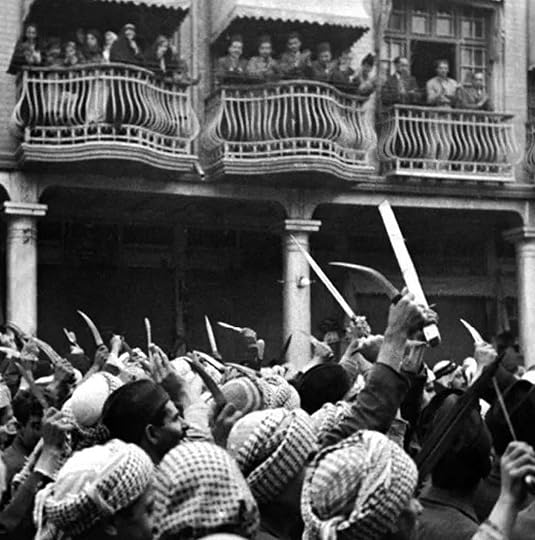
Antisemitism isn't just morally repugnant, it's societal suicide. The Jewish contributions to science, art, medicine, philosophy, and commerce have repeatedly elevated human civilization. Societies that embrace Jewish citizens thrive; those that persecute them invariably collapse into mediocrity or barbarism. Vienna's fictional experiment became Europe's actual nightmare just fifteen years later. What begins as prejudice ends as atrocity.
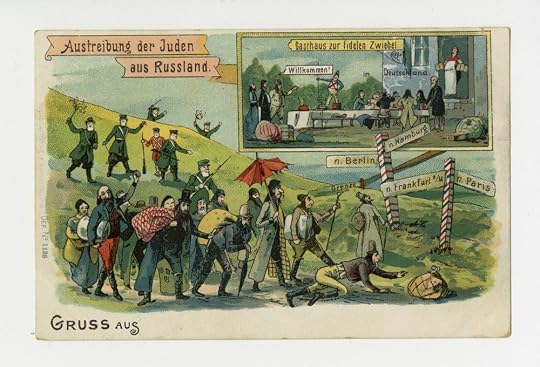
The book geniusly shows how antisemitism's first victim is always the antisemite, left holding nothing but hollow pride and worthless currency in a cultural wasteland of their own making. Any society that trades pluralism for purity deserves the provincial backwater it becomes.
Today's readers should recognize this truth: antisemitism isn't just history's most persistent hatred, it's history's most persistent folly. A self-inflicted wound that has left civilizations bleeding talent, innovation, and humanity for millennia.


❤️ 🇮🇱
Hugo Bettauer, writing in 1922 with a columnist's flair and Cassandra's foresight, crafts his grotesque satire from baroque irony and brutal fact. "We shouted, 'Out with the Jews!' not long ago, but now it is time to shout, 'In with the honest and faithful Jews who want to work together with us'," read clandestine posters haunting Vienna's walls like desperate prayers from an abandoned temple. These Jewish citizens, architects of Vienna's medical advances, artistic triumphs, and economic prosperity, now haunt the city as ghosts of a murdered potential.
Chancellor Dr. Schwertfeger orchestrates the purge with the self-satisfaction of a man swatting flies at a banquet he doesn't realize they're catering. The crowds cheer; banks shutter; theaters empty; and the haute-bourgeoisie discovers, to their horror, that silk doesn't magically leap from shelves into shopping bags. Jewish creativity, financial acumen, and cultural sophistication, previously dismissively labeled as "Jewish cleverness", reveal themselves as essential components of civilized society, not liabilities.
In one brilliant moment, a newly-promoted department store magnate, formerly a mere floor clerk, puzzles to his aide: "When the Jews were still here, we had plenty of Christian customers! Where on earth did they go?" The aide delivers the sort of deadpan truth that would get him canceled today: "We never had many Christian customers. And those Christian women who did shop here? Their Christianity came with an asterisk." The scene crystallizes how Jewish entrepreneurship created opportunities that benefited everyone in the ecosystem, not just their own community.
Bettauer's Vienna teems with absurdities. A publisher with "pronounced Jewish features" declares himself "a hundred percent goy," only to be mistaken for his own grandfather and nearly deported. A poet chooses a bullet at a lakeside over freezing in exile. A fashion house collapses because its customers, mistresses of Jewish bankers, have vanished along with their generous patrons. The Jewish patrons who once supported Vienna's arts, sciences, and charities vanish, leaving behind cultural institutions that wither like plants without water. A cabaret girl threatens a career change to lavatory attendant if the Jews aren't reinstated. "Only the Jews fork out money," she sobs, summarizing the economics of erotic survival with terrible clarity.
Even Leo Strakosch, a Jewish intellectual in love with a Christian girl, must cosplay Frenchness and risk execution simply to steal back into her garden for a kiss and some revolutionary pamphlet distribution. His brilliance and passion represent exactly the kind of innovative thinking Vienna has exiled to its own detriment. "The beard made us look so similar," he boasts of his disguise, "that he could risk making a passport with my photograph in it." Their romance, however passionate, unfolds like a Greek tragedy performed by the Marx Brothers. Doom with a punchline. Bettauer, himself assassinated by a Nazi the year after publication, wasn't writing dystopia; he was drafting tomorrow's obituaries with today's ink.
This novel holds a cracked mirror to anyone who ever thought homogeneity could substitute for complexity. In our age of reactionary flirtations and post-truth populism, it reads like a manual for national suicide, with footnotes in sarcasm and margin notes in rage. The Jewish intellectual tradition that valued questioning, debate, and multiple perspectives is precisely what protects societies from such deadly oversimplification.
It's a fable whose bite draws blood because of its verisimilitude: a city that chooses ideology over interdependence and desperately tries to replace fashion designers with farmers, bankers with blowhards, and artists with accountants. The Jewish contributors to Vienna's golden age, Freud, Mahler, Zweig, Schnitzler, represent precisely the intellectual diversity that made the city shine. "Vienna's becoming rural!" proclaim the posters; by the end, it's more cow-pasture than cultural capital, the gilded cafés replaced by village taverns serving mediocrity on tap.
The book recalls Hašek's Švejk in its bureaucratic absurdity and Orwell's Animal Farm in its savage irony. Economic consequences as social parables.
But unlike those works, Bettauer's humor feels like tap-dancing on a minefield. His caricatures provoke laughter that catches in your throat. The lesson cuts to bone: exile genius, inherit mediocrity. Deport those who create culture, and you're left selling lederhosen to tourists who came for Mozart.
If satire were taxed, Bettauer's estate would still be paying royalties. Four and three-quarter stars. For every train that left and for every Austrian who stayed behind, sweeping up the ashes of prejudice while wondering why their coffee suddenly tastes so bitter.
Antisemitism isn't just morally repugnant, it's societal suicide. The Jewish contributions to science, art, medicine, philosophy, and commerce have repeatedly elevated human civilization. Societies that embrace Jewish citizens thrive; those that persecute them invariably collapse into mediocrity or barbarism. Vienna's fictional experiment became Europe's actual nightmare just fifteen years later. What begins as prejudice ends as atrocity.
The book geniusly shows how antisemitism's first victim is always the antisemite, left holding nothing but hollow pride and worthless currency in a cultural wasteland of their own making. Any society that trades pluralism for purity deserves the provincial backwater it becomes.
Today's readers should recognize this truth: antisemitism isn't just history's most persistent hatred, it's history's most persistent folly. A self-inflicted wound that has left civilizations bleeding talent, innovation, and humanity for millennia.
❤️ 🇮🇱

May 2, 2019
Interesting concept. Not particularly well-written, to be honest. I discovered the book through The Orientalist, and picked up a soft cover copy on Amazon. While the book is meant to complement Jews and the Jewish people overall, it definitely furthers existing stereotypes and at times risks excessiveness on that front.
November 27, 2024
Interesting speculative fiction of what happens to Austria when they pass laws to expel Jews from the country. I don't like these types of books as even if you use stereotypes for good, you are still stereotyping. The argument of the book is, that the entire economy was held by the Jews, so the moment they were expelled the economy and culture in the country fell apart, and for that reason and only for that reason people voted to accept Jews back into the country.
It's reminiscent of the emigrant debates. There's always a danger to saying that the other should be treated with decency not because they deserve it but because they are so superhumanly great that we would be nothing without them

January 1, 2025
5/10
Positive stereotypying is still stereotyping. The message of this novel is undoubtedly important, especially for the time the book was written in, but the way Bettauer goes about it leaves a lot to be desired.
The characters are very one-note and the writing itself isn't particularly noteworthy.
I had this weird feeling while reading that having a story, where jewish people are presented as these crucial members of society who come back to Vienna to save everyone in the end, could actually result in some people viewing it in an opposite way that would actually incite anti-semitism.
Positive stereotypying is still stereotyping. The message of this novel is undoubtedly important, especially for the time the book was written in, but the way Bettauer goes about it leaves a lot to be desired.
The characters are very one-note and the writing itself isn't particularly noteworthy.
I had this weird feeling while reading that having a story, where jewish people are presented as these crucial members of society who come back to Vienna to save everyone in the end, could actually result in some people viewing it in an opposite way that would actually incite anti-semitism.

July 17, 2023
ספר מענין, סאטירי על אנטישמיות שמגיעה עד לכדי סילוק היהודים מוינה. נכתב ב-1922 וחזה את העתיד אם כי לא הגיע למחוזות שהאמת ההיסטורית הנוראה הגיעה בשואה.
קולח.
קולח.

July 11, 2020
The inter-relation with this work of written fiction with reality is a fascinating one. Hugo Bettauer’s The City Without Jews has been adapted for theater, cloned as another novel which takes place in Berlin (NOT Vienna), made into a silent film and, of course, sadly was a prelude to the madness of Nazi Germany.
And there’s more … although it takes a detailed reading of the work to discover this. For instance, (without giving too much away) a careless anti-Semitic character ~ in getting his just deserts ~ gets maneuvered into being placed in an insane asylum. Bettauer would be assassinated not long after the book was written by an ex-Nazi who would likewise be put away (sadly only to be quickly released and to go on to live an unrepentant long life).
The novel can’t be said to be anti-Semitic by any means. The growing number of anti-Semites in the 20s hated the book (obviously, by the fate of its author). However, it was nonetheless full of racial stereotypes. The Jews are overly generalized as the clever ones, the cultured ones, the ones who know how to run finance, etc. In contrast, the Austrian Christians are depicted almost as stumbling rubes. Here is quote illustrating the rational for the forced exodus: “Ladies and gentlemen! The trouble is simply that we Austrian Aryans are no match for the Jews, oppressed, and violated by a small minority because this minority possesses qualities which we lack”. Wow! How could the so-called “Master Race” not get riled up over those words!
Before beginning The City Without Jews, I read somewhere that it was a book about “ideas” more than anything. So, I expected a more clinical account. It’s certainly not a masterpiece of character development but the protagonists Leo and Lotte do introduce a nice human angle.
The City Without Jews is unique. Very thought provoking and worth a read.
And there’s more … although it takes a detailed reading of the work to discover this. For instance, (without giving too much away) a careless anti-Semitic character ~ in getting his just deserts ~ gets maneuvered into being placed in an insane asylum. Bettauer would be assassinated not long after the book was written by an ex-Nazi who would likewise be put away (sadly only to be quickly released and to go on to live an unrepentant long life).
The novel can’t be said to be anti-Semitic by any means. The growing number of anti-Semites in the 20s hated the book (obviously, by the fate of its author). However, it was nonetheless full of racial stereotypes. The Jews are overly generalized as the clever ones, the cultured ones, the ones who know how to run finance, etc. In contrast, the Austrian Christians are depicted almost as stumbling rubes. Here is quote illustrating the rational for the forced exodus: “Ladies and gentlemen! The trouble is simply that we Austrian Aryans are no match for the Jews, oppressed, and violated by a small minority because this minority possesses qualities which we lack”. Wow! How could the so-called “Master Race” not get riled up over those words!
Before beginning The City Without Jews, I read somewhere that it was a book about “ideas” more than anything. So, I expected a more clinical account. It’s certainly not a masterpiece of character development but the protagonists Leo and Lotte do introduce a nice human angle.
The City Without Jews is unique. Very thought provoking and worth a read.
September 15, 2018
"Ein Roman von übermorgen" ist "Die Stadt ohne Juden" untertitelt. Das klingt nach fernerer Zukunft und ist für den Leser bereits so weit vergangen, dass manche sich nicht mehr an dieser Zeit erinnern mögen.
Bettauer beschreibt in seiner Groteske von 1922 wie im demokratischen Österreich der wachsende Antisemitismus zu der Ausweisung aller Juden und ihrer direkten Nachkommen führt.
Wien ohne Juden verkümmert zu einer Stadt ohne Luxus, nahezu ohne Konsum. Die Mädchen werden nicht mehr mit Geschenken umgarnt, die Dienstleistungsbranche ist ihre wichtigsten Kunden los. Geschäfte gehen Pleite, Banken stellen den Betrieb ein. Es kommt zu einer Hyperinflation und Kursstürzen. Schluießliuch gelingt es einem jungen Juden, der in eine Österreicherin verliebt ist, als Franzose getarnt die Unzufriedenheit der Bevölkerung zu bündeln und Neuwahlen zu provozieren. Die neue Regierung hebt das Judenverbot wieder auf.
Ganz dem Zeitgeist verwachsen übernimmt der jüdische Autor dabei auch Rassenklischees, die er nicht in jeden Fall ironisch zu brechen vermag. Die Begründung, warum Antisemitismus schlecht sei, verbleiubt in der rein wirtschaftlichen Sphäre. Aber 1922 ahnte Bettauer auch nicht, dass in nicht mal zwei Jahrzehnten die schreckliche Realität seine – wohl etwas schnell geschriebene – Groteske düster überflügeln würde. Aber das erlebte er zum Glück nicht mehr.
Wohl nicht die höchste Literatur im eigentlichen Sinne; aber ein äußerst wichtiges Buch in der heutigen Zeit!
Bettauer beschreibt in seiner Groteske von 1922 wie im demokratischen Österreich der wachsende Antisemitismus zu der Ausweisung aller Juden und ihrer direkten Nachkommen führt.
Wien ohne Juden verkümmert zu einer Stadt ohne Luxus, nahezu ohne Konsum. Die Mädchen werden nicht mehr mit Geschenken umgarnt, die Dienstleistungsbranche ist ihre wichtigsten Kunden los. Geschäfte gehen Pleite, Banken stellen den Betrieb ein. Es kommt zu einer Hyperinflation und Kursstürzen. Schluießliuch gelingt es einem jungen Juden, der in eine Österreicherin verliebt ist, als Franzose getarnt die Unzufriedenheit der Bevölkerung zu bündeln und Neuwahlen zu provozieren. Die neue Regierung hebt das Judenverbot wieder auf.
Ganz dem Zeitgeist verwachsen übernimmt der jüdische Autor dabei auch Rassenklischees, die er nicht in jeden Fall ironisch zu brechen vermag. Die Begründung, warum Antisemitismus schlecht sei, verbleiubt in der rein wirtschaftlichen Sphäre. Aber 1922 ahnte Bettauer auch nicht, dass in nicht mal zwei Jahrzehnten die schreckliche Realität seine – wohl etwas schnell geschriebene – Groteske düster überflügeln würde. Aber das erlebte er zum Glück nicht mehr.
Wohl nicht die höchste Literatur im eigentlichen Sinne; aber ein äußerst wichtiges Buch in der heutigen Zeit!

March 18, 2022
Despite the seriousness of the topic there are elements of City which make it a fast paced read. First, much of it is done in an ironic, tongue in cheek style which largely succeeds in keeping it from getting too somber. In fact, if anything it tends towards the melodramatic side at times. Second, the translator did a credible job of sustaining the author’s efforts to depict the characters’ style of talking as reflective of their status in 1920’s Vienna society. Third, the chapters are relatively brief.
IMHO, Betthauer merited the praise he received after the book’s publication because he captured the various ways in which educated and successful Jews of those times made significant contributions socially, economically, and culturally to the society. In fact, he was so successful that he was assassinated a few years later by a neo Nazi.
I also agree with other reviewers that much of his depiction of the Jews was at least stereotypical, if not anti Semitic. I wonder whether that was intentional on his part in order to satirize the views which Austrians commonly held of their Jewish citizens at that time? Or was it a reflection of his own unconscious biases?
Per Wikipedia City was made into a film a few years after it was published. Given the rise of nationalistic feelings in recent years it would be interesting to see how it might be made nowadays.
IMHO, Betthauer merited the praise he received after the book’s publication because he captured the various ways in which educated and successful Jews of those times made significant contributions socially, economically, and culturally to the society. In fact, he was so successful that he was assassinated a few years later by a neo Nazi.
I also agree with other reviewers that much of his depiction of the Jews was at least stereotypical, if not anti Semitic. I wonder whether that was intentional on his part in order to satirize the views which Austrians commonly held of their Jewish citizens at that time? Or was it a reflection of his own unconscious biases?
Per Wikipedia City was made into a film a few years after it was published. Given the rise of nationalistic feelings in recent years it would be interesting to see how it might be made nowadays.

December 10, 2018
The edition I read was originally written in German, translated into American-English and printed in Poland; nice bit of international cooperation. It's a shame it took an brain-dead Austrian to murder the author, Hugo Bettauer, shortly after the original book was published.
I found it an easy and entertaining read. Realistic? Generally, yes I think so. If any nation expels an element of its society there will be positive and negative repercussions; as the Austrian Jews being expelled where, in the main, fully integrated with the greater society and economy, then the negative affects would easily negate any positive.
Don't forget, the hero, Leo, wished for the expelled Jews to return to Vienna, and he did not want an influx of poor Jews from the east. Controlled and integrated immigration benefits society, uncontrolled and disconnected immigration causes misunderstandings and rifts.
I found it an easy and entertaining read. Realistic? Generally, yes I think so. If any nation expels an element of its society there will be positive and negative repercussions; as the Austrian Jews being expelled where, in the main, fully integrated with the greater society and economy, then the negative affects would easily negate any positive.
Don't forget, the hero, Leo, wished for the expelled Jews to return to Vienna, and he did not want an influx of poor Jews from the east. Controlled and integrated immigration benefits society, uncontrolled and disconnected immigration causes misunderstandings and rifts.

November 30, 2021
This book was written as a satire/comedy and had a lot of what must have been popular Austrian references at the time. Even when only comparing it to other books I've read from that time period, I just didn't love the writing style.
It was so sad to read what had been so preposterous to even think of and know what ended up happening just a few decades later. To know that this man was murdered by a fascist who pretty much got away with it and that his son later died in a concentration camp...made reading what was meant to be absurd oddly macabre. Especially when everyone is deported on full train cars. Ouch.
It was so sad to read what had been so preposterous to even think of and know what ended up happening just a few decades later. To know that this man was murdered by a fascist who pretty much got away with it and that his son later died in a concentration camp...made reading what was meant to be absurd oddly macabre. Especially when everyone is deported on full train cars. Ouch.

June 9, 2019
I'm being kind, attributing some things to the translation. Written by a man who was killed by the Nazi party for his opposition to anti-semitism (or so says Wikipedia), this book reaffirms one stereotype after another: Jews as elite, in charge of the banks, the media, entertainment. Jews as "crafty" and sneaky. I was surprised as I was under the impression it was a satire. I cannot recommend it, at all.
Displaying 1 - 30 of 48 reviews