

What do you think?

Portraits of a Mother: A Novella and Stories
From beloved Japanese author Shūsaku Endō, a newly discovered novella and five short stories of love, grief, and maternal longing.
Shūsaku Endō (1923–1996), widely considered one of the greatest writers of the twentieth century, is known for his historical novels, which masterfully probe the encounters between the cultures and religions of East and West. A lifelong Roman Catholic, Endō wrote frequently about the persecution of Japanese Christians, most famously in his novel Silence (1966). A salient and curious theme in his work is the unique image of a maternal God, and a concomitant sense of loss and longing for maternal love.
“Confronting the Shadows,” his semiautobiographical novella discovered at the Endō Museum in Nagasaki in 2020, is the author’s most personal work and constitutes the interpretive key to his entire oeuvre. Translated into English here for the first time, it conjures the story of Suguro, an aspiring novelist who was separated from his mother after his parents’ divorce. Plagued with remorse and anger, desperate to understand the woman his mother was, he sets out to retrace her footsteps, only to find himself face to face with his own demons. Accompanying the novella are five stories; exploring complex truths in uncomplicated prose, each tale discloses the intricacies of the sacred feminine and the apprehensions and joys of familial love.
Endō once again beams bright light on the hidden corners of the human heart in this intimate and remarkable new collection.
Shūsaku Endō (1923–1996), widely considered one of the greatest writers of the twentieth century, is known for his historical novels, which masterfully probe the encounters between the cultures and religions of East and West. A lifelong Roman Catholic, Endō wrote frequently about the persecution of Japanese Christians, most famously in his novel Silence (1966). A salient and curious theme in his work is the unique image of a maternal God, and a concomitant sense of loss and longing for maternal love.
“Confronting the Shadows,” his semiautobiographical novella discovered at the Endō Museum in Nagasaki in 2020, is the author’s most personal work and constitutes the interpretive key to his entire oeuvre. Translated into English here for the first time, it conjures the story of Suguro, an aspiring novelist who was separated from his mother after his parents’ divorce. Plagued with remorse and anger, desperate to understand the woman his mother was, he sets out to retrace her footsteps, only to find himself face to face with his own demons. Accompanying the novella are five stories; exploring complex truths in uncomplicated prose, each tale discloses the intricacies of the sacred feminine and the apprehensions and joys of familial love.
Endō once again beams bright light on the hidden corners of the human heart in this intimate and remarkable new collection.
224 pages, Paperback
First published March 18, 2025
About the author
Shūsaku Endō
380 books1,112 followersShusaku Endo (遠藤周作), born in Tokyo in 1923, was raised by his mother and an aunt in Kobe where he converted to Roman Catholicism at the age of eleven. At Tokyo's Keio University he majored in French literature, graduating BA in 1949, before furthering his studies in French Catholic literature at the University of Lyon in France between 1950 and 1953. A major theme running through his books, which have been translated into many languages, including English, French, Russian and Swedish, is the failure of Japanese soil to nurture the growth of Christianity. Before his death in 1996, Endo was the recipient of a number of outstanding Japanese literary awards: the Akutagawa Prize, Mainichi Cultural Prize, Shincho Prize, and Tanizaki Prize.
(from the backcover of Volcano).
(from the backcover of Volcano).
Ratings & Reviews
Friends & Following
Create a free account to discover what your friends think of this book!
Community Reviews
Displaying 1 - 13 of 13 reviews

August 21, 2025
"With one single exception, there had been no mistakes or corrections in his father's life. What could possibly be the point for such a man to write anything?"
Reading this newly translated novella and 5 stories (the latest to be added to the list of books by the great Catholic writer Shusaku Endo) is an intimacy of an almost sacred kind. We peer through a glass darkly and find different poses and faces of Endo's remarkable mother, who emerges as the complicated, flawed, yet cherished heroine all throughout the autobiographical tales.
Like a theme with variations, the violin-playing independent woman who shapes the future novelist into being comes across as a force of nature, a gale whipping the pages into life.
"There is something higher, much, much higher... an asphalt-paved road is safe, so anyone can walk along it. There's no danger... but if a person turns and looks behind them, not a single one of their footsteps has been left on that safe road. A sandy beach by the ocean is difficult to walk along... but when you look behind you, every single one of your footsteps remains there...Please, whatever you do, don't live a worthless life by walking on an asphalt road."
For Endo, his mother is intricately tied up with his identity as a Catholic (not an easy religion to belong to, in wartime Japan). It's very poignant how he remembers his mother and his childhood priest in various points of his adult life.
But even if the reader were not Catholic, there is still much to relate to, in the universal struggle to form an independent self from a strong parental figure; in the burning quest to fulfill parental expectations after a parent's death.
And again, we see Endo at his excoriating best. For him, writing is his confessional, where he analyzes "the major rivers that have given shape to my life." He analyzes his weak deeds and thoughts, and in so doing, the book reflects the reader's own faults back to her.
Yet these faults are not irredeemable, as Endo constantly writes. And I suppose this is what makes Endo "Catholic," as he continues to find God in all things, even in the most wretched of men, even in the vilest and darkest night of the soul.
Reading this newly translated novella and 5 stories (the latest to be added to the list of books by the great Catholic writer Shusaku Endo) is an intimacy of an almost sacred kind. We peer through a glass darkly and find different poses and faces of Endo's remarkable mother, who emerges as the complicated, flawed, yet cherished heroine all throughout the autobiographical tales.
Like a theme with variations, the violin-playing independent woman who shapes the future novelist into being comes across as a force of nature, a gale whipping the pages into life.
"There is something higher, much, much higher... an asphalt-paved road is safe, so anyone can walk along it. There's no danger... but if a person turns and looks behind them, not a single one of their footsteps has been left on that safe road. A sandy beach by the ocean is difficult to walk along... but when you look behind you, every single one of your footsteps remains there...Please, whatever you do, don't live a worthless life by walking on an asphalt road."
For Endo, his mother is intricately tied up with his identity as a Catholic (not an easy religion to belong to, in wartime Japan). It's very poignant how he remembers his mother and his childhood priest in various points of his adult life.
But even if the reader were not Catholic, there is still much to relate to, in the universal struggle to form an independent self from a strong parental figure; in the burning quest to fulfill parental expectations after a parent's death.
And again, we see Endo at his excoriating best. For him, writing is his confessional, where he analyzes "the major rivers that have given shape to my life." He analyzes his weak deeds and thoughts, and in so doing, the book reflects the reader's own faults back to her.
Yet these faults are not irredeemable, as Endo constantly writes. And I suppose this is what makes Endo "Catholic," as he continues to find God in all things, even in the most wretched of men, even in the vilest and darkest night of the soul.
February 15, 2026
Having read three of Endō’s books now, I can confidently say that Endō has joined the ranks of being one of my favorite authors of all time. Written beautifully in a semi-autobiographical confessional style, there is a sadness in the stories found in this collection that read like an author trying desperately to cathartically let go of trauma but realizing that redemption in real life is messy, mysterious, and sometimes bears wounds that still bleed.

October 12, 2025
I find this book remarkable - as content, as language.
April 2, 2026
A fantastic writer, and reallly brilliant stories, but they seemed weaker rather than stronger as the similarities blurred together across them, for me
Mothers, the first, was really amazing, with the kakure
Spring in Galilee felt among the most distinct
Fairy Tale was great, too, but suffered by its environs
Confronting the Shadows was similar, and had so much depth to it, although the lack of overt discussion of faith was interesting.... maybe that is a strike against it for me? His faith plays such a huge part here and was such a powerful center of these stories
I can't tell if Shadows (the failed priest/s) is my favorite or least favorite. But I was definitely moved and intrigued
Mothers, the first, was really amazing, with the kakure
Spring in Galilee felt among the most distinct
Fairy Tale was great, too, but suffered by its environs
Confronting the Shadows was similar, and had so much depth to it, although the lack of overt discussion of faith was interesting.... maybe that is a strike against it for me? His faith plays such a huge part here and was such a powerful center of these stories
I can't tell if Shadows (the failed priest/s) is my favorite or least favorite. But I was definitely moved and intrigued

December 30, 2025
I have not read any Endō for over a year, but I learned a couple months ago that Yale University press published a new collection this year. The novella in this collection, Confronting the Shadows, was discovered in 2020 among Endō’s papers! This is incredible given both his popularity in Japan and that he died in 1996. I wonder if there are any more stories hiding among his papers. Endō scholar and translator Van C. Gessel did the translation, and he also translated three previously published stories into English for the first time. My parents kindly gifted me the book for Christmas.
I had gotten to the point where Endō’s writing was wearing me out, and I didn’t want to read him anymore. I’m not sure what’s changed, but I really enjoyed this collection. All of these stories include several autobiographical elements, and I felt sensitive to the long sadnesses and deep wounds of his life. His was a fraught and graced life. The novella is very good, maybe worthy of 5 stars, and every story had a moment of startling clarity.
I had gotten to the point where Endō’s writing was wearing me out, and I didn’t want to read him anymore. I’m not sure what’s changed, but I really enjoyed this collection. All of these stories include several autobiographical elements, and I felt sensitive to the long sadnesses and deep wounds of his life. His was a fraught and graced life. The novella is very good, maybe worthy of 5 stars, and every story had a moment of startling clarity.

July 17, 2026
I was looking for a different Endo book in the library when I chanced upon this one and was hooked by the line “a newly discovered novella”. Apparently in 2020, a curator at the Endo Shusaku museum in Nagasaki discovered the novella that is translated and collected with five short stories (three of which are also translated into English for the first time) into this book, titled: Portraits of a Mother.
Despite the title, this book is notable to me, for the presence of the father. Looking back, I’ve always associated Endo with advocating for the maternal love of God to be highlighted to the Japanese. This is partly with the way I was introduced to Endo, where I learnt that he came to the faith via his mother, who was a devout Catholic, but also through passages such as these:
“But the image of God that John embraced was a father-image — the image of wrath, and judgement, and punishment. […] His [Jesus’] heart was like a maternal womb to engender an image of God which more closely resembles a gentle mother, the image of God which he would disclose to the people on a mountain by the Lake of Galilee at a later time.”
This quote comes from the same chapter of Endo’s book: A Life of Jesus, which was his attempt to explain Christianity to the Japanese. A Life of Jesus was a good book for me to revisit alongside Portraits of a Mother, not just because it helped me to remember how Endo viewed the love of God, but also because one of the chapters shares a similar (English) title as one of the short stories.
And while the passage quoted above seems to divide God into a stern father figure and a warm, gentle maternal figure, the truth of Endo’s feelings towards his parents are a lot more complicated, as these stories show. As Caryl Phillips points out in the introduction to this book, Endo draws on his own life to write his stories, and with his matter of fact story-telling style, it can be hard to tell where reality ends and fiction begins. In fact, it feels like the four of the five short stories could be nonfiction essays where Endo is working out his emotions towards his parents. As Endo writes in Shadows:
“And as I ponder how you looked as you stood with your back to me, that image is superimposed upon several other shadows that have crossed the river of my life. […] I can’t help but feel that all of these images have formed into a chain inside me, binding themselves together into blood relations, and are trying to communicate something to me.”
It is while plumbing the depths of his experiences that we see how complicated Endo’s relationship to love is. It is true that he loves his mother, even to the point of resenting anyone else’s criticism of her, but it is a love mingled with resentfulness – not just of her making him into a Catholic, but also of her singlemindedness that drove her forward into loneliness. More than once, the mother figure in the short stories is described as devoted to the practice of the violin that “because her mind was completely focused on her five fingers until she could locate the one sound she was pursuing, she couldn’t hear anything resembling the voice of a child.” (Confronting the Shadows). These are not gentle maternal figures like what I quoted from A Life of Jesus, these mothers are forces of nature, impacting the lives of others as they charge forward. By contrast, the father figures in his stories are portrayed as those who prefer to avoid extremes, who say things like “The greatest happiness comes from being ordinary. The greatest happiness comes when nothing at all happens.” (A Six Day Trip). The sternest that a father figure gets is in the short story Shadows, where the narrator writes a letter to a priest, previously full of life and force, but is disgraced when caught in a relationship with a Japanese woman. But like with what Endo explores in his novel Silence, those who are too strong have hidden weaknesses.
“If there are the strong and the weak among human beings, in those days you were truly one of the strong. And I was a spineless weakling. You had confidence in your way of life, in your faith, in your body, and you performed your missionary work in Japan with firm conviction. In contrast, not once in my life have I been able to feel confidence and conviction about every facet of my life. As I say this, I imagine that in your current state you will understand everything. But in the past, you would have shaken your head, and in a loud voice you would have cried that man exists so that he can strive to reach ever greater heights throughout his life. But weren’t you forced to learn, some fifteen years later, that unexpected perils and danger spots like thin ice lurk within such strength, and that amidst such perils come the beginnings of true religion?” (Shadows)
Does this not echo the path that Roderigues took in Silence, from despising Kichijiro as one of the weak who apostasized to understanding his feelings?
““Father, I betrayed you. I trampled on the picture of Christ,” said Kichijiro with tears. “In this world are the strong and the weak. The strong never yield to torture, and they go to Paradise; but what about those, like myself, who are born weak, those who, when torutrned and ordered to trample on the sacred image…”
“I, too, stood on the sacred image. For a moment this foot was on his face. It was on the face of the man who had been ever in my thoughts, on the face that was before me on the mountains, in my wanderings, in prison, on the best and most beautiful face that any man can ever know, on the face of him whom I have always longed to love. Even now that face is looking at me with eyes of pity from the plaque rubbed flat by many feet. ‘Trample!’, said those compassionate eyes. ‘Trample! Your foot suffers in pain; it must suffer like all the feet that have stepped on this plaque. But that pain alone is enough. I understand you pain and your suffering. It is for that reason that I am here.”” (Silence)
Strength and weakness, mother and father, love and hate. To Endo, all these seem intertwined. Through the short stories and the novella collected here, he explores his complicated feelings towards them all and then comes short of a resolution. Confronting the Shadows, the novella that ends the collecting, shows the father explicitly in competition with the mother, and the narrator (perhaps Endo’s stand-in), as the child caught between the two, even after he has become an adult and started his family. This is, perhaps, the reason why Endo could never let go of God, though he tried for years to find something else (according to his biography in Yancey’s Soul Survivor). In the end, it was Jesus who he found so compelling, especially in how he suffered with and loved those that the world calls weak, and I think that it’s this attraction to such a perfect love, and the gap between that and his own experience, which is the undercurrent behind this collection of short stories about the imperfect but compelling loves between parents and child.
As someone who has read Endo for years, this collection was a beautiful surprise that helped me to think about his other works, and I really enjoyed bringing out A Life of Jesus and Silence as I worked out my thoughts about Portraits of a Mother.
This review was first posted at Eustea Reads
Despite the title, this book is notable to me, for the presence of the father. Looking back, I’ve always associated Endo with advocating for the maternal love of God to be highlighted to the Japanese. This is partly with the way I was introduced to Endo, where I learnt that he came to the faith via his mother, who was a devout Catholic, but also through passages such as these:
“But the image of God that John embraced was a father-image — the image of wrath, and judgement, and punishment. […] His [Jesus’] heart was like a maternal womb to engender an image of God which more closely resembles a gentle mother, the image of God which he would disclose to the people on a mountain by the Lake of Galilee at a later time.”
This quote comes from the same chapter of Endo’s book: A Life of Jesus, which was his attempt to explain Christianity to the Japanese. A Life of Jesus was a good book for me to revisit alongside Portraits of a Mother, not just because it helped me to remember how Endo viewed the love of God, but also because one of the chapters shares a similar (English) title as one of the short stories.
And while the passage quoted above seems to divide God into a stern father figure and a warm, gentle maternal figure, the truth of Endo’s feelings towards his parents are a lot more complicated, as these stories show. As Caryl Phillips points out in the introduction to this book, Endo draws on his own life to write his stories, and with his matter of fact story-telling style, it can be hard to tell where reality ends and fiction begins. In fact, it feels like the four of the five short stories could be nonfiction essays where Endo is working out his emotions towards his parents. As Endo writes in Shadows:
“And as I ponder how you looked as you stood with your back to me, that image is superimposed upon several other shadows that have crossed the river of my life. […] I can’t help but feel that all of these images have formed into a chain inside me, binding themselves together into blood relations, and are trying to communicate something to me.”
It is while plumbing the depths of his experiences that we see how complicated Endo’s relationship to love is. It is true that he loves his mother, even to the point of resenting anyone else’s criticism of her, but it is a love mingled with resentfulness – not just of her making him into a Catholic, but also of her singlemindedness that drove her forward into loneliness. More than once, the mother figure in the short stories is described as devoted to the practice of the violin that “because her mind was completely focused on her five fingers until she could locate the one sound she was pursuing, she couldn’t hear anything resembling the voice of a child.” (Confronting the Shadows). These are not gentle maternal figures like what I quoted from A Life of Jesus, these mothers are forces of nature, impacting the lives of others as they charge forward. By contrast, the father figures in his stories are portrayed as those who prefer to avoid extremes, who say things like “The greatest happiness comes from being ordinary. The greatest happiness comes when nothing at all happens.” (A Six Day Trip). The sternest that a father figure gets is in the short story Shadows, where the narrator writes a letter to a priest, previously full of life and force, but is disgraced when caught in a relationship with a Japanese woman. But like with what Endo explores in his novel Silence, those who are too strong have hidden weaknesses.
“If there are the strong and the weak among human beings, in those days you were truly one of the strong. And I was a spineless weakling. You had confidence in your way of life, in your faith, in your body, and you performed your missionary work in Japan with firm conviction. In contrast, not once in my life have I been able to feel confidence and conviction about every facet of my life. As I say this, I imagine that in your current state you will understand everything. But in the past, you would have shaken your head, and in a loud voice you would have cried that man exists so that he can strive to reach ever greater heights throughout his life. But weren’t you forced to learn, some fifteen years later, that unexpected perils and danger spots like thin ice lurk within such strength, and that amidst such perils come the beginnings of true religion?” (Shadows)
Does this not echo the path that Roderigues took in Silence, from despising Kichijiro as one of the weak who apostasized to understanding his feelings?
““Father, I betrayed you. I trampled on the picture of Christ,” said Kichijiro with tears. “In this world are the strong and the weak. The strong never yield to torture, and they go to Paradise; but what about those, like myself, who are born weak, those who, when torutrned and ordered to trample on the sacred image…”
“I, too, stood on the sacred image. For a moment this foot was on his face. It was on the face of the man who had been ever in my thoughts, on the face that was before me on the mountains, in my wanderings, in prison, on the best and most beautiful face that any man can ever know, on the face of him whom I have always longed to love. Even now that face is looking at me with eyes of pity from the plaque rubbed flat by many feet. ‘Trample!’, said those compassionate eyes. ‘Trample! Your foot suffers in pain; it must suffer like all the feet that have stepped on this plaque. But that pain alone is enough. I understand you pain and your suffering. It is for that reason that I am here.”” (Silence)
Strength and weakness, mother and father, love and hate. To Endo, all these seem intertwined. Through the short stories and the novella collected here, he explores his complicated feelings towards them all and then comes short of a resolution. Confronting the Shadows, the novella that ends the collecting, shows the father explicitly in competition with the mother, and the narrator (perhaps Endo’s stand-in), as the child caught between the two, even after he has become an adult and started his family. This is, perhaps, the reason why Endo could never let go of God, though he tried for years to find something else (according to his biography in Yancey’s Soul Survivor). In the end, it was Jesus who he found so compelling, especially in how he suffered with and loved those that the world calls weak, and I think that it’s this attraction to such a perfect love, and the gap between that and his own experience, which is the undercurrent behind this collection of short stories about the imperfect but compelling loves between parents and child.
As someone who has read Endo for years, this collection was a beautiful surprise that helped me to think about his other works, and I really enjoyed bringing out A Life of Jesus and Silence as I worked out my thoughts about Portraits of a Mother.
This review was first posted at Eustea Reads
November 2, 2025
A very beautiful book that's close to the author's heart with his thoughts and feelings. He really loved his Mother, but struggled with the past and her death, that you see he is trying to make sense of his feelings and thoughts. There are regrets , sadness and loneliness. Well worth the time to read. I have read three books by this author now. They are all top class. I'll definitely be reading more by him.
November 22, 2025
The novella is an exciting new addition to Endo’s work—I feel that there are 2-3 stories he explores over and over again in all of the works that are published, and this is definitely something different. However, it was hard to read, because it (and the stories with it) are much, much more personal than anything else I’ve read, and somehow more sad and sorrowful even than Silence or The Samurai. Certainly worth your time.
December 21, 2025
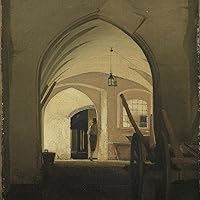
“But weren’t you forced to learn, some fifteen years later, that unexpected perils and danger spots like thin ice lurk within such strength, and that amidst such perils come the beginnings of true religion?”

February 10, 2026
El meu relat preferit l’últim. És com entrar al cap d’una persona, molt interessant veure tot l’impacte de la relació amb la seva mare en l’autor.

June 16, 2026
This is a beautiful and moving edition to Endo’s canon. Not a fan of the narrator lack of awareness of white space or pauses, but it’s not bad enough to ruin the text. I will come to this book again.
August 6, 2026
six seven count: 1
August 15, 2026
honestly not even sure what to make of this book but it gives such interesting insight that it's worth the read.
Displaying 1 - 13 of 13 reviews