

What do you think?

An Abundance of Caution: American Schools, the Virus, and a Story of Bad Decisions
An Abundance of Caution is a devastating account of the decision-making process behind one of the worst American policy failures in a century—the extended closures of public schools during the pandemic. David Zweig shows how some of the most trusted members of society repeatedly made fundamental errors in their assessment and presentation of evidence.
All along, kids throughout Europe had been learning in person since the spring of 2020. Even many peers at home—in private schools, and public schools in mostly "red" states—were in class full time from fall 2020 onward. Whatever inequities that existed among American children before the pandemic, the selective school closures exacerbated them, disproportionately affecting the underprivileged. Deep mental, physical, and academic harms were endured for no discernible benefit. As the Europeans had shown very early, after they had sent kids back to class, there was never any evidence that long-term school closures would reduce overall cases or deaths in any meaningful way. The story of American schools during the pandemic serves as a prism through which to approach fundamental questions about why and how individuals, bureaucracies, governments, and societies act as they do in times of crisis and uncertainty. Ultimately, this book is not about Covid; it's about a country ill-equipped to act sensibly under duress.
All along, kids throughout Europe had been learning in person since the spring of 2020. Even many peers at home—in private schools, and public schools in mostly "red" states—were in class full time from fall 2020 onward. Whatever inequities that existed among American children before the pandemic, the selective school closures exacerbated them, disproportionately affecting the underprivileged. Deep mental, physical, and academic harms were endured for no discernible benefit. As the Europeans had shown very early, after they had sent kids back to class, there was never any evidence that long-term school closures would reduce overall cases or deaths in any meaningful way. The story of American schools during the pandemic serves as a prism through which to approach fundamental questions about why and how individuals, bureaucracies, governments, and societies act as they do in times of crisis and uncertainty. Ultimately, this book is not about Covid; it's about a country ill-equipped to act sensibly under duress.
464 pages, Paperback
Published April 22, 2025
Ratings & Reviews
Friends & Following
Create a free account to discover what your friends think of this book!
Community Reviews
Displaying 1 - 30 of 52 reviews
May 28, 2025
A couple of weeks ago, I raced to the ER because something felt off with my heart, and I thought I was having a heart attack. Unable to find any cause, the doctor suggested that I go home and stress my heart to see if I could get my blood pressure up. Unable to work out, due to disability, I decided to start this book. Even then, I took my time reading it so as not to skyrocket my blood pressure.
This book sounds the death knell on the myth that people were doing the best they could, 'with the information available at the time', with regard to school closures. Zweig lays out all the information that was available at the time and how, through willful dishonesty, institutional failure, partisan ideology, and a concerted disinterest in anything that bucked their narrative, people allowed schools to remain closed far past the point where it was obvious any benefits paled in comparison to the mountain of harm closed schools caused.
Ought to be required reading!
This book sounds the death knell on the myth that people were doing the best they could, 'with the information available at the time', with regard to school closures. Zweig lays out all the information that was available at the time and how, through willful dishonesty, institutional failure, partisan ideology, and a concerted disinterest in anything that bucked their narrative, people allowed schools to remain closed far past the point where it was obvious any benefits paled in comparison to the mountain of harm closed schools caused.
Ought to be required reading!

July 15, 2025
"This is a story of how we—as parents and communities—thought and behaved in an incredibly taxing and emotionally charged situation..."
An Abundance of Caution was an eye-opening look into the complete SNAFU that was the public health response to the COVID pandemic. In our modern era of hyper-politicization, even the response to pandemics has become divided along party lines. This book is an effort to examine what went wrong. I first came across the author from his recent appearance on Michael Shermer's Skeptic podcast, which I enjoyed.
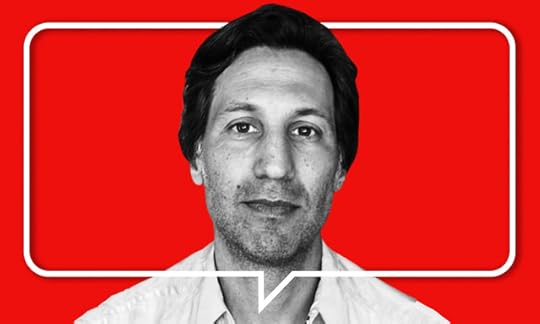
Author David Zweig is an American journalist and writer. He has written extensively on topics relating to COVID-19. He wrote the tenth installment of the Twitter Files focusing on Twitter and COVID-19. He has written for The Atlantic, New York Magazine's Intelligencer, The Free Press, The New York Times, and Wired.
David Zweig:
Zweig writes with an engaging style here that won't struggle to hold the reader's attention. I did enjoy the writing, but I felt that the book was just too long; in general. I also thought that the formatting jumped around a bit too much, making the reading experience lack flow and continuity. Subjective gripes, to be sure.
He drops the quote at the start of this review early on, and it continues:
As COVID infections began to increase in the US, the majority of public health agencies there thought that the best way to counteract its spread would be by closing schools and implementing mask and social distancing policies. These policies were not based on objective data, says the author, and may have caused more harm than they prevented. As Thomas Sowell said, "There are no solutions, only trade-offs." He writes:
In this short quote, the author tells the reader about his background:
At its heart, the book is a data-driven work. Many studies and stats are covered by the author here, with compelling results. He lays out a pretty solid case for the spread of pathological groupthink and tribalism leading the way in the response, rather than empiricism and rationality. The result was a complete shitshow that lacked scientific rigour.
The subject of the lockdowns, school closures, and social distancing was extremely contentious. To add to this, there were countless cases of the same public health officials flagrantly violating rules they themselves laid out. One rule for thee, another for me. He says:
********************
I enjoyed An Abundance of Caution, for the most part, although I felt that the book could have benefited from a more rigorous editing. If you are going to make a book >~300 pages, then it had better be extremely interesting. Sadly, I felt that there was quite a lot of repetition here (Although I will admit that I'm pretty picky on how readable my books are)
I would still recommend the book. Minus my small complaint, it was very well done, overall.
4.5 stars.
An Abundance of Caution was an eye-opening look into the complete SNAFU that was the public health response to the COVID pandemic. In our modern era of hyper-politicization, even the response to pandemics has become divided along party lines. This book is an effort to examine what went wrong. I first came across the author from his recent appearance on Michael Shermer's Skeptic podcast, which I enjoyed.
Author David Zweig is an American journalist and writer. He has written extensively on topics relating to COVID-19. He wrote the tenth installment of the Twitter Files focusing on Twitter and COVID-19. He has written for The Atlantic, New York Magazine's Intelligencer, The Free Press, The New York Times, and Wired.
David Zweig:
Zweig writes with an engaging style here that won't struggle to hold the reader's attention. I did enjoy the writing, but I felt that the book was just too long; in general. I also thought that the formatting jumped around a bit too much, making the reading experience lack flow and continuity. Subjective gripes, to be sure.
He drops the quote at the start of this review early on, and it continues:
"...one that regarded the well-being of what many would consider to be the ultimate concern for all people and cultures: their children. But if we take it as a given that societies, particularly those similar to our own, value children as we purport to, why was the response in American schools during the pandemic so different from that of so many nations in Europe?"
As COVID infections began to increase in the US, the majority of public health agencies there thought that the best way to counteract its spread would be by closing schools and implementing mask and social distancing policies. These policies were not based on objective data, says the author, and may have caused more harm than they prevented. As Thomas Sowell said, "There are no solutions, only trade-offs." He writes:
"In the span of one week in March 2020, the entire school system in America shut down. The academic year for more than 50 million students was over, blasting a hole in the calendar three months wide. 480,000 school buses, which until the week before had been carrying 23 million children each day, were parked neatly in rows on untold acres of asphalt lots. Cafeterias, which served 20 million free lunches to students each day, shuttered.
Monkey bars and jungle gyms glinted silently under the spring sun, while beds of protective wood chips lay still beneath them in 100,000 abandoned school playgrounds. A master switch had been flipped by the governors of every state in the union in scattershot choreography, a vast, unrehearsed exercise of authority."
In this short quote, the author tells the reader about his background:
"For the better portion of a decade before becoming a journalist I worked for Condé Nast and other publishers as a magazine fact-checker, ultimately running the research department at an ill-fated glossy. In part from my training and experience in that role, and in part because of my disposition, I’ve long held most things I’m told to be suspect until proven otherwise. As a fact-checker I was taught that news articles, websites, conventional wisdom, even quotes from interviewees are often insufficient evidence behind a claim. You must always try to get to the primary source, digging further and further down. Time and again, something that seemed true turned out not to be so. This mindset has stayed with me as a journalist and in life generally. And it informed my motivation to get to the bottom of the pandemic policies regarding schools."
At its heart, the book is a data-driven work. Many studies and stats are covered by the author here, with compelling results. He lays out a pretty solid case for the spread of pathological groupthink and tribalism leading the way in the response, rather than empiricism and rationality. The result was a complete shitshow that lacked scientific rigour.
The subject of the lockdowns, school closures, and social distancing was extremely contentious. To add to this, there were countless cases of the same public health officials flagrantly violating rules they themselves laid out. One rule for thee, another for me. He says:
"There is perhaps no more perfect evidence that the society-wide mitigation measures were doomed to fail than the authors and directors of this guidance themselves. Neil Ferguson, the famed Imperial College modeler, argued vigorously for the necessity of society-wide social distancing. Yet he got busted for trysts with a married woman who left her family to visit him at least twice during British lockdowns in March and April 2020. He resigned from his government advisory role after the scandal broke. On the day after Thanksgiving 2020, Deborah Birx traveled to one of her vacation homes, where she congregated with three generations of her family from two different households. That month Birx had warned that the US was entering the deadliest phase of the pandemic, and urged the public in countless media appearances to not gather with extended family for the holidays.
The public rightfully was infuriated at Birx’s and Ferguson’s hypocrisy. But the bigger point is that their own behavior simply proved that the models, and the guidance based on them, were never going to work as expected. There is a reason why the mitigations they so adamantly championed are, at best, temporizing measures. The architects of the lockdowns themselves couldn’t adhere to them. Ferguson didn’t even make it past March before breaking the rules. Humans, in real life, do not operate according to models. They get bored, they get frustrated, they get lonely. We are social creatures. Unless people are welded inside their homes, eventually most of them are going to come out."
********************
I enjoyed An Abundance of Caution, for the most part, although I felt that the book could have benefited from a more rigorous editing. If you are going to make a book >~300 pages, then it had better be extremely interesting. Sadly, I felt that there was quite a lot of repetition here (Although I will admit that I'm pretty picky on how readable my books are)
I would still recommend the book. Minus my small complaint, it was very well done, overall.
4.5 stars.

July 18, 2025
Please read this review before reading friends:
https://40yrs.medium.com/the-joy-of-a...
Zweig not only has multiple data errors but also is weirdly dismissive of women scientists throughout the book. He also seems to have completely forgotten the “bodies in trucks” period during COVID . I’m glad he personally was so sheltered from the effects of COVID though!
TLDR poor research, misogynistic
https://40yrs.medium.com/the-joy-of-a...
Zweig not only has multiple data errors but also is weirdly dismissive of women scientists throughout the book. He also seems to have completely forgotten the “bodies in trucks” period during COVID . I’m glad he personally was so sheltered from the effects of COVID though!
TLDR poor research, misogynistic
April 26, 2025
It’s like he read all of the thoughts I had about the pandemic and kids, in general and specifically my own. I lucked out in many ways but I still feel this anger that won’t ebb until there is honesty. TY David Zweig. Public school kids like my own suffered and we all need to learn why. This book needs to be submitted into congressional records for a REAL and HONEST account of what we need to improve on in the U.S. step one, an honest, intrepid media. All the rest could just fall into place.
April 22, 2025
Indispensable.
Perhaps the most important book for understanding policy that you'll ever read. The writing is crisp and dispassionate, but this is an exquisite look at one of the worst decision-making processes in history, when a bunch of smart people with basically good intentions got together and inflicted catastrophic harm on the most vulnerable children in America, in exchange for no corresponding benefit.
There is a temptation to discuss the tragedy of the US covid response as a matter of hindsight--that everyone did the best they could with the information at the time. On the other side, there is a push toward conspiracy theories about evil motives. Zweig brilliantly avoids both traps and instead shows, blow by blow, how a culture of hysteria and poor media function led Americans to essentially ignore all available evidence when it came to kids and covid.
The book is masterfully reported and makes the science accessible and you get to see the science as it unfolded--and the media that, at every turn, covered it in the worst way possible.
In 1972, David Halberstam wrote The Best and the Brightest, an exploration of the Vietnam War calamity. This book does the same thing for the most tragic failure of the covid response.
Perhaps the most important book for understanding policy that you'll ever read. The writing is crisp and dispassionate, but this is an exquisite look at one of the worst decision-making processes in history, when a bunch of smart people with basically good intentions got together and inflicted catastrophic harm on the most vulnerable children in America, in exchange for no corresponding benefit.
There is a temptation to discuss the tragedy of the US covid response as a matter of hindsight--that everyone did the best they could with the information at the time. On the other side, there is a push toward conspiracy theories about evil motives. Zweig brilliantly avoids both traps and instead shows, blow by blow, how a culture of hysteria and poor media function led Americans to essentially ignore all available evidence when it came to kids and covid.
The book is masterfully reported and makes the science accessible and you get to see the science as it unfolded--and the media that, at every turn, covered it in the worst way possible.
In 1972, David Halberstam wrote The Best and the Brightest, an exploration of the Vietnam War calamity. This book does the same thing for the most tragic failure of the covid response.
May 17, 2025
It’s hard to write a book about how so many people got something wrong about something you did the research on and were right about without sounding a little complainy, and I think Zweig would have benefitted from an editor pushing him to cut down some of the repetition and exposition (did we need to revisit Hume to talk about epistemology?) But Zweig was right, and this book recaps how the “follow the science” mantra got used as a talisman to distinguish not sensible cost-benefit analysis from overreach, but Good People from Bad, hurting kids along the way. If anything, he waits a little too long to hammer home the inarguable point that Trump supporting reopening schools in fall 2020 polarized the Creative Class against it, despite Europe’s successful evidence that Covid didn’t have to mean disrupting the social lives and education of millions of kids across the U.S. in the way that it did. So if I was in Zweig’s shoes, a science writer with high school-aged kids stuck at home, who proposed all sorts of creative reopening ideas to his local school board only to have all of them shut down, I’d be complaining until the end of time too.

September 16, 2025
**Audiobook** A masterclass in investigative journalism—thoroughly researched and compelling. Zweig exposes how fear, politics, and institutional inertia (when organizations, governments, or systems keep doing something simply because that’s the direction they’ve already taken, even when new evidence suggests they should change course) led to prolonged school closures that devastated children with no real benefit.
School districts, public health agencies, and political leaders stuck with prolonged closures—not necessarily out of malice, but because it was easier to maintain the status quo, avoid admitting mistakes, and follow the “safe” narrative—rather than reevaluating based on emerging science that showed schools could reopen safely.
I agree that it could have been more concise, but the reporting is impeccable and the insights invaluable. I highly recommend it, especially for educators seeking data/research and accountability from one of the most consequential policy failures of our time.
I am thankful that I lived and worked in a rural area with administration who worked hard to bring and keep kids in school. While my schools were open and in-person, others in more urban areas were closed and “distance learning” for more than a year.
School districts, public health agencies, and political leaders stuck with prolonged closures—not necessarily out of malice, but because it was easier to maintain the status quo, avoid admitting mistakes, and follow the “safe” narrative—rather than reevaluating based on emerging science that showed schools could reopen safely.
I agree that it could have been more concise, but the reporting is impeccable and the insights invaluable. I highly recommend it, especially for educators seeking data/research and accountability from one of the most consequential policy failures of our time.
I am thankful that I lived and worked in a rural area with administration who worked hard to bring and keep kids in school. While my schools were open and in-person, others in more urban areas were closed and “distance learning” for more than a year.
July 24, 2025
I didn’t know what to expect when I started this book. But what little I did expect - a conservative author writing about how our country failed during the COVID crisis - was pretty off. A liberal journalist is reporting on hard data that was largely ignored by media, health experts, politicians and schools. I found this to be surprisingly engaging and confirming of what it felt like to be a parent in this time. As one who gave up on the school system after the first few months of remote schooling, I’m grateful for the push toward homeschooling it gave me, but recognize not everyone had that ability. Hopefully information like this will help us if things like this happen again in the future.

June 24, 2025
Everyone should read this and understand what happened to the school system during the pandemic and how it happened.

October 19, 2025
This is one of the most powerful books I have read in recent memory. I experienced so many emotions while reading it. I was sad, frustrated and angry reading about the many bad decisions, some deliberate some not, regarding school closures during the pandemic. Thousands of school children were subjected to “distance learning” and didn’t set foot in a classroom for more than a year. We were told this was necessary, this is what “the science” was saying when in fact “the science” wasn’t saying this at all. Early on the science experts told us that it was necessary to close schools “out of an abundance of caution.” Meanwhile, the European Union met in May of 2020 after it initially closed public schools out of "an abundance of caution" and examined the scientific evidence. The evidence was overwhelming that schools were NOT the viral incubators that the experts feared and there was never any evidence at all that closing schools would reduce overall COVID cases and deaths. As a result, the EU opened public schools in May of 2020 and NO subsequent spike in COVID cases resulted. The experts and the media in the US ignored this data for many months and when (on rare occasions) experts were asked about it, they were told that the European situation was much different from the US, but no one ever explained HOW the situation was different in Europe. Many schools in the US remained closed or engaged in part time distance learning for another year after this evidence was available to anyone who cared to find it. Millions of school children suffered from loss of learning, isolation, depression, neglect, child abuse that wasn’t reported, and loss of special education services among many other things.
This book is very well written and very analytical. There is no obvious political agenda here and it was clear that Zweig was avoiding inferring the politics of those making the decisions. Zweig has stated in other interviews that he is a fact checker, a researcher, and a registered independent, but he most often votes Democrat. Zweig digs deep into the details of many studies and when they were published (and ignored). He lives in the Hudson Valley in NY and he was frustrated with the policies of the school district that his two children attend.
There is a serious erosion of confidence in the authority and legitimacy of those who tell us they are “following the science.” I majored in Biology and Chemistry with a minor in Mathematics in college, so I always believed in following the science. But what happens when you believe those who have expertise and authority are following the science, when in fact they are not?
Nate Silver (a statistician and political analyst and founder of FiveThirtyEight) commented on the book and said, “This is indispensable reading.” I wholeheartedly agree.
I would recommend this book to teachers, parents and anyone who believes as I do that questioning the science is how you do science.
Here's a link to a video interview with the author.
“Covid Policy Failures Were ‘Worst’ In A Century:’ David Zweig, The Hill 4/22/2025
https://thehill.com/video/covid-polic...
This book is very well written and very analytical. There is no obvious political agenda here and it was clear that Zweig was avoiding inferring the politics of those making the decisions. Zweig has stated in other interviews that he is a fact checker, a researcher, and a registered independent, but he most often votes Democrat. Zweig digs deep into the details of many studies and when they were published (and ignored). He lives in the Hudson Valley in NY and he was frustrated with the policies of the school district that his two children attend.
There is a serious erosion of confidence in the authority and legitimacy of those who tell us they are “following the science.” I majored in Biology and Chemistry with a minor in Mathematics in college, so I always believed in following the science. But what happens when you believe those who have expertise and authority are following the science, when in fact they are not?
Nate Silver (a statistician and political analyst and founder of FiveThirtyEight) commented on the book and said, “This is indispensable reading.” I wholeheartedly agree.
I would recommend this book to teachers, parents and anyone who believes as I do that questioning the science is how you do science.
Here's a link to a video interview with the author.
“Covid Policy Failures Were ‘Worst’ In A Century:’ David Zweig, The Hill 4/22/2025
https://thehill.com/video/covid-polic...

December 6, 2025
Author Zweig joins a chorus of santimonious conservatives engaged in 'I told you so' revisionism around Covid.
Rather than join with public health experts and be conservative and cautious towards a new, deadly, pandemic virus that is easily transmitted in the air, conservatives have tried to paint a picture of mistakes and poor choices, often with twisted details and narratives.
To debunk some of Zweig's points - remote school and lockdowns for kids did not produce lasting declines in test and cognitive scores in students. Covid is a neurotrophic virus that damages the brain with every infection. The reason test and cognitive scores have declined in students, long after 'return to normalcy' , is because kid's brains are being damaged with each cycle of infection!
The lessons we should have permanently implement after Covid are - better air circulation in every classroom, encouragement of masking during peak waves and during flu season, use of remote classes for kids that are sick and better kept at home until they are no longer contagious.
A second lie/myth - remote schooling and lack of in person interactions led to significant waves of suicidality among kids. A right wing Emergency Room doc went on Fox News and claimed that he witnessed a dozen kids coming in during one shift, all with various suicide attempts. It turns out this was entirely fabricated, but it the right wing echo chamber ran with this to suggest kids were all depressed from remote schooling. The truth was actually quite jarring - suicide attempts went up after in-person classes resumed, because it turns out, bullies function best in person around their victims, and once in person classes resumed, in person bullying could also resume, leading to kids having suicidal thoughts. The lesson we should have taken from Covid is that remote schooling is actually ok, does not lead to suicidality, and could be useful to implement and keep going for some students and for cases where kids are sick and better off at home.
Covid is still a new pathogen. We have yet to know the consequences of frequent infections with this virus. Yet, the conservative narrative that Zweig promotes is to spike the football and claim it was 'just a cold' all along , Public Health experts overreacted, and that we shouldn't implement any lasting mitigation measures against it.
I hope it doesn't turn out to be the case, but if, in 10-20 years, we start seeing an epidemic of early dementia due to brain damage from recurrent Covid bouts, it will be the Public Health experts who would be saying 'I told you so' in terms of taking Covid seriously and needing ongoing vigilance and mitigation measures.
Rather than join with public health experts and be conservative and cautious towards a new, deadly, pandemic virus that is easily transmitted in the air, conservatives have tried to paint a picture of mistakes and poor choices, often with twisted details and narratives.
To debunk some of Zweig's points - remote school and lockdowns for kids did not produce lasting declines in test and cognitive scores in students. Covid is a neurotrophic virus that damages the brain with every infection. The reason test and cognitive scores have declined in students, long after 'return to normalcy' , is because kid's brains are being damaged with each cycle of infection!
The lessons we should have permanently implement after Covid are - better air circulation in every classroom, encouragement of masking during peak waves and during flu season, use of remote classes for kids that are sick and better kept at home until they are no longer contagious.
A second lie/myth - remote schooling and lack of in person interactions led to significant waves of suicidality among kids. A right wing Emergency Room doc went on Fox News and claimed that he witnessed a dozen kids coming in during one shift, all with various suicide attempts. It turns out this was entirely fabricated, but it the right wing echo chamber ran with this to suggest kids were all depressed from remote schooling. The truth was actually quite jarring - suicide attempts went up after in-person classes resumed, because it turns out, bullies function best in person around their victims, and once in person classes resumed, in person bullying could also resume, leading to kids having suicidal thoughts. The lesson we should have taken from Covid is that remote schooling is actually ok, does not lead to suicidality, and could be useful to implement and keep going for some students and for cases where kids are sick and better off at home.
Covid is still a new pathogen. We have yet to know the consequences of frequent infections with this virus. Yet, the conservative narrative that Zweig promotes is to spike the football and claim it was 'just a cold' all along , Public Health experts overreacted, and that we shouldn't implement any lasting mitigation measures against it.
I hope it doesn't turn out to be the case, but if, in 10-20 years, we start seeing an epidemic of early dementia due to brain damage from recurrent Covid bouts, it will be the Public Health experts who would be saying 'I told you so' in terms of taking Covid seriously and needing ongoing vigilance and mitigation measures.

November 11, 2025
This book is one of the best written, well researched, powerful and thought provoking books I have read in quite some time. Zweig delves into the details of what happened during the Covid pandemic, and specifically concentrates on the decisions to close schools during that time. He lives in a community in Westchester County, NY and has small school-aged children. He saw first had the problems created by schools being closed such as children being locked away at home staring at computer screens, and parents being forced in some cases to quit their jobs in order to be home with their children who could no longer attend classes in school. He questioned the validity of making the decision to close schools, especially when schools in Europe, and even some in the U.S. remained open, with no difference in Covid cases from areas where schools were closed.
It became very obvious early on during the pandemic that there was really no reason to close schools. All the evidence pointed to the fact that children were not at serious risk from Covid, and they were not serious spreaders of the disease. There were even studies that showed that the infection rates from areas where schools were closed was actually higher that areas where they remained open. Yet the vast majority of school districts throughout the country remained closed for up to a year or longer. Why? Why, when we knew early on that there was really no reason to keep schools closed were children forced to remain home instead of being able to attend school in person?
And then there is also the question of children having to wear masks all day, and remain 6 feet apart even after starting to go back to school. It turns out that was all bogus as well. It turns out that wearing masks and social distancing at 6 feet did absolutely nothing to mitigate the spreading of the virus. We were lied to, and we were played. For what reason? I have my own theories, but I will leave it to you to read the book and decide for yourself. Everyone should read this book. Unfortunately, most of those who need to hear what Zweig has to say probably will never pick it up.
It became very obvious early on during the pandemic that there was really no reason to close schools. All the evidence pointed to the fact that children were not at serious risk from Covid, and they were not serious spreaders of the disease. There were even studies that showed that the infection rates from areas where schools were closed was actually higher that areas where they remained open. Yet the vast majority of school districts throughout the country remained closed for up to a year or longer. Why? Why, when we knew early on that there was really no reason to keep schools closed were children forced to remain home instead of being able to attend school in person?
And then there is also the question of children having to wear masks all day, and remain 6 feet apart even after starting to go back to school. It turns out that was all bogus as well. It turns out that wearing masks and social distancing at 6 feet did absolutely nothing to mitigate the spreading of the virus. We were lied to, and we were played. For what reason? I have my own theories, but I will leave it to you to read the book and decide for yourself. Everyone should read this book. Unfortunately, most of those who need to hear what Zweig has to say probably will never pick it up.

August 14, 2025
A bit repetitive, but made me really glad my kids weren't school aged during the pandemic. The fact that covid has been so politicized makes it extremely hard to know who to believe. I remember the CDC recommendation to mask 2 year old vs the WHO not recommending masks until 5 with absolutely no explanation for the difference or what the recommendation was based on. This book seems to indicate that many of the recommendations were not based on much of anything and in many cases were counter to the real word data available at the time. It's appalling how our political and public health institutions responded especially compared with other countries. When the next pandemic inevitably comes I have doubts whether our health institutions will have learned their lessons. At least with this book there will hopefully be more people asking the right kinds of questions.
May 23, 2025
This is a well researched book about the lie of keeping schools closed. This stirs up the frustrations that I felt for my high schoolers and college students who missed out on so much…it continues to impact them.💔. It is an important read because we, as Americans, need to learn to think logically and not react emotionally on media and public officials giving information that may just be based on lies. Excellent read!

August 25, 2025
I read the Reddit ama with the author before I started this book … it’s was brutal.
Then I read the book, sources cited and arguments given with details. Turns out the ama was reliving a political battle from 5 years ago. The book was doing an autopsy on school closures. Hindsight is 20/20 but the author seemed to have the goods to back up many assertions (but some ideas were just a stretch for me … thus the -1 star)
Then I read the book, sources cited and arguments given with details. Turns out the ama was reliving a political battle from 5 years ago. The book was doing an autopsy on school closures. Hindsight is 20/20 but the author seemed to have the goods to back up many assertions (but some ideas were just a stretch for me … thus the -1 star)
June 18, 2025
Validates what I already knew about the government failure of children and families during a virus that was not a crisis for 99.9% of ppl and especially children. So glad that it is in black and white and not being whispered among "crackpots" like myself anymore.
June 3, 2025
Cool info poor execution. Book could’ve been 1/3 as thick.
July 15, 2025
I was a public school teacher in a very blue state during the pandemic, so reading "An Abundance of Caution" took me on an emotional roller coaster - reliving the trauma of online schooling; realizing in retrospect the gaslighting I had experienced from health officials, politicians, media, and my own district's teachers union and administration; and overwhelmingly, sorrow for the missed experiences and missed learning that my students suffered. This book is incredibly well-researched and comprehensive as it relates to the story of American school closures. I do feel like the editing could've been turned up a little bit (some sections suffered in readability, with Zweig having a penchant for many comma-linked clauses stretching out individual sentences); however, it was quite a powerful read overall and left me with a deep sense of catharsis.
February 7, 2026
This was an excellent read full of lots of very very sad information. It was well researched and well written and I hope enough people read it to make an impact the next time something crazy happens!
July 1, 2026
This time of COVID was such a frustrating time to live through. So much needless suffering due to government overreach and pointless policies built on fear. I can’t imagine the frustration felt by parents and students as described in this book. I’m thankful books like this exist to document what happened, and to hopefully prevent similar situations in the future.
July 9, 2025
If you ever want to make yourself angry, read this book.
As a teacher, I knew that pandemic school closures were a disaster. I thought it was reasonable to close them while the pandemic was raging, but that it was an absolute scandal when many schools failed to reopen for half a year after teachers got vaccinated. An Abundance of Caution makes clear, however, that the scandal was far greater. Zweig shows that by April of 2020 (not a typo), there was clear evidence from Europe that schools could safely open without special precautions. Children infected with covid tend to have very mild cases and don't often transmit it to others, and case rates did not increase when schools reopened. Contrary to the hysteria promoted by the media and public health establishment, schools were never a high-risk location for coronavirus—in areas that reopened schools, teachers were at no higher risk than other professionals (and much lower risk than other essential workers).
The closure of many American schools for nearly a year and a half carried very high costs and essentially no benefit. It was not rooted in science—there was never any evidence that school closures (or mask mandates, or 6-foot social distancing in schools) would reduce infections or deaths from covid-19. In March of 2020, that was perhaps excusable. But evidence against these interventions from abroad was ignored, and the CDC/NIH apparently never bothered to conduct their own research on the subject.
Much of this was surprising to me—in 2020 I trusted that public health officials were making recommendations based on science in order to keep us safe, and everything I saw in the media reinforced this (admittedly I was not looking at sources on the political right). I was shocked to learn that even early on, the science was clear in the opposite direction. American news outlets largely chose not to report on how safely schools were operating in Europe, or falsely suggested that Europe was only able to reopen because they had "controlled the virus" when in fact many parts of the US had lower covid rates than many parts of Europe.
I really think everyone should read this book. We need to have a reckoning about what may have been the biggest disaster in the history of American education. I strongly recommend it to people of all political persuasions, especially those who care about public health and/or education.
As a teacher, I knew that pandemic school closures were a disaster. I thought it was reasonable to close them while the pandemic was raging, but that it was an absolute scandal when many schools failed to reopen for half a year after teachers got vaccinated. An Abundance of Caution makes clear, however, that the scandal was far greater. Zweig shows that by April of 2020 (not a typo), there was clear evidence from Europe that schools could safely open without special precautions. Children infected with covid tend to have very mild cases and don't often transmit it to others, and case rates did not increase when schools reopened. Contrary to the hysteria promoted by the media and public health establishment, schools were never a high-risk location for coronavirus—in areas that reopened schools, teachers were at no higher risk than other professionals (and much lower risk than other essential workers).
The closure of many American schools for nearly a year and a half carried very high costs and essentially no benefit. It was not rooted in science—there was never any evidence that school closures (or mask mandates, or 6-foot social distancing in schools) would reduce infections or deaths from covid-19. In March of 2020, that was perhaps excusable. But evidence against these interventions from abroad was ignored, and the CDC/NIH apparently never bothered to conduct their own research on the subject.
Much of this was surprising to me—in 2020 I trusted that public health officials were making recommendations based on science in order to keep us safe, and everything I saw in the media reinforced this (admittedly I was not looking at sources on the political right). I was shocked to learn that even early on, the science was clear in the opposite direction. American news outlets largely chose not to report on how safely schools were operating in Europe, or falsely suggested that Europe was only able to reopen because they had "controlled the virus" when in fact many parts of the US had lower covid rates than many parts of Europe.
I really think everyone should read this book. We need to have a reckoning about what may have been the biggest disaster in the history of American education. I strongly recommend it to people of all political persuasions, especially those who care about public health and/or education.
July 29, 2025
The author makes the argument that public policy was shaped using irrelevant, inapplicable and erroneous data and models (which I don’t disagree with), but uses irrelevant, inapplicable and erroneous data and models as the crux of said argument. His critiques come across as whiny and petulant and do not provide constructive criticism towards the root issues behind poor public policy in healthcare. Some interesting info but is overall not worth the time investment to read
May 13, 2025
Author is very knowledgeable on subjects related to the response to Covid. However, the book could have been done in no more than 200 pages. Still a worthwhile read.
February 22, 2026
Required reading for anyone trying to understand why Trump got re-elected in 2024 (or as I've called it previously on here, trying to understand why people hate Democrats). An extremely important, well-argued book, full of damning evidence about the center-left's catastrophic leadership failure in 2020-21. He starts with a CS Lewis quote that encapsulates what happened well: "Of all tyrannies, a tyranny sincerely exercised for the good of its victims may be the most oppressive. . . . Those who torment us for our own good will torment us without end for they do so with the approval of their own conscience."
In particular he exposes how the weaponizing of "science" as on our side, in what are at the end of the day arguments about values, undermined trust even further and helped get us where we are today. As he puts it succinctly in the conclusion: "Wanting to help improve health outcomes, especially for underprivileged people, is a noble goal and professional calling. But with this mission comes a belief, an ideology really, that orchestrated programs through government and institutions are an effective vehicle for eliciting good outcomes and solving public health problems."
He makes compelling comparisons to the food allergy guidelines that themselves precipitated widespread peanut allergies, and to the antibiotic resistance that results from their being over-prescribed. And while not exactly news, it's depressing to read that schools in blue states were closed much longer than those in red ones, that blue cities in red states closed longer than red cities, and that districts with stronger unions were closed longer.
He comes back to the European comparison frequently, and while it sometimes feels like beating a dead horse, it's deserved, because the night-and-day difference in approach to school closures (and other mitigation measures like ventilation and masks) between the US and Europe are so incredibly damning. I don't always agree with Nate Silver, but his "Indigo Blob" characterization is perfect for what happened here--not only did local school district leadership make bad decisions, but even worse, mayors and public health officials and the New York Times et al lined up behind them, even when they themselves had doubts. This quiet-but-powerful social pressure to get in line, not question what "we" are doing, is so unbelievably toxic and deleterious, the sooner we leave it behind, the better (alas, I fear we won't).
As the various Jonathan Chait books point out, we need to separate the person from the point and start engaging on real evidence rather than in tribes. Zweig points out that Trump's endorsement of reopening schools in fall 2020 ultimately set back the cause by polarizing the issue. Which is true, of course, but we can't exactly fault Trump for this because he was the one who was right. It's on us to turn down the temperature. This is something I've changed my mind on completely since Trump's first term, and where I'm trying to convince others to do the same, in no small part becaues of brave people like David Zweig who are bothering to take on the conventional wisdom. Kudos to him for putting together such an impressive, if sobering, book.
In particular he exposes how the weaponizing of "science" as on our side, in what are at the end of the day arguments about values, undermined trust even further and helped get us where we are today. As he puts it succinctly in the conclusion: "Wanting to help improve health outcomes, especially for underprivileged people, is a noble goal and professional calling. But with this mission comes a belief, an ideology really, that orchestrated programs through government and institutions are an effective vehicle for eliciting good outcomes and solving public health problems."
He makes compelling comparisons to the food allergy guidelines that themselves precipitated widespread peanut allergies, and to the antibiotic resistance that results from their being over-prescribed. And while not exactly news, it's depressing to read that schools in blue states were closed much longer than those in red ones, that blue cities in red states closed longer than red cities, and that districts with stronger unions were closed longer.
He comes back to the European comparison frequently, and while it sometimes feels like beating a dead horse, it's deserved, because the night-and-day difference in approach to school closures (and other mitigation measures like ventilation and masks) between the US and Europe are so incredibly damning. I don't always agree with Nate Silver, but his "Indigo Blob" characterization is perfect for what happened here--not only did local school district leadership make bad decisions, but even worse, mayors and public health officials and the New York Times et al lined up behind them, even when they themselves had doubts. This quiet-but-powerful social pressure to get in line, not question what "we" are doing, is so unbelievably toxic and deleterious, the sooner we leave it behind, the better (alas, I fear we won't).
As the various Jonathan Chait books point out, we need to separate the person from the point and start engaging on real evidence rather than in tribes. Zweig points out that Trump's endorsement of reopening schools in fall 2020 ultimately set back the cause by polarizing the issue. Which is true, of course, but we can't exactly fault Trump for this because he was the one who was right. It's on us to turn down the temperature. This is something I've changed my mind on completely since Trump's first term, and where I'm trying to convince others to do the same, in no small part becaues of brave people like David Zweig who are bothering to take on the conventional wisdom. Kudos to him for putting together such an impressive, if sobering, book.

May 5, 2026
A brilliant powerful but agonizing book. It’s hard not to weep over several of these chapters for the kids who were hurt most by all this for no real benefit.
Structurally the book starts with personal anecdotes then moves into thoughtful, deeply reported chapters on every stage of the response to the pandemic as it relates to schools. Even having lived through it and followed the news myself, I learned a lot. But some of the best parts are Zweig's stunning dissections of the research and models behind the flawed public health response. These sections will be great for fans of books like The Quick Fix by Jesse Singal.
Zweig does an excellent job of balancing perspectives and remaining nonpartisan. Unfortunately, most of the evidence reflects poorly on members of the political party that, locked in a ‘resistance’ mindset, made public health a partisan cause in 2020, and then, through inertia and to remain consistent with its own messaging, had to maintain the same vastly disproportionate response to COVID all the way into 2022. Zweig is very fair about this - a massive number of people were simply following the herd, and some leaders who made bad decisions were misled - but readers need to make up their own minds about whether to forget and forgive.
This book covers a topic so tough I know many would rather not think about it or relive it. For those of us who lived in areas where these restrictions were rampant, it's hard to process such massive institutional failure by politicians, public health officials, media, academia, school boards, teachers unions. But it's important that we parse through what happened and understand it better. This book should be required reading for policy-makers, public health officials, journalists and informed citizens.
Structurally the book starts with personal anecdotes then moves into thoughtful, deeply reported chapters on every stage of the response to the pandemic as it relates to schools. Even having lived through it and followed the news myself, I learned a lot. But some of the best parts are Zweig's stunning dissections of the research and models behind the flawed public health response. These sections will be great for fans of books like The Quick Fix by Jesse Singal.
Zweig does an excellent job of balancing perspectives and remaining nonpartisan. Unfortunately, most of the evidence reflects poorly on members of the political party that, locked in a ‘resistance’ mindset, made public health a partisan cause in 2020, and then, through inertia and to remain consistent with its own messaging, had to maintain the same vastly disproportionate response to COVID all the way into 2022. Zweig is very fair about this - a massive number of people were simply following the herd, and some leaders who made bad decisions were misled - but readers need to make up their own minds about whether to forget and forgive.
This book covers a topic so tough I know many would rather not think about it or relive it. For those of us who lived in areas where these restrictions were rampant, it's hard to process such massive institutional failure by politicians, public health officials, media, academia, school boards, teachers unions. But it's important that we parse through what happened and understand it better. This book should be required reading for policy-makers, public health officials, journalists and informed citizens.
December 19, 2025
I really appreciated the perspective presented in this book and agreed with many of the authors’ arguments. The book raises important concerns about the irreversible consequences of prolonged school closures during the pandemic and how little attention was given to evidence that challenged these policies. That said, parts of the book felt repetitive, almost like a long vent, and I think the core arguments could have been communicated more effectively in fewer pages.
The book also overlooks the unknown but potentially serious long-term effects of COVID-19 in both children and adults—risks that were genuinely frightening and poorly understood at the time. Ignoring these uncertainties weakens the overall argument, since they played a major role in shaping decision-making during the pandemic.
Still, the book taught me a lot, especially the idea that not all interventions are helpful and that some well-intentioned policies can actually cause much more harm than good. Overall, it reinforced the importance of constantly reevaluating public health measures & being willing to change course when something isn’t working. Most importantly, it highlighted the need for transparency from leaders and public health officials about what they know, what they don’t, and why they’re making the decisions they do.
The book also overlooks the unknown but potentially serious long-term effects of COVID-19 in both children and adults—risks that were genuinely frightening and poorly understood at the time. Ignoring these uncertainties weakens the overall argument, since they played a major role in shaping decision-making during the pandemic.
Still, the book taught me a lot, especially the idea that not all interventions are helpful and that some well-intentioned policies can actually cause much more harm than good. Overall, it reinforced the importance of constantly reevaluating public health measures & being willing to change course when something isn’t working. Most importantly, it highlighted the need for transparency from leaders and public health officials about what they know, what they don’t, and why they’re making the decisions they do.

January 17, 2026
A thoroughly researched account of how our country got so many things wrong during the Covid-19 pandemic, mainly focused on school closures, remote learning, and hybrid education, lasting for a year and more in some areas in the US, and the short and long term impact it had on children, adolescents, and their families. Based on flawed models, which were based on assumption, with public health agencies and officials and politicians citing these models and journalists reporting on these "facts" without ever questioning their validity or delving deeper into the truth or demanding any kind of real-world evidence, many injustices were perpetrated on the American people, and were most damaging in their influence regarding schools. While the book was sometimes repetitive, I feel this was necessary in driving the points home to those who may not be able to grasp the enormity of the injustices that occurred, and to help prevent similar mistakes in the future by alerting people to the areas where the ball was dropped again and again when authority should have been questioned and evidence of risk for specific demographics and situations and efficacy of interventions demanded.
I won this book in a Goodreads giveaway.
I won this book in a Goodreads giveaway.
May 19, 2025
This was an outstanding book by a journalist who has delved deeply into the topic and produced an extremely well documented and referenced overview of the American public school closure debacle during the covid pandemic. As a physician and parent of three school-age children at this time, it was deeply disturbing the watch this disaster unfold in real time. It was American politics at its worst. With the publication of this book, no one will again be able to argue that "we didn't know." It will serve as an excellent first draft of the history of this tragic time.
A quote:
"There was a certain willful dishonesty and fantasy to the idea that making children sit alone, staring at screens, isolated in their homes, for hours each day, for weeks, and then month after month after month was going to be anything other than a tragedy for many children. Even those who apparently didn’t suffer academically still lost something socially and psychologically."
A quote:
"There was a certain willful dishonesty and fantasy to the idea that making children sit alone, staring at screens, isolated in their homes, for hours each day, for weeks, and then month after month after month was going to be anything other than a tragedy for many children. Even those who apparently didn’t suffer academically still lost something socially and psychologically."
August 6, 2025
This is an important book about the willingness of public health officials to shape their conclusions based upon desired political goals. The willingness to ignore evidence to the contrary and build conclusions based upon models using incorrect assumptions is disturbing.
This is not to say there was ill intent on the part of these officials. Simply that they were willing to shape their conclusions based upon the perceived imperatives of political actors. The media also engaged in the same exercise.
It is clear from this discussion that the long term closure of schools was not justified by the evidence and was done with wilful blindness to the negative effects of the closure on children.
While the analysis in this book is important and compelling the book needed a stricter editor. Arguments are repeated in the book and the narrative/logical structure is not strong.
This is not to say there was ill intent on the part of these officials. Simply that they were willing to shape their conclusions based upon the perceived imperatives of political actors. The media also engaged in the same exercise.
It is clear from this discussion that the long term closure of schools was not justified by the evidence and was done with wilful blindness to the negative effects of the closure on children.
While the analysis in this book is important and compelling the book needed a stricter editor. Arguments are repeated in the book and the narrative/logical structure is not strong.
November 19, 2025
I found the book frustrating, fascinating, and very detailed. Frustrating because it clearly demonstrates numerous flaws in the American approach to handling the pandemic. Clearly, this book focused on the impact of children and schools, but the observations and accusations can be extrapolated across the whole American community and psyche. As a healthcare leader who lived this pandemic, I can relate to the crazy and frustrating “rules“ that were implemented haphazardly throughout the 18 or 24 months timeline. To be honest, I started skipping ahead to future chapters once I was about 30% into the book as it seemed to be a bit repetitive… For anyone who is pushing through on an e-book, you’ll be happy to know that the book ends at about 65% the remaining percents are references and acknowledgment.
Displaying 1 - 30 of 52 reviews