

What do you think?

Saga of the Well World #1
Midnight at the Well of Souls
Who was Nathan Brazil...and what was he doing on the Well World?
Entered by a thousand unsuspected gateways - built by a race lost in the clouds of time - the planet its dwellers called the Well World turned beings of every kind into something else. There spacefarer Nathan Brazil found himself companioned by a batman, an amorous female centaur and a mermaid - all once as human as he.
Yet Nathan Brazil's metamorphosis was more terrifying than any of those...and his memory was coming back, bringing with it the secret of the Well World.
For at the heart of the bizarre planet lay the goal of every being that had ever lived - and Nathan Brazil and his comrades were...lucky?...enough to find it.
Entered by a thousand unsuspected gateways - built by a race lost in the clouds of time - the planet its dwellers called the Well World turned beings of every kind into something else. There spacefarer Nathan Brazil found himself companioned by a batman, an amorous female centaur and a mermaid - all once as human as he.
Yet Nathan Brazil's metamorphosis was more terrifying than any of those...and his memory was coming back, bringing with it the secret of the Well World.
For at the heart of the bizarre planet lay the goal of every being that had ever lived - and Nathan Brazil and his comrades were...lucky?...enough to find it.
360 pages, Mass Market Paperback
First published July 1, 1977
About the author
Jack L. Chalker
130 books361 followersBesides being a science fiction author, Jack Laurence Chalker was a Baltimore City Schools history teacher in Maryland for a time, a member of the Washington Science Fiction Association, and was involved in the founding of the Baltimore Science Fiction Society. Some of his books said that he was born in Norfolk, Virginia although he later claimed that was a mistake.
He attended all but one of the World Science Fiction Conventions from 1965 until 2004. He published an amateur SF journal, Mirage, from 1960 to 1971 (a Hugo nominee in 1963 for Best Fanzine).
Chalker was married in 1978 and had two sons.
His stated hobbies included esoteric audio, travel, and working on science-fiction convention committees. He had a great interest in ferryboats, and, at his wife's suggestion, their marriage was performed on the Roaring Bull Ferry.
Chalker's awards included the Daedalus Award (1983), The Gold Medal of the West Coast Review of Books (1984), Skylark Award (1985), Hamilton-Brackett Memorial Award (1979), as well as others of varying prestige. He was a nominee for the John W. Campbell Award twice and for the Hugo Award twice. He was posthumously awarded the Phoenix Award by the Southern Fandom Confederation on April 9, 2005.
On September 18, 2003, during Hurricane Isabel, Chalker passed out and was rushed to the hospital with a diagnosis of a heart attack. He was later released, but was severely weakened. On December 6, 2004, he was again rushed to hospital with breathing problems and disorientation, and was diagnosed with congestive heart failure and a collapsed lung. Chalker was hospitalized in critical condition, then upgraded to stable on December 9, though he didn't regain consciousness until December 15. After several more weeks in deteriorating condition and in a persistent vegetative state, with several transfers to different hospitals, he died on February 11, 2005 of kidney failure and sepsis in Bon Secours of Baltimore, Maryland.
Chalker is perhaps best known for his Well World series of novels, the first of which is Midnight at the Well of Souls (Well World, #1).
He attended all but one of the World Science Fiction Conventions from 1965 until 2004. He published an amateur SF journal, Mirage, from 1960 to 1971 (a Hugo nominee in 1963 for Best Fanzine).
Chalker was married in 1978 and had two sons.
His stated hobbies included esoteric audio, travel, and working on science-fiction convention committees. He had a great interest in ferryboats, and, at his wife's suggestion, their marriage was performed on the Roaring Bull Ferry.
Chalker's awards included the Daedalus Award (1983), The Gold Medal of the West Coast Review of Books (1984), Skylark Award (1985), Hamilton-Brackett Memorial Award (1979), as well as others of varying prestige. He was a nominee for the John W. Campbell Award twice and for the Hugo Award twice. He was posthumously awarded the Phoenix Award by the Southern Fandom Confederation on April 9, 2005.
On September 18, 2003, during Hurricane Isabel, Chalker passed out and was rushed to the hospital with a diagnosis of a heart attack. He was later released, but was severely weakened. On December 6, 2004, he was again rushed to hospital with breathing problems and disorientation, and was diagnosed with congestive heart failure and a collapsed lung. Chalker was hospitalized in critical condition, then upgraded to stable on December 9, though he didn't regain consciousness until December 15. After several more weeks in deteriorating condition and in a persistent vegetative state, with several transfers to different hospitals, he died on February 11, 2005 of kidney failure and sepsis in Bon Secours of Baltimore, Maryland.
Chalker is perhaps best known for his Well World series of novels, the first of which is Midnight at the Well of Souls (Well World, #1).
Ratings & Reviews
Friends & Following
Create a free account to discover what your friends think of this book!
Community Reviews
Displaying 1 - 30 of 320 reviews

November 26, 2008
Once upon a time, this was an incredible story for an awkward, introverted kid who didn't fit into any society that he knew. The vision of flying off to another world in which you could start again as any of a thousand possible different races was incredibly compelling. And the adventures and scope were captivating. For years, this series was clearly among my favorites, if not my favorite.
After setting it aside for more than a decade, I came back and reread this book a few months ago. I expected it to have aged poorly, like so many fond childhood stories. I was rather pleasantly surprised to find that it did not fall apart completely. It actually held up rather well. The story was, of course, not nearly as deep as the teenage me thought it was, but it was tighter than I expected it to be from this vantage. It didn't compel me the way it did once upon a time, but it was still a lot of fun. I was glad that it hadn't lost all luster over the years.
That said, it's still basically an adventure romp, with a neat world building and some pathos. My five stars are mostly in honor of a treasured place in my memory, more than because it is a towering monument to the field of SF. I would still recommend it, but don't expect to be picking up a monument like Tolkien.
After setting it aside for more than a decade, I came back and reread this book a few months ago. I expected it to have aged poorly, like so many fond childhood stories. I was rather pleasantly surprised to find that it did not fall apart completely. It actually held up rather well. The story was, of course, not nearly as deep as the teenage me thought it was, but it was tighter than I expected it to be from this vantage. It didn't compel me the way it did once upon a time, but it was still a lot of fun. I was glad that it hadn't lost all luster over the years.
That said, it's still basically an adventure romp, with a neat world building and some pathos. My five stars are mostly in honor of a treasured place in my memory, more than because it is a towering monument to the field of SF. I would still recommend it, but don't expect to be picking up a monument like Tolkien.

January 13, 2018
This is a very early novel by Chalker, first published in 1977, but established many of the tropes he employed in much of his later work. This begins with two distinct story arcs that rapidly intertwine; one involves a space freighter (Captain Nathan Brazil and three passengers) on their way and the other a small scientific team on a forsaken planet examining the vast ruins of an unknown race, but called Markovian due to their first human discoverer.
What the science team has discovered is that under the crust of the planet resides a brain-like living material that completely surrounds the planet and is 1KM thick. There have been many 'Markovian' planets with ruins, but this may be the first one found with a living 'brain'. The head scientist thinks their may be a gateway on the planet that leads to the ancient control center of the 'Markovian' civilization, but one of the new grad students is actually a secret agent also looking for the gate; well, long story line here, but they find it and vanish. Brazil en route picks up a distress beacon and it leads to the same Markovian planet; again, long story, but they also find the gate...
The gate leads to 'Well World'; an ancient artifact of the 'Markovians'. The entire planet is covered by hexes a few hundred kilometers across, within each reside a different alien species. When new people 'arrive' on Well World, they (after a briefing) are sent through another 'gate' where they end up in one of the hexes, but transformed into the local species. Chalker loves the transference of subjectivity into new bodies; this really is a feature in many of his works. The new arrivals, while all technically human, are of course transformed into a variety of species. But what is the purpose of Well World? Why does everyone 'old timer' seem to know Brazil, including the strange alien who meets them at the incoming gate (also a former human)?
Chalker takes us down the rabbit hole here, and Midnight at the Well of Souls reads something like a mystery, while obviously science fiction at heart. The mystery surrounding Brazil deepens as the book proceeds, and Chalker 'treats' us to some rather ham-handed philosophy on human nature, the meaning of life, and what makes life worth living. His disparagement of 'collective' cultures (harkening back to the cold war era) is here in spades as well, as much of human civilization now lives on planets where people are engineered to be happy at their tasks while a small minority rules over them with extraordinary privileges.
I will never know why Chalker never found a better editor; every one of his books (and I have read dozens) could use a good proof read and then some. Yet, he can tell a pulpy tale with the best of them for sure. While this may not be my favorite series by Chalker, I still have read is numerous times over the years and it is a good place to start if you have never read him. Intrigue, strange aliens and environments, 'body swapping' and more wrapped up in an adventure. Good stuff! 4 pulpy stars!!
What the science team has discovered is that under the crust of the planet resides a brain-like living material that completely surrounds the planet and is 1KM thick. There have been many 'Markovian' planets with ruins, but this may be the first one found with a living 'brain'. The head scientist thinks their may be a gateway on the planet that leads to the ancient control center of the 'Markovian' civilization, but one of the new grad students is actually a secret agent also looking for the gate; well, long story line here, but they find it and vanish. Brazil en route picks up a distress beacon and it leads to the same Markovian planet; again, long story, but they also find the gate...
The gate leads to 'Well World'; an ancient artifact of the 'Markovians'. The entire planet is covered by hexes a few hundred kilometers across, within each reside a different alien species. When new people 'arrive' on Well World, they (after a briefing) are sent through another 'gate' where they end up in one of the hexes, but transformed into the local species. Chalker loves the transference of subjectivity into new bodies; this really is a feature in many of his works. The new arrivals, while all technically human, are of course transformed into a variety of species. But what is the purpose of Well World? Why does everyone 'old timer' seem to know Brazil, including the strange alien who meets them at the incoming gate (also a former human)?
Chalker takes us down the rabbit hole here, and Midnight at the Well of Souls reads something like a mystery, while obviously science fiction at heart. The mystery surrounding Brazil deepens as the book proceeds, and Chalker 'treats' us to some rather ham-handed philosophy on human nature, the meaning of life, and what makes life worth living. His disparagement of 'collective' cultures (harkening back to the cold war era) is here in spades as well, as much of human civilization now lives on planets where people are engineered to be happy at their tasks while a small minority rules over them with extraordinary privileges.
I will never know why Chalker never found a better editor; every one of his books (and I have read dozens) could use a good proof read and then some. Yet, he can tell a pulpy tale with the best of them for sure. While this may not be my favorite series by Chalker, I still have read is numerous times over the years and it is a good place to start if you have never read him. Intrigue, strange aliens and environments, 'body swapping' and more wrapped up in an adventure. Good stuff! 4 pulpy stars!!

May 28, 2012
I'm not feeling particularly charitable to this book. It has some rather interesting ideas that keep the first half fairly intriguing and entertaining, but the writing and ham-fistedness of the morality play ruins it pretty thoroughly come the second half.
The whole Well World concept is pretty unique for a plot device, and I would have been pretty satisfied if the book had stayed focused on the interplay between the people of the world and their surrounding environs. The questing portion of the first two thirds or so was actually pretty engaging, writing issues aside, mostly because of the different aspects of the world itself. Unfortunately, this best part of the book is left pretty badly unexplored, and also suffers from a great deal of out of the blue, far too perfect exposition that really takes you out of the experience.
The writing is...well, vintage sci-fi seems to sum it up. Were people so starved for unusual stories that they didn't care about purple prose and bland exposition and poorly-developed characters? I guess it never was too jarring, but I often paused over certain passages and sighed/chuckled at the poor/strange wording.
I think what got my goat most was the last, say, fifth of the book or so. That's when the heavy-handed morality story comes in, delivered in over-the-top sermon form by the central character (also involved in a deus ex machina plot twist that is god-awful). I won't touch on spoilers, but it was so divorced from the main events of the story up to that point - the journey across the world, the intrigue between the two main groups of characters - that it just killed the story for me. Just killed it dead.
If you have nothing better to do, it's at least interesting for the underlying concepts. Just don't expect to be dazzled by the quality of its writing.
The whole Well World concept is pretty unique for a plot device, and I would have been pretty satisfied if the book had stayed focused on the interplay between the people of the world and their surrounding environs. The questing portion of the first two thirds or so was actually pretty engaging, writing issues aside, mostly because of the different aspects of the world itself. Unfortunately, this best part of the book is left pretty badly unexplored, and also suffers from a great deal of out of the blue, far too perfect exposition that really takes you out of the experience.
The writing is...well, vintage sci-fi seems to sum it up. Were people so starved for unusual stories that they didn't care about purple prose and bland exposition and poorly-developed characters? I guess it never was too jarring, but I often paused over certain passages and sighed/chuckled at the poor/strange wording.
I think what got my goat most was the last, say, fifth of the book or so. That's when the heavy-handed morality story comes in, delivered in over-the-top sermon form by the central character (also involved in a deus ex machina plot twist that is god-awful). I won't touch on spoilers, but it was so divorced from the main events of the story up to that point - the journey across the world, the intrigue between the two main groups of characters - that it just killed the story for me. Just killed it dead.
If you have nothing better to do, it's at least interesting for the underlying concepts. Just don't expect to be dazzled by the quality of its writing.

September 2, 2011
Two sections, non-spoiler then spoiler.
———
I loved this book when it first came out in 1977. I was 12 and had just seen Star Wars. I’ve just reread it after 37 years and I still like it. I’m kind of amazed at how much of it I remembered. It’s clunkier overall but still pretty great.
The whole concept is brilliant: a race of beings attains godhood by mastering reality and they look around and ask, “Is this it?” It’s the ultimate metaphor for consumer culture, but also for attaining your goals. Once you have all you need and you get what you want, you find the empty place is still unfilled. These creatures had utter mastery over the universe, over all space and time. Yet they felt something was lacking.
So these immortal, omnipotent, omniscient creatures — called Markovians by the humans who discovered their abandoned worlds — decided to start over. They built the Well World to experiment with different types of creatures, creating thousands upon thousands of different alien races. Once those races were proved viable, they then created planets with evolutionary histories that would result in the designed creatures. The Markovians would then volunteer to live the rest of their mortal lives as these aliens, to see if the new variations might uncover that missing spark which left the Markovians spiritually bereft.
The last 1560 races created were left on the Well World once all the volunteers had gone out into the new universe. Each race has a hexagonal homeland, called a hex, that is designed specifically for them. Lizard people live in a volcanic hex; mermaids live in a water hex; centaurs live in a pastoral hex; etc. Every kind of creature imaginable populated the Well World, leading to endless opportunity for stories about different societies. Giant spiders, bat-like peoples, insects, yeti, talking beavers, plant people — some fiercely individual, some having a hive mind, some densely populated, some sparsely. The variety is endless. It’s basically the cantina scene from Star Wars with an unlimited budget.
And that’s just in the Southern Hemisphere, which is reserved for carbon-based life. In the northern hemisphere live truly bizarre creatures. Some that resemble floating paint smears. Energy beings who have a symbiotic relationship. Mobile rocks. Intelligent sparkles. Sentient crystals. The Markovians didn’t know what the missing ingredient might be, so they covered all the bases.
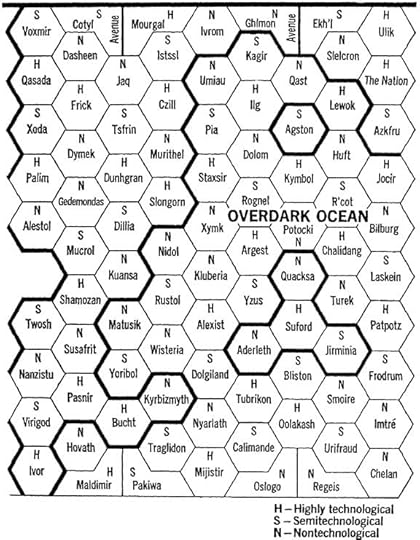
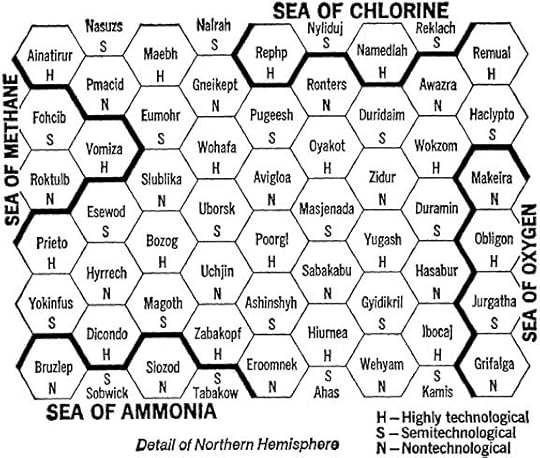
The Well World itself is a giant planet-sized computer that keeps the entire universe running. And all of this is just the concept. It’s one of the coolest in sci-fi that I’ve ever encountered.
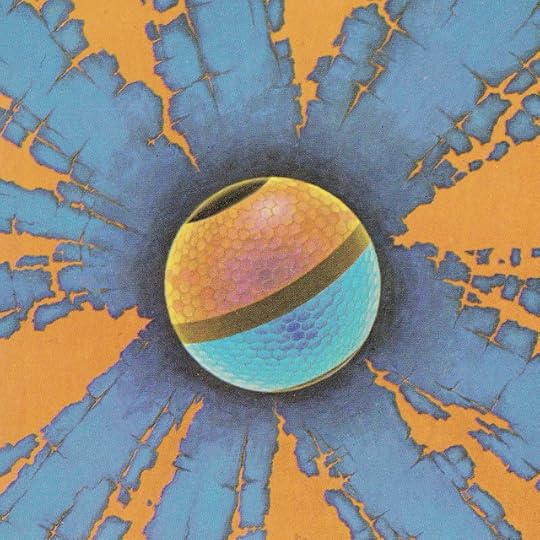
The Well World from space:
The story is a basic quest. Two people have figured out the underlying mathematical key that the Markovians used to control everything. One is the genius cloned product of an authoritarian world while the other is a brilliant but monomaniacal researcher who will stop at nothing to uncover the Markovian secret, and he despises these cloned communal humans, willing even to commit mass murder. They each understand enough to give commands to Markovian computers, but neither is evolved enough to be trusted with that power.
But the thing is, the gates the Markovians used to in their experiment to populate the universe are still out there. Every so often someone will blunder into one of those gates and be transported to the Well World. It’s a one-way trip. Once you get there, you are given a basic overview of the place and then sent through the gate which connects to all the hexes. The Well master computer sizes you up and then determines which hex you would be best suited for, changing you into one of those creatures. You will feel totally natural in that body (it controls every aspect of the universe, so this bit is trivial) and you can understand the language and you’re given a young, fresh body. The ultimate do-over. If you wake up a six-armed walrus-snake (that’s a real species on the Well World, called Uliks: https://images.app.goo.gl/mFZPw81REzB...), it’s fine. That new body will feel perfectly normal to you.
The problem now, however, is that those two guys who have figured out how to get Markovian computers to do what they want have now been transported to the Well World. They each want to access the master computer and remake the universe as they see fit. So the race is on.
One thing SF is prone to is infodumps. I typically don’t mind them but I appreciate when they’re done well. Here they can be as clunky or as smooth as needed because every time someone wakes up in a new body in an unfamiliar hex they have to ask around to figure exactly what they are and how things work. Some of them have things fully explained to them while others have to figure it out on the fly. Chalker gets to use a variety of infodump styles because his concept is so flexible.
Because there is a computer running everything, that concept even allows for what appears to be magic. It’s a form of Hard Fantasy because what seems to be magic is really just creatures being able to tap into the Well World computer and altering local mathematical equations to effect change. That’s what is so brilliant about the concept: it allows for every cool thing in the SFF genre, from teleportation to precognition to magical spells. The whole lot is just being able to hack the math that runs the universe.
The concept also allows for both evolution and intelligent design. The Markovians evolved naturally, but their creations didn’t. As with allowing for things like FTL and magic, Chalker’s universe is a very “eat your cake and have it too” situation. Ingenious.
Chalker said that his inspiration was the mystery of the missing Krell from the classic film Forbidden Planet. He used it as a jumping-off point for his tale of the mighty Markovians and their planet-sized computers. This scene in particular: https://youtu.be/HHXfMjp2zqI but also a bit of this: https://youtu.be/f2BYyeS-fIU You can see how Chalker took that idea and ran with it.
Spoiler section:
———
I loved this book when it first came out in 1977. I was 12 and had just seen Star Wars. I’ve just reread it after 37 years and I still like it. I’m kind of amazed at how much of it I remembered. It’s clunkier overall but still pretty great.
The whole concept is brilliant: a race of beings attains godhood by mastering reality and they look around and ask, “Is this it?” It’s the ultimate metaphor for consumer culture, but also for attaining your goals. Once you have all you need and you get what you want, you find the empty place is still unfilled. These creatures had utter mastery over the universe, over all space and time. Yet they felt something was lacking.
So these immortal, omnipotent, omniscient creatures — called Markovians by the humans who discovered their abandoned worlds — decided to start over. They built the Well World to experiment with different types of creatures, creating thousands upon thousands of different alien races. Once those races were proved viable, they then created planets with evolutionary histories that would result in the designed creatures. The Markovians would then volunteer to live the rest of their mortal lives as these aliens, to see if the new variations might uncover that missing spark which left the Markovians spiritually bereft.
The last 1560 races created were left on the Well World once all the volunteers had gone out into the new universe. Each race has a hexagonal homeland, called a hex, that is designed specifically for them. Lizard people live in a volcanic hex; mermaids live in a water hex; centaurs live in a pastoral hex; etc. Every kind of creature imaginable populated the Well World, leading to endless opportunity for stories about different societies. Giant spiders, bat-like peoples, insects, yeti, talking beavers, plant people — some fiercely individual, some having a hive mind, some densely populated, some sparsely. The variety is endless. It’s basically the cantina scene from Star Wars with an unlimited budget.
And that’s just in the Southern Hemisphere, which is reserved for carbon-based life. In the northern hemisphere live truly bizarre creatures. Some that resemble floating paint smears. Energy beings who have a symbiotic relationship. Mobile rocks. Intelligent sparkles. Sentient crystals. The Markovians didn’t know what the missing ingredient might be, so they covered all the bases.
The Well World itself is a giant planet-sized computer that keeps the entire universe running. And all of this is just the concept. It’s one of the coolest in sci-fi that I’ve ever encountered.
The Well World from space:
The story is a basic quest. Two people have figured out the underlying mathematical key that the Markovians used to control everything. One is the genius cloned product of an authoritarian world while the other is a brilliant but monomaniacal researcher who will stop at nothing to uncover the Markovian secret, and he despises these cloned communal humans, willing even to commit mass murder. They each understand enough to give commands to Markovian computers, but neither is evolved enough to be trusted with that power.
But the thing is, the gates the Markovians used to in their experiment to populate the universe are still out there. Every so often someone will blunder into one of those gates and be transported to the Well World. It’s a one-way trip. Once you get there, you are given a basic overview of the place and then sent through the gate which connects to all the hexes. The Well master computer sizes you up and then determines which hex you would be best suited for, changing you into one of those creatures. You will feel totally natural in that body (it controls every aspect of the universe, so this bit is trivial) and you can understand the language and you’re given a young, fresh body. The ultimate do-over. If you wake up a six-armed walrus-snake (that’s a real species on the Well World, called Uliks: https://images.app.goo.gl/mFZPw81REzB...), it’s fine. That new body will feel perfectly normal to you.
The problem now, however, is that those two guys who have figured out how to get Markovian computers to do what they want have now been transported to the Well World. They each want to access the master computer and remake the universe as they see fit. So the race is on.
One thing SF is prone to is infodumps. I typically don’t mind them but I appreciate when they’re done well. Here they can be as clunky or as smooth as needed because every time someone wakes up in a new body in an unfamiliar hex they have to ask around to figure exactly what they are and how things work. Some of them have things fully explained to them while others have to figure it out on the fly. Chalker gets to use a variety of infodump styles because his concept is so flexible.
Because there is a computer running everything, that concept even allows for what appears to be magic. It’s a form of Hard Fantasy because what seems to be magic is really just creatures being able to tap into the Well World computer and altering local mathematical equations to effect change. That’s what is so brilliant about the concept: it allows for every cool thing in the SFF genre, from teleportation to precognition to magical spells. The whole lot is just being able to hack the math that runs the universe.
The concept also allows for both evolution and intelligent design. The Markovians evolved naturally, but their creations didn’t. As with allowing for things like FTL and magic, Chalker’s universe is a very “eat your cake and have it too” situation. Ingenious.
Chalker said that his inspiration was the mystery of the missing Krell from the classic film Forbidden Planet. He used it as a jumping-off point for his tale of the mighty Markovians and their planet-sized computers. This scene in particular: https://youtu.be/HHXfMjp2zqI but also a bit of this: https://youtu.be/f2BYyeS-fIU You can see how Chalker took that idea and ran with it.
Spoiler section:

January 2, 2013
Midnight at the Well of Souls is an old-school piece of sci-fi, with a brilliant setting and a story that doesn't just examine the concept of what it means to be human, it kicks it over and scatters the pieces everywhere.
Just so you know what kind of ride you're in for, the book opens with characters learning the true nature of the universe. From there, the protagonists are transported to an artificial planet divided into thousands of "hexes," each with its own unique form of life. Moreover, the protagonists themselves are transformed into different forms of life, not just once, but multiple times throughout the story. It's not every day you read a sci-fi novel where your main character is a talking elk who runs around with a centaur, a talking bat, a giant sentient insect, and a sentient tree.
Although Midnight features some interesting examination of character, the real star is the setting. The planet itself is one giant mystery to be unraveled, and despite a few clunky points in the middle, I found the journey a fun and satisfying one. Those familiar with Chalker's penchant for gender-bending and toying with sexual identity will also not be disappointed.
Just so you know what kind of ride you're in for, the book opens with characters learning the true nature of the universe. From there, the protagonists are transported to an artificial planet divided into thousands of "hexes," each with its own unique form of life. Moreover, the protagonists themselves are transformed into different forms of life, not just once, but multiple times throughout the story. It's not every day you read a sci-fi novel where your main character is a talking elk who runs around with a centaur, a talking bat, a giant sentient insect, and a sentient tree.
Although Midnight features some interesting examination of character, the real star is the setting. The planet itself is one giant mystery to be unraveled, and despite a few clunky points in the middle, I found the journey a fun and satisfying one. Those familiar with Chalker's penchant for gender-bending and toying with sexual identity will also not be disappointed.

March 28, 2011
I haven't read this, and the following books in the series for years - I came across it in a 2nd hand bookshop for $1 and when I got home, I found that it had been autographed by the author himself! I really enjoyed reading it. The thought that the whole universe is just a mathematical equation is quite alluring. I also enjoyed the various lifeforms encountered on the Wellworld and Chalker is very good at describing what it would be like to wake up in not just a different body, but an entirely different form of life.
August 12, 2009
Read this in the Navy on Diego Garcia. What did it lead to. I own every Chalker book...around 40 and I've read all but about two of them. I even have a few letters he sent me when I mailed him some questions and the letters are on his MIRAGE Press letterhead. Chalker is not Shakespeare, but he takes you on a rollercoaster ride every time.

November 13, 2013
Midnight at the Well of Souls by Jack Chalker has been re-released as a CAEZIK Notable book. From the publisher: "CAEZIK Notables is a series of speculative-fiction books marking important milestones in science fiction or fantasy. Each book published in the series has a new introduction highlighting the book’s significance within the genre." This gives me a more durable trade paperback format to read and re-read, so I can give my well-worn mass market paperback a rest before it starts shedding its pages like a tree in autumn. More importantly, it gives me a chance to talk about an author who never got the recognition he deserved in his lifetime. This novel has sold over 5 million copies worldwide. Jack Chalker's name should be write large in the history of science fiction, mentioned alongside Dick, Le Guin, Asimov, Clarke and Heinlein, but he is routinely denied the recognition he deserves.
This novel was originally a stand-alone, but its popularity inspired Jack to expand the near infinite possibilities the Well World provided into a series of sequels. Jack also wrote many other novels with mind-bending concepts similar to the Well World novels. Among these was a 1990s series called The Wonderland Gambit. You may not recognize that title, but you'll recognize a movie called The Matrix. In my humble opinion, The Matrix was a direct rip-off of The Wonderland Gambit. Jack never received a single penny or any credit for any of it. Compare the two yourself and I believe you'll see what I mean.
I don't intend to write a detailed review here, this is more about the impact of this novel. Above I wrote about the mark it made on the world, even if it went largely uncredited. It also had a very personal impact on me. Midnight at the Well of Souls is all about transformation, as are most of the novels he wrote. As for my own experience with Midnight, I was a young adult when it first came out. I'd been a science fiction fan since early childhood, but this novel struck a note with me like no other. Perhaps it was because I encountered it at the point in my life when I was transforming from child to adult. In any case, it inspired me to read every novel he wrote as they came out, by my count fifty-five in all. I also had the privilege of speaking to him in person a couple of times. So when this re-release of Midnight came out, I knew it was time to finally speak about him here in this blog. If you've never read this novel, do so. I promise you won't regret it.
This novel was originally a stand-alone, but its popularity inspired Jack to expand the near infinite possibilities the Well World provided into a series of sequels. Jack also wrote many other novels with mind-bending concepts similar to the Well World novels. Among these was a 1990s series called The Wonderland Gambit. You may not recognize that title, but you'll recognize a movie called The Matrix. In my humble opinion, The Matrix was a direct rip-off of The Wonderland Gambit. Jack never received a single penny or any credit for any of it. Compare the two yourself and I believe you'll see what I mean.
I don't intend to write a detailed review here, this is more about the impact of this novel. Above I wrote about the mark it made on the world, even if it went largely uncredited. It also had a very personal impact on me. Midnight at the Well of Souls is all about transformation, as are most of the novels he wrote. As for my own experience with Midnight, I was a young adult when it first came out. I'd been a science fiction fan since early childhood, but this novel struck a note with me like no other. Perhaps it was because I encountered it at the point in my life when I was transforming from child to adult. In any case, it inspired me to read every novel he wrote as they came out, by my count fifty-five in all. I also had the privilege of speaking to him in person a couple of times. So when this re-release of Midnight came out, I knew it was time to finally speak about him here in this blog. If you've never read this novel, do so. I promise you won't regret it.

January 1, 2022
Midnight at the Well of Souls is the first of seven books in Chalker’s classic sci-fi Wells series. Think of it as a cross between Dr. Who and Alice in Wonderland. At its best, Chalker offers us endless cleverly Done mini-worlds peopled by giant cockroaches and centaurs and sentient trees. Each hex has its own environment and atmosphere and those arriving through the gate get changed into the dominant species in that hex. Chalker does a great job of creating these mini-worlds and they are endlessly fascinating. But where he falters is in the overarching plot of a secret control to all these worlds created by the Markovians and the race to get to the control center. The overarching plot is rathe creaky and overdone and often a bit of a stretch.

April 4, 2018
This one has sentimental value to me.
I'm not sure it deserves five stars exactly, but this and the rest of the Well World series was special to me when I was a lonely teenager. I read a lot of Jack L Chalker's stuff back then. I've always had a deep, gut-level fascination with transformation and what it would feel like to be changed into an entirely different being. I've never encountered another author who does it as consistently well as Chalker did, but if anyone could point such an author out to me, I'd be grateful. I'm always looking for books like that. There are others, like John Varley for example, who present a world where such transformations are routine and considered normal. I don't really care much for those since that takes most of the fun out of it. Besides, those tend to be idea books and I'm more into character-driven stories.
As for the novel itself, it certainly is a unique and enjoyable read. The character of Nathan Brazil is mysterious and kind of intriguing. The concept of the Well World is truly innovative and fascinating. There is no end to what you could do with such a setting.
In the course of the series that follows, though, Chalker could've done a better job of keeping notes. Sometimes details randomly change. There's no indication that this is part of the story but more likely because the author wasn't paying enough attention to what he wrote earlier. This doesn't happen constantly, maybe a couple times during the series, but it is annoying. Continuity must be guarded so the reader isn't jerked out of the story. Just saying.
This is by no means a perfect book but it's still one of my favorites and, for me, those are always five-star books.
I'm not sure it deserves five stars exactly, but this and the rest of the Well World series was special to me when I was a lonely teenager. I read a lot of Jack L Chalker's stuff back then. I've always had a deep, gut-level fascination with transformation and what it would feel like to be changed into an entirely different being. I've never encountered another author who does it as consistently well as Chalker did, but if anyone could point such an author out to me, I'd be grateful. I'm always looking for books like that. There are others, like John Varley for example, who present a world where such transformations are routine and considered normal. I don't really care much for those since that takes most of the fun out of it. Besides, those tend to be idea books and I'm more into character-driven stories.
As for the novel itself, it certainly is a unique and enjoyable read. The character of Nathan Brazil is mysterious and kind of intriguing. The concept of the Well World is truly innovative and fascinating. There is no end to what you could do with such a setting.
In the course of the series that follows, though, Chalker could've done a better job of keeping notes. Sometimes details randomly change. There's no indication that this is part of the story but more likely because the author wasn't paying enough attention to what he wrote earlier. This doesn't happen constantly, maybe a couple times during the series, but it is annoying. Continuity must be guarded so the reader isn't jerked out of the story. Just saying.
This is by no means a perfect book but it's still one of my favorites and, for me, those are always five-star books.

March 22, 2012
This was probably the most unique novel I'd ever read, and that's saying something, because I've also read John Varley's Gaea trilogy. The concept is just so original and alien, the latter of which is fitting, as it straddles the line between science-fiction and science-fantasy.
Protagonist Nathan Brazil is a conundrum from the beginning, and Chalker weaves him and the other characters into the plot beautifully. However, sometimes Chalker's writing style leaves something to be desired (bulky sentences, head-jumping), but overall, Midnight at the Well of Souls is an excellent book that leaves the reader wanting more of the peculiar Well World.
Protagonist Nathan Brazil is a conundrum from the beginning, and Chalker weaves him and the other characters into the plot beautifully. However, sometimes Chalker's writing style leaves something to be desired (bulky sentences, head-jumping), but overall, Midnight at the Well of Souls is an excellent book that leaves the reader wanting more of the peculiar Well World.

August 5, 2013
Jack L. Chalker's "Midnight at the Well of Souls" is an exceptional science fiction novel that has captivated readers since its publication in 1977. It remains a shining gem in the genre, with its imaginative world, complex characters, thought-provoking themes, and profound exploration of philosophical questions.
Chalker's worldbuilding is truly remarkable, creating a universe that brims with boundless imagination and limitless possibilities. The Well of Souls, a mystical artifact at the core of the narrative, holds the power to create new worlds and grant unimaginable abilities. Chalker masterfully explores the consequences and implications of this concept, constructing an intricate and enthralling plot that keeps readers engaged throughout.
The characters in "Midnight at the Well of Souls" are diverse and well-developed, each with their own distinct personalities and motivations. Chalker delves deep into their humanity, presenting them with challenges that force them to confront their own identities, purpose, and the ethical dilemmas of wielding immense power. As readers witness their growth and personal struggles, a profound connection is forged, leaving a lasting impact.
One of the novel's greatest strengths lies in its exploration of themes and philosophical questions. Chalker seamlessly weaves existentialism, morality, and the nature of free will into the fabric of the story. Through the characters' journeys and the complex world they inhabit, readers are invited to reflect on their own existence, the choices they make, and the profound impact those choices have on the universe at large. The novel prompts introspection, encouraging readers to contemplate the complexities of life and the ethical implications of wielding great power.
Chalker's prose is elegant and immersive, effortlessly drawing readers into the story. The narrative strikes a perfect balance between descriptive passages and thrilling action, maintaining a sense of urgency while allowing readers to savor the vivid imagery. The author's ability to create tension and suspense is exceptional, while unexpected plot twists keep readers eagerly turning the pages.
In conclusion, "Midnight at the Well of Souls" is a timeless masterpiece of science fiction. Jack L. Chalker's skill in crafting intricate worlds, multidimensional characters, and exploring profound themes shines through every page. The novel's thought-provoking exploration of existentialism, morality, and the consequences of power sets it apart, leaving a lasting impact on readers. With its rich imagination, well-crafted plot, philosophical underpinnings, and captivating prose, this novel is an absolute must-read for fans of the genre. It stands as a testament to Chalker's literary brilliance and earns a resounding five-star rating.
Chalker's worldbuilding is truly remarkable, creating a universe that brims with boundless imagination and limitless possibilities. The Well of Souls, a mystical artifact at the core of the narrative, holds the power to create new worlds and grant unimaginable abilities. Chalker masterfully explores the consequences and implications of this concept, constructing an intricate and enthralling plot that keeps readers engaged throughout.
The characters in "Midnight at the Well of Souls" are diverse and well-developed, each with their own distinct personalities and motivations. Chalker delves deep into their humanity, presenting them with challenges that force them to confront their own identities, purpose, and the ethical dilemmas of wielding immense power. As readers witness their growth and personal struggles, a profound connection is forged, leaving a lasting impact.
One of the novel's greatest strengths lies in its exploration of themes and philosophical questions. Chalker seamlessly weaves existentialism, morality, and the nature of free will into the fabric of the story. Through the characters' journeys and the complex world they inhabit, readers are invited to reflect on their own existence, the choices they make, and the profound impact those choices have on the universe at large. The novel prompts introspection, encouraging readers to contemplate the complexities of life and the ethical implications of wielding great power.
Chalker's prose is elegant and immersive, effortlessly drawing readers into the story. The narrative strikes a perfect balance between descriptive passages and thrilling action, maintaining a sense of urgency while allowing readers to savor the vivid imagery. The author's ability to create tension and suspense is exceptional, while unexpected plot twists keep readers eagerly turning the pages.
In conclusion, "Midnight at the Well of Souls" is a timeless masterpiece of science fiction. Jack L. Chalker's skill in crafting intricate worlds, multidimensional characters, and exploring profound themes shines through every page. The novel's thought-provoking exploration of existentialism, morality, and the consequences of power sets it apart, leaving a lasting impact on readers. With its rich imagination, well-crafted plot, philosophical underpinnings, and captivating prose, this novel is an absolute must-read for fans of the genre. It stands as a testament to Chalker's literary brilliance and earns a resounding five-star rating.

January 11, 2012
1983 Grade A-. Book Ws1.
2018 Grade B+
Chalker has one of the most incredible imaginations of any author I have ever read, and this blend of SciFi and Fantasy is rather amazing. The world described was covered with 1560 hexagons. Each had different living conditions and beings - incredible conditions and beings. There were six points of view, one for each of the six people who end up on the world - transmogrified into different beings in different hexes. No two were alike.
There are two reasons the story did not get an A grade this time. First it focuses of the coarse side of life - the bad things people do to one another, the worries and pains and sadness, the "mud" of life. It is not graphic, or gross, or even particularly vulgar but can be unpleasant at times. The second is the last third becomes a bit repetitive and at the end rather preachy. I still did not speed read very much but I skipped a few paragraphs in chapters where material was being repeated and skimmed the lecturing in the conclusion.
The chapters after the conclusion are basically epilogues giving the fate of the six main characters, and they are superb. Is the book worth reading, absolutely. Is it worth reading a third time, I think so!
(Technical note. The hexagons must have been irregular to form a sphere because regular hexagons make a flat plain. Chalker never clarified that and it bothered me at times but not very much.)
2018 Grade B+
Chalker has one of the most incredible imaginations of any author I have ever read, and this blend of SciFi and Fantasy is rather amazing. The world described was covered with 1560 hexagons. Each had different living conditions and beings - incredible conditions and beings. There were six points of view, one for each of the six people who end up on the world - transmogrified into different beings in different hexes. No two were alike.
There are two reasons the story did not get an A grade this time. First it focuses of the coarse side of life - the bad things people do to one another, the worries and pains and sadness, the "mud" of life. It is not graphic, or gross, or even particularly vulgar but can be unpleasant at times. The second is the last third becomes a bit repetitive and at the end rather preachy. I still did not speed read very much but I skipped a few paragraphs in chapters where material was being repeated and skimmed the lecturing in the conclusion.
The chapters after the conclusion are basically epilogues giving the fate of the six main characters, and they are superb. Is the book worth reading, absolutely. Is it worth reading a third time, I think so!
(Technical note. The hexagons must have been irregular to form a sphere because regular hexagons make a flat plain. Chalker never clarified that and it bothered me at times but not very much.)

July 23, 2020
I enjoyed it but not enough to continue reading the series! Originally, the book's title caught my eye and the concept was interesting but the big reveal didn't surprise me.

December 3, 2023
If this book had been released in the modern era, it probably would have been a hell of a lot longer, but I probably wouldn't have been able to struggle through it if it had. It takes 100+ pages to really establish its premise, and needs several layers to do so. It starts with a hideous misfit starship captain, Nathan Brazil, in a galaxy where humanity is moving to hive-like conformity. So far so good. A mysterious distress signal that leads to a portal to the Well World. Alright. Everyone who enters the Well World is transformed into one of the alien species living in its 1560 hexagonal ecologies, so we get several chapters as people are transformed into a centaur, a thinking plant, and a massive insect. That part wasn't too bad, since it focused on the psychological experience of having an unfamiliar body, new and changed senses, having to adapt to a new social milieu. It was actually only as the "adventure" started that my interest waned.
Perhaps it was the lack of a driving idea underlying it. It's a succession of situations which need not be connected by any logic, thanks to the structure of the Well World. Stuff just happens as they move from hex to hex. If it was crazy enough, I could enjoy that. However, this is also where the author's imagination starts to show its limits. While his visual imagination is decent, psychologically all the aliens are within the human spectrum, even the supposedly incomprehensible Diviner and Rel. There are aren't even that many communication difficulties until Brazil loses his voice. But what really started to turn me off were the author's poorly disguised fetishes.
I find myself flip-flopping on the issue of fetish content in ostensibly non-fetish fiction. The paradigmatic example in my mind is the foot fetish stuff in The Night Land. It's comically out of place, but also seems totally sincere. In Hodgson's mind, it only makes sense that you'd spend as much time as possible rubbing a woman's feet and kissing her toes. He's inviting you to share in his imaginative erotic contribution, like showing your bros the sexy anime girl you drew. Well of Souls, on the other hand, feels like the literary equivalent of getting Louis C.K.'d. I was on high alert as soon as the transformation started, but it was all plausibly deniable, until There's no three strikes with this stuff. The mind control and genderbending only adds to my case. The author is jacking off, but he knows what he's into is too weird to just put it out there. Maybe it was different before the internet? The normies would read this, blissfully unaware, while Chalker and his compatriots would get their jollies in secret. (how did they find each other?)
Maybe the fact that I already read a far, far better version of this book is what ruined it. Silverberg's Son of Man has all of the same crazy transformation sex across highly segmented world-zones, but it's psychedelically mesmerizing and much much crazier. Now that I think of it, Silverberg's Downward to the Earth also featured transformation...
The ending is a long expository sequence, and seems to close off the story despite Chalker writing what must be a dozen more books in this series. I'm bound by my oath to read at least the next one, unfortunately.
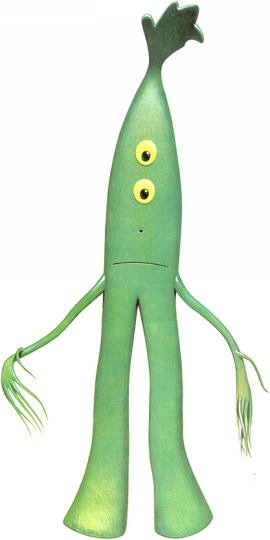
The Czillian (the intelligent plant) was one of the better parts of the book. Their experience of binary fission "birth" was thankfully not fetishistic, that I could tell anyway. More like the feeling you get when a big itchy scab finally falls off, except it's your entire body and also your mind and perception starts to double up at the end as you're seeing out of the other head growing out of the back of yours. Barlowe's illustration is the cutesiest entry in his Guide to Extraterrestrials. I love the smoothness, the almost cartoon facial features, the contrast between the featureless trunklike legs and the thin tentacular fingers. Definitely one of the better ideas to come out of this book.
Perhaps it was the lack of a driving idea underlying it. It's a succession of situations which need not be connected by any logic, thanks to the structure of the Well World. Stuff just happens as they move from hex to hex. If it was crazy enough, I could enjoy that. However, this is also where the author's imagination starts to show its limits. While his visual imagination is decent, psychologically all the aliens are within the human spectrum, even the supposedly incomprehensible Diviner and Rel. There are aren't even that many communication difficulties until Brazil loses his voice. But what really started to turn me off were the author's poorly disguised fetishes.
I find myself flip-flopping on the issue of fetish content in ostensibly non-fetish fiction. The paradigmatic example in my mind is the foot fetish stuff in The Night Land. It's comically out of place, but also seems totally sincere. In Hodgson's mind, it only makes sense that you'd spend as much time as possible rubbing a woman's feet and kissing her toes. He's inviting you to share in his imaginative erotic contribution, like showing your bros the sexy anime girl you drew. Well of Souls, on the other hand, feels like the literary equivalent of getting Louis C.K.'d. I was on high alert as soon as the transformation started, but it was all plausibly deniable, until There's no three strikes with this stuff. The mind control and genderbending only adds to my case. The author is jacking off, but he knows what he's into is too weird to just put it out there. Maybe it was different before the internet? The normies would read this, blissfully unaware, while Chalker and his compatriots would get their jollies in secret. (how did they find each other?)
Maybe the fact that I already read a far, far better version of this book is what ruined it. Silverberg's Son of Man has all of the same crazy transformation sex across highly segmented world-zones, but it's psychedelically mesmerizing and much much crazier. Now that I think of it, Silverberg's Downward to the Earth also featured transformation...
The ending is a long expository sequence, and seems to close off the story despite Chalker writing what must be a dozen more books in this series. I'm bound by my oath to read at least the next one, unfortunately.
The Czillian (the intelligent plant) was one of the better parts of the book. Their experience of binary fission "birth" was thankfully not fetishistic, that I could tell anyway. More like the feeling you get when a big itchy scab finally falls off, except it's your entire body and also your mind and perception starts to double up at the end as you're seeing out of the other head growing out of the back of yours. Barlowe's illustration is the cutesiest entry in his Guide to Extraterrestrials. I love the smoothness, the almost cartoon facial features, the contrast between the featureless trunklike legs and the thin tentacular fingers. Definitely one of the better ideas to come out of this book.

February 18, 2012
Four space travelers enter a mysterious portal and are delivered to the Well World--an artificial planet, the surface of which is honeycombed with over 15000 controlled environments, each with its own native population. There they must embark on a quest to prevent two previous entries from gaining access to the world's control center and rewriting reality. The problem is that everyone who arrives on the Well World is given a new form and identity, and integrated into one of the native cultures.
There are interesting ideas here but in the end I felt like that was all there was. If you remove all the massive expository passages (often disguised as dialogue) there isn't much of a story left. Chalker's prose is also kind of clunky. It isn't a bad book, but it could have done with more refining. I enjoyed it for the feeling of pseudo-nostalgia it gave me (it reminded me of other works I'd read when I was much younger, particularly those of Piers Anthony and Alan Dean Foster--though Foster is much, much better.)
I don't know that I will continue with this series, but I might give one of his others a try.
There are interesting ideas here but in the end I felt like that was all there was. If you remove all the massive expository passages (often disguised as dialogue) there isn't much of a story left. Chalker's prose is also kind of clunky. It isn't a bad book, but it could have done with more refining. I enjoyed it for the feeling of pseudo-nostalgia it gave me (it reminded me of other works I'd read when I was much younger, particularly those of Piers Anthony and Alan Dean Foster--though Foster is much, much better.)
I don't know that I will continue with this series, but I might give one of his others a try.

May 17, 2018
Mini-Review:
4 Stars for Narration, 3 Stars for Story
I found the idea of the Well of Souls to be really interesting and I enjoyed the different kinds of intelligent species that made up the various Hexes. I thought the author did a great job in hinting at who Nathan Brazil really was without saying it outright. However, when it all came out, I was underwhelmed by the delivery.
I look forward to seeing what else happens in the series but I'm not in a rush to jump into it right away.
4 Stars for Narration, 3 Stars for Story
I found the idea of the Well of Souls to be really interesting and I enjoyed the different kinds of intelligent species that made up the various Hexes. I thought the author did a great job in hinting at who Nathan Brazil really was without saying it outright. However, when it all came out, I was underwhelmed by the delivery.
I look forward to seeing what else happens in the series but I'm not in a rush to jump into it right away.

July 2, 2016
Wow, Nathan Brazil saves the Universe! Almost no recollections of this one, and certainly no need to read it more than once -- but an intriguing idea, and a book of its time. 1977! I've been reading this stuff for a LONG time.....

May 6, 2022
Nathan Brazil is the hero we all aspire to be. Phenomenal book that gave me laughs and shock and aww.
Highly recommend to any fantasy fans out there
Highly recommend to any fantasy fans out there
April 21, 2022
Nathan Brazil is a spaceship captain and diverts his ship to answer a distress call on a little-known planet. There he finds evidence of murder and a scuffle and then the signs just vanish. Asd Brazil and his passengers get close they are whisked by ancient Markovian technology into a Well Gate to a Well World - a giant laboratory for nearly 1600 species and their environments in hex-shaped regions - and where the new Entries are transformed into the dominant lifeforms of the Hex to which they are sent. Seeking a way out, Brazil and his now-altered companions - a Bat-man, insectoid, plant and aquatic - seek a way out or at least a purpose for the Well World. It is at the equator where a rival expedition is also headed, and where the explorers will discover that all is not as it seems and that Nathan Brazil is far more knowledgeable than even his millenia-long life can explain. Jack L. Chalker has given us a fast-paced adventure yarn, filled with god-like aliens, magic and science indistinguishable from magic. First of a series and although it's pretty lightweight, I look forward to the sequels.

November 7, 2022
Some late 70s/early 80s sci-fi from an enthusiastic, but not terribly amazing author.
The concept: a bunch of space travelers find a portal that takes them to a strange planet where they are transformed into different alien species. The planet is made up of thousands of hexagons. Each hexagon is home to a different species. Once the set up happens, it turns into the Wizard of Oz, believe it or not.
At the end, the “wizard” metes out justice and sends everybody home.
There’s some interesting world building and some xenophilia sex (One woman is specifically always mentioned as having every amazing breasts, hello 1979).
To be honest, it might be adapted to a very cool board game or computer game. But as a novel, it’s just okey.
The concept: a bunch of space travelers find a portal that takes them to a strange planet where they are transformed into different alien species. The planet is made up of thousands of hexagons. Each hexagon is home to a different species. Once the set up happens, it turns into the Wizard of Oz, believe it or not.
At the end, the “wizard” metes out justice and sends everybody home.
There’s some interesting world building and some xenophilia sex (One woman is specifically always mentioned as having every amazing breasts, hello 1979).
To be honest, it might be adapted to a very cool board game or computer game. But as a novel, it’s just okey.


December 19, 2022
3.5
This was another series that really got good as it went on. I really enjoyed it, but it was a slow build.
Bulk input day.
This was another series that really got good as it went on. I really enjoyed it, but it was a slow build.
Bulk input day.

July 13, 2023
3.5 ⭐️

July 17, 2014
This mid-70s science fiction work is a rather ambitious effort, which succeeds in places and fails in others, resulting in a somewhat mixed, but generally enjoyable, reading experience. In some ways it never rises much above the level of a standard boys’ adventure story, but within those rules it is both surprisingly complex and cosmic in vision. In the hands of a lesser writer than Chalker this would have been dreck, although in the hands of a better one it would have been a masterpiece. Instead, it walks a line just this side of pretentious mediocrity, with enough at least to intrigue me for a single reading.
The premise of the novel is that an ancient race of beings called “Markovians” (who bear more than a passing resemblance to the “Krell” of “Forbidden Planet”) have created all sentient life in the Universe, as an outcome of their godlike technology and whimsy. Some human archaeologists, investigating their artifacts on a world known to have been a Markovian colony, stumble onto a portal to the “Well World,” which is a kind of cosmic menagerie in which each of the created species has its own preserve. After the initial party disappears, the first on the scene to investigate is Nathan Brazil, a rugged long-lived space pirate in the vein of Han Solo, and a motley crew of passengers from his craft. They all get sucked into the Well World as well.
Now, here’s where things start getting weird (and I don’t think this constitutes “spoilers,” because I’m still dealing with the first 1/10th of the story here). Apparently, when folks manage to enter the Well World, they get a brief orientation in “Zone” (a neutral administrative area), then they get shoved through a transportation device that turns them into some other species from what they started as and teleports them to the sector of the Well World where those critters live. Apparently it makes them into something that fits their personality, but doesn’t worry too much about issues of gender or social standing in terms of the end result. Our various parties turn into tree-like genderless Czill, or giant insects, or mermaids, or centaurs (yep), more or less at random and are scattered all over the planet. Then, of course, they discover that they need to get back to Zone and, well… accomplish something or other, or prevent someone else from doing so at least.
Unfortunately, with such a complex premise and so many moving parts, a lot of the more interesting concepts don’t get as fully developed as I’d have liked. The aliens are distinctly disappointing – after relatively cursory descriptions, we get almost no insight into their cultures or biological peculiarities, except when such directly impacts the plot. There is a reasonable attempt at a sci fi explanation for how fantasy creatures wound up on this world, and even for why magic works on some planets but not others, but little detail about the mechanics or specifics of it. There are some interesting allusions to an increasingly Communistic galactic human society, but this also remains mostly a kind of shadow, apparently intended to frighten good little individualist (not to say Objectivist) readers and let them see how badly things might go.
The final problem I had was that it doesn’t seem to work well as the opening book of a series, but the ending fails to provide the closure of a stand-alone novel. The problem here is that the basic premise of the book deals with the fundamental question of the meaning of existence, which doesn't really work for an opener. I have no certain knowledge of this, but I suspect that it was originally envisioned as a much longer text which would give the complete story, but due to publishing standards of the day, wound up cut apart into multiple novels in revision. This would explain why the plot is so hard to track – a lot of it is deliberately being held back for future episodes. Today, publishers seem to prefer publishing overlong novels, and might well have left it alone. Or, I could be utterly wrong about all of this, and Chalker simply didn’t know how to kick off a series very well.
As I keep saying, however, in spite of all this criticism the story moves along well under its own momentum and the very diversity of all the aliens and environments we encounter serves to hold interest from one chapter to the next. “I wonder what we’re going to find here?” is the recurring theme of the quest, and in that it reminds me of the better examples of classic Ray Harryhausen adventure movies. A film version of this would probably be equally baffling, but visually fascinating.
The premise of the novel is that an ancient race of beings called “Markovians” (who bear more than a passing resemblance to the “Krell” of “Forbidden Planet”) have created all sentient life in the Universe, as an outcome of their godlike technology and whimsy. Some human archaeologists, investigating their artifacts on a world known to have been a Markovian colony, stumble onto a portal to the “Well World,” which is a kind of cosmic menagerie in which each of the created species has its own preserve. After the initial party disappears, the first on the scene to investigate is Nathan Brazil, a rugged long-lived space pirate in the vein of Han Solo, and a motley crew of passengers from his craft. They all get sucked into the Well World as well.
Now, here’s where things start getting weird (and I don’t think this constitutes “spoilers,” because I’m still dealing with the first 1/10th of the story here). Apparently, when folks manage to enter the Well World, they get a brief orientation in “Zone” (a neutral administrative area), then they get shoved through a transportation device that turns them into some other species from what they started as and teleports them to the sector of the Well World where those critters live. Apparently it makes them into something that fits their personality, but doesn’t worry too much about issues of gender or social standing in terms of the end result. Our various parties turn into tree-like genderless Czill, or giant insects, or mermaids, or centaurs (yep), more or less at random and are scattered all over the planet. Then, of course, they discover that they need to get back to Zone and, well… accomplish something or other, or prevent someone else from doing so at least.
Unfortunately, with such a complex premise and so many moving parts, a lot of the more interesting concepts don’t get as fully developed as I’d have liked. The aliens are distinctly disappointing – after relatively cursory descriptions, we get almost no insight into their cultures or biological peculiarities, except when such directly impacts the plot. There is a reasonable attempt at a sci fi explanation for how fantasy creatures wound up on this world, and even for why magic works on some planets but not others, but little detail about the mechanics or specifics of it. There are some interesting allusions to an increasingly Communistic galactic human society, but this also remains mostly a kind of shadow, apparently intended to frighten good little individualist (not to say Objectivist) readers and let them see how badly things might go.
The final problem I had was that it doesn’t seem to work well as the opening book of a series, but the ending fails to provide the closure of a stand-alone novel. The problem here is that the basic premise of the book deals with the fundamental question of the meaning of existence, which doesn't really work for an opener. I have no certain knowledge of this, but I suspect that it was originally envisioned as a much longer text which would give the complete story, but due to publishing standards of the day, wound up cut apart into multiple novels in revision. This would explain why the plot is so hard to track – a lot of it is deliberately being held back for future episodes. Today, publishers seem to prefer publishing overlong novels, and might well have left it alone. Or, I could be utterly wrong about all of this, and Chalker simply didn’t know how to kick off a series very well.
As I keep saying, however, in spite of all this criticism the story moves along well under its own momentum and the very diversity of all the aliens and environments we encounter serves to hold interest from one chapter to the next. “I wonder what we’re going to find here?” is the recurring theme of the quest, and in that it reminds me of the better examples of classic Ray Harryhausen adventure movies. A film version of this would probably be equally baffling, but visually fascinating.
December 13, 2014
Nathan Brazil has had a long, boring life as a pilot, longer than he even remembers anymore. When a routine transport is interrupted by a distress call leading to the site of a mass murder, though, things start getting more interesting. Nathan and his passengers are pulled after the murderer to a place called Well World, a single planet with over fifteen hundred sentient races---and many of the inhabitants used to be as human as they. But can Nathan find the two he seeks when they could be anyone or anything?
Tired of science fiction books that only have one species of alien? This book has many carefully drawn species populating a variety of environments, ranging from centaurs to human plants to bat-men and more. And it's easy to see how each race fits into its own environment, as well as its place in the greater community of the planet. The concept of Well World allows for Nathan and the others to see a good variety of aliens. The concept of Well World is also amusing from another angle, as it plays off of multiple definitions of the word well.
That said, there were several things that bothered me about the book. The first was the sheer focus on sex. Granted, a race's reproductive mechanisms are an integral part of its survival, but it was a bit annoying to get the full physiological rundown every time a new species was introduced. And there's more to a happy ending than just getting to sleep together, or more to love in general than sleeping together.
Another thing I didn't like was the tendency to sit the reader down for very long explanations. That's how the book started (a professor explaining everything to his students) and how the book ends (Nathan's giant speech explaining everything about everything). Every time a new race shows up, the book stops to explain numerous details that in the end weren't very relevant and at least could have been more interesting if presented in a different fashion. Also at the end, in order to give the backstory and motivation for several characters, they ended up talking about things that seemed very out of character.
The final thing that grated on me was Nathan himself, or rather who he turned out to be. His role was easy enough to spot by about halfway through the book, but once he lays out all his cards several things stop making sense. The ultimate conclusion reads as more of a depressing philosophical rant about looking to ourselves for salvation because nothing else can save us, when at the same time he advocates having compassion on each other. And if the story of his origin is true, why would there be only one? Why not more? Why not fall in love with one person and change the future instead of the past? Or, conversely, why fall in love with only one person when he's supposedly got so much interest in everybody? Why is he so small and limited when he's supposed to be so much more?
In the end it's really a difference of worldview. I disagree with several of the book's conclusions, and as the storytelling apart from that did not overly impress me, this probably isn't something I'd reread. I rate this book Neutral.
Tired of science fiction books that only have one species of alien? This book has many carefully drawn species populating a variety of environments, ranging from centaurs to human plants to bat-men and more. And it's easy to see how each race fits into its own environment, as well as its place in the greater community of the planet. The concept of Well World allows for Nathan and the others to see a good variety of aliens. The concept of Well World is also amusing from another angle, as it plays off of multiple definitions of the word well.
That said, there were several things that bothered me about the book. The first was the sheer focus on sex. Granted, a race's reproductive mechanisms are an integral part of its survival, but it was a bit annoying to get the full physiological rundown every time a new species was introduced. And there's more to a happy ending than just getting to sleep together, or more to love in general than sleeping together.
Another thing I didn't like was the tendency to sit the reader down for very long explanations. That's how the book started (a professor explaining everything to his students) and how the book ends (Nathan's giant speech explaining everything about everything). Every time a new race shows up, the book stops to explain numerous details that in the end weren't very relevant and at least could have been more interesting if presented in a different fashion. Also at the end, in order to give the backstory and motivation for several characters, they ended up talking about things that seemed very out of character.
The final thing that grated on me was Nathan himself, or rather who he turned out to be. His role was easy enough to spot by about halfway through the book, but once he lays out all his cards several things stop making sense. The ultimate conclusion reads as more of a depressing philosophical rant about looking to ourselves for salvation because nothing else can save us, when at the same time he advocates having compassion on each other. And if the story of his origin is true, why would there be only one? Why not more? Why not fall in love with one person and change the future instead of the past? Or, conversely, why fall in love with only one person when he's supposedly got so much interest in everybody? Why is he so small and limited when he's supposed to be so much more?
In the end it's really a difference of worldview. I disagree with several of the book's conclusions, and as the storytelling apart from that did not overly impress me, this probably isn't something I'd reread. I rate this book Neutral.

June 11, 2013
Imagine walking through a dark gate on an abandoned planet and waking up on a different planet as a walking pumpkin-headed plant-creature. Or a centaur. Or an enormous bug. Or even a six-armed snake-man. This is the premise of Chalker’s excellent Well of Souls series, one of my favorite set of SF books from my formative years. ‘Midnight at the Well of Souls’ is the first book of the series, and follows a familiar pattern: a group of characters – some likable, some not – are taken to a strange place, have some amazing experiences and finally arrive at a somewhat happy ending. The strange place is the mysterious ‘Well-World’ which was used as a testing ground for new races by a long-vanished elder race. Over 1,500 races remain, each in their own separate area on the planet. Here you will find all of the mythical beasts from legend - centaurs, mermaids, fairies – and some stranger things: flying bat-men, fast-running carnivorous vegetable-creatures, four-foot tall sand-swimming tyrannosaurs, and immobile hive-minded flowers. My personal favorite (in this book) is a symbiotic creature composed of flashing lights and floating crystals which eats silicon (what else?).
The story is easily read, and the characters are enjoyable, if very shallow. I love really bad villains, and there aren’t any in this book. Chalker has a chance to build a really twisted mad-genius type in his character Elkinos Skander, but then removes him from the storyline, highlighting him only at the end when we are reminded of the murders that he committed at the beginning of the book.
Similarly, Datham Hain is a powerful drug-kingpin bent on political control of whatever. He has so much potential to be a shining force of evil, but is brainwashed early in the story and directed like a robot, rather than freed to wreak his depredations on the world. And as a giant cockroach, no less. So close, so close.
But the weakness of the villains is balanced (I guess) by the absence of heroes. There are none in this book. The main protagonist, Nathan Brazil, is an unassuming anti-hero, more like a latter-day truck-driver/beatnik. In fact, Chalker takes great pains to point out that Brazil isn’t a hero and is almost apologetic in his handling of him. There is one heroic act where the boy mathematician Varnett (as a giant winged gorilla) risks his life to save Brazil, but for the most part every one is a pawn. The real players and movers in the story (like Serge Ortega) don’t appear much and seem to fill the role of a faceless establishment.
But forget the characters. The strength of this book is experiencing the amazing well-world, and ‘Midnight’ is a great introduction to the other books. It will leave you wondering what creature you would become if you were taken to the Well-World.
Please, not the giant cockroach.

August 5, 2011
[2024] trying to avert a reading funk, I pulled this one out because as I said below, … comfort books. This time I flagged two bits:
“People used to fight wars not so much to protect their own life-style but to impose it on others.”
“The superintendent held down number 198 with one foreleg while punching a small red control off to one side with the other.”
Um, he said that species is colorblind. Red?? (Chalker admits in later books of this series that he was a little inconsistent with the Well World species, but an editor should have caught that.)
[2018 reread] some people have comfort food, some a favorite movie, blanket...I have comfort books. They stand the tests of time, are always enjoyable regardless of my age or changed perspectives. When I have a lot on my plate, and this time around also a couple of heavier reads in parallel, I will sometimes divert with one (or more) of those comfort books. Might need more diversion...!
[2012] An all time favorite. Imaginative. Intelligent. And so open to follow ons(obviously, given the four plus three plus two that did follow...).
“People used to fight wars not so much to protect their own life-style but to impose it on others.”
“The superintendent held down number 198 with one foreleg while punching a small red control off to one side with the other.”
Um, he said that species is colorblind. Red?? (Chalker admits in later books of this series that he was a little inconsistent with the Well World species, but an editor should have caught that.)
[2018 reread] some people have comfort food, some a favorite movie, blanket...I have comfort books. They stand the tests of time, are always enjoyable regardless of my age or changed perspectives. When I have a lot on my plate, and this time around also a couple of heavier reads in parallel, I will sometimes divert with one (or more) of those comfort books. Might need more diversion...!
[2012] An all time favorite. Imaginative. Intelligent. And so open to follow ons(obviously, given the four plus three plus two that did follow...).

July 15, 2018
I made the decision this year not to read novels over 250 pages, because I read so slowly, and I tend to lose interest. Plus, a lot of longer novels just really could be cut down a lot. But I started this one, and it actually kept me engaged. Big ideas. The plot certainly has a bit of "Forbidden Planet" element to - not copied at all, just in the same tradition. Anyway, it moves really well and is a lot of fun. No wonder this series was on every bookstore SF shelf I ever saw back in the 1980s. I'll probably read more from this series.

May 18, 2012
tyrinėdamas galaktikos gelmes žmogus tikriausiai susitiks daugybę nežemiškų civilizacijų. O galbūt didesnė tikimybė surasti prieš daugelį milijonų metų išnykusių protinių būtybių paliktas "laikrodines minas", kurias palietus nutiks žmogaus protui neįsivaizduojami dalykai... Dalgonijos planetoje pilna keistų šulinių, kurie, atrodo, sminga į pačią šio pasaulio širdį...
visai geras skaitalas
visai geras skaitalas
Displaying 1 - 30 of 320 reviews