

What do you think?

Elegy, Southwest: A Novel
A timely and urgent novel following a young married couple on a road trip through the American southwest as they grapple with the breakdown of their relationship in the shadow of environmental collapse, for fans of Rachel Cusk and Sigrid Nunez.
In November 2018, Eloise and Lewis rent a car in Las Vegas and take off on a two-week road trip across the American southwest. While wildfires rage, the married couple make their way through Nevada, California, Arizona, and Utah, tracing the course of the Colorado River, the aquatic artery on which the Southwest depends for survival. Lewis, an artist working for a prominent land art foundation, is grieving the recent death of his mother, while Eloise is an academic researching the past and future of the Colorado River as it threatens to run dry.
Over the course of their trip, Eloise, beginning to suspect she might be pregnant, helplessly witnesses Lewis’s descent as he struggles to find a place for himself in the desert where he never quite felt at home.
Elegy, Southwest is a novel which entwines a tragic love story with an intelligent and profound consideration of the way we now live alongside environmental breakdown; an elegy for lost love and for the landscape that makes us.
In November 2018, Eloise and Lewis rent a car in Las Vegas and take off on a two-week road trip across the American southwest. While wildfires rage, the married couple make their way through Nevada, California, Arizona, and Utah, tracing the course of the Colorado River, the aquatic artery on which the Southwest depends for survival. Lewis, an artist working for a prominent land art foundation, is grieving the recent death of his mother, while Eloise is an academic researching the past and future of the Colorado River as it threatens to run dry.
Over the course of their trip, Eloise, beginning to suspect she might be pregnant, helplessly witnesses Lewis’s descent as he struggles to find a place for himself in the desert where he never quite felt at home.
Elegy, Southwest is a novel which entwines a tragic love story with an intelligent and profound consideration of the way we now live alongside environmental breakdown; an elegy for lost love and for the landscape that makes us.
1 pages, Audio CD
First published February 18, 2025
Ratings & Reviews
Friends & Following
Create a free account to discover what your friends think of this book!
Community Reviews
Displaying 1 - 30 of 161 reviews

February 27, 2025
Truly an elegy, this is a haunting novel is deeply entrenched in loss and love. Embarking on a road trip, a seemingly happy couple with lots of love left navigate their way through America’s southwest. The use of our perilous climate and the ruins of which they drive through, the decrepit surrounds eerily reflect the floundering of a relationship and a young man’s mind which is clearly unravelling.
The tone of writing is sparse, but very heavy, the sombre feel eerie and haunting. The slow burn nature allows Eloise the wife to address her love and witness the slow descent into madness of her husband who is grieving the loss of her husband, and the telling of the story is the grief of a wife.
This book is bleak and hard, there is no lightness. It is very sad and confronting, so triggers must be applied.
As an Australian Eloise reflects on her Australianness in some scenes, and she refers to her environmental studies of the Colorado River, a further nod to climate change. Louis is heavily drugging and more often closing himself off from his wife, but strangely, Eloise chooses not to address this directly with him.
Told by Eloise after the events, this is affecting and an unusual read. True lit fic fans will love this. I will search for the author’s previous work, this is lyrical and quite profound.
With thanks to the publisher for my physical copy to read and review.
The tone of writing is sparse, but very heavy, the sombre feel eerie and haunting. The slow burn nature allows Eloise the wife to address her love and witness the slow descent into madness of her husband who is grieving the loss of her husband, and the telling of the story is the grief of a wife.
This book is bleak and hard, there is no lightness. It is very sad and confronting, so triggers must be applied.
As an Australian Eloise reflects on her Australianness in some scenes, and she refers to her environmental studies of the Colorado River, a further nod to climate change. Louis is heavily drugging and more often closing himself off from his wife, but strangely, Eloise chooses not to address this directly with him.
Told by Eloise after the events, this is affecting and an unusual read. True lit fic fans will love this. I will search for the author’s previous work, this is lyrical and quite profound.
With thanks to the publisher for my physical copy to read and review.

September 22, 2024
When I saw this cover, I couldn't let go. After reading it, I think it's perfect because it made me feel the same: both the artwork and the story. It's hard to review without giving spoilers because repeating the blurb doesn't express how much this book sneaked on me and I related to it, making me want to hug the main character and narrator who most of the time nullifies herself on behalf of others sometimes for self-doubt, sometimes bearing incredible loneliness and pain on her own surrounded by selfish and egoic people.
I couldn't put it down, which made for a very relaxed but sad read, perfect for a rainy weekend. Grief, loss, many levels of abandoned relationships, environment, fascination for catastrophe and darkness, dealing with death. Great list of references to all art and books mentioned in the book.
I couldn't put it down, which made for a very relaxed but sad read, perfect for a rainy weekend. Grief, loss, many levels of abandoned relationships, environment, fascination for catastrophe and darkness, dealing with death. Great list of references to all art and books mentioned in the book.

February 26, 2025
So beautiful that it hurt. I almost wish I had read this in a single day, but I worry that would have been too destructive for me. This was a hard-hitting reflection on grief that I felt so strongly. When I put the book down, I had tears in my eyes and my chest hurt. The feeling of loss steadily builds over time until we hit a painful crescendo on the last page. Elegy, Southwest is very meandering and it took me a little to settle into the writing style. I struggled with the lack of quotation marks at times, which isn't usually something that bothers me. The stream-of-consciousness narrative also took time to adjust to, but it really fit the story.
As an aside, I highly recommend checking the trigger warnings (Storygraph usually has them listed) if there are any topics you struggle to read. There is one scene in particular that I think may be triggering for some (feel free to DM me if you want/need specifics!).
disclaimer: I received an advanced copy of this book from NetGalley and the publisher in exchange for review consideration.
As an aside, I highly recommend checking the trigger warnings (Storygraph usually has them listed) if there are any topics you struggle to read. There is one scene in particular that I think may be triggering for some (feel free to DM me if you want/need specifics!).
disclaimer: I received an advanced copy of this book from NetGalley and the publisher in exchange for review consideration.

November 9, 2024
I was drawn in by the beautiful cover and intriguing premise but this was super disappointing. For me, this was a challenge to invest in and slog through.
I was excited by the climate breakdown and geography themes; but, I couldn’t enjoy them because the sections were so info-dumpy and boring, like reading a textbook.
It was obviously throughly researched, it just doesn’t make for particularly interesting reading.
Emotional and hard hitting dog death in first section. Why is every single dog in this book named Max?
The narrative has a gross navel-gazey vibe with painfully boring characters. I hated the vacuous narrator, Eloise. None of the peripheral characters made a lasting impression. In a novel this character driven, I need to have interesting, complex, or likeable characters. The stream of consciousness style probably works better for a journal entry than a novel.
This novel also follows a trend I’m noticing where authors try to be edgy x literary: using gratuitous sex/bodily fluids/crass terms amid overwrought, meandering writing. There’s something so jarring about this style and I really don’t enjoy it.
Self important and try-hard writing style that didn’t work for me at all. The pacing is glacial and narrative jumps around chaotically no artful flow. At times, there’ssome poor sentence structure and flow too, with awkward and unnatural wording. There’s also no speech punctuation because of course there isn’t. 🙄
The story is occasionally impactful but mostly dry and overwrought. I came to dread picking this up and reading it made me cranky. It speeds up at 90% but it was too little, too late for this reader - I was beyond caring.
My request to review this was accepted by Pushkin Press through NetGalley.
I was excited by the climate breakdown and geography themes; but, I couldn’t enjoy them because the sections were so info-dumpy and boring, like reading a textbook.
It was obviously throughly researched, it just doesn’t make for particularly interesting reading.
Emotional and hard hitting dog death in first section. Why is every single dog in this book named Max?
The narrative has a gross navel-gazey vibe with painfully boring characters. I hated the vacuous narrator, Eloise. None of the peripheral characters made a lasting impression. In a novel this character driven, I need to have interesting, complex, or likeable characters. The stream of consciousness style probably works better for a journal entry than a novel.
This novel also follows a trend I’m noticing where authors try to be edgy x literary: using gratuitous sex/bodily fluids/crass terms amid overwrought, meandering writing. There’s something so jarring about this style and I really don’t enjoy it.
Self important and try-hard writing style that didn’t work for me at all. The pacing is glacial and narrative jumps around chaotically no artful flow. At times, there’ssome poor sentence structure and flow too, with awkward and unnatural wording. There’s also no speech punctuation because of course there isn’t. 🙄
The story is occasionally impactful but mostly dry and overwrought. I came to dread picking this up and reading it made me cranky. It speeds up at 90% but it was too little, too late for this reader - I was beyond caring.
My request to review this was accepted by Pushkin Press through NetGalley.

February 26, 2025
I urge literary fiction lovers to pick up this book.
The reader is taken on an epic road trip across the southwestern US with a 20-something married couple (Eloise and Lewis). The author brings the physical landscape to life beautifully while at the same time giving us an intimate look at their relationship. We see the good, the bad, and the ugly as they weather grief and mental illness, job and school stress, and finding their place in the world.
The writing is beautiful. The first person narration made it a little hard for me to follow at times but, once you get used to it, I found myself fully immersed in this story. It's essentially about grief. Grief when a loved one dies and grief for our devastated environment due to climate change, and grief as a relationship unravels.
I finished this feeling both hopeless and hopeful.
Thanks to NetGalley and Simon and Schuster for an e-ARC in exchange for an honest review.
The reader is taken on an epic road trip across the southwestern US with a 20-something married couple (Eloise and Lewis). The author brings the physical landscape to life beautifully while at the same time giving us an intimate look at their relationship. We see the good, the bad, and the ugly as they weather grief and mental illness, job and school stress, and finding their place in the world.
The writing is beautiful. The first person narration made it a little hard for me to follow at times but, once you get used to it, I found myself fully immersed in this story. It's essentially about grief. Grief when a loved one dies and grief for our devastated environment due to climate change, and grief as a relationship unravels.
I finished this feeling both hopeless and hopeful.
Thanks to NetGalley and Simon and Schuster for an e-ARC in exchange for an honest review.

June 16, 2026
4.5
I keep banging on about the cover of this novel and people look at me like - what's she talking about. :-)
I love this cover, I was drawn to the book instantly, when I spotted it on the library's new arrivals shelf some months ago but didn't check it out as I had too many books to read.
Upon seeing that it was longlisted for the Miles Franklin award, one of the most prestigious Australian book awards, I had to read it.
2018. Eloise and Lewis are a married couple in their late twenties, living in New York. They hire a car to travel through US Southwest while also visiting with Lewis' family in Arizona.
Eloise narrates the novel in the second person, addressing it to Lewis.
Love, grief, mundanity, travelling, art and the creation process, climate change destruction are the main themes of this well named novel.
Watts' writing was mesmerising, haunting, eerie and so beautifully descriptive. I like second person narrations, I appreciate the complexity of such stylistic choice.
Literary fiction fans will appreciate Elegy, Southwest.
I'll have to get my hands on Watts' previous novel.
I keep banging on about the cover of this novel and people look at me like - what's she talking about. :-)
I love this cover, I was drawn to the book instantly, when I spotted it on the library's new arrivals shelf some months ago but didn't check it out as I had too many books to read.
Upon seeing that it was longlisted for the Miles Franklin award, one of the most prestigious Australian book awards, I had to read it.
2018. Eloise and Lewis are a married couple in their late twenties, living in New York. They hire a car to travel through US Southwest while also visiting with Lewis' family in Arizona.
Eloise narrates the novel in the second person, addressing it to Lewis.
Love, grief, mundanity, travelling, art and the creation process, climate change destruction are the main themes of this well named novel.
Watts' writing was mesmerising, haunting, eerie and so beautifully descriptive. I like second person narrations, I appreciate the complexity of such stylistic choice.
Literary fiction fans will appreciate Elegy, Southwest.
I'll have to get my hands on Watts' previous novel.

March 15, 2025
Elegy, Southwest is an excellent example of literary fiction.
Our narrator and her partner embark on a road trip almost a year after her mother-in-law's death from cancer, in order for our narrator to study the Colorado River for her dissertation and for her husband to check in on an artist for the sake of his work at an art foundation.
The narrator uses second person, as though the novel is one long memory she is recounting to her husband, having noted his behavior and increasing distance from her throughout the trip. He begins to rely heavily on marijuana for his grief, meanwhile the narrator reflects on ecology, climate change, and the artificial nature of the West using her outsider position as a native Australian to inform her fresh eyes.
The couple meanders through the West and through the husband's grief as our narrator keeps secret from him that she believes she is pregnant. The story meanders in much the same way, with the narrator likewise keeping a secret from the reader until much later.
I appreciated the way Watts interspersed a history of the area and references to literary theorists throughout the novel - while this may make the novel less accessible to some, I did not find it pretentious or hard to follow. The voice was consistently both clear and solemn, casting an eerie vibe on the road trip.
I would absolutely recommend consuming this slowly, for fans at the intersection of Justin Torres, Ruth Ozeki, and Joan Didion.
Thank you to NetGalley and Simon & Schuster for the e-arc.
Our narrator and her partner embark on a road trip almost a year after her mother-in-law's death from cancer, in order for our narrator to study the Colorado River for her dissertation and for her husband to check in on an artist for the sake of his work at an art foundation.
The narrator uses second person, as though the novel is one long memory she is recounting to her husband, having noted his behavior and increasing distance from her throughout the trip. He begins to rely heavily on marijuana for his grief, meanwhile the narrator reflects on ecology, climate change, and the artificial nature of the West using her outsider position as a native Australian to inform her fresh eyes.
The couple meanders through the West and through the husband's grief as our narrator keeps secret from him that she believes she is pregnant. The story meanders in much the same way, with the narrator likewise keeping a secret from the reader until much later.
I appreciated the way Watts interspersed a history of the area and references to literary theorists throughout the novel - while this may make the novel less accessible to some, I did not find it pretentious or hard to follow. The voice was consistently both clear and solemn, casting an eerie vibe on the road trip.
I would absolutely recommend consuming this slowly, for fans at the intersection of Justin Torres, Ruth Ozeki, and Joan Didion.
Thank you to NetGalley and Simon & Schuster for the e-arc.
February 9, 2025
This is such a sneakily affecting book. Quiet and endearing in its emotional clarity. It treats simple love as serious and grand, and its heartbreaks have an eery contentment. Watts makes great use of her landscape, and I think this could make a great film in the right hands.

April 28, 2025
I never do this, but about 30% in I skipped to the end and read the final chapter, I don’t feel like I missed that much, honestly. I can appreciate what the author was trying to do here, but it was a bit too dreary for me (of course, this is a novel about climate change and grief). I needed some levity, some light, some hope, but got none of that. Maybe if the characters were a bit more likable, but no, this one didn’t work for me.
Thanks to the publisher for the finished copy.
Thanks to the publisher for the finished copy.

July 20, 2025
3.5 stars
Elegy by name, and elegy by nature. This is a mournful, very litfic road trip across the American Southwest, reflecting on water shortages, wildfires, and the small-scale catastrophe of a relationship in distress. Some aspects of this worked beautifully, but ultimately I found it a little long for being so very quiet.
Australian Eloise and her husband Lewis, from Phoenix, live in New York but are driving across the Southwest, in part for some research Eloise is doing, and in part to visit Lewis’s father on his first Thanksgiving as a widower. Lewis, it transpires, it not doing well after his mother’s death from cancer. And Eloise thinks she might be pregnant. And neither one talks to the other. Meanwhile Eloise is studying the history of water management in the area; the dams that erased remnants of past cultures, and the fact that there never really was enough water to sustain the level of civilization the U.S. has built in the desert.
Thematically I enjoyed this, and I quite liked Eloise. She is a bit of a navel-gazer, but I liked her outsider-insider stance, her observations of American life as a non-American.
Much of the drama is meant to hinge on Eloise’s anguish about what is happening to Lewis. And, testament to Watts’ skill, I did feel almost-heartbroken by the end. All through the middle though, I loathed Lewis with lusty energy. He smokes too much weed, wears noise-cancelling headphones to cancel out Eloise, wants her to wear his dead mother’s Fitbit and wedding ring, always wants Eloise to film videos of him dancing, and puts all expenses on a credit card for his father to pay—that’s how they can afford to live in New York. Dear lord, who are these people?
I would say the book also suffers from being relentlessly quiet. There are occasional moments of descriptive beauty—as the pair drive alongside a wildfire on the highway, but generally the tone is extremely muted.
On the other hand, it had quite an interesting structure, addressed to Lewis in the second person, occasionally adding in recordings, videos, constructing a kind of multi-media impression of the trip (there are no videos in the book of course, just that Eloise’s memories of it are filtered by what she has on her phone).
So this was neither fully here nor fully there for me.
Elegy by name, and elegy by nature. This is a mournful, very litfic road trip across the American Southwest, reflecting on water shortages, wildfires, and the small-scale catastrophe of a relationship in distress. Some aspects of this worked beautifully, but ultimately I found it a little long for being so very quiet.
Australian Eloise and her husband Lewis, from Phoenix, live in New York but are driving across the Southwest, in part for some research Eloise is doing, and in part to visit Lewis’s father on his first Thanksgiving as a widower. Lewis, it transpires, it not doing well after his mother’s death from cancer. And Eloise thinks she might be pregnant. And neither one talks to the other. Meanwhile Eloise is studying the history of water management in the area; the dams that erased remnants of past cultures, and the fact that there never really was enough water to sustain the level of civilization the U.S. has built in the desert.
Thematically I enjoyed this, and I quite liked Eloise. She is a bit of a navel-gazer, but I liked her outsider-insider stance, her observations of American life as a non-American.
Much of the drama is meant to hinge on Eloise’s anguish about what is happening to Lewis. And, testament to Watts’ skill, I did feel almost-heartbroken by the end. All through the middle though, I loathed Lewis with lusty energy. He smokes too much weed, wears noise-cancelling headphones to cancel out Eloise, wants her to wear his dead mother’s Fitbit and wedding ring, always wants Eloise to film videos of him dancing, and puts all expenses on a credit card for his father to pay—that’s how they can afford to live in New York. Dear lord, who are these people?
I would say the book also suffers from being relentlessly quiet. There are occasional moments of descriptive beauty—as the pair drive alongside a wildfire on the highway, but generally the tone is extremely muted.
On the other hand, it had quite an interesting structure, addressed to Lewis in the second person, occasionally adding in recordings, videos, constructing a kind of multi-media impression of the trip (there are no videos in the book of course, just that Eloise’s memories of it are filtered by what she has on her phone).
So this was neither fully here nor fully there for me.

August 3, 2026
3.5 ⭐️
This was gifted to me, and not something I'd normally pick up but it was such a unique read. Following a couple over the course of a few years, and their travels across states along with some major life events. It's written in the first person but in the style of a letter to the husband from the wife. It brought up some raw grief related emotions for me with some of the content, the pace felt a bit slow but it was enjoyable none the less.
This was gifted to me, and not something I'd normally pick up but it was such a unique read. Following a couple over the course of a few years, and their travels across states along with some major life events. It's written in the first person but in the style of a letter to the husband from the wife. It brought up some raw grief related emotions for me with some of the content, the pace felt a bit slow but it was enjoyable none the less.
February 25, 2025
Watts takes us through a guided historical visit of the American Southwest. Elegy, Southwest reads like a character study packaged as a formal museum tour. The chapters even begin with a table of contents situation so readers can note the monumental markers in the guided voyage. Eloise (wife) narrates the book, and it sounds like she’s reading a letter to Lewis (husband). Eloise’s dedication to her dissertation research is admirable—we love to see it.
I really liked Watts’s control of the story’s tone. From beginning to end, the writing feels solemn, viscous, and preternatural. Aware of the on-the-nose desert setting, Watts acknowledges using “interstates as [an] analog for social psychosis, for paranoia and fear. Highways as a means of escape.” I kept waiting for some scary turn of events; maybe the scary thing was witnessing the exacting scientist and the budding artist search for themselves in their ways while learning to be together. When Eloise miscarries, I am sitting on the bathroom floor with her as the water from the shower head cascades over her back, bringing comfort. This scene was massive for me.
If Watts communicates deep moral messages in Elegy, Southwest, I struggle to unearth them. Three main questions come to mind. (1) Why does Eloise fade herself into the background in her marriage? (2) Why does Lewis film himself dancing in public restrooms? (3) Do Lewis’s tight hips actually alert us to mommy issues?
I’d be very interested to see what Watts comes out with next.
I really liked Watts’s control of the story’s tone. From beginning to end, the writing feels solemn, viscous, and preternatural. Aware of the on-the-nose desert setting, Watts acknowledges using “interstates as [an] analog for social psychosis, for paranoia and fear. Highways as a means of escape.” I kept waiting for some scary turn of events; maybe the scary thing was witnessing the exacting scientist and the budding artist search for themselves in their ways while learning to be together. When Eloise miscarries, I am sitting on the bathroom floor with her as the water from the shower head cascades over her back, bringing comfort. This scene was massive for me.
If Watts communicates deep moral messages in Elegy, Southwest, I struggle to unearth them. Three main questions come to mind. (1) Why does Eloise fade herself into the background in her marriage? (2) Why does Lewis film himself dancing in public restrooms? (3) Do Lewis’s tight hips actually alert us to mommy issues?
I’d be very interested to see what Watts comes out with next.

April 25, 2025
Told in the second person as Eloise looks back on a two week road trip across the American Southwest with her husband Lewis. It is November 2018, fires are burning across the country and Lewis has recently lost his mother. The exploration of grief, and their somewhat strange relationship are the key themes although there is a constant undercurrent of climate change and many links to art in this very slow burn of a novel.
Although I appreciate the difficulty of second person narration, and think in this case it was well done, I personally found it very distancing. I was watching events from a far, which fits with the novel's themes and aims, but resulted in my detachment from both characters and events. There were some wonderful descriptions, and a somewhat sombre and haunting atmosphere. Outside of the author being Australian born I am not sure what purpose Eloise being an Australian served within the novel and some of the references really jarred with me.
As a book group novel there was a lot to discuss but this is not a book I will remember.
Although I appreciate the difficulty of second person narration, and think in this case it was well done, I personally found it very distancing. I was watching events from a far, which fits with the novel's themes and aims, but resulted in my detachment from both characters and events. There were some wonderful descriptions, and a somewhat sombre and haunting atmosphere. Outside of the author being Australian born I am not sure what purpose Eloise being an Australian served within the novel and some of the references really jarred with me.
As a book group novel there was a lot to discuss but this is not a book I will remember.

May 30, 2025
The writing in this book healed wounds I didn’t know were there. Fuck.
April 26, 2026
cinematic and poignant. loved the descriptions of the american south west. the last line 😢

September 27, 2026
A lot about the impact from the death of a parent. And will the marriage survive.

July 31, 2025
This was a deeply existential look at climate change and a relationship but I still felt like it was such a struggle to read. I find it too much like an info dump more than a novel. Not really for me.

August 10, 2025
Came across an ARC of Elegy, Southwest in a used bookstore that had a collection of ARCs that they gave one to every customer along with their purchase. I usually never write reviews but I'm choosing to write one for this book for two reasons: one, because it's customary to leave a review after reading an ARC, and two, because I absolutely, unquestionably loved this book.
Watts paints such a vivid picture of the American Southwest that I actually felt like I was there riding along with Eloise and Lewis. The main storyline of a married couple taking a road trip has been done many times before, but Watts's literary skill transforms what would normally be a rather dull narrative into something poignant and meaningful and it is somehow both heartbreaking and hopeful at the same time.
Watts paints such a vivid picture of the American Southwest that I actually felt like I was there riding along with Eloise and Lewis. The main storyline of a married couple taking a road trip has been done many times before, but Watts's literary skill transforms what would normally be a rather dull narrative into something poignant and meaningful and it is somehow both heartbreaking and hopeful at the same time.

April 9, 2025
The writing in this was incredible, it was compulsive but also felt whimsical and really reflected the intense heat and dreaminess of the landscape.
The book is about a couple who are on a road trip in the desert but they are both going through some intense emotional issues. The story interweaves the road trip with stories about both of their lives and what has put them in the distress they are in at the present. I enjoyed how this kept the momentum of the story but also I loved peeling back the layers of each character and learning more about them the further you got along.
I don't usually gravitate to this type of book but honestly the writing was so incredible to me it really drew me in and I always felt excited to pick it back up again. Really recommend it now that the weather is getting warmer, it's a perfect melancholic summer book.
The book is about a couple who are on a road trip in the desert but they are both going through some intense emotional issues. The story interweaves the road trip with stories about both of their lives and what has put them in the distress they are in at the present. I enjoyed how this kept the momentum of the story but also I loved peeling back the layers of each character and learning more about them the further you got along.
I don't usually gravitate to this type of book but honestly the writing was so incredible to me it really drew me in and I always felt excited to pick it back up again. Really recommend it now that the weather is getting warmer, it's a perfect melancholic summer book.

March 13, 2025
Elegy, Southwest
By Madeleine Watts
I was interested in the travel element of this novel, and the dynamics of a failing marriage, but this was not the book for me. I found the narrative to be plodding and uninteresting and it probably comes down to personal taste regarding narrative voice.
I admit that I didn't give this book a fair crack simply because I reached a point where I felt like my reading was getting stuck behind it, and with the publication date looming, I merely scanned the second half, in order that I eliminate it from my schedule. Sorry Elegy, Southwest. More likely that the problem is this reader, than of your story that I couldn't quite access.
Publication date: 13th March 2025
Thanks to #Netgalley and the publisher for providing an eGalley for review purposes.
By Madeleine Watts
I was interested in the travel element of this novel, and the dynamics of a failing marriage, but this was not the book for me. I found the narrative to be plodding and uninteresting and it probably comes down to personal taste regarding narrative voice.
I admit that I didn't give this book a fair crack simply because I reached a point where I felt like my reading was getting stuck behind it, and with the publication date looming, I merely scanned the second half, in order that I eliminate it from my schedule. Sorry Elegy, Southwest. More likely that the problem is this reader, than of your story that I couldn't quite access.
Publication date: 13th March 2025
Thanks to #Netgalley and the publisher for providing an eGalley for review purposes.
April 28, 2025
Thank you Ultimo Press for sending me a copy of this book in exchange for an honest review.
I was absolutely obsessed with Madeleine Watt's first novel, The Inland Sea. This book was one of my highly anticipated reads for this year. This book is heavy, often hard to pick up at times. It took me a long time to get the point and when I did I found it to be deeply profound. Watts always has a lot to say and this book is no exception. This novel meander but then in the last 40 pages every sentence is like a punch to the gut. There is an eeriness to this book and I feel like it will haunt me for weeks to come. Please look up the trigger warnings for this book, it delves into immensely dark themes, if there is anything that would concern you reading, please seek them out.
I was absolutely obsessed with Madeleine Watt's first novel, The Inland Sea. This book was one of my highly anticipated reads for this year. This book is heavy, often hard to pick up at times. It took me a long time to get the point and when I did I found it to be deeply profound. Watts always has a lot to say and this book is no exception. This novel meander but then in the last 40 pages every sentence is like a punch to the gut. There is an eeriness to this book and I feel like it will haunt me for weeks to come. Please look up the trigger warnings for this book, it delves into immensely dark themes, if there is anything that would concern you reading, please seek them out.

May 12, 2026
In contention for book of the year.
This is such an incredible story, told in such a way that my heart and soul became one and slow danced to Madeleine's incredible way with words. This is breathtakingly beautiful and left me astounded and asking how she managed to evoke so many emotions and yet, even in the depth of despair, leave me with a sense of hope and humility.
Such a gift of a story.
⭐️⭐️⭐️⭐️⭐️
This is such an incredible story, told in such a way that my heart and soul became one and slow danced to Madeleine's incredible way with words. This is breathtakingly beautiful and left me astounded and asking how she managed to evoke so many emotions and yet, even in the depth of despair, leave me with a sense of hope and humility.
Such a gift of a story.
⭐️⭐️⭐️⭐️⭐️
May 6, 2025
I cried for 3/4 of this book
I was shook by the last 1/4 and did not expect the ending
Certain parts were so real for me
Again I am still shook by the ending
I was shook by the last 1/4 and did not expect the ending
Certain parts were so real for me
Again I am still shook by the ending
June 12, 2025
sean picked this up from the library at random, we both enjoyed it, wasn't certain on the ending but i think i was being picky
July 28, 2025
That last line 🥲
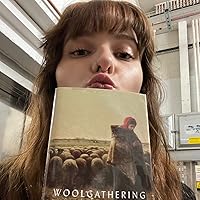
May 15, 2026
my book of the year nothing can top this
March 3, 2025
I was anxiously awaiting this book after enjoying the author's first book, The Inland Sea, especially after I saw that this would center on the desert southwest. Also pulled in by the cover. I was not disappointed! I'm from Phoenix and related so closely to the idea of coming from an impossible, unsustainable place, a place I'm always writing toward now. The author really captured what it's like to be from this area. I cried at the end, realizing what I'd started to suspect. It was so carefully done and well paced, I didn't realize until late in the book what else the elegy was in relation to. Beautiful prose and I thought the choice to tell the story in second person worked well as I felt pulled into the story very close to Eloise. I was moved in a way I haven't been by a book in some time.

March 21, 2025
It was beautifully written, and I loved the travel aspects and descriptions of the Southwest settings, but it got a little plodding. I don't think I'm quite smart enough to appreciate the elegiac narrative.
January 19, 2025
This novel follows Eloise and Lewis, a young couple on a roadtrip around the West of the US, as they each navigate their relationship amidst the pain of grief. Lewis has recently lost his mother to cancer, and needless to say, isn't coping well. For me, these were the most beautiful parts of the novel, albeit extremely sad. As we are told the story from Eloise's perspective, addressing the entire novel to Lewis himself, you get a growing sense that something happens to Lewis, as she drops hints throughout that they are no longer together. The way Madeleine Watts writes about Lewis's grief through Eloise's eyes was incredibly moving and so delicately handled.
The parts of the novel that didn't work for me were Eloise's info dumping on climate change and facts on the landscape of the West. Not to say these sections weren't interesting, but it could've done with being more interwoven within the narrative rather than feeling like you're reading part of someone's thesis. And the sections on art, on Instagram and photography - all of this had the air of a young person's pretentiousness.
So a mixed bag for sure. I was so gripped through some of it and loved Madeleine's conversational style. Having done a road trip of the West with my own partner, I loved being on that journey again. But after a strong start, it started to become too much of a slog and I was glad to be done with it.
I'd be interested to see what Madeleine writes next.
The parts of the novel that didn't work for me were Eloise's info dumping on climate change and facts on the landscape of the West. Not to say these sections weren't interesting, but it could've done with being more interwoven within the narrative rather than feeling like you're reading part of someone's thesis. And the sections on art, on Instagram and photography - all of this had the air of a young person's pretentiousness.
So a mixed bag for sure. I was so gripped through some of it and loved Madeleine's conversational style. Having done a road trip of the West with my own partner, I loved being on that journey again. But after a strong start, it started to become too much of a slog and I was glad to be done with it.
I'd be interested to see what Madeleine writes next.
June 6, 2026
Definitely an elegy. Piqued my interest re the state of the English language to describe climate change
Displaying 1 - 30 of 161 reviews