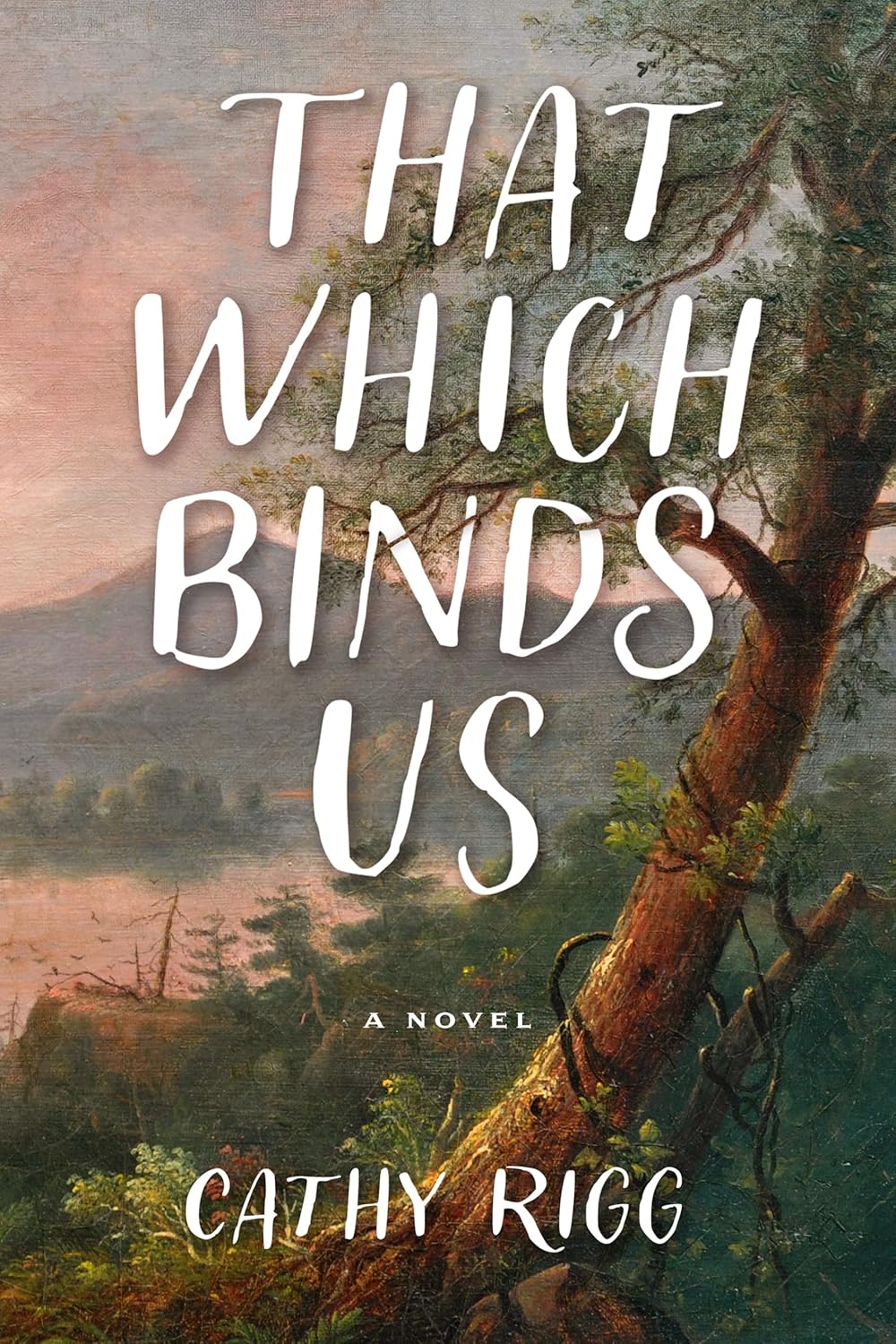
Clearly, Cathy Rigg loves the rugged Appalachian Mountains of southwestern Virginia where her family ties go back seven generations. The four narrators of this beautifully written Civil War-era novel—Riggs’s debut—feel that land’s pull with varying but intense passions:
Elizabeth Young, the smart and outspoken daughter of a local shop owner, is 13 years old when the novel begins in 1854 and itching to escape to the bigger world.
Mary Lenore (Marilee) Kitchens, the new schoolteacher, arrives in the mountains from her privileged life in Charlottesville, Virginia, feeling compelled to educate the “people of such limited experience, stuck like they are in the hills.” She becomes a mentor to Elizabeth–and also, though she won’t really admit it, a rival.
Patrick Hagan managed to escape the potato famine of his native Ireland thanks to the help of a successful uncle. After studying law, he ends up with his uncle in Appalachia and slowly begins to feel like he belongs with the land and its people, even though he is so different from them in terms of class, money, and religion. As the area’s only two educated outsiders, he and Marilee would seem to make a perfect couple.
Red Hopkins, a farmer born-and-bred to the rugged terrain, is a close friend to Elizabeth’s father and his brother, who themselves have become bitter enemies. Red has never lived anywhere else and never wanted to.
Riggs, the author, does an amazing job at finding unique voices for each of these four—plus Ben Grubb, another love interest, who writes many letters home to Appalachia from the Civil War’s increasingly bloody frontlines. (The book’s main flaw is that the section containing his letters goes on too long.)
In addition, the characters offer an unusual vantage point into slavery and the origins of the war. These impoverished folks are instinctively loyal to their homeland, the Confederacy; yet, other than Marilee’s family, they have never been enslavers. So this is far from another Gone with the Wind.
In the years leading up to the war, Patrick and Marilee engage in strongly matched debates. She points out that “slavery is protected in the Constitution.” He believes that slavery is wrong but also wants to avoid a war over the issue.
The plot is also compelling in other ways, with surprising twists and turns, and secrets that keep unraveling.
Altogether, the book raises important questions about loyalty and belonging—questions that will linger with the reader. (A longer version of this review was first posted on Story Circle Network)