How can I enjoy my hot disabled body whilst dealing with internalised ableism?
How can I best navigate my sex life with mobility issues or a carer?
Why are queer spaces so inaccessible - and what can I do about it?
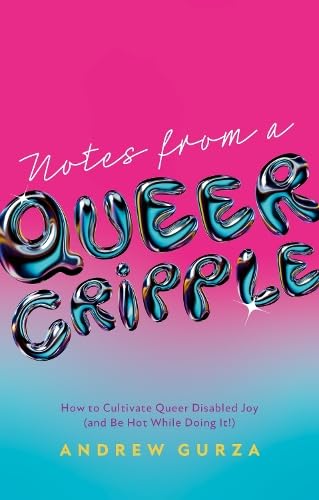
Andrew Gurza is seriously hot. He's also seriously disabled. Having spent a lifetime navigating the bars, clubs and apps of the queer scene, he's learned a thing or two about sparking queer crip joy amidst the hellscape of ableism, microaggressions and 'pity sex'.
With advice on everything from sexual autonomy and self-pleasure to date-prep and disability disclosure - this is both a self-care bible and an urgent call for the queer community to do better.
I requested this so I could learn more about the disabled community and I have no regrets. Andrew Gurza's attitude was so positive throughout this memoir/self-help book that I could really feel it in their words. I loved how he isn't afraid to really put himself out there by being a visible advocate for queer and disabled people.
He talks about the ableism he faces as a power wheelchair user, using examples that span from microaggressions (offhanded comments, jokes, assumptions, etc.) to macroaggressions (facilities with limited or zero accommodations for disabled people, etc.). He also describes the daily challenges he faces, especially with tasks that able-bodied people would consider to be simple, like getting ready in the morning or even entering a venue without an accessible ramp.
I wasn't expecting so much sex talk, but I liked that they were very open about their need for accommodations, and how this affects their sex life when it comes to self-pleasure, hookups and dating, especially since they require a part-time caregiver.
I also liked how they talked about their dreams for queer disabled people to be more visible in media, especially on magazine covers and acting in films/tv shows.
This was a very quick read, but it provided a very insightful glimpse into life as a queer and disabled person. If you're looking to learn more about this community, Andrew Gurza's book provides a great introduction to queer disability.
Thank you to Jessica Kingsley Publishers and NetGalley for this arc.
I think everyone should read this book! I hope it finds its way into the hands of queer disabled folks to give them support, solidarity and practical advice. And all of us need more and diverse exposure to the harsh and pervasive realities of ableism as well as queer disabled hope and joy. Bonus: This is a very quick and easy read.
Here is a quote that sums up the author's voice: "I built my career on telling the truth as a queer." And one for the reason this book needs to exist: "I believe ableism persists because people with ableist feelings aren't given places to lay them out - to truly understand where they stem from, and how they have manifested in their lives, instead they are told that it isn't appropriate or it isn't nice… The results of this are an inability to ask questions, people have all these misguided half truths about disability that never get resolved."
Gurza does not gloss over the hard stuff while using a positive frame to tell his story and share his advice and opinions. It's very personal, unflinching, conversational, vulnerable, uncomfortable, and funny. He is unabashedly honest and candid about sex stuff, and in doing so, persistently reminds the reader that disabled people are whole human beings.
I've been learning from various disability advocates about how ableism is one of the most socially acceptable and pervasive types of discrimination so it's not surprising, but when you read it all together you can really see how so many people have done and said some truly astonishingly terrible things in the face of their ignorance, fear and ableism. The daily onslaught disabled people experience must have the potential to be devastating. And yet, the author is gracious and generous with people who have caused them harm as they recounts their stories.
This book lays bare the relentless and psychologically damaging impact of ableism on every part of emotional life, including the way it can make internalized ableism ever present. It presented me with new perspectives on representation, caregiving and advocacy that I am happy to carry with me in different parts of my life and activism. I also learned about the concept of emotional accessibility and that will stick with me too.
Like other disability advocates, Gurza reminds the reader that statistically speaking, most people will face disability at some point in their life, and having that reminder in the context of his stories is powerful.
One caveat: Gurza is pretty clear that their perspective is personal and, like with any identity, the disabled community is not a monolith. His perspective as an AMAB queer person who is attracted to men does make some of the advice, examples and experiences feel a bit narrow, but there is plenty in there that can apply to different folks for sure.
While the book carries a lighthearted vibe and threads of joy throughout, it's a lot of hard stuff. It does end in a positive place and this quote near the end is a good summation:
"These stories were not easy to discuss, but I thought they were necessary for you to hear and for me to tell. I hope that they have made you laugh, cry, squirm, howl, think, reflect and consider all the ways in which disability is a part of queerness, and vice versa. If you are a queer disabled reader, I hope you saw yourself in this somewhere. If you pick this up and you aren't disabled, I hope you learned a lot, and you have questions about what you can do next."
I received a digital Advance Reader Copy from NetGalley and Jessica Kingsley Publishers in exchange for an honest review.
>>>>>>>>>>>>>>>
Book 3 of my 2025 Trans Rights Readathon. I will be donating to LGBT YouthLine, which offers free peer support to 2SLGBTQ youth in my home province.
The Trans Rights Readathon is an annual call to action to readers and book lovers in support of Trans Day of Visibility (TDOV) on March 31st.
We are calling on the reader community to read and uplift books written by and/or featuring trans, nonbinary, 2Spirit, and gender-nonconforming authors and characters.
Andrew Gurza invites readers to check our biases, and to start dreaming about how to start making queer spaces more inclusive, as well as seeing queer disabled people as viable and vital community members. This collection highlights the invisibility in the real world that queer disabled folks face regarding ableism in relationships, autonomy, sexuality, and the ways that palatability plays a central role for disabled people to be more ‘digestible’ for others.
Gurza is explosively vulnerable, sharing moments from both his professional and personal life encountering abelsim(daily), as well as taking us through intended notions of “anyone's welcome” in queer spaces that are used to include everyone but him. He fiercely challenges our microaggressions and postures, especially as we enter into relationships with others in the disabled community. He reminds us that we all deserve to be loved, sought after, and desired, physically and emotionally!
He makes us turn inward and ask questions about what our discomfort towards disability comes from, and if we are engaging and learning from disabled voices. Or- are we only celebrating queer white, able-bodied people? Are the places we enter accessible? If not, what can we do to change that? A challenge to me and others! I flew through this ARC, and loved the prose. Laugh out, epically loud! I encourage others to pick this up and pass it on.
I loved the honesty and positivity but I think the informality of the writing didn't sit well with me and seemed to undermine the seriousness of the content. For example the use of (lol) after some flippant humour. However, others may really like this aspect
I was really hoping to enjoy this book but I simply could not. In discussing queer disabled sexuality the two main points were "how to hire a prostitute" and "how to have your care worker help you masturbate". As someone who works with people with disabilities who get sexually exploited in these exact situations, I simply could not seperate myself from the push towards exploitation as liberating. Although there were great points on accessability, the author also talks about only seeking out able-bodied men in dating and in sex work which to me, read as a lot of internalized ableism.
The title of the book is quite clear, and it delivers exactly what it promises. Andrew Gurza, a queer disabled person, shares their personal experiences with honesty, humor, and insight. Through a series of deeply personal anecdotes, Gurza provides a window into their world, highlighting the challenges, joys, and everyday realities of living at the intersection of queerness and disability.
What makes this book stand out is its dual purpose: it speaks to those who share similar experiences while also offering invaluable perspective to non-disabled readers. As someone who doesn’t navigate the world in the same way, I felt like I was given the chance to see life from a perspective I hadn’t fully considered before. It left me more aware, more sensitive, and with a broader understanding of the challenges disabled queer people face.
Beyond its thought-provoking nature, the book is also an engaging and enjoyable read. It’s both entertaining and eye-opening, making me reflect while also keeping me hooked from start to finish. A truly impactful book that lingers in your thoughts long after the last page.
“A community that so loudly preaches ‘love is love’ but quietly agrees that disabled people don’t belong here.”
I have been familiar with Andrew Gurza thanks to his podcast, Disability After Dark. This book is Gurza at their best, educating others via stories and personal moments to help create the anti-ableist society we so badly need. Gurza educates us about the history of disability (why we treat disabled adults with “kid gloves”), ableism (internalized and externalized), and micro aggressions (things you have to deal with when living in a disabled body). Through their personal stories and moments, we learn about situations of ableism in the queer community. Gurza ends his collection of “notes” by calling for representation- we need to ensure physical access to accessible queer spaces (ramps, accessible bathrooms, interpreters) AND to see disabled queer people in the media. As Gurza says, it’s nondisabled individuals responsibilities to listen and learn from their disabled peers. Thank you for the education Andrew!
Thank you to NetGalley for the opportunity to read Notes From A Queer Cripple: How to Cultivate Queer Disabled Joy (and Be Hot While Doing It!).
What an important, ground-breaking and comfortingly defiant book. You could feel the author's vulnerability on every page and that was both endearing and upsetting, especially when he acknowledges that he finds it hard to talk about the intersection of his sexuality and disability. And yet, he does. He does so with humility, grace, honesty, self-love and hope. There is so much hope in this book. I literally didn't stop smiling when he wrote the section about his vision for a fully accessible club (sign me up! Heck, let me invest!) and his ideas for TV shows that offered accurate and much needed representation of queer disabled people made me emotional. As a queer cripple myself, there was so much in this book - validation, compassion, and again - necessarily - hope! - but I really hope non-disabled queers read it because then it will be a world-changing book.
Thanks to the author and NetGalley for the early ARC.
I flew through this book!! It is sooo rare to read something this candid about sexuality and disability. Andrew is so funny and has so much goodness to say. I LOVED all their dreaming about queer disabled spaces in clubs, romcoms, horror films, sex parties, porn, drag shows, music…i want to see all of that!! I soaked it all up. There are so many great stories and anecdotes as well as just so many practical ideas for queer disabled folks like Andrew and myself to BE in queer spaces. I’ve been so self conscious lately about that and it was really encouraging to read and felt good to get some practical tips. I would read dozens more books by Andrew. Thank you so much for writing it.
- challenged a lot of unconscious biases which i always love - quite male-centred! obviously this is the authors lived experience but i would have loved the intersectional perspective of feminine/lesbian-led spaces as i do think they differ to this day - loved the conversation around caregiving! as someone who has been a caregiver and learned about sexuality and disability for a few years, sexuality and caregiving is never something i’ve considered (yes calling my own ableism out). gurza brought to light a lot of aspects that i think are important for all caregivers to consider (i.e. access to privacy, coming out to caregivers, support with SRH etc.)
As a Nonbinary person who has lived the last decade with various chronic illnesses that have led to me being in a wheelchair for accessibility and needing aid from my husband, I was curious about this book. I liked how it was bold and came across as being fiercely unapologetic that there are Queer disabled people and we’re often overlooked in various aspects of society but more specifically in the very one we’re supposed to be a part of.
The author uses they/he pronouns which we find out quite far into the book and identifies as nonbinary which makes my the main issue I had with the book be all the more infuriating and take me back to my first years as a late teen and very early 20 something year old experiencing gay bars and clubs back in the nineties and early 2000s. The book felt like it was focused less on the Queer community as a whole where there is a plethora of genders and sexual orientations and instead was male-centric. Why does it make me have flashbacks to those early years, well that’s because I would enter a bar hoping to feel welcomed and able to relax and realise all too quickly that I was in the Viper’s den with it being overwhelmingly full of men and something with M/M sexually explicit imagery and video on display. I didn’t feel welcome or able to let the mask I’d worn in work or college down and be myself because I wasn’t welcome and sadly that was the case in many of the scenarios the author brought up - of course, they’re first person and it is what they have known but it was difficult to relate to it.
I think perhaps, some of the notes that are in the book could have come from other queer and disabled people to provide some more relatability and offer insight into how someone such as myself who is AFAB could overcome something that made them reticent of going out or experiencing Pride or LGBTQ bars etc? It would have certainly made some of the book more relatable to me and I imagine many others, If we’re going to break down walls and remind the world that you can be Queer in whatever manner it may be and also a variant of disability whether it be visible or not:? Then you need everyone’s voice or as many as possible.
Love is Love - should mean for everyone and as it’s become a phrase used by LGBTQIA people and their allies, it should include everyone and that is what Andrew is trying to educate the reader on as well as thoughtful insight into ableism and internalised ableism that I realised I’m guilty of in many scenarios. From sexual encounters to going out with friends and partners, I think we as disabled people often don’t realise we are essentially bullying ourselves and It made me think of how often I will over analyse how me getting ready, the setting up of my chair and public transport or taxis impact a day out. How many times I have said I’m okay about not going because I simply don’t want to add further work to everyone around me.
All incidents of internalised ableism that I’ve disregarded until this book made me think.
What Andrew Gurza definitely has is the ability to make you laugh, to provide humour to situations that at the time no doubt were far from humorous to him whilst showing the reader it’s okay to both feel the way they do but also how to possibly have a redo if you’re ever in a similar situation. For example he spoke about going to a local park to simply enjoy a warm day and have a relax and someone thought he was lost… Of course he wasn’t, it’s near to where he lives and no doubt frequents as often as he is able. I could see myself in that same scenario at a loss for words, because it’s apparent to all that the person asking simply doesn’t think someone in a chair should be able to go there… Many who aren’t disabled would be quick to deny it, to say the person was being helpful and maybe they were but we see it all too often, Like when someone is helpfully pushing your highly expensive and very very important wheelchair for some reason and when questioned, is suddenly on the defensive.
Being disabled regardless of gender, sexual orientation, age etcetera doesn’t mean we’re all incapable of doing things or asking for help.
There are many moments given by the author to make the reader think, whether they are disabled or not - and I agree completely with some of the suggestions given but again , I also struggled with others, for example encouraging a person who has struggled with sexual experiences or intimacy to reach out to a sex worker. Do not get me wrong, I fully agree that they are valid, their careers are important and the stereotypes that have lasted decades need to disappear but it made me uncomfortable and I think could also lead to more dysphoria, and moments that are negative too. It could also lead to injuries because you’ve not built a rapport. I also see that this advice felt once again, very male orientated and exclusionary to other queer people.
There are also incidents the author talks of from his experience and then suggests are okay to do so that felt exploitative and made me feel very unsettled and concerned for those involved in the recollection and for the theoretical from taking the advice. No one should be exploited or have the clear rules of say employment at risk because of you regardless of your disability or not.
All in all there were some very valid points, more needs to be done to help in the talk of disability in the LGBTQ community, places like Pride parades for example should be open to all - from first hand experience? They often aren’t.. There needs to be conversation that goes right to the top of politics and local community in ensuring venues are accessible, again whether they are Queer friendly or not. I also fully agree that there needs to be support for the disabled person to feel comfortable talking about the restrictions their body can cause and along with trying to minimize internalized ableism. I know when I got sick, it was a case of here’s your diagnosis your life has forever changed now, Bye.
Thank you to NetGalley and Jessica Kingsley Publishers for the eARC! This book was published in the US on April 21st, 2025.
Notes from a Queer Cripple is the raw, hilarious, and fiercely tender disability justice sex-ed you didn’t know you needed. Andrew Gurza cracks open the myth of “inspiration porn” and instead offers us the messy, joyful, deeply human reality of being queer and disabled—and looking hot while doing it.
Reading this felt like getting a voice note from a friend at 2 a.m.—equal parts confessional, gutting, and horny. Gurza’s voice is frank, flirty, and radically vulnerable. They open with their own definitions of disability and ableism, and from there, the narrative unfolds like a love letter to his disabled queer self—a self shaped by rejection, survival, and eventual erotic reclamation. I found myself underlining passages about the heartbreak of being excluded from queer community due to inaccessibility, and then smiling through misty eyes at the fierce joy they reclaim through sex, community, and crip wisdom.
Gurza doesn’t sanitize anything—thank god. He shares everything from learning to masturbate in his disabled body to how mobility aids can be part of sexual intimaxy. They don’t ask for pity; they ask us to do better. To talk about access needs in the bedroom. To make queer clubs accessible. To stop treating disabled sex as shocking or inspirational and start treating it as real. He reminds us that time spent convincing able-bodied people that disabled folks are desirable could be better spent...well, actually having sex.
At its core, Notes from a Queer Cripple is an urgent call to queer community: practice access intimacy, not just in theory but in the thick of our desire, our dancefloors, our dating apps. Gurza is asking us to stretch—not out of guilt, but out of love.
This book cracked something open in me. It’s one of those reads I’ll come back to, especially when I need a reminder that queer disabled joy isn’t some shiny exception. It’s a right. It’s a practice. And if we’re really about liberation, it has to be collective.
📖 Read this if you love: candid memoirs, radical disability justice, queer sexual liberation, and authors like Leah Lakshmi Piepzna-Samarasinha, Eli Clare, or Mia Mingus.
🔑 Key Themes: Internalized Ableism and Sexuality, Queer Community and Access Intimacy, Disabled Pleasure and Body Sovereignty, Reimagining Desire and Disability Representation.
Content / Trigger Warnings: Mental Illness (minor), Bullying (minor), Sexual Content (severe), Ableism (severe), Pandemic (minor), Medical Content (minor).
This gave me a peek into a severely disabled sex life that I really needed.
As a person who is currently getting more and more disabled every year sex is something I do struggle with. I often don't feel sexy when I need supportive pillows. I often don't feel sexy if I can't dress well for a day. Being so dependent on my partner for many tasks definitely doesn't make me feel sexy either. And while Gurza their disability is very different from mine, they show in this book that you can still be hot, cute and wanted regardless of how you function. And damn did I need to hear that.
This book talks a lot about the ableism that Gurza has faced in queer communities. It gave me insight into spaces I assumed that were quite fine, that they are often really not. I haven't gone out much since I started using mobility aids, especially not queer circles. I did however frequent those spaces from time to time when I did feel better. And while I'm sure this wasn't Gurza their intention, it doesn't make me very excited to mingle in the physical queer community again when I get my wheelchair (hopefully soon). But what it does to me even more, is making me feel assertive in my shoes that when I do hopefully go to pride this year, that I feel confident to demand accessibility information. We belong in those spaces and nobody will tell Gurza or me otherwise. This strong message really made me feel empowered and left me with good feelings lasting longer after reading it.
Gurza also talks a lot about how it is to date when being severely disabled. Their negative experiences they talked about really hit me hard, filled me with rage. They talk about how those moments keep coming back up as internalized ableism in their head and damn did I want to give them a hug. It was good for me to learn and see this side of dating, that is unnecessary made so much harder for people like them because of the ableism that's out there. I hope if I ever start dating again I can take these lessons to heart and treat my potential severely disabled partners with love and dignity.
Concluding this book taught me so much, and gave me so much hope. I am immensely grateful this exists and I hope it goes far.
I received this eARC and this was my honest review.
I requested and received this book from NetGalley. My opinions are my own.
This book is so important, I'm so glad I had the opportunity to read it. Especially right now. This is the first book I've ever read that focused on sex and disability, specifically queer sex and disability. I've read so many essays, memoirs, and poetry collections about queerness and/or disability but rarely both and never this open.
I wish I had this book in my early twenties for the deep dive on ableism and the disabled sex ed. Ableism is painful I know from experience. Books like this one would have helped me recognize ableism for what it was.
My favorite parts of this book were "My dream club What I wish accessibility in queer spaces actually looked like" and "The Importance of Representation". I'm a creative person and they got my creative juices flowing. I believe this book is a great resource for both sex educators and creative people. I think a lot of creative writers are afraid to write disabled characters. Especially in Romance, Romantasy, and Erotica. And I believe this book is a great doorway to overcoming that fear and internalized ableism.
Overall I loved this book. I really needed it right now. Everyone will experience disability at some point in their life and everyone deserves to feel hot and desirable. Both should be able to happen at the same time. I've got a lot of thoughts rolling around in my head about this book. I hope it inspires more disabled people to talk about the intersections of disability, queerness, and sex.
I bought this book because I've been following Andrew Gurza's work for years through their Disability After Dark podcast and their commentary on social media.
This book delivers exactly what it promises: Notes From A Queer Cripple.
It is one of thing to "know" that LGBTQ spaces "should" be more accessible to members of our community with disabilities, its another thing to hear directly from someone who is severely disabled and what that experience is like for them and how we might it. I appreciate that Gurza mixes their personal experiences with reflections on systemic issues. I appreciate the range of topics he covers and I especially appreciate how boldly and unapologetically sex-positive he is.
As a not disabled (yet, as Andrew reminds us) bisexual person who mostly dates/hooks up with men, trans and cis, I nonetheless saw myself in many of these stories. I appreciated that Gurza, through his writing, invites us all to connect with the stories he shares, while never downplaying the particularities of his experiences as a disabled person. To fellow disabled queers, they offer empathy, encouragement, inspiration, and even some practical advice. To non-disabled queers, he holds a mirror up to us and asks us to examine how our prejudices might (a) be harming disabled folks and (b) keeping us from experiencing the full hotness of disabled people.
My only "complaint" is that I want more. This is an excellent primer on queer disability (and in particular queer disabled sexuality). I'm following along for whatever is next from Andrew Gurza
Awesome book! It was more autobiographical than I would've liked but had some great points even if I didn't relate to everything the author mentioned. You're so right, EVERYONE deserves a full life, and this includes sex! (If you want it to!) It's HARD feeling cute while disabled, and valued, and even looked at for YOU and not your disability sometimes. Overall a wonderful book and I absolutely recommend it to everyone, whether you know a disabled person, love a disabled person, or simply live in a world with disabled people. We're humans and we deserve to feel loved and valued and to be taken seriously, not infantilized. There were some points I didn't vibe with (like the sex worker parts and portions focusing on particular genitals I don't have) but the overall message was good! I'd love to read more books from a variety of perspectives on this, not just an AMAB with the author's particular disability. It'd be interesting as a collection too!
4.5/5
This entire review has been hidden because of spoilers.
If you’re looking for a sexy disability-affirming book, this is it! Andrew Gurza does a brilliant job conveying all the fear and uncertainty that accompanies being a disabled adult looking for love in today’s day and age. From dating apps to the middle of clubs, we get to see some formative moments for Gurza’s approach to the queer scene. As a queer disabled person myself, I related to many of the tales of ableism and pretty privilege in the community. This book is not afraid to breach hard conversations and be real. And that’s what makes it so good!
Thank you to NetGalley for providing me with the eARC, but it did not affect my review in any way!
As a disabled nonbinary queer myself this book was SO empowering and affirming! The stories and experience shared by Andrew are equal parts frustrating and hopeful, infuriating and joyful, sexy and educational, and always enlightening. I really associate their humour and wit the whole way through! Lots was covered that I think is immensely important such as coming out to caregivers, unpacking internalized ableism and queerphobia, navigating prejudice in queer community spaces, finding affirming connections over dating apps, and so much more!
Highly recommend the read for anyone queer and disabled, or wanting to learn more about these intersections of identity and accessibility.
Incredible text. The writing style is very conversational and thus very accessible to a range of readers, and Gurza manages to express complex emotions and specific experiences in a way that all readers can understand, queer or not, disabled or not. Important read, especially if you are someone interested at all in sexuality studies. Disability and queerness are often talked about as if they exist in their own separate vacuums, and we need more texts like this which highlight that important intersection.
I don’t rate memoirs because they’re personal experiences and I don’t feel it my place to judge them. However, I wasn’t particularly fond of the format of this book. I understand it was intended as notes, but it felt like I was just reading someone’s notes app, which wasn’t my vibe.
On the other hand, I did enjoy learning more about the queer cripple experience in general. This book is a great starting point for anyone interested in learning more about this topic albeit a little repetitive in parts.
I wish I read this sooner, it would’ve made me feel a lot better about not being alone with these issues and also how to combat them a little easier. It’s beautifully well written and filled me with queer crip joy! Every queer person should read this regardless or not whether your disabled, because Andrew is true, people will be eventually/soon and awareness and ableism would be so better improved if people understood the struggle of being queer AND disabled
as a canadian queer cripple, reading this book helped me realize my experiences aren’t as unique as I think, and I’m not alone in this experience. thank you, andrew, for being a beacon of light in these communities <3 it’s so refreshing seeing experiences that seem so secret being talked about. I hope there are more notes to come (pun intended lol)
It wasn’t bad, it was easy to read, but almost felt too informal at points, which sometimes took away from the actual valid points being brought up, and started to feel repetitive by the end. I definitely think accessibility is something we should be discussing in queer spaces and this is a good starting point.
Turns out queer people can also be disabled and disabled people can be interested in sex. If this is a revolutionary concept, you might feel a bit called out by this book. Andrew Gurza uses anecdotes and short essays to discuss things they've experienced and how we might change that so everyone can be included in the joy and love.
Andrew Gurza is so likeable and informed — it was a pleasure to spend time with him and his sensibility. I flew through this book. An entertaining read. I want to work to make queer spaces accessible to all!
Andrew’s voice jumps off the page and will make you laugh while reflecting deeply on the ableism that is still rampant today- especially in queer spaces. If there’s any book I’ve read that I can inspire you to read - let it be this one.
I am enjoying books where we no longer shy away from all aspects of disability, here having conversations about sex and sexuality and its intersection with disabled life. Another ballpark win in activist discussions from Andrew Gurza and a must read.