Set in an isolated 1980s Appalachian community, reeling from the brutal murder of two hikers, this novel is deliciously creepy and unsettling, yet gorgeous and dreamlike in its portrayal of two impoverished girls who must come to terms with what’s happening on the sentient mountain they call home and also with themselves as they stand on the cusp of adulthood.
1980s Appalachia. Sheila knows she needs to keep her appetites in check. Isolated and struggling in ramshackle poverty, her desires – for food, for escape, for the perfect girls in the pages of her pilfered magazines – are about the only things she can control. But with every passing day, life with her exhausted mother and her half-feral younger sister Angie feels more like a rope tightening around her neck.
When a pair of hikers are brutally murdered on the trail, Sheila and Angie find themselves drawn inexorably into the hunt for the killer. The mountain they live on is ancient and powerful – and it’s using them for its own ends. Sheila knows the landscape’s folklore is dangerous and unpredictable, but as the ever-present threat of violence looms larger, it might be the only thing that can save her and her sister from the darkness consuming their home…
Somewhere between a rural gothic and a dark fairytale, Smothermoss beckons readers into the eerily beautiful woods of the Appalachian Mountains―as well as into a lyrical investigation of girlhood, bodies, class, desire, nature, and the otherworldly. Full of the picturesque dread of an A24 horror movie, it’s We Have Always Lived in the Castle meets Winter’s Bone, and will appeal to fans of Sophie Mackintosh, Julia Armfield, and Kelly Link.
Alisa Alering grew up in the Appalachian mountains of Pennsylvania. After attending Clarion West, their short fiction has been published in Fireside, Lady Churchill's Rosebud Wristlet, Podcastle, and Cast of Wonders, among others, and been recognized by the Calvino Prize. A former librarian and science and technology reporter, they teach fiction workshops at the Highlights Foundation. Alisa now lives in the Sonoran Desert of southern Arizona.
One Liner: Ambitious and dark but flatters in execution
1980s, Appalachia
Sheila, a seventeen-year-old, lives with an old woman, a twelve-year-old sister Angie, and their mother. Life is hard and a constant battle of bullying, lack of money, and too much work. It doesn’t help that Angie lives in her own world and draws cards that seem to have a life of their own. When a pair of female hikers is murdered in the region, the sisters are drawn to the case. This brings danger and violence closer to their home. As things get murkier, can Sheila and Angie survive the aftermath?
The story comes in the third-person POV.
My Thoughts:
There’s something dark and suffocating about the title and cover, which made me request a copy of the book. The premise was intriguing too, especially the setting. The main characters are YA but this is an adult read. I wouldn’t recommend it to teens (unless they are comfortable with dark themes).
What I Like:
The setting is dark and intense. It shows the brutal side of nature, which aligns perfectly with the plot and the characters. The atmosphere is thick, suffocating, strange, uncomfortable, and sinister. Anything can go wrong and they do.
There’s hardly any lighter moment or a scene that makes the reader smile. Everything is tainted with suspicion. Naturally, it makes for an intense read. I enjoyed how the elements were used even when the rest wasn’t working as expected.
Despite the characters living in imaginary worlds, the situations are very much real and gritty. The MCs are poor, outcasts, and bullied. They have different coping mechanisms. The adults aren’t great either. Flawed and compelling.
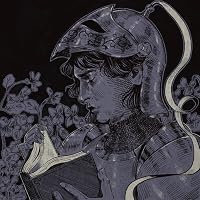
The chapters' titles and the drawings are intriguing.
What Didn’t Work for Me:
There’s magic realism of sorts, and the lines between real and imaginary often blur. I don’t have issues with this since it is one of my favorite genres. However, I do need things to be a little less haphazard.
The mystery is so, so weak! I hoped for some tension-filled stuff. But nothing much happens for a long, long time and then something happens. After that, I’m not sure how the whole thing would work in reality. It’s confusing and disappointing.
While I understood metaphors like the invisible rope, I’m still not sure about ifs and what’s regarding the recurring role of rabbits. Is there even some sort of inference? No idea!
There are a few more themes like sexuality, gender orientation, eating disorders, dysfunctional family, etc. These weave in and out of the narrative but don’t always make sense. The whole thing feels elusive and hazy.
The ending is okay, decent. There is some progress but this feels largely like a slice-of-life narrative that doesn’t provide any answers. All those bits and pieces were underdeveloped and went nowhere.
The POVs jump from one character to another and from reality to make-believe. It is easy to lose track if we don’t give it 100% attention. In fact, I’ve had to reread some paragraphs even when I was fully focused on the narrative. It feels like a fever dream in many places.
The book is just 250+ pages but packed full, though nothing much seems to happen. This is a strange mix of everything and nothing and further weighs down the reader (unless you enjoy such styles).
To summarize, Smothermoss sounds great in theory and has some worthy elements. It works great in parts but ends up a bit undercooked as a whole. The results will be case-sensitive. So, if my nays are your ayes, give this a try. I know I’d want to read another book by the author. Good potential.
My thanks to NetGalley, and Tin House Books, for the eARC. This review is voluntary and contains my honest opinion about the book.
What did I just read? I want to give this book one star but feel guilty doing that because part of me feels like I should like this. Am I missing something? Ropes and rabbits and invisible boys and secrets and murderers and mountains that live and breathe and it’s all just too much. I hoped for more. At the end of the day, this book feels like 250 pages of one character’s struggle with sexual identity…perhaps I’m oversimplifying, but that’s the message I got when what I was really hoping for was a murder mystery story set in 1980s Appalachia. It was not to be.
This was so raw and lovely and absorbing! Felt this on a visceral level. A girlhood that wasn't mine, yet tugs insistently at all my roots--such tough and vine-y ties. I both want to hold Angie's cards in my hands and DEEPLY fear touching them. Has me looking twice at trees. And rabbits. And loopholes!
Tara Lynn Masih’s review of this novel is how I heard of it and why I read it as soon as I did -– I didn’t want the novel to get lost in my figurative to-read piles. While reading Tara’s review, I thought of Adrianne Harun ’s A Man Came Out of a Door in the Mountain and, though the Harun is set in British Columbia, not the Pennsylvania Appalachians, similarities exist: Murderous violence toward women, especially those perceived as "different," happens everywhere.
Upon starting the book itself, I immediately loved the prose conflating two besieged women as rabbits attacked by a wolf. I then got vibes of “Snow White [not of the dwarves] and Rose Red,” my favorite Brothers Grimm story. At a later point I was reminded of Margo Lanagan’s Tender Morsels (based overtly on the aforementioned Grimm) and that feeling was justified when I saw Lanagan’s name in the acknowledgments. If Aerling has based her story on the Grimm tale though, it’s subtle, as is a thematic connection between one of the sisters and their surrogate grandmother who in her youth was kidnapped by a man who took her into the mountain.
Somewhere in the middle of the novel, I thought of Shirley Jackson-sisters -- bullied outsiders, dismissed outcasts -- and then I hit upon this sentence which confirmed my frisson:
She would travel to the center and live there in a neat square of green, to be known only by those she invited.
But unlike in Jackson, the magic around Alering’s sisters is not of the ambiguous kind, even if the sisters themselves don’t fully understand it. In Alering’s world the magic of Nature and the psyche is real. If that’s to your liking, you may likely more than like this novel. I did.
You can’t win against the mountain. The mountain always finds a way.
This book had me at “1980s Appalachia” and murder mystery. It's an odd, dreamy, and bewitching tale full of lush descriptions of the outdoors, just as I hoped it would be. Alering utilizes metaphorical and poetic prose that, albeit lovely, feels like it’s beating around the bush of what it really wants to say, making for a somewhat confusing telling. Lines between what is reality and what is fantasy are deeply blurred. Our two main characters, Sheila and Angie, are easy to sympathize with and this story ended up not really being about the “mystery” much at all but was rather a very character driven story about these two sisters and their daily inner struggles.
If readers are ok with a mostly nonsensical plot that has beautiful, rich, atmospheric prose that describes the rolling hills of Appalachia—a magical world easy to get utterly lost in—this is the perfect book. On the other hand, if readers (like me) are expecting an intense backwoods murder mystery with a satisfying ending, it’s a bit of a let down. There is a lot to love here but also a lot that I would have liked to have seen done differently.
Loved the narration by Susan Bennett who nailed the Appalachian accent.
Thank you RBMedia and NetGalley for the audiobook in exchange for an honest review! Available now.
Siblings Sheila and Angie live with their aging great-aunt and mother in a rural Appalachian community. Older sister Sheila endures relentless bullying at school, and is essentially in charge of the house while her mother works long shifts at a nearby asylum. Sheila is also haunted by a strange rope around her neck, which no one else can see.
Young Angie is embracing her inner animal, exploring the wilderness, and prepping for a potential nuclear war. Angie also draws weird tarot-esque cards, which seem to spring for the murky depths of her unconscious. When a pair of hikers are brutally murdered, Angie makes it her mission to track down the killer.
I absolutely loved this weird bildungsroman mixed with the uncanny, where the power of nature is ever-present. Sheila and Angie had a “We Have Always Lived in the Castle” vibe about them, which I adored. The conclusion of the story, and the way the sisters come together, is immensely satisfying. I loved Angie’s fierce independence, and her utter fearlessness; a true descendent of Merricat Blackwood.
I really enjoyed the weirdness of Angie’s illustrated cards, and how they took on a life of their own. I would pay hideous amounts of money to own a set.
Smothermoss is the second weird novel set in Appalachia in a row for me (I read this immediately after Kay Chronister’s The Bog Wife) and I would absolutely read more of this particular genre. I really enjoyed the insular atmosphere, where any encroachment onto one’s land must be considered a threat above all else.
Alisa Alering joins my list of “must-read” authors. Smothermoss is an incredibly impressive debut.
Woefully disappointing. Truly the longest 8 hour audiobook ive ever listened to, and i had it on 1.5x speed.
The only thing this book does successfully is create an atmosphere and stick to its themes. Other than that, I found myself begging for anything to happen, a callback, a reveal, a satisfying character moment, and got nothing. Just prose about the mountain, painting it to be a larger character than it amounted to.
Angie is so annoying I nearly dnf multiple times. Her actions are not normal 12 year old shenanigans, they're just agonizing to read. Sheila is a good character dragged down by a nothingburger plot. Her struggle with her sexuality is the most interesting part of the whole novel, and the connection she gains with Angie over coming out is the only close-to-satisfying resolution in sight. Leaving certain mysteries unanswered is one thing, but abandoning half your plot points for yet another scene of "the mountain is alive" imagery is meandering at best, lazy and repetitive at worst: Thena's sister? The trap door under her bed? The boy only Sheila can see? Angie's cards having free will? The women killed on the mountain? The identity of the killer? Then and Bonnie almost killing Sheila? The supernaturalism of it all? If you want answers about any of these, too bad, you don't get them.
Also, this bit might be petty, but if you force me to read a scene of the family dog dying, I want that dog dead. Don't make me read that shit just for a gotcha. Especially because Angie learned seemingly nothing from the incident anyway. This book has no consequences, no idea what it wants to be, and no legs to stand on.
This entire review has been hidden because of spoilers.
A gothic thriller centering wild landscapes unveils sensory cryptic danger on the Pennsylvania mountainside, just off the Appalachian Trail. Laden in conflict, sisters Sheila (17) and Angie (12) are each mired by their own dark obsessions. Angie anticipates a Russian invasion, prepares to join the army by practicing her own training regimen, all while compelled to create handmade tarot cards. Sheila, snarled with a deep need for control, has an eating disorder and a secret heartrending crush on her classmate Juanita. Rendered with empathy, resilience, and wit, this author's debut will compel readers to rethink what is happening in the forest unseen and crave the author’s future works!
An important clarification: I learned while watching an interview with author Alisa Alering that she her novel is Appalachian gothic, instead of southern. It's set in Pennsylvania, "on the other side of the Mason-Dixon line." https://alering.com/ Know this among my favorite 2024 publishing! And much gratitude to Libro.fm for access to their Audiobook Listening Copy (ALC) program www.libro.fm/alc-program
"Smothermoss" by Alisa Alering plunges readers into the eerie beauty of 1980s Appalachia, where Sheila navigates a turbulent world of bullying, caring for her great-aunt, and her younger sister Angie—an oddball fixated on nuclear war and zombies. Their lives take a dark turn after two hikers are murdered on the Appalachian Trail, leading the sisters on a dangerous hunt for the killer. As violence creeps closer, the Appalachian mountains loom large, their ancient presence a possible shield against the growing darkness.
What struck me most about "Smothermoss" is its unique blend of dark fairy tale and gothic Appalachia. As a kid from the '80s, I found it easy to connect with the setting—it’s a nostalgic return to a time when life seemed simpler yet full of shadows. Alering does a fantastic job of capturing the haunting atmosphere of the region, and the sibling relationship between Sheila and Angie is well-written, providing a strong emotional core to the story.
The novel is heavy on atmosphere and light on traditional mystery. There’s a sense that the story keeps drifting, and for a while, I wasn't sure where it was headed. Still, the journey was compelling—especially with Susan Bennett’s exceptional narration in the audiobook, which enhanced the Appalachian accents and kept me immersed.
At its heart, "Smothermoss" is a strange, dark, and intense read. While the supernatural elements were a bit overwhelming at times, the juxtaposition of Appalachian folklore with metaphysical themes created an intriguing tension. It’s not a book that’s concerned with tying up every loose end, which might frustrate some readers, but for me, that ambiguity only added to its strange charm.
This was weird. I definitely thought the whole 'murder mystery' mentioned in the description would've tied into the story more, but it was more like background noise 😢
Unfortunately I felt like this book didn't get very interesting until nearly halfway through, but the illustrations at each chapter were super neat and the writing was beautiful which somewhat made up for that!!
I am SCREAMING a huge thank you to Tin House Books, Netgalley, and Alisa Alering for the #gifted digital copy of this 1980s Appalachian horror before it hits shelves on July 16, 2024.
This gothic tale isn't for the faint of heart or those surrounded by a thick patch of trees and residing in such Appalachian territories, for this one might hit a bit too close to home. My husband grew up in eastern Kentucky, a well-known Appalachian region known for its ages-old lore surrounding the mountains and the forests that I'm all too familiar with. Its landmarks see, hear, and experience everything, keeping the land's secrets and protecting those who need care.
In Alisa Alering's tale, we have two sisters and their maternal figures doing their best to survive the hand they've been dealt, living off their land and making do with their mother's measly salary at the old asylum. Sheila is the oldest, starting to explore her sexuality and longing to work with her mother so she can raise the funds to leave this lonely place, and Angie is the exact opposite, a bit younger, with a fantastical mind that paints a picture of hunting Russian spies and evading nuclear war.
When two hikers are found murdered in the dense forest by their home, Angie springs into action with her makeshift Tarot cards and her grit to try and catch the murderer. Her homemade tarot cards, drawn with monsters and demons such as the Worm King and other devilish characters, depict the lay of the land. With the mountains on her side, those very cards find their way into the hands of the wrong and right people, enacting death, change, and actions of fear.
Smothermoss depicts scenes of magical realism and hyper-fantastical dialogue, leading the reader to transport to the Appalachian territories, seeing its magic at work, and I couldn't get enough—easy five stars.
This book was really strange. It had some really unique elements to it and I was weirdly hooked to the story.
The two sisters had some serious weird vibes but the more the book went on, the more I appreciated their uniqueness and the beauty of their souls.
It has some really cool supernatural elements to it as well.
the writing is amazing and the narration really suited the tone of the book.
There are two murders in the wildness and the girls have very different reactions to it. I think the story is really about how these two very different girls come to appreciate each other during a dangerous time.
my audiobook hours ran out at 56% and i realized that i don’t care how the ends and i don’t wanna keep listening. the best part, and what kept me going, was the audiobook narrator, she has an excellent accent. the plot is interesting but im not a mystery girlie anymore and there’s some gory descriptions i don’t love.
this isn’t bad it’s just very much not my type of book, idek where i stumbled upon this.
It’s rare I read a book that truly sinks into my bones, deeply and persistent. Yet like its title, Alisa Aerling “Smothermoss,” did just that. One part murder mystery, one part literary fiction, with a sprinkle of the uncanny and unsettling, this novel follows sisters Shiela and Angie, living day after day in rural Appalachia. The cycle of monotony is broken one day when the bodies of two Appalachian Trail hikers are found not far from Angie and Shiela’s property. As suspicion and secrecy abound, the two sisters must reach within themselves and out to one another to try and find the murderer on the loose. All the while the mountain waits, watches, bides its time, for she claims them all in the end.
Written with genius and grey skied grace, “Smothermoss,” is a lyrical disturbing novel that will invite you in and never want to let you go. Pub date: 7/16/24
I can't stop thinking about this book. My therapist recommended it to me, which probably says a lot of really questionable things about my current state of mental wellness but good god was this good. I'm not sure I've fully processed it or traveled through all the levels of it, but like an itchy scab, it won't leave me alone and I'm going to keep scratching the itch
Smothermoss is Alisa Alering’s debut novel, set in rural Pennsylvania in the 80s and following sisters Sheila and Angie in the aftermath of a murder along the nearby Appalachian trail. This novel is a wonderful blend of literary fiction, subtle folk horror, and magical realism, and I appreciate Alering’s ability to pull from each of these genres without firmly cementing their book in any one of them. I would recommend this creepy and thought-provoking read for readers who enjoy Shirley Jackson or dirt-smudged depictions of girlhood and sisterhood.
There were many things to love in this novel, and it has certainly brought Alering to my attention as an author to keep tabs on as they continue in their career. It’s a wonderfully atmospheric story, with the mountain itself and the surrounding woods looming large in Sheila and Angie’s lives. I also loved the folksy and occult-adjacent elements, including Angie’s semi-sentient deck of homemade tarot cards and the rope around Sheila’s neck, tying her to the mountain. Many of these supernatural aspects of the novel occupy a transient space between fiction and reality, which creates a really interesting tone. I especially appreciate the way that Sheila’s queerness and her resistance to being perceived as a lesbian are explored in the story, navigating themes of visibility, conformity, desire, and self-acceptance.
The omniscient narration works really well in this book's favor as well, highlighting both Angie and Sheila and illustrating to the reader the ways in which the sisters diverge, the differences that will grow to be points of tension. In Angie, we get an almost idealistic and fantastical perspective of life on the mountain (always on the lookout for Russian spies, making plans for a seemingly inevitable nuclear war), and in Sheila we see a more adult and tempered perspective on life. The scenes in which the sisters interact, their perspectives twisting around one another, are made all the more rewarding for the fact that the reader has gotten to know them as discrete individuals.
My only complaint is that sometimes the book almost felt unsure of itself, either in its exploration of genre or in the direction in which it brings its characters. For the most part, this reads like realistic literary fiction, and the odd horror or supernatural element that gets thrown in occasionally feels a bit out of place, or like it could have been excluded without altering the direction of the novel. Both Angie’s tarot cards and some of Sheila’s experiences feel like boxes to check in the creation of a specific aesthetic, or vehicles for a deus ex machina moment near the novel’s end. I would have liked to see Alering lean into the weirdness and magical realism of it all a little more, in the style of Mona Awad or Juliana Lamy. I also loved Sheila’s arc, but by the end of the novel she was very much the focus, leaving me feeling like Angie’s story was somewhat incomplete.
In the end, however, this was a lovely summer read that I would recommend for anyone wanting to pick up an ecological, literary thriller or who is looking to scratch that Appalachian gothic itch. I’m looking forward to seeing what else Alisa Alering has in store!
Thank you to NetGalley and Tin House for the e-ARC of this novel in exchange for my honest review.
My rating is really closer to a 3.5. I really enjoyed this. I loved the setting. I loved the themes of sisterhood. I don’t know if it was just me reading the right book at the wrong time, but I didn’t really grasp a lot of the things that were going on but even with that in mind, I enjoy this and I think it’s worth a shot.
2.5 stars. In theory, I should love this book due to it's nature setting and magical realism. Unfortunately, I did not like it. Lets start with the good: the descriptions of the Appalachian mountains are beautiful. Alisa Alering's writing is poetic. When she describes something small like savoring a bowl of peaches and honey or the smell of the mountains, you can almost taste it yourself. However, the book felt like a YA queer teenage angst drama including ghost boys, yu-gi-oh magical playing cards and more things that made me roll my eyes. I did not sign up for that based on the back cover. To top it off, I disliked both of the main characters.
I want to like this one. I was intrigued by the characters and this storyline that was simmering under the surface. But, it stayed under the surface for the most part! It's like the author didn't have a fully formed idea and just went for it anyway. Generally I don't like books that explain everything, but this was the opposite, I really wanted more explanation. At the end of this book, I just felt like I didn't understand what just happened.
not a bad book by any means but just way less up my alley than I was expecting and I really couldn’t get into it. was hoping for more botanical/outdoorsy horror and folkloric vibes and am getting more dark weird lit fic!! but those incorrect expectations are totally on me and this will absolutely be a book for someone else!!
I received this arc from NetGalley in exchange for a fair review.
Atmospheric, absorbing, and unputdownable, Smothermoss is the perfect small-town horror if you’re craving something like Stranger Things but a little more cryptic.
Smothermoss is set at the periphery of civilization, with people who are outsiders. In this regard, the characters are so well-developed. You understand and sympathize with Sheila instantly. While it would be nice to be liked, she just wants to escape. She’s coming into her queerness too, and like most elder daughters of single moms, she has so much responsibility dumped on her shoulders and is never appreciated for all she does. She is shown to be loyal to a fault, as well as quite the martyr. But when your family is all you have, you do everything you can to keep it together, even when all you want to do is leave.
Angie is the chaos to Sheila’s extreme self-control. She runs quite literally wild, exploring the woods, stealing stuff, and is often lost in her own world where she’s a commando (she would have loved Fallout the game)
Their story is both a coming-of-age and a bringing together of two disparate sisters who often don’t seem to like one another. It’s a sisterly bonding novel, though it does it in the weirdest way possible. As someone with two sisters, this aspect really resonated with me.
I also really loved the story because I had no idea where the hell it was going, but in the best way. We are not sure how much of what is happening - the supernatural aspects - are real events or interpretations of a lonely little girl who puts stock in ritual to explain her life and a young woman whose self-starvation is messing with her brain. While these two aren’t exactly unreliable narrators, at least not at the start, they definitely don’t hold the reader’s hand. I love this approach in novels.
Tied to this, not a lot is explained in the story. The book is layered with nuance and subtle meaning, where symbols, like rabbits, appear again and again, leaving you wondering what they signify if anything at all. In this way, you can draw out meaning based on your own interpretation. The richness of the oral history of the area is also expressed by Angie and Sheila’s general knowledge of the place, but also their great aunt, who tells some pretty wild tales. In fact, we almost feel liek we’re being pulled into this shared knowledge of the area, and have witnessed a legend by the end.
Part of this is the writing style. It’s absolutely lyrical, with lines like - and this is an ARC, so it may be changed or altered in the final version - “What is days to humans and generations to Mayflies is a mere flash of lightning to the mountain.
The book is rife with detailed and visceral descriptions, yet is never verbose, and moves at a wonderful pace. It knows when to slow down and when to speed things up, and while Sheila and Angie have it pretty tough, it’s not a book about despair or even a book really about class. There is a moment when Angie starts to clue into their lower economic status, but the story is almost about how people who live on the outskirts are more in tune with nature, which still affords them a lot of their sustenance. It's cheaper to grow food than buy it, and the girls do a lot of farmsteading.
The book also has some creepy parts to keep it a horror, but mainly what it has is, as the young people say, vibes. (Am I using that term right?)
I received an ARC in the mail yesterday, and I finished it in less than 24 hours. I didn't want to put it down to sleep, to work, to eat. I was rapt, stunned, and bound by this book.
It's strange, eerie, atmospheric, and lush with some of the most beautiful prose I've read in a long, long time.
I loved the evolution of Sheila and Angie's relationship, and the mountain as a character.
One of my top books so far this year. Don't skip this one. Thank you Tin House for the advance copy in exchange for an honest review. This one will stay with me.
This was an unique, well-written book that has a surreal feel to it and for that it get an extra .5 from me. I liked a lot of the ideas this book had and really enjoyed our characters set in the appalachian mountains. It just fell short in some areas for me. I felt like some elements were underbaked and needed more expanded on and found myself wanting a little more. But that being said, I think this book aims to be on the more literary and ambiguous side, and that it is.
“(you are) Plenty old for romance… Did you find yourself a fella yet?” If only it were as simple as being found., or not found. Sheila would build such a maze, that no one would ever find her. She would travel to the center and live there in a neat square of green to be known only by those she invited.”
Smothermoss had a bunch of buzzwords going for it, that immediately piqued my interest; queer coming of age, nature-focused, set in rural Appalachia, and described as a murder mystery with a “weird magical realism” element. Although, yes, the book delivers all these separate elements, it fails to successfully pull them together into a coherent narrative. And I’m truly not sure if I minded…
The Story: We follow two sisters growing up in 1980’s Appalachia; oldest sister Sheila, who’s exploring her identity whilst being relentlessly bullied by her peers, and younger sister Angie; the weird girl with an obsession for nuclear annihilation and drawing her own “tarot cards” which seem to have supernatural properties. When a pair of female hikers are brutally murdered on the nearby Appalachian trail, Sheila and Angie find themselves inexorably drawn into the hunt for the killer. As the ever-present threat of violence looms larger, the mountain might be the only thing that can save them from the darkness consuming their home and their community.
What I liked: The story shines in its depiction of the sibling-relationship. Angie and Sheila both feel like realistic characters, with relatable conflicts between them. If you’ve ever been an anxious teen with an “obnoxious younger sisters”, you will feel for Sheila on multiple occasions here… Yet you will also recognize some of the beautiful moments of bonding these girls do under unforeseen circumstances. I loved that true-to-life balance of sisterhood, where your sibling can boil your blood and make your heart swell with love all in the same day. Individually, their journeys make sense too. Sheila’s exploration of her own sexuality and creating her own future against the weight of familial tradition, contrasts well to Angie’s wild and chaotic nature. The book also truly lived up in terms of atmosphere; I felt myself transported to Appalachia thanks to the lush nature writing and the variety of metaphors and motifs that adorn the story. The writing is a little gothic, lyrical and ominous (think Shirley Jackson with an obsession with nature), and I will 100% check out whatever the author does next.
What I didn’t like: The variety of motifs is also where the story drops the ball a bit. Rabbits, invisible boys, an invisible rope around our protagonists neck, a sentient mountain, a killer without a face, tarot cards and a hint of naturalistic magic… All of these and more are prominent throughout the book, and I often found myself wondering: how is the author going to tie all of that together? The answer is simple; they don’t. By the end of the story, nothing quite makes sense or is explained. Some of these loose threads aren’t resolved, and the ones that are don’t tie together into a whole. Although I liked the many different little plotlines (there’s a great coming of age novel about sexuality and sisterhood, a great “period-and-place-piece” on Appalachia, and a cool murder-mystery with witchy vibes in here), they almost felt like they belonged in different novels, instead of smashed into one. The result, unfortunately, was disjointed to me and lead me to love this book less in practice than I did on paper.
A note on the audio: brilliant narrator, whom soothing voice did actually add to my immersion.
Readalikes: Bunny by Mona Awad, not only for the weird-female-coming-of-age, but also because of the copious amount of rabbit-references…
Many thanks to Recorded Books Audio for providing me with an audio-ARC in exchange for an honest review. All opinions are my own.
Now, this is how you do magical realism. Within the framework of consensus reality, uncanny, inexplicable and/or dreamlike things occur—but they have weight in the world. When a tunnel into a cave disappears, it means a twelve-year-old girl doesn't have an escape route from a dangerous man; when a torn-up drawing reappears, whole, it means a seventeen-year-old gets mad at her sister, thinking she's playing a trick. The two girls are Sheila (17) and Angie (12), half-sisters living in backwoods Pennsylvania in the 1980s with "the old woman" (not their grandmother, possibly Angie's great-aunt, though not Sheila's) and their mother, Bonnie, who works at the local asylum. Sheila has learned to become invisible in plain sight to avoid bullying at school, and is ruthlessly suppressing both her physical appetite and her queerness as part of her quest for perfect self-control. Angie is a palpably odd child who lives in a mostly private world of Rambo movies, Russian invasion threat, and nuclear annihilation. The girls are drawn into the hunt for a murderer when two women are brutally killed on the nearby Appalachian Trail. (This might be based on the real-life killings of Julianne Williams and Lollie Winans, which occurred in 1996 and have never been solved; another likely analogue is Rebecca Wight and Claudia Brenner, a lesbian couple attacked on the Trail in 1988, though Brenner survived).
Smothermoss has a creepy rural Gothic feel. Angie's hand-drawn, homemade tarot-like deck, instead of cups, pentacles and swords, contains entities like the Worm King, the Blood Double, and the Truthteller. Angie doesn't know where these entities come from; the cards seem to have a life of their own, and though they sometimes assist the girls, other times they can be frightening or inscrutable. The old woman, Thena, tells legends about the mountain with troubling undertones of violence and coercion. Sheila has an invisible but real rope around her neck, which regularly snags on countertops and branches. Yet the environment through which the girls move is a recognisably rooted time and place: teenagers drink grape Ne-hi, Playboy magazines are everywhere, "Hee Haw" is on TV, and Thena remembers when the mine shafts with which the mountain is riddled were active. The resonances between the real-world and fantastical elements are what make this novel work. Sheila's rope, for example, is obviously connected both to her nascent recognition of her own queerness and to her warring desires to escape the mountain and to never leave it, while the enigmatic Worm King's choice to appear as a teenage boy perhaps reflects the brother whose continued absence in prison marks the girls' lives. There was something a little lacking in the evocation of place, though, perhaps precisely because of the fantastical elements. Later in the month, for example, I read a far more specific, and therefore effective, portrait of Appalachian communities. Smothermoss is a worthwhile way to spend a few hours of a sticky summer afternoon, though.