

What do you think?

Nature's Sexual Spectrum
Science meets sexuality in this eye-opening tribute to the natural world, from same-sex penguin couples to the fluid sexual expression of Dungowan bush tomatoes
Magnificently illustrated and thoroughly delightful, A Little Gay Natural History explores the incredible spectrum of sexual diversity in the animal and plant kingdoms, including profiles
Same-sex penguin couples were observed by scientists as early as 1911, but the information was not deemed acceptable for public understanding and those observations weren’t publicized for almost 100 years. A Little Gay Natural History recontextualizes same-sex behavior and courtship in animals to reveal how truly common it is across species despite a long history of scientists dismissing or hiding the knowledge. Featuring specimens and objects from the Natural History Museum, London, the book also explores the fascinating reproductive morphology of plants and the complex relationship between genes and environment.
Well-researched, surprising, and comprehensive, A Little Gay Natural History challenges assumptions and redefines our understanding of the natural world.
Magnificently illustrated and thoroughly delightful, A Little Gay Natural History explores the incredible spectrum of sexual diversity in the animal and plant kingdoms, including profiles
Same-sex penguin couples were observed by scientists as early as 1911, but the information was not deemed acceptable for public understanding and those observations weren’t publicized for almost 100 years. A Little Gay Natural History recontextualizes same-sex behavior and courtship in animals to reveal how truly common it is across species despite a long history of scientists dismissing or hiding the knowledge. Featuring specimens and objects from the Natural History Museum, London, the book also explores the fascinating reproductive morphology of plants and the complex relationship between genes and environment.
Well-researched, surprising, and comprehensive, A Little Gay Natural History challenges assumptions and redefines our understanding of the natural world.
Paperback
First published January 1, 2024
Ratings & Reviews
Friends & Following
Create a free account to discover what your friends think of this book!
Community Reviews
Displaying 1 - 30 of 45 reviews

October 28, 2024
This fascinating book explores sexual diversity and associated behaviours in nature. The author describes same sex relationships, sexual variation, and ambiguity within individuals.
This colourful book challenges the so-called normalcy of male-female sex and gender. Stephen Fry is quoted as saying “…this splendid book is a most useful settler of arguments and silencer of bigots”.
I found the chapter on Western lowland gorillas to be particularly touching. Here scientists have made innumerable observations of queer behaviours. Same sex encounters and relationships are commonplace, these relationships are often monogamous. In fact, same-gender acts are more intimate than heterosexual acts. They are invariably ‘face-to-face,’ - lesbian gorilla sex can last five times longer than heterosexual sex.
Green sea turtle sex determination is temperature dependant. It depends on the genetic responses to the temperature of their eggs. Bottlenose dolphins are famous for their same-sex activities, including penetration. I always thought their faces displayed a smug grin of happiness.
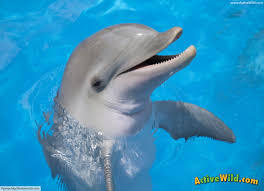
Try and convince me that’s not a self-satisfied grin
The Glass eel, changes sex throughout its life. These creatures seem to appear out of nowhere in rivers and lakes. In fact, Aristotle, who was also a naturalist (I bet he was a good footballer too, you know – show off!), thought these eels spontaneously emerged from the mud, as they appeared to have ‘no sex’, no partner. Adelie Penguins and Black swans are loud and proud – and one will often see male-male partners raising the young.
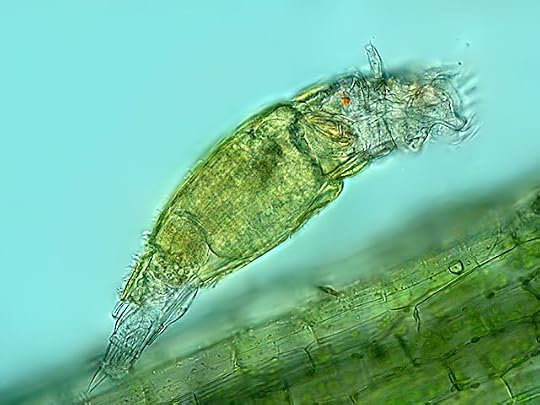
Bdelloid rotifers have been asexually reproducing for 40 million years
There are so many more examples in this book, including dinosaurs, trees, plants, insects, frogs, toads, and lizards. Did you know the Morpho butterfly can be divided down the middle (physically) when it comes to sex? One side male, the other female.
One thing I do know, and it also makes me incredibly happy is that many animals – particularly the higher order creatures. Have sex because it feels good. Not just because of reproduction. The description of gorillas having face to face, eye to eye intimate sex makes one’s heart warm.
In many ways, this book tells us more about our own sexuality and gender, than it does about our furry brothers and sisters. It’s all beautiful.
5 Stars
Bonus Material
I often hear a metronomic knocking on a door at the end of the hallway when watching TV. A few months ago – I discovered it was Meg (3-year-old sausage dog) pleasuring herself on Pup’s (9-year-old cattle dog-mixed breed) shoulder. Jesse is unfazed by this.
I used to put a stop to it by calling her. She would then guiltily skulk back to me in the TV room, while Jesse remained stationery and stoic lying on his side. Now my practice has changed. Why can’t she pleasure herself on her older brother’s (NB: Not related) shoulder??
So nowadays I will be watching a Swedish Noir crime series, to the regular thumping sound of Meg’s little head banging into the hallway door as she rams herself against Jesse’s shoulder.
Her stamina is stunning, as is Jesse’s patience – but at least they both seem to be enjoying themselves, and that has to be a good thing.
This colourful book challenges the so-called normalcy of male-female sex and gender. Stephen Fry is quoted as saying “…this splendid book is a most useful settler of arguments and silencer of bigots”.
I found the chapter on Western lowland gorillas to be particularly touching. Here scientists have made innumerable observations of queer behaviours. Same sex encounters and relationships are commonplace, these relationships are often monogamous. In fact, same-gender acts are more intimate than heterosexual acts. They are invariably ‘face-to-face,’ - lesbian gorilla sex can last five times longer than heterosexual sex.
Green sea turtle sex determination is temperature dependant. It depends on the genetic responses to the temperature of their eggs. Bottlenose dolphins are famous for their same-sex activities, including penetration. I always thought their faces displayed a smug grin of happiness.
Try and convince me that’s not a self-satisfied grin
The Glass eel, changes sex throughout its life. These creatures seem to appear out of nowhere in rivers and lakes. In fact, Aristotle, who was also a naturalist (I bet he was a good footballer too, you know – show off!), thought these eels spontaneously emerged from the mud, as they appeared to have ‘no sex’, no partner. Adelie Penguins and Black swans are loud and proud – and one will often see male-male partners raising the young.
Bdelloid rotifers have been asexually reproducing for 40 million years
There are so many more examples in this book, including dinosaurs, trees, plants, insects, frogs, toads, and lizards. Did you know the Morpho butterfly can be divided down the middle (physically) when it comes to sex? One side male, the other female.
One thing I do know, and it also makes me incredibly happy is that many animals – particularly the higher order creatures. Have sex because it feels good. Not just because of reproduction. The description of gorillas having face to face, eye to eye intimate sex makes one’s heart warm.
In many ways, this book tells us more about our own sexuality and gender, than it does about our furry brothers and sisters. It’s all beautiful.
5 Stars
Bonus Material
I often hear a metronomic knocking on a door at the end of the hallway when watching TV. A few months ago – I discovered it was Meg (3-year-old sausage dog) pleasuring herself on Pup’s (9-year-old cattle dog-mixed breed) shoulder. Jesse is unfazed by this.
I used to put a stop to it by calling her. She would then guiltily skulk back to me in the TV room, while Jesse remained stationery and stoic lying on his side. Now my practice has changed. Why can’t she pleasure herself on her older brother’s (NB: Not related) shoulder??
So nowadays I will be watching a Swedish Noir crime series, to the regular thumping sound of Meg’s little head banging into the hallway door as she rams herself against Jesse’s shoulder.
Her stamina is stunning, as is Jesse’s patience – but at least they both seem to be enjoying themselves, and that has to be a good thing.
February 8, 2026
Going into reading Josh L. Davis' A Little Queer Natural History, I expected something of a coffee table book: Nice photos with some captions and information and the book can certainly function that way. However, I was pleasantly surprised at how much more complex it was. There is not a ton of text in this book, but it packs a lot of information and is definitely more than just a list of facts about the greater than human world.
I have known for some time of the colonial, patriarchal, white supremacist, etc nature of some of the more widely known naturalist publications and study out in the ether. There are also plenty of issues in the sciences today of people projecting their own insecurities, anthropocentrism, inability to admit wrong, ability to accept new ideas, and so on onto their research subjects and publications. This book however gave me some details I definitely had not heard about before in regards to studies of specific species.
Many of the things that I have read which discuss instances of other species not fitting into shallow binarist and heteronormative boxes focused more on detailing what these features were than the historical resistance to understanding them. Despite ALQNH's short length, Davis manages to highlight quite well the kind of bias that is so destructive to the sciences as well as greater respect for animals including human beings.
The photographs in the book are beautiful, the descriptions of the animals are vivid and inviting. The only objection I have there is that the author sometimes refers to animals as "it" which is archaic and also not in line with what I assume are goals of the book. I expected better.
I thought a lot about what makes other species "queer" while reading this book. I generally object to labeling anything different from the norm as queer (much like many cishet academics unfortunately try to do.) It is a political identity of gender, sexuality, and connection and also reclaimation of a slur. How can we apply this to other animals for whom what we call queerness is the norm? It is a bit tricky. However, I agree with how the author has done so in this book. Because humans' studies of other animals are so entrenched with bias, we end up projecting these things onto other animals anyway such that we share the effects of queerness with them. We are connected both in the great scheme of things and with every assessment and discovery of our behavior.
The oppression that queer human beings face is both strengthened by the bias placed upon other animals and other animals suffer oppression that is based on these biases. This is not only seen in incorrect assessments of wild animals' behavior and the resistance to reporting queer expressions in their worlds, but also in domesticated settings wherein farms, zoos, breeders, etc kill, forcefully/non-consensually breed, mutilate, separate, etc gay/intersex/asexual/etc animals who they cannot treat as products of consumption/entertainment/etc.
The fragility of many of the white men, and sometimes other demographics, who have discussed the greater than human world is a warning that all of us should heed but especially those of us in naturalist communities or scientific fields. How much more could we have understood at this point if we were more open to the rest of the world not being exactly like dominant culture falsely believes we are? Humans have a way of trying to force other animals into our own oppressive boxes while also refusing to grant them the consideration of being like us enough to deserve liberation or even the mildest respect. It is a horrible dance that is captured quite well and the little snippets of history that we get when reading about the species in this book.
I'm keeping it quite general because I want people reading to have the ability to experience the specific stories anew. I will say that many of the overall lessons of the book are that there is great diversity in nature. While I do not believe naturalness in and of itself denotes whether or not something is right, those who do use this as a cudgel to oppress lgbtq people are doing so outside of reality.
It is quite sad when I think about it. What must it be like to be these people who can only see the world through ideas so stunted that they deprive themselves of understanding and wonder? Reading about the naturalists and scientists who dared think outside the box being met with such resistance is incredibly frustrating. Reading about how every discovery was (and often still is) used to further the oppression of LGBTQ people gives me feelings of anger but also of connection to other species. There is no liberation in this world if we do not confront our relationships with the vast majority of beings on this planet with us.
The species in this book also teach us that socialization, sex, intimacy, expression, and so forth do not exist solely to reproduce or further ones genes (regardless of how many otherwise educated people may still insist that this is so.) Thank dog for that.
This was also posted to my storygraph and blog.
I have known for some time of the colonial, patriarchal, white supremacist, etc nature of some of the more widely known naturalist publications and study out in the ether. There are also plenty of issues in the sciences today of people projecting their own insecurities, anthropocentrism, inability to admit wrong, ability to accept new ideas, and so on onto their research subjects and publications. This book however gave me some details I definitely had not heard about before in regards to studies of specific species.
Many of the things that I have read which discuss instances of other species not fitting into shallow binarist and heteronormative boxes focused more on detailing what these features were than the historical resistance to understanding them. Despite ALQNH's short length, Davis manages to highlight quite well the kind of bias that is so destructive to the sciences as well as greater respect for animals including human beings.
The photographs in the book are beautiful, the descriptions of the animals are vivid and inviting. The only objection I have there is that the author sometimes refers to animals as "it" which is archaic and also not in line with what I assume are goals of the book. I expected better.
I thought a lot about what makes other species "queer" while reading this book. I generally object to labeling anything different from the norm as queer (much like many cishet academics unfortunately try to do.) It is a political identity of gender, sexuality, and connection and also reclaimation of a slur. How can we apply this to other animals for whom what we call queerness is the norm? It is a bit tricky. However, I agree with how the author has done so in this book. Because humans' studies of other animals are so entrenched with bias, we end up projecting these things onto other animals anyway such that we share the effects of queerness with them. We are connected both in the great scheme of things and with every assessment and discovery of our behavior.
The oppression that queer human beings face is both strengthened by the bias placed upon other animals and other animals suffer oppression that is based on these biases. This is not only seen in incorrect assessments of wild animals' behavior and the resistance to reporting queer expressions in their worlds, but also in domesticated settings wherein farms, zoos, breeders, etc kill, forcefully/non-consensually breed, mutilate, separate, etc gay/intersex/asexual/etc animals who they cannot treat as products of consumption/entertainment/etc.
The fragility of many of the white men, and sometimes other demographics, who have discussed the greater than human world is a warning that all of us should heed but especially those of us in naturalist communities or scientific fields. How much more could we have understood at this point if we were more open to the rest of the world not being exactly like dominant culture falsely believes we are? Humans have a way of trying to force other animals into our own oppressive boxes while also refusing to grant them the consideration of being like us enough to deserve liberation or even the mildest respect. It is a horrible dance that is captured quite well and the little snippets of history that we get when reading about the species in this book.
I'm keeping it quite general because I want people reading to have the ability to experience the specific stories anew. I will say that many of the overall lessons of the book are that there is great diversity in nature. While I do not believe naturalness in and of itself denotes whether or not something is right, those who do use this as a cudgel to oppress lgbtq people are doing so outside of reality.
It is quite sad when I think about it. What must it be like to be these people who can only see the world through ideas so stunted that they deprive themselves of understanding and wonder? Reading about the naturalists and scientists who dared think outside the box being met with such resistance is incredibly frustrating. Reading about how every discovery was (and often still is) used to further the oppression of LGBTQ people gives me feelings of anger but also of connection to other species. There is no liberation in this world if we do not confront our relationships with the vast majority of beings on this planet with us.
The species in this book also teach us that socialization, sex, intimacy, expression, and so forth do not exist solely to reproduce or further ones genes (regardless of how many otherwise educated people may still insist that this is so.) Thank dog for that.
This was also posted to my storygraph and blog.

October 4, 2024
Really enjoyed it. It's got a really good selection of case studies, containing stuff that an ecologist like myself is now going to go look more into as well as approachable enough to the general public. It also does a good job of emphasizing how studying gender and sexuality in animals has and continues to be tied to morality.

June 14, 2026
Happy pride month 🏳️🌈

January 5, 2025
What a fascinating, hopeful, amazing little book. I'm in awe.

February 7, 2026
This is the book I wanted Forest Euphoria to be.

October 31, 2025
Meine Ausgabe ist die deutsche Übersetzung, erschienen im Haupt-Verlag.
Ein kleines, aber feines Büchlein, das uns zeigt, dass die Natur sehr queer ist. Angefüllt mit Beispielen von natürlich vorkommenden Geschlechtswechseln, homosexuellem Verhalten bei allen möglichen Tieren und überaus anpassungsfähigen Pflanzen, wenn es um Sex und Geschlecht geht.
Dezent wird eingefügt, dass wissenschaftliche Ergebnisse immer biased (voreingenommen) sind. Frühe Beobachtungen von queerem Verhalten wurde entweder als "Ausnahme" dargestellt, gar nicht veröffentlicht oder als "Dominanzverhalten" erklärt.
Das Quellenverzeichnis ist sehr umfangreich und verweist auf vertrauenswürdige Zeitschriften und Artikel, sodass auch das Argument, dass all dies nur Interpretationssache unter den Tisch fällt.
Somit ein geniales Werk für alle, die sich für die Thematik interessieren, anderen Leuten Lektüre empfehlen wollen und/oder sich gegen Aussagen der Widernatürlichkeit wappnen wollen/müssen.
Ein kleines, aber feines Büchlein, das uns zeigt, dass die Natur sehr queer ist. Angefüllt mit Beispielen von natürlich vorkommenden Geschlechtswechseln, homosexuellem Verhalten bei allen möglichen Tieren und überaus anpassungsfähigen Pflanzen, wenn es um Sex und Geschlecht geht.
Dezent wird eingefügt, dass wissenschaftliche Ergebnisse immer biased (voreingenommen) sind. Frühe Beobachtungen von queerem Verhalten wurde entweder als "Ausnahme" dargestellt, gar nicht veröffentlicht oder als "Dominanzverhalten" erklärt.
Das Quellenverzeichnis ist sehr umfangreich und verweist auf vertrauenswürdige Zeitschriften und Artikel, sodass auch das Argument, dass all dies nur Interpretationssache unter den Tisch fällt.
Somit ein geniales Werk für alle, die sich für die Thematik interessieren, anderen Leuten Lektüre empfehlen wollen und/oder sich gegen Aussagen der Widernatürlichkeit wappnen wollen/müssen.
April 30, 2025
Just finished this; highly recommended. Among other topics, it discusses:
1. the diversity of reproductive methods and sex-related behaviors among plants and animals
2. how some of that diversity is quite rare, and thus valuable and fragile
3. how tied life is to ecosystems that are easy for humans to disrupt
4. how scientists have been observing these behaviors in animals and plants since the beginning of science (1700s, and even thousands or years ago for domestic species, hyenas and some others), but how social pressure and moral judgment have hidden that knowledge and frustrated further research until just the past 50 years
1. the diversity of reproductive methods and sex-related behaviors among plants and animals
2. how some of that diversity is quite rare, and thus valuable and fragile
3. how tied life is to ecosystems that are easy for humans to disrupt
4. how scientists have been observing these behaviors in animals and plants since the beginning of science (1700s, and even thousands or years ago for domestic species, hyenas and some others), but how social pressure and moral judgment have hidden that knowledge and frustrated further research until just the past 50 years

August 20, 2024
Read in Dutch:
Bestaat homoseksualiteit en queerness echt alleen bij de mens? Zijn begrippen als gay, lesbisch, transseksualiteit, non binair zijn en alle andere kleuren van het queer spectrum echt enkel te vinden bij onze soort? Stammen wij dan zelf niet af van de apen en zijn ook wij, als mens, eigenlijk niet gewoon dieren?
Josh L. Davis werkt voor het Natural History Museum in London en verzamelde voor dit boek een hoop informatie over verschillende diersoorten die allemaal wel te plaatsen zijn in de categorieën die ik daarnet opsomde. Maar natuurlijk gaat het over niet sprekende dieren die het zelf niet verwoorden en waarbij we zelf moeten afgaan op wat de wetenschap aantoont. En het zou ons allemaal wel kunnen verbazen wat er zoal te ontdekken valt!
Wist je dat er bij pinguïns en zwanen gewoon homoseksuele koppels zijn die eieren uitbroeden en de jongen opvoeden? En dan blijkt dat zij dit ook goed (zelfs beter) doen dan bij een heteroseksueel koppel.
Wist je dat bij apensoorten zoals bonobo’s, chimpansees en gorillas seks (voor het plezier en niet louter voor de voortplanting) hebben met soortgenoten van hetzelfde geslacht? En dat ze er nog van genieten en langer mee bezig zijn dan dat ze een rug naar elkaar toe gedraaid heteroseksueel apenkoppeltje zouden zijn?
Wist je dat er vissen zijn die van geslacht veranderen? Dat bepaalde amfibieën en andere diersoorten dubbelgeslachtig zijn? Dat ze zichzelf bevruchten? Dat fazantenvrouwtjes zelfs plots de verenpracht van een mannetje overnemen?
Dit allemaal en veel meer kan je terugvinden in dit heel interessante boekje over een perspectief van het dierenrijk waar je misschien nog niet bij stilstond!
En als we niet in een puriteinse wereld zouden leven zou dit boek op heel wat scholen een plek moeten krijgen in de schoolbibliotheek en zelfs les over gegeven worden, in een weliswaar vereenvoudigde versie zonder de echt wetenschappelijke benamingen die vaak moeilijk zijn! Want als dit geen bewijs kan zijn dat homoseksualiteit iets natuurlijks is, dan weet ik niet wat dat wel bewijzen kan! De wetenschap ten top! 💪
Bestaat homoseksualiteit en queerness echt alleen bij de mens? Zijn begrippen als gay, lesbisch, transseksualiteit, non binair zijn en alle andere kleuren van het queer spectrum echt enkel te vinden bij onze soort? Stammen wij dan zelf niet af van de apen en zijn ook wij, als mens, eigenlijk niet gewoon dieren?
Josh L. Davis werkt voor het Natural History Museum in London en verzamelde voor dit boek een hoop informatie over verschillende diersoorten die allemaal wel te plaatsen zijn in de categorieën die ik daarnet opsomde. Maar natuurlijk gaat het over niet sprekende dieren die het zelf niet verwoorden en waarbij we zelf moeten afgaan op wat de wetenschap aantoont. En het zou ons allemaal wel kunnen verbazen wat er zoal te ontdekken valt!
Wist je dat er bij pinguïns en zwanen gewoon homoseksuele koppels zijn die eieren uitbroeden en de jongen opvoeden? En dan blijkt dat zij dit ook goed (zelfs beter) doen dan bij een heteroseksueel koppel.
Wist je dat bij apensoorten zoals bonobo’s, chimpansees en gorillas seks (voor het plezier en niet louter voor de voortplanting) hebben met soortgenoten van hetzelfde geslacht? En dat ze er nog van genieten en langer mee bezig zijn dan dat ze een rug naar elkaar toe gedraaid heteroseksueel apenkoppeltje zouden zijn?
Wist je dat er vissen zijn die van geslacht veranderen? Dat bepaalde amfibieën en andere diersoorten dubbelgeslachtig zijn? Dat ze zichzelf bevruchten? Dat fazantenvrouwtjes zelfs plots de verenpracht van een mannetje overnemen?
Dit allemaal en veel meer kan je terugvinden in dit heel interessante boekje over een perspectief van het dierenrijk waar je misschien nog niet bij stilstond!
En als we niet in een puriteinse wereld zouden leven zou dit boek op heel wat scholen een plek moeten krijgen in de schoolbibliotheek en zelfs les over gegeven worden, in een weliswaar vereenvoudigde versie zonder de echt wetenschappelijke benamingen die vaak moeilijk zijn! Want als dit geen bewijs kan zijn dat homoseksualiteit iets natuurlijks is, dan weet ik niet wat dat wel bewijzen kan! De wetenschap ten top! 💪
May 28, 2025
As an extremely queer human, finally learning about much of the queerness in nature that our society has tried to hide from us for hundreds of years means more to me than you can imagine. This book is long overdue, and more educational than environmental science classes ever were to me in school.
On top of that, it's a very easy read. It's split into comfortably bite-sized 2-4 page sections for each creature it covers. You can easily open it up and read one little section at a time, whenever/wherever.
One of my favorite sections is on the European Yew. A single tree of this species, that has existed for thousands of years, just up and decided to have a sex change one day. That is so freaking cool. And if you disagree, you're objectively wrong. That's just how it is. Suck it up, queerphobes. Nature couldn't give two shits about your man-made bigotry.
Anyway, read it!
On top of that, it's a very easy read. It's split into comfortably bite-sized 2-4 page sections for each creature it covers. You can easily open it up and read one little section at a time, whenever/wherever.
One of my favorite sections is on the European Yew. A single tree of this species, that has existed for thousands of years, just up and decided to have a sex change one day. That is so freaking cool. And if you disagree, you're objectively wrong. That's just how it is. Suck it up, queerphobes. Nature couldn't give two shits about your man-made bigotry.
Anyway, read it!

November 20, 2025
Leuk en toegankelijk geschreven boek dat veel inzicht geeft in waarom het argument "homoseksualiteit is onnatuurlijk" nergens op slaat. Allerlei diersoorten worden onderzocht, van dolfijnen tot mosmijten. En qua seksuele diversiteit lopen de verhalen uiteen van homoseksuele koppels tot mannetjes en vrouwtjes met 'omgekeerde' geslachten. Erg interessant én leuk!
September 14, 2025
Awesome book, showcases in short acessible stories the cases of living organisms (mostly animals, but also fungi and plants) showing queer behaviour in various ways

January 26, 2026
3.5 stars but rounding down due to some issues I had. The subjects are interesting, and a lot of science behind chromosomes/mating is explained in a way that makes sense to someone without a science background. This is a good book for someone who gravitates towards trivia ("did you know the Spotted Hyena is the only mammal without a vagina?").
However the writing style is not for me. Frequently redundant with the occasional mistake ("One experiment on the striped maple tree (Acer pensylvanicum), usually found growing in the *northwestern* forests of North America..."), the essays often end in one-liners that disrupt the continuity of the book. Structured as essays about individual species, commonalities described in other species may take up significant space in the individual essays. I think if this book was structured written as a linear narrative, it could have reduced much of the redundancy and streamlined the content into a book that questions what we perceive as queer (identity, sexual behavior, sex changes, etc.) and the implications on human society and the way we interact with the natural world. The discussion on climate change's effect on the future reproduction of reptiles also deserved more attention and weight within the book.
Also, on a smaller, pettier note, University of Chicago Press really decided to publish this for U.S. distribution without changing any of the text to U.S. spellings? Is this a common practice? I found it distracting.
However the writing style is not for me. Frequently redundant with the occasional mistake ("One experiment on the striped maple tree (Acer pensylvanicum), usually found growing in the *northwestern* forests of North America..."), the essays often end in one-liners that disrupt the continuity of the book. Structured as essays about individual species, commonalities described in other species may take up significant space in the individual essays. I think if this book was structured written as a linear narrative, it could have reduced much of the redundancy and streamlined the content into a book that questions what we perceive as queer (identity, sexual behavior, sex changes, etc.) and the implications on human society and the way we interact with the natural world. The discussion on climate change's effect on the future reproduction of reptiles also deserved more attention and weight within the book.
Also, on a smaller, pettier note, University of Chicago Press really decided to publish this for U.S. distribution without changing any of the text to U.S. spellings? Is this a common practice? I found it distracting.
October 2, 2024
Het boek was een stuk diepgaander dan ik had verwacht , …. Al die verschillende soorten , van schimmels, dieren en planten en hun seksuele voorkeuren, … en hoe , wat , wie beslist wat normaal is ? De meerderheid, ? En wat zijn de meerderheid , schimmels, planten , insecten ? De verschillende manieren van voortplanting en seksuele beleving zijn wel heel divers op planeet aarde , …
Het boek leest door de diepgang niet zo vlot maar is zo wel behoorlijk informatief , zo heb ik bv ook het verschil geleerd tussen het woord geslacht en gender , ik dacht dat deze meer een synoniem waren ze hebben blijkbaar een verschillende betekenis ,
5 sterren voor de informatie en bijhorende foto’s van verschillende organismen,
Het boek leest door de diepgang niet zo vlot maar is zo wel behoorlijk informatief , zo heb ik bv ook het verschil geleerd tussen het woord geslacht en gender , ik dacht dat deze meer een synoniem waren ze hebben blijkbaar een verschillende betekenis ,
5 sterren voor de informatie en bijhorende foto’s van verschillende organismen,

June 30, 2026
If Finding Nemo had been a documentary, then after Nemo's mother went missing, her father would have changed into a female and mated with Nemo. In fact, lots of animals (and plants and fungi) do things that you may not approve of.
Mangrove killifish have both ovaries and testes and can sexually reproduce all by themselves. Giraffes and beetlenose dolphins have same-sex oro-genital contact. If a female Komodo dragon finds herself all alone, she can give birth to a batch of sons to mate with. Female barklice, not the males, penetrate the other with a penis-like object. Most intriguing to me, the white-throated sparrow has four biological sexes.
They aren't asking for your approval.

March 30, 2026
Overall: ⭐⭐⭐⭐⭐
Information Presented: ⭐⭐⭐⭐⭐
Clarity of Information Presented: ⭐⭐⭐⭐⭐
Favorite Passage: The Splitgill Mushroom chapter
Thoughts: What a delightfully written book about how nature defys most people's expectations of it!!!!! As a queer wildlife biologist, this was as validating as it was informative!!!!! I think more people should be required to read this honestly, it's very accessible, explaining everything wonderfully and in ways a non-biology person could understand!!!!! Highly recommend giving this one a try!!!!!
Information Presented: ⭐⭐⭐⭐⭐
Clarity of Information Presented: ⭐⭐⭐⭐⭐
Favorite Passage: The Splitgill Mushroom chapter
Thoughts: What a delightfully written book about how nature defys most people's expectations of it!!!!! As a queer wildlife biologist, this was as validating as it was informative!!!!! I think more people should be required to read this honestly, it's very accessible, explaining everything wonderfully and in ways a non-biology person could understand!!!!! Highly recommend giving this one a try!!!!!

November 14, 2024
This book is so cool! Short and sweet with examples of gay and lesbian behavior in animals, as well as so much about how plants and animals can change their sex (those tricky fishes!) or about how sex is determined in different creatures. And of course the split gill mushroom with over 23,000 sexes!
A lovely introduction to the marvelous, stunning variability and diversity of life! It gives you a sense of wonder and joy.
A lovely introduction to the marvelous, stunning variability and diversity of life! It gives you a sense of wonder and joy.
December 1, 2024
Definitely shows that gender is more widely expressed across the natural world--the splitgill mushroom has thousands of sexes! Gender can be temperature dependent, group dependent (Nemo's father should have become female upon the loss of Nemo's mother--intersex, asexual, changeable, and in the case of bark lice have sex-reversed genitals. Examples from trees and other plants, fish, reptiles, amphibians, mammals, birds, fish, dinosaurs, and domestic animals as well as wild. Fascinating!

June 12, 2025
This was such a fun read - I absolutely loved my reproductive biology lessons in college and this is a book of JUST queer reproductive biology lessons, with all sorts of different plants and animals as case studies! 10/10 would recommend to any of my biology minded friends, or anyone who needs some more ammo against their homophobic uncle at family get togethers. My only note is that I wish it cited sources because I'd love to see what studies were referenced.

December 14, 2025
Das Buch bietet einen atemraubenden Erkenntnisgewinn über die Vielfalt beim Paarungs- und Fortpflanzungsverhalten wie auch bei Geschlechtern im Tier- und Pflanzenreich. Es ist geradezu erschütternd, warum solche Fakten nicht im Biologieunterricht oder in Tier- und Naturdokumentationen Erwähnung finden. Dieses Sachbuch sollte Pflichtlektüre an allen Schulen weltweit sein. Absolut empfehlenswert.
September 16, 2026
This book doesn't sneak around what it's trying to say and it's beautiful. Lovely creatures defy scientific systemic heterocissexual bias by simply, in all their complexity, being. I am full of love for the world in this book. I am excited to tear a colonial scientist to pieces with my bare hands. Queerness is cultural, but in identifying with these creatures queerness becomes natural.

December 28, 2024
This book shows how little humans understand sex because of the diversity of life on this planet.
Engaging, short, easy to read chapters describe the multitudinous means of reproduction and display that there really is no one universal way, nor is sex and gender set in stone.
Engaging, short, easy to read chapters describe the multitudinous means of reproduction and display that there really is no one universal way, nor is sex and gender set in stone.
February 10, 2025
This was a super interesting look into the world of biology from a new standpoint. The author should sue whoever edited their book for damages, but they did give us an Alex Jones "turn the friggin frogs gay" reference.
4/5 Would recommend to your weird libertarian uncle
4/5 Would recommend to your weird libertarian uncle

November 23, 2024
Really interesting, there’s always so many new things to learn and I learned some of them in this book

December 20, 2024
Lesbian bottlenose dolphins are the real MVPs here.

December 29, 2024
This book is a good snapshot of the incredible diversity of queer behavior found in plants and animals. I would recommend this as an introduction to the topic.

April 14, 2025
These are some cool FACTS.
May 14, 2025
10/10 extremely amazing book that made me go on like 5 wikipedia rabbit holes within the past day

February 27, 2026
I loved this book! My girlfriend and I read it together, and we learned so much about queer animals and plants (yes, plants!).
May 28, 2026
It goes way beyond gay penguins!
Displaying 1 - 30 of 45 reviews