From a National Jewish Book Award A Jewish man and a black woman find love against all odds, in a novel set in the twentieth-century American South. Nine-year-olds Max Sassaport and Ruby Johnson are best friends who can’t imagine a world where they aren’t together. Unfortunately, no one—not their families, nor anyone else in rural Georgia in 1906—wants to see a White middle-class Jewish boy get too close to the Black daughter of a sharecropper. It’s only a matter time before fate will separate the two. And that day comes on the eve of Ruby’s womanhood, when a violent act sends her running from her childhood home to the blue-collar life of a factory worker in Atlanta. Max moves to Atlanta a few years later, still longing for the girl he has never forgotten. He is soon taken under the wing of a reporter at the Atlanta Journal. But when Max is assigned to a controversial murder case that pits the Black and Jewish communities against each other, he’s unexpectedly reunited with Ruby. The bond between them is still strong, but with the trial igniting racial tension throughout Atlanta and across the nation, do Max and Ruby dare dream of a future together? “Mary Glickman is a wonder.” —Pat Conroy, #1 New York Times–bestselling author of The Boo
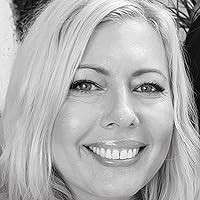
Born Mary Kowalski on the south shore of Boston, Massachusetts, Mary Glickman grew up the fourth of seven children in a traditional Irish-Polish Catholic family. Her father had been a pilot in the Army Air Force and later flew for Delta Air Lines. From an early age, Mary was fascinated by faith. Though she attended Catholic school and as a child wanted to become a nun, her attention eventually turned to the Old Testament and she began what would become a lifelong relationship with Jewish culture. “Joseph Campbell said that religion is the poetry that speaks to a man’s soul,” Mary has said, “and Judaism was my soul’s symphony.”
In her twenties, Mary traveled in Europe and explored her passion for writing, composing short stories and poetry. Returning to the United States, she met her future husband, Stephen, a lawyer, and with his encouragement began to consider writing as a career. She enrolled in the Masters in Creative Writing program at Boston University, under the poet George Starbuck, who encouraged her to focus on fiction writing. While taking an MFA class with the late Ivan Gold, Mary completed her first novel, Drones, which received a finalist award from the Massachusetts Foundation for the Humanities but was never published.
Mary also began a career as a freelance writer working with nonprofit organizations on projects ranging from a fund-raising campaign for the Hebrew Rehabilitation Center to an instructional video for the National Scoliosis Foundation’s screening project. Mary and Stephen married in 1978. Mary made a full conversion to Judaism and later worked as treasurer/secretary for her synagogue.
The origins of her love for all things Southern arose from a sabbatical year. In 1987, Mary and Stephen first traveled to the south of Spain, soaking in the life of a fishing village called La Cala. After seven months abroad and, hoping to extend their time away, they sought a warm—and more affordable—locale. The romance of Charleston, South Carolina, its Spanish moss, antebellum architecture, and rich cultural life beckoned.
Settling into a rented house on Seabrook Island, Mary fell in love with the people, language, and rural beauty of her new home. Following a lifelong desire to ride horses, Mary took a position mucking the stalls at the local equestrian center and embraced riding, finding her match in an Appaloosa named King of Harts. The sabbatical ended and the couple returned to life in Boston, but the passion for Southern culture remained with them. They were able to return permanently to Seabrook Island in 2008, where they currently reside with their cats and an elderly King of Harts.
See full review on the ATLANTA JOURNAL-CONSTITUTION website: “Ain’t No Grave” begins as a heartwarming tale of forbidden love between the son of a Jewish shop owner and daughter of a Black sharecropper. But Mary Glickman’s sixth novel quickly evolves into a fascinating retelling of a horrific event in Georgia’s history, the 1915 lynching of Jewish American businessman Leo Frank. Ultimately, this germane work of historical fiction provides a rousing education on the 20th century resurgence of the Ku Klux Klan and subsequent founding of the Anti-Defamation League.
At the heart of Glickman’s story are Ruby Johnson and Max Sassaport, two endearing 9-year-olds who are already in love at the novel’s opening. They bond after being bullied but know it’s only a matter of time before their friendship is forbidden. As Ruby tells it, their fictional town of Buckwood is the kind of place where “one day you had a white friend, and the next day you did not...”
I think I found this book while I was browsing the GD and I thought the excerpt was interesting and prompted me to read it.
I think this happened during the Jim Crow laws enforced in the Southern US, not sure at the beginning or near towards the end of the law era. So there was strong segregation and discrimination towards Black and Jewish people. During this time, race mixing or even having a friendship outside of your race is seen as "blasphemy," so the friendship between two misfit kids of Jewish and Black backgrounds is frowned upon.
But that fact did not stop nine-year-olds Max Sassaport and Ruby Johnson from being best friends, and they supported each other from bullies. I thought that was sweet and very encouraging; of course, even as kids, they know how to take precautions against adults who would shun their friendship, and they know the reality of their situation. It was sad that they knew their friendship had a time limit because after a certain age, a friendship between two races, let alone two sexes, is forbidden. Being innocent kids they are, they decided to visit the one-eyed witch, Mayhayley, who would tell them their future prospect. I was surprised that Mayhayley's gift was legitimate and she was able to warn the kids of the upcoming danger even years into the future.
I think that is where their whole life started to go into a never-ending cycle of rollercoaster. They were doubtful but still took the witch's advice with a grain of salt. Unfortunately, their friendship started to dwindle due to the consequences of their age and respective responsibility. But they still missed each other's friendship and companionship. This also led Ruby down the path of ill-omened, and it soon led her to run away to Atlanta. I'm so glad that Max helped her because they still loved each other even when their friendship dwindled. I admit, I was genuinely worried for Ruby, she was too young to travel by herself, especially as a vulnerable young Black girl. But she persevered and managed to get some odd jobs along the way until she made it to Atlanta.
I commemorate Ruby's determination to make it on her own at such a young age, and when she finally settled, she still sent some money to her family back home. I admire her for that. As for Max, he was devastated that he couldn't follow Ruby to Atlanta, and it worried him to bits about Ruby's whereabouts and welfare. Unfortunately, Ruby did not write to Max because she knew her letters would be read by his parents first, and since he stole the money to help her, she did not want him to get into trouble. Max soon grew up into a handsome man and is quite savvy financially; he soon saved up and decided to move to Atlanta to search for Ruby and to find a better occupation for himself.
I admire Max's determination to find Ruby in Atlanta, even if it took him years. As Max became a cub reporter for Harold Ross, he was assigned to a murder case of Mary Phagan. As Ross was busy getting the latest update from police and everyone involved, he had asked Max to consult his insider informant from the factory where the murder happened, who turned out to be Ruby. They were overjoyed to be reunited and decided to meet again separately; by this time, they were becoming more than just best friends. Although, initially, Max did not like that Ross seemed to be too familiar with Ruby.
Ruby has some secrets but nothing of the sort that betrays Max. I don't want to include any spoilers because you need to read it to know it.
I revere the author's smooth transition of integrating the real-life case of Leo Frank with the fictional story of Max and Ruby. I believe the author had introduced the friendship/love between Ruby and Max because during the time of Jim Crow law, where the murder case involves a Jewish man and Black man, the discriminated races are divided again because no race wants to be marred for this crime. "I choose my tribe, and I choose to stay with my tribe" is the best way to describe it. Even if you don't believe Leo actually did the crime, you also don't want to say anything that can jeopardize the other suspect of your race. Not sure if I'm wording it right....but I think you get what I'm trying to say.
Max was lucky in the sense that his name does not put an "I'm Jewish" in neon bright light above his head; therefore, he was able to slip through and avoid any antisemitic people around him. I genuinely feared for his safety a few times throughout the book because he was putting himself out there to get the "juicy" story for Ross. Max and Ruby's experience speaks volumes, as in how Ruby travels and experiences livelihood compared to Max. I'm not saying Max did not face hardship, but more like he was able to "pass" for a non-Jewish person that people didn't directly discriminate against him unless they knew he was Jewish, unlike Ruby, her skin tone is enough for anyone to look down at her instantly.
I cannot believe how the law and the people had already "judged" Leo as guilty even before the investigation started. They already decided to pin it on him just because they were jealous of a well-to-do Jewish person, and they craved blood. The evidence they had against him was shit, and the jury were only whites who already hated him. He stood no chance. I also believe that Leo's whole demeanor as a quiet and calm person made people even more angry. I cannot believe they would simply take a drunken and abusive Jim Conley's word for it even when everyone knew in the back of their mind that he was lying through his teeth.
I felt disgusted reading about how Max was forced to watch Leo get lynched while everyone around him was celebrating and cheering about doing the same thing to the rest of the Jews in the South. My god, earlier in the book, when Max was younger, he made money by charging everyone to see lynched Black men's pictures and "merchandise." I was disgusted by how people had happily enjoyed a family picnic under the tree of the lynched man still hanging on the tree. And how they mutilated the body for "trophies." Ugh, makes me want to puke reading that. I don't know how Max was able to keep up the appearance of a diligent reporter while they killed Leo right in front of his eyes. The Wikipedia has a picture of Leo's lynching and "fucked up" people standing there posing for a picture.
Max's and Ruby's small town hardly had a decent shop and everyone relied on Max's father shop to survive yet they quickly changed their mind about them when they had alternative option and has no hesitation to hate on his family who had provided their much needed services for years, just because they are Jewish. Gosh!!
The story continues after Leo's death and how, despite everything, Ruby and Max still choose to remain in love with each other, and they later decided to move to the north for a better life for their future. I do feel like this part of the book was concluded very quickly, but I get the message being portrayed that their lives were hard as a mixed couple, but despite everything, their lives and everything around them are slowly changing for the better.
I enjoyed reading this book, although during the time I was reading this book, I had no idea that Leo Frank was a real person and the case was real as well.
P/S: I tagged true crime true stories because the case of Leo Frank is a real-life tragedy.
Glickman did a good job of telling the heartbreaking story of Leo Frank within a fictional story of a forbidden love between a Jewish white boy and a black girl.
The historical fiction piece of the book was well done. I learned a lot about the trial of Leo Frank as well as the beginnings of the anti defamation league.
Loved this historical fiction set in Georgia. It is the story of a two children who develop a love for each other. Except Ruby is a black girl and a max is a Jewish boy. Their saga is part of the Leo Frank acquisition and trails in the early 1900s.
This is a beautifully crafted story. There is culture and history woven into an unlikely love story. Each character’s story is told with compassion without sacrificing the complexity of the judgment and discrimination world they have to navigate.
This book will make you cheer for these unlikely heroes and make you question if our society has changed much since then. As a resident of Atlanta I was especially entranced by the historical components of this novel.
Writing historical fiction that combines fact and fiction – particularly using real life people as characters – can be difficult because the writers’ plots are constrained by historical events that readers can confirm in history books or on the Internet. There are several different approaches to writing these types of works, two of which can be seen in recent novels: “Ain’t No Grave” by Mary Glickman (Open Road) and “Regina of Warsaw: Love, Loss and Liberation” by Geri Spieler (Speaking Volumes). While the former novel features fictional characters who interact with real life ones, the latter is based on the life of the author’s grandmother and combines factual and fictional elements. See the rest of review at https://www.thereportergroup.org/book...
This novel had all the food groups - beautifully written by a southern writer, historical fiction based on an important but lesser known event, an exploration of race relations, faith, love and moral conviction. The writing was beautiful, the characters compelling, the historical context convincing. I especially liked the way place became a character. How have I not read more of Mary Glickman's work? I'm on it!
A beautifully written, deeply moving story of love, resilience, and identity in the face of prejudice. Mary Glickman brings Max and Ruby’s journey to life with rich historical detail and heartfelt emotion. Their bond, tested by separation, violence, and racial tension in the early 20th century South, lingers long after the last page. A powerful read about hope against all odds.
A historical fiction piece about two destined lovers and their journey through growing up while facing discrimination for their race and religion. Glickman makes you fall in love hard and fast for Max and Ruby and you’ll want to keep reading to see how their story ends.
I just finished reading Ain't No Grave by Mary Glickman. I have read all her books. She is a fantastic story teller. You will not be disappointed. I miss the characters already!
3.8 stars Bookclub. Takes place in 1920s Georgia. A white boy and a black girl are best friends in elementary school. They want to continue to be best friends. But they are in the wrong place and at the wrong time for that to even be safe to do. They will risk everything to overcome this barrier.