

What do you think?

Anthem for Doomed Youth
'Tonight he noticed how the women's eyes Passed from him to the strong men that were whole.'
The true horror of the trenches is brought to life in this selection of poetry from the front line.
Introducing Little Black Classics: 80 books for Penguin's 80th birthday. Little Black Classics celebrate the huge range and diversity of Penguin Classics, with books from around the world and across many centuries. They take us from a balloon ride over Victorian London to a garden of blossom in Japan, from Tierra del Fuego to 16th-century California and the Russian steppe. Here are stories lyrical and savage; poems epic and intimate; essays satirical and inspirational; and ideas that have shaped the lives of millions.
Wilfred Owen (1893-1918).
Owen is available in Penguin Classics in Three Poets of the First World War: Ivor Gurney, Isaac Rosenberg, Wilfred Owen.
The true horror of the trenches is brought to life in this selection of poetry from the front line.
Introducing Little Black Classics: 80 books for Penguin's 80th birthday. Little Black Classics celebrate the huge range and diversity of Penguin Classics, with books from around the world and across many centuries. They take us from a balloon ride over Victorian London to a garden of blossom in Japan, from Tierra del Fuego to 16th-century California and the Russian steppe. Here are stories lyrical and savage; poems epic and intimate; essays satirical and inspirational; and ideas that have shaped the lives of millions.
Wilfred Owen (1893-1918).
Owen is available in Penguin Classics in Three Poets of the First World War: Ivor Gurney, Isaac Rosenberg, Wilfred Owen.
Mass Market Paperback
First published January 1, 1920
About the author
Wilfred Owen
152 books242 followersLibrarian Note: There is more than one author by this name in the goodreads data base.
Wilfred Owen was a defining voice of British poetry during the First World War, renowned for his stark portrayals of trench warfare and gas attacks. Deeply influenced by Siegfried Sassoon, whom he met while recovering from shell shock, Owen’s work departed from the patriotic war verse of the time, instead conveying the brutal reality of combat and the suffering of soldiers. Among his best-known poems are Dulce et Decorum est, Anthem for Doomed Youth, and Strange Meeting—many of which were published only after his death.
Born in 1893 in Shropshire, Owen developed an early passion for poetry and religion, both of which would shape his artistic and moral worldview. He worked as a teacher and spent time in France before enlisting in the British Army in 1915. After a traumatic experience at the front, he was treated for shell shock at Craiglockhart War Hospital, where Sassoon’s mentorship helped refine his poetic voice.
Owen returned to active service in 1918, determined to bear witness to the horrors of war. He was killed in action just one week before the Armistice. Though only a few of his poems were published during his lifetime, his posthumous collections cemented his legacy as one of the greatest war poets in English literature. His work continues to be studied for its powerful combination of romantic lyricism and brutal realism, as well as its complex engagement with themes of faith, duty, and identity.
Wilfred Owen was a defining voice of British poetry during the First World War, renowned for his stark portrayals of trench warfare and gas attacks. Deeply influenced by Siegfried Sassoon, whom he met while recovering from shell shock, Owen’s work departed from the patriotic war verse of the time, instead conveying the brutal reality of combat and the suffering of soldiers. Among his best-known poems are Dulce et Decorum est, Anthem for Doomed Youth, and Strange Meeting—many of which were published only after his death.
Born in 1893 in Shropshire, Owen developed an early passion for poetry and religion, both of which would shape his artistic and moral worldview. He worked as a teacher and spent time in France before enlisting in the British Army in 1915. After a traumatic experience at the front, he was treated for shell shock at Craiglockhart War Hospital, where Sassoon’s mentorship helped refine his poetic voice.
Owen returned to active service in 1918, determined to bear witness to the horrors of war. He was killed in action just one week before the Armistice. Though only a few of his poems were published during his lifetime, his posthumous collections cemented his legacy as one of the greatest war poets in English literature. His work continues to be studied for its powerful combination of romantic lyricism and brutal realism, as well as its complex engagement with themes of faith, duty, and identity.
Ratings & Reviews
Friends & Following
Create a free account to discover what your friends think of this book!
Community Reviews
Displaying 1 - 30 of 173 reviews

June 5, 2015
Wilfred Owen was a solider in WW1. The result of his service was a radical shift in his poetry; it became anti-war. Thus, the message of Anthem for Doomed Youth is abundantly clear: war is terrible. His time in the trenches enlightened him to his fact, as his personal experience led him to the reality. The title immediately suggests that the young soldiers of both sides are fated to die; they will die in the trenches and in the fields; thus, the “anthem” is a mockery at the patriotic society that naively pushed these youngsters into uniform.

In the anthem the noise from artillery shells becomes the choir, men become cattle and the tears of the fallen become candles. The men are slaughtered like animals by the noisy artillery, and the tears that are shed are not strong enough to mourn the true horrors of war. Indeed, the poem for which this edition is named is fantastic, but is not the only poem in here worthy of merit. They’re all great in their own way, and I like 1914 in particular. Personally I think edition should have been named after this one, but that’s just my taste in poetry.

I really enjoyed this edition. I’m not at all familiar with this Poet’s work, and I feel that this is a strong introduction to him. The same theme runs through the poems in this edition, which helps cement my perception of this Poet’s style. I don’t feel the need to go out and buy an edition of his full work because in this there is thirty five of his poems, I don’t think I need anymore.
Penguin Little Black Classic- 50
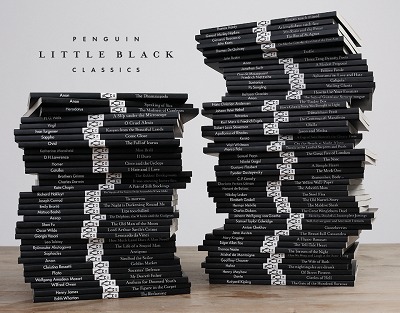
The Little Black Classic Collection by penguin looks like it contains lots of hidden gems. I couldn’t help it; they looked so good that I went and bought them all. I shall post a short review after reading each one. No doubt it will take me several months to get through all of them! Hopefully I will find some classic authors, from across the ages, that I may not have come across had I not bought this collection.
In the anthem the noise from artillery shells becomes the choir, men become cattle and the tears of the fallen become candles. The men are slaughtered like animals by the noisy artillery, and the tears that are shed are not strong enough to mourn the true horrors of war. Indeed, the poem for which this edition is named is fantastic, but is not the only poem in here worthy of merit. They’re all great in their own way, and I like 1914 in particular. Personally I think edition should have been named after this one, but that’s just my taste in poetry.
I really enjoyed this edition. I’m not at all familiar with this Poet’s work, and I feel that this is a strong introduction to him. The same theme runs through the poems in this edition, which helps cement my perception of this Poet’s style. I don’t feel the need to go out and buy an edition of his full work because in this there is thirty five of his poems, I don’t think I need anymore.
Penguin Little Black Classic- 50
The Little Black Classic Collection by penguin looks like it contains lots of hidden gems. I couldn’t help it; they looked so good that I went and bought them all. I shall post a short review after reading each one. No doubt it will take me several months to get through all of them! Hopefully I will find some classic authors, from across the ages, that I may not have come across had I not bought this collection.

October 17, 2017
"But let my death be memoried on this disc.
Wear it, sweet friend. Inscribe no date nor deed.
But let they heart-beat kiss it night and day,
Until the name grow vauge and wear away."
- Wilfred Owen, 'With and Identity Disc'

Vol N° 50 of my Penguin Little Black Classics Box Set. This volume contains 36 of Wilfred Owen's war poems assembled from Penguin's 'Three Poets of the First World War'.
Like many, my first Owen poem (found in this book) was "Dulce et Decorum Est". I read it in an anthology of English poetry my Junior in High School. I was living in Izmir, Turkey at the time during the First Gulf War and still war, all wars, seemed removed. But with his words Owen compelled the reader to taste death, loss, fear, and the horror of war.
I've owned The Collected Poems of Wilfred Owen for years -- alone it has sat, mostly unread, an ignored soldier on a pine shelf. Later, I would lose a brother in a Black Hawk crash and another brother would come back from combat in Afghanistan with PTSD, and I would venture in and out of Owen's poetry. Owen would resonate again and again with me. I came from a family that served, but also a family that came back from war broken. Owen spoke to me. He translated things my brothers couldn't speak, and I would never fully know.
"Dulce et Decorum Est" may be his most well-known poem, but almost every poem in this book hit me, some VERY hard. They are pastoral, but the pasture is a battlefield at night and instead of flowers, trees, and streams there is blood, steel, and death. But if THAT was all Owen did, create macabre poems of death and war, he would be remembered as a VERY GOOD war poet. However, Wilfred Owen isn't just a war poet and isn't just very good. Owen is great because out of the horror of war, the young Owen reminds us of our humanity and the beauty of life. He reminds us to cherish every beat of our hearts and to value the warmth of every ray of sunshine. He reminds of about what war costs us, both in life and innocence.
Wear it, sweet friend. Inscribe no date nor deed.
But let they heart-beat kiss it night and day,
Until the name grow vauge and wear away."
- Wilfred Owen, 'With and Identity Disc'
Vol N° 50 of my Penguin Little Black Classics Box Set. This volume contains 36 of Wilfred Owen's war poems assembled from Penguin's 'Three Poets of the First World War'.
Like many, my first Owen poem (found in this book) was "Dulce et Decorum Est". I read it in an anthology of English poetry my Junior in High School. I was living in Izmir, Turkey at the time during the First Gulf War and still war, all wars, seemed removed. But with his words Owen compelled the reader to taste death, loss, fear, and the horror of war.
I've owned The Collected Poems of Wilfred Owen for years -- alone it has sat, mostly unread, an ignored soldier on a pine shelf. Later, I would lose a brother in a Black Hawk crash and another brother would come back from combat in Afghanistan with PTSD, and I would venture in and out of Owen's poetry. Owen would resonate again and again with me. I came from a family that served, but also a family that came back from war broken. Owen spoke to me. He translated things my brothers couldn't speak, and I would never fully know.
"Dulce et Decorum Est" may be his most well-known poem, but almost every poem in this book hit me, some VERY hard. They are pastoral, but the pasture is a battlefield at night and instead of flowers, trees, and streams there is blood, steel, and death. But if THAT was all Owen did, create macabre poems of death and war, he would be remembered as a VERY GOOD war poet. However, Wilfred Owen isn't just a war poet and isn't just very good. Owen is great because out of the horror of war, the young Owen reminds us of our humanity and the beauty of life. He reminds us to cherish every beat of our hearts and to value the warmth of every ray of sunshine. He reminds of about what war costs us, both in life and innocence.
September 27, 2018
REREAD (2025):
Wilfred Owen (1893-1918) was an English poet, soldier and one of the leading poets of the First World War. Among his best-known works – most of which were published posthumously – are "Dulce et Decorum est" (my personal favorite!), "Insensibility", "Anthem for Doomed Youth", "Futility", "Spring Offensive" and "Strange Meeting". Owen was killed in action on 4 November 1918, a week before the war's end, at the age of 25. Owen's incredibly tragic life paired with his haunting poetic style as well as his homoeroticism solidified him as one of the most important voices in the lyrical canon.
When I read this collection in 2018 (now 7 years ago, can you believe that?), I was incredibly touched by all of his poems and Anthem of Doomed Youth became one of my favorite poetry collections of all time. I wasn't as touched by these poems in 2025 – though "Dulce et Decorum est" still extracted a visceral reaction from me – and I can't quite put my finger on why that. I might just be that I was a tad bit distracted when I read his poems this time around, it might be that the horrendous world we now find ourselves in (and my increasing awareness of it) somewhat numbed/ desensitised me to the topic of war. It's still a solid collection that doesn't beat around the bush at all – and is still relevant today – but it didn't have the same impact on me now as it did back in the day.
REVIEW (2018):
This was incredibly good and I am shocked that I adored it so much. The only reason why I picked up this collection is that I wanted to finally read all of the poetry collections that were published in the Penguin Little Black Classics series and Owen was one of the few I didn't get to before.
As soon as I saw that he died at an incredibly young age (at 25 years old) in the year 1918 it dawned upon me that I was probably going to get my hands on some war poetry. I don't know what's wrong with me but I've never heard of Wilfred Owen before and so I didn't know that he served as a soldier in World War I beforehand. Immediately, my excitement for this collection rose as it would be a first of its kind for me. And boy, maybe I should look into more war poetry now. I'm hooked!
Owen was highly influenced by Keats and Shelley which I find fascinating. What's up with Keats influencing a whole ass century of other writers? I really didn't think his poetry was that good but oh well, staying on the topic of Owen. During his lifetime only very few of his poems were published, but at least with great success. Public's favorites were "Dulce et Decorum est" and "Anthem for Doomed Youth". The former, in particular, struck a cord with me as well.
Wilfred Owen was angry, oh so angry. And he let's you feel it. He didn't shy away from calling out the masses leaching onto the war for entertainment and profit. (These men are worth / Your tears. You are not worth their merriment.) All of these people sitting (comparably) safely at home using war propaganda as source of entertainment. His iconic poem "Apologia pro Poemate Meo" (In Defence of My Poetry) is often viewed as a rebuttal to a remark in Robert Graves' letter that read: "for God's sake cheer up and write more optimistically – the war's not ended yet but a poet should have a spirit above wars." Owen was having none of it as he was not just a poet but also a soldier battling on the front line.
Owen really talked about it all, all the taboo subjects. He didn't give a fuck. He wrote about soldiers taking their own lives (look at the suicide rates and shudder!), the fact that young kids were used as cannon fodder, the hypocrisy of the Christian church, the atrocities you commit when serving, how disabled soldiers were outcasts and not hailed upon returning home, and insensibility: losing the ability to feel properly, being rendered numb and void of emotions.
Other of my favorites include: "The Parable of the Old Man and the Young" (with Abram representing European governments being willing to slay their own sons) and "The Next War":
Wilfred Owen (1893-1918) was an English poet, soldier and one of the leading poets of the First World War. Among his best-known works – most of which were published posthumously – are "Dulce et Decorum est" (my personal favorite!), "Insensibility", "Anthem for Doomed Youth", "Futility", "Spring Offensive" and "Strange Meeting". Owen was killed in action on 4 November 1918, a week before the war's end, at the age of 25. Owen's incredibly tragic life paired with his haunting poetic style as well as his homoeroticism solidified him as one of the most important voices in the lyrical canon.
When I read this collection in 2018 (now 7 years ago, can you believe that?), I was incredibly touched by all of his poems and Anthem of Doomed Youth became one of my favorite poetry collections of all time. I wasn't as touched by these poems in 2025 – though "Dulce et Decorum est" still extracted a visceral reaction from me – and I can't quite put my finger on why that. I might just be that I was a tad bit distracted when I read his poems this time around, it might be that the horrendous world we now find ourselves in (and my increasing awareness of it) somewhat numbed/ desensitised me to the topic of war. It's still a solid collection that doesn't beat around the bush at all – and is still relevant today – but it didn't have the same impact on me now as it did back in the day.
REVIEW (2018):
This was incredibly good and I am shocked that I adored it so much. The only reason why I picked up this collection is that I wanted to finally read all of the poetry collections that were published in the Penguin Little Black Classics series and Owen was one of the few I didn't get to before.
As soon as I saw that he died at an incredibly young age (at 25 years old) in the year 1918 it dawned upon me that I was probably going to get my hands on some war poetry. I don't know what's wrong with me but I've never heard of Wilfred Owen before and so I didn't know that he served as a soldier in World War I beforehand. Immediately, my excitement for this collection rose as it would be a first of its kind for me. And boy, maybe I should look into more war poetry now. I'm hooked!
War broke: and now the Winter of the worldThe reason why this collection stood out for me is that it has been a long time that a piece of work inspired me to go on a huge researching spree regarding the author and his works. Owen totally managed that. I read article upon article, cried sad tears when I learned that he did one fucking week before the war ended, and cried happy tears when I learned about his romantic relationship to his fellow poet and soldier Siegfried Sassoon. The latter was also the one who introduced Owen into the literary circle of contemporary homosexual artist such as Robbie Ross. (Yes, the Robbie Ross. Oscar's Robbie. I'm not crying, you're crying.)
With perishing great darkness closes in.
The foul tornado, centred at Berlin,
Is over all the width of Europe whirled,
Rending the sails of progress. Rent or furled
Are all Art's ensigns. Verse wails. Now begin
Famines of thought and feeling. Love's wine's thin.
The grain of human Autumn rots, down-hurled.
Owen was highly influenced by Keats and Shelley which I find fascinating. What's up with Keats influencing a whole ass century of other writers? I really didn't think his poetry was that good but oh well, staying on the topic of Owen. During his lifetime only very few of his poems were published, but at least with great success. Public's favorites were "Dulce et Decorum est" and "Anthem for Doomed Youth". The former, in particular, struck a cord with me as well.
If in some smothering dreams, you too could paceI find it haunting how direct and bitter Owen's words are. The thread that weaves all of his poems together is a clear one: war isn't as great as you think, war is horrible, thousands of young people are sent to their deaths because European leaders can seem to get their shit together. I really appreciate the fact that Owen didn't glorify this war and cave into the culture of "it's sweet and honorable to die for one's country" because besh where?
Behind the wagon that we flung him in,
And watch the white eyes writhing in his face,
His hanging face, like a devil’s sick of sin;
If you could hear, at every jolt, the blood
Come gargling from the froth-corrupted lungs,
Obscene as cancer, bitter as the cud
Of vile, incurable sores on innocent tongues,—
My friend, you would not tell with such high zest
To children ardent for some desperate glory,
The old Lie: Dulce et decorum est
Pro patria mori.
Wilfred Owen was angry, oh so angry. And he let's you feel it. He didn't shy away from calling out the masses leaching onto the war for entertainment and profit. (These men are worth / Your tears. You are not worth their merriment.) All of these people sitting (comparably) safely at home using war propaganda as source of entertainment. His iconic poem "Apologia pro Poemate Meo" (In Defence of My Poetry) is often viewed as a rebuttal to a remark in Robert Graves' letter that read: "for God's sake cheer up and write more optimistically – the war's not ended yet but a poet should have a spirit above wars." Owen was having none of it as he was not just a poet but also a soldier battling on the front line.
Owen really talked about it all, all the taboo subjects. He didn't give a fuck. He wrote about soldiers taking their own lives (look at the suicide rates and shudder!), the fact that young kids were used as cannon fodder, the hypocrisy of the Christian church, the atrocities you commit when serving, how disabled soldiers were outcasts and not hailed upon returning home, and insensibility: losing the ability to feel properly, being rendered numb and void of emotions.
Other of my favorites include: "The Parable of the Old Man and the Young" (with Abram representing European governments being willing to slay their own sons) and "The Next War":
Oh, Death was never enemy of ours!Honestly, if you want to give poetry a shot and maybe read something out of your comfort zone, this collection is the perfect choice!
We laughed at him, we leagued with him, old chum.
No soldier's paid to kick against His powers.
We laughed, -knowing that better men would come,
And greater wars: when each proud fighter brags
He wars on Death, for lives; not men, for flags.

December 21, 2015
The main poem here is not his best, that goes to his most popular, “Dulce et decorum est.” After reading that poem in class and analyzing the heck out of it, I went on a binge and read everything of his, his collected poems, and one this short collection came out, I knew I needed to revisit. Wilfred Owen was a soldier that fought in WWI, and saw many things, including the use of mustard gas, his poems are raw, and have become some of the best poetry of war ever written. I applaud this man to the moon and back if I could. It is a collection of history, and that it should not repeat itself. It did with WWII, and many wars after, not as “tragic” as those two, but horrendous nonetheless. I highly recommend everyone to pick this sample of his poetry and read it as a holy text, it is worth every second spent on it.
What passing bells for those that die as cattle?
Only the monstrous anger of the guns
Only the stuttering rifles rapid rattle
Can patter out their hasty orisons.
What passing bells for those that die as cattle?
Only the monstrous anger of the guns
Only the stuttering rifles rapid rattle
Can patter out their hasty orisons.

January 5, 2017
Wilfred Owen is one of the poets whose work never fails to move me. Absolutely recommended!
Find more reviews and bookish fun at http://www.princessandpen.com
Find more reviews and bookish fun at http://www.princessandpen.com

Read
August 30, 2022I've reviewed this over here: https://www.goodreads.com/review/show...
![Profile Image for [ J o ].](https://i.gr-assets.com/images/S/compressed.photo.goodreads.com/users/1673171874i/4639825._UY200_CR4,0,200,200_.jpg)
June 27, 2015
Wilfred Owen fought during World War One and wrote many poems regarding his situation, the sheer atrocity of it and the love shared between comrades. He died on the 4th November, 1918, seven days before the Armistice was signed, thus ending the war.
These poems are wonderful, magical, poignant, harrowing...
Blog | Instagram | Twitter | Pinterest | Shop | Etsy
These poems are wonderful, magical, poignant, harrowing...
Blog | Instagram | Twitter | Pinterest | Shop | Etsy

July 19, 2022
No-one will capture the pain and the suffering caused by War quite like someone who has witnessed all of it firsthand. This is a poetic account of the First World War, with the clear message of showing its horrors.

Anthem for Doomed Youth is the beautiful title of a collection of poems written by the former soldier Wilfred Owen, marking a stark contrast to fellow poets of his time who displayed a way more patriotic approach.
What he does brilliantly is making something seemingly far away feel very close. Owen's imagery is extremely vivid – he uses the imagery of people losing their eyesight and their limbs a lot, which are harrowing images to feel created in your mind. His words are dedicated to the battlefield the way his predecessors analysed nature: with precision and a keen eye, albeit a haunted one. There is an endless amount of imagery he conveys that is both beautiful and heartbreaking. Speaking of which, take this example:
"Heart, you were never hot,
Nor large, nor full like hearts made great with shot"
Oof. This is a strong introduction and I'm glad I read it. In 2015 Penguin introduced the Little Black Classics series to celebrate Penguin's 80th birthday. Including little stories from "around the world and across many centuries" as the publisher describes, I have been intrigued to read those for a long time, before finally having started. I hope to sooner or later read and review all of them!
Anthem for Doomed Youth is the beautiful title of a collection of poems written by the former soldier Wilfred Owen, marking a stark contrast to fellow poets of his time who displayed a way more patriotic approach.
What he does brilliantly is making something seemingly far away feel very close. Owen's imagery is extremely vivid – he uses the imagery of people losing their eyesight and their limbs a lot, which are harrowing images to feel created in your mind. His words are dedicated to the battlefield the way his predecessors analysed nature: with precision and a keen eye, albeit a haunted one. There is an endless amount of imagery he conveys that is both beautiful and heartbreaking. Speaking of which, take this example:
"Heart, you were never hot,
Nor large, nor full like hearts made great with shot"
Oof. This is a strong introduction and I'm glad I read it. In 2015 Penguin introduced the Little Black Classics series to celebrate Penguin's 80th birthday. Including little stories from "around the world and across many centuries" as the publisher describes, I have been intrigued to read those for a long time, before finally having started. I hope to sooner or later read and review all of them!

March 14, 2022
Asleep
Under his helmet, up against his pack,
After the many days of work and waking,
Sleep took him by the brow and laid him back.
There, in the happy no-time of his sleeping,
Death took him by the heart. There was a quaking
Of the aborted life within him leaping,
Then chest and sleepy arms once more fell slack.
And soon the slow, stray blood came creeping
From the intrusive lead, like ants on track.
Whether his deeper sleep lie shaded by the shaking
Of great wings, and the thoughts that hung the stars,
High pillowed on calm pillows of God’s making
Above these clouds, these rains, these sleets of lead,
And these winds’ scimitars,
—Or whether yet his thin and sodden head
Confuses more and more with the low mould,
His hair being one with the grey grass
And finished fields of autumns that are old,
Who knows? Who hopes? Who troubles? Let it pass!
He sleeps. He sleeps less tremulous, less cold,
Than we who must awake, and waking, say Alas!"
This anthology of WWI poetry, all penned by Wildred Owen, was a truly harrowing reading experience. The horrors of war were disturbingly offset by the youth and innocence of the soldiers depicted fighting in it, the beauty of the natural world outside of the trenches, and the life lived by those at home, disturbingly unaware of the truths withheld from them.
Under his helmet, up against his pack,
After the many days of work and waking,
Sleep took him by the brow and laid him back.
There, in the happy no-time of his sleeping,
Death took him by the heart. There was a quaking
Of the aborted life within him leaping,
Then chest and sleepy arms once more fell slack.
And soon the slow, stray blood came creeping
From the intrusive lead, like ants on track.
Whether his deeper sleep lie shaded by the shaking
Of great wings, and the thoughts that hung the stars,
High pillowed on calm pillows of God’s making
Above these clouds, these rains, these sleets of lead,
And these winds’ scimitars,
—Or whether yet his thin and sodden head
Confuses more and more with the low mould,
His hair being one with the grey grass
And finished fields of autumns that are old,
Who knows? Who hopes? Who troubles? Let it pass!
He sleeps. He sleeps less tremulous, less cold,
Than we who must awake, and waking, say Alas!"
This anthology of WWI poetry, all penned by Wildred Owen, was a truly harrowing reading experience. The horrors of war were disturbingly offset by the youth and innocence of the soldiers depicted fighting in it, the beauty of the natural world outside of the trenches, and the life lived by those at home, disturbingly unaware of the truths withheld from them.

December 30, 2020
Harrowing yet beautifully honest poetry from Owen's first-hand experience fighting in the trenches during WW1!
Some of my favorites being: "Dulce et Decorum Est," "Disability," and "The Next War"
Some of my favorites being: "Dulce et Decorum Est," "Disability," and "The Next War"

October 8, 2017
This is a very strong introduction to Owen’s war poetry. Making no apologies for the truth, he shows us the horror of the trenches in wonderful verse. It's bleak as hell, yet enlightening, with not one glory included.
His opinion of war is clear here; young men are sent to die, are bound to die, for the good of their country. It's heartbreaking to note that these poems were written in the midst and tumult of WW1, only for their poet to be killed some days before the war ended. There's something in that.
These poems are so important in reminding us of early wars, and the people, rather than the numbers, behind them. It's amazing that we see such atrocity still happen almost one hundred years later, but we are bound to forget those who fought and died for us.
If you could hear, at every jolt, the blood
Come gargling from the froth-corrupted lungs,
Obscene as cancer, bitter as the cud
Of vile, incurable sores on innocent tongues, -
My friend, you would not tell with such high zest
To children ardent for some desperate glory,
The old Lie: Dulce et decorum est
Pro patria mori.
His opinion of war is clear here; young men are sent to die, are bound to die, for the good of their country. It's heartbreaking to note that these poems were written in the midst and tumult of WW1, only for their poet to be killed some days before the war ended. There's something in that.
These poems are so important in reminding us of early wars, and the people, rather than the numbers, behind them. It's amazing that we see such atrocity still happen almost one hundred years later, but we are bound to forget those who fought and died for us.
If you could hear, at every jolt, the blood
Come gargling from the froth-corrupted lungs,
Obscene as cancer, bitter as the cud
Of vile, incurable sores on innocent tongues, -
My friend, you would not tell with such high zest
To children ardent for some desperate glory,
The old Lie: Dulce et decorum est
Pro patria mori.
October 15, 2015
My friend, you would not tell with such high zestAnthem for Doomed Youth contains some interesting, thought-provoking and moving pieces of poetry. It showed a more dark non-romanticised view of war, and I really appreciated that. I'm sick of fictional books that romanticise and justify war. It's even worse when a novel is not war-related, such as a romance novel, but still manages to send an almost subliminal pro-war message. You'd be surprised at how many books, movies, TV shows, et cetera, contain very subtle propaganda. It's difficult to catch them sometimes, but it's out there.
To children ardent for some desperate glory,
The old Lie: Dulce et decorum est
Pro patria mori.

November 10, 2019
Once experienced the desolation of Owen’s poems stay with you forever.
I’ll never forget the first time I heard my year 8 english teacher recite “Dulce et Decorum Est” aloud. Unlike most, I realised soon after that he was no mere “poet laureate of war”.
No. He was the conduit of the cataclysmic insanity and depravity that war truly is.
Once experienced the desolation of Owen’s poems stay with you forever.
For a truly fitting tribute see Penny Rimbaud’s performance of What Passing Bells (The War Poems of Wilfred Owen) featuring readings of most of the poems contained within this volume, seamlessly accompanied by pianist Liam Noble and cellist Kate Shortt.
I’ll never forget the first time I heard my year 8 english teacher recite “Dulce et Decorum Est” aloud. Unlike most, I realised soon after that he was no mere “poet laureate of war”.
No. He was the conduit of the cataclysmic insanity and depravity that war truly is.
Once experienced the desolation of Owen’s poems stay with you forever.
For a truly fitting tribute see Penny Rimbaud’s performance of What Passing Bells (The War Poems of Wilfred Owen) featuring readings of most of the poems contained within this volume, seamlessly accompanied by pianist Liam Noble and cellist Kate Shortt.

July 21, 2015
the only booklet of poems i will ever read voluntarily.

August 2, 2020
As hard-hitting, heartbreaking and gut wrenching as ever. I first came across Wilfred Owen when reading Dulce et Decorum est at uni and have been fascinated with his brutal war poetry ever since.

November 16, 2022
I have a bit of a backstory with Wilfred Owen.
While in Radboud, I took a 19th/20th century BritLit course, and a few of Owen’s poems were included for reading. They resonated with me more than most of what I had to read; to be frank, I’m not the biggest fan of British literature.
But Owen had something else.
A couple of weeks ago, I came back to the Netherlands, this time just for leisure. Naturally, I hit the bookstores, and in a used-book store in Amsterdam, there was a copy of this for just one euro.
You know me (most likely). I had to.
And yesterday evening, a missile struck Poland. A missile reportedly launched by my country’s biggest neighbor.
Frankly, this was not the best coincidental case of reading I’ve had.
Owen fought in World War I. He died in 1918 in France, just one week before the war ended. He was 25. Most of his work was naturally released after his death.
Overall, I enjoyed this. Owen’s poetry was a contrast to the general opinion of war and the work of war poets up to that point. “Dulce et decorum est pro patria mori,” they said. (It is sweet and proper to die for one’s country. - Horace) He challenged that.
And more than a hundred years later, I hope I will never have to face the implications of that quote directly.
While in Radboud, I took a 19th/20th century BritLit course, and a few of Owen’s poems were included for reading. They resonated with me more than most of what I had to read; to be frank, I’m not the biggest fan of British literature.
But Owen had something else.
A couple of weeks ago, I came back to the Netherlands, this time just for leisure. Naturally, I hit the bookstores, and in a used-book store in Amsterdam, there was a copy of this for just one euro.
You know me (most likely). I had to.
And yesterday evening, a missile struck Poland. A missile reportedly launched by my country’s biggest neighbor.
Frankly, this was not the best coincidental case of reading I’ve had.
Owen fought in World War I. He died in 1918 in France, just one week before the war ended. He was 25. Most of his work was naturally released after his death.
Overall, I enjoyed this. Owen’s poetry was a contrast to the general opinion of war and the work of war poets up to that point. “Dulce et decorum est pro patria mori,” they said. (It is sweet and proper to die for one’s country. - Horace) He challenged that.
And more than a hundred years later, I hope I will never have to face the implications of that quote directly.

January 10, 2016
'Tonight he noticed how the women's eyes
Passed from him to the strong men that were whole.'
Passed from him to the strong men that were whole.'

January 28, 2018
"War brought more glory to their eyes than blood,
And gave their laughs more glee than shakes a child."
- Apologia pro Poemate Meo
Wilfred Owen was a soldier and one of the top leading poets of World War I. His poetry reflected on and revealed the horrors of war, and encourages readers to empathize with soldiers who fought unwillingly."Owen was killed in the battlefield on 4 November 1918 during the crossing of the Sambre–Oise Canal, exactly one week (almost to the hour) before the signing of the Armistice which ended the war, and was promoted to the rank of Lieutenant the day after his death."
I had the opportunity to study one of his most famous poems, 'Dulce et Decorum Est', in my 10th grade literature class, and found it to be one of the most incredibly well written and thought provoking poems I had ever read. I knew I immediately had to buy a collection of his. But unfortunately, 'Dulce et Decorum Est' was one of the better poems, meaning the rest were average. Out of all 36 poems I only marked 3, being 'Dulce et Decorum Est', 'Exposure' and 'Asleep'. I think these 3 really fought the good fight and were able to make me see from the perspective of a WWI soldier. I never would have thought I would ever read war poetry but I would definitely recommend giving this collection a read.
And gave their laughs more glee than shakes a child."
- Apologia pro Poemate Meo
Wilfred Owen was a soldier and one of the top leading poets of World War I. His poetry reflected on and revealed the horrors of war, and encourages readers to empathize with soldiers who fought unwillingly."Owen was killed in the battlefield on 4 November 1918 during the crossing of the Sambre–Oise Canal, exactly one week (almost to the hour) before the signing of the Armistice which ended the war, and was promoted to the rank of Lieutenant the day after his death."
I had the opportunity to study one of his most famous poems, 'Dulce et Decorum Est', in my 10th grade literature class, and found it to be one of the most incredibly well written and thought provoking poems I had ever read. I knew I immediately had to buy a collection of his. But unfortunately, 'Dulce et Decorum Est' was one of the better poems, meaning the rest were average. Out of all 36 poems I only marked 3, being 'Dulce et Decorum Est', 'Exposure' and 'Asleep'. I think these 3 really fought the good fight and were able to make me see from the perspective of a WWI soldier. I never would have thought I would ever read war poetry but I would definitely recommend giving this collection a read.

April 26, 2016
Τελείως τυχαία ενώ χάζευα τίτλους στα ράφια του public, έπεσα σε αυτό: "Anthem for Doomed Youth", μ'άρεσε και το πήρα, εξάλλου έκανε μόνο ένα ευρώ. Όταν έφτασα σπίτι συνειδητοποίησα ότι δεν ήταν ένα κείμενο ή διάφορα essays, αλλά ποιήματα, πολλά μικρά ποιήματα. Και δεν μιλούσαν για τα χρόνια που σπαταλλούνται στους νέους, αλλά για τον Πόλεμο και τους στρατιώτες. Με μετέφερε στο κλίμα του Α' Παγκόσμιου και με έκανε να νιώσω τη ψύχρα, τη ματαιότητα, την ειρωνεία. Διαβάζονται όλα σαν ιστορία, σαν πρωτοπρόσωπη αφήγηση βετεράνου πολέμου. Ήταν πολύ καλό, θλιβερό, αλλά όμορφο.

December 21, 2018
I saw some of Owen's work in class, but it was a while ago and I can't really recall it. However, his tragic end just before the armistice stuck with me, especially since his poems are very anti-war.
Poetry in the Little Black Classics has not been the easiest for me. However, I found this edition very powerful - perhaps because it didn't dwell so much on the usual poetic topics.
~Little Black Classics #50~
Poetry in the Little Black Classics has not been the easiest for me. However, I found this edition very powerful - perhaps because it didn't dwell so much on the usual poetic topics.
~Little Black Classics #50~
November 22, 2025
my bad i just remembered i literally wrote an essay on wilfred owen back in june of this year and i fully read this book like 10 times rest in peace wilfred owen im sorry about all the times i accidentally called you owen wilson they were honest lapses i genuinely love you and your writing

October 2, 2018
This was a bit of mixed bag quality-wise, but some of these poems I loved. There's one, called Inspection, that I found especially moving (probably because I like my poems to be short stories...).
...
'You! What d'you mean by this?' I rapped.
'You dare come on parade like this?'
'Please, sir, it's-' ''Old yer mouth,' the sergeant snapped.
'I takes 'is name, sir?'-'Please, and then dismiss.'
Some days 'confined to camp' he got,
For being 'dirty on parade'.
He told me, afterwards, the damnèd spot
Was blood, his own. 'Well, blood is dirt,' I said.
'Blood's dirt,' he laughed, looking away,
Far off to where his wound had bled
And almost merged for ever into clay.
'The world is washing out its stains,' he said.
'It doesn't like our cheeks so red:
Young blood's its great objection.
But when we're duly white-washed, being dead,
The race will bear Field-Marshal God's inspection.'
...
'You! What d'you mean by this?' I rapped.
'You dare come on parade like this?'
'Please, sir, it's-' ''Old yer mouth,' the sergeant snapped.
'I takes 'is name, sir?'-'Please, and then dismiss.'
Some days 'confined to camp' he got,
For being 'dirty on parade'.
He told me, afterwards, the damnèd spot
Was blood, his own. 'Well, blood is dirt,' I said.
'Blood's dirt,' he laughed, looking away,
Far off to where his wound had bled
And almost merged for ever into clay.
'The world is washing out its stains,' he said.
'It doesn't like our cheeks so red:
Young blood's its great objection.
But when we're duly white-washed, being dead,
The race will bear Field-Marshal God's inspection.'

July 14, 2016
A great, moving collection of poetry about the horrors of war, as seen by a soldier who fought in the first lines. Enjoyed the constant presence of death, even in stories about sweethearts left behind, and how it does not sugarcoat the effect, both physical and mental, of the war.

July 16, 2018
Wilfred Owen remains one of my favourite poets, even if Emily Brontë seems awfully cheery when compared to this.

March 17, 2026
Often times war can feel like a thing of video games, and the horror and devastation does not feel real. These poems reflect the pain and suffering of life in the trenches. They bring a challenge to consider the harsh realities that are faced in war, and a warning to beware taking such things lightly. Some criticised Owen for his lack of discussion of heroes, and his focus on pain and suffering. I think reading this collection reflects the real heroic nature of men who suffered beyond what can be imagined for a war that in a sense was not their own.

November 11, 2017
Red lips are not so red
As the stained stones kissed by the English dead.
Although I am a pacifist, every Armistice Day, I take time to remember those who fought for and gave their life for my country in WWI. This year, I wanted to remember by reading some war poetry, so I bought this Little Black Classic. This collection is solely dedicated to Wilfred Owen and portrays "first-hand the horror, devastation and futility of the trenches".
I must admit, Owen isn't my favourite war poet. I definitely think Sassoon captures the brutality and terror of war in a more heart wrenching way, but I still enjoyed Owen's work. He detailed what it was like to be stuck in those trenches day after day, hearing the rattling of guns and the moaning of injured soldiers. Those poignant verse were definitely the ones that stuck with me the most, but the other poems, such as the ones about religion, etc., weren't my favourite. I can't quite put into words why they didn't sit so well with me, but they didn't spark anything.
Some of my favourites from this collection:
- 'Apologia pro Poemate Meo'
- 'Exposure'
- 'Anthem for Doomed Youth'
- 'Conscious'
- 'Disabled'
- 'Strange meeting'
- 'Greater Love'
- 'The Next War'
I'd definitely recommend to those of you who enjoy war poetry - it was an insightful read. It allowed me to learn a little bit more about such a tumultuous time, despite it only be poetry.
As the stained stones kissed by the English dead.
Although I am a pacifist, every Armistice Day, I take time to remember those who fought for and gave their life for my country in WWI. This year, I wanted to remember by reading some war poetry, so I bought this Little Black Classic. This collection is solely dedicated to Wilfred Owen and portrays "first-hand the horror, devastation and futility of the trenches".
I must admit, Owen isn't my favourite war poet. I definitely think Sassoon captures the brutality and terror of war in a more heart wrenching way, but I still enjoyed Owen's work. He detailed what it was like to be stuck in those trenches day after day, hearing the rattling of guns and the moaning of injured soldiers. Those poignant verse were definitely the ones that stuck with me the most, but the other poems, such as the ones about religion, etc., weren't my favourite. I can't quite put into words why they didn't sit so well with me, but they didn't spark anything.
Some of my favourites from this collection:
- 'Apologia pro Poemate Meo'
- 'Exposure'
- 'Anthem for Doomed Youth'
- 'Conscious'
- 'Disabled'
- 'Strange meeting'
- 'Greater Love'
- 'The Next War'
I'd definitely recommend to those of you who enjoy war poetry - it was an insightful read. It allowed me to learn a little bit more about such a tumultuous time, despite it only be poetry.

October 13, 2016
Owen used traditional poetic forms to create powerful poems about his experiences in the trenches during WWI. His vision is unflinching, honest, and terrifyingly clear-eyed as he describes how the young men he lived and fought with were lost to death. I saw his draft of “Dulce et Decorum Est” on display in the Bodleian Library. In it he dedicated the poem to Jessie Pope, a poet of the time who glorified war (see http://treasures.bodleian.ox.ac.uk/tr... . Knowing this deepened my experience of the poem and I wish that Owen's hauntingly ironic inscription had been included in this edition.
Interesting that later writers found this time in history so unfathomable that they broke the literary world into pieces to experiment with new forms more responsive to conveying a fragmented, cynical, heart-breaking, 20th century world. What a shame that we lost Owen at 25, the poet killed as he led an advance into battle. He will always be associated with war and known as a war poet. I wonder what he would have done with what came after.
Interesting that later writers found this time in history so unfathomable that they broke the literary world into pieces to experiment with new forms more responsive to conveying a fragmented, cynical, heart-breaking, 20th century world. What a shame that we lost Owen at 25, the poet killed as he led an advance into battle. He will always be associated with war and known as a war poet. I wonder what he would have done with what came after.

May 25, 2015
My first thought was: how are there still wars after Wilfred Owen? But that’s a naïve question. There are wars because it is easy to forget, to ignore, that the Other is human after all. There are wars because education is lacking. There are wars because easy answers are sought rather than complex uncertainties. There are wars because doctrines and creeds preach hatred rather than understanding.
For these and many other reasons, there have been wars, and will probably be more. For these and many other reasons, we need people like Wilfred Owen. To remind us of the mud and the horror. To remind us that while generals and politicians plot in soft boardrooms, soldiers lose their fellows, their minds, their lives. To remind us that war is one among many hells enacted by humankind.
For this, we need Wilfred Owen, and others like him. Always too few, always too many.
For these and many other reasons, there have been wars, and will probably be more. For these and many other reasons, we need people like Wilfred Owen. To remind us of the mud and the horror. To remind us that while generals and politicians plot in soft boardrooms, soldiers lose their fellows, their minds, their lives. To remind us that war is one among many hells enacted by humankind.
For this, we need Wilfred Owen, and others like him. Always too few, always too many.

March 5, 2015
What can I say? This is a small collection (52 pages) of Wilfred Owen's poetry, released by Penguin for their 80th Anniversary. This collection is a harrowing, saddening, harsh and dark look into the trenches of the First World War. It's completely unapolagetic, refusing to tone down it's visual descriptions throughout. It blew my mind while also showing me a warmth and humour in the heart of a poet well ahead of his time in so many ways. To be able to bring a touch of light-heartedness into poems penned about the catastrophes and hidousness of war is no small feat. If you want a fully constructed, amazingly written and beautifully bitter anthology from one of the greatest poets in history, then look no further. Incredible.
5 out of 5.
5 out of 5.

October 24, 2016
They may be over 100 years old, but Wilfred Owen’s poems have lost none of their raw power.
Bitter anger seeps through every line. The force of some of the poems is like a physical punch in the gut; “Apologia pro poemate meo,” and "Dulce et Decorum Est", especially. Others are simply profoundly sad; "Disabled", "The Send Off", "Mental Cases". Owen does not shy away from giving the reader the vicious truth about the war and I'm grateful for that; no one should forget the indescribable horrors faced by these young men.
Bitter anger seeps through every line. The force of some of the poems is like a physical punch in the gut; “Apologia pro poemate meo,” and "Dulce et Decorum Est", especially. Others are simply profoundly sad; "Disabled", "The Send Off", "Mental Cases". Owen does not shy away from giving the reader the vicious truth about the war and I'm grateful for that; no one should forget the indescribable horrors faced by these young men.
Displaying 1 - 30 of 173 reviews