

What do you think?
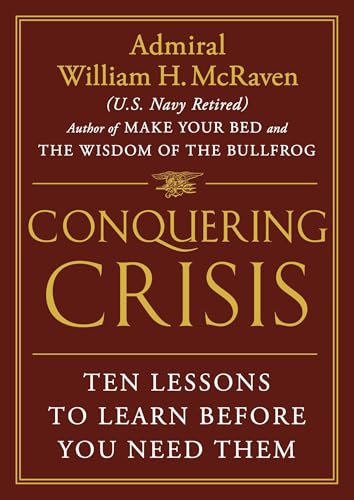
Conquering Crisis: Ten Lessons to Learn Before You Need Them
Admiral McRaven has inspired millions of readers to take charge of their lives and find success, using his military experience to impart wisdom on successful habits and leadership skills. This new collection of personal stories, parables, and pithy lessons sheds light on the ways we can rise to the occasion in times of crisis and act as leaders, no matter the situation.
240 pages, Hardcover
Published April 22, 2025
About the author
William H. McRaven
48 books1,428 followersAdmiral William H. McRaven (U.S. Navy Retired) served with great distinction in the Navy. In his thirty-seven years as a Navy SEAL, he commanded at every level. As a Four-Star Admiral, his final assignment was as Commander of all U.S. Special Operations Forces. He is now Chancellor of the University of Texas System.
Ratings & Reviews
Friends & Following
Create a free account to discover what your friends think of this book!
Community Reviews
Displaying 1 - 30 of 97 reviews

March 31, 2025
Without question, Admiral McRaven has had an amazing career as a Navy SEAL and Special Operations Commander. The lessons he has learned over that 40-year career are invaluable, and that is why I was excited to read his latest publication Conquering Crisis: Ten Lessons to Learn Before You Need Them. As the old saying goes, "A wise man learns by the experiences of others; a fool learns by his own." So, I'm thankful to learn from the experiences of Admiral McRaven once again, as I have in his other popular titles Make Your Bed, The Hero Code, and The Wisdom of the Bullfrog.
The way Admiral McRaven grippingly tells anecdotal and personal stories and then seamlessly applies practical lessons behind them makes this a very enjoyable read. The unfortunate reality is that each and every one of us is either just coming out of a crisis, in the middle of a crisis, or perhaps unbeknownst to us now, about to enter into one. And while I may never be able to accomplish the physical feats required of Hell Week to become a Navy SEAL, this book does offer sage advice I can apply to life's tests. Each chapter offers one of these powerful lessons:
First reports are always wrong;
Have a council of colonels;
Bad news doesn't get better with age;
Weaponize the truth;
Move all your options forward;
Trust the Second Law of Thermodynamics;
Don't rush to failure;
Micromanagement is not an ugly word;
Dictate the tempo; and,
There is always time for a morale check.
While every chapter had great lesson, the one most personally impactful to me was from chapter three, where Admiral McRaven reminds us that bad news doesn't get better with age. Responding more quickly to crisis is what will allow us to, then, more quickly work toward its resolution. Delaying the crisis isn't helping anyone. Withholding the bad news and allowing others to remain ignorant only has a negatively compounding effect. One does not need to be in a position of leadership or command to benefit from this book, either. Again, crisis has a universal application to it and, as such, this is a book that I would recommend to anyone. Not only is it practical, but the stories make it a fun read and the book itself is relatively brief to begin with.
Leader or follower, military or civilian, Conquering Crisis will offer insights that make not only surviving the next difficulty possible but also the ability to come out on top, having conquered it. You need not be controlled by crisis; it is possible to take control, and Admiral McRaven's newest book is here to demonstrate how.
A big thank you to NetGalley and Grand Central Publishing for the opportunity to read through this advanced reader’s copy in exchanged for my honest review and opinion.
The way Admiral McRaven grippingly tells anecdotal and personal stories and then seamlessly applies practical lessons behind them makes this a very enjoyable read. The unfortunate reality is that each and every one of us is either just coming out of a crisis, in the middle of a crisis, or perhaps unbeknownst to us now, about to enter into one. And while I may never be able to accomplish the physical feats required of Hell Week to become a Navy SEAL, this book does offer sage advice I can apply to life's tests. Each chapter offers one of these powerful lessons:
First reports are always wrong;
Have a council of colonels;
Bad news doesn't get better with age;
Weaponize the truth;
Move all your options forward;
Trust the Second Law of Thermodynamics;
Don't rush to failure;
Micromanagement is not an ugly word;
Dictate the tempo; and,
There is always time for a morale check.
While every chapter had great lesson, the one most personally impactful to me was from chapter three, where Admiral McRaven reminds us that bad news doesn't get better with age. Responding more quickly to crisis is what will allow us to, then, more quickly work toward its resolution. Delaying the crisis isn't helping anyone. Withholding the bad news and allowing others to remain ignorant only has a negatively compounding effect. One does not need to be in a position of leadership or command to benefit from this book, either. Again, crisis has a universal application to it and, as such, this is a book that I would recommend to anyone. Not only is it practical, but the stories make it a fun read and the book itself is relatively brief to begin with.
Leader or follower, military or civilian, Conquering Crisis will offer insights that make not only surviving the next difficulty possible but also the ability to come out on top, having conquered it. You need not be controlled by crisis; it is possible to take control, and Admiral McRaven's newest book is here to demonstrate how.
A big thank you to NetGalley and Grand Central Publishing for the opportunity to read through this advanced reader’s copy in exchanged for my honest review and opinion.

July 19, 2026
A TON of good lessons in this one. Its my favorite from Admiral McRaven.
June 23, 2025
Anyone who is in the leadership role must and I mean must read this book.

March 21, 2026
Phenomenal book I wish I read sooner!
As a leader, there are few things that you can anticipate when it comes to a crisis. As a new leader, not only do you likely not know how to handle a crisis, but one might even not anticipate there will inevitably be one in your organization. This book could easily iron out that doubt and naivety.
I was recommended this book by a junior leader I respect and truly it has reshaped how I view each component of crisis management. The author’s writing is engaging, allegorical, and thought provoking to make this not only a beneficial read but also a wildly enjoyable one.
I will be putting this on my recommended professional reading list for the rest of my career.
10/5 stars if I could ⭐️⭐️⭐️⭐️⭐️⭐️⭐️⭐️⭐️⭐️
As a leader, there are few things that you can anticipate when it comes to a crisis. As a new leader, not only do you likely not know how to handle a crisis, but one might even not anticipate there will inevitably be one in your organization. This book could easily iron out that doubt and naivety.
I was recommended this book by a junior leader I respect and truly it has reshaped how I view each component of crisis management. The author’s writing is engaging, allegorical, and thought provoking to make this not only a beneficial read but also a wildly enjoyable one.
I will be putting this on my recommended professional reading list for the rest of my career.
10/5 stars if I could ⭐️⭐️⭐️⭐️⭐️⭐️⭐️⭐️⭐️⭐️

November 24, 2025
A timely reminder of some common sense ways to prepare and react to a crisis.
Some of these are more translatable from a military context than others (e.g., it’s not necessarily always a good idea to throw all your resources at a crisis - sometimes you need a small crack team with a steady hand)
Quotes:
Leadership during a crisis is fundamentally different from running an organization day to day. I have seen many a good leader wither under the pressure of a crisis. That’s not to say that the basics of leadership aren’t important during an emergency—they are. As a strong leader, during a crisis you must continue to be ethical, work hard, be confident, communicate with your workforce, and have a plan to address the problem. But a crisis brings an added layer of difficulty. A crisis pushes the limits of your experience. It challenges your confidence. It strains your team’s morale and stretches your organizational resources. It entices you to make decisions before you’re ready. It forces you to take risks, and it exposes every flaw in your personality and your organizational culture. To effectively lead through a crisis, you need additional tools.
[5 phases of a crisis]: The first step is always the Assessment. What’s going on? How bad is the catastrophe? How will it affect my organization? Correctly assessing the situation is key to what follows. Next is the Reporting phase. As a leader, you will have to report to your boss, your clients, your workforce, and the public. Accuracy in reporting is essential. Never mislead any of your constituents. Then comes the Containment phase. This is the most complex, necessitating a balance of speed and caution. Rarely do leaders get this phase exactly right. But knowing a balance is required is crucial. The containment phase is about preventing the crisis from getting worse. It generally requires the maximum amount of resources, strategically placed. You must stop the crisis’s momentum to get the situation in hand. Once contained, you must Shape the outcome in your favor. Now the momentum is on your side. Finally, you must Manage the crisis. This could be a long-term proposition and requires a thoughtful use of manpower and resources until the crisis is resolved.
Owing to the chaotic nature of a crisis, a leader should always be skeptical about first reports. They are invariably inaccurate or misleading.
When a crisis explodes, the people on the ground are generally panicked, traumatized, or under so much burden to report that they get the facts wrong. A leader should remain skeptical, both about the good news and the bad. Pressure will build for you to report quickly. Make no declarative statements early on. Absolutes are almost always wrong. Take the time to be cautious. It will be time well spent.
Have a corporate procedure for evaluating the quality of the information that is received during the first hours of a crisis.
In a crisis, having a team of trusted advisors is essential for success.
Use the existing chain of command and your established staff to provide you valuable insights on resolving the crisis, but don’t hesitate to have a group of trusted advisors (your Council of Colonels) outside the C-suite or the usual circle that can give you the unvarnished truth about the organization and your leadership decisions.
While your Council of Colonels can be essential to your decision process, do not exclude others on your staff from being privy to the nature of the discussions.
Use the Council of Colonels sparingly. Resentment will come quickly if the Council of Colonels too often usurps the normal staffing process.
Delaying a painful truth never makes a situation easier. The sooner you inform your boss about a crisis, the quicker you can resolve it.
That’s the thing about bad news. It really doesn’t get any better with age. If you fail to notify your boss, if you fail to make the bad news public, if you fail to disclose all the unpleasant details, the crisis will get worse. You will lose the trust of your superiors. You will lose the trust of the public. And after you lose people’s trust, every step you take is questioned.
Be transparent in your actions to resolve a crisis. The truth can be a great weapon against misperception and distrust.
I am a firm believer in the people. If given the truth, they can be depended upon to meet any national crisis. The great point is to bring them the real facts.
In a crisis, detractors always believe it is a result of individual incompetence, organizational mismanagement, or C-suite lies and cover-ups. While this is occasionally true, and there are ample examples of all the above, for most good organizations a crisis is just an unforeseen event that overwhelms a company and requires decisive action to resolve it. If the public or your stockholders or your bosses believe that this is an isolated incident and that you are acting in good faith, then they are more likely to give you the maneuvering space to resolve the crisis. If, however, they believe you are misrepresenting the truth or, worse, outright lying, then their suspicions, and the questions that will ensue, will severely constrain your ability to take decisive action. In a crisis, take every action possible to demonstrate transparency, answer every difficult question, and showcase the truth. It is your best defense against the uninformed.
Use truth and transparency through the crisis to show that you understand the problem and that you are taking concrete steps to resolve the issue. It may be uncomfortable, demoralizing to the organization, and personally embarrassing, but deception and opaqueness are a whole lot worse.
Stand in full view of the public eye, take the hard questions, accept the criticism, and answer truthfully. Get all the negative reporting behind you so you can begin to move forward.
If there are whistleblowers who generated the crisis, praise them for their courage. Any attempt to suppress criticism from within will only result in a public backlash
Move All Your Options Forward
In a crisis, your choice of actions may be constrained by a lack of information. Therefore, always have multiple options available and at the ready
Bush also appreciated the need to have multiple options available to him, thereby maximizing his decision space. Decision space, broadly defined, is the range of actions or choices available to a leader.
Push all your options as close to the crisis as possible. This will allow you to maintain your decision space and move quickly when necessary.
Move a trusted, competent professional to the crisis site as quickly as possible and be prepared to deploy your people to every location that might be affected by the crisis. This will allow you to stay abreast of events as they unfold.
Have a prerehearsed plan for rapidly mobilizing your people and your resources. The nature of the crisis may come as a surprise, but the speed of your response should not.
Crises never get better through inaction.
The most difficult thing is the decision to act, the rest is merely tenacity.
—AMELIA EARHART
… when you fail to make a difficult decision early on, over time that decision gets harder because the crisis gets more complex. Unfortunately, most decision-makers fail to act quickly because the crisis hasn’t evolved yet and they believe they have time to address the problem.
You must take decisive steps to contain a crisis. Left alone, a crisis will get worse, not better.
The longer you delay in taking decisive action, the harder the decision and the action become.
There is always a difficult balance between rushing to failure and being slow to act. If you have to choose one or the other—act.
In a crisis there is always the need to move quickly, but… don’t move so fast that you outpace your planning, your preparation, your resources, or your strategy.
To lose patience is to lose the battle.
—MAHATMA GANDHI
My father, an old World War II fighter pilot, used to always caution me to “make a decision before you run out of runway.” The saying had a very visual appeal to me. A crisis is much like a runway. You want to use all the available space you have to plan, prepare, and act before you reach a point where you have no room to maneuver. But, like a pilot speeding down the runway, knowing the takeoff point requires experience. If you lift off too early, you may not have the power to get into the air. If you start your acceleration too late, you may run out of runway before you can achieve flight. Nothing about a crisis is every easy, but take every advantage of the runway you have, and never rush to failure.
Use all the decision space you have before taking action, but no more.
Micromanagement Is Not an Ugly Word
During a crisis, you must make certain that those responsible for managing the outcome know precisely what you expect of them
Look, Bill. This isn’t about trusting the platoon. Delta is one of the finest platoons we have in the command. This is about making sure they understand your expectations. What I have found is that you need to micromanage people until they know precisely what you require of them. Then and only then can you loosen the reins. But if you’re not clear about your expectations, then you shouldn’t be surprised when they don’t deliver.
Every leader needs to ensure that their guidance is clear and unambiguous. During a crisis, this is even more important, as events tend to unfold rapidly and small errors in understanding and small errors in expectations can lead to disastrous results.
Check now to ensure your company’s contingency planning is current. Preparation is the key.
At the beginning of a crisis, be exacting in your communications. Leave no doubt about precisely what you want done and how you intend to shape the outcome.
Monitor the crisis closely. As the conditions change, you may need to adjust your guidance to fit the situation on the ground.
Dictate the Tempo
Every crisis has a pace at which it unfolds. A leader must act quickly and decisively so the tempo of the crisis doesn’t overwhelm your ability to respond effectively
Don’t try to solve all the problems at once. Identify the most vulnerable aspect of the crisis, the one you can affect the quickest.
Next, slow the pace of the crisis with one strong, decisive move directed at the fastest moving concern.
Finally, reinforce your actions with a resource-heavy approach to dictate the tempo and shape the outcome.
There Is Always Time for a Morale Check
You must manage your time so you can dedicate sufficient effort into maintaining the morale of your team. Without high morale, the quality of the organization’s work will suffer, and your response will be less effective
But morale is not just about being happy and content. Morale is about the effectiveness of an organization. It is about setting high standards, holding people accountable, valuing the work of your employees, and above all, showing you care about their well-being. If your employees believe that they are nothing more than a material asset, a resource, a bargaining chip, or another cog in the business wheel, then at a critical point, when you need them the most, you may find their morale is not sufficient to get you through the crisis. This aspect of crisis leadership requires careful time management, personnel management, and resource management. As a leader, you must always show your troops, your employees, your workers, that they matter—particularly during a crisis.
Spend time with the rank and file during a crisis. They are looking for your guidance and your inspiration. If their morale is high, you will get through the crisis much more quickly.
Appearances matter. In a public forum, always look confident. But it’s a crisis for a reason, and maybe that reason is you—so be equally gracious and humble.
Your morale matters. Have someone you trust who can boost your spirits when disaster strikes; someone who can help you manage your physical well-being and your mental toughness, and who can maintain your sense of humor.
Some of these are more translatable from a military context than others (e.g., it’s not necessarily always a good idea to throw all your resources at a crisis - sometimes you need a small crack team with a steady hand)
Quotes:
Leadership during a crisis is fundamentally different from running an organization day to day. I have seen many a good leader wither under the pressure of a crisis. That’s not to say that the basics of leadership aren’t important during an emergency—they are. As a strong leader, during a crisis you must continue to be ethical, work hard, be confident, communicate with your workforce, and have a plan to address the problem. But a crisis brings an added layer of difficulty. A crisis pushes the limits of your experience. It challenges your confidence. It strains your team’s morale and stretches your organizational resources. It entices you to make decisions before you’re ready. It forces you to take risks, and it exposes every flaw in your personality and your organizational culture. To effectively lead through a crisis, you need additional tools.
[5 phases of a crisis]: The first step is always the Assessment. What’s going on? How bad is the catastrophe? How will it affect my organization? Correctly assessing the situation is key to what follows. Next is the Reporting phase. As a leader, you will have to report to your boss, your clients, your workforce, and the public. Accuracy in reporting is essential. Never mislead any of your constituents. Then comes the Containment phase. This is the most complex, necessitating a balance of speed and caution. Rarely do leaders get this phase exactly right. But knowing a balance is required is crucial. The containment phase is about preventing the crisis from getting worse. It generally requires the maximum amount of resources, strategically placed. You must stop the crisis’s momentum to get the situation in hand. Once contained, you must Shape the outcome in your favor. Now the momentum is on your side. Finally, you must Manage the crisis. This could be a long-term proposition and requires a thoughtful use of manpower and resources until the crisis is resolved.
Owing to the chaotic nature of a crisis, a leader should always be skeptical about first reports. They are invariably inaccurate or misleading.
When a crisis explodes, the people on the ground are generally panicked, traumatized, or under so much burden to report that they get the facts wrong. A leader should remain skeptical, both about the good news and the bad. Pressure will build for you to report quickly. Make no declarative statements early on. Absolutes are almost always wrong. Take the time to be cautious. It will be time well spent.
Have a corporate procedure for evaluating the quality of the information that is received during the first hours of a crisis.
In a crisis, having a team of trusted advisors is essential for success.
Use the existing chain of command and your established staff to provide you valuable insights on resolving the crisis, but don’t hesitate to have a group of trusted advisors (your Council of Colonels) outside the C-suite or the usual circle that can give you the unvarnished truth about the organization and your leadership decisions.
While your Council of Colonels can be essential to your decision process, do not exclude others on your staff from being privy to the nature of the discussions.
Use the Council of Colonels sparingly. Resentment will come quickly if the Council of Colonels too often usurps the normal staffing process.
Delaying a painful truth never makes a situation easier. The sooner you inform your boss about a crisis, the quicker you can resolve it.
That’s the thing about bad news. It really doesn’t get any better with age. If you fail to notify your boss, if you fail to make the bad news public, if you fail to disclose all the unpleasant details, the crisis will get worse. You will lose the trust of your superiors. You will lose the trust of the public. And after you lose people’s trust, every step you take is questioned.
Be transparent in your actions to resolve a crisis. The truth can be a great weapon against misperception and distrust.
I am a firm believer in the people. If given the truth, they can be depended upon to meet any national crisis. The great point is to bring them the real facts.
In a crisis, detractors always believe it is a result of individual incompetence, organizational mismanagement, or C-suite lies and cover-ups. While this is occasionally true, and there are ample examples of all the above, for most good organizations a crisis is just an unforeseen event that overwhelms a company and requires decisive action to resolve it. If the public or your stockholders or your bosses believe that this is an isolated incident and that you are acting in good faith, then they are more likely to give you the maneuvering space to resolve the crisis. If, however, they believe you are misrepresenting the truth or, worse, outright lying, then their suspicions, and the questions that will ensue, will severely constrain your ability to take decisive action. In a crisis, take every action possible to demonstrate transparency, answer every difficult question, and showcase the truth. It is your best defense against the uninformed.
Use truth and transparency through the crisis to show that you understand the problem and that you are taking concrete steps to resolve the issue. It may be uncomfortable, demoralizing to the organization, and personally embarrassing, but deception and opaqueness are a whole lot worse.
Stand in full view of the public eye, take the hard questions, accept the criticism, and answer truthfully. Get all the negative reporting behind you so you can begin to move forward.
If there are whistleblowers who generated the crisis, praise them for their courage. Any attempt to suppress criticism from within will only result in a public backlash
Move All Your Options Forward
In a crisis, your choice of actions may be constrained by a lack of information. Therefore, always have multiple options available and at the ready
Bush also appreciated the need to have multiple options available to him, thereby maximizing his decision space. Decision space, broadly defined, is the range of actions or choices available to a leader.
Push all your options as close to the crisis as possible. This will allow you to maintain your decision space and move quickly when necessary.
Move a trusted, competent professional to the crisis site as quickly as possible and be prepared to deploy your people to every location that might be affected by the crisis. This will allow you to stay abreast of events as they unfold.
Have a prerehearsed plan for rapidly mobilizing your people and your resources. The nature of the crisis may come as a surprise, but the speed of your response should not.
Crises never get better through inaction.
The most difficult thing is the decision to act, the rest is merely tenacity.
—AMELIA EARHART
… when you fail to make a difficult decision early on, over time that decision gets harder because the crisis gets more complex. Unfortunately, most decision-makers fail to act quickly because the crisis hasn’t evolved yet and they believe they have time to address the problem.
You must take decisive steps to contain a crisis. Left alone, a crisis will get worse, not better.
The longer you delay in taking decisive action, the harder the decision and the action become.
There is always a difficult balance between rushing to failure and being slow to act. If you have to choose one or the other—act.
In a crisis there is always the need to move quickly, but… don’t move so fast that you outpace your planning, your preparation, your resources, or your strategy.
To lose patience is to lose the battle.
—MAHATMA GANDHI
My father, an old World War II fighter pilot, used to always caution me to “make a decision before you run out of runway.” The saying had a very visual appeal to me. A crisis is much like a runway. You want to use all the available space you have to plan, prepare, and act before you reach a point where you have no room to maneuver. But, like a pilot speeding down the runway, knowing the takeoff point requires experience. If you lift off too early, you may not have the power to get into the air. If you start your acceleration too late, you may run out of runway before you can achieve flight. Nothing about a crisis is every easy, but take every advantage of the runway you have, and never rush to failure.
Use all the decision space you have before taking action, but no more.
Micromanagement Is Not an Ugly Word
During a crisis, you must make certain that those responsible for managing the outcome know precisely what you expect of them
Look, Bill. This isn’t about trusting the platoon. Delta is one of the finest platoons we have in the command. This is about making sure they understand your expectations. What I have found is that you need to micromanage people until they know precisely what you require of them. Then and only then can you loosen the reins. But if you’re not clear about your expectations, then you shouldn’t be surprised when they don’t deliver.
Every leader needs to ensure that their guidance is clear and unambiguous. During a crisis, this is even more important, as events tend to unfold rapidly and small errors in understanding and small errors in expectations can lead to disastrous results.
Check now to ensure your company’s contingency planning is current. Preparation is the key.
At the beginning of a crisis, be exacting in your communications. Leave no doubt about precisely what you want done and how you intend to shape the outcome.
Monitor the crisis closely. As the conditions change, you may need to adjust your guidance to fit the situation on the ground.
Dictate the Tempo
Every crisis has a pace at which it unfolds. A leader must act quickly and decisively so the tempo of the crisis doesn’t overwhelm your ability to respond effectively
Don’t try to solve all the problems at once. Identify the most vulnerable aspect of the crisis, the one you can affect the quickest.
Next, slow the pace of the crisis with one strong, decisive move directed at the fastest moving concern.
Finally, reinforce your actions with a resource-heavy approach to dictate the tempo and shape the outcome.
There Is Always Time for a Morale Check
You must manage your time so you can dedicate sufficient effort into maintaining the morale of your team. Without high morale, the quality of the organization’s work will suffer, and your response will be less effective
But morale is not just about being happy and content. Morale is about the effectiveness of an organization. It is about setting high standards, holding people accountable, valuing the work of your employees, and above all, showing you care about their well-being. If your employees believe that they are nothing more than a material asset, a resource, a bargaining chip, or another cog in the business wheel, then at a critical point, when you need them the most, you may find their morale is not sufficient to get you through the crisis. This aspect of crisis leadership requires careful time management, personnel management, and resource management. As a leader, you must always show your troops, your employees, your workers, that they matter—particularly during a crisis.
Spend time with the rank and file during a crisis. They are looking for your guidance and your inspiration. If their morale is high, you will get through the crisis much more quickly.
Appearances matter. In a public forum, always look confident. But it’s a crisis for a reason, and maybe that reason is you—so be equally gracious and humble.
Your morale matters. Have someone you trust who can boost your spirits when disaster strikes; someone who can help you manage your physical well-being and your mental toughness, and who can maintain your sense of humor.
May 28, 2025
This was a quick thoughtful leadership read for entities facing crises. Although written from the author’s military leadership crises experiences, this is generic for any industry going through change like unexpected closures-mergers, negative PR campaigns, government funding reductions etc. A perfect gift for any CEO from their board members!

June 16, 2026
Big fan of Admiral McRaven’s books! They are impactful and easy to follow, with real world examples and scenarios. As a leader, the ability to conquer crisis while still leading your team is something that is faced more often than you’d think.

January 6, 2026
Great insights, eye opening stories and timeless principles.

February 16, 2026
Great book, carried away so key ideas, insights and tips as a leader when having to address a crisis.

September 29, 2025
Another addition to the required reading list.

Read
June 23, 2025In "Conquering Crisis: Ten Lessons to Learn Before You Need Them", Admiral William H. McRaven presents a structured, experience-based guide to leading through the most difficult and chaotic moments of life. Drawing on decades of military service, particularly from his time commanding U.S. special operations forces, McRaven lays out a five-part model for managing crises with resilience, clarity, and strategic foresight. His central message is that while crises are unavoidable, they need not lead to disaster. With the right mindset and a deliberate process, even the most overwhelming situations can be brought under control. The book is rich with lessons grounded in both historical events and personal leadership challenges, offering readers a framework to navigate uncertainty with strength and integrity.
The first stage in McRaven’s approach is all about evaluation. In moments of crisis, the instinct to jump into action can be overwhelming. But McRaven insists that the initial step must always be to pause, gather accurate information, and understand the full scope of what’s happening. Rushing in without understanding can lead to disastrous consequences. He points out that the initial information during any crisis is often misleading or incomplete. People tend to cling to optimistic assumptions or overlook red flags. For instance, during World War II, the Allied command underestimated the threat in the Ardennes, failing to detect the scale of the German buildup that led to the Battle of the Bulge. The result was a devastating surprise offensive. McRaven stresses that leaders must slow down and challenge assumptions. They need to verify facts, scrutinize reports, and listen to contrarian voices, even when the message is uncomfortable. He illustrates this with his own experience in Afghanistan, where feedback from a U.S. ambassador prompted him to reassess controversial night raids. After an independent review, McRaven implemented reforms that strengthened local trust and mission success. His point is clear: understanding the truth, no matter how inconvenient, is the foundation for any effective crisis response.
Once the facts are established, the next step is to communicate clearly and quickly. Delays in sharing bad news can erode trust and compound the damage. McRaven emphasizes the importance of timely, honest reporting—whether to superiors, the public, or one’s own team. In Iraq, shortly after assuming command, McRaven had to immediately notify his superior about a deadly incident involving a prominent local. Despite the discomfort, his prompt communication earned long-term trust and allowed the situation to be addressed swiftly. The principle is straightforward: withholding or delaying bad news only worsens a leader’s credibility. Historical examples like the Iran-Contra affair show how slow, reluctant admissions can turn a manageable issue into a full-blown scandal. On the other hand, openness can build resilience and trust. McRaven recounts how, in Afghanistan, he addressed false accusations of civilian deaths by inviting skeptical journalists to his base and showing them the care and precision with which missions were executed. While transparency didn’t erase criticism overnight, it significantly eased tensions and opened up dialogue. Leaders who hide from the truth risk losing the very trust they need to recover from crisis.
The third stage of McRaven’s framework is containment. After the initial shock and honest communication, the focus shifts to limiting the spread of the crisis. This means acting decisively to prevent the situation from worsening while maintaining flexibility in your options. McRaven draws a parallel with Winston Churchill’s obsession with the German battleship Tirpitz during World War II. Rather than relying on a single plan, Churchill demanded multiple creative strategies. This adaptability ultimately neutralized a major threat. Similarly, President George H. W. Bush’s rapid deployment of military and diplomatic tools in response to Iraq’s invasion of Kuwait demonstrates the importance of moving quickly to establish control and preserve freedom of action. In crisis, delays shrink a leader’s choices. Action, even when not perfect, keeps the situation from spiraling. McRaven also recalls a missed opportunity to eliminate a dangerous terrorist due to bureaucratic hesitation, which later led to significant casualties. He argues that hope is not a strategy. Without early, proactive steps to contain a crisis, leaders are soon reacting instead of leading.
After gaining control, the next move is to shape the unfolding events. This phase involves thorough preparation and strategic planning to influence outcomes before they solidify. Rushing this stage can be as dangerous as inaction. McRaven shares the story of Operation Eagle Claw, the failed 1980 attempt to rescue American hostages in Iran. Poor coordination, lack of rehearsal, and excessive haste led to a catastrophic failure. In contrast, when planning the 2011 raid on Osama bin Laden’s compound, McRaven ensured every possible scenario was rehearsed repeatedly. This meticulous preparation paid off when a helicopter crashed during the operation—the team responded calmly, following protocols they had drilled over and over. The key takeaway is that shaping a crisis response requires balancing urgency with deliberate practice. Leaders must resist being rushed into half-formed actions. Thorough preparation not only reduces the chance of failure but also instills confidence across the team.
The final component of crisis leadership is management over time. Many crises are not resolved with a single decision or action—they drag on, testing endurance and morale. Leaders must therefore focus on sustaining momentum and emotional stability within their teams. McRaven uses both ancient and modern examples to emphasize this point. During the Second Punic War, the Roman general Scipio Africanus redirected the theater of war to Carthage, forcing Hannibal to retreat from Italy. This bold move changed the war’s tempo and ultimately led to victory. The lesson is that maintaining initiative is key; leaders must set the pace of engagement to avoid being perpetually reactive. Morale, too, is a critical factor. McRaven recounts a difficult moment during his tenure as chancellor of the University of Texas System. After a public failure, he nearly succumbed to discouragement until a colleague’s intervention helped him re-center. Recognizing the impact of his demeanor on his staff, McRaven chose to project optimism and humor, helping to stabilize morale. This phase of managing through adversity requires a steady presence, emotional intelligence, and the ability to recognize when your team needs reassurance, even when the path forward remains uncertain.
The 10 lessons from “Conquering Crisis: Ten Lessons to Learn Before You Need Them” by Admiral William H. McRaven are:
1. First reports are always wrong - Don’t react too quickly; assess the facts carefully.
2. Have a council of colonels - Surround yourself with wise and trusted advisors.
3. Bad news doesn’t get better with age - Share tough truths early and often.
4. Weaponize the truth - Use honesty as your greatest asset in any crisis.
5. Move all your options forward - Always have backup plans in motion.
6. Trust the Second Law of Thermodynamics - Without action, chaos grows; keep energy flowing.
7. Don’t rush to failure - Be deliberate; haste can destroy progress.
8. Micromanagement is not an ugly word - Details matter, especially under pressure.
9. Dictate the tempo - Set the pace to stay in control of the situation.
10. There is always time for a morale check - Your team’s spirit is as critical as the strategy.
In conclusion, "Conquering Crisis" delivers more than just military anecdotes—it offers a deeply practical guide for navigating high-stakes situations in any field. McRaven’s five-part model—assess, report, contain, shape, manage—is rooted in real-world experience and framed by powerful historical lessons. Whether leading a nation, a corporation, or a small team, the principles remain the same: seek truth early, communicate honestly, act decisively, prepare thoroughly, and sustain morale. Crises are inevitable, but with the right framework and leadership approach, they can be confronted with strength and turned into opportunities for growth and renewal. McRaven’s message is ultimately one of discipline, courage, and hope—a call to prepare for the storm before it arrives and to face it with unwavering resolve.
The first stage in McRaven’s approach is all about evaluation. In moments of crisis, the instinct to jump into action can be overwhelming. But McRaven insists that the initial step must always be to pause, gather accurate information, and understand the full scope of what’s happening. Rushing in without understanding can lead to disastrous consequences. He points out that the initial information during any crisis is often misleading or incomplete. People tend to cling to optimistic assumptions or overlook red flags. For instance, during World War II, the Allied command underestimated the threat in the Ardennes, failing to detect the scale of the German buildup that led to the Battle of the Bulge. The result was a devastating surprise offensive. McRaven stresses that leaders must slow down and challenge assumptions. They need to verify facts, scrutinize reports, and listen to contrarian voices, even when the message is uncomfortable. He illustrates this with his own experience in Afghanistan, where feedback from a U.S. ambassador prompted him to reassess controversial night raids. After an independent review, McRaven implemented reforms that strengthened local trust and mission success. His point is clear: understanding the truth, no matter how inconvenient, is the foundation for any effective crisis response.
Once the facts are established, the next step is to communicate clearly and quickly. Delays in sharing bad news can erode trust and compound the damage. McRaven emphasizes the importance of timely, honest reporting—whether to superiors, the public, or one’s own team. In Iraq, shortly after assuming command, McRaven had to immediately notify his superior about a deadly incident involving a prominent local. Despite the discomfort, his prompt communication earned long-term trust and allowed the situation to be addressed swiftly. The principle is straightforward: withholding or delaying bad news only worsens a leader’s credibility. Historical examples like the Iran-Contra affair show how slow, reluctant admissions can turn a manageable issue into a full-blown scandal. On the other hand, openness can build resilience and trust. McRaven recounts how, in Afghanistan, he addressed false accusations of civilian deaths by inviting skeptical journalists to his base and showing them the care and precision with which missions were executed. While transparency didn’t erase criticism overnight, it significantly eased tensions and opened up dialogue. Leaders who hide from the truth risk losing the very trust they need to recover from crisis.
The third stage of McRaven’s framework is containment. After the initial shock and honest communication, the focus shifts to limiting the spread of the crisis. This means acting decisively to prevent the situation from worsening while maintaining flexibility in your options. McRaven draws a parallel with Winston Churchill’s obsession with the German battleship Tirpitz during World War II. Rather than relying on a single plan, Churchill demanded multiple creative strategies. This adaptability ultimately neutralized a major threat. Similarly, President George H. W. Bush’s rapid deployment of military and diplomatic tools in response to Iraq’s invasion of Kuwait demonstrates the importance of moving quickly to establish control and preserve freedom of action. In crisis, delays shrink a leader’s choices. Action, even when not perfect, keeps the situation from spiraling. McRaven also recalls a missed opportunity to eliminate a dangerous terrorist due to bureaucratic hesitation, which later led to significant casualties. He argues that hope is not a strategy. Without early, proactive steps to contain a crisis, leaders are soon reacting instead of leading.
After gaining control, the next move is to shape the unfolding events. This phase involves thorough preparation and strategic planning to influence outcomes before they solidify. Rushing this stage can be as dangerous as inaction. McRaven shares the story of Operation Eagle Claw, the failed 1980 attempt to rescue American hostages in Iran. Poor coordination, lack of rehearsal, and excessive haste led to a catastrophic failure. In contrast, when planning the 2011 raid on Osama bin Laden’s compound, McRaven ensured every possible scenario was rehearsed repeatedly. This meticulous preparation paid off when a helicopter crashed during the operation—the team responded calmly, following protocols they had drilled over and over. The key takeaway is that shaping a crisis response requires balancing urgency with deliberate practice. Leaders must resist being rushed into half-formed actions. Thorough preparation not only reduces the chance of failure but also instills confidence across the team.
The final component of crisis leadership is management over time. Many crises are not resolved with a single decision or action—they drag on, testing endurance and morale. Leaders must therefore focus on sustaining momentum and emotional stability within their teams. McRaven uses both ancient and modern examples to emphasize this point. During the Second Punic War, the Roman general Scipio Africanus redirected the theater of war to Carthage, forcing Hannibal to retreat from Italy. This bold move changed the war’s tempo and ultimately led to victory. The lesson is that maintaining initiative is key; leaders must set the pace of engagement to avoid being perpetually reactive. Morale, too, is a critical factor. McRaven recounts a difficult moment during his tenure as chancellor of the University of Texas System. After a public failure, he nearly succumbed to discouragement until a colleague’s intervention helped him re-center. Recognizing the impact of his demeanor on his staff, McRaven chose to project optimism and humor, helping to stabilize morale. This phase of managing through adversity requires a steady presence, emotional intelligence, and the ability to recognize when your team needs reassurance, even when the path forward remains uncertain.
The 10 lessons from “Conquering Crisis: Ten Lessons to Learn Before You Need Them” by Admiral William H. McRaven are:
1. First reports are always wrong - Don’t react too quickly; assess the facts carefully.
2. Have a council of colonels - Surround yourself with wise and trusted advisors.
3. Bad news doesn’t get better with age - Share tough truths early and often.
4. Weaponize the truth - Use honesty as your greatest asset in any crisis.
5. Move all your options forward - Always have backup plans in motion.
6. Trust the Second Law of Thermodynamics - Without action, chaos grows; keep energy flowing.
7. Don’t rush to failure - Be deliberate; haste can destroy progress.
8. Micromanagement is not an ugly word - Details matter, especially under pressure.
9. Dictate the tempo - Set the pace to stay in control of the situation.
10. There is always time for a morale check - Your team’s spirit is as critical as the strategy.
In conclusion, "Conquering Crisis" delivers more than just military anecdotes—it offers a deeply practical guide for navigating high-stakes situations in any field. McRaven’s five-part model—assess, report, contain, shape, manage—is rooted in real-world experience and framed by powerful historical lessons. Whether leading a nation, a corporation, or a small team, the principles remain the same: seek truth early, communicate honestly, act decisively, prepare thoroughly, and sustain morale. Crises are inevitable, but with the right framework and leadership approach, they can be confronted with strength and turned into opportunities for growth and renewal. McRaven’s message is ultimately one of discipline, courage, and hope—a call to prepare for the storm before it arrives and to face it with unwavering resolve.

January 15, 2026
Amazing amazing amazing. McRaven is the MAN and his stories provide important life lessons on having mental toughness and confronting conflict with a level head.
He wrote this book not only for military leaders but even for corporate 9-5 workers, and connected his stories of search and destroy missions to how an executive can prepare in the office. Truly incredible. I know there’s been speculation but I really hope he runs for office!
He wrote this book not only for military leaders but even for corporate 9-5 workers, and connected his stories of search and destroy missions to how an executive can prepare in the office. Truly incredible. I know there’s been speculation but I really hope he runs for office!

November 14, 2025
Conquering Crisis is a timely and practical leadership manual from one of America’s most experienced crisis commanders. It says: crises will come, but you can prepare. If you understand the phases (Assess → Report → Contain → Shape → Manage) and internalise the ten lessons, you increase your chances of not just surviving a crisis—but leading through it and emerging stronger.
Even though it uses military metaphors, the points translate to business, civic institutions, personal life. If you are in any position where you may face sudden, high-stakes pressure, this book provides concise, story-driven guidance to build clarity, discipline, and resilience ahead of time.
Rating: 5/5
Like The Wisdom of the Bullfrog, this book is a series of stories from my career and my life. Stories with lessons. Lessons that I hope will provide the reader concrete steps to take when engulfed in a crisis—recognizing the danger of first reports, learning to weaponize the truth, managing time constraints, communicating effectively, maintaining organizational morale and esprit de corps, finding the best advice, prioritizing your options, and, most important, solving the crisis. Conquering Crisis is not just about surviving a difficult time; it is about thriving in a crisis, coming out stronger both personally and organizationally. Conquering Crisis will provide you the tools you need to be a successful leader when the unexpected arises. Whether trapped on the far side of the moon or ensnared in a public relations nightmare, sooner or later, every leader experiences a crisis. Get ready now!
In a Crisis 1. Be very skeptical of first reports. Take time to verify the facts. 2. Be cautious about making a declarative statement in the first communication up the chain or publicly. 3. Have a corporate procedure for evaluating the quality of the information that is received during the first hours of a crisis.
In a Crisis 1. Use the existing chain of command and your established staff to provide you valuable insights on resolving the crisis, but don’t hesitate to have a group of trusted advisors (your Council of Colonels) outside the C-suite or the usual circle that can give you the unvarnished truth about the organization and your leadership decisions. 2. While your Council of Colonels can be essential to your decision process, do not exclude others on your staff from being privy to the nature of the discussions. 3. Use the Council of Colonels sparingly. Resentment will come quickly if the Council of Colonels too often usurps the normal staffing process.
In a Crisis 1. Never delay getting bad news to your bosses. 2. Remember, tell the truth, the whole truth, and nothing but the truth. Delaying bad news or misrepresenting the truth will erode trust and credibility between you and your boss or you and the public. 3. Acknowledge the severity of the incident, accept responsibility, and have a plan for addressing the crisis.
In a Crisis 1. Use truth and transparency through the crisis to show that you understand the problem and that you are taking concrete steps to resolve the issue. It may be uncomfortable, demoralizing to the organization, and personally embarrassing, but deception and opaqueness are a whole lot worse. 2. Stand in full view of the public eye, take the hard questions, accept the criticism, and answer truthfully. Get all the negative reporting behind you so you can begin to move forward. 3. If there are whistleblowers who generated the crisis, praise them for their courage. Any attempt to suppress criticism from within will only result in a public backlash.
In a Crisis 1. Push all your options as close to the crisis as possible. This will allow you to maintain your decision space and move quickly when necessary. 2. Move a trusted, competent professional to the crisis site as quickly as possible and be prepared to deploy your people to every location that might be affected by the crisis. This will allow you to stay abreast of events as they unfold. 3. Have a prerehearsed plan for rapidly mobilizing your people and your resources. The nature of the crisis may come as a surprise, but the speed of your response should not.
In a Crisis 1. You must take decisive steps to contain a crisis. Left alone, a crisis will get worse, not better. 2. The longer you delay in taking decisive action, the harder the decision and the action become. 3. There is always a difficult balance between rushing to failure and being slow to act. If you have to choose one or the other—act.
In a Crisis 1. Plan for the outcome you want to achieve. 2. Use all the decision space you have before taking action, but no more. 3. Time is your most perishable resource. Use it wisely.
“Look, Bill. This isn’t about trusting the platoon. Delta is one of the finest platoons we have in the command. This is about making sure they understand your expectations. What I have found is that you need to micromanage people until they know precisely what you require of them. Then and only then can you loosen the reins. But if you’re not clear about your expectations, then you shouldn’t be surprised when they don’t deliver.”
In a Crisis 1. Check now to ensure your company’s contingency planning is current. Preparation is the key. 2. At the beginning of a crisis, be exacting in your communications. Leave no doubt about precisely what you want done and how you intend to shape the outcome. 3. Monitor the crisis closely. As the conditions change, you may need to adjust your guidance to fit the situation on the ground.
In a Crisis 1. Don’t try to solve all the problems at once. Identify the most vulnerable aspect of the crisis, the one you can affect the quickest. 2. Next, slow the pace of the crisis with one strong, decisive move directed at the fastest moving concern. 3. Finally, reinforce your actions with a resource-heavy approach to dictate the tempo and shape the outcome.
In a Crisis 1. Spend time with the rank and file during a crisis. They are looking for your guidance and your inspiration. If their morale is high, you will get through the crisis much more quickly. 2. Appearances matter. In a public forum, always look confident. But it’s a crisis for a reason, and maybe that reason is you—so be equally gracious and humble. 3. Your morale matters. Have someone you trust who can boost your spirits when disaster strikes; someone who can help you manage your physical well-being and your mental toughness, and who can maintain your sense of humor.
In almost every case, the companies waited before notifying the public of the crisis. Unscrupulous or imprudent leaders hoped, in vain, that their misdeeds might go unnoticed, or the blame for the crisis could be shifted elsewhere. Assuming that you are one of the good leaders, report the bad news as quickly, as accurately, and as fully as you possibly can. The sooner your bosses and the public are aware of the problem, the sooner you can begin to address the underlying causes. Even amid a tragedy, the public will keep its trust in you—if you are honest. Remember the old saying, “the truth always finds a way to surface, no matter how deep in the darkness it has been buried.”
Even though it uses military metaphors, the points translate to business, civic institutions, personal life. If you are in any position where you may face sudden, high-stakes pressure, this book provides concise, story-driven guidance to build clarity, discipline, and resilience ahead of time.
Rating: 5/5
Like The Wisdom of the Bullfrog, this book is a series of stories from my career and my life. Stories with lessons. Lessons that I hope will provide the reader concrete steps to take when engulfed in a crisis—recognizing the danger of first reports, learning to weaponize the truth, managing time constraints, communicating effectively, maintaining organizational morale and esprit de corps, finding the best advice, prioritizing your options, and, most important, solving the crisis. Conquering Crisis is not just about surviving a difficult time; it is about thriving in a crisis, coming out stronger both personally and organizationally. Conquering Crisis will provide you the tools you need to be a successful leader when the unexpected arises. Whether trapped on the far side of the moon or ensnared in a public relations nightmare, sooner or later, every leader experiences a crisis. Get ready now!
In a Crisis 1. Be very skeptical of first reports. Take time to verify the facts. 2. Be cautious about making a declarative statement in the first communication up the chain or publicly. 3. Have a corporate procedure for evaluating the quality of the information that is received during the first hours of a crisis.
In a Crisis 1. Use the existing chain of command and your established staff to provide you valuable insights on resolving the crisis, but don’t hesitate to have a group of trusted advisors (your Council of Colonels) outside the C-suite or the usual circle that can give you the unvarnished truth about the organization and your leadership decisions. 2. While your Council of Colonels can be essential to your decision process, do not exclude others on your staff from being privy to the nature of the discussions. 3. Use the Council of Colonels sparingly. Resentment will come quickly if the Council of Colonels too often usurps the normal staffing process.
In a Crisis 1. Never delay getting bad news to your bosses. 2. Remember, tell the truth, the whole truth, and nothing but the truth. Delaying bad news or misrepresenting the truth will erode trust and credibility between you and your boss or you and the public. 3. Acknowledge the severity of the incident, accept responsibility, and have a plan for addressing the crisis.
In a Crisis 1. Use truth and transparency through the crisis to show that you understand the problem and that you are taking concrete steps to resolve the issue. It may be uncomfortable, demoralizing to the organization, and personally embarrassing, but deception and opaqueness are a whole lot worse. 2. Stand in full view of the public eye, take the hard questions, accept the criticism, and answer truthfully. Get all the negative reporting behind you so you can begin to move forward. 3. If there are whistleblowers who generated the crisis, praise them for their courage. Any attempt to suppress criticism from within will only result in a public backlash.
In a Crisis 1. Push all your options as close to the crisis as possible. This will allow you to maintain your decision space and move quickly when necessary. 2. Move a trusted, competent professional to the crisis site as quickly as possible and be prepared to deploy your people to every location that might be affected by the crisis. This will allow you to stay abreast of events as they unfold. 3. Have a prerehearsed plan for rapidly mobilizing your people and your resources. The nature of the crisis may come as a surprise, but the speed of your response should not.
In a Crisis 1. You must take decisive steps to contain a crisis. Left alone, a crisis will get worse, not better. 2. The longer you delay in taking decisive action, the harder the decision and the action become. 3. There is always a difficult balance between rushing to failure and being slow to act. If you have to choose one or the other—act.
In a Crisis 1. Plan for the outcome you want to achieve. 2. Use all the decision space you have before taking action, but no more. 3. Time is your most perishable resource. Use it wisely.
“Look, Bill. This isn’t about trusting the platoon. Delta is one of the finest platoons we have in the command. This is about making sure they understand your expectations. What I have found is that you need to micromanage people until they know precisely what you require of them. Then and only then can you loosen the reins. But if you’re not clear about your expectations, then you shouldn’t be surprised when they don’t deliver.”
In a Crisis 1. Check now to ensure your company’s contingency planning is current. Preparation is the key. 2. At the beginning of a crisis, be exacting in your communications. Leave no doubt about precisely what you want done and how you intend to shape the outcome. 3. Monitor the crisis closely. As the conditions change, you may need to adjust your guidance to fit the situation on the ground.
In a Crisis 1. Don’t try to solve all the problems at once. Identify the most vulnerable aspect of the crisis, the one you can affect the quickest. 2. Next, slow the pace of the crisis with one strong, decisive move directed at the fastest moving concern. 3. Finally, reinforce your actions with a resource-heavy approach to dictate the tempo and shape the outcome.
In a Crisis 1. Spend time with the rank and file during a crisis. They are looking for your guidance and your inspiration. If their morale is high, you will get through the crisis much more quickly. 2. Appearances matter. In a public forum, always look confident. But it’s a crisis for a reason, and maybe that reason is you—so be equally gracious and humble. 3. Your morale matters. Have someone you trust who can boost your spirits when disaster strikes; someone who can help you manage your physical well-being and your mental toughness, and who can maintain your sense of humor.
In almost every case, the companies waited before notifying the public of the crisis. Unscrupulous or imprudent leaders hoped, in vain, that their misdeeds might go unnoticed, or the blame for the crisis could be shifted elsewhere. Assuming that you are one of the good leaders, report the bad news as quickly, as accurately, and as fully as you possibly can. The sooner your bosses and the public are aware of the problem, the sooner you can begin to address the underlying causes. Even amid a tragedy, the public will keep its trust in you—if you are honest. Remember the old saying, “the truth always finds a way to surface, no matter how deep in the darkness it has been buried.”

October 22, 2025
Are we not men?
Reading a book by William McRaven, an Admiral in the United States Navy, raises several questions at the outset. I’m curious about Bill’s approach to his job, because that job is different from mine. I’m the least military guy in the world, and yet reading books on military strategy help me deal with my quieter life. It puts my problems in perspective, for one thing. When General Dwight Eisenhower commanded the D-Day invasion, he knew that thousands of allied soldiers would be killed, even if the landings were successful. He prepared a speech to deliver, informing his country that the operation failed, because that was a significant possibility. Every time I imagine that moment in his life, I say thank God I’m not Dwight Eisenhower! Dwight and Bill’s difficulties and responsibilities dwarf the ones I face, so right there it’s inspiring to read about them.

On the other hand, I can’t command thousands of people to do my bidding, and I don’t have lethal force at my disposal, along with permission to use it. Bill does, and his enemies are justly afraid of him, as Saint Paul reminds us:
Be afraid; for he beareth not the sword in vain.
My enemies tend to laugh in my face. So we’re far apart that way.
What Bill tells us
Bill shares how he approaches crisis situations, which make up a significant part of a military career. One helpful insight he offers:
First Reports Are Always Wrong
Owing to the chaotic nature of a crisis, a leader should always be skeptical about first reports. They are invariably inaccurate or misleading.
That idea is also valuable in business. Often the worst thing you can do is to assume you work with people who “have the truth,”and generally know what they’re doing. If you take what they tell you uncritically and run with it . . . here comes that brick wall.
Then we circle the parking lot
Bill goes on to share many more of his principles for leading through a crisis. I must say, the bulk of the book is suspicious, exactly like those first reports we talked about.
The Big Problem
Bill was sent to far-off places, Afghanistan and the Philippines, to kill people and destroy things, respectively. While he can’t choose his assignment, he does not reflect that bad designs produce bad outcomes. No skillful execution can reverse this. Winning the “hearts and minds” of the occupied peoples is ultimately irrelevant; the United States military shouldn’t be there in the first place.
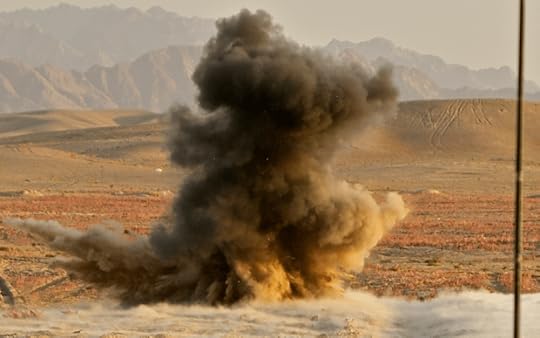
In Afghanistan, Bill is commanded to go kill “a really bad guy.” No capture, no trial, this is not America, so just blow him off the sand. Now ask yourself, if this happened regularly in your state, would it inspire you to work for the invading force?
The Small Problems
By their nature, crises change quickly. Because of this, anyone responding to them cannot state static rules for their behavior. The minute you say “act quickly,” you must follow up with “don’t rush to failure,” which is somewhat the opposite of acting quickly.
That’s what crises do, they demonstrate the inadequacy of rule books like this one.
During a long campaign, both quick action and deliberate inaction will be required. Instead of banking the lives of his soldiers on one course or the other, the strategic commander recognizes this, that success or failure are determined by the deliberate intelligence applied to this decision, whether to act or to wait.
These are the years we must sit tight. Wait, wait. That’s always very difficult to do. Any fool can engage in action, but only the wise man can wait.
—James Michener, Hawaii
Don’t try this at home
Bill’s aim was to make his military experience available, to help less brave people like me, face our milder crises. I don’t think this book succeeded, in that undertaking.
Reading a book by William McRaven, an Admiral in the United States Navy, raises several questions at the outset. I’m curious about Bill’s approach to his job, because that job is different from mine. I’m the least military guy in the world, and yet reading books on military strategy help me deal with my quieter life. It puts my problems in perspective, for one thing. When General Dwight Eisenhower commanded the D-Day invasion, he knew that thousands of allied soldiers would be killed, even if the landings were successful. He prepared a speech to deliver, informing his country that the operation failed, because that was a significant possibility. Every time I imagine that moment in his life, I say thank God I’m not Dwight Eisenhower! Dwight and Bill’s difficulties and responsibilities dwarf the ones I face, so right there it’s inspiring to read about them.
On the other hand, I can’t command thousands of people to do my bidding, and I don’t have lethal force at my disposal, along with permission to use it. Bill does, and his enemies are justly afraid of him, as Saint Paul reminds us:
Be afraid; for he beareth not the sword in vain.
My enemies tend to laugh in my face. So we’re far apart that way.
What Bill tells us
Bill shares how he approaches crisis situations, which make up a significant part of a military career. One helpful insight he offers:
First Reports Are Always Wrong
Owing to the chaotic nature of a crisis, a leader should always be skeptical about first reports. They are invariably inaccurate or misleading.
That idea is also valuable in business. Often the worst thing you can do is to assume you work with people who “have the truth,”and generally know what they’re doing. If you take what they tell you uncritically and run with it . . . here comes that brick wall.
Then we circle the parking lot
Bill goes on to share many more of his principles for leading through a crisis. I must say, the bulk of the book is suspicious, exactly like those first reports we talked about.
The Big Problem
Bill was sent to far-off places, Afghanistan and the Philippines, to kill people and destroy things, respectively. While he can’t choose his assignment, he does not reflect that bad designs produce bad outcomes. No skillful execution can reverse this. Winning the “hearts and minds” of the occupied peoples is ultimately irrelevant; the United States military shouldn’t be there in the first place.
In Afghanistan, Bill is commanded to go kill “a really bad guy.” No capture, no trial, this is not America, so just blow him off the sand. Now ask yourself, if this happened regularly in your state, would it inspire you to work for the invading force?
The Small Problems
By their nature, crises change quickly. Because of this, anyone responding to them cannot state static rules for their behavior. The minute you say “act quickly,” you must follow up with “don’t rush to failure,” which is somewhat the opposite of acting quickly.
That’s what crises do, they demonstrate the inadequacy of rule books like this one.
During a long campaign, both quick action and deliberate inaction will be required. Instead of banking the lives of his soldiers on one course or the other, the strategic commander recognizes this, that success or failure are determined by the deliberate intelligence applied to this decision, whether to act or to wait.
These are the years we must sit tight. Wait, wait. That’s always very difficult to do. Any fool can engage in action, but only the wise man can wait.
—James Michener, Hawaii
Don’t try this at home
Bill’s aim was to make his military experience available, to help less brave people like me, face our milder crises. I don’t think this book succeeded, in that undertaking.

March 24, 2026
Admiral William H. McRaven’s “Conquering Crisis” is a compact, highly operational manual on leading under pressure, distinguished by its fusion of clear doctrine, vivid storytelling, and a surprisingly nuanced philosophy of truth and control in chaos. Drawing on four decades in uniform, he dissects crisis not as an amorphous “bad time,” but as a repeatable pattern with phases—assess, report, contain, shape, manage—and then bolts his ten lessons onto that architecture in a way that is immediately usable for serious leaders. The individual lessons—“First reports are always wrong,” “Bad news doesn’t get better with age,” “Weaponize the truth,” “Dictate the tempo,” and “There is always time for a morale check,” among others—will feel intuitively familiar to anyone who has lived in real-world operations, but McRaven’s value-add is how he systematizes them and shows their interdependence. The insistence on early, unvarnished reporting and “weaponizing” the truth pushes against the bureaucratic instinct to manage optics, arguing that candor is not just ethical but tactically decisive in a crisis. His embrace of what he calls micromanagement in high‑risk situations is likewise bracing; he makes a compelling case that, at the edge of failure, detailed top‑down control can be an act of responsibility rather than vanity. Structurally, the book is highly accessible: each chapter typically couples a historical or geopolitical vignette with a personal anecdote, then distills the takeaways into crisp, almost field‑order bullet points. This format makes it easy to transfer insights from special operations and national command authority to corporate, campus, or community settings without diluting their rigor. The cumulative effect is less “motivational literature” than a crisis TTPs handbook, written in plain English. There are limitations. Some reviewers note that ten lessons might be more than the material truly demands, and a few chapters feel stretched for civilian readers already steeped in decision‑science or military history. But for most practitioners of leadership—especially those who have not yet been stress‑tested at scale—“Conquering Crisis” offers a coherent mental model and a set of repeatable habits that can be learned before the bullets (literal or metaphorical) start flying.

January 11, 2026
I really enjoyed Admiral McRaven's "Make Your Bed," so I was looking forward to reading this work on crisis management. Unfortunately, I didn't enjoy this work nearly as much.
The main reason is that, unlike "Make Your Bed," this book focused almost exclusively on military examples. And while there is no question that military crises have higher consequences than those faced by businesses, McRaven's examples didn't seem as relevant to other types of organizations. Consequently, I liked this book - I just didn't love it (hence, the three-star review).
Still, there was some good content that I'll probably use in my work as an organizational consultant. And I'll end this review with a couple solid summaries/excerpts from the work.
The Five Phases of a Crisis
1. Assessment: Correctly assessing the situation is key to what follows. What is going on? How bad is the catastrophe?
2. Reporting: Accuracy in reporting is essential. Never mislead any of your constituents.
3. Containment: This is the most complex phase, necessitating a balance of speed and caution. This phase is about preventing the crisis from getting worse, and it requires the maximum amount of resources, strategically placed. You must stop the crisis’s momentum to get the situation in hand.
4. Shape: Once contained, the crisis needs to be shaped to your advantage so the momentum is on your side, and the outcome is in your favor.
5. Manage: This phase could be a long-term proposition and requires a thoughtful use of manpower and resources until the crisis is resolved. [pp. xv-xvi]
“…what I’ve found is that when you fail to make a difficult decision early on, over time that decision gets harder because the crisis gets more complex. Unfortunately, most decision-makers fail to act quickly because the crisis hasn’t evolved yet and they believe they have time to address the problem.” [p. 117]
The main reason is that, unlike "Make Your Bed," this book focused almost exclusively on military examples. And while there is no question that military crises have higher consequences than those faced by businesses, McRaven's examples didn't seem as relevant to other types of organizations. Consequently, I liked this book - I just didn't love it (hence, the three-star review).
Still, there was some good content that I'll probably use in my work as an organizational consultant. And I'll end this review with a couple solid summaries/excerpts from the work.
The Five Phases of a Crisis
1. Assessment: Correctly assessing the situation is key to what follows. What is going on? How bad is the catastrophe?
2. Reporting: Accuracy in reporting is essential. Never mislead any of your constituents.
3. Containment: This is the most complex phase, necessitating a balance of speed and caution. This phase is about preventing the crisis from getting worse, and it requires the maximum amount of resources, strategically placed. You must stop the crisis’s momentum to get the situation in hand.
4. Shape: Once contained, the crisis needs to be shaped to your advantage so the momentum is on your side, and the outcome is in your favor.
5. Manage: This phase could be a long-term proposition and requires a thoughtful use of manpower and resources until the crisis is resolved. [pp. xv-xvi]
“…what I’ve found is that when you fail to make a difficult decision early on, over time that decision gets harder because the crisis gets more complex. Unfortunately, most decision-makers fail to act quickly because the crisis hasn’t evolved yet and they believe they have time to address the problem.” [p. 117]

Read
June 5, 2025This is a short, readable book from a retired four-star Navy admiral, whose goal is to give leaders some practical lessons for how to manage a crisis at their organization. The ten lessons are based around the five phases of managing a crisis (assess, report, contain, shape, and manage) and are the sort of things that should be common sense but often aren’t. Lessons such as, “be aware that first reports are always wrong” and “micromanaging in a crisis is a good thing, actually” and “it’s important to maintain morale.” For each chapter, McRaven usually gives two anecdotes: one from his own personal experience, and one that’s generally broader in scope (usually relating to world leaders), and then distills out a few nugget-sized bullet points for what the reader should take away from the chapter. Like I said, it’s a quick, easy read, with some good lessons in it. Perhaps not for everyone – I doubt it would be useful to people who are not organizational leaders – but I don’t regret having read it.

May 14, 2025
Navigating crisis is just part of life. Life is going to throw some "Oh, shit!" moments at you, so you need to be prepared. And that's what 𝘾𝙤𝙣𝙦𝙪𝙚𝙧𝙞𝙣𝙜 𝘾𝙧𝙞𝙨𝙞𝙨 comes into play.
Organized around five phases - Assess, Report, Contain, Shape, and Manage - the book is meticulously detailed, providing actionable steps for leaders to confront challenges effectively. McRaven's approach is refreshingly pragmatic, concise, and emphases preparation and adaptability over generic motivational advice. As with pretty much everything we see from him, his insights are grounded in real-world experiences, making them both relatable and impactful.
𝘾𝙤𝙣𝙦𝙪𝙚𝙧𝙞𝙣𝙜 𝘾𝙧𝙞𝙨𝙞𝙨 is a compelling guide that combines wisdom, practicality, and inspiration; it conveys the same kind of common sense wisdom you see from Ryan Holiday. McRaven's insights empower readers to face adversity with confidence, making this book a must-read for leaders, but also for anyone who is navigating life's inherent challenges.
Organized around five phases - Assess, Report, Contain, Shape, and Manage - the book is meticulously detailed, providing actionable steps for leaders to confront challenges effectively. McRaven's approach is refreshingly pragmatic, concise, and emphases preparation and adaptability over generic motivational advice. As with pretty much everything we see from him, his insights are grounded in real-world experiences, making them both relatable and impactful.
𝘾𝙤𝙣𝙦𝙪𝙚𝙧𝙞𝙣𝙜 𝘾𝙧𝙞𝙨𝙞𝙨 is a compelling guide that combines wisdom, practicality, and inspiration; it conveys the same kind of common sense wisdom you see from Ryan Holiday. McRaven's insights empower readers to face adversity with confidence, making this book a must-read for leaders, but also for anyone who is navigating life's inherent challenges.
July 7, 2025
This author is either shamefully naive or purposefully biased. in chapter 2 mcraven claims that telling the truth up front is the best policy. He cites Reagan’s repeated lies and coverups of Iran Contra that hurt his approval ratings. He says the scandal was finally resolved six years later when bush pardoned the six scapegoats. He also says: while his actions violated the Boland Amendment his purpose was to obtain the release of the hostages. Americans can be very forgiving of the endgame is a noble one.
That is an unbelievable whitewash of what happened. Anyone who seriously believes a president should be forgiven for lying to congress, colluding with an enemy to do an end run around Congress and bullying the reporters who exposed this while throwing a few subordinates under the bus and pretending he had zero knowledge has no credibility whatsoever. Reagan should have been impeached not forgiven and his administration was more corrupt with more scandals than Richard Nixon.
That is an unbelievable whitewash of what happened. Anyone who seriously believes a president should be forgiven for lying to congress, colluding with an enemy to do an end run around Congress and bullying the reporters who exposed this while throwing a few subordinates under the bus and pretending he had zero knowledge has no credibility whatsoever. Reagan should have been impeached not forgiven and his administration was more corrupt with more scandals than Richard Nixon.

December 17, 2025
We have all been in crisis situations before. In my career, they seemed to be an almost daily occurrence. How we choose to approach/handle the situations is the trick. Unfortunately, too often the answer is PANIC! Or, even worse, immediately look for someone to scapegoat and blame the situation on. The author provides an alternative approach. He lays out a step by step process of practical examination. And it makes perfect sense! Well written, easily relatable and understandable. I have to give my complete admiration to the author, his career had some of the most high stress, potentially lethal situations that anyone could experience. And he came through them successfully. I really appreciate his sharing of his experiences, failures, successes, and learning from it all with us. I think it will be of benefit to me in the future. I am now looking forward to reading the author's other books. I wish that I would have had a mentor like him in my career.

June 8, 2025
I think McRaven undersells his lessons by focusing on their suitability in crisis when they are generally good advice for any situation. It would have been interesting for McRaven to considered how his lessons applied to other models of management and leadership, but as it is, this is a challenge to the reader to continue expanding their understanding of the lessons. One disappointment of the book is that McRaven does not discuss how bad, or even toxic, leaders who fail to adhere to these lessons saw their leadership undermined. McRaven has an exceptional resume, comes across as a man of integrity and character, and communicates effectively. As such, I wish he had not avoided talking more about more sensitive topics of leadership, such as confronting toxic leaders, and disciplining both well intentioned and toxic subordinates. Hopefully McRaven is saving these thoughts for future books.
June 8, 2025
Starting with the forward in the book McRaven presents five topics to "Conquering Crisis" they include: assess, report, contain, shape and manage ALL required to resolve conflicts. He brings both historical information of various world events and those of his own career. Two historical references drew my interest were the Battle of the Bulge and Winston Churchill's destruction of the German warship TIRPITZ and the potential interruption it presented to Great Britain. In both cases McRaven presents information as to what caused the crisis and all steps taken to resolve the issue. Through out the book it follows the same pattern. But it is a good reference tool to anyone from a student, to individuals in business, military or anyone who might face a crisis and how to resolve the crisis.

August 25, 2025
I was not expecting the military bend of this book, but I must say I enjoyed it more than I thought I would.
Each chapter was described from a military point of view, but I could see very easily how it could apply in every day life.
I loved the first chapter that talked about how the first report is usually wrong. Just looking on social media or listening to the news, tells you the truth of this title. Also, every chapter starts with a quote. For example, this chapter had a quote from Napoleon that says, "The first report is always wrong."
I loved how the Admiral, used the novel and movie, "The Martian" to show how all 10 principles applied to the story. I highly recommend the book and the movie, too!
This book was easy to read and taught me a lot of history and a lot about the military.
Each chapter was described from a military point of view, but I could see very easily how it could apply in every day life.
I loved the first chapter that talked about how the first report is usually wrong. Just looking on social media or listening to the news, tells you the truth of this title. Also, every chapter starts with a quote. For example, this chapter had a quote from Napoleon that says, "The first report is always wrong."
I loved how the Admiral, used the novel and movie, "The Martian" to show how all 10 principles applied to the story. I highly recommend the book and the movie, too!
This book was easy to read and taught me a lot of history and a lot about the military.

April 24, 2026
If you are looking for some life changing material, probably this one isnt it. That being said, this concise book presents some sound and hard-learned principles learned throughout Admiral McRaven’s career.
Among them:
- Bad news doesn’t get better with age. Speak it out.
- First assessments in crises are invariably inaccurate. Keep the work up.
- Team morale check cannot be overlooked. Illustrative here is Napoleon’s quote: “An army’s effectiveness depends on its size, training, experience, and morale, and morale is worth more than any of the other factors combined.”
- Be precise with your words. Clarity is key. Execution comes only next.
- The second law of thermodynamics. Crises do not get better through inaction. Get the ball rolling.
- Own it and own it again.
Among them:
- Bad news doesn’t get better with age. Speak it out.
- First assessments in crises are invariably inaccurate. Keep the work up.
- Team morale check cannot be overlooked. Illustrative here is Napoleon’s quote: “An army’s effectiveness depends on its size, training, experience, and morale, and morale is worth more than any of the other factors combined.”
- Be precise with your words. Clarity is key. Execution comes only next.
- The second law of thermodynamics. Crises do not get better through inaction. Get the ball rolling.
- Own it and own it again.

May 7, 2025
McRaven again doesn't disappoint. This time around he focuses specifically on lessons he's learned when overcoming crises. In his expansive career and experience, each chapter has at least one story from history and one from his personal experience to hit home his points. The lessons are:
First reports are always wrong;
Have a council of colonels;
Bad news doesn't get better with age;
Weaponize the truth;
Move all your options forward;
Trust the Second Law of Thermodynamics;
Don't rush to failure;
Micromanagement is not an ugly word;
Dictate the tempo; and,
There is always time for a morale check.
This is a great book for leaders as well as self-leadership.
First reports are always wrong;
Have a council of colonels;
Bad news doesn't get better with age;
Weaponize the truth;
Move all your options forward;
Trust the Second Law of Thermodynamics;
Don't rush to failure;
Micromanagement is not an ugly word;
Dictate the tempo; and,
There is always time for a morale check.
This is a great book for leaders as well as self-leadership.

January 5, 2026
Clearly better than your average text on corporate leadership text, given the author's earned credentials. Each of the 10 lessons is compellingly illustrated through historical examples and incidents from Admiral McRaven's military and education administration career. It's eminently readable and digestible.
One small quibble that's more ironically amusing than any sort of serious detraction: In one section of the chapter titled "Don't Rush to Failure," the editors missed three different (chronological / mathematical / typographical) errors. Fortunately, this hardly constitutes anything approaching a serious crisis that readers of this book will be better equipped to tackle.
One small quibble that's more ironically amusing than any sort of serious detraction: In one section of the chapter titled "Don't Rush to Failure," the editors missed three different (chronological / mathematical / typographical) errors. Fortunately, this hardly constitutes anything approaching a serious crisis that readers of this book will be better equipped to tackle.
May 28, 2025
This book was ok. I think that through 80% of it I was not very engaged with the story or the way it was being told. Though there were occasional instances that I found interesting and wanted to keep listening to see what would come next.
The book is about moments of crisis. Historical ones. And how they were handled. Very focused on US history, and lots of military stories. Which makes sense given it was written by an US admiral.
The other book from this author, Make Your Bed, was a bit more interesting for me.
The book is about moments of crisis. Historical ones. And how they were handled. Very focused on US history, and lots of military stories. Which makes sense given it was written by an US admiral.
The other book from this author, Make Your Bed, was a bit more interesting for me.

July 8, 2025
The book is simple and is paired with stories from his military career to emphasize certain points. Good book to refresh your values and reiterate heuristics when in a crisis.
The first report is incomplete or wrong.
Have a team of trusted advisors.
Bad news doesn't get better with age.
Be transparent with the truth.
Prepare multiple options.
Crisis does not get better with inaction.
Be quick, but don't hurry.
Be exact in expectation and communication.
Turn the tide in your favor.
Maintain morale.
The first report is incomplete or wrong.
Have a team of trusted advisors.
Bad news doesn't get better with age.
Be transparent with the truth.
Prepare multiple options.
Crisis does not get better with inaction.
Be quick, but don't hurry.
Be exact in expectation and communication.
Turn the tide in your favor.
Maintain morale.

June 3, 2025
I loved McRaven's commencement speech and subsequent book about making your bed - something about a numbered amount of lessons/points scratches my brain. With that being said, I think this particular book could have been five points at most as some lessons were very surface-level with supplementary stories that felt like a drag to me. I found myself struggling through this which is a shame, as he is such an impressive man and skilled orator.
July 21, 2025
This is an incredible book, I really loved what Admiral McRaven says about micro management, about not trusting the first report. The lessons he has is very relevant to business as well as to the military applications. Also sharing the history of what happened to the Bay of Pigs, the Iran Contra, the Iran hostage situation, Apollo 13 was just incredible. What a great find. Totally recommend this book. My only concern was that it was too short, I wanted to hear and read more.
Displaying 1 - 30 of 97 reviews