

What do you think?
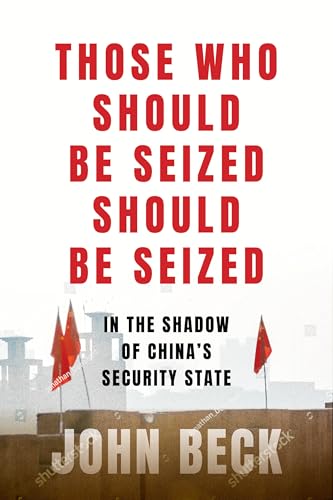
Those Who Should Be Seized Should Be Seized: China's Relentless Persecution of Uyghurs and Other Ethnic Minorities
A shocking, on-the-ground investigation of the Chinese government’s brutal oppression of its Muslim citizens — the Uyghurs, ethnic Kazakhs, and others — told by the victims . . .
Award-winning journalist John Beck recounts China's persecution of Uyghurs, ethnic Kazakhs and other predominantly Muslim minorities in Xinjiang and its relentless pursuit of the few who escaped beyond its borders. Through intertwined literary narratives combined with snippets of original source material, including official directives and speeches, he pieces together the individual stories of what consecutive American administrations have described as genocide.
The narrative moves from China to Kazakhstan, Turkey and the US, incorporating the tensions, discrimination, and occasional violence that characterised life in Xinjiang for decades. Then the dismantling of rights and escalating repression under President Xi Jinping that quickly accelerated into a crackdown of unprecedented scope and brutality.
We follow 4 a Kazakh writer and an Uyghur nurse who survived re-education camps before ultimately escaping abroad, a human rights advocate involved in securing their release and, an inadvertent exile spied on by Chinese authorities as his family back home was used as leverage against him.
In their stories, the book explores identity, dehumanization, and censorship, the force of literature in dark times, and an all-pervasive apparatus of repression able to exist within miles of the White House.
John Beck lived in Istanbul for a number of years, where he was in close contact with the city's Uyghur diaspora and wrote on the crackdown and related issues for publications including Harper's and National Geographic. Some of that work forms the basis of this book along with further reporting from Almaty, Kazakhstan, Virginia, and New York.
Award-winning journalist John Beck recounts China's persecution of Uyghurs, ethnic Kazakhs and other predominantly Muslim minorities in Xinjiang and its relentless pursuit of the few who escaped beyond its borders. Through intertwined literary narratives combined with snippets of original source material, including official directives and speeches, he pieces together the individual stories of what consecutive American administrations have described as genocide.
The narrative moves from China to Kazakhstan, Turkey and the US, incorporating the tensions, discrimination, and occasional violence that characterised life in Xinjiang for decades. Then the dismantling of rights and escalating repression under President Xi Jinping that quickly accelerated into a crackdown of unprecedented scope and brutality.
We follow 4 a Kazakh writer and an Uyghur nurse who survived re-education camps before ultimately escaping abroad, a human rights advocate involved in securing their release and, an inadvertent exile spied on by Chinese authorities as his family back home was used as leverage against him.
In their stories, the book explores identity, dehumanization, and censorship, the force of literature in dark times, and an all-pervasive apparatus of repression able to exist within miles of the White House.
John Beck lived in Istanbul for a number of years, where he was in close contact with the city's Uyghur diaspora and wrote on the crackdown and related issues for publications including Harper's and National Geographic. Some of that work forms the basis of this book along with further reporting from Almaty, Kazakhstan, Virginia, and New York.
- GenresChinaPoliticsNonfiction
320 pages, Hardcover
Published May 27, 2025
Ratings & Reviews
Friends & Following
Create a free account to discover what your friends think of this book!
Community Reviews
Displaying 1 - 8 of 8 reviews

November 26, 2025
3.75 stars. Yes, these horrors are happening right now. I would recommend this book to anyone interested in what is happening in China. The book follows the journeys and hardships that a few former Xinjiang residents have faced to escape persecution and concentration camp internment. Not just Uyghurs, but Kazakhs too. I found the stories credible and was compelled by discussion of the lingering effects of the torture on some of these resilient human beings.
I would like to give this book 4 stars, however it was riddled with typos and grammatical errors. It was also difficult to determine who the author was referring to. Sometimes, a few pages after mention of a name, then discussion of events not involving a person, the reader was expected to remember who "he" or "she" referred to.
I would like to give this book 4 stars, however it was riddled with typos and grammatical errors. It was also difficult to determine who the author was referring to. Sometimes, a few pages after mention of a name, then discussion of events not involving a person, the reader was expected to remember who "he" or "she" referred to.

May 24, 2026
No one is born a terrorist. Who would rather blow themselves up if they have the chance to live a normal life and raise a happy family?
Unfairness breeds anger; desperation breeds violence; misery breeds hatred.
You can’t build a home without love. You can’t rule a nation through fear and suppression. Imagine the strength that you could get through diversity and inclusion.
Unfairness breeds anger; desperation breeds violence; misery breeds hatred.
You can’t build a home without love. You can’t rule a nation through fear and suppression. Imagine the strength that you could get through diversity and inclusion.
July 1, 2025
Everyone should read this book about the treatment of the Uyghurs and other minorities in China.
July 6, 2025
Harrowing. At times, I felt like I was reading Orwell; at others, the imagery reminded me of Maus.
July 13, 2026
the content, devastating me, i want to learn more the format, pretty engaging the wording on some of these sentences, left me head scratching

September 2, 2025
This book gave me a strong emotional entry point into the crisis in Xinjiang, but left me wanting more depth and context.
I went in hoping to really delve into the complexities, and while this is a valuable piece, it’s only one part of what’s needed to grasp the full scope.
One key point that will likely surprise many readers: it’s not just Uyghurs being targeted. Kazakhs, Hui Muslims, and other ethnic minorities are also caught in the same machinery of surveillance and detention.
That broader lens is one of the book’s most important contributions. Suffice to say, it’s a worthwhile read.
I went in hoping to really delve into the complexities, and while this is a valuable piece, it’s only one part of what’s needed to grasp the full scope.
One key point that will likely surprise many readers: it’s not just Uyghurs being targeted. Kazakhs, Hui Muslims, and other ethnic minorities are also caught in the same machinery of surveillance and detention.
That broader lens is one of the book’s most important contributions. Suffice to say, it’s a worthwhile read.

January 15, 2026
I love when a book is more than just a bunch of facts and data being thrown at you. This explores the issue from those who lived it and expected it. It's heart breaking and sad. I also found some shocking similarities to current events in the US today. This is a topic I was aware of having lived in Central Asia for several years, and having a continued interest in the area, but I knew almost nothing about. Highly recommend this book to anybody and everybody interested in learning more about this topic or who just want a good but heartbreaking read.

January 30, 2025
This is a harrowing, brutal account China's ongoing cultural persecution of the Uyghur people.
Beck writes from the perspective of several firsthand accounts. I wasn't sure how I felt about that, as we are given inside access, albeit from the third-person, in a way that suggests these people have written this material themselves, although of course they haven't. Nevertheless, it works. These stories feel real, and ruthlessly so. Each section is accompanied by real material from various state and other actors, to give context and back up what is being reported.
This one will be lingering in my thoughts for a long time.
Thank you to Edelweiss+ and Melville House for the advance copy.
Beck writes from the perspective of several firsthand accounts. I wasn't sure how I felt about that, as we are given inside access, albeit from the third-person, in a way that suggests these people have written this material themselves, although of course they haven't. Nevertheless, it works. These stories feel real, and ruthlessly so. Each section is accompanied by real material from various state and other actors, to give context and back up what is being reported.
This one will be lingering in my thoughts for a long time.
Thank you to Edelweiss+ and Melville House for the advance copy.
Displaying 1 - 8 of 8 reviews