

What do you think?

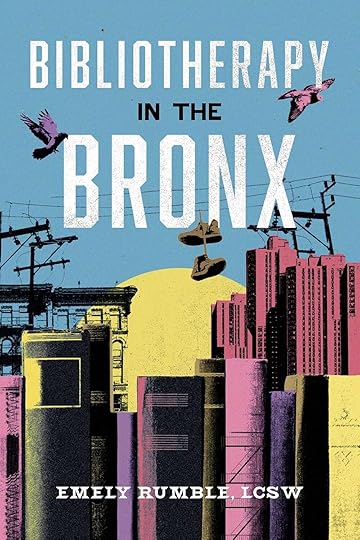
Bibliotherapy in the Bronx
Discover how a love of books can foster community, understanding, and personal growth.
Bibliotherapy in The Bronx by Emely Rumble, LCSW, is a groundbreaking exploration of the healing power of literature in the lives of marginalized communities. Drawing from her personal and professional experiences, Rumble masterfully intertwines storytelling with therapeutic insights to reveal how reading can be a potent tool for self-discovery, emotional transformation, and social change.
In this transformative work, Rumble offers readers an intimate glimpse into her journey as a psychotherapist in the Bronx, where she has spent over 14 years using books to help clients navigate complex emotions, heal from trauma, and find their voices. Through vivid anecdotes and real-world case studies, she demonstrates how literature can serve as a bridge between personal pain and collective healing.
Rich with practical tips, reflective exercises, and book recommendations, Bibliotherapy in The Bronx is a valuable resource for anyone interested in the power of words to change lives. Whether you're a therapist, educator, bibliophile, or simply someone seeking deeper understanding and growth, this book offers a compassionate, culturally affirming guide to the transformative potential of storytelling.
Rumble's work is a testament to the enduring power of books to heal, empower, and liberate. In a time when the world feels increasingly divided, Bibliotherapy in The Bronx reminds us that the stories we tell—and the stories we read—can unite us in our shared humanity.
Bibliotherapy in The Bronx by Emely Rumble, LCSW, is a groundbreaking exploration of the healing power of literature in the lives of marginalized communities. Drawing from her personal and professional experiences, Rumble masterfully intertwines storytelling with therapeutic insights to reveal how reading can be a potent tool for self-discovery, emotional transformation, and social change.
In this transformative work, Rumble offers readers an intimate glimpse into her journey as a psychotherapist in the Bronx, where she has spent over 14 years using books to help clients navigate complex emotions, heal from trauma, and find their voices. Through vivid anecdotes and real-world case studies, she demonstrates how literature can serve as a bridge between personal pain and collective healing.
Rich with practical tips, reflective exercises, and book recommendations, Bibliotherapy in The Bronx is a valuable resource for anyone interested in the power of words to change lives. Whether you're a therapist, educator, bibliophile, or simply someone seeking deeper understanding and growth, this book offers a compassionate, culturally affirming guide to the transformative potential of storytelling.
Rumble's work is a testament to the enduring power of books to heal, empower, and liberate. In a time when the world feels increasingly divided, Bibliotherapy in The Bronx reminds us that the stories we tell—and the stories we read—can unite us in our shared humanity.
240 pages, Hardcover
Published April 29, 2025
Ratings & Reviews
Friends & Following
Create a free account to discover what your friends think of this book!
Community Reviews
Displaying 1 - 30 of 80 reviews

April 7, 2025
Bibliotherapy is the use of literature and poetry to heal and help solve mental health challenges. It can be used to teach people new skills and help facilitate engagement with the text. Emely Rumble, a Licensed Clinical Social Worker, has written a new book that reveals that the concept of Bibliotherapy is not new. The Ancient Egyptians, Romans, and Greeks utilized it in their time, and it is still practiced today through therapy sessions and collective book communities. Emely teaches the reader that books and literature have power; they are medicine for our ailments.
This book is not only a theoretical text, but it is an applied/practical text as well. Emely shares case studies of her past clients and the books she prescribed to them. Each chapter ends with “Bibliotherapeutic Reflections” that the reader can answer and ponder over. There were many times when I was reading where I identified some things that I do that have some bibliotherapy attributes, such as facilitating book clubs and writing in my commonplace book.
Near the end of Chapter 3 in her book, Emely mentions that she is currently on a path to becoming a Certified Poetry Therapist, and she discusses how challenging attaining that credential has been. I hope she gets it in the future, but in the meantime, I firmly believe this book is Emely’s dissertation, and if I had the power, I would confer a PhD in Bibliotherapy on her based on this work. I hope this book opens more doors and opportunities for her as she continues her important and life-changing work.
Thanks to Emely Rumble for a free ARC copy.
This book is not only a theoretical text, but it is an applied/practical text as well. Emely shares case studies of her past clients and the books she prescribed to them. Each chapter ends with “Bibliotherapeutic Reflections” that the reader can answer and ponder over. There were many times when I was reading where I identified some things that I do that have some bibliotherapy attributes, such as facilitating book clubs and writing in my commonplace book.
Near the end of Chapter 3 in her book, Emely mentions that she is currently on a path to becoming a Certified Poetry Therapist, and she discusses how challenging attaining that credential has been. I hope she gets it in the future, but in the meantime, I firmly believe this book is Emely’s dissertation, and if I had the power, I would confer a PhD in Bibliotherapy on her based on this work. I hope this book opens more doors and opportunities for her as she continues her important and life-changing work.
Thanks to Emely Rumble for a free ARC copy.
April 25, 2025
Special thanks to @literapy_nyc & @rowhousepub for my gifted e-ARC‼️
What’s the best thing to prescribe when dealing with depression, trauma or you’re seeking to heal? Sometimes medication isn’t enough? But you know what could be? The right book!
When I first learned about bibliotherapy it was from following Emely’s IG page and seeing her promote and share with the book community what she does as a bibliotherapist. Some may think to themselves well how is a book gonna help me deal with a real life situation?
Bibliotherapy in the Bronx gives readers a thorough understanding of what it is, how reading was established as a form of therapy, the utilization of poetry and music in therapy, the different ways literature can heal, the importance of libraries, backstory on how reading helped real-life clients, and the way literature itself can shed light on lived experiences that relate to a client’s situation.
Broken down into 3 sections the author delves deeply into the practices of bibliotherapy, how it can be the doorway to finding peace, and using it as a path to empowerment and collective wellbeing. Each chapter explores the different methods used in a case and personal insight into how books have helped her evolve as a person and therapist. Get ready to annotate because she also name drops authors and literary works that have inspired her or impacted her clients.
I loved Emely’s vulnerability and honesty letting us know that not every book will be for everyone. But there is the right book out there that addresses exactly what someone is dealing with. “The healing power of stories can transform your life through bibliotherapy.”
Overall, I enjoyed reading this and found it to be very helpful and informative especially the reflections. It honestly had me thinking about the type books I read and why I gravitate and connect with certain stories more than others. So, here’s another book worth adding to your TBR especially if you’re an educator or therapist!
What’s the best thing to prescribe when dealing with depression, trauma or you’re seeking to heal? Sometimes medication isn’t enough? But you know what could be? The right book!
When I first learned about bibliotherapy it was from following Emely’s IG page and seeing her promote and share with the book community what she does as a bibliotherapist. Some may think to themselves well how is a book gonna help me deal with a real life situation?
Bibliotherapy in the Bronx gives readers a thorough understanding of what it is, how reading was established as a form of therapy, the utilization of poetry and music in therapy, the different ways literature can heal, the importance of libraries, backstory on how reading helped real-life clients, and the way literature itself can shed light on lived experiences that relate to a client’s situation.
Broken down into 3 sections the author delves deeply into the practices of bibliotherapy, how it can be the doorway to finding peace, and using it as a path to empowerment and collective wellbeing. Each chapter explores the different methods used in a case and personal insight into how books have helped her evolve as a person and therapist. Get ready to annotate because she also name drops authors and literary works that have inspired her or impacted her clients.
I loved Emely’s vulnerability and honesty letting us know that not every book will be for everyone. But there is the right book out there that addresses exactly what someone is dealing with. “The healing power of stories can transform your life through bibliotherapy.”
Overall, I enjoyed reading this and found it to be very helpful and informative especially the reflections. It honestly had me thinking about the type books I read and why I gravitate and connect with certain stories more than others. So, here’s another book worth adding to your TBR especially if you’re an educator or therapist!

May 21, 2025
I was introduced to Emely Rumble and her work through Bookstagram and her enthusiasm, frankness and love for the subject of bibliotherapy made me want to know more about the topic. Once she wrote Bibliotherapy in the Bronx, I wanted to learn more.
Quotes that encouraged me:
“…books are the most powerful mirrors, especially for those of us surrounded by broken glass.”
“Worry will always be there, but worry doesn’t have to be the size of a monster. We can minimize worry through connections with others and enjoy the joyful parts of life despite our anxiety.”
“The books we enjoy reading and rereading speak to something inside us in a way we should pay attention to.”
“…when we read, we are doing so much more than escaping our daily realities to enjoy the pleasures of being transported to another place and time. We are healing ourselves.”
“In bibliotherapy, words in books become guides for a journey of personal growth—and personal growth is needed for true rehabilitation. Again, books provide a stable mirror when we are surround by broken glass.”
“The interpersonal and social rewards that a love of literature provides for us cannot be understated. We experience this in our book clubs, group chats, and social-media book communities. When we are curious about others, we are inherently self-reflective and evolving. This is good for the soul and necessary for the spirit.”
I connected with this book through the unselfishly shared case studies and the helpful, valuable resources and I loved how the author introduced new words, then immediately included the definition so that my thoughts and reading the material would flow uninterruptedly. (I didn’t have to stop, find a dictionary, look up the word, and continue reading). 😊 It was written both intelligently and simplistically; folks in the medical/sociology field will comprehend and understand the information, but so will the average reader.
Thank you, Ms. Rumble. I now understand the relationship between healing and literature. You poured your heart out and shared in such a way that those who read Bibliotherapy in the Bronx CAN become better for it. YOU GO GIRL!
Quotes that encouraged me:
“…books are the most powerful mirrors, especially for those of us surrounded by broken glass.”
“Worry will always be there, but worry doesn’t have to be the size of a monster. We can minimize worry through connections with others and enjoy the joyful parts of life despite our anxiety.”
“The books we enjoy reading and rereading speak to something inside us in a way we should pay attention to.”
“…when we read, we are doing so much more than escaping our daily realities to enjoy the pleasures of being transported to another place and time. We are healing ourselves.”
“In bibliotherapy, words in books become guides for a journey of personal growth—and personal growth is needed for true rehabilitation. Again, books provide a stable mirror when we are surround by broken glass.”
“The interpersonal and social rewards that a love of literature provides for us cannot be understated. We experience this in our book clubs, group chats, and social-media book communities. When we are curious about others, we are inherently self-reflective and evolving. This is good for the soul and necessary for the spirit.”
I connected with this book through the unselfishly shared case studies and the helpful, valuable resources and I loved how the author introduced new words, then immediately included the definition so that my thoughts and reading the material would flow uninterruptedly. (I didn’t have to stop, find a dictionary, look up the word, and continue reading). 😊 It was written both intelligently and simplistically; folks in the medical/sociology field will comprehend and understand the information, but so will the average reader.
Thank you, Ms. Rumble. I now understand the relationship between healing and literature. You poured your heart out and shared in such a way that those who read Bibliotherapy in the Bronx CAN become better for it. YOU GO GIRL!
May 5, 2025
Bibliotherapy in the Bronx is an interesting read and a great resource for both therapists and patients! Until I read this book, I didn’t realize that there was an official therapeutic method called bibliotherapy. Emely Rumble provides numerous case studies that demonstrate different bibliotherapeutic techniques, along with the specific books she uses as a therapist.
Bibliotherapy in the Bronx is especially geared toward minority populations that have too often lacked access to therapy, or whose experiences have been ignored. But no matter your background, you can find help in this book!
Thanks to Row House by Spotify Audiobooks through NetGalley who allowed me to listen to the audio version of this book. The narrator, Wesleigh Siobhan, is amazing, and my favorite narrator I’ve heard this year!
Bibliotherapy in the Bronx is especially geared toward minority populations that have too often lacked access to therapy, or whose experiences have been ignored. But no matter your background, you can find help in this book!
Thanks to Row House by Spotify Audiobooks through NetGalley who allowed me to listen to the audio version of this book. The narrator, Wesleigh Siobhan, is amazing, and my favorite narrator I’ve heard this year!
February 2, 2026
I was introduced to bibliotherapy when I connected with Emely on social media. Bibliotherapy uses literature as a therapy tool and being an avid reader I was immediately intrigued. So when I heard she was writing a book on it, I knew I had to read it. I received an early digital and audio copy and got emotional from the introduction. When I got to the meat of the book, I knew this was something that I had to take my time with. When I’m reading nonfiction that I want to learn from I have to give it time for the information to absorb. I nibbled at this book for many months last year. I read a few of the books mentioned and can’t wait to read even more. I think I will revisit this text for many years to come and especially the exercises. If you want to use your love of reading to continue your healing, I’d highly recommend this one!
Favorite Quotes:
“A love of reading connects us to home, whether it is the home that resides within each of us, the home we are working to create, or the one we’ve left and long to reside in once again.”
“Poetry grants us permission to wade into our feelings but not get stuck in them. By drawing parallels between the poem’s symbolism and our lives, readers can confront their emotions, fostering self-awareness, emotional release, and, ultimately, healing.”
“When we are reading, we are healing. When we are reading, we are witnessing and allowing our feelings to be honored and witnessed, too.”
Favorite Quotes:
“A love of reading connects us to home, whether it is the home that resides within each of us, the home we are working to create, or the one we’ve left and long to reside in once again.”
“Poetry grants us permission to wade into our feelings but not get stuck in them. By drawing parallels between the poem’s symbolism and our lives, readers can confront their emotions, fostering self-awareness, emotional release, and, ultimately, healing.”
“When we are reading, we are healing. When we are reading, we are witnessing and allowing our feelings to be honored and witnessed, too.”
August 26, 2026
I'd like to give this ten out of five stars, please and thank you.
I had no concept of what bibliotherapy was going into this, and I am delighted that it was Emely Rumble who could teach me about it. Her experience and thoughtfulness are so beautifully presented in this book.
I'm gonna sit here and convince myself not to change careers now, thanks.
Total Score: 10/5 Stars
I had no concept of what bibliotherapy was going into this, and I am delighted that it was Emely Rumble who could teach me about it. Her experience and thoughtfulness are so beautifully presented in this book.
I'm gonna sit here and convince myself not to change careers now, thanks.
Total Score: 10/5 Stars

August 23, 2025
Yes!!! To literally all of that!!! 📚🙏
May 8, 2025
Book Review ⭐️⭐️⭐️⭐️⭐️
Bibliotherapy in the Bronx by Emely Rumble LCSW
#yerrrrrr you had me at the Bronx! In this book I got to see my home through another lense and understand things and scenarios I might not have had the language for but was able to more fully comprehend a lot of whys and hows around me, others, etc. Don’t let the title fool you although my beloved Bronx is featured in the title, this book is for everyone who is willing to read or listen to a story, or someone who would like to help someone with these means. My husband has a shirt that says Books saved my life, and I’ve asked him before do you really think that’s true I received an emphatic yes, reading this book I was able to see that side of reading through another lense, and even how I’ve used reading to cope, escape and more. Ms. Rumble uses examples from her life, her life as a therapist with school children in the Bronx and through references to other literary works both fiction and nonfiction and showing how Bibliotherapy can be implemented in real life for children, adults, and adverse readers. I’m honored to have received a digital copy of these work from Ms. Rumble and the audiobook via Netgalley to review. And because I’m extra my husband and I both now own our own physical copies and the audiobook via Audible as well.
Bibliotherapy in the Bronx by Emely Rumble LCSW
#yerrrrrr you had me at the Bronx! In this book I got to see my home through another lense and understand things and scenarios I might not have had the language for but was able to more fully comprehend a lot of whys and hows around me, others, etc. Don’t let the title fool you although my beloved Bronx is featured in the title, this book is for everyone who is willing to read or listen to a story, or someone who would like to help someone with these means. My husband has a shirt that says Books saved my life, and I’ve asked him before do you really think that’s true I received an emphatic yes, reading this book I was able to see that side of reading through another lense, and even how I’ve used reading to cope, escape and more. Ms. Rumble uses examples from her life, her life as a therapist with school children in the Bronx and through references to other literary works both fiction and nonfiction and showing how Bibliotherapy can be implemented in real life for children, adults, and adverse readers. I’m honored to have received a digital copy of these work from Ms. Rumble and the audiobook via Netgalley to review. And because I’m extra my husband and I both now own our own physical copies and the audiobook via Audible as well.
April 11, 2025
Thank you to the author, publisher and NetGalley for this ARC in exchange for this honest review.
It was not until I followed the author on social media, did I even learn what Bibliotherapy was. I was excited to learn more about it through her social media pages but was thrilled when I saw that the author was going to be putting a book out there.
This book was not only informative but entertaining to listen to. The narrator did a great job. I will be recommending this book to others. There’s something really cool about being able to use literature to heal!
It was not until I followed the author on social media, did I even learn what Bibliotherapy was. I was excited to learn more about it through her social media pages but was thrilled when I saw that the author was going to be putting a book out there.
This book was not only informative but entertaining to listen to. The narrator did a great job. I will be recommending this book to others. There’s something really cool about being able to use literature to heal!
November 10, 2024
I just finished the arc ebook of Emely Rumble’s upcoming nonfiction book. It’s incredible. Exactly what I needed in so many ways.
It allowed me to explore the history of bibliotherapy, Emely’s experiences, and explore my experiences with literature from different perspectives, as an author, poet, educator, and Greek Latina. I believe this resource can be useful for those who are interested in bibliotherapy, but you don’t have to be a therapist to find value in this book.
I’m thankful for the early opportunity. I look forward to getting the final ebook and hardcover when it is available. I know I’ll continue to use this resource as an author, educator, and personally.
It allowed me to explore the history of bibliotherapy, Emely’s experiences, and explore my experiences with literature from different perspectives, as an author, poet, educator, and Greek Latina. I believe this resource can be useful for those who are interested in bibliotherapy, but you don’t have to be a therapist to find value in this book.
I’m thankful for the early opportunity. I look forward to getting the final ebook and hardcover when it is available. I know I’ll continue to use this resource as an author, educator, and personally.
April 30, 2025
I had the ARC in my hands for weeks, but something told me to wait. And I’m glad I did. On the night before Emely’s pub day, I stayed up late and read the entire thing in one sitting. Something about her voice, her honesty, and the way she wove books into every thread of her life’s work made this feel like more than just another piece of literature.
Bibliotherapy, in technical terms, is the use of literature as a therapeutic tool. It’s a clinical practice, a healing modality, a method. But in layman’s terms? It’s the soul work of finding yourself, processing pain, and reclaiming power through the pages of a book. It’s crying because a sentence sees you. It’s feeling less alone because a character broke the same way you did—and lived.
It’s likely that you’ve been doing this kind of work your whole life without even knowing it. If you’ve turned to books when you didn’t have the words for what you were feeling—that’s it. If a character could survive something hard, I believed I could too. Literature became a lifeline, the place I tucked my questions, my hurt, my hope.
The first moment I realized just how intentional this book was came when Emely shared her experience processing her legal emancipation through the lens of Finding Fish by Antwone Fisher. That moment gutted me. Watching her reflect on her own trauma through a book that mirrored it was powerful. Not because it was clean or neat, but because it was honest. That’s what bibliotherapy is—not fixing, but understanding.
This book doesn’t just tell you that literature can heal. It shows you how. It gives you the tools to explore what you’ve always felt deeply but never had the language for.
Take me, for example. I’m a notorious fan of Candice Carty-Williams and her brilliant ability to craft complicated characters, namely Queenie. I had never encountered a character who made so many self-destructive, counterintuitive decisions that still made so much sense to me. Reading Queenie cracked something open. She gave me permission to recognize that unhealed trauma doesn’t always show up in palatable ways. She was chaotic, hurting, human—and I saw myself in her.
Over the years, I’ve heard so many people describe Queenie as “unlikeable,” “too messy,” “hard to root for.” And while I always felt something tighten in my chest hearing those takes, I never had the words to explain why. Until now. Bibliotherapy in the Bronx gave me the language. It showed me that when someone is actively surviving trauma, they deserve curiosity and compassion, not critique. Characters like Queenie aren’t broken. They’re trying.
Books are so much more than entertainment. They’re mirrors.
As a lifelong reader, I’m deeply grateful that Emely gifted us a masterclass in bibliotherapy. This book is a heart offering—not just for those of us who love literature, but for anyone trying to make sense of their own story.
Thank you to Emely and Rowhouse Publishers for this ARC.
Bibliotherapy, in technical terms, is the use of literature as a therapeutic tool. It’s a clinical practice, a healing modality, a method. But in layman’s terms? It’s the soul work of finding yourself, processing pain, and reclaiming power through the pages of a book. It’s crying because a sentence sees you. It’s feeling less alone because a character broke the same way you did—and lived.
It’s likely that you’ve been doing this kind of work your whole life without even knowing it. If you’ve turned to books when you didn’t have the words for what you were feeling—that’s it. If a character could survive something hard, I believed I could too. Literature became a lifeline, the place I tucked my questions, my hurt, my hope.
The first moment I realized just how intentional this book was came when Emely shared her experience processing her legal emancipation through the lens of Finding Fish by Antwone Fisher. That moment gutted me. Watching her reflect on her own trauma through a book that mirrored it was powerful. Not because it was clean or neat, but because it was honest. That’s what bibliotherapy is—not fixing, but understanding.
This book doesn’t just tell you that literature can heal. It shows you how. It gives you the tools to explore what you’ve always felt deeply but never had the language for.
Take me, for example. I’m a notorious fan of Candice Carty-Williams and her brilliant ability to craft complicated characters, namely Queenie. I had never encountered a character who made so many self-destructive, counterintuitive decisions that still made so much sense to me. Reading Queenie cracked something open. She gave me permission to recognize that unhealed trauma doesn’t always show up in palatable ways. She was chaotic, hurting, human—and I saw myself in her.
Over the years, I’ve heard so many people describe Queenie as “unlikeable,” “too messy,” “hard to root for.” And while I always felt something tighten in my chest hearing those takes, I never had the words to explain why. Until now. Bibliotherapy in the Bronx gave me the language. It showed me that when someone is actively surviving trauma, they deserve curiosity and compassion, not critique. Characters like Queenie aren’t broken. They’re trying.
Books are so much more than entertainment. They’re mirrors.
As a lifelong reader, I’m deeply grateful that Emely gifted us a masterclass in bibliotherapy. This book is a heart offering—not just for those of us who love literature, but for anyone trying to make sense of their own story.
Thank you to Emely and Rowhouse Publishers for this ARC.
February 28, 2026
I’ve been slowly reading this book. I took my time with it and all it’s information and this week I decided to finally go through it all and go over my highlights and annotations before I wrote my review. I loved this book and it holds a special place in my heart.
Bibliotherapy in the Bronx felt like a big hug. For years, I’ve been reading books because they made me feel better. When I struggled, needed clarity, or strength I turned to books. What I didn’t realize until recently, after connecting and learning from Emely Rumble, is that what I was experiencing all along had a name: Bibliotherapy! The intentional use of literature as a therapeutic tool to support emotional healing, self discovery, processing emotions like our grief, our trauma, and life transitions.
I now understand that reading wasn’t just a hobby for me. It was healing. There was a time I struggled to explain how reading changed me. How it helped me and continues to help me process emotions. How nonfiction helped me understand boundaries, mental health, and make necessary acts for the sake of my wellbeing. This book took me back through all those years. It validated my experience and I’m grateful for that!
Emely Rumble shares her upbringing, her journey as a mother, her work as a social worker and bibliotherapist, and her deep love for books. As she combines literature into her therapeutic practice she writes from professional and lived experience. She doesn’t just believe in the healing power of books, she witnesses it every day in the lives of the people she serves. Through her stories, she beautifully illustrates how literature can heal us, especially those navigating the pain of trauma, identity, and life’s struggles.
I’ve highlighted all over this book and have taken her book recommendations. I loved the symbolic ceremonial bibliotherapy rituals too.
What resonated deeply with me is the affirmation that books have the power to transform us. They help us feel less alone, expand our perspectives, and understand other people’s struggles.
Bibliotherapy is real. And this book is living prof.
Bibliotherapy in the Bronx felt like a big hug. For years, I’ve been reading books because they made me feel better. When I struggled, needed clarity, or strength I turned to books. What I didn’t realize until recently, after connecting and learning from Emely Rumble, is that what I was experiencing all along had a name: Bibliotherapy! The intentional use of literature as a therapeutic tool to support emotional healing, self discovery, processing emotions like our grief, our trauma, and life transitions.
I now understand that reading wasn’t just a hobby for me. It was healing. There was a time I struggled to explain how reading changed me. How it helped me and continues to help me process emotions. How nonfiction helped me understand boundaries, mental health, and make necessary acts for the sake of my wellbeing. This book took me back through all those years. It validated my experience and I’m grateful for that!
Emely Rumble shares her upbringing, her journey as a mother, her work as a social worker and bibliotherapist, and her deep love for books. As she combines literature into her therapeutic practice she writes from professional and lived experience. She doesn’t just believe in the healing power of books, she witnesses it every day in the lives of the people she serves. Through her stories, she beautifully illustrates how literature can heal us, especially those navigating the pain of trauma, identity, and life’s struggles.
I’ve highlighted all over this book and have taken her book recommendations. I loved the symbolic ceremonial bibliotherapy rituals too.
What resonated deeply with me is the affirmation that books have the power to transform us. They help us feel less alone, expand our perspectives, and understand other people’s struggles.
Bibliotherapy is real. And this book is living prof.
April 29, 2025
Happy Pub day to THE most anticipated book this season for me. I don’t even know where to begin or how much to share on how excited I am that this book exists in the world. When I stumbled across Em’s profile . I think her name was introduced by @rtwilliams during one of his monthly wrap-up lives) I was amazed. I had never heard of bibliotherapy before. but come to find out it is one of the reasons I love reading. Reading is healing and reading is community. I think this book celebrates both. As a mother of a son that struggles with mental health issues and addiction-getting this book in my hands has definitely impacted our relationship and given me a better understanding of ways we can understand each other and communicate. This book is no replacement for therapy, no book is. Seek professional help always. But this book is a tool and I recommend it for every household. Especially therapists and teachers. I loved the vulnerability of this book. The research is outstanding and the reading recommendations and example are so helpful. This book fully resonates with my spirit and I can tell /e/m really but her whole spirit into this amazing book. This book is broken down in sections and is useful for understanding all the types of bibliotherapy and ways it can be implemented. I especially am drawn to the chapter on trauma and healing. It really helped me understand why I choose to read the heavy books I do. I was also blessed with the ALC read by Wesleigh Siobhan who not only reads us our fiction, but is changing he game reading this book. I highly recommend getting the audible as a companion with this as well. Totally worth it.
May 2, 2025
Audiobook Review:
This book is a gem. From the cover art to the message, I was pulled in and deeply moved. Bibliotherapy in the Bronx is a powerful reflection on the healing nature of literature—especially in marginalized communities—and how books can be both mirrors and medicine. As a therapist and educator, Emely Rumble blends personal stories, clinical insight, and practical tools in a way that feels both intimate and expansive.
As a fellow educator, I was especially drawn to the sections about bibliotherapy in classrooms. The idea that teachers help give students the language to process through characters and stories? That hit me. This book reminds us that even young readers are already engaging in healing work just by connecting with literature. I loved Rumble’s call to notice what we read and reflect on what it says about us—because it does say something.
Wesleigh Siobhan was a fantastic narrator for this book. Her voice was clear, warm, and just right for the tone of the material. The slight East Coast accent added to the authenticity and grounding of the listening experience.
One of my favorite lines from the conclusion:
“When we are reading, we are healing. When we are reading, we are witnessing and allowing our feelings to be honored and witnessed too.”
Yes. That’s exactly what this book does.
Highly, highly recommend—especially for educators, therapists, bibliophiles, and anyone interested in the intersection of storytelling and mental wellness. This should be required reading in university courses and book clubs alike.
Thank you to NetGalley and the publisher for the advanced listener copy in exchange for my honest review.
This book is a gem. From the cover art to the message, I was pulled in and deeply moved. Bibliotherapy in the Bronx is a powerful reflection on the healing nature of literature—especially in marginalized communities—and how books can be both mirrors and medicine. As a therapist and educator, Emely Rumble blends personal stories, clinical insight, and practical tools in a way that feels both intimate and expansive.
As a fellow educator, I was especially drawn to the sections about bibliotherapy in classrooms. The idea that teachers help give students the language to process through characters and stories? That hit me. This book reminds us that even young readers are already engaging in healing work just by connecting with literature. I loved Rumble’s call to notice what we read and reflect on what it says about us—because it does say something.
Wesleigh Siobhan was a fantastic narrator for this book. Her voice was clear, warm, and just right for the tone of the material. The slight East Coast accent added to the authenticity and grounding of the listening experience.
One of my favorite lines from the conclusion:
“When we are reading, we are healing. When we are reading, we are witnessing and allowing our feelings to be honored and witnessed too.”
Yes. That’s exactly what this book does.
Highly, highly recommend—especially for educators, therapists, bibliophiles, and anyone interested in the intersection of storytelling and mental wellness. This should be required reading in university courses and book clubs alike.
Thank you to NetGalley and the publisher for the advanced listener copy in exchange for my honest review.
October 20, 2025
wow, i am genuinely blown away by this book. i had never considered that books and literature could be used as tools in therapy. i feel validated in my obsession with books and how i use them to discover more about myself, explore topics i may be grappling with.
some topics that she discussed that really resonated with me: using literature as a mirror, a place where we can seek validation. how incredibly valuable black librarianship is. it cannot be overstated how important their work is to support the mental health and wellness of our communities. not so long ago, it was a privilege to have a personal library, so I harbor no guilt for my ever-growing one. when i read, i find the most authentic version of myself. libraries are one of the most pivotal communal spaces in our society, and books are a medicine that is the most accessible to us. libraries are one of the few spaces so committed to inclusion that every decision hinges on whether or not a particular choice would make a subset of people feel uninvited (susan orlean).
i am in awe of emely rumble's work.
some topics that she discussed that really resonated with me: using literature as a mirror, a place where we can seek validation. how incredibly valuable black librarianship is. it cannot be overstated how important their work is to support the mental health and wellness of our communities. not so long ago, it was a privilege to have a personal library, so I harbor no guilt for my ever-growing one. when i read, i find the most authentic version of myself. libraries are one of the most pivotal communal spaces in our society, and books are a medicine that is the most accessible to us. libraries are one of the few spaces so committed to inclusion that every decision hinges on whether or not a particular choice would make a subset of people feel uninvited (susan orlean).
i am in awe of emely rumble's work.

June 23, 2025
This book was so insightful. I did not know bibliotherapy was an actual practice. The book was a good blend of personal & educational. There are so many book recommendations & it’s interactive!

September 7, 2025
A lot to think about
November 3, 2025
Amazing read for librarians!
May 15, 2025
This author spoke to my soul! Books are medicine! Reading is healing! Stories are lifelines!
April 1, 2025
A definitive, thought provoking healing book !! A must read !!! I'm so grateful to have been able to read this and heal pieces that had been buried for so long..... Bibliotherapy is real - Bibliotherapy is a form of therapy that uses literature as a tool to promote emotional and mental health. It involves selecting and reading books that can help individuals.

December 19, 2024
BIbliotherapy in the Bronx by Emely Rumble is a brilliantly crafted and deeply insightful exploration of the transformative power of literature. From the very first page, Rumble captivates with her engaging storytelling, seamlessly blending personal narrative and research to present bibliotherapy not just as a practice, but as a lifeline for those in need of emotional and psychological support.
I was fortunate enough to receive the ARC of the book and it is masterful; Rumble begins with a clear and empathetic introduction to bibliotherapy, then progresses through moving case studies and real-life examples that highlight its profound impact. Each chapter builds on the last, revealing how books can offer solace, healing, and empowerment to those facing life's struggles. The stories of individuals finding peace and self-discovery through literature are inspiring, and Rumble’s writing voice is both compassionate and authoritative.
What stands out most is the practical application of bibliotherapy in the Bronx, a community often overlooked in discussions of mental health. Rumble takes readers through the heart of the Bronx, showing how literature is being used to foster resilience and create connections. The book is not only educational but also incredibly uplifting, reminding us of the importance of community, empathy, and the written word.
Overall, Bibliotherapy in the Bronx is a powerful and thought-provoking read. Rumble’s unique perspective and eloquent prose make this book a must-read for anyone interested in mental health, personal growth, and the incredible ways that literature can heal.
Having a background in mental health and as a current educator, this book opened my curiosity even more on how to be selective in choosing books and becoming diverse. There are so many quotes that resonated with me, but I'll leave you with this one..."When we are reading, we are healing." ~Emely Rumble
I was fortunate enough to receive the ARC of the book and it is masterful; Rumble begins with a clear and empathetic introduction to bibliotherapy, then progresses through moving case studies and real-life examples that highlight its profound impact. Each chapter builds on the last, revealing how books can offer solace, healing, and empowerment to those facing life's struggles. The stories of individuals finding peace and self-discovery through literature are inspiring, and Rumble’s writing voice is both compassionate and authoritative.
What stands out most is the practical application of bibliotherapy in the Bronx, a community often overlooked in discussions of mental health. Rumble takes readers through the heart of the Bronx, showing how literature is being used to foster resilience and create connections. The book is not only educational but also incredibly uplifting, reminding us of the importance of community, empathy, and the written word.
Overall, Bibliotherapy in the Bronx is a powerful and thought-provoking read. Rumble’s unique perspective and eloquent prose make this book a must-read for anyone interested in mental health, personal growth, and the incredible ways that literature can heal.
Having a background in mental health and as a current educator, this book opened my curiosity even more on how to be selective in choosing books and becoming diverse. There are so many quotes that resonated with me, but I'll leave you with this one..."When we are reading, we are healing." ~Emely Rumble

Read
July 20, 2025i don’t think i knew bibliotherapy was a thing until i found Em’s bookstagram, @literapy_nyc, and i immediately became interested in how to implement this methodology into my own clinical work. but i always find reasons why i’m not ready or able to incorporate bibliotherapy yet. reading this book though, it made me feel so empowered. it helped me to realize that the skills are already inside of me - i AM a clinical social worker and i DO know the healing books provide. Rumble provides the reader with so many tangible examples and activities, and puts words to the way reading impacts us. from helping us to develop empathy, promoting self-reflection and discovery, and helping us process our emotions
even without the clinical aspects, this book feels like a warm hug, a reminder why reading is so important for us, how we can make meaning from the books we are reading
thank you so much, Em, for gifting us with this beautiful book, sharing your knowledge and experience in such a meaningful way
even without the clinical aspects, this book feels like a warm hug, a reminder why reading is so important for us, how we can make meaning from the books we are reading
thank you so much, Em, for gifting us with this beautiful book, sharing your knowledge and experience in such a meaningful way

November 29, 2024
I was incredibly fortunate to receive an eGalley of Bibliotherapy in the Bronx by Emely Rumble. I must say that this reading experience for me was nothing short of awe-inspiring and deeply empowering.
This offering presents a captivating examination of literature's therapeutic impact within marginalized communities. Rumble skillfully integrates narrative with therapeutic perspectives, rendering the book both informative and intensely personal.
The real-world case studies presented underscore the unique obstacles and achievements of individuals dealing with complex emotions and trauma. Further enhancement of her narrative is achieved through various literary techniques, offering reflective exercises and practical tips that furnish readers with actionable insights and a valuable resource through integrated book recommendations.
This work will serve as a powerful reminder to readers of the enduring impact of literature on personal healing, empowerment, and liberation.
This offering presents a captivating examination of literature's therapeutic impact within marginalized communities. Rumble skillfully integrates narrative with therapeutic perspectives, rendering the book both informative and intensely personal.
The real-world case studies presented underscore the unique obstacles and achievements of individuals dealing with complex emotions and trauma. Further enhancement of her narrative is achieved through various literary techniques, offering reflective exercises and practical tips that furnish readers with actionable insights and a valuable resource through integrated book recommendations.
This work will serve as a powerful reminder to readers of the enduring impact of literature on personal healing, empowerment, and liberation.
February 7, 2025
If you're a reader, you definitely want to read this book! And you probably already know that reading can heal. This unique book is part novel, part reference book, part workbook.
Licensed social worker and Bibliotherapist Emely Rumble walks us through the history of bibliotherapy, particularly in underserved communities, and interweaves it with her personal history, lessons and healing as well as that of her clients. There is also the explanation of psychological theories and therapy modalities (types of therapy). But my favorite parts of the text focus on using creative expression - poetry, creative writing, hip hop music - to heal oneself. And there are exercises for the reader to complete should you choose.
Licensed social worker and Bibliotherapist Emely Rumble walks us through the history of bibliotherapy, particularly in underserved communities, and interweaves it with her personal history, lessons and healing as well as that of her clients. There is also the explanation of psychological theories and therapy modalities (types of therapy). But my favorite parts of the text focus on using creative expression - poetry, creative writing, hip hop music - to heal oneself. And there are exercises for the reader to complete should you choose.

April 5, 2026
Emely Rumble’s book makes a strong case for the practice of bibliotherapy and provides useful instructions for how therapists can incorporate it into their work with clients. There are flaws that keep me from wholeheartedly loving Bibliotherapy in the Bronx, but it is worth reading for mental health professionals, along with teachers, pastors, and book lovers in general.
I should love Bibliotherapy in the Bronx. I am both a social worker and a voracious reader (Goodreads says I’ve read 3,339 books as of April 5, 2026 – yikes!). The idea of incorporating bibliotherapy into my therapeutic practice brings me joy. I fully intend to make use of some of Rumble’s recommended techniques. Where the author loses me is in her unskeptical embrace of certain extreme ideas from critical social justice (CSJ) ideology.
The most notable example comes in her description of narrative therapy in chapter 7. Rumble asserts, “There is no such thing as one objective reality. Ultimately, we each have different realities, even if we have shared experiences” (p. 148). At other points, she asserts that there are multiple “truths.” This is a deeply ugly, irrational, and harmful belief system. For society to function and for communities to exist, people need to share a common belief in reality based on facts. There is no such thing as “my truth,” “your truth,” or “our truths” (p. 195) — there is only THE TRUTH. Truth and facts are the same thing. Individuals all have different perspectives on objective reality; these are not alternative truths or “alternative facts.” If Rumble’s assertion that “objective reality” does not exist is accurate, then there is no point in doing research to figure out if a therapeutic technique such as Bibliotherapy works—a person can just say that it feels right to them. Given the studies that Rumble references in the book, I doubt she believes this. And if objective reality genuinely does not exist, then progressives such as the author (and I) can never attack a politician like Trump for lying tens of thousands of times. It can always be argued that he is simply speaking “his truth” and people might as well believe him because he is so charismatic, since objective reality does not exist at all. In dark times like this one, it is all that much more important for progressives, moderates, and conservatives to acknowledge that objective truth really does exist. Yes, we can say that 2+2=4. Ironically, given that CSJ is a left wing belief system, its wishy-washy concept of truth is very similar to that professed by right wing influencer Jordan Peterson, at least as he described it in this insufferable debate he conducted in 2017.
Stop redefining words in needlessly convoluted and confusing ways. Keep this kind of pseudointellectual nonsense locked away in philosophy classrooms. It is irresponsible and self-defeating to present these toxic ideas in public forums (such as social media) or publish them in books intended for general readers.
[Image: Book Cover]
Citation:
Rumble, E. (2025). Bibliotherapy in the Bronx (Kindle Edition). Row House Publishing. https://www.amazon.com/Bibliotherapy-....
Title: Bibliotherapy in the Bronx
Author(s): Emely Rumble
Year: 2025
Genre: Nonfiction - Psychology, Psychotherapy, Literature
Page count: 240 pages
Date(s) read: 4/2/26 - 4/5/26
Book 66 in 2026
“Bibliotherapy is about more than reading for pleasure. It’s about the way a love of reading activates us by allowing us to engage on an emotional and creative level with texts…
“We read to understand the truth of the cultural-legacy burdens we carry. We read to connect to the truth of our history and to ways of ancestral healing and storytelling. Bibliotherapy is not new. We have always used it, and so have our ancestors. Whether through the oral stories we pass down from generation to generation or through the written word, storytelling has always given us rich examples to internalize that provide grounding in who we are, where we’ve been, and the possibilities of where we can go.” (pp. 8-9).
I should love Bibliotherapy in the Bronx. I am both a social worker and a voracious reader (Goodreads says I’ve read 3,339 books as of April 5, 2026 – yikes!). The idea of incorporating bibliotherapy into my therapeutic practice brings me joy. I fully intend to make use of some of Rumble’s recommended techniques. Where the author loses me is in her unskeptical embrace of certain extreme ideas from critical social justice (CSJ) ideology.
The most notable example comes in her description of narrative therapy in chapter 7. Rumble asserts, “There is no such thing as one objective reality. Ultimately, we each have different realities, even if we have shared experiences” (p. 148). At other points, she asserts that there are multiple “truths.” This is a deeply ugly, irrational, and harmful belief system. For society to function and for communities to exist, people need to share a common belief in reality based on facts. There is no such thing as “my truth,” “your truth,” or “our truths” (p. 195) — there is only THE TRUTH. Truth and facts are the same thing. Individuals all have different perspectives on objective reality; these are not alternative truths or “alternative facts.” If Rumble’s assertion that “objective reality” does not exist is accurate, then there is no point in doing research to figure out if a therapeutic technique such as Bibliotherapy works—a person can just say that it feels right to them. Given the studies that Rumble references in the book, I doubt she believes this. And if objective reality genuinely does not exist, then progressives such as the author (and I) can never attack a politician like Trump for lying tens of thousands of times. It can always be argued that he is simply speaking “his truth” and people might as well believe him because he is so charismatic, since objective reality does not exist at all. In dark times like this one, it is all that much more important for progressives, moderates, and conservatives to acknowledge that objective truth really does exist. Yes, we can say that 2+2=4. Ironically, given that CSJ is a left wing belief system, its wishy-washy concept of truth is very similar to that professed by right wing influencer Jordan Peterson, at least as he described it in this insufferable debate he conducted in 2017.
Stop redefining words in needlessly convoluted and confusing ways. Keep this kind of pseudointellectual nonsense locked away in philosophy classrooms. It is irresponsible and self-defeating to present these toxic ideas in public forums (such as social media) or publish them in books intended for general readers.
[Image: Book Cover]
Citation:
Rumble, E. (2025). Bibliotherapy in the Bronx (Kindle Edition). Row House Publishing. https://www.amazon.com/Bibliotherapy-....
Title: Bibliotherapy in the Bronx
Author(s): Emely Rumble
Year: 2025
Genre: Nonfiction - Psychology, Psychotherapy, Literature
Page count: 240 pages
Date(s) read: 4/2/26 - 4/5/26
Book 66 in 2026

April 20, 2025
After listening to the advance audiobook copy of Bibliotherapy in the Bronx courtesy of NetGalley and Row House Publishing, I was profoundly moved by Emely Rumble's groundbreaking work. While the narrator did a superb job, I truly heard Rumble's authentic voice throughout-passionate, knowledgeable, and deeply committed to healing through literature.
I had the privilege of watching Em go through the beginning stages of writing, pitching and putting together this project and am immensely proud of the finished product.
This book opens a window into how reading can transform lives, particularly in marginalized communities. As someone who has witnessed friends use fiction and nonfiction to heal from trauma, I now have a much clearer understanding of this process. Rumble's approach is enlightening, showing how stories help us process difficult emotions through fictional characters rather than confronting pain directly.
Rumble's focus on the Bronx, a community often overlooked in mental health discussions stands out. Through real-world examples from her work as a psychotherapist, she demonstrates how literature builds resilience and connections. It also shines through in the practical elements such as exercises, tips, and book recommendations make this an actionable resource rather than just theory. This would be a great text for a companion workbook, allowing readers to further explore their personal connections to literature and develop their own healing practices.
Bibliotherapy in the Bronx is but one example of the power stories have to heal and unite us. For anyone interested in mental health, personal growth, or the magic of books, Rumble's work is essential reading. In a world that rarely slows down for us to take a breath, reading offers us space to turn inward, process our experiences, and find ourselves reflected in those pages.
This is a five star read for me. I encourage anyone to pick this up, especially in audio.
I had the privilege of watching Em go through the beginning stages of writing, pitching and putting together this project and am immensely proud of the finished product.
This book opens a window into how reading can transform lives, particularly in marginalized communities. As someone who has witnessed friends use fiction and nonfiction to heal from trauma, I now have a much clearer understanding of this process. Rumble's approach is enlightening, showing how stories help us process difficult emotions through fictional characters rather than confronting pain directly.
Rumble's focus on the Bronx, a community often overlooked in mental health discussions stands out. Through real-world examples from her work as a psychotherapist, she demonstrates how literature builds resilience and connections. It also shines through in the practical elements such as exercises, tips, and book recommendations make this an actionable resource rather than just theory. This would be a great text for a companion workbook, allowing readers to further explore their personal connections to literature and develop their own healing practices.
Bibliotherapy in the Bronx is but one example of the power stories have to heal and unite us. For anyone interested in mental health, personal growth, or the magic of books, Rumble's work is essential reading. In a world that rarely slows down for us to take a breath, reading offers us space to turn inward, process our experiences, and find ourselves reflected in those pages.
This is a five star read for me. I encourage anyone to pick this up, especially in audio.
This entire review has been hidden because of spoilers.
April 29, 2025
@literapy_nyc: “My aspiration in writing this book is to emphasize that bibliotherapy transcends conventional notations of qualification, and its impact is felt by all, irrespective of their educational background or formal credentials. You can still experience the immense power of words as a witness, regardless of where you come from and what letters you might have after your name” (66).
Bibliotherapy in the Bronx by Emely Rumble is a love letter to the influence and importance literature plays in the process of healing the lives of marginalized communities. This book feels like a safe space, a bible for any human being wanting to learn why books are more than just the knowledge we consume.
“We read to understand the truth of the cultural-legacy burdens we carry. We read to connect the truth to our history and to ways ancestral healing and storytelling” (9)
This is the reason why I exist in this space. I closed feeling validated as a reader, writer, and mother. I closed wanting to put everyone on to Rumble’s wealth of knowledge in this debut.
Books can offer us moments of necessary clarity. They can play a crucial role in educating us in the areas we wish to know more about. Areas we want to improve, cultivate, nurture, and not forget.
“I needed to learn that my suffering was not unique, and it was also survivable” (14).
Books prompt you to access the softness within, motivating you to stop doubting yourself and just have fun. Bibliotheraphy in the Bronx inspires you to pick up that book you read and cherished years ago, light that incense, and unpack the wounds.
“Once we identify the location of the wound, we can treat it. This is how healing happens” (28).
Happy Publication Day! Get your copy like now now. Thank you, Em, for letting me read in advance. I’m so happy for you. 🫀✨🥲@literapy_nyc
Bibliotherapy in the Bronx by Emely Rumble is a love letter to the influence and importance literature plays in the process of healing the lives of marginalized communities. This book feels like a safe space, a bible for any human being wanting to learn why books are more than just the knowledge we consume.
“We read to understand the truth of the cultural-legacy burdens we carry. We read to connect the truth to our history and to ways ancestral healing and storytelling” (9)
This is the reason why I exist in this space. I closed feeling validated as a reader, writer, and mother. I closed wanting to put everyone on to Rumble’s wealth of knowledge in this debut.
Books can offer us moments of necessary clarity. They can play a crucial role in educating us in the areas we wish to know more about. Areas we want to improve, cultivate, nurture, and not forget.
“I needed to learn that my suffering was not unique, and it was also survivable” (14).
Books prompt you to access the softness within, motivating you to stop doubting yourself and just have fun. Bibliotheraphy in the Bronx inspires you to pick up that book you read and cherished years ago, light that incense, and unpack the wounds.
“Once we identify the location of the wound, we can treat it. This is how healing happens” (28).
Happy Publication Day! Get your copy like now now. Thank you, Em, for letting me read in advance. I’m so happy for you. 🫀✨🥲@literapy_nyc

April 28, 2025
Emely Rumble, LCSW, known on Bookstagram as @literapy_nyc is a licensed clinical social worker, biblio/psychotherapist, and now author!! Her new novel, Bibliotherapy in the Bronx is an exploration on the science and wonder of bibliotherapy.
Bibliotherapy is healing and transforming through the use of books and words. Rumble shows how reading is an act of self-care, can be a sanctuary, an escape, or a beacon for healing. This novel is so well researched and shows how literature, poetry, hip hop therapy, and spoken word can be used as tools to help reach someone in need.
Rumble uses research, her own case studies with clients over the last 14 years, and reflections and exercises after every chapter to help readers understand the importance of using books for healing as well as the importance of decolonizing therapy, which she shows through the use of diverse works, mediums, and places.
This novel is so powerful and really opened my eyes to a form of self care and therapy that would be useful to so many, myself included. Rumble used many familiar books throughout, some of which I featured in the photo, and showed how they helped heal some of her own clients. I was happy to see The Perks of Being A Wallflower included, a book that helped me navigate, relate to, and work through some tough times I had in high school.
I highly recommend this novel. It is a quick but hugely impactful novel and resource for book lovers and for many people. This form of therapy is groundbreaking and I can see it changing so many lives from young students, to struggling teens, to older people in need of a transformation or healing. Rumble's words will touch many lives, as they've definitely touched mine and I am so proud of her and this treasure of a book.
Bibliotherapy is healing and transforming through the use of books and words. Rumble shows how reading is an act of self-care, can be a sanctuary, an escape, or a beacon for healing. This novel is so well researched and shows how literature, poetry, hip hop therapy, and spoken word can be used as tools to help reach someone in need.
Rumble uses research, her own case studies with clients over the last 14 years, and reflections and exercises after every chapter to help readers understand the importance of using books for healing as well as the importance of decolonizing therapy, which she shows through the use of diverse works, mediums, and places.
This novel is so powerful and really opened my eyes to a form of self care and therapy that would be useful to so many, myself included. Rumble used many familiar books throughout, some of which I featured in the photo, and showed how they helped heal some of her own clients. I was happy to see The Perks of Being A Wallflower included, a book that helped me navigate, relate to, and work through some tough times I had in high school.
I highly recommend this novel. It is a quick but hugely impactful novel and resource for book lovers and for many people. This form of therapy is groundbreaking and I can see it changing so many lives from young students, to struggling teens, to older people in need of a transformation or healing. Rumble's words will touch many lives, as they've definitely touched mine and I am so proud of her and this treasure of a book.

October 25, 2025
I am unfamiliar with bibliotherapy but saw the title and was super curious. I love reading and books but the idea of using literature as a way to use storytelling, art, etc. as a form of therapy seemed like a very interesting one. Rumble takes us through how she this with her clients.
Filled with personal anecdotes, exercises, case studies, etc. Rumble outlines how bibliotherapy can help patients navigate their emotions, process their traumas, etc. and more. The book also shows how Rumble herself used the concept.
Honestly, this was extremely dull. I think if you're a practitioner or have a special interest in integrating bibliotherapy then there is definitely value here and things you can apply on your own. But I thought this was less of a practical guide and more of a memoir/personal history of actually practicing bibliotherapy in the Bronx. Fully respect that this may not be possible (patient/doctor confidentiality or similar) but overall I thought this was not as good as it could have been when it could not quite decide what book it wanted to be/the marketing doesn't match.
As mentioned, might be a good gift for someone who wants to use bibliotherapy in their own practice as a therapist, but if you are interested in it for yourself, it might not be as useful (it might give you different perspectives on how and why it can be used, etc.).
Borrowed from the library and that was best for me.
Filled with personal anecdotes, exercises, case studies, etc. Rumble outlines how bibliotherapy can help patients navigate their emotions, process their traumas, etc. and more. The book also shows how Rumble herself used the concept.
Honestly, this was extremely dull. I think if you're a practitioner or have a special interest in integrating bibliotherapy then there is definitely value here and things you can apply on your own. But I thought this was less of a practical guide and more of a memoir/personal history of actually practicing bibliotherapy in the Bronx. Fully respect that this may not be possible (patient/doctor confidentiality or similar) but overall I thought this was not as good as it could have been when it could not quite decide what book it wanted to be/the marketing doesn't match.
As mentioned, might be a good gift for someone who wants to use bibliotherapy in their own practice as a therapist, but if you are interested in it for yourself, it might not be as useful (it might give you different perspectives on how and why it can be used, etc.).
Borrowed from the library and that was best for me.

May 12, 2025
So many of us who love books know that they are a way to process the world around us and our lives. This book shows us how books can be used in a therapeutic setting to help clients obtain therapeutic outcomes.
Rumble emphasizes the decolonizing aspects of therapy, advocating for literature by marginalized groups as essential to the healing process. Her approach underscores how stories have been, and continue to be, used as tools of resistance, restoration, and communal healing.
For readers and mental health professionals, Bibliotherapy in the Bronx is a compelling recommendation. It not only showcases the therapeutic potential of literature but also serves as a testament to the enduring power of books to heal, empower, and unite us in our shared humanity
Favorite Quotes: “When we are reading, we are healing. When we are reading, we are witnessing and allowing our feelings to be honored and witnessed too.”
Genre: Nonfiction, Self-Help
Age: Adult
Topics: Decolonizing Therapy, Power of Books, Power of Stories, Mental Health
Read For: NetGalley
Obtained From: Thanks for Netgalley and Row House by Spotify Audiobooks for the Advance Listening Copy
Song Recommendation for the vibe: I Read a Lot by Nick Lowe
Hashtags: #BibliotherapyintheBronx #NetGalley
Rumble emphasizes the decolonizing aspects of therapy, advocating for literature by marginalized groups as essential to the healing process. Her approach underscores how stories have been, and continue to be, used as tools of resistance, restoration, and communal healing.
For readers and mental health professionals, Bibliotherapy in the Bronx is a compelling recommendation. It not only showcases the therapeutic potential of literature but also serves as a testament to the enduring power of books to heal, empower, and unite us in our shared humanity
Favorite Quotes: “When we are reading, we are healing. When we are reading, we are witnessing and allowing our feelings to be honored and witnessed too.”
Genre: Nonfiction, Self-Help
Age: Adult
Topics: Decolonizing Therapy, Power of Books, Power of Stories, Mental Health
Read For: NetGalley
Obtained From: Thanks for Netgalley and Row House by Spotify Audiobooks for the Advance Listening Copy
Song Recommendation for the vibe: I Read a Lot by Nick Lowe
Hashtags: #BibliotherapyintheBronx #NetGalley
Displaying 1 - 30 of 80 reviews