What do you think?
Rate this book


312 pages, Hardcover
First published August 19, 2025
And that's what we get, something that on its surface is simplistic but that on observation unveils other beauties.
In The Epic Of Gilgamesh that beauty is in the words, in the verbal expression of ideas through repetitive poetry. In Drome it's all in what Lonergan gushes into our eyes: a gorgeous table set with a visual feast.
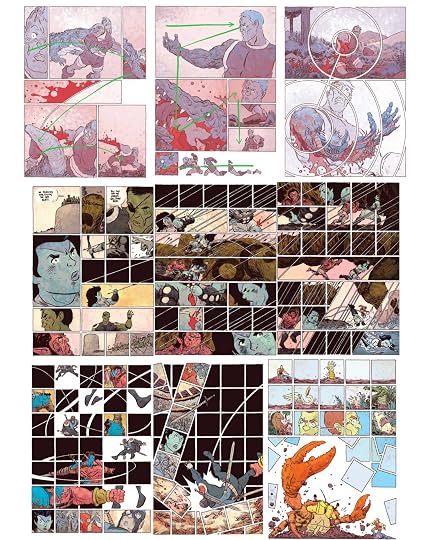
Atop Lonergan's Lonerganian paneling, which most of us first really saw in Hedra, which remains inventive and compelling here, we get beautiful, bombastic art. We also get some interesting implementations of C and M and Y (cyan, magenta, and yellow, the foundations of color in the printed sphere), which here hold a kind of thematic/narrative weight that I wish had been explored a bit more. The god's themselves are represented by absolute K values (black and white). I think ultimately I would have liked to see a bit more cohesive vision of these distinct elements along with what is and isn't allowed to break paneling (like if divine entities/actions could break the out of the paneled world while the created elements remained restrained by the rules governing their world, the formal comic itself). We get hints of this, as when the hero challenges the gods and the structure of the panels begins to fragment, but in the end the governing motif seems mostly to be What Looks Cool On This Page. It's not a bad motif by any stretch because cool pages are, in fact, cool pages. But imagine if there was more.
Also, an aside and not for nothing, but Lonergan's come a long way in the last 18 years from his debut book, Flower And Fade: