

What do you think?

The Art of Batting: The Craft of Cricket’s Greatest Run Scorers – WILLIAM HILL SPORTS BOOK OF THE YEAR NOMINEE 2025
Bloomsbury presents The Art of Batting written and read by Jarrod Kimber
'a wonderful tale' – David ‘Bumble’ Lloyd
'one of cricket’s most distinctive writers' – Andy Zaltzman
COLOURFUL CRICKET HISTORY MEETS EXPERT ANALYSIS IN THIS RICHLY RESEARCHED EXPLORATION OF THE ART OF BATTING.
Most batters just do their best, yet the top players create art. It is physically impossible to face an 80mph delivery and track it with your eyes, yet the greatest batters do more than just watch the ball, they can see into the future.
This book is about the batters who see what mortals don’t. Javed Miandad purposefully makes errors to manipulate the field, Sachin Tendulkar dug up a pitch to take on Warne, Shivnarine Chanderpaul practised non-stop on a beach with tennis balls until he mastered technique and Joe Root’s great play against spin is known to be a confluence of three random events. Others, such as Smith, Pietersen and Richards, carried on the work of a man 100 years before their time, and Ranji changed cricket with a bucket.
Their methods and stories are different, but their currency is the runs. Through interviews with cricketing greats such as David ‘Bumble’ Lloyd, Nasser Hussain, Rahul Dravid and Brian Lara, this book shows you the science, skill and culture that made the 50 greatest batters of all time – and, ultimately, how they conquered leather with willow.
'a wonderful tale' – David ‘Bumble’ Lloyd
'one of cricket’s most distinctive writers' – Andy Zaltzman
COLOURFUL CRICKET HISTORY MEETS EXPERT ANALYSIS IN THIS RICHLY RESEARCHED EXPLORATION OF THE ART OF BATTING.
Most batters just do their best, yet the top players create art. It is physically impossible to face an 80mph delivery and track it with your eyes, yet the greatest batters do more than just watch the ball, they can see into the future.
This book is about the batters who see what mortals don’t. Javed Miandad purposefully makes errors to manipulate the field, Sachin Tendulkar dug up a pitch to take on Warne, Shivnarine Chanderpaul practised non-stop on a beach with tennis balls until he mastered technique and Joe Root’s great play against spin is known to be a confluence of three random events. Others, such as Smith, Pietersen and Richards, carried on the work of a man 100 years before their time, and Ranji changed cricket with a bucket.
Their methods and stories are different, but their currency is the runs. Through interviews with cricketing greats such as David ‘Bumble’ Lloyd, Nasser Hussain, Rahul Dravid and Brian Lara, this book shows you the science, skill and culture that made the 50 greatest batters of all time – and, ultimately, how they conquered leather with willow.
- GenresSportsNonfiction
288 pages, Hardcover
Published July 8, 2025
Ratings & Reviews
Friends & Following
Create a free account to discover what your friends think of this book!
Community Reviews
Displaying 1 - 27 of 27 reviews

November 17, 2025
"No one really copied Gilchrist; he was a one of one, part woodchopper, part accountant late to the office. No one could copy McCullum; he was a sawn-off shotgun firing lollipops to sugar-obsessed kids."
Well researched and an entertaining package for cricket mad fans!
When I was disappointed with Overthrowing Cricket's Empire..., I had lowered my expectations because of the similar videos posted by Jarrod Kimber in his YouTube channel; even though the Substack is still awesome. However, this book brings a fresh air of a different perspective on top 50 batters in Tests.
Honestly, it is easier to predict the top 50 since there are the usual suspects with the Don as the numero uno. However, it becomes fun when Mr. Kimber justifies the position of the batter. But that's not the best part of the book. What I enjoyed the most in the whole book, is the amount of detailed analysis on who is not on the list; especially those chapters which covered motivation, peak, eyes and Machiavelli.
Another interesting feature about this book is the amount of interviews conducted by Mr. Kimber. And that too with a lot of superstars like Dravid, Mark Waugh, Sangakkara, ABD, Lara and Ian Chappel. However, the funniest chronicles came from surprising interviewees. These chronicles rekindled with a lot of memories from the 90s where I used to admire Aravinda de Silva and Saeed Anwar a lot.
Overall, an entertaining read with a lot of numbers!
Well researched and an entertaining package for cricket mad fans!
When I was disappointed with Overthrowing Cricket's Empire..., I had lowered my expectations because of the similar videos posted by Jarrod Kimber in his YouTube channel; even though the Substack is still awesome. However, this book brings a fresh air of a different perspective on top 50 batters in Tests.
Honestly, it is easier to predict the top 50 since there are the usual suspects with the Don as the numero uno. However, it becomes fun when Mr. Kimber justifies the position of the batter. But that's not the best part of the book. What I enjoyed the most in the whole book, is the amount of detailed analysis on who is not on the list; especially those chapters which covered motivation, peak, eyes and Machiavelli.
"The entire thing was made to look more dramatic as Gavaskar had on a wide-brim floppy hat with padding inside instead of a helmet. With an early form of arm guard, wrist band on the other side and something tucked into his trousers that looked like a bandage from a First World War bunker, he looked like a character in a John Carpenter film."
Another interesting feature about this book is the amount of interviews conducted by Mr. Kimber. And that too with a lot of superstars like Dravid, Mark Waugh, Sangakkara, ABD, Lara and Ian Chappel. However, the funniest chronicles came from surprising interviewees. These chronicles rekindled with a lot of memories from the 90s where I used to admire Aravinda de Silva and Saeed Anwar a lot.
Overall, an entertaining read with a lot of numbers!

May 27, 2026
⭐⭐⭐⚝⚝ (3.0/5)
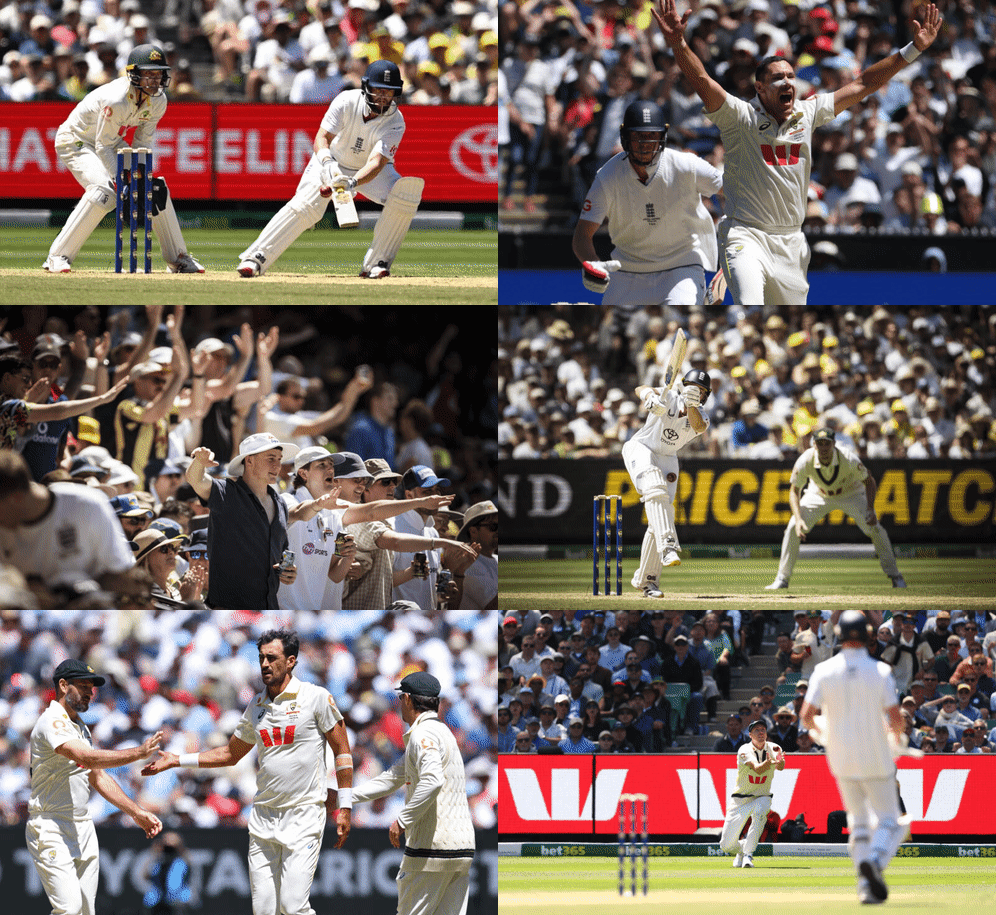
Cricket has never just been about scoring runs—it has always been about solving problems. But The Art of Batting: The Craft of Cricket’s Greatest Run Scorers by Jarrod Kimber occasionally becomes so fascinated with the mechanics of those solutions that it risks losing the human drama behind them.
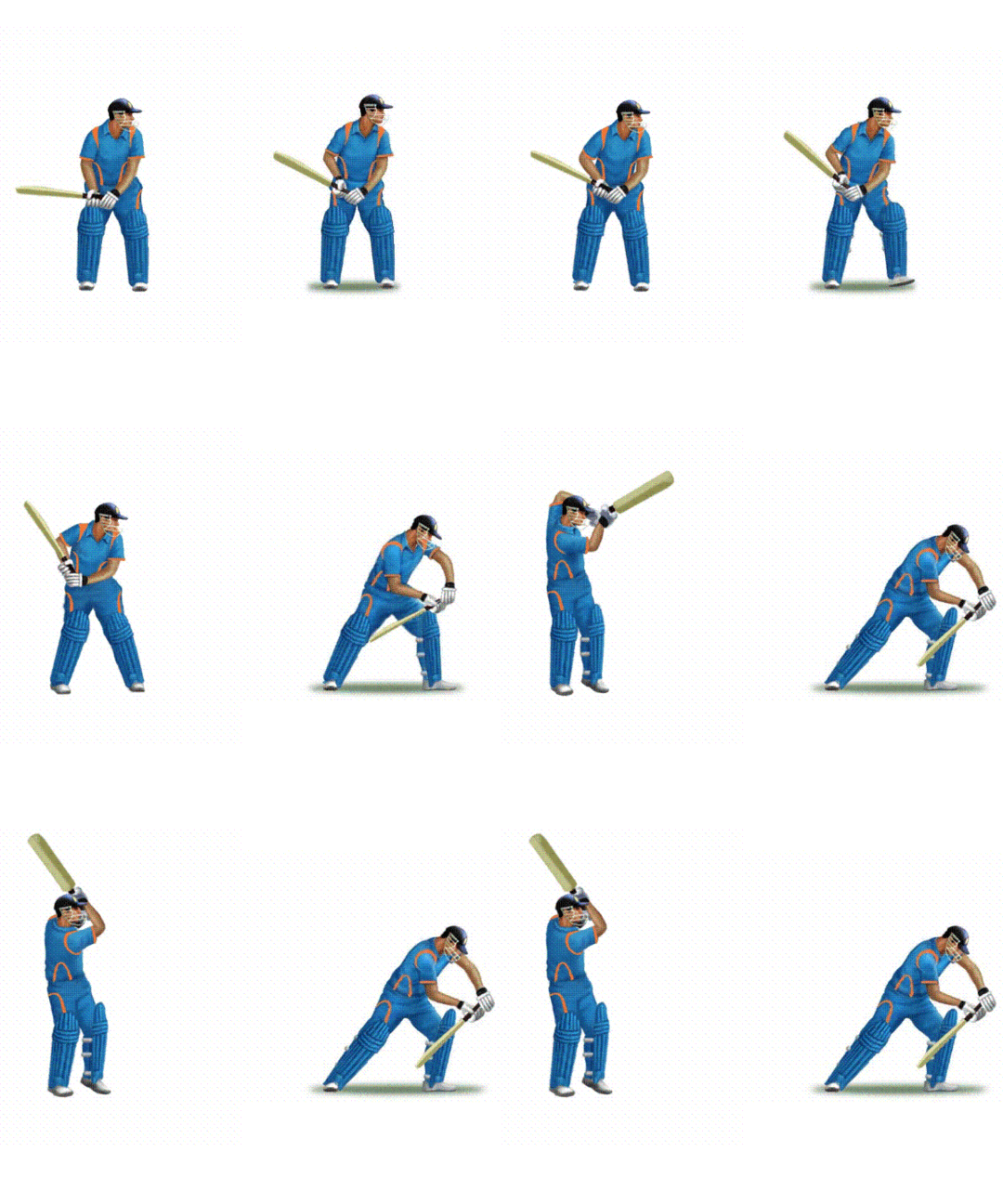
Jarrod Kimber approaches batting not as a spectator, journalist, or traditional historian, but as a detective of technique and context. Rather than presenting a simple celebration of cricket legends, he dissects how batting evolved across eras, conditions, and personalities. The result is a book that attempts to answer a deceptively simple question: what actually makes great batters great?

The ambition here is undeniable. Kimber examines the game through multiple lenses—technique, psychology, historical shifts, equipment changes, and tactical evolution. Cricket’s greatest run scorers are not treated as mythical figures but as products of circumstances, adaptation, and craft. This analytical approach gives the book intellectual depth rarely found in sports writing.
THE PIONEERS AND THE OUTLIERS
W.G. Grace
Batting’s evolutionary ancestor.
To modern eyes, he can look like an uncle wildly swinging a bat at a family barbecue. Yet beneath the chaos was a revolutionary mind. Grace essentially laid the foundations of modern batting, developing front-foot and back-foot play while surviving pitches that were often little more than rough terrain.
Don Bradman
The ultimate cricketing outlier.
Bradman did not simply play batting; he transformed it into a ruthless production system. His logic was brutally efficient: place the ball where fielders were absent and repeat endlessly.
Result: a player who exists entirely in his own category, occupying a tier untouched by anyone else.
Victor Trumper
The original big bang of batting.
Trumper brought movement, spontaneity, and artistry to an era obsessed with structure. He played with a freedom that felt almost rebellious for his time.
THE MODERN MASTERS
Sachin Tendulkar
The man who never seemed to tire of scoring runs.
Kimber presents Tendulkar as a masterpiece of precision. Technical perfection blended with elite game awareness, whether that meant refining mechanics or mentally outmaneuvering opponents.
Peak + longevity = near-mythical greatness.
Jack Hobbs & Len Hutton
The bedrock of English batting tradition. Hobbs dominated across changing eras, while Hutton mastered the art of relentless accumulation.
Brian Lara
Art where others chose engineering.
If Tendulkar was precision, Lara was instinct. High backlifts, natural flair, and beautiful unpredictability defined him.
When Lara truly settled in, bowling attacks simply disappeared.
Viv Richards
A swaggering force of nature who turned batting into psychological warfare before modern cricket embraced intimidation as strategy.
Sunil Gavaskar
The ultimate technician. Facing terrifying fast bowling without a helmet, Gavaskar relied on tiny adjustments and complete technical mastery.
Garfield Sobers & Jacques Kallis
Two all-round giants built differently.
Kallis → Precision. Accumulation. Statistical inevitability.
Sobers → Fluidity. Imagination. Pure cricketing artistry.
THE FAB FOUR & CONTEMPORARY GREATS
Steve Smith (Ranked #6)
Modern batting's beautiful oddity. Twitchy, unconventional, and entirely self-created, Smith succeeds despite every technical convention insisting he should not.
Joe Root (Ranked #14)
A genius against spin bowling. Kimber argues his brilliance emerged through an unlikely combination of developmental accidents and natural gifts.
Rahul Dravid (Ranked #15)
"The Wall"
Dravid approached batting with total seriousness, wearing bowlers down until frustration replaced hope.
Ricky Ponting (Ranked #19)
For a period in the mid-2000s, Ponting felt almost unbeatable.
But his later decline reshaped the overall picture of his career.
Virat Kohli (Ranked #25)
At his peak, Kohli looked destined for all-time top-ten conversations. Dominance against elite pace attacks defined his greatness, though a prolonged dip eventually affected his final standing.
Kane Williamson (Ranked #32)
An elegant accumulator whose numbers showed small declines against the absolute strongest bowling attacks of his era.
TECHNICIANS, MAVERICKS & HONORABLE MENTIONS
Shivnarine Chanderpaul
Proof that ugly can become untouchable. Endless repetition created one of cricket's strangest—and most effective—defensive methods.
Javed Miandad
Cricket's chess grandmaster.
Miandad manipulated captains and field placements before the battle had even begun.
Kevin Pietersen (Ranked #41)
Ego, spectacle, and dominance rolled into one personality. His confrontations with Shane Warne often felt larger than cricket itself.
Virender Sehwag
Sehwag seemed personally offended by the concept of patience.
Footwork? Optional.
Boundaries? Mandatory.
Ranjitsinhji ("Ranji")
A genuine innovator who changed batting geometry itself by popularizing the leg glance.
Adam Gilchrist — The 51st Man
The painful omission. Kimber identifies Gilchrist as the unofficial final inclusion: a player who completely redefined what wicketkeeper-batters could become.
Final Note: The book also highlights the "Testless"—elite women batters whose innovation and evolution transformed the women's game despite being denied many Test opportunities.
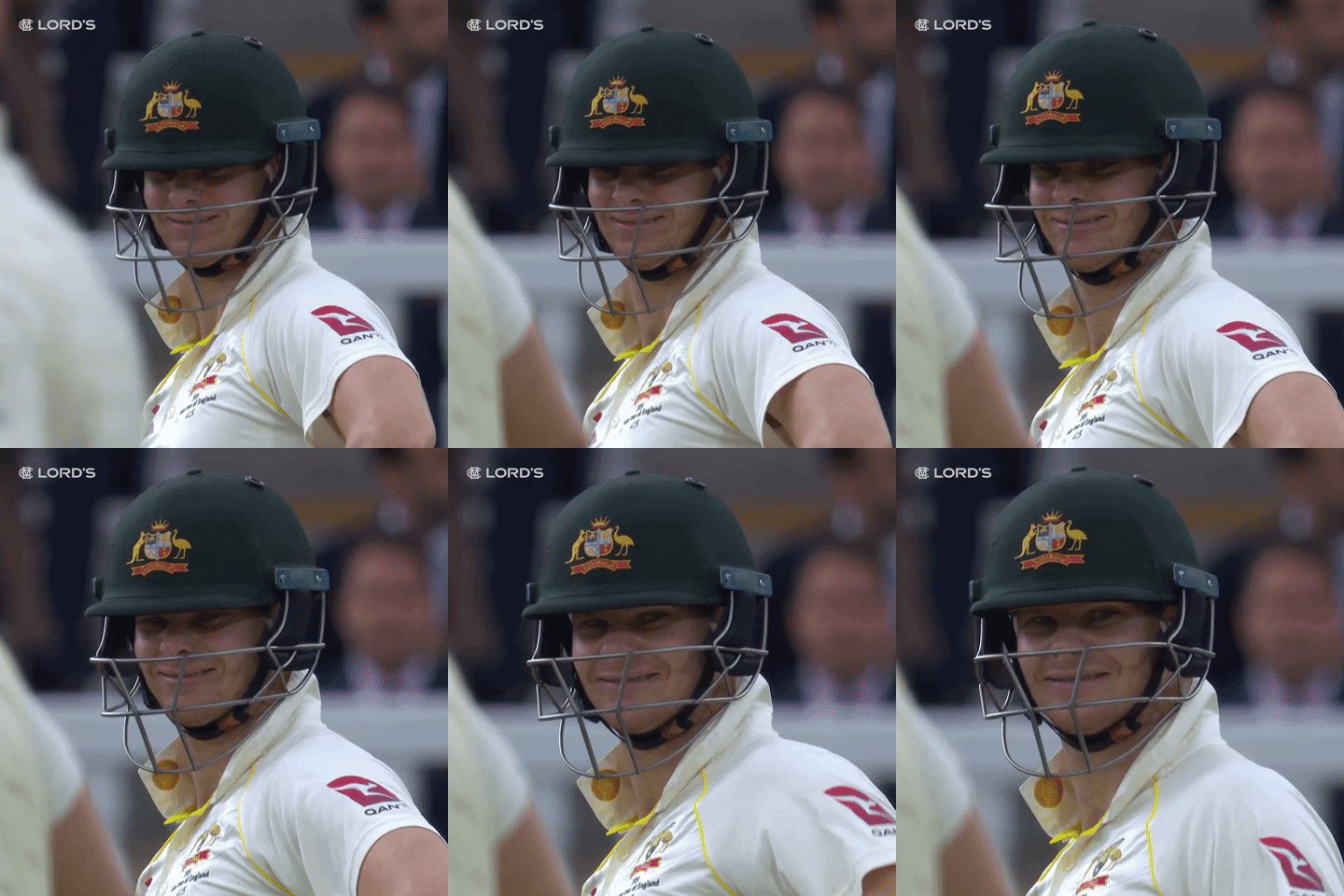
Great batting, Kimber suggests, isn’t talent alone—it’s adaptation repeated over time.
What immediately stands out is Kimber’s passion for cricket history. The book moves fluidly across generations, connecting players from vastly different eras and contexts. Instead of isolating legends into separate stories, he explores how the sport itself changed around them. This wider lens strengthens the central argument: greatness in batting cannot be measured only by statistics.
However, the book’s greatest strength gradually becomes its limitation.
Kimber sometimes overwhelms the narrative with analysis. Discussions of technique, historical data, tactical evolution, and contextual frameworks are often fascinating individually, but together they can create a sense of density. There are stretches where the emotional and personal side of cricket recedes into the background, replaced by prolonged examination.

Cricket fans who enjoy deep analytical breakdowns may find this rewarding. Casual readers—or those looking for character-driven storytelling—may struggle through sections that read more like detailed cricket essays than a flowing narrative.

Where the book excels:
Exceptional cricket insight: Kimber understands the sport beyond surface-level commentary.
Historical breadth: Multiple eras and styles are explored with impressive context.
Fresh perspective: Batting is examined as an evolving craft rather than a collection of statistics.
Intelligent arguments: The book challenges simplistic views of greatness.
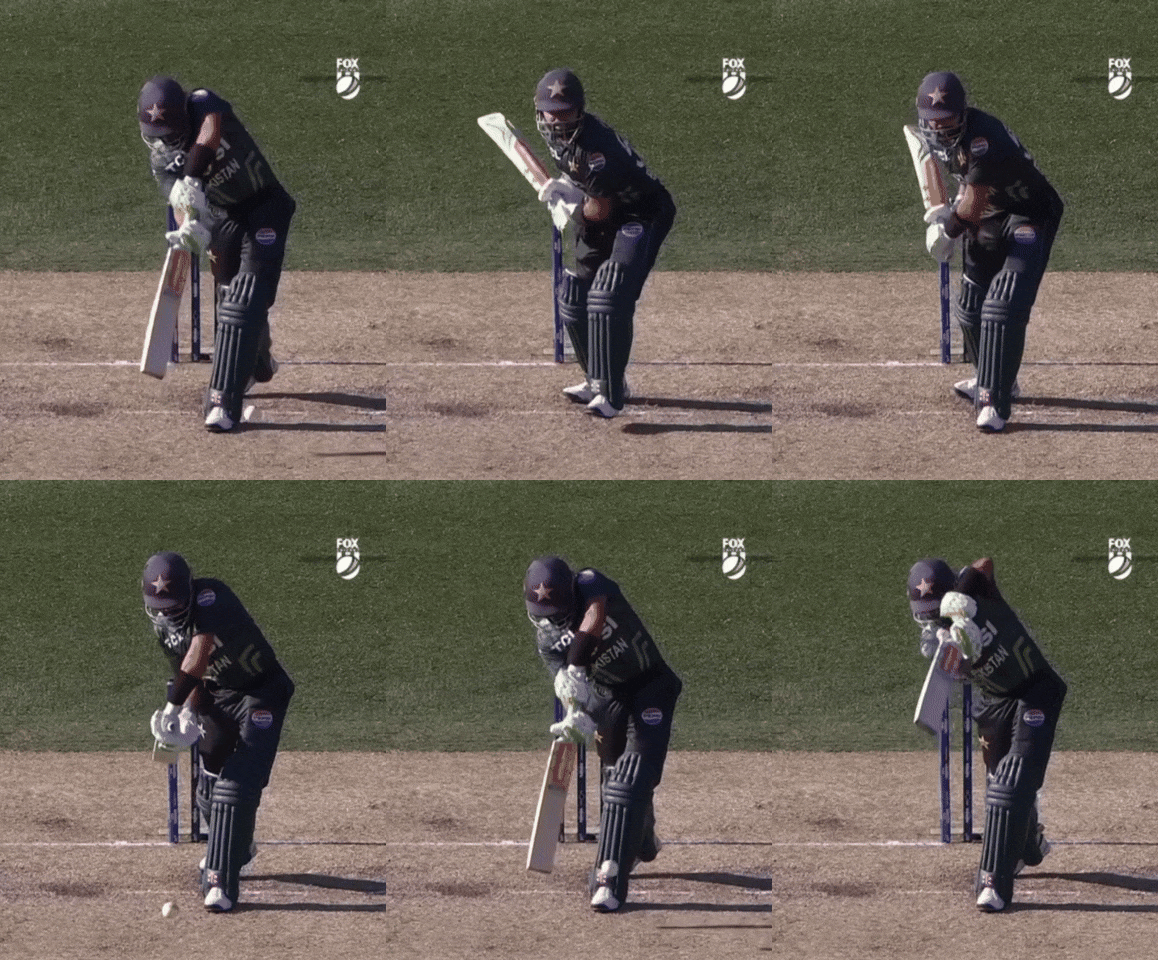
Where it stumbles:
Over-analysis: Technical discussions occasionally overshadow storytelling.
Uneven pacing: Certain sections become dense and difficult to move through.
Limited emotional resonance: The players sometimes feel like case studies rather than personalities.
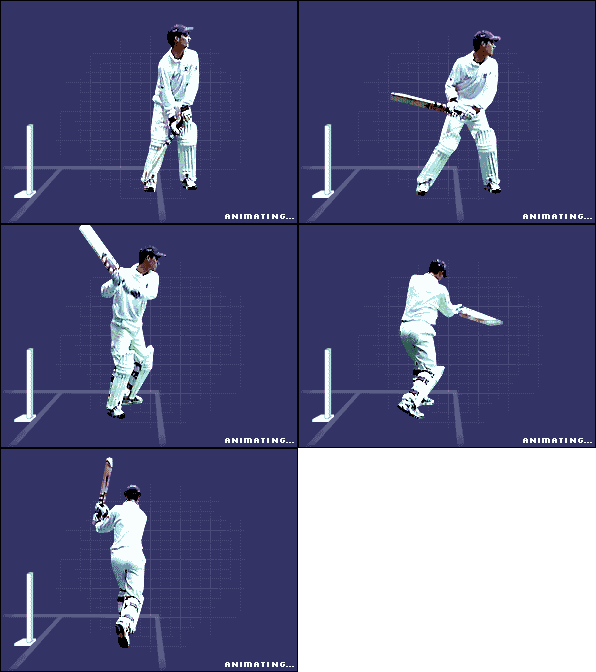
Critically, The Art of Batting feels like a book written by someone deeply in love with cricket's architecture. Kimber wants readers to understand not just who scored runs, but why they scored them and how their methods reflected broader shifts in the game. That intellectual rigor is admirable, but it occasionally comes at the cost of narrative warmth.
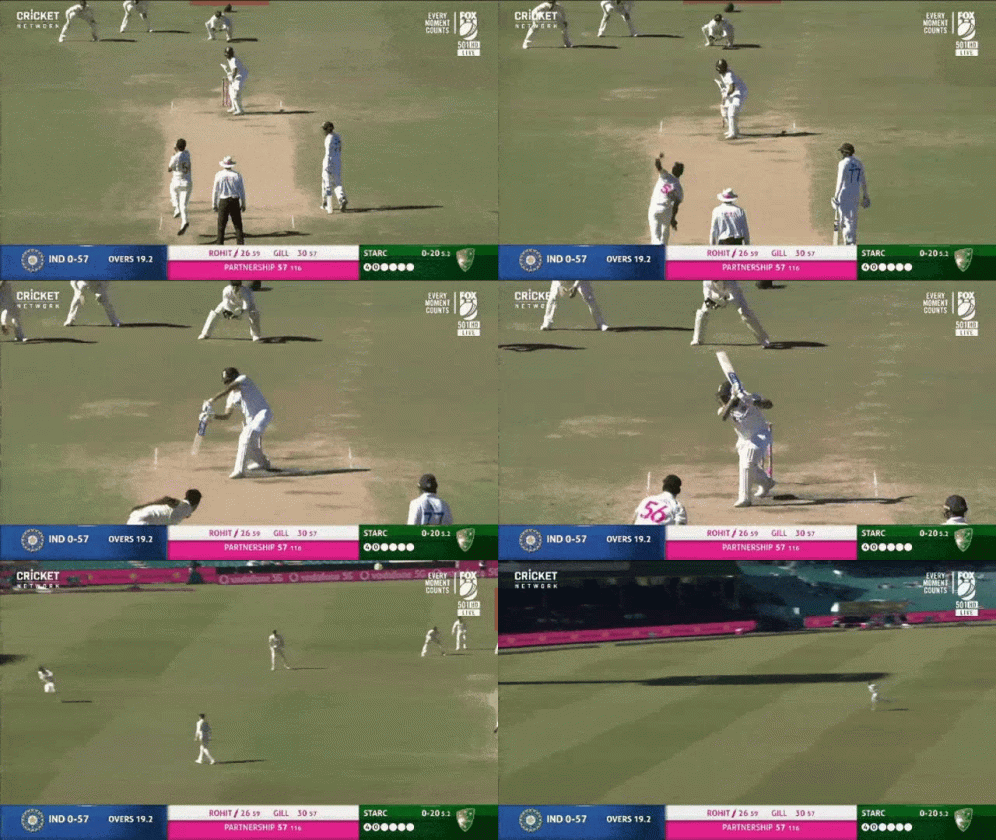

Final verdict: The Art of Batting is an insightful and deeply researched cricket book that rewards readers willing to engage with its analytical depth. Yet its heavy focus on technical and historical examination can sometimes make it feel more educational than emotionally engaging.
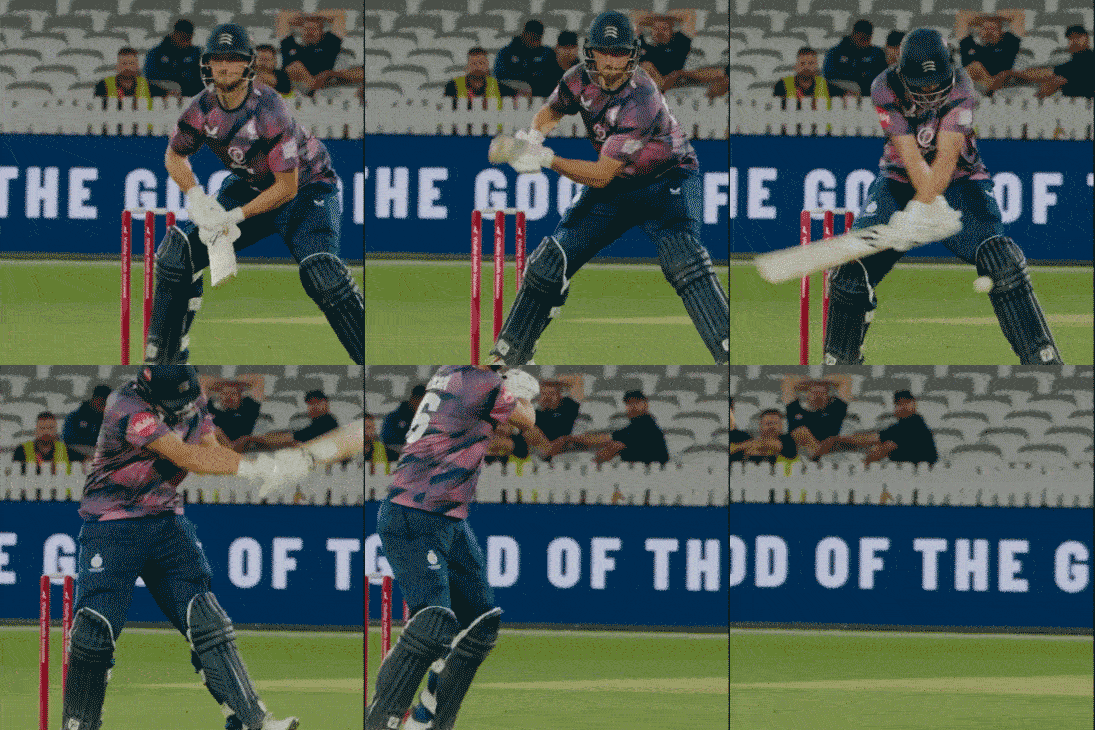
An intelligent and ambitious study of cricket’s greatest run scorers—rich in insight, occasionally heavy in execution, and best suited for readers who enjoy thinking about the game as much as watching it.

February 9, 2026
Jarrod Kimber is easily one of my favorite cricket writers—been an avid follower since his Cricinfo days and thoroughly enjoyed his previous book on the history of Test cricket. In this deeply researched and analytical volume, he gradually peels back the layers of the craft and the game’s greatest batters, dissecting a wide array of aspects—eye and feet movement, mastering pace vs spin, innovation, running between wickets, peaking in form, impact on team & results, playing conditions and eras, and more. He vividly recreates some memorable knocks, and sprinkles the narrative with insightful discussions with some current and ex players. The book culminates in a well-reasoned ranking of the top 50 batters in history, that showcases his mastery of the sport’s technical nuances and his vast body of knowledge.
However, the sheer volume of data is overwhelming, with far too many stats thrown at you in a way that occasionally overpowers the narrative and makes it a monotonous, laborious read. While Kimber’s research is impeccable, the book strangely lacks his trademark dry wit and the engaging, humorous storytelling style that usually defines his work. Also, funnily, there’s not much content on Sachin’s batting (despite ranking him #2) while other greats (and some non-greats) get ample coverage.
However, the sheer volume of data is overwhelming, with far too many stats thrown at you in a way that occasionally overpowers the narrative and makes it a monotonous, laborious read. While Kimber’s research is impeccable, the book strangely lacks his trademark dry wit and the engaging, humorous storytelling style that usually defines his work. Also, funnily, there’s not much content on Sachin’s batting (despite ranking him #2) while other greats (and some non-greats) get ample coverage.

September 15, 2026
A modern classic.

October 5, 2025
A mind-bogglingly well researched look into what makes the greatest test match batters as good as they were. It's incredibly informative and insightful but also entertaining.
Some of my favourite chapters were:
- 'Eyes', which discusses how batters don't really see the ball in the conventional sense, they actually predict it more than anything.
- 'Peak', which discusses the how and when batters reach their peaks and does so with a depth and nuance I've never seen anywhere before.
- 'Motivation', self-explanatory title but again the depth and nuance are exemplary.
Recommend for any fan of cricket or just good sports writing.
Some of my favourite chapters were:
- 'Eyes', which discusses how batters don't really see the ball in the conventional sense, they actually predict it more than anything.
- 'Peak', which discusses the how and when batters reach their peaks and does so with a depth and nuance I've never seen anywhere before.
- 'Motivation', self-explanatory title but again the depth and nuance are exemplary.
Recommend for any fan of cricket or just good sports writing.

May 13, 2026
A very well researched book with lots of fascinating insight into crickets greatest run scorers. Perhaps a little stat heavy at some points but equally fascinating at the same time.
October 17, 2025
Feels like one for the purists. Kimber’s dedication to tackling the impossible task of ranking batsmen across generations is admirable. He both quantifies and qualifies the debates cricket fans have argued over in pubs, cafés, and pavilions for decades. It’s no spoiler to reveal that Bradman comfortably holds the GOAT title...but beyond that, things get far trickier. Kudos to Kimber for doing the hard yards!
December 17, 2025
Great book, I am still shit at batting though.

August 27, 2025
A breezy read with fun anecdotes and impressive stat work.
Some of the stories I had already heard over the years (sometimes in Kimber's other book or on his videos) but there was enough new stuff to learn. Some of my favourite parts of the book were regarding batting in late 19th and early 20th century. The context around WG Grace's numbers was eye opening and made me appreciate him a lot more.
Along with the stories and sentiments, a lot of book is a very detailed slicing and dicing of stats and that was enlightening without being boring. It is impressive that the author goes beyond the simple average but still comes up with objective criteria instead of just relying on his gut feeling. In fact it would have been better if some more detailed stats were provided for better comparison among batsmen. Right now at times it feels like that Kimber only brings stats to justify the rankings he gave but not to provide counterexamples.
I was not super interested in the rankings to start with because there is a huge element of subjectivity to those. Still I quite liked how much data Kimber tries to use and gives justification for his selections. Some of the rankings confirm with my own biases and therefore more data to justify and question those would have been nicer.
The best part of the rankings is that Kimber avoids recency bias quite admirably. It gave special joy to see some of the forgotten greats on this list - Hutton, Hobbs, and Herbert Sutcliffe in particular.
Overall time well spent.
Some of the stories I had already heard over the years (sometimes in Kimber's other book or on his videos) but there was enough new stuff to learn. Some of my favourite parts of the book were regarding batting in late 19th and early 20th century. The context around WG Grace's numbers was eye opening and made me appreciate him a lot more.
Along with the stories and sentiments, a lot of book is a very detailed slicing and dicing of stats and that was enlightening without being boring. It is impressive that the author goes beyond the simple average but still comes up with objective criteria instead of just relying on his gut feeling. In fact it would have been better if some more detailed stats were provided for better comparison among batsmen. Right now at times it feels like that Kimber only brings stats to justify the rankings he gave but not to provide counterexamples.
I was not super interested in the rankings to start with because there is a huge element of subjectivity to those. Still I quite liked how much data Kimber tries to use and gives justification for his selections. Some of the rankings confirm with my own biases and therefore more data to justify and question those would have been nicer.
The best part of the rankings is that Kimber avoids recency bias quite admirably. It gave special joy to see some of the forgotten greats on this list - Hutton, Hobbs, and Herbert Sutcliffe in particular.
Overall time well spent.
May 14, 2026
Having enjoyed Kimber's musings and podcast for a while, I was rather disappointed by this book.
The main reason being that it tried to be 3 books in one and therefore failed to be any - a top 50 greatest batters list, a data-driven search for what makes batters great (like Hitting Against The Spin by Nathan Leamon), and musings on some of what it takes to perfect this craft (like Who Would Want To Be A Batsman by Simon Hughes). All of a sudden there'd be a load of data and insight, then a long story of reflection, and then a reference to Kimber's top 50 list which ends up featuring at the end of the book. Each style of writing deserves its own book, and trying to do all three did a disservice.
The writing style I found peculiar too. The chapter about batting in the women's game had lots of unnecessary comparisons to men, there were often contradictions (like when he described Michael Clarke as a great player of spin, before implying his numbers again spin aren't great), and I just found there was a lot of rambling. Finishing with a chapter told from the perspective of the ball, after a list of top 50 batters (which it would make sense to end on), all felt confusing.
The main reason being that it tried to be 3 books in one and therefore failed to be any - a top 50 greatest batters list, a data-driven search for what makes batters great (like Hitting Against The Spin by Nathan Leamon), and musings on some of what it takes to perfect this craft (like Who Would Want To Be A Batsman by Simon Hughes). All of a sudden there'd be a load of data and insight, then a long story of reflection, and then a reference to Kimber's top 50 list which ends up featuring at the end of the book. Each style of writing deserves its own book, and trying to do all three did a disservice.
The writing style I found peculiar too. The chapter about batting in the women's game had lots of unnecessary comparisons to men, there were often contradictions (like when he described Michael Clarke as a great player of spin, before implying his numbers again spin aren't great), and I just found there was a lot of rambling. Finishing with a chapter told from the perspective of the ball, after a list of top 50 batters (which it would make sense to end on), all felt confusing.

May 26, 2025
Follow Jarrods work a lot, so the book was not a surprise.
But to those who have not followed his essays and podcasts - this book will come as a positive surprise.
The sections of the book are very interesting and the writing is crisp and conversational. JK doesnt attempt to come of as a literary genius and that sort of works in favor of the book.
The list of the 50 greatest test batters - is arguably the least interesting thing in the book - which is to say the rest of the book is more interesting.
I would have liked to explore some more aspects of batting - like handling pressure - heat or bad light etc.
All feel like Jarrod has a lot more to say on batting - especially in its ODI and T20 formats and might have to wait for some Video essays for that content.
But to those who have not followed his essays and podcasts - this book will come as a positive surprise.
The sections of the book are very interesting and the writing is crisp and conversational. JK doesnt attempt to come of as a literary genius and that sort of works in favor of the book.
The list of the 50 greatest test batters - is arguably the least interesting thing in the book - which is to say the rest of the book is more interesting.
I would have liked to explore some more aspects of batting - like handling pressure - heat or bad light etc.
All feel like Jarrod has a lot more to say on batting - especially in its ODI and T20 formats and might have to wait for some Video essays for that content.

December 28, 2025
what a banger, if youre a cricket nerd this is for you. love this game. well organised, alot of this is just data and research but its written in a way thats engaging and makes me want to read more.
Regarding, the final list Tendulkar, Bradman, Hobbs. I think Tendulkar should take number one and these guys go a few lower. The list is constructed in a way that goes primarily by raw data and averages, which i guess is the objective way to do it. But bradman barely played in Asia and doesn't have the quantity of games Tendulkar did, and didnt face decade's of the greatest bowling attacks like Tendulkar.
Regarding, the final list Tendulkar, Bradman, Hobbs. I think Tendulkar should take number one and these guys go a few lower. The list is constructed in a way that goes primarily by raw data and averages, which i guess is the objective way to do it. But bradman barely played in Asia and doesn't have the quantity of games Tendulkar did, and didnt face decade's of the greatest bowling attacks like Tendulkar.

January 21, 2026
The problem with this book isn’t the book itself but me: I am just too biased when it comes to cricket. So much so that I can’t tolerate praise for Australian cricketers. The only really interesting thing for me about an Australian batter is whether they are out yet. Yes they live rent free in my head and yes it’s a childish attitude but that’s just the way it is - I just don’t like the Australian cricket team. And so I can’t give this book more than three stars as inevitably the best batter ever is still - and will probably always be - Australian.
January 28, 2026
I'm a big fan of Kimber, and The Art of Batting has numerous great anecdotes littered throughout that remind me of the very best of his writing.
However, when it comes to the initial conceit (the list), I would have loved a much more numbers based approach and a clearer methodology. Intuitively, I agree with many assumptions made about the value of different stats. For example, I certainly believe that runs scored away from home are more valuable, but if we are going to quantify how good batsmen are I think there should be an attempt to quantify how much more valuable they are.
However, when it comes to the initial conceit (the list), I would have loved a much more numbers based approach and a clearer methodology. Intuitively, I agree with many assumptions made about the value of different stats. For example, I certainly believe that runs scored away from home are more valuable, but if we are going to quantify how good batsmen are I think there should be an attempt to quantify how much more valuable they are.

July 29, 2025
A delightful ode to the art of batting. Packed with engrossing anecdotes & rich cricketing lore. Sharp analysis across eras, bowling attacks, and batting styles. You may not agree with every ranking, but the stories will keep you hooked.
A gem for every cricket lover. Specially if you have loved reading Jarrod’s essays.
A gem for every cricket lover. Specially if you have loved reading Jarrod’s essays.

August 19, 2025
Fun book for a cricket enthusiast. I got a great sense of how batting has changed over the eras due to external factors. I see how folks between eras are so not comparable.
Brian Lara was a genius. Sachin is great, Rahul David is ranked higher than Ricky Ponting. Fun book.
Jarrod does drone on a bit and it gets repetitive after a while. It did not help that I read the book in his voice.
Brian Lara was a genius. Sachin is great, Rahul David is ranked higher than Ricky Ponting. Fun book.
Jarrod does drone on a bit and it gets repetitive after a while. It did not help that I read the book in his voice.

January 28, 2026
A great read, really enjoyed the parts around the evolution of batting and why Victor Trumper was so good. the analysis of Steve Smith's unconventional technique was also well done. Not sure the chapter structure was great, chapters seemed very similar, but no arguments with the top 50 at the end.
Great cricket book for those who enjoy the stats! 4 stars.
Great cricket book for those who enjoy the stats! 4 stars.

May 28, 2025
A superb analysis of batting, along with some great insights from some of the greats of the game. Always enjoyed Jarrod’s YouTube videos so would recommend this to any cricket fan, especially those who love stats like myself!

October 11, 2025
Although it's weird to see Jarrod Kimber quoting himself a couple of times, this is a solid read. Loved it!
Now do one for bowling Jarrod Kimber
Now do one for bowling Jarrod Kimber

July 15, 2025
What a great book.
Very insightful
Very insightful

October 18, 2025
Good chat on the art of batting and thorough analysis of so many great players. Covers the games long history and I enjoyed the audible version.

November 28, 2025
Well researched book on batting in cricket. Ironically, the highlight for me was the chapter on cricket balls. That chapter elevated the book and is hilariously well written

Read
April 19, 2026Jarrod has a flow with his words that I have rarely seen in other authors, it's breezy and and poetic when it needs to be, a few too many numbers for my liking, great read in pockets

August 12, 2026
What a delightful read. Jarod kimber is poetic in laying out one of the most elegant art forms- batting with rich anecdotes. Cricket aficionados should pick it up without a thought.

March 26, 2026
Truly felt like watching an extended version of a GoodAreas video on yt but read on paper.

May 18, 2025
What this book is, more than anything else, a love letter to batting.
December 27, 2025
Jarrod Kimber dissects the art of batting into very enjoyable and readable portions. I literally could not put this book down.
Displaying 1 - 27 of 27 reviews