

What do you think?
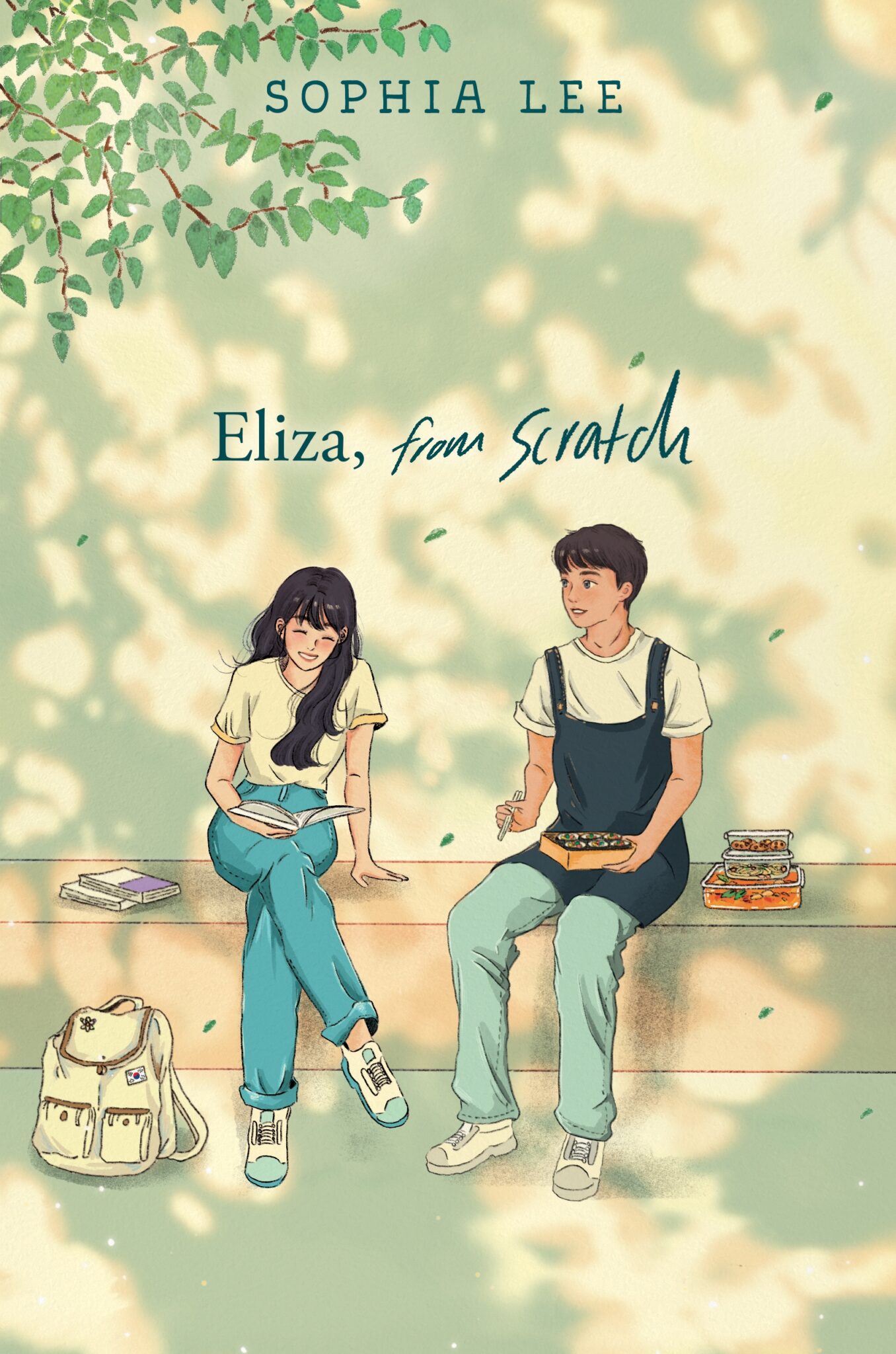
Eliza, from Scratch
A charming, poignant YA rom-com about an academics-obsessed teen who learns big truths about love, family, and herself when a scheduling snafu lands her in a culinary arts class, perfect for fans of Jenny Han and Rachel Lynn Solomon
Ingredients:
· 1 try-hard salutatorian
· 1 annoying and (annoyingly) cute boy
· A handful of Korean recipes (measure with your heart)
· The spice of competition, to taste
Eliza Park’s senior year will be perfect: She’s going to be salutatorian, give a tear-jerking graduation speech in front of her parents, and enjoy her last year with her equally ambitious best friends. But when a scheduling mishap enrolls her in Culinary Arts, Eliza is suddenly the most clueless person in the class. Her typical title of star student belongs to the aggravatingly arrogant Wesley Ruengsomboon, a charming Thai American boy whose talent in the kitchen leaves Eliza both awed and annoyed.
With her rank on the line, Eliza’s only hope is to snatch the midterm cooking contest win from Wesley, however improbable that may be. Add in the flavor of her grandmother’s Korean recipes, the heat of being class partners with Wesley, and the sweetness of unexpected feelings—and Eliza must now rebuild everything she knew about success, love, and what it means to be herself, from scratch.
Ingredients:
· 1 try-hard salutatorian
· 1 annoying and (annoyingly) cute boy
· A handful of Korean recipes (measure with your heart)
· The spice of competition, to taste
Eliza Park’s senior year will be perfect: She’s going to be salutatorian, give a tear-jerking graduation speech in front of her parents, and enjoy her last year with her equally ambitious best friends. But when a scheduling mishap enrolls her in Culinary Arts, Eliza is suddenly the most clueless person in the class. Her typical title of star student belongs to the aggravatingly arrogant Wesley Ruengsomboon, a charming Thai American boy whose talent in the kitchen leaves Eliza both awed and annoyed.
With her rank on the line, Eliza’s only hope is to snatch the midterm cooking contest win from Wesley, however improbable that may be. Add in the flavor of her grandmother’s Korean recipes, the heat of being class partners with Wesley, and the sweetness of unexpected feelings—and Eliza must now rebuild everything she knew about success, love, and what it means to be herself, from scratch.
320 pages, Hardcover
First published May 13, 2025
Ratings & Reviews
Friends & Following
Create a free account to discover what your friends think of this book!
Community Reviews
Displaying 1 - 30 of 435 reviews

May 24, 2025
“It was only in the kitchen, where I felt the most lost, that I began to find out the parts of myself I didn’t yet know. The story of my family begins in the kitchen, so I should have known that the story of me would start there, too.”
I cannot express the nostalgia I felt while reading this book. This was a beautiful story about finding dignity in every job that you do and how certain activities mean a lot more than what you think for certain people. It may have ties to their roots, their traditions and most of all their family and the author used cooking as the red threads, bringing Eliza and her family together.
When Eliza was assigned to Culinary Arts instead of AP Physics, she felt her dreams of being salutatorian slowly crumble away. Then she met Wesley who was annoyingly good at every aspect of cooking while she dumped crushed tomatoes in her half cooked spaghetti (apparently salsa pasta 😂)and could barely chop the onions. Her friends were slowly drifting away and her mother was quietly grieving over the death of her grandmother whom she didn't know much. She felt that she could never get better at something she wasn't already good at and wanted to give it up after a few disastrous attempts. That part of her thinking process was something that I also felt for much of my life.
This story triggered some memories from when I was a kid and that's what sealed this book for me. My aunt used to watch Masterchef Australia and I with her and it's fun to remember how we used to pick the chef who had the most potential to win! It was probably the first time I learnt about the word dessert which's funny tbh! And then a few years later I was obsessed with the anime Yumeiro Patissiere. Like the dynamic between Eliza and Wesley was very reminiscent to Ichigo and Kashino (except for the fact that Kashino was a sadist🤣)...I highly recommend you all to watch the anime and to follow it up with this book<3
I personally wasn't the biggest fan of the friend group initially... Kareena and Meredith were more judgemental than supportive...and the side plot about their friendship drama was my least favorite part of this book! But they chose to listen to Eliza, to understand her worries so I guess I'll forgive them...On top of all this, I felt that Eliza is the kinda person that really can't stand not saying stuff that comes to her mind and that lead to lot of things, yelling at her eomma included...I honestly can't imagine saying any of that to my mother (because that'll be the day I rest in peace!)
Wesley's gang of friends were the coolest...I honestly wish that they had more page time!
I loved the cooking competition aspect of this book! I was constantly hungry when reading, as this book mentioned Miyeok-guk (seaweed soup), Mandu (dumplings), Doenjang-jjigae (soyabean paste stew) and so many other mouthwatering delicacies. Her mother's relationship with her mother (aka Eliza's grandmother) was cemented by the recipes that she was taught as a young kid. And the fact that Eliza was trying her best to understand her mother's grief and to share it by learning to cook (even though she had never properly spoken to her halmeoni) was just endearing 🥺!
This was Sophia Lee's debut novel and I had the best time. Her writing personally reminded me of Ann Liang's so I'll be yapping about this book for life and will also be waiting in line for all her future novels. Happy reading kyuu (≧ᗜ≦)!
Pre-read~
Another book to my never-ending tbr for June! This one has been blurbed by Ann Liang (I'm definitely in my Ann Liang phase right now). It's about a girl (soon-to-be-salutatorian) who had one of her weighted classes (GPA boosters) replaced by a culinary class and she has absolutely no idea how to cook. But I believe our author here does know how to cook up a romance so I want to give this a try as soon as possible. Apparently, it's filled with cooking competitions, Korean food and a wholesome romance (rivals to lovers)...that I can't wait to gulp down...
I cannot express the nostalgia I felt while reading this book. This was a beautiful story about finding dignity in every job that you do and how certain activities mean a lot more than what you think for certain people. It may have ties to their roots, their traditions and most of all their family and the author used cooking as the red threads, bringing Eliza and her family together.
When Eliza was assigned to Culinary Arts instead of AP Physics, she felt her dreams of being salutatorian slowly crumble away. Then she met Wesley who was annoyingly good at every aspect of cooking while she dumped crushed tomatoes in her half cooked spaghetti (apparently salsa pasta 😂)and could barely chop the onions. Her friends were slowly drifting away and her mother was quietly grieving over the death of her grandmother whom she didn't know much. She felt that she could never get better at something she wasn't already good at and wanted to give it up after a few disastrous attempts. That part of her thinking process was something that I also felt for much of my life.
This story triggered some memories from when I was a kid and that's what sealed this book for me. My aunt used to watch Masterchef Australia and I with her and it's fun to remember how we used to pick the chef who had the most potential to win! It was probably the first time I learnt about the word dessert which's funny tbh! And then a few years later I was obsessed with the anime Yumeiro Patissiere. Like the dynamic between Eliza and Wesley was very reminiscent to Ichigo and Kashino (except for the fact that Kashino was a sadist🤣)...I highly recommend you all to watch the anime and to follow it up with this book<3
I personally wasn't the biggest fan of the friend group initially... Kareena and Meredith were more judgemental than supportive...and the side plot about their friendship drama was my least favorite part of this book! But they chose to listen to Eliza, to understand her worries so I guess I'll forgive them...On top of all this, I felt that Eliza is the kinda person that really can't stand not saying stuff that comes to her mind and that lead to lot of things, yelling at her eomma included...I honestly can't imagine saying any of that to my mother (because that'll be the day I rest in peace!)
Wesley's gang of friends were the coolest...I honestly wish that they had more page time!
I loved the cooking competition aspect of this book! I was constantly hungry when reading, as this book mentioned Miyeok-guk (seaweed soup), Mandu (dumplings), Doenjang-jjigae (soyabean paste stew) and so many other mouthwatering delicacies. Her mother's relationship with her mother (aka Eliza's grandmother) was cemented by the recipes that she was taught as a young kid. And the fact that Eliza was trying her best to understand her mother's grief and to share it by learning to cook (even though she had never properly spoken to her halmeoni) was just endearing 🥺!
This was Sophia Lee's debut novel and I had the best time. Her writing personally reminded me of Ann Liang's so I'll be yapping about this book for life and will also be waiting in line for all her future novels. Happy reading kyuu (≧ᗜ≦)!
Pre-read~
Another book to my never-ending tbr for June! This one has been blurbed by Ann Liang (I'm definitely in my Ann Liang phase right now). It's about a girl (soon-to-be-salutatorian) who had one of her weighted classes (GPA boosters) replaced by a culinary class and she has absolutely no idea how to cook. But I believe our author here does know how to cook up a romance so I want to give this a try as soon as possible. Apparently, it's filled with cooking competitions, Korean food and a wholesome romance (rivals to lovers)...that I can't wait to gulp down...
May 18, 2025
this book is for the girls who try desperately to connect with their mothers and their culture, and i absolutely adored every second of it. the book follows eliza, an overachiever who is enrolled in a culinary class after a scheduling mishap. she learns that she's not great at cooking, and later has to become partners with an irritable (cute) boy who knows everything there is to know about cooking.
eliza and wesley were adorable! i loved reading their moments together and i liked how their relationship was built gradually and eventually became comfortable with each other (her bringing him to her house to cook together with her mom like hello? they're the cutest) my favorite part of the book was reading the moments with her mom, i love that they bonded with one another more and more over cooking their cultural dishes together, it made their storyline so special and emotional, i very nearly cried when reading it. by the end of the book, we see how much eliza has grown with herself and her identity, her relationship with her mother, and her overall connection with her family and culture. a beautiful and memorable read for sure!
Thank you to NetGalley and HarperCollins Children's Books for an ARC in exchange for an honest review.
eliza and wesley were adorable! i loved reading their moments together and i liked how their relationship was built gradually and eventually became comfortable with each other (her bringing him to her house to cook together with her mom like hello? they're the cutest) my favorite part of the book was reading the moments with her mom, i love that they bonded with one another more and more over cooking their cultural dishes together, it made their storyline so special and emotional, i very nearly cried when reading it. by the end of the book, we see how much eliza has grown with herself and her identity, her relationship with her mother, and her overall connection with her family and culture. a beautiful and memorable read for sure!
Thank you to NetGalley and HarperCollins Children's Books for an ARC in exchange for an honest review.
![Profile Image for edie-may ౨ৎ [book slump].](https://i.gr-assets.com/images/S/compressed.photo.goodreads.com/users/1784308797i/155866964._UY200_CR0,0,200,200_.jpg)
October 15, 2025
── 3.75 stars .ᐟ 𓂃۶ৎ
❝ No one said your problems have
to be the worst in the world in order
for them to exist. ❞
⌗ started: oct 15, 2025 ⌝
⌞ finished: oct 15, 2025 ᥫ᭡
⤿ age rating: 13+
⤿ spice level: 0/5
⤿ content warnings:
⋆ grief
⋆ language
spoiler-free review!
ᰔ tl;dr: it wasn’t perfect but it felt real. the vibes were lovely and wholesome, but it was also quite humbling. it’s just a bunch of flawed people trying their best and that was kinda comforting to me.
______꒰ঌ♡︎໒꒱______
to learn - leith ross
01:48 ━━━━━━━●── 02:17
⇆ㅤ ㅤ◁ㅤ ❚❚ ㅤ▷ ㅤㅤ↻
______꒰ঌ♡︎໒꒱______
🍪┆ main tropes:
⇢ academic rivals to lovers
⇢ banter
⇢ caretaker
⇢ cooking together
⇢ tending to wounds
──〝 what can i say? 〞♪
🧅┆ overall review:
this was as heartwarming as it was saddening. it was so easy to consume and i think the whole vibe of the book was so so so cute! the overall message was so simple but so meaningful, and, in the end, it was such a touching story.
i really appreciate that all of the characters were flawed and human. every one of them made mistakes but i could understand every side of it. super eye-opening for different perspectives and interpretations.
──〝 i’m learning to die 〞♪
🧋┆ characters:
⇢ eliza park
this girl made so many mistakes throughout the book but i really liked her. she was such a real, genuine character, and even if she pissed me off, it was so interesting to watch her realise her issues and work towards fixing them.
⇢ wesley ruengsomboon
i think he was a total sweetheart! i love a passionate foodie, and i genuinely felt the appreciation through the words. he may have been slightly lacking in terms of depth, but i still really liked him as a love interest.
⇢ others
eliza’s friend group was definitely slightly problematic, but it felt like a very real dilemma. them drifting apart made me absolutely miserable, but them growing as people and as friends to each other in the end was so healing.
──〝 but i’m living to learn. 〞♪
┆ ⤿ 🍜 ⌗ pre-read:
⋆ prediction: 3.50★ ✓
⤿ another recommendation by my angel lakshmi (tysm my darling) ♡ i am in need of an easy read, and this looks so cute!!
જ⁀➴ ₊˚⊹ ᰔ
❝ No one said your problems have
to be the worst in the world in order
for them to exist. ❞
⌗ started: oct 15, 2025 ⌝
⌞ finished: oct 15, 2025 ᥫ᭡
⤿ age rating: 13+
⤿ spice level: 0/5
⤿ content warnings:
⋆ grief
⋆ language
spoiler-free review!
ᰔ tl;dr: it wasn’t perfect but it felt real. the vibes were lovely and wholesome, but it was also quite humbling. it’s just a bunch of flawed people trying their best and that was kinda comforting to me.
______꒰ঌ♡︎໒꒱______
to learn - leith ross
01:48 ━━━━━━━●── 02:17
⇆ㅤ ㅤ◁ㅤ ❚❚ ㅤ▷ ㅤㅤ↻
______꒰ঌ♡︎໒꒱______
🍪┆ main tropes:
⇢ academic rivals to lovers
⇢ banter
⇢ caretaker
⇢ cooking together
⇢ tending to wounds
──〝 what can i say? 〞♪
🧅┆ overall review:
this was as heartwarming as it was saddening. it was so easy to consume and i think the whole vibe of the book was so so so cute! the overall message was so simple but so meaningful, and, in the end, it was such a touching story.
i really appreciate that all of the characters were flawed and human. every one of them made mistakes but i could understand every side of it. super eye-opening for different perspectives and interpretations.
──〝 i’m learning to die 〞♪
🧋┆ characters:
⇢ eliza park
this girl made so many mistakes throughout the book but i really liked her. she was such a real, genuine character, and even if she pissed me off, it was so interesting to watch her realise her issues and work towards fixing them.
⇢ wesley ruengsomboon
i think he was a total sweetheart! i love a passionate foodie, and i genuinely felt the appreciation through the words. he may have been slightly lacking in terms of depth, but i still really liked him as a love interest.
⇢ others
eliza’s friend group was definitely slightly problematic, but it felt like a very real dilemma. them drifting apart made me absolutely miserable, but them growing as people and as friends to each other in the end was so healing.
──〝 but i’m living to learn. 〞♪
┆ ⤿ 🍜 ⌗ pre-read:
⋆ prediction: 3.50★ ✓
⤿ another recommendation by my angel lakshmi (tysm my darling) ♡ i am in need of an easy read, and this looks so cute!!
જ⁀➴ ₊˚⊹ ᰔ

June 7, 2025
"It’s a foreign feeling, to have someone be so openly caring. To have someone let you know their secrets, but more than that, to have someone want you to know their secrets. It comes with an inexpressible feeling of gratitude."
This was precious, and I loved every second of it.
This was precious, and I loved every second of it.
November 30, 2024
Oh, I really, really liked this! I was just complaining to someone about how the YA I loved reading when I was a teen doesn't really exist anymore, but this is just like that. It's "quiet" because it's not high concept, but so much happens, and Eliza grows so much. The writing is very good. I feel like, honestly, a lot of YA is written badly. But I was just struck by the fact that this story works so well because the writing is so good. This book is really contemplative. It feels like it's giving you time to breathe, time to sit with the thoughts that it's sharing.
I wouldn't call this a straight out rom-com. I'd compare it more to a Sarah Dessen book, if that makes sense. It's about a teen girl dealing with her mother's grief, feeling disconnected from her culture, and learning to discover herself and unlearn a lot of snobbery she's picked up about who counts as successful and who does. I felt like I was drifting along on a lazy river. When the climax happened, I was kind of like... this feels jolting. Two really dramatic things happen, the typical conflicts we'd see in a YA, but it didn't make me want to stop reading even if I rolled my eyes at Eliza.
I don't know. I feel like this is a really lovely book for teens to have. And I'm really glad it's out. This is the first book I've really enjoyed in a long time. And of course Jen Ung edited it. Dream editor forever, for real.
I wouldn't call this a straight out rom-com. I'd compare it more to a Sarah Dessen book, if that makes sense. It's about a teen girl dealing with her mother's grief, feeling disconnected from her culture, and learning to discover herself and unlearn a lot of snobbery she's picked up about who counts as successful and who does. I felt like I was drifting along on a lazy river. When the climax happened, I was kind of like... this feels jolting. Two really dramatic things happen, the typical conflicts we'd see in a YA, but it didn't make me want to stop reading even if I rolled my eyes at Eliza.
I don't know. I feel like this is a really lovely book for teens to have. And I'm really glad it's out. This is the first book I've really enjoyed in a long time. And of course Jen Ung edited it. Dream editor forever, for real.

June 5, 2026
ₓ˚. ୭ eliza, from scratch ꣑ৎ
⁀➴ 4 stars
🍝 everything i didn't say - 5 seconds of summer
taking every breath away
with all the mistakes i've made
🧅 tropes
⁀➴ enemies to lovers, overachiever, found family, forced proximity, high school romance, reconnection to roots, academic romance, opposites attract, he falls first, third act breakup, generational trauma & grief, banter, cooking together
🍪 thoughts
omg so i actually enjoyed this book a lot 😭 i devoured it so quickly and i adore how sophia lee writes such a universal message under this book. eliza was such a relatable character (and hilarious) and i loved wesley's character so much 😍 they are both so perfect yet flawed and the way lee writes them is just such a realistic way to amplify each of their strengths and weaknesses and the entire book was just so wholesome 🥹
🍲 playlist
ᝰ.ᐟ lover - taylor swift
ᝰ.ᐟ put your records on - corinne bailey rae
ᝰ.ᐟ sunday morning - maroon 5
ᝰ.ᐟ good days - sza
ᝰ.ᐟ sunflower - post malone
🍳 characters 𝜗ৎ
🍜 eliza park ೀ
i liked her a lot from the start. she was so relatable to me and i totally understood her obsession with grades and the role of salutatorian. she was incredibly genuine with her feelings and i really admire that 🙂↕️ she has a lot of depth to her character and her HUMOR 🥹🤭 i loved her friendship with kareena and meredith even though you could tell from the beginning there was gonna be drama 😭 their friendship is definitely not transparent enough but the challenges they went through are truly so realistic, like something anyone could go through in high school. i loved her banter with wesley so much, and the third act breakup was actually good (if not kind of shallow 🫠). i just liked her character lots and i resonated a lot while reading with her. her class sorting situation at the beginning was lowk funny to me but it definitely stuck with the storyline and i adored her and wesley's relationship 🫶
🥟 wesley ruengsomboon ♪
okay so i loved him 🤭 his banter with eliza was top notch and though i must admit he's kind of two dimensional (i wish there was more in the third act breakup) and his personality is just 1. good at cooking and 2. in love with eliza 🥲 i feel like lee had a lot of opportunities to build on his character which she didn't take but he's still a really great book boyfriend. damn when i was reading their first kiss scene i literally felt so freaking single 😭 i loved the contrast between his personality and eliza's and how he helped her with cooking and how she helped him with academics. i love mr. treviño for pairing them together, he definitely knew something was going to happen between them 🥹 i can't really explain why i liked wesley so much, but he was just so kind to eliza and his cooking omg i was reading this at 2am and i was SO freaking hungry while reading the descriptions of the food he made for the cook off 😭 i had to resort to water though but all the food he makes sounds so so good 😋
🧋 quotes
no one said your problems have to be the worst in the world in order for them to exist
the story of my family begins in the kitchen, so i should have known that the story of me would start there, too
it’s a foreign feeling, to have someone be so openly caring. to have someone let you know their secrets, but more than that, to have someone want you to know their secrets
⁀➴ 4 stars
🍝 everything i didn't say - 5 seconds of summer
taking every breath away
with all the mistakes i've made
🧅 tropes
⁀➴ enemies to lovers, overachiever, found family, forced proximity, high school romance, reconnection to roots, academic romance, opposites attract, he falls first, third act breakup, generational trauma & grief, banter, cooking together
🍪 thoughts
omg so i actually enjoyed this book a lot 😭 i devoured it so quickly and i adore how sophia lee writes such a universal message under this book. eliza was such a relatable character (and hilarious) and i loved wesley's character so much 😍 they are both so perfect yet flawed and the way lee writes them is just such a realistic way to amplify each of their strengths and weaknesses and the entire book was just so wholesome 🥹
🍲 playlist
ᝰ.ᐟ lover - taylor swift
ᝰ.ᐟ put your records on - corinne bailey rae
ᝰ.ᐟ sunday morning - maroon 5
ᝰ.ᐟ good days - sza
ᝰ.ᐟ sunflower - post malone
🍳 characters 𝜗ৎ
🍜 eliza park ೀ
i liked her a lot from the start. she was so relatable to me and i totally understood her obsession with grades and the role of salutatorian. she was incredibly genuine with her feelings and i really admire that 🙂↕️ she has a lot of depth to her character and her HUMOR 🥹🤭 i loved her friendship with kareena and meredith even though you could tell from the beginning there was gonna be drama 😭 their friendship is definitely not transparent enough but the challenges they went through are truly so realistic, like something anyone could go through in high school. i loved her banter with wesley so much, and the third act breakup was actually good (if not kind of shallow 🫠). i just liked her character lots and i resonated a lot while reading with her. her class sorting situation at the beginning was lowk funny to me but it definitely stuck with the storyline and i adored her and wesley's relationship 🫶
🥟 wesley ruengsomboon ♪
okay so i loved him 🤭 his banter with eliza was top notch and though i must admit he's kind of two dimensional (i wish there was more in the third act breakup) and his personality is just 1. good at cooking and 2. in love with eliza 🥲 i feel like lee had a lot of opportunities to build on his character which she didn't take but he's still a really great book boyfriend. damn when i was reading their first kiss scene i literally felt so freaking single 😭 i loved the contrast between his personality and eliza's and how he helped her with cooking and how she helped him with academics. i love mr. treviño for pairing them together, he definitely knew something was going to happen between them 🥹 i can't really explain why i liked wesley so much, but he was just so kind to eliza and his cooking omg i was reading this at 2am and i was SO freaking hungry while reading the descriptions of the food he made for the cook off 😭 i had to resort to water though but all the food he makes sounds so so good 😋
🧋 quotes
no one said your problems have to be the worst in the world in order for them to exist
the story of my family begins in the kitchen, so i should have known that the story of me would start there, too
it’s a foreign feeling, to have someone be so openly caring. to have someone let you know their secrets, but more than that, to have someone want you to know their secrets

May 30, 2025
Imagine reading a cute romance and getting hit with "You don't have things you're passionate about, only things that you're good at", "You can't guilt yourself into feeling something", and "You're a girl who clings to her grades because she's scared she doesn't have anything actually meaningful" 😔 Had me reassessing my life fr fr
July 21, 2025
oh my gosh. it’s 5am and i just finished, my heart is SO FULL. rtc!!


November 17, 2024
Oh, this was so good! Everything about this book was an absolute delight! It’s the 1st book in a looong time that made me want to stay up late reading!
Eliza is such a great MC! She’s flawed, but in such a realistic way. I loved following her journey throughout this story. Her relationship with her mum was so compelling, and I really enjoyed how it wrapped up.
The storyline with her friends was also really interesting! I was kind of surprised by how captivated I was by this side-plot. Though, I have to say, that while Eliza wasn’t perfect, I’m still completely on her side in that situation. Like, what do you meeeeean Eliza was the one apologizing??
Regarding the romance: it was reeeeeally sweet! 🥺 I really liked Wesley as a LI! He’s sweet, open, honest and caring, and, as a character, he was really compelling! His relationship with his mum, his interest in cooking and his doubts about his future were all interesting to read about. I love that Eliza started liking him when she noticed how focused and competent he is; it really makes sense for her character to fall for somebody with those traits haha. 🙂↕️ And I really enjoyed Wesley and Eliza’s dynamic! Their banter was super funny! And I liked that Eliza was confident around him. It really felt like they were on the same level, which made their banter feel really equal, and not one-sided. Just a super nice relationship!
Overall, this was just a really good book! Also, @ Sophia Lee: do NOT apologize for your old YT videos!!! That’s how I found you, and I LOOOOVED your videos!!! I’m so happy you’re a published author now! Can’t wait for your next book!
(review written on 30/05/2025)
--------
i found sophia's channel in 2014 (she had one of the very few Aristotle and Dante reviews on booktube). i can't believe she's now becoming an author! i'm so proud of her! <3
(17/11/2024)
Eliza is such a great MC! She’s flawed, but in such a realistic way. I loved following her journey throughout this story. Her relationship with her mum was so compelling, and I really enjoyed how it wrapped up.
The storyline with her friends was also really interesting! I was kind of surprised by how captivated I was by this side-plot. Though, I have to say, that while Eliza wasn’t perfect, I’m still completely on her side in that situation. Like, what do you meeeeean Eliza was the one apologizing??
Regarding the romance: it was reeeeeally sweet! 🥺 I really liked Wesley as a LI! He’s sweet, open, honest and caring, and, as a character, he was really compelling! His relationship with his mum, his interest in cooking and his doubts about his future were all interesting to read about. I love that Eliza started liking him when she noticed how focused and competent he is; it really makes sense for her character to fall for somebody with those traits haha. 🙂↕️ And I really enjoyed Wesley and Eliza’s dynamic! Their banter was super funny! And I liked that Eliza was confident around him. It really felt like they were on the same level, which made their banter feel really equal, and not one-sided. Just a super nice relationship!
Overall, this was just a really good book! Also, @ Sophia Lee: do NOT apologize for your old YT videos!!! That’s how I found you, and I LOOOOVED your videos!!! I’m so happy you’re a published author now! Can’t wait for your next book!
(review written on 30/05/2025)
--------
i found sophia's channel in 2014 (she had one of the very few Aristotle and Dante reviews on booktube). i can't believe she's now becoming an author! i'm so proud of her! <3
(17/11/2024)
July 28, 2025
I really hated this book. And the more I read, the worse it got. Eliza's friends suck. Her guidance counselor sucks. Her parents suck. And her boyfriend REALLY sucks. And despite all the apologizing that the author makes her do, she doesn't deserve any of it.
Here's the thing. It's ok to be angry when your fancy school screws up your schedule and puts your goals at risk. It's ok to feel insulted when some nasty kid you just met insults you and the goals you have worked hard for. It's ok to feel hurt and betrayed when your best friends ice you out and lie to you. It's ok to feel worried and adrift when your mom checks out for a while (although depression is hardly her mom's fault either). I know the focus was supposed to be on personal growth, but honestly, what Eliza really needs to grow is a spine and an ego. The whole lesson here was how to excel at self-effacement. Sorry, but this girl's great, and she has a right to take up space in the world!
By far my least favorite character was Wesley. He's rude, judgy, arrogant, racist, hypocritical, lazy... Friends, if a boy introduces himself by accusing you of "Peeing yourself over the chance for extra credit," then he's not boyfriend material. Ever. Getting bad grades is fine, but if a month of tutoring with Eliza brought him from almost failing to getting B's, then he obviously wasn't applying himself to begin with. Then he thinks that a Thai kid shopping at H-Mart is the epitome of international open-mindedness and sophistication, but miso carbonara is incontrovertible evidence of money-grubbing white people being too stupid to appreciate food that didn't originate in France. Eliza needs to let go of her dream of being salutatorian, but Wesley gets to end the book as an acclaimed culinary genius, because he's such a misunderstood boy. As judgemental and entitled as he is, I'll bet that even his "villain" mom actually spends all her time bragging about her perfect son with the cooking talent, only he's not satisfied because she didn't say it fawningly enough that one time. I really, really hated that kid!
Look, to all the young adults reading this book, you deserve so much better than this!
Here's the thing. It's ok to be angry when your fancy school screws up your schedule and puts your goals at risk. It's ok to feel insulted when some nasty kid you just met insults you and the goals you have worked hard for. It's ok to feel hurt and betrayed when your best friends ice you out and lie to you. It's ok to feel worried and adrift when your mom checks out for a while (although depression is hardly her mom's fault either). I know the focus was supposed to be on personal growth, but honestly, what Eliza really needs to grow is a spine and an ego. The whole lesson here was how to excel at self-effacement. Sorry, but this girl's great, and she has a right to take up space in the world!
By far my least favorite character was Wesley. He's rude, judgy, arrogant, racist, hypocritical, lazy... Friends, if a boy introduces himself by accusing you of "Peeing yourself over the chance for extra credit," then he's not boyfriend material. Ever. Getting bad grades is fine, but if a month of tutoring with Eliza brought him from almost failing to getting B's, then he obviously wasn't applying himself to begin with. Then he thinks that a Thai kid shopping at H-Mart is the epitome of international open-mindedness and sophistication, but miso carbonara is incontrovertible evidence of money-grubbing white people being too stupid to appreciate food that didn't originate in France. Eliza needs to let go of her dream of being salutatorian, but Wesley gets to end the book as an acclaimed culinary genius, because he's such a misunderstood boy. As judgemental and entitled as he is, I'll bet that even his "villain" mom actually spends all her time bragging about her perfect son with the cooking talent, only he's not satisfied because she didn't say it fawningly enough that one time. I really, really hated that kid!
Look, to all the young adults reading this book, you deserve so much better than this!

November 21, 2025
⋆. ˚࿔ 6 stars 🧃˚⋆
⤿ ▶︎ •၊၊||၊|။||||။၊|• "Apple Cider" by beabadoobee
. ݁₊ ⊹ . ݁ ⟡ ݁ . ⊹ ₊ ݁.. ݁₊ ⊹ . ݁ ⟡ ݁ . ⊹ ₊ ݁.. ݁₊ ⊹ . ݁ ⟡ ݁ . ⊹ ₊ ݁.. ݁₊ ⊹ . ݁ ⟡ ݁ . ⊹ ₊ ݁.. ݁₊ ⊹ . ݁ ⟡ ݁ . ⊹ ₊ ݁.
⋆. ˚࿔ plot 🧃˚⋆
. ݁₊ ⊹ . ݁ ⟡ ݁ . ⊹ ₊ ݁.. ݁₊ ⊹ . ݁ ⟡ ݁ .
this book was such a cute book aaaaa!!! 🥹 eliza is a senior in high school who was supposed to be in ap physics, but there was a scheduling mishap! she was accidentally enrolled in a cooking class and she gets ANGRY and PISSED! 😨 she then meets a guy named wesley, and the 2 argue and bicker, or have banter. 😚 they then are forced to be partners on a group project and start to become closer. 😼
⋆. ˚࿔ romance 🧃˚⋆
. ݁₊ ⊹ . ݁ ⟡ ݁ . ⊹ ₊ ݁.. ݁₊ ⊹ . ݁ ⟡ ݁ . ⊹ ₊ ݁.. ݁₊
eliza & wesley's romance was soooo cuteeee!!! *squeals in joy* 🥹 wesley literally takes care of eliza when she gets hurt in baking class. and she made him food when he got sick! they genuinely care for each other and that's REALLY rare to find. they also make each other better, not bring each other down. she even helps him improve his grades by tutoring him. 😻
⋆. ˚࿔ eliza 🥢˚⋆
. ݁₊ ⊹ . ݁ ⟡ ݁ . ⊹ ₊ ݁.. ݁₊ ⊹ . ݁ ⟡ ݁ . ⊹
she discovers a piece of herself that she never even knew she was missing. her grandma (mom's side) has passed away and eliza notices that her mother has changed for the worst. she doesn't understand the pain her mom is going through because she barely got to even see her grandma. there's also a language and country barrier between them, so her communication is limited. but, by learning how to cook, she improves her relationship w/ her mom, and a new part of herself has come up to the surface. 🥹 by the end of the book, she gains TONS of character development and i feel rlly proud of her! 😭
⋆. ˚࿔ wesley 🥢˚⋆
. ݁₊ ⊹ . ݁ ⟡ ݁ . ⊹ ₊ ݁.. ݁₊ ⊹ . ݁ ⟡ ݁ . ⊹₊ ݁.. ݁₊
WHAT IS IT BETWEEN ME AND FICTIONAL ASIAN MEN?!? 🤭 cuz idk what drugs the author put in wesley, but it's working for me. i found myself swooning, giggling, smiling, and even kicking my feet whenever he says something or he appears. 😚 he TRULY cares for eliza and took care of her whenever she got hurt, even though they were rivals. AND DID I MENTION HE COOKS?!? 😻 he also LOVES cooking and whenever he talks about food/cooking, his eyes, his whole ATTITUDE changes! 🥹 he truly loves what he does and i LOVE that for him. 🥺 and he's SUPER cute when he gets flustered aaaaaaaaaaaa. 🤭
⤿ bottom line: PLEASE READ THIS BOOK, BARELY ANYONE TALKS ABT IT!!!!! 😼
. ݁₊ ⊹ . ݁ ⟡ ݁ . ⊹ ₊ ݁.. ݁₊ ⊹ . ݁ ⟡ ݁ . ⊹ ₊ ݁.. ݁₊ ⊹ . ݁ ⟡ ݁ . ⊹ ₊ ݁.. ݁₊ ⊹ . ݁ ⟡ ݁ . ⊹ ₊ ݁.. ݁₊ ⊹ . ݁ ⟡ ݁ . ⊹ ₊ ݁.
pre-read 🍪 🡖
i had this book on my wishlist for a while, so now i think it's timeeeeee!! 😝
ignore the fact that i'm reading 2 other books at the same time...
⤿ ▶︎ •၊၊||၊|။||||။၊|• "Apple Cider" by beabadoobee
. ݁₊ ⊹ . ݁ ⟡ ݁ . ⊹ ₊ ݁.. ݁₊ ⊹ . ݁ ⟡ ݁ . ⊹ ₊ ݁.. ݁₊ ⊹ . ݁ ⟡ ݁ . ⊹ ₊ ݁.. ݁₊ ⊹ . ݁ ⟡ ݁ . ⊹ ₊ ݁.. ݁₊ ⊹ . ݁ ⟡ ݁ . ⊹ ₊ ݁.
. ⋮ we both like apple cider .ᐟ ֹ ₊ ꒱
⋆. ˚࿔ plot 🧃˚⋆
. ݁₊ ⊹ . ݁ ⟡ ݁ . ⊹ ₊ ݁.. ݁₊ ⊹ . ݁ ⟡ ݁ .
this book was such a cute book aaaaa!!! 🥹 eliza is a senior in high school who was supposed to be in ap physics, but there was a scheduling mishap! she was accidentally enrolled in a cooking class and she gets ANGRY and PISSED! 😨 she then meets a guy named wesley, and the 2 argue and bicker, or have banter. 😚 they then are forced to be partners on a group project and start to become closer. 😼
. ⋮ but your hair be smelling like fruit punch .ᐟ ֹ ₊ ꒱
⋆. ˚࿔ romance 🧃˚⋆
. ݁₊ ⊹ . ݁ ⟡ ݁ . ⊹ ₊ ݁.. ݁₊ ⊹ . ݁ ⟡ ݁ . ⊹ ₊ ݁.. ݁₊
eliza & wesley's romance was soooo cuteeee!!! *squeals in joy* 🥹 wesley literally takes care of eliza when she gets hurt in baking class. and she made him food when he got sick! they genuinely care for each other and that's REALLY rare to find. they also make each other better, not bring each other down. she even helps him improve his grades by tutoring him. 😻
. ⋮ and i don't even like you that much .ᐟ ֹ ₊ ꒱
⋆. ˚࿔ eliza 🥢˚⋆
. ݁₊ ⊹ . ݁ ⟡ ݁ . ⊹ ₊ ݁.. ݁₊ ⊹ . ݁ ⟡ ݁ . ⊹
she discovers a piece of herself that she never even knew she was missing. her grandma (mom's side) has passed away and eliza notices that her mother has changed for the worst. she doesn't understand the pain her mom is going through because she barely got to even see her grandma. there's also a language and country barrier between them, so her communication is limited. but, by learning how to cook, she improves her relationship w/ her mom, and a new part of herself has come up to the surface. 🥹 by the end of the book, she gains TONS of character development and i feel rlly proud of her! 😭
. ⋮ wait, i do, fuck .ᐟ ֹ ₊ ꒱
⋆. ˚࿔ wesley 🥢˚⋆
. ݁₊ ⊹ . ݁ ⟡ ݁ . ⊹ ₊ ݁.. ݁₊ ⊹ . ݁ ⟡ ݁ . ⊹₊ ݁.. ݁₊
WHAT IS IT BETWEEN ME AND FICTIONAL ASIAN MEN?!? 🤭 cuz idk what drugs the author put in wesley, but it's working for me. i found myself swooning, giggling, smiling, and even kicking my feet whenever he says something or he appears. 😚 he TRULY cares for eliza and took care of her whenever she got hurt, even though they were rivals. AND DID I MENTION HE COOKS?!? 😻 he also LOVES cooking and whenever he talks about food/cooking, his eyes, his whole ATTITUDE changes! 🥹 he truly loves what he does and i LOVE that for him. 🥺 and he's SUPER cute when he gets flustered aaaaaaaaaaaa. 🤭
. ⋮ call me at midnight .ᐟ ֹ ₊ ꒱
⤿ bottom line: PLEASE READ THIS BOOK, BARELY ANYONE TALKS ABT IT!!!!! 😼
. ⋮ let's give this thing a try .ᐟ ֹ ₊ ꒱
. ݁₊ ⊹ . ݁ ⟡ ݁ . ⊹ ₊ ݁.. ݁₊ ⊹ . ݁ ⟡ ݁ . ⊹ ₊ ݁.. ݁₊ ⊹ . ݁ ⟡ ݁ . ⊹ ₊ ݁.. ݁₊ ⊹ . ݁ ⟡ ݁ . ⊹ ₊ ݁.. ݁₊ ⊹ . ݁ ⟡ ݁ . ⊹ ₊ ݁.
pre-read 🍪 🡖
i had this book on my wishlist for a while, so now i think it's timeeeeee!! 😝

August 12, 2025
"No one said your problems have to be the worst in the world in order for them to exist."
How can a book that's not even that sad, make me so emotional? I can tell this book will stay with me for quite a while. It's so much more complex than what the cover and blurb tell me. It's got one of the best representations of mother-daughter relationships. Ever since her grandmother died, Eliza's mother was sort of in a daze and not fully herself. Eliza wants to help her mom so she asks for cooking lessons and those scenes are so far my favorite.
Eliza makes some reasonable conclusions and actually recognizes that she didn't put in enough effort to bond with her grandmother, as well as her mother. They chat about their family, nostalgia and how certain people stay with you forever. There's also talk about how difficult it is for the kids who grew up in America to connect to the culture their parents left behind.
I was also really glad to see that Eliza's relationship with the "annoying" Westley was a slow-burn and they are both too cute. They had some prejudices because they're wildly different, but after getting to know each other better they slowly became friends and of course, something a bit more later on 😍
Besides the wonderful family interactions, there's also one more aspect this book does right - friendships. Eliza and her 2 BFFs had some ups and downs but the way they resolved the conflict in the end was so realistic and emotional and I loved it.
Bonus points for someone FINALLY explaining the way I feel about maths and why I always loved solving equations 😭
"There is something inimitably consoling about a subject where you know there is a right answer and you can trace your steps to check that it's correct. It's easy to lose myself in differentiation of inverse functions because you follow the same rules every time and arrive at the right result."
How can a book that's not even that sad, make me so emotional? I can tell this book will stay with me for quite a while. It's so much more complex than what the cover and blurb tell me. It's got one of the best representations of mother-daughter relationships. Ever since her grandmother died, Eliza's mother was sort of in a daze and not fully herself. Eliza wants to help her mom so she asks for cooking lessons and those scenes are so far my favorite.
Eliza makes some reasonable conclusions and actually recognizes that she didn't put in enough effort to bond with her grandmother, as well as her mother. They chat about their family, nostalgia and how certain people stay with you forever. There's also talk about how difficult it is for the kids who grew up in America to connect to the culture their parents left behind.
I was also really glad to see that Eliza's relationship with the "annoying" Westley was a slow-burn and they are both too cute. They had some prejudices because they're wildly different, but after getting to know each other better they slowly became friends and of course, something a bit more later on 😍
Besides the wonderful family interactions, there's also one more aspect this book does right - friendships. Eliza and her 2 BFFs had some ups and downs but the way they resolved the conflict in the end was so realistic and emotional and I loved it.
Bonus points for someone FINALLY explaining the way I feel about maths and why I always loved solving equations 😭
"There is something inimitably consoling about a subject where you know there is a right answer and you can trace your steps to check that it's correct. It's easy to lose myself in differentiation of inverse functions because you follow the same rules every time and arrive at the right result."

June 1, 2026
this cover is so pretty and i thought i was signing up for a lighthearted, ann liang-esque ya book with a cute romance subplot, but god i can't stand every single character in this book. the love interest wesley seems to have zero redeeming qualities.

May 16, 2025
It was perfect. The romance, the character growth, the food descriptions. I need more people to read it
March 22, 2025
4.25 stars
If you like books that tell heartwarming tales about love, grief, and family, you should read Eliza, from Scratch 😌.
Thank you to NetGalley for this ARC in exchange for an honest review!
This book had me craving so much food and bubble tea??!!! The whole time I was reading this, I was like, Oh, I want bubble tea, dumplings, carbonara, etc. If you decide to read this, be aware that you will crave a lot of food. Now let’s actually get into the review.
Characters
Eliza Park—Come In With The Rain coded
Eliza is the kind of character you always end up rooting for; she says the wrong things at the wrong times, but that is exactly what makes her relatable. She isn’t a picture-perfect character; she makes mistakes, and that is exactly what makes her rootable. I absolutely loved her friends, and I really liked how the conflict between them was written.
Wesley Ruengsomboon—Tell Me Why coded
Wesley was such a loveable character, and I loved reading about how passionate he was about cooking. Also, can Wesley come out of the book and teach me how to cook 😊❔
Romance
I really liked the way romance was done in this book. Eliza and Wesley had a great dynamic, and I loved how because of each other they unlearned some prejudices they had. I loved their cooking plus movie sessions (even though I was dying because I needed the food they were making). I also really loved their chats about being diaspora. Eliza and Wesley had this beautiful aura around them, which reminds one of young love.
Eliza and her mom
This was hands down my favourite part of the book. I absolutely loved how Eliza’s grandmother’s recipes connected her mom and her. Her mom was obviously suffering a lot after her mother passed away, and I felt very bad that no one was there to talk to her. It made me incredibly happy when Eliza and her mom finally communicated.
Eliza, from Scratch, beautifully captures how food connects our families, and this incredible book makes me look forward to whatever the author works on next.
Release date: 13 May, 2025
If you like books that tell heartwarming tales about love, grief, and family, you should read Eliza, from Scratch 😌.
Thank you to NetGalley for this ARC in exchange for an honest review!
This book had me craving so much food and bubble tea??!!! The whole time I was reading this, I was like, Oh, I want bubble tea, dumplings, carbonara, etc. If you decide to read this, be aware that you will crave a lot of food. Now let’s actually get into the review.
Characters
Eliza Park—Come In With The Rain coded
Eliza is the kind of character you always end up rooting for; she says the wrong things at the wrong times, but that is exactly what makes her relatable. She isn’t a picture-perfect character; she makes mistakes, and that is exactly what makes her rootable. I absolutely loved her friends, and I really liked how the conflict between them was written.
Wesley Ruengsomboon—Tell Me Why coded
Wesley was such a loveable character, and I loved reading about how passionate he was about cooking. Also, can Wesley come out of the book and teach me how to cook 😊❔
Romance
I really liked the way romance was done in this book. Eliza and Wesley had a great dynamic, and I loved how because of each other they unlearned some prejudices they had. I loved their cooking plus movie sessions (even though I was dying because I needed the food they were making). I also really loved their chats about being diaspora. Eliza and Wesley had this beautiful aura around them, which reminds one of young love.
Eliza and her mom
This was hands down my favourite part of the book. I absolutely loved how Eliza’s grandmother’s recipes connected her mom and her. Her mom was obviously suffering a lot after her mother passed away, and I felt very bad that no one was there to talk to her. It made me incredibly happy when Eliza and her mom finally communicated.
Eliza, from Scratch, beautifully captures how food connects our families, and this incredible book makes me look forward to whatever the author works on next.
Release date: 13 May, 2025

June 27, 2025
"When my mom goes back to her lessons and I'm dutifully washing the dirty dishes, I am thinking about how much wisdom Halmeoni could have given me if only I had the language to hear it," p.117
I think that this was a cute story! To me, its strongest points definitely lie in the depictions of grief and stress. The conflict resolution was a bit lacking, especially between Eliza and her friends. It borders on something like insta-love in a romance novel, except instead of that, we get insta-friendship restored after a legitimate argument in their group.
The little side romance was really sweet towards the end of the book, though in the beginning, Eliza and Wesley's arguments/insults to each other were kind of jarring? It really felt like they were only there for the sake of propelling the story's plot with how hostile they seemed. Maybe it was a way to set up the way they bantered with each other as their relationship progressed, but it was still kind of weird.
Again, cute book :)
I think that this was a cute story! To me, its strongest points definitely lie in the depictions of grief and stress. The conflict resolution was a bit lacking, especially between Eliza and her friends. It borders on something like insta-love in a romance novel, except instead of that, we get insta-friendship restored after a legitimate argument in their group.
The little side romance was really sweet towards the end of the book, though in the beginning, Eliza and Wesley's arguments/insults to each other were kind of jarring? It really felt like they were only there for the sake of propelling the story's plot with how hostile they seemed. Maybe it was a way to set up the way they bantered with each other as their relationship progressed, but it was still kind of weird.
Again, cute book :)

January 20, 2026
★★★★★ 5 STARS ★★★★★
💌 y'all need to pick this up ASAP, i'm so serious. this was the PERFECT read to begin 2025 with (and ill-advised on an empty stomach). if you love ann liang, this is a must read. academic rivals to lovers, enemies to lovers, forced proximity, different social classes--the tropes are TROPING 🤭
ִֶָ.ִֶָ. ..𓂃 ࣪ ִֶָ🪽་༘࿐ CONTENT WARNINGS. 🏹
💌 | age rating: 13+
language: 1/5
spice: 0/5, only kisses
tw: grief, absent parents
ִֶָ. ..𓂃 ࣪ ִֶָ🪽་༘࿐ CHARACTERS. 🏹
💌 eliza. | she's literally me, it's not even funny anymore. her need for academic validation and drive for perfection blindsiding her from life outside the classroom called me out so hard. her initial stumbles in the kitchen reminded me so much of my brief stint in 8th grade culinary class and how i was named "butter girl" by my kitchenmates because of how many times i tried (and failed) to cut butter with a spatula. her whole realization that life isn't all about academic overachievements definitely resonated with me, as someone who's been exactly like her for all of my life. following her journey to reconnect with her parents and her heritage was also incredibly heartwarming, especially when she got closer to her mom through their love of cooking.
💌 wesley. | the gentleman he issss 🤭🤭 he had me blushing and giggling through the screen, idk how eliza didn't fold immediately after the first time they cooked together. he deserved his happy ending, and i loved his passion for cooking, especially his ambitions to widen the school's culinary horizons by focusing on more international dishes. his family situation was so heartbreaking, but his found family arc with eliza's folks was so healing 🥹💕 the way he brought eliza out of her comfort zone and taught her that there was more to life than grades was so lovely.
💌 minor. | karina and meredith were really lovely best friends, and they reminded me a lot of my own. the jess subplot annoyed me, but it made sense later on. i also saw my own parents reflected in eliza's, especially their lack of communication because of the different generations they both came from. mr. trevino was the sweetest and most supportive teacher ever.
ִֶָ. ..𓂃 ࣪ ִֶָ🪽་༘࿐ PLOT. 🏹
💌 | pros: TEXAS REPRESENT!!! i love the fact that this book was set in austin and at an uber-competitive high school with a very wealthy student body. as a houstonian, i visit austin once per year, and getting to say that i've been to locations such as zilker park and so forth was so wonderful. plus, eliza says 'y'all' a lot, which made me feel incredibly seen 🤭 eliza seeking to reconcile the distance between herself and her mom through their shared love of cooking was so beautiful, as well as her parents supporting her and wesley's relationship. the culinary class was an amazing setting for eliza to figure out who she truly is when she isn't defined by her grades, and every aspect of this book was just pretty darn perfect to me. i only wish it was longer so i could see more of wesley and eliza's couple shenanigans, and this is the ONLY 3rd-act breakup i accept.
💌 | cons: literally nothing, this is a perfect book. the subplot with jess and the friend group drama was definitely difficult to read about, especially because i've been in a similar situation myself. still, it was portrayed very realistically, and i'm glad they resolved it all in the end.
ִֶָ. ..𓂃 ࣪ ִֶָ🪽་༘࿐ ROMANCE. 🏹
💌 | for the "acts of service" girlies 💞 the way he kisses her hand after she gets burned, how she goes over to his house to take care of him when he's sick, every moment between eliza and wesley gave me butterflies. the banter and the flirting leading to the gradual "uh-oh, i'm falling in love" realization made me jump up and down and giggle like a little girl. the movie and cooking dates were WAY too adorable. y'all don't know how "eliza, please kiss me" had me in a CHOKEHOLD 🤭
ִֶָ. ..𓂃 ࣪ ִֶָ🪽་༘࿐ TL;DR. 🏹
💌 | the sweetest little romcom that'll make you so, so hungry--not just for mouthwatering korean-thai fusion dishes, but also for a high school love story that allows you to break out of your comfort zone. eliza and wesley will stay with me for a very, very long time. 💓💓
ִֶָ. ..𓂃 ࣪ ִֶָ🪽་༘࿐ 𝄞 PLAYLIST. 𝄞 🏹
💌 | 𝄞 lover girl (laufey)
𝄞 can't blame a girl for trying (sabrina carpenter)
𝄞 apple pie (lizzy mcalpine)
𝄞 must be love (laufey)
𝄞 suburban legends (taylor swift)
𝄞 dive (olivia dean)
𝄞 she's always a woman (billy joel)
𝄞 kiss me (sixpence none the richer)
𝄞 man i need (olivia dean)
💌 y'all need to pick this up ASAP, i'm so serious. this was the PERFECT read to begin 2025 with (and ill-advised on an empty stomach). if you love ann liang, this is a must read. academic rivals to lovers, enemies to lovers, forced proximity, different social classes--the tropes are TROPING 🤭
ִֶָ.ִֶָ. ..𓂃 ࣪ ִֶָ🪽་༘࿐ CONTENT WARNINGS. 🏹
💌 | age rating: 13+
language: 1/5
spice: 0/5, only kisses
tw: grief, absent parents
ִֶָ. ..𓂃 ࣪ ִֶָ🪽་༘࿐ CHARACTERS. 🏹
💌 eliza. | she's literally me, it's not even funny anymore. her need for academic validation and drive for perfection blindsiding her from life outside the classroom called me out so hard. her initial stumbles in the kitchen reminded me so much of my brief stint in 8th grade culinary class and how i was named "butter girl" by my kitchenmates because of how many times i tried (and failed) to cut butter with a spatula. her whole realization that life isn't all about academic overachievements definitely resonated with me, as someone who's been exactly like her for all of my life. following her journey to reconnect with her parents and her heritage was also incredibly heartwarming, especially when she got closer to her mom through their love of cooking.
💌 wesley. | the gentleman he issss 🤭🤭 he had me blushing and giggling through the screen, idk how eliza didn't fold immediately after the first time they cooked together. he deserved his happy ending, and i loved his passion for cooking, especially his ambitions to widen the school's culinary horizons by focusing on more international dishes. his family situation was so heartbreaking, but his found family arc with eliza's folks was so healing 🥹💕 the way he brought eliza out of her comfort zone and taught her that there was more to life than grades was so lovely.
💌 minor. | karina and meredith were really lovely best friends, and they reminded me a lot of my own. the jess subplot annoyed me, but it made sense later on. i also saw my own parents reflected in eliza's, especially their lack of communication because of the different generations they both came from. mr. trevino was the sweetest and most supportive teacher ever.
ִֶָ. ..𓂃 ࣪ ִֶָ🪽་༘࿐ PLOT. 🏹
💌 | pros: TEXAS REPRESENT!!! i love the fact that this book was set in austin and at an uber-competitive high school with a very wealthy student body. as a houstonian, i visit austin once per year, and getting to say that i've been to locations such as zilker park and so forth was so wonderful. plus, eliza says 'y'all' a lot, which made me feel incredibly seen 🤭 eliza seeking to reconcile the distance between herself and her mom through their shared love of cooking was so beautiful, as well as her parents supporting her and wesley's relationship. the culinary class was an amazing setting for eliza to figure out who she truly is when she isn't defined by her grades, and every aspect of this book was just pretty darn perfect to me. i only wish it was longer so i could see more of wesley and eliza's couple shenanigans, and this is the ONLY 3rd-act breakup i accept.
💌 | cons: literally nothing, this is a perfect book. the subplot with jess and the friend group drama was definitely difficult to read about, especially because i've been in a similar situation myself. still, it was portrayed very realistically, and i'm glad they resolved it all in the end.
ִֶָ. ..𓂃 ࣪ ִֶָ🪽་༘࿐ ROMANCE. 🏹
💌 | for the "acts of service" girlies 💞 the way he kisses her hand after she gets burned, how she goes over to his house to take care of him when he's sick, every moment between eliza and wesley gave me butterflies. the banter and the flirting leading to the gradual "uh-oh, i'm falling in love" realization made me jump up and down and giggle like a little girl. the movie and cooking dates were WAY too adorable. y'all don't know how "eliza, please kiss me" had me in a CHOKEHOLD 🤭
“probably something along the lines of ‘i just kissed possibly the smartest cutest girl i know and i’m trying my hardest to act cool about it. or maybe, ‘thank God this girl kisses better than she cooks.’”
ִֶָ. ..𓂃 ࣪ ִֶָ🪽་༘࿐ TL;DR. 🏹
💌 | the sweetest little romcom that'll make you so, so hungry--not just for mouthwatering korean-thai fusion dishes, but also for a high school love story that allows you to break out of your comfort zone. eliza and wesley will stay with me for a very, very long time. 💓💓
ִֶָ. ..𓂃 ࣪ ִֶָ🪽་༘࿐ 𝄞 PLAYLIST. 𝄞 🏹
💌 | 𝄞 lover girl (laufey)
𝄞 can't blame a girl for trying (sabrina carpenter)
𝄞 apple pie (lizzy mcalpine)
𝄞 must be love (laufey)
𝄞 suburban legends (taylor swift)
𝄞 dive (olivia dean)
𝄞 she's always a woman (billy joel)
𝄞 kiss me (sixpence none the richer)
𝄞 man i need (olivia dean)
May 21, 2025
This, THIS is how I expect my young adult romance novels to be written. Beautiful, touching, with a slow buildup of the romance and a whole lot of heart!
When high achiever Eliza gets mistakenly put into a Culinary Arts class, she knows she's in over her head. Lucky for her, her class project partner is Wesley, a talented student chef who might just be a teensy bit arrogant and takes an instantly strong dislike to her. However, between cooking fails and injuries, heart to heart discussions over shared Asian family expectations, and tutoring sessions - the two start to realize that there may not be as big of a difference between them as they'd expected.
I loved, loved the portrayal of the Asian American family shown in this. The struggles of the mother coping with the loss of Eliza's grandma, the sentiments of an immigrant family, and the disconnect one feels with their own culture as a result of being thousands of miles away from their heritage were all very well written. Eliza's way of connecting with her mother, and by extension, her own Korean ancestors through cooking and food was lovely. I've always enjoyed getting an insight into different cultures, so the amount of Korean (and Thai) dishes whose names and preparations I learned in this book is truly marvelous.
My only minor gripe with this one was that I wish I'd gotten a bit more of the romance. I felt like the author definitely took her time in getting there, and I enjoyed the slow burn journey of enemies to friends to lovers that Wesley and Eliza took, but I would've loved to see more of it translated on paper.
To me, the whole book felt like a big warm hug, or a nice warm bowl of soup in cold weather. I think this is a wonderful read, not just for teens but for adults struggling to cope with a loss and finding their own sense of purpose. Recommended for when you want a light, slow read that has pretty writing and gives you time to breathe and think!
Thank you to Sophie Lee and Harper Collins for the gifted ARC copy of the book!
When high achiever Eliza gets mistakenly put into a Culinary Arts class, she knows she's in over her head. Lucky for her, her class project partner is Wesley, a talented student chef who might just be a teensy bit arrogant and takes an instantly strong dislike to her. However, between cooking fails and injuries, heart to heart discussions over shared Asian family expectations, and tutoring sessions - the two start to realize that there may not be as big of a difference between them as they'd expected.
I loved, loved the portrayal of the Asian American family shown in this. The struggles of the mother coping with the loss of Eliza's grandma, the sentiments of an immigrant family, and the disconnect one feels with their own culture as a result of being thousands of miles away from their heritage were all very well written. Eliza's way of connecting with her mother, and by extension, her own Korean ancestors through cooking and food was lovely. I've always enjoyed getting an insight into different cultures, so the amount of Korean (and Thai) dishes whose names and preparations I learned in this book is truly marvelous.
My only minor gripe with this one was that I wish I'd gotten a bit more of the romance. I felt like the author definitely took her time in getting there, and I enjoyed the slow burn journey of enemies to friends to lovers that Wesley and Eliza took, but I would've loved to see more of it translated on paper.
To me, the whole book felt like a big warm hug, or a nice warm bowl of soup in cold weather. I think this is a wonderful read, not just for teens but for adults struggling to cope with a loss and finding their own sense of purpose. Recommended for when you want a light, slow read that has pretty writing and gives you time to breathe and think!
Thank you to Sophie Lee and Harper Collins for the gifted ARC copy of the book!

Did Not Finish
January 18, 2025Unfortunately, I found both main characters to be insufferable.

May 28, 2025
so wholesome and heartwarming!!!!!!! i know the author!!!!!! everybody read it now!!!
March 15, 2026
4.75 ☆
May 12, 2025
3.5 stars.
Thanks, NetGalley and HarperCollins Children's Books | Quill Tree Books for sending me an arc in exchange for an honest review
This was a cute and easy read with some fun moments, but it didn’t quite hit the mark for me. The setup had a lot of potential—high-achieving Eliza getting thrown into a Culinary Arts class and clashing with the effortlessly talented Wesley—but the execution felt a bit predictable.
Eliza’s journey of learning to loosen up and reconnect with her Korean heritage through cooking was sweet, and the food descriptions were definitely a highlight. Wesley was charming, and their dynamic had its moments, though the romance felt a little rushed at times. Some of the emotional beats—especially around pressure and expectations—could’ve gone deeper.
Overall, it’s a light, feel-good story with a sprinkle of cultural flavor and teen drama, but it didn’t leave a lasting impression.
Thanks, NetGalley and HarperCollins Children's Books | Quill Tree Books for sending me an arc in exchange for an honest review
This was a cute and easy read with some fun moments, but it didn’t quite hit the mark for me. The setup had a lot of potential—high-achieving Eliza getting thrown into a Culinary Arts class and clashing with the effortlessly talented Wesley—but the execution felt a bit predictable.
Eliza’s journey of learning to loosen up and reconnect with her Korean heritage through cooking was sweet, and the food descriptions were definitely a highlight. Wesley was charming, and their dynamic had its moments, though the romance felt a little rushed at times. Some of the emotional beats—especially around pressure and expectations—could’ve gone deeper.
Overall, it’s a light, feel-good story with a sprinkle of cultural flavor and teen drama, but it didn’t leave a lasting impression.
July 6, 2025
~ 4.5 ☆

June 22, 2025
Another case of 'is it the book or just me?'
I might be in the minority here, but I thought this book was kind of...mid. Like, it wasn't horrendous, but it didn't really make me feel anything either. I was looking for an Ann Liang-ish, swoonworthy romance book, but this fell flat. A Taste for Love is much better if you crave cozy, food-related romance.
Thoughts I had while reading:
1. There is lots of random information that makes the story sound off. I like reading books that have good flow, when the words on the page seem as natural as someone speaking them. This is not one of those books. For example:
It would've been much better if she showed us an example of Meredith's parents being supportive instead of trying to PEEL method her sexuality in the middle of a page.
There was also an egregious conversation about colleges in the middle of the book where this gem was dropped:
Ew. I get that Eliza is "academically minded," but that whole conversation frankly had no place in a romance novel. There are multiple other instances of Eliza sounding more like Wesley's college advisor than his girlfriend. It also gave me anxiety about my own GPA, and I had to take a break here and frantically check Schoology, which is just something I don't want to do while reading a freaking romance novel.
2. This book was insufferably bland. Every single moment of this book felt boring and stilted. There was no chemistry , no spark between Wesley and Eliza. There were no interesting descriptions, and no plot or conflict other than the slight tiff between Kareena and Eliza, which was easily resolved, and then the fact that Wesley is not an 'AP student,' which honestly, what high schooler gives a FUCK. The plot about Eliza's mom grieving was the only good one, and I would have liked to read this book from her mom's perspective. Even Jess's Halloween party felt really tame. Like give me a scandal, give me some drama??? HELLO?? Even for YA, this book is just SO. BORING. None of the characters were very fleshed out, and it just feels unemotional and robotic, a shell of a romance novel.
3. The author spends a lot of time trying to soften Eliza's feelings. Like, when Eliza feels annoyed at her counselor for probing her about her grandmother's death, she has to go in and add, "Oh no, my counselor is a wonderful lady, she just cares too much about me," or when she complains about the long line at schedule pickup, she has to say, "I'm grateful to attend such a nice, well-funded school," which, come on now. I get that she's trying to get the character to come across as grateful and humble, but characters are allowed to complain, and the constant reframing of Eliza's inner thoughts to appear more grateful comes across as inauthentic.
4. The characters were extremely frustrating. Wesley lives in a literal mansion and is afforded every privilege possible, and he still doesn't bother to get higher than a C in anything because his mommy says he's lazy and doesn't give him enough attention. Eliza comes across as a GPA-obsessed person who doesn't even think about anything else. Eliza's parents seem so...detached somehow, especially her dad, who seems like a stranger in his daughter's home. They're a little one-dimensional and feel like voids of parental figures floating in the book. Kareena is SO FAKE. Her relationship with Jess is no reason to exclude Eliza, and she literally should have just told Eliza, her BEST FRIEND about it instead of just leaving her out and making the situation worse. Meredith was my favorite character, but even with sexuality being such a big plot point, there are no issues mentioned about her being gay and in Texas.
5.
I might be in the minority here, but I thought this book was kind of...mid. Like, it wasn't horrendous, but it didn't really make me feel anything either. I was looking for an Ann Liang-ish, swoonworthy romance book, but this fell flat. A Taste for Love is much better if you crave cozy, food-related romance.
Thoughts I had while reading:
1. There is lots of random information that makes the story sound off. I like reading books that have good flow, when the words on the page seem as natural as someone speaking them. This is not one of those books. For example:
Meredith doesn't say anything. Her parents have been vocal about their support. Since Meredith came out, they've marched in Austin's Pride parade every year.
It would've been much better if she showed us an example of Meredith's parents being supportive instead of trying to PEEL method her sexuality in the middle of a page.
There was also an egregious conversation about colleges in the middle of the book where this gem was dropped:
I still can't go to like, UT Austin, but at least I'm not failing." "UT Austin's hard to get into if you don't make the cutoff rank," I say. There's a law in place that UT Austin has to automatically accept the top six percent from all the Texas public high schools. Without that automatic acceptance, it's pretty competitive to get in.
Ew. I get that Eliza is "academically minded," but that whole conversation frankly had no place in a romance novel. There are multiple other instances of Eliza sounding more like Wesley's college advisor than his girlfriend. It also gave me anxiety about my own GPA, and I had to take a break here and frantically check Schoology, which is just something I don't want to do while reading a freaking romance novel.
2. This book was insufferably bland. Every single moment of this book felt boring and stilted. There was no chemistry , no spark between Wesley and Eliza. There were no interesting descriptions, and no plot or conflict other than the slight tiff between Kareena and Eliza, which was easily resolved, and then the fact that Wesley is not an 'AP student,' which honestly, what high schooler gives a FUCK. The plot about Eliza's mom grieving was the only good one, and I would have liked to read this book from her mom's perspective. Even Jess's Halloween party felt really tame. Like give me a scandal, give me some drama??? HELLO?? Even for YA, this book is just SO. BORING. None of the characters were very fleshed out, and it just feels unemotional and robotic, a shell of a romance novel.
3. The author spends a lot of time trying to soften Eliza's feelings. Like, when Eliza feels annoyed at her counselor for probing her about her grandmother's death, she has to go in and add, "Oh no, my counselor is a wonderful lady, she just cares too much about me," or when she complains about the long line at schedule pickup, she has to say, "I'm grateful to attend such a nice, well-funded school," which, come on now. I get that she's trying to get the character to come across as grateful and humble, but characters are allowed to complain, and the constant reframing of Eliza's inner thoughts to appear more grateful comes across as inauthentic.
4. The characters were extremely frustrating. Wesley lives in a literal mansion and is afforded every privilege possible, and he still doesn't bother to get higher than a C in anything because his mommy says he's lazy and doesn't give him enough attention. Eliza comes across as a GPA-obsessed person who doesn't even think about anything else. Eliza's parents seem so...detached somehow, especially her dad, who seems like a stranger in his daughter's home. They're a little one-dimensional and feel like voids of parental figures floating in the book. Kareena is SO FAKE. Her relationship with Jess is no reason to exclude Eliza, and she literally should have just told Eliza, her BEST FRIEND about it instead of just leaving her out and making the situation worse. Meredith was my favorite character, but even with sexuality being such a big plot point, there are no issues mentioned about her being gay and in Texas.
5.
September 20, 2025
“The story of my family begins in the kitchen. So I should known the story of me would start there too.”
Eliza, from Scratch follows a high-achieving main character who is assigned to a culinary elective class in her senior year of highschool-- much to her dismay as she is knowledgeable in all things but cooking. However, what Eliza expects to be a horrible experience turns out to be insightful and enjoyable as she finds herself connecting with her culture and her mother, as well as a cute boy in her class.
Overall, this was just truly wholesome YA contemporary read. It includes parental and friendship dynamics, with an adorable academic rivals -esque romance in the middle of it all. A lot of the underlying themes in this are so relatable, even for me as someone in her early 20s now and reflecting on my own teenage years. So I can imagine this would be even better better for current teens.
I highly recommend this for YA readers and fans of Ann Liang! And just as an FYI: the book heavily features cooking, so you have been warned — you will be hungry.
“You can plan if you want, that will make you feel more comfortable. But unexpected and new things will always happen too. And when they do, you have believe that you will make things okay.”
Thank you to HarperCollins for the digital ARC. All opinions expressed in this review are completely my own.
Eliza, from Scratch follows a high-achieving main character who is assigned to a culinary elective class in her senior year of highschool-- much to her dismay as she is knowledgeable in all things but cooking. However, what Eliza expects to be a horrible experience turns out to be insightful and enjoyable as she finds herself connecting with her culture and her mother, as well as a cute boy in her class.
Overall, this was just truly wholesome YA contemporary read. It includes parental and friendship dynamics, with an adorable academic rivals -esque romance in the middle of it all. A lot of the underlying themes in this are so relatable, even for me as someone in her early 20s now and reflecting on my own teenage years. So I can imagine this would be even better better for current teens.
I highly recommend this for YA readers and fans of Ann Liang! And just as an FYI: the book heavily features cooking, so you have been warned — you will be hungry.
“You can plan if you want, that will make you feel more comfortable. But unexpected and new things will always happen too. And when they do, you have believe that you will make things okay.”
Thank you to HarperCollins for the digital ARC. All opinions expressed in this review are completely my own.

September 6, 2025
4.5 stars!
This was such a wonderful YA debut. Not only did the food descriptions make me hungry, but it was all described so beautifully and in a way that really resonated with me. Eliza learning recipes with her mother as a way to not only grow closer to her mother & culture, but her grandmother who she didn't know super well, was heartwarming and relatable. I'm a sucker for books that incorporate food like this; when it connects to culture, family, grief, and memories. Eliza and Wesley connecting this way was also lovely, I liked their chemistry and how they complemented each other. (shout out to Wesley being Thai! Super exciting for me and he was very relatable)
My least favorite bit was probably the conflict with her friends, I can understand it's inclusion and it felt realistic, it was just a little drawn out especially when there were two other conflicts going on at the same time and after.
Thank you to NetGalley and Quill Tree Books for the e-arc!
This was such a wonderful YA debut. Not only did the food descriptions make me hungry, but it was all described so beautifully and in a way that really resonated with me. Eliza learning recipes with her mother as a way to not only grow closer to her mother & culture, but her grandmother who she didn't know super well, was heartwarming and relatable. I'm a sucker for books that incorporate food like this; when it connects to culture, family, grief, and memories. Eliza and Wesley connecting this way was also lovely, I liked their chemistry and how they complemented each other. (shout out to Wesley being Thai! Super exciting for me and he was very relatable)
My least favorite bit was probably the conflict with her friends, I can understand it's inclusion and it felt realistic, it was just a little drawn out especially when there were two other conflicts going on at the same time and after.
Thank you to NetGalley and Quill Tree Books for the e-arc!

May 20, 2025
4.25 ⭐️ but I’ll happily round up! I was hopeful that I would love this book and I very much did. I ended up relating to Eliza more than I expected, since I know what it’s like to lose a family member but not being able to grief them like you should. I loved watching Eliza tackle her emotions about and her disconnection with her culture. I already knew what was taught about Korean culture (though I actually learned new things about american high school/college culture), so it was comforting to see it integrated in the plot. The additional romance was adorable and lovely with not too much drama and I would’ve probably read 300 more pages about Eliza and Wesley if I could.
thank you to netgalley for providing me the e-arc to this book!
thank you to netgalley for providing me the e-arc to this book!

October 7, 2025
Theoretically, this was a really cute book. In actuality, it was incredibly surface level and boring after the initial enjoyment of the plot subsided. Also, the inclusion of a third act breakup and a random sprinkle in of a side character coming out as bi just really topped the cake for me. I really wish I was one of those people that could read books with no critical thought or viewpoints, but alas. Must be the librarian blood flowing through my veins. I think I’ll leave this one for those that don’t have that issue; enjoy y’all!

May 29, 2026
This book got me out of a reading slump and made me remember why I love reading! It was also apart of my attempt to read books that I haven’t seen anyone talk about (because I tend to gravitate towards books that are really hyped) and I’m so glad I did because I would never have discovered this!
I actually found myself laughing out loud at this book so many times and highlighting 1/3 of the book because it had so many good lines. It was somehow a predictable read yet still had me shocked at times, it was funny and made me laugh so much, yet it covered such sad and serious topics like grief and friendships drifting apart.
I feel like most romance books rush the ending, it’s like the authors do a little speed run because they don’t wanna write anymore or don’t know what write but this ending felt perfectly paced and ended exactly how I hoped it would! It was the type of ending that makes me kinda hope there isn’t a second book because why mess with what is already perfect!
It would have been an easy 5 stars but there was a plot point that kinda lost my interest, but overall, such a great read and I will be reading anything else she writes!
I actually found myself laughing out loud at this book so many times and highlighting 1/3 of the book because it had so many good lines. It was somehow a predictable read yet still had me shocked at times, it was funny and made me laugh so much, yet it covered such sad and serious topics like grief and friendships drifting apart.
I feel like most romance books rush the ending, it’s like the authors do a little speed run because they don’t wanna write anymore or don’t know what write but this ending felt perfectly paced and ended exactly how I hoped it would! It was the type of ending that makes me kinda hope there isn’t a second book because why mess with what is already perfect!
It would have been an easy 5 stars but there was a plot point that kinda lost my interest, but overall, such a great read and I will be reading anything else she writes!
Displaying 1 - 30 of 435 reviews