This book is a short introduction to the development of the Roman Rite of Mass, the most widely used of the Church’s liturgical rites, from its origins in early Christianity until the present day. Over the centuries, the form of Mass most Catholics are familiar with has been shaped by the Apostolic See of Rome in contact and exchange with other local churches. Understanding this rich and complex history will help not only the clergy in their sacramental ministry, but all the faithful in participating consciously and fruitfully in the liturgy of the Church. In the wake of the liturgical reforms initiated by Pope Pius XII in the mid-20th century, fully embraced by the Second Vatican Council, and implemented in the postconciliar period, there has been an intense and often controversial debate on continuity and rupture in liturgical development. Amid this debate, the long and complex history of the Roman liturgy is not always sufficiently acknowledged. The refinement of the Roman Mass, as this book shows, has been marked both by continuity and by change. From its formative period in late antiquity, the ritual shape of the Roman Mass was affected by religious, social, cultural, political, and economic transformations. But changes are to be expected over such a long period of time and the wide geographical area where this rite has been used. It is the essential continuity that stands out. This work challenges the conventional narrative that the liturgy of the Western church moved from early dynamic development through medieval decline to early modern stagnation and was only revived in the wake of the Second Vatican Council – a narrative that still has considerable traction both in academic publications and among the wider public.
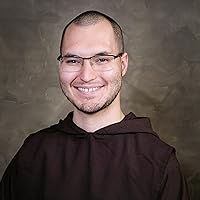
Fr. Uwe Michael Lang, a native of Germany, is a priest of the Congregation of the Oratory of St. Philip Neri in London. He holds a Mag. Theol. in Catholic theology from the University of Vienna and a D.Phil. in theology from the University of Oxford. Fr. Lang is a staff member of the Congregation for Divine Worship and the Discipline of the Sacraments, a Consultor to the Office for the Liturgical Celebrations of the Supreme Pontiff and Academic Coordinator of the Master program in “Architecture, Sacred Art and Liturgy” at the Università Europea di Roma. Turning towards the Lord has been published in several languages, including German, Italian, French, and Spanish. Recently, Fr. Lang has edited the volume Die Anaphora von Addai und Mari: Studien zu Eucharistie und Einsetzungsworten (2007).
This short work is a great introduction to the history of the Catholic liturgy as most people in the West experience it today. Naturally the last 65 years have been tumultuous for the liturgy, and his writings on the contemporary situation was lacking. But all the same, the earlier chapters give a great overview of the development.
This is a very good book on the Roman Catholic liturgy. Apart from the beginnings of antiquity— what stuck out to me was how It gives insight to preconciliar liturgical movement that, by proposing active engagement as an important focus of the laity in the mass, shaped how Vatican II would focus on liturgy. It does a good job of explaining the post conciliar implementations of Pope Paul VI— that would be interpreted further by popes against another popes—from Benedict to Francis— of how the liturgical reforms should be carried out. All in all, it gives context that is important to know when it comes to understanding 20th century liturgical reform— that online debates often do not do justice.
I learned a lot about the history of the liturgy, and I'd definitely recommend this book for anyone seeking to learn more! I also appreciate the way the author leaves the end of the book someone open for further development and gives a bit of practical insight into that.
Excellent short history of the development of the Roman Rite and a great place for those curious but not fully developed liturgy nerds to dip their toes in.
I found this to be a concise, readable, and even-handed account of the development of the Catholic Church's Mass, beginning with the early Church and ending amid the current, post-Vatican II liturgical debates. It's concision means it examines only the tip of a very large iceberg, which sometimes led to its account feeling simply like a string of discrete historical events whose relationship with each other is not immediately clear. This is probably unavoidable, though, in reducing a 2,000-year history into less than 150 pages, and Lang does inject some intriguing interpretative comments that have led me to want to read more of his work. He also ends with a brief, diplomatic assessment of the Church's current liturgical landscape that I found clarifying in comparison with the heated polemics that this topic often inspires. Lang's position seems most aligned with Pope Benedict XVI's notion of a "reform of the reform", beginning with a return to the broad principles of Vatican II's Sacrosanctum concilium, with an eye to gradual, organic, and even decentralized development rather than sharp breaks with tradition by decree.
This book contains many interesting historical details but I found it difficult to track a thread running throughout the book. Then, Father's perspective on the New Mass is disappointing: he sees it as more or less in continuity with the past but just going too far. So, while he critiques it, it seems he believes it can be fixed.
A fantastic condensed history of the liturigical development of the Roman Mass. Scholarly and accessible. The final chapters are about where the Church stands since the Second Vatican Council. Has a glossary of terms in the back.