

What do you think?

Über Freiheit
Sadopopulistische Demagogen vom Schlage eines Donald Trump oder Wladimir Putin und digitale Oligarchen im Silicon Valley, ukrainische Soldaten an der Front und Schwerverbrecher in einem Hochsicherheitsgefängnis in Connecticut – sie alle treten auf in diesem Buch. So wie Simone Weil, Edith Stein, Vaclav Havel und die Freiheitsglocke, die Timothy Snyder als Kind geläutet hat. «Über Freiheit» handelt vom alltäglichen Rassismus und der Social Media-Überflutung unseres Denkens, von der aggressiven sozialen Ungleichheit und der gigantischen Fehlentwicklung eines vergeudeten halben Jahrhunderts. Snyders Buch ist ein Weckruf, die Zukunft endlich in die Hand zu nehmen und uns gegen die Welle der Unfreiheit zu wehren, die über uns hereingebrochen ist.
Timothy Snyder ist «der führende Interpret unserer düsteren Zeiten» genannt worden. Nur wenige Intellektuelle haben wie er mehr als eine halbe Million Follower bei X und schreiben Bücher, die bei Erscheinen in zwei Dutzend Sprachen übersetzt werden. Sein Weltbestseller «Über Tyrannei» hat Millionen Menschen in Washington, Kiew und Hongkong ermutigt, sich für die Freiheit einzusetzen und notfalls auch Widerstand zu leisten. Nun legt der unermüdlich gegen Putin wie gegen Trump kämpfende Historiker ein brillantes Buch vor, das erklärt, was Freiheit bedeutet, wie sie oft missverstanden wird und warum sie unsere einzige Chance ist zu überleben.
Timothy Snyder ist «der führende Interpret unserer düsteren Zeiten» genannt worden. Nur wenige Intellektuelle haben wie er mehr als eine halbe Million Follower bei X und schreiben Bücher, die bei Erscheinen in zwei Dutzend Sprachen übersetzt werden. Sein Weltbestseller «Über Tyrannei» hat Millionen Menschen in Washington, Kiew und Hongkong ermutigt, sich für die Freiheit einzusetzen und notfalls auch Widerstand zu leisten. Nun legt der unermüdlich gegen Putin wie gegen Trump kämpfende Historiker ein brillantes Buch vor, das erklärt, was Freiheit bedeutet, wie sie oft missverstanden wird und warum sie unsere einzige Chance ist zu überleben.
408 pages, Kindle Edition
First published January 11, 2003
About the author
Timothy Snyder
62 books5,778 followersTimothy Snyder is Housum Professor of History at Yale University and a permanent fellow at the Institute for Human Sciences. He received his doctorate from the University of Oxford in 1997, where he was a British Marshall Scholar. He has held fellowships in Paris, Vienna, and Warsaw, and an Academy Scholarship at Harvard.
His most recent book is Black Earth: The Holocaust as History and Warning, published in September 2015 by Crown Books. He is author also of Bloodlands: Europe Between Hitler and Stalin (2010), a history of Nazi and Soviet mass killing on the lands between Berlin and Moscow. A New York Times bestseller and a book of the year according to The Atlantic, The Independent, The Financial Times, the Telegraph, and the New Statesman, it has won twelve awards including the Emerson Prize in the Humanities, a Literature Award from the American Academy of Arts and Letters, the Leipzig Award for European Understanding, and the Hannah Arendt Prize in Political Thought.
His other award-winning publications include Nationalism, Marxism, and Modern Central Europe: A Biography of Kazimierz Kelles-Krauz (1998); The Reconstruction of Nations: Poland, Ukraine, Lithuania, Belarus, 1569-1999 (2003); Sketches from a Secret War: A Polish Artist's Mission to Liberate Soviet Ukraine (2005); The Red Prince: The Secret Lives of A Habsburg Archduke (2008), and Bloodlands: Europe Between Hitler and Stalin (2010).
Snyder helped Tony Judt to compose a thematic history of political ideas and intellectuals in politics, Thinking the Twentieth Century (2012). He is also the co-editor of Stalin and Europe: Terror, War, Domination and Wall Around the West: State Power and Immigration Controls in Europe and North America (2001).
Snyder was the recipient of an inaugural Andrew Carnegie Fellowship in 2015. He is a member of the Committee on Conscience of the United States Holocaust Memorial Museum and sits on the advisory council of the Yivo Institute for Jewish Research Research.
He teaches undergraduate and graduate courses in modern East European political history.
His most recent book is Black Earth: The Holocaust as History and Warning, published in September 2015 by Crown Books. He is author also of Bloodlands: Europe Between Hitler and Stalin (2010), a history of Nazi and Soviet mass killing on the lands between Berlin and Moscow. A New York Times bestseller and a book of the year according to The Atlantic, The Independent, The Financial Times, the Telegraph, and the New Statesman, it has won twelve awards including the Emerson Prize in the Humanities, a Literature Award from the American Academy of Arts and Letters, the Leipzig Award for European Understanding, and the Hannah Arendt Prize in Political Thought.
His other award-winning publications include Nationalism, Marxism, and Modern Central Europe: A Biography of Kazimierz Kelles-Krauz (1998); The Reconstruction of Nations: Poland, Ukraine, Lithuania, Belarus, 1569-1999 (2003); Sketches from a Secret War: A Polish Artist's Mission to Liberate Soviet Ukraine (2005); The Red Prince: The Secret Lives of A Habsburg Archduke (2008), and Bloodlands: Europe Between Hitler and Stalin (2010).
Snyder helped Tony Judt to compose a thematic history of political ideas and intellectuals in politics, Thinking the Twentieth Century (2012). He is also the co-editor of Stalin and Europe: Terror, War, Domination and Wall Around the West: State Power and Immigration Controls in Europe and North America (2001).
Snyder was the recipient of an inaugural Andrew Carnegie Fellowship in 2015. He is a member of the Committee on Conscience of the United States Holocaust Memorial Museum and sits on the advisory council of the Yivo Institute for Jewish Research Research.
He teaches undergraduate and graduate courses in modern East European political history.
Ratings & Reviews
Friends & Following
Create a free account to discover what your friends think of this book!
Community Reviews
Displaying 1 - 30 of 854 reviews

Read
October 3, 2024Ідея книжки, практичного доповнення і продовження “Про тиранію”, дуже твереза: часто кажуть, що ми народжуємося вільними. Це не так – ми народжуємося прив’язаними пуповиною до жінки, потім ми протягом довгих років дорослішання потребуватимемо допомоги багатьох інших людей. І лише в тому разі, якщо на кожному кроці нашого життя буде необхідна інфраструктура, створена дуже багатьма іншими людьми й інституціями, ми зможемо стати вільними: якщо будуть належні медичні заклади, й ми не поповнимо статистику дитячої смертності; якщо будуть освітні заклади, які забезпечать нам соціальну мобільність, і дороги з транспортною інфраструктурою, які забезпечать буквальну мобільність; якщо будуть демократичні виборчі процеси, щоб ми реалізували свободу вибору, і незалежна якісна преса, щоб наш вибір був інформований. І так далі, і таке інше. За багатьма з цих пунктів США є менш вільними, ніж інші країни західного світу (і в вас напевно не раз поповзуть брови під лоба від частини фактажу), і менш вільними зараз, ніж за кілька десятиліть до того. Снайдер подає поради (почасти вже знайомі з раніших його текстів), як протидіяти наступу несвободи і відкотити назад тренди, які роблять людей менш вільними. Але проблема в тому, що (а) він при цьому leans hard в образ протестантського проповідника, й подекуди ці метафізичні комбінації речень видаються прагматичній мені дещо позбавленими сенсу; і (б) це заклик для мобілізації тих, хто і так поділяє ці погляди, але напевно alienates навіть не тільки умовних МАГА (з ними точно можна говорити тільки як з людьми в секті, це інша спеціальність), а й якусь частину тих, хто не визначився – отже, неясно, в чому практичний сенс.
September 13, 2024
Having read Snyder's book On Tyrany, which was an eye opener, I jumped at the opportunty to receive an ARC.from NetGalley...I was not disappointed.
This a book that needed to be written, its concepts and facts (yes facts, remember those?) brought to light. I found myself highlighting page after page of this in depth work of both historical and current events, and how our current events can be traced back to historical events of the past.
However, while this book had to be written, will those who should read it do so? Probably not, but those of us who do read can benefit from Snyder's expertise involving European political and historical events and how they hold a mirror up to our current situation in the US.
This book is an educational, informational, thought provoking and fascinating deep dive into events, both past and present.
This a book that needed to be written, its concepts and facts (yes facts, remember those?) brought to light. I found myself highlighting page after page of this in depth work of both historical and current events, and how our current events can be traced back to historical events of the past.
However, while this book had to be written, will those who should read it do so? Probably not, but those of us who do read can benefit from Snyder's expertise involving European political and historical events and how they hold a mirror up to our current situation in the US.
This book is an educational, informational, thought provoking and fascinating deep dive into events, both past and present.

November 21, 2024
Свобода — це знати свої цінності та втілювати їх. Вона залежить від наших дій — а дії залежать від інших людей, знайомих і незнайомців. Хоча свобода притаманна окремим життям, вона — наслідок роботи поколінь.
Пʼятьма формами свободи є: суверенність, або ж вивчена здатність обирати і ухвалювати рішення; непередбачуваність, здатність пристосовувати фізичні закономірності до особистих цілей; мобільність, можливість рухатися в часі та просторі вслід за цінностями; фактичність, або ж розуміння світу, яке дає нам змогу змінювати його; і, нарешті, солідарність, визнання, що свобода належиться всім.
"Про свободу" Тімоті Снайдера - збірка роздумів про свободу, демократичні процеси, виховання дітей, політику і людське самоусвідомлення. Це - одна з найглибших праць, які читала за останні 3-5 років. Вона втрапилась до рук правильний час – нестабільності і зневіри, поганих новин і відчуття зламу світу. Книга стала трохи вказівником руху, а ще підтвердженням моїх власних висновків та цінностей. Враховуючи, що читала напередодні/під час/після виборів у США, додалось гостріше і глибше розуміння американських процесів.
Читати точно раджу! Дуже-дуже раджу. Але попереджую, що книга потребує багато часу і зусиль. І на саме читання та розуміння, і роздуми після. Кому читати? Лідерам громадянського суспільства, політикам, вчителям та всім освітянам,, журналістам, спічрайтерам, комунікаційникам, кожному, хто хоче глибшого розуміння себе та світу. В ідеалі, раджу все ж читати книгу) Неспішно, вдумливо, нотуючи цитати та власні думки. Але і на конспект можете опиратись. Я тут добряче корисного зібрала!
Я на книгу витратила місяць. Але це була потужна мандрівка. Результат якої - коригування власних поглядів. А ще цей конспект на 30 сторінок. Хто має мало часу, а хотів би пізнати роздумки Снайдера вже - читайте конспект https://docs.google.com/document/d/18... Зібрала з книги головне! 30 пояснень, що таке свобода, чому діти її не мають і як це змінити, критику лібертаріанства, Трампа і... Платона, потребу у виборчому праві та протидії очікуваній поведінці.
Потужна книга! Не пропустіть її. Особливо у ці часи!
Пʼятьма формами свободи є: суверенність, або ж вивчена здатність обирати і ухвалювати рішення; непередбачуваність, здатність пристосовувати фізичні закономірності до особистих цілей; мобільність, можливість рухатися в часі та просторі вслід за цінностями; фактичність, або ж розуміння світу, яке дає нам змогу змінювати його; і, нарешті, солідарність, визнання, що свобода належиться всім.
"Про свободу" Тімоті Снайдера - збірка роздумів про свободу, демократичні процеси, виховання дітей, політику і людське самоусвідомлення. Це - одна з найглибших праць, які читала за останні 3-5 років. Вона втрапилась до рук правильний час – нестабільності і зневіри, поганих новин і відчуття зламу світу. Книга стала трохи вказівником руху, а ще підтвердженням моїх власних висновків та цінностей. Враховуючи, що читала напередодні/під час/після виборів у США, додалось гостріше і глибше розуміння американських процесів.
Читати точно раджу! Дуже-дуже раджу. Але попереджую, що книга потребує багато часу і зусиль. І на саме читання та розуміння, і роздуми після. Кому читати? Лідерам громадянського суспільства, політикам, вчителям та всім освітянам,, журналістам, спічрайтерам, комунікаційникам, кожному, хто хоче глибшого розуміння себе та світу. В ідеалі, раджу все ж читати книгу) Неспішно, вдумливо, нотуючи цитати та власні думки. Але і на конспект можете опиратись. Я тут добряче корисного зібрала!
Я на книгу витратила місяць. Але це була потужна мандрівка. Результат якої - коригування власних поглядів. А ще цей конспект на 30 сторінок. Хто має мало часу, а хотів би пізнати роздумки Снайдера вже - читайте конспект https://docs.google.com/document/d/18... Зібрала з книги головне! 30 пояснень, що таке свобода, чому діти її не мають і як це змінити, критику лібертаріанства, Трампа і... Платона, потребу у виборчому праві та протидії очікуваній поведінці.
Потужна книга! Не пропустіть її. Особливо у ці часи!

January 22, 2025
10/1/2025 addendum: This book, along with Snyder's 2017 book "On Tyranny", are more essential than ever...
Ask twenty people to define "freedom" and you'll get twenty different definitions. That's both the beauty and the weirdness of the word.
Timothy Snyder, in his book "On Freedom", attempts to define the word in terms that may seem logical but incongruous to Americans. According to Snyder, Americans have been defining the word incorrectly for centuries, and we are suffering the very real consequences of that fact.
For a large percentage of Americans, freedom is defined as something to be taken away---a "freedom from... [fill in the blank: oppression, regulation, unchecked monetary gain, ridicule, etc.]"---rather than as something to be gained---a "freedom to... [fill in the blank: live life, find happiness, go to college, make a decent wage, marry who you want, practice or not practice any religion, etc."
Snyder views the former type of freedom as "negative freedom", as it usually involves policy-making that restricts or limits actions but always, ironically, in the name of liberty. For example: attempts to restrict or eliminate regulations on certain business practices are almost always viewed (by conservatives) as a way to give businesses freer reign in the market, when, in fact, they are almost always pathways to more corrupt and harmful practices that screw over customers and the environment.
Snyder advocates for a "positive" view of freedom, one that nurtures creativity and autonomy for all people---white, non-white, gay, straight, religious, non-religious. Sadly, many Americans have, for centuries, viewed their world through a very narrow lens of their own making: I want freedom for me and my family and my kind, but if it helps to make other groups that I find inferior and dangerous (blacks, hispanics, gay, Jews, Muslims, etc.), then I'm willing to restrict it for everybody... In other words: I may want a piece of the pie, but if everybody else is going to get the same size piece of pie, just throw the pie away.
Snyder's definition of freedom involves five key ingredients: sovereignty, unpredictability, mobility, factuality, and solidarity. He describes each of these concepts in-depth in the book's five main chapters. Some of these concepts may make sense. Sovereignty, for example, is simply another word for "autonomy", or self-government. This seems logical when describing freedom. His concept of "unpredictability", however, may take some getting used to, since it tends to go against society's predilection for normalization and conformity as a virtue. "Bucking the system", "Being an outlier", "going against the grain" are all ways of being unpredictable, but they are also all somewhat frowned upon or discouraged by society, starting at a very young age.
"On Freedom" is, so far, the best book I have read this year, and, yes, I know this year has just started. It is, however, a book that I can see myself going back to numerous times for solace and wisdom.
Ask twenty people to define "freedom" and you'll get twenty different definitions. That's both the beauty and the weirdness of the word.
Timothy Snyder, in his book "On Freedom", attempts to define the word in terms that may seem logical but incongruous to Americans. According to Snyder, Americans have been defining the word incorrectly for centuries, and we are suffering the very real consequences of that fact.
For a large percentage of Americans, freedom is defined as something to be taken away---a "freedom from... [fill in the blank: oppression, regulation, unchecked monetary gain, ridicule, etc.]"---rather than as something to be gained---a "freedom to... [fill in the blank: live life, find happiness, go to college, make a decent wage, marry who you want, practice or not practice any religion, etc."
Snyder views the former type of freedom as "negative freedom", as it usually involves policy-making that restricts or limits actions but always, ironically, in the name of liberty. For example: attempts to restrict or eliminate regulations on certain business practices are almost always viewed (by conservatives) as a way to give businesses freer reign in the market, when, in fact, they are almost always pathways to more corrupt and harmful practices that screw over customers and the environment.
Snyder advocates for a "positive" view of freedom, one that nurtures creativity and autonomy for all people---white, non-white, gay, straight, religious, non-religious. Sadly, many Americans have, for centuries, viewed their world through a very narrow lens of their own making: I want freedom for me and my family and my kind, but if it helps to make other groups that I find inferior and dangerous (blacks, hispanics, gay, Jews, Muslims, etc.), then I'm willing to restrict it for everybody... In other words: I may want a piece of the pie, but if everybody else is going to get the same size piece of pie, just throw the pie away.
Snyder's definition of freedom involves five key ingredients: sovereignty, unpredictability, mobility, factuality, and solidarity. He describes each of these concepts in-depth in the book's five main chapters. Some of these concepts may make sense. Sovereignty, for example, is simply another word for "autonomy", or self-government. This seems logical when describing freedom. His concept of "unpredictability", however, may take some getting used to, since it tends to go against society's predilection for normalization and conformity as a virtue. "Bucking the system", "Being an outlier", "going against the grain" are all ways of being unpredictable, but they are also all somewhat frowned upon or discouraged by society, starting at a very young age.
"On Freedom" is, so far, the best book I have read this year, and, yes, I know this year has just started. It is, however, a book that I can see myself going back to numerous times for solace and wisdom.

September 28, 2025
اولین ریویو در مقام مترجم:
متاسفانه هرکاری کردم فعلا نتونستم دسترسی به اکانتی رو پیدا کنم که با نام کاملم و به عنوان مترجم این اثر ثبت شده. پس فعلا اینجا مینویسم.
مواجهه من با اسنایدر و این کتاب اتفاقی بود؛ همینطور تصمیمم برای ترجمهٔ این اثر. قبل از هرچیزی باید بگم که در ابتدا، اصلا و ابدا فکر نمیکردم موقع ترجمه با کلی چالش مواجه شم. متن اسنایدر به شدت زیبا و دقیق نوشته شده. نهتنها سبک و ساختار خود نوشته، بلکه زبان و شیوه و لحن و قلم اسنایدر هم واقعا تنه به تنه آثار ادبی فاخر میزنه. از این نظر تمام تلاشمو کردم ویژگیهای زبانی اسنایدر رو منتقل کنم، البته در کنار بینهایت استعاره و ارجاع و اشارات ریز و ظریف نویسنده. حرف راجع به ترجمهٔ این اثر زیاد میشه زد اما فعلا به همین بسنده میکنم و پیشنهاد میکنم کتاب رو آروم آروم بخونید...
پیشگفتاری که برای کتاب نوشتم:
«بهترین کتابها آنهایی هستند که چیزی را به تو میگویند که خودت میدانی.»
- رمان ۱۹۸۴، جورج اورول
شاید در حین خواندن این کتاب، بارها این گفتۀ اورول در ذهن شما طنینانداز شود. حقایقِ بنیادینی که تیموتی اسنایدر در این صفحات پیش روی ما میگذارد، مفاهیمی نیستند که برای یک ذهن متفکر بیگانه باشند. اینها همان حقایقی هستند که در خون ما جاریاند، اما در زبان ما گُم شدهاند. شهودهایی که در سکوتِ درونمان احساسشان میکنیم، اما هیاهوی جهانِ بیرون اجازۀ شنیدنشان را نمیدهد. کتابی که در دست دارید، نه یک اکتشاف، بلکه یک «یادآوری» است.
وجه تمایزِ این اثر در ابداع مفاهیمی یکسره نو نیست؛ بلکه در بازآفرینیِ همین دانش آشنا و تبدیل آن به یک مواجهۀ وجودی و فراموشنشدنی است. اسنایدر به جای آنکه تعریفی دیگر به تعاریفِ فلسفیِ آزادی بیفزاید، آن را در بدنی تبدار بر تخت بیمارستان، در طنین ناقوسی در یک مزرعۀ قدیمی و در مقاومت مردمی جنگزده به ما نشان میدهد.
پس نبوغ اسنایدر در کجاست؟ در چگونگیِ بیان او. اسنایدر این حقایق آشنا را از قلمروِ انتزاع خارج میکند و آنها را در تاروپودِ یک زندگیِ زیسته به ما نشان میدهد. «در باب آزادی» نه یک رسالۀ فلسفیِ خشک، بلکه یک روایت چندوجهی، شخصی و عمیقاً انسانی و استعاری است. اسنایدر با ارجاعاتی گسترده از اساطیر یونان و اردوگاههای کار اجباری و تاریخ بشریت تا مفاهیم علمی و هنری و ادبی و سیاسی، ما را به مواجههای نو با مفاهیمی فرامیخواند که گمان میکردیم آنها را میشناسیم.
تیموتی اسنایدر در این اثر، رَدای فیلسوفانِ کلاسیک را به کناری مینهد و جامۀ یک راوی را بر تن میکند. او نمیخواهد چیزی را به ما «اثبات» کند. او میخواهد به ما کمک کند تا آنچه را در عمیقترین لایههای وجودمان میدانیم، «به یاد آوریم». این کتاب، مواجههای است نو با حقیقتی قدیمی: اینکه آزادی، بیش از آنکه یک هدف و مفهوم سیاسی باشد، یک کیفیت وجودی و بستری لازم برای انتخاب فضیلتها و تحقق ارزشهاست.
از این لینک میتونید راجع به کتاب بخونید و با تخفیف خریداریاش کنید:
https://pasdaranbookcity.com/product/...
https://www.iranketab.ir/book/163759-...
متاسفانه هرکاری کردم فعلا نتونستم دسترسی به اکانتی رو پیدا کنم که با نام کاملم و به عنوان مترجم این اثر ثبت شده. پس فعلا اینجا مینویسم.
مواجهه من با اسنایدر و این کتاب اتفاقی بود؛ همینطور تصمیمم برای ترجمهٔ این اثر. قبل از هرچیزی باید بگم که در ابتدا، اصلا و ابدا فکر نمیکردم موقع ترجمه با کلی چالش مواجه شم. متن اسنایدر به شدت زیبا و دقیق نوشته شده. نهتنها سبک و ساختار خود نوشته، بلکه زبان و شیوه و لحن و قلم اسنایدر هم واقعا تنه به تنه آثار ادبی فاخر میزنه. از این نظر تمام تلاشمو کردم ویژگیهای زبانی اسنایدر رو منتقل کنم، البته در کنار بینهایت استعاره و ارجاع و اشارات ریز و ظریف نویسنده. حرف راجع به ترجمهٔ این اثر زیاد میشه زد اما فعلا به همین بسنده میکنم و پیشنهاد میکنم کتاب رو آروم آروم بخونید...
پیشگفتاری که برای کتاب نوشتم:
«بهترین کتابها آنهایی هستند که چیزی را به تو میگویند که خودت میدانی.»
- رمان ۱۹۸۴، جورج اورول
شاید در حین خواندن این کتاب، بارها این گفتۀ اورول در ذهن شما طنینانداز شود. حقایقِ بنیادینی که تیموتی اسنایدر در این صفحات پیش روی ما میگذارد، مفاهیمی نیستند که برای یک ذهن متفکر بیگانه باشند. اینها همان حقایقی هستند که در خون ما جاریاند، اما در زبان ما گُم شدهاند. شهودهایی که در سکوتِ درونمان احساسشان میکنیم، اما هیاهوی جهانِ بیرون اجازۀ شنیدنشان را نمیدهد. کتابی که در دست دارید، نه یک اکتشاف، بلکه یک «یادآوری» است.
وجه تمایزِ این اثر در ابداع مفاهیمی یکسره نو نیست؛ بلکه در بازآفرینیِ همین دانش آشنا و تبدیل آن به یک مواجهۀ وجودی و فراموشنشدنی است. اسنایدر به جای آنکه تعریفی دیگر به تعاریفِ فلسفیِ آزادی بیفزاید، آن را در بدنی تبدار بر تخت بیمارستان، در طنین ناقوسی در یک مزرعۀ قدیمی و در مقاومت مردمی جنگزده به ما نشان میدهد.
پس نبوغ اسنایدر در کجاست؟ در چگونگیِ بیان او. اسنایدر این حقایق آشنا را از قلمروِ انتزاع خارج میکند و آنها را در تاروپودِ یک زندگیِ زیسته به ما نشان میدهد. «در باب آزادی» نه یک رسالۀ فلسفیِ خشک، بلکه یک روایت چندوجهی، شخصی و عمیقاً انسانی و استعاری است. اسنایدر با ارجاعاتی گسترده از اساطیر یونان و اردوگاههای کار اجباری و تاریخ بشریت تا مفاهیم علمی و هنری و ادبی و سیاسی، ما را به مواجههای نو با مفاهیمی فرامیخواند که گمان میکردیم آنها را میشناسیم.
تیموتی اسنایدر در این اثر، رَدای فیلسوفانِ کلاسیک را به کناری مینهد و جامۀ یک راوی را بر تن میکند. او نمیخواهد چیزی را به ما «اثبات» کند. او میخواهد به ما کمک کند تا آنچه را در عمیقترین لایههای وجودمان میدانیم، «به یاد آوریم». این کتاب، مواجههای است نو با حقیقتی قدیمی: اینکه آزادی، بیش از آنکه یک هدف و مفهوم سیاسی باشد، یک کیفیت وجودی و بستری لازم برای انتخاب فضیلتها و تحقق ارزشهاست.
از این لینک میتونید راجع به کتاب بخونید و با تخفیف خریداریاش کنید:
https://pasdaranbookcity.com/product/...
https://www.iranketab.ir/book/163759-...

February 14, 2026
I found this book both timely and quite interesting, even if it didn't hit as hard as the author's "On Tyranny" which I refer to a lot these days. I liked how Dr Snyder compared the U.S. version of freedom to that in Europe, especially in Ukraine and made the point about the difference between "freedom from" vs "freedom TO". It's a bit of a heavy read, especially right now, but I did find it an important read

May 27, 2026
3.75
برای من کتاب سختخوانی نبود ولی گفتن ازش کمی سخته و باید اجازه بدم مطالب تهنشین بشه . اسنایدر در این کتاب یه چرخه پنج قسمتی برای آزادی مشخص میکنه و در ادامه هر کدوم از این قسمتها رو توضیح میده. این پنج قسمت به ترتیب عبارتند از : خودفرمانی، پیشبینی ناپذیری، تحرک، واقعیتمندی و همبستگی. یکی از موکدات فراوان اسنایدر بحث شیرین آزادی منفی و آزادی مثبت بود. تقریبا مسالهای که در هر بخش تکرار میکرد. این مبحث آزادی منفی و مثبت به نظرم برای مردم ما بسیار ضروری است و باید در موردش بحث و گفتوگوهای فراوانی در سطح جامعه صورت بگیره. بحثی چالشی و در عین حال جذاب خواهد بود و نیازمند این ایام ملت خواهد بود. طبق گفته اسنایدر من بیشتر آزادی منفی ببینم. یعنی چیزی که فراوان مشاهده میشه: « اینا فقط برن، هر کی جاشون بیاد مهم نیست» رو به کرات در صحبتهای مردم میبینم. اما اسنایدر به فراتر از این نگاه رو متمرکز میکنه و معتقده باید به سمت آزادی مثبت یا همون آزادی برای چی رفت به جای تاکید بر آزادی منفی یا آزادی از داشته باشیم. پس از این جهت کتاب رو برای مردم ایران و تمام کسانی که دغدغه آزادی دارند خیلی مناسب میدونم. همانطور که گفتم خیلی هم روی این قضیه مانور میده و مثالهای زیادی رو مطرح میکنه.
اندیشمندان و بزرگانی که اسنایدر با تمسک به اونها مباحثش رو پیش میبره پنج نفر هستند. افرادی مثل فرانتس فانون،واتسلاو هاول، کولاکوفسکی،ادیت اشتاین و سیمون وی. کلا تو این دو سالی که نشر نی به همت آقای بهزاد حسینزاده کتابهای سیمون وی رو ترجمه کرده،مدنظرش داشتم ولی این کتاب باعث شد به طور قطعی از این نویسنده بخونم و در آینده نزدیک اگر عمری باشه، به سمتش میرم.
نثر اسنایدر سنگین نیست.حوصله بر و خشک هم نیست. مثالهای روزمره زیادی هم میزنه و تجربیات شخصی خودش رو هم به متن اضافه کرده و همهی اینها باعث شده که مطالعه کتاب دشوار نباشه. اما چالشی که من داشتم این بود که گاهی باید ربطی بین حرفهای اسنایدر و اون سرفصلی که داره در موردش حرف میزنه پیدا میکردم. این چالش هم برام دافعه ایجاد نکرد و صرفا از مواجهه خودم با اثر دارم میگم. نگاه خیر و شری شدیدی که اسنایدر به اوکراین و روسیه داشت و پوتین رو شیطان اعظم و زلنسکی رو فرشته مهربان میدید برای من زیاد خوشایند نبود. میتونست با دز کمتری این مساله رو بیان میکرد.
آزادی از پرچالشترین و شیرینترین دغدغههایی است که آدمی میتونه داشته باشه. همیشه سعی میکنم چراغش رو تو وجودم با همه طوفانها و مرارتهایی که وجود داره، روشن نگه دارم.به نظرم در سطح جامعه هم باید چراغ آزادی در دلها روشن بمونه و هیچگاه خاموش نشه. آزادی باید در کلام و مباحث ما جاری باشه. قلهای که همیشه باید نگاه به سمتش باشه، ولو اینکه ما به قله نرسیم اما مسیر و هدف همون باشه. تلاش برای رسیدن بهش جذابه. داستایفسکی تو ابله جمله معروفی داره که میگه: اوج لذت کریستف کلمب تلاش برای کشف آمریکا بود نه اون لحظهای که کشف کرد...شاید،شاید،شاید تلاش برای آزادی هم از رسیدن بهش لذتبخش تر باشه...به هر روی آزادی به قول اسنایدر دارای فضیلته و اساسا امری است مثبت و تلاش ما برای رسیدن به اون هم باید با روشهای شرافتمندانه باشه. انسانهایی که تو زندگی خطوط قرمز دارند و علیرغم اینکه سختیهای زیادی متحمل شدند، از اون خطوط عبور نمیکنند و حاضر به ذبح اخلاقیات نیستند، حقیقتا انسانهای زیبایی هستند چه مرد باشند چه زن، چه لاغر و چه توپر، چه سبزه و چه سفید.
ترجمه روان بود و مشکلی از این بابت نداشت ولی همه میدونند که کتابهای علوم سیاسی ظرافتهای خاص خودش رو داره که من صلاحیت نظر دادن در موردش رو ندارم و صرفا میتونم همین روان بودن/نبودن کتاب رو بهش اشاره کنم. از این کتاب چند نسخهای تا به حال ترجمه شده و مترجم کتاب آقای جواد آزادی مقدم از کاربران محترم گودریدز بود و به همین دلیل من این نسخه نشر روزنه رو برای مطالعه انتخاب کردم و از انتخابی که کردم کاملا راضیام.
برای من کتاب سختخوانی نبود ولی گفتن ازش کمی سخته و باید اجازه بدم مطالب تهنشین بشه . اسنایدر در این کتاب یه چرخه پنج قسمتی برای آزادی مشخص میکنه و در ادامه هر کدوم از این قسمتها رو توضیح میده. این پنج قسمت به ترتیب عبارتند از : خودفرمانی، پیشبینی ناپذیری، تحرک، واقعیتمندی و همبستگی. یکی از موکدات فراوان اسنایدر بحث شیرین آزادی منفی و آزادی مثبت بود. تقریبا مسالهای که در هر بخش تکرار میکرد. این مبحث آزادی منفی و مثبت به نظرم برای مردم ما بسیار ضروری است و باید در موردش بحث و گفتوگوهای فراوانی در سطح جامعه صورت بگیره. بحثی چالشی و در عین حال جذاب خواهد بود و نیازمند این ایام ملت خواهد بود. طبق گفته اسنایدر من بیشتر آزادی منفی ببینم. یعنی چیزی که فراوان مشاهده میشه: « اینا فقط برن، هر کی جاشون بیاد مهم نیست» رو به کرات در صحبتهای مردم میبینم. اما اسنایدر به فراتر از این نگاه رو متمرکز میکنه و معتقده باید به سمت آزادی مثبت یا همون آزادی برای چی رفت به جای تاکید بر آزادی منفی یا آزادی از داشته باشیم. پس از این جهت کتاب رو برای مردم ایران و تمام کسانی که دغدغه آزادی دارند خیلی مناسب میدونم. همانطور که گفتم خیلی هم روی این قضیه مانور میده و مثالهای زیادی رو مطرح میکنه.
اندیشمندان و بزرگانی که اسنایدر با تمسک به اونها مباحثش رو پیش میبره پنج نفر هستند. افرادی مثل فرانتس فانون،واتسلاو هاول، کولاکوفسکی،ادیت اشتاین و سیمون وی. کلا تو این دو سالی که نشر نی به همت آقای بهزاد حسینزاده کتابهای سیمون وی رو ترجمه کرده،مدنظرش داشتم ولی این کتاب باعث شد به طور قطعی از این نویسنده بخونم و در آینده نزدیک اگر عمری باشه، به سمتش میرم.
نثر اسنایدر سنگین نیست.حوصله بر و خشک هم نیست. مثالهای روزمره زیادی هم میزنه و تجربیات شخصی خودش رو هم به متن اضافه کرده و همهی اینها باعث شده که مطالعه کتاب دشوار نباشه. اما چالشی که من داشتم این بود که گاهی باید ربطی بین حرفهای اسنایدر و اون سرفصلی که داره در موردش حرف میزنه پیدا میکردم. این چالش هم برام دافعه ایجاد نکرد و صرفا از مواجهه خودم با اثر دارم میگم. نگاه خیر و شری شدیدی که اسنایدر به اوکراین و روسیه داشت و پوتین رو شیطان اعظم و زلنسکی رو فرشته مهربان میدید برای من زیاد خوشایند نبود. میتونست با دز کمتری این مساله رو بیان میکرد.
آزادی از پرچالشترین و شیرینترین دغدغههایی است که آدمی میتونه داشته باشه. همیشه سعی میکنم چراغش رو تو وجودم با همه طوفانها و مرارتهایی که وجود داره، روشن نگه دارم.به نظرم در سطح جامعه هم باید چراغ آزادی در دلها روشن بمونه و هیچگاه خاموش نشه. آزادی باید در کلام و مباحث ما جاری باشه. قلهای که همیشه باید نگاه به سمتش باشه، ولو اینکه ما به قله نرسیم اما مسیر و هدف همون باشه. تلاش برای رسیدن بهش جذابه. داستایفسکی تو ابله جمله معروفی داره که میگه: اوج لذت کریستف کلمب تلاش برای کشف آمریکا بود نه اون لحظهای که کشف کرد...شاید،شاید،شاید تلاش برای آزادی هم از رسیدن بهش لذتبخش تر باشه...به هر روی آزادی به قول اسنایدر دارای فضیلته و اساسا امری است مثبت و تلاش ما برای رسیدن به اون هم باید با روشهای شرافتمندانه باشه. انسانهایی که تو زندگی خطوط قرمز دارند و علیرغم اینکه سختیهای زیادی متحمل شدند، از اون خطوط عبور نمیکنند و حاضر به ذبح اخلاقیات نیستند، حقیقتا انسانهای زیبایی هستند چه مرد باشند چه زن، چه لاغر و چه توپر، چه سبزه و چه سفید.
ترجمه روان بود و مشکلی از این بابت نداشت ولی همه میدونند که کتابهای علوم سیاسی ظرافتهای خاص خودش رو داره که من صلاحیت نظر دادن در موردش رو ندارم و صرفا میتونم همین روان بودن/نبودن کتاب رو بهش اشاره کنم. از این کتاب چند نسخهای تا به حال ترجمه شده و مترجم کتاب آقای جواد آزادی مقدم از کاربران محترم گودریدز بود و به همین دلیل من این نسخه نشر روزنه رو برای مطالعه انتخاب کردم و از انتخابی که کردم کاملا راضیام.

December 26, 2024
If I could award this book ten stars, I would. The reading of it, the writing, the research, the thought that has gone into it, and its value for the present as well as the future make it enormously important to this world. It should be required reading.
Snyder begins with a definition for freedom. He asserts that there is freedom and there is unfreedom. Unfreedom is negative. In an American sense, it is freedom from something- such as government but that is not real freedom. Moreover, "Freedom is not just an absence of evil but the presence of good". There are five forms of freedom: 1) sovereignty- "A sovereign person knows themselves and the world sufficiently to make judgments about values and to realize those judgments". 2) unpredictability- things are changeable and one needs to accept and accommodate change. 3) Mobility- people must have access to mobility, to improve their life and safety. The primary reason for the disintegration of the Soviet Union was the lack of mobility which occurred after Krushev and Bresnev rose to power.
Factuality- people must base their beliefs on fact and must in turn have access to factual information in order to pass proper judgments- particularly when selecting elected representatives. Opinions and false information which often replaces facts on tv and through social media and impedes peoples ability to make informed decisions. The final aspect of freedom is solidarity. People must learn from others and unite with them to form the kind of government that will allow for people to achieve and the society at large to be healthy and happy.
These are all laid out in detail with explanations for the role of each and the connections they have with one another. Snyder also cites philosophers and historians to back up his claims. He summarizes what we must do in order to form a healthy society which has been slipping away from us- particularly since the 1980's. I only wish I were more optimistic about the chances for these important conditions to be met. In the past several years, I have began to lose my optimism that the country, and the world, can step back from the abyss that we have been lurching toward but I remain hopeful.
-
Snyder begins with a definition for freedom. He asserts that there is freedom and there is unfreedom. Unfreedom is negative. In an American sense, it is freedom from something- such as government but that is not real freedom. Moreover, "Freedom is not just an absence of evil but the presence of good". There are five forms of freedom: 1) sovereignty- "A sovereign person knows themselves and the world sufficiently to make judgments about values and to realize those judgments". 2) unpredictability- things are changeable and one needs to accept and accommodate change. 3) Mobility- people must have access to mobility, to improve their life and safety. The primary reason for the disintegration of the Soviet Union was the lack of mobility which occurred after Krushev and Bresnev rose to power.
Factuality- people must base their beliefs on fact and must in turn have access to factual information in order to pass proper judgments- particularly when selecting elected representatives. Opinions and false information which often replaces facts on tv and through social media and impedes peoples ability to make informed decisions. The final aspect of freedom is solidarity. People must learn from others and unite with them to form the kind of government that will allow for people to achieve and the society at large to be healthy and happy.
These are all laid out in detail with explanations for the role of each and the connections they have with one another. Snyder also cites philosophers and historians to back up his claims. He summarizes what we must do in order to form a healthy society which has been slipping away from us- particularly since the 1980's. I only wish I were more optimistic about the chances for these important conditions to be met. In the past several years, I have began to lose my optimism that the country, and the world, can step back from the abyss that we have been lurching toward but I remain hopeful.
-

October 10, 2024
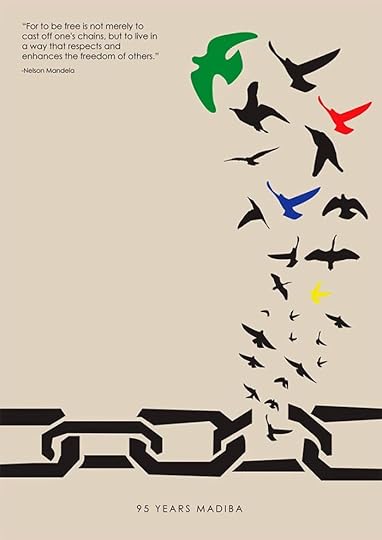
Някъде четох, че европейците са най-слабо религиозната част от човечеството, което донякъде удивлява жителите на САЩ, които са доста по-религиозни. Тази най-нова книга на Тимъти Снайдър определено има религиозен уклон. Не в смисъл на някакво позоваване на Библията, а по-скоро е силно сходна на дълга, настойчива проповед към заблуденото паство. В проповедта има много силни моменти, а паството има нужда от напомнянето им. Но именно назидателността е проводникът между идея и общество, и въпреки критичността на посланието, от един момент ме приспа (точно както бих заспала и на дълга, досадна, методистка проповед, понеже просто не съм американка и не възприемам идеи в такава опаковка). Също така има голяма доза спорно опростяване и натрапчиви, чести повторения.
Снайдър прави един доста обобщен във всеки възможен аспект преглед на идеята “свобода”. Сливат се лични биографични моменти с поток на мисълта и повеи от най-разнообразни философски течения, като започнем със Сократ и Платон. Исторически и политически се открояват пресечните точки между нацизма с неговия холокост, сталинизма с неговия военен комунизъм, загниващият социализъм на 80-те с неговата проформа идеология, зловещите расистки закони и днешен чест манталитет на Джим Кроу в САЩ, американската олигархия с нейната шаманска и мистична вяра в несъществуващата абстракция “всемогъща невидима ръка на свободния пазар”, тоталния крах на здравната система в САЩ и ужасите на комерсиалната медицина, фалшивите новини в мрежата, войната в Украйна…. Снайдър пресича пресечните точки с още пресечни точки, изброявайки съществените за него аспекти на свободата: суверенност, непредвидимост, мобилност, фактичност и солидарност.
В този клаустрофобично къкрещ вулканичен миш-маш за мен най-ценни се оказаха две концепции:
✔️ Концепцията за негативната свобода (“свободата от”) и позитивната свобода (“свободата за”). Отрицанието на нещо и борбата единствено срещу нещо без ясна казуса какво ще се гради на негово място, е разрушителна. Един от добрите примери, които Снайдър дава, е с Източна Европа след 1991 г., повлияна от криворазбраното американско либертарианство. Всички промени са с цел да демонтират и деконструират старото и да се уповават на невидимата и всемогъща ръка на свободния пазар. И напълно се пропуска градивната част - какво, защо, как ще се построи и моделира. Пропусна се например гражданското общество, което е гарант за свободата. А митът за свободния пазар - необременен от разумни регулации - лъсва като голяма лъжа, нещо като светлото комунистическо бъдеше, но отдясно. И това прави възможен втория момент:
✔️ Поетапното провеждане на трите деструктивни политики, които ни водят към хомота и клетката на диктатурата:
1️⃣ Политика на неизбежността - “дайте сега да направим компромиси, то не може всичко наведнъж” и “някои факти са по-малко факти от другите факти, затова няма да ги третираме като факти”;
2️⃣ Политика на вечността - “факти не съществуват, съществуват само лични мнения”, “истината е въпрос на гледна точка и всъщност истина няма” - и ето как бардовете на тези сладки лъжи циментират властта си за поколения напред. Путинизмът и тръмпизмът са най-младичките представители на тази част;
3️⃣ Политика на катастрофата - “ужас, всички се срина, сега спешно ни трябва виновник, когото да линчуваме за назидание и за престиж - например ония там черничките/ с чуждия език/ странните обичаи”. И с това зловещият цикъл е затворен, всички са се хванали за гушите (оцелелите), а за понятия като свобода никой вече не се и сеща. Тук обикновено се сещам за дистопичнив жанр в научната фантастика, но нека не бързаме да смятаме, че днешната реалност е лишена от примери - ами Афганистан, ами Судан, ами Ливан, ами Руанда с нейния геноцид, ами Мали и Нигер, ами червените кхмери, ами югославската война (всъщност две)…
Снайдър напомня, че живеем на вододел, и че ключовете за оковите до един момент са в нашите ръце. И че ако с бездействието, невежеството и нихилизма си приемем тези окови като “сигурност”, после отключването им отнема векове.
———
▶️ Цитати:
🗝️"Свободата не е просто отсъствие на злото, а присъствие на доброто."
🗝️"Свободата е условието, при което всички добри неща могат да се разпространяват в нас и между нас."
🗝️"В мига, в който повярваме, че свободата е даденост, тя си отива."
🗝️"Свободната воля е характер."
🗝️"Вярваме, че можем да заменим свободата срещу сигурността, което е фатална грешка."
🗝️"Ние даваме шанс на свободата не като отхвърляме управлението, а като утвърждаваме свободата като ръководство за добро управление."
🗝️"...свободният човек е индивид, но никой не става индивид сам; свободата се усеща в един живот, но тя трябва да е дело на поколения."
🗝️"Американците даваха лоши свети на източниевропейците: приватизирайте възможни най-бързо, представете социалната държава като комунистическа деформация; игнорирайте културата."
🗝️"Всеки вакуум на фактите се запълва със зрелища и войни."
🗝️"Емпатията е в началото на знанието, от което се нуждаем, за да сме свободни."
🗝️"Путин е фашист (а не просто технократ, който се стреми към богатство). А Америка се е превърнала в непълноценна република, заплашена от олигархия и фашизъм..."
🗝️"Индивидуалната свобода […] е проект на поколенията. За да могат хората да растат в свобода, още при раждането им вече трябва да са налице подходящите структури."
🗝️"Изборът е външна реалност, но и вътрешна способност."
🗝️"Цинизмьт спрямо системата се преврьща в нихилизъм, който я обслужва."
🗝️"Модерната тирания…не изисква преданост, а предвидимост."
🗝️"Свободните хора са предвидими за себе си, но непредвидими за властите и машините. Несвободните хора са непредвидими за себе си и предвидими за управляващите."
🗝️"Емоциите ни могат да бъдат автоматизирани, защото преносими микропроцесори, свързани в мрежа, непрестанно предават данни за нас."
🗝️"Колкото повече са хората, които се страхуват от едни и същи неща, толкова по-лесна става тиранията."
🗝️"Традициите са обогатяващо ограничение."
🗝️Садопопулизъм: "Една група бива успокоявана, че благодарение на своята и устойчивост ще пострада по-малко […] в сравнение с друга."
🗝️"Цинизмът спрямо системата се преврьща в нихилизьм, който я обслужва."
🗝️"Големите лъжи функционират в среда, която вече е прочистена от малките истини."
🗝️Версия на фашизма: "Търсенето на факти рискува да нарани чувствата ви, а вие не искате това. [...] Вие сте добре така, както сте; няма нужда да учите. [...] Историците трябва да се игнорират - те ви лишават от племенната ви сигурност."
🗝️“…фактите оспорват убежденията."
🗝️"Пазарът наистина повиши средния жизнен стандарт в
Източна Европа ..., но не създаде гражданско общество и чувство или солидарност."
October 22, 2024
I read Timothy Snyder's On Tyranny and The Road to Unfreedom, so of course I had to read his newest examination of freedom, what it means, as well as prescriptions on how to achieve it. It is especially important in this election year in the US.
Snyder writes that there are two types of freedom: negative freedom (freedom from) and positive freedom (freedom to). [I swear I remember Aunt Lydia in the Handmaid's tale talking about these two types of freedom]. He also talks about the "politics of eternity" and the "politics of inevitability as he has in previous books. To these he has added the "politics of catastrophe".
Snyder has a number of villains named in this book, among the worst in his mind: Donald Trump, Elon Musk, and Vladimir Putin. Because I am in basic agreement with all that he says, I found it easy to follow and agree with his arguments.
I must say that in the very act of writing this book, Snyder shows that he is more optimistic about the US and the world than I am, but nevertheless, I think that this is a vital book for our times.
Added after the election of Nov. 5: Perhaps his optimism was misplaced
Snyder writes that there are two types of freedom: negative freedom (freedom from) and positive freedom (freedom to). [I swear I remember Aunt Lydia in the Handmaid's tale talking about these two types of freedom]. He also talks about the "politics of eternity" and the "politics of inevitability as he has in previous books. To these he has added the "politics of catastrophe".
Snyder has a number of villains named in this book, among the worst in his mind: Donald Trump, Elon Musk, and Vladimir Putin. Because I am in basic agreement with all that he says, I found it easy to follow and agree with his arguments.
I must say that in the very act of writing this book, Snyder shows that he is more optimistic about the US and the world than I am, but nevertheless, I think that this is a vital book for our times.
Added after the election of Nov. 5: Perhaps his optimism was misplaced
October 7, 2024
I find this book very difficult to review. The author's ideas about negative freedom are very intriguing and ring as true, but many of his assumptions about the world are either in need of fact-checking or reflect an overall bias in favor of group needs taking priority over individual desires. The author's argument for positive freedom is really just a stalking horse for a slate of policies that mostly carry forward a progressive agenda and to achieve ends for which the cause is unclear or disputed and outcomes are far from guaranteed. Where the author is most persuasive is in his discussions of government being the ultimate guarantor of liberty (an idea that is not novel), and how this idea relates to current challenges.
Nevertheless, I would recommend this book to anyone who wishes to explore different ways of thinking about freedom in order to expand their own understanding beyond what the author rightly criticizes as a simplistic and counterintuitive pursuit of negative freedom as an end in and of itself. The biases of the author are not disguised and easy to peel away from other valuable thinking.
Nevertheless, I would recommend this book to anyone who wishes to explore different ways of thinking about freedom in order to expand their own understanding beyond what the author rightly criticizes as a simplistic and counterintuitive pursuit of negative freedom as an end in and of itself. The biases of the author are not disguised and easy to peel away from other valuable thinking.
October 23, 2024
I feel like I should explain my rating because it’s not totally accurate… This book has an important message but dang, it took all my brain power to read it. Lots of philosophy and meandering stories that I struggled to tie together. I saw an interview with the author and his message made a positive impact on me but this book took a lot more work to get through. I thought On Tyranny was excellent and concise. This one is different. So… three stars for the important message, but written in a way that didn’t jive with me. N

July 14, 2026
I think Snyder’s basic insight about freedom is extremely helpful. Where almost every modern interest group claims to stand for freedom, Snyder shows the utter inadequacy of viewing freedom in negative terms—as a simple absence of obstructions or constraints. Then he explores the often-neglected challenge of freedom as a positive creation of abilities or opportunities. This discussion becomes one of the most illuminating critiques of modern politics I’ve seen. To give a feel of book’s insights, I want to share seven of my favorite quotes.
“If freedom is negative, then politics becomes the practical work of clearing away the junk of the past: in the jargon of the 1980s and 1990s, deregulation, privatization, welfare reform. Economics or nature are expected to do the rest.”
“In Russia, we see the transition from the definition of freedom as the lack of barriers to a politics of fascism in which there are no barriers to the Leader’s whims.”
“Seen through the lens of negative freedom, Putin seemed like a technocrat interested in money. The assumption was that wealth would bring rationality and rationality would bring democracy.”
“Many people formed by 1968 easily moved, in the 1970s and 1980s, from the idea of emancipation from the elders to the notion of emancipation from government. This is the dead end of negative freedom, the notion that we are free if the government is small and weak.”
“It is logically incoherent, morally obtuse, and politically ineffective to claim freedom only for oneself. That is choosing the isolation that tyrants would have chosen for us.”
“Although sometimes presented as the natural result of capitalism, the American Dream depended on social policies developed after the capitalist collapse of the Great Depression. It lasted until its origins were forgotten and capitalism itself was enthroned as the lone force for freedom. That happened in the 1980s.”
“At a certain level of inequality, there is no longer human communication.”
“If freedom is negative, then politics becomes the practical work of clearing away the junk of the past: in the jargon of the 1980s and 1990s, deregulation, privatization, welfare reform. Economics or nature are expected to do the rest.”
“In Russia, we see the transition from the definition of freedom as the lack of barriers to a politics of fascism in which there are no barriers to the Leader’s whims.”
“Seen through the lens of negative freedom, Putin seemed like a technocrat interested in money. The assumption was that wealth would bring rationality and rationality would bring democracy.”
“Many people formed by 1968 easily moved, in the 1970s and 1980s, from the idea of emancipation from the elders to the notion of emancipation from government. This is the dead end of negative freedom, the notion that we are free if the government is small and weak.”
“It is logically incoherent, morally obtuse, and politically ineffective to claim freedom only for oneself. That is choosing the isolation that tyrants would have chosen for us.”
“Although sometimes presented as the natural result of capitalism, the American Dream depended on social policies developed after the capitalist collapse of the Great Depression. It lasted until its origins were forgotten and capitalism itself was enthroned as the lone force for freedom. That happened in the 1980s.”
“At a certain level of inequality, there is no longer human communication.”

August 25, 2025
Ha valaki azt mondja, ez egy ballib könyv, hát én esküszöm, körberöhögöm. Ez a könyv ugyanis olyan konzervatív, mint amilyen konzervatív a kormány összes digitális polgári köre csak szeretne lenni - igazából másról sem szól, mint a hagyományok és a jelen kölcsönhatásáról. Arról, hogy mire gondoltak az Alapító Atyák, és azt hogyan lehet a 21. századra installálni. Arról, hogy vissza kell találnunk egy analógabb világba, ahol a kapcsolat ember és ember, nem pedig ember és algoritmus között van. Ez egy olyan kötet, aminek minden sora a személyes kapcsolatok szükségességét hirdeti, azt, hogy szabadság nem létezhet, ha az egyének nem beszélnek egymással - és nem, nem a Facebookon, nem az X-en, hanem szemtől szemben. Ez a könyv - mondjuk ki - egy virtigli liberalizmuskritika. Pontosabban: az amerikai típusú liberalizmus kritikája, amely a negatív szabadságfogalmat bálványozza, azt a szemléletet, ahol a szabadság azt jelenti, hogy minden korlátot el kell takarítani az útból. Mert ez a szabadságértelmezés rejlik a szabadpiaci kapitalizmus mélyén. De ez a megközelítés nem annyira az embernek biztosít szabadságot hanem a dolgoknak - garantálja, hogy a pénz, a termék, az információ szabadon áramoljon. Azonban ez a felállás nem teszi automatikusan szabaddá az embert, egyszerűen azért, mert a szabad dolgok világából az profitál, akinek több dolog áll rendelkezésére, ami az egyenlőtlenség melegágya. Egy ilyen világban az adóelkerülés erény, a hazugsággyárak pedig csak logikus következményei annak, hogy a szabadpiac törvényeit a hírközlésre is kiterjesztettük. Egy ilyen világban lerohanni egy szomszéd országot, majd lakosságát elvinni rabszolgának tulajdonképpen helyes - hisz a rabszolga is csak egy termék, nem? Ha egyszer kereslet van rá, akkor meg kell teremteni a kínálatot, nem igaz? Ilyen körülmények között az etika megszűnik, az "igaz" és "hamis" fogalompár értelmét veszti, mert az lesz igaz, amit el tudunk annak adni. Minden érték relatívvá válik - ez a "notalitarizmus" világa, a totális értéknélküliséggé, ahol mindig annak van igaza, aki többet fizet érte vagy nagyobbat üt.
Amit ezzel szemben Snyder felkínál, az a szabadság fogalmának átértelmezése. Felejtsük el, hogy a szabadság az előttünk tornyosuló akadályok léte vagy nem-léte. A szabadság az a dolog, amit mi teszünk hozzá a világhoz. A szabadság az, amiért létezésünk minden pillanatában megdolgozunk: vérrel, verejtékkel. A szabadság a tetté alakított és felelősséggel vállalt gondolataink dimenziója.
Az így értelmezett szabadságnak öt pillére van:
1.) Szuverenitás
Mert felejtsük el azt a marhaságot, hogy az államok szuverének - az ember legyen az. És ez a kettő nem összeegyeztethető. Az állam eszményi szuverenitása ugyanis azt jelenti, hogy a kormány minden kérdésben szuverénül dönt HELYETTÜNK - egy ilyen helyzetben viszont az egyén értelemszerűen elveszíti szuverenitását. Ami persze néhányunknak kényelmes helyzet, mert a szuverenitás felelősség, a felelősség pedig súly.
2.) Kiszámíthatatlanság
Mindenféle hatalomnak (a politikainak éppúgy, mint a gazdaságinak) az az érdeke, hogy a polgár / fogyasztó kiszámítható legyen. De aki kiszámítható, nem szabad. Algoritmusok terelik egyik ösvényről a másikra, és közben észre sem veszi, hogy mások szándékait valósítja meg.
3.) Mobilitás
Mindenféle hatalomnak (a politikainak éppúgy, mint a gazdaságinak) az az érdeke, hogy a polgár / fogyasztó mozdulatlan legyen. A röghöz kötött egyén könnyen kontroll alatt tartható. Ám a társadalom, amelynek tagjai mobilak, szabad társadalom: rugalmas, mert a nehézségeket ki tudja mozogni, széles látókörű, mert ismer más közösségeket, így alkalmas arra, hogy aktívan szerepet vállaljon az állam ügyeiből.
4.) Tényszerűség
De az egyén csak akkor dönthet jól, ha tényszerű információk állnak rendelkezésére. Egy világ, ahol az "igaz" és a "hamis" közti különbséget elnyomja a mesterséges zaj, nem lehet szabad. Az a szólásszabadság, ami a hatalommal rendelkezők jogát védi a hazugságok terjesztésére, egyszerűen nem tekinthető annak.
5.) Szolidaritás
Azt hiszem, ez a legfontosabb, ide vezet minden. Mert a szabadság akkor válik erővé, ha felfedezzük másokban is. A mikronizált (demobilizált, xenofóbbá tett) társadalom cselekvőképtelen, ezért muszáj meglátnunk másokban azt, akik akár mi is lehetnénk. Érdekeink és értékeink sajátosak, de nem vagyunk egyedül velük - keressük meg azokat, akik rímelnek ránk. És ha a hatalom azt mondja, hogy egy csoporttól tartani kell, keressünk közöttük is - hátha csak azért gerjeszt gyűlöletet, hogy ne tudjunk összefogni ellene.
Egészen biztos vagyok benne, hogy sokan nem tudnak majd mit kezdeni ezzel a kötettel. Társadalomtudománynak túl filozofáló, filozófiának túl személyes, áthatja valami elemi szenvedélyesség, ami hol lírai, hol szimplán dühös, váddal telt mondatokká rendeződik. Biztos lesznek, akik szerint lila, körvonaltalan, mit tudom én - gyanítom, minden hitvallás ilyen. Mert hát ez végső soron az. Nekem mindenesetre sokat jelentett - kevés ilyen megrázóan morális olvasmányt tudnék mondani, bármit is jelentsen ez. Snyder olyasmit kísérel meg (hogy sikerrel-e, azt mindenki döntse el magának), amire nagyon rá voltunk már szorulva: visszavenni a szabadság szép fogalmát a hatalomtól, a kormányoktól meg a konglomerátumoktól, akik annyit dobálóztak vele, hogy minden tartalom, minden érték elkopott róla. Visszavenni tőlük, és odaadni annak, aki jelentést tud adni neki - az embernek.
Amit ezzel szemben Snyder felkínál, az a szabadság fogalmának átértelmezése. Felejtsük el, hogy a szabadság az előttünk tornyosuló akadályok léte vagy nem-léte. A szabadság az a dolog, amit mi teszünk hozzá a világhoz. A szabadság az, amiért létezésünk minden pillanatában megdolgozunk: vérrel, verejtékkel. A szabadság a tetté alakított és felelősséggel vállalt gondolataink dimenziója.
Az így értelmezett szabadságnak öt pillére van:
1.) Szuverenitás
Mert felejtsük el azt a marhaságot, hogy az államok szuverének - az ember legyen az. És ez a kettő nem összeegyeztethető. Az állam eszményi szuverenitása ugyanis azt jelenti, hogy a kormány minden kérdésben szuverénül dönt HELYETTÜNK - egy ilyen helyzetben viszont az egyén értelemszerűen elveszíti szuverenitását. Ami persze néhányunknak kényelmes helyzet, mert a szuverenitás felelősség, a felelősség pedig súly.
2.) Kiszámíthatatlanság
Mindenféle hatalomnak (a politikainak éppúgy, mint a gazdaságinak) az az érdeke, hogy a polgár / fogyasztó kiszámítható legyen. De aki kiszámítható, nem szabad. Algoritmusok terelik egyik ösvényről a másikra, és közben észre sem veszi, hogy mások szándékait valósítja meg.
3.) Mobilitás
Mindenféle hatalomnak (a politikainak éppúgy, mint a gazdaságinak) az az érdeke, hogy a polgár / fogyasztó mozdulatlan legyen. A röghöz kötött egyén könnyen kontroll alatt tartható. Ám a társadalom, amelynek tagjai mobilak, szabad társadalom: rugalmas, mert a nehézségeket ki tudja mozogni, széles látókörű, mert ismer más közösségeket, így alkalmas arra, hogy aktívan szerepet vállaljon az állam ügyeiből.
4.) Tényszerűség
De az egyén csak akkor dönthet jól, ha tényszerű információk állnak rendelkezésére. Egy világ, ahol az "igaz" és a "hamis" közti különbséget elnyomja a mesterséges zaj, nem lehet szabad. Az a szólásszabadság, ami a hatalommal rendelkezők jogát védi a hazugságok terjesztésére, egyszerűen nem tekinthető annak.
5.) Szolidaritás
Azt hiszem, ez a legfontosabb, ide vezet minden. Mert a szabadság akkor válik erővé, ha felfedezzük másokban is. A mikronizált (demobilizált, xenofóbbá tett) társadalom cselekvőképtelen, ezért muszáj meglátnunk másokban azt, akik akár mi is lehetnénk. Érdekeink és értékeink sajátosak, de nem vagyunk egyedül velük - keressük meg azokat, akik rímelnek ránk. És ha a hatalom azt mondja, hogy egy csoporttól tartani kell, keressünk közöttük is - hátha csak azért gerjeszt gyűlöletet, hogy ne tudjunk összefogni ellene.
Egészen biztos vagyok benne, hogy sokan nem tudnak majd mit kezdeni ezzel a kötettel. Társadalomtudománynak túl filozofáló, filozófiának túl személyes, áthatja valami elemi szenvedélyesség, ami hol lírai, hol szimplán dühös, váddal telt mondatokká rendeződik. Biztos lesznek, akik szerint lila, körvonaltalan, mit tudom én - gyanítom, minden hitvallás ilyen. Mert hát ez végső soron az. Nekem mindenesetre sokat jelentett - kevés ilyen megrázóan morális olvasmányt tudnék mondani, bármit is jelentsen ez. Snyder olyasmit kísérel meg (hogy sikerrel-e, azt mindenki döntse el magának), amire nagyon rá voltunk már szorulva: visszavenni a szabadság szép fogalmát a hatalomtól, a kormányoktól meg a konglomerátumoktól, akik annyit dobálóztak vele, hogy minden tartalom, minden érték elkopott róla. Visszavenni tőlük, és odaadni annak, aki jelentést tud adni neki - az embernek.

December 4, 2024
3,5* Книга розрахована не на нашу аудиторію, але якщо підходити без завищених очікувань і сприймати її не як збірку рецептів щастя, а як публіцистику/спосіб вираження думок/зріз часу, то досить непогана.
Окремо дякую за розширення словникового запасу.
Згуба - це nemesis
Укоськати - приборкати
Славень - гімн
А графства в Америці - це, звичайно ж, округи.
Окремо дякую за розширення словникового запасу.
Згуба - це nemesis
Укоськати - приборкати
Славень - гімн
А графства в Америці - це, звичайно ж, округи.

January 10, 2026
4.5 Stars
Another great and necessary read from Snyder.
Another great and necessary read from Snyder.

November 8, 2024
Dear Mr. Synder,
How odd that I would finish this excellent book [in fact, as the numbers were coming in, I was reading the epilogue on just what it would take to have freedom ] on the night that democracy and decency died [I initially wrote this on the 6th and here we are on the 8th and the rhetoric and hate and awfulness has amplified so much and so quickly, that the rest of us who are actually FOR democracy and decency and love not hate, are left gasping and swirling in its wake ]. I have to wonder if you were surprised or shocked? Confused? Angry? like the rest of us who feel the same way or if you were partially resigned to the fact with what you already knew and had just written about so that your anger and frustration was already there?
I want to tell you that this book is amazing, and I learned a lot and there were real moments of emotion as I read about Ukraine; I can only hope we keep fighting for and with them [though now, I don't really see that happening ]. The ideas behind freedom and what it really means [much like what is laid out in your book On Tyranny ] were both not new to me AND also new to me [if you understand what I mean ]. Some things I think are just inherently learned when you have parents and grandparents that raise you correctly [never have I ever been so glad to have been raised the way I was and that I can see the truth in the midst of the never-ending lies ] and it was a good thing to have those beliefs reinforced by what I was reading.
Thank you Sir for this book. I hope it gets into the hands of all who need it [and to the ones who think they don't but are about to find out just how much they do ]. I know just how much I did and I am forever grateful.
Onward with the fight!!
Signed,
Dawn Michelle, an extremely grateful reader.
Thank you to Timothy Snyder and his willingness to write the book we all need and to tell the truths we all need to hear, to Crown Publishing/Crown and to NetGalley for providing this ARC in exchange for an honest review.
How odd that I would finish this excellent book [in fact, as the numbers were coming in, I was reading the epilogue on just what it would take to have freedom ] on the night that democracy and decency died [I initially wrote this on the 6th and here we are on the 8th and the rhetoric and hate and awfulness has amplified so much and so quickly, that the rest of us who are actually FOR democracy and decency and love not hate, are left gasping and swirling in its wake ]. I have to wonder if you were surprised or shocked? Confused? Angry? like the rest of us who feel the same way or if you were partially resigned to the fact with what you already knew and had just written about so that your anger and frustration was already there?
I want to tell you that this book is amazing, and I learned a lot and there were real moments of emotion as I read about Ukraine; I can only hope we keep fighting for and with them [though now, I don't really see that happening ]. The ideas behind freedom and what it really means [much like what is laid out in your book On Tyranny ] were both not new to me AND also new to me [if you understand what I mean ]. Some things I think are just inherently learned when you have parents and grandparents that raise you correctly [never have I ever been so glad to have been raised the way I was and that I can see the truth in the midst of the never-ending lies ] and it was a good thing to have those beliefs reinforced by what I was reading.
Thank you Sir for this book. I hope it gets into the hands of all who need it [and to the ones who think they don't but are about to find out just how much they do ]. I know just how much I did and I am forever grateful.
Onward with the fight!!
Signed,
Dawn Michelle, an extremely grateful reader.
Thank you to Timothy Snyder and his willingness to write the book we all need and to tell the truths we all need to hear, to Crown Publishing/Crown and to NetGalley for providing this ARC in exchange for an honest review.

November 24, 2024
Meandering but thought-provoking. Glad I read it.

November 12, 2025
Можна багато балакати наскільки потужна ця книга.
А можна коротко - прочитайте цю книгу, якщо ви хочете бути вільною людиною (а прочитавши ви зрозумієтещо нею не є і тут ще кожномуще гребсти й гребсти).
Мої уявлення вона точно посунула. І змусила переглянути (частково чи тимчасово хз) мої погляди на побудову Вільного Світу.
Але тепер мені ще більше є про що поговорити з паном Тімоті.
Будьте готові, що цей текст написано В ПЕРШУ ЧЕРГУ (але не тільки, нам теж помічне) для американців. Це більше про їх боротьбу.
Ви ще наочніше побачите те, що ми й так почали розуміти останні роки - США вже давно не світоч світової демократії.
Але на жаль ми робимо схожі помилки.
Можна дискутувати чи спрацюють рецепти Снайдера в окремо взятих Штатах, але демократичні країни можуть спробувати робити це разом. Й Україна тут буде грати не останню скрипку.
Тод читайте і зробимо нашу планету Місцем Вільних Людей.
А можна коротко - прочитайте цю книгу, якщо ви хочете бути вільною людиною (а прочитавши ви зрозумієтещо нею не є і тут ще кожномуще гребсти й гребсти).
Мої уявлення вона точно посунула. І змусила переглянути (частково чи тимчасово хз) мої погляди на побудову Вільного Світу.
Але тепер мені ще більше є про що поговорити з паном Тімоті.
Будьте готові, що цей текст написано В ПЕРШУ ЧЕРГУ (але не тільки, нам теж помічне) для американців. Це більше про їх боротьбу.
Ви ще наочніше побачите те, що ми й так почали розуміти останні роки - США вже давно не світоч світової демократії.
Але на жаль ми робимо схожі помилки.
Можна дискутувати чи спрацюють рецепти Снайдера в окремо взятих Штатах, але демократичні країни можуть спробувати робити це разом. Й Україна тут буде грати не останню скрипку.
Тод читайте і зробимо нашу планету Місцем Вільних Людей.

April 12, 2026
Simon and I listened to the audiobook together and also had the paperback on hand to refer to. We found we couldn't listen in the car as we needed to concentrate on the information Timothy Snyder was sharing with us. It was truly absorbing and important. We learned so much about what freedom truly is while sitting on our couch at home listening with rapt attention.
October 14, 2025
I turned to the recent publication by Timothy Snyder to better understand his views on the framework of freedom. Snyder’s role as a historian with first-hand experiences permits the reader to feel as though much of what he has to say is backed up by experience, rather than simply analysis from other tomes. Snyder seeks to explore freedom, citing that it is divided into positive and negative perspectives, which shape the world in subtle ways. Using modern examples with the Russia-Ukraine war, as well as historical ones from the Soviet era, Snyder lays groundwork for the reader to better understand how far we have come and where regressions remain when it comes to freedom.
While freedom is apparently woven into the American fabric—and other countries as well—its true meaning has been lost. Many view freedom as a freeing ‘from’ something (negative freedom), as if it is a loosening of chains that limits the person from progression. Snyder argues that freedom is actually more a torch to take up, something to possess and an means of inclusion (positive freedom). Using some great examples from the Russia-Ukraine war, Snyder shows how many Ukrainians are seeking freedom with the ability to possess their homeland and personal values, rather than the world’s sentiment that freedom is tossing off the Russian pressures.
Snyder explores many of the Soviet-era occupations and how prominent members of those countries fought to ensure freedom was not drowned out by promoting the country’s possibilities. The need to better understand the kernel of positive freedom made sure that people did not lose their hope or desires, even with the communist inclination to wring out anything other than state-controlled views.
How does this argument for freedom relate to the American situation? Snyder writes post-Trump and into the latter years of the Biden Administration. He clearly denotes that Trump sought to push negative freedom views (or forced the populace to push for them), ones in which the population hangs on the importance of pushing things away to keep freedom (speech, religion, etc). Is this a healthy means of pushing freedom? While it might feel as such on the surface, the attentive and reflective reader will likely see that the need to push away from things in order to feel freedom proves problematic. As Snyder argues, freedom is best when embracing, not shielding from something. That sentiment is harder to obtain in a country that puts up so many walls and passes it off as pitting one person against their neighbour.
Snyder makes sure to look at a philosophical view of things as well. He explores the idea of the ‘free market’ and how it is anything but a means towards freedom. When people seek to let the free market dictate, they remove their freedom and fall slave to an outside source. Governments who rely on the free market do not want to promote positive freedom for their people, but to subjugate them to living without money where octal programs are gone and each person is expected to support their own families. There are also parallels with race here, as Snyder hoped to make the impact for the reader to see how bad things are in the country he calls home. While this might seem a tad complicated as I try to review it, it has a theme of simplicity when Snyder connects the dots that freedom is not a hands-off approach.
Timothy Snyder does a wonderful job of providing the reader with ongoing thought experiments to better understand the core of freedom. The population seeks to understand their own struggles and limitations to ensure that freedom is easily found, but it is important to know the important balance between positive and negative freedom. Snyder’s personal experiences and professional analysis helps the reader to better understand what is going on and how we have made it to this point. Snyder’s various chapters are clear and full of concrete examples, educating the reader throughout the tome with historical publications to show the thought processes over time. While he pulls no punches, Snyder offers his views with ease and discounts conspiracies that fuel falsehoods, something portions of the population prefer to guzzle like a beverage they are poured. It is important to challenge views and push for more freedoms, in which society is instilled with positives for all to enjoy.
Kudos, Mr. Snyder, for this eye-opening tome that left me questioning myself.
Love/hate the review? An ever-growing collection of others appears at:
http://pecheyponderings.wordpress.com/
While freedom is apparently woven into the American fabric—and other countries as well—its true meaning has been lost. Many view freedom as a freeing ‘from’ something (negative freedom), as if it is a loosening of chains that limits the person from progression. Snyder argues that freedom is actually more a torch to take up, something to possess and an means of inclusion (positive freedom). Using some great examples from the Russia-Ukraine war, Snyder shows how many Ukrainians are seeking freedom with the ability to possess their homeland and personal values, rather than the world’s sentiment that freedom is tossing off the Russian pressures.
Snyder explores many of the Soviet-era occupations and how prominent members of those countries fought to ensure freedom was not drowned out by promoting the country’s possibilities. The need to better understand the kernel of positive freedom made sure that people did not lose their hope or desires, even with the communist inclination to wring out anything other than state-controlled views.
How does this argument for freedom relate to the American situation? Snyder writes post-Trump and into the latter years of the Biden Administration. He clearly denotes that Trump sought to push negative freedom views (or forced the populace to push for them), ones in which the population hangs on the importance of pushing things away to keep freedom (speech, religion, etc). Is this a healthy means of pushing freedom? While it might feel as such on the surface, the attentive and reflective reader will likely see that the need to push away from things in order to feel freedom proves problematic. As Snyder argues, freedom is best when embracing, not shielding from something. That sentiment is harder to obtain in a country that puts up so many walls and passes it off as pitting one person against their neighbour.
Snyder makes sure to look at a philosophical view of things as well. He explores the idea of the ‘free market’ and how it is anything but a means towards freedom. When people seek to let the free market dictate, they remove their freedom and fall slave to an outside source. Governments who rely on the free market do not want to promote positive freedom for their people, but to subjugate them to living without money where octal programs are gone and each person is expected to support their own families. There are also parallels with race here, as Snyder hoped to make the impact for the reader to see how bad things are in the country he calls home. While this might seem a tad complicated as I try to review it, it has a theme of simplicity when Snyder connects the dots that freedom is not a hands-off approach.
Timothy Snyder does a wonderful job of providing the reader with ongoing thought experiments to better understand the core of freedom. The population seeks to understand their own struggles and limitations to ensure that freedom is easily found, but it is important to know the important balance between positive and negative freedom. Snyder’s personal experiences and professional analysis helps the reader to better understand what is going on and how we have made it to this point. Snyder’s various chapters are clear and full of concrete examples, educating the reader throughout the tome with historical publications to show the thought processes over time. While he pulls no punches, Snyder offers his views with ease and discounts conspiracies that fuel falsehoods, something portions of the population prefer to guzzle like a beverage they are poured. It is important to challenge views and push for more freedoms, in which society is instilled with positives for all to enjoy.
Kudos, Mr. Snyder, for this eye-opening tome that left me questioning myself.
Love/hate the review? An ever-growing collection of others appears at:
http://pecheyponderings.wordpress.com/
May 6, 2026
This book reminds us that freedom is not free but is attained through the actions of many who fight long and hard for it. The one mistake people make according to the book is that freedom is defined as less government with few restrictions on the wealthy but this is wrong since it allows them to oppress the less fortunate. The Libertarians are a group of super rich people who don't want to be ruled at all. The government that they despise provides education, consumer protection, civil rights, and other programs seen as burdensome. The fortunate few have taken away many freedoms with their social media, control of the press through takeovers of media companies, and using their money to create a system that favors them. Timothy ck America from them but I fear that it might be too late since they have stacked the deck too much against us.

February 23, 2025
«Якщо ми змиримося, що «усе - гівно», що ніщо не є кращим за щось інше, ми не матимемо підстав для суверенного вибору чи нагоди збудувати особистість. Ми бубонітимемо собі під ніс і покірно прийматимемо місце в системі».
Свобода це не даність, вона не є константою, не є чимось, що здобуте колись і тримається постійно. Якщо ми просто жаліємось на все, нічого не роблячи, це просто розмови. Якщо дійсно хочемо щось змінити, це треба робити власноруч. Просто жалітись - не конструктивно. Ніхто не заборонить, проте і користі від того небагато.
Свобода це не даність, вона не є константою, не є чимось, що здобуте колись і тримається постійно. Якщо ми просто жаліємось на все, нічого не роблячи, це просто розмови. Якщо дійсно хочемо щось змінити, це треба робити власноруч. Просто жалітись - не конструктивно. Ніхто не заборонить, проте і користі від того небагато.

Read
March 25, 2025Книжка дуже для американців. І водночас тут чимало України.
«Шлях до несвободи» мені сподобався більше. Дуже специфічний досвід — читати книжку, яка тільки прогнозує, що може статися, якщо Трамп прийде до влади, коли він вже це зробив.
Історії про вибори та тюремну систему у Штатах завжди дивують, наче вперше.
Попозначала собі список книжок для позакласного читання.
Але все одно, бейсбольні метафори пролітають повз мене. Якщо блискучі вампіри не змогли зацікавити мене цим видом спорту, то і пан Снайдер не зможе)
«Шлях до несвободи» мені сподобався більше. Дуже специфічний досвід — читати книжку, яка тільки прогнозує, що може статися, якщо Трамп прийде до влади, коли він вже це зробив.
Історії про вибори та тюремну систему у Штатах завжди дивують, наче вперше.
Попозначала собі список книжок для позакласного читання.
Але все одно, бейсбольні метафори пролітають повз мене. Якщо блискучі вампіри не змогли зацікавити мене цим видом спорту, то і пан Снайдер не зможе)

April 26, 2025
Q: What's the opposite of diversity?
A: University
One way to read On Freedom is as an exhibit in the zoo of elite academia. It is the kind of self-indulgent musing that only gets churned out in the ideological monoculture of a university social studies department. For one, the format—a series of vignettes ranging from anecdotes that are interesting and relevant to those that are simply vehicles for motivated reasoning—is meandering and the argument doesn't really become coherent until the final chapter. But more importantly, Snyder, a tenured Yale professor, tells the whole world with a straight face that he does not understand the classical liberal perspective well enough to present it in a way that a proponent would agree (i.e., pass an Ideological Turing Test). And none of his colleagues, who I'm sure heard or read versions of his argument, pointed this out to him either. That's the charitable interpretation. The alternative is that Snyder is willfully misrepresenting the opposing argument. Neither inspires confidence in his intellectual honesty or rigor.
Another way to read the book is as a rehash of the debate between positive and negative rights/liberty: should we think of freedom as "freedom from" or "freedom to." Snyder presents the issue in these simple terms and never goes much deeper on the rich tradition of negative liberty. Instead, he is content to plink paper targets with accusations of racism, fascism, and oligarchy—the standard issue sidearm for ideological infantrymen everywhere. But he never faces a real enemy. I kept waiting for him to engage arguments from Hayek, Mill, Locke, etc. but he never does. There is a single reference to Adam Smith and it's a misleading one.
Caricatures and straw men
Here are just a couple examples of the straw men Snyder sets up to argue against:
I'm not a Yale historian, but I must have missed the part in the Declaration of Independence that says we are "endowed by Thomas Jefferson with certain unalienable rights..." In my 30-odd years in this country, including 12 in the God-forsaken public education system, I have never once been told that I was given freedom by the Founding Fathers. The Founders were clear that our rights do not flow from the government. They are not granted by men. We are endowed with them by our Creator. To his credit, Snyder doesn't do what most atheists, at least those who try to maintain the Founders philosophy (just without God), do when asked where natural rights come from if not from God. That is, nervously look to the ground and mumble something about "nature" and "humanism." But inevitably these arguments for rights smuggle God in the backdoor if they hope to maintain the "unalienable" modifier. Instead Snyder just retcons the entire American founding.
But since he wants to invoke the Founders, they did not believe that freedom was the default condition of the universe or that simply removing barriers would yield freedom. The most famous, and successful, institutional application of negative freedom is the Constitution of the United States, which famously doesn't "remove barriers" so much as erect them to protect citizens' freedom from the state (and from fellow citizens). No, the Founders knew that the "natural" state of the world was subjugation at the hands of evil men. Much of human history lived by the rule that the strong do what they will and the weak bear what they must. The triumph of the United States and the Founders is a system of institutions and guardrails designed to preserve the freedom God granted and intended for us to enjoy. Limited government, individual rights, property rights, the rule of law, separation of powers, and most of all tradition and a reverence for the people that made, and continue to make, it all possible. That is how you secure, not "create" or "give," the blessings of liberty. Don't come at me with this nonsense that I believe it is the "default state" and that it will happen naturally if we remove barriers.
Snyder's forms of positive freedom
Snyder does a better job making his affirmative argument, though not by much. Most of the book is dedicated to exploring what Snyder calls "the five forms" of freedom:
Sovereignty, or the learned capacity to make choices;
Unpredictability, the power to adapt physical regularities to personal purposes;
Mobility, the capacity to move through space and time following values;
Factuality, the grip on the world that allows us to change it; and
Solidarity, the recognition that freedom is for everyone.
My main criticism of Snyder's positive freedom is not that it is strictly wrong. His forms of freedom are virtuous things to strive for. His emphasis on acknowledging the agency and autonomy of others is also important, though I reject his suggestion that this is somehow incompatible with negative liberty.
No, my primary issue is with the feasibility of such a program of freedom. It is not well-defined. I read the whole book and he kind of gestures at things here and there and tells stories and says "and that is freedom!" But that is no way to run a railroad. Especially on the scale of nations there needs to be some consistent conception of rights that are well-defined, widely understood, and codified. Plus a well-functioning process to adjudicate disputes on the margins. But Snyder's vision of freedom is too fuzzy and leaves too much room for dispute.
Another way to think about this is that under a negative conception, you can have a consistent definition of freedom regardless of the context. Any time, any place, any situation. Whereas any conception of positive freedom is entirely context dependent. If we say that freedom is the freedom to do/have X, Y, and Z. Well how do we choose X, Y, and Z in a way that is not arbitrary? How do they change over time? For example, if today we say, as Snyder does, that freedom requires sovereignty and that sovereignty requires a right to healthcare, well, what's included in that right? Is it sufficient to say I have the right to the standard of care as of today, but nothing more? Or if a new drug or treatment is invented tomorrow, am I not free unless I have guaranteed access to this new invention too? More generally, was it impossible for people in the early 20th century to be truly free because they did not have the freedom to do all that we can in 2025? Is Elon Musk the only true free man with his money and access to anything and everything at today's frontier of possibility?
The Founding Fathers sought to secure the blessings of liberty for themselves and for their posterity. Their conception of freedom was one that could remain consistent over time. Not one that required constant reinterpretation to fit the priorities du jour.
Further, only a negative conception of liberty can stand alone without creating a corresponding obligation for others to fulfill or deliver the rights/liberty as in Snyder's favored positive freedom. Since Snyder rejects any appeal to God as a basis of morality or source of liberty and rights, what is left to enforce the obligations created by the rights we grant as part of his positive freedom? The state. And Snyder is not shy about his desire to use the state to create his "freedoms." Even if you agree in principle with his loose forms of positive freedom, his policy suggestions at the end of the book—a laundry list of everything from universal healthcare to triple taxation (consumption, income, and wealth taxes! 75% marginal rates!) to abolishing all fossil fuels to emptying the prisons—are enough to make all but the most ardent leftists blush. But the real problem is that the connections presented between the two, philosophy and policy, are tenuous at best.
Playing word games
The most revealing passage of the whole book comes near the beginning:
Snyder is clearly coming at this from the left and he tells us exactly what he's trying to do with this book: claim the rhetorical concept of freedom and redefine it to support his policy goals.
One way he does this repeatedly is attempt to link obviously bad things with the idea of negative liberty: "Russia has become a genocidal fascist empire for many reasons, but one of them is negative freedom. (p. 49)" The context for this?
I'm sorry WHAT? "The Russian invasion of Ukraine is a consequence of negative freedom" is certainly a take, but one probably best left to the peyote circle in the Yale faculty lounge. Again, negative freedom is not the absence of all barriers. It is the absence of barriers imposed on you by others. Your freedom does not include imposing your will on me or stealing and plundering like Snyder's Russians. This is basic stuff that is either being ignored or obfuscated to further Snyder's redefinition of freedom.
He tries to do something similar with other specific "bad things" like the Iraq War and southern slavery and more general concepts like tyranny, fascism, racism. For Snyder, negative freedom, with it's henchman free market capitalism, is the monocause for all that ails us.
The other tactic is to say that things many people think are good are actually only compatible with his positive version of freedom. In this passage about freedom of speech, he does both simultaneously:
This is so bad. Freedom of speech is about speech itself. It is about ideas and expression of those ideas. Especially unpopular and controversial ideas. And yes, it is about protecting the people who hold those ideas, but it is first and foremost about the ideas themselves. When you make freedom of speech a positive freedom, you open it to subjective determinations of who and what is worthy of "encouraging others to listen" to. Here's the GOAT, J.S. Mill (did Snyder even consider the arguments in On Liberty before writing a book called On Freedom?):
Conclusion
There's so much more to say about this book, but I'll leave you with another banger from J.S. Mill in On Liberty that simultaneously makes the case for negative freedom and shows that Snyder's depiction of it is merely a caricature:
A: University
One way to read On Freedom is as an exhibit in the zoo of elite academia. It is the kind of self-indulgent musing that only gets churned out in the ideological monoculture of a university social studies department. For one, the format—a series of vignettes ranging from anecdotes that are interesting and relevant to those that are simply vehicles for motivated reasoning—is meandering and the argument doesn't really become coherent until the final chapter. But more importantly, Snyder, a tenured Yale professor, tells the whole world with a straight face that he does not understand the classical liberal perspective well enough to present it in a way that a proponent would agree (i.e., pass an Ideological Turing Test). And none of his colleagues, who I'm sure heard or read versions of his argument, pointed this out to him either. That's the charitable interpretation. The alternative is that Snyder is willfully misrepresenting the opposing argument. Neither inspires confidence in his intellectual honesty or rigor.
Another way to read the book is as a rehash of the debate between positive and negative rights/liberty: should we think of freedom as "freedom from" or "freedom to." Snyder presents the issue in these simple terms and never goes much deeper on the rich tradition of negative liberty. Instead, he is content to plink paper targets with accusations of racism, fascism, and oligarchy—the standard issue sidearm for ideological infantrymen everywhere. But he never faces a real enemy. I kept waiting for him to engage arguments from Hayek, Mill, Locke, etc. but he never does. There is a single reference to Adam Smith and it's a misleading one.
Caricatures and straw men
Here are just a couple examples of the straw men Snyder sets up to argue against:
When we assume that freedom is negative, the absence of this or that, we presume that removing a barrier is all that we have to do to be free.** To this way of thinking, **freedom is the default condition of the universe, brought to us by some larger force when we clear the way. This is naïve.
Americans are told that we were given freedom by our Founding Fathers, our national character, or our capitalist economy. None of this is true. Freedom cannot be given. It is not an inheritance. We call America a “free country,” but no country is free. (p. xiv)
I'm not a Yale historian, but I must have missed the part in the Declaration of Independence that says we are "endowed by Thomas Jefferson with certain unalienable rights..." In my 30-odd years in this country, including 12 in the God-forsaken public education system, I have never once been told that I was given freedom by the Founding Fathers. The Founders were clear that our rights do not flow from the government. They are not granted by men. We are endowed with them by our Creator. To his credit, Snyder doesn't do what most atheists, at least those who try to maintain the Founders philosophy (just without God), do when asked where natural rights come from if not from God. That is, nervously look to the ground and mumble something about "nature" and "humanism." But inevitably these arguments for rights smuggle God in the backdoor if they hope to maintain the "unalienable" modifier. Instead Snyder just retcons the entire American founding.
But since he wants to invoke the Founders, they did not believe that freedom was the default condition of the universe or that simply removing barriers would yield freedom. The most famous, and successful, institutional application of negative freedom is the Constitution of the United States, which famously doesn't "remove barriers" so much as erect them to protect citizens' freedom from the state (and from fellow citizens). No, the Founders knew that the "natural" state of the world was subjugation at the hands of evil men. Much of human history lived by the rule that the strong do what they will and the weak bear what they must. The triumph of the United States and the Founders is a system of institutions and guardrails designed to preserve the freedom God granted and intended for us to enjoy. Limited government, individual rights, property rights, the rule of law, separation of powers, and most of all tradition and a reverence for the people that made, and continue to make, it all possible. That is how you secure, not "create" or "give," the blessings of liberty. Don't come at me with this nonsense that I believe it is the "default state" and that it will happen naturally if we remove barriers.
Snyder's forms of positive freedom
Snyder does a better job making his affirmative argument, though not by much. Most of the book is dedicated to exploring what Snyder calls "the five forms" of freedom:
Sovereignty, or the learned capacity to make choices;
Unpredictability, the power to adapt physical regularities to personal purposes;
Mobility, the capacity to move through space and time following values;
Factuality, the grip on the world that allows us to change it; and
Solidarity, the recognition that freedom is for everyone.
My main criticism of Snyder's positive freedom is not that it is strictly wrong. His forms of freedom are virtuous things to strive for. His emphasis on acknowledging the agency and autonomy of others is also important, though I reject his suggestion that this is somehow incompatible with negative liberty.
No, my primary issue is with the feasibility of such a program of freedom. It is not well-defined. I read the whole book and he kind of gestures at things here and there and tells stories and says "and that is freedom!" But that is no way to run a railroad. Especially on the scale of nations there needs to be some consistent conception of rights that are well-defined, widely understood, and codified. Plus a well-functioning process to adjudicate disputes on the margins. But Snyder's vision of freedom is too fuzzy and leaves too much room for dispute.
Another way to think about this is that under a negative conception, you can have a consistent definition of freedom regardless of the context. Any time, any place, any situation. Whereas any conception of positive freedom is entirely context dependent. If we say that freedom is the freedom to do/have X, Y, and Z. Well how do we choose X, Y, and Z in a way that is not arbitrary? How do they change over time? For example, if today we say, as Snyder does, that freedom requires sovereignty and that sovereignty requires a right to healthcare, well, what's included in that right? Is it sufficient to say I have the right to the standard of care as of today, but nothing more? Or if a new drug or treatment is invented tomorrow, am I not free unless I have guaranteed access to this new invention too? More generally, was it impossible for people in the early 20th century to be truly free because they did not have the freedom to do all that we can in 2025? Is Elon Musk the only true free man with his money and access to anything and everything at today's frontier of possibility?
The Founding Fathers sought to secure the blessings of liberty for themselves and for their posterity. Their conception of freedom was one that could remain consistent over time. Not one that required constant reinterpretation to fit the priorities du jour.
Further, only a negative conception of liberty can stand alone without creating a corresponding obligation for others to fulfill or deliver the rights/liberty as in Snyder's favored positive freedom. Since Snyder rejects any appeal to God as a basis of morality or source of liberty and rights, what is left to enforce the obligations created by the rights we grant as part of his positive freedom? The state. And Snyder is not shy about his desire to use the state to create his "freedoms." Even if you agree in principle with his loose forms of positive freedom, his policy suggestions at the end of the book—a laundry list of everything from universal healthcare to triple taxation (consumption, income, and wealth taxes! 75% marginal rates!) to abolishing all fossil fuels to emptying the prisons—are enough to make all but the most ardent leftists blush. But the real problem is that the connections presented between the two, philosophy and policy, are tenuous at best.
Playing word games
The most revealing passage of the whole book comes near the beginning:
The solution to the problem of freedom is not, as some on the Right think, to mock or abandon government. The solution is also not, as some on the Left think, to ignore or cast away the rhetoric of freedom. Freedom justifies government. The forms of freedom show us how. (p. xvii)
Snyder is clearly coming at this from the left and he tells us exactly what he's trying to do with this book: claim the rhetorical concept of freedom and redefine it to support his policy goals.
One way he does this repeatedly is attempt to link obviously bad things with the idea of negative liberty: "Russia has become a genocidal fascist empire for many reasons, but one of them is negative freedom. (p. 49)" The context for this?
Russian propagandists claim that there is no right and no good, and so everything is permitted. The consequences of that view are all around me in de-occupied Ukraine, in the death pits I saw at Bucha, in ruined settlements such as Posad Pokrovs’ke, in concentration camps such as Yahidne. Russian soldiers in Ukraine speak of cities they destroy as “liberated.” And indeed: all barriers, from their perspective, have been removed. They can bulldoze the rubble and the corpses, as in Mariupol, build something else, sell it. In that negative sense of free, they are free to murder and steal.
I'm sorry WHAT? "The Russian invasion of Ukraine is a consequence of negative freedom" is certainly a take, but one probably best left to the peyote circle in the Yale faculty lounge. Again, negative freedom is not the absence of all barriers. It is the absence of barriers imposed on you by others. Your freedom does not include imposing your will on me or stealing and plundering like Snyder's Russians. This is basic stuff that is either being ignored or obfuscated to further Snyder's redefinition of freedom.
He tries to do something similar with other specific "bad things" like the Iraq War and southern slavery and more general concepts like tyranny, fascism, racism. For Snyder, negative freedom, with it's henchman free market capitalism, is the monocause for all that ails us.
The other tactic is to say that things many people think are good are actually only compatible with his positive version of freedom. In this passage about freedom of speech, he does both simultaneously:
Like freedom in general, freedom of speech cannot be negative. It cannot be a matter of stripping people of all education and protections and setting them loose as atomized individuals in a jungle of money, power, and spectacle. Freedom of speech is positive, in the sense that it depends on protecting those who take risks, encouraging others to listen, and indeed maintaining all the other forms of freedom.
...
The very phrase free speech, though we say it all the time, gets us on the wrong track. It suggests that speech is what is oppressed and what is to be liberated. That is incorrect. ... Freedom of speech means nothing without free speakers. Only people can take risks. Only people can be free. Freedom of speech for people means safe circumstances in which to express oneself, and an opportunity to learn, so as to have something to say—which means access to journalism, access to science, access to education. The declaration of the First Amendment that the government shall “make no law...abridging the freedom of speech” is meaningless without the accommodations needed to create free speakers. (p. 193)
This is so bad. Freedom of speech is about speech itself. It is about ideas and expression of those ideas. Especially unpopular and controversial ideas. And yes, it is about protecting the people who hold those ideas, but it is first and foremost about the ideas themselves. When you make freedom of speech a positive freedom, you open it to subjective determinations of who and what is worthy of "encouraging others to listen" to. Here's the GOAT, J.S. Mill (did Snyder even consider the arguments in On Liberty before writing a book called On Freedom?):
[T]he peculiar evil of silencing the expression of an opinion is, that it is robbing the human race; posterity as well as the existing generation; those who dissent from the opinion, still more than those who hold it. If the opinion is right, they are deprived of the opportunity of exchanging error for truth: if wrong, they lose, what is almost as great a benefit, the clearer perception and livelier impression of truth, produced by its collision with error.
Conclusion
There's so much more to say about this book, but I'll leave you with another banger from J.S. Mill in On Liberty that simultaneously makes the case for negative freedom and shows that Snyder's depiction of it is merely a caricature:
This, then, is the appropriate region of human liberty.
First, the inward domain of consciousness; demanding liberty of conscience, in the most comprehensive sense; liberty of thought and feeling; absolute freedom of opinion and sentiment on all subjects, practical or speculative, scientific, moral, or theological. The liberty of expressing and publishing opinions may seem to fall under a different principle, since it belongs to that part of the conduct of an individual which concerns other people; but, being almost of as much importance as the liberty of thought itself, and resting in great part on the same reasons, is practically inseparable from it.
Secondly, the principle requires liberty of tastes and pursuits; of framing the plan of our life to suit our own character; of doing as we like, subject to such consequences as may follow: without impediment from our fellow-creatures, so long as what we do does not harm them, even though they should think our conduct foolish, perverse, or wrong.
Thirdly, from this liberty of each individual, follows the liberty, within the same limits, of combination among individuals; freedom to unite, for any purpose not involving harm to others: the persons combining being supposed to be of full age, and not forced or deceived.

December 27, 2024
Чудова книжка, зі своїм ритмом і смаком. Читала її довго, розтягуючи задоволення: невеличкий розділ + обдумати.
Своєю основною думкою книга перегукується мені з йогою. Йога по суті своїй є системою вправ, щоб навчитись контролювати своє тіло, дихання, емоції, думки. Це той контроль, який дає свободу. Бо ти навчаєшся жити своїм розумом, робити вільний вибір, знаходити сродну працю, втілювати глибинні бажання.
Снайдер говорить про відновлення контролю над новинами, поширенням даних, інформацією, переміщеннями тощо, про важливість доступу до освіти і медицини, про цінність спільнот.
Мені подобається його розрізнення "свободи від" і "свободи для". І водночас ми маємо що додати до цих відтінків свободи. Нещодавно бачила анонс лекції Володимира Єрмоленка "свобода попри". Щось в цьому є :)
Снайдер описує американське сприйняття свободи, як воно виникло, як змінювалось і в яку кризу зайшло.
А в Україні свій погляд на свободу: від козацької вольності, через визвольну боротьбу і до особистої свободи кожного. Тож, якщо вже співаємо в гімні "душу й тіло ми положим за нашу свободу", то добре було б осмислити, що саме ми маємо на увазі, коли говоримо про неї.
Своєю основною думкою книга перегукується мені з йогою. Йога по суті своїй є системою вправ, щоб навчитись контролювати своє тіло, дихання, емоції, думки. Це той контроль, який дає свободу. Бо ти навчаєшся жити своїм розумом, робити вільний вибір, знаходити сродну працю, втілювати глибинні бажання.
Снайдер говорить про відновлення контролю над новинами, поширенням даних, інформацією, переміщеннями тощо, про важливість доступу до освіти і медицини, про цінність спільнот.
Мені подобається його розрізнення "свободи від" і "свободи для". І водночас ми маємо що додати до цих відтінків свободи. Нещодавно бачила анонс лекції Володимира Єрмоленка "свобода попри". Щось в цьому є :)
Снайдер описує американське сприйняття свободи, як воно виникло, як змінювалось і в яку кризу зайшло.
А в Україні свій погляд на свободу: від козацької вольності, через визвольну боротьбу і до особистої свободи кожного. Тож, якщо вже співаємо в гімні "душу й тіло ми положим за нашу свободу", то добре було б осмислити, що саме ми маємо на увазі, коли говоримо про неї.

March 27, 2025
Oversimplification coming. Negative freedom, which is the most common American view of freedom nowadays is something like this. If no one stops you from doing something, good or bad, you are free. Yay. Positive freedom would be the ability to actualize a good life. Life, liberty and the pursuit of happiness would require, for example, air in your lungs and food in your belly and free speech would also need a decent regard for the truth. So, yes. We need a bit of responsibility and morality. Sorry, Ayn Rand, but maybe there is a reason you were miserable in your golden years.
July 17, 2026
― By no meaningful index are Americans today among the freest peoples in the world. An American organization, Freedom House, measures freedom by the criteria Americans prefer: civil and political liberties. Year after year about fifty countries do better than us on these measures.
― Timothy Snyder, On Freedom
Historian Timothy Snyder’s latest work (2024) explores the true meaning of freedom. It comes at a time when many Americans are concerned about threats to democracy, and rightfully so. The Trump administration has worked aggressively to create chaos, sow division, and roll back critical civil and human rights and protections. The administration has installed anti-civil rights extremists, as well as the president’s personal attorneys, into positions responsible for enforcing landmark civil rights laws. These individuals have devoted themselves to promoting the president’s dangerous authoritarian human rights agenda. The administration has also engaged in a frontal attack on the rule of law and the basic tenets of our democracy.
Meanwhile, economic inequality in the United States is growing to record levels, and many wealthy Americans are paying a lower effective tax rate than most of their fellow citizens. Political outcomes now overwhelmingly favor very wealthy people and corporations. The influence of ordinary citizens, meanwhile, is increasingly non-significant.
― Oligarchs spend wealth to protect wealth, which brings only detriments to other citizens. This behavior warps the system into their service. It cuts off revenue that would fund public services that would allow tens of millions of Americans to create better lives. It spreads stagnation and undoes the American Dream.
― Timothy Snyder, On Freedom
While On Freedom functions partly as a philosophical essay, it also points to a way forward. Freedom is not just something we have, it is something we do together. He wants to rediscover the true meaning of freedom. He maintains that the prevailing concept of freedom, what he calls “negative freedom,” that we currently employ in our politics is fundamentally flawed because it fails to recognize the conditions that allow us to be free. He argues that “negative freedom” involves the elimination of constraints.
He argues that it's not enough to just remove barriers; it’s about ensuring that society is built on positive freedom. Positive freedom is not freedom from but freedom to. Positive freedom is about achieving goals as an autonomous individual. Positive freedom is the freedom to do something, to build and create.
Positive freedom, he argues, requires five interlocking social conditions: sovereignty (the creation of free human beings), unpredictability (the capacity of humans to do the unexpected), mobility (the capacity to move to new places in society), factuality (respect for truth), and solidarity (wanting the same for others as for oneself).
This is a meticulous and imaginative argument. If there is a flaw in Snyder’s book, it is that the argument felt a bit disjointed at times. 4.5 stars.
― Timothy Snyder, On Freedom
Historian Timothy Snyder’s latest work (2024) explores the true meaning of freedom. It comes at a time when many Americans are concerned about threats to democracy, and rightfully so. The Trump administration has worked aggressively to create chaos, sow division, and roll back critical civil and human rights and protections. The administration has installed anti-civil rights extremists, as well as the president’s personal attorneys, into positions responsible for enforcing landmark civil rights laws. These individuals have devoted themselves to promoting the president’s dangerous authoritarian human rights agenda. The administration has also engaged in a frontal attack on the rule of law and the basic tenets of our democracy.
Meanwhile, economic inequality in the United States is growing to record levels, and many wealthy Americans are paying a lower effective tax rate than most of their fellow citizens. Political outcomes now overwhelmingly favor very wealthy people and corporations. The influence of ordinary citizens, meanwhile, is increasingly non-significant.
― Oligarchs spend wealth to protect wealth, which brings only detriments to other citizens. This behavior warps the system into their service. It cuts off revenue that would fund public services that would allow tens of millions of Americans to create better lives. It spreads stagnation and undoes the American Dream.
― Timothy Snyder, On Freedom
While On Freedom functions partly as a philosophical essay, it also points to a way forward. Freedom is not just something we have, it is something we do together. He wants to rediscover the true meaning of freedom. He maintains that the prevailing concept of freedom, what he calls “negative freedom,” that we currently employ in our politics is fundamentally flawed because it fails to recognize the conditions that allow us to be free. He argues that “negative freedom” involves the elimination of constraints.
He argues that it's not enough to just remove barriers; it’s about ensuring that society is built on positive freedom. Positive freedom is not freedom from but freedom to. Positive freedom is about achieving goals as an autonomous individual. Positive freedom is the freedom to do something, to build and create.
Positive freedom, he argues, requires five interlocking social conditions: sovereignty (the creation of free human beings), unpredictability (the capacity of humans to do the unexpected), mobility (the capacity to move to new places in society), factuality (respect for truth), and solidarity (wanting the same for others as for oneself).
This is a meticulous and imaginative argument. If there is a flaw in Snyder’s book, it is that the argument felt a bit disjointed at times. 4.5 stars.

November 18, 2024
Who is this book for? Not for me, that's for certain. Ambitious and epic in scope, this is a heady, borderline 'academic' book (not in a good way) that was beyond overly broad, convoluted, and yes, repetitive.
Ready? Mr Snyder covers the birth of the universe, the history of humankind, an overview of the science behind fusion reaction, Eastern European history, anthropogenic climate change, social media, oligarchs obsession with life extension and space travel, surveillance capitalism, reality TV, and on, and on - phew! All of this is framed with the device of 'leib vs körper', and 'positive freedom vs negative freedom'. Sure, his theories make a certain amount of sense but the whole structure and the book itself is over engineered and unnecessarily complex. Essentially what you have here is Snyder's Unified Theory - the answer to Life, the Universe and Everything or more specifically, How We Got In This Mess. Unfortunately his answer is not 42.
I read two other books by this author, which I think are fantastic and highly recommended them. Both On Tyranny and The Road To Unfreedom manage to cover big topics while maintaining sufficient focus and structure so as not to not lose me in theory and too many examples. So my question remains, I'm not certain who this book is for? It seemed way too heady and far ranging to be of any value to the average reader, and for those 'special' readers, well I've read specific books about most of the topics the author covers and believe they are more effective at conveying the same info that this book turns into an enormous stew. A stew that is overstuffed with ingredients and bubbling and spilling over the edges of the cauldron and creating a real mess on the stove. OK, enough metaphors, you get the idea.
Quote I liked:
"Unfortunately, wealthy and important people who speak of simulations are searching for an excuse to be irresponsible. If we decide that we are not real, that life is elsewhere, we can drop into a cave where morality has no sense and freedom is impossible."
Ready? Mr Snyder covers the birth of the universe, the history of humankind, an overview of the science behind fusion reaction, Eastern European history, anthropogenic climate change, social media, oligarchs obsession with life extension and space travel, surveillance capitalism, reality TV, and on, and on - phew! All of this is framed with the device of 'leib vs körper', and 'positive freedom vs negative freedom'. Sure, his theories make a certain amount of sense but the whole structure and the book itself is over engineered and unnecessarily complex. Essentially what you have here is Snyder's Unified Theory - the answer to Life, the Universe and Everything or more specifically, How We Got In This Mess. Unfortunately his answer is not 42.
I read two other books by this author, which I think are fantastic and highly recommended them. Both On Tyranny and The Road To Unfreedom manage to cover big topics while maintaining sufficient focus and structure so as not to not lose me in theory and too many examples. So my question remains, I'm not certain who this book is for? It seemed way too heady and far ranging to be of any value to the average reader, and for those 'special' readers, well I've read specific books about most of the topics the author covers and believe they are more effective at conveying the same info that this book turns into an enormous stew. A stew that is overstuffed with ingredients and bubbling and spilling over the edges of the cauldron and creating a real mess on the stove. OK, enough metaphors, you get the idea.
Quote I liked:
"Unfortunately, wealthy and important people who speak of simulations are searching for an excuse to be irresponsible. If we decide that we are not real, that life is elsewhere, we can drop into a cave where morality has no sense and freedom is impossible."
January 7, 2025
On Freedom by Timothy Snyder is a book that clearly explains, defines, and argues what freedom truly means. It is both a right and a duty, a constant struggle, and a daily practice. As a reader and a civil society activist from Ukraine, I found this book deeply moving and incredibly relevant. Snyder connects history to modern times, showing us how we can build a free and responsible society.
What struck me most were his reflections on places familiar to me from childhood. Born in Kherson and raised in the surrounding villages and along the southern coast of Ukraine, I never imagined these landscapes — the steppes, rivers, and Black Sea shores — would become points of reflection for one of America’s leading historians. Snyder’s words resonate strongly with the realities of Ukraine today: occupation, resistance, and hope.
At a time when Ukrainians are paying a high price for their freedom, this book speaks to the heart of our struggle. It shows that freedom is not just a gift but something we must defend every single day. His writing is not only a lesson from the past but also a guide for the future.
I wish I had read this book at 16, as it offers a clear and inspiring perspective on freedom. For younger generations, it’s a chance to shape their understanding early. For adults, it’s a reminder to reevaluate the journey we’ve been on and find strength to move forward.
I give this book a solid 5 out of 5. It’s a must-read for anyone who wants to understand the true meaning of freedom, appreciate its value, and act to protect it.
What struck me most were his reflections on places familiar to me from childhood. Born in Kherson and raised in the surrounding villages and along the southern coast of Ukraine, I never imagined these landscapes — the steppes, rivers, and Black Sea shores — would become points of reflection for one of America’s leading historians. Snyder’s words resonate strongly with the realities of Ukraine today: occupation, resistance, and hope.
At a time when Ukrainians are paying a high price for their freedom, this book speaks to the heart of our struggle. It shows that freedom is not just a gift but something we must defend every single day. His writing is not only a lesson from the past but also a guide for the future.
I wish I had read this book at 16, as it offers a clear and inspiring perspective on freedom. For younger generations, it’s a chance to shape their understanding early. For adults, it’s a reminder to reevaluate the journey we’ve been on and find strength to move forward.
I give this book a solid 5 out of 5. It’s a must-read for anyone who wants to understand the true meaning of freedom, appreciate its value, and act to protect it.
Displaying 1 - 30 of 854 reviews