

What do you think?

A Memoir of Jane Austen
This is a pre-1923 historical reproduction that was curated for quality. Quality assurance was conducted on each of these books in an attempt to remove books with imperfections introduced by the digitization process. Though we have made best efforts - the books may have occasional errors that do not impede the reading experience. We believe this work is culturally important and have elected to bring the book back into print as part of our continuing commitment to the preservation of printed works worldwide.
156 pages, Paperback
First published January 1, 1870
Ratings & Reviews
Friends & Following
Create a free account to discover what your friends think of this book!
Community Reviews
Displaying 1 - 30 of 131 reviews

October 23, 2020
Una biografía muy breve que no profundiza mucho, son 200 páginas y las 100 primeras hablan más de las costumbres de la época que de la propia Jane Austen. Aún así esas curiosidades a mi me encantan y el punto de vista tan familiar tratando de retratar el carácter de la autora, su dulzura y amabilidad que siempre percibió el biógrafo siendo su sobrino, han hecho que disfrute de la lectura.
No es una gran biografía si quieres descubrir detalles poco conocidos de Austen, pero si te gusta tanto como a mi la autora seguro que te resulta una lectura agradable.
No es una gran biografía si quieres descubrir detalles poco conocidos de Austen, pero si te gusta tanto como a mi la autora seguro que te resulta una lectura agradable.

February 5, 2024
“Her reward was not to be the quick return of the cornfield, but the slow growth of the tree which is to endure to another generation.”
Jane Austen's legacy through the eyes (or pen) of her nephew James. He uses his own memories, the memories of his siblings and letters (even criticism of her work) to paint a vivid picture of both the woman and the author. Readers will understand how her close relationships with her family, along with her environment influenced her writing. You can also tell how much James and Jane's other nieces and nephews loved her. There's so much warmth and admiration in his writing.
Stand outs of this memoir:
Jane wrote an outline with all the ridiculous suggestions that people thought would improve her books. It's hilarious.
There's a sweet letter that Jane writes to her niece. It's a response to her niece asking for writing advice. It's really heartwarming to see her in "auntie" mode.
The negative reviews that her books received could've been written on GoodReads in 2024 😂Someone says that Emma is a "mere novel." I feel like that’s her time period’s version of “it’s mid.”
Jane Austen's legacy through the eyes (or pen) of her nephew James. He uses his own memories, the memories of his siblings and letters (even criticism of her work) to paint a vivid picture of both the woman and the author. Readers will understand how her close relationships with her family, along with her environment influenced her writing. You can also tell how much James and Jane's other nieces and nephews loved her. There's so much warmth and admiration in his writing.
Stand outs of this memoir:
Jane wrote an outline with all the ridiculous suggestions that people thought would improve her books. It's hilarious.
There's a sweet letter that Jane writes to her niece. It's a response to her niece asking for writing advice. It's really heartwarming to see her in "auntie" mode.
The negative reviews that her books received could've been written on GoodReads in 2024 😂Someone says that Emma is a "mere novel." I feel like that’s her time period’s version of “it’s mid.”

May 6, 2021
Ricordo di Jane Austen è stata la prima biografia della scrittrice inglese ad essere pubblicata; venne scritta dal nipote nel 1870, più o meno 50 anni dopo la morte della famosa zia. Più che una biografia vera e propria, questo libro è una raccolta di ricordi del nipote; nipote che non ha sicuramente ereditato le qualità narrative della zia e con questo ho già detto parecchio.
Ho letto più e più volte i romanzi completi e incompleti, alcuni racconti e alcune raccolte di lettere e quindi ero curiosa di leggere questa primissima biografia su Jane. Una biografia che è basata sui ricordi – speso vaghi – del nipote e sul sentito dire in famiglia.
James Edward Austen – Leigh, figlio del fratello maggiore di Jane, ripete più volte che non ci può raccontare molto perché a quell'epoca lui era solo un bambino; infatti non è l'unico sopravvissuto in famiglia a serbare ricordi sulla zia, altri familiari l'hanno conosciuta e frequentata più di lui, ma lui si sente come investito del ruolo di portavoce della sua memoria verso il mondo.
Il libro è ripetitivo e un po' pesante perché James Edward ha uno strano modo di scrivere e ricordare sua zia; diciamo che la prende molto a largo: all'inizio si dilunga parecchio (fin nei minimi particolari) sull'albero genealogico di Jane, poi si trastulla, parla d'altro e rievoca i bei tempi antichi; ci racconta con minuzia di particolari delle siepi del giardino della canonica di Steventon, e ancora le cene familiari, la birra fatta in casa, lo stato delle strade, i balli soprattutto il minuetto che apre ogni serata danzante, ecc.
James Edward continua così per quasi metà libro fino a quando (finalmente) arriva a parlare della zia Jane ma il ritratto che ne esce è abbastanza sbiadito e falsato. Jane ci viene raccontata come una donna quieta, pia, buona, per nulla sarcastica, affezionata alla famiglia e sempre chiusa tra le mura di casa. Quando però James Edward lascia parlare la zia, attraverso gli stralci delle poche lettere rimasteci, ritroviamo la Jane che tutti noi conosciamo: con la sua lingua tagliente, la sua acutezza, vivacità, ironia, realismo, intelligenza; una donna straordinaria, brillante e fuori dall'ordinario che abbiamo imparato a conoscere e ad apprezzare attraverso i suoi libri.
Una cosa che ho apprezzato maggiormente di questo piccolo libricino sono quelle parti che contengono delle informazioni piuttosto interessanti per gli estimatori dell'autrice, come ad esempio: il capitolo X, cancellato e riscritto di “Persuasione”, oppure chi erano i suoi autori preferiti, o ancora, le confidenze fatte alla famiglia su come Jane immaginasse il futuro dei suoi personaggi una volta concluso il romanzo, dimostrandoci così che è stata lei stessa la prima autrice di sequel dei suoi romanzi.
Alla fine della lettura non sappiamo niente di più di quello che già sapevamo sulla sua vita (si può conoscere di più dalla lettura delle lettere e dei romanzi), ma questo libro – nonostante non sia ricco di eventi straordinari e sia chiaro che i parenti abbiano semplificato un po' troppo l'immagine di Jane (fino a farla divenire quasi una santa) – non può mancare tra le letture di coloro che apprezzano la cara zia Jane.
Jane Austen ha vissuto completamente separata dal mondo letterario; nessuno degli autori contemporanei la conobbe, né personalmente né per corrispondenza. […] Quel che lei produceva era genuino, fatto in casa. Nemmeno negli ultimi due o tre anni della sua vita... ampliò il suo cerchio di conoscenze. Pochi tra i suoi lettori conobbero il suo nome, nessuno conobbe di lei più che il nome.
Ho letto più e più volte i romanzi completi e incompleti, alcuni racconti e alcune raccolte di lettere e quindi ero curiosa di leggere questa primissima biografia su Jane. Una biografia che è basata sui ricordi – speso vaghi – del nipote e sul sentito dire in famiglia.
James Edward Austen – Leigh, figlio del fratello maggiore di Jane, ripete più volte che non ci può raccontare molto perché a quell'epoca lui era solo un bambino; infatti non è l'unico sopravvissuto in famiglia a serbare ricordi sulla zia, altri familiari l'hanno conosciuta e frequentata più di lui, ma lui si sente come investito del ruolo di portavoce della sua memoria verso il mondo.
Il libro è ripetitivo e un po' pesante perché James Edward ha uno strano modo di scrivere e ricordare sua zia; diciamo che la prende molto a largo: all'inizio si dilunga parecchio (fin nei minimi particolari) sull'albero genealogico di Jane, poi si trastulla, parla d'altro e rievoca i bei tempi antichi; ci racconta con minuzia di particolari delle siepi del giardino della canonica di Steventon, e ancora le cene familiari, la birra fatta in casa, lo stato delle strade, i balli soprattutto il minuetto che apre ogni serata danzante, ecc.
James Edward continua così per quasi metà libro fino a quando (finalmente) arriva a parlare della zia Jane ma il ritratto che ne esce è abbastanza sbiadito e falsato. Jane ci viene raccontata come una donna quieta, pia, buona, per nulla sarcastica, affezionata alla famiglia e sempre chiusa tra le mura di casa. Quando però James Edward lascia parlare la zia, attraverso gli stralci delle poche lettere rimasteci, ritroviamo la Jane che tutti noi conosciamo: con la sua lingua tagliente, la sua acutezza, vivacità, ironia, realismo, intelligenza; una donna straordinaria, brillante e fuori dall'ordinario che abbiamo imparato a conoscere e ad apprezzare attraverso i suoi libri.
Una cosa che ho apprezzato maggiormente di questo piccolo libricino sono quelle parti che contengono delle informazioni piuttosto interessanti per gli estimatori dell'autrice, come ad esempio: il capitolo X, cancellato e riscritto di “Persuasione”, oppure chi erano i suoi autori preferiti, o ancora, le confidenze fatte alla famiglia su come Jane immaginasse il futuro dei suoi personaggi una volta concluso il romanzo, dimostrandoci così che è stata lei stessa la prima autrice di sequel dei suoi romanzi.
Alla fine della lettura non sappiamo niente di più di quello che già sapevamo sulla sua vita (si può conoscere di più dalla lettura delle lettere e dei romanzi), ma questo libro – nonostante non sia ricco di eventi straordinari e sia chiaro che i parenti abbiano semplificato un po' troppo l'immagine di Jane (fino a farla divenire quasi una santa) – non può mancare tra le letture di coloro che apprezzano la cara zia Jane.
Jane Austen ha vissuto completamente separata dal mondo letterario; nessuno degli autori contemporanei la conobbe, né personalmente né per corrispondenza. […] Quel che lei produceva era genuino, fatto in casa. Nemmeno negli ultimi due o tre anni della sua vita... ampliò il suo cerchio di conoscenze. Pochi tra i suoi lettori conobbero il suo nome, nessuno conobbe di lei più che il nome.

December 3, 2020
Jane Austen é uma das escritoras que mais me fascinam. Há muito queria ler alguma biografia sua. E quem melhor para contar sua vida do que familiar, um sobrinho grande admirador dos seus talentos. Ao longo desta curta memória, Austen Leigh revela-nos alguns dos seus primeiros textos e das pessoas com quem convivia.
Entendemos como a sociedade era desprezível e maldosa, não sendo capaz de conhecer uma mulher talentosa como Austen. Era demasiado boa para aquele tempo. Tivesse nascido no século XX e teria sido muito mais valorizada!
Agradou-me especialmente os excertos de cartas e de um capítulo de Persuasão, assim como o devoção transmitida pelo sobrinho que torna estas memórias numa grande homenagem.
Entendemos como a sociedade era desprezível e maldosa, não sendo capaz de conhecer uma mulher talentosa como Austen. Era demasiado boa para aquele tempo. Tivesse nascido no século XX e teria sido muito mais valorizada!
Agradou-me especialmente os excertos de cartas e de um capítulo de Persuasão, assim como o devoção transmitida pelo sobrinho que torna estas memórias numa grande homenagem.

September 13, 2016
Interesting and enjoyable, particularly where he quotes from her letters and other papers. My favourite section was the hilarious plot outline of a book which was found among her papers, which she had written out for her own amusement. It was based on all the good advice she received from various people as to the sort of book she should write next, with the names of those making suggestions written beside each plot point. It was reminiscent of some of her very funny juvenilia, with dramas and disasters on every page.
Very well worth reading by anyone with an interest in Jane Austen's books.
Very well worth reading by anyone with an interest in Jane Austen's books.

July 31, 2016
3,5/5
Cette biographie de Jane Austen, écrite par son neveu, est très connue dans le monde austenien mais n'avait encore jamais été traduite en français et pour cela il faut remercier les Éditions Bartillat. Elle est également connue pour ne pas être extrêmement fidèle, lissant la personnalité de Jane Austen pour la faire paraître comme une vieille tante affectueuse et éminemment respectable, par pudeur je suppose. Et en effet, dès les premières pages, à travers le style pompeux et légèrement condescendant d'Edward, nous nous rendons vite compte de l'impact de la société victorienne sur cette biographie écrite par un homme de son temps. Et pour autant, elle n'en est pas moins intéressante.
Pour les souvenirs personnels, on repassera, je vous l'accorde, ils sont quasi inexistants et je ne parle même pas de cette manie de l'auteur de parler de lui à la troisième personne. En revanche, de nombreux détails nous sont donnés sur le contexte et sur la famille de Jane Austen et n'est-ce pas savoureux d'apprendre, par exemple, qu'un ami de James Edward avait déclaré avoir établi un nouveau critère d'aptitude intellectuelle : était-on oui ou non capable d'apprécier les mérites de Jane Austen ?
C'est également un excellent témoignage de son époque. J'ai beaucoup aimé le passage où James Edward informe ses lecteurs victoriens des nombreuses différences dans les habitudes qu'il pouvait y avoir du vivant de sa tante quand pour nous ces deux périodes paraissent si proches l'une de l'autre. Il est tout aussi amusant de lire tous les noms qu'il évoque pour montrer à quel point sa tante est aimée de personnages illustres qui sont pour la plupart aujourd'hui d'illustres inconnus en comparaison de l'extraordinaire renommée, toujours grandissante, de Jane Austen.
Je l'ai déjà dit, j'ai trouvé Edward un peu guindé et manquant certainement de l'humour de sa tante mais il a réussi à me faire rire malgré tout, contre son gré très certainement. Lorsqu'il dit que sa "sainte" tante ne se moquait jamais de personne, c'est déjà assez risible (faut-il rappeler par exemple la lettre dans laquelle elle informe sa soeur de la fausse couche d'une voisine en supposant que la cause pourrait être qu'elle ait aperçu son mari par mégarde!) mais lorsqu'il cite des passages de ces mêmes lettres pour souligner sa bonté et sa patience et qu'il passe complètement à côté de l'ironie qu'elles comportent, c'est extrêmement drôle.
De nombreux extraits de ses lettres seront d'ailleurs cités et c'est évidement toujours un régal mais la cerise sur le gâteau de cet ouvrage est sans conteste le chapitre inédit de Persuasion que Jane avait finalement remplacé par un autre, meilleur et contenant la fameuse lettre. Quel délice de découvrir ces quelques pages à la suite desquelles je n'ai pu m'empêcher de relire la fin du roman.
Malgré ses défauts en tant que biographie pure, je vous conseille donc fortement ce livre, qui reste un témoignage unique livré par une personne qui a connu et aimé Jane Austen. Le post scriptum est d'ailleurs très touchant. Et je termine avec cette citation qui malgré tout, illustre bien la joie que répandait l'auteur autour d'elle et sur laquelle tout le monde est unanime : Cassandra avait le mérite de maîtriser toujours son humeur, mais Jane avait le bonheur de jouir d'une humeur qui n'avait jamais besoin d'être maîtrisée.
http://janeausten.hautetfort.com/arch...
Cette biographie de Jane Austen, écrite par son neveu, est très connue dans le monde austenien mais n'avait encore jamais été traduite en français et pour cela il faut remercier les Éditions Bartillat. Elle est également connue pour ne pas être extrêmement fidèle, lissant la personnalité de Jane Austen pour la faire paraître comme une vieille tante affectueuse et éminemment respectable, par pudeur je suppose. Et en effet, dès les premières pages, à travers le style pompeux et légèrement condescendant d'Edward, nous nous rendons vite compte de l'impact de la société victorienne sur cette biographie écrite par un homme de son temps. Et pour autant, elle n'en est pas moins intéressante.
Pour les souvenirs personnels, on repassera, je vous l'accorde, ils sont quasi inexistants et je ne parle même pas de cette manie de l'auteur de parler de lui à la troisième personne. En revanche, de nombreux détails nous sont donnés sur le contexte et sur la famille de Jane Austen et n'est-ce pas savoureux d'apprendre, par exemple, qu'un ami de James Edward avait déclaré avoir établi un nouveau critère d'aptitude intellectuelle : était-on oui ou non capable d'apprécier les mérites de Jane Austen ?
C'est également un excellent témoignage de son époque. J'ai beaucoup aimé le passage où James Edward informe ses lecteurs victoriens des nombreuses différences dans les habitudes qu'il pouvait y avoir du vivant de sa tante quand pour nous ces deux périodes paraissent si proches l'une de l'autre. Il est tout aussi amusant de lire tous les noms qu'il évoque pour montrer à quel point sa tante est aimée de personnages illustres qui sont pour la plupart aujourd'hui d'illustres inconnus en comparaison de l'extraordinaire renommée, toujours grandissante, de Jane Austen.
Je l'ai déjà dit, j'ai trouvé Edward un peu guindé et manquant certainement de l'humour de sa tante mais il a réussi à me faire rire malgré tout, contre son gré très certainement. Lorsqu'il dit que sa "sainte" tante ne se moquait jamais de personne, c'est déjà assez risible (faut-il rappeler par exemple la lettre dans laquelle elle informe sa soeur de la fausse couche d'une voisine en supposant que la cause pourrait être qu'elle ait aperçu son mari par mégarde!) mais lorsqu'il cite des passages de ces mêmes lettres pour souligner sa bonté et sa patience et qu'il passe complètement à côté de l'ironie qu'elles comportent, c'est extrêmement drôle.
De nombreux extraits de ses lettres seront d'ailleurs cités et c'est évidement toujours un régal mais la cerise sur le gâteau de cet ouvrage est sans conteste le chapitre inédit de Persuasion que Jane avait finalement remplacé par un autre, meilleur et contenant la fameuse lettre. Quel délice de découvrir ces quelques pages à la suite desquelles je n'ai pu m'empêcher de relire la fin du roman.
Malgré ses défauts en tant que biographie pure, je vous conseille donc fortement ce livre, qui reste un témoignage unique livré par une personne qui a connu et aimé Jane Austen. Le post scriptum est d'ailleurs très touchant. Et je termine avec cette citation qui malgré tout, illustre bien la joie que répandait l'auteur autour d'elle et sur laquelle tout le monde est unanime : Cassandra avait le mérite de maîtriser toujours son humeur, mais Jane avait le bonheur de jouir d'une humeur qui n'avait jamais besoin d'être maîtrisée.
http://janeausten.hautetfort.com/arch...

March 16, 2021
Si apenas empiezas (como yo) a leer textos biográficos de Jane Austen, creo que este libro es las mejor decisión.
Está escrito por un sobrino de la autora y en su libro recopila sus recuerdos, y de algunos otros familiares, del carácter y la vida familiar de Jane. También abarca un poco de su trayecto como escritora, su relación con otros autores y como era percibida por el mundo editorial de su época.
Se nota muchísimo el carácter indulgente con que el autor describe a su querida tía, al ser un familiar imagino que sería dificil también hablar de cosas más personales o incluir sus defectos, sobre todo en unas época donde cuidar la imagen de una dama era cosa importante. Además de que el escritor era muy joven cuando falleció Jane Austen, así que sus "recuerdos" son algo es parciales.
Aún así me parece un libro perfecto para acercarnos brevemente a como era el día a día de Jane Austen, para conocer más de su familia y origen y poder también leer algunas de sus cartas, las que nos dejan disfrutar de su característico ingenio.
Está escrito por un sobrino de la autora y en su libro recopila sus recuerdos, y de algunos otros familiares, del carácter y la vida familiar de Jane. También abarca un poco de su trayecto como escritora, su relación con otros autores y como era percibida por el mundo editorial de su época.
Se nota muchísimo el carácter indulgente con que el autor describe a su querida tía, al ser un familiar imagino que sería dificil también hablar de cosas más personales o incluir sus defectos, sobre todo en unas época donde cuidar la imagen de una dama era cosa importante. Además de que el escritor era muy joven cuando falleció Jane Austen, así que sus "recuerdos" son algo es parciales.
Aún así me parece un libro perfecto para acercarnos brevemente a como era el día a día de Jane Austen, para conocer más de su familia y origen y poder también leer algunas de sus cartas, las que nos dejan disfrutar de su característico ingenio.

July 7, 2025
A mostly interesting take on Jane Austen's time period written by one of her nephews.
He doesn't remember much of her, not enough to write a whole book, but gave an idea of how British society was different between her time period and his own - funny how a gap of what, 40 years ?, could have make such a difference. Time flew even then.
He doesn't remember much of her, not enough to write a whole book, but gave an idea of how British society was different between her time period and his own - funny how a gap of what, 40 years ?, could have make such a difference. Time flew even then.
October 1, 2020
3,5 estrellas

April 25, 2023
ENGLISH: A biography of Jane Austen, compiled by her nephew. It includes a few then unpublished fragments of her possible future works, as well as a first ending of "Persuasion," later replaced by a better one, although this incipient ending has left its influence on some film adaptations of the novel.
ESPAÑOL: Biografía de Jane Austen, compilada por su sobrino. Incluye algunos fragmentos entonces no publicados de posibles obras futuras, así como un primer final de "Persuasión" que luego sustituyó por otro mejor, aunque este final incipiente ha dejado su influencia en alguna adaptación fílmica de la novela.
ESPAÑOL: Biografía de Jane Austen, compilada por su sobrino. Incluye algunos fragmentos entonces no publicados de posibles obras futuras, así como un primer final de "Persuasión" que luego sustituyó por otro mejor, aunque este final incipiente ha dejado su influencia en alguna adaptación fílmica de la novela.
August 26, 2025
I love it!!!

July 30, 2021
Realmente es una biografía muy superficial y en algunos capítulos habla más de la época que de Jane, pero leer las cartas de Jane la hace entrañable. Solo para fans.
September 1, 2025
I found this a bit disappointing as the surviving family members made too obvious an effort to paint her as near perfect. I have to believe she had a bit more sass based on her writing.
July 16, 2021
This memoir is written from the perspective of a beloved and loving nephew who was too young to be privy to his aunt's inner thoughts, hopes, fears, and other secrets. The memoir gives surface information and excerpts of Austen's letters without rendering a clear picture of a well-rounded personality. Apparently, unlike her fictitious characters, Jane Austen had no foibles and was utterly content with her quiet domesticity. This memoir leaves me wanting more.
September 26, 2016
This is an interesting little book that gives you a big insight into who Jane Austen was as a person. The descriptions of her appearance, beliefs and achievements help you to understand her better and make you feel as if you knew her.
It's very apparent that her character allowed her to be 'the most astute observer of the human heart'.
It's also interesting to see which parts of her life appear in her books, as you go along you can work out what inspired her to write certain people and to put certain events in.
I love that there are rare pieces of her writing, her letters, an original ending to persuasion an that she did actually speak about what became of her characters after the books.
'Miss Steele never succeeded in catching the Doctor; that Kitty Bennet was satisfactorily married to a clergyman near Pemberley, while Mary obtained nothing higher than one of her uncle Philip’s clerks, and was content to be considered a star in the society of Meriton; that the ‘considerable sum’ given by Mrs. Norris to William Price was one pound; that Mr. Woodhouse survived his daughter’s marriage, and kept her and Mr. Knightley from settling at Donwell, about two years; and that the letters placed by Frank Churchill before Jane Fairfax, which she swept away unread, contained the word ‘pardon.’
It's very apparent that her character allowed her to be 'the most astute observer of the human heart'.
It's also interesting to see which parts of her life appear in her books, as you go along you can work out what inspired her to write certain people and to put certain events in.
I love that there are rare pieces of her writing, her letters, an original ending to persuasion an that she did actually speak about what became of her characters after the books.
'Miss Steele never succeeded in catching the Doctor; that Kitty Bennet was satisfactorily married to a clergyman near Pemberley, while Mary obtained nothing higher than one of her uncle Philip’s clerks, and was content to be considered a star in the society of Meriton; that the ‘considerable sum’ given by Mrs. Norris to William Price was one pound; that Mr. Woodhouse survived his daughter’s marriage, and kept her and Mr. Knightley from settling at Donwell, about two years; and that the letters placed by Frank Churchill before Jane Fairfax, which she swept away unread, contained the word ‘pardon.’

July 12, 2019
Very enjoyable with bits of unpublished work by Jane Austen.

January 23, 2025
-With 2025, being a milestone year as we celebrate the 250th anniversary of Jane Austen’s birthday, and with the #backlist25 challenge, this was a great book to read!🙌🏻📚🩷✅
-A Memoir of Jane Austen, is the Austen family’s memoir of the beloved 19th century English novelist. It was written and compiled by Austen’s nephew, James Edward Austen-Leigh, 50 years after Jane Austen passed away. This memoir, portrays the author, Jane Austen, in the ways her family knew her, while at the same time protecting her privacy in keeping with the Victorian conventions of the time period.
-This particular memoir, was interesting and enjoyable. It was thrilling to get to know more about the insights into Jane Austen’s life from an author, her nephew who actually knew her. This memoir is simple to read and there is much to the narrative even though it is on the shorter side in length. It is both factual and enjoyable with getting to know more of the person that Jane Austen was. -If you are a fan of her writing as I have come to be, then you will inspired and delighted with some of the letters she wrote that are included in this. They clearly show her intelligence and witty humor. I appreciated the simplicity and earnestness in which the author tries to present his aunt. “Overall, Jane Austen really was “loved by her family, respected by her community, and was a good and steady person.”
…”I was young when we lost her; but the impressions made on the young are deep, and though in the course of fifty years I have forgotten much, I have not forgotten that ‘Aunt Jane’ was the delight of all her nephews and nieces. We did not think of her as being clever, still less as being famous; but we valued her as one always kind, sympathising, and amusing.”
-Even when Jane Austen was nearing her death, “Her sweetness of temper never failed. She was ever considerate and grateful to those who attended on her. At times, when she felt rather better, her playfulness of spirit revived, and she amused them even in their sadness.” In “quietness and peace,” she breathed her last breath on July 18, 1817.
-I give 4.5!
#worththeread
#allaboutthebestreads
#backlist25
-A Memoir of Jane Austen, is the Austen family’s memoir of the beloved 19th century English novelist. It was written and compiled by Austen’s nephew, James Edward Austen-Leigh, 50 years after Jane Austen passed away. This memoir, portrays the author, Jane Austen, in the ways her family knew her, while at the same time protecting her privacy in keeping with the Victorian conventions of the time period.
-This particular memoir, was interesting and enjoyable. It was thrilling to get to know more about the insights into Jane Austen’s life from an author, her nephew who actually knew her. This memoir is simple to read and there is much to the narrative even though it is on the shorter side in length. It is both factual and enjoyable with getting to know more of the person that Jane Austen was. -If you are a fan of her writing as I have come to be, then you will inspired and delighted with some of the letters she wrote that are included in this. They clearly show her intelligence and witty humor. I appreciated the simplicity and earnestness in which the author tries to present his aunt. “Overall, Jane Austen really was “loved by her family, respected by her community, and was a good and steady person.”
…”I was young when we lost her; but the impressions made on the young are deep, and though in the course of fifty years I have forgotten much, I have not forgotten that ‘Aunt Jane’ was the delight of all her nephews and nieces. We did not think of her as being clever, still less as being famous; but we valued her as one always kind, sympathising, and amusing.”
-Even when Jane Austen was nearing her death, “Her sweetness of temper never failed. She was ever considerate and grateful to those who attended on her. At times, when she felt rather better, her playfulness of spirit revived, and she amused them even in their sadness.” In “quietness and peace,” she breathed her last breath on July 18, 1817.
-I give 4.5!
#worththeread
#allaboutthebestreads
#backlist25

Read
January 21, 2018No le pondré nota a este libro porque es difícil evaluar este tipo de escritos. Sí puedo decir que si bien en un principio me pareció soporífero porque el autor describió el mundo en el que vivió Jane de una manera un tanto dilatada, cuando pasó a escribir sobre su vida, sus costumbres y su talento disfruté enormemente la lectura.
Según James Edward, Jane Austen era una mujer vivaz, divertida e ingeniosa, y de allí, de su propia alma, nacieron sus historias y sus personajes.
Me parece muy triste que el mundo perdiese a una autora de su calibre tan pronto. Después de Persuasión pudo habernos deleitado con otras historias maravillosas, pero la vida tenía otros planes. Su legado es invaluable, y nuevamente reafirmo mi admiración por esta autora cuyo trabajo ha trascendido las fronteras del tiempo y el idioma para encantar a tantos lectores de todas las edades y gustos.
Según James Edward, Jane Austen era una mujer vivaz, divertida e ingeniosa, y de allí, de su propia alma, nacieron sus historias y sus personajes.
Me parece muy triste que el mundo perdiese a una autora de su calibre tan pronto. Después de Persuasión pudo habernos deleitado con otras historias maravillosas, pero la vida tenía otros planes. Su legado es invaluable, y nuevamente reafirmo mi admiración por esta autora cuyo trabajo ha trascendido las fronteras del tiempo y el idioma para encantar a tantos lectores de todas las edades y gustos.

April 5, 2021
I like the vibe of this bio of Jane Austen, written by one of her nephews. It was like, here’s the deal: there’s not a whole lot that was saved, I was a kid when she was alive, so here’s what I’ve managed to scrape together.
As such, it kind of wandered from topic to topic, but I liked the affection and respect in his writing, and I learned a few things I didn’t know. I thought it was neat he included a discarded chapter of Persuasion, the Austen book I’m planning to reread this year, and I loved that Jane Austen told her family the futures she imagined for her characters after the books’ endings.
A pleasant, quick read for Austen fans.
As such, it kind of wandered from topic to topic, but I liked the affection and respect in his writing, and I learned a few things I didn’t know. I thought it was neat he included a discarded chapter of Persuasion, the Austen book I’m planning to reread this year, and I loved that Jane Austen told her family the futures she imagined for her characters after the books’ endings.
A pleasant, quick read for Austen fans.
August 29, 2021
A most satisfying account of life and memories of Jane Austen, written and compiled as it is by a loving nephew with memories of his aunt, her home, and intimate knowledge of the family.
***
JANE AUSTEN (by Samuel Stillman Conant) (1870), included in
Jane Austen: Complete Works
+ Extras - 83 titles
(Annotated and illustrated)
by Jane Austen.
Published April 21st 2013
by Bourville Publishing,
seems to be extracted, almost entirely, from various chapters of this memoir by her nephew!
Almost the only original contribution made by Conant to this collection of excerpts, not necessarily following the order from the original book, is the observation he makes about the brothers being all married - some more than once - and having children, while the two sisters never married.
This memoir, on the other hand - and the one previous to Conant's (in this collection of works of Jane Austen), BIOGRAPHICAL NOTICE (by Henry Austen) (1816), for that matter - assert the devout, religious, specifically, Christian values, and firm faith, of the sisters, repeatedly.
Since the father and two of the brothers were clergymen, it all makes one wonder, did that affect the daughters into remaining unmarried, and was it their being virginal through their lives that made the brothers retain respect for them, in addition to which they - the sisters - being the ones to care for the parents? And if so, what does that say about their attitude towards women who married, and had large families, such as their mother and wives? Or were those women supposed, firmly, to be merely carrying a duty, unpleasant to them since they were virtuous, Christian women, who couldn't possibly be imagined to feel anything but suffering in course of such duty?
Did this free them, and others like them, to have comfort in their roles in empire building as merely carrying out an unpleasant duty, in not only killings of hapless "natives", but very associating with them, in any way?
***
"The memoir of my aunt, Jane Austen, has been received with more favour than I had ventured to expect. The notices taken of it in the periodical press, as well as letters addressed to me by many with whom I am not personally acquainted, show that an unabated interest is still taken in every particular that can be told about her. I am thus encouraged not only to offer a second edition of the memoir, but also to enlarge it with some additional matter which I might have scrupled to intrude on the public if they had not thus seemed to call for it. In the present edition, the narrative is somewhat enlarged, and a few more letters are added; with a short specimen of her childish stories. The cancelled chapter of 'Persuasion' is given, in compliance with wishes both publicly and privately expressed. A fragment of a story entitled 'The Watsons' is printed; and extracts are given from a novel which she had begun a few months before her death; but the chief addition is a short tale never before published, called 'Lady Susan.' I regret that the little which I have been able to add could not appear in my first edition; as much of it was either unknown to me, or not at my command, when I first published; and I hope that I may claim some indulgent allowance for the difficulty of recovering little facts and feelings which had been merged half a century deep in oblivion.
"November 17, 1870."
***
"Mr. George Austen had lost both his parents before he was nine years old. He inherited no property from them; but was happy in having a kind uncle, Mr. Francis Austen, a successful lawyer at Tunbridge, the ancestor of the Austens of Kippington, who, though he had children of his own, yet made liberal provision for his orphan nephew. The boy received a good education at Tunbridge School, whence he obtained a scholarship, and subsequently a fellowship, at St. John's College, Oxford. In 1764 he came into possession of the two adjoining Rectories of Deane and Steventon in Hampshire; the former purchased for him by his generous uncle Francis, the latter given by his cousin Mr. Knight. This was no very gross case of plurality, according to the ideas of that time, for the two villages were little more than a mile apart, and their united populations scarcely amounted to three hundred. In the same year he married Cassandra, youngest daughter of the Rev. Thomas Leigh, of the family of Leighs of Warwickshire, who, having been a fellow of All Souls, held the College living of Harpsden, near Henley-upon-Thames. Mr. Thomas Leigh was a younger brother of Dr. Theophilus Leigh, a personage well known at Oxford in his day, and his day was not a short one, for he lived to be ninety, and held the Mastership of Balliol College for above half a century. He was a man more famous for his sayings than his doings, overflowing with puns and witticisms and sharp retorts; but his most serious joke was his practical one of living much longer than had been expected or intended. He was a fellow of Corpus, and the story is that the Balliol men, unable to agree in electing one of their own number to the Mastership, chose him, partly under the idea that he was in weak health and likely soon to cause another vacancy. It was afterwards said that his long incumbency had been a judgment on the society for having elected an Out-College Man. ... "
" ... I do not know from what common ancestor the Master of Balliol and his great-niece Jane Austen, with some others of the family, may have derived the keen sense of humour which they certainly possessed."
"Mr. and Mrs. George Austen resided first at Deane, but removed in 1771 to Steventon, which was their residence for about thirty years. They commenced their married life with the charge of a little child, a son of the celebrated Warren Hastings, who had been committed to the care of Mr. Austen before his marriage, probably through the influence of his sister, Mrs. Hancock, whose husband at that time held some office under Hastings in India. Mr. Gleig, in his 'Life of Hastings,' says that his son George, the offspring of his first marriage, was sent to England in 1761 for his education, but that he had never been able to ascertain to whom this precious charge was entrusted, nor what became of him. I am able to state, from family tradition, that he died young, of what was then called putrid sore throat; and that Mrs. Austen had become so much attached to him that she always declared that his death had been as great a grief to her as if he had been a child of her own."
"Attention has lately been called by a celebrated writer to the inferiority of the clergy to the laity of England two centuries ago. The charge no doubt is true, if the rural clergy are to be compared with that higher section of country gentlemen who went into parliament, and mixed in London society, and took the lead in their several counties; but it might be found less true if they were to be compared, as in all fairness they ought to be, with that lower section with whom they usually associated. The smaller landed proprietors, who seldom went farther from home than their county town, from the squire with his thousand acres to the yeoman who cultivated his hereditary property of one or two hundred, then formed a numerous class —each the aristocrat of his own parish; and there was probably a greater difference in manners and refinement between this class and that immediately above them than could now be found between any two persons who rank as gentlemen. For in the progress of civilisation, though all orders may make some progress, yet it is most perceptible in the lower. It is a process of 'levelling up;' the rear rank 'dressing up,' as it were, close to the front rank. When Hamlet mentions, as something which he had 'for three years taken note of,' that 'the toe of the peasant comes so near the heel of the courtier,' it was probably intended by Shakespeare as a satire on his own times; but it expressed a principle which is working at all times in which society makes any progress. I believe that a century ago the improvement in most country parishes began with the clergy; and that in those days a rector who chanced to be a gentleman and a scholar found himself superior to his chief parishioners in information and manners, and became a sort of centre of refinement and politeness."
" ... Being a good scholar he was able to prepare two of his sons for the university, and to direct the studies of his other children, whether sons or daughters, as well as to increase his income by taking pupils."
***
"But dearest of all to the heart of Jane was her sister Cassandra, about three years her senior. Their sisterly affection for each other could scarcely be exceeded. Perhaps it began on Jane's side with the feeling of deference natural to a loving child towards a kind elder sister. Something of this feeling always remained; and even in the maturity of her powers, and in the enjoyment of increasing success, she would still speak of Cassandra as of one wiser and better than herself. In childhood, when the elder was sent to the school of a Mrs. Latournelle, in the Forbury at Reading, the younger went with her, not because she was thought old enough to profit much by the instruction there imparted, but because she would have been miserable without her sister; her mother observing that 'if Cassandra were going to have her head cut off, Jane would insist on sharing her fate.' This attachment was never interrupted or weakened. They lived in the same home, and shared the same bed-room, till separated by death. They were not exactly alike. Cassandra's was the colder and calmer disposition; she was always prudent and well judging, but with less outward demonstration of feeling and less sunniness of temper than Jane possessed. It was remarked in her family that 'Cassandra had the merit of having her temper always under command, but that Jane had the happiness of a temper that never required to be commanded.' When 'Sense and Sensibility' came out, some persons, who knew the family slightly, surmised that the two elder Miss Dashwoods were intended by the author for her sister and herself; but this could not be the case. Cassandra's character might indeed represent the 'sense' of Elinor, but Jane's had little in common with the 'sensibility' of Marianne. The young woman who, before the age of twenty, could so clearly discern the failings of Marianne Dashwood, could hardly have been subject to them herself."
No, it's quite clear that the two sisters are mirrored by Jane Austen in the two eldest Bennet sisters, Jane and Elizabeth Bennet. And further, she gave her own name to the elder, beautiful one, while taking the name Elizabeth for the younger one whom she is more like, going by her writings.
" ... There was so much that was agreeable and attractive in this family party that its members may be excused if they were inclined to live somewhat too exclusively within it. They might see in each other much to love and esteem, and something to admire. The family talk had abundance of spirit and vivacity, and was never troubled by disagreements even in little matters, for it was not their habit to dispute or argue with each other: above all, there was strong family affection and firm union, never to be broken but by death. It cannot be doubted that all this had its influence on the author in the construction of her stories, in which a family party usually supplies the narrow stage, while the interest is made to revolve round a few actors."
" ... Her acquaintance, in fact, constituted the very class from which she took her imaginary characters, ranging from the Member of Parliament, or large landed proprietor, to the young curate or younger midshipman of equally good family; ... "
***
"The family lived in close intimacy with two cousins, Edward and Jane Cooper, the children of Mrs. Austen's eldest sister, and Dr. Cooper, the Vicar of Sonning, near Reading. The Coopers lived for some years at Bath, which seems to have been much frequented in those days by clergymen retiring from work. I believe that Cassandra and Jane sometimes visited them there, and that Jane thus acquired the intimate knowledge of the topography and customs of Bath, which enabled her to write 'Northanger Abbey' long before she resided there herself. After the death of their own parents, the two young Coopers paid long visits at Steventon. Edward Cooper did not live undistinguished. When an undergraduate at Oxford, he gained the prize for Latin hexameters on 'Hortus Anglicus' in 1791; and in later life he was known by a work on prophecy, called 'The Crisis,' and other religious publications, especially for several volumes of sermons, much preached in many pulpits in my youth. Jane Cooper was married from her uncle's house at Steventon, to captain, afterwards Sir Thomas Williams, under whom Charles Austen served in several ships. She was a dear friend of her namesake, but was fated to become a cause of great sorrow to her, for a few years after the marriage she was suddenly killed by an accident to her carriage."
"There was another cousin closely associated with them at Steventon, who must have introduced greater variety into the family circle. This was the daughter of Mr. Austen's only sister, Mrs. Hancock. This cousin had been educated in Paris, and married to a Count de Feuillade, of whom I know little more than that he perished by the guillotine during the French Revolution. Perhaps his chief offence was his rank; but it was said that the charge of 'incivism,' under which he suffered, rested on the fact of his having laid down some arable land into pasture —a sure sign of his intention to embarrass the Republican Government by producing a famine! His wife escaped through dangers and difficulties to England, was received for some time into her uncle's family, and finally married her cousin Henry Austen. During the short peace of Amiens, she and her second husband went to France, in the hope of recovering some of the count's property, and there narrowly escaped being included amongst the detenus. Orders had been given by Buonaparte's government to detain all English travellers, but at the post-houses Mrs. Henry Austen gave the necessary orders herself, and her French was so perfect that she passed everywhere for a native, and her husband escaped under this protection.
"She was a clever woman, and highly accomplished, after the French rather than the English mode; and in those days, when intercourse with the continent was long interrupted by war, such an element in the society of a country parsonage must have been a rare acquisition. The sisters may have been more indebted to this cousin than to Mrs. La Tournelle's teaching for the considerable knowledge of French which they possessed. She also took the principal parts in the private theatricals in which the family several times indulged, having their summer theatre in the barn, and their winter one within the narrow limits of the dining-room, where the number of the audience must have been very limited. On these occasions, the prologues and epilogues were written by Jane's eldest brother, and some of them are very vigorous and amusing. Jane was only twelve years old at the time of the earliest of these representations, and not more than fifteen when the last took place. She was, however, an early observer, and it may be reasonably supposed that some of the incidents and feelings which are so vividly painted in the Mansfield Park theatricals are due to her recollections of these entertainments."
That being so, how does one interpret the attitude of moral disapproval of Mansfield Park regarding such activities? True, it was the uncle of Fanny Price who disapproved, but she adhered to this, as a matter of principle, from his being the head of household, and as per her morals, it being a duty to obey him; so was this the state of affairs in the Austen household? Was there a counterpart, perhaps the Digweeds or some relatives of theirs visiting, reflected in the brother and sister pair in Mansfield Park as those after marrying Edward and Fanny?
"Some time before they left Steventon, one great affliction came upon the family. Cassandra was engaged to be married to a young clergyman. He had not sufficient private fortune to permit an immediate union; but the engagement was not likely to be a hopeless or a protracted one, for he had a prospect of early preferment from a nobleman with whom he was connected both by birth and by personal friendship. He accompanied this friend to the West Indies, as chaplain to his regiment, and there died of yellow fever, to the great concern of his friend and patron, who afterwards declared that, if he had known of the engagement, he would not have permitted him to go out to such a climate. This little domestic tragedy caused great and lasting grief to the principal sufferer, and could not but cast a gloom over the whole party. The sympathy of Jane was probably, from her age, and her peculiar attachment to her sister, the deepest of all."
This is reflected in Mansfield Park in the death of the heir in the household, turning Edward into the heir. The manner of death of the elder son of the family, a first cousin of Fanny Price, is a journey to West Indies causing an illness; and Jane Austen here has subtly, obliquely, indicated more, via a sketchbook of this cousinthat horrified Fanny Price.
" ... She did not indeed pass through life without being the object of warm affection. In her youth she had declined the addresses of a gentleman who had the recommendations of good character, and connections, and position in life, of everything, in fact, except the subtle power of touching her heart. There is, however, one passage of romance in her history with which I am imperfectly acquainted, and to which I am unable to assign name, or date, or place, though I have it on sufficient authority. Many years after her death, some circumstances induced her sister Cassandra to break through her habitual reticence, and to speak of it. She said that, while staying at some seaside place, they became acquainted with a gentleman, whose charm of person, mind, and manners was such that Cassandra thought him worthy to possess and likely to win her sister's love. When they parted, he expressed his intention of soon seeing them again; and Cassandra felt no doubt as to his motives. But they never again met. Within a short time they heard of his sudden death. I believe that, if Jane ever loved, it was this unnamed gentleman; but the acquaintance had been short, and I am unable to say whether her feelings were of such a nature as to affect her happiness."
***
***
JANE AUSTEN (by Samuel Stillman Conant) (1870), included in
Jane Austen: Complete Works
+ Extras - 83 titles
(Annotated and illustrated)
by Jane Austen.
Published April 21st 2013
by Bourville Publishing,
seems to be extracted, almost entirely, from various chapters of this memoir by her nephew!
Almost the only original contribution made by Conant to this collection of excerpts, not necessarily following the order from the original book, is the observation he makes about the brothers being all married - some more than once - and having children, while the two sisters never married.
This memoir, on the other hand - and the one previous to Conant's (in this collection of works of Jane Austen), BIOGRAPHICAL NOTICE (by Henry Austen) (1816), for that matter - assert the devout, religious, specifically, Christian values, and firm faith, of the sisters, repeatedly.
Since the father and two of the brothers were clergymen, it all makes one wonder, did that affect the daughters into remaining unmarried, and was it their being virginal through their lives that made the brothers retain respect for them, in addition to which they - the sisters - being the ones to care for the parents? And if so, what does that say about their attitude towards women who married, and had large families, such as their mother and wives? Or were those women supposed, firmly, to be merely carrying a duty, unpleasant to them since they were virtuous, Christian women, who couldn't possibly be imagined to feel anything but suffering in course of such duty?
Did this free them, and others like them, to have comfort in their roles in empire building as merely carrying out an unpleasant duty, in not only killings of hapless "natives", but very associating with them, in any way?
***
"The memoir of my aunt, Jane Austen, has been received with more favour than I had ventured to expect. The notices taken of it in the periodical press, as well as letters addressed to me by many with whom I am not personally acquainted, show that an unabated interest is still taken in every particular that can be told about her. I am thus encouraged not only to offer a second edition of the memoir, but also to enlarge it with some additional matter which I might have scrupled to intrude on the public if they had not thus seemed to call for it. In the present edition, the narrative is somewhat enlarged, and a few more letters are added; with a short specimen of her childish stories. The cancelled chapter of 'Persuasion' is given, in compliance with wishes both publicly and privately expressed. A fragment of a story entitled 'The Watsons' is printed; and extracts are given from a novel which she had begun a few months before her death; but the chief addition is a short tale never before published, called 'Lady Susan.' I regret that the little which I have been able to add could not appear in my first edition; as much of it was either unknown to me, or not at my command, when I first published; and I hope that I may claim some indulgent allowance for the difficulty of recovering little facts and feelings which had been merged half a century deep in oblivion.
"November 17, 1870."
***
"Mr. George Austen had lost both his parents before he was nine years old. He inherited no property from them; but was happy in having a kind uncle, Mr. Francis Austen, a successful lawyer at Tunbridge, the ancestor of the Austens of Kippington, who, though he had children of his own, yet made liberal provision for his orphan nephew. The boy received a good education at Tunbridge School, whence he obtained a scholarship, and subsequently a fellowship, at St. John's College, Oxford. In 1764 he came into possession of the two adjoining Rectories of Deane and Steventon in Hampshire; the former purchased for him by his generous uncle Francis, the latter given by his cousin Mr. Knight. This was no very gross case of plurality, according to the ideas of that time, for the two villages were little more than a mile apart, and their united populations scarcely amounted to three hundred. In the same year he married Cassandra, youngest daughter of the Rev. Thomas Leigh, of the family of Leighs of Warwickshire, who, having been a fellow of All Souls, held the College living of Harpsden, near Henley-upon-Thames. Mr. Thomas Leigh was a younger brother of Dr. Theophilus Leigh, a personage well known at Oxford in his day, and his day was not a short one, for he lived to be ninety, and held the Mastership of Balliol College for above half a century. He was a man more famous for his sayings than his doings, overflowing with puns and witticisms and sharp retorts; but his most serious joke was his practical one of living much longer than had been expected or intended. He was a fellow of Corpus, and the story is that the Balliol men, unable to agree in electing one of their own number to the Mastership, chose him, partly under the idea that he was in weak health and likely soon to cause another vacancy. It was afterwards said that his long incumbency had been a judgment on the society for having elected an Out-College Man. ... "
" ... I do not know from what common ancestor the Master of Balliol and his great-niece Jane Austen, with some others of the family, may have derived the keen sense of humour which they certainly possessed."
"Mr. and Mrs. George Austen resided first at Deane, but removed in 1771 to Steventon, which was their residence for about thirty years. They commenced their married life with the charge of a little child, a son of the celebrated Warren Hastings, who had been committed to the care of Mr. Austen before his marriage, probably through the influence of his sister, Mrs. Hancock, whose husband at that time held some office under Hastings in India. Mr. Gleig, in his 'Life of Hastings,' says that his son George, the offspring of his first marriage, was sent to England in 1761 for his education, but that he had never been able to ascertain to whom this precious charge was entrusted, nor what became of him. I am able to state, from family tradition, that he died young, of what was then called putrid sore throat; and that Mrs. Austen had become so much attached to him that she always declared that his death had been as great a grief to her as if he had been a child of her own."
"Attention has lately been called by a celebrated writer to the inferiority of the clergy to the laity of England two centuries ago. The charge no doubt is true, if the rural clergy are to be compared with that higher section of country gentlemen who went into parliament, and mixed in London society, and took the lead in their several counties; but it might be found less true if they were to be compared, as in all fairness they ought to be, with that lower section with whom they usually associated. The smaller landed proprietors, who seldom went farther from home than their county town, from the squire with his thousand acres to the yeoman who cultivated his hereditary property of one or two hundred, then formed a numerous class —each the aristocrat of his own parish; and there was probably a greater difference in manners and refinement between this class and that immediately above them than could now be found between any two persons who rank as gentlemen. For in the progress of civilisation, though all orders may make some progress, yet it is most perceptible in the lower. It is a process of 'levelling up;' the rear rank 'dressing up,' as it were, close to the front rank. When Hamlet mentions, as something which he had 'for three years taken note of,' that 'the toe of the peasant comes so near the heel of the courtier,' it was probably intended by Shakespeare as a satire on his own times; but it expressed a principle which is working at all times in which society makes any progress. I believe that a century ago the improvement in most country parishes began with the clergy; and that in those days a rector who chanced to be a gentleman and a scholar found himself superior to his chief parishioners in information and manners, and became a sort of centre of refinement and politeness."
" ... Being a good scholar he was able to prepare two of his sons for the university, and to direct the studies of his other children, whether sons or daughters, as well as to increase his income by taking pupils."
***
"But dearest of all to the heart of Jane was her sister Cassandra, about three years her senior. Their sisterly affection for each other could scarcely be exceeded. Perhaps it began on Jane's side with the feeling of deference natural to a loving child towards a kind elder sister. Something of this feeling always remained; and even in the maturity of her powers, and in the enjoyment of increasing success, she would still speak of Cassandra as of one wiser and better than herself. In childhood, when the elder was sent to the school of a Mrs. Latournelle, in the Forbury at Reading, the younger went with her, not because she was thought old enough to profit much by the instruction there imparted, but because she would have been miserable without her sister; her mother observing that 'if Cassandra were going to have her head cut off, Jane would insist on sharing her fate.' This attachment was never interrupted or weakened. They lived in the same home, and shared the same bed-room, till separated by death. They were not exactly alike. Cassandra's was the colder and calmer disposition; she was always prudent and well judging, but with less outward demonstration of feeling and less sunniness of temper than Jane possessed. It was remarked in her family that 'Cassandra had the merit of having her temper always under command, but that Jane had the happiness of a temper that never required to be commanded.' When 'Sense and Sensibility' came out, some persons, who knew the family slightly, surmised that the two elder Miss Dashwoods were intended by the author for her sister and herself; but this could not be the case. Cassandra's character might indeed represent the 'sense' of Elinor, but Jane's had little in common with the 'sensibility' of Marianne. The young woman who, before the age of twenty, could so clearly discern the failings of Marianne Dashwood, could hardly have been subject to them herself."
No, it's quite clear that the two sisters are mirrored by Jane Austen in the two eldest Bennet sisters, Jane and Elizabeth Bennet. And further, she gave her own name to the elder, beautiful one, while taking the name Elizabeth for the younger one whom she is more like, going by her writings.
" ... There was so much that was agreeable and attractive in this family party that its members may be excused if they were inclined to live somewhat too exclusively within it. They might see in each other much to love and esteem, and something to admire. The family talk had abundance of spirit and vivacity, and was never troubled by disagreements even in little matters, for it was not their habit to dispute or argue with each other: above all, there was strong family affection and firm union, never to be broken but by death. It cannot be doubted that all this had its influence on the author in the construction of her stories, in which a family party usually supplies the narrow stage, while the interest is made to revolve round a few actors."
" ... Her acquaintance, in fact, constituted the very class from which she took her imaginary characters, ranging from the Member of Parliament, or large landed proprietor, to the young curate or younger midshipman of equally good family; ... "
***
"The family lived in close intimacy with two cousins, Edward and Jane Cooper, the children of Mrs. Austen's eldest sister, and Dr. Cooper, the Vicar of Sonning, near Reading. The Coopers lived for some years at Bath, which seems to have been much frequented in those days by clergymen retiring from work. I believe that Cassandra and Jane sometimes visited them there, and that Jane thus acquired the intimate knowledge of the topography and customs of Bath, which enabled her to write 'Northanger Abbey' long before she resided there herself. After the death of their own parents, the two young Coopers paid long visits at Steventon. Edward Cooper did not live undistinguished. When an undergraduate at Oxford, he gained the prize for Latin hexameters on 'Hortus Anglicus' in 1791; and in later life he was known by a work on prophecy, called 'The Crisis,' and other religious publications, especially for several volumes of sermons, much preached in many pulpits in my youth. Jane Cooper was married from her uncle's house at Steventon, to captain, afterwards Sir Thomas Williams, under whom Charles Austen served in several ships. She was a dear friend of her namesake, but was fated to become a cause of great sorrow to her, for a few years after the marriage she was suddenly killed by an accident to her carriage."
"There was another cousin closely associated with them at Steventon, who must have introduced greater variety into the family circle. This was the daughter of Mr. Austen's only sister, Mrs. Hancock. This cousin had been educated in Paris, and married to a Count de Feuillade, of whom I know little more than that he perished by the guillotine during the French Revolution. Perhaps his chief offence was his rank; but it was said that the charge of 'incivism,' under which he suffered, rested on the fact of his having laid down some arable land into pasture —a sure sign of his intention to embarrass the Republican Government by producing a famine! His wife escaped through dangers and difficulties to England, was received for some time into her uncle's family, and finally married her cousin Henry Austen. During the short peace of Amiens, she and her second husband went to France, in the hope of recovering some of the count's property, and there narrowly escaped being included amongst the detenus. Orders had been given by Buonaparte's government to detain all English travellers, but at the post-houses Mrs. Henry Austen gave the necessary orders herself, and her French was so perfect that she passed everywhere for a native, and her husband escaped under this protection.
"She was a clever woman, and highly accomplished, after the French rather than the English mode; and in those days, when intercourse with the continent was long interrupted by war, such an element in the society of a country parsonage must have been a rare acquisition. The sisters may have been more indebted to this cousin than to Mrs. La Tournelle's teaching for the considerable knowledge of French which they possessed. She also took the principal parts in the private theatricals in which the family several times indulged, having their summer theatre in the barn, and their winter one within the narrow limits of the dining-room, where the number of the audience must have been very limited. On these occasions, the prologues and epilogues were written by Jane's eldest brother, and some of them are very vigorous and amusing. Jane was only twelve years old at the time of the earliest of these representations, and not more than fifteen when the last took place. She was, however, an early observer, and it may be reasonably supposed that some of the incidents and feelings which are so vividly painted in the Mansfield Park theatricals are due to her recollections of these entertainments."
That being so, how does one interpret the attitude of moral disapproval of Mansfield Park regarding such activities? True, it was the uncle of Fanny Price who disapproved, but she adhered to this, as a matter of principle, from his being the head of household, and as per her morals, it being a duty to obey him; so was this the state of affairs in the Austen household? Was there a counterpart, perhaps the Digweeds or some relatives of theirs visiting, reflected in the brother and sister pair in Mansfield Park as those after marrying Edward and Fanny?
"Some time before they left Steventon, one great affliction came upon the family. Cassandra was engaged to be married to a young clergyman. He had not sufficient private fortune to permit an immediate union; but the engagement was not likely to be a hopeless or a protracted one, for he had a prospect of early preferment from a nobleman with whom he was connected both by birth and by personal friendship. He accompanied this friend to the West Indies, as chaplain to his regiment, and there died of yellow fever, to the great concern of his friend and patron, who afterwards declared that, if he had known of the engagement, he would not have permitted him to go out to such a climate. This little domestic tragedy caused great and lasting grief to the principal sufferer, and could not but cast a gloom over the whole party. The sympathy of Jane was probably, from her age, and her peculiar attachment to her sister, the deepest of all."
This is reflected in Mansfield Park in the death of the heir in the household, turning Edward into the heir. The manner of death of the elder son of the family, a first cousin of Fanny Price, is a journey to West Indies causing an illness; and Jane Austen here has subtly, obliquely, indicated more, via a sketchbook of this cousinthat horrified Fanny Price.
" ... She did not indeed pass through life without being the object of warm affection. In her youth she had declined the addresses of a gentleman who had the recommendations of good character, and connections, and position in life, of everything, in fact, except the subtle power of touching her heart. There is, however, one passage of romance in her history with which I am imperfectly acquainted, and to which I am unable to assign name, or date, or place, though I have it on sufficient authority. Many years after her death, some circumstances induced her sister Cassandra to break through her habitual reticence, and to speak of it. She said that, while staying at some seaside place, they became acquainted with a gentleman, whose charm of person, mind, and manners was such that Cassandra thought him worthy to possess and likely to win her sister's love. When they parted, he expressed his intention of soon seeing them again; and Cassandra felt no doubt as to his motives. But they never again met. Within a short time they heard of his sudden death. I believe that, if Jane ever loved, it was this unnamed gentleman; but the acquaintance had been short, and I am unable to say whether her feelings were of such a nature as to affect her happiness."
***

January 15, 2020
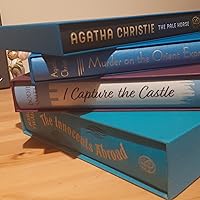
This beautiful Folio Society edition of J.E. Austen Leigh's A Memoir of Jane Austen by her nephew was an insightful read. Bibliographically I believe that you would learn more about the milestones of Jane's life via Wikipedia, but as this book was published in 1870 (fifty-two years after her death) it was invaluable for learning about the societal expectations of women during the Victorian period.
"Victorian society?" You may ask "I thought that Jane lived and wrote her novels during the Georgian period." Yes, she did, but a scant amount of Jane's personal letters were interspersed with her nephew's personal childhood recollections in this "memoir," largely due to the fact that many of Jane's letters were destroyed immediately after her death (a practice not uncommon at the time). As a result Austen Leigh works hard to paint a picture of Jane as having "modest simplicity of character" - the ultimate achievement for a refined woman during Victorian England. That is the equivalent of saying "she was utterly unremarkable as a person - no passionate desires, no unseemly thoughts or habits, rather bland all around really, but she was quiet and remained unobtrusive in her spinsterhood, and we as a society should remember how great she was for her mild character. She was so good at being a nobody that barely anything noteworthy of hers remains, even in memory, and I want to reinforce that image of her so no one will feel justified in criticizing her as a mindless, boycrazy deviant or schemer because our family name must not be sullied by such wanton behaviour. She is to be put on a pedestal, not villified." To reinforce this view, he even states outright:
"It has been said that the happiest individuals, like nations during their happiest periods, have no history. In the case of my aunt, it was not only that the course of her life was unvaried, but that her own disposition was remarkably calm and even. There was in her nothing eccentric or angular; no ruggedness of temper; no singularity of manner; none of the morbid sensibility or exaggeration of feeling, which not unfrequently accompanies great talents, to be worked up into a picture. Hers was a mind balanced on a basis of good sense, sweetened by affectionate heart, and regulated by fixed principles; so that she was to be distinguished from many other amiable and sensible women only by that particular grain of genius which shines out clearly enough in her works, but of which a biographer can make little use."
He does not even make her sound like a real person. I am sure that Jane was as complex as any other human being on the planet, with thoughts and wants as any woman would have. She was a writer and passionate storyteller; I doubt she was always happy to be sequestered away in her corner of the world. If she was content she probably would not have written any of her novels, which were a realistic critique/portrait of Georgian upper class social relations. Her characters have flaws and passions and make mistakes; even if Jane was "well behaved" I doubt she was internally a plain and mild person. But you know...every biographer has an agenda, and works are always best read with consideration for their historical and cultural contexts. I am sure that Austen Leigh thought he was writing this in his aunt's best interests, so you cannot doubt his sincerity of heart in remembering her this way. I just simply do not believe that this paints a comprehensive picture of Jane's life.
"Victorian society?" You may ask "I thought that Jane lived and wrote her novels during the Georgian period." Yes, she did, but a scant amount of Jane's personal letters were interspersed with her nephew's personal childhood recollections in this "memoir," largely due to the fact that many of Jane's letters were destroyed immediately after her death (a practice not uncommon at the time). As a result Austen Leigh works hard to paint a picture of Jane as having "modest simplicity of character" - the ultimate achievement for a refined woman during Victorian England. That is the equivalent of saying "she was utterly unremarkable as a person - no passionate desires, no unseemly thoughts or habits, rather bland all around really, but she was quiet and remained unobtrusive in her spinsterhood, and we as a society should remember how great she was for her mild character. She was so good at being a nobody that barely anything noteworthy of hers remains, even in memory, and I want to reinforce that image of her so no one will feel justified in criticizing her as a mindless, boycrazy deviant or schemer because our family name must not be sullied by such wanton behaviour. She is to be put on a pedestal, not villified." To reinforce this view, he even states outright:
"It has been said that the happiest individuals, like nations during their happiest periods, have no history. In the case of my aunt, it was not only that the course of her life was unvaried, but that her own disposition was remarkably calm and even. There was in her nothing eccentric or angular; no ruggedness of temper; no singularity of manner; none of the morbid sensibility or exaggeration of feeling, which not unfrequently accompanies great talents, to be worked up into a picture. Hers was a mind balanced on a basis of good sense, sweetened by affectionate heart, and regulated by fixed principles; so that she was to be distinguished from many other amiable and sensible women only by that particular grain of genius which shines out clearly enough in her works, but of which a biographer can make little use."
He does not even make her sound like a real person. I am sure that Jane was as complex as any other human being on the planet, with thoughts and wants as any woman would have. She was a writer and passionate storyteller; I doubt she was always happy to be sequestered away in her corner of the world. If she was content she probably would not have written any of her novels, which were a realistic critique/portrait of Georgian upper class social relations. Her characters have flaws and passions and make mistakes; even if Jane was "well behaved" I doubt she was internally a plain and mild person. But you know...every biographer has an agenda, and works are always best read with consideration for their historical and cultural contexts. I am sure that Austen Leigh thought he was writing this in his aunt's best interests, so you cannot doubt his sincerity of heart in remembering her this way. I just simply do not believe that this paints a comprehensive picture of Jane's life.
October 4, 2015
The book gives good insight into Miss Austen's life, her personality and her career. Laced with her letters and her manuscripts, this book sets out to satiate all those souls who have been scourging the internet to find out more about their favourite author. Mr. Austen-Leigh also shows us how the society was like in the 18th century, and has appropriately prosed and structured the book. The flair for writing certainly runs in the family!!! :)
Recommended for all the Janeites! :)
Recommended for all the Janeites! :)

September 29, 2015
scoglio iniziale a parte, va via liscio; grazie al nipote per questo ricordo!

March 7, 2026
Disappointing! This does not feel to be an honest account of Jane’s life. Her family is said to have been in perfect harmony amongst themselves in this memoir, whereas many of us know facts to the contrary. Also there is a lot of detailed information about distant relatives which might feel out of place and not relatable. Jane Austen and all lights on her with other relations built around her is what I, as a fan was looking out for, in her memoir. Language is not amiable too.
A relative giving the account from memory, 50 years after Jane’s death is the excuse behind the glitch but some more homework would have been worth.
I left this book mid-way because I did not find it satisfactory or worth my time. It is sad that an author of her stature, who has contributed voluminous contents in field of literature, in that time and at her tender age does not have a good documented life account.
A relative giving the account from memory, 50 years after Jane’s death is the excuse behind the glitch but some more homework would have been worth.
I left this book mid-way because I did not find it satisfactory or worth my time. It is sad that an author of her stature, who has contributed voluminous contents in field of literature, in that time and at her tender age does not have a good documented life account.

January 14, 2018
I'm a huge Austen fan so it felt like a privilege to be able to find out a bit more about who she was as a person and a writer from the perspective of her nephew. It's interesting that he commented on the lack of source material in terms of letters, diaries, etc. because her family felt that her private life should be kept private - how different to today's celebrities! According to this memoir there was a lack of scandal in Austen's life - she was loved by her family, respected by her community, and was a good and steady person.

January 16, 2023
Pese a que no era una copucha jugosa, se disfrutó el saber que era una persona muy querida y con un genio e intelecto destacables, pese a que sus colegas escritores (principalmente hombres) tardaron en reconocerle. Y no es que ella haya ido por su vida queriendo reconocimiento, ya le bastaba con el de las personas a las que tenía en gran estima, sólo lo menciono porque no es sorpresa alguna que su fama se haya expandido después de haber muerto.

December 2, 2023
Very interesting memoir by Jane Austen's nephew. At times, he rambles a bit about various related people's backgrounds, reminding me of Uncle Colm from Derry Girls. 😊. But he includes several anecdotes, family quotes, and letters from Jane Austen that I have seen quoted in many other biographies. Therefore, he has clearly been viewed as a reliable source in many matters by Austen scholars. An excellent reading for anyone interested in Austen's life.
November 6, 2021
Les chapitres sont très inégaux mais quelques-uns si savoureux (sur les rapports de Jane Austen avec le milieu littéraire, sur les suggestions d'écriture qui lui sont faites et ce qu'elle en fait, sur ce qu'elle pense de son éditeur) que la lecture reste bien plaisante.
February 9, 2022
El autor comparte, desde sus propios recuerdos y recursos disponibles, la "persona" creadora de historias que han atrapado a generaciones. Despues de mas de 200 años de su muerte seguimos buscando a Jane Austen.

May 1, 2021
Probably it's more a 3.5, but 4 only because it's about her.
Displaying 1 - 30 of 131 reviews