

What do you think?
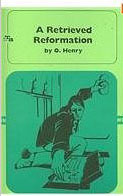
A Retrieved Reformation
Do you believe that people can change? Can a bank robber marry the banker's daughter without having any hidden thoughts and intentions? "A Retrieved Reformation" tells the story of Jimmy, a formal prisoner, who decides to quit violating the law in the name of love. He takes up a new identity and starts a new life as an honorable man. However he is about to face a choice which can cost him his future. Will he sacrifice himself in order to save a child in danger or he will prefer to keep his old identity in secret? -
54 pages, Paperback
First published January 1, 1903
About the author
O. Henry
3,008 books1,982 followersSuch volumes as
Cabbages and Kings
(1904) and
The Four Million
(1906) collect short stories, noted for their often surprising endings, of American writer William Sydney Porter, who used the pen name O. Henry.
His biography shows where he found inspiration for his characters. His era produced their voices and his language.
Mother of three-year-old Porter died from tuberculosis. He left school at fifteen years of age and worked for five years in drugstore of his uncle and then for two years at a Texas sheep ranch.
In 1884, he went to Austin, where he worked in a real estate office and a church choir and spent four years as a draftsman in the general land office. His wife and firstborn died, but daughter Margaret survived him.
He failed to establish a small humorous weekly and afterward worked in poorly-run bank. When its accounts balanced not, people blamed and fired him.
In Houston, he worked for a few years until, ordered to stand trial for embezzlement, he fled to New Orleans and thence Honduras.
Two years later, he returned on account of illness of his wife. Apprehended, Porter served a few months more than three years in a penitentiary in Columbus, Ohio. During his incarceration, he composed ten short stories, including A Blackjack Bargainer , The Enchanted Kiss , and The Duplicity of Hargraves .
In 1899, McClure's published Whistling Dick's Christmas Story and Georgia's Ruling .
In Pittsburgh, Pennsylvania, he sent manuscripts to New York editors. In the spring of 1902, Ainslee's Magazine offered him a regular income if he moved to New York.
In less than eight years, he became a bestselling author of collections of short stories. Cabbages and Kings came first in 1904 The Four Million, and The Trimmed Lamp and Heart of the West followed in 1907, and The Voice of the City in 1908, Roads of Destiny and Options in 1909, Strictly Business and Whirligigs in 1910 followed.
Posthumously published collections include The Gentle Grafter about the swindler, Jeff Peters; Rolling Stones , Waifs and Strays , and in 1936, unsigned stories, followed.
People rewarded other persons financially more. A Retrieved Reformation about the safe-cracker Jimmy Valentine got $250; six years later, $500 for dramatic rights, which gave over $100,000 royalties for playwright Paul Armstrong. Many stories have been made into films.
His biography shows where he found inspiration for his characters. His era produced their voices and his language.
Mother of three-year-old Porter died from tuberculosis. He left school at fifteen years of age and worked for five years in drugstore of his uncle and then for two years at a Texas sheep ranch.
In 1884, he went to Austin, where he worked in a real estate office and a church choir and spent four years as a draftsman in the general land office. His wife and firstborn died, but daughter Margaret survived him.
He failed to establish a small humorous weekly and afterward worked in poorly-run bank. When its accounts balanced not, people blamed and fired him.
In Houston, he worked for a few years until, ordered to stand trial for embezzlement, he fled to New Orleans and thence Honduras.
Two years later, he returned on account of illness of his wife. Apprehended, Porter served a few months more than three years in a penitentiary in Columbus, Ohio. During his incarceration, he composed ten short stories, including A Blackjack Bargainer , The Enchanted Kiss , and The Duplicity of Hargraves .
In 1899, McClure's published Whistling Dick's Christmas Story and Georgia's Ruling .
In Pittsburgh, Pennsylvania, he sent manuscripts to New York editors. In the spring of 1902, Ainslee's Magazine offered him a regular income if he moved to New York.
In less than eight years, he became a bestselling author of collections of short stories. Cabbages and Kings came first in 1904 The Four Million, and The Trimmed Lamp and Heart of the West followed in 1907, and The Voice of the City in 1908, Roads of Destiny and Options in 1909, Strictly Business and Whirligigs in 1910 followed.
Posthumously published collections include The Gentle Grafter about the swindler, Jeff Peters; Rolling Stones , Waifs and Strays , and in 1936, unsigned stories, followed.
People rewarded other persons financially more. A Retrieved Reformation about the safe-cracker Jimmy Valentine got $250; six years later, $500 for dramatic rights, which gave over $100,000 royalties for playwright Paul Armstrong. Many stories have been made into films.
Ratings & Reviews
Friends & Following
Create a free account to discover what your friends think of this book!
Community Reviews
Displaying 1 - 30 of 83 reviews

December 17, 2015
A Retrieved Reformation is about an ex-criminal's karma, and--of course--O Henry has an ironic twist ending that will leave you smiling.
What more can you ask for from 10 minutes of reading?
What more can you ask for from 10 minutes of reading?

November 18, 2011
Jimmy Valentine is a bank robber who has connections that have gotten him out of jail after only 11 months of a 4 yr sentence. Of course once out, he gets back to cracking safes. The detective that caught him before, Ben Price, notices his M.O. and begins looking for him. After a few jobs, he heads to a small town called Elmore to check out their bank when the bank owner’s daughter catches his eye. He inquires who she is and decides to stay for a while. Using the shoe making skill he picked up in prison, he opens a shoe shop, meets Annabel Adams and after a year they're engaged. Just before the wedding he writes an old friend & confesses he prefers the clean life and asks to meet up with him so he can gift him his safe cracking tools. That day before he leaves, his soon to be father-in law shows the family his new state of the art safe and Ben Price arrives at the Elmore bank.
When Mr. Adams granddaughters decide to play by the new safe, one gets locked in. Panicked because the safe isn’t set up yet the family turns to “Ralph” for help, unknowing he was once a safe cracker…they turn to him just as someone they have faith in that can do anything and Ralph must decide if he should reveal his skill and save his future niece or play dumb and keep his Ralph Spence persona.
When Mr. Adams granddaughters decide to play by the new safe, one gets locked in. Panicked because the safe isn’t set up yet the family turns to “Ralph” for help, unknowing he was once a safe cracker…they turn to him just as someone they have faith in that can do anything and Ralph must decide if he should reveal his skill and save his future niece or play dumb and keep his Ralph Spence persona.

February 18, 2026
A character with a troubled character finds love and that love transforms him into a better man. We have all read that story in school, Indians mostly. And I had this itch to re-read it after so many years and by the end, I had a gleeful smile across my lips. A story which is very simple at its core, nothing extraordinary and that is exactly what made it made special for me and many others at such an early age and keeps it special till now. A feel good story, for the ages.

January 8, 2025
This is a short but great story of how a guy can change for the better for a girl that he loves.

November 15, 2019
The short story "A Retrieved Reformation" by O. Henry describes the story of a safecracker (someone who breaks into safes).
The story presents good features of human’s character. Some actions may lead to problems, however, certain actions may lead to the best results if the person was sincere in their intentions.
The story finishes with a happy ending. It gives the readers a positive emotion.
Here is the link to the text of the story:
http://www.elahelp.com/uploads/1/1/7/...
The story presents good features of human’s character. Some actions may lead to problems, however, certain actions may lead to the best results if the person was sincere in their intentions.
The story finishes with a happy ending. It gives the readers a positive emotion.
Here is the link to the text of the story:
http://www.elahelp.com/uploads/1/1/7/...
May 7, 2020
Summary: In O. Henry’s short story, “A Retrieved Reformation”, the protagonist Jimmy Valentine works at a shoe-shop in prison. After a meeting with the ward, Jimmy is released from prison with the accompanying advice to stay away from cracking safes, the act that landed him in prison. Following release, Jimmy soon returns to cracking safes and plans to rob a bank in Arkansas, until he falls in love with Annabel, the banker’s daughter. During this time, Ben Price, who had previously arrested Valentine, starts investigating him again. Determined to change his ways, Valentine decides to become a shoemaker under the pseudonym Ralph D. Spencer. Despite vowing to leave his safe cracking days in the past, Spencer (Valentine) uses his skills to save Annabel, who was trapped inside a new safe at the bank. Even though Detective Price saw him crack the safe, he decides to look the other way and allow Valentine to marry Annabel and enjoy his new life.
Connection: In regard to my concept, this short story grapples with identity through Jimmy Valentine’s transformation from a criminal safe-cracker to a respectable member of society. After being released from prison, Jimmy takes up an alias as Dr. Ralph D. Spencer, a shoe salesman. In regard to identity, O. Henry uses this story as a way to highlight how easy it can be to change our outward identities, in addition to highlighting that we can never escape who we truly are. In this case, Jimmy takes up the alias of Dr. Spencer to conceal his previous life of crime, but when his girlfriend's sister, Agatha, got locked in a safe he had to choose between not getting involved or returning to his lock picking days to help free her. Even though Jimmy’s past was flooded with crime, his decision to do the right thing and help free Agatha demonstrates that no matter how hard he tried to change his appearance, he will always be a master lock picker. In regard to MS students, this can be related to their lives similarly to that of “The White Umbrella”. Even if you desire to rid yourself of something that defines who you are, you won’t be successful because no matter what, whether positive or negative, your past will always play a role in who you are.
Nobody wants to be defined by who they were in the past, but that’s not to say that our past selves are irrelevant or don't matter. Anything and everything you’ve ever done will, to varying degrees, play an active role in the person you are today and the person you’ll be in the future. When it comes to transferring this to student-writing, the activity ‘What the Future Holds’ from chapter five of Gallagher’s Write Like This addresses these ideas. Used alongside O. Henry’s short story “Retrieved Reformation”, students could be asked to consider what the future holds for their identities. Having already grappled with how our past choices play into our present selves, this activity would require students to look at themselves in the present to try and identify aspects of themselves that they anticipate or desire to change. This activity is versatile in application; it could be used as the prompt for an essay, a weekly journal entry, or even a warm-up discussion following the reading of the text. (p. 129)
Connection: In regard to my concept, this short story grapples with identity through Jimmy Valentine’s transformation from a criminal safe-cracker to a respectable member of society. After being released from prison, Jimmy takes up an alias as Dr. Ralph D. Spencer, a shoe salesman. In regard to identity, O. Henry uses this story as a way to highlight how easy it can be to change our outward identities, in addition to highlighting that we can never escape who we truly are. In this case, Jimmy takes up the alias of Dr. Spencer to conceal his previous life of crime, but when his girlfriend's sister, Agatha, got locked in a safe he had to choose between not getting involved or returning to his lock picking days to help free her. Even though Jimmy’s past was flooded with crime, his decision to do the right thing and help free Agatha demonstrates that no matter how hard he tried to change his appearance, he will always be a master lock picker. In regard to MS students, this can be related to their lives similarly to that of “The White Umbrella”. Even if you desire to rid yourself of something that defines who you are, you won’t be successful because no matter what, whether positive or negative, your past will always play a role in who you are.
Nobody wants to be defined by who they were in the past, but that’s not to say that our past selves are irrelevant or don't matter. Anything and everything you’ve ever done will, to varying degrees, play an active role in the person you are today and the person you’ll be in the future. When it comes to transferring this to student-writing, the activity ‘What the Future Holds’ from chapter five of Gallagher’s Write Like This addresses these ideas. Used alongside O. Henry’s short story “Retrieved Reformation”, students could be asked to consider what the future holds for their identities. Having already grappled with how our past choices play into our present selves, this activity would require students to look at themselves in the present to try and identify aspects of themselves that they anticipate or desire to change. This activity is versatile in application; it could be used as the prompt for an essay, a weekly journal entry, or even a warm-up discussion following the reading of the text. (p. 129)
June 29, 2019
Sometimes it is fun to read an analysis of a short story. Not that a reader can't pick up the same things but if you are just doing it for fun you don't necessarily want to pick at something. It is also interesting to see what certain groups pick out as important. In one analysis the focus is on the work ethic that Jimmy has either in prison, in making his own tools for safecracking or being able to make a success of his new job as an owner of a shoe store. Yes, these things are there but I would have focused on some of the other things.
Anyway, it is a nice story with the typical short irony O. Henry is known for.
Anyway, it is a nice story with the typical short irony O. Henry is known for.

October 5, 2023
Another good O. Henry story showing his humanity.

March 4, 2024
O. Henry's "A Retrieved Reformation" short story has had several silent films as "Alias, Jimmy Valentine", a LUX radio 1936 program and a radio program. I loved this story and the ending seemed to be going one way but then it changed with good reason.
Story in short- Jimmy Valentine is a safe cracker, when he meets a banker's daughter, are his motive of love or something else?
➖➖➖➖➖➖➖➖➖➖➖➖➖➖➖➖➖➖➖➖➖➖➖➖➖➖➖➖➖➖➖➖➖➖➖
Highlight (Yellow) | Location 16297
A GUARD CAME to the prison shoe-shop, where Jimmy Valentine was assiduously stitching uppers, and escorted him to the front office. There the warden handed Jimmy his pardon, which had been signed that morning by the governor. Jimmy took it in a tired kind of way. He had served nearly ten months of a four year sentence. He had expected to stay only about three months, at the
Highlight (Yellow) | Location 16300
longest. When a man with as many friends on the outside as Jimmy Valentine had is received in the “stir” it is hardly worth while to cut his hair. “Now, Valentine,” said the warden, “you’ll go out in the morning. Brace up, and make a man of yourself. You’re not a bad fellow at heart. Stop cracking safes, and live straight.” “Me?” said Jimmy, in surprise. “Why, I never cracked a safe in my life.” “Oh, no,” laughed the warden. “Of course not. Let’s see, now. How was
Highlight (Yellow) | Location 16305
it you happened to get sent up on that Springfield job? Was it because you wouldn’t prove an alibi for fear of compromising somebody in extremely high-toned society? Or was it simply a case of a mean old jury that had it in for you? It’s always one or the other with you innocent victims.” “Me?” said Jimmy, still blankly virtuous. “Why, warden, I never was in Springfield in my life!” “Take him back, Cronin!” said the warden, “and fix him up with outgoing clothes. Unlock him at seven
Highlight (Yellow) | Location 16309
in the morning, and let him come to the bull-pen. Better think over my advice, Valentine.” At a quarter past seven on the next morning Jimmy stood in the warden’s outer office. He had on a suit of the villainously fitting, ready-made clothes and a pair of the stiff, squeaky shoes that the state furnishes to its discharged compulsory guests. The clerk handed him a railroad ticket and the five-dollar bill with which the law expected him to
rehabilitate himself into good citizenship and prosperity. The warden gave him a cigar, and shook hands. Valentine, 9762, was chronicled on the books, “Pardoned by Governor,” and Mr. James Valentine walked out into the sunshine. Disregarding the song of the birds, the waving green trees, and the smell of the flowers, Jimmy headed straight for a restaurant. There he tasted the first sweet joys of liberty in the shape of a broiled chicken and a bottle of white wine — followed by a cigar a grade better than the one the warden had
Highlight (Yellow) | Location 16316
given him. From there he proceeded leisurely to the depot. He tossed a quarter into the hat of a blind man sitting by the door, and boarded his train. Three hours set him down in a little town near the state line. He went to the café of one Mike Dolan and shook hands with Mike, who was alone behind the bar. “Sorry we couldn’t make it sooner, Jimmy, me boy,” said Mike. “But we had that protest from Springfield to buck against, and the governor nearly balked. Feeling all right?”
Highlight (Yellow) | Location 16320
“Fine,” said Jimmy. “Got my key?” He got his key and went upstairs, unlocking the door of a room at the rear. Everything was just as he had left it. There on the floor was still Ben Price’s collar-button that had been torn from that eminent detective’s shirt-band when they had overpowered Jimmy to arrest him. Pulling out from the wall a folding-bed, Jimmy slid back a panel in the wall and dragged out a dust-covered suit-case. He opened this and gazed fondly at the finest set of burglar’s tools in the East. It was
Highlight (Yellow) | Location 16324
a complete set, made of specially tempered steel, the latest designs in drills, punches, braces and bits, jimmies, clamps, and augers, with two or three novelties, invented by Jimmy himself, in which he took pride. Over nine hundred dollars they had cost him to have made at ––––, a place where they make such things for the profession. In half an hour Jimmy went down stairs and through the café. He was now dressed in tasteful and well-fitting clothes, and carried his dusted and cleaned suit-case in his hand.
Highlight (Yellow) | Location 16328
“Got anything on?” asked Mike Dolan, genially. “Me?” said Jimmy, in a puzzled tone. “I don’t understand. I’m representing the New York Amalgamated Short Snap Biscuit Cracker and Frazzled Wheat Company.” This statement delighted Mike to such an extent that Jimmy had to take a seltzer-and-milk on the spot. He never touched “hard” drinks. A week after the release of Valentine, 9762, there was a neat job of safe-burglary done in Richmond, Indiana, with no clue to the author. A scant eight hundred dollars was all that was secured. Two weeks after that a patented, improved, burglar-proof safe in Logansport was opened like a cheese to the tune of fifteen hundred dollars, currency; securities and silver untouched. That began to interest the rogue-catchers. Then an old-fashioned bank-safe in Jefferson City became active and threw out of its crater an eruption of bank- notes amounting to five thousand dollars. The losses were now high enough to bring the matter up into Ben Price’s class of
Highlight (Yellow) | Location 16336
work. By comparing notes, a remarkable similarity in the methods of the burglaries was noticed. Ben Price investigated the scenes of the robberies, and was heard to remark: “That’s Dandy Jim Valentine’s autograph. He’s resumed business. Look at that combination knob — jerked out as easy as pulling up a radish in wet weather. He’s got the only clamps that can do it. And look how clean those tumblers were punched out! Jimmy never has to drill but one hole. Yes, I guess I want Mr. Valentine. He’ll do his bit
Highlight (Yellow) | Location 16340
next time without any short-time or clemency foolishness.” Ben Price knew Jimmy’s habits. He had learned them while working up the Springfield case. Long jumps, quick get-aways, no confederates, and a taste for good society — these ways had helped Mr. Valentine to become noted as a successful dodger of retribution. It was given out that Ben Price had taken up the trail of the elusive cracksman, and other people with burglar-proof safes felt more at ease.
❌❌❌❌❌❌❌❌❌❌❌❌❌❌❌❌❌❌❌❌❌❌❌❌❌❌❌❌❌❌❌❌❌❌❌❌❌spoiler alert
Ben is a detective that finally finds Jimmy Valentine going under the name of Randy Spencer. After coming out of jail, Jimmy did some jobs until he turns honest and falls in love for the banker's daughter, they are to marry but Ben looks to capture Jimmy but changes his mind when,he sees Jimmy save some trapped little nieces of his fiance, but he wastes no time a saves the girls. Having forgotten who Ben was I thought he was one of his old associates but then it became clear that Jimmy has had a reprieve and can live a honest life. I look forward to seeing any older movie or radio version.
Story in short- Jimmy Valentine is a safe cracker, when he meets a banker's daughter, are his motive of love or something else?
➖➖➖➖➖➖➖➖➖➖➖➖➖➖➖➖➖➖➖➖➖➖➖➖➖➖➖➖➖➖➖➖➖➖➖
Highlight (Yellow) | Location 16297
A GUARD CAME to the prison shoe-shop, where Jimmy Valentine was assiduously stitching uppers, and escorted him to the front office. There the warden handed Jimmy his pardon, which had been signed that morning by the governor. Jimmy took it in a tired kind of way. He had served nearly ten months of a four year sentence. He had expected to stay only about three months, at the
Highlight (Yellow) | Location 16300
longest. When a man with as many friends on the outside as Jimmy Valentine had is received in the “stir” it is hardly worth while to cut his hair. “Now, Valentine,” said the warden, “you’ll go out in the morning. Brace up, and make a man of yourself. You’re not a bad fellow at heart. Stop cracking safes, and live straight.” “Me?” said Jimmy, in surprise. “Why, I never cracked a safe in my life.” “Oh, no,” laughed the warden. “Of course not. Let’s see, now. How was
Highlight (Yellow) | Location 16305
it you happened to get sent up on that Springfield job? Was it because you wouldn’t prove an alibi for fear of compromising somebody in extremely high-toned society? Or was it simply a case of a mean old jury that had it in for you? It’s always one or the other with you innocent victims.” “Me?” said Jimmy, still blankly virtuous. “Why, warden, I never was in Springfield in my life!” “Take him back, Cronin!” said the warden, “and fix him up with outgoing clothes. Unlock him at seven
Highlight (Yellow) | Location 16309
in the morning, and let him come to the bull-pen. Better think over my advice, Valentine.” At a quarter past seven on the next morning Jimmy stood in the warden’s outer office. He had on a suit of the villainously fitting, ready-made clothes and a pair of the stiff, squeaky shoes that the state furnishes to its discharged compulsory guests. The clerk handed him a railroad ticket and the five-dollar bill with which the law expected him to
rehabilitate himself into good citizenship and prosperity. The warden gave him a cigar, and shook hands. Valentine, 9762, was chronicled on the books, “Pardoned by Governor,” and Mr. James Valentine walked out into the sunshine. Disregarding the song of the birds, the waving green trees, and the smell of the flowers, Jimmy headed straight for a restaurant. There he tasted the first sweet joys of liberty in the shape of a broiled chicken and a bottle of white wine — followed by a cigar a grade better than the one the warden had
Highlight (Yellow) | Location 16316
given him. From there he proceeded leisurely to the depot. He tossed a quarter into the hat of a blind man sitting by the door, and boarded his train. Three hours set him down in a little town near the state line. He went to the café of one Mike Dolan and shook hands with Mike, who was alone behind the bar. “Sorry we couldn’t make it sooner, Jimmy, me boy,” said Mike. “But we had that protest from Springfield to buck against, and the governor nearly balked. Feeling all right?”
Highlight (Yellow) | Location 16320
“Fine,” said Jimmy. “Got my key?” He got his key and went upstairs, unlocking the door of a room at the rear. Everything was just as he had left it. There on the floor was still Ben Price’s collar-button that had been torn from that eminent detective’s shirt-band when they had overpowered Jimmy to arrest him. Pulling out from the wall a folding-bed, Jimmy slid back a panel in the wall and dragged out a dust-covered suit-case. He opened this and gazed fondly at the finest set of burglar’s tools in the East. It was
Highlight (Yellow) | Location 16324
a complete set, made of specially tempered steel, the latest designs in drills, punches, braces and bits, jimmies, clamps, and augers, with two or three novelties, invented by Jimmy himself, in which he took pride. Over nine hundred dollars they had cost him to have made at ––––, a place where they make such things for the profession. In half an hour Jimmy went down stairs and through the café. He was now dressed in tasteful and well-fitting clothes, and carried his dusted and cleaned suit-case in his hand.
Highlight (Yellow) | Location 16328
“Got anything on?” asked Mike Dolan, genially. “Me?” said Jimmy, in a puzzled tone. “I don’t understand. I’m representing the New York Amalgamated Short Snap Biscuit Cracker and Frazzled Wheat Company.” This statement delighted Mike to such an extent that Jimmy had to take a seltzer-and-milk on the spot. He never touched “hard” drinks. A week after the release of Valentine, 9762, there was a neat job of safe-burglary done in Richmond, Indiana, with no clue to the author. A scant eight hundred dollars was all that was secured. Two weeks after that a patented, improved, burglar-proof safe in Logansport was opened like a cheese to the tune of fifteen hundred dollars, currency; securities and silver untouched. That began to interest the rogue-catchers. Then an old-fashioned bank-safe in Jefferson City became active and threw out of its crater an eruption of bank- notes amounting to five thousand dollars. The losses were now high enough to bring the matter up into Ben Price’s class of
Highlight (Yellow) | Location 16336
work. By comparing notes, a remarkable similarity in the methods of the burglaries was noticed. Ben Price investigated the scenes of the robberies, and was heard to remark: “That’s Dandy Jim Valentine’s autograph. He’s resumed business. Look at that combination knob — jerked out as easy as pulling up a radish in wet weather. He’s got the only clamps that can do it. And look how clean those tumblers were punched out! Jimmy never has to drill but one hole. Yes, I guess I want Mr. Valentine. He’ll do his bit
Highlight (Yellow) | Location 16340
next time without any short-time or clemency foolishness.” Ben Price knew Jimmy’s habits. He had learned them while working up the Springfield case. Long jumps, quick get-aways, no confederates, and a taste for good society — these ways had helped Mr. Valentine to become noted as a successful dodger of retribution. It was given out that Ben Price had taken up the trail of the elusive cracksman, and other people with burglar-proof safes felt more at ease.
❌❌❌❌❌❌❌❌❌❌❌❌❌❌❌❌❌❌❌❌❌❌❌❌❌❌❌❌❌❌❌❌❌❌❌❌❌spoiler alert
Ben is a detective that finally finds Jimmy Valentine going under the name of Randy Spencer. After coming out of jail, Jimmy did some jobs until he turns honest and falls in love for the banker's daughter, they are to marry but Ben looks to capture Jimmy but changes his mind when,he sees Jimmy save some trapped little nieces of his fiance, but he wastes no time a saves the girls. Having forgotten who Ben was I thought he was one of his old associates but then it became clear that Jimmy has had a reprieve and can live a honest life. I look forward to seeing any older movie or radio version.

January 1, 2021
This short story and "After Twenty Years" are some of my favorite works from O. Henry. Both of these short stories have compelling characters and surprise endings. "A Retrieved Reformation" is about a safecracker named Jimmy Valentine. He gets released early from jail and doesn't take long to go back to cracking safes and stealing money. However, one day he meets a girl. You can probably guess what happens next; she helps reform him. However, a detective keeps tracking Jimmy and is determined to send him back to jail.
Parts of this remind me of the movie Catch Me If You Can. There is suspense and a rivalry between the thief and detective. Then there are moral dilemmas and surprise twists at the end that are so characteristic of O. Henry. I truly enjoyed this short story and would recommend reading this and watching the accompanying 1985 short film "Jimmy Valentine" at this link- https://www.youtube.com/watch?v=uJEnx....
Parts of this remind me of the movie Catch Me If You Can. There is suspense and a rivalry between the thief and detective. Then there are moral dilemmas and surprise twists at the end that are so characteristic of O. Henry. I truly enjoyed this short story and would recommend reading this and watching the accompanying 1985 short film "Jimmy Valentine" at this link- https://www.youtube.com/watch?v=uJEnx....

October 24, 2021
Nice redemption story.

September 22, 2026
Я разбирал это произведение в университете и прочитал его в оригинале. Мне понравилось то, как пишет автор.
Сюжет и мораль этой книги я не могу признать гениальными — всё это для меня было читаемо и не сильно меня впечатлило. Книга создаёт пласт для размышлений о том, может ли преступник искупиться после своих неблагоприятных дел.
Невероятных пейзажей в истории я не встретил — каждая деталь присутствовала только потому что была важна для истории. Ничего лишнего здесь нет. Мне понравилось, что этот рассказ вышел небольшим и его можно быстро прочитать — это очень приятно.
Я считаю что это можно прочитать, если хочется потрогать что-то — за неимением лучшего слова — короткое и классическое американское.
Сюжет и мораль этой книги я не могу признать гениальными — всё это для меня было читаемо и не сильно меня впечатлило. Книга создаёт пласт для размышлений о том, может ли преступник искупиться после своих неблагоприятных дел.
Невероятных пейзажей в истории я не встретил — каждая деталь присутствовала только потому что была важна для истории. Ничего лишнего здесь нет. Мне понравилось, что этот рассказ вышел небольшим и его можно быстро прочитать — это очень приятно.
Я считаю что это можно прочитать, если хочется потрогать что-то — за неимением лучшего слова — короткое и классическое американское.

March 15, 2024
I was reading one of my old diaries and I said that I had to write about “A Retrieved Reformation” for my “surprise” writing test. I obviously had to read this because I was curious. I genuinely couldn’t remember ever reading anything with that title. However, it was a short, cute read. Eighth grade literature was lovely.
Extra notes:
1. I assumed that Annabel caught Jimmy’s attention because she was attractive, but he felt even more attracted to her after finding out that she was the banker’s daughter— since he robs banks and all. thankfully, I was wrong and he actually loved her. :”)
2. I loved how Jimmy described his girl in the letter he sent.
Extra notes:
1. I assumed that Annabel caught Jimmy’s attention because she was attractive, but he felt even more attracted to her after finding out that she was the banker’s daughter— since he robs banks and all. thankfully, I was wrong and he actually loved her. :”)
2. I loved how Jimmy described his girl in the letter he sent.

March 24, 2025
I love the way O Henry has, of being able to say profound things in such a subtle way - without being preachy, without seemingly even meaning to. This story, for instance, in which a suave safe-breaker named Jimmy Valentine, fresh out of jail, restarts a life of crime and makes his way to a small town, preparing to rob the bank there. But just as he's about to step into the bank for a recce, Valentine sees the bank manager's daughter and loses his heart...
Can a hardened thief ever change? Or is it really true that a leopard never changes its spots?
Wonderful story.
Can a hardened thief ever change? Or is it really true that a leopard never changes its spots?
Wonderful story.

March 7, 2026
This was a fun, short read with the teens at our homeschool co-op. It led to a great discussion about the ability to change, what we thought conversations would be like in the aftermath, etc. As someone who wrote a whole novel about a man in need of redemption and second chances, it made for an enjoyable class discussion!
Because of the brevity of the story, there was SO MUCH telling and very few "scenes". This made some of the students get lost in all the information and we had to reread a couple of sections for clarification.
Overall, very fun!
Because of the brevity of the story, there was SO MUCH telling and very few "scenes". This made some of the students get lost in all the information and we had to reread a couple of sections for clarification.
Overall, very fun!
July 9, 2026
This is the last of the short stories I have been wanting to read by O. Henry. I am happy I coincidentally read this one last because it was my favorite.
I like the idea of living in a world where you can reinvent yourself one day and everyone just accepts you as a changed person. I also enjoyed how this short story is so optimistic. All of the other short stories by O. Henry that I have read have been too pessimistic. I think there is a time and place for unhappy endings, but I just don't think it's what the world needs right now. I need a positive message full of hope, like this one.
I like the idea of living in a world where you can reinvent yourself one day and everyone just accepts you as a changed person. I also enjoyed how this short story is so optimistic. All of the other short stories by O. Henry that I have read have been too pessimistic. I think there is a time and place for unhappy endings, but I just don't think it's what the world needs right now. I need a positive message full of hope, like this one.

November 25, 2021
I had to read this short story for school, and at first I hated it! Then I reread it and listen to and audio recording of it, and loved it. I also had to write an essay over what I though would happen with the two main characters after the end of the story, and it was one of my favorite things I have ever written! I loved this little story and highly recommend it if you need something quick and fun to read!

June 6, 2026
Interesting twist at the end. Ralph erstwhile Jimmy valentine had a history of robbery by cracking security lock, he got caught and been in prison for months, after being released he was followed by detective Ben... Karma was running after him.... detective acquitted him. How? He used his skill while mistakenly a girl suffocating in that ensconced room before his impending in-law members endangering his nuptial advancement!

June 11, 2020
This is the story of one of the worlds best thieves. He is expert, with his tools at cracking any safe. In time he leaves his criminal past and falls in love with a bank owner's daughter. On the day of their wedding, irony strikes as a young child is locked into the bank vault and the child's life must be saved.

August 20, 2026
A Retrieved Reformation" by O. Henry is a beautiful story about redemption, love, and true character. I guessed from the beginning that Jimmy Valentine had good in him, and seeing him sacrifice everything to save a life proved me right. Finishing this story left me with a huge smile on my face and feeling over the moon. A quick, heart-warming read that I would recommend to anyone!

August 25, 2017
اعتقد ان بداية قراءاتي للقصة القصيرة كانت ل تشيخوف الروسي
وهو مدرسة فريدة بالطبع في هذا النوع من الأدب
يتميز أسلوبه الساخر بنوع من النقد اللاذع للمجتمع
اما و.هنري والذي بدات قراءة قصصه القصيرة اليوم بالتحديد عن طريق الصدفة البحتة
فهو مدرسة أخرى وان كان هناك تقارب في الأسلوب الساخر الفكاهي
وهو مدرسة فريدة بالطبع في هذا النوع من الأدب
يتميز أسلوبه الساخر بنوع من النقد اللاذع للمجتمع
اما و.هنري والذي بدات قراءة قصصه القصيرة اليوم بالتحديد عن طريق الصدفة البحتة
فهو مدرسة أخرى وان كان هناك تقارب في الأسلوب الساخر الفكاهي

March 25, 2020
Good story. This story about jimmy verlainetine. He is a bank rubber.but suddenly he meet a beautiful girls who name is adims and change his mind.The girls changes his mind........
Story is short but good.🤓🤓🤓
Story is short but good.🤓🤓🤓
August 24, 2020
I wouldn't have picked this up if it wasnt for a good friend of mine. Thank you Rohit for introducing me to the world of short stories.
This one is a quick read and a good one for your sunday afternoons.
This one is a quick read and a good one for your sunday afternoons.

March 9, 2022
4.5/5
O. Henry does it again. I’m surprised at how interested and affected I was by a character/story that lasts only a few pages. Starting to think that these short stories would be great for reading aloud to an audience (children, etc.) in one sitting.
O. Henry does it again. I’m surprised at how interested and affected I was by a character/story that lasts only a few pages. Starting to think that these short stories would be great for reading aloud to an audience (children, etc.) in one sitting.

January 13, 2024
Loved this one! A safecracker is released from prison, but is soon back to old tricks. He manages to elude the authorities, but love winds up causing the man to turn a new leaf. Will he be allowed to resume this new life?

August 26, 2026
A fine short story about a safe cracker recently released from prison via clemency. He makes his way to a clean life. But one day a year or so after release, a young girl is locked in a brand new safe at a bank. Our recent jail bird opens up the safe in record time. Recommended

March 23, 2018
A gentleman thief, a relentless cop, a great love, and grace on Earth. The perfect short story.

February 18, 2019
This is a wonderful short story to be read in a few minutes. Oh! Do read it. It's so entertaining!!! :) x
January 7, 2020
I HATE IT!

August 8, 2020
Can't ask for more in such short reads. The enigma that each of Henry's stories carry is beyond explanation.
Displaying 1 - 30 of 83 reviews