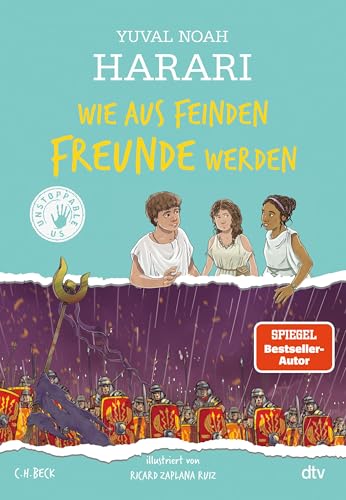
Was geschah, als Menschen aus fremden Gesellschaften aufeinandertrafen – haben sie stets gekämpft oder fanden sie Wege, friedlich miteinander umzugehen? Wie ist es ihnen gelungen, sich auf gemeinsame Werte, Ideale und Regeln zu einigen? Bestsellerautor Yuval Noah Harari widmet sich in seinem neuen Buch brandaktuellen Fragen, auf die auch junge Menschen eine Antwort warum es so viele Kriege gibt und wie es fremden Menschen gelingen kann, friedlich zusammenzuleben. Dabei spannt er einen Bogen vom alten Rom bis ins Mittelalter, von Karthago bis in die Mongolei und erzählt lebendig und zielgruppennah vom Zusammenleben von Menschen verschiedener Herkunft, von Kriegen und dem Aufeinandertreffen verschiedener Religionen.
Yuval Noah Harari is an Israeli historian and philosopher. He is considered one of the world’s most influential public intellectuals working today.
Born in Israel in 1976, Harari received his Ph.D. from the University of Oxford in 2002. He is currently a lecturer at the Department of History at the Hebrew University of Jerusalem, and a Distinguished Research Fellow at the University of Cambridge’s Centre for the Study of Existential Risk. Harari co-founded the social impact company Sapienship, focused on education and storytelling, with his husband, Itzik Yahav.
5 stars I really enjoyed Unstoppable Us, Volume 3: How Enemies Become Friends. I bought it as part of series for my kid and I too bacame a quick fan of the writer. It is an easy but thought-provoking read. It dives into how humans went from strangers/enemies to actually cooperating and building societies together. What I liked most is how it explains big ideas like war, trade, religion, and culture in a super simple way without feeling dumbed down. The book jumps across places like ancient Rome, Carthage, and even the Mongol Empire, which keeps things interesting. It shows how people didn’t just fight all the time, sometimes they traded, shared ideas, repected each other's spiritual beliefs and even married across cultures.
But at the same time, it doesn’t ignore the darker side, like how differences can turn into conflict really quickly.I loved how Harari keeps asking questions instead of just giving answers,it makes you actually think. The storytelling style is super engaging, almost like you’re being told history as a series of stories rather than facts. Also, the whole theme of “what makes us cooperate vs fight” feels very relevant today.
An excellant read, both for kids and adults, anybody above 10years!.
Jau trešā grāmata sērijā, kas nonāk pie lasītājiem latviešu valodā. 📜
Pirmās divas bija izcilas! Ļoti aizraujoši un interesanti izstāstīta vēsture. Tādēļ arī jaunāko grāmatu gaidīju ar lielu interesi. Tomēr šī daļa mani uzrunāja drusku mazāk par pirmajām divām.
Jaunākajā grāmatā autors analizē konfliktus jeb karus pasaules senākajā vēsturē. Kādēļ to bijis tik daudz? Atbilde – atšķirības. Kad saskaras dažādas kultūras, kuru cilvēki nesaprot un nepieņem citādo, sākas sadursmes, lai pierādītu savu taisnību. Visbiežāk šis atšķirīgais ir bijusi reliģija un ticība. Līdz ar to grāmatā diezgan daudz tiek diskutēts par šo tēmu. Ja sākumā šķita interesanti, tad ap vidu man jau kļuva tā kā drusku garlaicīgi.
Un tomēr – autors grāmatu sarakstījis savā ierastajā manierē, proti, grāmata ir viegli uztverama, tajā ir auditorijai atbilstoši piemēri, kā arī tā raisa interesi uzzināt vairāk. 🙌
Het derde deel in de reeks van de auteur van Sapiens. Mooi geïllustreerd en mooi geschreven. Het zet je aan tot denken over hoe jij zelf in het leven staat. Erg doordacht.
Prachtig boek fantastisch geïllustreerd, waarin de wereldgeschiedenis van de mens wordt verteld. En in het bijzonder het vermogen van de mens om zowel vijand als vriend te zijn. De kwaliteit van dit boek zit vooral in de verteltrant en de illustraties. Die appelleren zowel aan volwassenen als aan kinderen.
As with his previous two volumes, Harari has given us a wonderful exploration of ideas and social issues through his "unstoppable" perspective. This volume dealt with "How Enemies Become Friends". He takes us through mythology and history, examining economies and religions, and shows within his optimistic perspective, how people shift to accommodate each other's views over time, never forgetting it's hard work at times. This is a valuable book, enjoyable for the young reader and adults alike, showing how civilizations keep changing, as we are always interconnected with many people in other countries, who may or may not have the same beliefs, and we do get along in many ways. The illustrations are fabulous, clear and on point for his target reader, the examples are fun, yet full of rich detail, and the pace is set at a rate to let you absorb the ideas, yet keep turning the page. As in his other two books, Harari leaves the door open for another volume, this time looking at science and its background, how it differs from stories of "the gods and dragons" and questioning whether science can actually help us solve the "problems of famine, disease, and war". I'm looking forward to this next volume of this intriguing series. Many thanks to LibraryThing and Puffin Canada for an ARC in exchange for an honest review.
Prachtig boek, dit derde deel in de serie Het mysterie van de mens. Het is geen hervertelling van Sapiens, maar gaat wel over een aantal onderwerpen die in dat boek aan de orde kwamen. Ik was erg onder de indruk van het hoofdstuk over religie, waarin 5 kinderen elkaar vertellen over hun geloof, en de regels die dat geloof opleggen. Het kinderlijke onbegrip vertolkt zo mooi de twijfels die de meeste van ons hebben. Waarom laat God (in het boek: de Hemelvader) het lijden toe. Kon hij niet een wereld creëren zónder oorlogen en geweld. Als er ook een duivel is, wie heeft die dan gemaakt, en waarom? Is het Boeddhisme het antwoord op alle vragen? Of de wetenschap (dat komt in deel 4 begrijp ik). Ook mooi: we stammen allemaal van 'buitenlanders' en hebben hun gebruiken overgenomen. Als we ons dit allemaal realiseren, en geen negatieve gedachten toelaten, moet de wereld een stuk mooier worden. Het is geschreven voor kinderen, in vrij simpele taal, maar is helemaal niet kinderachtig, integendeel. Schitterende tekeningen maken het af.
,,Niepowstrzymani 3. Jak wrogowie stają się przyjaciółmi" to kolejny tom serii, której autor w przystępny sposób przybliża czytelnikom dzieje ludzkości.
Poprzednie części stanowiły rozważania nad tym, jak ludziom udało się przejąć władzę nad światem, co stanowi ich największą siłę oraz jak to możliwe, że nasze standardy życia tak bardzo się od siebie różnią.
🏘️🏚️
Chętnie sięgam po kolejne tomy tej serii, ponieważ jest ona ciekawie napisana. Myślę, że młodsi czytelnicy tym bardziej docenią przystępny język i formę. Całości dopełniają piękne, brawne ilustracje, które pobudzają wyobraźnię.
Tym razem autor skupia się na władzy, wojnach i konfliktach, pokazując, jak wygodny dla wszystkich jest podział na ,,dobrych i złych", który często jest uproszczeniem, mającym niewiele wspólnego z prawdą. Opowiada o imperiach, ich powstaniach i upadkach.
Polecam, zwłaszcza ciekawym świata, młodym czytelnikom!
Great to introduce kids to concepts such as different religions, how sometimes people are afraid of those who are different and arising conflicts in the world in past and present.
As with the previous two books, this book uses language that is easy to understand and the medium of story to explain things in an accessible way.
The one slightly concerning footnote I have is how in the last 2 pages Harrari likens science to a replacement for religious beliefs and spirituality. While I understand this is how it has been for so many over the past few centuries, the tide is turning on that one, and I hope that as he explores this topic in a next book he lands on a more balanced view where both contribute and can co-exist, which is where the world seems to be headed right now.
Another awesome entry in the "Unstoppable Us" series! This time, we find ourselves in the early civilization years. Lots of wisdom and very easy to read.
My favorite parts were when Harari writes about how intertwined humans are. Our "identities" are more fleeting than expected. He talks about a Muslim in 850 CE Tunisia would be shocked to meet his direct grandfather in 250 CE Roman Carthage. In turn, he would be shocked about meeting a person from Carthaginian Carthage, and before that Phoenician Carthage (he used intervals of 600 years as an illustration). Furthermore, when you do the math, we have a LOT of relatives! Having a generation every 25 years would mean that 100 years ago we have 16 direct grandparents. 200 years ago, we would have 256 direct grandparents! Great series.
Opnieuw een fantastisch boek van Yuval Noah Harari over het mysterie van de mens. Dit keer belicht het oorlogen en waarom de mens vijanden én vrienden kan maken. Gekoppeld aan geschiedkundige feiten en aan de ontwikkeling van de wereldreligies. Een zeer waardevol boek in onze huidige tijd, met het oog op polarisatie, oorlogen, vluchtelingen, machtsverhoudingen, etc.
Ik kan de vlotte schrijfstijl van Harari wel appreciëren en vooral ook zijn stelling dat geschiedenis (en samenleven) ingewikkeld is, maar gelukkig steeds verandert door de keuzes die wij kunnen maken. Fijn boek voor iedereen (en kinderen in het bijzonder) die zich afvragen waarom oorlog bestaat.
Wow! Ta książka wbija się szturmem do mojej aktualnej topki tego roku! Dała mi do myślenia na tyle, że od jej zamknięcia myślę o niej niemalże codziennie. Książka dla dzieci, którą powinien przeczytać KAŻDY człowiek. Zabieram się za 1 i 2 tom pełna ekscytacji!
I read it in English. Very powerful message. Science is what allows us to explain everything around us. The illustrations and narration conveyed the message and content so well. What truly matters is that you are kind to others and do not hurt anyone, regardless of specific beliefs.
Es war ein gutes Buch weil ich Geschichte spannend finde und weil ich neues gelernt habe so wie zum Beispiel dass es in Karthago einen riesigen Markt gab.
wat blijft dit een mooie boek serie ik leer er zo veel van en wat schrijft Yuval Noah Harari heerlijke! en weer heerlijk in gesproken door: Rik van de Westelaken.
Either you hate history, or you love it, there is no in between. Lucky for us, this book caters to both history buffs and history averters alike. Through the beautiful illustrations and narration in the form of conversation between fictional characters, the author explores history in a simplified way that will pique the interest of even those who have an aversion to history.
Through this book, we travel from Ancient Rome to Mongolia, discovering along the way how humans become both friends and enemies. Yuval Noah Harari’s skill as an author shines in this book, as he explains the topics of trade, immigration and religion in an interesting and appealing manner to children. I loved how the author mentions that money is actually the most successful story ever told.
This is my first book in the Unstoppable series, and I would love to check out the earlier two books. I always loved history, as I was always fascinated by the people and the lives they led ages ago. So, this book hit the sweet spot for me.
While the book targets children aged 8-12, adults will love it too, I certainly did. This book is perfect for children interested in knowing about history.
I was so excited when I saw a third volume of this pop up because kiddo (now 11) and I have loved this series so much! Yuval Noah Harari does a fantastic job breaking down the very complicated history of humanity into easily understandable concepts and ideas. And he makes it fun for kids to read. This volume tackles the development of conquering empires, immigration, and the spread of religion (specifically Christianity, Judaism, and Islam) which are necessarily very complicated subjects. He again breaks it down and simplifies it without losing substance or letting things get too tangled.
I thought it was an interesting choice to refer to the Jewish and Christian god as the Sky Father, in order to reduce confusion from all the different names early believers gave him. It does give the history a little room to breathe, especially for kids who might be familiar with some stories about him but not others
It was a brilliant choice to have the religious discussion take place between kids who are traveling with their parents/teachers to have their own religious discussion. It makes it much more relatable than if we were listening to adults talk about it.
The illustrations are also very nice and make the story feel more relatable.
Kiddo and I read through this in just a few days and really enjoyed it. We will definitely be checking out any further volumes in this series and I think I will also introduce my kiddo, who is now reading more adult-level science and nonfiction, to Sapiens to get a deeper understanding of the concepts.
Highly, highly recommend this series to kids 8-12 who are interested in learning about the history of humanity and development of civilization. And their parents, because I also learned a ton while reading it.
*Thanks to Bright Matter Books for providing an early copy for review.



![Profile Image for Ieva Strazdiņa [mrs.lasitaja].](https://i.gr-assets.com/images/S/compressed.photo.goodreads.com/users/1659017528i/124023459._UX200_CR0,0,200,200_.jpg)