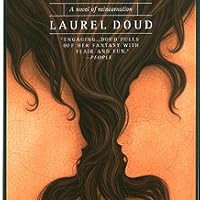
The O. Henry Prize Stories 2014 gathers twenty of the best short stories of the year, selected from thousands published in literary magazines. The winning stories roam the world, from Nigeria to Venice, from an erupting volcano in Iceland to a brothel in the old Wild West. They feature a dazzling array of a young American falling in love in Japan, a girl raised by snake-handling fundamentalists, an old man mourning his late wife, and a fierce guard dog with a talent for escape. Accompanying the stories are the editor’s introduction, essays from the eminent jurors on their favorite stories, observations from the winning writers on what inspired them, and an extensive resource list of magazines.
Mark Haddon, “The Gun,” Granta Stephen Dixon, “Talk,” The American Reader Tessa Hadley, “Valentine,” The New Yorker Olivia Clare, “Pétur,” Ecotone David Bradley, “You Remember The Pin Mill,” Narrative Kirstin Valdez Quade, “Nemecia,” Narrativemagazine.com Dylan Landis, “Trust,” Tin House Allison Alsup, “Old Houses,” New Orleans Review Halina Duraj, “Fatherland,” Harvard Review Chanelle Benz, “West of the Known,” The American Reader William Trevor, “The Women,” The New Yorker Colleen Morrissey, “Good Faith,” The Cincinnati Review Robert Anthony Siegel, “The Right Imaginary Person,” Tin House Louise Erdrich, “Nero,” The New Yorker Rebecca Hirsch Garcia, “A Golden Light,” Threepenny Review Chinelo Okparanta, “Fairness,” Subtropics Kristen Iskandrian, “The Inheritors,” Tin House Michael Parker, “Deep Eddy,” Southwest Review Maura Stanton, “Oh Shenandoah,” New England Review Laura van den Berg, “Opa-Locka,” The Southern Review The Jurors on Their Tash Aw, James Lasdun, Joan Silber The Writers on Their Work Publications Submitted
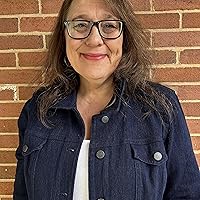
Laura J. Furman (born 1945) is an American author best known for her role as series editor for the O. Henry Awards prize story collection. Her work has appeared in The New Yorker, Mirabella, Ploughshares, Southwest Review.
She has written three collections of stories (The Glass House, Watch Time Fly, and Drinking with the Cook), two novels (The Shadow Line and Tuxedo Park), and a memoir (Ordinary Paradise).
She founded American Short Fiction, which was a three-time finalist for the National Magazine Award. She is currently Professor of English at the University of Texas at Austin, where she teaches undergraduate and graduate courses in writing. Most recently, she has announced that she has submitted a collection of short stories to her agent, and the subsequent collection will be her first new work to follow the release of 2001's Drinking with the Cook.
اون محلول سفید کننده رو بیار بریز تو این آب سرتو بِبَر توش تا نگفتم در نیار . . آااااخ سووختم. وایییی سووختم. آیییی
یکی از داستانا یه چی بود تو همین مایه ها 🤷♀️👀📚
اصولن داستان کوتاه خیلی طرفدار نداره. اما من از طرفداراشم. اولش نبودماا. یه روزی اتفاقی مجموعه داستانای فلانری اوکانر افتاد تو دستام. با خوندن اولین داستان با ولع تا ته کتاب شونصد صفه ای رو درآوردم. اینطوری من عاشق داستان کوتاه شدم. بعدِ فلانری اوکانر خدابیامرز که واقعا حیف شد اونهمه زود رفت، هرچی داستان کوتاه از هر راهی برسه دستم حتمن می خونم. خیلی وقتام ناامید میشم. اما در جستجوی موارد خوف و خفن بازم میخونم. خود اُهنری خدابیامرزم داستاناش خوبن. اونام هر از گاهی امیدوار کننده هستن
My thanks to NetGalley and Knopf/Anchor for an eARC of this book to read and review.
This one took forever for me to try to get past the first story, because it was entitled "Gun". It involved two 10 year old boys and messed up family lives and I just wasn't in the mood.
I got to 28% and I wasn't in the mood for any of the stories. One was a four star, but the rest were three one stars and one zero, so I decided to cut my losses and DNF'd.
Throughout the course of my reading life, I have come to realize that while yes, in an anthology of short stories where the authors are all different, one could possibly hope to expect not all of the stories would be of the same caliber, the editors and those who choose the stories ARE the same, so they choose stories that resonate with THEM. So if the first four stories stink to the reader, then it is a very good possibility that the rest will as well.
This is that instance for me. One story had grace and hope. The rest did not. I am not into hopelessness anymore. That was 12 year old me. Older, more tired me wants to be uplifted more than dashed. Take that for what you will.
1, this did not work for me but it may for you, stars.
This entire review has been hidden because of spoilers.
I have to confess that I don’t subscribe to any literary magazines.
I’m a hypocritical book mongrel.
I rally for the short story form, even flash fiction if it’s done right, but then I don’t actually support the magazines that provide and establish authors that try to keep that form alive. My only way of giving back is to read as many anthologies as I possibly can, particularly contemporary fiction anthologies. I also try not to stick to the ones that Barnes and Noble carries because they never actually choose any weird ones.
Usually, when you read an anthology it’s because you either A. like the genre, B. you are starting your own small marathon of writing flash fiction to the early morning, or C. you want to know what the “best of” contains for that particular year, or in this case, century. (Yes, be alarmed, someone actually believed they could put together a fair and righteous anthology of fiction for the CENTURY). I would turn that book over in bookstores, hoping no one would buy it.
The O. Henry Prize Stories 2014 Anyway, also per usual when reading an anthology, not all of the stories are good. There are few that really spark and then only because one particular line changed how you viewed the world. Then you read everything by that author hoping to get that sick feeling again (like a woman in a bad relationship) and it’s all for naught. Those feelings come quickly, and spaz out before we can even realize what’s happened.
Westinghouse Time Capsule @ Wikipedia Commons This is NOT the case for The O’Henry Prize Stories of 2014. There were only two stories that I didn’t feel were up to par and the rest were brilliant. I found myself unable to physically write down (due to hand cramping) all of the quotes that I highlighted. And the stories are new and fresh. They don’t center around one genre, or one betrayal from the world. They are like a little capsule that we can fling into space and hope that some extraterrestrial with a sense of compassion finds to explain this world of love gusts and expectations that don’t meet fantasies.
Or we can bury it, for the future. I’d be willing for this book to be my message to the next world along with a long composition of why they should try to recreate the dinosaur, read Emily Dickinson, and take up Twitter.
The collection begins with mounting tension when two boys play with a gun. One without a mother, and one who holds secrets tighter than he can hold a fist. I’m not sure now which is which because they both blend together as children, and only when they become adults do they realize their differences (as most of us do with our childhood friends). My favorite thing about it is that it repeats itself multiple times, through multiple ages of childhood and adulthood. There is a “cathedral of silence” during every year of this man-boy’s life. He faces this silence like an open wound and it leaves him questioning who he was, and who he is now. “Later when he tells the story to people they won’t understand. Why didn’t he run away? His friend had a loaded gun. He will be repeatedly amazed at how poorly everyone remembers their childhoods, how they project their adult selves back into those bleached-out photographs, those sandals, those tiny chairs. As if choosing, as if deciding, as if saying no were skills like tying your shoelaces or riding a bike. Things happen to you. If you were lucky, you got an education and weren’t abused by the man who ran the fife-a-side. If you were very lucky you finally ended up in a place where you could say, I’m going to study accountancy … I’d like to live in a countryside … I want o spend the rest of my life with you” (“The Gun,” Mark Haddon, Granta)
The next story, “Talk” by Stephon Dixon (The American Reader) plays with the idea of point-of-view in a story, the inner voice that we all communicate with after we stop trying to talk to our cats for most of a lonely day. It also plays with growing old when that inner voice might be the only person that we talk to in a day’s time. Even when you think of talking to someone, that inner voice can hold you back, be it the voice a friend or a foe.
Art by Sejnow @ Deviant Art (Creative Commons) “Valentine” by Tessa Hadley (The New Yorker) just made me never want to have a daughter. I’m not too far away to remember what I put up with from boys in high school, but I am too far away to meet that girl and shake hands like an acquaintance. The girl in this story doesn’t “do bad all by herself,” but “does bad” for the boy with all the wrong angles. He’s a writer, but he’s a wanderer. He’s a bit grunge, but he’s haughty in philosophy. It really just tells the story of the girl before the boy, during the boy, and then plays with the idea that you can go back to the girl who was the “before” version of yourself. (Hint: You can’t).
“There was a rare blend in him of earnestness and recklessness. And he seemed to know instinctively what to read, where to go, what music to listen to. He was easily bored, and indifferent to anything he didn’t like” (Tessa Hadley).
“Petur” by Olivia Clare (Ecotone) broke my heart more than a little. It’s a mother and son story, the son is an adult on a vacation with his mother when a volcano goes off in Poland and they are forced to live in ash. The ash becomes symbolic for their relationship and his mother’s scattered mind as she walks through the (not wreckage) but fall, and he watches her own odd unfurling.
Sparks Royalty Free Sparks Images (Creative Commons) “Nights after her afternoon walks, she’d sit with a field guide. I have a bird heart, she’d say, your mother, the bird. Precise knowledge of a fjall’s origins, or of the call each bird made, was the closest she felt she had, she said, to wisdom, because lang, because details, were important. They were solid and finite and felt infinite” (Olivia Clare).
Abuse. Roadtrips. Racism. Lingering unresolved, but unpracticed feelings. Old towns. Father’s who still protected their daughters from men who drank too much and leaned too crooked over stoves thinking. Trees with names. Tradition. “You remember your mother saying you had to learn to use the Lexicon because words were both tools and weapons and the difference between the right one and the almost-right one was like lightning and a lightning bug, and when you said the lectern was higher than you could reach she showed you the step stool hidden underneath” (“You Remember the Pin Mill,” David Bradley, Narrative).
“Nemecia” by Kirsten Valdez Quade will stay with me the same way the movie, “Black Swan” stays with me. They both have similar disturbing skin scenes. Nemecia is an almost older sister to Maria, but in the end, they become neither sister nor friend. It’s really the story of how grief creates competition in us.
Black Swan by It’s Too Dark @ Deviant Art (Creative Commons) “Nemecia had an air of tragedy about her, which she cultivated. She blackened her eyes with a kohl pencil” (Narrative).
Most disturbing story in the collection is easily “Trust” by Dylan Landis (Tin House). I was so uncomfortable with this story. It felt a little bit like someone giving you a creative writing prompt like “If your house burned down, what would you take.” And immediately you start to live through your house burning down, and how the flames flicker, but they don’t flicker and you realize you’ve never experienced a fire and they probably gust like a parachute. It’s just like that except it’s a teenage robbery and I just wanted it to end (in a good way…in a good writing way). It’s also like every Law & Order episode that you live in fear of, except this is MID-DAY and you start to realize that this could happen at anytime of day, not just when you’re sleeping (which is terrifying). “Old Houses” by Allison Alsup (New Orleans Review) tells the old neighborhood folktale from the perspective of a barbecue. It’s just creepy enough to not really affect you personally, but add an edge to your day that wasn’t there before. It wasn’t as strong as the others in the collection, but it did stand tall. My favorite story in the entire collection is “Fatherland” by Halina Duraj (Harvard Review). I think that’s because I thought it was just going to be another World War II story, but it was beyond me giving you any account of why it’s so good. “I tried to stop my father’s words at my ears but they would not stick. I knew they weren’t meant for me, but I was half my mother, my father had said so himself. Like any good soldier, my father shot bullets through the air toward a target, but did not understand collateral damage” (Halina Duraj).
Buffalo Bill’s Wild West Show @ Wikipedia Commons “West of the Known” by Chanelle Benz (The American Reader) was the story that has stuck with me beyond reading the last story in this collection days ago. I’m not sure why. Maybe it’s the quick moves between innocence and horror. It’s (strangely) a Wild West story, but it doesn’t have any of that gun-slinging bullshit. Well, it does, but it’s believable. It ain’t no John Wayne rodeo if you know what I’m sayin’. At the end of the story, something bloody terrible happens and it’s truly believable. I can feel the rope burns still.
“For in the high violence of joy, is there not often a desire to swear devotion? But what then? When is it ever brung off to the letter? When they come for our blood, we will not end, but ton on in an unworldly fever” (Chanelle Benz).
On second thought, maybe I like this story so much because it uses the word “brung” which I obsessively, and unconsciously used for the majority of seventh grade, while my father corrected me every single time.
Finding who you are in the grace of picked flowers, that’s “The Women” by William Trevow (The New Yorker).
Snake Handling @ Wikipedia Commons “Good Faith” is about snake handlers during a revival and how sometimes one person can’t change the ideals instilled in us since birth. It’s a fantastic story, truly. It might be one of my favorites from the collection because the ending is beyond powerful. It’s the longest story in the collection and I wouldn’t mind if it was transformed into a novel. I would read these characters again and again.
Guy dates Asian girl. They disembody one another. Life goes on. A short summary of “The Right Imaginary Person” by Robert Anthony Siegal (Tin House). “Parents and teachers agree to forget that children are in fact lunatics, and that what we call growing up is just learning to hide it better so nobody will lock us away” (Robert Anthony Siegal).
“Nero” by Louise Erdrich (The New Yorker) was just depressing. I didn’t really fall for this story, but the dog got to me.
Golden Light @ Pixa Bay – Free Illustration (Creative Commons) The way light is fractured through a window is retold in the story “A Golden Light” by Rebecca Hirsch Garcia (The Threepenny Review). It’s one of the rarely hopeful, but then hope-squashed stories in the collection.
“Fairness” by Chinelo Okparanta is a disturbing story that immediately made me worry about my students and the “salt and ice challenge.” It should be read after reading a “Cosmopolitan” magazine or obsessing over people you don’t know on social media. Or, just listen to some Beyonce and then read this story. A girl is obsessed with lightening her skin based on the standards set by overseas societies. BLEH. I hated “The Inheritors” by Kristen Iskandrian (Tin House). I’d almost even skip it if reading this book again. “I like being sad, which mystified her; I like it until I reach the nadir where sadness changes, as if chemically, to repulsion and self-loathing, making me wish that I was “capable” of “handling” things instead of turning away from them in disgust until my disgust disgusts me, and my anger at my inadequacy as a human being angers me, and all of that pure, easy, delectable sorrow gets squandered” (Kristen Iskandrian).
“Deep Eddy” by Michael Parker (Southwest Review) is the only flash piece in the collection. It’s about virginity and dating and how both of these things make us question everything. “She’d lost her flower with the first of a string of boys and she liked me only in the way girls like those boys who make them forget, temporarily, some pain I hoped was only temporary” (Michael Parker).
The next story was kind of sad because the girl character was the worst version of myself. It’s set in Venice (I think, but I’m questioning myself now), called “Oh, Shenandoah” by Maura Stanton (New England Review). I often say to my boyfriend, “I just want to hug you so hard it hurts” when he does something incredibly annoying. This chick is like me in that situation, but to the extreme. And the boy, just daydreamy and unable to understand any of her cues. “Opa-locka” by Laura van den Berg (The Southern Review) is about a team of sisters who fulfill their childhood hopes by becoming personal investigators. At the time, they don’t understand their need for this odd job, eating gas station snack foods on roofs in a stake-out, but as the story progresses, the reader is clued into their past and why they might need these rooftop rendezvous, for each other and just for themselves. This O.Henry Prize Collection is one of the best I’ve read in a long time. Not only were most of the short stories meaningful and worth the read, but I can mostly remember each one even though I read some of them as long as a month ago. This is a collection of stories that linger and each story gets redefined as you think of it again. I HIGHLY recommend this book. HIGHLY, HIGHLY, HIGHLY, Mountaintop.
One of the perks of reading short-story collections such as these is the opportunity to discover new authors. Tessa Hadley with "Valentine", Dylan Landins "Trust", and Maura Santon with "Oh Shenandoah" are authors that are now definitely on my radar. Their stories are great. However, there are four authors that stood out even more, so if you are to only read four stories- read these. Colleen Morrissey's "Good Faith", Robert Anthony Siegel's "The Right Imaginary Person", "The Inheritors" by Kristen Iskandrian and "Opa-locka" by Laura van den Berg. They are stunning stories that are held up with immaculate prose.
"Nero" by Louis Erdrich "Good Faith" by Colleen Morrissey "The Right Imaginary Person" by Robert Anthony Siegel "Oh Shenandoah" by Maura Stanton "Op-locka" by Laura van den Berg
At the short stories shelf in the library, I was looking through a few of these collections to see which I wanted to read. In the end, I chose the one containing a story from Mark Haddon. The story itself I'd already read in his own short story collection, but that didn't diminish my appreciation for it. Overall I had higher expectations for this book. But after thinking about it, I realized the editor was likely trying to appease a broad range of tastes rather than selecting the "best" ones. My goal going into this was to hopefully find more authors I could get into. Of the 20 stories in the book, my favorites were by Louise Endrich, David Bradley, Halina Duraj, and Robert Anthony Siegel. But the opener by Mark Haddon was by far the best and further solidified my adoration of his writing.
3.5* A mixed bag which makes it hard to do justice to the outstanding stories - how do you rate an anthology that lumps together Trevor's superb "The Women" and the rather unexceptional and not prize-worthy pieces such as "Old Houses" by Allison Alsup, or "Deep Eddy" by Michael Parker?
Standouts:
"Talk" by Stephen Dixon "Pétur" by Olivia Clare "The Women" by William Trevor "Good Faith" by Colleen Morrissey' "The Inheritors" by Kristen Iskandrian "Oh Shenandoah" by Maura Stanton "Opa-locka" by Laura van den Berg
A little more uneven than past volumes of this perennial collection, including truly great stories like Laura Van Den Berg's "Opa-locka" in a mixed bag of other medium-highs, and even (IMHO) a few lows. Too many abusers of young women here (#NotAllSupportingCharacters), too many parental deaths weighing on the adult children left behind, and too many English major characters; but still overall, Recommended for any Lit Fic fan.
Is it weird if i can relate with the first three stories i read on this collection? And they arent in any way similar. 1. The Gun ( mark haddon ) - is about children playing with a gun. (I just can say, children had no saying on what kind of family they had to spent first years of their life. But children are just children with their curiosity) 3.5*
2. Talk ( stephen dixon ) - is about an old man who live alone after his wife passed. How he's living his lfe and not talking to anyone all day. (The story confusing me at first when the POV changing from I to He. apparently both POV refer to the same person. An 'I' talking about himself and refer him with the third person: 'he' ). 3.5*
3. Valentine ( tessa hadley ) - a fifteen year old girl trying to find love. (Sad, and God knows what this story has resurrected from my mind. I could write ten pages about it alone. Sigh. ) 3.5*
4. Petur ( olivia clare ) - a mother and son having a 'vacation' in iceland when the volcanoes erupted. ( all the plane cancelled so they have to stay there longer ) 3.5*
5. You remember the pin mill ( David Bradley ) - about a son remembering his family, abusive white father, nice black neighbor. ( the 2nd person POV a little bit tiring to read. But I remember those time when i still love experimenting with unusual POV . It was fun writing differently, but apparently not to read when you're so used reading a story told on 1st person POV or 3rd. ) 3*
6. Nemecia ( Kristin Valdez Quade ) - about cousins relationship. Abusive father in the past. 3*
7. Trust (Dyland Landis) - somehow reminds of a german indie movie about a bunch of young people came into wealthy people's house, not for stealing their money, but for stealing their 'sense of comfort and peace' 3.5*
8. Old Houses (Allison Alsup) - The title tells it all. Its about people and their story of the old houses. 3*
9. Fatherland (Halina Duraj) - It's about patriarchal culture, where the father is the core of the life. How the woman shoes are tight to the man of the family. (Sigh!) 3.5*
10. West of the Known (Chanelle benz) - About life of a 15 years old woman. She was orphan, and had to live a horrific life with her uncle's family, untill her brother came and saved her. He take care of her, and protect her, but things that happen, finally forced her to stand in front of errrgh (Major Spoiler. It hit me hard, for when i read this, Indonesian news still talked about death sentenced. And this story using 1st POV.) 3.5*
11. The Women (William Trevor) The opening sentences came like this. " ... Cecilia Normanton knew her father well, her mother not at all." And that's the story all about. At 15 Cecilia sent by her father to a boarding school. Far away from home the story about her mother slowly revealed. 3.5*
To be updated...
This entire review has been hidden because of spoilers.
My thanks goes to Anchor Books and to the editor of the collection for the ARC via NetGalley.
I am a massive fan of the art of the short story in its every form, so this collection has been a real treat. Before reading this, I had a vague idea that somewhere, something like the O. Henry Prize for short stories existed, but actually going through this year's carefully prepared volume made me aware of its significance.
Namely, this tradition, the way the awards process is organised, the entire institution of the O. Henry Prize nurtures the art of the short story in the English language most admirably. Not only does the publication promote and encourage lesser-known authors (you can't walk away from reading this without a brand new list of writers and titles to explore), but it also does an excellent job in supporting an incredibly large number of struggling literary magazines.
The selection of stories, at least in this installment, caters for all tastes they cover a myriad of themes presented in a variety of styles, so that every piece grabs you in its own way, and at least some of them are bound to stay with you long after you close the book.
Here are three of my favourites:
The Inheritors by Kristen Iskandrian details the strange and unlikely friendship that develops between two very different women working in a consignment shop; a story that leaves you mystified and transformed, curious for answers, yet privy to the esoteric beauty of the piece as it stands.
Opa-Locka by Laura van den Berg immerses us in the adventures of two sisters who work as private detectives, unfolding in a bold, experimental (literary speaking) fashion their past and the reasons why they are sitting on a rooftop in the hot Florida sun.
Oh Shenandoah by Maura Stanton is built around the search for a new toilet seat in magical Venice, an incident based on a similar experience of the author's.
What is probably the best part is that we hear from everybody involved in the creation of the collection - the authors, the jurors, and the editor - and everybody displays a catching enthusiasm about their contribution to disseminating the well-written word.
To stop myself from saying that I'd be prepared to commit as many crimes as necessary in order to get my hands on as many volumes of O. Henry winners as possible, I'll regurgitate the words of the editor that best describe this collection: "The art of the short story is in good hands this year."
One of my goals for this year was to win an award for one of my short stories. Maybe an O. Henry Award is a bit ambitious, but when I stumbled across this anthology, I thought I might as well read what the competition was up to. That said, book read, I’m thinking I might focus my efforts on mystery story awards. It’s not that the stories in this book weren’t good, because they were, it’s just that with a short story, where an author has a very finite amount of time and space to make their impression, what resonates with me are stories that linger. By that I mean stories that I’m still thinking about days, weeks, months, sometimes even years later. I don’t feel that any of the stories in this anthology will linger with me.
This is, perhaps, (probably and most likely) a personal issue. Literature is writing about everyday life in a way that you strike a chord with the reader. You present something that they can relate to, something they identify with and thus make your impression, making the mundane memorable. In genre writing, such as mystery, you have the unfair advantage of crafting a plot that doesn’t necessarily have its roots planted in reality. Real life doesn’t impress me nearly as much as a plot twist that blindsides me, leaving me shocked and breathless. The last short story anthology I read was Eighteen by Jan Burke and I thought it was incredible. It’s been two months and a few of the stories are still as fresh in my mind as if I just read them. I can still recall most of them. I’d be hard pressed to remember any of the stories in this book next month. Again, my biased and personal opinion. Four stars.
I love a good story. I love being caught up in a fictional world with characters so believable they make my real world seem untrue. I think I've always loved stories even though I can't remember being told stories when I was young. It may have happened, but I can't remember it. My story tellers have always been authors, their voices the words written on the page that translate to voices in my head. At times reading this collection I had the sensation of sitting outside around a fire with a blanket wrapped around my shoulders with an unknown, but somehow familiar, person spinning their tale.
Twenty stories reside in this collection and just as many styles in the stories. All of them expertly told. My favorite of the collection was "You Remember the Pin Mill" by David Bradley, told in the second person, a tale about domestic abuse, racism, sexism, and privilege. But it's also a tale about coming of age and learning the difference between being straight and being true. But there were so many stories that were almost-my-favorite, including "Nero" by one of my favorite authors, Louise Erdrich.
I love a good story. I love twenty good stories even more.
In recent years, I have become a fan of short story collections and try to read them from time to time. I have discovered, though, that I may not be a fan of the short story anthology because I had a really hard time getting through this one. There were a couple of stories that I really enjoyed; Valentine by Tessa Hadley and Nemecia by Kirstin Valdez Quade are particular favorites, but there were quite a few that I just couldn’t sink into. I think that if I had maybe read one story a week rather than trying to read them all at once, it could have made a difference. Overall, my reaction to this anthology may be biased by my preference to read a collection of stories by the same author with an overarching theme or tone. I received this book from NetGalley in exchange for an honest review.
Short stories usually are not something I pick up of my own volition. However, I am always on the lookout for short texts that may someday fit in the classroom, so I decided to read through these and see what was out there. Many of the stories were haunting and have stuck with me. I don't know that any were classroom appropriate, but I will definitely be revisiting a couple of the stories. In particular, "Valentine" by Tessa Hadley, "Nemecia" by Kirstin Valdez Quade, Nero by Louise Erdrich keep running through my mind.
Like I said, short stories are not usually my chosen free-time reading material, but this collection is a collection of the best out there for the year, and I can certainly see why. I will be on the lookout for more short story anthologies in the future.
The stories here skew dark: young folks in peril, missing and dead parents, snake handlers, and guns figure prominently in four out of 19 (and slightly less so in at least a couple of others).
In the judges' discussion of their favorite stories at the back of the book, Tash says, in reference to Mark Haddon's "The Gun," "You never know exactly how to react, for there's never a comfort zone." And I'd extend that to most of the stories in the collection. In a good way, mind you—I loved how off-kilter so many of them were. This was a fun collection, even by O. Henry standards, which tend to be weird and good as it is.
I thought Kristen Iskandrian's "The Inheritors" was absolutely outstanding, but I don't doubt there's a favorite for everyone in this collection.
Great collection of short stories. I am excited about these collections, because they show that relevant and interesting short stories are being written today. I liked several of the stories very well, but my favourites were probably Kirstin Valdez Quade “Nemecia”, Dylan Landis “Trust”, Kristen Iskandrian “The Inheritors” and Laura van den Berg “Opa-Locka”. The most fascinating story for me was the one by Dylan Landis, who was maximally stressful to read and had no real ending. In order to know that nothing really bad happened afterwards, I had to read her book “Rainey Royal” directly after finishing this short story collection, and enjoyed it. Too bad that there isn’t (yet) anything more of Kristen Iskandrian to read, whose writing and observational skills fascinated me.
There were some amazing stories in this book that will haunt me forever. Petur by Olivia Clare is a beautiful story of aging in a beautiful setting of a land. You Remember the Pin Mill by David Bradley was a snippet of the only happy moment in a man's childhood. Good Faith by Colleen Morrissey is a story about religion and choices. Opa-locka by Laura Van Den Berg is a story of two sisters just trying to exist.
All these different voices combine to make a beautiful orchestra of a book. The art of the short story is alive and well. This should make us all very happy.
The 2014 O. Henry Prize Stories - the best stories of the year (that's their subhead) had two gems for me - both dense, interior stories, which take changes with structure and voice and make the entire collection worthwhile: Talk by Stephen Dixon about a widower who realizes he hasn't talked to anyone all day, and the fabulous short short Deep Eddy by Michael Parker, which takes setting to an entire new level for me. The kind of book to pick off a library shelve unless you collect these sort of collections.
Ever since I received the 2016 O. Henry Prize Stories, I cannot stop reading these incredible collections. Nearly every story is one of the most beautiful, or most intriguing, or haunting I have ever read. These stories have reignited my passion for the art of the short story and inspired me to try to write short stories again. Particularly incredible in this collection was You Remember the Pin Mill by David Bradley: terrible and redeeming gorgeousness.
This year's anthology isn't good as I expected. I like three stories of "Nemecia" by Kirstin Valdez Quade (also included in the BA short stories 2013), "Good Faith" by Colleen Morrissey, and "Opa-locka" by Laura Van Den Berg. I couldn't understand what is good in the story of "Deep Eddy". It was depicted the scene well, but it's too short for me.
A fairly well-rounded collection showcasing a wide variety of styles. My personal favorites: Mark Haddon's "The Gun," Louise Erdrich's "Nero," Chinelo Okparanta's "Fairness," & Kristen Iskandrian's "The Inheritors."
I'm not enjoying this as much as last year's collection. The stories here aren't packing an emotional punch for me. My top picks so far are "The Gun" and "The Right Imaginary Person," maybe "Opa-Locka," too, and "Trust."