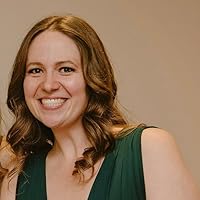
Kate Manne is an associate professor of philosophy at Cornell University, having previously been a junior fellow at the Harvard Society of Fellows from 2011-2013. She works in moral, social, and feminist philosophy. Her work has appeared in venues including The New York Times, The Times Literary Supplement, The Huffington Post, New York Magazine/The Cut, The Washington Post, Politico, as well as academic journals.
Manne's first book, Down Girl: The Logic of Misogyny, was awarded the 2019 PROSE Award for Excellence in Philosophy and in the Humanities by the Association of American Publishers. It also received the APA (American Philosophical Association) 2019 book prize. In 2019, Manne was voted one of the world's top ten thinkers by Prospect Magazine (UK).
Manne's second book, Entitled: How Male Privilege Hurts Women, was named one of the best 15 books of 2020 by The Atlantic, and one of the best 15 feminist books by Esquire. Her third book, Unshrinking: How to Face Fatphobia, will be out in January 2024.
I got offered a freelance proofread of this book during a busy period last year, and I jumped on it immediately, even though I knew I'd have to work the entire Memorial Day weekend (which included my birthday!) to get it done in time. For me, it was a no-brainer, so excited was I to see how Kate Manne would handle these topics.
I was not disappointed! There have been a number of books (and podcasts) in recent years that have dealt with the topic of fatphobia, myths about health and weight loss, and how it all ties in to sexism/racism/classism, but this is one of the very best. Not only is it incisive, edifying, and thought-provoking, which we've come to expect from Kate Manne, but it's also one of the most readable, interesting, and (dare I say?) entertaining books I've read on these subjects. Everyone should read this. Seriously, I recommend it to everyone.
As I've mentioned on here before, I'm a freelance copy editor and proofreader. I have at this point worked on quite a few books, and I only write reviews for the ones I loved so much that I cannot keep it to myself. My opinions, as always, are my own.
Note: Any comments on this review that express fatphobia or say that fat people should "just lose weight" "for their health" will be deleted. If you want to know why, read this book.
Finalist for the National Book Award for Nonfiction 2024 Manne does an amazing job illuminating the roots and effects of structural fat phobia, and she employs personal experience to illustrate the enduring and complex psychological harm that those affected suffer, from childhood to adolescence throughout adulthood. And needless to say, it's unfortunately still highly important to call out discriminatory practices that, for example, ascribe moral value to being thin or insinuate that heavier people lack intelligence and discipline. To utter such sentiments is still widely accepted in our society, and it needs to stop.
But then, the book makes some classic mistakes that brought the body positivity movement down: It tries to argue against scientific facts. Do we really need to discuss why a sentence like "there are no bad foods" is objectively wrong? Sure, it's all a question of moderation and eating salad does not make you a better person, but still, there are bad in the sense of harmful foods, and some societies are fatter because they consume more of them. And it's a similar issue with the aspect of health: Obesity is a health crisis, because high percentages of body fat pose health risks. Yes, weight is also genetic. Yes, diet culture (e.g. unhealthy eating patterns to induce weight loss) should not be normalized. Yes, being thin does not equal being healthy. Yes, the healthcare system fails heavier patients. BUT still: Obesity is also a health problem. Of course it is.
I feel like we are going nowhere if we don't learn to tackle complex issues like fat phobia in a nuanced manner. No one has to right to discriminate against fat people. We as a society should promote healthy eating and exercise. Both sentences are true, and the connection between the two can be manifold or even non-existent (there are a lot of heavier people who live a very healthy lifestyle; in other cases, poverty or a lack of education might hinder people from making such choices; and there are many other possible scenarios). To just declare that unhealthy foods don't exist and re-frame reality can't be the solution though.
I had a difficult time deciding how to rate this, and I settled on rating it five stars, because it is well-written, well-researched, and, well, true.
I can relate to the entire text, I could have written the personal experience sections myself. I am a victim and a perpetrator of fatphobia, having lost and gained over 800 pounds in my lifetime. I have never lost weight in a healthy way, except maybe my first diet at age 11, today the only way in which I can lose weight is to starve. Period. I’ve been on a diet for over 30 years, except during my two pregnancies and the 6 months following the Covid pandemic when I decided to do “intuitive eating.”
The first section describes that fatphobia is real. File that under, “duh.” People treated me like I was smarter when I was smaller. Once I lost 80 pounds and I was immediately promoted.
However, no one is going to read this book that actually needs to. Everyone who reads this is likely either a therapist or social worker that already knows and believes all of this, or someone like me, fat and with first hand knowledge of how our culture treats people in larger bodies. Problem is; we don’t need to be sold on how hard it is to be fat. We already know. We already gaslight ourselves and we know that dieting doesn’t work, is bad for us, and that we cannot stop.
The problem is the subtitle “How to Face Fatphobia.” Because the truth is, you can’t change it. I mean, I quit dieting, gained 80 pounds in 6 months, and everything about my life got worse, EXCEPT my health, which got infinitely better.
I can’t stop dieting. Everything was better when I was skinny. Part of me always knew that skinny people had it easier— I had no idea HOW much easier. I would love to tell you that the author convinced me that my health is worth it, that I can embrace the body have, but I can’t.
There are three basic premises of the book.
1. Fatphobia is real, and it’s real bad. (Yes, true.)
2. Dieting doesn’t work and is bad for you. (Yes, true.)
3. The right thing to do is stop dieting.
On the 3rd point, I know very much that quitting dieting is the right thing to do—- but I’m not going to. Because of point 1. No amount of physical health is worth the way people treat you and gaslight you when you’re fat.
Great takedown on fatphobia. I think folks who’ve already read books and self-educated about fatphobia may not get much “new” content from Unshrinking, however I still enjoyed this work by feminist philosopher Kate Manne. I appreciated her smart, sharp writing, her thoughtful and well-integrated self-disclosures about her own experiences with weight, and her critiques of problematic/fatphobia philosophers who’ve espoused anti-fat views. Though pretty much all of my close friends are women or nonbinary femmes, I do occasionally interact with cis gay men through a local tennis group and the casual fatphobia, body shaming, etc. is so toxic… as I posted on my Instagram story this morning with a picture of this book, someone inject the contents of this book and other anti-fatphobia writers into the veins of cis gay men across the planet!
There was one analogy at the end of the book that I thought was intellectually off and just not well-developed, which is when she compared taking GLP-1s like Ozempic to using skin-lightening cream to get whiter skin… I understand that this book was published in 2024 and since then there’s been a lot more research/nuanced discussion of GLP-1s though when I read that I was like… this does not seem like the most racially sensitive comparison. I’m not saying that as a blanket defense of GLP-1s, and I won’t get into my opinions/thoughts on GLP-1s in this review because that would be too much. Anyway, overall a solid read and appreciated the well-researched takes on body reflexivity and autonomy, as well as the façade of “health” in promoting anti-fat bias, among other points.
In Unshrinking, Manne, a well-known feminist commentator and Cornell philosophy prof, makes some great points about diet culture and body obsession. She ends with an explication of her philosophy which she names "body reflexivity." With this philosophy, Manne moves away from "body positivity," which marks people as less than if they cannot love their bodies. She also moves past "body neutrality" because what even is that? How can we be neutral about our physical selves? Body reflexivity, as Manne frames it, is the philosophy that our bodies are no one else's damn business. I like that. You are free to decide if you find me attractive, and that is your deal, but it is no more than your opinion, My attractiveness to you is all that stems from that opinion, it says nothing else about me, my attributes, or my life. I am not less because you do not find me attractive and other people are not less for finding me attractive because you do not. As it is we live in a world where a person's body is seen as a sort of sandwich board that supposedly tells people that fat = less credibility, less power, less intellect, less drive, and less worth overall. Fat people are jokes and people who look slim and toned months after child-bearing are paragons, exemplars of all that is good. There are lots of studies that back this up, and I can tell you based on mountains of anecdotal experience and observation that it is true.
I am not sure it is relevant, but certainly the circumstances of my own life impact how I view this tract so I will discuss that briefly. I am fat, not fat enough that people want to tune into basic cable to gawk at me so they can feel better about their own lives or fat enough to have to buy two airplane seats, but fat enough that airplane seats leave me little room to move around and I can't sit cross-legged on the ground. I am comfortable in my body. Well, that is not completely accurate. I am no less comfortable in my fat body than I was when I had a bmi in the "normal" range. I am more comfortable in my fat body than I was during the years I was binging and purging and occasionally had a bmi below "normal." It took me a long time and a whole lot of work to believe that the size of my body was not the thing that determined my intrinsic worth as a human, but I did actually get there. All that said, my weight does have actual impact on my life, mostly because it impacts how others perceive me, but also because of physical limitations, mostly man-made but others physical. The physical part of that is where I have a problem with Unshrinking.
Manne spends a lot of this book claiming that excess weight does not impact health, and that is where the construction of her position fails. First, to build her body reflexivity framework, Manne does not need to go there. Her position (which I agree with completely) is that our bodies are our own business. It stands to reason that should be so even if we know what we are doing is unhealthy. Serious athletic pursuit is unhealthy too, but we don't tell people to stop pushing their bodies to improve performance on the court/field/mat/track. Why shouldn't fatness be the same as physical overwork? The toll on the body is something we can choose to accept. Health impacts have no relevance to body reflexivity as set forth here. The many pages spent arguing that obesity does not impact health take Manne's theory off course. Perhaps more problematic is that her position is false so it casts a pall over the meaningful and true parts of Manne's book. The assertion that there are no proven health impacts stemming from fatness is crap. It has about the same merit as the claim that evolution is not proven. Research overwhelmingly shows that fatness does negatively impact health. Common sense should tell us that the body is a machine, and excess weight puts more stress on the machinery. We should also know that shoving more mass into a limited space affects everything in that space. I can tell you from personal experience that as I age, my knees and hips particularly cause me pain and I am far less flexible and agile than my family members who are not fat and who also have osteoarthritis, as I do. I also have high LDL and triglycerides, both linked to being overweight, and both of which are part of overall heart health. More generally, obesity is tied to Type 2 diabetes, many types of cancer, circulatory issues, stroke, dementia, and other potentially deadly illnesses. These are facts, but it is also a fact that these are my problems, my risks, and no one but my doctor and I should be able to have an opinion. The discussion of the very real personal health impacts of fatness doesn't belong in a discussion of body reflexivity as I understand it.
Manne makes related arguments about the science of fatness that are important and do support her overall position. Like Manne, I am genetically predisposed to fat, and people like us who "run to fat" (her term) often do or have done things to stay slim that are more unhealthy than being fat. I know thin people in terrible health, often but not always as a result of the things they do to stay slim, and fat people in pretty good physical condition. Both Manne and I had eating disorders, and she has had a lot of major weight fluctuations up and down (I have not had a lot of that, but some), and those fluctuations have been tied to many negative health outcomes. She also notes generally unhealthy eating in connection with "diets" and discusses the adverse health effects of bariatric surgery. For naturally fat people, staying slim absent the use of things like restrictive diets or surgery is nearly impossible (new drugs like Ozempic and Mounjaro may change this.) Her discussion of predisposition to fatness (origin rather than impact), and the clear statistical evidence that weight loss "diets" do not work in the long term and in fact can cause metabolic damage that leads to more weight gain is important to validate her theory. Proper analysis of any philosophical argument accepts that we ought not to hold people responsible when they do not have the power to change their circumstances or behaviors to affect better ends. I am the first to admit I am no philosopher and Manne is a good one. But here, to my eye, she misstepped with the health impacts discussion, and it muddies the science of fatness discussion. She discusses how she is (like me) in a constant battle to be at peace with her body and the world's perception of it, and I think that is what led her to fixate on the denial of health impact. It feels very defensive to me. I get that she wants to answer all the people who claim to "just be worried about your health" or that their real concern is that obesity is driving up health costs for everyone and so everyone bears the burden. Those arguments though are easily dealt with. The first is BS and the second would tax all sorts of behaviors that "drive up health costs" but that no one rails against.
(Manne also makes an absurd argument about the movie The Whale, which completely misperceives the point of that film -- which was that this man's grief led him into despair and he was trying to kill himself without killing himself. Her thoughts on shows like My 600 lb Life were on point, though. And now I will shut up about this because I have gotten as off-point as Manne did.)
In the end, three cheers for the work toward destigmatizing fatness. and for identifying the race and gender-based history and cultural cues behind the dehumanization of fat people and the biggest cheers for the philosophical framework for the radical notion that our bodies are no one's business but our own, that the problem here is with people's reaction to fatness, not with the fat. Thanks to Manne for building a structure around that position. The significant flaws in execution do not dent the value of what she achieves here. This would be a 3.5 if I had that option.
Hate to say it but I found this largely disappointing. She’s a beautiful writer and the memoir bits were well crafted - I would have happily read an entire memoir from her. I also appreciate the work she is doing making public some of the excellent work in fat studies. But this was largely summary of other works and honestly didn’t hold much new insight. I don’t want to put the burden of “novelty” on all academic work but I think I just expect more in terms of being stimulated/challenged/pushed, especially from a philosopher. I feel like there is so much more there about mind/body dualism, Anglo/Protestant denialism and anxiety over the body/flesh, disciplinary power etc. that she could have gotten into. I remember reading Susan Bordo’s Unbearable Weight in college and how it honestly changed my life it was such an amazing text. This book is sadly not that and doesn’t even really revise or update or substantially engage those arguments from the 90s.
Un-Shrinking How to Face Fatphobia by Kate Manne really made me very sad.
Ultimately there were many arguments outlined in this book that I did not agree with. However, I did want to point out some salient arguments, that Kate Manne makes, that I think should be common sense to kind people.
1. It is never ok to bully anyone based on body size. 2. More should be done to prevent body sized bullying at younger ages. 3. People who are doing equal work should get equal pay, that has nothing to do with body size. 4. People with large bodies should still have access to health care that sees them holistically, and treats them with empathy and care.
Having said all of this, I still felt that Un-Shrinking was a biased book, that was more than left leaning. Science shows us that being overweight can lead to more health problems, and the Kate Manne seems to argue that that is not usually the case. There are also arguments made about how fat has been viewed throughout history. However, when looking at the "fat" people discussed from other points in history, particularly the 1800s, their body sizes for overweight people are equal to small people now. Because of this, several of these historical arguments fell short for me.
Ultimately, the message should be that people should be treated with kindness and care, but the biases and some of the failed arguments means that I will not be hand selling this book.
This review copy was provided by the publisher in exchange for a fair and honest review. Huge thanks to Crown, and imprint of Random House, or my review copy.
A review of Kate Manne's Unshrinking, and related screeds:
- Short summary: the book is great. it's short and punchy, which is good in this context. I was hoping for a more philosophical take (since she's a philosopher) and she delivered. There's a particularly interesting section on anti-fat language in philosophy, and the misogyny of the field. Also a section on fatphobia as gaslighting, which is much better than it sounds (I know the term has become ridiculously overused)
- There is a lot of crossover from other books on the topic, especially in the beginning chaptrers, so if you've read them (e.g. Aubrey Gordon, Virginia Sole-Smith, Sabrina Strings -- who provides a lot of the material on the racist origins of fatphobia) you'll recognize some of the work. There's only so much more to add about how medical fatphobia kills people, or the questionable origins of BMI as an individual measurement.
- I was a little bit (not very) disappointed that after her introductory chapter she went into the science of obesity. She did this basically as a setup and to head off arguments so I do understand why. I was disappointed partly because it was well-trod, but largely because it's only mildly relevant, in my opinion. People's minds are often unchanged by science. You can see that every time someone presents evidence for the very limited effectiveness for diets -- a dozen people will pop up to tell you, "But THIS diet works!" There's a reason people are resistant to science-based arguments (which Manne gets into): Fat is a moral issue. Our hatred as a culture for fat people is rooted in disgust for them.
There's a little debate about what term to use. Aubrey Gordon prefers antifatness. Manne sticks to fatphobia. I think both are correct. Antifatness isn't just rooted in a hatred of fat; it's also based on a fear of it. Fat people represent the thing you could be, and people respond with hatred because of their fear of becoming us.
- Something she gets into that I liked is the "good fatty."
Here's my confession: I'm not really one of them. I'm not the fat person who tried all the diets and didn't have them work. I'm not the fat person who can run a marathon.
The reality is: I am the person who doesn't want to diet and decided decades ago that I wasn't going to starve myself. I'm the one who hated gym class. I am the one who did develop Type 2 diabetes. It's true that I got some loaded genetic dice (50% of women with PCOS will develop T2D by age 40). I am the one who wasn't fat as a kid and got heavier as a teen.
But here's the thing: I don't usually like to get into the what I did or didn't do, because it keeps the conversation on the individual choice realm, where Americans like to keep it. People want it to be my fault, a thing I chose to be and can choose to stop. That means if they make the right choices, it won't happen to them.
And the reality? It doesn't matter! I deserve to be treated as fully human, PERIOD. it isn't anyone else's business how they got fat or whether or not they're trying to change it.
I do not owe other people. I do not owe the public the performance of healthiness as a condition of existing in the world.
Fatness creates a sense of entitlement amongst the thin (and society at large). They think they are entitled to abuse, confront, and shame fat people, and moreover, that they are doing so *for our own good*. Because we are too dumb to know it for ourselves. In return, we are obligated. We must deny ourselves, we must admit we don't have the right to enjoy food purely for pleasure, we have to accept this level of intrusion. I have literally been shamed by a stranger for eating junk food in public for God's sake. (Luckily this isn't a regular occurrence because for some reason I have a cloak of public invisibility that I have worn since the age of approximately 19. I cannot explain this.)
- There's a lot of personal experiences and talk about how fat people, particularly women, feel about themselves and their bodies and their attractiveness, which is important but also a little bit of a gut punch for some of us so be warned.
Kate Manne setzt sich in ihrem neuen Buch mit Fettfeindlichkeit auseinander und wie tief diese in alle Nischen unseres menschlichen Daseins vorgedrungen ist. Bzw. aktiv implementiert und aufrechterhalten wurde und wird.
Kate Manne erzählt von sich selbst, aber stützt sich nicht allein auf Erfahrungswissen. Wie schon "Down Girl" ist auch "Unshrinking" ein profundes Werk der Wissenschaft, wenn auch (zum Glück!) diesmal etwas weniger akademisch geschrieben. Ich hoffe, dass der Suhrkampverlag es trotzdem übersetzen lässt und als "stw"-Ausgabe herausgibt. Denn dieses Buch müssen alle lesen.
Antidiskriminierung ist (war?) ein trending topic auf dem Buchmarkt, aber zu Fettfeindlichkeit und deren historischen, strukturellen, institutionalisierten und persönlichen Ausprägung, gibt es noch immer kaum Literatur, die über persönliche Betroffenheitserzählungen hinausgeht. Kate Manne ist nicht nur selbst fett, sie ist auch Philosophin und Professorin an einer der renommiertesten US-Unis. Das soll nicht heißen, dass weniger oder nicht akademisierte Stimmen nicht ebenso gehört werden müssen, sondern nur, dass Kate Manne eben was zu sagen hat, was es sich lohnt zu lesen.
"Unshrinking" ist nicht nur sauber recherchiert und scharfsinnig analysiert, sondern auch ein Weckruf, der nicht zuletzt Leser*innen dazu bewegen kann zu sagen: F'ck Diet Culture! My body is mine and mine alone.
I sincerely wish that everyone would read this book (with an open mind.)
P.S. I think it would have been very interesting to get the author's perspective on GLP1s a couple of years later but I think that her position still stands. Which reminds me of the specialist I saw who asked why I didn't take one and I said that, among other reasons, I've read about evidence of side effects + questions about long-term effectiveness and she said "yeah, if you go off it, you'd probably gain all the weight back and then some" AND still didn't understand why I declined to talk about it further.
I’ve had no internet all day so I read this book straight through. I think the beginning and middle are much stronger than the end. Overall I highly recommend, I just don’t know how I feel about the authors self-insertion in the book and think it would’ve been much stronger without it. This book also really shows just like how much more material needs to be produced about fatness and Blackness as the author kept relying on Harrison and Strings theories/writing. I recommend this book to fans of Maintenance Phase over Aubrey Gordon’s actual books because I think this book has the intellectual rigor that is showcased on the podcast but not as well through Gordon’s books (not to pit them against each other). And also, the book really didn’t provide many structural strategies for destroying fatphobia imo. This is a good source I think for understanding the pervasiveness of fatphobia, but the structural solutions (which were sparse) kind of fell flat. Idk y’all I still liked this book!
I liked this book, and think it was well done. It feels pretty basic as far as the information in it. I have read many of her sources and so instead of feeling like it pushes the conversation around anti-fatness forward, it feels more like it is a summation of the current thinking/activism. Manne is her best when she talks about the ethics and philosophy behind anti-fatness thinking.
Absolutely nothing new in this book that you haven't heard a hundred times over. I think I expected more interesting anecdotes from others, I don't really know. Because it's a new book I thought maybe new studies would have been made in the last decade.
She’s my queen, Kate. Like her last two books I savored every page and footnote. We live in such a difficult, dizzyingly cruel world and her work has consistently empowered me to cut through all the noise and nonsense to see things for what and how they really are. Her work is such a gift to us all and everyone should read Unshrinking. Right now.
The first few chapters of Unshrinking cover very familiar ground for anyone versed in the literature of fat liberation - if you’ve read Aubrey Gordon or Virginia Sole Smith’s recent books, you’ve read them already. It’s when Kate Manne gets into the moral philosophy of fatness and diet culture that things start to get more interesting. Towards the end she introduces the notion of body reflexivity, as a mode of thinking about our bodies that is neither critical, positive nor neutral but searching and curious. Her argument that our bodies are only for us, and no one else, is simple but effective. I also found her candid reflection on her own body and experiences of disordered eating really validating.
However I did feel that the core of the argument came too late and that Manne should have started where she ended, as opposed to covering the ground that has been effectively traversed by others. She brings something new to this topic when she calls on her expertise as a philosophy professor and that’s what I would have liked more of.
Content notes: discussion of disordered eating (including extreme fasting, starvation and deprivation); discussion of fatphobia including slurs and examples of verbal and physical abuse; death and terminal illness.
Synopsis (from Netgalley, the provider of the book for me to review.) ********************************************************* The definitive takedown of fatphobia, drawing on personal experience as well as rigorous research to expose how size discrimination harms everyone, and how to combat it—from the acclaimed author of Down Girl and Entitled
For as long as she can remember, Kate Manne has wanted to be smaller. She can tell you what she weighed on any significant her wedding day, the day she became a professor, the day her daughter was born. She's been bullied and belittled for her size, leading to extreme dieting. As a feminist philosopher, she wanted to believe that she was exempt from the cultural gaslighting that compels so many of us to ignore our hunger. But she was not.
Blending intimate stories with the trenchant analysis that has become her signature, Manne shows why fatphobia has become a vital social justice issue. Over the last several decades, implicit bias has waned in every category, from race to sexual orientation, except body size. Manne examines how anti-fatness operates—how it leads us to make devastating assumptions about a person’s attractiveness, fortitude, and intellect, and how it intersects with other systems of oppression. Fatphobia is responsible for wage gaps, medical neglect, and poor educational outcomes; it is a straitjacket, restricting our freedom, our movement, our potential.
In this urgent call to action, Manne proposes a new politics of “body reflexivity”—a radical re-evaluation of who our bodies exist in the world ourselves and no one else. When it comes to fatphobia, the solution is not to love our bodies more. Instead, we must dismantle the forces that control and constrain us and remake the world to accommodate people of every size.
You gotta love rednecks and their bumper stickers of NO FAT CHICKS (I want to reply with NO SMALL DIX”). It never ceases to amaze me how many people on social media, Reddit, in person hate… and I mean HATE FAT PEOPLE. They are lazy, smelly, gross, have no will power, low class, useless, etc. etc. etc. We are not. (Usually).
Not a casual read as it is very philosophical but it's a good one that I would love to shove in the faces of those higher-than-thou types who make assumptions – fat women are hated by their doctors. They get ignored by their doctors, some as seeking pain medication And are told to go and lose some weight as it will solve all their problems. Could they have cancer? Easily. And this book shows that some women died of cancer because their doctors ignored them because of their fatness. In general, doctors love to ignore people: they ignore me, and they ignore everyone who took advantage of their precious time. Why? Because we're fat and people hate fat people. Just eat less and move more ... yeah, like millions of us have not tried that over and over and failed nonetheless??? OK, try and stop ranting...I think I want a cookie.
This book is highly recommended. Read it it may make you weep but read it.
This book made some interesting philosophical points about fatphobia and weight discrimination, and it certainly gave me much to think about. Though the author is clearly very smart and doesn’t shy away from nuance, I still felt that it lacked nuance in crucial areas. For instance, the author argues that, at least for philosophical reasons, we must group all fat people together, whether they are in that situation due to genetics, socioeconomics (lack of money for healthy food, for example), or by choice. She would say that no matter the factors, it is people’s right to decide to eat healthy or not, to exercise or not. While I would agree that everyone deserves the right to make choices in their own lives — including not so good ones — I find it unfair to equate obesity due to socioeconomic factors to obesity where the individual has more privilege and control.
What really discredits this author’s arguments for me is her dismissal of health science and physiology. She practically denies the existence of an obesity epidemic (“fat people have always existed”) and attempts to disprove any causative effect between obesity and health risks. While there is certainly nuance (not all fat people are unhealthy, and not all skinny people are unhealthy), it’s silly to ignore the extensive data showing poor health outcomes as a result of obesity. Another example is her discussion of intermittent fasting, which she dismisses as entirely a product of diet culture. This is not true. Again, there is nuance — intermittent fasting might not be right for everyone. However, there is ample evidence that intermittent fasting can be beneficial for your health, not just because you might lose weight.
Tangentially, the author also (strangely) writes off fasting for religious reasons, suggesting that these traditions come from the long history of humanity trying to create a sense of superiority by restriction. In this way, she almost equates religious fasting to diet culture, which is insulting. It makes more sense when she explains her moral framework of utilitarianism, which posits that we should structure our lives and societies to maximize pleasure and minimize pain. While this philosophy might work for some people, it’s unfair and prejudiced to suggest that the millions and millions of people who fast or otherwise make sacrifices for religious reasons are misguided.
In my opinion, the most interesting question the author asks is why do we value health so highly, almost as a moral virtue? She suggests that these values are in some ways uniquely western ideals, and that they have been founded on racism and sexism. Perhaps we would do better to not moralize as much as we do — people can choose what to do with their bodies, after all. Still, I think health is a worthy value, with all it entails, including discipline and sacrifice.
The problem with books like this is the fact that the very people that need to hear this message the most are the least likely to pick this up. 🙃
Manne presents an undeniable body of research, woven in with personal anecdotes, making a case for all the ways fatphobia is more prevalent and problematic than most people seem to think. As a practitioner in the Anti-Diet space, I was already aware of much of the research cited but she has a beautiful way of summarizing the studies and hammering home the "why this matters".
It isn't an easy read, as many books written by academics can be, but it's worth the effort.
Kate Manne is unbelievably smart and lays things out very clearly. I LOVED her book "entitled," and if I could pick one book for all my pals to read this year, it might be that one, but this could be a close second. Even if you are so fatphobic that you still can't agree with half of what's in here, (looking at you, nasty goodreads reviewers) there is MUCH to be learned about the absolute failure society has in seeing people with dignity. I've heard many of these arguments (in person and in the reviews below), and it's sad that they completely missed out on the point of this book. I learned a lot and am glad to be challenged in ways I still struggle with "fatphobia," "ableism," and so much more.
Interessant boek. Ik hou wel van analyses over hoe de samenleving in elkaar zit en deze ging over iets waar ik zelf nooit over na zou denken. Ik merkte tijdens het lezen dat er vaak een ‘ja maar’ in m’n hoofd kwam, ik realiseerde me dat dit de vetfobie is die naar boven kwam. Dat vond ik zelf nog wel het leukste aan het boek, ik realiseerde me dat ik vrij veel vetfobische vooroordelen heb. En dat is niet erg want we zijn een product van onze omgeving 💅. Het enigste wat we kunnen doen is bewust zijn van deze vooroordelen en ze actief tegengaan. En hoewel ik het niet overal gelijk mee eens ben, heeft het boek me wel wat nieuwe inzichten gegeven, so that’s cool.
ein extrem gut recherchiertes buch, wie von kate manne auch nicht anders erwartet. hat mich viele fragen stellen lassen aber auch viele fragen klären können. fatphobia is real in a fatphobic society. eine aktualisierte version mit einem zusätzlichen kapitel über ozempic, skinnytok und der rückkehr von heroine chic (warum das passiert, was es mit den leuten macht und wie gefährlich es ist) fänd ich großartig. das thema wird im 8. kapitel nur leicht aufgemacht, es war aber zur zeit der veröffentlichung wohl auch noch nicht so ein großes thema. das ende hat mich etwas lose zurückgelassen, finde es aber trotzdem 5⭐️ worthy. lest es, wenn ihr könnt!
It is so critically important to me that everyone in my life read this book.
Kate Manne never fails to get me absolutely FIRED UP! and this is no exception. Beautiful demonstration of the ways that fatness intersects with race, feminism, disability studies, capitalism, etc. It's accessible and practical philosophy. If you are a person in a body you need to read this book.
This is a great introduction to reading about anti fatness. The first few chapters seem to retell what many other books on fatphobia have taught us before, but the sections about fatphobia in philosophy and diet culture as gaslighting read as original. Kate Mann has an approachable way of explaining the intersectional nature of an increasingly fatphobic society. While referencing a variety of other works within the fat canon, she tells stories of her life as a small fat, and outlines the ways anti fatness harms us all.
Manne takes square aim in this furious, personal and yet deeply researched take down of weight loss culture. There is little here that has not been published before - I was disappointed in the scant coverage of the new era of injectable drugs - but Manne packages it with a thoroughness that makes it a great volume to pick up. She doesn't pretend to easy answers either, acknowledging the difficulties of living in a world not made to make you comfortable, while also calling for recognition that there simply is no reliable and safe way to make fat people into thin people.
4.5 rounded up. Less a “How-to” and more a moral philosopher’s takedown of fatphobia, and I loved that about it. The rigor of her ethical arguments is powerful, her storytelling (personal and otherwise) was moving/heartbreaking/enraging and she narrates it beautifully in the audiobook form. Also, endnotes are a goldmine. Def want to engage with more of her work.
TL/DR; A 5-star book that I had a 4-star personal reading experience with.
CONTENT WARNING: Diet/ED Talk Ahead
I just finished the book everyone connected with the issue is talking about regarding fatphobia and diet culture and I wanted to post my honest review as someone who has a history of eating disorders.
If you don't have issues with things triggering disordered eating and if you have NEVER read a book on this topic, then this is the one to pick up. It is well-cited and digs deep into all of the important facets of diet culture and fatphobia very much like Aubrey Gordon's "What We Don't Talk About When We Talk About Fat." But, it's written more recently so it deals with even more current issues (Ozempic) and digs really deep into how fatphobia upholds other systems of oppression around gender and race, something we're seeing a lot more lately. If you've never read a book on this topic and if you're open to this one, I fully believe it could completely shakeup your relationship with food/diet AND your worldview.
If this topic is NOT new to you, some of this book may seem redundant. For the first half of this book I kept thinking, "This is Aubrey Gordon's's book. Why didn't her book get this much attention?" But stick with it, she does dig deeper into things Gordon touched on briefly (I'm assuming Gordon didn't have the advance financial backing this book had) but Mann also brings in a lot of things that were relatively new to me, like the the concept of "body reflexivity" and she has a chapter called "The Authority of Hunger" that I will definitely re-read often because it was such a great mindset shift on hunger that I loved. So...if you struggle in the beginning with feeling like this book didn't give you anything new, stick with it.
Now...here's where we get to my rating as a 4-star experience reading a 5-star book. If you struggle with any form of disordered eating...this book may trigger you. The author weaves her own personal journey into the well-cited research she's sharing and a lot of her journey reflects my own and I really had to skim in parts and once or twice I had to set it down entirely for a few days. Am I glad I read it? DEFINITELY. But I really did have to skim over when she starts discussing her own experience because a few parts of her story reflected my own and I found it difficult.
But this book deserves the accolades it's getting. It has been shortlisted for the 2024 National Book Award in the nonfiction category. I hope it seeps into mainstream culture because everyone needs to read it.