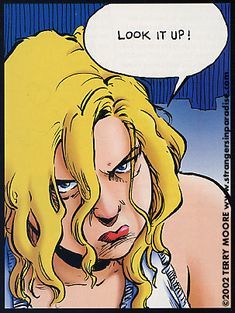
Katchoo e Francine cercano di ricostruire una vita normale, ma è evidente a tutti tranne a loro stesse che sono molto più che semplici coinquiline. E qual è il ruolo di David nelle loro esistenze, e quanto ci metterà Katchoo a rispondere a questa domanda? Il fatto che la sorella di David sia la donna che le ha rovinato la vita, certo, non aiuta. Quando quasi riesce a passarci sopra, ecco che il passato torna a bussare alla porta.
Il secondo dei sei volumi dell'edizione definitiva di Strangers in Paradise di Terry Moore è tra i più significativi dell'intera serie culto del cartoonist texano. Si apre con una sequenza davvero inaspettata a opera di Jim Lee e diventa il cuore dell'epopea sentimentale di Katchoo, Francine e David, mentre gli eventi legati all'impero di Darcy Parker marciano verso un climax sempre più inevitabile. Una collana da non perdere, per uno dei capolavori assoluto dei comics indipendenti USA.
Following the examples of independent comic creators such as Dave Sim and Jeff Smith, he decided to publish Strangers in Paradise himself through his own Houston-based "Abstract Studios" imprint, and has frequently mentioned a desire to do a syndicated cartoon strip in the authors notes at the back of the Strangers in Paradise collection books. He has also mentioned his greatest career influence is Peanuts' Charles Schulz.[1] Some of Moore's strip work can additionally be found in his Paradise, Too! publications.
His work has won him recognition in the comics industry, including receiving the Eisner Award for Best Serialized Story in 1996 for Strangers in Paradise #1-8, which was collected in the trade paperback "I Dream of You".
It was announced on June 15th, 2007 that Moore would be taking over for Sean McKeever as writer of Marvel Comics's Spider-Man Loves Mary Jane series starting with a new issue #1. On July 27th, Marvel announced that Moore would also take over for Joss Whedon as writer of Marvel's Runaways.[2]
On November 19th, 2007 Terry Moore announced in his blog that his new self-published series would be named Echo and its first issue would appear on March 5th, 2008.[3]
I read the Homage Comics (Image Comics) series three #1-8 and the Abstract Studio comic books series three 9-12, which are collected in this Pocket Book. Despite Image Comics getting involved the direction, style and quality remained the same. Fran gets a job, and more is revealed about Katchoo's past. A very good serial with a same sex attraction at its heart. 8 out of 12, Four Star read 2014 read
Strangers In Paradise Pocket Book 2 collects Strangers in Paradise Volume 3, #1-17.
On the heels of treading the first Strangers in Paradise Pocket Book, I dove into this one while the wounds were still fresh.
In this volume, Katchoo runs afoul of her old boss, Darcy Parker, and gets pulled into one last job. Like I said in my review of the last volume, this reminds me of Stray Bullets quite a bit at times, unusual for something touted as a romance comic.
Moore delivers the twists and turns. Some shocking stuff happened, leaving me ready for future volumes... except the time jump ten years in the future when Francine is married and has a daughter and Katchoo is nowhere to be found! I guess I'll step on that landmine when I get to it.
Four out of five stars. I'll get the next volume some month when I haven't already burned through my comics budget.
I thought maybe I was missing something the first time I tried these books.
Turns out I really wasn't. I find very little to like here. All the characters are walking stereotypes. All the men are sleazebags or rapists except for the token one who's a Nerdy Nice Guy (TM) and the one who's a Fatherly Good Cop (TM). The Sassy Streetwise Starving Artist Heroine With Anger Issues (TM) has a secret hidden past involving prostitution, the mob, and a cardboard Evil Hot Villainess (TM). Yawn. Everybody, and I mean EVERYBODY is in love with the other main character for no other reason than that she's "dumb but nice/cute" and "chubby but hot." I can't even begin to process on how many levels that is offensive. The sexism is blatant and ubiquitous and the girl-on-girl plot feels like it was just shoved in there to make it more edgy and/or tintillating. Blergh.
The crime plots are lame too - the evil mob boss's evil plans of evil are constantly foiled by very basic manouevres (like being really mean to underlings who are obviously going to turn on her at the most inopportune moment, or failing to make sure the mole she's planting in the White House won't be easily recognised and publicly unmasked), which makes the villainess look pretty damn stupid as well.
Also, the constant declarations of eternal love and the language in which they're made ("ILU and that will never change!" "ILU until the end of time!" "ILU no matter what you do to me!" etc. etc.) get repetitive really fast. I also find the art to be quite exploitative, the dialogue tired and predictable and oh god, don't get me started on the awful emo poetry.
Yeah, okay, admittedly I'm not in a generous mood. I've read some really good books lately with genuinely strong, intelligent women (and men) in them, and this suffers terribly by comparison. I like my main characters smart. If that makes me a snob, I'm actually okay with that, lol.
In the second of six Pocket Book collections, fans of Strangers In Paradise see Katchoo trailing David to California where she comes face to face with her ruthless ex-employer, Darcy Parker. Darcy, who we learn has intensely incestuous love for her brother David, blackmails Katchoo into helping her as devises a nefarious scheme to infiltrate the White House. Unaware that Francine and Det. Mike Walsh are hot on her heels, Katchoo gets help from an unexpected foe in bringing down Darcy’s empire once and for all. As an added treat, author Terry Moore takes readers back through time to reveal how Katchoo and Francine first met one another in high school. As it happens, this high-school daze is merely a reminiscence of Francine who hasn't seen Katchoo for over ten years and is now a mother trapped in a loveless marriage. As Francine’s mother soon realizes, if ever her daughter needed Katchoo's love it’s at this moment.
The astonishing saga of Katchoo and Francine’s relationship continues break down social stereotypes and illustrate both the hardships and wondrousness of true friendship. As with the previous book, readers will become easily captivated by these wonderfully conceived characters. The artwork continues to captivate me . Interestingly, Moore takes a non-linear approach to his storytelling, putting in sequential story elements that are set years apart and frequently going back and forth in time, even more so than in Book 1. Like the characters, the story is multilayered and—to quote the title of Han Suyin’s 1952 novel—a many-splendoured thing. While the time-jumps are occasionally jarring and mildly perplexing, I found it easy to re-immerse myself in the story.
With plenty of twists and turns to keep readers longing for more, this delightful book is a solid addition to the series. Most readers will recognize and appreciate the author’s intrinsic message about learning to love a person for who they are rather than what they are. As long as you have an open mind about lesbian relationships, all will be well.
#ThrowbackThursday - Back in the '90s, I used to write comic book reviews for the website of a now-defunct comic book retailer called Rockem Sockem Comics. (Collect them all!)
From the November 1998 edition with a theme of "Women in the Comics":
INTRODUCTION
This month's column reflects on the depiction of women in the comics. From the selections below, you'd have to generalize that women are either whup-ass, big-breasted superheroes and villains or confused bisexuals.
Yeah.
I'm sure these stereotypes are going to bring in that mainstream female audience the comics industry has always wanted . . .
But, hey, I review what is produced, not what should exist. And some of these comics ain't half bad.
THE THREESOME
STRANGERS IN PARADISE VOLUME ONE #1-3 (Antarctic Press) STRANGERS IN PARADISE VOLUME TWO #1-14 (Abstract Studio) STRANGERS IN PARADISE VOLUME THREE #1-18 (Homage Comics/Image Comics and Abstract Studio)
Whenever I see a comic featuring two women -- one blonde and one brunette -- I can't help but think of Archie Comics' Betty and Veronica. Turn the two women into a romantic triangle by adding a man -- an Archie, if you will -- who is interested in both of them and whom both women find attractive and the Archie Comics analogy is complete. However, I don't think Archie Comics will be publishing an issue any time soon wherein Betty and Veronica are as interested in kissing each other as they are in kissing Archie.
No, for that you need to pick up STRANGERS IN PARADISE.
Writer/artist Terry Moore has created a quirky little book about love and romance, sex and violence, babes and bazookas, poetry and life. At the center of the book is the relationship between Francine Peters, Katina "Katchoo" Choovanski, and David. Francine and Katchoo have been friends since high school. Ten years after high school they are roommates coping with life.
The first volume of STRANGERS IN PARADISE takes a madcap,over-the-top tone as it introduces the major players in the series. Francine's bad taste in men is leaving her depressed, and that is contributing to her weight problem. Fortunately, her bubbly spirit and general ditziness keep her out of the suicidal category. Katchoo, meanwhile, is a gun-toting misanthrope who'd rather kill a man than talk to one. Specifically, she's ready to kill the man who has just wronged Francine. Soft-spoken David, meanwhile, finds himself attracted to Katchoo and begins the arduous task of scaling her icy slopes. Pointless gunfire, the presence of a bazooka (!), and tons of gratuitous violence only detract a bit from the introduction of an engaging trio.
The second volume of STRANGERS IN PARADISE reveals Katchoo's dark past and the origin of her hatred of men and people in general. In short order it is revealed that Katchoo has been abused and raped; she has been a homeless person and an alcoholic; and she has been a prostitute. In her dark world, the only constant light has been her affection for Francine. David's gentle ways allow him to work his way into Katchoo's world, but the romantic triangle takes a back seat to danger when Katchoo is stalked by Darcy Parker.
Darcy heads up a prostitution/blackmail ring of which Katchoo was once a part. One day in the past Darcy lost two valuable possessions: $850,000 and Katchoo. She sends her henchwomen after Katchoo to find out what happened to the money and to bring Katchoo back into her employ. While the second volume ends with Katchoo getting a reprieve, Darcy comes back in the third volume of STRANGERS IN PARADISE with designs on the White House and a forced role for Katchoo in the scheme.
Frankly, all the intrigue with Darcy is rather dull and only acts as a diversion from the core trio. The second half of the third volume gets back to business, putting David and Katchoo and Francine into a small apartment where emotions and desires can begin to boil and bubble. Katchoo wants Francine badly, but is confused by the emotions David stirs in her. While David and Francine are attracted to each physically, both are competing mostly for the attention of Katchoo. After years of being girl friends, Francine is opening her mind to Katchoo as a girlfriend.
While mostly enjoyable, STRANGERS IN PARADISE can be a frustrating book to read. It is loaded with garbage I hate: long narrative text pieces, poetry, song lyrics, and dream sequences. The romance and drama of the book are often thrown head over heels when the rug is literally yanked by some outlandish pratfall or sight gag. The gags in the book are amusing, but they always seem out of place. The strength of the book is the interaction between the three characters. Whenever they are on-screen together, I am happy. When the trio is split up -- I'm not unhappy, but I'm thinking about how I could be happier.
Terry Moore's artwork, at least, is wonderful and consistent. He's found the happy middle ground between Archie Comics' cartoonishness and photo realism. His women characters -- especially the well-rounded Francine -- are simply gorgeous. He gives the cute Katchoo enough of a dark glint in her eye and hunch to the shoulders to make it believable when she starts kicking the ass of some guy twice her size. The art is realistic enough to make the drama particularly moving and crazy enough to make the slapstick tolerable.
I can't give STRANGERS IN PARADISE a rave review, but it's one of those books I will collect until Terry Moore says it's done. While their adventures may not always be interesting, the relationships binding Francine and Katchoo and David have hooked me. I want to see where these people are going to be in two months when the next issue comes out. I want to see how their lives work out. I only hope it doesn't take the fifty years (and counting) that Archie, Betty and Veronica's status quo has lasted.
Another fucking awful collection of comics, and this is only volume 2! While the story gets marginally better when it shifts away from the prematurely deteriorating crime story and enters high school, it's still a comic book full of sickeningly sappy, co-dependent whiners, really bad poetry and asshole men. Perhaps the high school chapters are only good because the dialogue and characters are at the most the refined essence at that whiny, self-absorbed age. The Xena "parody," while cringe-inducing, seemed appropriate considering the target audience (which I thankfully must admit I am not apart of) and so it did no harm.
Thoughts at large: -Katchoo is like a lesbian Wolverine, a geeky macho role model for geeky girls. -All I can think about Houston is how hot and shitty it is there. -Domestic violence, perpetuated by woman to man, is still fucked up. -Essentially Slash Fiction of the Hurt/Comfort variety, I'm amazed this book received any lauds from anybody, but I guess the comic book genre is still loads behind everybody else in distinguishing quality work. Just because it "novelly" takes the perspective of females doesn't mean it's good, folks.
Ultimate irritation—the panel in which Katchoo (who is a lesbian? I guess it is not clear) looks into David's eyes and says something like, "Do you know why I hate men?" and then, "Because I never met one who was faithful. . .until you." Wtf. At times the Katchoo/David relationship reminds me of Alyssa/Holden from Chasing Amy.
I did enjoy the high school flashback stories at the end: Katchoo sort of flirting with Francine her best friend at the window. So classic! Wearing a leather jacket. Throwing rocks at the window of someone you like. Oh, and the Katchoo/Francine as Gabrielle/Xena was fun.
A year has passed since I read volume one and I'm disappointed with the characters but I will still read the rest of the books and finish the series in another four years or so.
I wanted to like this whole series, after reading the first of these Pocket Books. Wow, downhill spiral fast though. I got about 3/4 through and just gave up. Everything that i thought was so intriguing that sucked me into the first one--the interpersonal tensions in the triad of Katchoo, Francine, and David--pretty much disappears really quick in this, in favor of a bunch more Eevil Geenius B.S.
I also got really fatigued with constantly reading about how much Francine hates herself for being fat, when she just looks normal most of the time. I get enough body-hate in my face in 20394802934 sidebar ads on social media, so i don't have much overflow interest in it as an element of my leisure reading.
Another good volume of a very original comic series.
In this one we see some comedy where the nontraditional comic world of SIP crosses paths with more traditional comics, as well as a Xena tie in! The main part of the book however focused on the apparent wrap up of the Katchoo political thriller plot. There's also some backstory given as we see the girls in high school. That's balanced out by a flash forward, where we see the girls ten years from the present. It sounds like a lot of jumping around but it's really easier to follow than you'd think.
I'm still more of a horror/super hero comic book reader, but I have to admit it is refreshing to see the flexibility of the medium.
The second pocket book in this series delivered! It was action-packed with some intense twists. I liked how it addressed themes of corruption in government and I loved the way the characters are developing. The past and future snap shots have me hooked and ready to read the next installment.
This volume really touched me and I liked learning more of their backstory. The action was great, the plot is moving but we’re also getting the character’s lore which is great.
I get lost on the crime side of the story blpretty quick. But when it's a pure romance story it more than males up for it. Love the way Moore plays with the medium. Running song lyrics along side the page or between the panels even, guitar tablature, running the dialogue down the middle with panels on the sides. He really is a great cartoonist and wants to poke at the boundaries of comic story telling.
As a kid, whenever I had cotton candy bubblegum it would be so delicious that temples would ache and I'd screw my knuckles into them just to alleviate it while I continued chewing. That is what the best parts of Terry Moore's Strangers in Paradise does to me as an adult. Twice I punched in the air at how dead-on his writing had gotten.
This book is in every way a sequel to the first, with Francine and Katchoo settling into new digs, but still haunted by the manipulative pimps that once destroyed Katchoo's life. Another mastermind even shows up to drag Katchoo down, and just like the first book, that's not even in the top three reasons why I kept turning the pages. Francine and Katchoo aren't just friends who don't know they're in love anymore; Katchoo has confessed and now Francine is trying to figure out if she can feel the same way. After the trauma the Big Six put them through, they're incredibly tense, and the waiting alone is eating away at Katchoo's psyche. They have no idea that one phone call from a stranger could mean they'll never see each other again.
Moore nails so many elements of friendships and would-be romances that other fiction only references. The basics are Katchoo and Francine; how one can worm around to find the right way of supporting the other in a moment of doubt, and in the next scene, how one is so absorbed she misses that she's hurting the other. David returns as a hopeless love interest for Katchoo who she keeps looking straight through and winds up a crucible for the ways she ignores others. It's frequently done with an energy, able to be quiet, but unafraid to be as exhuberant as best friends really do get with each other. It's the relationships that earn the sighs of relief, not the missed gunshots.
It's those traits that make Moore's treatment of minor characters so jarring. A board room will never be seen again, so they exist in binary states of total boredom and being complete horndogs. There's a background boyfriend character who gets beaten to a pulp and winds up wandering around quoting poetry or plays like he's drunk instead of in need of another hospital visit. It can be adorable, but it's usually dismissive of the rest of the world in a way that is complete unresolved to the depth the main characters see. After the first book, wherein Fred wound up leaving the background stereotype role for surprise depth, you'd hope for more surprises here. Instead you get an adorable and impossibly scrawny man dangling from gym equipment.
I love when Terry Moore does something new on the next page. Just like Volume 1, here he's happy to have pages of dialogue interrupted by a two-page spread of Katchoo silently snooping around an apartment full of memories we can only imagine based on her facial expressions. There's another two-page spread of a house with a little babble near the windows, but set on both sides by a straight-up prose monologue about Francine's childhood that obliquely reflects what's happening in her life now. There's a period when Francine meets her old (and quite bad for her) boyfriend and a third party tries to chat them up, but the dialogue pops its bubbles and drifts around behind them to show us how they're ignoring it. These things are never done again, throwing me off and simultaneously throwing me into the emotional context of the time.
At this point, I don't know why Strangers in Paradise hasn't come up more often in discussions of the great American comics. It was popular when I was a teen (and ignored it), but I seldom hear about it now the way I do about Preacher, Bone and Transmetropolitan. That seems unfair for something so profoundly intimate and creative. If anything, this was so stirring that it's going to screw up my enjoyment of the next sequential art I read.
If you're looking for an absolute guilty pleasure read where almost ever man is a rapist, and almost every woman is a bisexual leaning pin-up girl who also happens to be a martial artist with the temperance of a volcano during earthquake season, you will love this book.
I couldn't continue to give this series my attention.
Another reserved 3 stars. Bad poetry abounds. Silly mafia plot resurfaces. But the human story at the center keeps the mess afloat and keeps me reading. When Moore keeps it simple the story is surprisingly moving.
Enjoyed the art and the fact that there are real bodies with all their quirks and curves. But once again the plot lines rather lost me and I still couldn't quite connect with any of the characters. Enjoyable but I don't know that it's really my thing.
Talk about cliche! Every book about a lesbian character is about how deep down they really just want a man! Just waiting for the right one to come along ya know! GTFO! This comic is chauvinistic garbage written with the subtlety of a brick to the face.
The arc from the first book continued into this one. A happy ending tied into a potential threesome bow. Don't intend to read more, but the first 2 books are enjoyable enough if you forget all the tropes while reading them.
I know kind of late bringing you in to talk about this. After passing the beginning. Hopefully me telling you this a little late in the storytelling will inspire you to not only check this out but start at the beginning. Think of it as non linear as that is how this story unfolds anyway in the following pages
The title refers to characters trying to be happy. Never believing they will or deserve it and are left shocked when once they do, but it never seems to last long enough before it’s ruined or interrupted by others and sometimes themselves usually particles of the past gather to create roadblocks
It starts off easily comedic and melodramatic. Then it gets deeper as it goes along. At first to reveal a crime story then an overall espionage tale. Filled with conspiracies before going back to domestic drama and romantic comedy revolving around a love triangle that stretches so far between Francine, Katchoo and David
As we also get interludes to their pasts and futures in pieces that help explain the decisions they make at times as well as how they got to the water are physically and mentally with a peak of the aftermath
Through it all. This stays believable, No matter how far off or far fetched it might go l. As dark and deep as it gets. There is also comedy both natural and physical. As well as slapstick. It changes moods at the drop of a hat. One minute you are laughing and by the next page. It’s broken your heart… again. Plenty of pain and all stories explain themselves once fully revealed. As it keeps you invested as to wonder what will happen next.
It even changes style at times to be all prose or present events more in a written short story or reveal inner feelings and monologues in poetry and quotes. As it inspires many of its own original quotable lines. Some of this with no action or pictures to prepare you for the next scenes or few pages. All It’s missing is a playlist
No matter where the story goes no matter how ridiculous it might go it still stays relatable and feels personal. As you compare it or see yourself in the story at times with a recognizable element
What is miraculous is that while the story plays out in front of you and you can take your time with it to study the panels or get yourself emotionally ready
Now this isn’t a superhero story necessarily but it does deal with an underground conspiracy linked to criminal enterprises. While also being a romantic dramedy with physical comedy and dark paths around happiness
All about sacrafice and this is me after only finishing volume 2. I’m still only halfway through the whole saga. As there are 4 volumes in total
I’m surprised no one has pitched this not as a movie but as a series. As it has all that is needed and sets up a limited series or an over reaching story for a multiple season series.
That hopefully would last to tell the whole story As it has a bit of everything for everybody but stays true to itself and audience with a crazy amount of depth and melodrama l. Though at heart in an epic love story.
You could kind of call this a book review or a informed suggestion
Il secondo volume della serie è stato finora il volume perfetto. Più complesso nella trama e intenso nel contenuto del primo volume, l'amicizia/amore tra Francine e Katchoo è descritta in modo più che credibile. I personaggi, il mondo che li circonda, le loro famiglie, sembrano liberarsi dalle pagine del fumetto e le loro vite ti appassionano per davvero, ti ci affezioni per davvero. Alla luce del secondo volume, il primo volume è una sorta di introduzione alla storia. Spiega per grosse linee la vita di Katchoo dal momento in cui abbandona il liceo e l'amica Francine, fino al momento del ritorno a casa dopo cinque anni. Il secondo si focalizza su come è perché nasce l'amicizia tra le due ragazze. Sul perché si riconoscono anime gemelle, sin da subito. Tutto con pochissimi tratti e parole. Senza nessuna retorica. Nessuna spiegazione facile. Nel frattempo, già nel primo volume Katchoo e Francine vanno a vivere insieme. Nel primo volume questa è la linea temporale presente e la principale. Nel secondo volume ci sono addirittura tre linee temporali. Due passate e una presente. Questa triplice linea dà realismo alla storia e rotondità ai personaggi e apre la narrazione verso il terzo volume. Si intuisce che è accaduto qualcosa che non a noi non è ancora chiaro. Inoltre questo schema di dispiegamento della trama, ha avuto anche la funzione di sanare lacune e difetti del primo volume che nel complesso risultava meno credibile e coinvolgente. Fin troppo lineare nella narrazione e nel dispiegarsi degli avvenimenti. Non vedo l'ora di continuare con il terzo volume!
The story continues from the fist edition. Moore's beautiful love story between the main characters along with his stunning artwork just draws you in. A badass and vulnerable queer female lead always is a win for me and Katchoo is all that and a bag of chips! She is funny, clever and does not take crap from anyone. Her yearning and unrequited love is one of the biggest draws of the story to me.
I love that the story incorporates multiple styles and visuals at different points. The characters have interesting backstories and personalities. It is a a real character driven story but there is also an overlapping mystery as well as some smaller character stories. I have ordered all of the editions and am so happy I discovered the world of 'Stangers in Paradise.'
Given the fact which it may not be my absolutely favourite genre, it is impossible to not notice the quality of this series. It is indeed a master piece of his time. I loved this volume was even better the previous one. Altrough it isn't free of flaws in my humble opinion, some times it is hard to follow the story, but I think this may depend this collections has everything written about and in some way some one had to put all toghethere, nonetheless the story is always coherent, and it is always possible to re-build previous history. At the end very good love story, this volume also touched me a little bit, and enjoyable side story, it is clearly on a different level than previous book. It isn't for me perfection, but I am quite sure next books will reach that level.
On Reddit they called this series tired and boring. It hasn’t aged well and is all about walking stereotypes.
Well I find this an absolute breath of fresh air. I see complexity in the characters. The art says so much about each of them and there’s a lot of emotion and feeling here. Terry Moore fleshes them out with a lot of backstory and throws these characters in fantastic situations. The crime stories are thin, sometimes comedic but it’s about the characters mainly for me and following them through it.
The twist and turns are fun and necessary. I read that this is like a soap opera and great so be it. This is a fun soap opera about an undying love between two maybe three soul mates.
Terry Moore, quando vuole, riesce ad essere conciso, diretto, toccante, interessante. Qui però spesso è incredibilmente ridondante, e le pagine si riempiono di minuziosissime descrizioni scarsamente utili, di poesie di dubbio gusto e di quel femminismo che porta le donne a essere tutte sovrappeso (tranne quelle veramente stupide) e gli uomini in media idioti tutti presi dalle proprie conquiste sessuali. Il risultato finale è un volume che è carino, ma non memorabile, con picco negativo il flashback al passato di Francine e Katchoo e picco positivo la situazione nel futuro, con Francine che reincontra per caso Katchoo.
Non capisco come Terry Moore sia entrato cosí bene nella psicologia femminile creando due protagoniste formidabiki. Francine rispetto al primo volume ha un evoluzione ma semza snaturare il personaggio. Katina l ho adorata sia per lo sviluppo della storia sia del rapporto tra loro due. Una grafic novel che tratta temstime molto forti come criminalitá, violenza sessuale , discriminazione lavorative contornate da una profonda amicizia. Ok ammetto che ho pianto..