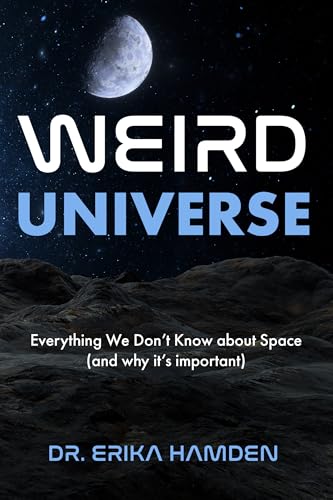
This book is a compelling exploration of modern astrophysics that systematically dismantles humanity's Earth-centered assumptions about the cosmos. The book's central thesis is that the universe consistently defies our intuitions, revealing itself to be far stranger, larger, and more wonderful than we could have imagined. The author's scientific revelations provided perspectives in ...
(a) Historical Pattern - Each generation has assumed they understood the full scope of reality, only to discover they were seeing a tiny fraction of something far grander. From Earth-centered models to the discovery of galaxies beyond our own, every major astronomical breakthrough has revealed our cosmic insignificance while expanding our sense of wonder.
(b) Current Understanding - We live in the universe's brief golden age—it is currently as bright as it will ever be. Within 100 trillion years, all stars will die, leaving only black holes and stellar remnants in an increasingly cold and empty cosmos.
(c) Philosophical Implications - Hamden argues that astronomical inquiry is fundamentally human—we evolved under starlight and are driven by curiosity to understand our cosmic origins. Through our observations, we become "the universe observing itself," making astronomy not merely academic but essential to human nature.
(d) Future Outlook - Major questions remain unanswered (the nature of gravity, dark matter, consciousness, extraterrestrial life), suggesting that future discoveries will continue to reveal the universe as even stranger than we currently imagine.