Jump to ratings and reviews
Rate this book

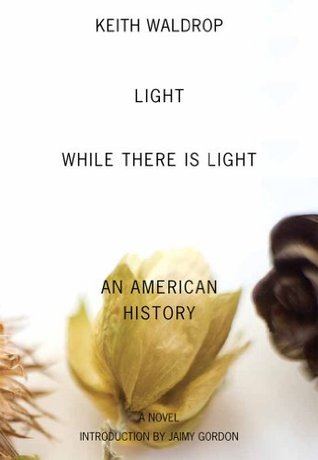
LIGHT WHILE THERE IS LIGHT EBK

Rate this book

One of the unheralded masterpieces of twentieth-century American fiction, Light While There Is Light is acclaimed poet Keith Waldrop’s autobiographical novel about the myriad ghosts left behind by his family. No
synopsis can do justice to the beauty of Waldrop’s measured, wise, and
unembroidered prose, illuminating the fear, madness, and


destruction within hearth and home—though never repudiating his love for same.

One of the unheralded masterpieces of twentieth-century American fiction, Light While There Is Light is acclaimed poet Keith Waldrop's autobiographical novel about the myriad ghosts left behind by his family. Born to a deeply religious mother, the narrator and his siblings are led across the US as she searches for the "right" religious sect—a trip that ends with her speaking in tongues, and finally her total isolation. But no synopsis can do justice to the beauty of Keith Waldrop's measured, wise, and unembroidered prose, illuminating the fear, madness, and destruction within hearth and home—though never repudiating his love for same. In a tradition that stretches back through Flannery O'Connor and William Faulkner to Hawthorne, Melville, and Poe, Keith Waldrop and Light While There Is Light are American treasures.

201 pages, Kindle Edition

First published May 1, 1993

Loading...
Loading...

About the author

Keith Waldrop

119 books20 followers
American poet and academic, author of numerous books of poetry and prose, translator of the works of Claude Royet-Journoud, Anne-Marie Albiach, Edmond Jabès, Charles Baudelaire, and others.

Ratings & Reviews

What do you think?
Rate this book

Friends & Following

Create a free account to discover what your friends think of this book!

Community Reviews

5 stars
50 (47%)
4 stars
38 (36%)
3 stars
14 (13%)
2 stars
2 (1%)
1 star
1 (<1%)
Displaying 1 - 13 of 13 reviews
Profile Image for Jeff Jackson.
Author 4 books533 followers
December 29, 2022
A novel that feels closely related to Marilyn Robinson's luminous HOUSEKEEPING. Both stories of midwestern mysticism and life outside middle-class norms, their extremism cloaked in a mild tone and domestic details. Both books written with sturdy and sometimes startling lyricism, prose crafted at a perfect pitch.
Profile Image for Ben.
432 reviews46 followers
February 4, 2010
I remember, now, how when we went to church, my mother and I, back in Emporia -- when I was a child -- we caught the bus on the other side of Sixth Avenue, which was also a state highway and, so, relatively busy. But if we were late and the bus was to a point where the driver might well pass on without seeing us, my mother's practice was to grip my hand, close her eyes, lower her head, and charge across the street, traffic or no. I thought about this, at the time, a great deal, and came to the conclusion that under certain conditions of emergency, ordinary physical laws do not hold and ordinary precautions may be suspended.
I do not think this anymore. At the same time, I may note that we never came to harm -- not then, not in that way.

As for me, what I would like, I think, is to live a while longer. But not again.
Profile Image for Derek Driggs.
802 reviews74 followers
May 19, 2026
A fictional memoir about the protagonist’s mother and her relationship to religion? Nothing sounds more appealing to my strange taste in books. I love autofiction and works on memory and religion.

The odd thing is, for a fictional memoir, this stays quite mundane compared to various directions it seemed poised to take.

I’m not sure I got out of this what its author intended, and would be very open to a reread.
Profile Image for Geoffrey Hagberg.
173 reviews11 followers
June 1, 2026
What is it: memoir of a family's faiths and fantasies.
----
Why 5 stars: in film, there's an aesthetic mode coined by Paul Schrader as the "transcendental style," by which a filmmaker brings the audience to experience the seeking, searching, tension of faith by showing them imagery that is caught seeking, searching, in tension rather than resolved on the screen. This might be a shot that doesn't cut when the action ends but lingers a little too long, inviting the viewer to expect some additional action even if nothing happens before the eventual cut. It might be a sound edit where the imagery of a scene has cut but the sound from a prior scene has not yet, or the sound of the next scene has begun while the imagery waits, leaving the audience interpreting an overlap of realities unsure which should be given priority. It might be performances understated almost to the point of non-acting, but delivered to a rapt camera that refuses to look away, leaving the audience to investigate in the canvas of the actor's blankness some signs of an interior experience not yet externalized. There's many tools to accomplish the style, and many filmmakers who've leveraged the style, but the result is that tension, the viewer caught between the immanent and the transcendent. What is filmed is literally always the immanent, the visible, the present at the time and place it was captured on film. But what is seen is not what is filmed; what is seen is what is desired, anticipated, expected, wondered, hoped for, and it is encouraged by certain forms and patterns.

When I read Schrader's Transcendental Style in Film, I didn't think I'd encountered written literature that was aiming at that same style, at that same tension in its reader.

With Waldrop's Light While There is Light, maybe I now have.

It is memoir, but clearly not held to strict factuality, permitted a looseness and ornament of memory or dream. It is organized by times and places, but here too not confined by them, certainly not told linearly, nor ever framed by imposed thematic structures. There are character arcs and minor plots, but there is certainly no narrative artifice. But more striking to me is that Waldrop's prose is, itself, as elusive as his subject. His syntax is almost always simple, direct, immanent, but in between each clause seems an invitation to see complexity that Waldrop never explicitly includes in his grammar. His diction is intentionally ambiguous, so that a sentence that has an obvious meaning in the telling of some small narrative or relation of some strange character will catch the reader with one or three possible other implications as might relate to a prior paragraph, prior page, other time or person entirely. The most meaningful fragments of this text are meaningful precisely because they fall into these gaps, these invitations to seek a meaning that's not in the ink on the page but in, instead, the blankness between the lines.

Don't misunderstand me, or Schrader, though: leveraging transcendental style is not inherently positioning the work of art in a Christian worldview. Here, Waldrop is very clear that he intends this memoir to reckon with the ways each of his family members' lives were shaped by their particular understandings of faith, but that he himself writes from an absence of that faith. It is Waldrop's work to show the reader the reasons his family members all wanted to believe their idiosyncratic beliefs, but equally to hold the reader in tension between that desired belief and Waldrop's own refusal. Transcendental style, here, might be a tool to catch the reader in a seeking for belief that the author is unwilling to share.

A sentence in this style might begin with a declaration that his mother would agree with and end with a clause that evidences to the reader the futility of that affirmation, as: "But healing was always still to come--meanwhile, she sat on the right side of the church, because her left eye was the stronger." Or a sentence might establish a simple fact and then proceed to elaborate a brother's unwarranted reaction, as: "Charles had seen nothing, but was equally shaken." Or a sentence might describe revelation in the midst of self-imposed blindness and invite the reader to the symbolism of the blindness and the seeing both, as: "--only when she opened her eyes I realized she had all this time had them shut." Or a sentence might in one, unbroken gesture sculpt a heroic visage and mockery of it at once, as: "I saw in my mind's eye the whole bright circle of an afternoon sky descend to a meager runway traced across an ill-marked patch of ground--Julian, blood and bone of the Body of Christ, gazing tranquilly out of the snack bar window at a returning Piper Cub, or perhaps a scheduled flight from Peoria."

Waldrop begins this memoir telling the reader: "my ghosts merely disappear. I never see them. They haunt me by not being there, by the table where no one eats, the empty window that lets the sun in without a shadow." And he ends the memoir by reminding the reader again: "my ghosts are as before: neither soul nor body, but the lack of obstacle to sunbeams coming in the window or light from a lightbulb or any everyday reflection." There are, though, many presences casting long shadows in this memoir. Waldrop's mother, certainly, an unshakeable presence even when the family seems to try to flee from her weaponized ethics; his brothers, chasing their tails and tales across the entire geography of the States through any sort of grift and salvation they can cling to; strange acquaintances that recur in various episodes, spouses and children of the family, even pets like a certain three-legged cat. Presences all, immanent on the page.

But less present on the page is Waldrop himself. I would be reluctant to call this "Waldrop's memoir" at all. It is a memoir of his family, but he acknowledges his own place in that family just a few times over the course of the whole text. Only a couple times does he invite the reader to some interior experience of his own. And even in the photographs that are provided throughout the text, he is rarely included. I think maybe this is the most meaningful tension of all: that to us, reading this text, Waldrop is the ghost that haunts, the absence casting no shadow as the light falls on all the bizarre and fascinating persons around his place and time.

When Waldrop writes "Ghosts gather in such lines" of hymns sung by his mother and "all we remember, finally, is words," or later "then I drew up lists and catalogues in a dream of order, but the only order was in the dream," and in the end "if I dream the events this account describes, they are not usually changed, but in what should be a world nearer to the heart's desire, they play again, just as I tell them here, exactly as already experienced. It is as if despairing, even of imaginary improvement, I contrive instead to set my affections on the damned world, this very world, as it was and as it is"--in these, I see Waldrop confessing the work of writing this text is a work of keeping present people and places, encounters and experiences, that he intends the light to illuminate still. But to keep himself just outside of that light, just beyond the page's edge, Waldrop refuses himself that same meaning that might come from description and ordering. Waldrop refuses himself the memorial of words. I see that in his final words: "As for me, what I would like, I think, is to live a while longer. But not again." The present may linger, but the presence should not.

The reader is caught now in a tension not only of belief and unbelief but of searching for the breath behind the words, a tension because that searching is not resolved by the ink after all.
----
You might also like: Schrader's films, Malick's films, Kentucky Route Zero comes to mind, maybe something like As I Lay Dying too. And I think Border Districts by Gerald Murnane is doing something very different, but maybe has a similar reading experience. And I bet Waldrop would vibe with the documentary Salesman.
Profile Image for Peter Landau.
1,129 reviews78 followers
December 11, 2013
This is a ghost story. Poet Keith Waldrop says so right on the first page, but he notes that his ghosts are defined by their absence not presence. LIGHT WHILE THERE IS LIGHT: AN AMERICAN HISTORY is his autobiographical novel, the center of which is held by the author's mother, a spirited and spiritual seeker. There is much love and humor and oddity in this book, as any tale about family told truthfully must contain, but for me it was the writing that, at least at first, captured me in its spell. The prose isn't showy, unless it needs to be, it is almost biblical in its certitude of choice, like plainsong. Each word, every sentence and the building paragraphs have a heft that comes from service to craft and an opening to the gifts of language. It produced a river that carried me away for most of the book. Then something strange happened. I found myself sharing the writer's familiarity, literally his relations, so when I came to the end of the book, and the end of many of those depicted within it, I too was haunted by their absence.
Profile Image for Shane.
38 reviews12 followers
March 25, 2026
This is one of those books I have always meant to read but for whatever reason have never read. I often coddle up close to these kinds of books. I feel like there's something special about them... they've transfixed me but not so enough to make me dive fully in right away. Almost every time I finally do dive in and read them, they are unmistakable masterpieces of fiction (i.e. The Remains of the Day, A Month In The Country, etc.). On the other side, there are books that I'm very excited to dive right into (and do) but find lackluster and unable to live up to the hype. I feel like this is a more contemporary problem. Has writing, overall, gotten worse? Or has the praise just become too bloated and/or easy? Eh I don't know. Maybe it's just time. A book deserves time to settle into the world, perhaps. To haunt it. Be haunted by it. Find its readers. After all, that's what we all do, go around in the nights and mornings saying, Please, please, for the love of god, find me, haunt me, do it.
4 reviews
May 18, 2026
"Neither the joys of heaven nor hell's worst prospects provide as forceful a motive as the mere emptiness of the world". An account of his family without judgment. A dark tale (to me) yet he often focuses on light. Found it to be haunting but beautiful.
Profile Image for Patrick King.
519 reviews1 follower
February 5, 2023
“I have always wondered what worlds are possible. Others have asked, of course, but I mean it, not as a logical, but as a practical question. People around me seem always to believe—more fervently the more desperate they are—that there is some means, plain or occult, by which to get whatever is most precious in life. The idea fascinates me, since it suggests a path from what is to what might be, but it requires, I think—in the believer—an image of those might-be’s.”

Belatedly writing my impressions of this marvelous book—it is less a novel than a coming-of-age/how-I -became-a-writer kind of memoir. That being said, it’s very focused on Waldrop’s upbringing in a family full of searchers: his mother constantly searching for the brand of Christianity stringent enough to make sense of the world, his brothers searching for money and fame, and young Keith merely searching for his direction. These believers stumble, by the grace of something, through their lives trying to construct a new world in which their place is defined. I picked this up because another writer said it was something of a companion to Marilynne Robinson’s “Housekeeping” and I see the translucent threads connecting them. Ultimately I find Robinson’s Midwest family chronicle of belief more directed than Waldrop’s but still found a lot to connect to here, especially the connection to Christianity despite entrenched agnosticism.
Profile Image for Roxane.
Author 134 books170k followers
August 7, 2013
A very strange book but really readable, the chronicle of a man's odd family, very much a Midwest novel, lots to think about here.
56 reviews22 followers
May 2, 2014
This is outstanding.
Profile Image for Zach.
1,581 reviews32 followers
November 4, 2016
A beautiful book that ends up leaving a lack.
Displaying 1 - 13 of 13 reviews