

What do you think?

Reconquest and Crusade in Medieval Spain
Drawing from both Christian and Islamic sources, Reconquest and Crusade in Medieval Spain demonstrates that the clash of arms between Christians and Muslims in the Iberian peninsula that began in the early eighth century was transformed into a crusade by the papacy during the twelfth and thirteenth centuries.
Successive popes accorded to Christian warriors willing to participate in the peninsular wars against Islam the same crusading benefits offered to those going to the Holy Land. Joseph F. O'Callaghan clearly demonstrates that any study of the history of the crusades must take a broader view of the Mediterranean to include medieval Spain.
Following a chronological overview of crusading in the Iberian peninsula from the late eleventh to the middle of the thirteenth century, O'Callaghan proceeds to the study of warfare, military finance, and the liturgy of reconquest and crusading. He concludes his book with a consideration of the later stages of reconquest and crusade up to and including the fall of Granada in 1492, while noting that the spiritual benefits of crusading bulls were still offered to the Spanish until the Second Vatican Council of 1963.
Although the conflict described in this book occurred more than eight hundred years ago, recent events remind the world that the intensity of belief, rhetoric, and action that gave birth to crusade, holy war, and jihad remains a powerful force in the twenty-first century.
The book is published by University of Pennsylvania Press.
Successive popes accorded to Christian warriors willing to participate in the peninsular wars against Islam the same crusading benefits offered to those going to the Holy Land. Joseph F. O'Callaghan clearly demonstrates that any study of the history of the crusades must take a broader view of the Mediterranean to include medieval Spain.
Following a chronological overview of crusading in the Iberian peninsula from the late eleventh to the middle of the thirteenth century, O'Callaghan proceeds to the study of warfare, military finance, and the liturgy of reconquest and crusading. He concludes his book with a consideration of the later stages of reconquest and crusade up to and including the fall of Granada in 1492, while noting that the spiritual benefits of crusading bulls were still offered to the Spanish until the Second Vatican Council of 1963.
Although the conflict described in this book occurred more than eight hundred years ago, recent events remind the world that the intensity of belief, rhetoric, and action that gave birth to crusade, holy war, and jihad remains a powerful force in the twenty-first century.
The book is published by University of Pennsylvania Press.
Audiobook
First published December 1, 2002
About the author
Joseph F. O'Callaghan
21 books14 followersJoseph F. O'Callaghan is Professor Emeritus of Medieval History at Fordham University, where he has taught since 1954. He earned his bachelor's degree from La Salle College, his MA at Marquette University, and his Ph.D. from Fordham.
Ratings & Reviews
Friends & Following
Create a free account to discover what your friends think of this book!
Community Reviews
Displaying 1 - 20 of 20 reviews
July 8, 2016
"Reconquest and Crusade in Medieval Spain" by Joseph F. O'Callaghan is a study of the Reconquest of the Iberian Peninsula in light of the Crusades to Palestine. The "Reconquest" ("Reconquista" in Spanish) is a term used to describe the recovery of southern territory by the northern Christian kingdoms in Spain between the years 711 and 1492. Although this book has the feel of "academic" history rather than "popular" history, I found it to be a good introduction to the Reconquest.
O'Callaghan demonstrates that the battles in Spain preceded and influenced the Crusades to Palestine, and, in turn, were influenced by those Crusades. From the papacy's point of view in Rome, the Crusades had two fronts: in the East in Palestine and in the West in the Iberian Peninsula. O'Callaghan emphasizes that over time the Reconquest took on more of the character of a Crusade.
If I understand O'Callaghan correctly, Europeans living outside of Spain viewed the Reconquest as a Crusade more than some living in Spain. The book discusses instances of soldiers from the Peninsula on their way to fight the Crusades in Palestine who were turned around by religious leaders and sent home to fight the "Crusade" in their own homeland.
O'Callaghan's main point is that the Reconquest should be understood as part of the Crusades. I think that's a valid point. My hunch is, however, that the Reconquest would have continued and succeeded whether or not there ever were Crusades to Palestine.
In the minds of the northern kings, the Reconquest was always about taking back territory that was wrongfully stolen and occupied. Any religious motivations of these leaders were probably secondary to the motivation to recover earthly territory. I also wonder if, in the minds of Medieval European Christians, recovering the lands of southern Spain was as important as recovering the Christian holy sites in Palestine.
Overall, this was a decent, although somewhat dry, study of the Reconquest. I recommend it to anyone who wants to learn about the Reconquest.
Rating: 4 out of 5 stars
Notes:
Published: 2003, University of Pennsylvania Press
Audiobook:
Narrated by: Tim Lundeen
Length: 10 hours and 53 minutes
Release Date: 2013-09-06
Publisher: University Press Audiobooks
O'Callaghan demonstrates that the battles in Spain preceded and influenced the Crusades to Palestine, and, in turn, were influenced by those Crusades. From the papacy's point of view in Rome, the Crusades had two fronts: in the East in Palestine and in the West in the Iberian Peninsula. O'Callaghan emphasizes that over time the Reconquest took on more of the character of a Crusade.
If I understand O'Callaghan correctly, Europeans living outside of Spain viewed the Reconquest as a Crusade more than some living in Spain. The book discusses instances of soldiers from the Peninsula on their way to fight the Crusades in Palestine who were turned around by religious leaders and sent home to fight the "Crusade" in their own homeland.
O'Callaghan's main point is that the Reconquest should be understood as part of the Crusades. I think that's a valid point. My hunch is, however, that the Reconquest would have continued and succeeded whether or not there ever were Crusades to Palestine.
In the minds of the northern kings, the Reconquest was always about taking back territory that was wrongfully stolen and occupied. Any religious motivations of these leaders were probably secondary to the motivation to recover earthly territory. I also wonder if, in the minds of Medieval European Christians, recovering the lands of southern Spain was as important as recovering the Christian holy sites in Palestine.
Overall, this was a decent, although somewhat dry, study of the Reconquest. I recommend it to anyone who wants to learn about the Reconquest.
Rating: 4 out of 5 stars
Notes:
Published: 2003, University of Pennsylvania Press
Audiobook:
Narrated by: Tim Lundeen
Length: 10 hours and 53 minutes
Release Date: 2013-09-06
Publisher: University Press Audiobooks

February 12, 2021
The Reconquista of Spain is an interesting story, but the telling of it fell short here, in my opinion.
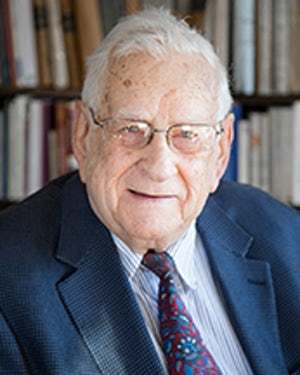
Author Joseph F. O'Callaghan is Professor Emeritus of Medieval History at Fordham University, where he has taught since 1954.
Joseph F. O'Callaghan:
I found the writing here overly dry and ardous; a somewhat common problem that plagues many of the history and science books I've read. O'Callaghan tends to machine-gun names, dates and places at the naive reader without providing any relevant context. He mentions some obscure Spanish count, then drones on in a monotonous fashion; rattling off a torrent of statistics and more unfamiliar names.
I really don't like when books do this...
The narrative structure of Reconquest and Crusade in Medieval Spain also left much to be desired for me. O'Callaghan frequently jumps back and forth bewtween the many crusades, successfully managing to completely lose the reader in the weeds...
I would not recommend this one. If it were any longer, I would have put it down.
1.5 stars.
Author Joseph F. O'Callaghan is Professor Emeritus of Medieval History at Fordham University, where he has taught since 1954.
Joseph F. O'Callaghan:
I found the writing here overly dry and ardous; a somewhat common problem that plagues many of the history and science books I've read. O'Callaghan tends to machine-gun names, dates and places at the naive reader without providing any relevant context. He mentions some obscure Spanish count, then drones on in a monotonous fashion; rattling off a torrent of statistics and more unfamiliar names.
I really don't like when books do this...
The narrative structure of Reconquest and Crusade in Medieval Spain also left much to be desired for me. O'Callaghan frequently jumps back and forth bewtween the many crusades, successfully managing to completely lose the reader in the weeds...
I would not recommend this one. If it were any longer, I would have put it down.
1.5 stars.
February 28, 2021
This was an eye opening book..... it completely changed my way of looking at the history of Islam in Spain as well as the history of the Crusades in the Middle East. after reading this book i started to link both campaign as one and i think this is the way it should be studied. Many of the crusading parties going to palestine passed through Spain and Portugal and were essential for helping these kingdoms retake many of their cities from the Muslims.... an example is Lisbon itself. If it wasn’t for Papal bulls and indulgences and Crusades the Reconquiesta wouldn’t have been complete. A lovely read.

March 21, 2017
O'Callaghan seeks to marry the ideas of crusading Spain and reconquest Spain. He argues that the reconquest has its origins in the 9th c. as Asturias came up with the idea of laying claim to formerly Visigothic lands. In the late 11th c. ideals of religious war joined those of territorial aggrandizement. O'Callaghan empasizes that the crusades in Spain were regularly treated by popes as equivalent to those in Outremer, and many of the ideas of crusading appear in Iberia before the First Crusade. Warfare in crusading Spain was slow and characterized by chevauchée and sieges, and was also more expensive than the kings could usually handle, leading to a lack of continuous campaign on any scale and debts. The book sits on the edge of being a little teleological, though, despite its attempt to avoid just that. On the one hand, the assumption that 9th c. Asturias claimed the Visigothic heritage in order to conquer, with the eventual goal of subduing the entire peninsula, is a bit tendentious. On the other hand, however, O'Callaghan notes that the Almohads could well have turned the tide and the turned the Christians back, at least until Las Navas de Tolosa in 1212, and naval assaults on the south of the peninsula continue until the middle of the fourteenth century. Also unfortunately, the social basis of power is never that clear for any of the actors, so it largely comes down to kings and battles. One also wonders about strife between Christians. One long-running issue ca. 1200 appears, but if all the Christian kings have the same idea of reclaiming the Visigothic kingdom, isn't this going to cause problems?

March 1, 2013
This book covered the basic military and political history of the reconquest of Spain from the time of El Cid to Isabella and Ferdinand, with a focus on the twelfth and thirteenth century. While informative, this book also bored the ever-loving bajesus out of me. How many friggin Alfonso's can there possibly be? But in general, yes, it was informative.
June 14, 2022
When one thinks of medieval Spain, one tends to think of the Spanish Inquisition or the imperious personages of Phillip and Isabella. The Moorish defeat also comes to mind, which ended about seven centuries of rule by various Moorish sultanates over various parts of the Iberian Peninsula. The Almoravids, Almohads, and the Taifas (various Muslim Kingdoms that emerged from the Umayyad Caliphate) controlled much of Spain from the 700s through 1492 (know what else happened that year?). This book chronicles the “Reconquista,” or reconquest, of Spain that was carried out over that time by various Christian kingdoms—Asturias, Leon, Castile, Navarre, Aragon, and Portugal—with Papal sanction. The author’s thesis is that the wars against Muslims in Spain were deemed every bit as important by Papal authorities—and qualifying for martyrdom and other religious distinctions—as the Crusades waged simultaneously in Jerusalem and should be considered as part of that movement.
The Reconquest was protracted and arduous, with various ebbs and flow in momentum for both sides. Various parts of the Peninsula saw frequent changes in control amidst innumerable battles and ousters and succession disputes. Although the Reconquest is today often projected through a nationalist, racialized lens, in truth it seems to have been encouraged and directed on a religious basis. There is a longstanding debate on the extent to which the Reconquista was really a unified, organized campaign with a clear mandate and intention of total Christian reconquest and occupation of the Iberian Peninsula. Various internecine conflicts characterized individual Iberian kingdoms AND Muslim dynasties and taifas, which at times even resulted in Christian-Muslim alliances. Furthermore, it was not uncommon for Christian-controlled kingdoms to tolerate the continued presence of Muslim inhabitants; likewise often with Muslim rules. It is likely better understood as a series of wars and conflicts generally fought with religious justifications. Notably, at no period did the Muslims even control the entirety of Spain. Although they made forceful forays into the north, it remained appreciably occupied by Christian kingdoms, whereas the south largely became a Muslim bastion.
According to the author, the popes—who held great sway over monarchs—advanced and justified the reconquest on the basis of the idea that the land of the Iberian Peninsula was their birthright. Having been possessed by their Visigothic Christian forebears who were dispossessed with the arrival of Moorish armies from North Africa, the land was fundamentally Christian. Being their descendants, it was they who were entitled to this land and they had divine authority to seize it from Muslim infidels and reoccupy it. This is the official narrative, of course. What was the real justification? I don’t doubt the popes and Christian monarchs harbored veritable biases against Muslims, as well as resentments attributed to violence at the hands of the Muslims. But, as with all wars, the real motivation was wealth. As many of us know, wealth lies in land—agriculture, minerals, etc. Although the popes may not have necessarily been directly enriched, they surely enjoyed the greater power and control that came with stuffing the church’s coffers by exercising control over vast territories and the taxes the church levied on the basis of that land, in both Jerusalem and the Iberian Peninsula.
Iberian societies were built on warfare; the business of kings, princes, nobles, and of course commoners was waging war. How were the citizens compelled into service? The promise of booty was one motivation. Papal bulls were another mechanism which granted indulgences (basically pardons) for any sins committed. In exchange for what? Going crusading either in Jerusalem OR in the Iberian Peninsula. For this, all was forgiven. AND you had license to do virtually whatever you wanted to do to the enemy. “War crimes,” what’s that? The Crusades in the east did not begin in earnest until the 11th century, which is after the earliest reconquests. Regardless, the author’s point is that the same driving forces and instruments were used in both paradigms and that because of this the Reconqista is best understood as an extension of the Crusades. All evidence points to the deep religiosity of the kings and other members of society (through attendance at mass, commitment to ritual, etc.), however religiosity only comported with the thrust for the acquisition of greater power and prestige that came with victory.
The author is extraordinarily detailed on the political dynamics of the kingdoms, their alliances, conflicts, etc. You get all the scoop on maneuvers, movements, retreats, invasions, engagements, etc. I would just say some of the most important monarchs mentioned are Alfonso I of Aragon and Navarre (11th and 12th century), Alfonso VIII of Castile (12th and 13th century), and Sancho II of Castile and Leon (11th century, and by no means is this list exhaustive). Innocent III (12th and 13th century and Urban II (11th century) are among the most influential papal figures. The important battles are Covadonga (718, Asturian victory over Umayyad Caliphate), Alacros (1195, victory for Almohads over Castile), Las Navas de Tolosa (1212, defeat of Almohads by an Iberian coalition). Between the earlier Umayyad Caliphate’s hegemony and that of the Almohads (who rose to preeminence in the 12th century), the infamous Almoravids battled and controlled vast stretches of Spain. The author also provides abundant detail on the origins of these various kingdoms and their internal and external struggles.
The wars raged on for several more centuries until the last of the taifas, the Emirate of Granada, was conquered by Castile and Aragon under Philip and Isabella in 1492. There had been considerations for an immediate invasion of North Africa to establish and consolidate Christian control into this realm, but the prospect of a protracted invasion proved unappealing and Iberian conquest and colonization of these regions would not transpire for another few centuries.
They did, however, commence the conquest of the New World. You were paying attention in school, therefore you are aware Columbus set sail in 1492—right on the heels of Grenada’s defeat. Papal influence over these affairs was no less marked than that exercised over the duration of the Crusades and Reconquest. The pivotal and infamous Treaty of Tordesillas of 1494 set the stage for the commencement of colonization and the consequent genocide of indigenous populations throughout Africa and the “New World,” executed by battle-hardened, zealous, and avaricious Iberian armies. Portugal took the “Old World,” Spain took the “New.” The rest is history.
One cannot understand European colonialism and imperialism and their systems of enslavement and genocide without first understanding the systems that gave birth to them. On all fronts—crimes against humanity, mineral theft, enslavement, and the exhortations of European populations toward conquest on the basis of supremacy—firstly, religious, then later racial—we can see in colonization and imperialism the unsightly, violent attributes of the Reconquista, the Crusades, and other, related forms of systematic domination imposed by European governments and the Papacy.
The conquest of the New World represented no cessation of internecine continental struggle for Europe. On the contrary, such wars raged as bellicose as ever, often driven by conflicts and disputes over colonial territories and possessions—“spheres of influence.” You know, gang turf. Take the Eighty Years’ War between the Dutch Republic and Spain, where William of Orange, Calvinists, and supporters opposed Spanish hegemony partly on religious grounds, given their opposition to the Protestant Reformation. The religious zealotry of European military culture drove and was reinforced by this conflict, in which at least 100,000 Dutch soldiers perished.
Shortly after the Dutch victory in 1648, what do you have? The expansion of the Dutch East India Company into southern Africa, tulips and all. If you are South African, you know the significance of the year 1652 (don't you love how crisp these timelines are?). Jan van Riebeeck, the progenitor of the Afrikaner people—and who was every bit as bloodthirsty and oppressive as his descendants who implemented apartheid, evidenced in his personal penchant for shooting and killing indigenous Africans—arrived in the Cape. Anyone who knows about van Riebeeck and Afrikaners know that all their acts of oppression since 1652—massacring natives, dispossessing them of land, enslaving them (this was the reason for the Terrible Trek), commencing wars of genocide, all the way down to apartheid—were and are justified under the pretense that they were “God’s chosen people.” Even their most important holiday today, the Day of the Vow—which celebrates a successful invasion and massacre of Africans defending their soverignty—has not just racial but more importantly religious significance for them.
See the connection with the European historical trajectory? Some of its parentage is witnessed in the accounts featured in this book. THIS is why history is important, it’s not just entertainment and memorizing facts. It’s about making sense of where we are today based on our past and devising solutions.
To this day, you see this all over—in America’s right-wing conservatives, in Latin American ruling classes, you see the Papacy continue to wield power in questionable ways, particularly looking at the impunity often conferred on its clergy. Not to mention the questionable effects of proselytization for and by minorities, often exploitatively (e.g. tithes) and manipulatively (e.g. prosperity gospel). I think the important takeaway is to observe the patterns exhibited by the powerful agents in this book and relate them to the present—and moreover, the future.
In what way will these types of political patterns continue to play out given the vast inequities that continue to characterize the relationships between nations, between classes, and between races? And what can or should be done about it? Furthermore, can or should this type of reasoning or psychology be employed by the oppressed and dispossessed in order to bolster their place in this hegemonic world and attack these chasms? These are the important lessons from the Reconquista.
The Reconquest was protracted and arduous, with various ebbs and flow in momentum for both sides. Various parts of the Peninsula saw frequent changes in control amidst innumerable battles and ousters and succession disputes. Although the Reconquest is today often projected through a nationalist, racialized lens, in truth it seems to have been encouraged and directed on a religious basis. There is a longstanding debate on the extent to which the Reconquista was really a unified, organized campaign with a clear mandate and intention of total Christian reconquest and occupation of the Iberian Peninsula. Various internecine conflicts characterized individual Iberian kingdoms AND Muslim dynasties and taifas, which at times even resulted in Christian-Muslim alliances. Furthermore, it was not uncommon for Christian-controlled kingdoms to tolerate the continued presence of Muslim inhabitants; likewise often with Muslim rules. It is likely better understood as a series of wars and conflicts generally fought with religious justifications. Notably, at no period did the Muslims even control the entirety of Spain. Although they made forceful forays into the north, it remained appreciably occupied by Christian kingdoms, whereas the south largely became a Muslim bastion.
According to the author, the popes—who held great sway over monarchs—advanced and justified the reconquest on the basis of the idea that the land of the Iberian Peninsula was their birthright. Having been possessed by their Visigothic Christian forebears who were dispossessed with the arrival of Moorish armies from North Africa, the land was fundamentally Christian. Being their descendants, it was they who were entitled to this land and they had divine authority to seize it from Muslim infidels and reoccupy it. This is the official narrative, of course. What was the real justification? I don’t doubt the popes and Christian monarchs harbored veritable biases against Muslims, as well as resentments attributed to violence at the hands of the Muslims. But, as with all wars, the real motivation was wealth. As many of us know, wealth lies in land—agriculture, minerals, etc. Although the popes may not have necessarily been directly enriched, they surely enjoyed the greater power and control that came with stuffing the church’s coffers by exercising control over vast territories and the taxes the church levied on the basis of that land, in both Jerusalem and the Iberian Peninsula.
Iberian societies were built on warfare; the business of kings, princes, nobles, and of course commoners was waging war. How were the citizens compelled into service? The promise of booty was one motivation. Papal bulls were another mechanism which granted indulgences (basically pardons) for any sins committed. In exchange for what? Going crusading either in Jerusalem OR in the Iberian Peninsula. For this, all was forgiven. AND you had license to do virtually whatever you wanted to do to the enemy. “War crimes,” what’s that? The Crusades in the east did not begin in earnest until the 11th century, which is after the earliest reconquests. Regardless, the author’s point is that the same driving forces and instruments were used in both paradigms and that because of this the Reconqista is best understood as an extension of the Crusades. All evidence points to the deep religiosity of the kings and other members of society (through attendance at mass, commitment to ritual, etc.), however religiosity only comported with the thrust for the acquisition of greater power and prestige that came with victory.
The author is extraordinarily detailed on the political dynamics of the kingdoms, their alliances, conflicts, etc. You get all the scoop on maneuvers, movements, retreats, invasions, engagements, etc. I would just say some of the most important monarchs mentioned are Alfonso I of Aragon and Navarre (11th and 12th century), Alfonso VIII of Castile (12th and 13th century), and Sancho II of Castile and Leon (11th century, and by no means is this list exhaustive). Innocent III (12th and 13th century and Urban II (11th century) are among the most influential papal figures. The important battles are Covadonga (718, Asturian victory over Umayyad Caliphate), Alacros (1195, victory for Almohads over Castile), Las Navas de Tolosa (1212, defeat of Almohads by an Iberian coalition). Between the earlier Umayyad Caliphate’s hegemony and that of the Almohads (who rose to preeminence in the 12th century), the infamous Almoravids battled and controlled vast stretches of Spain. The author also provides abundant detail on the origins of these various kingdoms and their internal and external struggles.
The wars raged on for several more centuries until the last of the taifas, the Emirate of Granada, was conquered by Castile and Aragon under Philip and Isabella in 1492. There had been considerations for an immediate invasion of North Africa to establish and consolidate Christian control into this realm, but the prospect of a protracted invasion proved unappealing and Iberian conquest and colonization of these regions would not transpire for another few centuries.
They did, however, commence the conquest of the New World. You were paying attention in school, therefore you are aware Columbus set sail in 1492—right on the heels of Grenada’s defeat. Papal influence over these affairs was no less marked than that exercised over the duration of the Crusades and Reconquest. The pivotal and infamous Treaty of Tordesillas of 1494 set the stage for the commencement of colonization and the consequent genocide of indigenous populations throughout Africa and the “New World,” executed by battle-hardened, zealous, and avaricious Iberian armies. Portugal took the “Old World,” Spain took the “New.” The rest is history.
One cannot understand European colonialism and imperialism and their systems of enslavement and genocide without first understanding the systems that gave birth to them. On all fronts—crimes against humanity, mineral theft, enslavement, and the exhortations of European populations toward conquest on the basis of supremacy—firstly, religious, then later racial—we can see in colonization and imperialism the unsightly, violent attributes of the Reconquista, the Crusades, and other, related forms of systematic domination imposed by European governments and the Papacy.
The conquest of the New World represented no cessation of internecine continental struggle for Europe. On the contrary, such wars raged as bellicose as ever, often driven by conflicts and disputes over colonial territories and possessions—“spheres of influence.” You know, gang turf. Take the Eighty Years’ War between the Dutch Republic and Spain, where William of Orange, Calvinists, and supporters opposed Spanish hegemony partly on religious grounds, given their opposition to the Protestant Reformation. The religious zealotry of European military culture drove and was reinforced by this conflict, in which at least 100,000 Dutch soldiers perished.
Shortly after the Dutch victory in 1648, what do you have? The expansion of the Dutch East India Company into southern Africa, tulips and all. If you are South African, you know the significance of the year 1652 (don't you love how crisp these timelines are?). Jan van Riebeeck, the progenitor of the Afrikaner people—and who was every bit as bloodthirsty and oppressive as his descendants who implemented apartheid, evidenced in his personal penchant for shooting and killing indigenous Africans—arrived in the Cape. Anyone who knows about van Riebeeck and Afrikaners know that all their acts of oppression since 1652—massacring natives, dispossessing them of land, enslaving them (this was the reason for the Terrible Trek), commencing wars of genocide, all the way down to apartheid—were and are justified under the pretense that they were “God’s chosen people.” Even their most important holiday today, the Day of the Vow—which celebrates a successful invasion and massacre of Africans defending their soverignty—has not just racial but more importantly religious significance for them.
See the connection with the European historical trajectory? Some of its parentage is witnessed in the accounts featured in this book. THIS is why history is important, it’s not just entertainment and memorizing facts. It’s about making sense of where we are today based on our past and devising solutions.
To this day, you see this all over—in America’s right-wing conservatives, in Latin American ruling classes, you see the Papacy continue to wield power in questionable ways, particularly looking at the impunity often conferred on its clergy. Not to mention the questionable effects of proselytization for and by minorities, often exploitatively (e.g. tithes) and manipulatively (e.g. prosperity gospel). I think the important takeaway is to observe the patterns exhibited by the powerful agents in this book and relate them to the present—and moreover, the future.
In what way will these types of political patterns continue to play out given the vast inequities that continue to characterize the relationships between nations, between classes, and between races? And what can or should be done about it? Furthermore, can or should this type of reasoning or psychology be employed by the oppressed and dispossessed in order to bolster their place in this hegemonic world and attack these chasms? These are the important lessons from the Reconquista.

February 9, 2026
I really was hoping for so much more from this book. A distinguished professor and an interesting subject. Unfortunately this book just doesn’t deliver. It is overly dry and the narrative drags in numerous places. While I don’t blame the author for the common names of the numerous kings(Alfonso,Sancho , Fernando and Sancho). He does a poor job of differentiating the kings and the battles they fought. Professor O’Callaghan writes on a straight timeline when I believe he should have followed their individual kingdoms in reconquering Spain. It would have cut down on the confusion.
Another problem with the book is that it’s 322 pages long but over 100 pages are notes and the bibliography. This would be acceptable if the notes were relevant. They are nothing more the Spanish works he references.
I’m very disappointed with this novel. While Professor O’Callaghan definitely knows the subject matter, his dry rapid firing listing of facts doesn’t make for interesting reading.
I would definitely not recommend this book, except for a graduate student pursuing the subject matter.
Another problem with the book is that it’s 322 pages long but over 100 pages are notes and the bibliography. This would be acceptable if the notes were relevant. They are nothing more the Spanish works he references.
I’m very disappointed with this novel. While Professor O’Callaghan definitely knows the subject matter, his dry rapid firing listing of facts doesn’t make for interesting reading.
I would definitely not recommend this book, except for a graduate student pursuing the subject matter.
April 26, 2024
Like other reviews have noted this is generally a scholarly work, well footnoted and frankly it is somewhat 'arid'. There is enough inherent drama that it could be a riveting story--medieval knights and armies, sieges, surrenders, massacres, back-stabbing alliances, intense religious fervor and more. But Professor O'Callaghan is not prone to dramatization or hyperbole. The facts, the ones that exist, are left speak for themselves and he is content to relay what is actually known in a rather dry manner. Unfortunately, in many cases there is little to no documentation and facts are missing or wildly inaccurate. Talk about misinformation! Accounts from the period routinely inflated enemy numbers and minimized their own losses and the actual number of soldiers remains mostly educated guess. He provides broad view of the key campaigns (crusades) and battles but details are few and there are no maps showing actual movements, again probably non-existent. There are also long sections on the financing of these campaigns and on the religious motivations, even down to what banners were employed and those sections do become somewhat tedious. One of his most oft-repeated themes is the close connection between the Reconquista and the ongoing 'oriental' Crusades to the Holy Land that ran more or less contemporaneously from about the 11th to 13th centuries. This was the period of greatest success for the Reconquista when the northern boundary of Muslim Spain was pushed south from about the Duero River to the Guadalquivir River. The role of Papal support is discussed at some length with numerous comparisons and parallels with how the better known Crusades were run. The initial phase of the reconquest from the battle of Covadonga in 722 AD to about 1031 AD is covered in much less detail and I suppose there is even less source material for that time. The final act of the Reconquista, the Kingdom of Granada during the reign of Isabella and Ferdinand is not dealt with either which I suppose is because it is no longer the medieval era but the early Renaissance.
I will be traveling to Spain in just a few days for a long-awaited visit but doubt I will see much on the Reconquista. It does not seem to be tourist attraction although it's legacy is almost everywhere. Astoundingly (to me), many guidebooks do not even mention the major battles of the Reconquista, whether won or lost. Yet there are still something like 2,500 castles remaining in Spain and nearly all erected during this time period. Would have loved to visit Las Navas de Tolosa (16 July, 1212) battle site site somewhat east of Cordoba but will have to settle for a near miss. On content and style of this book I'd give this 3 stars, but I'm inclined to add an extra star for the fact that he wrote it at all given the paucity of English accounts.
I will be traveling to Spain in just a few days for a long-awaited visit but doubt I will see much on the Reconquista. It does not seem to be tourist attraction although it's legacy is almost everywhere. Astoundingly (to me), many guidebooks do not even mention the major battles of the Reconquista, whether won or lost. Yet there are still something like 2,500 castles remaining in Spain and nearly all erected during this time period. Would have loved to visit Las Navas de Tolosa (16 July, 1212) battle site site somewhat east of Cordoba but will have to settle for a near miss. On content and style of this book I'd give this 3 stars, but I'm inclined to add an extra star for the fact that he wrote it at all given the paucity of English accounts.

March 16, 2022
ēng reconquest ūn-tōng hiông-ji̍p si̍p-jī-kun chìn-hêng koh-khah hông-koan--ê narrative, án-ni--ê chhú-lí iáu-koh sī comparative inspiring. hiān-tāi lâng khoànn choh sī thian-keng-tè-gī--ê se-pan-gâ tī tiòng-sè-kí koh-khah chhin-chhiūnn chi̍t ê suî-sî ě khì hǒu muslim bông-kok--ê si̍p-jī-kun kok-ka, tī chit khoán kheng-kè lāi su-khó, mà khah koè bîn-pe̍k 16, 17 sè-kí kai kok piáu-hiān chhut--ê incomparative--ê chong-kàu zeal. pún chheh narrates ǔ sî kun-kù u kok-ka/tē-khu, ǔ sî kun-kù jîn-bu̍t, tuì bô se̍k-sāi chit toān le̍k-sú--ê tha̍k-chiá lâi seh koè khì se̍h--ê hîn-hîn. koh i tuì le̍k-sú sū-kiānn in-kó narrates--ê chheng-chhó, chí-sī iú-koan khū-thé chiàn-e̍k depicts bô chè, eng-kai sī in-uī choh-chiá tuì tong-sî it-chhiú sú-liāu--ê chi̍t chiòng ha̍p-lí--ê bô sìn-līm. tī chheh tiong lēng khai chi̍t chiunn chéng-thé kài-siāu lo reconquest ūn-tōng sî--ê chiàn-cheng bôu-sek, kun-le̍k, chong-pī et cetera, pretty rigorous.
January 15, 2026
O’Callaghan makes the centuries-long struggle for the Iberian Peninsula feel as tedious as doing your tax. This is material that could soar with the narrative drive of Tom Holland or the eloquent prose of Barbara Tuchman. Instead, the Reconquista is reduced to academic attrition. The subject is not exhausted; the reader is.
The book’s pedantry is captured in the author’s insistence on calling Spain’s great hero “the Cid” rather than El Cid. This linguistic correction achieves nothing except to announce the author’s own superiority. It is jarring and pretentious. Even the central premise, which asks whether the Reconquista truly qualified as a Crusade, is a tedious academic preoccupation that O’Callaghan "answers" by sifting through papal bulls to prove his own intellect rather than illuminating the actual dramatic history of the period.
The book’s pedantry is captured in the author’s insistence on calling Spain’s great hero “the Cid” rather than El Cid. This linguistic correction achieves nothing except to announce the author’s own superiority. It is jarring and pretentious. Even the central premise, which asks whether the Reconquista truly qualified as a Crusade, is a tedious academic preoccupation that O’Callaghan "answers" by sifting through papal bulls to prove his own intellect rather than illuminating the actual dramatic history of the period.
May 24, 2024
Z "Rekonkwisty" O'Callaghana można pozyskać całą masę informacji na temat chrześcijańskiego podboju ziem muzułmańskich w Hiszpanii pomiędzy XI a XIII wiekiem. Fakt ten, ze względu na sposób pisania autora można jednak potraktować zarówno jako zaletę jak i wadę monografii. Przez dużą część lektury można bowiem mieć poczucie "info dumpu", bo celem autora ewidentnie było przede wszystkim "suche" opisanie kolejnych etapów podboju, przez co łatwo można pogubić się wśród gęsto wrzucanych dat i imion. Jeżeli jednak chce się po prostu lepiej zorientować w chronologii "rekonkwisty" książka na pewno powinna być pierwszym krokiem.
March 1, 2025
A really useful book if interested in medieval history - the chapters on the organisation and financing of campaigns are very strong. However the narrative of the Reconquista is very hard to follow, repetitive and slow to progress. This is the sort of book that clearly has all the scholarly merit, but could do with a bit of excitement.

September 27, 2021
A blow by blow retelling of the reconquest. Useful from a scholarly perspective, but nothing particularly groundbreaking.
Some extra detail on the big names and battles (El Cid, Navas De Tolosa, Boabdil etc) would've made this a little less dry.
Some extra detail on the big names and battles (El Cid, Navas De Tolosa, Boabdil etc) would've made this a little less dry.
August 18, 2019
An interesting read, overall. It can be a bit dry and academic and times, but informative. There are times, however, that information was repeated several times. Three out of five stars.

January 15, 2020
Surprisingly non dry and and swift paced history. Recommended.

March 6, 2020
Lydbok. Audible. Strømmet. Lærerikt. Dårlig uttalelse av spanske ord...
April 23, 2023
Solid treatment of the Reconquista by an expert in the field. Invaluable for understanding how battles between Christian and Muslim kingdoms in Iberia connected to the wider crusading movement.
July 7, 2023
Good, very dry.

January 11, 2011
Joseph O’Callaghan’s book Reconquest and Crusade in Medieval Spain provides readers with an overview of military action in the Iberian Peninsula from 1063-1248. He outlined the constant struggle between Islam and Christianity for dominion of the area and successfully showed the complexities and difficulties faced by the Christian kings and nobles. As in the Levant, occasionally a Christian king would ally with a Muslim leader if it was temporarily beneficial. Many truces and treaties were signed between enemies in attempts to stall war, they were not always honored.
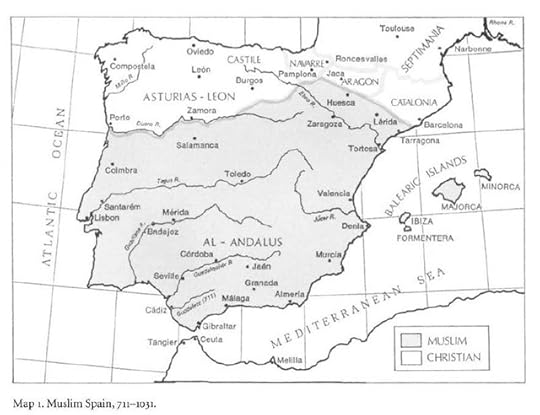
The genealogical tables for both the Christian and Muslim leaders provided in the book were a very good resource to have. O’Callaghan mentioned so many names, and the tables provided assistance in knowing who was who and when they ruled. Without the tables the reader is likely to get lost. The maps provided a good visual representation of where boundaries were and showed when territory changed hands.
O’Callaghan made a differentiation between Reconquest and crusade. Reconquest efforts occurred by the Christian kings for centuries as they fought to regain lands that were under Muslim control. Officially crusades only occurred when there was clerical support and backing which granted the crusaders specific rewards. Crusade activity generally was considered Reconquest activity, but not all Reconquest activity had crusade status. To the Christian kings, the exact status might not have mattered; they were fighting for the sake of Christianity to defeat the Muslims and enlarge their kingdoms.
O’Callaghan provides several chapters on general crusading issues as they related to the Iberian campaigns including warfare and tactics, the difficulty of financing crusades, and the involvement of the Church. The chapters provide an overview of the crusading process and would benefit readers new to the crusade era. However, more experienced readers may find these sections repetitive of other works. O’Callaghan closes each chapter with a brief summary, this seemed like a good way to pull the chapter together, restate the main themes, and prepare for the next chapter.
The final Muslim kingdom, Granada, fell in 1492. With its fall the Reconquest in Spain was finished and further expansion ideas were beyond Crusade goals. No new bulls were issued, but the Spanish and Portuguese still had strong Crusade mindsets. The peninsular Christians had spent 400 years fighting Muslims but finally were successful. In the Levant the Crusader kingdoms fell after a couple hundred years. In the end, the Iberian crusades proved to have brought about permanent changes and to have had the only lasting positive advances for Christendom.
The genealogical tables for both the Christian and Muslim leaders provided in the book were a very good resource to have. O’Callaghan mentioned so many names, and the tables provided assistance in knowing who was who and when they ruled. Without the tables the reader is likely to get lost. The maps provided a good visual representation of where boundaries were and showed when territory changed hands.
O’Callaghan made a differentiation between Reconquest and crusade. Reconquest efforts occurred by the Christian kings for centuries as they fought to regain lands that were under Muslim control. Officially crusades only occurred when there was clerical support and backing which granted the crusaders specific rewards. Crusade activity generally was considered Reconquest activity, but not all Reconquest activity had crusade status. To the Christian kings, the exact status might not have mattered; they were fighting for the sake of Christianity to defeat the Muslims and enlarge their kingdoms.
O’Callaghan provides several chapters on general crusading issues as they related to the Iberian campaigns including warfare and tactics, the difficulty of financing crusades, and the involvement of the Church. The chapters provide an overview of the crusading process and would benefit readers new to the crusade era. However, more experienced readers may find these sections repetitive of other works. O’Callaghan closes each chapter with a brief summary, this seemed like a good way to pull the chapter together, restate the main themes, and prepare for the next chapter.
The final Muslim kingdom, Granada, fell in 1492. With its fall the Reconquest in Spain was finished and further expansion ideas were beyond Crusade goals. No new bulls were issued, but the Spanish and Portuguese still had strong Crusade mindsets. The peninsular Christians had spent 400 years fighting Muslims but finally were successful. In the Levant the Crusader kingdoms fell after a couple hundred years. In the end, the Iberian crusades proved to have brought about permanent changes and to have had the only lasting positive advances for Christendom.

September 7, 2024
O’Callaghan’s primary concern throughout this book was whether the Reconquista could be classified as a crusade or not. His conclusion seems to be positive, and he doesn’t mince his words (or pages) in its defence. That wasn’t the reason I had picked up this book, however, what I was looking for was a good retelling of the events. It succeeds in delivering just that, of civil and military history likewise.
One star off for the tendency to expand copiously on certain topics, since this isn’t a dissertation, even if said topics were often interesting enough to warrant it.
One star off for the tendency to expand copiously on certain topics, since this isn’t a dissertation, even if said topics were often interesting enough to warrant it.
Displaying 1 - 20 of 20 reviews