

What do you think?

The Essential Talmud
A masterful introduction to the to the great repository of Jewish wisdom, the Talmud
In The Essential Talmud , the renowned Israeli scholar and teacher Rabbi Adin Steinsaltz succinctly describes the history, structure, and methodology of the sacred text by which the Jewish people have lived and survived through the ages. Rabbi Steinsaltz summarizes the Talmud's main principles, demonstrates its contemporary relevance, and captures the spirit of this unique and paradoxical text as a human expression of divine law. This expanded edition features a historical overview of life in the times of the Talmud and an in-depth look at the content and appearance of the original Talmudic page. As Rabbi Solomon S. Bernards of the B'Nai B'rith Anti-Defamation League puts it, "this book is indispensable to those, Jews and Christians alike, who would like to gain an insight into what it is that moves the contemporary Jew."
In The Essential Talmud , the renowned Israeli scholar and teacher Rabbi Adin Steinsaltz succinctly describes the history, structure, and methodology of the sacred text by which the Jewish people have lived and survived through the ages. Rabbi Steinsaltz summarizes the Talmud's main principles, demonstrates its contemporary relevance, and captures the spirit of this unique and paradoxical text as a human expression of divine law. This expanded edition features a historical overview of life in the times of the Talmud and an in-depth look at the content and appearance of the original Talmudic page. As Rabbi Solomon S. Bernards of the B'Nai B'rith Anti-Defamation League puts it, "this book is indispensable to those, Jews and Christians alike, who would like to gain an insight into what it is that moves the contemporary Jew."
327 pages, Paperback
First published July 27, 1976
About the author
Adin Even-Israel Steinsaltz
361 books63 followersRabbi Adin Steinsaltz (Hebrew: עדין שטיינזלץ) or Adin Even Yisrael (Hebrew: עדין אבן ישראל) is internationally regarded as one of the leading rabbis of this century. The author of many books, he is best known for his monumental translation of and commentary on the Talmud. Rabbi Steinsaltz founded the Israel Institute for Talmudic Publications. Under its aegis, he has published to date 58 books on the Talmud, Jewish mysticism, religious thought, sociology, historical biography, and philosophy. He teaches at Mayanot in Jerusalem. In 1988, he was awarded the Israel Prize, Israel's highest honor. He has received honorary Ph.D. degrees from Yeshiva University, Bar Ilan University, and Ben Gurion University.
Ratings & Reviews
Friends & Following
Create a free account to discover what your friends think of this book!
Community Reviews
Displaying 1 - 30 of 83 reviews

October 20, 2021
من
یادمه وقتی بچه بودم، اون دوران که بازار تئوریهای توطئه داغ بود، امام جماعت مدرسهمون جزوۀ کوچکی نوشته بود، دربارهٔ پروتکلهای صهیون و شیطانپرستی و کابالا، که مشخص بود از اینترنت کپی پیست کرده. توی اون جزوه اولین بار متوجه شدم کتابی به نام تلمود وجود داره که مورد اعتقاد یهودیهاست. اون جزوه البته تلمود رو کتابی سرّی و شیطانی معرفی کرده بود، تصویری که تا مدتها توی ذهنم موند و بعداً فهمیدم از مسیحیها به مسلمانها رسیده. هنوز که هنوزه میبینم آثار این تئوری توطئه همچنان بین ایرانیها وجود داره، و اگه اسم تلمود به گوششون خورده باشه، معمولاً کتابی خبیثانه میدوننش.
اما واقعیت چیه؟
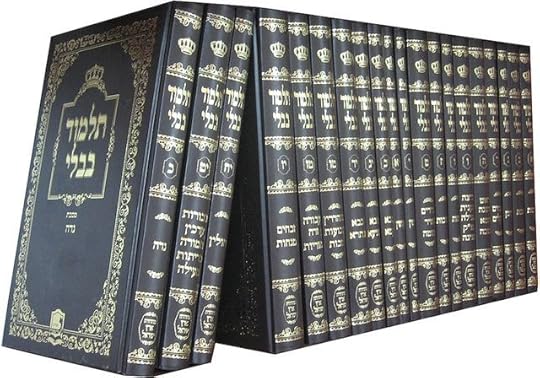
تلمود
چیزی که دربارۀ واقعیت دوست دارم، اینه که همیشه میزان زیادی سرخوردگی به همراه داره. واقعیت همیشه معمولیتر و بیرمزورازتر و پیش پا افتادهتر از تصورات ماست.
تلمود چیزی شبیه کتب فقهی مسلمانهاست. البته فرقهایی داره، اما کم کم وارد جزئیات میشیم.
تورات کتاب مقدس یهودیه، اما یهودیها احکام روزانهشون رو مستقیم از تورات دریافت نمیکنن. همون طور که مسلمانها مستقیم سراغ قرآن نمیرن. چرا؟ به دلایل مختلف، مثلاً این که ممکنه متن مقدس حکمی کلی داده باشه و مصداقهای دقیق این حکم از متن درنیاد. یا دو بخش متن با هم ناسازگار باشن و نیاز به تفسیر داشته باشن. یا حتی احکامی وجود داشته باشن که در متن نیومدن اما در سنت دینی وجود دارن. برای همین یک مسلمان یا یهودی دین خودش رو نه از متن مقدس، بلکه از مرجع رسمی دینی میگیره و مرجع رسمی دینی یهودی تلموده. برای این که بدونید یک یهودی به چه چیزی اعتقاد داره، نباید به تورات مراجعه کنید، باید به تلمود مراجعه کنید. چون تلمود تفسیر رسمی توراته و این تفسیر خیلی وقتها با معنی تحتاللفظی تورات یکی نیست.
پس یک بار دیگه مرور کنیم: تورات متن مقدس یهوده، اما تفسیرهای مختلفی ازش میشه کرد. کدوم تفسیر معتبره؟ تلمود. تلمود تفسیر رسمی تورات و مرجع رسمی تعیین باورها و آیینهای یهودیه.
خاخامها
اما تلمود این اعتبار رو از کجا آورده؟ مؤلف تلمود کیه که این همه مورد اعتماده؟ هیچ کس.
تلمود نویسنده واحد نداره. بلکه مثل یه تالار گفتگوی اینترنتیه که گفتگوهای روحانیون یهودی یا خاخامها، طی چهارصد سال یا بیشتر توی اون ضبط شده. مثل یه کتاب حدیثی اسلامی که گفتارهای امامهای مختلف رو جمع کرده. با این فرق که گفتارهای خاخامها، برخلاف احادیث اسلامی، منفرد و پراکنده نیست. گفتگوئه. یه خاخام حکمی داده و چند نسل بعد خاخام دیگه اون حکم رو به چالش کشیده و چند نسل بعد یه خاخام دیگه از خاخام اول دفاع کرده. تلمود تمام این گفتگوها رو آورده و جمعبندی کرده و حکم نهایی داده، گاهی هم حکم نهایی وجود نداره و گفتگو همچنان باز و بی نتیجه مونده. شاید در انتظار خاخامهای بعدی.
تمام این گفتگوها ذیل چند سرفصل مرتب شدن: احکام مربوط به ازدواج و خانواده، احکام مربوط به قضاوت، احکام مربوط به قربانی و...
گاهی خاخامها از موضوع منحرف شدن و راجع به چیزهای متفرقه، از خدا و فرشتهها و بهشت و مسیح گرفته تا ستارهشناسی و گیاهشناسی، بحث کردن، اما تلمود اینا رو هم جمع کرده، هرچند به موضوع مربوط نیستن. به این مطالب که به احکام شرعی مرتبط نیستن میگن «اَگّادا»، در مقابل «هَلاخا» که یعنی احکام شرعی. مطالب اَگّادایی برای ما جذابترن، چون به چیزهایی میپردازن که برای ما هم معنی و مفهوم دارن و جزئیات احکام شرعی یه دین غریبه نیستن. گزارشی از این بخشهای اَگّادایی رو توی گنجینه ای از تلمود میشه خوند.
قبل از این که وارد بخش بعدی بشیم اینم بگم که تلمود چهل پنجاه جلده و به فارسی هم ترجمه نشده، هرچند ترجمهٔ انگلیسیش روی اینترنت موجوده.
میشنا
حالا که فهمیدیم تلمود به طور کلی چیه، بد نیست به جزئیات هم اشاره کنیم. گفتیم تلمود گاهی احکامی داره که توی تورات نیست. این احکام از کجا اومده؟
حوالی زمان مسیح، دو هزار سال پیش، یه گروه از روحانیون یهودی وجود داشتن به نام «فریسیها» که نیای خاخامها بودن. این خاخامهای اولیه میگفتن موسی علاوه بر تورات مکتوب، یه سری تعالیم و احکام دیگه هم داشته که به صورت شفاهی و سینه به سینه نقل شده و بهش میگفتن تورات شفاهی. فریسیها مدّعی بودن که وارث این تورات شفاهی هستن. این تورات شفاهی هستهٔ مرکزی تلموده. چطور؟
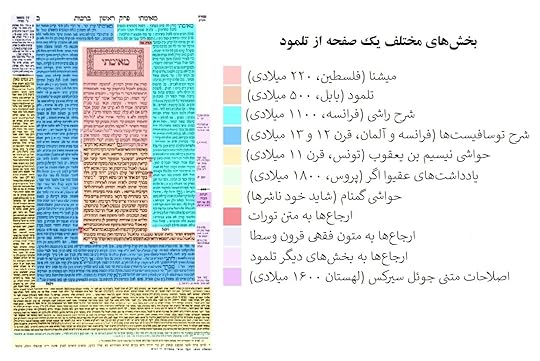
خاخامها این سنت شفاهی رو تا دو قرن بعد از میلاد به همون صورت شفاهی تدریس میکردن، اما بعد حوادث بزرگی اتفاق افتاد، دو جنگ پشت سر هم رخ داد و اورشلیم تخریب شد و بیم اون رفت که این سنّت شفاهی از بین بره. برای همین شروع کردن به نوشتنش. کتابهای مختلفی سعی کردن این سنت شفاهی رو جمعآوری کنن. یکی از این کتابها، «میشنا» بود. تلمود در حقیقت شرح کتاب میشناست. میشنا به سرعت کتاب محبوب مدارس یهودی شد، خاخامها میشنا رو توی مدارسشون تدریس میکردن و راجع به احکامش بحث و گفتگو میکردن، سعی میکردن دلیل احکامش رو از تورات پیدا کنن یا ابهامها و ناسازگاریهاش رو رفع کنن. تلمود حاصل این گفتگوها حول میشناست. در هر بخش از تلمود، اول متن مربوطه از میشنا اومده، و بعد شرح و تفسیرهای خاخامها در مورد اون متن اومده.
خود میشنا جداگانه چاپ میشه و بیست و سه جلده. زبان میشنا عبریه و توی فلسطین نوشته شده، اما زبان تلمود آرامیه و توی عراق نوشته شده.
دست آخر اینو هم بگم که خاخامهایی که میشنا رو شکل دادن، «تَنّائیم» نام دارن. تَنّائیم خاخامهاییان که از ۷۰ میلادی تا زمان تألیف میشنا زندگی میکردن و حافظ و ناقل تورات شفاهی بودن. تَنّائیم مرجعیت و اعتبار خیلی بالایی دارن، حتی از انبیا هم بالاتر: چون انبیا فقط کلمات کتاب مقدس رو به مردم دادن، اما این خاخامها معنا و تفسیر کلمات رو به مردم دادن.
خاخامهایی که تلمود رو شکل دادن، «اَمورائیم» نام دارن و اعتبارشون از تَنّائیم پایینتره. امورائیم خاخامهاییان که از زمان تألیف میشنا تا زمان تألیف تلمود زندگی میکردن. امورائیم فقط مفسّر و شارح حرفهای تَنّائیم هستن و حق ندارن حرفی مخالف حرف تَنّائیم بزنن یا از خودشون حکم جدیدی صادر کنن. گفتیم که تلمود فقط شرح میشناست، حق نداره حکم جدیدی به میشنا اضافه کنه.
این کتاب
کتاب برای کسی که تازه میخواد بدونه تلمود چیه، کتاب خوبی نیست. خیلی از مفاهیم اساسی (مثل هلاخا و اگادا، میشنا و تلمود، تنائیم و امورائیم) رو درست توضیح نداده و فرض کرده که مخاطب بلده. به جای دادن یه تصویر کلی که توی ذهن آدم بمونه، درگیر جزئیات بیاهمیت شده (مثل اسم بردن از تک تک علمای یهود و زندگیشون) که خیلی زود فراموش میشن. و به جای نقل روایت تاریخی با تکیه بر روند کلی و نقاط عطف معنیدار، وقایع جزئی و فرعی رو مسلسلوار نقل میکنه. در نتیجه آدم سردرگم میشه و چیزی دستش رو نمیگیره.
من بعد از خوندن کتاب، رفتم دورۀ تلمود کورسرا رو شرکت کردم که خیلی خوب و واضح مفاهیم مهم رو توضیح میده. بعد دوباره برگشتم سر کتاب و فصلهای مرتبط با هر جلسۀ کورسرا رو میخوندم و این بار کتاب رو متوجه میشدم. به نظرم باید همین طور کتاب رو خوند: به عنوان مکمّل، نه به عنوان شروع.
یادمه وقتی بچه بودم، اون دوران که بازار تئوریهای توطئه داغ بود، امام جماعت مدرسهمون جزوۀ کوچکی نوشته بود، دربارهٔ پروتکلهای صهیون و شیطانپرستی و کابالا، که مشخص بود از اینترنت کپی پیست کرده. توی اون جزوه اولین بار متوجه شدم کتابی به نام تلمود وجود داره که مورد اعتقاد یهودیهاست. اون جزوه البته تلمود رو کتابی سرّی و شیطانی معرفی کرده بود، تصویری که تا مدتها توی ذهنم موند و بعداً فهمیدم از مسیحیها به مسلمانها رسیده. هنوز که هنوزه میبینم آثار این تئوری توطئه همچنان بین ایرانیها وجود داره، و اگه اسم تلمود به گوششون خورده باشه، معمولاً کتابی خبیثانه میدوننش.
اما واقعیت چیه؟
تلمود
چیزی که دربارۀ واقعیت دوست دارم، اینه که همیشه میزان زیادی سرخوردگی به همراه داره. واقعیت همیشه معمولیتر و بیرمزورازتر و پیش پا افتادهتر از تصورات ماست.
تلمود چیزی شبیه کتب فقهی مسلمانهاست. البته فرقهایی داره، اما کم کم وارد جزئیات میشیم.
تورات کتاب مقدس یهودیه، اما یهودیها احکام روزانهشون رو مستقیم از تورات دریافت نمیکنن. همون طور که مسلمانها مستقیم سراغ قرآن نمیرن. چرا؟ به دلایل مختلف، مثلاً این که ممکنه متن مقدس حکمی کلی داده باشه و مصداقهای دقیق این حکم از متن درنیاد. یا دو بخش متن با هم ناسازگار باشن و نیاز به تفسیر داشته باشن. یا حتی احکامی وجود داشته باشن که در متن نیومدن اما در سنت دینی وجود دارن. برای همین یک مسلمان یا یهودی دین خودش رو نه از متن مقدس، بلکه از مرجع رسمی دینی میگیره و مرجع رسمی دینی یهودی تلموده. برای این که بدونید یک یهودی به چه چیزی اعتقاد داره، نباید به تورات مراجعه کنید، باید به تلمود مراجعه کنید. چون تلمود تفسیر رسمی توراته و این تفسیر خیلی وقتها با معنی تحتاللفظی تورات یکی نیست.
پس یک بار دیگه مرور کنیم: تورات متن مقدس یهوده، اما تفسیرهای مختلفی ازش میشه کرد. کدوم تفسیر معتبره؟ تلمود. تلمود تفسیر رسمی تورات و مرجع رسمی تعیین باورها و آیینهای یهودیه.
خاخامها
اما تلمود این اعتبار رو از کجا آورده؟ مؤلف تلمود کیه که این همه مورد اعتماده؟ هیچ کس.
تلمود نویسنده واحد نداره. بلکه مثل یه تالار گفتگوی اینترنتیه که گفتگوهای روحانیون یهودی یا خاخامها، طی چهارصد سال یا بیشتر توی اون ضبط شده. مثل یه کتاب حدیثی اسلامی که گفتارهای امامهای مختلف رو جمع کرده. با این فرق که گفتارهای خاخامها، برخلاف احادیث اسلامی، منفرد و پراکنده نیست. گفتگوئه. یه خاخام حکمی داده و چند نسل بعد خاخام دیگه اون حکم رو به چالش کشیده و چند نسل بعد یه خاخام دیگه از خاخام اول دفاع کرده. تلمود تمام این گفتگوها رو آورده و جمعبندی کرده و حکم نهایی داده، گاهی هم حکم نهایی وجود نداره و گفتگو همچنان باز و بی نتیجه مونده. شاید در انتظار خاخامهای بعدی.
تمام این گفتگوها ذیل چند سرفصل مرتب شدن: احکام مربوط به ازدواج و خانواده، احکام مربوط به قضاوت، احکام مربوط به قربانی و...
گاهی خاخامها از موضوع منحرف شدن و راجع به چیزهای متفرقه، از خدا و فرشتهها و بهشت و مسیح گرفته تا ستارهشناسی و گیاهشناسی، بحث کردن، اما تلمود اینا رو هم جمع کرده، هرچند به موضوع مربوط نیستن. به این مطالب که به احکام شرعی مرتبط نیستن میگن «اَگّادا»، در مقابل «هَلاخا» که یعنی احکام شرعی. مطالب اَگّادایی برای ما جذابترن، چون به چیزهایی میپردازن که برای ما هم معنی و مفهوم دارن و جزئیات احکام شرعی یه دین غریبه نیستن. گزارشی از این بخشهای اَگّادایی رو توی گنجینه ای از تلمود میشه خوند.
قبل از این که وارد بخش بعدی بشیم اینم بگم که تلمود چهل پنجاه جلده و به فارسی هم ترجمه نشده، هرچند ترجمهٔ انگلیسیش روی اینترنت موجوده.
میشنا
حالا که فهمیدیم تلمود به طور کلی چیه، بد نیست به جزئیات هم اشاره کنیم. گفتیم تلمود گاهی احکامی داره که توی تورات نیست. این احکام از کجا اومده؟
حوالی زمان مسیح، دو هزار سال پیش، یه گروه از روحانیون یهودی وجود داشتن به نام «فریسیها» که نیای خاخامها بودن. این خاخامهای اولیه میگفتن موسی علاوه بر تورات مکتوب، یه سری تعالیم و احکام دیگه هم داشته که به صورت شفاهی و سینه به سینه نقل شده و بهش میگفتن تورات شفاهی. فریسیها مدّعی بودن که وارث این تورات شفاهی هستن. این تورات شفاهی هستهٔ مرکزی تلموده. چطور؟
خاخامها این سنت شفاهی رو تا دو قرن بعد از میلاد به همون صورت شفاهی تدریس میکردن، اما بعد حوادث بزرگی اتفاق افتاد، دو جنگ پشت سر هم رخ داد و اورشلیم تخریب شد و بیم اون رفت که این سنّت شفاهی از بین بره. برای همین شروع کردن به نوشتنش. کتابهای مختلفی سعی کردن این سنت شفاهی رو جمعآوری کنن. یکی از این کتابها، «میشنا» بود. تلمود در حقیقت شرح کتاب میشناست. میشنا به سرعت کتاب محبوب مدارس یهودی شد، خاخامها میشنا رو توی مدارسشون تدریس میکردن و راجع به احکامش بحث و گفتگو میکردن، سعی میکردن دلیل احکامش رو از تورات پیدا کنن یا ابهامها و ناسازگاریهاش رو رفع کنن. تلمود حاصل این گفتگوها حول میشناست. در هر بخش از تلمود، اول متن مربوطه از میشنا اومده، و بعد شرح و تفسیرهای خاخامها در مورد اون متن اومده.
خود میشنا جداگانه چاپ میشه و بیست و سه جلده. زبان میشنا عبریه و توی فلسطین نوشته شده، اما زبان تلمود آرامیه و توی عراق نوشته شده.
دست آخر اینو هم بگم که خاخامهایی که میشنا رو شکل دادن، «تَنّائیم» نام دارن. تَنّائیم خاخامهاییان که از ۷۰ میلادی تا زمان تألیف میشنا زندگی میکردن و حافظ و ناقل تورات شفاهی بودن. تَنّائیم مرجعیت و اعتبار خیلی بالایی دارن، حتی از انبیا هم بالاتر: چون انبیا فقط کلمات کتاب مقدس رو به مردم دادن، اما این خاخامها معنا و تفسیر کلمات رو به مردم دادن.
خاخامهایی که تلمود رو شکل دادن، «اَمورائیم» نام دارن و اعتبارشون از تَنّائیم پایینتره. امورائیم خاخامهاییان که از زمان تألیف میشنا تا زمان تألیف تلمود زندگی میکردن. امورائیم فقط مفسّر و شارح حرفهای تَنّائیم هستن و حق ندارن حرفی مخالف حرف تَنّائیم بزنن یا از خودشون حکم جدیدی صادر کنن. گفتیم که تلمود فقط شرح میشناست، حق نداره حکم جدیدی به میشنا اضافه کنه.
این کتاب
کتاب برای کسی که تازه میخواد بدونه تلمود چیه، کتاب خوبی نیست. خیلی از مفاهیم اساسی (مثل هلاخا و اگادا، میشنا و تلمود، تنائیم و امورائیم) رو درست توضیح نداده و فرض کرده که مخاطب بلده. به جای دادن یه تصویر کلی که توی ذهن آدم بمونه، درگیر جزئیات بیاهمیت شده (مثل اسم بردن از تک تک علمای یهود و زندگیشون) که خیلی زود فراموش میشن. و به جای نقل روایت تاریخی با تکیه بر روند کلی و نقاط عطف معنیدار، وقایع جزئی و فرعی رو مسلسلوار نقل میکنه. در نتیجه آدم سردرگم میشه و چیزی دستش رو نمیگیره.
من بعد از خوندن کتاب، رفتم دورۀ تلمود کورسرا رو شرکت کردم که خیلی خوب و واضح مفاهیم مهم رو توضیح میده. بعد دوباره برگشتم سر کتاب و فصلهای مرتبط با هر جلسۀ کورسرا رو میخوندم و این بار کتاب رو متوجه میشدم. به نظرم باید همین طور کتاب رو خوند: به عنوان مکمّل، نه به عنوان شروع.

September 19, 2011
A surprisingly easy read, especially since it's in translation from the original Hebrew. This is a friendly yet detailed introduction to the Talmud, including the history through several eras of those who wrote it, how the Talmud is laid out, and examples of the themes and types of argument that the Talmud contains. That might not sound like enough to fill a few hundred pages but it is. When you're done, you'll understand much better what the Talmud is and how it came to be. You won't however, have a detailed understanding of what the Talmud contains. (That would take a much larger book.) Read this book to learn what the Talmud is, not to learn a lot about what's in it.
January 18, 2019
۱.
شریعت یهودی از دو بخش "مکتوب"(عهد عتیق) و "شفاهي" تشکیل شده است. بنابه تعریف رسمی، تلمود خلاصه ای از شریعت شفاهی یهودی ست که پس از قرن ها تلاش دانشمندان به بار نشسته است.
تلمود ستون اصلی یهودیت و مهم ترین کتاب بعد ار عهد عتیق، برای یهودیان می باشد.
تلمود دارای دو بخش می باشد: ميشنا که حاوی هلاخا(شريعت) است و تفسیر میشود معروف به تلمود یا گمارد.
۲.
بعد از تخریب معبد در اورشلیم، بدنبال تضعیف اقتدار و مرجعیت مرکزی آن، آموزشگاه های دینی متعددی در سرتاسر سرزمین یهود آغاز به کار کرد و هرکدام به آموزش طلاب پرداختند.
این افزایش تعداد استادان و آموزشگاه ها موجب شد که در شکل و روش های ترین احکام، اختلافات گاه ظاهری و گاه عمیقی ایجاد شود و سنت های مختلفی پدید آید. لذا طلاب با حجم بسیار گسترده ای از موضوعات و مباحث مواجه شدند.
برای همین، جمعی از دانشمندان اقدام به جمع آوری و طبقه بندی این هلاخاها، از میان سنت ها و آموزشگاه های مختلف کردند.
سرانجام این تلاش ها در زمان ربی یهودا هناسی و به دست وی به بار نشست و اثری آفریده شد که بعد از تورات، در درجه دوم اهمیت قرار دارد.
اما به دلیل حجم بالای هلاخاها و معارفی که باید تدوین می شد، این قوانین با عباراتی کوتاه، بصورتی موجز و مختصر در میشود جمع آوری و به نگارش درآمدند.
اما ربی یهودا تنها بخشی بسیار اندکی از گنجینه عظیم حکمت دینی را گردآورده بود. بعد از وی، مفسران(امورائيم) به کار تدوین موضوعات فرعی لازم جهت مطالعه میشود و تفسیر آن ها پرداختند.
بدلیل پیچیدگی و عدم شفافیت الانتخاب میشود، نیاز به این تفاسیر، بیشتر و بیشتر احساس می شد، و حجم گسترده ی این تفاسیر توليد شده، خود نیز دردسرساز بود.
سرانجام از هم پاشیدگی مجموعه ی بزرگی از موضوعات شفاهی و غيرمکتوب و ترس از فراموشی این گنجینه عظیم، "راو آشه" (مفسر و دانشمند بزرگ بابلي) را بر آن داشت که به تنظیم و انشای تلمود بابلی بپردازد.
او در طی حدود ۶۰ سال، خود را وقف تهیه ی چارچوب و قالب اصلی تلمود بابلی کرد. سرانجام با تلاش شاگردان راو آسه و شاگردان آن ها، کار نهایی انشای تلمود بابلی پس از یک قرن تلاش به پایان رسید.
۳.
تلمود را می توان "کتابی بورخسی" ناميد؛ کتاب که مشهور است که هرگز تکمیل نشده.
در طی قرن ها ا و نسل ها پس از انشای آن، دانشمندان دینی و مفسران بخش ها و رسالاتي را به تلمود افزوده اند. در واقع هرگز در هیچ اعلامیه ی رسمی ای به پایان رسیدن این اثر اعلان نشده است.
۴.
بنا به نظر نویسنده، اگرچه بنا به تعریف رسمی، تلمود حاوی هلاخاها است و قرار بوده که به مشکلات و مسائل شرعی مردم پاسخگو باشد، اما منظور اصلی،این ها نیست.
هدف اصلی و عمده ی مطالعه تورات، خود یادگیری ست.
در این فرآیند مطالعه، هرگز از کاربردی بودن یا نبودن تحلیل ها و پرسش ها سوالی نمی شود، و آنچه در طرح مباحث مورد توجه می باشد، جاذبه و گیرایی ذاتی موضوع مورد مطالعه است.
۵.
و اما کتاب حاضر:
کتاب در ابتدا به تشریح تاریخ طولانی تدوین تلمود در طی دوره ای مختلف تاریخی پرداخته است.
در بخش دوم، نویسنده به ساختار تلمود اشاره کرده و از رساله های مهم تلمود نام برده و موضوعات مطرح شده در آن ها را توضیح داده است.
در بخش سوم، ما با روش های تحقیق و استخراج هلاخاها آشنا می شویم.
پ. ن: تنها ایرادی که به کتاب می توانم بگیرم، عدم درج تاریخ ها در بخش تاریخچه ی تلمود است. مثلا خواننده ناآشنا هرگز نمی فهمد که در چه تاریخی معبد تخریب شد، یا چه زمانی يهوديان به بابل تبعید شدند و .... .
شریعت یهودی از دو بخش "مکتوب"(عهد عتیق) و "شفاهي" تشکیل شده است. بنابه تعریف رسمی، تلمود خلاصه ای از شریعت شفاهی یهودی ست که پس از قرن ها تلاش دانشمندان به بار نشسته است.
تلمود ستون اصلی یهودیت و مهم ترین کتاب بعد ار عهد عتیق، برای یهودیان می باشد.
تلمود دارای دو بخش می باشد: ميشنا که حاوی هلاخا(شريعت) است و تفسیر میشود معروف به تلمود یا گمارد.
۲.
بعد از تخریب معبد در اورشلیم، بدنبال تضعیف اقتدار و مرجعیت مرکزی آن، آموزشگاه های دینی متعددی در سرتاسر سرزمین یهود آغاز به کار کرد و هرکدام به آموزش طلاب پرداختند.
این افزایش تعداد استادان و آموزشگاه ها موجب شد که در شکل و روش های ترین احکام، اختلافات گاه ظاهری و گاه عمیقی ایجاد شود و سنت های مختلفی پدید آید. لذا طلاب با حجم بسیار گسترده ای از موضوعات و مباحث مواجه شدند.
برای همین، جمعی از دانشمندان اقدام به جمع آوری و طبقه بندی این هلاخاها، از میان سنت ها و آموزشگاه های مختلف کردند.
سرانجام این تلاش ها در زمان ربی یهودا هناسی و به دست وی به بار نشست و اثری آفریده شد که بعد از تورات، در درجه دوم اهمیت قرار دارد.
اما به دلیل حجم بالای هلاخاها و معارفی که باید تدوین می شد، این قوانین با عباراتی کوتاه، بصورتی موجز و مختصر در میشود جمع آوری و به نگارش درآمدند.
اما ربی یهودا تنها بخشی بسیار اندکی از گنجینه عظیم حکمت دینی را گردآورده بود. بعد از وی، مفسران(امورائيم) به کار تدوین موضوعات فرعی لازم جهت مطالعه میشود و تفسیر آن ها پرداختند.
بدلیل پیچیدگی و عدم شفافیت الانتخاب میشود، نیاز به این تفاسیر، بیشتر و بیشتر احساس می شد، و حجم گسترده ی این تفاسیر توليد شده، خود نیز دردسرساز بود.
سرانجام از هم پاشیدگی مجموعه ی بزرگی از موضوعات شفاهی و غيرمکتوب و ترس از فراموشی این گنجینه عظیم، "راو آشه" (مفسر و دانشمند بزرگ بابلي) را بر آن داشت که به تنظیم و انشای تلمود بابلی بپردازد.
او در طی حدود ۶۰ سال، خود را وقف تهیه ی چارچوب و قالب اصلی تلمود بابلی کرد. سرانجام با تلاش شاگردان راو آسه و شاگردان آن ها، کار نهایی انشای تلمود بابلی پس از یک قرن تلاش به پایان رسید.
۳.
تلمود را می توان "کتابی بورخسی" ناميد؛ کتاب که مشهور است که هرگز تکمیل نشده.
در طی قرن ها ا و نسل ها پس از انشای آن، دانشمندان دینی و مفسران بخش ها و رسالاتي را به تلمود افزوده اند. در واقع هرگز در هیچ اعلامیه ی رسمی ای به پایان رسیدن این اثر اعلان نشده است.
۴.
بنا به نظر نویسنده، اگرچه بنا به تعریف رسمی، تلمود حاوی هلاخاها است و قرار بوده که به مشکلات و مسائل شرعی مردم پاسخگو باشد، اما منظور اصلی،این ها نیست.
هدف اصلی و عمده ی مطالعه تورات، خود یادگیری ست.
در این فرآیند مطالعه، هرگز از کاربردی بودن یا نبودن تحلیل ها و پرسش ها سوالی نمی شود، و آنچه در طرح مباحث مورد توجه می باشد، جاذبه و گیرایی ذاتی موضوع مورد مطالعه است.
۵.
و اما کتاب حاضر:
کتاب در ابتدا به تشریح تاریخ طولانی تدوین تلمود در طی دوره ای مختلف تاریخی پرداخته است.
در بخش دوم، نویسنده به ساختار تلمود اشاره کرده و از رساله های مهم تلمود نام برده و موضوعات مطرح شده در آن ها را توضیح داده است.
در بخش سوم، ما با روش های تحقیق و استخراج هلاخاها آشنا می شویم.
پ. ن: تنها ایرادی که به کتاب می توانم بگیرم، عدم درج تاریخ ها در بخش تاریخچه ی تلمود است. مثلا خواننده ناآشنا هرگز نمی فهمد که در چه تاریخی معبد تخریب شد، یا چه زمانی يهوديان به بابل تبعید شدند و .... .

April 11, 2015
I was frustrated in reading this, in part because I wasn't sure who the audience was. The book gives a rough overview of the history of the compilation of the Talmud, its contents, and its internal logic, but there are massive gaps in each of these (and problems with the book's overall organization) that make it a very flawed introduction from any standpoint. The history of compilation doesn't mention, for example, any clear historical context for the first group of sages, and while Steinsaltz says later in the text that up to a certain point, older scholars take precedence and after that point, more recent scholars are more authoritative, he doesn't actually tell you who belongs in which category or where the demarcation point is. The combination makes the book problematic either for academics studying Jewish culture or for novice Talmud scholars trying to interpret Jewish law. Words like Midrash, which are fairly common, are translated, but Aggadah is used throughout and even gets a chapter to itself without a real definition or enough examples to give the reader a rough estimate of its meaning.
There were some bright points: the history of printing and censorship of the Talmud had lively, clear examples and historical context. But overall, this didn't feel like a standalone introduction, or even a compiled series of lectures, it felt like a love letter to the text written by someone who can't remember a time when he didn't know it inside and out.
There were some bright points: the history of printing and censorship of the Talmud had lively, clear examples and historical context. But overall, this didn't feel like a standalone introduction, or even a compiled series of lectures, it felt like a love letter to the text written by someone who can't remember a time when he didn't know it inside and out.

September 19, 2020
آن چنان که باید و شاید چنگی به دل نمیزد.
شاید هم من توقع زیادی داشتم. برای یهودیها البته میتونست مفید باشه. ولی بیشتر به اهمیت و تاریخ تلمود چسبیده بود و کمتر چیز کاربردی یا آموزشیای داشت. برای من مثالهایی که میآورد، یا بعضی نکات تاریخی کتاب جالب بود.
شاید هم من توقع زیادی داشتم. برای یهودیها البته میتونست مفید باشه. ولی بیشتر به اهمیت و تاریخ تلمود چسبیده بود و کمتر چیز کاربردی یا آموزشیای داشت. برای من مثالهایی که میآورد، یا بعضی نکات تاریخی کتاب جالب بود.
August 15, 2026
Was looking for an intro to the rabbis and found this at half price books. Excellent prose and clearly arranged - highly recommend
September 7, 2012
4.5
Great book to give the historical background and context for the Talmud. Some ideas were completely new to me, though they become obvious once you think about it. For example, the idea that the Talmud is not really a book of law, but rather a book of "truth" or a slice of life of the sages and what they spoke about/taught (which happens to include legal discussions they had, and law classes they taught).
The reason I would not give this a full five stars is because the author sometimes speaks in vague/ambiguous language, rather than in concrete terms. Perhaps this is because he wants his controversial statements to be less controversial (this book can be enjoyed by Reform and Orthodox Jews alike). Also, the author does not use enough examples to demonstrate his points, nor does he cite anything he says. Some of the ideas were revolutionary, and I would have really appreciate citations. Perhaps this is so the book can appeal to Orthodox people who would otherwise be scared off if they realized R' Steinzaltz was using modern academic scholars (as opposed to his vast knowledge of Rabbinic sources) as the basis for some of his points. Also, the writing style is sometimes weird - almost stream of consciousness- and I wonder whether this is the fault of the author or the translator.
Having said that, it's an amazing book, easy to read, and I thought it was useful and important.
Great book to give the historical background and context for the Talmud. Some ideas were completely new to me, though they become obvious once you think about it. For example, the idea that the Talmud is not really a book of law, but rather a book of "truth" or a slice of life of the sages and what they spoke about/taught (which happens to include legal discussions they had, and law classes they taught).
The reason I would not give this a full five stars is because the author sometimes speaks in vague/ambiguous language, rather than in concrete terms. Perhaps this is because he wants his controversial statements to be less controversial (this book can be enjoyed by Reform and Orthodox Jews alike). Also, the author does not use enough examples to demonstrate his points, nor does he cite anything he says. Some of the ideas were revolutionary, and I would have really appreciate citations. Perhaps this is so the book can appeal to Orthodox people who would otherwise be scared off if they realized R' Steinzaltz was using modern academic scholars (as opposed to his vast knowledge of Rabbinic sources) as the basis for some of his points. Also, the writing style is sometimes weird - almost stream of consciousness- and I wonder whether this is the fault of the author or the translator.
Having said that, it's an amazing book, easy to read, and I thought it was useful and important.

August 9, 2012
This book was a solid intro to the structure and thought process of the Talmud. I started reading this because I've started doing "Daf Yomi," reading a page of Talmud a day, and this has been a good jump start in understanding what I'm reading. A lot of the really good stuff is the contextual information about the Talmud. While the tractates themselves are fairly straightforward as to their content, "The Essential Talmud" gives a great historical and religious context for what the Talmud is, where it came from, and why it's important.
A note on the author and his style: Steinsaltz is considered one of the absolute *great* modern Talmud scholars, and is definitely a religious figure. Thus, there is inevitably a religious view on the Talmud within the book. However, the book is about as objective as you could hope, given that it is a religious text. While the author makes assumptions at times, and certainly shows a reverent awe for the Talmud, he also is candid about the historical context and the authors.
A few relatively minor complaints. Steinsaltz could have provided more examples. He often describe parts of the Talmud, for example how the Sages would tell stories, without providing examples. Similarly, the book could use some deeper explanations such as on the logical techniques of the Gemara.
A note on the author and his style: Steinsaltz is considered one of the absolute *great* modern Talmud scholars, and is definitely a religious figure. Thus, there is inevitably a religious view on the Talmud within the book. However, the book is about as objective as you could hope, given that it is a religious text. While the author makes assumptions at times, and certainly shows a reverent awe for the Talmud, he also is candid about the historical context and the authors.
A few relatively minor complaints. Steinsaltz could have provided more examples. He often describe parts of the Talmud, for example how the Sages would tell stories, without providing examples. Similarly, the book could use some deeper explanations such as on the logical techniques of the Gemara.
August 31, 2024
This is well organized and clearly written. An excellent place to start for folks who, like me, grew up knowing that the Talmud exists, and that it is the repository for Jewish laws, but not really knowing much else.
This book starts off explaining what exactly the Talmud is, and then moves into a discussion of historical, cultural, linguistic, and political context to give us a picture of what was happening for the Jewish peoples when the Talmud was being written.
We then get an overview of each chapter, showing us how it deals with topics like marriage, civil law, criminal law, rules around food, etc.
There’s no getting around it; the Talmud is dense and complicated. There is no introduction in the world that can fully untangle it.
That said this book is so well organized that I now know where to go to start answering all of the questions I am left with.
This book starts off explaining what exactly the Talmud is, and then moves into a discussion of historical, cultural, linguistic, and political context to give us a picture of what was happening for the Jewish peoples when the Talmud was being written.
We then get an overview of each chapter, showing us how it deals with topics like marriage, civil law, criminal law, rules around food, etc.
There’s no getting around it; the Talmud is dense and complicated. There is no introduction in the world that can fully untangle it.
That said this book is so well organized that I now know where to go to start answering all of the questions I am left with.

June 23, 2009
A fairly useful introduction to the Talmud, but somewhat flawed in organization. The chapters dealing with the history of the text are somewhat confusing, with a tendency to bounce back and forth chronologically when dealing with parallel developments in the Palestinian and Babylonian academies.
Once the book begins to talk about the organization and content of the Talmud, it gets better. A few of the chapters dealing with laws relating to the Sabbath, liturgy and festival days will seem rather basic to anyone who's been through an "Introduction to Judaism" class, but that may have to do with Steinsaltz's intended audience. At any rate, this book should provide an excellent grounding in the history, structure and purpose of the Talmud.
Once the book begins to talk about the organization and content of the Talmud, it gets better. A few of the chapters dealing with laws relating to the Sabbath, liturgy and festival days will seem rather basic to anyone who's been through an "Introduction to Judaism" class, but that may have to do with Steinsaltz's intended audience. At any rate, this book should provide an excellent grounding in the history, structure and purpose of the Talmud.

September 4, 2020
257-Talmud-Group authors-Philosophy-200
Barack
2020/02/13
2020/07/01
- jealousy and anger people die young, tense and hungry people premature aging.
"Talmud" (Talmud), published in the 2nd to 6th century. The Talmud is the most important book in Jewish life except the Hebrew Bible. It is also called the Talmud most of the time.
Group author, after the destruction of the Jewish kingdom in 586 BC, a large number of Jews were reduced to "Babylonian prisoners." In this way, Babylon gradually developed into the most important cultural and spiritual center of the Jews, gathering many influential Jewish sages and religious researchers, forming a class of scholars enjoying high prestige and leadership. They took the responsibility of maintaining Judaism traditions and Jewish spiritual values as their mission, devoted themselves to theology, wrote books, and compiled a collection of Jewish oral laws between the 2nd and 6th centuries AD, namely the Babylonian Talmud and the Palestine Tamu "Germany", collectively called "Talmud", formed the Talmud culture.
Part of the catalog
1. God and the universe
2. Human doctrine
3. Self and others
4. Marriage and family
5. Physical life
6. Moral life
7. Social life
8. Doomsday judgment and eternal life
The lives of the Jews are strictly regulated by the "Bible", especially the "Pentateuch" (Genesis, Exodus, Leviticus, Numbers, Deuteronomy). For questions that the Bible cannot directly answer, the rabbis (rabbi is the name for qualified teachers in Jewish law) will be handled and judged in accordance with the spirit of the Bible.
Today’s well-known collection of laws "Mishna" ("Mishna" means "learning or teaching through repetition", is one of the classics of Judaism. It combines the oral traditions of Judaism and the Oral Torah in writing. It is the first half and the clauses of the Talmud in Judaism.) (Tola broadly refers to the true meaning revealed by God to the Israelites, and also refers to the teaching and guidance that God has revealed to mankind. In a narrow sense, it refers to the first five volumes of the Old Testament. (Jews do not call the Old Testament), Judaism calls the Pentateuch of Moses, namely "Genesis", "Exodus", "Leviticus", "Numbers" and "Deuteronomy".)
"Mishna" was compiled by the Prince of Judah in the early 2nd century AD. If it is a problem that cannot be solved by " Mishna ", it will be discussed by the rabbis . The rabbis then will a number of precedents ﹑ ideas and words and deeds recorded in "dense that even" above, and finally formed a "Talmud."
The Talmud was written by 2,000 scholars during more than 1,000 years of discussion and research. They wrote out the main views and opinions of these scholars. It is an expression of everyone's relatively concentrated thoughts. There is no certainty in itself. answer.
"Talmud" comes from Palestine, the hometown of the Bible, and Mesopotamia, the cradle of civilization. It began in the Babylonian exile in the 6th century BC and ended in the Roman Republic. The Babylonian Talmud was codified in the form of a code in 500 AD.
Babylonian exile is an important period in human history, especially for Israel. During the period, the Israelis discovered themselves . Not only has the Torah been rediscovered as a rule of life, but it has also influenced new religious systems, such as synagogues, that is, church-style worship without priests or ceremonies (worship refers to the expression of faith in God on the Sabbath. God created the heaven and the earth in six days, blessed the seventh day, and designated the seventh day as the Sabbath) appeared-it is one of the most profound spiritual achievements in the history of all religions.
Of Mishnah (i.e. dense that even ) generating a second portion of the annotation are more parts, is called Gemara , meaning teachings, serve to explain the term & Mishnah and the main content. Look for the difficulty of clarification, reconcile differences in statements; refer to the decision of the unknown author in Mishna Finally, it states the complete debate on these topics that took place in Palestine or Babylon.
There are two types of gemalas , one is done in Babylonian College and the other is done in Palestine. Strictly speaking, it is incorrect that the latter is now called the "Jerusalem Talmud" because the temple was destroyed (in 586 BC, the Kingdom of New Babylon destroyed Jerusalem and the first temple was destroyed. In 70 AD, the Jews Rebelling against the tyranny of the Roman Empire, General Titus led an army to besiege Jerusalem, and the Second Temple was burned down, leaving only the western wall—the Wailing Wall.) After that, there was no college in Jerusalem.
When we talk about Babylon Gemara , we would like to ask when it was said and written. Babylon, where it was born, is a Jewish autonomous region. Jews have spent more time in this area than in other places. From 586 BC to 1040 AD-about 1626; from the fall of Cyrus to the period of Mongolian conquest.
From the Pentateuch to Mishnah, from Mishnah to Gemara , and then to the arrival of the completion of the Talmud . The opinion providers and deans of the academy in the 6th century and the spiritual leaders of the Jewish community in the Middle Ages added some content. With more and more content, it naturally reminds people that it is necessary to simplify and explain the Talmud. The most important thing is to classify the Talmud in accordance with 613 laws. Later, the explanatory part was written into a long text.
" To achieve self-satisfaction, we must give our attention and wealth to family, friends and society, we must change from thinking of ourselves to emphasizing the world other than ourselves. Self-actualization does not mean retreating from our fallen world. It’s not about indulging in narcissism. To realize your own value, you must participate in social life and contribute to the world. "
" Respect yourself, but don't be arrogant; enjoy the gift of life, but don't become a slave to wealth; work hard for success, but don't overly boast of your brilliance, be modest; cultivate your own abilities without overly indulging in Self. "
" Pay attention to the following three things, you will not fall into the clutches of evil. Know where you come from, know where you are going, know to whom you confide your true feelings and narrate your experiences. "Where are you from? "I am a fallen dust. "Where are you going?" "I went to a place full of dust, crawling maggots, and chaos. "Who do you tell your feelings and experiences to?" "To God, to the most sacred God, God bless. "
" Happy is the material that does not exist, because sin always comes Example as ...... When a person gets involved in something after eating and drinking, a luxury any chance of losing him would be a A disaster. In order to maintain the banquet he is accustomed to, he will have to be involved in sinister money transactions, accompanied by lies, hypocrisy, greed... But as long as he refuses the temptation to enjoy the desire, he All these sins will be avoided. "
"The Jewish tradition believes that some anger is permitted, and that these angers are important and indispensable, that is, anger at injustice. But the kind of unrestrained anger at others, the kind of irrational anger , That kind of anger that doesn't care about others should be condemned. "
" A person's character can be seen from his attitude towards three things. These three things are: drinking, spending money, and anger. Some people think that a person's character can be seen in a joke. "
" A person must be as supple as a reed stalk , not as straight as a cedar. When the wind blows, the reed bends along the way, and when the wind stops, it is straight in its original position. What about the sharp? Its good luck also makes it a pen for writing the Bible. And cedar, even its life is difficult to keep, because once the wind blows, it will fall down to the roots , Broken. What about its branches? Lumberjacks came, and chopped and chopped them to cover the roof-the rest, they were thrown into the fire. "
" Like other aspects, Jewish rabbis emphasize restraint when speaking. They say that once a word is spoken, it is like an arrow shot, and it can never be taken back. "
" Who is a wise man? One who learns from everyone. A wise man does not talk nonsense in front of people smarter than him; he does not interrupt his partner's speech; he does not rush to answer questions; he asks relevant questions , The answer was to the point; he first said what he knew first, and then he said what he knew later; what he didn't hear, he said: "I haven't heard. He faces the truth squarely. He opposes Tune . If a man’s writing exceeds his wisdom, what can he compare to? The branches of a tree are extremely lush, but the roots are few and short. When the wind comes, It will be uprooted. A man’s wisdom surpasses his writings. What can he compare to? A tree has very few branches, but its roots are very long and many. Even if all the winds in the world go together It blows, blows violently, and you can't blow it down. "
" The Bible says: "Walking with the wise will lead to wisdom; working with the fool will lead to destruction." "("Proverbs" 13:20) What does this compare to? Compared to a man who has entered the spice shop. Although this man does not buy anything or take anything from the store, the fragrance is already attached to him. The clothes will not disperse all day long. But if a person walks into a leather store, even if he does not buy anything, he does not take anything, his clothes will become dirty, and the bad smell will be attached to him all day. On his clothes, it’s been a long time. "
" Once, a hunter captured a can only say that the bird seventy kinds of languages." Let me go, "the bird said," I will tell you three of advice. "Tell me first," the hunter replied, "I swear I will let you go." "The first piece of advice is," said the bird, "don't regret it after doing it." "The second piece of advice is: If someone tells you something that you think is impossible, don't believe it." "The third piece of advice is: When you can't climb, don't bother to climb." " Then the bird said to the hunter: "Should you let me go now?" "The hunter released the bird according to words . The bird flew away and landed on a tall tree, and shouted to the hunter: "You are so stupid. You let me go, but you don't know that there is one in my mouth. A great pearl of great value, it is this pearl that makes me so smart. The hunter wanted to capture the bird again. He ran to the tree and began to climb the tree. But when halfway through the climb, he fell off and broke his legs. The bird laughed at him and shouted at him: "Idiot ! You forgot all the advice I told you just now. I tell you once you do a thing, don't regret it, but you regret letting me go. I tell you if someone tells you something that you think is impossible, don't believe it. But you believe that there will be a big pearl in the beak of a bird like me. I tell you if you can't climb something, don't force yourself to climb. But you chased me and tried to climb this big tree, and you fell and broke your legs. What this proverb says is you:'For a wise man, a lesson is more profound than a hundred times for a stupid man. '” ”
" Anyone who is humble, God will bless him to be improved; anyone who improves himself, God will bless him to be humble. Great honor will leave those who pursue honor. But great honor will follow those who avoid honor. "
" When people leave this world, even half of their wishes will not be realized. A person with one hundred yuan will hope for two hundred yuan; a person with two hundred yuan will hope for four hundred yuan. People will be rejected by timing; those who obey the timing will find that the timing is by his side. "
" The more discipline a person receives, the less he is affected by extreme situations (good and bad opportunities), so when he encounters the greatest good luck in the world (philosophers call it "unimaginable "Essence"), he will neither be excited by it, nor will he show special ostentation and pride in his own eyes. And when great misfortune and suffering befall him, like many things that happen in the world suffering the same (philosophers call "big misfortune"), he was neither surprised nor intimidated, but well endure it all. "
" It is in this spirit that our pioneers said: "Find yourself a companion. "When you make a friend, check him out first, don’t rush to trust him. Some friends are loyal when things are beneficial to them, but they abandon you when there are difficulties. Some friends fall to the enemy’s side and make The quarrel is open to humiliate you. There are other friends who eat your food, but you can’t find him anywhere when you are in trouble. When you are prosperous, he will be your confidant and fight fiercely with your servants; but If you are defeated, he will turn around to oppose you and will never come to see you again. "
" You must keep your distance from your enemies, and keep your eyes on your friends. A loyal friend is a safe haven. Whoever finds such a friend will find treasure. A loyal friend has no price; he The value of money is not measurable by money... Don’t abandon old friends, new friends don’t have so much value. New friends are like new wine. If you don’t make it, you will not be happy to drink. ”
July 26, 2022
Will save you in Yeshiva. Great reference book

December 3, 2015
This book will not teach you the Talmud, it will prepare you to understand and to learn from the Talmud. This book is a detailed description of the history of the Talmud, how it came to be, it's role, and it's various parts. It is a lengthy but valuable introduction to the Talmud for anyone wishing to begin studying it or to take a new look with open eyes and a thirst for the wisdom within.
This entire review has been hidden because of spoilers.

September 18, 2016
A great book about our history and who we are.

October 19, 2020
The death of Rabbi Steinsaltz several weeks ago prompted me to reflect on the incredible legacy he has left by breaking the language barrier of the Talmud and making it accessible to one and all. For most folks, it’s like the translation of the Rosetta stone times a million – incredible but ultimately stuff for museums. For practicing Jews, his translation allows them to take part in a crucial dialogue which has sustained the Jewish people for thousands of years.
While it would be nice to read his entire translation on the Talmud, that takes an investment of years. So for now, my reflections led me to read to Rabbi Steinsaltz ’s meta-Talmudic work – or at least that’s how I view Talmud for All: It’s not exactly a scholarly work in that you will not find it lined with footnotes, but it is most certainly the work of a scholar. It seems more of his impression, or perhaps his musing on Talmud. This isn’t to say that he didn’t give historical descriptions and summaries of the basic structure and content of the Talmud, but in my mind this book is less about the Talmud and more about what Rabbi Steinsaltz thought about the Talmud. Ultimately, this was a short book, an attempt to distill an essence from all those thousands of pages, and so the choice of words and topics was not trivial. Considering Rabbi Steinsaltz clearly had both a panoramic view and intimate knowledge of the text, as well as the ability to compare it to a backdrop of secular knowledge (at least to some extent), I think he was pretty uniquely positioned to give exactly this kind of commentary.
So what are some interesting insights that I picked up? Well, I feel that I read this book over a span of too many weeks to remember it all, but I really did enjoy the various kinds of enlightening historical and social contexts explained in the book – I really liked his meta more than his summaries of the text (though even the summaries always had some analysis). I appreciated his explanations of the context: the environment in which things were written and edited, the tension between the Israeli and Babylonian Talmud, impactful methods for Talmud’s preservation and exegesis through the years, reasons for topics chosen and topics discarded – to name a few. His esoteric but interesting little nuggets of fun facts also left an impression: e.g. how liberated Jewish women used to sometimes spend their time with small dogs, how a merit-based system of scholarship often meant that progeny of the sages never rose to Talmudic prominence of their own.
I was particularly impressed with his forward-thinking view of women in the chapters that describe the Talmud volumes that pertain to women and their relationship to men. I don't think he was trying to be apologetic (I version of the book that I read was the Hebrew one from 1977). I got the sense he wrote things as he saw them, and obviously we each see things through a certain prism of values and tendencies.
Rabbi Steinsaltz’s last chapter was his most profound: he argues that the Talmud has not been sealed. I think that’s one of his more important insights. I think he’s trying to say that studying Talmud is not about decoding an ancient text and just trying to walk in the footsteps of others, but rather using it as a springboard for a dialogue about humanity that spans thousands of years and gives us a much wider lens for viewing the world and humanity. Personally, I’m of the ‘midgets-on-the-shoulders-of-giants’ school : I think our 21st vantage point is anything but limited or narrow – accordingly, I have a love-hate relationship with Talmud (but maybe this too is a product of my own narrow mindset). To be honest, Rabbi Steinsaltz’s book didn’t have me running back to study Talmud, but it did give me some good insights into it and may have planted a seed.
While it would be nice to read his entire translation on the Talmud, that takes an investment of years. So for now, my reflections led me to read to Rabbi Steinsaltz ’s meta-Talmudic work – or at least that’s how I view Talmud for All: It’s not exactly a scholarly work in that you will not find it lined with footnotes, but it is most certainly the work of a scholar. It seems more of his impression, or perhaps his musing on Talmud. This isn’t to say that he didn’t give historical descriptions and summaries of the basic structure and content of the Talmud, but in my mind this book is less about the Talmud and more about what Rabbi Steinsaltz thought about the Talmud. Ultimately, this was a short book, an attempt to distill an essence from all those thousands of pages, and so the choice of words and topics was not trivial. Considering Rabbi Steinsaltz clearly had both a panoramic view and intimate knowledge of the text, as well as the ability to compare it to a backdrop of secular knowledge (at least to some extent), I think he was pretty uniquely positioned to give exactly this kind of commentary.
So what are some interesting insights that I picked up? Well, I feel that I read this book over a span of too many weeks to remember it all, but I really did enjoy the various kinds of enlightening historical and social contexts explained in the book – I really liked his meta more than his summaries of the text (though even the summaries always had some analysis). I appreciated his explanations of the context: the environment in which things were written and edited, the tension between the Israeli and Babylonian Talmud, impactful methods for Talmud’s preservation and exegesis through the years, reasons for topics chosen and topics discarded – to name a few. His esoteric but interesting little nuggets of fun facts also left an impression: e.g. how liberated Jewish women used to sometimes spend their time with small dogs, how a merit-based system of scholarship often meant that progeny of the sages never rose to Talmudic prominence of their own.
I was particularly impressed with his forward-thinking view of women in the chapters that describe the Talmud volumes that pertain to women and their relationship to men. I don't think he was trying to be apologetic (I version of the book that I read was the Hebrew one from 1977). I got the sense he wrote things as he saw them, and obviously we each see things through a certain prism of values and tendencies.
Rabbi Steinsaltz’s last chapter was his most profound: he argues that the Talmud has not been sealed. I think that’s one of his more important insights. I think he’s trying to say that studying Talmud is not about decoding an ancient text and just trying to walk in the footsteps of others, but rather using it as a springboard for a dialogue about humanity that spans thousands of years and gives us a much wider lens for viewing the world and humanity. Personally, I’m of the ‘midgets-on-the-shoulders-of-giants’ school : I think our 21st vantage point is anything but limited or narrow – accordingly, I have a love-hate relationship with Talmud (but maybe this too is a product of my own narrow mindset). To be honest, Rabbi Steinsaltz’s book didn’t have me running back to study Talmud, but it did give me some good insights into it and may have planted a seed.

June 22, 2024
***.5
Rather than attempt a summary of the Talmud, the book instead provides an overview of its origins, context, authors, organization, and contents.
It wasn't clear to me exactly who is the intended audience for the book, as it was originally written in Hebrew and assumes a certain amount of basic knowledge of Jewish history, practices, and religious beliefs. It's therefore too basic for most observant Jews, and too advanced for secular or non-Jews.
I did learn a lot, and found the section on explaining the traditional page layout ("daf") of the Talmud extremely helpful, as it appears to be an overwhelming sea of text blocks of various sizes and fonts to the uninformed. Although these days there's probably a YouTube video that's easier to follow.
The early sections on the history of the development of the Talmud was interesting, but he identified the different historical periods by name, and didn't provide enough dates, making it hard to put the people and events in the historical context of what else was going on in the world at the time.
He then goes on to describe the various types of arguments and logic systems and interpretation techniques, but doesn't provide nearly enough examples so the whole thing feels very abstract. And as a result I don't know that I'd be able to identify them when reading the actual text.
Still, despite the shortcomings I did learn a lot, and would feel a lot more comfortable attempting to tackle the Daf Yomi (daily page of Talmud) now than I did beforehand.
Rather than attempt a summary of the Talmud, the book instead provides an overview of its origins, context, authors, organization, and contents.
It wasn't clear to me exactly who is the intended audience for the book, as it was originally written in Hebrew and assumes a certain amount of basic knowledge of Jewish history, practices, and religious beliefs. It's therefore too basic for most observant Jews, and too advanced for secular or non-Jews.
I did learn a lot, and found the section on explaining the traditional page layout ("daf") of the Talmud extremely helpful, as it appears to be an overwhelming sea of text blocks of various sizes and fonts to the uninformed. Although these days there's probably a YouTube video that's easier to follow.
The early sections on the history of the development of the Talmud was interesting, but he identified the different historical periods by name, and didn't provide enough dates, making it hard to put the people and events in the historical context of what else was going on in the world at the time.
He then goes on to describe the various types of arguments and logic systems and interpretation techniques, but doesn't provide nearly enough examples so the whole thing feels very abstract. And as a result I don't know that I'd be able to identify them when reading the actual text.
Still, despite the shortcomings I did learn a lot, and would feel a lot more comfortable attempting to tackle the Daf Yomi (daily page of Talmud) now than I did beforehand.
December 31, 2019
Let me start with the bad, of which there's little. One flaw I spotted was that at times (namely the historical section) used certain terms without clarifying their meaning (the terms for various generations of sages come to mind), seeming to assume the reader already knew what they meant. For my part this wasn't a problem as I did know their meaning, but I can see it being confusing the uninitiated. Additionally, I noticed Steinsaltz didn't cite sources, which is sensible for the sections on the structure of the Talmud and its methods, but is a bit odd in the historical section as well.
All that said, this book is amazing. It provides a comprehensive overview of everything you could want to know about the Talmud, whether it's to start studying it, or simply to understand. The reader will come to understand the history of the Talmud, and the why and how behind its inception. The reader will understand something of its general contents, and the general layout of the Vilna page. And you also come to understand the methods behind its creation, the subculture behind it that leads to it, in some ways, still being developed today. This book is not only a great introduction to the Talmud, but to aspects of Jewish culture we may well take for granted.
All that said, this book is amazing. It provides a comprehensive overview of everything you could want to know about the Talmud, whether it's to start studying it, or simply to understand. The reader will come to understand the history of the Talmud, and the why and how behind its inception. The reader will understand something of its general contents, and the general layout of the Vilna page. And you also come to understand the methods behind its creation, the subculture behind it that leads to it, in some ways, still being developed today. This book is not only a great introduction to the Talmud, but to aspects of Jewish culture we may well take for granted.
May 5, 2024
And why not learn from one of the books used by Jews since ancient times to regulate their ethics and their lives? I have read many sacred books written by wise men who have reflected on the world, I needed to know more about the subject from the Jews.
I remember that once a Jewish friend who was looking for a boyfriend told me that a requirement was that he had to be Jewish, because only then could I understand and share with her all the traditions, festivals and way of life.
This book is not the Talmud, but the writing of a Rabbi on the subject: he tells us about the interesting history of the Talmud, the topics he deals with and develops some of the concepts of the book.
Although the author says that many of the concepts are applied after many centuries, and perhaps it is true, the truth is that I believe that our laws, although imperfect, are much more advanced. Others, such as food prohibitions and other issues, have been completely overcome by science, although many Jews continue to comply with them.
If you are interested in the life and way of being of the Jews, this book may be a good first approximation.
I remember that once a Jewish friend who was looking for a boyfriend told me that a requirement was that he had to be Jewish, because only then could I understand and share with her all the traditions, festivals and way of life.
This book is not the Talmud, but the writing of a Rabbi on the subject: he tells us about the interesting history of the Talmud, the topics he deals with and develops some of the concepts of the book.
Although the author says that many of the concepts are applied after many centuries, and perhaps it is true, the truth is that I believe that our laws, although imperfect, are much more advanced. Others, such as food prohibitions and other issues, have been completely overcome by science, although many Jews continue to comply with them.
If you are interested in the life and way of being of the Jews, this book may be a good first approximation.

August 29, 2020
I had been looking for a book that would be a good overview of the enormous topic of the Talmud, quite forgetting that I had this indispensable and as-yet unread volume on my shelf.
During the time I was reading this, Rabbi Steinsaltz passed away. The world lost a genius of a scholar. He brought the Talmud to a generation of new readers with his complete translation into Hebrew (and its subsequent translation into English)
The Essential Talmud is acts as an introduction to the massive body of writing that is the Talmud. Rabbi Steinsaltz explains the history of the Talmud in the first section. The second section is a summary of major themes and features of the Talmud. The third and last section delineates various approaches to study the Talmud. I need to read this last section again. It was very rich.
As the last chapter says, The Talmud is never finished. That means our study of it is never finished. A daunting yet comforting though!
During the time I was reading this, Rabbi Steinsaltz passed away. The world lost a genius of a scholar. He brought the Talmud to a generation of new readers with his complete translation into Hebrew (and its subsequent translation into English)
The Essential Talmud is acts as an introduction to the massive body of writing that is the Talmud. Rabbi Steinsaltz explains the history of the Talmud in the first section. The second section is a summary of major themes and features of the Talmud. The third and last section delineates various approaches to study the Talmud. I need to read this last section again. It was very rich.
As the last chapter says, The Talmud is never finished. That means our study of it is never finished. A daunting yet comforting though!

November 3, 2023
This book was a pretty good overview of the Talmud from how and why it was written down to what's actually in it to the fact that it was never considered actually complete. It talks about how the authors of the Talmud wrote so many contradicting statements and you need a teacher to actually tell you which one gets followed. It also talks about the importance of the Talmud to the Jewish people, even more so than the Bible itself you can't understand modern Judaism without understanding the Talmud. It was interesting, but the chapters didn't seem to build on themselves which left it feeling a little like I couldn't remember what I read last week when I tried to read again this week. I will say that for such an old book (published in the 1970s) it holds up remarkably well. I will say, however, that I already knew most of the information in this book and it's better for someone just converting to Judaism or who didn't receive a comprehensive Jewish education.

March 18, 2026
The Essential Talmud is an excellent, five‑star doorway into the world of the Talmud, especially if you want a big‑picture understanding before (or while) you start learning. Steinsaltz manages to explain what the Talmud is, how it developed, how a page is structured, and why it became the beating heart of Jewish life, all in clear, approachable language. He moves from history to structure to methodology, so you come away not just knowing “about” the Talmud but also having a feel for how the sages think and argue.
What really shines is the way he captures the Talmud as a living conversation rather than a dry law code, full of stories, questions, odd details, and deep wisdom about human nature alongside halakhah. It’s honest about the Talmud’s complexity, but it never feels like gatekeeping; you finish the book feeling more invited in, not more intimidated. Whether you’re Jewish or just curious, beginner or more advanced, this is the one volume I’d hand someone who asks, “So what exactly is the Talmud, and why does it matter so much?” Five stars without hesitation.
What really shines is the way he captures the Talmud as a living conversation rather than a dry law code, full of stories, questions, odd details, and deep wisdom about human nature alongside halakhah. It’s honest about the Talmud’s complexity, but it never feels like gatekeeping; you finish the book feeling more invited in, not more intimidated. Whether you’re Jewish or just curious, beginner or more advanced, this is the one volume I’d hand someone who asks, “So what exactly is the Talmud, and why does it matter so much?” Five stars without hesitation.
August 29, 2020
Sometimes I wonder if we ever really rate books as they are. Our rating very often depends upon when and where we are reading--and sometimes even its format.
And perhaps, I am only giving this wonderful, worthwhile book four stars because I read it immediately after reading another book on the Talmud, Abraham Cohen's Everyman's Talmud. I really loved that book. And this one I just loved.
I only wish that Steinsaltz had provided more citations to the passages in the Talmud he was quoting and referencing, but his concluding chapters on what defines a scholar, the place of Talmud in Jewish life, and the incomplete nature of the work are absolutely brilliant and I expect I will return to them often.
As will you if you read this book and enjoy it as I did.
And perhaps, I am only giving this wonderful, worthwhile book four stars because I read it immediately after reading another book on the Talmud, Abraham Cohen's Everyman's Talmud. I really loved that book. And this one I just loved.
I only wish that Steinsaltz had provided more citations to the passages in the Talmud he was quoting and referencing, but his concluding chapters on what defines a scholar, the place of Talmud in Jewish life, and the incomplete nature of the work are absolutely brilliant and I expect I will return to them often.
As will you if you read this book and enjoy it as I did.

November 26, 2021
This book provides an excellent introductory summary of the Talmud, an essential part of Judaism. The book is split into three parts: how the Talmud and later commentaries came to be; the content of the Talmud from a high level overview; and the methodology of the Talmud, including what makes one a Talmudic scholar, for instance. The focus is primarily on the Babylonian Talmud but makes references to the Jerusalem Talmud on occasion. At the end of the book, the author has a table of topics that ties (if applicable) the Mishnah, Babylonian, and Jerusalem Talmud if they do.
Highly recommended for those who want to know more about the Talmud, whether it be learning of it or intending to go through the Talmud and are looking to this book as a primer. The book hits that perfect point that should appeal to those who are curious about the Talmud at any level.
Highly recommended for those who want to know more about the Talmud, whether it be learning of it or intending to go through the Talmud and are looking to this book as a primer. The book hits that perfect point that should appeal to those who are curious about the Talmud at any level.

April 30, 2020
This book is a well-written, well-researched “biography” of the Talmud. It contains an abundance of historical material, but a dearth of halakhic summary. While I understand that the history of Jewish politics, persecution, self-governance, and rabbinical development are, to a degree, key to understanding the Talmud’s organization and methodology, I probably could have gone without knowing the lineage of every exilarch and Nasi. Likewise, given the sheer amount of time devoted to historical minutiae, as well as the fact that the Talmud spans 43 volumes (in the Steinsaltz translation), I was disappointed by the book’s relatively sparse material on Jewish law, philosophy, and observance. Ultimately, It was a good primer from a tremendous scholar, but it was also sort of a slog.

June 23, 2020
현명한 지혜는 독립적인 의식에서 시작된다. 부모/남편/자식 에게 의지하지 말고, 스스로 자립, 특히 경제적 자립, 자기일은 자기가 챙겨야 한다. 돈은 빼앗길지 몰라도, 지식은 영원히 내것이다. 꼿꼿한 설송보다는, 갈대같이 유연한 사람이되어라...너무 원칙대로 살지말고, 원칙을 유연하게 적용해라. 유대인은 1) 현실주의이다 2) 낙관적이다 3)진취적이다. (난 유태인 체질인듯...ㅋㅋ)
아무리 먼길도 한걸음씩 가면 도착할수있다. 세부적인것들이 승패를 결정한다. 인간은 두가지일을 동시에 효과적으로 처리하지 못한다. 확실한 시간 개념: 1시 1분,1초 도 따져라. 일은 바로 처리하고 미루지 마라.
창의성은 재주가 아니라, 곤란한 상황이 만든다. 위기를 극복하기 위해서는 힘을 합쳐서 서로 도와 주어라. 기러기는 브이 모양을 만들면서 서로 리더십 역할을 교대로. 도와주고 도움을 받아라. 남을 돕는것이 나를 돕는것이다. 아낌없이 베풀어라. 현명한 사람은 모든사람에게서 배운다. 창조는 모방에서 나온다. 아인슈타인: 나는 천재가 아니다. 보는 사물에 왕성한 호기심이 있을 뿐이다. 호기심을 가지는것은 하나님과 교류하는 절실한 시도이다. 모든 공부의 시작은 질문에서, 질문은 호기심에서 출발한다.
비판적 사고력을 가진 사람들의 특징: 1)호기심 2)독립적인 생각 3) 적과의 논쟁을 피하지 않는다. (이부분은 내가 노력해야 할부분) 배움에서 중요한것은 지식의 축척이 아니라, 비판할수 있는 사고이다. 잠재되어있는 생각 + 질문 = 깊은 사고.
아무리 먼길도 한걸음씩 가면 도착할수있다. 세부적인것들이 승패를 결정한다. 인간은 두가지일을 동시에 효과적으로 처리하지 못한다. 확실한 시간 개념: 1시 1분,1초 도 따져라. 일은 바로 처리하고 미루지 마라.
창의성은 재주가 아니라, 곤란한 상황이 만든다. 위기를 극복하기 위해서는 힘을 합쳐서 서로 도와 주어라. 기러기는 브이 모양을 만들면서 서로 리더십 역할을 교대로. 도와주고 도움을 받아라. 남을 돕는것이 나를 돕는것이다. 아낌없이 베풀어라. 현명한 사람은 모든사람에게서 배운다. 창조는 모방에서 나온다. 아인슈타인: 나는 천재가 아니다. 보는 사물에 왕성한 호기심이 있을 뿐이다. 호기심을 가지는것은 하나님과 교류하는 절실한 시도이다. 모든 공부의 시작은 질문에서, 질문은 호기심에서 출발한다.
비판적 사고력을 가진 사람들의 특징: 1)호기심 2)독립적인 생각 3) 적과의 논쟁을 피하지 않는다. (이부분은 내가 노력해야 할부분) 배움에서 중요한것은 지식의 축척이 아니라, 비판할수 있는 사고이다. 잠재되어있는 생각 + 질문 = 깊은 사고.

August 4, 2024
Read this because I found a cheap copy at a used bookstore and figured it would be a good touchup and re-intro. Solid Talmud 101 book that covers history, a summary of content, form and then methods of reading and interpretation. A few big caveats (granting that Steinsaltz knew 1000x more Talmud than I’ll ever learn) are that there are a few passages where he’s apologetic rather than descriptive and presents normative accounts of history/mesorah where I’d prefer the critical academic take but those are to be expected. Biggest issue with the translated version is that there are no footnotes or references at all, and it makes the book feel like it never expects you to have any past experience with learning Talmud or future intention of ever doing any.

December 17, 2019
Some excellent information on the Talmud in here. It really puts how important these writings were for the Jewish people and how much it did to keep the community together. I liked the author's writing style quite a bit and I feel a lot more informed than I was previously. Given how extensive the Talmud is, there's only so much the book could cover, but all the major subjects are addressed.
I really enjoy the emphasis placed on scholars and how lively debates could become and that they could be about any subject, for all subjects are relevant to Torah. It's a neat approach and I liked learning about it.
I really enjoy the emphasis placed on scholars and how lively debates could become and that they could be about any subject, for all subjects are relevant to Torah. It's a neat approach and I liked learning about it.

January 17, 2022
More than half of this book discusses the history of the book itself. The many revisions, bannings, revisions again and then more revisions. In fact the Talmud is not finished and will never be finished. It takes over 7 years to read it so I was hoping that The Essential Talmud would be a sort of dummies guide. It isn't that.
The Talmud itself is a compilation of discussions, debates, and conclusions on many everyday topics that Rabbis have collected and saved for future reference.
As a non-Jew I get the impression that there are far too many rules governing a believer's life.
As a first look at the Talmud though I think this book did explain what it's all about.
The Talmud itself is a compilation of discussions, debates, and conclusions on many everyday topics that Rabbis have collected and saved for future reference.
As a non-Jew I get the impression that there are far too many rules governing a believer's life.
As a first look at the Talmud though I think this book did explain what it's all about.

January 28, 2020
This is a very clearly written guide to the Talmud: its history, the material it covers, and methods of interpretation.
R' Steinsaltz is an Orthodox rabbi who has made it his life's work to open up the Talmud, and is writing from that perspective rather than a secular academic one, but he acknowledges historical sources and credits them when they contradict certain details in the Talmud itself. I'd say it's best for someone who wants this specific perspective, but it's a useful one.
R' Steinsaltz is an Orthodox rabbi who has made it his life's work to open up the Talmud, and is writing from that perspective rather than a secular academic one, but he acknowledges historical sources and credits them when they contradict certain details in the Talmud itself. I'd say it's best for someone who wants this specific perspective, but it's a useful one.
July 8, 2024
It had good information. However, I expected the text of the Talmud. Also, speaking as a scholar, many doubt that the Mishnah or Talmud contain descriptions of rule or situations that were treated as historically accurate. Jacob Neusner, has said that the Mishnah probably reflects what the rabbis wanted to be true, rather than historical. On the other hand, some of what is in the Mishnah, such as the tractate on hand washing is reflecting in the New Testament.
Displaying 1 - 30 of 83 reviews