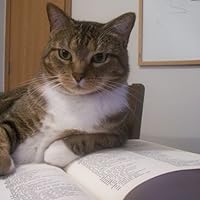
A sua memória já não é o que era? Esquece-se do nome das pessoas, daquilo que ia a dizer ou simplesmente da razão que o levou até à cozinha? Pois... E o pior é que não fica por aqui... Também se esquece de onde deixou as suas chaves, a sua carteira, os seus óculos e sabe-se lá mais o quê....
Já começa a ficar seriamente preocupado! Acredite que não está só. Há milhões de pessoas em todo o mundo que julgam que estão a ficar doidas mas a verdade é que as perdas de memória na meia-idade são inquietantemente normais.
Em “Onde deixei os meus óculos?” vai ficar a saber tudo – ou quase tudo - sobre este corriqueiro esquecimento que frequentemente nos deixa pendurados, ligeiramente divertidos e loucamente frustrados.
Martha Lear entrevistou neurocientistas, psicólogos, biólogos e também amigos e desconhecidos. Os lapsos de memória foram o mote para entrelaçar estudos científicos com anedotas hilariantes.
Martha Weinman Lear is the author of Where Did I Leave My Glasses? as well as the bestsellers The Child Worshipers and Heartsounds, which became a Peabody Award-winning film. She is a former articles editor and staff writer for the New York Times Magazine and has written extensively for that and many other national publications, including AARP The Magazine, the New Yorker, the New York Times Book Review, GQ, House Beautiful, Redbook, Ladies' Home Journal, Woman's Day, McCall's, Family Circle, and Reader's Digest, often on medical, cultural, and sociological subjects. She lives in New York City with her husband, screenwriter Albert Ruben.
This book had a personal message for me as my Dad suffered from dementia the last ten years of his life as did one of his sisters and one of his brothers. Only my Mom's younger sister has a problem with dementia. I think about the big "A" a lot when I can't find my glasses. I can find my car keys...they are in a basket on the stairs leading into the garage. I put them there before I go upstairs. If I find them in my hand at the top of the stairs, I walk back down and put them in their basket...my husband has bought into this scheme...it is working. I am and have always been a list maker...nothing new for me. I gave my husband and one daughter the disease early on in our marriage. The other daughter was also born with the "list-making disease"...my lists work, too! That is, if I "remember" to look at the list.
This book gave me some good and encouraging information.
Bottom line: I don't have Alzheimer's; it's all about getting old! When I can't run my life like I always have because of faulty memory, it's time to get help.
My "aha" moment while reading this book came at the halfway point. Quote: (see p. 129):
"'You know, a lot of us have complaints about our memories. I have complaints about mine. The key thing is, To what degree is it affecting your ability to do what you always do? Yes, a lot of us are forgetful because we have so much going on in our lives, and yes, our memories do get worse as we get older, and no, I don't feel my memory is as good as it was when I was twenty. But if someone were to ask me, Well, does it get in the way of your work? Can you still do what you want to do? Can you pay your bills? Can you do your job? Can you still run your life the way you're accustomed to running it?'
Author's reply: 'Yes, of course I can. So that's the demarcation.'"-!Aha!
Other tidbits of information that I may or may not remember:) 1. Exercise in the morning will help jump start my brain for the day's activities. Walking is the best exercise to improve multitasking, planning, scheduling, focusing on the matter at hand and aborting that perilous left-hand turn. (an aside from me...I am already saying: "I take a route where I don't have to make any left-hand turns. So am I going in circles?")
2. We all tease about our memories from an early age. Around 20 I couldn't remember why I went to the kitchen...I had to return to the point of origin to remember...aha! However, when I stop teasing or even hiding the fact I don't remember, it a sign..I need to get help.
3. Again a quote: "But the enormous discovery scientists have made in recent years is that the aging process can be regulated. It is controlled by certain genes, and caloric restriction activates these genes."(p.168) Guess who's been watching her calories and will continue to do so?
Disclaimer: "This review will not spoil your reading of this book. There will be a message in it for you. It may be the same message as mine. Then again, it may be your own personal message."
Once I got past the author's sometimes annoying asides, I found this book a good discussion of types of memory and normal aging effects on our memories. Anyone anxious about whether their memory lapses presage a serious memory disorder (like alzheimers) will likely be comforted by this book. I do find it very amusing that it took me so long to read this short book because I kept forgetting to take it with me or misplacing it!
This was an informative interesting and entertaining book on memory. Where we have been and where we are going. I enjoyed Martha Weinman Lears' style of writing and her attitude about her subject. I learned a little more about memory and also were we could be going in the future as far as memory enhancement. I encourage anyone with an interest in this subject to read it.
Even though this book was published in 2008, and therefore some information is outdated, it does a good job of quelling your fears about memory loss. For most of us, it is completely normal. Shockingly, we start losing brain capacity sometime in our 20's, but it becomes noticeable as we approach 50. There are several chapters devoted to why we lose it, one being that our brains literally shrink as we age. I was more interested in some remedies...
A key to sharpening memory is attention, which I had just recently started to figure out in my own life. Whether it's our fast-moving society (and so many items to constantly remember) and/or a case of adult ADD, I have found that it's simply harder for me to pay attention. However, if I actively listen and focus better, I magically remember better, too. A second strategy is repetition. The more times we do, read, or think about something, the better implanted it becomes.
My favorite quote (from Through the Looking-Glass) was, "It takes all the running you can do, to keep in the same place. If you want to get somewhere else, you must run at least twice as fast as that!" Remembering things sometimes feels like that!
Ever wonder why it is harder to learn new things as you get older? Or why you ever forget certain things, such as how to walk up stairs, tie your shoes, or go from the house you lived in to the school you attended in first grade? Or why you can remember every detail of something that happened 20 years ago, but not what you ate for lunch yesterday? Or what you can do about your problems remembering things? Then this is the book for you.
Martha Weinman Lear has written an interesting exploration of the physiology and psychology of memory--how we remember things, the function of memory, and the gradual loss of certain types of memory loss over time. She reports the information she has gathered from scientists who research memory and clinicians who help people who have memory issues.
But one warning: the book was written in 2008, and some of the information is no longer up to date.
This book was recommended by an expert on cognitive loss in elders, although in his defense he was at pains to say that it was chatty and an easy read. Chatty it was, but not an easy read because it provided very little useful information and was stuffed with useless anecdotes and inconclusive interviews. My thumbnail takeaway: Cognitive decline in the elderly is normal, and although it's inescapable there are a few personal habits which may delay it: Healthy diet, regular physical exercise, active social contacts, regular cognitive activity, no smoking, and little or no drinking. There, I've saved you a few hours. :-)
This book was tempting because I, too, am a woman of a certain age who worries about memory lapses. While this book offers information that allays some of my concerns, I found the author's folksy style to be annoying--overly self-conscious, needlessly wordy and repetitious, anxious to be cute. I struggled to keep going, which I did, but not happily.
There must be better books out there on this troubling but extremely common subject. I know I won't remember this one, except for how painful it was to plow through it.
A fun read if you are of a certain age and find yourself getting increasingly forgetful. This book explains why it is that we get more forgetful with age, particularly with certain types of memory, such as remembering peoples names, not to mention names of restaurants, movies we just saw, etc. She interviews a number of memory specialists as well as friends and family as to the reasons behind this memory loss as well as their own experiences. At least, you will be assured to learn that this aging frustration is entirely normal.
I found this humorous, enlightening, and sobering book helpful as I have entered that decade of my life where no one wants to be. None of us, as we age, want to acknowledge that our minds are not what they use to be. We don't want those "bouts" of forgetfulness to become part of our lives, as they may have been of our parents or others we know. I found this book at my favorite used book site, and have added it to my library, to reference, when days are rough and I forget more than I remember.
This book leaves you feeling much better about whether your memory lapses are Alzheimers... probably not if you misplace your keys, but probably so if you don't remember what a key is.
Copyright date is 2008, so some of the later material in the book has been supplanted by more recent research.
An excellent book on memory and normal aging, not so much about Alzheimers Or Dementia. A book to tell the difference about what is normal and what is not normal about our brain as we get older.
This is a light journalistic excursion into the common phenomenon of memory loss. Martha Lear is quite funny in telling of anecdotes and I spent an enjoyable evening reading the book. Not much is said about Alzheimer's disease or dementia so don't think of it as a diagnostic, only a tool to reassure you (or your friends, children or spouse) that you are really quite normal and not prematurely losing your marbles.
That being said read it for the narrative as this is not a serious book on the topic. I've an interest and academic background in applied psychology and the application of cognitive factors has been part of my work life. For the student any good cognitive psychology textbook will give you a better understanding of the differences between short, mid, long term and episodic memory as well as a classification of memory related errors.
There is however a great quote by Dr. Daniel Schacter (who also writes on the subject of memory) "Memory is probably more about the future than it is about the past". I may pick up one of his books next.The Seven Sins of Memory: How the Mind Forgets and Remembers looks fairly interesting.
4 stars as a gift perhaps or a light read, 2 for serious content. To compliment this I also recommend folk singer Christine Lavin's song "Oh No (I'm looking for my glasses again)" from her album "Please Don't Make Me Too Happy".
I knew Where Did I Leave My Glasses? was for me the moment I read its title; by the time I finished the first chapter I was sure that it would be my ‘Bible’ for rest of my life. This informative book on memory loss by Martha Weinman Lear assures us that “memory loss” is perfectly normal as we age. Well, aging may not be a very comforting thought (at least for me), but once we accept this fact “gracefully,” we will accept “memory loss” as its accomplice.
Ms. Lear makes the book very readable and entertaining with amusing life experiences and good humor. She explains the “technicalities” of the human brain in simple words and with simple examples. Who wouldn’t understand if the complex works of neurons, neurotransmitters inside the brain is compared to the big O—Orgasm!
This well researched book includes excerpts of the interviews and expert opinions of neurologists, biologists; cardiologists, psychologists, anthropologists, and many other “ologists” (and some amazing combos like neuropsychologists).
The best part of the book is the tips Ms. Lear gives for memory retention like repetition and word association. Did you know, for example, that aerobics boosts your memory? Ms. Lear distinguishes between “normal” and “not so normal” memory loss, which gives us the clue when to start worrying about memory loss.
This book is a must read for the types like me who have “what’s his/her name,” “tip of the tongue,” and “what I had for weekend’s lunch” issues. Though I know that I am getting older, that at least is much more comforting than to know that I have amnesia.
Book Jacket: So your memory's not what it used to be? You forget people's names, or what you were just about to say, or why you went into the kitchen. Often you forget where you left your keys (your wallet, your glasses, your list of Things to Do Tomorrow). And you worry. You wonder: Could this mean I am losing it?
Join the crowd, friend. There are seventy-eight million baby boomers in the country, and memory loss is the number one concern of the boomer generation. The "Worried Well," specialists call them. They worry because they do not know that most memory lapses that begin in middle age are universal and normal.
Award-winning journalist Martha Lear, who gave voice to widespread frustration with medical care in her "New York Times" best-selling memoir "Heartsounds," now explores this kind of forgetfulness--why it happens, and when, and what can be done about it. She interviews distinguished neuroscientists, psychologists, and evolutionary biologists, as well as friends and strangers about their own memory lapses. Interweaving dramatic new findings from brain-scan studies with often-hilarious anecdotes, Lear covers topics as fresh and provocative as the upside of memory loss, the differences between His and Her memories, why we are actually wired to forget, and what the future holds for memory enhancement (you can't imagine what's in store).
You'll learn things you never knew before about why your memory behaves in such maddening ways. You'll find comfort and reassurance. And you'll probably find yourself on every page.
The human brain is a complex organ that fascinates me. While this book contained some interesting facts, there were too many references to the "evolution" of the brain. The next to last chapter, titled The Big Picture or Why Did This Happen (To Me), Mr. Darwin, was filled with evolution talk in regards to the brain and how "Mother Nature" was responsible for the function of the brain. My brain did NOT evolve. My brain was created by Almighty God.
In this chapter, the author says, ".....scientists can make some extremely reasonable guesses, and typically they provide their own provisionals. Speaking with them, I have found it striking how, almost invariably, they will say, "Probably," and "We think," and "This is just my own theory, but......" ". Sounds like a lot of uncertainty to me in the things that they "believe".
I believe in the Word of God in whom there are no "probablys", "I thinks", or "just my own theories". Psalm 33 states, "For the word of the Lord is right, and all His work is trustworthy." (V. 4) "The heavens were made by the word of the Lord, and all the stars, by the breath of His mouth." (V. 6).
The funny thing is, I got a copy of "Where Did I Leave My Glasses?" in a large print edition.
The sad part is I still needed my glasses to read it...
Clearly Martha did her homework on the subject, and her style is conversational so her book is reader-friendly, but somehow I just wasn't bowled over by the content. Forgive me, but I just didn't find it all that memorable.
One of her main purposes was to reassure those whose memories are deteriorating that this is, in most cases, normal. Which I think most of them know, actually.
I didn't really like her emphasis on 'everything that happens to a human body can neatly be explained by Darwin's survival principles'. At times it feels like she's forcing a square peg in a round hole because it HAS to go in there.
I did like her last speculative chapters on what the future might hold in regards to human memory.
Funny! And mildly inappropriate, but nothing I can't handle. She's good at writing research books, let me give you that. Her style of writing sticks with the format you are supposed to with a research paper, but it's so loose and informal, it doesn't seem like it unless you happen to know the format of a research paper, which I do because I'm a student that has to deal with English 2 everyday. Stupid truancy laws. Anyway, I liked how she dedicated each chapter to a topic and discussed itand dissected it until there was nothing left and moved on. She also was good at connecting things in her chapters back to other chapters so I could retain the information better. I appreciate that, Mrs. Lear. Esp since you are writing a book on memory loss.
Lots of facts written in an interesting way. I identified with many of her examples. There were many, many things being researched which were new information to me.
One interesting study found that a 20% improvement was found in multi-tasking in a group which took part in aerobic exercise as opposed to people who did toning exercises. When the people did aerobic exercise and weight lifting that the results were even better.
I will increase my list making as that seems to be key in helping with memory loss.
Nuff' said before I get on a long rant about WHINING baby boomers...maybe they can create a new pill for memory loss, to go along with the ones they already take for sexual dysfunction, gas, irregularity, weight-loss, heart burn, to block contraception, to boost contraception, or when they're not happy or their kids are too rambunctious.