

What do you think?

Теряя сына: Испорченное детство
Молодая американская художница Сюзанна приезжает в Японию. И совсем неожиданно находит там свою любовь. Ее возлюбленному нравится западный образ жизни, он интересуется западной культурой и обещает быть замечательным мужем, скроенным по западному образцу.
Но в реальной жизни все оказывается намного сложнее. Родители мужа не приняли брака своего сына с иностранкой. И даже рождение внука не примиряет их с ненавистной невесткой.
Постепенно между Сюзанной и ее мужем нарастает отчуждение. Они решают расстаться. Вот только ее любимый малыш, ее сын Кей должен остаться с отцом...
Но в реальной жизни все оказывается намного сложнее. Родители мужа не приняли брака своего сына с иностранкой. И даже рождение внука не примиряет их с ненавистной невесткой.
Постепенно между Сюзанной и ее мужем нарастает отчуждение. Они решают расстаться. Вот только ее любимый малыш, ее сын Кей должен остаться с отцом...
258 pages, Paperback
First published January 1, 2008
About the author
Suzanne Kamata
45 books309 followersFive-time Pushcart Prize nominee Suzanne Kamata is the author of the memoir Squeaky Wheels: Travels with My Daughter by Train, Plane, Metro, Tuk-tuk and Wheelchair (Wyatt-Mackenzie, 2019); the novels Indigo Girl (GemmaMedia, 2019), The Mermaids of Lake Michigan (Wyatt-Mackenzie, 2017), Screaming Divas (Merit Press, 2014), Gadget Girl: The Art of Being Invisible (GemmaMedia, 2013) and Losing Kei (Leapfrog Press, 2008); and editor of three anthologies - The Broken Bridge: Fiction from Expatriates in Literary Japan, Love You to Pieces: Creative Writers on Raising a Child with Special Needs, and Call Me Okaasan: Adventures in Multicultural Mothering (Wyatt-Mackenzie Publishing, 2009). Her short fiction and essays have appeared widely. She was a winner in the memoir category of the Half the World Global Literati Award.
Ratings & Reviews
Friends & Following
Create a free account to discover what your friends think of this book!
Community Reviews
Displaying 1 - 24 of 24 reviews
January 18, 2018
Losing Kei is a marvelous exploration of the confusions, tensions and joys of living and loving in Japan. I’d put it on my list of highly insightful novels about Japan for the way it explores how foreigners survive, thrive, and occasionally stumble and fall, inside Japanese society. The main character rings true to me after 20 years living in Japan, as a character doing her best in a challenging environment. She struggles yet understands, loves and loses with dignity. It’s hard to ask more of a character. Especially an expat woman in a situation that’s not always welcoming to women of any origin. The depiction of cross-cultural relationships is also spot on. It made me really squirm in recognition. The complexities of building a relationship, family and life in another culture push the story forward with sensitivity, open-mindedness and irony. Anyone interested in Japan, expats in Japan, and marriage in general will find this a great read.

October 15, 2008
I really liked this book. It wasn't slow and it wasn't fast. It was interesting to go through the struggle with the main character and feel her emtions on losing her child and not a thing she can do about it. I thought the writing style was great. I could picture everything clearly.

December 4, 2008
Losing Kei: A Novel
Written By: Suzanne Kamata
Published By: Leapfrog Press
Date: January 1st, 2008
Pages: 195
Format: Paperback
ISBN: 978-0972898492
Losing Kei is a wonderful book; this story guides the reader through a gauntlet of emotions while it reveals some distressing Japanese customs, laws and rituals. Suzanne Kamata writes an intensely-poignant novel that will tug at the heartstrings of any mother or father who reads it; Losing Kei transported me to Japan where I stayed from the beginning of the book right through to the end. The time-line alternates between Jill Parker’s current life and her not to distant past. When Jill, an American artist, marries a Japanese man and gives birth to his son, she feels truly blessed to be so fortunate. At the same time however, Jill feels intense...
* Please follow the link to read the full review:
http://bookreviewsbybobbie.wordpress....
Written By: Suzanne Kamata
Published By: Leapfrog Press
Date: January 1st, 2008
Pages: 195
Format: Paperback
ISBN: 978-0972898492
Losing Kei is a wonderful book; this story guides the reader through a gauntlet of emotions while it reveals some distressing Japanese customs, laws and rituals. Suzanne Kamata writes an intensely-poignant novel that will tug at the heartstrings of any mother or father who reads it; Losing Kei transported me to Japan where I stayed from the beginning of the book right through to the end. The time-line alternates between Jill Parker’s current life and her not to distant past. When Jill, an American artist, marries a Japanese man and gives birth to his son, she feels truly blessed to be so fortunate. At the same time however, Jill feels intense...
* Please follow the link to read the full review:
http://bookreviewsbybobbie.wordpress....

July 20, 2008
How do you choose between your child and freedom from an overbearing mother-in-law and a husband who’s not what you’d expected? In a country where foreigners have no custody rights following a divorce, how do you get your child back? Suzanne Kamata raises these questions in Losing Kei, as Jill Parker comes to terms with the consequences of her decision.
Jill’s story instantly drew me in, but I also enjoyed Losing Kei because Kamata does a wonderful job showing what it’s like for an outsider to try to fit into a culture completely different from their own. And the fact that Kamata herself is an American living in Japan lends a great deal of authenticity to the story.
Full review at Diary of an Eccentric.
Jill’s story instantly drew me in, but I also enjoyed Losing Kei because Kamata does a wonderful job showing what it’s like for an outsider to try to fit into a culture completely different from their own. And the fact that Kamata herself is an American living in Japan lends a great deal of authenticity to the story.
Full review at Diary of an Eccentric.

April 4, 2009
Kamata chose a rich premise for her novel: an American woman divorces her Japanese husband and loses custody of her little boy. I am disappointed she didn't do more with it. She created a central character, Jill, who is self-absorbed, views men as her ticket to elsewhere, wallows in self-pity, and has superficial relationships with other women. In fact, Jill doesn't experience true love until she has a baby. This does not bode well for the baby . . .

July 29, 2010
This story had so much promise, but I felt that it fell short. Jill was naive and stupid and never really seemed to learn from her mistakes. As well, I had hoped the story would tell more about her legal battle and experiences with the court system, but instead, we had to read about her jaunts to foreign lands to see old flames. Again, so much potential, especially given recent headlines about Americans' struggles to bring their children home from Japan, but falling short.

September 21, 2008
This book is a fast read - keeps you riveted! Tells a story about a foreign woman married to a Japanese man & what happens when the woman divorces the man with a male child involved. Great story!

December 12, 2018
I really liked this book by Suzanne Kamata. *WARNING: lots of details and possible spoiler alerts*
This story felt very personal to me. There was a knot in my stomach after I finished it - especially in Jill’s airport race to get her son out of the country. It was nail biting and just like the protagonist, I wasn’t surprised to find Yusuke in the final scene either. There were many possibilities running through my mind - like if Maya’s sugar daddy was Yusuke and she had been planted to be a double-spy to ruin her plans. Or if the grandma had planted her. It’s the little things that resonated with me; the “dance” in the crammed kitchen, the surfboard-buying scene (it reminded me of watching my father wash off the grits of sand on his windsurf board, in Penang in the early 90s), characters like Eric (the ever promiscious, ever helpful expat - we all know someone like that!), the cruel games that parents play to manipulate their children, the running and hiding away in hotel rooms, the ex-boyfriend in Jakarta… (ironically, Fox Studios has just terminated their plans for a theme park in Malaysia). We all know people like Veronica, desperate for a way out, where love is not the main ingredient of marriage but the practicality of having a stable future for herself and her family. My favourite character in the entire story is in fact, Yusuke. I don’t hate him at all despite what he did to Jill. He seems to have that quiet mystery - that unfathomable man who will never tell you about his work nor the inner workings of his mind (my mother used to heat up the dinner when my father came back from work at 11pm). I loved this book for its tender descriptions of people’s lives, whether Japanese or not.
This story felt very personal to me. There was a knot in my stomach after I finished it - especially in Jill’s airport race to get her son out of the country. It was nail biting and just like the protagonist, I wasn’t surprised to find Yusuke in the final scene either. There were many possibilities running through my mind - like if Maya’s sugar daddy was Yusuke and she had been planted to be a double-spy to ruin her plans. Or if the grandma had planted her. It’s the little things that resonated with me; the “dance” in the crammed kitchen, the surfboard-buying scene (it reminded me of watching my father wash off the grits of sand on his windsurf board, in Penang in the early 90s), characters like Eric (the ever promiscious, ever helpful expat - we all know someone like that!), the cruel games that parents play to manipulate their children, the running and hiding away in hotel rooms, the ex-boyfriend in Jakarta… (ironically, Fox Studios has just terminated their plans for a theme park in Malaysia). We all know people like Veronica, desperate for a way out, where love is not the main ingredient of marriage but the practicality of having a stable future for herself and her family. My favourite character in the entire story is in fact, Yusuke. I don’t hate him at all despite what he did to Jill. He seems to have that quiet mystery - that unfathomable man who will never tell you about his work nor the inner workings of his mind (my mother used to heat up the dinner when my father came back from work at 11pm). I loved this book for its tender descriptions of people’s lives, whether Japanese or not.

August 3, 2008
Borrowed from another reader's review, "As with a lot of other novels by ex-pat writers, personal peeves about Japan abound. In fact, I suspect that's what drives people to write about Japan more than anything--to vent at the wacky society we live in here...In the first half of the book, her pet peeves are mixed in with plenty of 'Wow, isn't Japan strange' stereotypes...[But] while her treatment of all-things-Japanese is a bit in-your-face, it is quite accurate. I would recommend this book to anybody who is thinking of coming to Japan so that they know in advance to leave their rose tinted glasses back in their home country."
However, as much as I enjoyed the trip down mory lane (as an expat living in small town Japan), I found Kamanta's heroine increasingly irritating. Jill chose Japan, Japan did not chooser her. She comes across selfish and short-sighted, and gives the Japanese another reason to believe that those from the West have little to no sense of loyalty and/or duty--especially to one's children.
However, as much as I enjoyed the trip down mory lane (as an expat living in small town Japan), I found Kamanta's heroine increasingly irritating. Jill chose Japan, Japan did not chooser her. She comes across selfish and short-sighted, and gives the Japanese another reason to believe that those from the West have little to no sense of loyalty and/or duty--especially to one's children.

April 15, 2008
I enjoyed reading this story about a woman living in Japan who gets married to a Japanese man and has a child together. They get divorced and she loses custody of her son, and she is bereft.

December 20, 2011
I love Suzanne's writing. This is her first novel, set in Tokushima, Japan. Look forward to the next!
January 31, 2012
Wonderful book. A true privilege to read and review. Suzanne Kamata writes a wonderfully effective novel about lives of expat women (and foreign mothers) in Japan.

July 12, 2012
I really enjoyed this book. It was well-written and easy-to-read. The writer has such an easy style that you simply fall into the story and her great descriptions and story.

December 4, 2013
Loved!

October 8, 2020
Really hated this one. Short version: young artist gets married to Japanese man without apparently having any conversations about their thoughts for what their life will look like, where they will live, their respective careers, and who will be responsible for which household chores. Also, she’s a slob so she sees many of the chores as unnecessary. (I’m not Japanese but it’s likely that the author and I are at opposite ends of the spectrum when it comes to what constitutes basic cleanliness.) She is not mistreated, however. Instead, she got into something with romantic ideas of what it would be like to be a Japanese man’s wife in a more traditional part of Japan, discovered she didn’t like it, demands a divorce without finding out what custody laws are, and also makes baseless claims about her husband’s family, such as the nonsense about how her 6-year-old’s use of the Japanese language (which she terms “the grandmother’s language”) is proof he had been brainwashed. Mind you, this is a child living in a Japanese household in a Japanese town going to a Japanese school. OF COURSE he speaks Japanese more fluently, just as children of immigrants in America speak English even if everyone at home only speaks Spanish or Russian. Overall, there’s a lot of self-centeredness, little cultural competency, impulsiveness and questionable decisions, a general failure to plan, and a woman who might we’ll have had custody of her child awarded to the father even in America, at least temporarily.
February 27, 2018
Thank you Michael Pronko for recommending this book. It was a very interesting look at an expat's life married to and divorced from a Japanese man. A good insight into the way things work in Japan. I found the characters believable, though I agonized over some of the choices they made. I really felt for the child who seemed to be the whipping boy in the whole sorry affair. He is the one who was most injured it seemed to me. This is a novel and I would be curious to find some non-fiction, like True Crime Japan, that would explore this topic further.

December 12, 2007
There's an old quote that says "A mother who is really a mother is never free". This, as any mother knows couldn't be more true and unfortunately Jill Parker finds this out the hard way in this wonderful book by Suzanne Kamata.
Jill is reeling from a bad relationship, and instead of traveling to Africa, the site of her now ex-boyfriend, she decides to take a fellowship to Japan for a fresh start. She falls in love with the culture, and soon with one of its residents, Yusuke Yamashiro. They have a whirlwind romance, and decide to elope to avoid conflict with his parents. After all she is an American and probably not someone they would approve of him marrying seeing as he is the sole heir to the Yamashiro estate.
Not long into the marriage, Jill finds out that she is pregnant. Even though she is thrilled at the thought of bringing a new life into this world, she is becoming less tolerant of her role in the Yamashiro household. She wants nothing more than to be able to move into a house of their own, but when a tragedy strikes the family it is soon evident that she will never be free.
When young Kei is born she focuses all of her energy on him, after all he is absolutely perfect and the only thing she needs to get her through her lonely days. With a domineering yet needy mother-in-law, and a workaholic husband, he is the only thing in her life that brings her ultimate joy. But soon it is not enough and she decides that her marriage to Yusuke must come to an end. If she was aware of the laws of Japan when it comes to custody of children, she may not have chosen to do this.
After doing some research I have found out some interesting facts:
-Joint custody is illegal in Japan
-Japanese courts do not recognize foreign custody orders
J-apanese court orders for custody are not enforceable
-Natural parents do not have priority in future custody changes
-Discrimination against non-Japanese in granting child custody
-Fathers of Children Born Out of Wedlock Have No Custodial Rights
-No system to register a foreign parent's contact information
-Mothers granted child custody in 80% of court decisions
-Child abuse and other psychological factors are ignored in family court decisions
-Adoptions are permitted without approval of the non-custodial natural parent and without approval of a court
-Government officials refuse to help a parent find a child being hidden by the other parent
Unfortunately I was not totally shocked by some of these statements, I just know that I sympathized to my very core with Jill, knowing what kind of fight she was in for to try and get visitation, much less custody of a son born in her husbands native land.
This book is one I would recommend to anyone. It was thoroughly engaging, and gave you a glimpse of how different cultures handle something that is very common here in the US. Well done!
Questions for the author:
Are you a mother?
Yes. I'm the mother of eight-year-old twins - a girl, and a boy. I dedicated the book to my son.
What made you decide to move to Japan (I have always been fascinated with the culture myself)?
I think I originally became interested in Japan through literature. I fell in love with Heian court poetry when I was studying Asian history in college. I loved the idea that courtiers communciated via verse. I also read a couple of novels while I was in college - Equal Distance by Brad Leithauser and Ransom by Jay McInerney - that piqued my interest.
I had the opportunity to go to Japan for one year on a program sponsored by the Japanese government which invites young native speakers of English to assist in English classes in public schools. I renewed for a second year, and during that year I met my husband, who is Japanese.
Do you miss anything about the US?
I miss the wide open spaces, and I think that Americans are more tolerant of differences. I also miss libraries and bookstores full of books in English!
What advice would you give new authors?
Persistence is key! I wrote four novels before this one, and I've sent short stories out twenty times or more before getting them accepted for publication.
I also think it's important to finish your work. At some point you might get discouraged and think that what you're writing will never pan out, but if you don't get it down, you'll have nothing to work with.
Also, join a writing group. And read, read, read.
A copy of this book is going to be raffled off to one lucky reader the first week in March. To enter, all you need to do is sign the comment form www.amateurdelivre.com - please include a valid email address and the book in question so I know how to contact you . Good luck to all!
Jill is reeling from a bad relationship, and instead of traveling to Africa, the site of her now ex-boyfriend, she decides to take a fellowship to Japan for a fresh start. She falls in love with the culture, and soon with one of its residents, Yusuke Yamashiro. They have a whirlwind romance, and decide to elope to avoid conflict with his parents. After all she is an American and probably not someone they would approve of him marrying seeing as he is the sole heir to the Yamashiro estate.
Not long into the marriage, Jill finds out that she is pregnant. Even though she is thrilled at the thought of bringing a new life into this world, she is becoming less tolerant of her role in the Yamashiro household. She wants nothing more than to be able to move into a house of their own, but when a tragedy strikes the family it is soon evident that she will never be free.
When young Kei is born she focuses all of her energy on him, after all he is absolutely perfect and the only thing she needs to get her through her lonely days. With a domineering yet needy mother-in-law, and a workaholic husband, he is the only thing in her life that brings her ultimate joy. But soon it is not enough and she decides that her marriage to Yusuke must come to an end. If she was aware of the laws of Japan when it comes to custody of children, she may not have chosen to do this.
After doing some research I have found out some interesting facts:
-Joint custody is illegal in Japan
-Japanese courts do not recognize foreign custody orders
J-apanese court orders for custody are not enforceable
-Natural parents do not have priority in future custody changes
-Discrimination against non-Japanese in granting child custody
-Fathers of Children Born Out of Wedlock Have No Custodial Rights
-No system to register a foreign parent's contact information
-Mothers granted child custody in 80% of court decisions
-Child abuse and other psychological factors are ignored in family court decisions
-Adoptions are permitted without approval of the non-custodial natural parent and without approval of a court
-Government officials refuse to help a parent find a child being hidden by the other parent
Unfortunately I was not totally shocked by some of these statements, I just know that I sympathized to my very core with Jill, knowing what kind of fight she was in for to try and get visitation, much less custody of a son born in her husbands native land.
This book is one I would recommend to anyone. It was thoroughly engaging, and gave you a glimpse of how different cultures handle something that is very common here in the US. Well done!
Questions for the author:
Are you a mother?
Yes. I'm the mother of eight-year-old twins - a girl, and a boy. I dedicated the book to my son.
What made you decide to move to Japan (I have always been fascinated with the culture myself)?
I think I originally became interested in Japan through literature. I fell in love with Heian court poetry when I was studying Asian history in college. I loved the idea that courtiers communciated via verse. I also read a couple of novels while I was in college - Equal Distance by Brad Leithauser and Ransom by Jay McInerney - that piqued my interest.
I had the opportunity to go to Japan for one year on a program sponsored by the Japanese government which invites young native speakers of English to assist in English classes in public schools. I renewed for a second year, and during that year I met my husband, who is Japanese.
Do you miss anything about the US?
I miss the wide open spaces, and I think that Americans are more tolerant of differences. I also miss libraries and bookstores full of books in English!
What advice would you give new authors?
Persistence is key! I wrote four novels before this one, and I've sent short stories out twenty times or more before getting them accepted for publication.
I also think it's important to finish your work. At some point you might get discouraged and think that what you're writing will never pan out, but if you don't get it down, you'll have nothing to work with.
Also, join a writing group. And read, read, read.
A copy of this book is going to be raffled off to one lucky reader the first week in March. To enter, all you need to do is sign the comment form www.amateurdelivre.com - please include a valid email address and the book in question so I know how to contact you . Good luck to all!
July 20, 2013
One gloomy spring day I was searching the shelves of Seattle's Kinokuniya Books, hoping for something good to read. A paperback caught my eye and I examined it--Losing Kei, written by an American woman who lives in Japan. Always eager for another cross-cultural perspective,I took it home. It was stunning.
Five years later, it still haunts me. The story of a woman fighting her Japanese husband for custody of their son is honest, illuminating, and deeply sad. The strength and authority of the writing is exceptional--especially for a debut novel. Suzanne Kamata has written much since then, but Losing Kei is a book to hunt for and savor. I'm ready for my second time around.
Five years later, it still haunts me. The story of a woman fighting her Japanese husband for custody of their son is honest, illuminating, and deeply sad. The strength and authority of the writing is exceptional--especially for a debut novel. Suzanne Kamata has written much since then, but Losing Kei is a book to hunt for and savor. I'm ready for my second time around.

December 28, 2008
Losing Kei was a good, fast read. I finished it in a little more the 1 night. I just had a hard time putting it down!
It was an interesting look into family dynamics in Japan. It is quite sad how few rights mothers have in that country.
I really enjoyed the main character's story and her sense of adventure.
The only bad thing about the book was that is was a little on the short side!
It was an interesting look into family dynamics in Japan. It is quite sad how few rights mothers have in that country.
I really enjoyed the main character's story and her sense of adventure.
The only bad thing about the book was that is was a little on the short side!

October 1, 2016
It felt as if there were multiple people writing this book. Slow and drawn out by the time I hit page 136 it switched gears and suddenly read like an adolescent would write.
I wasn't really a fan of the flipping back and forth between the years either as it didn't really flow well for me.
I wasn't really a fan of the flipping back and forth between the years either as it didn't really flow well for me.

Want to Read
January 8, 2009Recommended by Heidi. Looks good!

June 27, 2013
I liked the book and got so into it, that I thought it was a non-fiction story (when actually it is fiction). The only criticism I have is the writing style, sometimes it was disjointed.
January 8, 2016
I am not a reader but this book kept me turning pages. Things really get heart-pounding at the end - so much so that I secretly finished it while at my work desk in a half-sized browser window!

September 29, 2018
I'm reluctant to give this book only one star and put it on my "just barely read" shelf because that's equating it to about the same as the mess that was Flame in the Mist, but... it kinda was a hot effing mess. (For anyone unaware, a "Just Barely Read" book is exactly how it sounds: a book I really want to DNF yet keep pushing through anyway for various reasons. This one I didn't want to DNF due to my high hopes for it and the admittedly-mistaken feeling that the ending would turn everything around and redeem this whole book.)
There weren't enough good parts of this book for me to do my usual three good things, three bad things review, so I'll give more of a play-by-play and general thoughts. I'm also not going to bother with spoiler tags, because no one should ever read this book. I mean, you can if you want, I'm just not going to take responsibility for it if you do.
Let's start with one good thing I noticed about this book. None of the characters were very remarkable in any way, but the author did get me to hate the in-laws, who were implied to be the antagonists of the story. (as much as antagonists can be in a literary-style story)
And... that's it. That's all the good stuff that was this book. Now we get down to the biscuits.
Let's start with my immediate reaction upon finishing this book, and that was... WTF EVEN IS THIS BOOK???

Yeah, I can't even with this book right now. I almost want to just come back in about a year and write this review because I'm that frustrated with this book. I had such high hopes for this book and it just fell flat in every aspect.
Let's start with my first WTF moment on page 22:
And yet apparently, this author has never heard of White Day?
Le sigh. So that's what kind of book this is going to be.
(though to this book's credit, aside from this one moment, I didn't find any other issues with cultural accuracy.)
So the premise of this book was that Jill lost her son, Kei, and was fighting to get him back... how is she fighting again? Is she going through the process to find a stable job that sponsors a visa for her? Is she saving up money so that the courts can see she can take care of her child? Is she giving up drinking, smoking, and other bad habits that could endanger the life of her child?
*checks book*
It's morally wrong, but as her lawyer points out to her, it's not a crime in Japan to kidnap your own child. So does she kidnap Kei and take him back to America with her? Because that's also a thing. Once she gets him back on American soil, then US law comes into play, and she has just as much of a claim to Kei as Yusuke would. We've seen this in multiple real-life scenarios of foreigners taking their half-Japanese child back to their home countries, at which point the Japanese parent can't do anything to get their kid back. So does she enact this most obvious solution?
*checks book*
And why doesn't she do this, you ask?

It's not as if she's a goody-two-shoes who doesn't want to disobey any laws, because she spends approximately 99% of this "book" working illegally on a tourist visa at a shady hostess club when she could easily get a lucrative, legal job teaching English or even translating or proofreading. Not only is she friends with a foreigner who works at an English school who could give her resources for job hunting, visa advice, etc., but there also just so happens to be an organization called Hello Work that's an agency that helps foreigners find work in Japan. Maybe my earlier note about cultural accuracy was wrong...

Okay, we started out bad, but it surely can get better, right?
On about page thirty, I suddenly stopped reading because literally nothing was happening. This book is so, so slow. Yes, it is a literary-style story that relies more on character growth and decisions to drive the plot forward, but there's no character development, no growth. Everyone stays the same from start to finish. There are events that happen occasionally, but nothing ties into the next one. When Yusuke's father dies, after the funeral, life just goes on as normal. A plot is defined as "a series of events that lead into one another and have a string of cause and effect." Take any chapter from this book and remove it and the story wouldn't change, really. Meanwhile, we have an entire missed opportunity in the arc between Jill and Philip. They have a whirlwind romance, then break up suddenly because Philip doesn't love her anymore? Not counting the fact that I totally wasn't buying their whirlwind romance, they have no reason for breaking up, either. Early on in the book (early meaning page 23), we're told how Jill "remember(s) sitting on a beach on the other side of the world, (her) elbows sunk in the sand, the day Philip told (her) he no longer loved (her)." Yet when they break up, it's at a restaurant, not at the beach. Way to follow inner logic, story. Their arc makes no sense and is such a missed opportunity.
[image error]
And speaking of story logic, this "book" (if you could really call it a book) doesn't seem to understand that concept.
On page 24, we see our main character Jill speaking almost perfect Japanese with no communication errors whatsoever. Then, not two pages later, we see her struggling to understand what's being said to her in Japanese, in a scene that takes place later than that one. Then again, on page 34, she's "trying to explain (it) in bungled Japanese," but not two paragraphs later, she's speaking fluently in Japanese, using vocabulary like "visitation rights" that even I would have to look up in a dictionary first. Either that or the author sucks at writing, because that scene should have read more like this:
I haven't even mentioned the blatant use of the term "Oriental" even though that term isn't P.C. now, wasn't P.C. in 2008 when this book was published, and wasn't P.C. even back in 1989 when the scene takes place. Or all the damn typos.
Pages 43, 63, and 168: we have a book published in the US by an American publishing company, with US spelling and punctuation used throughout, yet for some reason the UK version "week-end" is used instead of "weekend."
Page 62, again, UK spelling when it should be US: "step-mom" versus "stepmom"
Page 117, awkward sentence:
She's trying to imply that she's supposing she blacked out but grammatically it implies that she's required to black out for some reason. It should be "I black out for a second."
Page 119, missing word:
Also on page 119, we've got a misspelled word:
Page 171, we've got a punctuation error (missing an end quotation mark):
There weren't enough good parts of this book for me to do my usual three good things, three bad things review, so I'll give more of a play-by-play and general thoughts. I'm also not going to bother with spoiler tags, because no one should ever read this book. I mean, you can if you want, I'm just not going to take responsibility for it if you do.
Let's start with one good thing I noticed about this book. None of the characters were very remarkable in any way, but the author did get me to hate the in-laws, who were implied to be the antagonists of the story. (as much as antagonists can be in a literary-style story)
And... that's it. That's all the good stuff that was this book. Now we get down to the biscuits.
Let's start with my immediate reaction upon finishing this book, and that was... WTF EVEN IS THIS BOOK???
Yeah, I can't even with this book right now. I almost want to just come back in about a year and write this review because I'm that frustrated with this book. I had such high hopes for this book and it just fell flat in every aspect.
Let's start with my first WTF moment on page 22:
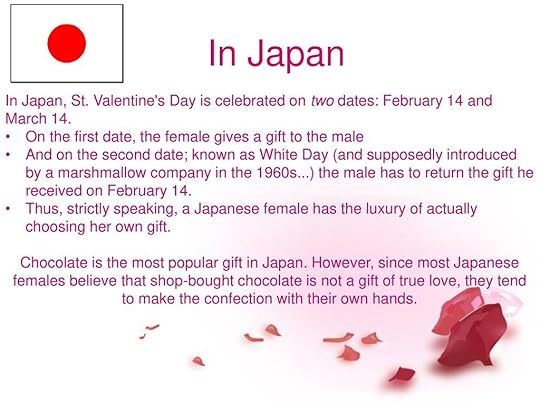
On Valentine’s Day, I’d heard, Japanese women gave their men chocolate and got nothing in return.
And yet apparently, this author has never heard of White Day?
Le sigh. So that's what kind of book this is going to be.
(though to this book's credit, aside from this one moment, I didn't find any other issues with cultural accuracy.)
So the premise of this book was that Jill lost her son, Kei, and was fighting to get him back... how is she fighting again? Is she going through the process to find a stable job that sponsors a visa for her? Is she saving up money so that the courts can see she can take care of her child? Is she giving up drinking, smoking, and other bad habits that could endanger the life of her child?
*checks book*
It's morally wrong, but as her lawyer points out to her, it's not a crime in Japan to kidnap your own child. So does she kidnap Kei and take him back to America with her? Because that's also a thing. Once she gets him back on American soil, then US law comes into play, and she has just as much of a claim to Kei as Yusuke would. We've seen this in multiple real-life scenarios of foreigners taking their half-Japanese child back to their home countries, at which point the Japanese parent can't do anything to get their kid back. So does she enact this most obvious solution?
*checks book*
And why doesn't she do this, you ask?
It's not as if she's a goody-two-shoes who doesn't want to disobey any laws, because she spends approximately 99% of this "book" working illegally on a tourist visa at a shady hostess club when she could easily get a lucrative, legal job teaching English or even translating or proofreading. Not only is she friends with a foreigner who works at an English school who could give her resources for job hunting, visa advice, etc., but there also just so happens to be an organization called Hello Work that's an agency that helps foreigners find work in Japan. Maybe my earlier note about cultural accuracy was wrong...
Okay, we started out bad, but it surely can get better, right?
On about page thirty, I suddenly stopped reading because literally nothing was happening. This book is so, so slow. Yes, it is a literary-style story that relies more on character growth and decisions to drive the plot forward, but there's no character development, no growth. Everyone stays the same from start to finish. There are events that happen occasionally, but nothing ties into the next one. When Yusuke's father dies, after the funeral, life just goes on as normal. A plot is defined as "a series of events that lead into one another and have a string of cause and effect." Take any chapter from this book and remove it and the story wouldn't change, really. Meanwhile, we have an entire missed opportunity in the arc between Jill and Philip. They have a whirlwind romance, then break up suddenly because Philip doesn't love her anymore? Not counting the fact that I totally wasn't buying their whirlwind romance, they have no reason for breaking up, either. Early on in the book (early meaning page 23), we're told how Jill "remember(s) sitting on a beach on the other side of the world, (her) elbows sunk in the sand, the day Philip told (her) he no longer loved (her)." Yet when they break up, it's at a restaurant, not at the beach. Way to follow inner logic, story. Their arc makes no sense and is such a missed opportunity.
[image error]
And speaking of story logic, this "book" (if you could really call it a book) doesn't seem to understand that concept.
On page 24, we see our main character Jill speaking almost perfect Japanese with no communication errors whatsoever. Then, not two pages later, we see her struggling to understand what's being said to her in Japanese, in a scene that takes place later than that one. Then again, on page 34, she's "trying to explain (it) in bungled Japanese," but not two paragraphs later, she's speaking fluently in Japanese, using vocabulary like "visitation rights" that even I would have to look up in a dictionary first. Either that or the author sucks at writing, because that scene should have read more like this:
I paused, wondering if there was a Japanese equivalent to "visitation rights." "In America, divorced..." I suddenly remembered that "divorced" was "rikon" in Japanese. "Rikon shita hito... they still can see their child. There are laws that say so."
I haven't even mentioned the blatant use of the term "Oriental" even though that term isn't P.C. now, wasn't P.C. in 2008 when this book was published, and wasn't P.C. even back in 1989 when the scene takes place. Or all the damn typos.
Pages 43, 63, and 168: we have a book published in the US by an American publishing company, with US spelling and punctuation used throughout, yet for some reason the UK version "week-end" is used instead of "weekend."
Page 62, again, UK spelling when it should be US: "step-mom" versus "stepmom"
Page 117, awkward sentence:
I must black out for a second.
She's trying to imply that she's supposing she blacked out but grammatically it implies that she's required to black out for some reason. It should be "I black out for a second."
Page 119, missing word:
My scent began to linger in those rooms
Also on page 119, we've got a misspelled word:
the hole in the floor where we hung out legs
Page 171, we've got a punctuation error (missing an end quotation mark):
"Kei, do you understand what I said?"
Page 174, we've got a missing comma:He doesn’t answer, but I catch him staring..."
Page 189, we've got a comma error:"Try to imagine," I say, "Growing up without a mother."
(comma experts out there know that should be a period, not a comma)
Also I have to ask the question. How loose is Jill's sphincter for her to actually be able to feel her bowels at all times when "my bowels freeze" or "ice forms in my bowels"?? Like, really??
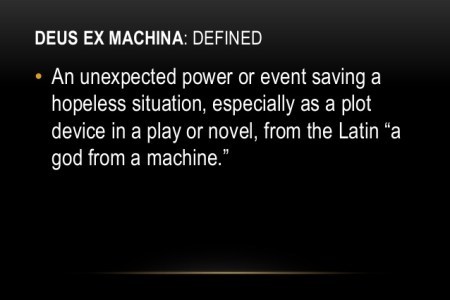
Oh, and I haven't even gotten started on the ending of this book yet. What a friggin' deus ex machina.
Jill, to her credit, is taking Kei away to Indonesia to live there with Philip (despite their crappy and unbelievable relationship) when all of a sudden the airport security employees find marijuana in her son's backpack.
...Um, what?
We keep reading, only to find out that she suspects Maya of planting it there because it was found inside of a little cloth charm from a temple and Maya is the one who put the charm in the bag. But we never saw Maya putting the charm in the bag.
Then we keep reading some more and we find out that Maya had no idea the marijuana was in there because she got that charm from her boyfriend, who must have put it in there. Yet we also never saw anything before of her getting the charm from her boyfriend, like showing it to Jill and saying "I got this from my boyfriend," for example. There was nothing in the entire book that set up the Jill-gets-arrested-for-accidentally-possessing-marijuana situation. Which then becomes the catalyst for the resolution: Yusuke comes to the police station, bails her out, they reconcile, and then Yusuke agrees to allow her to see Kei every so often.
[image error]
If you look closely at the cover of this book, you'll see it's of a bunch of schoolchildren in a group, and one kid is turning to look back at the camera. Due to the fact that we see a scene just like this taking place in the first chapter (Jill at a playground watching her son's classmates file past and her son turns back and looks at her) we can safely assume that the cover is a depiction of this scene. But the kid who's turning back is a girl. Female. Undeniably so. And our main character Jill has a son. Male. Undeniably so. One can only assume that the publishers were so desperate to find a cover that depicts this scene that, instead of spending extra time (and maybe extra money) trying to find a photograph that depicts a little boy turning backwards, they instead used a little girl and hoped no one would notice. The cover is essentially a metaphor for how I feel about the book: hoping that it'll be a good one yet greatly disappointed when the proverbial rug is pulled out from under me.
Displaying 1 - 24 of 24 reviews