

What do you think?

L'autoritratto: Una storia culturale
L'autoritratto è il genere artistico che meglio di altri contraddistingue la nostra epoca; ma gli artisti moderni sono ben lontani dall'averne esaurito forza e potenzialità. Questo libro offre un'ampia panoramica storico-culturale dell'autoritratto a partire dall'antico mito di Narciso e dai cosiddetti «autoritratti di Cristo» fino al proliferare di autoritratti di artisti contemporanei. In questo brillante e vivido racconto James Hall dimostra come l'atto di ritrarsi faccia parte di una tradizione lunga secoli, e molti sono gli aspetti che l'autore prende in considerazione: l'importanza dell'«ossessione per gli specchi» in epoca medievale; il diffondersi del genere durante il Rinascimento; l'intensità degli autoritratti- confessione di Tiziano e Michelangelo; gli autoritratti comico-caricaturali e quelli «inventati» o immaginari; la mistica dello studio d'artista da Vermeer a Velázquez; il ruolo svolto dalla biografia e dalla geografia nei ritratti seriali di Courbet e van Gogh; la tematica sessuale e la figura del genio nelle opere di Munch, Bonnard e Modersohn-Becker; le identità multiple di artisti quali Ensor e Cahun; fino a toccare gli ultimi sviluppi del genere nell'era della globalizzazione. Lungo tutto il libro, Hall non smette mai di interrogarsi sui motivi che inducono gli artisti alla pratica dell'autoritratto, e trova risposte scavando nel loro mondo e nella loro mentalità. Un volume magnificamente illustrato, che riunisce le opere di numerosi artisti, tra i quali Caravaggio, Alberti, Courbet, Dürer, Emin, Gauguin, Giotto, Goya, Kahlo, Koons, Magritte, Mantegna, Picasso, Raffaello, Rembrandt e Warhol.
292 pages, Hardcover
First published April 1, 2014
About the author
James Hall
8 books2 followersLibrarian Note: There is more than one author in the GoodReads database with this name.
See this thread for more information.
James Hall is an art critic, historian, and university professor, distinguished for the originality and craftsmanship of his writing. A prolific author, his books include, among others, The Self-Portrait: A Cultural History (Thames & Hudson, 2014). His publications and reviews have appeared in prestigious journals and magazines around the world. He teaches at the University of Southampton.
See this thread for more information.
James Hall is an art critic, historian, and university professor, distinguished for the originality and craftsmanship of his writing. A prolific author, his books include, among others, The Self-Portrait: A Cultural History (Thames & Hudson, 2014). His publications and reviews have appeared in prestigious journals and magazines around the world. He teaches at the University of Southampton.
Ratings & Reviews
Friends & Following
Create a free account to discover what your friends think of this book!
Community Reviews
Displaying 1 - 23 of 23 reviews

April 22, 2015
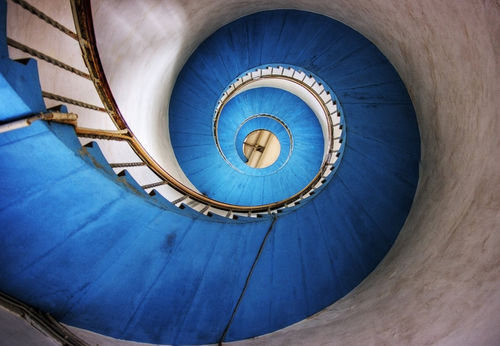
I thought you would like to see my Self-Portrait. You will have to concede that it is more revealing than my ordinary avatar, for it displays my soul. For not only are my appearances presented but that much more elusive and private aspect: the image I have of myself. Yes, I am very proud of that blue, and wish to enhance it, in case you had not noticed it. The somewhat different angle, orientation and the inversion will unfurl a distinctive essence that I hope will inebriate you. My self made image is also so much closer to you, but don’t mistake yourself for I continue to deny you the access up those stairs. I need to to distinguish myself and keep our distances… But don’t begrudge me…
You may even think that this is more of a mask and that I am hiding my true identity behind it. But even then you would have to admit that the choice of the mask unveils what wants to lurk behind this disguising shield.
Gosh, I admire that blue. I can’t get over it and I hope it will mesmerize you so that you will not forget me. For my ascent is towards immortality. For even when I disappear, this Alter-Ego of mine will remain, and posterity will continually welcome me as their contemporary.
&&&&&&&&&&&&&&&&&&&&&&&&&&&&
Well, now that I have presented myself let me continue with my review of this excellent read.
James Hall has set himself the difficult task to trace the history of the Self-Portrait. My own introduction served not only to captivate your mind with Me, but also to bring to the fore some of the aspects that Self-Portrait entails.
Hall has followed history and with each step in time a different facet is brought under view. He starts looking at Antiquity but does not find much, partly because so much is lost and he does not feel confortable in locating the starting point. Although there is an exception to this if we were to believe the legend of Saint Veronica and Christ’s first ‘Selfie’. But if we leave legends aside, then we can concede with Hall that it is in the Middle Ages, in the illuminated books from a monastic context that fascinating samples have survived. Although Hall somewhat questions the importance of mirrors for the rise of the genre, mirrors were metaphors of ‘wisdom’ of the world, of the self and of divinity. Medieval arte was conceptual and not too interested in sensorial aspects; our senses often lie and deviate us from the path of truth.
And why does he think the role of mirrors is somewhat of a myth? Because the earlier ones--out of polished metal-- were unsatisfactory and the flat ones—made out of glass-- were very small for a long time. Convex mirrors however were much appreciated but more for their technical assistance to the art and science of vision than for spitting back your own reflection. But if mirrors were such fascinating objects for their magical associations, soon they also offered to the artist part of their charm. Artists began to play a mystical role.
As time unfolds under Hall’s pen and as the Renaissance and the birth of the individual arrive, the individuality of the artist, his persona, his role in society, his looks now present themselves. The craftsman becomes a sort of mesmerizing hero around 1490, and with this phenomenon, its mirror image, the mocked hero is also born. No one lasts long in the apex.
Gradually fascination with the self of the artist extended to his/her studio--that was a self-portrait too. And yes, ‘her’, for we begin to encounter female studios too. The roughness and messiness of artist’s studios was one of the reasons that impeded women to become artists (versus writers or even musicians). That changed during the 17C for it is then that the artist’s studio becomes a shrine. Think of Rembrandt. And Velazquez! … for whom his studio had become the Royal Court, or vice versa. It is during this same century also when rich collections of only Self-portraits begin to be assembled.
As time unfolds, artists and their view of their selves become more complicated. It is all so much more existential; there is so much more pondering, and navel gazing, that the varieties and possibilities of the genre just multiply themselves almost exponentially. This limitless growth however also brings with it a constrictive setting. If the studio had become the natural habitat of the artist, the pond for the fish, during the late 19C some artists depicted themselves as disconnected entities. Their surroundings were witnesses to their rootlessness, like Van Gogh’s empty chair.
In this inner exploration, of course, there is also sex to explore, but artists did not display this explicitly until the 20C. When sex became unequivocal on their canvases, their faces also began to disappear…
.. .And now?, you may ask. Well, why don’t you try and estimate how many selfies have been made while you read this review – worldwide.
###############################
This time my illustrations - which do not deal with my Self - are in the updates below.
![Profile Image for Hon Lady Selene [on a hiatus].](https://i.gr-assets.com/images/S/compressed.photo.goodreads.com/users/1777646425i/51675144._UY200_CR9,0,200,200_.jpg)
January 22, 2026
Brilliant tour-de-force that maps Self-Portraiture from its Medieval origins to the prolific self-image of the 19th century and into the modern world - to look at all this is to also look upon History - ancient history of Egypt and Byzantine, the history of mirrors, literature and mythical heroes, the artist's studio, the relationship between art and sex, both in past and modern times.
A book so dense, so well researched and so well written without being too academic that I am at a loss for words when it comes to reviewing it - everyone ought read this, from Art lovers to History buffs to Art History fans.
From my notes:
- In the first philosophical discussion of self-portraiture by Plotinus, self-portraits are produced not by looking out at a mirror, but by withdrawing into the self.
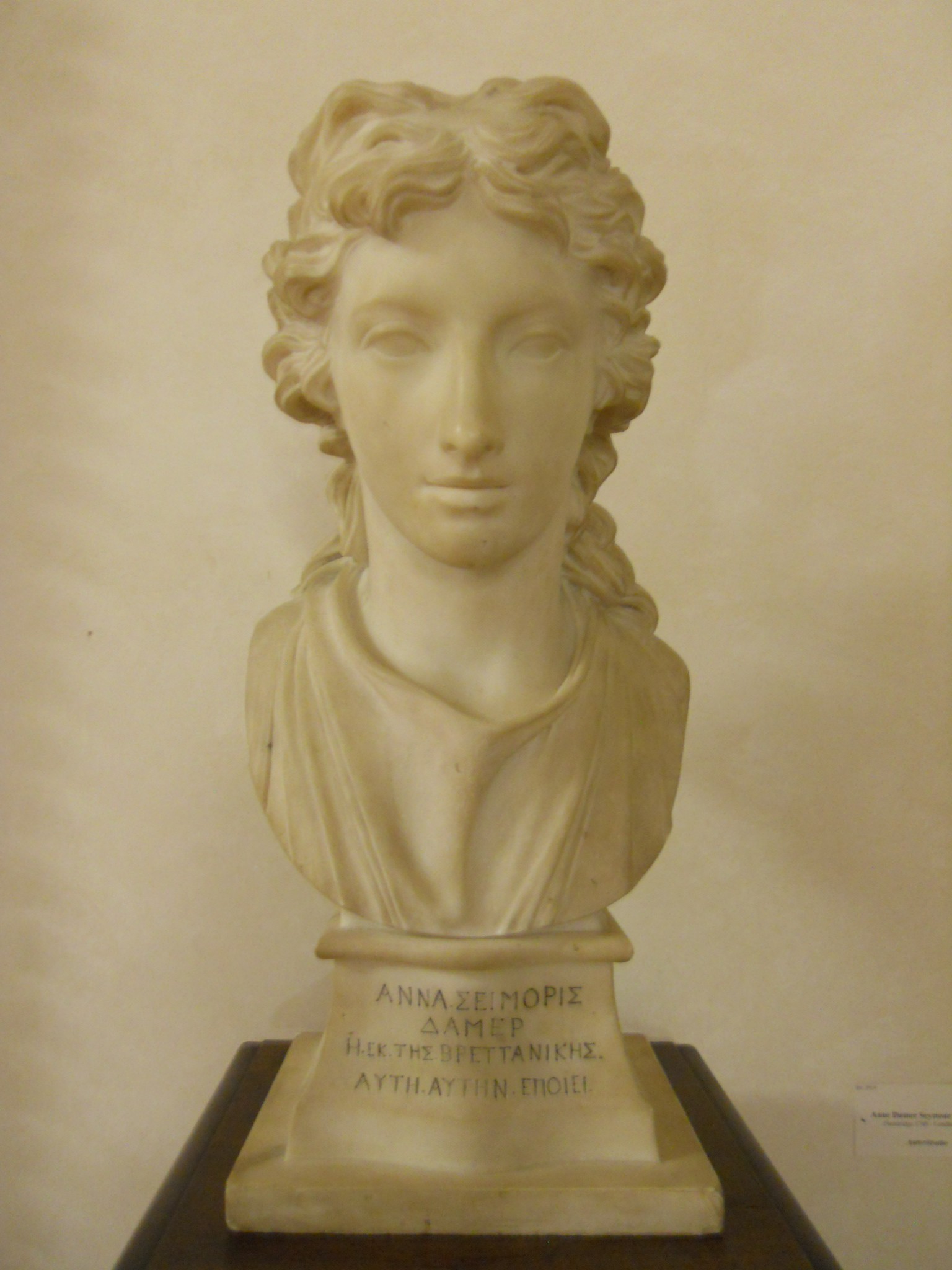
- Anne Seymour Damer, Self-Portrait, 1778, daughter of a favourite cousin of the author and connoisseur Horace Walpole, the first frontal and symmetrical marble portrait bust since late antiquity. When Sir George Beaumont bought Michelangelo’s unfinished Taddei Tondo, she unceremoniously offered to finish it.
- Michelangelo can alternate between heroic and mock-heroic self-portraits. When painting the Sistine ceiling he drew the first ever Caricature self-portrait, depicting himself in deformed action, daubing like a child. He went as far as writting a Poem about it.
- Pliny mentions Iaia of Cyzicus (first century BC), ‘never married’ and chiefly painted ‘portraits of women…and also a portrait of herself, done with a mirror’, this is the first mention of a self-portrait being made with a Mirror.
- Father Rufillus of Weissenau, Self-Portrait Illuminating the Initial ‘R’, the Latin word for red is ‘rufus’ so his name must derive from his red hair, and Rufillus’s redness is proudly underscored by the fact that he is currently using red paint (in 1624, Rubens would pun on his own name in a self-portrait by including a red sky and red cheeks: in Latin, rubens means ‘reddening’).
- Angelica Kauffman, Self-Portrait Hesitating between the Arts of Music and Painting, early 1790s, she had come to England in 1765, and was a co-founder of the Royal Academy (and the last female to be a member until 1922). There is an implicit stylistic choice, for Music is voluptuous Venetian (feminine), while Painting is Raphaelesque Roman (masculine).
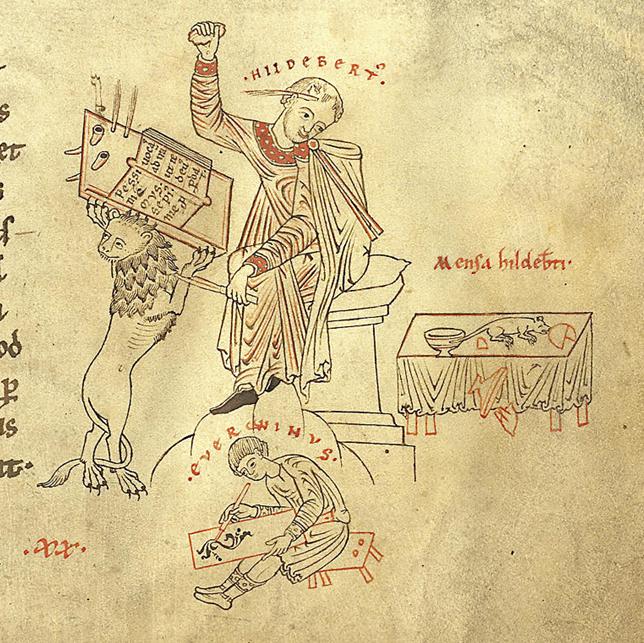
- Hildebertus, Self-Portrait with His Assistant Everwinus, c. 1150, turns to his left and is about to throw a sponge at a mouse scampering across his dinner table. The mouse has knocked a roast chicken over the table’s edge, and is heading for what must be a bread roll. They are old adversaries, as we know from a Latin text inscribed in Hildebertus’s book: ‘Damn you, wretched mouse exasperating me so often!’ It is a parody of the Last Judgment, where Christ banishes the damned, ‘Depart from Me, you cursed...’
-Peter Parler, Self-Portrait, c. 1379–86, is the first to show him drawing using the difficult technique of silverpoint, rather than painting.
- Giuseppe Arcimboldo, Self-Portrait as a Man of Papers, 1581, invokes ‘flap’ anatomies, where a paper flap could be lifted up to reveal the organs and skeleton below.
PS: I understand some readers take issue with the way this book is structured, but indeed I found it more Fun to have it building up chronologically rather than another boring academic narrative where everyone's Hair is discussed in a single chapter -to understand how Dürer's hair inspired Rembrandt, we must look at the times in between Dürer and Rembrandt.
A book so dense, so well researched and so well written without being too academic that I am at a loss for words when it comes to reviewing it - everyone ought read this, from Art lovers to History buffs to Art History fans.
From my notes:
- In the first philosophical discussion of self-portraiture by Plotinus, self-portraits are produced not by looking out at a mirror, but by withdrawing into the self.
- Anne Seymour Damer, Self-Portrait, 1778, daughter of a favourite cousin of the author and connoisseur Horace Walpole, the first frontal and symmetrical marble portrait bust since late antiquity. When Sir George Beaumont bought Michelangelo’s unfinished Taddei Tondo, she unceremoniously offered to finish it.
- Michelangelo can alternate between heroic and mock-heroic self-portraits. When painting the Sistine ceiling he drew the first ever Caricature self-portrait, depicting himself in deformed action, daubing like a child. He went as far as writting a Poem about it.
- Pliny mentions Iaia of Cyzicus (first century BC), ‘never married’ and chiefly painted ‘portraits of women…and also a portrait of herself, done with a mirror’, this is the first mention of a self-portrait being made with a Mirror.
- Father Rufillus of Weissenau, Self-Portrait Illuminating the Initial ‘R’, the Latin word for red is ‘rufus’ so his name must derive from his red hair, and Rufillus’s redness is proudly underscored by the fact that he is currently using red paint (in 1624, Rubens would pun on his own name in a self-portrait by including a red sky and red cheeks: in Latin, rubens means ‘reddening’).
- Angelica Kauffman, Self-Portrait Hesitating between the Arts of Music and Painting, early 1790s, she had come to England in 1765, and was a co-founder of the Royal Academy (and the last female to be a member until 1922). There is an implicit stylistic choice, for Music is voluptuous Venetian (feminine), while Painting is Raphaelesque Roman (masculine).
- Hildebertus, Self-Portrait with His Assistant Everwinus, c. 1150, turns to his left and is about to throw a sponge at a mouse scampering across his dinner table. The mouse has knocked a roast chicken over the table’s edge, and is heading for what must be a bread roll. They are old adversaries, as we know from a Latin text inscribed in Hildebertus’s book: ‘Damn you, wretched mouse exasperating me so often!’ It is a parody of the Last Judgment, where Christ banishes the damned, ‘Depart from Me, you cursed...’
-Peter Parler, Self-Portrait, c. 1379–86, is the first to show him drawing using the difficult technique of silverpoint, rather than painting.
- Giuseppe Arcimboldo, Self-Portrait as a Man of Papers, 1581, invokes ‘flap’ anatomies, where a paper flap could be lifted up to reveal the organs and skeleton below.
PS: I understand some readers take issue with the way this book is structured, but indeed I found it more Fun to have it building up chronologically rather than another boring academic narrative where everyone's Hair is discussed in a single chapter -to understand how Dürer's hair inspired Rembrandt, we must look at the times in between Dürer and Rembrandt.

February 25, 2025
“Narcissus – traditionally regarded as a deluded loser – had recently become a model for rooted self-knowledge and contemplation.”
Many great lines throughout this book, Narcissus outright being called a loser included. Very Western focused but the author never set up the text as a /global/ history of self-portraiture so I wasn’t expecting much. Decent coverage of women artists, too
Many great lines throughout this book, Narcissus outright being called a loser included. Very Western focused but the author never set up the text as a /global/ history of self-portraiture so I wasn’t expecting much. Decent coverage of women artists, too

January 3, 2026
"Każdy malarz maluje siebie". To zdanie usprawiedliwia tych odbiorców sztuki, którzy w każdym dziele szukają echa jego twórcy - przemyconego faktu z życia, grymasu ust, błysku oka. W malarstwie autoportret to gatunek szczególnie popularny i to od wieków. O tym traktuje esej Jamesa Halla, kolejny we wspaniałej serii "Miniatury o sztuce" Wydawnictwa Smak Słowa.
Bardzo zaskoczyła mnie popularność autoportretów już w średniowieczu, epoce, w której przecież wszystko "ad maiorem Dei gloriam", z czym korespondowała anonimowość dzieł sztuki. A tu na przykład taki Hildebert, który akurat chciał, żeby zapamiętano i jego twarz.
W antropocentrycznym renesansie popularność autoportretów już nie dziwi. Pięknie ufryzowany Dürer tak zachwycał wizerunkiem, że wielbiciele ekshumowali malarza, by ściąć pukle jego włosów...
Bardzo ciekawy jest fragment o Artemisii Gentileschi, która podobno nadawała rysy swojej twarzy postaciom na niemal każdym obrazie.
Z czytanej przeze mnie niedawno biografii Gauguina dowiedziałam się sporo o relacji tego malarza z van Goghiem - tu mamy ten wątek ciekawie poprowadzony właśnie przez pryzmat autoportretów malowanych w różnych momentach życia.
Od dawna fascynuje mnie życie i twórczość Fridy Kahlo - obecność tej malarki w eseju w ogóle mnie nie zdziwiła, wszak Frida była swoją ulubioną modelką. Każdy jej autoportret to rozległe pole do interpretacji.
Esej wzbogacony jest o 27 ilustracji, które świetnie współgrają z tekstem i zapadają w pamięć ("Autoportret w piekle" Muncha!).
Jestem wielką fanką tej serii, bo przybliża czytelnikowi fascynujący świat sztuki w sposób przystępny i naprawdę ciekawy.
Bardzo polecam!
Bardzo zaskoczyła mnie popularność autoportretów już w średniowieczu, epoce, w której przecież wszystko "ad maiorem Dei gloriam", z czym korespondowała anonimowość dzieł sztuki. A tu na przykład taki Hildebert, który akurat chciał, żeby zapamiętano i jego twarz.
W antropocentrycznym renesansie popularność autoportretów już nie dziwi. Pięknie ufryzowany Dürer tak zachwycał wizerunkiem, że wielbiciele ekshumowali malarza, by ściąć pukle jego włosów...
Bardzo ciekawy jest fragment o Artemisii Gentileschi, która podobno nadawała rysy swojej twarzy postaciom na niemal każdym obrazie.
Z czytanej przeze mnie niedawno biografii Gauguina dowiedziałam się sporo o relacji tego malarza z van Goghiem - tu mamy ten wątek ciekawie poprowadzony właśnie przez pryzmat autoportretów malowanych w różnych momentach życia.
Od dawna fascynuje mnie życie i twórczość Fridy Kahlo - obecność tej malarki w eseju w ogóle mnie nie zdziwiła, wszak Frida była swoją ulubioną modelką. Każdy jej autoportret to rozległe pole do interpretacji.
Esej wzbogacony jest o 27 ilustracji, które świetnie współgrają z tekstem i zapadają w pamięć ("Autoportret w piekle" Muncha!).
Jestem wielką fanką tej serii, bo przybliża czytelnikowi fascynujący świat sztuki w sposób przystępny i naprawdę ciekawy.
Bardzo polecam!
October 31, 2024
James Hall erzählt in seiner Publikation eine chronologisch angelegte Geschichte des Selbstporträts, bei der die von ihm konstituierte Einteilung in thematische Kapitel nur bedingt zu greifen scheint.
Für gelungen halte ich vor allem die früheren Kapitel, in denen der Verfasser dieses Buches einerseits die Anfänge des Selbstporträts anhand von Bild- und Textquellen näher betrachtet als auch mit dem überholten Klischee des "Ich"-losen Mittelalters aufräumt. Besonders hier macht die Auswahl an Selbstbildnissen auf mich einen plausiblen und gewinnbringenden Eindruck. Die unterschiedliche Behandlung des Selbstporträts im Mittelalter stellte Hall unter verschiedenen Blickpunkten fruchtbar dar, besonders auf die humoristischen Momente wusste der Autor hinzuweisen.
Auch auf die schwankende Tendenz zwischen Glorifizierung (simulatio) und Selbstminderung (dissimulatio) in den Selbstporträts der Frühen Neuzeit hinzuweisen vergeudete Hall nicht. Hier bleibt die Auswahl an SBs mit Dürer, Michelangelo und Caravaggio zwar überwiegend kanontreu, was den Argumenten aber nicht zwingend einen Abbruch tut und durch Aufnahme von Sofonisba Anguissola und Artemisia Gentileschi partiell durchbrochen wird.
Allein im letzten Drittel des Buches scheinen die Argumentationsgänge und Oberkapitel für mich nicht mehr so stimmig wie zuvor. Sukzessive dominiert ein empfundener Zwang zum Witz und die Argumente und behandelten Werke scheinen förmlich zwischen den Absätzen hin und her zu springen, wodurch mein Lesefluss im Argen lag. Die letzten 15 Seiten des Buches habe ich nicht mehr gelesen.
Für gelungen halte ich vor allem die früheren Kapitel, in denen der Verfasser dieses Buches einerseits die Anfänge des Selbstporträts anhand von Bild- und Textquellen näher betrachtet als auch mit dem überholten Klischee des "Ich"-losen Mittelalters aufräumt. Besonders hier macht die Auswahl an Selbstbildnissen auf mich einen plausiblen und gewinnbringenden Eindruck. Die unterschiedliche Behandlung des Selbstporträts im Mittelalter stellte Hall unter verschiedenen Blickpunkten fruchtbar dar, besonders auf die humoristischen Momente wusste der Autor hinzuweisen.
Auch auf die schwankende Tendenz zwischen Glorifizierung (simulatio) und Selbstminderung (dissimulatio) in den Selbstporträts der Frühen Neuzeit hinzuweisen vergeudete Hall nicht. Hier bleibt die Auswahl an SBs mit Dürer, Michelangelo und Caravaggio zwar überwiegend kanontreu, was den Argumenten aber nicht zwingend einen Abbruch tut und durch Aufnahme von Sofonisba Anguissola und Artemisia Gentileschi partiell durchbrochen wird.
Allein im letzten Drittel des Buches scheinen die Argumentationsgänge und Oberkapitel für mich nicht mehr so stimmig wie zuvor. Sukzessive dominiert ein empfundener Zwang zum Witz und die Argumente und behandelten Werke scheinen förmlich zwischen den Absätzen hin und her zu springen, wodurch mein Lesefluss im Argen lag. Die letzten 15 Seiten des Buches habe ich nicht mehr gelesen.

October 10, 2017
I can't say I fully enjoyed the book. Or probably it is just my expectations. When I bought the book I was waiting something with stories about painters and their self portraits, probably more fictional plot. But the book was a bit more of academical content. There were passages I was fast-reading for the sake of finishing. To be fair, it is quite informative, beautifully illustrated, I could find some of the stories I was looking for. But it was not quite qualifying to 5stars.

November 14, 2022
A frustrating read. The chapters are in chronological order, but each chapter has a theme also. Yet those themes are quite loose and questionably executed. Dürer's hair is discussed in "Artist as a hero", but Rembrandt's hair - in chapter "Artist's studio". Chapter has nothing to say on Rembrandt's studio though.
March 24, 2025
Una lettura appassionante, piena di interpretazioni interessanti e studi approfonditi, finché si arriva al Novecento che per fortuna è marginale nel testo. L'arte contemporanea è trattata con superficialità e si percepiscono implicitamente le opinioni moralistiche dell'autore. Peccato perché per il resto l'ho letto davvero con grande piacere.

February 25, 2025
___________________________________
WANT TO READ BOOK:
- L'officina di Rembrandt. L'atelier e il mercato (Svetlana Alpers)
WANT TO READ BOOK:
- L'officina di Rembrandt. L'atelier e il mercato (Svetlana Alpers)

January 3, 2021
This had so much detail that it was work to read. Lots of interesting details, and I should probably read it again.
March 23, 2026
Sanat tarihine vakıf olmadığım için zorlayıcı bir okuma oldu. Bir elimde telefonla isimleri ve eserlerini aratmak zorunda kaldım. Tabi kimsenin tüm eserleri detaylarıyla ezbere bildiğini düşünmüyorum bu sebeple üzerine daha uzun tartışılan resimler renkli ve büyük halde basılmıştı. Bu yönden yardımcı oldu. Kitabın da ima ettiği gibi her eser bir otoportredir. Zaten sanatı sanatçıdan ayırma olayının ikiyüzlü olduğunu düşünüyorum.(Aksini düşündüğümde oluyor arada -nehir alegorisi- ama genel görüşüm bu yönde) Otoportreler ise gerçekliğin daha gerçek bir taklidi, sanatçının hayatının daha doğrudan bir yansıması. Sanatçı yine oradadır ama bu sefer kendi yüzüyle.
“Sanatçı sanatın kendisidir ve her zaman ondan önce gelir.”
“Sanatçı sanatın kendisidir ve her zaman ondan önce gelir.”
May 19, 2022
the book I have been looking for, on the market and in my mind.

March 7, 2014
Before I start this review, I should disclose that I won this book from a giveaway hosted on www.goodreads.com. This in no way altered my opinion of this book and my review will be written as if I had bought this book.
I may have mentioned it before, but I figured I should say it again, I got my bachelor’s degree in art history. So, you can imagine my excitement when I was notified that I won a book all about self-portraits! It has been a few months since I had read a scholarly based art history book, so I was pumped to delve back into this world.
From the very first sentence, this book had me hooked! I found the sentences to be thoughtful and well-crafted, without the typical academic stuffiness. In fact, sometimes I found the writing to be a bit sassy at times, which made it enjoyable to read. It felt like a conversational lecture, instead of the information being thrust upon me.
The examples used were plentiful and varied with excellent descriptions. Although sometimes I felt the author read too much into certain pieces, which art historians sometimes do, (I know I did lol), it was still an interesting take on several key pieces in the history of art. In fact, Hall often compared pieces across time periods, which I thought to be an excellent decision. It showed that humanity has changed drastically, yet not.
I only have a couple of criticisms. There were paragraphs at the end of each chapter that summarized the whole chapter. I found it to be a bit too much like a textbook and unnecessary. Second, the ending felt rushed, as if Hall was trying to fit too much in the final chapter. Another reason this could be possible was that there was no conclusion. It ended abruptly and it was a bit jarring.
Other than those couple things, I loved the book and am giving it 4 stars. I thought it was a great read for anyone who is interested in art history. I hope that Hall continues this project and writes a book on non-Western art because this book was entirely focused on Western art.
I may have mentioned it before, but I figured I should say it again, I got my bachelor’s degree in art history. So, you can imagine my excitement when I was notified that I won a book all about self-portraits! It has been a few months since I had read a scholarly based art history book, so I was pumped to delve back into this world.
From the very first sentence, this book had me hooked! I found the sentences to be thoughtful and well-crafted, without the typical academic stuffiness. In fact, sometimes I found the writing to be a bit sassy at times, which made it enjoyable to read. It felt like a conversational lecture, instead of the information being thrust upon me.
The examples used were plentiful and varied with excellent descriptions. Although sometimes I felt the author read too much into certain pieces, which art historians sometimes do, (I know I did lol), it was still an interesting take on several key pieces in the history of art. In fact, Hall often compared pieces across time periods, which I thought to be an excellent decision. It showed that humanity has changed drastically, yet not.
I only have a couple of criticisms. There were paragraphs at the end of each chapter that summarized the whole chapter. I found it to be a bit too much like a textbook and unnecessary. Second, the ending felt rushed, as if Hall was trying to fit too much in the final chapter. Another reason this could be possible was that there was no conclusion. It ended abruptly and it was a bit jarring.
Other than those couple things, I loved the book and am giving it 4 stars. I thought it was a great read for anyone who is interested in art history. I hope that Hall continues this project and writes a book on non-Western art because this book was entirely focused on Western art.

March 14, 2014
I received this book compliments of Thames & Hudson through the Goodreads First Reads program.
The artist's place in, and meaning to, society has changed throughout history and the same is true of self-portraits. James Hall surveys the changes from the Middle Ages to the present day. His structure is to examine ten themes that fall fairly well into a chronological order. This works nicely and helps make sense of the give and take between the artist and his time (and patrons). Each chapter illustrates the theme with works of several artists, some well known and others not. Although not every work Hall describes is illustrated in the book he gets you to really look at those that are. In addition to the illustrations there are many quotes from the artists and their contemporaries that help see things in the light of their own time and place. Hall is scholarly without being dry or condescending. The book is well documented and includes a Select Bibliography of newer sources that are probably possible to find. Thames & Hudson are to be commended for producing a well made book on nice hefty paper to be pulled off the shelf over a period of years.
The artist's place in, and meaning to, society has changed throughout history and the same is true of self-portraits. James Hall surveys the changes from the Middle Ages to the present day. His structure is to examine ten themes that fall fairly well into a chronological order. This works nicely and helps make sense of the give and take between the artist and his time (and patrons). Each chapter illustrates the theme with works of several artists, some well known and others not. Although not every work Hall describes is illustrated in the book he gets you to really look at those that are. In addition to the illustrations there are many quotes from the artists and their contemporaries that help see things in the light of their own time and place. Hall is scholarly without being dry or condescending. The book is well documented and includes a Select Bibliography of newer sources that are probably possible to find. Thames & Hudson are to be commended for producing a well made book on nice hefty paper to be pulled off the shelf over a period of years.

March 13, 2016
I liked 75% of this book. More to do with my dislike of art post-19th Century than the book's fault.
The idea of history traced through self-portraits really intrigued my interest in both history and art history. By using self-portraits, and the lack of self-portraits, it is able to capture how the Artist is perceived within society, as well as how the Artist themselves view what they are doing and the purposes for their Art.
The main takeout is that self portraiture is highly linked to the identification of the idea of the self; the individual. Akin to what Burckhardt referenced in his book, The Civilization of the Renaissance in Italy, artists were now viewed for who they were, not just the art they produced. This purposeful want of certain artists spread to the artist, who would now put themselves into the art. Art was no longer just for the Church, it was becoming a way to immortalise oneself.
I definitely recommend this book. Especially if you're in the opinion that history can be read through art.
4/5
The idea of history traced through self-portraits really intrigued my interest in both history and art history. By using self-portraits, and the lack of self-portraits, it is able to capture how the Artist is perceived within society, as well as how the Artist themselves view what they are doing and the purposes for their Art.
The main takeout is that self portraiture is highly linked to the identification of the idea of the self; the individual. Akin to what Burckhardt referenced in his book, The Civilization of the Renaissance in Italy, artists were now viewed for who they were, not just the art they produced. This purposeful want of certain artists spread to the artist, who would now put themselves into the art. Art was no longer just for the Church, it was becoming a way to immortalise oneself.
I definitely recommend this book. Especially if you're in the opinion that history can be read through art.
4/5

September 14, 2022
I read this as someone new to self-portraits and art history more generally. I learned so much! My book is full of sticky notes. Keep in mind, though, that this is very much a *western* cultural history…the first artist outside of Europe to get a mention is Frida Kahlo, and there are few after her. The last chapter, on modern/contemporary self-portraits, is noticeably rushed (it’s a lot to jam into just one chapter), but I still learned a lot from it. A good book for beginners who are serious about the subject. A number of reviews have called the writing ‘dry’ but I definitely wouldn’t—it’s just more of an academic, rather than casual, read.

July 31, 2014
Well-Illustrated, informative, and enjoyable. It covers a huge amount of ground in an intelligent style which contextualises the art without overdoing the background at the expense of the pieces he discusses.
June 3, 2014
Fascinating look at self portraits through the ages. Nice illustrations.
September 15, 2014
It was just ok

October 5, 2015
A very interesting history of portraiture. Very well illustrated.

June 11, 2016
Just skip the last chapter regarding the 20th century.

January 25, 2017
If you are really into art history and curious about portraits, you will dig it.





May 5, 2015
Was this the best book I ever read? No.
Did I learn some things? Yes.
Did I learn some things? Yes.
Displaying 1 - 23 of 23 reviews