

What do you think?

Aro
Rohkeudestaan ylistetyn, kotimaassaan kielletyn venäläiskirjailijan katse kääntyy äidistä isään omakohtaisen romaanitrilogian toisessa osassa.
Kauan kuvioista poissa ollut rekkakuski-isä kutsuu runoilijatyttärensä mukaan työkeikalle aron halki. Päihderiippuvainen isä sairastaa aidsia ja tekee kuolemaa. Rekan tupakansavuisesta ohjaamosta aro näyttäytyy salaperäisenä ja houkuttelevana, mutta myös järjettömänä ja julmana.
Oksana Vasjakina kuvaa köyhyyttä, väkivaltaa, vihaa ja häpeää avoimen suorapuheisesti. Tyttären suhde isään kasvaa heijastelemaan hänen sukupolvensa suhdetta kotimaahansa, Neuvostoliiton jälkeiseen todellisuuteen.
Kauan kuvioista poissa ollut rekkakuski-isä kutsuu runoilijatyttärensä mukaan työkeikalle aron halki. Päihderiippuvainen isä sairastaa aidsia ja tekee kuolemaa. Rekan tupakansavuisesta ohjaamosta aro näyttäytyy salaperäisenä ja houkuttelevana, mutta myös järjettömänä ja julmana.
Oksana Vasjakina kuvaa köyhyyttä, väkivaltaa, vihaa ja häpeää avoimen suorapuheisesti. Tyttären suhde isään kasvaa heijastelemaan hänen sukupolvensa suhdetta kotimaahansa, Neuvostoliiton jälkeiseen todellisuuteen.
208 pages, Hardcover
First published May 18, 2022
Ratings & Reviews
Friends & Following
Create a free account to discover what your friends think of this book!
Community Reviews
Displaying 1 - 30 of 102 reviews

June 13, 2025
A very beautifully written depiction of growing up in a dysfunctional family and trying to make sense of a parent who perpetually exists on the fringes. Following her father's death from untreated AIDS, our narrator tells the story of their relationship in fragments. We learn about her father's propensity for violence, criminal history, addiction, and his fleeting moments of tenderness towards her.
Much of the novel takes place in the Siberian steppe, where her father works as a long-haul truck driver. The narrator accompanies him on one of these journeys, where she gets a glimpse into his life. She attempts to reconcile her sense of obligation towards her father while also experiencing pity and disgust at his lifestyle. He is physically decrepit, stubborn, and avoidant to a fault.
Despite their strained relationship, her father's death has a profound impact on her view of him. Vasyakina captures their relationship with nuance and honesty; in telling her father's story, our narrator is forced to confront his violence and cruelty, yet she finds it difficult to give up on their relationship entirely. As someone with an estranged parent, I resonated with a lot of the passages and reflections.
What prevented this from achieving a five-star rating from me were the Russian pop culture and geographical references that largely went over my head. This is not necessarily a critique of the book itself, but more so a personal barrier that prevented me from fully understanding some sections. Regardless, this was an excellent piece of translated fiction, and I'm appreciative that Catapult was able to provide me with an early copy!
"Everything has its causes and its consequences. The world is made up of connections, but even abandonment has a source. Even I had a father."
Much of the novel takes place in the Siberian steppe, where her father works as a long-haul truck driver. The narrator accompanies him on one of these journeys, where she gets a glimpse into his life. She attempts to reconcile her sense of obligation towards her father while also experiencing pity and disgust at his lifestyle. He is physically decrepit, stubborn, and avoidant to a fault.
Despite their strained relationship, her father's death has a profound impact on her view of him. Vasyakina captures their relationship with nuance and honesty; in telling her father's story, our narrator is forced to confront his violence and cruelty, yet she finds it difficult to give up on their relationship entirely. As someone with an estranged parent, I resonated with a lot of the passages and reflections.
What prevented this from achieving a five-star rating from me were the Russian pop culture and geographical references that largely went over my head. This is not necessarily a critique of the book itself, but more so a personal barrier that prevented me from fully understanding some sections. Regardless, this was an excellent piece of translated fiction, and I'm appreciative that Catapult was able to provide me with an early copy!
"Everything has its causes and its consequences. The world is made up of connections, but even abandonment has a source. Even I had a father."
September 6, 2026
I've seen the steppe from the window of an airplane. Do you know what it looks like? The steppe looks like a sinewy piece of yellow meat. Dark-orange lines, like heavy serpents, stripe the sands, gray rivers stripe the sands. The steppe is no desert, you can see the life in it. Gray and blue grasses. Chirring insects, cool eels, darting dice snakes in the Volga delta.
I used to think the steppe resembled a soft belly. Through the window of my father's truck I could see it spread, rolling upward in tiny hillocks. The steppe sand is pierced by grasses and little pale flowers.
How to give a glimpse of this novel? It’s both subtle and direct. It's neither dark nor heavy, exactly, yet there is no lightness in it. It has a sharp edge, yet leaves a dull ache of mourning, a taste of bitter weeds, a numbness of undertone, a melancholy drone like the whine of a big rig crossing the steppe. And yet the prose !! -- gritty and gorgeous, sensuous and strong -- is so compelling ... so fresh, so alive... I just wanted to read it and keep reading.
Night in the steppe is deafening. It's pitch black, and the chirring in it pierces your body with a thousand needles. It's hard to sleep; the entire steppe seems to be launching itself in your direction. The nighttime steppe is an army of archers aiming their electric black arrows directly at you. Meanwhile the grasses keep whispering, whispering about some mortal danger…
 *
*
I’ve always been fascinated by the fact that nothing comes from nowhere and nothing disappears without a trace.
The nameless narrator is a young woman on a quest to understand her own identity by getting to know her long-estranged father, who left her family when she was ten. At twenty she reunites with him, riding along with him in his long-haul truck. What is she after? What does she want?
I want to be like a tongue. A tongue is both soft and resilient. When a little wound appears in the mouth, the tongue cannot rest. You know it’ll go on agitating it, tasting its metallic tang and feeling the ragged tissues, the sliver of skin hanging off its edge; the tongue will feel those things in order to remember and redress. A tongue is a restless organ, worming its way into the gaps between teeth and running over the chipped bits; it does this automatically, and even when the act is painful and unpleasant, it’ll go on working itself into the gaps in the mouth until they are completely gone. You know how a tongue works; I want to be just the same as a tongue. I want to lick at ragged wounds and feel the chipped places in the bone.
And she does, with her tongue, her language, work at the wounds that have made up her life so far. We just don’t know — we have very little idea yet — who she is or what that life was like. We know she is a lesbian and a student, and that she feels shame and embarrassment -- about him, about herself.
She’s very slow to open up to the reader. Halfway through the book, it annoyed me that the narrator had portrayed her father and everyone else in a harsh light but had revealed almost nothing about herself, as if she were sparing herself the exposure she dished out on others. Yet little by little she unfolds her story.
It mystifies and disturbs her that her mother told her — accused her, really — of being like her father. Yet we can see glimpses … and over time, especially after her father’s untimely death, she comes to see …
What I’m saying to you now are words I’ve long repeated to myself. It’s been seven years since he died, and I think about him constantly, trying to come to terms with and understand his life. I imagine that I’m doing this because he himself is finished and can be seen as an episode of the concluded past. The only trouble is that I can feel that I’m an enduring, animal extension of my father. I note my walk, the wrinkles forming around my eyes, the silt-water-colored eyes sinking gradually into the skull….Exhausted by the end of the day, I look in the mirror and I see my father’s face.
Later she realizes it's not just a physical resemblance . . .
Watching my father, I thought I understood him. I could feel that inside me there was something that could not be fed to satisfaction; it was like a darkness that begged only to be destroyed. Where was the border between this darkness and myself? I couldn’t say. I knew the feeling that drove my father—he was moved by the desire to leave himself behind.
At one point she says that her father - who is revealed to be a reformed criminal who is still a raging alcoholic and drug addict who contracted AIDS - is not someone to be "pitied and saved". Why, I wondered, would you not want to save him if you could? Did this mean it was unlikely he ever could be saved? Or was it (I thought) a rebellion against Dostoevsky and his legacy in Russian literature?
In many ways she is nothing like her father -- and she has chosen a different and better life. But nothing comes from nothing, and nothing disappears and leaves no trace. Her father is now buried in the steppe. His body feeds the steppe. He will be buried in the steppe forever. He is the steppe.
Nothing is enough for the steppe. There’s not a thing in the world that can cover the steppe with itself entirely. The steppe requires a song with words as precise as an instrument for seeing the most distant stars. But I had no words, and it was as if I didn’t even exist. My father existed, and the steppe existed, too. But there were no words and no me.
Both Oksana Vasyakina the author of this novel, and Oksana Vasyakina, the narrator, are now poets. They have words, and they exist. I have a sense that Oksana Vasyakina will become/is perhaps becoming an important modern Russian novelist. There's so much more to this book than I've given you a taste of. It's very much about Russia, a certain (sub?)culture that formed her father, and the changes from her father's time to hers.
Do I want to read more of her work? I feel strangely compelled.
______________________
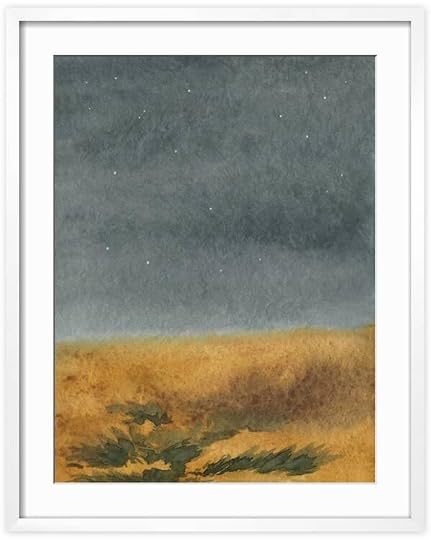
*Image source: "Steppe at Night Landscape" watercolor illustration by Shemelina, on Art.com - this appears to be the background of the cover illustration, but it is not credited as such in the book, the only credit given is for the drawing/engraving of the saltwort plant. I find the cover of Steppe very beautiful and attractive.
I used to think the steppe resembled a soft belly. Through the window of my father's truck I could see it spread, rolling upward in tiny hillocks. The steppe sand is pierced by grasses and little pale flowers.
How to give a glimpse of this novel? It’s both subtle and direct. It's neither dark nor heavy, exactly, yet there is no lightness in it. It has a sharp edge, yet leaves a dull ache of mourning, a taste of bitter weeds, a numbness of undertone, a melancholy drone like the whine of a big rig crossing the steppe. And yet the prose !! -- gritty and gorgeous, sensuous and strong -- is so compelling ... so fresh, so alive... I just wanted to read it and keep reading.
Night in the steppe is deafening. It's pitch black, and the chirring in it pierces your body with a thousand needles. It's hard to sleep; the entire steppe seems to be launching itself in your direction. The nighttime steppe is an army of archers aiming their electric black arrows directly at you. Meanwhile the grasses keep whispering, whispering about some mortal danger…
*I’ve always been fascinated by the fact that nothing comes from nowhere and nothing disappears without a trace.
The nameless narrator is a young woman on a quest to understand her own identity by getting to know her long-estranged father, who left her family when she was ten. At twenty she reunites with him, riding along with him in his long-haul truck. What is she after? What does she want?
I want to be like a tongue. A tongue is both soft and resilient. When a little wound appears in the mouth, the tongue cannot rest. You know it’ll go on agitating it, tasting its metallic tang and feeling the ragged tissues, the sliver of skin hanging off its edge; the tongue will feel those things in order to remember and redress. A tongue is a restless organ, worming its way into the gaps between teeth and running over the chipped bits; it does this automatically, and even when the act is painful and unpleasant, it’ll go on working itself into the gaps in the mouth until they are completely gone. You know how a tongue works; I want to be just the same as a tongue. I want to lick at ragged wounds and feel the chipped places in the bone.
And she does, with her tongue, her language, work at the wounds that have made up her life so far. We just don’t know — we have very little idea yet — who she is or what that life was like. We know she is a lesbian and a student, and that she feels shame and embarrassment -- about him, about herself.
She’s very slow to open up to the reader. Halfway through the book, it annoyed me that the narrator had portrayed her father and everyone else in a harsh light but had revealed almost nothing about herself, as if she were sparing herself the exposure she dished out on others. Yet little by little she unfolds her story.
It mystifies and disturbs her that her mother told her — accused her, really — of being like her father. Yet we can see glimpses … and over time, especially after her father’s untimely death, she comes to see …
What I’m saying to you now are words I’ve long repeated to myself. It’s been seven years since he died, and I think about him constantly, trying to come to terms with and understand his life. I imagine that I’m doing this because he himself is finished and can be seen as an episode of the concluded past. The only trouble is that I can feel that I’m an enduring, animal extension of my father. I note my walk, the wrinkles forming around my eyes, the silt-water-colored eyes sinking gradually into the skull….Exhausted by the end of the day, I look in the mirror and I see my father’s face.
Later she realizes it's not just a physical resemblance . . .
Watching my father, I thought I understood him. I could feel that inside me there was something that could not be fed to satisfaction; it was like a darkness that begged only to be destroyed. Where was the border between this darkness and myself? I couldn’t say. I knew the feeling that drove my father—he was moved by the desire to leave himself behind.
At one point she says that her father - who is revealed to be a reformed criminal who is still a raging alcoholic and drug addict who contracted AIDS - is not someone to be "pitied and saved". Why, I wondered, would you not want to save him if you could? Did this mean it was unlikely he ever could be saved? Or was it (I thought) a rebellion against Dostoevsky and his legacy in Russian literature?
In many ways she is nothing like her father -- and she has chosen a different and better life. But nothing comes from nothing, and nothing disappears and leaves no trace. Her father is now buried in the steppe. His body feeds the steppe. He will be buried in the steppe forever. He is the steppe.
Nothing is enough for the steppe. There’s not a thing in the world that can cover the steppe with itself entirely. The steppe requires a song with words as precise as an instrument for seeing the most distant stars. But I had no words, and it was as if I didn’t even exist. My father existed, and the steppe existed, too. But there were no words and no me.
Both Oksana Vasyakina the author of this novel, and Oksana Vasyakina, the narrator, are now poets. They have words, and they exist. I have a sense that Oksana Vasyakina will become/is perhaps becoming an important modern Russian novelist. There's so much more to this book than I've given you a taste of. It's very much about Russia, a certain (sub?)culture that formed her father, and the changes from her father's time to hers.
Do I want to read more of her work? I feel strangely compelled.
______________________
*Image source: "Steppe at Night Landscape" watercolor illustration by Shemelina, on Art.com - this appears to be the background of the cover illustration, but it is not credited as such in the book, the only credit given is for the drawing/engraving of the saltwort plant. I find the cover of Steppe very beautiful and attractive.

April 28, 2022
если честно, «степь» понравилась мне даже больше, чем «рана» (а «рана», mind you, одна из моих самых любимых книг 2021)
я люблю Оксану Васякину, мне нравится то, как она красиво рассказывает о жутком и уродливом, то, как в каждой странице и даже каждом абзаце сквозит безнадёжность, но она такая родная и знакомая, эта уродливость — моя, всё, о чем пишет Оксана, я чувствую и знаю, только она облекает это в слова.
это мой любимый отрывок про язык. я подчеркивала любимые отрывки ручкой, и некоторые страницы у меня полностью подчеркнуты чёрным, потому что невозможно не.
«степь» нравится мне больше, чем «рана», потому что в ней много про природу. про связь человека и природы, в ней много про смерть, невероятный отрывок про старость, так много разрывающих сердце на части частей, и из этой мозаики складывается уникальное произведение. очень советую.
я люблю Оксану Васякину, мне нравится то, как она красиво рассказывает о жутком и уродливом, то, как в каждой странице и даже каждом абзаце сквозит безнадёжность, но она такая родная и знакомая, эта уродливость — моя, всё, о чем пишет Оксана, я чувствую и знаю, только она облекает это в слова.
это мой любимый отрывок про язык. я подчеркивала любимые отрывки ручкой, и некоторые страницы у меня полностью подчеркнуты чёрным, потому что невозможно не.
«степь» нравится мне больше, чем «рана», потому что в ней много про природу. про связь человека и природы, в ней много про смерть, невероятный отрывок про старость, так много разрывающих сердце на части частей, и из этой мозаики складывается уникальное произведение. очень советую.

Read
May 20, 2022Пока что книга года. Страшная, точная, поэтичная, терапевтичная, умная. То, что я много лет мечтала найти на русском языке. И ещё - великие пейзажи.

June 9, 2022
Рана меня намного больше задела, возможно это из-за того, что я не была знакома со своим отцом… но не будем о сравнениях, произведение до глубины души отзывается, откликается и представляется в тонких подробностях. Как сказала моя знакомая, что я люблю книги про боль, в них намного больше правды, чем в невероятных любовных романах!

April 25, 2026
Oksana Vasyakina, a Russian lesbian poet, has written a novel about a Siberian lesbian and her relationship with her father who dies of AIDS at the age of 47. The book is beautifully translated by Elina Alter who also translated her previous book Wound about the narrator’s mother.
Steppe is a raw and lyrical story of both the truck driver father who is also a criminal and a drug addict and the unique landscape of the Russian steppe.
In 1992 I crossed the steppe on the Trans-Siberian Railway. It was an amazing trip. I remember being mesmerized by the empty landscape. 4,000 km long, it makes up most of the largest country geographically in the world. Reading this book the steppe felt so close again, as well as many of the points of Russian culture Vasyakina writes about.
I realize this book might appeal to few people because of the Russian specifics but the parts about the narrator’s parents and father, her own feelings of being open as a lesbian, the ponderous observations about death and grief are also much worth reading. She is a fine writer.
“Where was the border between this darkness and myself? I couldn’t say. I knew the feeling that drove my father— he was moved by the desire to leave himself behind.”
“I used to think that the steppe resembled a soft belly. Through the window of my father’s truck I could see its spread, rolling upward in tiny hillocks.”
And they are tiny, believe me. The steppe has such a history—it’s the place where the Amazons ran on their horses and the Scythians too. It is where Asia and Europe meet. It is where the ancient stone babas (women)have been found dating from as far back as the 13th century BCC. They reached Ukraine and are being destroyed by Russian bombs as we speak.
Steppe is a raw and lyrical story of both the truck driver father who is also a criminal and a drug addict and the unique landscape of the Russian steppe.
In 1992 I crossed the steppe on the Trans-Siberian Railway. It was an amazing trip. I remember being mesmerized by the empty landscape. 4,000 km long, it makes up most of the largest country geographically in the world. Reading this book the steppe felt so close again, as well as many of the points of Russian culture Vasyakina writes about.
I realize this book might appeal to few people because of the Russian specifics but the parts about the narrator’s parents and father, her own feelings of being open as a lesbian, the ponderous observations about death and grief are also much worth reading. She is a fine writer.
“Where was the border between this darkness and myself? I couldn’t say. I knew the feeling that drove my father— he was moved by the desire to leave himself behind.”
“I used to think that the steppe resembled a soft belly. Through the window of my father’s truck I could see its spread, rolling upward in tiny hillocks.”
And they are tiny, believe me. The steppe has such a history—it’s the place where the Amazons ran on their horses and the Scythians too. It is where Asia and Europe meet. It is where the ancient stone babas (women)have been found dating from as far back as the 13th century BCC. They reached Ukraine and are being destroyed by Russian bombs as we speak.
August 5, 2022
«Степь» более традиционная по форме — здесь нет той оголенной боли, которая сбивает с ног узнаванием и интенсивностью, как в «Ране», чуть меньше экспериментов с теорией. Здесь много медитативности, телесного, пространства и сквозных метафор. Не знаю, читала ли Оксана Васякина Эдуарда Луи, с которым она в моей читательской биографии как бы вступает в диалог. У него есть дебютная книга о детстве и квирности в нищей французской глубинке (The End of Eddy, сорри, не читаю на французском), а также две небольшие книги о матери (A Woman’s Battles and Transformations) и отце (Who Killed My Father). Последнюю он заканчивает перечислением людей и институций, которые виноваты в смерти его отца-рабочего. Читая «Степь», я как раз очень много думал о рецепции вот этого «личное — это политическое» на русском языке в российском контексте, которое превращается в принятие неизбывности боли, нищеты, нелюбви и того, что принято называть пост-советским. Кажется, я теперь буду читать все, что напишет Васякина.

August 4, 2026
Women in Translation Month - Book #1
Second book in an "autofictional trilogy" and this month's group read at the group, 21st Century Literature.
I was completely immersed in Vasyakina's poetic prose: the silt, the smog, the paralytic fear. The novel's shape is a collage of memories, memories that were often uncomfortable, but I couldn't look away.
The Richness of the Fragment: An Interview with Oksana Vasyakina and Elina Alter
JY: Alongside this focus on time and brutality, there’s an emphasis on the incomplete; why is the fragment form crucial to this book?
OV: I’m fascinated with fragmentary writing. To the extent of my ability, I’ve been studying the history of fragmentary writing in Russian, and I know that the fragment is one of the richest forms for working with a person’s experience and their memory. I don’t believe in wholeness and I don’t believe in Chekhov’s gun. Language is insufficient, it contains vacant spaces, because language isn’t enough to reflect the fullness of the world and its phenomena. The gun doesn’t need to go off, because the logical coherence of a text inheres in the planes of its syntax and structure, not in its action.
https://www.asymptotejournal.com/blog...
Second book in an "autofictional trilogy" and this month's group read at the group, 21st Century Literature.
I was completely immersed in Vasyakina's poetic prose: the silt, the smog, the paralytic fear. The novel's shape is a collage of memories, memories that were often uncomfortable, but I couldn't look away.
The Richness of the Fragment: An Interview with Oksana Vasyakina and Elina Alter
JY: Alongside this focus on time and brutality, there’s an emphasis on the incomplete; why is the fragment form crucial to this book?
OV: I’m fascinated with fragmentary writing. To the extent of my ability, I’ve been studying the history of fragmentary writing in Russian, and I know that the fragment is one of the richest forms for working with a person’s experience and their memory. I don’t believe in wholeness and I don’t believe in Chekhov’s gun. Language is insufficient, it contains vacant spaces, because language isn’t enough to reflect the fullness of the world and its phenomena. The gun doesn’t need to go off, because the logical coherence of a text inheres in the planes of its syntax and structure, not in its action.
https://www.asymptotejournal.com/blog...

May 15, 2026
I literally selected this book from the new book room at our library because I liked the cover. Seeing, however, that it was a contemporary Russian author intrigued me and while it sat next to my chair unread for quite a while, when I finally picked it up, I was mesmerized.
Kudos to the translation and the translator, Elina Alter, because this book is beautifully written and she does an excellent job of translating Steppe into English.
I found myself reading and re-reading many passages of descriptive text that I thought were gorgeous. Oksana Vasyakina is a very thoughtful writer and this book about her father, her relationship with him and also what it is to be queer in modern day Russia, is one of the best books I have read so far in 2026.
Late last year, I read Sheila Fitzpatrick's The Russian Revolution, a non-fiction book of history that ends with the death of Lenin and the beginning of the Stalinist era in the Soviet Union. It is interesting to think about how the Soviet Union started out as a country and what it is now. I have a kind of narrow, stereotyped view of Russia and the Soviet Union because the extent of my reading has been limited to the time around the revolution and the years leading up to WWII. Steppe was eye-opening in that it gave me a sense of what modern day Russia is like and how ordinary citizens live and get by.
Vasyakina's book, Wound, is also available at our local library and I put a hold on it for my next stack for mid-2026.
Kudos to the translation and the translator, Elina Alter, because this book is beautifully written and she does an excellent job of translating Steppe into English.
I found myself reading and re-reading many passages of descriptive text that I thought were gorgeous. Oksana Vasyakina is a very thoughtful writer and this book about her father, her relationship with him and also what it is to be queer in modern day Russia, is one of the best books I have read so far in 2026.
Late last year, I read Sheila Fitzpatrick's The Russian Revolution, a non-fiction book of history that ends with the death of Lenin and the beginning of the Stalinist era in the Soviet Union. It is interesting to think about how the Soviet Union started out as a country and what it is now. I have a kind of narrow, stereotyped view of Russia and the Soviet Union because the extent of my reading has been limited to the time around the revolution and the years leading up to WWII. Steppe was eye-opening in that it gave me a sense of what modern day Russia is like and how ordinary citizens live and get by.
Vasyakina's book, Wound, is also available at our local library and I put a hold on it for my next stack for mid-2026.

June 15, 2022
жуткая книга о мужчинах, которые почему-то становятся отцами

Read
April 26, 2025Oksana Vasjakina (s. 1989) on nyky-Venäjällä kielletty kirjailija, joka jo osaltaan on tae siitä, että hänen kirjoihinsa kannattaa tutustua.
Aro (Степь 2022,) on toinen osa Vasjakinan autofiktiivistä romaanitrilogiaa, jonka aloitti teos Haava (Рана 2021). Kummatkin teokset on suomentanut Riku Toivola ja julkaissut Otava. Nippelitietona mainittakoon, että suomi oli ensimmäinen kieli, jolle Haava käännettiin. Trilogian päättäävä kolmas osa on nimeltään Ruusu (Роза), mutta sitä ei ole ainakaan vielä toistaiseksi suomennettu.
Etsin taannoin Haavaa ja Aroa Goodreadsista ja ne toki sieltä löytyivät, mutta niitä kuvaavat sivut eivät avautuneet. Äsken kokeillessani Haavan ja Aron sivuille pääsi. Jännää tai sitten ei.
Kuuntelin Haavan parisen vuotta sitten ja jo sitä kuunnellessani tiesin, että menetin paljon, kun lukemisen sijasta päädyin kirjan kuunteluun. Olen ottanut opikseni ja luopunut äänikirjojen kuuntelusta.
Haavassa Vasjakina kertoo vaikeasta äitisuhteestaan, homoseksuaalisen identiteettinsä löytämisestä ja naisen asemasta Venäjällä. Arossa on tarkasteluvuorossa Vasjakinan kipeä suhde hänen Aidsiin kuolleeseen isäänsä.
Isän Aids on seurausta heroiinin käytöstä, mutta Vasjakina muistuttaa, että Venäjällä aidsia koskevassa tiedottamisessa suonensisäisiä huumeita ei mainita lainkaan, vaan aidsista puhutaan kumppanin pettämisestä johtuvana seurauksena. Jos on uskollinen seksikumppanilleen on turvassa aidsilta. Mainoskuvissa poseeraavat heteroperheet.
Aron päähenkilön suhde isään on etäinen.
"Isä oli minulle täysin vieras ihminen, todellinen ventovieras. Hän oli yksin, niin kuin kivenlohkare tiellä. Lohkareen voi kyllä nähdä. Sitä voi silittää. Mutta sille ei voi sanoa mitään, ja jos sanoo, se kuulee, mutta ei vastaa."
Isä on päähenkilölle pettymys, mutta samalla isän irrallisuudessa on hänelle jotakin lumoavaa. Vaikka isä herättääkin ihmisissä sääliä, hänen työnsä rekkakuskina nähdään vapauden ilmentymänä.
Arossa ollaan konkreettisesti arolla isän rekan kyydissä ja välillä mukana on myös päähenkilön tyttöystävä. Aro on suuri ja vangitsematon ja teoksen kertoja toteaa, että hänen kielensä ei riitä vangitsemaan sitä. Aro ja isä kuuluvat yhteen ja jättävät päähenkilön ulkpuolelleen.
Romaanissa valotetaan isän elämää myös aron ulkopuolella. Isä on viettänyt pikkurikollisen elämää ja ollut väkivaltainen mies, jonka purkausten kohteeksi erityisesti päähenkilön äiti on joutunut.
"Kun äiti petti isää, isä hakkasi häntä patteria vasten niin kauan, että hänen kasvonsa muuttuivat siniseksi mössöksi, ja raiskasi häntä sitten tuntikausia."
Lapselta isän väkivaltaisuus ja sen jättämät jäljet salataan kertomalla, että vanhemmat ovat olleet onnettomuudessa.
Vasjakinan tekstissä rumuus ja kauneus kietoutuvat yhteen tavalla, joka tekee niiden erottamisen mahdottomaksi. Homopropagandalaista välittämättä Vasjakina ei epäröi kuvata naisten välistä rakkautta, vaikka se tuntuukin rikolliselta ja aiheuttaa myös häpeää. Häpeää, joka haisee "vaaleanpunaiselta kalan vereltä, jodilta ja kuivatuilta omenilta".
"Olin tukahtua ja mieleni teki sietämättömästi suudella häntä. Pää tuntui räjähtävän painostavan punaisesta valosta. Pikkuhousut kostuivat, ja haarakiilassa lämpöinen tahmea lima viileni hetkessä, aivan kuin jalkoväliini olisi kuollut nuori Volgan särki."
Vasjakinan kielessä ja kuvauksessa kulkee mukana koko Venäjä. Miliisien suorittamat kotietsinnät ja luhistumaisillaan oleva Neuvostoliitto. Pelko siitä, milloin yöllä koputetaan oveen. Äiti halussaan, jonka isä varasti. Isä rikollisine kavereineen ja hänen kuuntelemansa rikollisista kertovat laulut. Isä ajamassa rekkaa aron halki, odottamassa lasteja, värjöttelemässä taukopaikoilla.
Isän kuolema pakottaa päähenkilön käymään läpi muistojaan isästä ja pohtimaan isäsuhdettaan. Isä on kuitenkin kuin aro - liian laaja, tavoittamaton ja suostumaton.
"Hän oli minun isäni, ja ajatellessani häntä tunsin katkeraa kaipuuta. Hän oli salaperäistä maata, ja samaan aikaan hän oli minun pimeä puoleni."
Aro (Степь 2022,) on toinen osa Vasjakinan autofiktiivistä romaanitrilogiaa, jonka aloitti teos Haava (Рана 2021). Kummatkin teokset on suomentanut Riku Toivola ja julkaissut Otava. Nippelitietona mainittakoon, että suomi oli ensimmäinen kieli, jolle Haava käännettiin. Trilogian päättäävä kolmas osa on nimeltään Ruusu (Роза), mutta sitä ei ole ainakaan vielä toistaiseksi suomennettu.
Etsin taannoin Haavaa ja Aroa Goodreadsista ja ne toki sieltä löytyivät, mutta niitä kuvaavat sivut eivät avautuneet. Äsken kokeillessani Haavan ja Aron sivuille pääsi. Jännää tai sitten ei.
Kuuntelin Haavan parisen vuotta sitten ja jo sitä kuunnellessani tiesin, että menetin paljon, kun lukemisen sijasta päädyin kirjan kuunteluun. Olen ottanut opikseni ja luopunut äänikirjojen kuuntelusta.
Haavassa Vasjakina kertoo vaikeasta äitisuhteestaan, homoseksuaalisen identiteettinsä löytämisestä ja naisen asemasta Venäjällä. Arossa on tarkasteluvuorossa Vasjakinan kipeä suhde hänen Aidsiin kuolleeseen isäänsä.
Isän Aids on seurausta heroiinin käytöstä, mutta Vasjakina muistuttaa, että Venäjällä aidsia koskevassa tiedottamisessa suonensisäisiä huumeita ei mainita lainkaan, vaan aidsista puhutaan kumppanin pettämisestä johtuvana seurauksena. Jos on uskollinen seksikumppanilleen on turvassa aidsilta. Mainoskuvissa poseeraavat heteroperheet.
Aron päähenkilön suhde isään on etäinen.
"Isä oli minulle täysin vieras ihminen, todellinen ventovieras. Hän oli yksin, niin kuin kivenlohkare tiellä. Lohkareen voi kyllä nähdä. Sitä voi silittää. Mutta sille ei voi sanoa mitään, ja jos sanoo, se kuulee, mutta ei vastaa."
Isä on päähenkilölle pettymys, mutta samalla isän irrallisuudessa on hänelle jotakin lumoavaa. Vaikka isä herättääkin ihmisissä sääliä, hänen työnsä rekkakuskina nähdään vapauden ilmentymänä.
Arossa ollaan konkreettisesti arolla isän rekan kyydissä ja välillä mukana on myös päähenkilön tyttöystävä. Aro on suuri ja vangitsematon ja teoksen kertoja toteaa, että hänen kielensä ei riitä vangitsemaan sitä. Aro ja isä kuuluvat yhteen ja jättävät päähenkilön ulkpuolelleen.
Romaanissa valotetaan isän elämää myös aron ulkopuolella. Isä on viettänyt pikkurikollisen elämää ja ollut väkivaltainen mies, jonka purkausten kohteeksi erityisesti päähenkilön äiti on joutunut.
"Kun äiti petti isää, isä hakkasi häntä patteria vasten niin kauan, että hänen kasvonsa muuttuivat siniseksi mössöksi, ja raiskasi häntä sitten tuntikausia."
Lapselta isän väkivaltaisuus ja sen jättämät jäljet salataan kertomalla, että vanhemmat ovat olleet onnettomuudessa.
Vasjakinan tekstissä rumuus ja kauneus kietoutuvat yhteen tavalla, joka tekee niiden erottamisen mahdottomaksi. Homopropagandalaista välittämättä Vasjakina ei epäröi kuvata naisten välistä rakkautta, vaikka se tuntuukin rikolliselta ja aiheuttaa myös häpeää. Häpeää, joka haisee "vaaleanpunaiselta kalan vereltä, jodilta ja kuivatuilta omenilta".
"Olin tukahtua ja mieleni teki sietämättömästi suudella häntä. Pää tuntui räjähtävän painostavan punaisesta valosta. Pikkuhousut kostuivat, ja haarakiilassa lämpöinen tahmea lima viileni hetkessä, aivan kuin jalkoväliini olisi kuollut nuori Volgan särki."
Vasjakinan kielessä ja kuvauksessa kulkee mukana koko Venäjä. Miliisien suorittamat kotietsinnät ja luhistumaisillaan oleva Neuvostoliitto. Pelko siitä, milloin yöllä koputetaan oveen. Äiti halussaan, jonka isä varasti. Isä rikollisine kavereineen ja hänen kuuntelemansa rikollisista kertovat laulut. Isä ajamassa rekkaa aron halki, odottamassa lasteja, värjöttelemässä taukopaikoilla.
Isän kuolema pakottaa päähenkilön käymään läpi muistojaan isästä ja pohtimaan isäsuhdettaan. Isä on kuitenkin kuin aro - liian laaja, tavoittamaton ja suostumaton.
"Hän oli minun isäni, ja ajatellessani häntä tunsin katkeraa kaipuuta. Hän oli salaperäistä maata, ja samaan aikaan hän oli minun pimeä puoleni."

September 9, 2026
I am so glad this was one of the 21st Century Lit group’s August group reads (for Women in Translation month), prompting me to tackle this when I probably would otherwise have overlooked it. I was captivated; this is my first contemporary Russian novel, and it was fascinating.
This novel centers around a road trip taken by the narrator and her estranged long-haul truck driver father through The Russian Steppe between Volgograd and Moscow, but is also a journey through the narrator’s individual personal and family history, the history of how working class people survived the collapse of the Soviet Union, life as a gay woman in Russia, the process of becoming a writer, and learning to face and live with one’s own dark side. At the age of 10, the narrator’s father abandoned her to her mother, but he wanted to reconnect with her 10 years later, resulting in the road trip. The reader finds out early on that the father is dying of AIDS, but the narrator doesn’t know this at the time of the road trip.
This novel, the writing, was so gorgeous, mesmerizing and unlike anything else I’ve read. It is not your typical novel. It is auto-fictional, based on the author’s life, in the form of a memoir. It is not plot driven and not time-linear (the author is interested in fragmentary writing), almost like a series of related essays. The author is a poet and the writing is clear and straightforward, but poetically beautiful, intensely sensuous, and brimming with cinematically evocative imagery. The author’s voice is open, honest, self-examining, truth-seeking, genuine, reflective. The novel seems transportingly authentically Russian, doesn’t seem intended for an international audience with its references to Russian TV shows and musical artists (which I would like to take a little time to explore at some point).
I found the vast immensity and dangerous wild austere beauty of The Steppe beckoning—a wasteland, a place to hide, a perilous place but also perhaps a place to seek refuge or safety for the father from the consequences of his past criminal life and from facing himself. The Steppe has a history of nomadic people and the father is a sort of modern day nomad, always needing to keep moving, always seemingly on the run, a life-style easily achieved with a long-haul trucking career. The Steppe seems to be a metaphor for so many things in this novel—Russia, the father, the unknowable future through which one must navigate life, a sort of womb and tomb from which one is born and then returned to. The narrator is taking this trip with her father hoping to get to know him and also herself, because she sees him in her reflection. She is overcome with shame and hopes to find answers, but they are never so easy to uncover.
Although I was not always able to completely follow the author to the endpoints of all this novel’s fragments, this was a surprisingly compelling read for me—I did not want to put it down and reread many parts of it. I enjoyed it immensely. I did not realize when I picked this book up that it is the middle book of a trilogy. I hope to read the rest of it so I can see if that provides a better sense of completion. This author is only 36. I look forward to what she writes in the years ahead.
This novel centers around a road trip taken by the narrator and her estranged long-haul truck driver father through The Russian Steppe between Volgograd and Moscow, but is also a journey through the narrator’s individual personal and family history, the history of how working class people survived the collapse of the Soviet Union, life as a gay woman in Russia, the process of becoming a writer, and learning to face and live with one’s own dark side. At the age of 10, the narrator’s father abandoned her to her mother, but he wanted to reconnect with her 10 years later, resulting in the road trip. The reader finds out early on that the father is dying of AIDS, but the narrator doesn’t know this at the time of the road trip.
This novel, the writing, was so gorgeous, mesmerizing and unlike anything else I’ve read. It is not your typical novel. It is auto-fictional, based on the author’s life, in the form of a memoir. It is not plot driven and not time-linear (the author is interested in fragmentary writing), almost like a series of related essays. The author is a poet and the writing is clear and straightforward, but poetically beautiful, intensely sensuous, and brimming with cinematically evocative imagery. The author’s voice is open, honest, self-examining, truth-seeking, genuine, reflective. The novel seems transportingly authentically Russian, doesn’t seem intended for an international audience with its references to Russian TV shows and musical artists (which I would like to take a little time to explore at some point).
I found the vast immensity and dangerous wild austere beauty of The Steppe beckoning—a wasteland, a place to hide, a perilous place but also perhaps a place to seek refuge or safety for the father from the consequences of his past criminal life and from facing himself. The Steppe has a history of nomadic people and the father is a sort of modern day nomad, always needing to keep moving, always seemingly on the run, a life-style easily achieved with a long-haul trucking career. The Steppe seems to be a metaphor for so many things in this novel—Russia, the father, the unknowable future through which one must navigate life, a sort of womb and tomb from which one is born and then returned to. The narrator is taking this trip with her father hoping to get to know him and also herself, because she sees him in her reflection. She is overcome with shame and hopes to find answers, but they are never so easy to uncover.
Although I was not always able to completely follow the author to the endpoints of all this novel’s fragments, this was a surprisingly compelling read for me—I did not want to put it down and reread many parts of it. I enjoyed it immensely. I did not realize when I picked this book up that it is the middle book of a trilogy. I hope to read the rest of it so I can see if that provides a better sense of completion. This author is only 36. I look forward to what she writes in the years ahead.

April 24, 2022
Первую половину быстро прочитала, а потом текст становится плотный, тяжёлый эмоционально и для прочтения.
Книгу считаю хорошей. Надо читать. Но она грустная, в паре мест я плакала.
Книгу считаю хорошей. Надо читать. Но она грустная, в паре мест я плакала.
August 14, 2026
...by talking about insects and smoke, each man was indicating to the other I won't hurt you.I'm halfway through three weeks of medical leave, and various personal projects long subsumed by the need to work and sleep are slowly rising back to the surface. In the month of Women in Translation, it's simple to slip in my effort to reclaim what ground I've lost in the reading realms of the marginalized, the queer, the non-Anglo, which my workplace will magnanimously accept in a heavily cauterized form every once in a great while and benign neglects into moldering oblivion otherwise. So to have this work, my first Russian read since the start of this year and my first not by a white guy since 2024 and with a heady dash of queer to boot, could have easily collapsed under so much pent up expectation and misdirected desperation.
Certain words of the advert blurb obviously convinced me enough to commit, while others cropped up in the commentary of others until my own need to self-regulate made me receptive to passive advice: steppe, father, queer, AIDS on the inner; autofiction & second in a trilogy on the other. The substantive infusion of quite but not quite fact implied by that first clarified my read when I began to be bogged down by my more narratological expectations, shifting into polyphonic social overview that I won't insult too much by terming "Alexievichian" more than once. Shifting into this expansive berry picking fashion gave me room to take in and compartmentalize the touching vignettes and the naturalist observations, the ethnography recital and the pop culture drops, the thread of a life studded with the facts of the living. It makes for a history where Soviet and capitalism are frameworks to be survived as best one can given the accumulation of circumstance, and if readers are disappointed by the lack of mention of Ukraine, I expect that they also castigate all modern US publications that forebear from touching upon Venezuela.
To read this was to pick up a thread that the Nobel Prize for Lit had trained me too well to refrain from dropping once the media cycle lost interest. Queer and AIDS in the land of Gorky, sure, but also misogyny, racism, healthcare deserts, who is monitored for shoplifting under wildfire-choked skies and who is raped on the floor after having their head bashed into a radiator. It's similar enough for sympathy but for enough for me to play the coldblooded voyeur, which comes in handy when the main character questions the choices of someone surviving under chronic illness. But that's the beauty of autofiction: the dispassionate cultural relativism both writer and reader and masquerade under when convenient. I will say, though, that the reason why I rated this as highly as I did has to do with Vasyakina's ability to cut through the horseshit spouted by both our home countries and remind me of Marjane Satrapi said so long ago: we have more in common than the nations dangling us over our respective pits. A queer hand reaching out to touch a queer mine.
I'm probably going to backtrack to this sequel's first and then forward to the final some time after that. There's something filling about how balanced the entire exercise is: fiction but not too much, info but not too much, and while the prose/translation every so often risks puncturing the tension with too much verbiage, it still engages on several levels as chronically ill queer. The rating's high enough for me to not worry about the work in general, but to whatever op-ed planted this earwig of 'Mad Max' as referral touchstone for this piece in my head: are you okay?
What he said had exposed me—and, at the same time, it had brought me a terrible joy.

May 28, 2022
"Степь" понравилась больше, чем "Рана".
Довольно сильная книга. Героиня встречается со своим отцом-дальнобойщиком и едет вместе с ним на фуре (которую отец называет "Братан") из Владимира в Астрахань. Попутно вспоминает свои непростые отношения с отцом (его героиновое и криминальное прошлое, беспутность, уход из семьи и т.п.).
Описания (как степи, так и людей - в первую очередь, собственно отца) на высшем уровне. Они довольно чётко позволяют увидеть и почувствовать то (неприятное), о чём пишет Васякина. Особый упор на запахи и крупные планы.
В отличие от "Раны" тут меньше эмоциональный накал, больше чувствуется отстранённость. И эта отстранённость очень хорошо "ложится" и на пейзаж, и на отношения к получужому отцу.
Немного мешали эпизоды об отношениях с любовницами главной героини - как по мне, они выпадали из общей ткани повествования, не вписывались в сюжет, можно было и без них обойтись.
Довольно сильная книга. Героиня встречается со своим отцом-дальнобойщиком и едет вместе с ним на фуре (которую отец называет "Братан") из Владимира в Астрахань. Попутно вспоминает свои непростые отношения с отцом (его героиновое и криминальное прошлое, беспутность, уход из семьи и т.п.).
Описания (как степи, так и людей - в первую очередь, собственно отца) на высшем уровне. Они довольно чётко позволяют увидеть и почувствовать то (неприятное), о чём пишет Васякина. Особый упор на запахи и крупные планы.
В отличие от "Раны" тут меньше эмоциональный накал, больше чувствуется отстранённость. И эта отстранённость очень хорошо "ложится" и на пейзаж, и на отношения к получужому отцу.
Немного мешали эпизоды об отношениях с любовницами главной героини - как по мне, они выпадали из общей ткани повествования, не вписывались в сюжет, можно было и без них обойтись.
May 14, 2022
Пока читала, успела размягчиться, влюбиться, расстроиться, разозлиться и обратно размягчиться. Очень хорошо.
February 4, 2026
Even though the writing was really poetic and atmospheric, this book didn’t work for me. I didn’t like the structure and I was missing a plot. Even though we get to know a lot about the protagonist, she felt so distant and disconnected. And I didn’t really get the art and literature references, which for me didn’t add anything to the story.

March 19, 2023
С каждым годом всё чаще попадаются хорошие тексты талантливых писателей, которые моложе меня )))
Книга обладает многими недостатками российской либеральной литературы. Тут и поиск причин криминальных 90-х в неудобном советском прошлом. И эпидемия СПИДа из-за погрязшей в коррупции советской медицины. Про вымывание татарской крови и превращение их в условно русских. Даже своего отца (о котором книга) она изучает будто под микроскопом, как нечто чуждое, одновременно боясь и тыкая в него палкой. Как российские либералы изучают свою родную страну. И конечно же, это квир-литература. Хотя упоминание о том, что она лесбиянка, вообще никак не влияет на сюжет.
Но всё это проскальзывает лишь в авторских отступлениях. Основа романа - это описание телесности и ее движения сквозь время. Самой авторки, ее отца, других персонажей. На фоне неизменной степи, братана-маза, городов... Делая это в разы лучше, чем та же Токарчук в Бегунах. Ее поэтические описания не требуют контекста и достойны прочтения даже вне сюжета. При этом оставаясь экономными на слова. Нечасто получаешь удовольствие от самого текста.
В книге отец говорит ей, что писатель должен жалеть и любить любого человека, обладать писательской мудростью. Она же ему ответила, что сначала писатель должен понять кто такой он сам.
Надеюсь, в итоге она поймет себя. И напишет великий русский роман. А не останется в комнате поисковиков российской безнадеги.
Книга обладает многими недостатками российской либеральной литературы. Тут и поиск причин криминальных 90-х в неудобном советском прошлом. И эпидемия СПИДа из-за погрязшей в коррупции советской медицины. Про вымывание татарской крови и превращение их в условно русских. Даже своего отца (о котором книга) она изучает будто под микроскопом, как нечто чуждое, одновременно боясь и тыкая в него палкой. Как российские либералы изучают свою родную страну. И конечно же, это квир-литература. Хотя упоминание о том, что она лесбиянка, вообще никак не влияет на сюжет.
Но всё это проскальзывает лишь в авторских отступлениях. Основа романа - это описание телесности и ее движения сквозь время. Самой авторки, ее отца, других персонажей. На фоне неизменной степи, братана-маза, городов... Делая это в разы лучше, чем та же Токарчук в Бегунах. Ее поэтические описания не требуют контекста и достойны прочтения даже вне сюжета. При этом оставаясь экономными на слова. Нечасто получаешь удовольствие от самого текста.
В книге отец говорит ей, что писатель должен жалеть и любить любого человека, обладать писательской мудростью. Она же ему ответила, что сначала писатель должен понять кто такой он сам.
Надеюсь, в итоге она поймет себя. И напишет великий русский роман. А не останется в комнате поисковиков российской безнадеги.
May 10, 2022
Оксана Васякина в своей второй крупной книге прозы высказывается настолько телесно и коммуникативно с самой собой, что в моменте понимаешь насколько человек сложное существо и как же сложно дёргать за его личностные ниточки.
Рана и Степь это тяжелый челночный бег между матерью и отцом, которые в свой последний путь отправляются со шлейфом воспоминаний от любящей насколько это возможно дочери. Все эти постоянные заныривания на ленте времени кажутся небольшими и незначительными отрезками, но Оксана своим ёмким слогом впивается в эти мгновения разворачивая свои переживания насколько это позволяет книга.
Сильнейшее высказывание личных переживаний, особенно если сложить это с ранее изданной "Раной". Рана заживает, степь несмотря на свою иллиюзию бесконечности тоже не безгранична. А за всем этим опять жизнь - с женой, дыханием и рутиной.
Рана и Степь это тяжелый челночный бег между матерью и отцом, которые в свой последний путь отправляются со шлейфом воспоминаний от любящей насколько это возможно дочери. Все эти постоянные заныривания на ленте времени кажутся небольшими и незначительными отрезками, но Оксана своим ёмким слогом впивается в эти мгновения разворачивая свои переживания насколько это позволяет книга.
Сильнейшее высказывание личных переживаний, особенно если сложить это с ранее изданной "Раной". Рана заживает, степь несмотря на свою иллиюзию бесконечности тоже не безгранична. А за всем этим опять жизнь - с женой, дыханием и рутиной.

July 10, 2026
Vitsit miten hieno kirja! Muistelisin Haavan olleen ehkä jotenkin vaikea (?), siinä missä Aro maalaa sellaisia kuvia joita en ehkä haluaisi nähdä, mutta kuvat ovat kieltämättä kirkkaita. Vasjakinan perhe on ollut lievästi sanottuna dysfunctional, mutta toisaalta omaan menneisyyteen liittyy tietysti myös pehmeämpiä muistoja. Isä on erityisen ristiriitainen hahmo: entinen rikostausta ja siihen liittyvä identiteetti ja tietynlainen karkeus, toisaalta rekkamiehen vakaa työ jonka isä handlaa jotenkin ja suhde tyttäreensä. Isä on homofoobinen ja kaikin puolin karkea, mutta hänellä ei liiemmin vaikuta olevan ongelmaa tyttärensä homoseksuaalisuuden tai edes tyttöystävien kanssa. Paljon pienessä sanamäärässä.
June 6, 2022
Водки б, так ведь не пью

July 2, 2025
Wau. Niin hieno. 4,5.

March 21, 2025
"прокормиться сегодня, а завтра двигаться дальше"
Для меня вторая книга Васякиной: читала ее почти сразу после "Раны", и не скажу, что она понравилась мне больше или меньше. Она стала ожидаемым продолжением.
Автор красиво умеет в природные метафоры и включение внешнего мира во внутренний поток. Степь здесь играет главную роль наравне с самой Оксаной и ее отцом. Влияет на них, подчиняет себе.
А еще автор здорово анализирует запомнившийся с детства блатной мир(ф). Это показалось самой интересной частью: про чувство собственной исключительности у блатных, про глобальную войну между русскими и иными, про интерпретацию раскаяния грешников (воруй, убивай, а главное в конце раскайся, и окружающие должны тебя принять) и тяжелой жизни с арестами и обязательными предательствами ради мига свободы. Пугающее детство, которое интересно изучать.
Фигура отца выросла из описанного блатного мифа. И несмотря на идущие десятилетия, он остался там, где мужики собирались в гараже и выстраивались на фотографию строго по иерархии. Только теперь вместо двуногих у него рядом становится десятиколесный "Братан".
Героиня постаралась понять отца. И дать ему понять ее. Однако кроме воспоминаний о быте дальнобойщиков и проведенном с ним детстве из этого ничего не получилось. Эти два описания и наполнили течение книги по степным пейзажам за окном фуры.
Если вы прониклись "Раной", то продолжить со "Степью" стоит. Но отдельно ее кому-то посоветовать сложно.
Для меня вторая книга Васякиной: читала ее почти сразу после "Раны", и не скажу, что она понравилась мне больше или меньше. Она стала ожидаемым продолжением.
Автор красиво умеет в природные метафоры и включение внешнего мира во внутренний поток. Степь здесь играет главную роль наравне с самой Оксаной и ее отцом. Влияет на них, подчиняет себе.
А еще автор здорово анализирует запомнившийся с детства блатной мир(ф). Это показалось самой интересной частью: про чувство собственной исключительности у блатных, про глобальную войну между русскими и иными, про интерпретацию раскаяния грешников (воруй, убивай, а главное в конце раскайся, и окружающие должны тебя принять) и тяжелой жизни с арестами и обязательными предательствами ради мига свободы. Пугающее детство, которое интересно изучать.
Фигура отца выросла из описанного блатного мифа. И несмотря на идущие десятилетия, он остался там, где мужики собирались в гараже и выстраивались на фотографию строго по иерархии. Только теперь вместо двуногих у него рядом становится десятиколесный "Братан".
Героиня постаралась понять отца. И дать ему понять ее. Однако кроме воспоминаний о быте дальнобойщиков и проведенном с ним детстве из этого ничего не получилось. Эти два описания и наполнили течение книги по степным пейзажам за окном фуры.
Если вы прониклись "Раной", то продолжить со "Степью" стоит. Но отдельно ее кому-то посоветовать сложно.

February 4, 2026
Steppe is the story of a literature student, who chooses to leave her life behind to accompany her dying truck driver father on road trips. An opportunity to re-form the connection with her estranged father & also confront his patrichial psyche
Once ruthless & an addict who struggled in Post Soviet of 1990's,the father is now grappling with new realities of his life
Their journey together through the memories in the midst of vast, barren terrain of a Steppe, forms an excellent metaphor for the dried emotional depth of their bond
Author's prose is poetic & laced with intense observations. The imagery is very picturesque and beautiful, making it quite a cinematic experience.
Elina's translation is precise, making this queer story irresistible
Read it
Once ruthless & an addict who struggled in Post Soviet of 1990's,the father is now grappling with new realities of his life
Their journey together through the memories in the midst of vast, barren terrain of a Steppe, forms an excellent metaphor for the dried emotional depth of their bond
Author's prose is poetic & laced with intense observations. The imagery is very picturesque and beautiful, making it quite a cinematic experience.
Elina's translation is precise, making this queer story irresistible
Read it

March 11, 2025
Когда я слушала рассказ матери о том, как отец несколько раз подряд изнасиловал её после того как до полусмерти избил, мне хотелось его ненавидеть. Но я не умела его ненавидеть. Я до бесчувствия боялась его
Книга наголову выше "Раны" хотя бы потому, что в ней куда меньше теории письма. В ней автор пытается что-то понять про себя, проезжаю по степям центральной России с отцом-дальнобойщиком, которого она не видела много лет. Фура отца (на самом деле она ему не принадлежит) называется Братан.
В книге вообще нет описаний как таковых, только поток сознания, ощущений, обрывков воспоминаний автора, и этот стиль письма удивительно легкий для восприятия. Учитывая, что детство автора было опасным, бедным, и далее по списку.
Ну и, много того, в чем ты можешь узнать кусочки своего непосредственного опыта. Горящие леса под Москвой, эпизод с Мохито, придорожные кафе. Много занятных моментов из жизни дальнобойщиков, типа, Фейри вместо шампуня. История жизни отца тоже интересная, пусть хорошим человеком его даже с натяжкой не назовешь.
Книга неплохая, но порекомендовать не могу
Книга наголову выше "Раны" хотя бы потому, что в ней куда меньше теории письма. В ней автор пытается что-то понять про себя, проезжаю по степям центральной России с отцом-дальнобойщиком, которого она не видела много лет. Фура отца (на самом деле она ему не принадлежит) называется Братан.
В книге вообще нет описаний как таковых, только поток сознания, ощущений, обрывков воспоминаний автора, и этот стиль письма удивительно легкий для восприятия. Учитывая, что детство автора было опасным, бедным, и далее по списку.
Ну и, много того, в чем ты можешь узнать кусочки своего непосредственного опыта. Горящие леса под Москвой, эпизод с Мохито, придорожные кафе. Много занятных моментов из жизни дальнобойщиков, типа, Фейри вместо шампуня. История жизни отца тоже интересная, пусть хорошим человеком его даже с натяжкой не назовешь.
Книга неплохая, но порекомендовать не могу
March 15, 2026
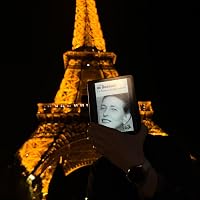
Очень понравились описательные приемы, образы, поэтичность, нелинейность. Текст порой бесконечно депрессивный и близкий невыносимо прожигал грудь
January 30, 2026
Picked this up from the library. It's a gorgeous, reflective novel that almost feels like it was written as a memoir of a real queer Russian literature student. Blends the small scale in the desire of this daughter to know her father more, and the landscapes of Russia from her father's long distance trucking hauls, and the cities in between where they try to bond as best they can. Going to go find her prior novel now, because I really want to read more of this style.
May 19, 2026
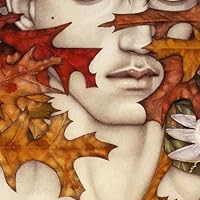
Steppe opens with a startling simile: “The steppe looks like a sinewy piece of yellow meat. Dark-orange lines, like heavy serpents, stripe the sands, gray rivers stripe the sands.” This lurid and suggestive image is a strong start; while the novel does not, in my view, deliver fully on its promise, it is nonetheless a rewarding read.
Steppe—narrated by a lesbian poet, whose identity overlaps with the author’s—is a non-linear meditation on the life of her father, a ex-convict long-haul truck driver who has died of AIDS. The narrator sifts through her memories and revisits formative places, attempting to understand her father, an intriguingly remote figure: “He was as solitary as a boulder in the road…. He disappointed me. But he enchanted me, too, with his solitude.” In the process, the narrator also provides a vivid portrait of one stratum of Russian society—transient workers and petty criminals—from the transitional period of the 1990s into the early Putin era.
Vasyakina has a remarkable ability to evoke colour and texture and scent on the page. Steppe is a deeply sensual novel, pleasurable and repellent in equal measure and often at the same time. Vasyakina’s descriptions of landscapes are especially striking: for example, she compares the shimmering blackness of the steppe at night to “crude oil,” and “the pale and rusty swirls of salt plains” to her father’s sweat-stained work shirt. I found myself rereading sections, relishing the imagery and reflecting on the ways that Vasyakina imbues geography with rich symbolism.
As an autofictional novel, however, Steppe is not wholly successful. The narrator repeatedly expresses frustration at her father’s opacity, but (ironically) exercises too much restraint in her own self-portrait. Father and daughter have a distant relationship, and although reasons for the disconnect gradually become clear, some factors—notably the narrator’s sexuality—remain underexplored. I ended up wanting more chapters like the third, where the narrator discusses the silence and shame that surrounds her lesbianism.
Steppe—narrated by a lesbian poet, whose identity overlaps with the author’s—is a non-linear meditation on the life of her father, a ex-convict long-haul truck driver who has died of AIDS. The narrator sifts through her memories and revisits formative places, attempting to understand her father, an intriguingly remote figure: “He was as solitary as a boulder in the road…. He disappointed me. But he enchanted me, too, with his solitude.” In the process, the narrator also provides a vivid portrait of one stratum of Russian society—transient workers and petty criminals—from the transitional period of the 1990s into the early Putin era.
Vasyakina has a remarkable ability to evoke colour and texture and scent on the page. Steppe is a deeply sensual novel, pleasurable and repellent in equal measure and often at the same time. Vasyakina’s descriptions of landscapes are especially striking: for example, she compares the shimmering blackness of the steppe at night to “crude oil,” and “the pale and rusty swirls of salt plains” to her father’s sweat-stained work shirt. I found myself rereading sections, relishing the imagery and reflecting on the ways that Vasyakina imbues geography with rich symbolism.
As an autofictional novel, however, Steppe is not wholly successful. The narrator repeatedly expresses frustration at her father’s opacity, but (ironically) exercises too much restraint in her own self-portrait. Father and daughter have a distant relationship, and although reasons for the disconnect gradually become clear, some factors—notably the narrator’s sexuality—remain underexplored. I ended up wanting more chapters like the third, where the narrator discusses the silence and shame that surrounds her lesbianism.
March 26, 2024
Рука сама потянулась после книги "Моя любимая страна". И тут же на обложке нашла отзыв на эту книгу Костюченко.
Проглотила за день. Временами выходила "покурить" - вдохнуть влажного воздуха на балкон и в тишине посмотреть на небо.
Степь - это не пустыня. Но ощущением времени и масштаба она играет с тобой так же. Я теперь понимаю это после Египта.
Страшно, как воздух может застаиваться без любви, все в нем рассыпается.
Невозможные эти существа - женщины. Не птицы, не рыбы - живут в этой пустыни, которая когда-то была морем.
Проглотила за день. Временами выходила "покурить" - вдохнуть влажного воздуха на балкон и в тишине посмотреть на небо.
Степь - это не пустыня. Но ощущением времени и масштаба она играет с тобой так же. Я теперь понимаю это после Египта.
Страшно, как воздух может застаиваться без любви, все в нем рассыпается.
Невозможные эти существа - женщины. Не птицы, не рыбы - живут в этой пустыни, которая когда-то была морем.
March 9, 2025
Hieno kirja, valtavan kaunista kerrontaa ikävistä asioista ja poikkeuksellisen henkevää pohdintaa romaanitekstissä. Vähän kuitenkin uuvahdin. Kylmät vanhemmat ovat tuttu ilmiö, joten omasta puolestani siinä olisi voinut velloa vähemmän.
Displaying 1 - 30 of 102 reviews