

What do you think?

D is for Death: meet the most entertaining and intriguing new detective since Enola Holmes in this gripping mystery!
Meet Dora runaway bride, book lover, and aspiring detective.
solving crimes, peppermint creams, trousers and her own independence.
cracked book spines, tyrannical behaviour, beetroot.
1935. Dora'son the first train to London, having smuggled herself out of the house in the middle of the night to escape her impending marriage. But unluckily for her, Dora's fiance is more persistent than most and follows.
As Dora alights at Paddington station, she is immediately forced to run from the loathsome Charles Silk-Butters. She ducks into the London Library to hide and it is there, surrounded by books, where she should feel most safe, that Dora Wildwood stumbles across her first dead body.
Having been thrown into the middle of a murder scene, it's now impossible to walk away. Indeed, Dora's certain she will prove an invaluable help to the gruff Detective Inspector Fox who swiftly arrives on the scene. For as everyone knows, it's the woman in the room who always sees more than anyone and no one more so than Dora herself...
D is for Death heralds the launch of a brilliant historical crime series that marries the quality of Dorothy L. Sayers with the ingenuity of Janice Hallett - and in Dora Wildwood introduces a character with the spark and gusto of Enola Holmes and the detective skill of Miss Marple. It is the debut crime novel from bestselling author Harriet Evans, writing as Harriet F. Townson.
solving crimes, peppermint creams, trousers and her own independence.
cracked book spines, tyrannical behaviour, beetroot.
1935. Dora'son the first train to London, having smuggled herself out of the house in the middle of the night to escape her impending marriage. But unluckily for her, Dora's fiance is more persistent than most and follows.
As Dora alights at Paddington station, she is immediately forced to run from the loathsome Charles Silk-Butters. She ducks into the London Library to hide and it is there, surrounded by books, where she should feel most safe, that Dora Wildwood stumbles across her first dead body.
Having been thrown into the middle of a murder scene, it's now impossible to walk away. Indeed, Dora's certain she will prove an invaluable help to the gruff Detective Inspector Fox who swiftly arrives on the scene. For as everyone knows, it's the woman in the room who always sees more than anyone and no one more so than Dora herself...
D is for Death heralds the launch of a brilliant historical crime series that marries the quality of Dorothy L. Sayers with the ingenuity of Janice Hallett - and in Dora Wildwood introduces a character with the spark and gusto of Enola Holmes and the detective skill of Miss Marple. It is the debut crime novel from bestselling author Harriet Evans, writing as Harriet F. Townson.
304 pages, Paperback
First published January 1, 2024
Ratings & Reviews
Friends & Following
Create a free account to discover what your friends think of this book!
Community Reviews
Displaying 1 - 30 of 107 reviews

June 25, 2024
'D Is For Death' is an entertaining start to a new series of historical mysteries set in London in the 1930s. It features the wonderfully named Dora Wildwood, who is running away from her childhood home in Somerset to her godmother's house in London to avoid the fiancé she no longer wants to marry.
For the first few chapters, I thought 'D Is For Death' was a gentle fantasy designed to warm any bibliophile's heart and keep them safe from encounters with unpleasant realities. It seemed that, In Dora Wildwood's London, libraries are sanctuaries, nothing bad could ever happen in a bookshop and the gods of chance are on the side of the innocent, ensuring that Dora bumps into kind strangers who also love books and who are eager to help her when they see that she is out of her depth.
As I got to know Dora and as Dora saw some very bad things happen in a library, I realised that I had to reconsider Dora and the intent of the book.
I'd initially seen Dora as an innocent abroad, the kind that attracts trouble but doesn't understand why, the kind of person that Graham Greene described as "a leper without a bell" because their innocence puts at risk everyone they come into contact with. After meeting Dora's monstrous (but entirely believable) fiancé I understood both why she was running away and the resilience she's demonstrated by surviving his behaviour and her father's neglect.
I'd initially labelled 'D Is For Death' as a cosy mystery to be consumed with no more thought than I'd spend on the cakes served for afternoon tea. I was wrong (and perhaps mislead by an author with a wicked sense of humour). As the story unfolded, I started to see that there was a layer beneath the cosy optimism of the story that acknowledged the unpleasant realities of poverty, misogyny and male violence that hadn't been visible at first.
As Dora tried to solve the mystery of the murdered Head Librarian of the London Library. it became clear that she sees and remembers everything including all the sordid things in life and the misery it causes. Once I understood this, I realised that her optimism was not a default setting gifted by her innocence but rather a conscious choice about her she would deal with world.
The mystery at the heart of the novel is delightfully bookish, fits perfectly with the period and has enough twists to keep most Agatha Christie fans happy.
The only point where I felt the novel was weak was the handling of the big reveal. It was a dramatic reveal designed to entrap the guilty while allowing the alert reader to check whether they'd missed anything. Sadly, it went on for too long and went into too much detail for me. If Dora had had access to a PowerPoint presentation, I'm sure she'd have used one. I certainly felt like I'd sat through one.
Although I'd have liked the big reveal to have been delivered with more brio, I was still delightfully entertained by 'D Is For Death' and by Dora Wildwood. I want to see what she does next. I'll be back for the second book in the series.
For the first few chapters, I thought 'D Is For Death' was a gentle fantasy designed to warm any bibliophile's heart and keep them safe from encounters with unpleasant realities. It seemed that, In Dora Wildwood's London, libraries are sanctuaries, nothing bad could ever happen in a bookshop and the gods of chance are on the side of the innocent, ensuring that Dora bumps into kind strangers who also love books and who are eager to help her when they see that she is out of her depth.
As I got to know Dora and as Dora saw some very bad things happen in a library, I realised that I had to reconsider Dora and the intent of the book.
I'd initially seen Dora as an innocent abroad, the kind that attracts trouble but doesn't understand why, the kind of person that Graham Greene described as "a leper without a bell" because their innocence puts at risk everyone they come into contact with. After meeting Dora's monstrous (but entirely believable) fiancé I understood both why she was running away and the resilience she's demonstrated by surviving his behaviour and her father's neglect.
I'd initially labelled 'D Is For Death' as a cosy mystery to be consumed with no more thought than I'd spend on the cakes served for afternoon tea. I was wrong (and perhaps mislead by an author with a wicked sense of humour). As the story unfolded, I started to see that there was a layer beneath the cosy optimism of the story that acknowledged the unpleasant realities of poverty, misogyny and male violence that hadn't been visible at first.
As Dora tried to solve the mystery of the murdered Head Librarian of the London Library. it became clear that she sees and remembers everything including all the sordid things in life and the misery it causes. Once I understood this, I realised that her optimism was not a default setting gifted by her innocence but rather a conscious choice about her she would deal with world.
The mystery at the heart of the novel is delightfully bookish, fits perfectly with the period and has enough twists to keep most Agatha Christie fans happy.
The only point where I felt the novel was weak was the handling of the big reveal. It was a dramatic reveal designed to entrap the guilty while allowing the alert reader to check whether they'd missed anything. Sadly, it went on for too long and went into too much detail for me. If Dora had had access to a PowerPoint presentation, I'm sure she'd have used one. I certainly felt like I'd sat through one.
Although I'd have liked the big reveal to have been delivered with more brio, I was still delightfully entertained by 'D Is For Death' and by Dora Wildwood. I want to see what she does next. I'll be back for the second book in the series.

September 3, 2026
Halloween Bingo 2026
I read this for the Cozy Mystery square of my 2026 Halloween Bingo card.
Dora Wildwood is delightful. She sees what's happening around her and often comments on it, often startling those listening to her. [This makes her very like Gemma Doyle of Vicki Delany's Sherlock Holmes Bookshop Mysteries. Townson manages to make Dora charming, while Delany's Gemma often grates on my nerves.] Dora is also a runaway bride. She has fled her small village for the big smoke of London to get away from Charles Silk-Butters and his boorish controlling ways.
Of course Charles pursues Dora and makes himself a nuisance because a woman must not be allowed to make up her own mind. As she flees from his clutches, Dora finds herself invited into a glorious library. But they are all glorious, aren't they? As she spends time in the stacks, Dora literally trips over a body. She has recently witnessed the Chief Librarian in a rage and now he is dead.
Dora's ability to see what's going on brings her to the attention of Detective Inspector Fox. The plot progresses at a fast clip from there. I found it a satisfying read and was pleased to see that there is now a sequel, Murder on the Royal Crescent. I’m ever so glad, as there are unresolved issues that need to be addressed. Now I just have to convince my own glorious local library to purchase it.
I read this for the Cozy Mystery square of my 2026 Halloween Bingo card.
Dora Wildwood is delightful. She sees what's happening around her and often comments on it, often startling those listening to her. [This makes her very like Gemma Doyle of Vicki Delany's Sherlock Holmes Bookshop Mysteries. Townson manages to make Dora charming, while Delany's Gemma often grates on my nerves.] Dora is also a runaway bride. She has fled her small village for the big smoke of London to get away from Charles Silk-Butters and his boorish controlling ways.
Of course Charles pursues Dora and makes himself a nuisance because a woman must not be allowed to make up her own mind. As she flees from his clutches, Dora finds herself invited into a glorious library. But they are all glorious, aren't they? As she spends time in the stacks, Dora literally trips over a body. She has recently witnessed the Chief Librarian in a rage and now he is dead.
Dora's ability to see what's going on brings her to the attention of Detective Inspector Fox. The plot progresses at a fast clip from there. I found it a satisfying read and was pleased to see that there is now a sequel, Murder on the Royal Crescent. I’m ever so glad, as there are unresolved issues that need to be addressed. Now I just have to convince my own glorious local library to purchase it.
July 15, 2025
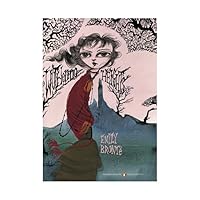
My last browsed book from the local book exchange is 'D Is For Death' by Harriet Evans writing as Harriet F Townsend. It has quite the most awful cover I have ever seen (I assumed it was 'publish on demand' self published, but appears to be a genuine Hodder and Stoughton paperback. The title appears only on the spine, and back cover - which is a reasonable mock-up of a title layout - I wonder whether this is a pre-publication mock up?
However, to our muttons. It is 1935, and Dora Wildwood has run away from the family mansion (a crumbling Jacobean mansion slowly being invaded by the literal wild wood), her absent father, and her friendly neighbourhood druid, in order to escape marriage to the son of the local squire. She takes refuge in the London Library where she discovers an unexpected body. So far, so formula. But the touches of magic realism, the cast of eccentric characters, and the depiction of 1930s London have a ring of authenticity rare in this genre. I found only one error (the flag flown over Buck House when the monarch is in residence is the Royal Standard, not the 'Union Jack') which is forgiveable (The tradition changed in 1979). The background, particularly the sexual politics of the period, is excellent. A good read, and I will check out more of Dora.
However, to our muttons. It is 1935, and Dora Wildwood has run away from the family mansion (a crumbling Jacobean mansion slowly being invaded by the literal wild wood), her absent father, and her friendly neighbourhood druid, in order to escape marriage to the son of the local squire. She takes refuge in the London Library where she discovers an unexpected body. So far, so formula. But the touches of magic realism, the cast of eccentric characters, and the depiction of 1930s London have a ring of authenticity rare in this genre. I found only one error (the flag flown over Buck House when the monarch is in residence is the Royal Standard, not the 'Union Jack') which is forgiveable (The tradition changed in 1979). The background, particularly the sexual politics of the period, is excellent. A good read, and I will check out more of Dora.
Read
June 18, 2024D is For Death, for Dora and for an utter Delight! When I first heard about D Is For Death, I knew it sounded like just my kind of book - and it certainly was. Set in the 1930s, it is wonderful blend of cozy crime with a modern narrative but a definite nod to the golden age, plenty of humour and a spirited and loveable protagonist.
Dora escapes an odious fiance who sees her as simply there to produce his offspring and boards the milk train to London to stay with her godmother. Pursued by said fiance, she seeks refuge in the London Library - and as book lovers we would all see this as a fortuitous choice! But it is there there she stumbles across her first dead body and she realises that she could make a very good detective ….
You know you are in for a fun ride when early in the book Dora’s aunt’s maid accidentally gives her a package containing a gun rather than the intended sandwiches - and there is so much humour in the book. There is plenty of period detail which brings 1930s London to life (for me, special mention to the fashion!) And Dora is fabulously quirky but utterly loveable - she may not be conventional but she sees things others don’t and she has a spirit and determination remarkable for someone of her generation that you have to applaud.
It’s a book that made me smile, made me laugh, I enjoyed the element of mystery - and I can’t wait to see what Dora does next!
Dora escapes an odious fiance who sees her as simply there to produce his offspring and boards the milk train to London to stay with her godmother. Pursued by said fiance, she seeks refuge in the London Library - and as book lovers we would all see this as a fortuitous choice! But it is there there she stumbles across her first dead body and she realises that she could make a very good detective ….
You know you are in for a fun ride when early in the book Dora’s aunt’s maid accidentally gives her a package containing a gun rather than the intended sandwiches - and there is so much humour in the book. There is plenty of period detail which brings 1930s London to life (for me, special mention to the fashion!) And Dora is fabulously quirky but utterly loveable - she may not be conventional but she sees things others don’t and she has a spirit and determination remarkable for someone of her generation that you have to applaud.
It’s a book that made me smile, made me laugh, I enjoyed the element of mystery - and I can’t wait to see what Dora does next!

November 16, 2024
Totally charming story with a thoroughly lovable main character. Dora Wildwood is tall, awkward, unconventional, bookish, and outspoken - not ideal for a woman in 1935. When she breaks off her engagement with the ghastly Charles, Dora decides to flee from rural Somerset to London and stumbles across the London Library. The quiet atmosphere and the friendly workers at the library bring Dora comfort, but when she stumbles across a dead body there, she feels constrained to help solve the murder however dangerous this could be.
I loved everything about this story, from the vivid descriptions of the library and 1930s London to the sensitive way the author handles the dynamics between the characters. It is funny and sad by turns, with a neat plot that kept me guessing - like the best mysteries, the details served to both reveal and conceal the truth - and Dora is the perfect protagonist with her mix of independence, enthusiasm and intelligence.
I really hope this is the start of a series as I’m eager to see what happens to Dora next and hope that some of the other characters from the library will make further appearances.
I loved everything about this story, from the vivid descriptions of the library and 1930s London to the sensitive way the author handles the dynamics between the characters. It is funny and sad by turns, with a neat plot that kept me guessing - like the best mysteries, the details served to both reveal and conceal the truth - and Dora is the perfect protagonist with her mix of independence, enthusiasm and intelligence.
I really hope this is the start of a series as I’m eager to see what happens to Dora next and hope that some of the other characters from the library will make further appearances.

May 10, 2025
D is for Decent.
I thought there were some clever ideas jumping around in here, but the execution left a lot to wish for, according to my weather-beaten, old head.
I'm sorry, but it was just a bit too "all over the place". It tried to stay faithful to a lot of Golden Age classics in tone and theme, but also scrambled to find even footing to stand on its own.
Trying to do both, while juggling a main character that felt weirdly shaped out of Golden Age tropes and modern day well-wishes, was perhaps biting off more than the author could chew, at least at the moment.
I hope improvement will be found in future books, but I suspect I won't show up to find out if it does.
I thought there were some clever ideas jumping around in here, but the execution left a lot to wish for, according to my weather-beaten, old head.
I'm sorry, but it was just a bit too "all over the place". It tried to stay faithful to a lot of Golden Age classics in tone and theme, but also scrambled to find even footing to stand on its own.
Trying to do both, while juggling a main character that felt weirdly shaped out of Golden Age tropes and modern day well-wishes, was perhaps biting off more than the author could chew, at least at the moment.
I hope improvement will be found in future books, but I suspect I won't show up to find out if it does.
June 23, 2024
Surprisingly thought this was really good

January 10, 2026
Absolutely loved it! A librarian detective set in the 1930's with a love of peppermint creams, what more could we ask for?!
March 14, 2024
Harriet F. Townson’s debut novel, D is for Death, made me laugh many, many, times. There are echoes of PG Wodehouse and Douglas Adams. Charles’s mother cannot feed the chickens because “The magnetic forces are extremely strong around the chicken coop, and it gives her a headache every time she goes near.” Lady Dreda’s habit of drinking a half-pint of Guiness with her breakfast toast could perhaps be considered unconventional; and a random clergyman’s “rather odd-looking novels with pictures in French” caused a respectable matron to moan and cover her eyes.
It’s 1935 and Dora Wildwood is unfortunately engaged to a boor. She realises that she cannot sacrifice herself, so she runs away to her godmother, Lady Dreda, in London. To use another author’s phrase, Dora is a disaster magnet. On her first day in London, she stumbles across a dead body in the London Library. Understandably, and as in all detective stories, she wants to find out whodunnit. There is a handsome librarian and a Detective Inspector with muscly forearms. There are also a couple of Nippies from the Lyons Corner House tea shop.
I enjoyed the book but I felt a couple of points stopped it being perfect. Firstly, how likely is it that two waitresses working at a tea shop would go to the Café de Paris on a regular basis? Yes, I know they were being treated by some upper-class male friends on the occasion Dora joined them, but my disbelief refused to be suspended quite that far. Secondly, I had the impression of a book in two halves. Characters’ motives became complicated and the simplicity in which Wodehousian one-liners thrive seemed much less common in the second half of the book. The light prose and spontaneous wit gave way to a sense that the writing was becoming, maybe not quite a chore, but perhaps a little tedious.
I shall definitely look out for a sequel, but I wonder if Dora would shine better in a set of short stories rather than another full-length novel.
#DIsForDeath #NetGalley
It’s 1935 and Dora Wildwood is unfortunately engaged to a boor. She realises that she cannot sacrifice herself, so she runs away to her godmother, Lady Dreda, in London. To use another author’s phrase, Dora is a disaster magnet. On her first day in London, she stumbles across a dead body in the London Library. Understandably, and as in all detective stories, she wants to find out whodunnit. There is a handsome librarian and a Detective Inspector with muscly forearms. There are also a couple of Nippies from the Lyons Corner House tea shop.
I enjoyed the book but I felt a couple of points stopped it being perfect. Firstly, how likely is it that two waitresses working at a tea shop would go to the Café de Paris on a regular basis? Yes, I know they were being treated by some upper-class male friends on the occasion Dora joined them, but my disbelief refused to be suspended quite that far. Secondly, I had the impression of a book in two halves. Characters’ motives became complicated and the simplicity in which Wodehousian one-liners thrive seemed much less common in the second half of the book. The light prose and spontaneous wit gave way to a sense that the writing was becoming, maybe not quite a chore, but perhaps a little tedious.
I shall definitely look out for a sequel, but I wonder if Dora would shine better in a set of short stories rather than another full-length novel.
#DIsForDeath #NetGalley

May 30, 2024
3.5 stars
This was a fun and light read following the wonderful Dora Wildwood. On the run from her awful fiance who just wants her to step into his mother's shoes, she escapes to the safety of her godmothers house in London.
The action kicks off as soon as she leaves the train and it doesn't really stop until the end, which has left it open for a second book, which I would certainly look out for!
This was a fun and light read following the wonderful Dora Wildwood. On the run from her awful fiance who just wants her to step into his mother's shoes, she escapes to the safety of her godmothers house in London.
The action kicks off as soon as she leaves the train and it doesn't really stop until the end, which has left it open for a second book, which I would certainly look out for!
July 1, 2026
Written by a favourite author of mine, Harriet Evans, using a pen name, this novel is set in 1935 in London. The protagonist Dora has just arrived at Paddington station to escape marriage to the dreadful Charles Silk-Butters, with the hope of finding a job and becoming independent only to discover that he has managed to pursue her. After a chase through London she takes refuge in the London Library and shortly afterwards discovers a dead body in the “stacks”. What follows is a golden era murder mystery as Dora uses her instincts to investigate what happened and to bring the perpetrator to justice. The 1930s setting is well portrayed and Dora is a lovely character. I thoroughly enjoyed the book and look forward to more books featuring her.

August 9, 2025
3.0. I hated the beginning and almost didn’t read it, but It did improve as it went along. I liked it somewhat for the story, not the believability of it or the characters.
The author must have written romance books previously because of the content. Lots of fluff and descriptions that didn’t move the story along.
The author must have written romance books previously because of the content. Lots of fluff and descriptions that didn’t move the story along.

July 17, 2024
D is for Death is a real triumph, being witty, pacy, totally absorbing and a brilliantly constructed whodunnit and well as an intelligent whydunnit. I thought it was excellent. My full thoughts are on the My Weekly website.

March 9, 2025
Too long, bad editing! Shame bc the premise was ok!


March 29, 2025
An amusing book and well written. Shame about the mystery element.
For a book where the plotting and writing of mysteries and detective fiction plays an important role, it’s a shame it isn’t rather better here. Anyone familiar with golden age detective stories should guess the killer without trouble.
But we can enjoy a good set up, a well observed period setting and a light and whimsical writing style, which means the book never descends into being a chore. Not sure I’ll be about for any sequel but a diverting and pleasant way to spend your time reading.
For a book where the plotting and writing of mysteries and detective fiction plays an important role, it’s a shame it isn’t rather better here. Anyone familiar with golden age detective stories should guess the killer without trouble.
But we can enjoy a good set up, a well observed period setting and a light and whimsical writing style, which means the book never descends into being a chore. Not sure I’ll be about for any sequel but a diverting and pleasant way to spend your time reading.

July 10, 2025
3.5 stars. A nice read with a lovely female protagonist, I will be excited to see her journey in the second novel!
This entire review has been hidden because of spoilers.

November 19, 2025
3.5 rounded up. I found this very slow in the middle section but it got going in the last 30%. I found the dialogue very confusing as at times the characters were talking across each other, or saying non-sequiturs… perhaps this was a deliberate choice to make it appear period appropriate but was quite puzzling to read. Loved the characters though and would probably read another

Read
March 1, 2026I was primed and ready to love this and I did very much enjoy some elements but it somehow didn’t all come together for me.
Read
March 29, 2026Parts of this were 4 stars for me and other parts 2. Definitely worth reading, but a bit frustrating. The author's description in the afterword of how she wrote it makes some sense of this.

August 30, 2026
I thought I was going to give this book 4 stars as its so light and engaging, has an immensely likeable heroine and was a lovely immersive period work. Sadly i was utterly let down by several infuriating plot holes. 2.5 stars.

December 5, 2025
A funny murder mystery with a great bunch of characters

May 24, 2024
Meet Dora Wildwood - a runaway bride, book lover and aspiring detective who likes solving crimes, peppermint creams and her independence. It’s 1935 and Dora has run away from her impending marriage and escaped to London to stay with her Aunt. Unfortunately her fiancé follows her so Dora seeks refuge in the London Library, a place she knows she will be safe in. That is until she discovers a dead body and finds herself thrown into the middle of a murder scene...
Although I must admit I’m not a huge fan of historical books the synopsis of this title had me intrigued and what a joy it was to meet Dora! Her character is delightful, a little bit quirky and unique in her own special way but her personality and wit will have you wanting her to succeed the whole way through.
It took me a while to adjust to the writing style with the language used but once I did the story flows well, the descriptions of the gloomy London at this time in history depicted perfectly. The connection with the library and love of books is also a nice touch for this cosy crime read, with an added element of depth thrown in. A little bit too long towards the end but assume the scene has been set in this title for the series to continue onwards in the future.
“She had made it to a library, and she knew all would be well, for the moment at least, for nothing bad ever happened in libraries or bookshops, and that was simply fact”
Although I must admit I’m not a huge fan of historical books the synopsis of this title had me intrigued and what a joy it was to meet Dora! Her character is delightful, a little bit quirky and unique in her own special way but her personality and wit will have you wanting her to succeed the whole way through.
It took me a while to adjust to the writing style with the language used but once I did the story flows well, the descriptions of the gloomy London at this time in history depicted perfectly. The connection with the library and love of books is also a nice touch for this cosy crime read, with an added element of depth thrown in. A little bit too long towards the end but assume the scene has been set in this title for the series to continue onwards in the future.
“She had made it to a library, and she knew all would be well, for the moment at least, for nothing bad ever happened in libraries or bookshops, and that was simply fact”

February 25, 2025
Before reading this I had been reading (though not finishing) a book set around the same time as this with a young female character that was really annoying and annoyingly I knew she would end up as the love interest, so I was a bit dubious coming to this with another young forthright female.
Well I needn’t have worried. Dora Wildwood is a very interesting character. Kind, thoughtful, quirky in manner and speech and strangely attuned to people’s behaviours and actions.
We start off with her leaving the crumbling Wildwood manor to escape a marriage she feels she is being forced into. From there she stumbles on a dead body and her ability to see little things that others would perhaps overlook or feel was not relevant, makes her useful to Detective Inspector Fox who is both exasperated and intrigued by her.
The first death is just part of a complicated and long reaching story arc.
The things that added depth are firstly, how women, especially those from upper class families, were viewed as commodities, either to provide heirs or to marry money, title or status to reflect on her family. Secondly, it gives an insight into the lives of men like DI Fox who came from a poor background and how important his job title is to him.
Really good characters, interesting story and a good sense of time and place. Ready for the next one
Well I needn’t have worried. Dora Wildwood is a very interesting character. Kind, thoughtful, quirky in manner and speech and strangely attuned to people’s behaviours and actions.
We start off with her leaving the crumbling Wildwood manor to escape a marriage she feels she is being forced into. From there she stumbles on a dead body and her ability to see little things that others would perhaps overlook or feel was not relevant, makes her useful to Detective Inspector Fox who is both exasperated and intrigued by her.
The first death is just part of a complicated and long reaching story arc.
The things that added depth are firstly, how women, especially those from upper class families, were viewed as commodities, either to provide heirs or to marry money, title or status to reflect on her family. Secondly, it gives an insight into the lives of men like DI Fox who came from a poor background and how important his job title is to him.
Really good characters, interesting story and a good sense of time and place. Ready for the next one
October 29, 2024
Historical detective thriller with a slow-paced storyline, not as engaging as other crime thrillers, but includes a detailed investigation that leads to Dora to unraveling the mystery. I thoroughly enjoyed the bookish side of this story, from the library setting to the authors involved, this book has been a literary delight for bookworms.

January 3, 2025
This was such an entertaining mystery. I'm so anxious for the next book to be published.

January 16, 2025
So much fun! I hope she writes more in this series.
August 26, 2025
thoroughly enjoyed!

August 10, 2026
An entertaining murder-mystery novel set in 1930’s London.
A country girl, Dora, from a reasonably comfortable background, escapes from an overbearing ex-fiancé by traveling to London. She quickly gets embroiled in a murder in a library and realises she’s got investigative skills that’d probably help the police. Which she insists upon imposing on a surprised Scotland Yard detective. She’s no ‘shrinking violet’ is Dora.
The things I enjoyed include the library and book publishing culture that underlie much of the story. A writer is sharing her own insecurities about writing in this story! I liked that the book gives an updated view of life in the 1930’s. Although Dora is certainly forthright and stands up for herself strongly she and other friends encounter plenty of misogyny. The disadvantages of the poorer background of some characters (including the stolid male police detective) is sometimes opened up, especially in contrast with the lifestyle of the monied classes (who comprise most of the protagonists in the story, including Dora to a degree).
I thought there were a few too many instances where Dora meets contacts, or others involved in the plot, fortuitously and surprisingly quickly. In the large and busy metropolis of London she did seem to bump casually into many who would later play a role in the tale. Though it has the advantage, I suppose, of moving the story along at a good pace without waiting for connections to happen in other ways! Also, the final reveal, a classic scenario of investigator confronting a room full of possible suspects, made sense but was longer and more detailed than I liked.
I should say up front that it’s not my usual reading genre and I’ve little to compare it with from my own experience (an Agatha Christie decades ago, and some contemporary Anthony Horowitz books I’ve enjoyed). The writer provides a first class page turner. Characters are interesting (Dora herself is a nice mix of day dreamer, book worm and hard nosed investigator (and stands up to bullies well)). It’s pacy, as I said. The author has only just moved into murder mystery writing (she has a long list of well received Romances under another name, Harriet Evans) so maybe the way the mystery is revealed, as a technique, will develop further. Even hints of romantic connections in this story.
If you’d like an updated 1930’s murder mystery, with a solid lead character, with plenty of London society detail, then this is for you. There’s a second in the series due out shortly and, as it’s set in my current home town, I’ll be reading it for sure.
Solid 4*.
A country girl, Dora, from a reasonably comfortable background, escapes from an overbearing ex-fiancé by traveling to London. She quickly gets embroiled in a murder in a library and realises she’s got investigative skills that’d probably help the police. Which she insists upon imposing on a surprised Scotland Yard detective. She’s no ‘shrinking violet’ is Dora.
The things I enjoyed include the library and book publishing culture that underlie much of the story. A writer is sharing her own insecurities about writing in this story! I liked that the book gives an updated view of life in the 1930’s. Although Dora is certainly forthright and stands up for herself strongly she and other friends encounter plenty of misogyny. The disadvantages of the poorer background of some characters (including the stolid male police detective) is sometimes opened up, especially in contrast with the lifestyle of the monied classes (who comprise most of the protagonists in the story, including Dora to a degree).
I thought there were a few too many instances where Dora meets contacts, or others involved in the plot, fortuitously and surprisingly quickly. In the large and busy metropolis of London she did seem to bump casually into many who would later play a role in the tale. Though it has the advantage, I suppose, of moving the story along at a good pace without waiting for connections to happen in other ways! Also, the final reveal, a classic scenario of investigator confronting a room full of possible suspects, made sense but was longer and more detailed than I liked.
I should say up front that it’s not my usual reading genre and I’ve little to compare it with from my own experience (an Agatha Christie decades ago, and some contemporary Anthony Horowitz books I’ve enjoyed). The writer provides a first class page turner. Characters are interesting (Dora herself is a nice mix of day dreamer, book worm and hard nosed investigator (and stands up to bullies well)). It’s pacy, as I said. The author has only just moved into murder mystery writing (she has a long list of well received Romances under another name, Harriet Evans) so maybe the way the mystery is revealed, as a technique, will develop further. Even hints of romantic connections in this story.
If you’d like an updated 1930’s murder mystery, with a solid lead character, with plenty of London society detail, then this is for you. There’s a second in the series due out shortly and, as it’s set in my current home town, I’ll be reading it for sure.
Solid 4*.
Displaying 1 - 30 of 107 reviews