

What do you think?

In the Shade of Quran #1
In the Shade of the Qur'an: Surahs 1-2 Vol 1
Ever since its revelation 1425 years ago, the Quran has been a book of guidance and inspiration, a reference point, and a rich source of social and moral dymanism for hundreds of millions of people throughout the world who believe it to be the immutable word of God.
In the Shade of the Qur'an is more than 'just another' commentary; yet it is not too over-reaching or outlandish to be a completely new interpretation. It is an earnest, sincere, and sober look at man's contemporary achievements and difficulties in the light of the message of the Qur'an. It is an effort to vigorously explore its rich wisdom, and expand its invaluable guidance for the benefit of an increasingly 'sophisticated', yet highly perplexed modern society.
The work, which is by far Sayyid Qutb's largest and most profound, spans the whole of the text of the Qur'an. It was written, and party re-written over a period of more than 15 years, most of which the author had spent in Egyptian prisons, during the 1950s and 1960s. In it is embedded Sayyid Qutb's insight, highly esteemed intellectual vigor, and his widely-acclaimed literary prowess.
In the Shade of The Quranhas been universally recognised as an outstanding contribution to Islamic thought and scholarship, to which students and scholars, as well as contemporary Islamic revivalist movements all over the world, owe a great deal. Now that it is available in English, it will continue to enlighten and inspire millions more. It will take its rightful place as an indispensable work of reference for a proper understanding of contemporary Islamic thinking.
In the Shade of the Qur'an is more than 'just another' commentary; yet it is not too over-reaching or outlandish to be a completely new interpretation. It is an earnest, sincere, and sober look at man's contemporary achievements and difficulties in the light of the message of the Qur'an. It is an effort to vigorously explore its rich wisdom, and expand its invaluable guidance for the benefit of an increasingly 'sophisticated', yet highly perplexed modern society.
The work, which is by far Sayyid Qutb's largest and most profound, spans the whole of the text of the Qur'an. It was written, and party re-written over a period of more than 15 years, most of which the author had spent in Egyptian prisons, during the 1950s and 1960s. In it is embedded Sayyid Qutb's insight, highly esteemed intellectual vigor, and his widely-acclaimed literary prowess.
In the Shade of The Quranhas been universally recognised as an outstanding contribution to Islamic thought and scholarship, to which students and scholars, as well as contemporary Islamic revivalist movements all over the world, owe a great deal. Now that it is available in English, it will continue to enlighten and inspire millions more. It will take its rightful place as an indispensable work of reference for a proper understanding of contemporary Islamic thinking.
394 pages, Paperback
First published January 1, 1965
About the author
Sayyid Qutb
170 books2,126 followersSayyid Ibrahim Husayn Shadhili Qutb (Arabic: سيد قطب) was an Egyptian political theorist and revolutionary who was a leading member of the Muslim Brotherhood.
As the author of 24 published books, with around 30 unpublished for different reasons (mainly destruction by the state), and at least 581 articles, including novels, literary arts critique and works on education, Qutb is best known in the Muslim world for his work on what he believed to be the social and political role of Islam, particularly in his books Social Justice and Ma'alim fi al-Tariq (Milestones). His magnum opus, Fi Zilal al-Qur'an (In the Shade of the Qur'an), is a 30-volume commentary on the Quran. Even though most of his observations and criticism were leveled at the Muslim world, Qutb also intensely disapproved of the society and culture of the United States, which he saw as materialistic, and obsessed with violence and sexual pleasures. He advocated violent, offensive jihad.
During most of his life, Qutb's inner circle mainly consisted of influential politicians, intellectuals, poets and literary figures, both of his age and of the preceding generation. By the mid-1940s, many of his writings were included in the curricula of schools, colleges and universities. In 1966, he was convicted of plotting the assassination of Egyptian President Gamal Abdel Nasser and was executed by hanging.
Qutb has been described by followers as a great thinker and martyr for Islam, while many Western observers (and some Muslims) see him as a key originator of Islamist ideology, and an inspiration for violent Islamist groups such as al-Qaeda. Qutb is widely regarded as one of the most leading Islamist ideologues of the twentieth century. Strengthened by his status as a martyr, Qutb's ideas on Jahiliyya (pre-Islamic Arabia) and his close linking of implementation of sharia (Islamic Law) with Tawhid (Islamic monotheism) has highly influenced contemporary Islamist and Jihadist movements. Today, his supporters are identified by their opponents as "Qutbists" or "Qutbi".
As the author of 24 published books, with around 30 unpublished for different reasons (mainly destruction by the state), and at least 581 articles, including novels, literary arts critique and works on education, Qutb is best known in the Muslim world for his work on what he believed to be the social and political role of Islam, particularly in his books Social Justice and Ma'alim fi al-Tariq (Milestones). His magnum opus, Fi Zilal al-Qur'an (In the Shade of the Qur'an), is a 30-volume commentary on the Quran. Even though most of his observations and criticism were leveled at the Muslim world, Qutb also intensely disapproved of the society and culture of the United States, which he saw as materialistic, and obsessed with violence and sexual pleasures. He advocated violent, offensive jihad.
During most of his life, Qutb's inner circle mainly consisted of influential politicians, intellectuals, poets and literary figures, both of his age and of the preceding generation. By the mid-1940s, many of his writings were included in the curricula of schools, colleges and universities. In 1966, he was convicted of plotting the assassination of Egyptian President Gamal Abdel Nasser and was executed by hanging.
Qutb has been described by followers as a great thinker and martyr for Islam, while many Western observers (and some Muslims) see him as a key originator of Islamist ideology, and an inspiration for violent Islamist groups such as al-Qaeda. Qutb is widely regarded as one of the most leading Islamist ideologues of the twentieth century. Strengthened by his status as a martyr, Qutb's ideas on Jahiliyya (pre-Islamic Arabia) and his close linking of implementation of sharia (Islamic Law) with Tawhid (Islamic monotheism) has highly influenced contemporary Islamist and Jihadist movements. Today, his supporters are identified by their opponents as "Qutbists" or "Qutbi".
Ratings & Reviews
Friends & Following
Create a free account to discover what your friends think of this book!
Community Reviews
Displaying 1 - 17 of 17 reviews

May 15, 2022
If this isnt on your tbr list yet, add it. Qutb (rahimullah) was one remarkable man <3

June 6, 2023
Good book, timing could not be more pertinent. SubhanAllah, loads of benefits regarding trials of the believers and what harms us, and in what ways. Such as disobedience of the prophets, usury, shirk, etc.
I did realise why some of the 'ulama said people with no knowledge of aqeedah should not read this, two places wherein Sayyid Qutb, may Allah have mercy on him, wrote metaphorical explanations for things that are known, one being the throne of Allah, and the other being the curse given to Bani Israil to become monkeys. Things to watch out for, but overall, very few things you could pick on.
Lots of quotable parts too, just no time to post them all. Would recommend to anyone who does have basic knowledge of aqeedah as a book that tells you about society, the modern ailments which can be resolved by the Qur'an (and were addressed 1400+ years ago), and the importance of Muslims to be strong in faith, act as the Qur'an commands, and continue to work so that the word of Allah is known to be as supreme as it is. It also promotes the sense of justice found in the Qur'an.
May Allah forgive any errors of this man, he had the ummah in mind while he campaigned and was killed by a tyrant. May Allah allow us to live by His book, and to do what He ﷻ commands, so that we may be successful and rise from these pits of disgrace!
I did realise why some of the 'ulama said people with no knowledge of aqeedah should not read this, two places wherein Sayyid Qutb, may Allah have mercy on him, wrote metaphorical explanations for things that are known, one being the throne of Allah, and the other being the curse given to Bani Israil to become monkeys. Things to watch out for, but overall, very few things you could pick on.
Lots of quotable parts too, just no time to post them all. Would recommend to anyone who does have basic knowledge of aqeedah as a book that tells you about society, the modern ailments which can be resolved by the Qur'an (and were addressed 1400+ years ago), and the importance of Muslims to be strong in faith, act as the Qur'an commands, and continue to work so that the word of Allah is known to be as supreme as it is. It also promotes the sense of justice found in the Qur'an.
May Allah forgive any errors of this man, he had the ummah in mind while he campaigned and was killed by a tyrant. May Allah allow us to live by His book, and to do what He ﷻ commands, so that we may be successful and rise from these pits of disgrace!

May 3, 2011
These books is a reference for me in giving preach to community about Qur'an. The explanation that Sayyid Qutb give in this book is very relevant to our daily live now.

May 15, 2016
The translation of this book is just amazing.
A valuable book
A valuable book

June 18, 2021
This completely insane task of writing eighteen volumes of a spectacular interpretation of the Holy Qur’an under the title, ‘In The Shade of The Qur'an’ should be seen as more than a seminarian, writing a theological manuscript but rather this journey involved a deep and meaningful personal reflection on the visualisation of the Qur’an, its meaning and a set of rules, instructions, guidelines for mankind to observe. This work is not just a raw interpretation of a holy book but engages a socio-political value to the words of God which were passed to humanity through Muhammad his last and Final Messenger.
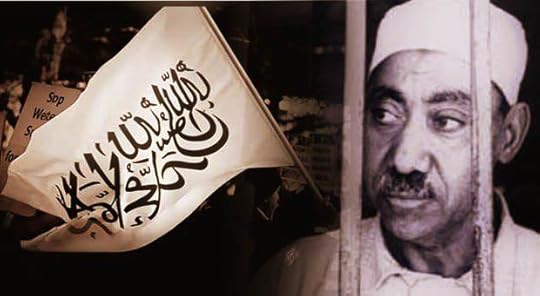
The Message
When I began to read Sayyid Qutb’s work, it touched upon something inside me and which is hard to describe or indeed to explain. It gives one a sense of reality which is proportionally balanced between context, awareness and knowledge and doesn’t leave the reader in any doubt as to the true meaning of the various Qur’anic messages set out in this volume. I have every intention of reading all eighteen volumes although I intend only to review volume one.
The subject areas are set out in Surah 1 al- Fatihah and Surah 2 al-Baqarah and cover a range of topics from power of patience to family values, the evil of usury to boastful claims by the Jews. In this volume the topics aim to share with the reader the real value of following the message of God and the rewards that await the believers. The focus of the Qur’an is not to follow the word of God thoughtlessly, but to understand and evaluate its meaning to one’s life. Qutb explains this point when he wrote. “the link between man’s actions and his feelings on the one hand, and God’s universal order on the other, is real and constant. No one would wish for this relationship to be broken or undermined unless they wish ill for man and his future” (1959). This is followed with Verse 153 where the Qur’an states, “believers, seek strength in patience and prayer. God is with those who are patient”.
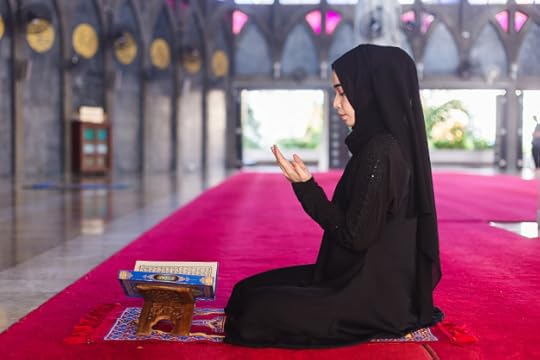
The interpretation of the Qur’an offers significant value to understanding the purpose of following the word of God and the rewards that awaits the believer in the afterlife as he travels through this journey on earth.
Radical Islam
Sayyid Qutb work, all eighteen volumes, have been associated with the radical Islamic ideology of al-Qaeda, ISIS and Salafism and it is also said that Osama bin Laden was inspired by his work, writes Ellen McLarney in her work, Ideology in the Hall Of Mirrors. These stories suggest one to wonder how the world must view Sayyid Qutb and how his work has affected the minds of the insufferable Islamophobes. A further point is shared by McLarney when she commented that Qutb’s theology of Islamic freedom was described in the British and American press as a total dictatorship, a form of extreme despotism, and one of the grand totalitarian revolutionary projects of the 20th century, like those of the Nazis, the Fascists, and the Communists.
While, Qutb’s observations and criticism were pointed at the Muslim world, Qutb is also known for his passionate disapproval of the society and culture of the United States, which he saw as materialistic, and obsessed with violence and sexual pleasures. It is with these views in mind that many secular commentators have said that Qutb advocates violent, offensive jihad.

The definitive aim by Islam’s enemies, Qutb writes a passage from the Qur’an which he explains is where the unbelievers are pursuing an ultimate goal of destroying the Muslim faith:
This view he considers to be a common objective of the enemies of Islam because they are fearful of Islam’s resilience. The principles of Islam strike at the heart of its enemies and which evokes their displeasure and hostility because Islam represents a bedrock of resistance against falsehoods, tranny and corruption he wrote. This point is later followed up when Qutb comments that the Muslims therefore, inherit the legacy of God’s religion on earth in its totality. Their mission is to promote and establish the Islamic order, and to stand up to chauvinistic, oppressive and totalitarian ideologies of all kinds, whatever they advocate anywhere in the world. This point is further illustrated when he wrote through his interpretation of the Qur’an and which stated:
Such claims, it is said, are totally refuted in the Qur’an and are nothing more than corrupted and wishful boasting by ruined people.
A Perplexed Society
The Shade of The Qur’an is more than 'just another' theological explanation of God’s word. This work reaches towards a critical appreciation of the various verses set out in the book and explains in some detail an analytical interpretation of God’s message to the world. After reading this work I would certainly argue that Qutb’s account is not an over-reaching, strange or eccentric view but it can be said to be a completely new and rational interpretation away from what typical theologians have been advocating. Qutb’s writing is a sobering account of how the Qur’an has reached out to the world in earnest in order to look at man's contemporary achievements and difficulties in a highly perplexed society.

This analysis has shown to be his most thoughtful, reflective and overwhelming rationalisation of Qur’anic text. It was written, and re-written, over a period of more than fifteen years, many of which the author had spent in an Egyptian prison, during the 1950s and 1960s. Qutb became the main ideologue of the Muslim Brothers’ Society in the early 1950s. He was imprisoned in 1954, this is where he wrote the bulk of his work in jail.
The Privileges
Qutb disliked and argued against the privileged position of religious groups, philosophers, theologians, and jurists. In his book Milestones (which has also been reviewed in Goodreads), Qutb scripts that ‘to establish the rule of Allah on earth is not to give some consecrated people – the priest – the authority to rule … nor to appoint some spokesmen of Allah as rulers, as is the case in a theocracy’. Qutb viewed the distinction between human and religious knowledge as a false one because the latter was built on the intrusion of philosophy into religion. And therefore, The Shade of The Qur’an precisely advocates this view.
After reading his excellent work, I can see why Qutb was so passionate about ensuring that his interpretation was not another volume to be added to the mountains of others that have been written throughout the history of Islam. This project for Qutb was more than just a labour of love. This was a mission he took upon himself in order to account for the financial and political corruption and tranny he saw taking place around the world and consequently offers an explanation on how the Muslim community can find their way out of this darkness.
Mohammed P Aslam
The Message
When I began to read Sayyid Qutb’s work, it touched upon something inside me and which is hard to describe or indeed to explain. It gives one a sense of reality which is proportionally balanced between context, awareness and knowledge and doesn’t leave the reader in any doubt as to the true meaning of the various Qur’anic messages set out in this volume. I have every intention of reading all eighteen volumes although I intend only to review volume one.
The subject areas are set out in Surah 1 al- Fatihah and Surah 2 al-Baqarah and cover a range of topics from power of patience to family values, the evil of usury to boastful claims by the Jews. In this volume the topics aim to share with the reader the real value of following the message of God and the rewards that await the believers. The focus of the Qur’an is not to follow the word of God thoughtlessly, but to understand and evaluate its meaning to one’s life. Qutb explains this point when he wrote. “the link between man’s actions and his feelings on the one hand, and God’s universal order on the other, is real and constant. No one would wish for this relationship to be broken or undermined unless they wish ill for man and his future” (1959). This is followed with Verse 153 where the Qur’an states, “believers, seek strength in patience and prayer. God is with those who are patient”.
The interpretation of the Qur’an offers significant value to understanding the purpose of following the word of God and the rewards that awaits the believer in the afterlife as he travels through this journey on earth.
Radical Islam
Sayyid Qutb work, all eighteen volumes, have been associated with the radical Islamic ideology of al-Qaeda, ISIS and Salafism and it is also said that Osama bin Laden was inspired by his work, writes Ellen McLarney in her work, Ideology in the Hall Of Mirrors. These stories suggest one to wonder how the world must view Sayyid Qutb and how his work has affected the minds of the insufferable Islamophobes. A further point is shared by McLarney when she commented that Qutb’s theology of Islamic freedom was described in the British and American press as a total dictatorship, a form of extreme despotism, and one of the grand totalitarian revolutionary projects of the 20th century, like those of the Nazis, the Fascists, and the Communists.
While, Qutb’s observations and criticism were pointed at the Muslim world, Qutb is also known for his passionate disapproval of the society and culture of the United States, which he saw as materialistic, and obsessed with violence and sexual pleasures. It is with these views in mind that many secular commentators have said that Qutb advocates violent, offensive jihad.
The definitive aim by Islam’s enemies, Qutb writes a passage from the Qur’an which he explains is where the unbelievers are pursuing an ultimate goal of destroying the Muslim faith:
They shall not cease to fight you until they force you to renounce your faith, if they can. (The Qur’an: Verse 217)
This view he considers to be a common objective of the enemies of Islam because they are fearful of Islam’s resilience. The principles of Islam strike at the heart of its enemies and which evokes their displeasure and hostility because Islam represents a bedrock of resistance against falsehoods, tranny and corruption he wrote. This point is later followed up when Qutb comments that the Muslims therefore, inherit the legacy of God’s religion on earth in its totality. Their mission is to promote and establish the Islamic order, and to stand up to chauvinistic, oppressive and totalitarian ideologies of all kinds, whatever they advocate anywhere in the world. This point is further illustrated when he wrote through his interpretation of the Qur’an and which stated:
No other nation in history has shown more intransigence and obstinacy than the Jews. They viciously and mercilessly killed and mutilated a number of prophets and messengers. They have over the centuries displayed the most extreme attitudes towards God, and towards their own religion and people. Nevertheless, they have always boasted of their virtue and made the implausible claims of being the most rightly-guided nation, the chosen people of God and the only people that shall be saved. (p.91)
Such claims, it is said, are totally refuted in the Qur’an and are nothing more than corrupted and wishful boasting by ruined people.
A Perplexed Society
The Shade of The Qur’an is more than 'just another' theological explanation of God’s word. This work reaches towards a critical appreciation of the various verses set out in the book and explains in some detail an analytical interpretation of God’s message to the world. After reading this work I would certainly argue that Qutb’s account is not an over-reaching, strange or eccentric view but it can be said to be a completely new and rational interpretation away from what typical theologians have been advocating. Qutb’s writing is a sobering account of how the Qur’an has reached out to the world in earnest in order to look at man's contemporary achievements and difficulties in a highly perplexed society.
This analysis has shown to be his most thoughtful, reflective and overwhelming rationalisation of Qur’anic text. It was written, and re-written, over a period of more than fifteen years, many of which the author had spent in an Egyptian prison, during the 1950s and 1960s. Qutb became the main ideologue of the Muslim Brothers’ Society in the early 1950s. He was imprisoned in 1954, this is where he wrote the bulk of his work in jail.
The Privileges
Qutb disliked and argued against the privileged position of religious groups, philosophers, theologians, and jurists. In his book Milestones (which has also been reviewed in Goodreads), Qutb scripts that ‘to establish the rule of Allah on earth is not to give some consecrated people – the priest – the authority to rule … nor to appoint some spokesmen of Allah as rulers, as is the case in a theocracy’. Qutb viewed the distinction between human and religious knowledge as a false one because the latter was built on the intrusion of philosophy into religion. And therefore, The Shade of The Qur’an precisely advocates this view.
After reading his excellent work, I can see why Qutb was so passionate about ensuring that his interpretation was not another volume to be added to the mountains of others that have been written throughout the history of Islam. This project for Qutb was more than just a labour of love. This was a mission he took upon himself in order to account for the financial and political corruption and tranny he saw taking place around the world and consequently offers an explanation on how the Muslim community can find their way out of this darkness.
Mohammed P Aslam
Currently Reading
June 26, 2007I haven't read the whole book, just a couple surahs, its realllyy really good and gives you a good comprehensive understanding of the meaning in the english langauge.

October 9, 2011
Unforgetable exegesis, this work continue to inspire thinkers upon the problem of the present day life and the solution possible.

March 3, 2026
A powerful relevant tafsir of two of the most beautiful Surahs of the Qur'an. Must read!

April 17, 2023
Mind blowing.
As expected. Befitting the hype with which i started this.
Crystal clear concepts.
Atom bomb this is!!!.
I will quote from one interview of the english translator (Adil Salahi), he reports:
“When sayyid qutb was martyred, he came in my dream after my asar prayer nap, and told me that: ‘Adil! Pakistanis need Fi zilaal ul quran’.”
It was then, that Adil Salahi took up to this momentous task of translating this 18 volumes of work, and completed it alhamdulillah.
Sayyid Qutb primes this entire commentary on building the world-view, installing core principles. He doesnt get into any technical details of law/fiqh.
The beauty of this work was in his literary style, he draws complete scenes to demonstrate the consequences of presence of any factor, and then juxtapose it with consequences of absence of those factors. E.g consequences of presence or lack of “faith in things beyond our perception , usury, charity, gender roles, intellectual superiority, persuasiveness of islam” etc.
After reading Tafheem ul Quran, and also comparing with ibn Kaseer, Fi-Zilaal-ul-Quran(in the shade of quran) has been the most engaging and influential of all.
The storytelling and scene building keeps u engaged.
He presents the spirit of islam, the core principles from which the laws/fiqhi problems are derived from, and not reports all views and names of different Imams etc, like Molana Modudi or ibn Kaseer.
At some places he reports ibn Kaseer and Imam Razi.
The negative aspects i think, that could have been better addressed, were some repetitions and re-iterations of verses which were obvious.
I look forward to further volumes of this great work. And recommend to all. Its a must.
Following are passages I noted alongside:
"the lack of licence to penetrate the unknown does not give man the right to deny it. Denial is in itself a judgement which must be based on knowledge, but this is out of bounds for the human mind because it is not a prerequisite for man's life and role on earth"
"How can you bid others to be righteous and forget yourselves, even when you read the Scriptures? Do you not understand?"
"To match one's actions to one's words is not easy to achieve. It requires cultivation, discipline and constant contact with God"
"words draw their power and effect from the sincerity and honesty, not from the rhetoric or eloquence in which they are delivered."
Jerusalem, the holy city which God commanded the Israelites to enter by driving out its people who were mighty. They refused and asked Moses to do that by himself while they waited outside the city
"Mighty people dwell in that land, and we will surely not enter it unless they depart from it. If they do depart, then we will enter." (5: 22) "Go forth, then, you and your Lord, and fight. We shall stay here."
"The human tendency to manipulate rules and set double standards surfaces in societies that have lost the basic human sense of justice and fair-play. Laws, principles and standards ought to stem from a neutral, objective and a fair source that is not susceptible to the influence of human desires or prejudices. This agency must transcend human frailt and self- interest."
we find the most important feature of the Islamic faith: total, unconditional, mental and physical surrender to God. It is, however, a surrender that must be manifested in a practical form, expressed in the verse in the proviso, 'while doing good works, because Islam makes a direct functional link between abstract belief and everyday behaviour, between faith and action, inner convictions and outward deeds.
All Islamic religious rituals are based on this basic natural philosophy that Mere intention expressed privately, or abstract spiritual meditation, is not enough to satisfy the requirements of religious worship.
Prophet strongly rules out the adoption of ideas and concepts not reconcilable with the world order God said to promote and establish. He warn against defeatism and feelings of inferiority among the Muslims
Muslims without Islam would go back to their aimless tribal existence, with no influence on the rest of the world or role in history. A people without sound principles, creed or philosophy of life, would have no reason to assume a position of leadership in the world.
Quran braces muslims for crucial and momentous task of leading mankind back to God.
Sole objective of their struggle and sacrifice is to uphold God's world order and establish it as a social reality
There is a price that believers have to pay in order to uphold their faith, and that price is their own lives.
No material victory, power or wealth whatsoever is promised here - only God's mercy and blessings..
it is necessary to collectively acquire the attributes of being a Momin. All should have the resilience to withstand poverty, weakness, loss of friends and allies, shortage of manpower and resources, and the rigours and consequences of war and striving to serve God's cause.
.
As expected. Befitting the hype with which i started this.
Crystal clear concepts.
Atom bomb this is!!!.
I will quote from one interview of the english translator (Adil Salahi), he reports:
“When sayyid qutb was martyred, he came in my dream after my asar prayer nap, and told me that: ‘Adil! Pakistanis need Fi zilaal ul quran’.”
It was then, that Adil Salahi took up to this momentous task of translating this 18 volumes of work, and completed it alhamdulillah.
Sayyid Qutb primes this entire commentary on building the world-view, installing core principles. He doesnt get into any technical details of law/fiqh.
The beauty of this work was in his literary style, he draws complete scenes to demonstrate the consequences of presence of any factor, and then juxtapose it with consequences of absence of those factors. E.g consequences of presence or lack of “faith in things beyond our perception , usury, charity, gender roles, intellectual superiority, persuasiveness of islam” etc.
After reading Tafheem ul Quran, and also comparing with ibn Kaseer, Fi-Zilaal-ul-Quran(in the shade of quran) has been the most engaging and influential of all.
The storytelling and scene building keeps u engaged.
He presents the spirit of islam, the core principles from which the laws/fiqhi problems are derived from, and not reports all views and names of different Imams etc, like Molana Modudi or ibn Kaseer.
At some places he reports ibn Kaseer and Imam Razi.
The negative aspects i think, that could have been better addressed, were some repetitions and re-iterations of verses which were obvious.
I look forward to further volumes of this great work. And recommend to all. Its a must.
Following are passages I noted alongside:
"the lack of licence to penetrate the unknown does not give man the right to deny it. Denial is in itself a judgement which must be based on knowledge, but this is out of bounds for the human mind because it is not a prerequisite for man's life and role on earth"
"How can you bid others to be righteous and forget yourselves, even when you read the Scriptures? Do you not understand?"
"To match one's actions to one's words is not easy to achieve. It requires cultivation, discipline and constant contact with God"
"words draw their power and effect from the sincerity and honesty, not from the rhetoric or eloquence in which they are delivered."
Jerusalem, the holy city which God commanded the Israelites to enter by driving out its people who were mighty. They refused and asked Moses to do that by himself while they waited outside the city
"Mighty people dwell in that land, and we will surely not enter it unless they depart from it. If they do depart, then we will enter." (5: 22) "Go forth, then, you and your Lord, and fight. We shall stay here."
"The human tendency to manipulate rules and set double standards surfaces in societies that have lost the basic human sense of justice and fair-play. Laws, principles and standards ought to stem from a neutral, objective and a fair source that is not susceptible to the influence of human desires or prejudices. This agency must transcend human frailt and self- interest."
we find the most important feature of the Islamic faith: total, unconditional, mental and physical surrender to God. It is, however, a surrender that must be manifested in a practical form, expressed in the verse in the proviso, 'while doing good works, because Islam makes a direct functional link between abstract belief and everyday behaviour, between faith and action, inner convictions and outward deeds.
All Islamic religious rituals are based on this basic natural philosophy that Mere intention expressed privately, or abstract spiritual meditation, is not enough to satisfy the requirements of religious worship.
Prophet strongly rules out the adoption of ideas and concepts not reconcilable with the world order God said to promote and establish. He warn against defeatism and feelings of inferiority among the Muslims
Muslims without Islam would go back to their aimless tribal existence, with no influence on the rest of the world or role in history. A people without sound principles, creed or philosophy of life, would have no reason to assume a position of leadership in the world.
Quran braces muslims for crucial and momentous task of leading mankind back to God.
Sole objective of their struggle and sacrifice is to uphold God's world order and establish it as a social reality
There is a price that believers have to pay in order to uphold their faith, and that price is their own lives.
No material victory, power or wealth whatsoever is promised here - only God's mercy and blessings..
it is necessary to collectively acquire the attributes of being a Momin. All should have the resilience to withstand poverty, weakness, loss of friends and allies, shortage of manpower and resources, and the rigours and consequences of war and striving to serve God's cause.
.

September 14, 2010
I have read only certain volumes, which include certain Surahs. Inshaallah I intend to buy the whole said. Very powerful arguments that stem from the core of islamic fundamentals.

August 27, 2021
Find yourself in Quran during reading this tafsir

March 3, 2025
What do I think about the book? Or how much did I like it? Well, I'm going to read all its volumes In Sha Allah
But the thing I want to share is that there is an ayah (144) in Surah Al-Baqarah, which I might have heard many times before, but this time, when I read it, I was deeply moved.
The context of the ayah is
When Allah commanded the Messenger (peace be upon him) and the believers to turn their faces toward Jerusalem as the direction of prayer, it was not easy for the early Arab Muslims as they revered the Ka'bah more, and the Jews exploited this situation by claiming that their religion was the true one since Jerusalem was also the qibla for Christians and Jews.
The Prophet Muhammad (peace be upon him) entertained a wish to turn towards the Ka'bah but never voiced his wish. The Prophet (peace be upon him) was reluctant even to say a prayer that might have reflected his desire. Instead, without uttering a prayer, he looked toward the sky anxiously, trusting in Allah and His infinite wisdom.
Then, Allah answered his unspoken prayer and revealed this ayah, beginning with the words:
"We have seen you often turn your face towards heaven." (2:144)
Allah knows everything what's in your hearts and Allah loves His sincere servants
But the thing I want to share is that there is an ayah (144) in Surah Al-Baqarah, which I might have heard many times before, but this time, when I read it, I was deeply moved.
The context of the ayah is
When Allah commanded the Messenger (peace be upon him) and the believers to turn their faces toward Jerusalem as the direction of prayer, it was not easy for the early Arab Muslims as they revered the Ka'bah more, and the Jews exploited this situation by claiming that their religion was the true one since Jerusalem was also the qibla for Christians and Jews.
The Prophet Muhammad (peace be upon him) entertained a wish to turn towards the Ka'bah but never voiced his wish. The Prophet (peace be upon him) was reluctant even to say a prayer that might have reflected his desire. Instead, without uttering a prayer, he looked toward the sky anxiously, trusting in Allah and His infinite wisdom.
Then, Allah answered his unspoken prayer and revealed this ayah, beginning with the words:
"We have seen you often turn your face towards heaven." (2:144)
Allah knows everything what's in your hearts and Allah loves His sincere servants
Want to Read
February 8, 2020احسن كتاب في العالم

March 15, 2010
More or less political, never the less rational tangible arguments in there.

Read
June 13, 2011A great book that really expanded my knowledge and understanding of Section 30 of the Quran. I just wish it was a little more organised and to the point.

September 15, 2010
Excellent series on the meaning of the Qur'an.

Read
September 23, 2010In the Shade of the Quran by Sayyid Qutb (1995)
Displaying 1 - 17 of 17 reviews