

What do you think?
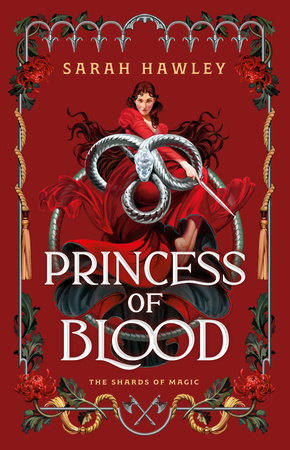
Win a free print copy of this book!
11 days and 21:58:31
24 copies available
U.S. only
The Shards of Magic #2
Princess of Blood
Win a free print copy of this book!
11 days and 21:58:31
24 copies available
U.S. only
Once a servant, now a princess, a young woman thrust into power challenges everything about the underground Fae realm in the next installment of Sarah Hawley's new romantasy series.
Kenna Heron is still reeling from her lover's betrayal and the threat of an impending war. With only her two closest--and most powerless--friends by her side, she must navigate the treacherous politics of Mistei while coming to terms with her new identity as not just Fae, but princess of her own house.
With the king dead, three candidates are vying for the right to wear the crown next. A princess who claims the throne as her birthright and two rebel princes, both of whom are depending on the support of Blood House to break the stalemate between them. Old loyalties fray as new, dangerous alliances form, and Kenna finds herself caught in a web of violence, deceit, and unexpected passion.
Kenna has the power to shape Mistei's future... but someone's willing to kill to make sure she never gets the chance.
Kenna Heron is still reeling from her lover's betrayal and the threat of an impending war. With only her two closest--and most powerless--friends by her side, she must navigate the treacherous politics of Mistei while coming to terms with her new identity as not just Fae, but princess of her own house.
With the king dead, three candidates are vying for the right to wear the crown next. A princess who claims the throne as her birthright and two rebel princes, both of whom are depending on the support of Blood House to break the stalemate between them. Old loyalties fray as new, dangerous alliances form, and Kenna finds herself caught in a web of violence, deceit, and unexpected passion.
Kenna has the power to shape Mistei's future... but someone's willing to kill to make sure she never gets the chance.
498 pages, Hardcover
First published September 30, 2025
About the author
Sarah Hawley
9 books2,963 followersSarah Hawley is the USA Today bestselling author of Servant of Earth and the Glimmer Falls series. She has an MA in archaeology and has excavated at an Inca site in Chile, a Bronze Age palace in Turkey, and a medieval abbey in England. When not dreaming up whimsical love stories, she can be found reading, dancing, or cuddling her two cats.
Ratings & Reviews
Friends & Following
Create a free account to discover what your friends think of this book!
Community Reviews
Displaying 1 - 30 of 2,113 reviews

February 8, 2026
"... You'll never understand the depth of it."
"The depth of what?"
"The need. I would tear the world apart for you, Kenna. And I don't deserve this, not a second of it, but I'm too greedy to stop."
YOU MEAN TO TELL ME I'M SUPPOSED TO WAIT UNTIL DEC FOR THE FINAL BOOK AFTER THAT ENDING?! 😭😭😭😭😭😭
I'm sorry I can't. That's not fair 😭😭😭
This book gave me everything. Sure, it was a little slower than book one but the drama, the political games expanding and the romance of course was just so perfect I could cry. The action took a bit of back seat in this one for majority of the book as it was more focused on strategy, outplaying the other and maneuvering a world where our fmc is still new.
I seriously am in love with Kenna. She's fierce, has her principles and yet that morally grey edge to her that itches to be let free yet the restraint she shows is amazing. Cause if it was me, I swear I would have lost my composure page one.
>Kallen, my baby 😩🫠 This man has me on a chokehold. The man just needs to be hugged, who cares if he's assassinated hundreds or spied in shadows. He's the perfect book boyfriend material if you're into shadow daddies and dangerous, grumpy, broody men who'll worship just that one woman.
One thing I appreciate about the series is how it highlights the strengths of women characters. We have got loud strength in Kenna. Steady and subtle strength in Lara. And then the quiet strength in Anya. Drustan and Hector are no doubt complex characters and in that morally grey area too. But no one competes to Kallen 🫠🫠 The chemistry and that slow, steady love build until it explodes to a fierce spicy romance was executed so well.
I swear the last seventy pages, I was not breathing. The ending is so good and brutal. I think this one will go on my list of best traumatizing cliffhangers. The action was there, the betrayals, political chess moves being made ruthlessly? Absolutely brutally brilliant. I swear my jaw was on the floor.
I need more 😩😩😩
Thanks to beautiful Noi for BR it with me, who is also responsible for my obsession with the series and Kallen ❤
~•~•~
Can we talk about how gorgeous the cover is?
"The depth of what?"
"The need. I would tear the world apart for you, Kenna. And I don't deserve this, not a second of it, but I'm too greedy to stop."
YOU MEAN TO TELL ME I'M SUPPOSED TO WAIT UNTIL DEC FOR THE FINAL BOOK AFTER THAT ENDING?! 😭😭😭😭😭😭
I'm sorry I can't. That's not fair 😭😭😭
This book gave me everything. Sure, it was a little slower than book one but the drama, the political games expanding and the romance of course was just so perfect I could cry. The action took a bit of back seat in this one for majority of the book as it was more focused on strategy, outplaying the other and maneuvering a world where our fmc is still new.
I seriously am in love with Kenna. She's fierce, has her principles and yet that morally grey edge to her that itches to be let free yet the restraint she shows is amazing. Cause if it was me, I swear I would have lost my composure page one.
>Kallen, my baby 😩🫠 This man has me on a chokehold. The man just needs to be hugged, who cares if he's assassinated hundreds or spied in shadows. He's the perfect book boyfriend material if you're into shadow daddies and dangerous, grumpy, broody men who'll worship just that one woman.
One thing I appreciate about the series is how it highlights the strengths of women characters. We have got loud strength in Kenna. Steady and subtle strength in Lara. And then the quiet strength in Anya. Drustan and Hector are no doubt complex characters and in that morally grey area too. But no one competes to Kallen 🫠🫠 The chemistry and that slow, steady love build until it explodes to a fierce spicy romance was executed so well.
I swear the last seventy pages, I was not breathing. The ending is so good and brutal. I think this one will go on my list of best traumatizing cliffhangers. The action was there, the betrayals, political chess moves being made ruthlessly? Absolutely brutally brilliant. I swear my jaw was on the floor.
I need more 😩😩😩
Thanks to beautiful Noi for BR it with me, who is also responsible for my obsession with the series and Kallen ❤
~•~•~
Can we talk about how gorgeous the cover is?

October 4, 2025
Genuinely didn’t think this could be better than book one, but IT WAS. I LOVE a vengeful woman, an emo sad boy MMC, and court politics. 10/10. No notes.
December 22, 2024
Say it with me now! KALLEN. KALLEN. KALLEN.

March 10, 2026
4.5 🌟 that perfect slow burn pay off only to be met with another insane ending!! WHERE DO WE GO NOW?! I am unwell. Praying book three will heal me 😭

April 29, 2025
SARAH HAWLEY YOU WILL PAY FOR YOUR CRIMES
seeing that last 10% as the characters look to the future happily: i’m in danger
the way i knew the [redacted] was going to serve [redacted] but my jaw was still on the floor in those final chapters
kallen: blood dripping down his face, smiling: did you see my girl beat me up?
Sarah Hawley’s, Shards of Magic entraps six opposing fae houses beneath the earth to grasp at power and immortality while prey to the machinations of a merciless king. This series put down precarious roots in Servant of Earth, when Kenna Heron, a young woman, braved the treacherous bogs to cross into the fae lands, becoming servant and spy to the ignoble Earth House. Princess of Blood returns us to a world reeling in the aftermath of a bloody uprising and hinging on a civil war as loyalties sunder and forbidden love takes root within the cavernous underearth. With few weapons in her arsenal Kenna, newly turned fae, stands alone as princess of the broken Blood House. Armed with Caedo, a shapeshifting talking dagger with a thirst for blood, and two unlikely allies—an excommunicated Earth Fae rendered powerless, and a murderous Void Fae and executioner, Kenna will confront her new charge in a world seeking her destruction. I already knew the Shards of Magic series was doing something special back in book one, delicately connecting tropes and story cornerstones to deliver a unique fae touched tale of rebellion and survival. Princess of Blood is where my heart latched onto this series for good. Sarah Hawley brings a sequel into being that is bloody and unapologetic, equal parts brutal as it is a hopeful beacon for change.
Read my review
thank you to netgalley and the publisher for providing me with an advance review copy.
Bookstagram | Blog
seeing that last 10% as the characters look to the future happily: i’m in danger
the way i knew the [redacted] was going to serve [redacted] but my jaw was still on the floor in those final chapters
kallen: blood dripping down his face, smiling: did you see my girl beat me up?
Sarah Hawley’s, Shards of Magic entraps six opposing fae houses beneath the earth to grasp at power and immortality while prey to the machinations of a merciless king. This series put down precarious roots in Servant of Earth, when Kenna Heron, a young woman, braved the treacherous bogs to cross into the fae lands, becoming servant and spy to the ignoble Earth House. Princess of Blood returns us to a world reeling in the aftermath of a bloody uprising and hinging on a civil war as loyalties sunder and forbidden love takes root within the cavernous underearth. With few weapons in her arsenal Kenna, newly turned fae, stands alone as princess of the broken Blood House. Armed with Caedo, a shapeshifting talking dagger with a thirst for blood, and two unlikely allies—an excommunicated Earth Fae rendered powerless, and a murderous Void Fae and executioner, Kenna will confront her new charge in a world seeking her destruction. I already knew the Shards of Magic series was doing something special back in book one, delicately connecting tropes and story cornerstones to deliver a unique fae touched tale of rebellion and survival. Princess of Blood is where my heart latched onto this series for good. Sarah Hawley brings a sequel into being that is bloody and unapologetic, equal parts brutal as it is a hopeful beacon for change.
Read my review
thank you to netgalley and the publisher for providing me with an advance review copy.
Bookstagram | Blog
April 22, 2025
do not contact me. do not resuscitate. I am inconsolable. this releases in september and y’all better believe I will be screaming in your face about it closer to release date.
anskwhwjxichhskzldbwmslxiskqbdk
anskwhwjxichhskzldbwmslxiskqbdk

September 27, 2025
3.5 ★
”When life had been full of raised fists, it was hard to believe in the promise of an open hand.”
Servant of Earth is one of my favorite books, so of course it’s a little disappointing to give the sequel this rating. i just felt like the characters lost their spark and were bland for the majority of the story. i did like seeing Kenna rebuild Blood House, but the back and forth over who she’d choose to be king got repetitive. i thought i’d enjoy the romance more because i love Kallen, but their connection moved fast and his backstory wasn’t anything i haven’t seen before. (also, what was that about him being a virgin but “knowing what to do” because he’d been spying for centuries?).. can we not.
“Kallen didn’t seduce— he overwhelmed. Every word, every touch, every taste had a desperate edge, like he was afraid it would be the last.”
i was still invested in the story though and my sentiments about the fae being actually ruthless, terrible creatures remains. the ending went in a direction that i didn’t expect, so obviously i HAVE to continue!! i appreciate that Kenna is someone who acknowledges that she’s not perfect and will continuously make mistakes. a true flawed character who’s trying her best, i just hope her and her friends can get on the same page. i don’t like Drustan, he’s one of the many who didn’t have much character development and honestly he just annoys me. surprisingly, Hector grew on me and i could see now why he’s acted the way he does. i would say i mostly enjoyed this overall but i hope book 3 packs the action.
⤞ many thanks to NetGalley, the author and Berkley Publishing for the arc, all opinions are my own.
”When life had been full of raised fists, it was hard to believe in the promise of an open hand.”
Servant of Earth is one of my favorite books, so of course it’s a little disappointing to give the sequel this rating. i just felt like the characters lost their spark and were bland for the majority of the story. i did like seeing Kenna rebuild Blood House, but the back and forth over who she’d choose to be king got repetitive. i thought i’d enjoy the romance more because i love Kallen, but their connection moved fast and his backstory wasn’t anything i haven’t seen before. (also, what was that about him being a virgin but “knowing what to do” because he’d been spying for centuries?).. can we not.
“Kallen didn’t seduce— he overwhelmed. Every word, every touch, every taste had a desperate edge, like he was afraid it would be the last.”
i was still invested in the story though and my sentiments about the fae being actually ruthless, terrible creatures remains. the ending went in a direction that i didn’t expect, so obviously i HAVE to continue!! i appreciate that Kenna is someone who acknowledges that she’s not perfect and will continuously make mistakes. a true flawed character who’s trying her best, i just hope her and her friends can get on the same page. i don’t like Drustan, he’s one of the many who didn’t have much character development and honestly he just annoys me. surprisingly, Hector grew on me and i could see now why he’s acted the way he does. i would say i mostly enjoyed this overall but i hope book 3 packs the action.
⤞ many thanks to NetGalley, the author and Berkley Publishing for the arc, all opinions are my own.
This entire review has been hidden because of spoilers.

January 2, 2025
✩ 3.35 stars ✩
What to Expect:
➼ Slow Burn
➼ Elemental Magic
➼ Morally Gray Heroes
➼ Burn the World Energy
➼ Court Politics
➼ Narrated by Mia Hutchinson-Shaw
➼ First Person POV
I had unreasonably high hopes for this, but unfortunately it didn’t quite measure up to book one. There was a lot about the first book that felt unique and made it stand out to me in the sea of Fae romantasy books, but this book in contrast felt extremely predictable.
Servant of Earth concluded with Kenna’s life taking a major turn when she is made Fae and given the title of Princess of Blood. After having such an enormous responsibility dropped in her lap, I’d expect her to be scrambling to learn as much as possible about her new Fae body and working on a plan to maintain her newly awarded power.
I’ll concede that she does make an effort to add members to her court, but apart from that and a minimal amount of training, I didn’t feel like she was doing much to prepare herself or ensure her success. I felt like the author was leaning hard on her innate goodness and humanity, but surrounded by so much Fae scheming, I expected more from her. She has witnessed the boundless nature of Fae cruelty first hand, but still seems quick to forget what they are capable of.
The slow burn romance was alright, but I didn’t feel as invested in their relationship as I wanted to be. In book one, the MMC had a mysterious quality about him that made his character more intriguing. In book two, I felt like that same air of mystery worked against. He is clearly a catch, but the way his character was written made him feel too distant IMO. He was playing his cards very close to his chest which was an understandable choice once you know his backstory, but it made their interactions feel more shallow than I wanted them to be. The romance went in the direction I wanted it to, but it didn’t excite me as much as I hoped.
This was a decent read, but it’s suffering bad from second book syndrome. Hopefully book three can bring it back up towards 5 stars!
✼ ҉ ✼ ҉ ✼ ҉ ✼ ҉ ✼ ҉ ✼ ҉ ✼
Pre-read: Very excited to be starting this! I loved the first book so I have high hopes for this one! I’ll be listening to the audio as I travel back home from Thanksgiving with the fam. Hope everyone has had a great weekend! 🦃
And we have our cover!! 🙌🏻♥️
One of my most anticipated reads of 2025!
I can’t wait for the cover reveal! It’s sure to be gorgeous if Servant of Earth is any indication! NEED!
≪ ◦ ❖ ◦ ≫
Connect with me on Instagram
What to Expect:
➼ Slow Burn
➼ Elemental Magic
➼ Morally Gray Heroes
➼ Burn the World Energy
➼ Court Politics
➼ Narrated by Mia Hutchinson-Shaw
➼ First Person POV
I had unreasonably high hopes for this, but unfortunately it didn’t quite measure up to book one. There was a lot about the first book that felt unique and made it stand out to me in the sea of Fae romantasy books, but this book in contrast felt extremely predictable.
Servant of Earth concluded with Kenna’s life taking a major turn when she is made Fae and given the title of Princess of Blood. After having such an enormous responsibility dropped in her lap, I’d expect her to be scrambling to learn as much as possible about her new Fae body and working on a plan to maintain her newly awarded power.
I’ll concede that she does make an effort to add members to her court, but apart from that and a minimal amount of training, I didn’t feel like she was doing much to prepare herself or ensure her success. I felt like the author was leaning hard on her innate goodness and humanity, but surrounded by so much Fae scheming, I expected more from her. She has witnessed the boundless nature of Fae cruelty first hand, but still seems quick to forget what they are capable of.
The slow burn romance was alright, but I didn’t feel as invested in their relationship as I wanted to be. In book one, the MMC had a mysterious quality about him that made his character more intriguing. In book two, I felt like that same air of mystery worked against. He is clearly a catch, but the way his character was written made him feel too distant IMO. He was playing his cards very close to his chest which was an understandable choice once you know his backstory, but it made their interactions feel more shallow than I wanted them to be. The romance went in the direction I wanted it to, but it didn’t excite me as much as I hoped.
This was a decent read, but it’s suffering bad from second book syndrome. Hopefully book three can bring it back up towards 5 stars!
✼ ҉ ✼ ҉ ✼ ҉ ✼ ҉ ✼ ҉ ✼ ҉ ✼
Pre-read: Very excited to be starting this! I loved the first book so I have high hopes for this one! I’ll be listening to the audio as I travel back home from Thanksgiving with the fam. Hope everyone has had a great weekend! 🦃
And we have our cover!! 🙌🏻♥️
One of my most anticipated reads of 2025!
I can’t wait for the cover reveal! It’s sure to be gorgeous if Servant of Earth is any indication! NEED!
≪ ◦ ❖ ◦ ≫
Connect with me on Instagram

April 18, 2026
4.6 stars
Thoughts
Wow this book was even better than book 1! Princess of Blood showed the cost of power, how everyone faces loss in a different way, the challenges that people face and over all the power of love. I was transported into this book from the very beginning. The pacing was well done throughout the book and the plot kept me engaged. There were several plot twists that shocked me to the core. I enjoyed learning more about the six houses and the magic. It was interesting to see how illusion, Void (shadows), Fire, Light and Blood magic worked. The writing was descriptive and flowed well. I felt a world wind of emotions while reading this book including happiness, sadness, anger, and shock.
The cliffhanger at the ending was so shocking and devastating. I enjoyed that there was some time for reflection of the characters' actions during the book, but not so much at the end. I'm so excited to read the next book!
Characters
I adored Kenna even more in this book. She continued to grow and show that she won't give up on the people she cares about. Kenna went through many challenges. I loved Kallen, he was resilient, brave, protective, strong, and showed a soft spot for Kenna. Kallen also didn't give up on what he believed in even when it was difficult. Kallen's character development was excellent, he was cold and closed off at the beginning, but over time he showed a soft side and tore down his walls. I'm glad that Kallen's back story was introduced and his perspective was illustrated. The side characters were all interesting and complex. I really liked Lara, Hector, Aidan and Gweneira. I did not like Drustan in this book, he was inconsistent, cruel and made decisions that I didn't agree with. The interactions between the main characters and the side characters were awesome to see especially Kenna and Lara. Kenna and Lara's friendship reminds me of how close my sister and I are.
Romance
The romance was so great in this book. The chemistry and tension between the love interests was amazing! I loved the slow-burn, I'm so glad that it took a while for the main characters to develop feelings for each other. The romance was realistic and relatable. The yearning was top tier! I giggled and blushed at several of the romantic scenes. I can't wait to see how the romance progresses in the next book!
Thoughts
Wow this book was even better than book 1! Princess of Blood showed the cost of power, how everyone faces loss in a different way, the challenges that people face and over all the power of love. I was transported into this book from the very beginning. The pacing was well done throughout the book and the plot kept me engaged. There were several plot twists that shocked me to the core. I enjoyed learning more about the six houses and the magic. It was interesting to see how illusion, Void (shadows), Fire, Light and Blood magic worked. The writing was descriptive and flowed well. I felt a world wind of emotions while reading this book including happiness, sadness, anger, and shock.
The cliffhanger at the ending was so shocking and devastating. I enjoyed that there was some time for reflection of the characters' actions during the book, but not so much at the end. I'm so excited to read the next book!
Characters
I adored Kenna even more in this book. She continued to grow and show that she won't give up on the people she cares about. Kenna went through many challenges. I loved Kallen, he was resilient, brave, protective, strong, and showed a soft spot for Kenna. Kallen also didn't give up on what he believed in even when it was difficult. Kallen's character development was excellent, he was cold and closed off at the beginning, but over time he showed a soft side and tore down his walls. I'm glad that Kallen's back story was introduced and his perspective was illustrated. The side characters were all interesting and complex. I really liked Lara, Hector, Aidan and Gweneira. I did not like Drustan in this book, he was inconsistent, cruel and made decisions that I didn't agree with. The interactions between the main characters and the side characters were awesome to see especially Kenna and Lara. Kenna and Lara's friendship reminds me of how close my sister and I are.
Romance
The romance was so great in this book. The chemistry and tension between the love interests was amazing! I loved the slow-burn, I'm so glad that it took a while for the main characters to develop feelings for each other. The romance was realistic and relatable. The yearning was top tier! I giggled and blushed at several of the romantic scenes. I can't wait to see how the romance progresses in the next book!

August 6, 2025
Kallen the man that you are.
10 out of 5 stars
10 out of 5 stars
September 17, 2025
I AM SO UNWELL THE ENDING ARE YOU ACTUALLY KIDDING ME!!!!!!!
Tbh when book 1 in a series has trials, I get bored without that tension in subsequent books. THIS ONE THOUGH????? blew book 1 out of the water for me.
Kenna is such a strong fmc and I love her ideals and what she stands for, even as she’s trying to figure out how to survive in the brutal world of mistei. The romance in this one had me BY THE THROAT. There is so much yearning and tension and they don’t even kiss until the last quarter of the book. The angst hurt SO GOOD.
The violence and truly morally black faeries of this world made for such an engaging read.
I really enjoyed book 1, but I LOVED this one.
Thank you Berkley romance, ace publishing, and prh audio for the gifted copies!!!
Tbh when book 1 in a series has trials, I get bored without that tension in subsequent books. THIS ONE THOUGH????? blew book 1 out of the water for me.
Kenna is such a strong fmc and I love her ideals and what she stands for, even as she’s trying to figure out how to survive in the brutal world of mistei. The romance in this one had me BY THE THROAT. There is so much yearning and tension and they don’t even kiss until the last quarter of the book. The angst hurt SO GOOD.
The violence and truly morally black faeries of this world made for such an engaging read.
I really enjoyed book 1, but I LOVED this one.
Thank you Berkley romance, ace publishing, and prh audio for the gifted copies!!!

October 11, 2025
My brain is scrambled egg with this ending. Jesus Christ, I can’t literally pick my jaw up off the floor.
The world that Sarah has created with such an interesting magic system combined with those classic fae elements makes for such an addictive combination. And jam packed with court politics and a simmering slow burn where he is utterly obsessed with her? I can’t.
ULTIMATE DEVOTION, CRAZY PLOT TWISTS, EVEN CRAZIER ENDINGS?! DIVINE, DIVINE, DIVINE. Give me book three immediately. I can’t cope.

August 4, 2026
"I would tear this world apart for you, Kenna. And I don’t deserve this not a second of it, but I’m too greedy to stop.”
I loved Kenna’s character. She’s strong, fiercely loyal, and endlessly compassionate, always giving refuge to those who need it while focusing to protect the people she loves, there was great character development as we witnessed her grow more courage and confidence!
And then there’s Kellen… the shadow daddy. Broody, mysterious, always lurking in the shadows. This is the definition of a slow, slow, painfully slow burn and let me tell you… it was worth every second. When it finally starts paying off? It DELIVERS.
The ending?! Absolutely unhinged. Betrayals? ✔️ Court politics? ✔️ Slow burn? ✔️ Ballroom dances? ✔️ Late-night training sessions? ✔️ This book had everything I wanted and then ripped my heart out with that cliffhanger. Thank goodness I already have the ARC for book three because there is no way I could wait after THAT ending.
And guys this is the slow burn we’ve been waiting for. 😮💨🔥
“I’ve imagined taking you in the shadowed alcoves where anyone might stumble across, my hand on your mouth keeping you quiet because what I’m doing feels so good you can’t help but cry out. I dream of your red-painted lips leaving streaks on my cock as you look at me with those beautiful fucking eyes, and I dream of going to my knees for you multiple times a day—whenever and wherever I can catch you alone. Because I don’t just want you, Kenna. I am starving for you.”
I also appreciated how this was written. Sarah included enough clues throughout the book to help us remember the events of Book 1 without feeling repetitive. That’s something that’s rare to find in series these days, and it made the reading experience much more enjoyable.
I loved Kenna’s character. She’s strong, fiercely loyal, and endlessly compassionate, always giving refuge to those who need it while focusing to protect the people she loves, there was great character development as we witnessed her grow more courage and confidence!
And then there’s Kellen… the shadow daddy. Broody, mysterious, always lurking in the shadows. This is the definition of a slow, slow, painfully slow burn and let me tell you… it was worth every second. When it finally starts paying off? It DELIVERS.
The ending?! Absolutely unhinged. Betrayals? ✔️ Court politics? ✔️ Slow burn? ✔️ Ballroom dances? ✔️ Late-night training sessions? ✔️ This book had everything I wanted and then ripped my heart out with that cliffhanger. Thank goodness I already have the ARC for book three because there is no way I could wait after THAT ending.
And guys this is the slow burn we’ve been waiting for. 😮💨🔥
“I’ve imagined taking you in the shadowed alcoves where anyone might stumble across, my hand on your mouth keeping you quiet because what I’m doing feels so good you can’t help but cry out. I dream of your red-painted lips leaving streaks on my cock as you look at me with those beautiful fucking eyes, and I dream of going to my knees for you multiple times a day—whenever and wherever I can catch you alone. Because I don’t just want you, Kenna. I am starving for you.”
I also appreciated how this was written. Sarah included enough clues throughout the book to help us remember the events of Book 1 without feeling repetitive. That’s something that’s rare to find in series these days, and it made the reading experience much more enjoyable.

September 23, 2025
Huge thanks to NetGalley & the publishers for a chance to review this ARC!!
3.5✨
« For the fighters and the dreamers. »
3.5 stars is a fitting rating for this sequel. I enjoyed some things and was let down by others. A pretty balanced read, objectively speaking.
I think this author’s strong suit is world building. I can vividly imagine everything and nothing is left to confusion. I sincerely enjoyed the bits about the rebuilding of the House of Blood and I wish we saw more of that process.
But an issue I had with the first book was that Kenna doesnt take actual steps to fix her lack of knowledge - and this is accentuated in this sequel. At this point, it gives me the feeling of voluntary incompetence and I struggle with that.
A feeling I had while reading it is that everyone improved or had massive character development - Lara, Drustan (!!!), Kallen, Hector, Anya… but Kenna just didn’t improve or change. She sort of felt fickle to me because she was very driven by her emotions but only in situations that had no incidence on the plot. Sincerely, I was left feeling sour about this.
There’s a lot of internal thoughts but we’re stuck inside the head of someone who doesn’t know anything. This is very subjective but sometimes I couldn’t believe the questions she was asking. And this is what I mean by voluntary incompetence… I found myself wondering if she was purposely keeping herself in ignorance.
Some parts were philosophical & repeated profusely. There’s also A LOT of conversations.
The romance was sweet. They had a lot of interactions which was fitting. I would consider it a slow burn and that part was a success for me.
Overall, like I said, it was a balanced read. I think this sequel suffered a little from second book syndrome but I’m still curious about what’s to come.
« Hope wasn’t just believing that the world could be good and beautiful and kind. It was knowing the world was awful and likely always would be… and trying to fix it anyway. »
3.5✨
« For the fighters and the dreamers. »
3.5 stars is a fitting rating for this sequel. I enjoyed some things and was let down by others. A pretty balanced read, objectively speaking.
I think this author’s strong suit is world building. I can vividly imagine everything and nothing is left to confusion. I sincerely enjoyed the bits about the rebuilding of the House of Blood and I wish we saw more of that process.
But an issue I had with the first book was that Kenna doesnt take actual steps to fix her lack of knowledge - and this is accentuated in this sequel. At this point, it gives me the feeling of voluntary incompetence and I struggle with that.
A feeling I had while reading it is that everyone improved or had massive character development - Lara, Drustan (!!!), Kallen, Hector, Anya… but Kenna just didn’t improve or change. She sort of felt fickle to me because she was very driven by her emotions but only in situations that had no incidence on the plot. Sincerely, I was left feeling sour about this.
There’s a lot of internal thoughts but we’re stuck inside the head of someone who doesn’t know anything. This is very subjective but sometimes I couldn’t believe the questions she was asking. And this is what I mean by voluntary incompetence… I found myself wondering if she was purposely keeping herself in ignorance.
Some parts were philosophical & repeated profusely. There’s also A LOT of conversations.
The romance was sweet. They had a lot of interactions which was fitting. I would consider it a slow burn and that part was a success for me.
Overall, like I said, it was a balanced read. I think this sequel suffered a little from second book syndrome but I’m still curious about what’s to come.
« Hope wasn’t just believing that the world could be good and beautiful and kind. It was knowing the world was awful and likely always would be… and trying to fix it anyway. »
January 1, 2026
Wow what an ending!!
This was a perfect continuation to this story, we finally got more Kallen and it was everything I wanted it to be
It didn’t give me 5 star feelings but I still enjoyed this immensely and can’t wait to read the 3rd book because omg where can it go from here?!
This was a perfect continuation to this story, we finally got more Kallen and it was everything I wanted it to be
It didn’t give me 5 star feelings but I still enjoyed this immensely and can’t wait to read the 3rd book because omg where can it go from here?!

October 25, 2025
4.75 stars! Kallen the MAN that you are omg. Ever since Servant of Earth released, I haven't been able to stop recommending it. And thus, I had quite high hopes for Princess of Blood, and it absolutely delivered.
Fantasy books with YEARNING and a slow burn that lasts throughout multiple books will always hit different. Because the character + relationship development takes place over hundreds and hundreds of pages, I feel such a connection to Kenna and Kallen both individually and together.
I'm kind of tired of reading these romantasy books where the MMC is a shadow-power caricature, but Kallen does not at all fit into that box. He's complex, perceptive and ruthless, while also having a soft spot. And I loved reading more about his (heartbreaking) backstory. The tension had me like foaming at the mouth when they finally kissed LOL.
And a big shoutout to the author for writing complex side characters. Hector complemented Kallen perfectly, and like Kallen, I loved his backstory. Drustan, SO manipulative, but I appreciate his character arc even though I don't like him. Plus the complex female relationships and friendships—I loved how the main FMCs had to adjust to a new life with a new sort of power and freedom.
The only reason I'm not giving this book five stars is it had a tiny bit of middle book syndrome. The pacing at the beginning was on the slower side. And while I love political scheming, I would've liked some more action. There's a LOT of standing around the Houses and going to political events and balls, which became a bit repetitive. Though I cannot wait to read the next one, especially after that ending.
Thank you so much to Ace Books for sending me an ARC of Princess of Blood. As always, my reviews are one hundred percent voluntary and all opinions are my own :)
Fantasy books with YEARNING and a slow burn that lasts throughout multiple books will always hit different. Because the character + relationship development takes place over hundreds and hundreds of pages, I feel such a connection to Kenna and Kallen both individually and together.
I'm kind of tired of reading these romantasy books where the MMC is a shadow-power caricature, but Kallen does not at all fit into that box. He's complex, perceptive and ruthless, while also having a soft spot. And I loved reading more about his (heartbreaking) backstory. The tension had me like foaming at the mouth when they finally kissed LOL.
And a big shoutout to the author for writing complex side characters. Hector complemented Kallen perfectly, and like Kallen, I loved his backstory. Drustan, SO manipulative, but I appreciate his character arc even though I don't like him. Plus the complex female relationships and friendships—I loved how the main FMCs had to adjust to a new life with a new sort of power and freedom.
The only reason I'm not giving this book five stars is it had a tiny bit of middle book syndrome. The pacing at the beginning was on the slower side. And while I love political scheming, I would've liked some more action. There's a LOT of standing around the Houses and going to political events and balls, which became a bit repetitive. Though I cannot wait to read the next one, especially after that ending.
Thank you so much to Ace Books for sending me an ARC of Princess of Blood. As always, my reviews are one hundred percent voluntary and all opinions are my own :)

September 1, 2026
5 stars
If you haven't read the first book, what I say next will be spoilers so if you don't want to know, stop reading. Kenna, once a human servant and now reborn a Fae Princess, she takes over the once eliminated Blood House with her friends Lara and Anya. Kenna doesn't have any time to adjust to her changes in life as a civil war is brewing and she must decide which Prince to show her support for as new Fae King.
I love this series, it's been a long time since I have devoured anything like this one. I'm normally a slow reader, but I sat myself down made time to read this book and finished it in two days. I love Kenna as a heroine, she tries so hard to stick to her morals and is constantly challenged with where the line is. She also is a great example of when you give the right person power, but then they don't know exactly what to do with it. The worldbuilding in these books is spectacular, I always feel like I am in there with the characters when I am reading. I also loved the romance in this, I won't say much but I feel it's very well done. I am so beyond excited for the third book in this series.
If you haven't read the first book, what I say next will be spoilers so if you don't want to know, stop reading. Kenna, once a human servant and now reborn a Fae Princess, she takes over the once eliminated Blood House with her friends Lara and Anya. Kenna doesn't have any time to adjust to her changes in life as a civil war is brewing and she must decide which Prince to show her support for as new Fae King.
I love this series, it's been a long time since I have devoured anything like this one. I'm normally a slow reader, but I sat myself down made time to read this book and finished it in two days. I love Kenna as a heroine, she tries so hard to stick to her morals and is constantly challenged with where the line is. She also is a great example of when you give the right person power, but then they don't know exactly what to do with it. The worldbuilding in these books is spectacular, I always feel like I am in there with the characters when I am reading. I also loved the romance in this, I won't say much but I feel it's very well done. I am so beyond excited for the third book in this series.
September 23, 2025
What a disappointment. After loving the first book and giving it 5 stars, this sequel completely lost the spark. The rich world building and intrigue were replaced with scattered storytelling and an overbearing focus on dull politics. Honestly about 90% of the book. Kenna, who once carried the story, felt flat, and the promise of fascinating threads like her friend’s broken mind or the Blood House never delivered. Instead of pulling me deeper into the world, this installment left me bored and frustrated.
Sara | Book Confessions of an ExBallerina | Instagram
Sara | Book Confessions of an ExBallerina | Instagram

January 10, 2026
4.75 / 5 Stars
This was just as good as the first one. You get more royal court politics. More fighting. More of Kenna trying to be decent in a complicated world. I can't believe I have to wait until September 2026 for the next book.
AND THE ROMANCE? ARE YOU KIDDING ME? If you want a slooooooooow, sloooooooow burn, this is the series for you. If you want a man who YEARNS, this is the series for you. This also has one of my favorite tropes which is idiots to lovers where you it takes her a while to understand why he is paying attention to her, or holding her hand, or being nice to her, and you just want to shake her and be like "UH, DUH, he fucking loves you, babe." And then you want to shake him and be like "YOU DO DESERVE LOVE." Idiots to lovers truly (complementary).
_______________________________
Pre-Read Thoughts: I have been putting off reading this book because I loved the first one so much but it’s time.
This was just as good as the first one. You get more royal court politics. More fighting. More of Kenna trying to be decent in a complicated world. I can't believe I have to wait until September 2026 for the next book.
AND THE ROMANCE? ARE YOU KIDDING ME? If you want a slooooooooow, sloooooooow burn, this is the series for you. If you want a man who YEARNS, this is the series for you. This also has one of my favorite tropes which is idiots to lovers where you it takes her a while to understand why he is paying attention to her, or holding her hand, or being nice to her, and you just want to shake her and be like "UH, DUH, he fucking loves you, babe." And then you want to shake him and be like "YOU DO DESERVE LOVE." Idiots to lovers truly (complementary).
_______________________________
Pre-Read Thoughts: I have been putting off reading this book because I loved the first one so much but it’s time.

February 8, 2026
I honestly don't have the words.
---------------
“... some dreams are so impossible, it’s best to forget them before you get close enough to break yourself on them.”
- like me getting the arc for book 3, for example.
---------------
Buddy reading with my one and only SK :)
---------------
“... some dreams are so impossible, it’s best to forget them before you get close enough to break yourself on them.”
- like me getting the arc for book 3, for example.
---------------
Buddy reading with my one and only SK :)

April 29, 2025
3.25 ★— Alright, alright, I had some pretty high hopes for this sequel. For one, I like shiny, pretty things — that extends to books, and the cover of this one is exceptionally gorgeous.
My other reason: though I gave the first book in this series a very middling score, the ending positively surprised me, and I had hopes that this would carry into the sequel.
Well… the sequel did take off exactly where the first book ended. It begins with Kenna, after having killed King Osric - now the Princess and newly emerged head of the House of Blood - having to rebuild the House, learn how to manage it, step into the role of a leader, support her friend’s recovery from trauma, and cast a vote for the new regent of the realm, which will shape the future of the fae living there.
On paper, all of that sounds like it should make for an engaging story.
Sadly, while I was reading it, I didn’t feel that the author did a good job of making all these plot threads interesting to follow. It just felt very, very hollow and predictable, and even as I was reading, I kept trying to pinpoint why that was.
Kenna, for one, acknowledges to herself multiple times that she’s prone to making mistakes, that she’s failing all the time and trying to learn all these important skills as a future leader. She’s in over her head, which is understandable; she grew up human, in a village, and was thrown into this fae world unwillingly. I think the real problem for me was that I truly don’t think she’s an interesting protagonist.
It’s not because she’s not a badass warrior or a cunning strategist - being a fish-out-of-water, wide-eyed protagonist trying their best can be so fun (and plenty of media I love feature heroines like this). But with Kenna, there just aren’t many interesting traits to her.
She wants to help people, she’s generous, she’s trying to change things in fae society, and she’s kind. That’s great! But it felt like there was nothing else to her. She felt like a milquetoast of a FMC, not because she lacked strength or power, but because there’s a certain depth she’s missing. Something that makes her stand out and want to follow her journey. And I couldn’t find it.
Even her relationship with Kallen, which develops more in this book, gave me the same feeling. He’s a walking cliché of broody male leads, cobbled together out of every tall, dark, handsome, and dangerous fantasy love interest you’ve ever read about. And as the story tried to bring him to the forefront, that view didn’t really change. There wasn’t an original bone in his body. I didn’t understand why he was so clearly pining and devoted to Kenna so early in the narrative, and their connection felt just as hollow as most of the book did. His backstory, his mannerisms, his anxieties and traumas - it’s like he came from the Shadow Daddy™ factory, and there was nothing else interesting beyond that.
The side characters that made up Kenna’s allies and friends felt similarly bland. I didn’t connect with any of them, and so my interest in their scenes was low. But also, they were mostly pushed to the background 90% of the time, so there wasn’t much room for that connection to grow.
A big plot point, like I said, is Kenna rebuilding Blood House. She tries to do this in her own way, which I appreciated, and I did like her honest desire for change and her push to improve aspects of fae society. Those parts were genuinely appealing.
I also enjoyed learning more about the political aspects of this world and getting more background info that gave some depth to certain characters.
I think what really made the story feel so hollow to me was how heavily it leaned on familiar character types without doing much to make them feel fresh. Kallen’s brother, Hector, is your classic Tragic Older Brother™ - emotionally closed-off, misunderstood, hiding a wound from the past while everyone thinks he’s a villainous figure. Drustan, the fae Kenna slept with, fills the annoying manipulator ex part. Sure, there are attempts to humanize both of them, but it felt like I was reading character blueprints rather than actual people. The tropes were doing all the heavy lifting - and not very well.
There were a few more interesting characters, like Oriana, whose commanding presence and her steadfastness in remaining neutral - even when that neutrality results in actual cruelty and pain for her - gave her some genuine intrigue.
But she was an exception, not the rule. Even the newly introduced antagonists felt like echoes of Osric all over again: cruel, sadistic fae with superiority complexes and vague, generic plans for domination. There’s just not much nuance to them, and that lack of complexity made the stakes feel just as flat.
Similarly, the ending left me with a slight sense of déjà vu, and because I’d finished the last book with this same feeling, I didn’t really appreciate the direction it took, because it just felt like a rehash.
In the end, Princess of Blood had the setup, the world, and the potential, but it leaned too heavily on familiar tropes without adding enough new depth to make them feel exciting. I was rooting for it - really rooting for it, because I like fae stories, I love fantasy romance, and I want more fae fantasy romance I can adore - but too much of it felt derivative, and it just didn’t deliver the emotional payoff I was hoping for.
__________________________________________________
Thank you to Berkley and Edelweiss for the opportunity to read an ARC of this book.
My other reason: though I gave the first book in this series a very middling score, the ending positively surprised me, and I had hopes that this would carry into the sequel.
Well… the sequel did take off exactly where the first book ended. It begins with Kenna, after having killed King Osric - now the Princess and newly emerged head of the House of Blood - having to rebuild the House, learn how to manage it, step into the role of a leader, support her friend’s recovery from trauma, and cast a vote for the new regent of the realm, which will shape the future of the fae living there.
On paper, all of that sounds like it should make for an engaging story.
Sadly, while I was reading it, I didn’t feel that the author did a good job of making all these plot threads interesting to follow. It just felt very, very hollow and predictable, and even as I was reading, I kept trying to pinpoint why that was.
Kenna, for one, acknowledges to herself multiple times that she’s prone to making mistakes, that she’s failing all the time and trying to learn all these important skills as a future leader. She’s in over her head, which is understandable; she grew up human, in a village, and was thrown into this fae world unwillingly. I think the real problem for me was that I truly don’t think she’s an interesting protagonist.
It’s not because she’s not a badass warrior or a cunning strategist - being a fish-out-of-water, wide-eyed protagonist trying their best can be so fun (and plenty of media I love feature heroines like this). But with Kenna, there just aren’t many interesting traits to her.
She wants to help people, she’s generous, she’s trying to change things in fae society, and she’s kind. That’s great! But it felt like there was nothing else to her. She felt like a milquetoast of a FMC, not because she lacked strength or power, but because there’s a certain depth she’s missing. Something that makes her stand out and want to follow her journey. And I couldn’t find it.
Even her relationship with Kallen, which develops more in this book, gave me the same feeling. He’s a walking cliché of broody male leads, cobbled together out of every tall, dark, handsome, and dangerous fantasy love interest you’ve ever read about. And as the story tried to bring him to the forefront, that view didn’t really change. There wasn’t an original bone in his body. I didn’t understand why he was so clearly pining and devoted to Kenna so early in the narrative, and their connection felt just as hollow as most of the book did. His backstory, his mannerisms, his anxieties and traumas - it’s like he came from the Shadow Daddy™ factory, and there was nothing else interesting beyond that.
The side characters that made up Kenna’s allies and friends felt similarly bland. I didn’t connect with any of them, and so my interest in their scenes was low. But also, they were mostly pushed to the background 90% of the time, so there wasn’t much room for that connection to grow.
A big plot point, like I said, is Kenna rebuilding Blood House. She tries to do this in her own way, which I appreciated, and I did like her honest desire for change and her push to improve aspects of fae society. Those parts were genuinely appealing.
I also enjoyed learning more about the political aspects of this world and getting more background info that gave some depth to certain characters.
I think what really made the story feel so hollow to me was how heavily it leaned on familiar character types without doing much to make them feel fresh. Kallen’s brother, Hector, is your classic Tragic Older Brother™ - emotionally closed-off, misunderstood, hiding a wound from the past while everyone thinks he’s a villainous figure. Drustan, the fae Kenna slept with, fills the annoying manipulator ex part. Sure, there are attempts to humanize both of them, but it felt like I was reading character blueprints rather than actual people. The tropes were doing all the heavy lifting - and not very well.
There were a few more interesting characters, like Oriana, whose commanding presence and her steadfastness in remaining neutral - even when that neutrality results in actual cruelty and pain for her - gave her some genuine intrigue.
But she was an exception, not the rule. Even the newly introduced antagonists felt like echoes of Osric all over again: cruel, sadistic fae with superiority complexes and vague, generic plans for domination. There’s just not much nuance to them, and that lack of complexity made the stakes feel just as flat.
Similarly, the ending left me with a slight sense of déjà vu, and because I’d finished the last book with this same feeling, I didn’t really appreciate the direction it took, because it just felt like a rehash.
In the end, Princess of Blood had the setup, the world, and the potential, but it leaned too heavily on familiar tropes without adding enough new depth to make them feel exciting. I was rooting for it - really rooting for it, because I like fae stories, I love fantasy romance, and I want more fae fantasy romance I can adore - but too much of it felt derivative, and it just didn’t deliver the emotional payoff I was hoping for.
__________________________________________________
Thank you to Berkley and Edelweiss for the opportunity to read an ARC of this book.

September 29, 2025
Big thanks to Berkley Publishing and NetGalley for an advanced reader copy of Princess Of Blood for review purposes.
Reread review. I'm changing my rating to 5 stars, this was fantastic in every way shape and form. I'm hopping into book three SOO fast y'all. Right now to be exact! 😍
I haven't read a series that's had me so hooked in a long time! I may be in the minority, but I am totally into love triangles... the tension, the jealousy, the emotional back and forth! *chef's kiss*
With that being said, romance wasn't really the main focus. This was really plot-driven. The scheming was at an all-time high, with twists, turns, and betrayals.. Oh, the betryals! I loved the way the lowly human changed into the fiercest Princess of Blood. Both Hector and Kallen's stories were absolutely devastating and unexpected. 💔
Everyone's true colors really shone through in this book. After that ending, I will be gnawing at the bars of my enclosure until book three! I am UNWELLLLL! 🥹
Reread review. I'm changing my rating to 5 stars, this was fantastic in every way shape and form. I'm hopping into book three SOO fast y'all. Right now to be exact! 😍
I haven't read a series that's had me so hooked in a long time! I may be in the minority, but I am totally into love triangles... the tension, the jealousy, the emotional back and forth! *chef's kiss*
With that being said, romance wasn't really the main focus. This was really plot-driven. The scheming was at an all-time high, with twists, turns, and betrayals.. Oh, the betryals! I loved the way the lowly human changed into the fiercest Princess of Blood. Both Hector and Kallen's stories were absolutely devastating and unexpected. 💔
Everyone's true colors really shone through in this book. After that ending, I will be gnawing at the bars of my enclosure until book three! I am UNWELLLLL! 🥹

September 5, 2026
What the freaking hell??! Nooooo, that ending killed me. KALLEN the sweet beautiful precious man that you are!
“I don’t know how anything can feel this good,” he said against my fluttering pulse. “I don’t know how to survive it.”
I’m in shock. This was insane. A lot of politicking, heart wrenching romance and a brutal ending that had my heart RACING, with one of the most agonising cliffhangers ever.
I don’t know what else to say. I’m too overwhelmed!
“I don’t know how anything can feel this good,” he said against my fluttering pulse. “I don’t know how to survive it.”
I’m in shock. This was insane. A lot of politicking, heart wrenching romance and a brutal ending that had my heart RACING, with one of the most agonising cliffhangers ever.
I don’t know what else to say. I’m too overwhelmed!

September 28, 2025
I FEEL SICK. I FEEL DIZZY.
i’ve been waiting for the second book in the the shards of magic series to come out since i read the first book a couple months ago and couldn’t put it down. i’ve been waiting and waiting because i genuinely connected with the first book so well, i could not get enough. i just needed more. i needed more of this story like i need more readers to read this incredible writing because it’s criminal how underrated this is.
so after reading, i will say this absolutely did not disappoint me. i am a shell of a person.
KENNA!!!!! KALLEN!!!!! KENNA!!!!! KALLEN. what are you doing to me. the slow-burn romance of the century and my favourite fantasy couple right now. if you have read the this book and the first, you will know they have served an out-of-this-world enemies to allies to lovers. i saw the potential for them in the first book and their story in princess of blood did not disappoint. one thing about me, i love a parallel. if you’re going to give me ’he stroked a cool finger down my cheek, and i suppressed a shudder of disgust at the touch.’ in the first book, and then ”it’s you. it’s you. it was always you.” in the second book, i’m going to eat it up and lick the plate clean. i love them so dearly. SOOOOOOOO. i can’t even think about them without a pain in my chest.
i love this world. this world is absolutely magnificent. i am a sucker for a house system with different powers each. i love this lore. i love these characters. i love that kenna is just a soft soul. i love the fact that it was made obvious that she had no idea what she was doing in this world because obviously. she was a human, thrust into this world of fae, finding herself a fae princess. this author took the time to explain kenna’s confusion with this worlds politics and laws and outlined how important it was for her, our main character, to learn the ropes and the magic system before anything else happened. it was also good that kenna’s inexperience played a part in the plot of this book.
i would like to be the first to apologise to drustan. even if i get to the third book and find myself regretting this apology, i need to say to him how sorry i am for shitting on him in the first book. i thought that i would hate his slight redemption arc here but i didn’t. his character is crucial for this story, specifically the ending of this book and my silly fire prince just wants to be loved. i cannot fault him for that.
sarah hawley, i’m going to need a written apology for one, that ending. two, making me wait for the third book. you can’t get away with this.
my god. my god. my god. if you have not picked up this series before, i strongly urge anyone who loves fantasy and romance together, to do so.
this is my favourite romantasy series currently. i’m sat.
i’ve been waiting for the second book in the the shards of magic series to come out since i read the first book a couple months ago and couldn’t put it down. i’ve been waiting and waiting because i genuinely connected with the first book so well, i could not get enough. i just needed more. i needed more of this story like i need more readers to read this incredible writing because it’s criminal how underrated this is.
so after reading, i will say this absolutely did not disappoint me. i am a shell of a person.
KENNA!!!!! KALLEN!!!!! KENNA!!!!! KALLEN. what are you doing to me. the slow-burn romance of the century and my favourite fantasy couple right now. if you have read the this book and the first, you will know they have served an out-of-this-world enemies to allies to lovers. i saw the potential for them in the first book and their story in princess of blood did not disappoint. one thing about me, i love a parallel. if you’re going to give me ’he stroked a cool finger down my cheek, and i suppressed a shudder of disgust at the touch.’ in the first book, and then ”it’s you. it’s you. it was always you.” in the second book, i’m going to eat it up and lick the plate clean. i love them so dearly. SOOOOOOOO. i can’t even think about them without a pain in my chest.
i love this world. this world is absolutely magnificent. i am a sucker for a house system with different powers each. i love this lore. i love these characters. i love that kenna is just a soft soul. i love the fact that it was made obvious that she had no idea what she was doing in this world because obviously. she was a human, thrust into this world of fae, finding herself a fae princess. this author took the time to explain kenna’s confusion with this worlds politics and laws and outlined how important it was for her, our main character, to learn the ropes and the magic system before anything else happened. it was also good that kenna’s inexperience played a part in the plot of this book.
i would like to be the first to apologise to drustan. even if i get to the third book and find myself regretting this apology, i need to say to him how sorry i am for shitting on him in the first book. i thought that i would hate his slight redemption arc here but i didn’t. his character is crucial for this story, specifically the ending of this book and my silly fire prince just wants to be loved. i cannot fault him for that.
sarah hawley, i’m going to need a written apology for one, that ending. two, making me wait for the third book. you can’t get away with this.
my god. my god. my god. if you have not picked up this series before, i strongly urge anyone who loves fantasy and romance together, to do so.
this is my favourite romantasy series currently. i’m sat.

September 4, 2026
It’s too far to say that this series is a fantasy standout, but it IS the kind of melodramatic, fast-paced novel I was obsessed with as a teenager and for that I’m glad it exists. Princess of Blood is free of the kind of genre constraints holding back Servant of Earth - no magical trials, no kidnapping, no red herring love interest - which allows it to focus on what makes this series unique, namely the reflection on PTSD. Don’t let the romantasy label scare you away, this is definitely a fantasy novel with no more romance than The Cruel Prince or The Raven Cycle. I only wish that Sarah Hawley had an ounce more subtlety. You’ve done the hard part already, no need to spell out the subtext for us!

May 7, 2026
4.5 ⭐️
“You’ll never understand the depth of it.”
“The depth of what?”
“The need. I would tear the world apart for you, Kenna. And I don’t deserve this, not a second of it, but I’m too greedy to stop.”
What to expect? More political intrigue, vicious court politics, ruthless power plays, scheming and dangerous alliances. Multiple people vying for the crown, and every interaction feels like a calculated move in a deadly game. Expect lush, extravagant balls and lavish court parties, ballroom dances dripping with tension and longing, and riveting training/sparring sessions that will leave you breathless. The subtle glances, lingering hand caresses, and quiet moments of devotion. There’s spying missions, a man with a tortured soul who truly believes he doesn’t deserve love. An agonizingly slow romance where they would kill for each other. An ‘it was always you’ kind of love. And just when all that tension finally pays off… it leaves you with a painful cliffhanger ending that will completely wreck you.
“This was always going to happen. I knew it then, the way religious devotees knew scripture. It was written somewhere beyond time. I surged up and kissed him.”
But wait… the romance was everything I needed and more!!!! I live for the slow burn! I don’t even know how many screams I had to stifle during every scene of them barely touching each other, every dance, every subtle glance across the room, or every moment he became protective of her. I loved how their relationship began with honesty, slowly building trust and friendship piece by piece, learning each other’s core beneath all the walls they show the world, and becoming a safe place where they could finally feel everything. All that restraint, all that tension, and then the inevitable moment when they finally come undone. And honestly, nothing is more satisfying than watching a man who has always been so composed and in control suddenly unravel completely, realizing he has been starving for you all this time, and to discover he has an absolutely filthy mouth hidden beneath all that restraint. LET ME TELL YOU.. IT WAS WORTH THE WAIT! It was beautiful and I need more!
“Do you have any idea what you do to me? What I would do for you, how many people I would kill? I wake up thinking about you, and I fall asleep thinking about you, and on the rare nights the universe offers me some mercy, I dream about you, too. I’m sick with this wanting, and it just gets worse and worse. There’s no end to it.”
The characters are all interesting and complex, each one painted in shades of morally grey. They all crave power in one way or another, and each of them has been shaped and broken by something in their past, which was really interesting to navigate. You’re never entirely sure who truly deserves to rule. Every character has their own reasons for wanting the crown, own vision for what they would sacrifice, change, or destroy in order to achieve it. No one feels purely good or purely evil. You understand their motives even when you don’t agree with them, and that complexity made the court politics even more exciting. As this book focuses more on the political scheming, the action felt a little more subdued in comparison to the first book, even the world building dressed up as long conversations felt a bit drawn out. And the entire plot also revolves heavily around one major decision the main character must make, so it can feel like nothing actually happened and everything is just slowly building toward that. But once everything finally clicks into place.. It hits you like a truck! I need the third book immediately please!
“You’ll never understand the depth of it.”
“The depth of what?”
“The need. I would tear the world apart for you, Kenna. And I don’t deserve this, not a second of it, but I’m too greedy to stop.”
What to expect? More political intrigue, vicious court politics, ruthless power plays, scheming and dangerous alliances. Multiple people vying for the crown, and every interaction feels like a calculated move in a deadly game. Expect lush, extravagant balls and lavish court parties, ballroom dances dripping with tension and longing, and riveting training/sparring sessions that will leave you breathless. The subtle glances, lingering hand caresses, and quiet moments of devotion. There’s spying missions, a man with a tortured soul who truly believes he doesn’t deserve love. An agonizingly slow romance where they would kill for each other. An ‘it was always you’ kind of love. And just when all that tension finally pays off… it leaves you with a painful cliffhanger ending that will completely wreck you.
“This was always going to happen. I knew it then, the way religious devotees knew scripture. It was written somewhere beyond time. I surged up and kissed him.”
But wait… the romance was everything I needed and more!!!! I live for the slow burn! I don’t even know how many screams I had to stifle during every scene of them barely touching each other, every dance, every subtle glance across the room, or every moment he became protective of her. I loved how their relationship began with honesty, slowly building trust and friendship piece by piece, learning each other’s core beneath all the walls they show the world, and becoming a safe place where they could finally feel everything. All that restraint, all that tension, and then the inevitable moment when they finally come undone. And honestly, nothing is more satisfying than watching a man who has always been so composed and in control suddenly unravel completely, realizing he has been starving for you all this time, and to discover he has an absolutely filthy mouth hidden beneath all that restraint. LET ME TELL YOU.. IT WAS WORTH THE WAIT! It was beautiful and I need more!
“Do you have any idea what you do to me? What I would do for you, how many people I would kill? I wake up thinking about you, and I fall asleep thinking about you, and on the rare nights the universe offers me some mercy, I dream about you, too. I’m sick with this wanting, and it just gets worse and worse. There’s no end to it.”
The characters are all interesting and complex, each one painted in shades of morally grey. They all crave power in one way or another, and each of them has been shaped and broken by something in their past, which was really interesting to navigate. You’re never entirely sure who truly deserves to rule. Every character has their own reasons for wanting the crown, own vision for what they would sacrifice, change, or destroy in order to achieve it. No one feels purely good or purely evil. You understand their motives even when you don’t agree with them, and that complexity made the court politics even more exciting. As this book focuses more on the political scheming, the action felt a little more subdued in comparison to the first book, even the world building dressed up as long conversations felt a bit drawn out. And the entire plot also revolves heavily around one major decision the main character must make, so it can feel like nothing actually happened and everything is just slowly building toward that. But once everything finally clicks into place.. It hits you like a truck! I need the third book immediately please!

November 19, 2024
4/5
I loved this but I wasn’t as on the edge of my seat as I was in book 1. But the ENDING???? 🫣🫣🫣 WTH?!?!
—-
I’m so not ready but I’m REA👏DY👏
ETA: the cover is beautiful, just like the first book 😭 I am dying to read this!!
I loved this but I wasn’t as on the edge of my seat as I was in book 1. But the ENDING???? 🫣🫣🫣 WTH?!?!
—-
I’m so not ready but I’m REA👏DY👏
ETA: the cover is beautiful, just like the first book 😭 I am dying to read this!!

November 28, 2024
Can’t believe I have to wait a whole year for this next book 😭 by then I’m going to forget what happened in servant of earth!!

March 15, 2026
The first books story arc was a bit more solid. The driving action was less successful here. Although this book gives us the payoff of Kenna & Kallen finally getting together. The author has a great way of drawing out the tension & the 🌶️ was🔥!!!
Love the world & magic system. Love that the focus is on female friendships & personal growth while the romance is more tangential. Love love love that it isn’t an insta love bonded soul mates situationship.
This isn’t Tolstoy but it’s 5⭐️ romantasy written by someone intelligent who try’s to show healthy hot relationships not too much teen drama.
Love the world & magic system. Love that the focus is on female friendships & personal growth while the romance is more tangential. Love love love that it isn’t an insta love bonded soul mates situationship.
This isn’t Tolstoy but it’s 5⭐️ romantasy written by someone intelligent who try’s to show healthy hot relationships not too much teen drama.
December 12, 2025
Princess of Blood is a spectacular sequel to Servant of Earth. I was on the edge of my seat every moment of this exciting fantasy follow-up.
In Princess of Blood Kenna is now the leader of the resurrected blood house. While trying to pick which future king to lend her support to Kenna strives to take care of Anna, reinvigorate her house, and navigate vicious fae court politics, all while falling in love with the last person she should be falling for.
Again, Kenna is a standout fmc. Most characters will follow the mmc no matter what buy Kenna diverges from that with her relationship with Drustan, showing actions do have consequences. This opens up the door for an even more intense slow burn romance.
Kenna is top tier fmc, if you're looking for a female main character that is truly amazing then Sarah Hawley's Shards of Magic series is the one for you. If you're looking for romance, fae court politics, and a lot of action this one has it all.
In Princess of Blood Kenna is now the leader of the resurrected blood house. While trying to pick which future king to lend her support to Kenna strives to take care of Anna, reinvigorate her house, and navigate vicious fae court politics, all while falling in love with the last person she should be falling for.
Again, Kenna is a standout fmc. Most characters will follow the mmc no matter what buy Kenna diverges from that with her relationship with Drustan, showing actions do have consequences. This opens up the door for an even more intense slow burn romance.
Kenna is top tier fmc, if you're looking for a female main character that is truly amazing then Sarah Hawley's Shards of Magic series is the one for you. If you're looking for romance, fae court politics, and a lot of action this one has it all.
Displaying 1 - 30 of 2,113 reviews