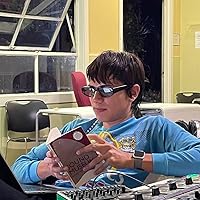
Instrument is an experiment in multimodal poetics—inhabiting a synergistic blend of poetry, music, and visual the artist’s three forms of “voice”. Born in Vietnam and leaving the country at the age of two for Northern California, Strom’s life and work speaks to fragmentation—of/within selves, histories, cultures, groups of people, and places—yet within this configuring lies her art’s fluid mastery. Combining color photography, personal biography and gripping, restless poetry, Instrument represents a unique melding of literature and art. The poems are augmented by an album, Traveler’s Ode, of ambient and folk-tinged songs featuring ethereal assemblages of sung-poetry, vocal layering, spare guitar, piano, and field recordings. Traveler’s Ode is a collaborative release between Fonograf Ed. and Antiquated Future.
Dao Strom is the author of Grass Roof, Tin Roof and The Gentle Order of Girls and Boys. She is also a writer of songs; she writes and records as The Sea and The Mother.
The New Yorker praised Strom's story collection,The Gentle Order of Girls and Boys, as being "quietly beautiful...hip without being ironic."
Her latest work is a hybrid literary/music/art project, an experimental memoir, We Were Meant To Be A Gentle People, accompanied by an album, East/West. This project received a 2014 RACC Grant and a 2013 Oregon Arts Commission Individual Artist Fellowship.
Previously, she has been the recipient of a National Endowment for the Arts Literature Fellowship, a James Michener Fellowship and the Nelson Algren Award, among other recognitions. She is a graduate of the Iowa Writers Workshop.
Dao Strom was born in Vietnam and grew up in the Sierra Nevada foothills of California. She lives in Portland, OR.
I’m having a hard time finding a significant connection between Instrument and “breath” as a process to keep the body alive. However, if I consider “breath” as an act of molding air with our mouths, then I see the album as very in line with this. For one, you almost can’t make out any specific words in any of the songs, rather, her voice and breath function as rhythmic signifiers that stand in for meaning. She uses her airy, melodic singing to create a sinister atmosphere, and along with the titles of the work, give the listener a sense of physical movement throughout spaces. Transportation (past, present, displacement, limbo, staying put) is a step in the direction of imminent danger through Strom’s despondent voice. Her breath fabricates soundscapes that are too afraid to follow a guide, like in the beginning of Carry/ Catalyst II where her harmonies get layered and then abruptly cut off, like bubbles being popped in air, as opposed to letting her breath finish the chords the way we may expect a song to. The purpose of the album is almost opposite to the book, where in the album the tone and feeling are at the forefront, while the book is very rooted in places, events, and artifacts. Perhaps it’s not opposite, but rather complimentary, as the book enlightens the facts behind the sentiment of the music. As the book is not a transcription of the music, we see a lot of themes show up that aren’t obvious in the music. The stories of her travel (and “staying”), as well as of the Vietnam War, are pointed, almost too clear even in their formal abstraction. Like in the cut up poems, where even through all their jumbled-ness, “lineage” and “such a long way from home” are still so clear. In the book I really do have a harder time seeing a prominent relationship between breath and poetry, but following the example I have above, the poem Carry/ Catalyst (157) mimics the image of bubbles of sound popping I mentioned, so I see that as an effective way of breath-scoring that song, even if it’s not the lyrics at all. However, the most striking part of the book for me was also the clearest: the meeting she has in Vietnam with the “repatriated exile” and the French Vietnamese composer, all of whom have different experiences of immigration and diaspora, which have caused them to either “travel” or “stay.” I’ve had a lot of experiences in similar situations, and depending on who I’m with I’ve been able to move between the three levels of emigrant out of the homeland. So when the repatriated exile asks Strom “when are you coming back?” it was like everything about the book and the album suddenly clicked, and I understood how “Traveler’s Ode” may be in reference to a person away from their homeland, weighing the darkness of history in their colonized land with the opportunity of a first-world existence in the colonizer’s (or I guess in the case of Vietnam, the meddler’s) country. As people far away from our ancestral lands, are we forced to wander the world forever “in the company of men/ with white skin” or can we liberate ourselves through our ancestors, “opening the gate” (83)?
This is an absolutely outstanding book of cross-genre work! I honestly can't hype this book up enough. And while it is on the longer side for a poetry collection, I found that I could not put it down. I intended to take a week to read it, but I ended up finishing it in two days because I couldn't stop reading it. The more I read, the more I wanted to read.
Strom's blending of poetry, prose, imagery, and collage are truly astonishing. The way she utilizes white space, and especially the way she uses punctuation (specifically brackets and slashes) are unlike anything else I've ever read. There's a sense of musicality, a rhythm, a beat, a pulse that reads across each page, speeding up and slowing down. And since there is such a musicality to the poems in this book, the experience of reading it evolves over time until it's not really reading it at all - it's hearing it, receiving it, feeling it.
Strom's use of language in this book isn't any less fascinating than her use of white space or punctuation. "The mothers inside of me are crying / there is no flag {flower} for their sorrow" (11). "I live in a body. Tumble into knowing, blinded by past knowings" (11). "how it is light / I wish to speak through" (12). There's a hauntedness to these lines, an almost gothic sense of place in time, place in experience, place in self, and place in memory.
Themes of gender, nature, the past/ancestry/heritage, and culture weave through the lines just as the lines weave through the page. "This is how you make the sky explode" (17). "This is how you circumnavigate the given settings" (17). "] to be born into a church to which you are inherently heathen" (21). And all of these themes weave into a single tapestry of language, image, and expression: a tapestry of what it means for the speaker to be themselves. "i had come towing anchors of selves" (38). "The past is an exhaustion. / The past is demarcation" (43). And while there is certainly an inward conversation taking place between the speaker and the page, there's also a conversation taking place between the page and the reader that moves beyond simple reading.
It's reflection, a mirroring, but it's a one-sided mirror. Sometimes it reflects the reader off the page, and sometimes it lets the reader look through the page into the internal workings of the speaker. And sometimes it does both simultaneously. "I've come to understand the body as a necessary country. / The placelessness this is (a) place in me / wages against" (87). "the insidious order / of things / mis-taken / ((i)) / flower / sometimes" (100). It's a continuous song written across time, space, and being.
It is, quite simply, a stunning piece of work. I highly recommend it.
I picked up this book because it was one of the Oregon Book Award winners, and I am always so excited to read local authors! Instrument was such a fascinating and impactful collection, and the pictures were truly so eerie and moving. This is a rather long collection, but I highly highly recommend to poetry lovers!