

What do you think?
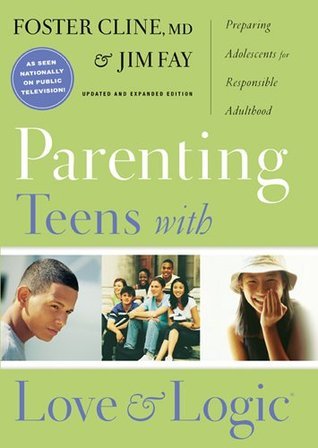
Parenting Teens with Love and Logic: Preparing Adolescents for Responsible Adulthood
Parents need help to teach their teens how to make decisions responsibly--and do so without going crazy or damaging the relationship.
Parenting Teens with Love and Logic, from the duo who wrote Parenting with Love and Logic, empowers parents with the skills necessary to set limits, teach important skills, and encourage decision-making in their teenagers.
Covering a wide range of real-life issues teens face--including divorce, ADD, addiction, and sex--this book gives you the tools to help your teens find their identity and grow in maturity.
319 pages, Kindle Edition
First published January 1, 1992
Ratings & Reviews
Friends & Following
Create a free account to discover what your friends think of this book!
Community Reviews
Displaying 1 - 30 of 242 reviews

July 2, 2011
I am of two minds about this book and the approach. On one hand many of the principles are sound and have given me a calm framework for working through common issues with my teens. It is also a reminder that adolescence is a time to start granting your child greater autonomy. I do feel that the degree to which a parent can do that depends a lot on the child - and when the child betrays certain trusts sometimes they have to have some freedoms temporarily reduced. The options presented in the book seemed too drastic sometimes - leave your child to themselves for the most part but then offer them the option of living on the streets (p.173) for example. But the idea of open dialogue re: issues is useful - freedom in action (for the most part) but always with discussion. Encouraging kids to take ownership of education, etc. All good thoughts.
Where this book really stopped working for me was in the examples and sample conversations. Some are just ridiculous and hokey. I would be disappointed in my child if they could not see through such transparent conversational manipulations. It might make life easier, but I would wonder what was wrong with my child that they could be so easily manipulated.
Even worse, in a sample conversation presented as "real" a mother discusses the dangers of early promiscuity with her daughter (p. 123) " Mom: When young girls have sex early, the darn bugs have a lot more time to gnaw away at the cervix...they can make it pretty ragged you know...[later on] the sperm have a real challenge..it gets too crowded with bugs and scar tissue...."I agree that there are real dangers to early promiscuity but if your child is mature enough to be having this conversation you ought to use science based evidence and REAL terms.
Later (because this bizarre conversation was so effective) these same parents receive a letter from a college health professional complimenting them on their sexually pure daughter. I cannot believe that letter is for real and, if so, I feel it violates a number of health ethics codes- especially patient confidentiality.
My biggest WTF moment (and really, I have WTF written in the margins several times throughout) came on pg. 245. This is a sample conversation of a mother cautioning her daughter in a smooth and calm way re: the potential dangers of chat rooms. As the mother has, with love and logic, brought her daughter around to seeing the dangers she adds: "That's a wise decision. (then, with a laugh) I'd be pretty broken up if you were raped and cut up."
WTF?!?! Really, my head exploded when I read that. When would it ever be appropriate to toss off a comment about rape and dismemberment with a cute little chuckle? NEVER! NEVER FREAKING EVER! That comment tossed off lightly would ALWAYS be WRONG. I have never been moved to write a letter to the author's of a parenting book in protest, but I am tempted now. The edition I am reading is 2006, I can only hope that someone caught that ERROR and has corrected it in subsequent editions. I keep telling myself that maybe I am over-reacting but NO I AM NOT. I am just pretty doggone sure that in any context that pretend mother is WRONG.
So there is my conflict in rating the book, some very useful information and ideas - will generate some great discussion between myself and my spouse as well as between us and our teens, but the authors can keep their sample conversations because I have more respect for my kids than to use false and/or misrepresented horrors presented in an eerily calm fashion to manipulate them (as if i could) - if I tried it I know my kids and they would choose living on the street over listening to these dialogues. And I could hardly blame them.
Where this book really stopped working for me was in the examples and sample conversations. Some are just ridiculous and hokey. I would be disappointed in my child if they could not see through such transparent conversational manipulations. It might make life easier, but I would wonder what was wrong with my child that they could be so easily manipulated.
Even worse, in a sample conversation presented as "real" a mother discusses the dangers of early promiscuity with her daughter (p. 123) " Mom: When young girls have sex early, the darn bugs have a lot more time to gnaw away at the cervix...they can make it pretty ragged you know...[later on] the sperm have a real challenge..it gets too crowded with bugs and scar tissue...."I agree that there are real dangers to early promiscuity but if your child is mature enough to be having this conversation you ought to use science based evidence and REAL terms.
Later (because this bizarre conversation was so effective) these same parents receive a letter from a college health professional complimenting them on their sexually pure daughter. I cannot believe that letter is for real and, if so, I feel it violates a number of health ethics codes- especially patient confidentiality.
My biggest WTF moment (and really, I have WTF written in the margins several times throughout) came on pg. 245. This is a sample conversation of a mother cautioning her daughter in a smooth and calm way re: the potential dangers of chat rooms. As the mother has, with love and logic, brought her daughter around to seeing the dangers she adds: "That's a wise decision. (then, with a laugh) I'd be pretty broken up if you were raped and cut up."
WTF?!?! Really, my head exploded when I read that. When would it ever be appropriate to toss off a comment about rape and dismemberment with a cute little chuckle? NEVER! NEVER FREAKING EVER! That comment tossed off lightly would ALWAYS be WRONG. I have never been moved to write a letter to the author's of a parenting book in protest, but I am tempted now. The edition I am reading is 2006, I can only hope that someone caught that ERROR and has corrected it in subsequent editions. I keep telling myself that maybe I am over-reacting but NO I AM NOT. I am just pretty doggone sure that in any context that pretend mother is WRONG.
So there is my conflict in rating the book, some very useful information and ideas - will generate some great discussion between myself and my spouse as well as between us and our teens, but the authors can keep their sample conversations because I have more respect for my kids than to use false and/or misrepresented horrors presented in an eerily calm fashion to manipulate them (as if i could) - if I tried it I know my kids and they would choose living on the street over listening to these dialogues. And I could hardly blame them.

March 20, 2013
Reader: "I can see that you really wanted to write a good book that helped parents with their teenagers. Man, that's a tough job. How do you think you did?"
Foster: "Gee Reader, I thought I did a swell job. I put a lot of effort into this and really did my best."
Reader: "I'm sure you did and I'm proud of you. But did you really take the time to read and update what you had to say? Is it possible that you got so enthralled with what it is that you usually say to parents that you perhaps didn't listen to yourself and your message? Do you want to know what some people might do?"
Foster: "Gosh Reader, I do. I have important things to say and I have years of experience helping kids who get into drinking and drugging."
Reader: "Yeah, about that 'drugging' thing...we don't say that, Foster."
Foster: "But I thought I was being hip to the lingo."
Reader: "I love you too much to argue, Foster."
Foster: "So how can I make this book better?"
Reader: "Well, some people might get an editor that's not afraid to say things you don't want to hear, like your terminology is outdated, that the extremes of situations are unnecessary (seriously...'cut up and raped?') and that you repeat yourself and that the dialogue sounds like a 'Leave it to Beaver' episode acted out with sock puppets instead of real people. And maybe what you think is empathy is actually more like condescension and won't be received with a 'Gee shucks, dad. You're right' kind of response."
Foster: "Wow Reader. I never thought of it like that. You're right. I love you Reader."
Reader: "I love you too Foster."
So basically, I'm so disappointed by this book because I usually love all the 'Love and Logic' teachings. They say everybody has a book in them, but some people really just have a bullet-pointed brochure. I could condense this book into that brochure and cut his 'pearls of wisdom' from a list of 36 to a Top Ten Pearls. I could also eliminate a lot of chapters, because let's face it, if you have a kid who has gone to the extreme of ANY parental nightmare (cults, gangs, runaway etc.) the LAST thing you do is pick up some sort of self-help book titled "Parenting Teens with Love and Logic." Seriously. Dial 9-1-1. Be that as it may, a reader may glean from these pages little helpful tidbits to hone their parenting styles and stay calm in the storm that is the teenage years, but I spent far too much time talking back to this book and being a sassy parent. I accept my consequences.
Foster: "Gee Reader, I thought I did a swell job. I put a lot of effort into this and really did my best."
Reader: "I'm sure you did and I'm proud of you. But did you really take the time to read and update what you had to say? Is it possible that you got so enthralled with what it is that you usually say to parents that you perhaps didn't listen to yourself and your message? Do you want to know what some people might do?"
Foster: "Gosh Reader, I do. I have important things to say and I have years of experience helping kids who get into drinking and drugging."
Reader: "Yeah, about that 'drugging' thing...we don't say that, Foster."
Foster: "But I thought I was being hip to the lingo."
Reader: "I love you too much to argue, Foster."
Foster: "So how can I make this book better?"
Reader: "Well, some people might get an editor that's not afraid to say things you don't want to hear, like your terminology is outdated, that the extremes of situations are unnecessary (seriously...'cut up and raped?') and that you repeat yourself and that the dialogue sounds like a 'Leave it to Beaver' episode acted out with sock puppets instead of real people. And maybe what you think is empathy is actually more like condescension and won't be received with a 'Gee shucks, dad. You're right' kind of response."
Foster: "Wow Reader. I never thought of it like that. You're right. I love you Reader."
Reader: "I love you too Foster."
So basically, I'm so disappointed by this book because I usually love all the 'Love and Logic' teachings. They say everybody has a book in them, but some people really just have a bullet-pointed brochure. I could condense this book into that brochure and cut his 'pearls of wisdom' from a list of 36 to a Top Ten Pearls. I could also eliminate a lot of chapters, because let's face it, if you have a kid who has gone to the extreme of ANY parental nightmare (cults, gangs, runaway etc.) the LAST thing you do is pick up some sort of self-help book titled "Parenting Teens with Love and Logic." Seriously. Dial 9-1-1. Be that as it may, a reader may glean from these pages little helpful tidbits to hone their parenting styles and stay calm in the storm that is the teenage years, but I spent far too much time talking back to this book and being a sassy parent. I accept my consequences.
This entire review has been hidden because of spoilers.

June 23, 2013
Short on love. At various points it advocates throwing out teens because helping them might cost a lot of money, and telling your daughter you'd be bummed if she was raped and cut up because she got involved with a weirdo in a chat room. Craziness!
I also don't care for their religious views. I wish books that use a Christian or bible based philosophy would state that on the cover. The bible is not a good basis for parenting, in my opinion. So, that makes this a bit short on logic too.
I think the stuff about throwing out teens, etc. comes directly from christian beliefs about how God (seen as a parental figure) treats "sinners" (damnation, punishment, etc). This is not my belief system, so I can't justify using it as a basis for parenting.
The stuff about sex was also quite religion based, which stands in the way of healthy, normal discussion with teens about sexuality. There is a section in the book about a mom talking with a 15 year old about why early sex is bad, it's all about "the darn bugs have a lot more time to gnaw away at the cervix of the uterus; they can make it pretty ragged", it's just ludicrous. How about a discussion that's age appropriate and factual? Fifteen year olds can handle a lot of information about sex that's specific and scientific. How about "we think it's healthier to avoid sex until marriage (or whatever) because you are safe from pregnancy, stds, emotional problems, etc." and actual scientifically accurate info, like birth control effectiveness, std statistics, etc.? Scary talk about "the darn bugs" is plain idiotic.
I like the idea of preparing teens for responsibility, but I'm not sure this is the best approach.
There is nothing here for parents of teens with big problems, except the advice to "seek counseling". (I recommend "The Explosive Child" for parents of kids with anger problems or depression.)
I also don't care for their religious views. I wish books that use a Christian or bible based philosophy would state that on the cover. The bible is not a good basis for parenting, in my opinion. So, that makes this a bit short on logic too.
I think the stuff about throwing out teens, etc. comes directly from christian beliefs about how God (seen as a parental figure) treats "sinners" (damnation, punishment, etc). This is not my belief system, so I can't justify using it as a basis for parenting.
The stuff about sex was also quite religion based, which stands in the way of healthy, normal discussion with teens about sexuality. There is a section in the book about a mom talking with a 15 year old about why early sex is bad, it's all about "the darn bugs have a lot more time to gnaw away at the cervix of the uterus; they can make it pretty ragged", it's just ludicrous. How about a discussion that's age appropriate and factual? Fifteen year olds can handle a lot of information about sex that's specific and scientific. How about "we think it's healthier to avoid sex until marriage (or whatever) because you are safe from pregnancy, stds, emotional problems, etc." and actual scientifically accurate info, like birth control effectiveness, std statistics, etc.? Scary talk about "the darn bugs" is plain idiotic.
I like the idea of preparing teens for responsibility, but I'm not sure this is the best approach.
There is nothing here for parents of teens with big problems, except the advice to "seek counseling". (I recommend "The Explosive Child" for parents of kids with anger problems or depression.)

July 13, 2020
This book has many 5 star reviews and I honestly cannot figure out why. It opens with a story about a woman tricking her son into thinking he’s going to jail and tells the officer to put him in with pedophiles and sex abusers. That isn’t loving or logical, and I almost put the book down right then. Since I have several friends who love this book, I decided to keep reading.
The overall ideas such as not yelling, natural consequences, and giving teens responsibility make sense. But they don’t encourage building a strong relationship as a backbone to this, and they give many horrible examples and bad advice.
They encourage throwing a 15 year old out on the street, and then encourage putting your kids on the streets or threatening to several times throughout the book. The things they say to the kids do not sound loving, such as “it’s an irritation to be around you”, and the conversations in general are so fake and forced and will not go like that in real life. So what will you say when your kid doesn’t happily comply after you tell them they’re gonna live on the streets?
Instead of teaching basic human decency, like we should have compassion for each other in this house and do things for each other, they say “well I pay the mortgage so you have to do this.”
Some specific issues I had were the abstinence based stance they took, telling kids they will become infertile if they have sex too early, supposedly a random doctor wrote to this woman and congratulated her on her daughter being a virgin??? They say it’s okay to say to a gay child “I hope you will live a heterosexual life” and say that is still accepting them. They suggest kicking kids out or calling the police on them (and in my opinion that does not take into account that police encounters can be dangerous or the fact that they now have a record that is hard to bounce back from particularly for non-white people). They praised someone who left their kids alone because they were annoying her and made them figure out and pay on their own for a taxi. They say “cocaine is distributed to kids in almost every elementary school” ???! They tell a girl she will be raped and cut up and another girl she’ll be beat up and raped. I do encourage talking about risks with kids, but the way they do it is not at all with love. Parents have an obligation to feed their children, even if they spend all their allowance, and we shouldn’t say “you can get food out of the fridge when you pay for it” when they know the child has no money.
This book had no love or logic in my opinion and I can’t understand how it has been so praised.
The overall ideas such as not yelling, natural consequences, and giving teens responsibility make sense. But they don’t encourage building a strong relationship as a backbone to this, and they give many horrible examples and bad advice.
They encourage throwing a 15 year old out on the street, and then encourage putting your kids on the streets or threatening to several times throughout the book. The things they say to the kids do not sound loving, such as “it’s an irritation to be around you”, and the conversations in general are so fake and forced and will not go like that in real life. So what will you say when your kid doesn’t happily comply after you tell them they’re gonna live on the streets?
Instead of teaching basic human decency, like we should have compassion for each other in this house and do things for each other, they say “well I pay the mortgage so you have to do this.”
Some specific issues I had were the abstinence based stance they took, telling kids they will become infertile if they have sex too early, supposedly a random doctor wrote to this woman and congratulated her on her daughter being a virgin??? They say it’s okay to say to a gay child “I hope you will live a heterosexual life” and say that is still accepting them. They suggest kicking kids out or calling the police on them (and in my opinion that does not take into account that police encounters can be dangerous or the fact that they now have a record that is hard to bounce back from particularly for non-white people). They praised someone who left their kids alone because they were annoying her and made them figure out and pay on their own for a taxi. They say “cocaine is distributed to kids in almost every elementary school” ???! They tell a girl she will be raped and cut up and another girl she’ll be beat up and raped. I do encourage talking about risks with kids, but the way they do it is not at all with love. Parents have an obligation to feed their children, even if they spend all their allowance, and we shouldn’t say “you can get food out of the fridge when you pay for it” when they know the child has no money.
This book had no love or logic in my opinion and I can’t understand how it has been so praised.

April 14, 2015
There will come a point in time when “Because I said so” is no longer going to work. Your children will still love you – but they will no longer accept your value systems JUST because they love you. And in a few short years, they will walk out that door. Yes, you have been a good parent and “provided” for them all along. But have you “prepared” them for the rest of their lives? That’s the question this book makes you think about.
The title sounds cheesy, and the cover looks cheesy, yes. But I did really feel like the book was beneficial and I came away with armed with a few really good tips.
The focus of the book is on preparing your teenagers to be responsible adults by teaching them about making choices and about consequences. The two main tips that I am going to take away with me are -
• Give them lots of practice in decision making. Don’t dictate. Offer choices. Don’t make the decisions for them.
• If they make the wrong decisions, don’t punish them. Let them face the consequences. Punishment breeds resentment. Consequences result in lessons learned.
I didn’t go gaga over every single thing in this book, but much of it DID make sense. I think I’ll check out the other love and logic books too.
The title sounds cheesy, and the cover looks cheesy, yes. But I did really feel like the book was beneficial and I came away with armed with a few really good tips.
The focus of the book is on preparing your teenagers to be responsible adults by teaching them about making choices and about consequences. The two main tips that I am going to take away with me are -
• Give them lots of practice in decision making. Don’t dictate. Offer choices. Don’t make the decisions for them.
• If they make the wrong decisions, don’t punish them. Let them face the consequences. Punishment breeds resentment. Consequences result in lessons learned.
I didn’t go gaga over every single thing in this book, but much of it DID make sense. I think I’ll check out the other love and logic books too.

May 13, 2011
Good points: (which parents will hopefully already know)
1. Be consistent
2. Hold your teens responsible
3. Let natural consequences happen so your teen can learn from their mistakes
Things I also agree with:
1. Allowances are not related to doing chores
2. Negotiate curfews by occasion
3. Grounding is not really effective, especially if done repetitively
Reasons I won't recommend this book:
p. 64 - authors misrepresent and then slam the well-proven theory of positive reinforcement (which is not handing out fake complements, as they claim)
p. 86 - "and spring it on them" - the author's advice for blindsiding your teenager with your new found discipline techniques (where is the love or logic here?)
p. 105 - "don't trust your intuition" - never sound advice to anyone
p. 158 - authors tout their new concept of "no punishments" - and recommend instead "hurting from the inside out" (which as they go on to describe by definition ARE punishments/ consequences - which any teenager will see through, no matter what you choose to call it.)
The "and spring it on them" represents what I felt was the overwhelming undertone of their theory - a getting the better of your teenager.
1. Be consistent
2. Hold your teens responsible
3. Let natural consequences happen so your teen can learn from their mistakes
Things I also agree with:
1. Allowances are not related to doing chores
2. Negotiate curfews by occasion
3. Grounding is not really effective, especially if done repetitively
Reasons I won't recommend this book:
p. 64 - authors misrepresent and then slam the well-proven theory of positive reinforcement (which is not handing out fake complements, as they claim)
p. 86 - "and spring it on them" - the author's advice for blindsiding your teenager with your new found discipline techniques (where is the love or logic here?)
p. 105 - "don't trust your intuition" - never sound advice to anyone
p. 158 - authors tout their new concept of "no punishments" - and recommend instead "hurting from the inside out" (which as they go on to describe by definition ARE punishments/ consequences - which any teenager will see through, no matter what you choose to call it.)
The "and spring it on them" represents what I felt was the overwhelming undertone of their theory - a getting the better of your teenager.

May 25, 2009
I'm suprised that this book got so many 4-5 star ratings. I completely disagreed with many of the principles this book teaches. What I got from this book is this: let your teenagers make their own decisions and live with the consequences, that will teach them responsibility. Hello! Isn't that what adulthood is? I quit reading when I got to this part: Three Messages for Teenagers 1. I love you. 2. If you have any questions, ask. 3. Good luck in life. Good luck? I don't think so. Teenagers should be allowed to make their own decisions about some things, but there is still a lot to teach them between the ages of 12 and 18, before they are ready to go out into the world with nothing more than a "good luck" from their parents. I just think this books philosophy is a little harsh and just doesn't feel right to me as a parent.

May 25, 2024
This was pretty good. Not sure if its just dated, but some of the examples were so extreme that I laughed out loud! I.E.: telling your daughter she better take care if her braces/teeth or no boy will ever kiss her snaggle toothed face! Lol The basic principles were solid and has helped me ask myself what is a logical consequence for bad behavior that better prepares teens for adulthood? I feel like this book is more appropriate for parenting older teens and even young adults who are still living in the home. Using only love and logic with this very "hands off" approach for younger teens is definitely not my style. I appreciate the more gradual release of responsibility. Interesting read.

May 20, 2026
Brilliant tools and a great resource for raising teens.

January 11, 2018
There were good principles in this book. There were areas that I definitely need to improve on. I do think this book is far too extreme. Letting your children learn to make their own decisions and learn from the consequences is a sound principle. Leaving them stranded somewhere to teach a lesson is extreme. Having open communication with your children is a sound principle. Telling them they might get raped and chopped up if they give out information in a chat room is extreme.
Another thing I didn't like is the way the book modeled conversations with your teen. The conversations sounded like a therapist talking with a client. I would never want to sound that way with my kids. It did not sound loving at all.
The last thing I didn't like about the book is that they did not give allowances for kids with chemical imbalances. That really does affect their decision process.
Overall, there were some good take aways. I wouldn't use this book as my bible though.
Another thing I didn't like is the way the book modeled conversations with your teen. The conversations sounded like a therapist talking with a client. I would never want to sound that way with my kids. It did not sound loving at all.
The last thing I didn't like about the book is that they did not give allowances for kids with chemical imbalances. That really does affect their decision process.
Overall, there were some good take aways. I wouldn't use this book as my bible though.

May 3, 2013
I had heard a lot about the Love and Logic method, but had never read any of the books. Since my two are teens, I decided to give this a try. While I did find myself agreeing with a lot of what the authors had to say about teens learning to make their own decisions (with guidance of parents, but in a way as not to be a dictator or helicopter parent) I found the examples of sample dialogue absolutely laughable. I can't see any teen talking to their parents that way. From my experience most teens DON'T want to talk to their parents and herein lies the problem with the love and logic method -- it involves adult-like conversations with kids who don't want to talk. So good luck. Nice theory in concept, but if your kids are like mine, this will be a hard parenting technique to implement, or at least in the way they describe. I guess they need a follow up book - how to use love and logic with kids who don't want to talk to you.
I also found their examples somewhat shocking, and maybe that's why I didn't find the book very useful. A lot of the examples of bad teen behaviors are way beyond what I've experienced with my kids. Some of the examples of teens talking back to their parents were positively unbelievable. Maybe I'm living in a sheltered world, but I don't see many kids where I live talking to their parents in this manner. And if your kids is one that talks this way, I'm not sure love and logic is going to work, as it's too late. Just my two cents.
I also found their examples somewhat shocking, and maybe that's why I didn't find the book very useful. A lot of the examples of bad teen behaviors are way beyond what I've experienced with my kids. Some of the examples of teens talking back to their parents were positively unbelievable. Maybe I'm living in a sheltered world, but I don't see many kids where I live talking to their parents in this manner. And if your kids is one that talks this way, I'm not sure love and logic is going to work, as it's too late. Just my two cents.

December 4, 2024
Ugh. This was rough. I liked the L&L early childhood, and Parenting with Love and Logic was just okay. This one is obviously dated. Originally published in 1992, though I read the most recent revision (2020), it felt very 90's to me, with a couple of updates slapped on which felt like bandaids rather than an adequate revision. While I agreed with a lot of responses to behavior, I mostly felt annoyed by the implication that teens are inherently spiteful and manipulative and a problem faultless parents just need to get crafty with until their teens leave the nest. I do not think that you get teens who are disrespectful, irresponsible, and risky (drugs, alcohol, sex) without a problematic parent/child relationship of some kind. If not outright trauma. I think the problem with this book is its lack of focus on relationship between parents and teens. It's not so much proactive as reactive. Maybe that is its intent. But, I really believe you'll get much further by building relationships rather than reaction plans.

May 3, 2013
There were some good ideas in this book, but they were completely outweighed by the extremely hokey sample conversations. Not only that, some of the sample conversations were just downright offensive. Also, some of the ideas had no logical follow-through. Such as if you make a deal, or negotiate, with your teen and they don't hold up their end of the bargain, then what? Since you're not supposed to punish your teen, I'm not exactly sure what you are supposed to do. Throw them out on the street? (That was actually mentioned a few times throughout, which, no)

November 11, 2007
This books takes a load off the helicopter parent who thinks he should swoop down anytime anything happens to their child. An excellent book for new parents or parents of those little ones who are entering their teen years.

February 11, 2010
OK I know I don't have any teens. I was reading it for my sister who DOES have teens, and I loved the concept so much that my husband is at the library RIGHT NOW picking up the Love and Logic book for younger kids. Can't wait to read it.

June 21, 2010
Great principles. Common sense advice and good examples for how to work with teens/youth. I need to read the one for kids, but the same principles apply I'm sure, it's just giving them different freedoms and choices. Love this theory.
May 7, 2013
As the mother of four children, I highly recommend this book. Although I'm an avid reader, I unfortunately did not find this book until my third child was 17. It has been a life changer for our family. Whenever I am talking "kids" with people, I reference this book.

September 30, 2023
There’s too much wrong with this book to go into every detail. I read this book for a middle school book club. Extremely dated. Boomers are going to be boomers, and that’s basically the gist of this book. I do not recommend this book. There were some important topics covered, and instead of giving some real advice, the situational example would swing to some extreme of leave your kid in jail, let them live on the street, tell them to smoke outside, etc. Very dated and hokey conversation examples. I read love & logic book for my toddler, & I don’t remember it being this terrible.
Outdated:
P. 241: Learn about your kid’s taste in music by reading the newspaper and watching TV
-nope! Unless you want to look like a grandpa.
Commenting on kid’s appearances:
“Fang face”
“Fred was always an ugly kid.”
Weird:
-Dads might start feeling in competition with their sons for mom’s attention when their sons start puberty
Jobs:
That was some very strange advice. It was basically don’t get a job because kids these days just get jobs to purchase nice things. Not save up for college or their expenses. 🤦🏻♀️
One good nugget:
I like the advice on giving your teen a car. They need to save up the deductible amount (ex: $500) before they can get a car. And 100% do not buy them a nice car.
Outdated:
P. 241: Learn about your kid’s taste in music by reading the newspaper and watching TV
-nope! Unless you want to look like a grandpa.
Commenting on kid’s appearances:
“Fang face”
“Fred was always an ugly kid.”
Weird:
-Dads might start feeling in competition with their sons for mom’s attention when their sons start puberty
Jobs:
That was some very strange advice. It was basically don’t get a job because kids these days just get jobs to purchase nice things. Not save up for college or their expenses. 🤦🏻♀️
One good nugget:
I like the advice on giving your teen a car. They need to save up the deductible amount (ex: $500) before they can get a car. And 100% do not buy them a nice car.

March 27, 2017
I read the original Love and Logic book many years ago when my older kids were younger; I found it enlightening. Now that I have a teenager, this book was recommended as a refresher. There are some great reminders in there; specifically I appreciated the reminders to
1) turn more control over to my kids as they grow up
2) react calmly, with empathy and not anger
3) allow real consequences to follow their actions rather than imposing non-related punishments
It was valuable for these and other reminders and insights, definitely.
I could have done without the last half of the book, the 39 "Pearls" that give practical application examples on a variety of topics. A lot of the conversations in the book are cheesy, but the pearl conversations take the cake on unrealistic. Some of them are outdated, some are repetitive.
So I would recommend this book, but only for sections one and two - forget the pearls. :)
1) turn more control over to my kids as they grow up
2) react calmly, with empathy and not anger
3) allow real consequences to follow their actions rather than imposing non-related punishments
It was valuable for these and other reminders and insights, definitely.
I could have done without the last half of the book, the 39 "Pearls" that give practical application examples on a variety of topics. A lot of the conversations in the book are cheesy, but the pearl conversations take the cake on unrealistic. Some of them are outdated, some are repetitive.
So I would recommend this book, but only for sections one and two - forget the pearls. :)

October 19, 2025
This book has not aged well. So many scenarios felt manipulative and gross. My flabbers were gasted at the chapter on how to talk to teens about sex. The authors compares people to Petri dishes - bright and shiny on the outside and “slimy and scuzzy” on the inside. They assert that if girls have too much sex, their vaginas will get “ragged” (that is the term they use!) and that most of the people fertility specialists help are couples who can’t get pregnant because the woman’s too “raggedy” on the inside. Excuse me, what? Are you actually f*#%ing kidding me!? Not healthy at all. I did share I many, many laughs with a friend who is a LMFT and sex therapist. I kept waiting for a useful nugget or two, but gave up about 1/3 of the way through. DNF

November 25, 2025
If you want to learn how to instil sexual shame within your teen, this is the book for you.
I quit this book less than halfway through. There’s a noticeable thread of religious dogma running through many chapters, often framed as ‘love’ or ‘logic,’ which lands as pretty radical in today’s world.
I quit this book less than halfway through. There’s a noticeable thread of religious dogma running through many chapters, often framed as ‘love’ or ‘logic,’ which lands as pretty radical in today’s world.

August 21, 2026
Oh my gosh...
This book is a masterclass crime scene in psychological cowardice and Christian theological bankruptcy...
This is not a book on parenting adolescents with love. This is a cowardly manual to training emotionally stunted accountants- children that will behave transactionally, adapt to their own selfishness, and never hold coherent values.
Will your kids be responsible with this approach? Maybe, but in the most selfish, transactional, performative, and self-serving way possible given the premise of pure natural consequences without reflection. They will purely operate on fear of discomfort and shame.
Cline and Fay use a strict Behaviorism approach. Problem? That entirely disregards the underlying factors, needs, and pathologies of humans. It's a shallow approach because functionality is the goal, not the substance.
There is ZERO grace in this transactional viewpoint.
Let's summarize things:
- Downplaying Pathology of Society - Where will teenagers learn to socialize? Reality is you as the parent must be the model for them to navigate dysfunctional environments.
- An Extremely Broken Model of Development
- Missing Essential Frameworks Teenagers Require
- Not Specifying "Early Childhood Struggles" - It's self-worth and fear of helplessness. All pathology is rooted in both.
- Cop-Out Tendencies - Foster Cline and Jin Fay outsource everything. Troubled teens, children with fetal alcohol syndrome, lacking trust, etc..
- Failure to Make Teen Question the Why Behind Actions and Wants - Deflection instead used.
"Seek professional help." No attempts to at least guide the reader in addressing their concerns for the teenager, guides to at least try to reason with the teen and point out specific consequences that will harm them, the fact they as the parent cannot be there for them forever, etc..
The True Crime - What the Book is Missing?
- The Two Cores of Pathology - Fear of Helplessness and Fear of Lack of Self-Worth
- Definition of Love - Love is an ACT, not a fleeting emotion as this book misattributes!
- Frameworks for Intrinsic Self-Worth - Given this book is for a Christian audience. It's absurd they don't have it.
- Frameworks for Forgiveness
- Frameworks for Moral Absolutes / Values - The only aspect of identity that lasts a lifetime. These authors allow a lack of coherent identity without knowing it. "Teens create their own identities by initating the styles of...heroes (p.163)."
- A Definition for Purpose - Teens require this! Abstract thinking seeks meaning!!
- Frameworks for Relationships - For example, romance does not change anyone or solve problems. If you do not teach otherwise, they will just default to thinking marriage is a solution to their problems. There is also no framework to teaching them what healthy consent looks like.
- Frameworks for Reflection / Introspection
- Proper Emotional Attribution - Teenagers will conflate intensity, love, and validation.
- Frameworks for Gratitude
- Statistics for Poor Behaviors
- Frameworks for Communication Styles - A parent should say matters appropriately.
- Frameworks of Natural Consequences - The consequences to themselves if they fail to reflect, have values, grow, and go to school? No identity, endless emotional pain, painful medical problems, no self-worth, vocabulary stuntage, doomed to low income work and high crime areas, etc.. You're teaching them this for themselves.
- Frameworks for Respect - Respect is intrinsic, not earned!
- Value of Education - No education and effort means no psychological integration.
- Templates and Methods for Difficult Conversations - For example, telling a troubled teenager the harsh reality: one as a parent will not always be available, the teen is sabotaging themselves, real world consequences, without pain there is no growth in life, dysfunctional relationships will be inevitable with poor behavior, inevitably traumatizing themselves, there is no alternative to facing the self and fears.
- Making Teenagers Reflect - Teenagers aren't good at reflecting on their own. Emphasizing making them question the why behind their actions should have been included. It's present, but not emphasized.
More Examples?
If you've read books from around this time period like John Gray's "Men Are From Mars, Women Are From Venus," you will immediately know this book is awfully out of touch with real life dysfunction.
Examples?
- Assuming teenagers will reflect - This is a skill you as the parent will need to teach explicitly.
- Troubled Teens - Not allowing them to affect you. A teenager will feel neglected.
- Categories of Teens - Early Bloomers, Late Bloomers, and Troubled Teens
- Absolute Failures - No addressing how to help teenagers with common pathologies: grandiosity, self-harm, etc.. The natural consequence method without punishments will only enable maladaptive and egotistical teenagers.
The "Early Boomers" category in this book is an absolute lie. It assumes a good childhood equates to functional adulthood. An absolute lie, I've witnessed many collapse in adolescence and never recover.
Homosexuality - The Controversial Section
- Zero guidance here. No Biblical citations or reasoning.
- 5 paragraphs only, just briefly stating it's bad and to love your kids anyway.
- The most hypocritical part? Teaching teens about sex and having "the talk" never even covers oral and anal sex's dangers. Biblical Christianity/Judaism goes against sodomy. No honest clinic will tell you the mouth and butt don't contain the most harmful bacteria in the body.
- Couldn't they have at least addressed common universal pathologies?
- They clearly only put this section in to appeal to the conservative audience.
BAD EXAMPLES IN THE BOOK:
- When a teenager asks their parent to buy them something because the "cool kids" have it.
• "That's nice, dear." - Dismissive
• Telling the kid they'll find a way to make the money
• The kid tries emotional blackmail, "Don't you love me?"
• "Of course I do, dear. That's why we buy you average good sneakers and allow you to earn the money to buy better ones if you wish."
• "What am I going to tell the other kids if I can't get the sneakers?"
• "Well honey you could tell them that you'd rather use the extra money for something else."
This is not love. This is a textbook ego reflex.
Why not ask them the "why does it matter so much?" and "Why do you have to fit in?," "Are they really your friends if they judge you over something so petty?"
• Cline and Fay's Advice ? - If the teen persists on objectiving
- "Fine, that is my value system, and it's what allow me to earn my money. So you want to wear your green Mohawk fine go earn the money on your value system."
Absolutely horrible! It's dismissive, adversarial, and transactional in nature!
- Loans? Also very poor and transactional. On page 136, a teen wants money to buy something, so the father insists on creating a loan and if the child fails to pay it back, they liquidate one of the child's possessions.
Why does this fail? It does not necessarily teach responsibility but reduces wanting to transaction.
More importantly, the authors never simply have the father question the teen, "Why do you need it? How will it benefit you in the long-term?"
- Opposing Punishment.
Cline and Fay claim that punishment is not correct because it leads to outside in pain rather than inside in pain. Their argument is hurting from within will force him the point to themselves.
Given the commonality of narcissistic and grandiosity defense mechanisms, this method is not foolproof and is often still transactional in nature.
They also neglect biblical standards as King Solomon actually teaches spanking in Proverbs.
This section also fails to address that in the real world there are often physical consequences for various actions. Sure your workplace boss can't lay a hand on you, but how about messing with others on the street or pulling pranks on random people? The the line must be drawn somewhere.
What happens at bars? A bouncer will lay their hands on them if they are a nuisance. What happens for trespassing? The police will escort them out physically and take them to jail (which both authors even say no to grounding).
The reality is you cannot force anyone to reflect, but you can make them face consequences and make their ego face reality.
- Attire (Clothing)
The book states if the teen's clothing is offensive, then avoid criticizing it and just draw your own boundary.
For once, I have to take the other side. You do not want your teen dressing a certain way if it attracts the wrong crowd. You can't just have boys sagging their pants, girls wearing practically underwear, or clothing associated with hood culture. Guess which crowd gets attracted?
This is willful negligence. Whatever happened to Biblical "modesty?"
- Arguments
Okay, this example of a teen threatening to sell drugs because the parent won't give him allowance.
Sure, this reverse psychology method works if the teenager has a conscience and actually wants their parent's approval, but...this would not pass in a hood or with a teen with grandiosity. I bet you, if any parent didn't care their son in the crime ridden hood said this, they would go ahead and sell drugs.
Instead, wouldn't it be more appropriate to point out the why and asking if it's truly worth the risk just to buy disposable things that mean nothing in a few years?
- Adult Children Moving Back In
Absolutely transactional- whatever happened to the prodigal son!? An adult child moving back in, does so because they're struggling!
And the first thing you do is ask, "What's in it for me!?" Absolutely devoid of love! Instead, just explain since they live in the house, they also need to do their part! It's called boundaries, not expecting something in return for helping them out in hard times!
- Backtalk
First the father says the daughter has a right to make mistakes...then says he'll turn her into the police ._.
Tell me I'm not crazy. Isn't that the opposite of the point of agency and parenting? A parent is supposed to enforce boundaries to prevent their kids going to jail in the first place! This is MANIPULATION...this is what it says:
Dad: "...I realize I'm not giving you the right to make your own mistakes..."
Sarah: "Well- that's okay dad."
Dad: "No, it isn't okay. It robs you of deciding for yourself..."
Sarah: "Well, you should worry about some things. Like maybe I do drink too much at a few parties."
Dad: "I know...if I think you're drinking and driving, I'll just give the license plate number to the cops..."
Sarah: "Dad, get serious!"
Dad: "I am serious. I love you too much to keep messing around trying to save you and make sure everything goes okay. Thanks for talking."
._.
So, when a girl confesses, exploit her vulnerability with a bait and switch? Cline and Fray, what the heck is wrong with you!?
- A Teen Driving - A Masterclass in Transactionalism
I get it if the teen has a poor history of behavior, but if you have a good relationship and they behave then why be so utterly transactional?...It's utterly horrifying there is no love here.
Tammy: Mom, when can I drive the family car?
Mother: All you need to do is make a deposit of 250 USD in my savings account. This way if an accident happens, we won't need to worry about fixing the car.
Tammy: I don't have that much money...
Mother: Alright, we'll consider holding something of yours for deposit.
I can understand if the household is financially struggling, but this is not love or even responsibility. You are teaching your kid they are a liability that cannot be trusted.
The Only Upsides of this Book?
- The teenage behavioral patterns are consistent and correct
- Stating to parents not to let their anger get the better of them and avoid control fights
- The approach itself is not a bad one, however, without the proper elements to give children and adolescents, it's practically useless.
- The emphasis of the universal human need of agency. However, they use the word "control" instead here, which isn't quite correct.
- Why helicoper and sargeant style parenting don't work - Both do not build emotional architecture...
Verdict:
As someone that grew up in the 2000s and 2010s with chaotic internet, endless virtue signalling people on the internet, bad many foes with textbook emotional development arrest, and had to process for years to recover from recursive trauma and disorganized attachment, I emphasize: KNOW HUMAN NEEDS, PATHOLOGY, VALUES, AND TEACH THEM COPING MECHANISMS- otherwise they will end up a functional mess at best!
Oh my gosh, even John Gray's Men Are From Mars and Women Are From Venus at least has clinical honesty with human dysfunction and how to deal with it. And his approach is purely palliative and pop psyche.
Cline and Fay have no clue how to properly address pathology, have no clue what "love" even means, cannot guide minors to have a proper identity and self-worth and hold values, let alone teach parents how to take control. There is NO vulnerability in this book! Vulnerability is required in psychology to build trust, have relationships, and emotionally grow!
They have both worked with children for decades- this is absolutely horrific!! This book reflects their utmost cowardice!
[More of the Book's Horrible Advice Examples]
Gaining Respect - .193-194
To make kids "respect" their mother, she stopped the car, went to a restaurant, and left the two boys behind along with the vehicle.
Absolutely illegal, irresponsible, abandonment, etc..
The boys are not gaining respect for her. Respect is intrinsic by definition, not earned. This is not respect, the boys just strategized instead. If anything, they became resentful and now know mother does not unconditionally care for them.
Respect requires moral values. These boys lack them, therefore are incapable of true respect.
P.196 Drugs
- Don't make any effort to help your kid out or send them to therapy, just cop then out. No grace. If in trouble with the legal system, do not pay for any of their letal fees.
- The authors fail to note these kids are on drugs often because they're on chronic survival mode! At least take them to therapy, rehab, or SOMETHING.
- Another copout!!
- Ordering doesn't work
- Absolutely no frameworks to ask the child why they feel the need to do drugs, their reactions, etc.
- "Not a crisis" - This is a crisis. Experimentation alone is a red flag of peer pressure, toxic environment, and chronic stress (anxiety, depression, etc.!!)
- You are supposed to SHOW YOUR TEEN YOU CARE...
Another absolutely terrible take.
For drugs, the parent is to tell the kid to not do so or they'll call the cops, the same way as earlier with being caught drinking and driving.
This is absolutely stupid. Why don't they at least try to ask them WHY they are doing it? Peer pressure? Stress? Take them to therapy or rehab at least! They can literally have them taken away from the school, kept confined in a facility that refuses such behavior to be allowed, and such instead!
Eating Disorders - p.200
- Zero attempts to at least TALK to the child?? Just anti-depressants!?
P.202-203 - Friends and Peer Pressure
- Shouldn't the parent at least tell them the warnings of peers and how they subtly influence their habits?
- You as the parent can legally report other teens on drugs
Grades - p.206
- Utterly negligent
- Instead of seeking tutors, at least asking them why they feel upset, or providing real life examples of consequences of living low income without proper money, they just say to let the kids you "hope" they graduate!
- You can't make them like it, but you can still make them study! No phone, no video games, or messing with their friends for long periods of time if they cannot get their priorities straight!!
- Maybe something on the natural consequences of stunted vocabulary, inability to have discipline, lack of agency in life, splitting, potential social humliation, lack of quality partners to settle with, and other congitive deficiences that persist without learning?
- It's only logical, if they can't do a routine at school, then how can they possibly do one at work?
- Do you see Asian children failing? Everyone knows East Asians, Southeast Asians, and Russian children work hard because they are taught the value of education!!
- Allowing teens to drop out of high school because of "preoccupation with other interests?" Cline and Fay cannot be serious- high school dropouts are almost guaranteed to be doomed to poverty! Unless that dropout is literally doing nothing but studying advanced concepts, maths, physics, finances, and pragmatic real life skills, agriculture, they're not making it!
- Very poor guide saying, "C" is acceptable. They aren't putting their best effort into matters or have a learning deficiency the vast majority of the time. No scholarships or prestigious universities will smile at a C!
They have the audacity to compare barely passing intellectually to surviving. Disgraceful.
- No frameworks to teach the value of education
P.216 - Music
- Music should NOT be avoided.
- Music literally influences their subconsciousness!!
P. 219 - Ordering
- What? Not giving orders is bad? You need to order your teenager to retain and establish good habits!!
P.223 - Parties
- This is your house, you have to enforce the rules. The teenager does not own your house!
- You can't just give a request! A party risks theft, loss of valuables, vandalism, and so on!! If they host a party, you make it CLEAR there will be consequences. Get a neighbor or such to even keep a report!
P.228 - Runnaway Teens
- Absolutely reckless. Drug cartels, homeless, and traffickers are everywhere in cities. Maybe if you were in Korea or Japan, this could pass, but never the USA, Canada, Britain, or the west! Report a police search immediately!!
- It works in this case for one to just state consequences, but the lack of compassion here is highly concerning.
P. 257 - Gangs
- An absolute failure on any guidelines to warn the child
- Reality? Gangs are transactional, devoid of any actual love. There's a reason the gang behaves through violence and coercion. Cline and Fay just vaguely state parents to tell their kids the problems.
- Removing the kid from the school is one partial solution mentioned here
- Ask an underaged teen to leave home if they join a gang? Illegal and child abandonment. Why don't you just call the police instead? This entire book literally encourages parents to cop-out their kids. HOW THE HECK CAN YOU CLAIM TO LOVE THEM WHEN YOU ARE DELIBERATING ABANDONING YOUR CHILD!?
Oh my GOSH, Cline and Fay need to go to therapy and fix themselves first! Do NOT apply this book onto your child unless you want to raise a cowardly, transactional, self-serving, narcissist!
This book is a masterclass crime scene in psychological cowardice and Christian theological bankruptcy...
This is not a book on parenting adolescents with love. This is a cowardly manual to training emotionally stunted accountants- children that will behave transactionally, adapt to their own selfishness, and never hold coherent values.
Will your kids be responsible with this approach? Maybe, but in the most selfish, transactional, performative, and self-serving way possible given the premise of pure natural consequences without reflection. They will purely operate on fear of discomfort and shame.
Cline and Fay use a strict Behaviorism approach. Problem? That entirely disregards the underlying factors, needs, and pathologies of humans. It's a shallow approach because functionality is the goal, not the substance.
There is ZERO grace in this transactional viewpoint.
Let's summarize things:
- Downplaying Pathology of Society - Where will teenagers learn to socialize? Reality is you as the parent must be the model for them to navigate dysfunctional environments.
- An Extremely Broken Model of Development
- Missing Essential Frameworks Teenagers Require
- Not Specifying "Early Childhood Struggles" - It's self-worth and fear of helplessness. All pathology is rooted in both.
- Cop-Out Tendencies - Foster Cline and Jin Fay outsource everything. Troubled teens, children with fetal alcohol syndrome, lacking trust, etc..
- Failure to Make Teen Question the Why Behind Actions and Wants - Deflection instead used.
"Seek professional help." No attempts to at least guide the reader in addressing their concerns for the teenager, guides to at least try to reason with the teen and point out specific consequences that will harm them, the fact they as the parent cannot be there for them forever, etc..
The True Crime - What the Book is Missing?
- The Two Cores of Pathology - Fear of Helplessness and Fear of Lack of Self-Worth
- Definition of Love - Love is an ACT, not a fleeting emotion as this book misattributes!
- Frameworks for Intrinsic Self-Worth - Given this book is for a Christian audience. It's absurd they don't have it.
- Frameworks for Forgiveness
- Frameworks for Moral Absolutes / Values - The only aspect of identity that lasts a lifetime. These authors allow a lack of coherent identity without knowing it. "Teens create their own identities by initating the styles of...heroes (p.163)."
- A Definition for Purpose - Teens require this! Abstract thinking seeks meaning!!
- Frameworks for Relationships - For example, romance does not change anyone or solve problems. If you do not teach otherwise, they will just default to thinking marriage is a solution to their problems. There is also no framework to teaching them what healthy consent looks like.
- Frameworks for Reflection / Introspection
- Proper Emotional Attribution - Teenagers will conflate intensity, love, and validation.
- Frameworks for Gratitude
- Statistics for Poor Behaviors
- Frameworks for Communication Styles - A parent should say matters appropriately.
- Frameworks of Natural Consequences - The consequences to themselves if they fail to reflect, have values, grow, and go to school? No identity, endless emotional pain, painful medical problems, no self-worth, vocabulary stuntage, doomed to low income work and high crime areas, etc.. You're teaching them this for themselves.
- Frameworks for Respect - Respect is intrinsic, not earned!
- Value of Education - No education and effort means no psychological integration.
- Templates and Methods for Difficult Conversations - For example, telling a troubled teenager the harsh reality: one as a parent will not always be available, the teen is sabotaging themselves, real world consequences, without pain there is no growth in life, dysfunctional relationships will be inevitable with poor behavior, inevitably traumatizing themselves, there is no alternative to facing the self and fears.
- Making Teenagers Reflect - Teenagers aren't good at reflecting on their own. Emphasizing making them question the why behind their actions should have been included. It's present, but not emphasized.
More Examples?
If you've read books from around this time period like John Gray's "Men Are From Mars, Women Are From Venus," you will immediately know this book is awfully out of touch with real life dysfunction.
Examples?
- Assuming teenagers will reflect - This is a skill you as the parent will need to teach explicitly.
- Troubled Teens - Not allowing them to affect you. A teenager will feel neglected.
- Categories of Teens - Early Bloomers, Late Bloomers, and Troubled Teens
- Absolute Failures - No addressing how to help teenagers with common pathologies: grandiosity, self-harm, etc.. The natural consequence method without punishments will only enable maladaptive and egotistical teenagers.
The "Early Boomers" category in this book is an absolute lie. It assumes a good childhood equates to functional adulthood. An absolute lie, I've witnessed many collapse in adolescence and never recover.
Homosexuality - The Controversial Section
- Zero guidance here. No Biblical citations or reasoning.
- 5 paragraphs only, just briefly stating it's bad and to love your kids anyway.
- The most hypocritical part? Teaching teens about sex and having "the talk" never even covers oral and anal sex's dangers. Biblical Christianity/Judaism goes against sodomy. No honest clinic will tell you the mouth and butt don't contain the most harmful bacteria in the body.
- Couldn't they have at least addressed common universal pathologies?
- They clearly only put this section in to appeal to the conservative audience.
BAD EXAMPLES IN THE BOOK:
- When a teenager asks their parent to buy them something because the "cool kids" have it.
• "That's nice, dear." - Dismissive
• Telling the kid they'll find a way to make the money
• The kid tries emotional blackmail, "Don't you love me?"
• "Of course I do, dear. That's why we buy you average good sneakers and allow you to earn the money to buy better ones if you wish."
• "What am I going to tell the other kids if I can't get the sneakers?"
• "Well honey you could tell them that you'd rather use the extra money for something else."
This is not love. This is a textbook ego reflex.
Why not ask them the "why does it matter so much?" and "Why do you have to fit in?," "Are they really your friends if they judge you over something so petty?"
• Cline and Fay's Advice ? - If the teen persists on objectiving
- "Fine, that is my value system, and it's what allow me to earn my money. So you want to wear your green Mohawk fine go earn the money on your value system."
Absolutely horrible! It's dismissive, adversarial, and transactional in nature!
- Loans? Also very poor and transactional. On page 136, a teen wants money to buy something, so the father insists on creating a loan and if the child fails to pay it back, they liquidate one of the child's possessions.
Why does this fail? It does not necessarily teach responsibility but reduces wanting to transaction.
More importantly, the authors never simply have the father question the teen, "Why do you need it? How will it benefit you in the long-term?"
- Opposing Punishment.
Cline and Fay claim that punishment is not correct because it leads to outside in pain rather than inside in pain. Their argument is hurting from within will force him the point to themselves.
Given the commonality of narcissistic and grandiosity defense mechanisms, this method is not foolproof and is often still transactional in nature.
They also neglect biblical standards as King Solomon actually teaches spanking in Proverbs.
This section also fails to address that in the real world there are often physical consequences for various actions. Sure your workplace boss can't lay a hand on you, but how about messing with others on the street or pulling pranks on random people? The the line must be drawn somewhere.
What happens at bars? A bouncer will lay their hands on them if they are a nuisance. What happens for trespassing? The police will escort them out physically and take them to jail (which both authors even say no to grounding).
The reality is you cannot force anyone to reflect, but you can make them face consequences and make their ego face reality.
- Attire (Clothing)
The book states if the teen's clothing is offensive, then avoid criticizing it and just draw your own boundary.
For once, I have to take the other side. You do not want your teen dressing a certain way if it attracts the wrong crowd. You can't just have boys sagging their pants, girls wearing practically underwear, or clothing associated with hood culture. Guess which crowd gets attracted?
This is willful negligence. Whatever happened to Biblical "modesty?"
- Arguments
Okay, this example of a teen threatening to sell drugs because the parent won't give him allowance.
Sure, this reverse psychology method works if the teenager has a conscience and actually wants their parent's approval, but...this would not pass in a hood or with a teen with grandiosity. I bet you, if any parent didn't care their son in the crime ridden hood said this, they would go ahead and sell drugs.
Instead, wouldn't it be more appropriate to point out the why and asking if it's truly worth the risk just to buy disposable things that mean nothing in a few years?
- Adult Children Moving Back In
Absolutely transactional- whatever happened to the prodigal son!? An adult child moving back in, does so because they're struggling!
And the first thing you do is ask, "What's in it for me!?" Absolutely devoid of love! Instead, just explain since they live in the house, they also need to do their part! It's called boundaries, not expecting something in return for helping them out in hard times!
- Backtalk
First the father says the daughter has a right to make mistakes...then says he'll turn her into the police ._.
Tell me I'm not crazy. Isn't that the opposite of the point of agency and parenting? A parent is supposed to enforce boundaries to prevent their kids going to jail in the first place! This is MANIPULATION...this is what it says:
Dad: "...I realize I'm not giving you the right to make your own mistakes..."
Sarah: "Well- that's okay dad."
Dad: "No, it isn't okay. It robs you of deciding for yourself..."
Sarah: "Well, you should worry about some things. Like maybe I do drink too much at a few parties."
Dad: "I know...if I think you're drinking and driving, I'll just give the license plate number to the cops..."
Sarah: "Dad, get serious!"
Dad: "I am serious. I love you too much to keep messing around trying to save you and make sure everything goes okay. Thanks for talking."
._.
So, when a girl confesses, exploit her vulnerability with a bait and switch? Cline and Fray, what the heck is wrong with you!?
- A Teen Driving - A Masterclass in Transactionalism
I get it if the teen has a poor history of behavior, but if you have a good relationship and they behave then why be so utterly transactional?...It's utterly horrifying there is no love here.
Tammy: Mom, when can I drive the family car?
Mother: All you need to do is make a deposit of 250 USD in my savings account. This way if an accident happens, we won't need to worry about fixing the car.
Tammy: I don't have that much money...
Mother: Alright, we'll consider holding something of yours for deposit.
I can understand if the household is financially struggling, but this is not love or even responsibility. You are teaching your kid they are a liability that cannot be trusted.
The Only Upsides of this Book?
- The teenage behavioral patterns are consistent and correct
- Stating to parents not to let their anger get the better of them and avoid control fights
- The approach itself is not a bad one, however, without the proper elements to give children and adolescents, it's practically useless.
- The emphasis of the universal human need of agency. However, they use the word "control" instead here, which isn't quite correct.
- Why helicoper and sargeant style parenting don't work - Both do not build emotional architecture...
Verdict:
As someone that grew up in the 2000s and 2010s with chaotic internet, endless virtue signalling people on the internet, bad many foes with textbook emotional development arrest, and had to process for years to recover from recursive trauma and disorganized attachment, I emphasize: KNOW HUMAN NEEDS, PATHOLOGY, VALUES, AND TEACH THEM COPING MECHANISMS- otherwise they will end up a functional mess at best!
Oh my gosh, even John Gray's Men Are From Mars and Women Are From Venus at least has clinical honesty with human dysfunction and how to deal with it. And his approach is purely palliative and pop psyche.
Cline and Fay have no clue how to properly address pathology, have no clue what "love" even means, cannot guide minors to have a proper identity and self-worth and hold values, let alone teach parents how to take control. There is NO vulnerability in this book! Vulnerability is required in psychology to build trust, have relationships, and emotionally grow!
They have both worked with children for decades- this is absolutely horrific!! This book reflects their utmost cowardice!
[More of the Book's Horrible Advice Examples]
Gaining Respect - .193-194
To make kids "respect" their mother, she stopped the car, went to a restaurant, and left the two boys behind along with the vehicle.
Absolutely illegal, irresponsible, abandonment, etc..
The boys are not gaining respect for her. Respect is intrinsic by definition, not earned. This is not respect, the boys just strategized instead. If anything, they became resentful and now know mother does not unconditionally care for them.
Respect requires moral values. These boys lack them, therefore are incapable of true respect.
P.196 Drugs
- Don't make any effort to help your kid out or send them to therapy, just cop then out. No grace. If in trouble with the legal system, do not pay for any of their letal fees.
- The authors fail to note these kids are on drugs often because they're on chronic survival mode! At least take them to therapy, rehab, or SOMETHING.
- Another copout!!
- Ordering doesn't work
- Absolutely no frameworks to ask the child why they feel the need to do drugs, their reactions, etc.
- "Not a crisis" - This is a crisis. Experimentation alone is a red flag of peer pressure, toxic environment, and chronic stress (anxiety, depression, etc.!!)
- You are supposed to SHOW YOUR TEEN YOU CARE...
Another absolutely terrible take.
For drugs, the parent is to tell the kid to not do so or they'll call the cops, the same way as earlier with being caught drinking and driving.
This is absolutely stupid. Why don't they at least try to ask them WHY they are doing it? Peer pressure? Stress? Take them to therapy or rehab at least! They can literally have them taken away from the school, kept confined in a facility that refuses such behavior to be allowed, and such instead!
Eating Disorders - p.200
- Zero attempts to at least TALK to the child?? Just anti-depressants!?
P.202-203 - Friends and Peer Pressure
- Shouldn't the parent at least tell them the warnings of peers and how they subtly influence their habits?
- You as the parent can legally report other teens on drugs
Grades - p.206
- Utterly negligent
- Instead of seeking tutors, at least asking them why they feel upset, or providing real life examples of consequences of living low income without proper money, they just say to let the kids you "hope" they graduate!
- You can't make them like it, but you can still make them study! No phone, no video games, or messing with their friends for long periods of time if they cannot get their priorities straight!!
- Maybe something on the natural consequences of stunted vocabulary, inability to have discipline, lack of agency in life, splitting, potential social humliation, lack of quality partners to settle with, and other congitive deficiences that persist without learning?
- It's only logical, if they can't do a routine at school, then how can they possibly do one at work?
- Do you see Asian children failing? Everyone knows East Asians, Southeast Asians, and Russian children work hard because they are taught the value of education!!
- Allowing teens to drop out of high school because of "preoccupation with other interests?" Cline and Fay cannot be serious- high school dropouts are almost guaranteed to be doomed to poverty! Unless that dropout is literally doing nothing but studying advanced concepts, maths, physics, finances, and pragmatic real life skills, agriculture, they're not making it!
- Very poor guide saying, "C" is acceptable. They aren't putting their best effort into matters or have a learning deficiency the vast majority of the time. No scholarships or prestigious universities will smile at a C!
They have the audacity to compare barely passing intellectually to surviving. Disgraceful.
- No frameworks to teach the value of education
P.216 - Music
- Music should NOT be avoided.
- Music literally influences their subconsciousness!!
P. 219 - Ordering
- What? Not giving orders is bad? You need to order your teenager to retain and establish good habits!!
P.223 - Parties
- This is your house, you have to enforce the rules. The teenager does not own your house!
- You can't just give a request! A party risks theft, loss of valuables, vandalism, and so on!! If they host a party, you make it CLEAR there will be consequences. Get a neighbor or such to even keep a report!
P.228 - Runnaway Teens
- Absolutely reckless. Drug cartels, homeless, and traffickers are everywhere in cities. Maybe if you were in Korea or Japan, this could pass, but never the USA, Canada, Britain, or the west! Report a police search immediately!!
- It works in this case for one to just state consequences, but the lack of compassion here is highly concerning.
P. 257 - Gangs
- An absolute failure on any guidelines to warn the child
- Reality? Gangs are transactional, devoid of any actual love. There's a reason the gang behaves through violence and coercion. Cline and Fay just vaguely state parents to tell their kids the problems.
- Removing the kid from the school is one partial solution mentioned here
- Ask an underaged teen to leave home if they join a gang? Illegal and child abandonment. Why don't you just call the police instead? This entire book literally encourages parents to cop-out their kids. HOW THE HECK CAN YOU CLAIM TO LOVE THEM WHEN YOU ARE DELIBERATING ABANDONING YOUR CHILD!?
Oh my GOSH, Cline and Fay need to go to therapy and fix themselves first! Do NOT apply this book onto your child unless you want to raise a cowardly, transactional, self-serving, narcissist!
May 12, 2018
Although the writing is not superb, I am giving this book four stars because I have begun using some of the techniques with success. Parenting teenagers is difficult and I tend to get emotional. I appreciate that this book helps one keep perspective on the natural course of events that leads toward independence and adulthood and provides language that allows the parent-child relationship to flourish at this time of transition.
June 15, 2010
I loved this book. I started implementing a lot of the "mannerisms" for lack of a better word right away and I saw a difference right away. I wasn't having lots of problems with my kids anyway, but hey, forewarned is forearmed, and good-enough really isn't good-enough, I want great! I am buying the book and will review it often. The first half goes through how to implement teaching kids through love and logic, what to do and how to do it and why to do it that way, with lots of actual case-study examples. I've read lots of "educate myself" books and he has a very good style that keeps you interested instead of putting you to sleep. The second half of the book consists of "pearls" which are all specific categories, anger, violence, drinking, grades, allowance, etc. with examples of how to handle different situations. Again, I read it from the standpoint of a parent who isn't trying to fix my kids or our relationship, but to prepare for the teen years we're going into and to strengthen what we have and to raise kids who are responsible for themselves and their actions.

November 7, 2025
Out of all the parenting books I've read, the Love and Logic series is the best. I read the one for when the kids were younger and it was amazing, and this one for teens is even better. It basically tells us our teens get to a point where they "know everything" and we can't really make them do stuff. We have to put it into their hands. The hardest part about this is letting them fail. As a parent all we want to do is protect them. But allowing them as a teen to fail a grade or lose a job is much better then them failing as an adult. Mostly because you're there to help them if needed!
This books gives you a ton of ideas or as they put it - pearls of wisdom - with real life examples on how to handle it. Sometimes it's not always what you want to hear. But it works. I'm here to tell you it works. IF and only IF you can stick to your guns and follow through. You can not feel sorry for them and give in to their demands. You also need to let them have more freedom to make their own choices and fail at those choices. I have a teen who struggles with grades, and when he forgets to hand in an assignment, I talk to him about it...quiet, calm, no lecturing. I show empathy and say things like "Yeah, it must be hard to remember everything, but maybe it'll get better next year when you're repeating the 10th grade." You don't want them to repeat a grade, but can you really make them turn in their homework? Even if you imposed enough punishments to make them miserable enough to do it, what is the motivator for turning in work when they go to college? At work when they're 30? The thought of social suicide at repeating a grade is usually enough for a kid to get scared. You can't always be there, so it has to be their decision.
It's a hard lesson for us parents but this book is brilliant and it is correct. Parenting this way is all about loving your children. We need to step away from being helicopter parents, and laissez-faire parents, and drill sargent parents. It will NOT motivate them to be capable adults. And it only makes you miserable.
Honestly, the more I incorporate these principles in my life, the happier I am and less stressed. I've come to terms with my kids having to make their own decisions more. I mean seriously, in a few years they can vote and join the military! They better be able to make good choices! But they'll never learn if I don't let them.
One last example I have for you because it worked so beautifully. My 17 yr old - soon to be 18 yr old is amazing. He started college in 7th grade, is graduating with a degree early, got scholarships for school, works everyday as a lifeguard, is planning his future, volunteers at church and is lovable and amazing. However, he is not always good at saving money. We told him from the beginning to put 10% of each paycheck into a savings account for emergencies. Well, guess what? He didn't, and his car started making a noise. Turns out brakes cost about $700. He came to us and asked what he should do.
Son - What should I do?
me - Wow, that sucks. I know all about car trouble! But no problem, you should have emergency money in your savings account, right? Just use that.
son - But I don't. I never got to save up enough.
me - But you've been working for a while now. If you put 10% in from each paycheck you should be fine.
son - Well, I tried to, but stuff came up, like that camping trip I wanted to go on.
me - Well, they helped you out at church for that when you voluntered, didn't they? It wasn't that much.
son - well, no, but there was other stuff. It was important.
me - (looking at his bank account) Well, it looks like you spend a lot of money on fast food.
son - I had to! I worked a lot of days right after classes and didn't have time to come home.
me - Yeah, that's tough. But that's why I try and always make sure there's food in the house. In fact, last week, I bought all that lunchmeat because you said you wanted to start making lunches more.
son - yeah, well, I didn't really have time. sometimes I'm in a hurry in the morning.
me - yes, I have that problem too. In fact just today I made sure I got up a little earlier to make sure I could get all my chores done in the morning. Responsibilities suck sometimes.
son - so what am I gonna do for a car?
me - Well, I don't know. I guess you could try and get a loan or a credit card. Of course, they're going to charge you interest.
son - but how do I get there? I just turned in my car!
me - maybe one of your friends can bring you?
son - they all have jobs!
me - That's rough.
son - Can you loan me the money?
me - I have some money in my savings account and I might be able to help, let me look... Ok, I can probably help. That will be $770.
son - What?!? What's the extra $70 for?
me - Well, most credit cards charge you 30% interest nowadays. Especially when you haven't had one before. And that's how they make money. I thought 10% was fair.
son - But you're my mom!
me - yes, but you're the one with a problem, what do I get out of it? I was going to use that money for something else.
son - Fine. *grumpy* I guess I'll do that.
me - Great! Can you start by raking the leaves in the yard? You can work off some of the money that way.
son - but I was gonna watch a movie!
me - well, you're first payment is due today, and if you miss it, there's a late fee.
son - Fine! Whatever! (he stomps away)
That was a hard conversation. I had to make sure I didn't give in to his whining and pleading. But he learned a valuable lesson. And anytime I saw him sitting, I asked him to do extra chores. Let me tell you, he paid off that money pretty fast, and he's now putting more money into his savings account.
This book is great, and it reminds us as we read it that as parents of teens, we need to be more of a guiding presence for them. It's time for them to start learning some hard lessons because as they grow up, you're not always going to be there to bail them out of things. Highly recommended.
This books gives you a ton of ideas or as they put it - pearls of wisdom - with real life examples on how to handle it. Sometimes it's not always what you want to hear. But it works. I'm here to tell you it works. IF and only IF you can stick to your guns and follow through. You can not feel sorry for them and give in to their demands. You also need to let them have more freedom to make their own choices and fail at those choices. I have a teen who struggles with grades, and when he forgets to hand in an assignment, I talk to him about it...quiet, calm, no lecturing. I show empathy and say things like "Yeah, it must be hard to remember everything, but maybe it'll get better next year when you're repeating the 10th grade." You don't want them to repeat a grade, but can you really make them turn in their homework? Even if you imposed enough punishments to make them miserable enough to do it, what is the motivator for turning in work when they go to college? At work when they're 30? The thought of social suicide at repeating a grade is usually enough for a kid to get scared. You can't always be there, so it has to be their decision.
It's a hard lesson for us parents but this book is brilliant and it is correct. Parenting this way is all about loving your children. We need to step away from being helicopter parents, and laissez-faire parents, and drill sargent parents. It will NOT motivate them to be capable adults. And it only makes you miserable.
Honestly, the more I incorporate these principles in my life, the happier I am and less stressed. I've come to terms with my kids having to make their own decisions more. I mean seriously, in a few years they can vote and join the military! They better be able to make good choices! But they'll never learn if I don't let them.
One last example I have for you because it worked so beautifully. My 17 yr old - soon to be 18 yr old is amazing. He started college in 7th grade, is graduating with a degree early, got scholarships for school, works everyday as a lifeguard, is planning his future, volunteers at church and is lovable and amazing. However, he is not always good at saving money. We told him from the beginning to put 10% of each paycheck into a savings account for emergencies. Well, guess what? He didn't, and his car started making a noise. Turns out brakes cost about $700. He came to us and asked what he should do.
Son - What should I do?
me - Wow, that sucks. I know all about car trouble! But no problem, you should have emergency money in your savings account, right? Just use that.
son - But I don't. I never got to save up enough.
me - But you've been working for a while now. If you put 10% in from each paycheck you should be fine.
son - Well, I tried to, but stuff came up, like that camping trip I wanted to go on.
me - Well, they helped you out at church for that when you voluntered, didn't they? It wasn't that much.
son - well, no, but there was other stuff. It was important.
me - (looking at his bank account) Well, it looks like you spend a lot of money on fast food.
son - I had to! I worked a lot of days right after classes and didn't have time to come home.
me - Yeah, that's tough. But that's why I try and always make sure there's food in the house. In fact, last week, I bought all that lunchmeat because you said you wanted to start making lunches more.
son - yeah, well, I didn't really have time. sometimes I'm in a hurry in the morning.
me - yes, I have that problem too. In fact just today I made sure I got up a little earlier to make sure I could get all my chores done in the morning. Responsibilities suck sometimes.
son - so what am I gonna do for a car?
me - Well, I don't know. I guess you could try and get a loan or a credit card. Of course, they're going to charge you interest.
son - but how do I get there? I just turned in my car!
me - maybe one of your friends can bring you?
son - they all have jobs!
me - That's rough.
son - Can you loan me the money?
me - I have some money in my savings account and I might be able to help, let me look... Ok, I can probably help. That will be $770.
son - What?!? What's the extra $70 for?
me - Well, most credit cards charge you 30% interest nowadays. Especially when you haven't had one before. And that's how they make money. I thought 10% was fair.
son - But you're my mom!
me - yes, but you're the one with a problem, what do I get out of it? I was going to use that money for something else.
son - Fine. *grumpy* I guess I'll do that.
me - Great! Can you start by raking the leaves in the yard? You can work off some of the money that way.
son - but I was gonna watch a movie!
me - well, you're first payment is due today, and if you miss it, there's a late fee.
son - Fine! Whatever! (he stomps away)
That was a hard conversation. I had to make sure I didn't give in to his whining and pleading. But he learned a valuable lesson. And anytime I saw him sitting, I asked him to do extra chores. Let me tell you, he paid off that money pretty fast, and he's now putting more money into his savings account.
This book is great, and it reminds us as we read it that as parents of teens, we need to be more of a guiding presence for them. It's time for them to start learning some hard lessons because as they grow up, you're not always going to be there to bail them out of things. Highly recommended.

September 29, 2014
I have six children and half of them are teenagers. The older half. Which means adolescence is fairly new territory and that they are all my guinea pigs. More than anything, I want my parenting to be a positive experience for all of us (translation: as few scars as possible!). This book is exactly what I needed!
This book gave me tools to help settle conflict and conversational guides of gentle words to turn away wrath. High praise indeed!!
Even just summing it up for my husband has aided his parenting.
TIP: The word "bummer" is a great response to a teen request. I tried it myself, and it helped them come up with their own solutions. Read the book for more!!
I highly recommend this book to improve parenting skills and communication with teens. And I will be reading it again soon, to keep the parenting tools fresh.
Good luck! We parents with teens need all the luck we can get. :)
~Valerie Harmon
http://wantstobe.com
This book gave me tools to help settle conflict and conversational guides of gentle words to turn away wrath. High praise indeed!!
Even just summing it up for my husband has aided his parenting.
TIP: The word "bummer" is a great response to a teen request. I tried it myself, and it helped them come up with their own solutions. Read the book for more!!
I highly recommend this book to improve parenting skills and communication with teens. And I will be reading it again soon, to keep the parenting tools fresh.
Good luck! We parents with teens need all the luck we can get. :)
~Valerie Harmon
http://wantstobe.com

February 25, 2013
Not really helpful. I read the basic love and logic book so long ago I guess I needed a refresher before I started this one. They don't explain their technique enough. Most of their examples are so extreme that I'm not sure they really apply to more garden-variety teen problems. Though I guess they are designed to make you feel better about your kid? I liked their theory that parents need to turn into more of "consultants" as children age, asking questions and trying to make your children take the responsibility for their own problems. But there's not enough how-to, and I really disagreed with their some of their statements. I'm still looking for a good book about raising tweens/teens, so if anyone has any suggestions, let me know!
March 1, 2016
I am giving this 2 1/2 stars not because the content was that bad but because I listened to this book on CD and had a very hard time paying attention. The man reading the book had a monotone voice and I found myself zoning out at times. However, I did pick up some good tips on improving communications with tween/ teens by encouraging them to figure out solutions to the problems that their behavior can sometimes cause (instead of figuring it out for them or doling out punishments). This allows teens to feel a sense of independence yet parents can still help provide some boundaries. I also liked the 'Pearls' at the end of the book as they went through different scenarios that can occur during the teenage years.

October 25, 2011
Good advice. I will have to keep this book eternally on my "to read" shelve since I will have to refer to it occasionally. I wish that there was section that said "If your child says/does this....., Here is what you can say/do in response....and here are the results you can expect" Maybe even better, someone could have a section for each type of child personality. Like, "the calm/good child", or "the child who has to test everything for themselves", or "the child who is impulsive", or "the child who is afraid of everything". That would be a good handbook. They could even make it a pocket size handbook so you could pull it out anytime anywhere.

September 25, 2012
This is an incredibe book. I wish I had read it sooner. Cline explains the necessity of consistency. He discusses the danger of rescuing teens and how doing so threatens their maturity. The book discuses a variey of parenting styles with the pros and cons of each. Part 3, called Parenting Pearls was my favorite part. Practical solutions are offered for issues such as back talk, driving, curfews, dating, parties, internet, grades, money, music, and jobs, just to name a few.
I recommend this book to anyone wih teens (its never too late) and preteens. You won't be sorry.
I recommend this book to anyone wih teens (its never too late) and preteens. You won't be sorry.
Displaying 1 - 30 of 242 reviews