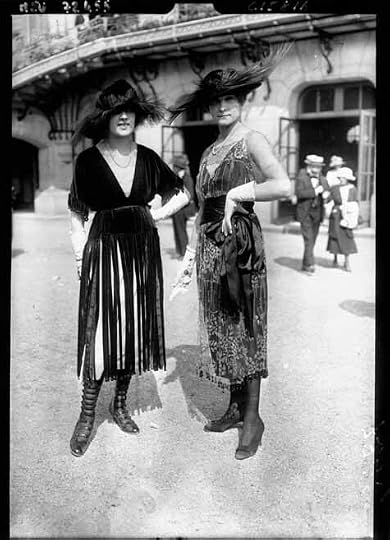
At the end of Chéri the young Chéri left his aging mistress Léa on the eve of his marriage. Having served in the army during the war Chéri returns to Paris haunted by memories of his carefree youth and the bounty of his benevolent mistress. In the post-war 1920's he finds it impossible to settle down to a new life with his efficient and entrepreneurial wife and friends.
As his looks and his reputation begin to deteriorate Chéri's life is thrown into crisis as he attempts to recapture the contentment and companionship of his luxurious youth. As Chéri and Léa confront each other, and the changes a decade has wrought on their lives and their looks, Colette displays the incredible sensitivity and insight for which she is justly famous.
Colette was the pen name of the French novelist and actress Sidonie-Gabrielle Colette. She is best known, at least in the English-speaking world, for her novella Gigi, which provided the plot for a famous Lerner & Loewe musical film and stage musical. She started her writing career penning the influential Claudine novels of books. The novel Chéri is often cited as her masterpiece.
I’ve been on a Colette binge lately, having read this month Cheri and Gigi and Selected Writings, so this review borrows from my two earlier reviews, especially since the Selected Writings contains a major chapter from The Last of Cheri.
The Last of Cheri is the sequel to Cheri and I have to say it is best to have read Cheri first to understand the depth of the attachment of Cheri (a male) to his former lover, Lea. Otherwise, Lea will come across as just a woman Cheri had an affair with when she is so much more than that. Many editions of this work have both novels packaged together. (Each about 150 pages, so almost novellas.)
Cheri grew up among ‘kept’ women when his mother, a kept woman, gave him to her friend, Lea, another kept woman, to raise. “I was born among aging beauties! All my life I’ve watched them, my painted pixies, squabbling about their wrinkles, and, well into their fifties, scratching each other’s eyes out over some wretched gigolo!”
As I wrote in my review of Cheri, I suppose I could call this ‘the story of a scumbag.’ We meet a lot of unsavory characters in literature, and this guy takes the cake – one of the cakes anyway. Arrogant, conceited, self-centered, unconcerned with anyone else’s feelings. He’s strikingly good-looking - beautiful if we can use that term for a man. Women stop and stare at him in the streets of Paris the way men look at a striking woman. We take pity on the young woman Cheri married (for her money) who discovers she has “married a stranger.”
In The Last of Cheri, he has returned from WW I and goes to visit his former lover, maybe expecting to restart their relationship. Cheri is now 30 and Lea is 60. He hasn’t seen her for five years. She tells him that if he thinks the home front will fall at his feet in gratitude for his military service, he is sadly mistaken.
Cheri resumes his pattern of wandering aimlessly around Paris at night. He has no interest in the financial dealings that occupy his wife and his mother; nor in his best friend’s wildly successful restaurant business; nor in his wife’s devotion to a hospital that she started for war wounded. He spends his time talking with an older woman, a photographer who took photos of Lea in her younger days and who tells Cheri remembered (and invented) stories of Lea’s heyday.
There’s humor: “For the family dinner, Madame Peloux [Cheri’s mother] was still wearing her tailor-made with leather buttons, and Camille de La Berche her nurse’s veil, under the cowl of which she bore a striking resemblance to Dante, only far hairier.” And we can use humor because we suspect from the title where this story is going.
This is a good story with a lot of psychological depth, and the sequel, like Cheri, is really as much about Lea as it is about the man. There's a particular emphasis on a woman of beauty aging. We suppose all women – and men - are concerned about aging - look at the cosmetics industry - but doubly so for these women who relied on their beauty for their livelihoods. They survive because they get money from always older, often elderly, men who support them.
Worth a ‘5.’ I looked up Colette’s age (1873-1954) when she wrote this book. She was 53, six years after the publication of Cheri.
Here are links to my reviews of other books by Colette:
This book is both boring and brilliant. Nothing happens. The main character just mopes around Paris feeling sorry for himself. And as the reader you join the other characters in the book in trying to figure out the cause of his melancholia. Is it simply because he pines after Léa? Or is it because of his extreme narcissism? Or is it because Cheri too is one of the countless casualties of WW I? Someone who survived the war but finds himself on the other side of it, unable to adapt to the new order of things. Is it maybe just because he is a spoiled brat who never really grew up? After all, we already know from the first book that his upbringing left a lot to be desired. You never get a definitive answer.
After reading Chéri last year I was keen to get my hands on the sequel to see how one of the most dislikable characters that I'd come across in fiction, gets his comeuppance. I was looking forward to gloating over his demise. What I did not expect was to feel both empathy and sympathy for him!
I found the writing in this book to be absolutely brilliant. If it is so good in translation how good it must be in the original French?
Wow. This didn't have the same impact on me as Chéri at first, but as the book progressed and moved towards its climax, I was enthralled. What I loved most about Chéri was the dialogue, which was so achingly realistic. This book has less dialogue and more inner monologue mixed with narrative, which is why I found it more boring at first. But as Chéri declines, the book inclines (can I say that about a novel?). It steadily moves towards a peak from which the only possible escape is a jump. Chéri was raised as an illegitimate child, first by his decadent mother, and then by his much older lover. He knows nothing of real life, of struggle, of life and death. That is, until he fights in World War I. But the War ends, and now what? Chéri reflects, "Tout ce monde change et vit pour changer. Mais moi..." "Everyone is changing and lives to change. But me..." Chéri, like Dick Diver in Tender is the Night, has no place in this post-war world. He can't run a hotel or work at a hospital. He has no skills. Chéri knows how to be rich and spoiled, and that's it. Even Léa has moved on, accepted the aging process, and lives like a thriving elderly woman because that's what she is. But Chéri can only cry out, "Tout est foutu, j'ai trente ans." "All is f-d. I have thirty years." I translated that literally because the impact is stronger in French. It's not that Chéri IS thirty but that he has thirty years, that he's lived that long and has nothing tangible to show for it. He's losing his looks, his friends, his wife, his lover, his mind. That's it. That's thirty for Chéri. For him, "Pureté et solitude sont un seul et même malheur." "Purity and solitude are one and the same misfortune." He is no longer pampered, and even when he tries to recreate his glory days with La Copine, he's painfully aware that it's not the same, that he's no longer a child, and that La Copine has nothing to offer him but old, tired stories of her own past (and passed) glory days. So, when Chéri realizes that he is "encore accroché, comme elle, à ces quelques clous rouillés, à ces épingles fichées de travers," ("still stuck like the photo, to these rusty nails, to these pins fixed in the wrong direction"), he has no recourse but to end it all. The last line of the book is beautifully haunting. The title of the novel is The End of Chéri, but it's not just his physical end. It's the end of the person he was before the war, when he had Léa, when he knew who he was and lived in a world in which he could be that person. Now, all is lost. He's like the main character in Saul Bellow's A Dangling Man, stuck between lives, mourning the loss of one thing and waiting for the next. But unlike the dangling man, Chéri has no idea what he's waiting for. He knows where everyone else will be in a year from now, but for him, what? Where will he ever fit? Colette could write about life, starkly and with bare reality, but then, she could write poetically beautiful descriptions of nature and the city. The contrast of the two, blended with her moving dialogue, is what makes her writing special. This is a great book, and I highly recommend it (but you do have to read Chéri first).
This entire review has been hidden because of spoilers.
After seven years of marriage and four years of war, Cheri's girlish wife is now a capable woman working in a hospital and managing the family finances, his mother is doing dodgy deals in a Paris full of Americans, his friend runs a successful club and no longer has time to waste, Lea has allowed herself to age and is happy, grey and overweight, and Cheri, exquisite narcissistic Cheri, is just older. (The book description is a little misleading.) Cheri has served in the war and been decorated, although Colette does not let him off the hook and made him heroic. He has been wounded, a knee injury keeps him in bed for several months (the suggestion is that he takes advantage of this for longer than is needed for recovery) and he has two symbolic scars on his chest. He may have other invisible scars from the war and he does not see a place for himself in post-war Paris. Cheri, unlike Lea, does not cope well with aging, he is still obsessed with looks and does not want to recognise that anything has changed. It was difficult to care about the young Cheri in the first book, Colette makes us feel some sympathy for him in this sequel, without changing his character to make him more sympathetic. I think that Cheri can act a symbol for Paris and perhaps all of France. The country may have been corrupt and complacent before the Great War and also beautiful. It paid a high price and much was destroyed. It could not rebuild or easily move on and that was a tragedy.
Bello! Non avessi letto Cheri, l'avrei trovato splendido. Qui protagonista è sempre Cheri, ma questa volta è solo lui; gli altri personaggi ( moglie, madre, Lea, amiche e amici) sono meno presenti, pur non essendo semplici figure bidimensionali. Grande storia, gran bel finale.
«اسپلیف همیشه میگفت که بعضی اسبها هستند که بعد از یک سقوط خطرناک _هرچند جاییشان نشکسته باشد_ حاضرند کشته بشوند اما دوباره از روی مانعی نپرند؛ من هم همینطورم.»
Review en Français • en Español • in English Dans ce roman, Colette nous sacrifie son personnage de Chéri. Elle réussi, dans ce processus à jeter une lumière sur la réalité du vétéran de la Première Guerre Mondiale et du trouble de stress post-traumatique. Touchant. — En esta novela, Colette nos sacrifica su personaje de Chérie. En ese proceso expone la realidad del veterano de la Primera Guerra Mundial y del trastorno de estrés postraumático. Conmovedor. — In this novel, Colette sacrifices her character Chérie, shinning some light on the realities of the WWI veteran and post-traumatic stress disorder. Touching.
Certainement le texte le plus sombre de Colette que j’ai lu jusqu’à présent.
On découvre la part sombre de Chéri, reflet d’une époque un peu bordélique, le tout sur fond de réflexions sur la vieillesse, le temps qui passe et l’impossibilité du deuil amoureux.
For a short book with very little action, Colette (and translator) manages to pack in many timeless themes and a lot of really beautiful language. The Cheri of this book is even less tolerable than he was in the original Cheri. Not only is he vain, self-centered, and immature, he's now morose and resentful of all the women in his life because they have *gasp* become competent and dared to age. Yet even as Cheri (Fred) mopes around the streets of Paris feeling sorry for himself and judging his friends for (!) having jobs, it's impossible not to care what happens to him. Because even though one gets the sense that he would LOVE the manosphere, the struggles Cheri faces are also very human. He feels lost because the people around him are changing, embracing their age, and becoming the best, happiest versions of themselves, while he feels stuck in the past, the best days of his life seemingly behind him. This is of course exacerbated by the four years he spent in the war, and by the fact that before that, he had the misfortune of falling in love with a courtesan 24 years older than him, with whom he never could have had a plausible future. Bummer.
The highlight of the book is Cheri's visit to Lea, who is just as engaging as she was in the first book. Cheri's reflections on her and reactions to her make for captivating reading, and the prose itself is brilliant. Cheri's reactions to "the pal" (also called "the girlfriend" in some translations, which is a bit strange) are also fascinating. Overall a great read, and perfect for fall.
“Che cosa pensavi di lasciarmi dopo di te, Nounoune cara, quando mi hai mandato via? Fare la magnanima ti è costato poco, sapevi quanto valeva uno Chéri, non rischiavi gran che. Ma tu, per essere nata tanto prima di me, e io, per averti amata più di tutte le altre donne, siamo stati duramente puniti: tu sei finita e pacificata da far vergogna, e io … Io, mentre gli altri dicono: c’è stata la guerra, posso dire: c’è stata Léa, la guerra … Credevo che per me non contassero più né l’una né l’altra, e invece sono state l’una e l’altra a cacciarmi fuori da questo tempo. D’ora in poi occuperò soltanto mezzo posto, dappertutto …”. Mi chiedo sempre se le prime impressioni sono quelle che contano e, sempre, i fatti mi smentiscono. Nonostante il titolo di per sé sembri in un certo qual modo profetico, annunciando e dettando quella che è la linea narrativa (insomma, una sorta di “cronaca di una morte annunciata”), nulla è quello che sembra: ciò che Colette attentamente descrive, soffermandosi sui particolari, calcolando le inquadrature, senza sbavature e omissioni, non è il declino di Chéri, il suo “Sunset Boulevard” se vogliamo restare in tema di citazioni, ma bensì il suo duro percorso di presa di coscienza, duplice peraltro, perché coinvolge inaspettatamente sia Chérì che il lettore. Consapevolezza di che cosa? Da un ambiente corrotto, in cui l’eleganza e l’affettazione sono come un bel tappeto sotto cui nascondere lo sporco, ci si aspetterebbe che nascano persone altrettanto corrotte; eppure proprio Chérì sfugge a questa “regola” di natura, ed è più puro di quel che si può pensare: “La sua infanzia da bastardo, la sua lunga adolescenza sotto tutela gli avevano insegnato che in un mondo che passa per dissoluto vige un codice rigido quasi come un pregiudizio borghese. Chéri vi aveva appreso che l’amore ha a che fare con il denaro, i tradimenti, i delitti e i vili compromessi; ma adesso stava dimenticando i vecchi statuti e respingendo le tacite condiscendenze.” Sentirsi fuori posto nel proprio luogo d’origine è forse una delle cose peggiori che si posso affrontare, è un po’ come vedere il mondo riflesso da specchi deformanti: così Chéri, quando attentamente si rimira allo specchio, non è sconcertato da rughe più marcate o da occhiaie più profonde, il passare del tempo è per lui qualcosa di avulso dalla sua persona, ma è alla ricerca del suo vecchio io, quello in cui si sentiva a suo agio in una realtà che ora gli pare estranea; forse perché tutto ora si sta muovendo (persino invecchiando e morendo), mentre lui è lì fermo, immobile senza nessuna prospettiva (“la parola <> attrasse l’attenzione di Chéri che si voltò verso il punto additato da Desmond, in alto, sopra il cortile … Non vide nulla e si stancò”). Per cui la conclusione è prevedibile, inevitabile, ma anche la più coerente; la memoria di un amore ormai perduto e snaturato non è un tesoro prezioso, ma una maledizione perché si scontra con la meschinità del reale, violandone la purezza e la bellezza.
I knew the story before going in, but it was still surprising. I had difficulty walking away from the book, the prose is so beautiful. But all of Collette's books are like that. This is really a continuation of the story, Cheri. It picks up a number of years after Cheri and Lea part company. Cheri has measured his life's state from those moments he spent with Lea in this book. It's a tragic tale of a young man who has been pampered to the point he can't function in society. The women in his life are controlling, and dismissive of anything he deigns to do, even though he fought in a war as a soldier.
Women are not the only persons in western culture who have been controlled and dismissed. Although men may not have suffered in the numbers women have, it only proves that women can be just as power hungry, greedy, and cruel toward men as men have been toward them. His wife plays the coquette, but really has no feeling toward Cheri, other than his money provides her with a life she enjoys apart from him. She's more interested in her career at the hospital and what happens there than anything to do with husband, Cheri. She's turned dinners and lunches into an extension of hospital work, of raising funds for the hospital, and of flirting with the doctor. Cheri becomes a satellite, disinterested in the friends he made as a young man, or even the soldiers his wife pampers in the hospital. In his depression, he spirals further into the abyss. One last moment, he shows up at Lea's door, only to find her enormously overweight and old. He barely recognizes the women he loved so desperately. Only her laugh remains, but even that has become slightly cynical and callous. Bereft upon leaving lea's house, he happens upon an old friend of Lea's, and he spends every evening at her flat, listening to stories of Lea.
For those of you who don't know the story, I shall end it there. I can't help but feel for Cheri (my namesake), having had moments of that same depression before I finally made up my mind to write. Love is a vital ingredient in growing up, in maturation. To give it and snatch it away in the formative years of a young man can cripple him, as it did Cheri. He had everything, but was denied the meaning of it. No one has to look very hard for those who've tasted fame and fortune and possess good looks who've not ended well. Comfort is not enough. Being surrounded by those who compliment and praise you is not enough. People need meaning, to be useful, to find something that uplifts them. They need to know that there is meaning and a reason why we are here. The story of Cheri is timeless.
Collette must have had those same feelings to write about them so beautifully. No one can write about the despair of indifference like someone who has felt it. Watching the new film about her life might be interesting after reading two of her great works recently.
I read "Cheri" and "The Last of Cheri" back-to-back; I liked "Cheri," but I loved this book, probably more than it deserves based on the other reviews and ratings I've read. But to me, it was a perfect description of the fear, frustration, and futility of fighting the process that accompanies the aging of a deeply unhappy person. Others have said that Cheri seeks out Lea because, after all this time, he still loves her, and that the horror he experiences on their reacquaintance is because he realizes that she no longer loves him, and that is why he kills himself. But I think Cheri is obsessing about Lea because he is trying to recapture the last moments of true happiness he felt; he is a man disappointed in love and life, a man who can see himself growing older with nothing to mark the time he has spent in the world, a man who has experienced the death of the way of life in which he excelled and seen it replaced with a world into which he cannot fit himself, and a man who is suffering from the trauma of fighting in a devestating war and probable depression. When he sees Lea for the first time since their ill-fated affair, he sees a fat happy old woman instead of the beautiful, haughty, slightly tragic mother/friend/lover that taught him to be the man he desperately wants to be again. It is in that moment that he fully realizes he can never go back; he has managed (with a questionable degree of success) to ignore the signs of age and change in himself, his friends and family, and in the city and the world at large, but he cannot, no matter how hard he tries and hopes, make Lea the woman he knew in his youth. In his mind, she has always been ageless, a constant, the lodestone to which he can return when the realities of his life become too harsh. Seeing her transformed into an elderly woman, no different than his mother and her cronies, forces him to realize that no one is immune to the vagrancies of time, and he is sent into despair. The world has evolved beyond him; he has nothing to offer. He kills himself not over lost love, but over the loss of himself.
This entire review has been hidden because of spoilers.
Comme une lumière trop crue, la fin de la guerre a flingué le rêve de jeunesse et l'insouciance de Chéri. À l'écouter, c'est son époque qui le détraque. Ecoeuré par l'arrivisme de son entourage et le glissement des normes sociales d'un côté, de l'autre par ses amours enlaidies par le temps, il entame une lutte mentale pour retrouver ne serait-ce qu'un centième de qui le faisait vibrer. Lentement, Chéri façonne une chambre mentale hermétique au changement et y ressucite ses idéaux.
Au fond, Fred invente des excuses à son déni, par peur d'affronter ses craintes existentielles : celle de grandir, de vieillir, celle de donner un sens à sa vie. À la place, Fred préfère être acerbe et choisit finalement de ne pas se tendre la main.
Colette modèle précisément la psychologie de ce personnage baroque, pathétique et finalement en grand manque d'amour propre. Ses mots saisissent d'une façon unique les contours de la gêne, de la honte, de la colère, du dégoût, de l'ennui et de la vanité. J'ai par contre vraiment eu du mal avec certains passage où l'écriture était trop précieuse - à mon goût - pour rester dans le récit. Par contre, les descriptions de Léa, c'est du génie. Mention toute particulière pour la réplique "elles sont folles pour le pèze", que je n'aurais jamais imaginé lire dans un roman des années 20. Merci Colette !
I can't deny that Colette is a wonderful writer, and that the translator has done a first rate job.
I can't deny that I often really enjoy reading about an anti hero, because sometimes they're a lot more interesting than the heroes.
But sorry, I can't read about Cheri any more. Colette has very skillfully drawn him as an empty person, completely self absorbed and with virtually no empathy for anybody else's feelings. She's made him seem real, and I know there are people out there just like him, people who think it's all about them, but there's no pleasure for me in his story.
I liked this much more than "Cheri," but that shouldn't be too surprising, considering my propensity for sad bastard suicide stories. What's fantastic about this, however, isn't so much the general pre-war youth nostalgia that's so common w/ 1920s Lost Generation-ish lit, but that the changing place of women in the world is well described.
As full of the exuberant fragrances and textures of early 20th century Paris as its predecessor but more desperate than Cheri. A cold creeping sensation grew in me as I read and drew me to conclude correctly as to the likely ending.
This doesn't seem to be as popular or as widely-read as the first book, but I found that it plunged me straight back into the same intoxicating world, and I was so wrapped up in it that I forgot to get off the train. Even sadder than the original, mind. Extremely sad, be warned.
جالبه که "سرانجامِ شری" که سال هزار و نهصد و بیست و پنج منتشر شده ادامه کتابِ "شری" بوده که پنج سال قبل ترش منتشر میشه و خیلی مشهورم میشه ولی سالها بعد در دهه هشتادِ میلادی کتاب دوم به زبانِ فارسی ترجمه میشه و کتاب اول هنوز تا لحظه نگارشِ این نوشتار، ترجمه نشده. البته دلیلِ ترجمه نشدنش قابلِ درکه، محتوایِ جنسی و اروتیک و بلا بلا بلا... اگه تو "شِری" عشقِ جوان بیست و پنج ساله ای به زنی چهل و نُه ساله دستمایه خلق روایتی روانشناختی میشه و تراژدی می آفرینه در "سرانجامِ شری" ازدواجی شکست خورده و زندگانیِ سردرگمِ کهنه سربازی از جنگ اول برگشته و مرده ریگی از عشقی قدیمی داستان رو میسازه. کولت در لایه برداری از شخصیت هایِ زخم خورده تواناست. مثلا کولت در داستان کوتاهی به نامِ "زن سابق" در سه صفحه به خوبی با چند خط دیالوگ و فضاسازی و اشارتِ پیرنگی، فروخورده ترین احساسات و ناگفتنی ترین رعشه هایِ درونیِ آدم ها رو استادانه بر زبان نقش میکنه و در "سرانجام شری" هم همین کارو با شخصیت هایی که هر کدوم سودایی در سر دارن انجام میده. در کل میشه سرانجام شری رو هم شبیه "خورشید همچنان میدمد" همينگوی حکایت نگاریِ نسلِ شکست دونست. آدمهایی که از جنگِ جهانیِ اول برگشتن ولی شبیه داستان کوتاهِ "خانه سربازِ" همينگوی، جنگ از اونا برنگشت و در وجودشون موندگار شد.
پ،ن: این چیزی هم که به فارسی تو "book description" این صفحه درباره تجربه نظامیانِ جنگ جهانی دوم نوشته هم درست نیست چون درسته که کولت تا ده سال بعد جنگ دوم زنده بوده ولی دوتا کتابشو در صلح مسلح بین دو جنگ نوشته و داستان ها درباره حال و هوای بعد از جنگ اولن.
«Parlavano di Léa tutti i giorni, davanti a me, e io non le ho sentite. L'ho dimenticata. Ma che cosa vuol dire, dimenticare? Se penso a Léa la vedo bene, ricordo il suono della sua voce, il profumo che si spruzzava addosso e che premeva, bagnato, tra le sue grandi mani... ».
4,5 ⭐️ Dopo la prima lettura di “Chéri” non potevo leggere il seguito ossia “La fine di Chéri”. In questo romanzo lo troviamo sposato ormai da sette anni, si sente infelice sia nella sua situazione sentimentale sia perché, passato il periodo della guerra, si sente escluso dagli affari e vede tutti lavorare tranne lui che è sempre stato mantenuto da Léa. Sta di fatto che a lui manca tanto la sua Nounoune. Il finale è incredibile…
”He seized hold of his past, to squeeze out every remaining drop upon his empty, arid present; bringing back to life, and inventing where necessary, the princely days of his youth, his adolescence shaped and guided by a woman’s strong capable hands - loving hands, ever ready to chastise. A prolonged, sheltered, oriental adolescence, in which the pleasures of the flesh had their passing place, like silence pauses in a song. A life of luxury, passing whims, childish cruelty, with fidelity a yet spoken word.
He threw back his head to look up at the nacreous halo which irradiated the whole sky, and he gave a low cry, ‘It’s all gone to hell! I’m thirty years old!”
“Una luce confusa, illuminando regioni stagnanti e fino ad allora sensibili, cominciava a mostrargli che purezza e solitudine sono un'unica e identica infelicità”
Très bonne suite et fin au premier tome, qui complète bien l'histoire. Je me suis fait spoiler la fin dans un autre bouquin mais finalement ça n'a pas entamé le plaisir de lire.