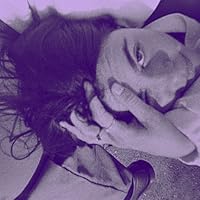
Alix Cléo Roubaud est morte le 28 janvier 1983, à cinq heures du matin, d'une embolie pulmonaire. Elle était, gravement, asthmatique depuis l'enfance. Elle venait d'avoir trente et un ans. Née à Mexico (son père, Arthur Blanchette, diplomate, sa mère, Marcelle Blanchette, peintre), elle était canadienne, et bilingue. Son journal est écrit en français et en anglais. Elle avait fait des études d'architecture et de psychologie à Ottawa, des études de philosophie à Aix-en-Provence et à Paris. Elle préparait une étude sur le style de Wittgenstein et sa théorie de l'image. Elle était, essentiellement, photographe. Un film de Jean Eustache, en 1980, Les Photos d'Alix, montre quelques-unes de ses photographies, elle y parle de la photographie. Alix écrivait, depuis 1971 au moins, un journal ; ce sont les derniers cahiers de ce journal qui sont, à l'exception de quelques passages d'ordre strictement privé, reproduits ici. Elle écrivait dans l'ordre des jours, sans revenir en arrière, sans corriger, sans effacer, pour elle-même et, peut-être, bien qu'elle n'ait rien dit à cet effet, ni pour ni contre, pour être lue après sa mort.
Alix's reading -- an incomplete list, both because I did not note everything, and because something she didn't give enough information for me to figure out what the book was.
My rereading of this book has turned out to be disappointing. This time around I do not feel Alix was such a brilliantly gifted writer and photographer. She certainly did have an extremely acute mind and a stunning body to go with it. It is not her writing but her story that interests me. She liked to photograph herself nude in a sparse room and then do magic in her darkroom. She often thought of killing herself. She was seriously asthmatic since childhood. She died of a pulmonary embolism at the age of thirty-one. Alix knew how to dress. More importantly, for me, she knew how to undress. She was very pretty in a French sort of way. She was from Canada, but born in Mexico. Bi-lingual and well-traveled at a young age. Left Canada in 1972 to study philosophy at the University of Aix-en-Provence primarily out of her chronic need for an excellent health care system and the fact that in France it was free. Alix drank alcohol heavily and I am not sure why. Demons perhaps. Restlessness maybe. She photographed what was disposable. Mainly herself.
Peut se substituer à La Chambre claire en matière du discours photographique parce qu'enserré dans le format journal les principes du temps, mort et œuvre prennent tout leur sens
Alix's Journal has a certain addictive quality for me: I was captivated by her reading references to some seventy-odd writers and poets plus music and art, and took notes. Alix Cléo Roubaud was a Canadian living in Paris who kept sad daily journals which talk of insomnia, suicide, depression and her concerns about ailments, drinking, smoking, weight gain and clothes as well as her work as a photographer and her frustrated creativity. She died at the age of thirty-one from a pulmonary-embolism. Examples of journal entries will give an idea:
I read nothing but the TLS. Every night I fear reading my journal; fear of finding nothing there; or the phrases of an entirely despicable person.me. impossibility of writing, married to a poet. The smell of big hotels and deckchairs, when people are having aperitifs: a mixed scent of amber, cigarette smoke, wax polish; and those meats cooking in wine. Seurat did a good job with Grande Jatte. 48 hour visit from my parents. I forget more and more. Insomnia. Beautiful weather. In playing with God, one loses every round. --fear of madness. of egocentricity; of everything. --the moment arrives to put cream on my hands. I wish, intensely, that the scent of mimosa will not die off. . was it worth all that psychoanalysis to see me melted like butter in the sun and to die of fear.
“Because life and death are no more in a symmetrical relation than are screen and image;you need to have lived to die;but we forget that we die,blinded by life;and conversely,death doesn't imply that there has been life. I really don't know if death is a screen onto which I project and play over the movie of my life, or whether it is the image that hides from me the fact that I am alive. Living,I don't imagine myself dead;dead,I won't see life.But, looking more closely? how can we know? perhaps death is the folding of the one over the other,the image of my future death projected onto the screen of my real death,or rather hiding me? what? how is it possible to imagine that death is not a projection folded over itself in automorphism;like a slide of the Mona Lisa that you project onto the Mona Lisa itself.”