

What do you think?

The Intermediaries: A Weimar Story
The fascinating history of a daring team of sexologists who built the first trans clinic in the shadow of the Third Reich.
Set in interwar Germany, The Intermediaries tells the forgotten story of the Institute for Sexual Science, the world’s first center for homosexual and transgender rights. Headed by a gay Jewish man, Dr. Magnus Hirshfeld, the institute aided in the first gender-affirming surgeries and hormone replacements, acting as a rebellious base of operations in the face of rising prejudice, nationalism, and Nazi propaganda. Brandy Schillace introduces readers to Dora Richter, an institute patient whom we follow from early desperate years to gender-affirming care and her right to live as a woman. She offers an example of queer resilience in the face of punishing cultural constraints. The Intermediaries charts the interdependent relationships between nascent sexual science, queer civil rights, and the fight against fascism. It tells riveting stories of LGBTQ pioneers, a surprising, long-suppressed history, and offers a cautionary tale in the face of today’s oppressive anti-trans legislation.
Set in interwar Germany, The Intermediaries tells the forgotten story of the Institute for Sexual Science, the world’s first center for homosexual and transgender rights. Headed by a gay Jewish man, Dr. Magnus Hirshfeld, the institute aided in the first gender-affirming surgeries and hormone replacements, acting as a rebellious base of operations in the face of rising prejudice, nationalism, and Nazi propaganda. Brandy Schillace introduces readers to Dora Richter, an institute patient whom we follow from early desperate years to gender-affirming care and her right to live as a woman. She offers an example of queer resilience in the face of punishing cultural constraints. The Intermediaries charts the interdependent relationships between nascent sexual science, queer civil rights, and the fight against fascism. It tells riveting stories of LGBTQ pioneers, a surprising, long-suppressed history, and offers a cautionary tale in the face of today’s oppressive anti-trans legislation.
352 pages, Hardcover
First published May 13, 2025
About the author
Brandy Schillace
15 books316 followersDr. BRANDY SCHILLACE (skil-AH-chay) is an autistic, nonbinary author, historian, mystery writer and Editor (who grew up in an underground house next to a cemetery with a pet raccoon). Her mystery novel, THE FRAMED WOMEN OF ARDEMORE HOUSE, features an autistic protagonist: Jo Jones. Plus: An abandoned English manor, a peculiar missing portrait, and one dead gardener. “A must read for any mystery lover.” – says DEANNA RAYBOURN, New York Times bestselling author of KILLERS OF A CERTAIN AGE. (This will be book one in the NETHERLEIGH mystery series.)
***QUICK NOTE! I love talking with readers - for Book Clubs and 1:1s, find me now on Skolay: skolay.com/writers/brandy-schillace***
Brandy’s recent nonfiction, MR. HUMBLE AND DR. BUTCHER–described by the New York Times as a “macabre delight”–explores Cold War medicine, bioethics, and transplant science. Brandy’s next nonfiction book, THE INTERMEDIARIES, will tell the forgotten, daring history of the interwar Institute of Sexology in Berlin: trans activists, the first gender affirming surgeries, and the fight for LGBTQ rights in the shadow of the Nazi Third Reich. Rebels against empires, it’s a heart-stopping story of courage in the face of long odds.
And because she writes in two worlds, both of them weird, Brandy hosts a regular YouTube show called Peculiar Book Club. It features livestream chats with bestselling authors of unusual nonfiction, from Lindsey Fitzharris and Mary Roach to Carl Zimmer and Deborah Blum. She has appeared on Travel Channel’s Mysteries at the Museum, NPR’s Here and Now, and with Dan Aykroyd on THE UNBELIEVABLE (History Channel). Bylines at WIRED, Scientific American, Globe and Mail, WSJ Books, and Medium. She works as Editor in Chief for BMJ’s Medical Humanities, a journal for social justice and health equity.
Dr. Schillace is represented by Jessica Papin at Dystel and Goderich Literary Management.
http://brandyschillace.com/
@bschillace
***QUICK NOTE! I love talking with readers - for Book Clubs and 1:1s, find me now on Skolay: skolay.com/writers/brandy-schillace***
Brandy’s recent nonfiction, MR. HUMBLE AND DR. BUTCHER–described by the New York Times as a “macabre delight”–explores Cold War medicine, bioethics, and transplant science. Brandy’s next nonfiction book, THE INTERMEDIARIES, will tell the forgotten, daring history of the interwar Institute of Sexology in Berlin: trans activists, the first gender affirming surgeries, and the fight for LGBTQ rights in the shadow of the Nazi Third Reich. Rebels against empires, it’s a heart-stopping story of courage in the face of long odds.
And because she writes in two worlds, both of them weird, Brandy hosts a regular YouTube show called Peculiar Book Club. It features livestream chats with bestselling authors of unusual nonfiction, from Lindsey Fitzharris and Mary Roach to Carl Zimmer and Deborah Blum. She has appeared on Travel Channel’s Mysteries at the Museum, NPR’s Here and Now, and with Dan Aykroyd on THE UNBELIEVABLE (History Channel). Bylines at WIRED, Scientific American, Globe and Mail, WSJ Books, and Medium. She works as Editor in Chief for BMJ’s Medical Humanities, a journal for social justice and health equity.
Dr. Schillace is represented by Jessica Papin at Dystel and Goderich Literary Management.
http://brandyschillace.com/
@bschillace
Ratings & Reviews
Friends & Following
Create a free account to discover what your friends think of this book!
Community Reviews
Displaying 1 - 30 of 50 reviews

April 8, 2025
this was a fantastic read as someone who very rarely delves into nonfiction, and it was really interesting to learn about trans history. equally interesting but not really in a good way was how obvious the parallels were to the modern united states because it is much closer than i knew. don't really have too much else to say about it other than that but it is definitely worth a read

December 20, 2025
Oooooooooooooooooooooooooofff-dah.
This was so extrodinarily written and researched and I am just devastated after finishing it. An amazing account of a buried piece of history. Well, well, well done.
This was so extrodinarily written and researched and I am just devastated after finishing it. An amazing account of a buried piece of history. Well, well, well done.

June 29, 2025
The most fascinating and important book I’ve read all year. Incredible.

March 14, 2026
Great nonfiction, the way I like it - history interwoven with human stories. Well researched and well written - enough facts that academics will learn from it, accessible enough for general public. Compassionate to the topic but not glorifying Hirshfeld or anyone else. Just because you are pioneering one field, it does not mean you will be have only right and progressive opinions in every other field.

June 8, 2026
Magnus Hirschfeld is my problematic gay dad.
Learning and remembering our history has always been an important part of the queer movement. As a group that has been systemically erased, we must often go in search of ourselves instead of it being easily accessible or taught to us. In The Intermediaries, readers will see exactly why that is and how pervasive issues of misogyny, xenophobia, and any insecurity of the other can quietly lead to rising extremism and fascism. But guess what? WE'RE STILL HERE.
The Intermediaries is a crucial introduction into our modern (western/European) understanding of sex, gender, and queerness that began in the 18th century. The text focuses primarily on medical advancements and understandings, but dips into public perception from time to time. From trying to "cure" homosexuality by transplanting a "heterosexual" testicle leading to the discovery of hormones, to young proto-Nazi's arguing that it was actually more masculine to being gay, and Dr. Hirschfeld simultaneously saying there could be 43 million combinations of sexuality and gender AND WAS STILL surprised that a transgender woman liked men.
Seeing how the public movement and scientific understanding started from scratch was really eye opening, and despite the many detours, changing definitions, harmful rhetoric (why is it always eugenics), and infighting, it's hard not to come away from The Intermediaries feeling proud of our forebearers. The gays have ALWAYS been messy, but we never stop fighting. And, as shown time and time again, we owe everything we have to the brave transwomen who have come before us.
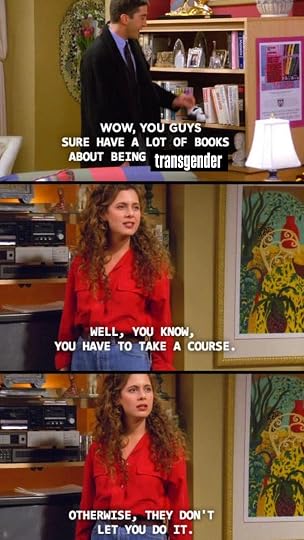
"Hirschfeld's behavior may have more to do with his foundational belief that science, once presented, would plead its own case. He had always trusted, for better and for worse, that, when faced with scientific evidence, even his enemies would see the error of their ways. It wasn't true then, as it isn't true now. The argument from science works only on those who care to be changed by it."
Learning and remembering our history has always been an important part of the queer movement. As a group that has been systemically erased, we must often go in search of ourselves instead of it being easily accessible or taught to us. In The Intermediaries, readers will see exactly why that is and how pervasive issues of misogyny, xenophobia, and any insecurity of the other can quietly lead to rising extremism and fascism. But guess what? WE'RE STILL HERE.
The Intermediaries is a crucial introduction into our modern (western/European) understanding of sex, gender, and queerness that began in the 18th century. The text focuses primarily on medical advancements and understandings, but dips into public perception from time to time. From trying to "cure" homosexuality by transplanting a "heterosexual" testicle leading to the discovery of hormones, to young proto-Nazi's arguing that it was actually more masculine to being gay, and Dr. Hirschfeld simultaneously saying there could be 43 million combinations of sexuality and gender AND WAS STILL surprised that a transgender woman liked men.
Seeing how the public movement and scientific understanding started from scratch was really eye opening, and despite the many detours, changing definitions, harmful rhetoric (why is it always eugenics), and infighting, it's hard not to come away from The Intermediaries feeling proud of our forebearers. The gays have ALWAYS been messy, but we never stop fighting. And, as shown time and time again, we owe everything we have to the brave transwomen who have come before us.

April 3, 2025
The Intermediaries is a true account of Magnus Hirshfeld and his forgotten work with the Institute of Sexual Science. Following his academic life along with the lives of many other queer folks of the time, this book shares stories that are relevant now more than ever. With an underlying theme of hope for those in the queer community and a respectful account of queer and trans history, this book was an informative and important read.
September 12, 2025
This book is amazing and everyone should read it.
First, it normalizes the variations in sex and gender, and shows they have a long history. And intermediaries is a great term to describe these variations.
Then, it does this in the context of Germany during the world wars, and it's so frightening to see the parallels of what we are experiencing right now in America.
First, it normalizes the variations in sex and gender, and shows they have a long history. And intermediaries is a great term to describe these variations.
Then, it does this in the context of Germany during the world wars, and it's so frightening to see the parallels of what we are experiencing right now in America.
May 29, 2025
An absolute stunner of the trans community in the Weimar Republic.
We have existed far beyond "the last five years". And there is proof. And in a time like this, we have to keep telling these stories. They tried to erase and burn them in the '30s. We will not let that happen again.
We have existed far beyond "the last five years". And there is proof. And in a time like this, we have to keep telling these stories. They tried to erase and burn them in the '30s. We will not let that happen again.

June 18, 2025
"The Intermediaries" by Brandy Schillace is a profoundly resonant and masterfully crafted work that weaves historical narrative with an urgent contemporary relevance. Schillace's meticulous research and compassionate storytelling bring to life the often-overlooked narratives of trans individuals in Weimar Germany, a period of remarkable cultural and social dynamism juxtaposed against political unrest. The book illuminates the critical importance of recounting trans lives within this historical context, offering readers not just a glimpse into the past but a mirror reflecting ongoing struggles and triumphs. Schillace adeptly navigates the complexities of gender identity, societal norms, and the relentless pursuit of authenticity amidst adversity. The characters are vividly drawn, their experiences both deeply personal and universally significant.
What sets "The Intermediaries" apart is its ability to humanize history, transforming archival material into compelling, relatable stories. Schillace’s narrative is both sensitive and unflinching, shedding light on the resilience and courage of trans individuals who forged identities and communities despite pervasive marginalization. This work is not only a testament to the lives it chronicles but also a clarion call for inclusive historical storytelling. It underscores that trans histories are not peripheral but integral to our understanding of the past. Schillace’s eloquence and insight make "The Intermediaries" an indispensable contribution to both historical literature and contemporary discourse on gender and identity.
What sets "The Intermediaries" apart is its ability to humanize history, transforming archival material into compelling, relatable stories. Schillace’s narrative is both sensitive and unflinching, shedding light on the resilience and courage of trans individuals who forged identities and communities despite pervasive marginalization. This work is not only a testament to the lives it chronicles but also a clarion call for inclusive historical storytelling. It underscores that trans histories are not peripheral but integral to our understanding of the past. Schillace’s eloquence and insight make "The Intermediaries" an indispensable contribution to both historical literature and contemporary discourse on gender and identity.
July 1, 2026
I've always known that LGBTQ literature and studies were among the first things burned in the initial Nazi purges, but I've never fully understood with such specificity how much groundbreaking knowledge and how many case studies from the Institute for Sexual Science were condemned to the flames. Brandy Schillace pieces together the records that remain to share the flawed though astoundingly (to me) progressive history of Dr. Magnus Hirshfeld and the Institute for Sexual Science.
The rise and brutal destruction of Hirshfeld and the Institute’s work shows stark and terrifying parallels to American politics today: brief breakthroughs in acceptance of diverse sexualities and gender affirming care as well as small steps in political protections followed by dehumanizing campaigns and calls for eradication. Yet Schillace manages to weave together a thread of hope in this history with the life of Dora, an transgender woman, who manages to benefit from Hirshfeld’s research in the 1920s and very early 30s to go on and live an ordinary life true to herself as she outlasts the Nazi regime.
I wish I had known so much of this history sooner, and I think so many of us could still benefit from the information Schillace presents here. In 2026, it’s clearly too late for us to fully prevent such atrocities from happening again, but we should at least heed these warnings from the past to take action against hatred, intolerance, and fascism before it destroys more lives.
The rise and brutal destruction of Hirshfeld and the Institute’s work shows stark and terrifying parallels to American politics today: brief breakthroughs in acceptance of diverse sexualities and gender affirming care as well as small steps in political protections followed by dehumanizing campaigns and calls for eradication. Yet Schillace manages to weave together a thread of hope in this history with the life of Dora, an transgender woman, who manages to benefit from Hirshfeld’s research in the 1920s and very early 30s to go on and live an ordinary life true to herself as she outlasts the Nazi regime.
I wish I had known so much of this history sooner, and I think so many of us could still benefit from the information Schillace presents here. In 2026, it’s clearly too late for us to fully prevent such atrocities from happening again, but we should at least heed these warnings from the past to take action against hatred, intolerance, and fascism before it destroys more lives.

September 25, 2025
It’s a good time to educate yourself on queer (and especially trans) history and this is a good book to do it with.
You know when they say history doesn’t repeat, but it rhymes? Current times are rhyming with the historic period in The Intermediaries. So many talking points that male podcasters or politicians try to sell you are echoed in this book, as quotes from a dude from 1910. Respectability politics, throwing the trans community under the bus, it’s all happened before, so let’s remember what happened after. The books that are being destroyed in the iconic Nazi book burning image are at least in part books from the Institute of Sexual Science’s library and that should tell you something. Apart from chronicling Dr. Hirschberg’s life, The Intermediaries also includes the history of hormone research and biographies from some of the trans people he treated. Both added meaningful and interesting context. I liked that the author did not shy away from nuance and also highlighted when Dr. Hirschberg fell short. Especially noteworthy is his neglect of the female experience in his scientific endeavors.
While it did remind me of being in history class (if history class was queer-inclusive) sometimes, it’s an informative and relevant read that I recommend!
You know when they say history doesn’t repeat, but it rhymes? Current times are rhyming with the historic period in The Intermediaries. So many talking points that male podcasters or politicians try to sell you are echoed in this book, as quotes from a dude from 1910. Respectability politics, throwing the trans community under the bus, it’s all happened before, so let’s remember what happened after. The books that are being destroyed in the iconic Nazi book burning image are at least in part books from the Institute of Sexual Science’s library and that should tell you something. Apart from chronicling Dr. Hirschberg’s life, The Intermediaries also includes the history of hormone research and biographies from some of the trans people he treated. Both added meaningful and interesting context. I liked that the author did not shy away from nuance and also highlighted when Dr. Hirschberg fell short. Especially noteworthy is his neglect of the female experience in his scientific endeavors.
While it did remind me of being in history class (if history class was queer-inclusive) sometimes, it’s an informative and relevant read that I recommend!

June 4, 2025
An excellent history of the Weimar Era that covers much more than the LGBTQ perspective.
Much of the focus is on Magnus Hirschfeld and his Institute, but the book also covers a lot of history leading up to WWI and parts of the Weimar years not covered in detail in American schools. This includes research on hormones as well as deeper explanations of hyper-inflation that eased the Nazis rise to power, but also explanations of that rise that demonstrate other factors that preexist economic woes. These factors make it a good history of these years that would be suitable an AP high school history class.
The book also includes a parallel biography of Dora Richter that personalizes the history.
Unfortunately, as with any book that does this one stupid thing, it loses a star for absolutely fucking needless and salacious deadnaming, as in the case of Michael Dillon in particular. Authors must stop doing this or they must go fuck themselves. In the case of Dora Richter, it is slightly less damning as it is linguistically very difficult to avoid while describing difficulties with her travel and identification documents.
Overall, a flawed but still very useful addition to queer history that I would generally recommend. Maybe a future edition will be corrected. We can all hope, right?
Much of the focus is on Magnus Hirschfeld and his Institute, but the book also covers a lot of history leading up to WWI and parts of the Weimar years not covered in detail in American schools. This includes research on hormones as well as deeper explanations of hyper-inflation that eased the Nazis rise to power, but also explanations of that rise that demonstrate other factors that preexist economic woes. These factors make it a good history of these years that would be suitable an AP high school history class.
The book also includes a parallel biography of Dora Richter that personalizes the history.
Unfortunately, as with any book that does this one stupid thing, it loses a star for absolutely fucking needless and salacious deadnaming, as in the case of Michael Dillon in particular. Authors must stop doing this or they must go fuck themselves. In the case of Dora Richter, it is slightly less damning as it is linguistically very difficult to avoid while describing difficulties with her travel and identification documents.
Overall, a flawed but still very useful addition to queer history that I would generally recommend. Maybe a future edition will be corrected. We can all hope, right?

August 7, 2025
3.5 stars rounded up because of good intentions.
I found this book hard to read, not because of the content but the publisher's choices for font, spacing and layout. The text is too small and not in an accessible font. For a hardback book the spacing isn't great either. I couldn't read this book at night because of eye strain.
There is at least one good book in here. I'm not sure whether Brandy intended to write a biography of sexologist Magnus Hirschfeld or a slim biography of trans woman Dora or a historical account of the Nazis under Adolf Hitler and their hatred of anyone different or "deviant", particularly gay and trans people. As it is, the book covers all these histories and while fascinating they are hard to separate. I'd have found it easier to read the separate stories rather than the mix.
Still fascinating, and as brought together in the last chapter, the tales of hatred and oppression and book burning are so very relevant to what's happening in USA right now.
I found this book hard to read, not because of the content but the publisher's choices for font, spacing and layout. The text is too small and not in an accessible font. For a hardback book the spacing isn't great either. I couldn't read this book at night because of eye strain.
There is at least one good book in here. I'm not sure whether Brandy intended to write a biography of sexologist Magnus Hirschfeld or a slim biography of trans woman Dora or a historical account of the Nazis under Adolf Hitler and their hatred of anyone different or "deviant", particularly gay and trans people. As it is, the book covers all these histories and while fascinating they are hard to separate. I'd have found it easier to read the separate stories rather than the mix.
Still fascinating, and as brought together in the last chapter, the tales of hatred and oppression and book burning are so very relevant to what's happening in USA right now.

June 12, 2026
Kinda listened to it in the background while multitasking. Didn’t absorb every single word, but it was a very interesting listen about a piece of history I knew nothing about. Trying to imagine how the world might’ve changed had Germany been more accepting and progressive of what they called the “third sex.” They were so close to making history, but the political climate between WWI and WWII detrimentally affected the acceptance of such evolutionary research.
It was very interesting to listen to the personal history of Dora Richter, a mostly anonymous hemaphrodite that finally managed to make permanent her female identity. The obstacles and hardships she had to overcome, wanting to dress the way she felt, finding romance, and cutting through bureaucratic red tape to change her name were remarkable. Despite all this, she persevered and succeeded.
It was very interesting to listen to the personal history of Dora Richter, a mostly anonymous hemaphrodite that finally managed to make permanent her female identity. The obstacles and hardships she had to overcome, wanting to dress the way she felt, finding romance, and cutting through bureaucratic red tape to change her name were remarkable. Despite all this, she persevered and succeeded.

June 23, 2025
In this US-centric world, this is a breath of fresh air and reminded me that I really need to know more about my own country's queer history.
Since I don't, this was incredibly interesting and moving. The German pronounciation was butchered beyond recognition more than once (why is it not a requisite to be able to pronounce foreign words at least partially right if you're voicing an audiobook with a foreign language in it???), so I'll keep an eye out for a German edition of this and I'm definitely going to look up Dr. Magnus Hirschfeld.
Would definitely recommend, especially because history truly does repeat itself.
Since I don't, this was incredibly interesting and moving. The German pronounciation was butchered beyond recognition more than once (why is it not a requisite to be able to pronounce foreign words at least partially right if you're voicing an audiobook with a foreign language in it???), so I'll keep an eye out for a German edition of this and I'm definitely going to look up Dr. Magnus Hirschfeld.
Would definitely recommend, especially because history truly does repeat itself.

November 2, 2025
This might be the singular most important book published this year. I’ve read 74 books so far — this is the most riveting, shocking and ultimately terrifying.
All LGBTQ+ ….all humans.
This is our history — and per the usual, it’s repeating.
Description:
Through its unforgettable characters and immersive, urgent storytelling, The Intermediaries charts the relationships between nascent sexual science, queer civil rights, and the fight against fascism. It tells riveting stories of LGBTQ pioneers―a surprising, long-suppressed history―and offers a cautionary tale in the face of today’s oppressive anti-trans legislation.
All LGBTQ+ ….all humans.
This is our history — and per the usual, it’s repeating.
Description:
Through its unforgettable characters and immersive, urgent storytelling, The Intermediaries charts the relationships between nascent sexual science, queer civil rights, and the fight against fascism. It tells riveting stories of LGBTQ pioneers―a surprising, long-suppressed history―and offers a cautionary tale in the face of today’s oppressive anti-trans legislation.
January 23, 2026
It felt scattered and spread thin. The author wanted to narrate the rise of fascism in post-WWI Germany, tell the personal stories of both Magnus Hirschfeld and Dora Richter, give a historical account of the development of the field of sexology, and discuss how queerness (or the "intermediaries" mentioned in the title) developed as a social category in Germany. If each of these topics was given the attention and focus they deserved, it would take at least 3-4 books. This was a well-intentioned mess that doesn't even act well as an introduction to this area of history.
Then there was also the unnecessary and disrespectful deadnaming of trans people throughout.
Then there was also the unnecessary and disrespectful deadnaming of trans people throughout.

September 17, 2026
An important book that covers broad topics from history, medicine, politics, queer rights up to court cases. It was a tough, but insightful read. Especially in times like this, it is crucial to remember historical movements that led to catastrophic events.
Quotes:
„May justice soon prevail over injustice … science conquer superstition, love achieve victory over hatred!“
„Rather than solidifying the division between male and female, some scientists now consider sex as bimodal rather than binary - as clusters of characteristics we can categorize as masculine or feminine, with some room inbetween“ (note to myself: who declares what is masculine or feminine anyways)
Quotes:
„May justice soon prevail over injustice … science conquer superstition, love achieve victory over hatred!“
„Rather than solidifying the division between male and female, some scientists now consider sex as bimodal rather than binary - as clusters of characteristics we can categorize as masculine or feminine, with some room inbetween“ (note to myself: who declares what is masculine or feminine anyways)

June 20, 2025
This book is dense but fascinating especially since this era of history is so overlooked and not taught. Parts of the book are academically heavy, the vivid personal stories—especially that of Dora Richter—bring the history to life. I was both struck but sadly unsurprised by how closely the rhetoric of pre-Hitler right-wing politicians mirrors that of today’s U.S. far right, highlighting how little those arguments have evolved, even as science and society have moved forward. Really added to my understanding both of where we’ve come from and what we’re still up against.
June 20, 2026
i think there's more than a little bit of soft pedaling here (harry benjamin going unexamined is...YIKES!), but the story here is a deeply human one.
the text recounts the triumphs, travails, and weaknesses of the Hirschfeld's work, but never loses sight of who truly matters here: the men and women who were brave enough to say that they felt out of step with the world, and deserved love and care as much as everyone else.
our struggle is not new, but it is also not novel, nor are the methods we have to alleviate our pain.
the text recounts the triumphs, travails, and weaknesses of the Hirschfeld's work, but never loses sight of who truly matters here: the men and women who were brave enough to say that they felt out of step with the world, and deserved love and care as much as everyone else.
our struggle is not new, but it is also not novel, nor are the methods we have to alleviate our pain.
July 1, 2026
I appreciate the content and telling of a story I didn't know existed. And I definitely gained insight into the period in history. But the writing was all over the place. It skipped between story lines, time periods and place and places, so I couldn't keep straight who people were or where in history we were in reference to what I knew until chapter 12 (of 13). I had to force myself to finish the book because I thought it an important topic, but can't recommend it unless someone is really interested in the subject. It was not an enjoyable read, and I generally like non fiction.

June 19, 2025
The book provides a good background in gender/sex studies and the politics that shaped views and policies that continue to be held today. Surprisingly, many ideas held a hundred years ago were more progressive than what you see today.
The book primarily looks at Dr Magnus Hishfeld and his studies on homosexuality and transgender rights. It also tells us stories of people, not famous and some famous, like Oscar Wilde, vilified for their sexual preferences.
A very informative read.
The book primarily looks at Dr Magnus Hishfeld and his studies on homosexuality and transgender rights. It also tells us stories of people, not famous and some famous, like Oscar Wilde, vilified for their sexual preferences.
A very informative read.

August 23, 2025
Being somewhat familiar with this period of history already, what I ended up finding most surprising about this book was just how much wasn't known scientifically until like 100 years ago. I enjoyed the mix of more narrative histories with the back and forth of different theories and developments in the field. The back half of the book was definitely more engaging than the beginning because of the political component and also just being anxious about what would happen next.

October 26, 2025
Fascinating and well- researched account of Magnus Hirschfield and his Institute, as well as a history of early queer identity, medicine and politics. If you think that transgender surgeries are new (as I did), you are wrong!
In addition to the historical value, the parallels between the early 1900s and today’s politics are chilling, including the intersection of anti-queerness and anti-semitism.
In addition to the historical value, the parallels between the early 1900s and today’s politics are chilling, including the intersection of anti-queerness and anti-semitism.

December 3, 2025
Gave a good overarching historical context and perspective on transgender and gay experience and the fight for rights in Germany circa WW1 and WW2. The rhetoric against transgenders and gays are still unfortunately used today.
Not a fault of the author, but most research and case studies from the institute center around men (either gay men or transgender women - assigned male at birth but identify as female).
Not a fault of the author, but most research and case studies from the institute center around men (either gay men or transgender women - assigned male at birth but identify as female).
December 14, 2025
It covers important history, however I feel it could have been written in a more cohesive and engaging style. Most of the queer experience and history was information I already knew so perhaps someone who is unfamiliar would get more out of it.
Also, I very much disliked the audiobook narrator, they were extremely monotone and butchered the german pronunciations. Would recommend to read with your eyeballs.
Also, I very much disliked the audiobook narrator, they were extremely monotone and butchered the german pronunciations. Would recommend to read with your eyeballs.

May 13, 2026
2,75/5
this book doesn’t really know what it wants to be.
« A Weimar Story » yet we spend less than a quarter of total chapters during the Weimar Era - most of which is dedicated to sociopolitical and economic troubles, despite the 1920s being the decade of activity for the institute.
There also is A LOT of science for a history book; connections between ideas should have been reworked a bit everything seemed compartmentalized.
this book doesn’t really know what it wants to be.
« A Weimar Story » yet we spend less than a quarter of total chapters during the Weimar Era - most of which is dedicated to sociopolitical and economic troubles, despite the 1920s being the decade of activity for the institute.
There also is A LOT of science for a history book; connections between ideas should have been reworked a bit everything seemed compartmentalized.

June 22, 2026
The argument from science works only on those who care to be changed by it
The Intermediaries is an excellent overview of transgender identities and LGBTQ rights during Germany's Weimar Republic. I appreciate that Schillace provides historical context throughout the book when discussing the Institute for Sexual Science. There are also great photos as well halfway through the book; overall, I learned a lot of a period in history that is often overlooked.
The Intermediaries is an excellent overview of transgender identities and LGBTQ rights during Germany's Weimar Republic. I appreciate that Schillace provides historical context throughout the book when discussing the Institute for Sexual Science. There are also great photos as well halfway through the book; overall, I learned a lot of a period in history that is often overlooked.

July 6, 2025
I’m not the best literary critic, but I really enjoyed the information contained in this book. I so hope we are not headed down the same road of misguided and unscientific influences. All people should love whoever they want, and be who they feel they were born to be. The rest of us should show more kindness.

November 14, 2025
I’m leaving the same review as for The Einstein of Sex by Daniel Brook. They both cover Magnus Hirshfeld and the Institute for Sexual Science and the period in which it existed (and after), but the approach and style are different. Both are painfully prescient of where we are today with transphobia, homophobia, racism, and anti-semitism. Both are informative and terrifying reads.
Displaying 1 - 30 of 50 reviews