

What do you think?
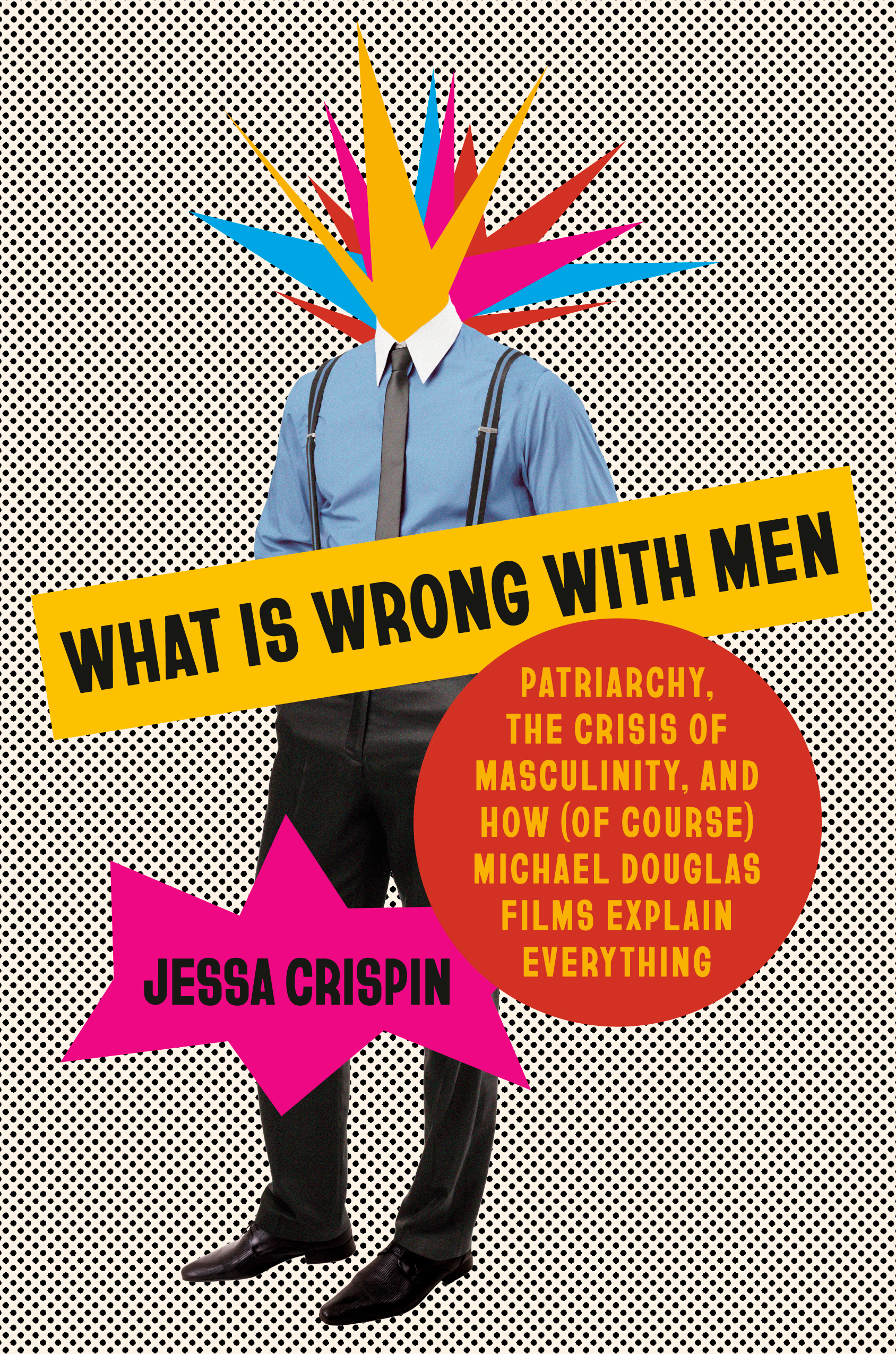
What Is Wrong with Men: Patriarchy, the Crisis of Masculinity, and How (Of Course) Michael Douglas Films Explain Everything
A hilarious, ambitious work of trenchant cultural criticism that traces the origins of today’s crisis of masculinity through . . . Michael Douglas’s oeuvre from the eighties and nineties
How to be a Man? That question—and all the anxiety, anger, and resentment it stirs up—is the starting point for a crisis in masculinity that today manifests as misogyny, nativism, and corporate greed; incels and mass shooters; and panic over the rights of women and minorities. According to Jessa Crispin, creator of the celebrated blog BookSlut, it is the most important question of our time, and the answer to it might be found in an unlikely the films of Michael Douglas.
In the 1980s, the rules for masculinity began to change. The goal was no longer to be a good, respectable family man, carrying on the patriarchal traditions of generations past. Not only was it becoming unfashionable, but increasingly the economic and political shifts—a slashed social safety net, globalization—made it harder to find a breadwinning income, a stable home life, and a secure place in the public sphere. So, then, how to be a man? From the early eighties to the late nineties, Michael Douglas showed us he was our president, our Wall Street overlord, our mass shooter, our failed husband, our midlife crisis, our cop, and our canary in the patriarchal coal mine. His characters were a mirror of our cultural shift, serving as the foundation for everything from the 1994 Crime Bill to Trump’s ultimate rise. With wry wit and wisdom, Crispin examines the phenomenon of the “Douglas character” as a silver-screen seismograph registering the tectonic movements within our society that have fractured it in shocking ways.
From Fatal Attraction to Wall Street to The Game, WHAT IS WRONG WITH MEN investigates how Michael Douglas’s box office domination illustrates the dark hearts of masculinity’s crisis. Blending feminist arguments and pop culture criticism, Crispin uses the iconic roles of Michael Douglas as a lens to explore men’s and our culture’s ongoing anxieties around women, money, and power. Ultimately, revealing that the patriarchy has now fully betrayed men, along with everyone else—and how unpacking one of its most fervent icons can help us envision a pathway forward.
How to be a Man? That question—and all the anxiety, anger, and resentment it stirs up—is the starting point for a crisis in masculinity that today manifests as misogyny, nativism, and corporate greed; incels and mass shooters; and panic over the rights of women and minorities. According to Jessa Crispin, creator of the celebrated blog BookSlut, it is the most important question of our time, and the answer to it might be found in an unlikely the films of Michael Douglas.
In the 1980s, the rules for masculinity began to change. The goal was no longer to be a good, respectable family man, carrying on the patriarchal traditions of generations past. Not only was it becoming unfashionable, but increasingly the economic and political shifts—a slashed social safety net, globalization—made it harder to find a breadwinning income, a stable home life, and a secure place in the public sphere. So, then, how to be a man? From the early eighties to the late nineties, Michael Douglas showed us he was our president, our Wall Street overlord, our mass shooter, our failed husband, our midlife crisis, our cop, and our canary in the patriarchal coal mine. His characters were a mirror of our cultural shift, serving as the foundation for everything from the 1994 Crime Bill to Trump’s ultimate rise. With wry wit and wisdom, Crispin examines the phenomenon of the “Douglas character” as a silver-screen seismograph registering the tectonic movements within our society that have fractured it in shocking ways.
From Fatal Attraction to Wall Street to The Game, WHAT IS WRONG WITH MEN investigates how Michael Douglas’s box office domination illustrates the dark hearts of masculinity’s crisis. Blending feminist arguments and pop culture criticism, Crispin uses the iconic roles of Michael Douglas as a lens to explore men’s and our culture’s ongoing anxieties around women, money, and power. Ultimately, revealing that the patriarchy has now fully betrayed men, along with everyone else—and how unpacking one of its most fervent icons can help us envision a pathway forward.
288 pages, Hardcover
Published June 3, 2025
About the author
Jessa Crispin
12 books260 followersJessa Crispin is the editor and founder of Bookslut.com. Her writing has appeared in The Washington Post, The Chicago Sun-Times, The Guardian and The Toronto Globe and Mail, among other publications.
Ratings & Reviews
Friends & Following
Create a free account to discover what your friends think of this book!
Community Reviews
Displaying 1 - 30 of 119 reviews

May 27, 2025
A really good reflection on masculinity as it was presented in the past, in today’s society, and of course, in Michael Douglas films. Now, I have never seen a Michael Douglas film a day in my life (but full disclosure I listen to the podcast Ruined and they’ve done two of his movies) so don’t feel like you need to be familiar with his work to understand the book. Really his films are used as jumping off points to discuss topics like war or consumerism or no fault divorce. I don’t know if I learned anything new in terms of feminism as it comes up in the book, but I did feel like I learned more on how the patriarchy fails men, which, embarrassingly, I had never considered before beyond the superficial talking points. All in all an interesting book that I’m glad I picked up.
Thanks to NetGalley, the publisher, and the author for a free eARC in exchange for an honest review.
Thanks to NetGalley, the publisher, and the author for a free eARC in exchange for an honest review.

June 28, 2025
I bought this on the basis of the laugh-out-loud title and premise, expecting trenchant cultural commentary. It’s in there, as is some wicked humor, but after a few chapters the conceit of Michael Douglas seemed forced and the observations less concise. Felt like it needed another round of editing to keep it from reading like someone’s senior thesis.

May 20, 2025
This is brutal, sharp, just a hair shy of being scathing, and I loved every page of it. Via the films of Michael Douglas in the 1980s and early 1990s, we get treated to an explanation of the breakdown of the patriarchy and masculinity, and the uncertainty and questions that arose within that time and how all of those things influenced the situation we find ourselves in today.
What I love is that there's accountability with sympathy - men have been separated from the patriarchy but still see themselves as individuals rather than members of communities, and don't realize their isolation isn't necessary if they can build and join. It reminded me of many good men and many terrible men in my life.
Despite the fact that this book feels sad and depressing at times, especially when you care about the well-being of men, the note that it left on feels truly hopeful, and helped realign my perspective. It's about solidarity versus inclusion, building communities without gatekeeping, and recognizing that "merit" is not the barometer we think it is.
The hook of the Michael Douglas angle will get people reading, but it's the message of the author that will get them working.
What I love is that there's accountability with sympathy - men have been separated from the patriarchy but still see themselves as individuals rather than members of communities, and don't realize their isolation isn't necessary if they can build and join. It reminded me of many good men and many terrible men in my life.
Despite the fact that this book feels sad and depressing at times, especially when you care about the well-being of men, the note that it left on feels truly hopeful, and helped realign my perspective. It's about solidarity versus inclusion, building communities without gatekeeping, and recognizing that "merit" is not the barometer we think it is.
The hook of the Michael Douglas angle will get people reading, but it's the message of the author that will get them working.

August 11, 2025
I liked this book, but I also didn’t. It just didn’t hit for me. I loved Crispin’s commentary on how the societal systems we’ve destroyed, altered, and that we maintain affect men and their self perception. I thought using a series of Michael Douglas movies throughout his career to give examples of the issue plaguing men and their identities was creative and well executed. Unfortunately, this book also, at times, felt like a thesis paper that was in desperate need of an editor.

August 5, 2025
I did have to read the Wikipedia articles of Michael Douglas films to understand the book, but I do love reading Wikipedia articles.

October 25, 2025
I asked my daughter if she’d like to read the book once I’m done, but she has no idea who Michael Douglas is.

July 16, 2025
Interesting take on the struggles of men, the only problem is that one must know all the movies!

January 31, 2026
Abbandonato al 51%
Percepisco la scrittura dell'AI ed è fastidioso
e poi non dice nulla
niente
Percepisco la scrittura dell'AI ed è fastidioso
e poi non dice nulla
niente

May 31, 2025
4.5 rounded up
Thank you NetGalley for an ebook ARC of What is Wrong with Men by Jessa Crispin. This book was surprisingly entertaining and informative. I found myself highlighting about half of the book because Jessa’s commentary was so insightful.
I’ll admit when I requested this book I didn’t even know who Michael Douglas was. When I googled him I found I had only seen him in two movies: Antman (a marvel movie) and The American President. I don’t think being familiar with Michael Douglas or his movies was a prerequisite for this book. Jessa’s main thesis is that almost every character that Michael Douglas portrayed in the 80’s and 90’s featured a patriarch struggling to evolve and adapt in a post-patriarchal society. She makes a very compelling narrative around why that is, how men in general didn’t have the social structures to help them adjust to feminism, and why so many young men today are so easily sucked into the manosphere as a result.
This book was exceptionally nuanced. Jessa calls out both political parties (and capitalism) as responsible for what is wrong with men today. Society has failed men and neither party has seemed to care about the crisis. Her facts and research on the patriarchy was fascinating. Like how men are more likely to divorce their wives if they have daughters than if they have sons (fascinating right?). And how she was able to tie it all together by providing detailed and in depth analyses of over a dozen Michael Douglas movies was nothing short of impressive!
She explains the plot of each Michael Douglas movie and why the movie was relevant and even revolutionary to the culture of the time when it was released. Then she explains aspects of the characters that Douglas portrays and why they never adjusted to the new shift in culture that feminism initiated. This was such an in depth book on the patriarchy and Jessa was such an excellent writer that I will likely come back to some of her quotes and insights over the next few months just to reread and ponder.
A weird byproduct of reading this book was that I now want to watch a handful of the movies she mentioned just to analyze and get better insight into what was happening to men in the 80’s and 90’s.
I highly recommend this book on masculinity, Michael Douglas movies, and the patriarchy. It was such an in depth look at how feminism and the culture in the 80’s and 90’s contributed to the current crisis of men. What is wrong with men? A lot. And it’s something we should know and address as a society!
Thank you NetGalley for an ebook ARC of What is Wrong with Men by Jessa Crispin. This book was surprisingly entertaining and informative. I found myself highlighting about half of the book because Jessa’s commentary was so insightful.
I’ll admit when I requested this book I didn’t even know who Michael Douglas was. When I googled him I found I had only seen him in two movies: Antman (a marvel movie) and The American President. I don’t think being familiar with Michael Douglas or his movies was a prerequisite for this book. Jessa’s main thesis is that almost every character that Michael Douglas portrayed in the 80’s and 90’s featured a patriarch struggling to evolve and adapt in a post-patriarchal society. She makes a very compelling narrative around why that is, how men in general didn’t have the social structures to help them adjust to feminism, and why so many young men today are so easily sucked into the manosphere as a result.
This book was exceptionally nuanced. Jessa calls out both political parties (and capitalism) as responsible for what is wrong with men today. Society has failed men and neither party has seemed to care about the crisis. Her facts and research on the patriarchy was fascinating. Like how men are more likely to divorce their wives if they have daughters than if they have sons (fascinating right?). And how she was able to tie it all together by providing detailed and in depth analyses of over a dozen Michael Douglas movies was nothing short of impressive!
She explains the plot of each Michael Douglas movie and why the movie was relevant and even revolutionary to the culture of the time when it was released. Then she explains aspects of the characters that Douglas portrays and why they never adjusted to the new shift in culture that feminism initiated. This was such an in depth book on the patriarchy and Jessa was such an excellent writer that I will likely come back to some of her quotes and insights over the next few months just to reread and ponder.
A weird byproduct of reading this book was that I now want to watch a handful of the movies she mentioned just to analyze and get better insight into what was happening to men in the 80’s and 90’s.
I highly recommend this book on masculinity, Michael Douglas movies, and the patriarchy. It was such an in depth look at how feminism and the culture in the 80’s and 90’s contributed to the current crisis of men. What is wrong with men? A lot. And it’s something we should know and address as a society!

July 1, 2025
It is difficult to review this book. It and she is complex.
Just a few notes.
1. I never saw Michael Douglas movies growing up in the 80’s
2. Movies I relate to are Road Warrior, Mad Max and Gangs of NY, Zombie Movies and a Razor’s Edge.
This being said, those movies are relatable because like Max, we live in a desert of destroyed ideologies. In this, as Nietzsche wrote “God is dead”. This to me this was any form of religion, ideology, and mostly everything lies in ruin. Like Max, we survive. Our dog and beat up car land where we are.I survive.
Next is Gangs of NY. My life has been more like this movie than the Gilded Age. Violence, alcoholism and just fucked up people thrown into a fucked up world.
Zombie movies because you hang with a group: any sex and race until they turn into a zombie. You are lucky if you get to care for three or four people.
Finally the Razor’s edge. In a fucked up world, try to live ethically although it is absurdly doomed to fail, you never know the full implications of your actions and while you think you are being kind your shadow brings alone the demons.
I will write more later.
Just a few notes.
1. I never saw Michael Douglas movies growing up in the 80’s
2. Movies I relate to are Road Warrior, Mad Max and Gangs of NY, Zombie Movies and a Razor’s Edge.
This being said, those movies are relatable because like Max, we live in a desert of destroyed ideologies. In this, as Nietzsche wrote “God is dead”. This to me this was any form of religion, ideology, and mostly everything lies in ruin. Like Max, we survive. Our dog and beat up car land where we are.I survive.
Next is Gangs of NY. My life has been more like this movie than the Gilded Age. Violence, alcoholism and just fucked up people thrown into a fucked up world.
Zombie movies because you hang with a group: any sex and race until they turn into a zombie. You are lucky if you get to care for three or four people.
Finally the Razor’s edge. In a fucked up world, try to live ethically although it is absurdly doomed to fail, you never know the full implications of your actions and while you think you are being kind your shadow brings alone the demons.
I will write more later.

August 22, 2025
This was fine. The patriarchy bits were interesting but I couldn't help think that it didn't really have a reason to tie into Michael Douglas films. It almost seemed like it would have been a better book if it was strictly on the patriarchy or strictly on MD films. To be fair, I hadn't seen all the films the author discussed so that was probably also part of the problem.

January 6, 2026
The merging of the narrow (Michael Douglas performances) and the vast (gender roles, socioeconomics, patriotism, etc.) makes this an exciting read, showing Jessa Crispin as an outstanding thinker.

August 8, 2025
The premise of this sounds a little gimmicky - dissecting everything that's wrong with modern men through the medium of ... Michael Douglas movies? But this is actually a really thoughtful and incisive book about how the dissolution of traditional patriarchy and the shift towards capital as a status marker has left men floundering.
It's very centred on white American men - taking in wider but overlapping issues such as how Americans see themselves as old myths about their country are being challenged - but has a much wider resonance. it even offers tentative, though not easy, solutions.
Crispin is also a witty and eloquent writer, so this never feels bogged down by theory.
Also, wow. it turns out I've seen way more Michael Douglas movies than I thought.
It's very centred on white American men - taking in wider but overlapping issues such as how Americans see themselves as old myths about their country are being challenged - but has a much wider resonance. it even offers tentative, though not easy, solutions.
Crispin is also a witty and eloquent writer, so this never feels bogged down by theory.
Also, wow. it turns out I've seen way more Michael Douglas movies than I thought.

May 27, 2025
I received this book from NetGalley for a review. I was thrilled to read this. I studied the differences between how men and women communicate in college, and this is right up my alley. I enjoyed it! The book examines how the second wave of feminism transformed society for women, as women worked to create change. And generally, men did not. The world was different, there were and are different expectations for men, and it’s no longer acceptable to simply go to work, come home, and do nothing. The book examines this through the lens of Michael Douglas’ movies from the 80s and 90s.
I hadn’t seen most of these movies, so I watched a few to prepare. It was really interesting how Michael Douglas portrays the troubled man in this time period. The author discusses the ways he is portraying the classic “hysterical woman” of the past in his movies.
Before reading this, I hadn’t considered how much the world changed for men at this time. Unlike women, who were making community organizations, helping each other, and making spaces to be heard and seen, men did nothing to help themselves. Suddenly, men were no longer kings of the world, and many of them didn’t know what to do or how to live in a modern society. Instead of looking around themselves and trying to help each other, they’re now incels who host podcasts and hate women.
Crispin also does a deep dive into capitalism, how it hurts everyone, and drives the patriarchy. She explores the political climate of the 80s and 90s and how it fueled the economic crisis the United States is experiencing right now. And how it led to fascism and the cult of Trump.
This book is fascinating. I haven’t read much nonfiction lately, but I’m so glad I got the chance to read What is Wrong With Men. It was truly interesting, entertaining, and answered questions I didn’t even know I was asking.
Get your copy June 3, 2025.
I hadn’t seen most of these movies, so I watched a few to prepare. It was really interesting how Michael Douglas portrays the troubled man in this time period. The author discusses the ways he is portraying the classic “hysterical woman” of the past in his movies.
Before reading this, I hadn’t considered how much the world changed for men at this time. Unlike women, who were making community organizations, helping each other, and making spaces to be heard and seen, men did nothing to help themselves. Suddenly, men were no longer kings of the world, and many of them didn’t know what to do or how to live in a modern society. Instead of looking around themselves and trying to help each other, they’re now incels who host podcasts and hate women.
Crispin also does a deep dive into capitalism, how it hurts everyone, and drives the patriarchy. She explores the political climate of the 80s and 90s and how it fueled the economic crisis the United States is experiencing right now. And how it led to fascism and the cult of Trump.
This book is fascinating. I haven’t read much nonfiction lately, but I’m so glad I got the chance to read What is Wrong With Men. It was truly interesting, entertaining, and answered questions I didn’t even know I was asking.
Get your copy June 3, 2025.

July 3, 2025
Writing anything that might looks like a review really contradicts the topic, the 'shadowing theme' and the writer herself I would say.
However, I always admire her ability to raise above 'the fantasies we are being sold', address it in a book as simply as possible and for everyone to be able to understand yet drawing a parallel with Bifo, Susan Strange and Edward Said.
The paragraph which hit the hardest and is one of the scariest 'The intellectuals of our time are mostly spokespeople for the elite. 'Elite' is a tricky word these days used to conjure Versaillesian fantasies of wealth and decadence, an easy political scapegoat for the failures of the current moment. But it is true and worrying that our writers, philosophers, and teachers come from the same small educated class as the political rulers and the entertainers, not just unfamiliar with but hostile to the lived experience of much of the nation.'
On a personal note, your writing and the world's view truly keeps me in check and helps not to wonder off to Michael Douglas's world.
However, I always admire her ability to raise above 'the fantasies we are being sold', address it in a book as simply as possible and for everyone to be able to understand yet drawing a parallel with Bifo, Susan Strange and Edward Said.
The paragraph which hit the hardest and is one of the scariest 'The intellectuals of our time are mostly spokespeople for the elite. 'Elite' is a tricky word these days used to conjure Versaillesian fantasies of wealth and decadence, an easy political scapegoat for the failures of the current moment. But it is true and worrying that our writers, philosophers, and teachers come from the same small educated class as the political rulers and the entertainers, not just unfamiliar with but hostile to the lived experience of much of the nation.'
On a personal note, your writing and the world's view truly keeps me in check and helps not to wonder off to Michael Douglas's world.

April 7, 2026
Somewhere more like 3.5 stars for me. I really love the concept of examining the ways patriarchy is damaging to men using the lens of Michael Douglas films of the 80’s and 90’s. The parts that were on were really on, but I found a lot of it a little too academic/dry and at times repetitive. It was really fun to watch the movies as they came up in the book. Not essential to be familiar with his oeuvre as long as you don’t mind major spoilers, but I definitely enjoyed the analysis of the films I was better acquainted with.

March 24, 2025
I love watching movies that explore what's wrong with society, so naturally I enjoyed this book that explores "what is wrong with men" via Michael Douglas movies. The flashy title might invite controversy, but in reality Crispin delves into far more than what is wrong with men, at times exploring what's wrong with the american people or society in general. In fact, I think I most enjoyed the chapters that critiqued America. The format was refreshing and original, weaving in Michael Douglas films seamlessly, and was exactly how I wished my AP English essays could have been like.

July 9, 2025
The other reviewers pretty much nail it without a lot of need to extrapolate further other than to say, this book is executed very well considering the conceit feels like something dreamed up in grad school between bong hits and a conversation begun with, "ok, hear me out on this, but".
September 2, 2025
3.5 stars rounded down. more academic and anti-capitalist than expected. less Michael Douglas than I wanted. usually I like it when authors read their own books, but I think this would have benefitted from a professional narrator.

August 20, 2025
Examining the patriarchy, male fragility and the definition of masculinity through the cultural lens of Michael Douglas movies was really quite interesting!

March 21, 2026
Fascinating, depressing, and perhaps hopeful by the end. Loved how the author used Michael Douglas movies to make her thesis come alive.

April 23, 2026
10 stars. Genius. The title is meant to grab attention but this book is not man-hating. It’s curious and empathetic.

August 8, 2025
it's hard to be a man when everything is So Feminine 🤮 and you lost all your money in crypto. but I'm sure they'll figure it out.

January 16, 2026
An equal parts entertaining and informative response to the famous “What is Wrong with Men” article. Will make you want to revisit multiple Michael Douglas films.

Read
June 23, 2025when the coffee and Adderall hits at the exact same time

August 25, 2025
A great, somewhat lighthearted, introduction into the crisis of masculinity following after 2nd and 3rd wave feminism and it's connection to kapitalism. With some good clues on what to do next :)
January 16, 2026
Key lessons for men
Men gain liberation by shedding patriarchy's rigid scripts—entitlement, isolation, and dominance—that trap them in anxiety and failure, as Crispin illustrates through Douglas's unraveling characters. This frees them for authentic relationships, emotional depth, and communal purpose, replacing performative toughness with collaborative joy.
Liberation Mechanics
Patriarchy promises security but delivers betrayal via capitalism's grind, forcing constant competition and suppressing vulnerability.
Giving it up means:
- Emotional freedom: Men escape stoicism, building bonds without hierarchy, as women did via networks.
- Redefined success: Shift from conqueror to steward—artistic, paternal, diplomatic roles emphasizing care over conquest.
- Collective thriving: Align with feminism's gains, dismantling systems harming everyone for mutual uplift.
For Men of Color
African American and Chicano men often inherit patriarchy atop racial oppression, gaining little "privilege" while bearing double burdens—macho expectations clashing with systemic racism. Liberation here rejects imposed machismo (e.g., stoic provider myths in Chicano culture or "strong Black man" tropes), embracing vulnerability and solidarity with women of color who already navigate intersectional fights. Crispin's framework applies: patriarchy isolates men of color from community healing, but opting out fosters coalition—like Chicano fathers prioritizing empathy over dominance, echoing Catholic neighbor-love values. This counters white patriarchal backlash, reclaiming cultural strengths for holistic freedom.
Author begins by framing the modern crisis of masculinity as a product of patriarchal betrayal amid rapid social and economic shifts. She argues that men, conditioned by expectations of entitlement and authority, find themselves adrift due to women's gains in financial, sexual, and professional freedoms during the 1980s and 1990s, alongside the hollowing effects of unchecked capitalism.
Core Thesis
Crispin posits that patriarchy no longer serves men either, fostering anxieties that manifest in misogyny, nativism, and corporate greed, rather than adaptation to a changing world. She uses Michael Douglas's film roles—from Fatal Attraction to Wall Street—as a cultural lens to dissect how male characters embody entitlement unraveling into panic and failure when faced with autonomous women and eroding power structures.
Historical Context
The introduction ties this to seismic changes in the 1980s and 1990s, when neoliberal policies and cultural upheavals dismantled traditional male guarantees of dominance, fueling today's economic crises and political extremism. Crispin highlights how films like Fatal Attraction reveal tensions not just in infidelity but in clashes between stay-at-home wives and assertive, self-determined women, signaling patriarchy's decline
Part one launches her analysis by dissecting Michael Douglas's 1980s films as cultural artifacts of patriarchal unraveling, focusing on how male entitlement collides with women's emerging autonomy. Crispin examines Fatal Attraction, portraying Dan Gallagher's affair not as mere infidelity but as a panic attack against assertive women like Alex, who defies erasure.
Crispin extends this to The War of the Roses, where Oliver's midlife meltdown over divorce and his wife's financial independence exposes domestic masculinity's fragility when traditional scripts fail. In Basic Instinct, Douglas's detective grapples with a woman's sexual and intellectual dominance, revealing patriarchal power as relational and brittle under scrutiny.
These chapters tie 1980s neoliberal shifts to men's reactive misogyny, greed, and failure to adapt, setting up the book's thesis that capitalism and post-patriarchy exacerbate the crisis. Crispin's blend of film critique and historical context underscores masculinity as a performance in flux, demanding evolution beyond entitlement.
Part two shifts from 1980s films to 1990s portrayals of masculinity's corporate and criminal extremes, using Michael Douglas roles to illustrate patriarchal collapse under neoliberal pressures.
Wall Street Breakdown
Crispin analyzes Wall Street, where Gordon Gekko embodies "greed is good" as the pinnacle of unchecked male ambition, but his downfall reveals capitalism's betrayal of even its most loyal patriarchs. She connects this to broader economic deregulation that hollowed out male identities tied to providing and dominance.
In Falling Down, Douglas's unemployed engineer snaps into rage against urban decay and diversity, symbolizing the white working man's rage at lost privileges amid globalization and women's workforce entry. Crispin frames this as a refusal to adapt, channeling economic anxiety into violence rather than solidarity.
These films highlight how 1990s masculinity weaponizes entitlement into fraud, vigilantism, and backlash, prefiguring modern incel culture and populism. Crispin argues patriarchy's promise of security crumbles, leaving men alienated and lashing out.
Part three uses Black Rain to explore how white American masculinity reacts when it is no longer centered or culturally dominant. Crispin reads this section as a study in midlife crisis at the level of a nation, where the United States—embodied by Douglas’s character—must confront other powers and cultures that no longer accept its automatic authority.
In Black Rain, Douglas’s white American cop is displaced into Japan, where his usual swagger, procedural shortcuts, and moral assumptions no longer work, exposing masculinity as provincial rather than universal. Crispin argues this dramatizes how white Western men experience globalization and rising non‑Western powers as humiliation rather than an invitation to transform.
The film’s tension—crime story layered over cross‑cultural friction—lets her show how male insecurity often turns into resentment of “foreign” rules, customs, and economic competition. This section ties that reaction to contemporary nationalist and anti‑immigrant politics, where men cling to a fantasy of restored dominance.
Part three extends the book’s claim that masculinity is relational: it depends on who is given deference, who sets norms, and whose labor sustains whose status. When white men lose automatic centrality—whether at home with autonomous women or abroad in other nations’ systems—the result is often rage, nostalgia, or flight into reactionary politics instead of adaptation.
Part four examines later Michael Douglas films from the mid-1990s onward, focusing on political power, workplace reversals, and psychological unraveling to show masculinity's desperation in a post-patriarchal landscape.
Crispin dissects The American President, where Douglas's widowed commander-in-chief leverages charm and authority for romance, only to crumble under public scrutiny and a woman's independent agency. This reveals leaders' reliance on unchallenged symbolism, which erodes when women demand reciprocity rather than adoration.
In Disclosure, Douglas faces sexual harassment from a female boss (Demi Moore), flipping patriarchal scripts to expose men's discomfort when power dynamics invert. Crispin argues this highlights entitlement's core: masculinity thrives on predictable hierarchies, panicking at equality.
Sections on The Game portray total breakdown, with Douglas's controlled life engineered into chaos, symbolizing capitalism's commodification of male identity. Crispin ties these to generational tensions and fatherhood, urging adaptation over nostalgia
Part five covers Michael Douglas's 2000s films, analyzing how aging masculinity confronts irrelevance through roles in Wonder Boys, Traffic, and Don't Say a Word, amid cultural shifts toward multipolar power and diverse identities.
In Wonder Boys, Douglas plays a blocked professor mentoring younger writers, embodying boomer men's refusal to yield space, their "genius" excuses for immaturity. Crispin critiques this as resistance to renewal, where male legacy clings to outdated dominance over emerging voices.
Traffic shows Douglas as a father/politician enabling the very systems he decries, revealing white male liberalism's performative outrage masking complicity in racialized violence. She links this to how patriarchy outsources harm while preserving elite comfort.
Don't Say a Word depicts frantic paternal rescue missions, underscoring masculinity's pivot to protector/provider when other roles fail, yet still centered on self.
Part five synthesizes the arc: from 1980s entitlement to 2000s obsolescence, urging men to dismantle patriarchal habits for genuine liberation.
Jessa Crispin's conclusion synthesizes the book's film analyses into a call for men to recognize patriarchy's betrayal and embrace post-patriarchal liberation.
Traditional patriarchy once offered white men stewardship and security, but neoliberal capitalism eroded it, replacing collective values with ruthless individualism and greed that harms everyone, including men. Crispin argues men now flounder without solidarity—unlike women who built networks—reacting with misogyny, nationalism, and isolation rather than adaptation.
Path Forward
Men must dismantle entitlement, becoming collaborators, artists, and diplomats who prioritize emotional growth and mutual care over dominance. Through Douglas's failed characters, Crispin shows masculinity as relational and mutable, urging evolution to escape nihilism and rebuild society.
Men gain liberation by shedding patriarchy's rigid scripts—entitlement, isolation, and dominance—that trap them in anxiety and failure, as Crispin illustrates through Douglas's unraveling characters. This frees them for authentic relationships, emotional depth, and communal purpose, replacing performative toughness with collaborative joy.
Liberation Mechanics
Patriarchy promises security but delivers betrayal via capitalism's grind, forcing constant competition and suppressing vulnerability.
Giving it up means:
- Emotional freedom: Men escape stoicism, building bonds without hierarchy, as women did via networks.
- Redefined success: Shift from conqueror to steward—artistic, paternal, diplomatic roles emphasizing care over conquest.
- Collective thriving: Align with feminism's gains, dismantling systems harming everyone for mutual uplift.
For Men of Color
African American and Chicano men often inherit patriarchy atop racial oppression, gaining little "privilege" while bearing double burdens—macho expectations clashing with systemic racism. Liberation here rejects imposed machismo (e.g., stoic provider myths in Chicano culture or "strong Black man" tropes), embracing vulnerability and solidarity with women of color who already navigate intersectional fights. Crispin's framework applies: patriarchy isolates men of color from community healing, but opting out fosters coalition—like Chicano fathers prioritizing empathy over dominance, echoing Catholic neighbor-love values. This counters white patriarchal backlash, reclaiming cultural strengths for holistic freedom.
Author begins by framing the modern crisis of masculinity as a product of patriarchal betrayal amid rapid social and economic shifts. She argues that men, conditioned by expectations of entitlement and authority, find themselves adrift due to women's gains in financial, sexual, and professional freedoms during the 1980s and 1990s, alongside the hollowing effects of unchecked capitalism.
Core Thesis
Crispin posits that patriarchy no longer serves men either, fostering anxieties that manifest in misogyny, nativism, and corporate greed, rather than adaptation to a changing world. She uses Michael Douglas's film roles—from Fatal Attraction to Wall Street—as a cultural lens to dissect how male characters embody entitlement unraveling into panic and failure when faced with autonomous women and eroding power structures.
Historical Context
The introduction ties this to seismic changes in the 1980s and 1990s, when neoliberal policies and cultural upheavals dismantled traditional male guarantees of dominance, fueling today's economic crises and political extremism. Crispin highlights how films like Fatal Attraction reveal tensions not just in infidelity but in clashes between stay-at-home wives and assertive, self-determined women, signaling patriarchy's decline
Part one launches her analysis by dissecting Michael Douglas's 1980s films as cultural artifacts of patriarchal unraveling, focusing on how male entitlement collides with women's emerging autonomy. Crispin examines Fatal Attraction, portraying Dan Gallagher's affair not as mere infidelity but as a panic attack against assertive women like Alex, who defies erasure.
Crispin extends this to The War of the Roses, where Oliver's midlife meltdown over divorce and his wife's financial independence exposes domestic masculinity's fragility when traditional scripts fail. In Basic Instinct, Douglas's detective grapples with a woman's sexual and intellectual dominance, revealing patriarchal power as relational and brittle under scrutiny.
These chapters tie 1980s neoliberal shifts to men's reactive misogyny, greed, and failure to adapt, setting up the book's thesis that capitalism and post-patriarchy exacerbate the crisis. Crispin's blend of film critique and historical context underscores masculinity as a performance in flux, demanding evolution beyond entitlement.
Part two shifts from 1980s films to 1990s portrayals of masculinity's corporate and criminal extremes, using Michael Douglas roles to illustrate patriarchal collapse under neoliberal pressures.
Wall Street Breakdown
Crispin analyzes Wall Street, where Gordon Gekko embodies "greed is good" as the pinnacle of unchecked male ambition, but his downfall reveals capitalism's betrayal of even its most loyal patriarchs. She connects this to broader economic deregulation that hollowed out male identities tied to providing and dominance.
In Falling Down, Douglas's unemployed engineer snaps into rage against urban decay and diversity, symbolizing the white working man's rage at lost privileges amid globalization and women's workforce entry. Crispin frames this as a refusal to adapt, channeling economic anxiety into violence rather than solidarity.
These films highlight how 1990s masculinity weaponizes entitlement into fraud, vigilantism, and backlash, prefiguring modern incel culture and populism. Crispin argues patriarchy's promise of security crumbles, leaving men alienated and lashing out.
Part three uses Black Rain to explore how white American masculinity reacts when it is no longer centered or culturally dominant. Crispin reads this section as a study in midlife crisis at the level of a nation, where the United States—embodied by Douglas’s character—must confront other powers and cultures that no longer accept its automatic authority.
In Black Rain, Douglas’s white American cop is displaced into Japan, where his usual swagger, procedural shortcuts, and moral assumptions no longer work, exposing masculinity as provincial rather than universal. Crispin argues this dramatizes how white Western men experience globalization and rising non‑Western powers as humiliation rather than an invitation to transform.
The film’s tension—crime story layered over cross‑cultural friction—lets her show how male insecurity often turns into resentment of “foreign” rules, customs, and economic competition. This section ties that reaction to contemporary nationalist and anti‑immigrant politics, where men cling to a fantasy of restored dominance.
Part three extends the book’s claim that masculinity is relational: it depends on who is given deference, who sets norms, and whose labor sustains whose status. When white men lose automatic centrality—whether at home with autonomous women or abroad in other nations’ systems—the result is often rage, nostalgia, or flight into reactionary politics instead of adaptation.
Part four examines later Michael Douglas films from the mid-1990s onward, focusing on political power, workplace reversals, and psychological unraveling to show masculinity's desperation in a post-patriarchal landscape.
Crispin dissects The American President, where Douglas's widowed commander-in-chief leverages charm and authority for romance, only to crumble under public scrutiny and a woman's independent agency. This reveals leaders' reliance on unchallenged symbolism, which erodes when women demand reciprocity rather than adoration.
In Disclosure, Douglas faces sexual harassment from a female boss (Demi Moore), flipping patriarchal scripts to expose men's discomfort when power dynamics invert. Crispin argues this highlights entitlement's core: masculinity thrives on predictable hierarchies, panicking at equality.
Sections on The Game portray total breakdown, with Douglas's controlled life engineered into chaos, symbolizing capitalism's commodification of male identity. Crispin ties these to generational tensions and fatherhood, urging adaptation over nostalgia
Part five covers Michael Douglas's 2000s films, analyzing how aging masculinity confronts irrelevance through roles in Wonder Boys, Traffic, and Don't Say a Word, amid cultural shifts toward multipolar power and diverse identities.
In Wonder Boys, Douglas plays a blocked professor mentoring younger writers, embodying boomer men's refusal to yield space, their "genius" excuses for immaturity. Crispin critiques this as resistance to renewal, where male legacy clings to outdated dominance over emerging voices.
Traffic shows Douglas as a father/politician enabling the very systems he decries, revealing white male liberalism's performative outrage masking complicity in racialized violence. She links this to how patriarchy outsources harm while preserving elite comfort.
Don't Say a Word depicts frantic paternal rescue missions, underscoring masculinity's pivot to protector/provider when other roles fail, yet still centered on self.
Part five synthesizes the arc: from 1980s entitlement to 2000s obsolescence, urging men to dismantle patriarchal habits for genuine liberation.
Jessa Crispin's conclusion synthesizes the book's film analyses into a call for men to recognize patriarchy's betrayal and embrace post-patriarchal liberation.
Traditional patriarchy once offered white men stewardship and security, but neoliberal capitalism eroded it, replacing collective values with ruthless individualism and greed that harms everyone, including men. Crispin argues men now flounder without solidarity—unlike women who built networks—reacting with misogyny, nationalism, and isolation rather than adaptation.
Path Forward
Men must dismantle entitlement, becoming collaborators, artists, and diplomats who prioritize emotional growth and mutual care over dominance. Through Douglas's failed characters, Crispin shows masculinity as relational and mutable, urging evolution to escape nihilism and rebuild society.

Read
September 24, 2025I would suggest that she qualify the title by saying this is about AMERICAN MEN.
Living in Europe, I don't feel this describes European men or Scandinavian men at all.
Apart from that, I agree with several other reviewers –
Crispin’s commentary on the societal systems we’ve created, then destroyed, and how that affects men and their self perception, is interesting.
And the conceit of using Michael Douglas films as illustrations of the rise and fall of men's identities was creative. (I kept wondering if he's read the book and if so, what he thinks of it.)
Overall, however, this did read like a thesis paper and I could only absorb it in small doses while gardening or doing something else productive.
I think an edited version would have make an interesting TedTalk.
Living in Europe, I don't feel this describes European men or Scandinavian men at all.
Apart from that, I agree with several other reviewers –
Crispin’s commentary on the societal systems we’ve created, then destroyed, and how that affects men and their self perception, is interesting.
And the conceit of using Michael Douglas films as illustrations of the rise and fall of men's identities was creative. (I kept wondering if he's read the book and if so, what he thinks of it.)
Overall, however, this did read like a thesis paper and I could only absorb it in small doses while gardening or doing something else productive.
I think an edited version would have make an interesting TedTalk.

June 29, 2025
I think this book does a lot to answer, economically and socially, why it is that men are struggling, and just why it is that they’re turning to right wing, fascist impulses and archetypes of a masculinity long-gone, in ways that are much more satisfying (to me) than a few other books on the topic I’ve read in the last year. And it’s funny.
On the other hand, I think this books whiteness, and it’s onlineness, get in the way. The average man does not know Contrapoints or see yoga as a cultural appropriation issue, and the fact of the matter is that most men in real life are not getting shouted down by women the way the book implies they regularly are. It feels like the most glaring blind spot of the work to me, who nodded along to mentions of the likes of Hassan Piker and Andrew Tate, because, well, I’m chronically online and have been deep in the trenches of leftist tumblr and twitter for the last decade. The author clearly has too, and I think it’s the weakest point insofar as any possible solution to this problem goes.
Overall though, really funny, and I mostly agree with her assessment. Now to go add a whole bunch of Michael Douglas movies to me “to watch” list.
On the other hand, I think this books whiteness, and it’s onlineness, get in the way. The average man does not know Contrapoints or see yoga as a cultural appropriation issue, and the fact of the matter is that most men in real life are not getting shouted down by women the way the book implies they regularly are. It feels like the most glaring blind spot of the work to me, who nodded along to mentions of the likes of Hassan Piker and Andrew Tate, because, well, I’m chronically online and have been deep in the trenches of leftist tumblr and twitter for the last decade. The author clearly has too, and I think it’s the weakest point insofar as any possible solution to this problem goes.
Overall though, really funny, and I mostly agree with her assessment. Now to go add a whole bunch of Michael Douglas movies to me “to watch” list.

January 26, 2026
A clever book about masculinity and feminism through the lens of Michael Douglas movies. Crispin's writing is sharp and she's at her best when she really lets loose with streams of consciousness.
You don't need to know Michael Douglas films to enjoy this-- she provides good synopses and context and if you are a certain age a lot has seeped in anyway.
Well paired with Girl on Girl: How Pop Culture Turned a Generation of Women Against Themselves.
You don't need to know Michael Douglas films to enjoy this-- she provides good synopses and context and if you are a certain age a lot has seeped in anyway.
Well paired with Girl on Girl: How Pop Culture Turned a Generation of Women Against Themselves.
Displaying 1 - 30 of 119 reviews