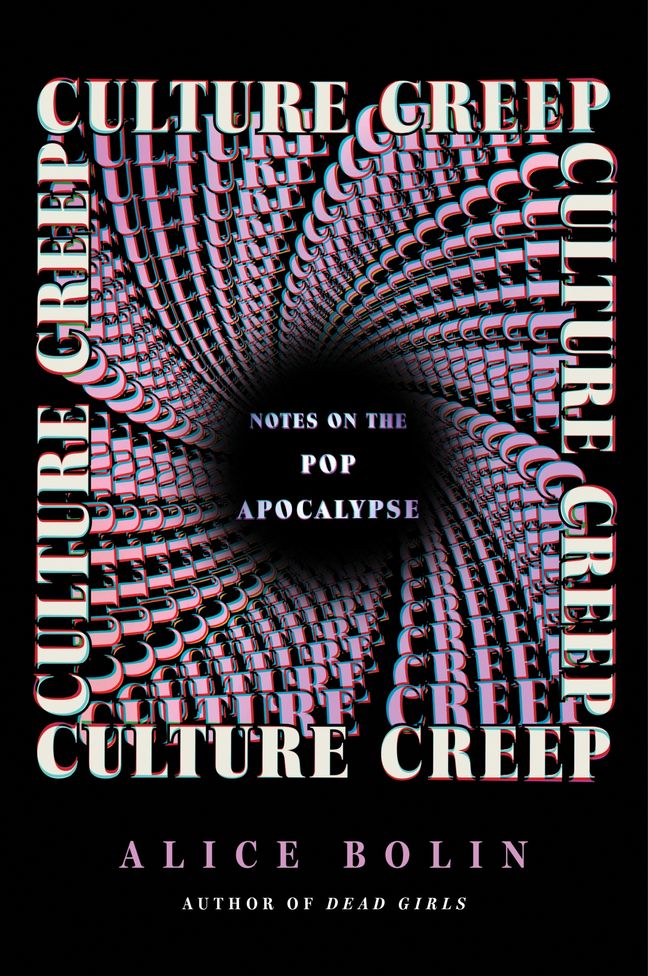
From the critically acclaimed author of Dead Girls (“stylish and inspired”—New York TimesBook Review), a sharp, engrossing collection of essays that explore the strange career of popular feminism and steady creep of cults and cult-think into our daily lives.
In seven stunning original essays, Alice Bolin turns her gaze to the myriad ways femininity is remixed and reconstructed by the pop culture of the computer age. The unlikely, often insidious forces that drive our popular obsessions are brilliantly cataloged, contextualized, and questioned in a kaleidoscopic style imitating the internet itself.
In “The Enumerated Woman,” Bolin investigates how digital diet tracking apps have increasingly transformed our relationships to our bodies. Animal Crossing’s soothing retail therapy is analyzed in “Real Time”—a surprisingly powerful portrait of late capitalism. And in the showstopping “Foundering,” Bolin dissects our buy-in and complicity with mythmaking around iconic founders, from the hubristic fall of Silicon Valley titans, to Enron, Hamilton, and the USA.
For readers of Trick Mirror and How to Do Nothing, Culture Creep is a swirl of nostalgia and visions of the future, questioning why, in the face of seismic cultural, political, and technological shifts as disruptive as the internet, we cling to the icons and ideals of the past. Written with her signature blend of the personal and sharply analytical, each of these keen-eyed essays ask us to reckon with our own participation in all manner of popular cults of being, and cults of believing.
Another high-potential book squandered by the author's inability to retain from talking about herself.
Sure, some people like books heavy with personal storytelling because it makes them feel more connected to the author. However, I enjoy it only in small doses, and only if it leads to a stronger argument.
All these stories about her food tracking, her worries over weight, her lockdown Animal Crossing gaming, her endless Sex and the City rewatches, her moving away to study, her childhood bedroom with inflatable chairs, her Pinterest scrolling, her teen magazine nostalgia were nothing but burdensome to me. My eyes kept wanting to skip this endless self-talk to get to the point, but too often her experiences were the point.
Cultural criticism, or whatever the author claims these essays are, needs to be grounded in more than personal anecdotes. And while she occasionally mentions deeper topics such as cults or surveillance, they are soon drowned in her personal reflections again.
Alice Bolin (b. ~1988) is an American essayist; 2025's Culture Creep is her 2nd book of pop culture-related essays from a female millennial's perspective. The essays span Y2K-era topics including Bolin's obsession with tween and teen girl magazines, how body image was portrayed in the 2000s in fashion, fashion blogs, and troubling thin celebrities, and female agency or lack thereof (there is a very long essay on Playboy and the 2000s E! reality series Girls Next Door, which Bolin rewatched in light of Hugh Hefner's ex-poly girlfriend Holly Madison's salacious 2015 memoir Down the Rabbit Hole: Curious Adventures and Cautionary Tales of a Former Playboy Bunny and other recent podcasts about the series. (For what it's worth, I also remember occasionally watching Girls Next Door in the mid/late '00s when I was in college and feeling icky about the whole thing, not like it was an aspirational fantasy like Bolin seemed to think at the time.) Other essays deal with more contemporaneous technological phenomenon, like the pervasiveness and time-sucking nature of mobile gaming.
There are moments of resonance here, especially for readers who came of age alongside Bolin and also remember the cultural dominance of size-zero celebrities, fashion and paparazzi blogs and websites, and the shift from print to digital culture. But for those who’ve already read similar essay collections from women in their 30s and 40s reckoning with coming of age in the '00s, Culture Creep doesn’t tread much new ground. Bolin’s reflections often feel more like musings than revelations, and the writing occasionally lapses into the kind of introspective spiral that seems content to note contradictions without fully analyzing them.
That said, for readers who haven’t yet dipped into this emerging subgenre, or who want a more nostalgic than analytical take on growing up millennial in the shadow of Y2K pop culture, Culture Creep may strike a chord. For those who've already consumed similar connections (in book/essay form or in other forms), it’s likely to feel more like a rerun than a revelation.
3.5 I really enjoyed this overall but I think this collection will fall victim to some of the same criticism as "dead girls." The essays aren't as linked or set in their purpose as the synopsis implies, so you're bound to have essays that you really like and others that you struggle to get through. I flew through and LOVED the first half of this collection but found some of the later essays a bit less focused and far too long. I personally enjoyed Bolin's writing and I always love just escaping into someone else's head for a while, but if you're specifically interested in this based on the synopsis, it might stray farther than you prefer.
fascinating, if a little long and unfocused at times, and slightly cynical. but that's exactly how I think/feel about the world, and pop culture specifically, so I can't say I fault her on any of it.
I liked this set of cultural essays a lot, probably since it was perfectly targeted at me, an aging millennial who skipped a grade and started college at 16. I enjoyed the author's fresh takes on things I haven't heard across many cultural writers or podcasts, such as discussion of the sinister nature of MyFitnessPal. My favorite section was the deep dive on the Playboy bunnies and Hugh Heffner. In retrospect, it's kind of insane we all just accepted that as normal. My husband reminds me "20 years was actually a long time ago if you think about it," which made me sigh.
it's so crazy to see markers of my upbringing viewed in retrospect like this. truly makes me realise that being a woman in society has always, ALWAYS been awful.
I reeeeeally liked this, maybe 4.5 stars just for how spookily relevant it was to my precise interests and experience lol. Essays about fitness tracking, animal crossing, the sims, and y2k teen magazines, written through a feminist, anti-capitalist, late-millennial lens??? Fantastic.
I’ve gotten to the point where I’m pretty much done with critical collections that are unilaterally focused on pointing out what’s wrong with absolutely everything.
Bolin is a lovely writer and I wish I could enjoy that more, but criticism exclusively focused on channeling hater energy just doesn’t hit for me anymore.
I suppose to Bolin’s credit, she’s not claiming to be taking a balanced approach. “Can’t you let people just have their little fandoms?” she mocks. No, she says, because she’s a “critic” and an “asshole.” Credit for admitting the latter, I guess, but I’m not sure how we got to the place where criticism can exist solely comprised of negative opinions on the material.
The best criticism takes a fair and balanced look at what’s good and bad about the subject. Can any given subject be seen through a lens of all positive or all negative thoughts? Sure, absolutely, but once you’re picking at absolutely everything about absolutely every topic you cover, you’re not acting as a critic, you’re just indulging your own critical thoughts. Which is boring, and quite frankly pretty depressing to slog through an entire book of.
While I generally agree with Bolin’s political stances (which FYI, are present in most of the essays), I’m not sure we need to hold every piece of culture from 20-30 years ago to a specific standard we are now applying to what is objectively unproblematic in the present. I’m also not certain it’s the job of most popular culture to satisfy a specific person (even if they are — gasp — a critic) in terms of the subjective exactitude of morality for that person.
And while this isn’t true of every subject, in many cases yes, you can absolutely “let people have their little fandoms.”
*I received an ARC of this book in exchange for an honest review.*
I wanted to like this book a lot more than I did. I picked it up because the cover was interesting and the dust jacket promised discussions of pop culture and feminism in the modern era, which interested me. Honestly, the dust jacket description was a little vague. Words and phrases like “computer age”, “late capitalism”, “keen-eyed essays” floated around a nebulous core, and I wasn’t sure what I was getting into but had an idea about the tone, at least. And after reading it, I’m still not quite sure what I got into.
In fairness, she brings up some interesting points, such as in “The Enumerated Woman” when she compares voluntary FitBit use to the involuntary tracking bracelets that Amazon wear house workers wear. I also liked some of the comments in “Foundering”, especially concerning Alexander Hamilton and his eponymous musical. My favorite essay was “Lean In/Bend Over”, which detailed the case of the NXIXM cult, where she smartly skewered those who use the language of female empowerment for the purpose of oppressing women. I wish that essay had been longer.
The next three essays were more mediocre. “Stardate” and “Real Time” consist of her grasping at straws to make her own personal life relevant to the topics at hand, and “Teen People” was too long and anecdotal, though the topic of teen magazines was interesting to read about, and she made some salient points throughout. By this point, the book was going to get a solid three-star rating from me.
The last essay undid my premature rating. It was about Playboy, which so many younger Gen-X and older Millennial women seem to be inordinately preoccupied with. I was too young to remember the Hugh Hefner reality show, so I can’t really comprehend why anyone is even entertaining a narrative other than Playboy being a predatory company run by a rapist, but I guess you had to be there. This essay is mostly descriptions of allegations against Playboy Inc. and half-baked arguments about how sexphobic the feminist movements was/is. I don’t have the time or the knowledge to really debate that, all I’ll say is she describes Gloria Steinem’s writing in a way that tells me she’s read very little of it (she admits to as much in the text). Steinem isn’t my personal “problematic fave” feminist, and she has made some major blunders, but her work is mischaracterized here, and it was embarrassing to read a feminist article by someone who hasn’t bothered to read essays like “The Real Linda Lovelace” or “Erotica vs. Pornography”. They aren’t perfect essays, and disagreeing with them is fair, but Alison Bolin makes some sweeping declarations about Steinem’s work that are in contradiction with Steinem’s work, and that poor research frustrated me.
All in all, this book did sharpened my own thinking and it was very readable, so I’m glad I read it. But unless you’re a feminist theory nerd like myself, skip it. It’s a lot of ideas that don’t have a center to stick to.
Desperately wish this book had a bit more editing because when it was good, it was GOOD. Some chapters meandered way too much. The author would often seem insecure about why she was writing these essays in the first place. When focused, the essays force the reader to reckon with cultish aspects of pop culture; I loved The Enumerated Woman and much of Down the Rabbit Hole. But when it veered off course, it became confusing. What point was the author trying to make? Even still, I recommend this as a good listen for anyone who loves feminist pop culture analysis.
but man I just don't want to read more essays about Sex and the City lol
I don't think this book really delivered on the title promise. There wasn't a great deal of discussion of cults, social media, or a connection to how the pop-culture of the 90s-Y2K really connects to our present reality. Nothing particularly insightful or new to be gained from this book if you're already a decently read feminist. Rounded up from a 2.5 because it's the holidays. Happy New Year.
excellent writing/analysis, mandatory for millennials, arguably gen z, and anyone that actually cares about contextualizing the invisible hand that informs everything we know :~)
these essays were close to the topics i would have loved to read more on but unfortunately didn’t come together for me. some were more focused than others but overall i think this is mostly a me problem:
love video games but wasn’t connecting to the animal crossing story
body image/calorie counting valiant critique but nothing new here, and making a connection to the present resurgence of “heroin chic” look and pro ana content was missing.
i should have more knowledge of sex and the city and star trek to make a comment on this essay, but I don’t unfortunately so i had limited interest.
playboy essay was again nothing new and too incredibly long. that we were so deep in the essay and then got a basic bio of hefner structurally was jarring. wish this one pursued the celebrity memoir topic that was discussed with the author’s reading of ex-bunny books.
Rambling, disorganized, repetitive and tedious. While Bolin has some good nuggets in there, this book can really be summed up as "Alice Bolin thanks everything sucks but likes it anyway." She makes some good points about the patriarchy and how much of what passed for culture in her childhood is problematic when viewed from her more enlightened current perspective, but there wasn't much in here that I found to be truly insightful. Maybe that is because Bolin comes from relative privilege...white, with enough money that she doesn't have to worry about the cost of college or whatever she charges to her account there as her parents will settle it up for her. Bolin's insights come from consuming media and then reading critical works about it (and she quotes and paraphrases these HEAVILY throughout this book).
I also think that in her negativity, Bolin gives short shrift to some of our society's advances and positives. For example, we do have cyborg enhancements (mostly...just ask an amputee) and we have greatly extended women's fertility window. But, I recognize that essay collections are basically long rants or op eds, and Bolin is entitled to her opinion. However, so am I and this book just wasn't for me.
Big thanks to Mariner Books and NetGalley for providing me with an advanced copy of Alice Bolin’s new collection of essays Culture Creep: Notes on the Pop Apocalypse. I was drawn to this book by its title and the cover. I wasn’t familiar with Alice Bolin’s previous book Dead Girls, but before beginning this book, I read a little about her and her writing, and it will be another book added to my “To Read” list. Culture Creep is an amazing collection of essays that focus on areas of pop culture, including things like films, tv shows, video games, as well as other forms of entertainment and technology. In her essays, Bolin examines the different ways that various factors have accessed in possibly assimilated these forms of entertainment, art, and communication in our lives and how this impacts us. In particular, Bolin is interested in the ways that these forms of entertainment and technology have impacted women, and throughout the essays her analysis zooms in and out to examine both the micro and macro implications of these changes for society, but especially for women. In one of the descriptions I read, an essay was compared to those in Jia Tolentino’s Trick Mirror, and I agree. I was reminded of many of Tolentino’s themes and observations about how technology, social media, and reconfigurations of feminism and female empowerment have adapted in society to be both more appealing and less demanding. In fact, Bolin cites Tolentino in at least one of her essays, and I appreciated the fact that she is taking some of Tolentino’s arguments and observations and building on them, contributing to the conversation about how social media and technology seemingly offer freedom and an ability for reinvention, but ultimately often leave us feeling more trapped and troubled. The first essay, “The Enumerated Woman,” focuses on how technology has changed women’s relationships with their bodies, examining her own experiences with Fitbit and food tracking apps. I appreciated how Bolin uses her own experiences to build on her arguments and relate to readers. I hadn’t really thought to much about the idea of fitness tracking. I tend to like measuring my steps, but I can also see how this may send the wrong kind of message about health behaviors, especially when we live in a society that seems to reinforce and police women’s appearances and weight. Bolin also introduces an strain of feminism that Tolentino refers to as “mainstream feminism”. Bolin describes this as “a philosophy co-opting certain elements of more radical feminist politics, like freedom of choice, but using them to reinforce traditional fender roles and other oppressive hierarchies.” It’s an interesting concept she calls “postfeminism” that reoccurs throughout her book in various instances. In this essay, though, Bolin examines how the freedom to track our movement and caloric intake can easily be posted to our social media, “where an imperative to share and consume becomes and imperative to conform, and good health and beauty are ever more thoroughly conflated.” This is a lot like Tolentino’s optimized woman—the modern woman who on social media is expected to live her best life and share it, but is also under extreme expectations to conform to a certain standard of beauty and achievement. For Bolin, these fitness trackers and posting about healthy behaviors, whether it is dieting or exercising, feeds into a social desire to feel productive. What I found most interesting about this essay was her argument that these kinds of trackers are largely part of a neoliberal philosophy to provide for one’s own well-being. That is, health is an individual responsibility, and not one that the state or government should support. This also fits into many of the themes within Bolin’s essays about how these kinds of neoliberal philosophies place responsibilities and labor on the individual and shift the responsibility from the state. While some of us may have access to the means of healthier living, whether it is close proximity to grocery stores with fresh fruit and vegetables or access and time to exercise, others may have more limited access to the means of healthy living. This shift in thinking about health and fitness, which seems to be more of the direction the Department of Health and Human Services is going, puts others at a disadvantage and makes healthy living less accessible for many Americans, yet frames health as a choice, not a service or product. The other interesting conclusion Bolin draws is from the work that we do for social media and technology companies as regular users who ultimately become the products to the advertisers that are the real consumers of these large corporations. Although I don’t see much change happening from this idea, it is interesting to think that these companies are enriching themselves from our hours spent “volunteering” (Bolin’s words) to teach them. This would be a great essay to use in class since it builds on experiences many people have had with both health and technology, but also it speaks to our stress and anxiety over our appearance and weight, and the kinds of social pressure we often experience to conform to social standards for our appearance. It not only builds on many of the ideas that Tolentino uses in her essays, but it also challenges our perceptions about how we think about our appearance, the decisions we make about our healthy living, and how we consume technology and media. I would anticipate interesting and thoughtful conversations from this essay. “Foundering” is another interesting essay that focuses on some of the recent scammers using social media to get rich, and the television series or documentaries that have resulted from these schemers. Just like Tolentino examining confidence men and how scamming is a part of social media, Bolin examines some high profile scammers and the media representations of their crimes. She starts by explaining her viewing of the Billy McFarland Fyre Festival fiasco and the dueling documentaries that were produced on different streaming services. She ends up also examining Adam Neumann of WeWork infamy, who misled investors by overvaluing his company, yet somehow was given an incredible payout. It is kind of interesting to see how these men are often portrayed in the media, as either eccentrics, geniuses, or comical when they fail. Bolin notes the “boy genius” myth that followed these guys, along with Mark Zuckerberg, and how the media often distorts or lessens the crimes and unethical behavior that they engage in. Bolin also relates these kinds of hagiographies to how we view the origins of the country, often disregarding the awful, criminal and morally corrupt behaviors and actions while mythologizing the work of the founding fathers. It’s an American practice that continues on today. This essay goes into further critiquing Hamilton in humorous ways. I’m not really familiar with Hamilton, but I loved the way that Bolin notes that while Miranda brings in actors of color, the story still focuses on the white people, neglecting to tell the stories of people of color who contributed to the founding of the country. “Lean in/Bend Over” also focuses on scammers, specifically examining the NXIVM cult, and how Keith Raniere used women to attract other women to serve as “slaves” for his inner circle. I tried to watch The Vow, the HBO docuseries that Bolin references in this essay, but it was really difficult to watch due to the graphic nature of Raniere’s exploitation. Nevertheless, Bolin explores how Raniere used marketing and sales techniques to establish and recruit for his cult, exploiting our own needs for personal fulfillment and our insecurities. Bolin explores the “postfeminism” approach that Raniere took to empower women in NXIVM. In a kind of paradoxical way of thinking, female empowerment comes from powerful men like Raniere who believe in devaluing femininity. Raniere’s thinking comes from a long line of thinking that presents men and women as being completely opposite, and thus women are viewed as emotional and men as logical. Bolin later traces this kind of thinking to today’s political thinking where Roe has been reversed and more women have the Trad wife lifestyle pushed on them as an option against liberal values that promote education and careers over childrearing and domesticity. Bolin also presents how members of NXIVM shared the ways that food was restricted as a means of control, similar to the enumerated woman she analyzes in the first essay. This essay also made me think about the various ways that society and politicians seek to control women, whether it is in policing their bodies, limiting their options, or dictating their futures, all with the illusion of choice and opportunities. She also presents how these cults and this kind of thinking operate like multilevel marking (MLM) scams that often prey on people’s vulnerabilities to make money, exploiting people’s insecurities and desires for wealth. This essay would also be interesting to teach, especially because the events are so recent, shocking, and infamous, and have shifted the talk of accountability for treatment of women. “Stardate” was an interesting essay in that it explored two different television shows that seem so disparate, yet with the influx of television time due to the pandemic were probably made more relevant to many people. Bolin explores the worlds of Sex and the City and Star Trek the Next Generation, finding ways that the narrative structures with journal entries each serve as a frame for the events in the episode. She also notes how these shows are “products of progressive political agendas”, which I found fascinating. As someone who hasn’t really watched enough of either episode, it seemed incredible to find these kinds of similarities, but when we consider how the characters and storylines of these shows challenge many of the more traditional stories and characters, this kind of comparison makes sense. I also appreciated Bolin’s analysis of the kind of future world that Star Trek envisions as a kind of utopia, while other shows are often popular because of our nostalgia and desire for a return to the past. It seems especially hard to escape that kind of market in today’s film and television options, where sequels, franchises, and reboots seem to capture much of the market. Both Sex and the City and Star Trek the Next Generation created stories and dealt with issues and topics in a mature and nuanced way, frequently challenging popular assumptions and the kind of hegemonic thinking that dominated discourse about topics like cultural differences, power, and sex. The only essay that I didn’t really enjoy that much was “Real Time”, which again focuses on a popular COVID pastime: playing video games. In particular, Bolin explores the world of Animal Crossing on Nintendo Switch. I’m not that into video games, but Bolin manages to bring up some important points about the nature of work and rewards in video games and real life. It was interesting to consider how we spend our time, and how immersive these games have become, especially one where in Animal Crossing, players are tasked with creating a kind of utopia where care and patience are rewarded. In watching my children play a game like Zelda, where they have more control of the character and that involves more strategy, exploration, and patience, I can see how these kinds of games may become more rewarding for players. My kids reacted so differently when they were controlling link, not really looking to solve the game, but enjoying the ability to control what he wears, when and what he eats, and who he can talk to. It was interesting to see how much they enjoyed having this level of control, especially when they have primarily had these aspects of their lives dictated to them. For my kids, this kind of video game is an experience in autonomy, a kind of play responsibility. The main issue, though, that I had with this essay was that there was so much description of the game and the various activities that Bolin was involved with, it took away a little of the analytical eye that Bolin brought to her other essays. The last two essays, “Teen People” and “Rabbit Hole”, both examine magazines and other forms of popular media specifically targeting women and men. “Teen People” examines magazines, and how these forms have changed over the last century to appeal to women, and ultimately send messages about how women should behave and what they should aim for in their lives and relationships. Bolin explains that when she was younger, she was obsessed with magazines, and these provided her with a kind of cultural awareness and capital that may have been missing in her town when she was growing up. However, she notes that her obsession grew to a point where it impacted her ability to attend class. It is another fascinating deep dive into a form of media that, although has lessened over the past 20 years, still remains popular, even if most of the content has migrated online. “The Rabbit Hole” examines the legacy of Playboy magazine and Hugh Heffner. Bolin explains her interest stemming from Heffner’s reality show about his multiple girlfriends, and how this “reality” show was really a kind of coercive performance to maintain his relevance to a digital world. This was a fascinating look at how Heffner shaped the style and substance of men’s magazines in the 50s and 60s, but also used his power and position to deflect many of the horrible things he did. Like other male subjects Bolin questions their accountability, she examines the ways that Heffner claims to be a feminist, one who empowers women and offers them opportunities that they may have never had, but is seemingly not much different from people like Bill Cosby, Keith Raniere, or even President Trump with his recent claims as being the protector of women. These final essays were the among the most powerful in the book, and I couldn’t put them down easily. These would also make excellent essays to teach in a writing class as they would stimulate much discussion and consideration about the arguments that Bolin raises. Furthermore, I think they would make students question the media they consume, as well as the messages that are often implicit in the medium. I would hope that in reading these essays, students would be more conscious and conscientious about what they consume online and in print. Overall this was an excellent collection, and it’s made me want to seek out Bolin’s other book about how the media portrays women. Bolin is not just a talented writer, but an amazing cultural analyst and critic, who easily swerves from personal experience to social issues and their implications in popular media. I loved how she shifted seamlessly from micro to macro analysis, closely examining minor details to further analyze how these issues are relevant to others and what they mean for society. I highly recommend these essays, whether you enjoy reading or are a teacher who is looking for some excellent reading to challenge your students’ assumptions and have them rethink their ideas and the media they consume.
Author Alice Bolin opens her new book, Culture Creep: Notes on the Pop Apocalypse, by declaring that serial killers are passé and cults are all the rage: “You have to pay me good money to watch a serial killer show these days, but I can’t get enough of cults. With this new glut of programming, it’s clear that cults are subtler and more pervasive than I ever imagined.”
Bolin draws a clever comparison between our fascination with cults and the way we latch onto pop-culture obsessions—like loving a certain band thanks to a blend of groupthink and subtle indoctrination by friends and family. Thankfully, fandom rarely leads us to don matching Nikes and drink cyanide, but the roots are similar.
She describes QAnon as perhaps the most jaw-dropping cult of our time: “In 2021, the most perennially online doomsday cult, QAnon, staged an alarming rupture of the boundary between the internet and real life. QAnon is a loosely organized fascist internet conspiracy group who believe that President Donald Trump was sent to rid the American government—and then the world—of a cabal of corrupt child molesters who control global wealth and power.”
Bolin also notes that today’s tech billionaires are a new form of cult, wielding more power over us than any previous group in history, yet exercising “remarkably little responsibility.” The universal draw of cults is their seductive promise to reveal what the future holds—even if those answers are sometimes bizarre or dangerous. The NXIVM cult in Albany, New York, for example, was led by Keith Raniere—an ordinary salesman who parlayed his Amway experience into building a cult where he convinced followers of his supposed brilliance and then manipulated them as sex slaves.
For Pop Culture Lunch Box readers, Bolin’s most relevant essay is on the fluffy celebrities we idolized as tweens. While Culture Creep doesn’t make a decisive point on why we’re so tempted by cults, Bolin admits, “the book has experienced mission creep so dramatic that it is also about the fall of empire, late capitalist cults, twenty-first century gender trouble, and the transformation of entertainment in the age of the internet.” I found myself wishing for more focus, even though Bolin’s cultural commentary is sharp and interesting on nearly every page. Honestly, this book probably works better as something you dip into occasionally—reading a few pages over years—rather than devouring all at once, as I did.
Perhaps the book’s strongest takeaway is its argument that the 1980s and ’90s tween magazines drew a direct line to the “sea of social media content we now swim in.” That realization made me wonder if today’s websites—including the one you’re currently reading—are just digital versions of Tiger Beat. I never considered that before. Bolin makes me think Pop Culture Lunch Box should be printing more and bigger celebrity photos that you can tape to all your bedroom walls!
Culture Creep is my first encounter with Alice Bolin's work, and, as a fellow millennial, I appreciate her attention to the ways that pop culture shaped our shared adolescence and continues to echo into our adulthood. My favorite essays in this collection are the ones that excavate Bolin's own cultural hobbies and obsessions: with Animal Crossing, with print magazines, etc. Her insights when she's writing from a place of authority are thoughtful and cutting. In other essays, Bolin is writing about phenomena that she's observed rather than experiences she's had, and her perspective seems more like a synthesis of other people's writing than something really new. Essays about NXIVM and Playboy introduced me to new facts and authors, but they also felt less focused and less personally urgent. One of Bolin's strengths is in her research--I appreciated her references not only to other contemporary thinkers but also to academics analyzing our present moment through a analytical lens. Unfortunately, some of these quotes were strong enough to make me feel like I'd be better served reading through Bolin's Works Cited than through Culture Creep. Overall, the collection is interesting but uneven.
Ultimately this one was a let down given the synopsis. I was excited for a series of essays centered from a fellow millennial POV especially since I love Jia Tolentino’s Trick Mirror and wanted to experience that high again. But it’s the writing and editing that shoot this one in the foot.
First, it’s largely unfocused. All of the essays and their topics greatly appeal to me…animal crossing? Fuck yeah. Playboy mansion? Grew up watching Girls Next Door. Calorie counting apps, teen magazines…yes! I am your target audience! But the essays at their worst are not that insightful/fail to make any sort of worthwhile nuanced point (Enumerated Woman) have an awkward summary/analysis of sources lacking streamlined synthesis (Animal Crossing) or have fun personal anecdotes that don’t accumulate to anything bigger and just plateau (Teen People). I enjoyed the last essay on Playboy but it meandered and could’ve been half that length and also felt slightly like a weird one to end on. Altogether the collection lacks cohesion and focus, the themes muddied.
I contemplated not finishing it but ultimately found a rhythm with it and I’m glad I kept reading but it’s unfortunately one of those that sound SO GOOD but are just meh in it’s execution.
I was really excited to read this because I loved Dead Girls: Essays on Surviving an American Obsession, and then the first essay was about cults and I was like yeah!! But this was kind of hit-or-miss for me. Throughout the book she makes reference to the concept of the book changing as she struggled to write it and I was like, yeah, I can tell.
also--and I know this is a personal problem--but I was like, INCENSED by her Animal Crossing: New Horizons essay as she describes how cold and capitalistic the game is and I was like "what are you TALKING about ?!? girlie you are playing this game WRONG" and then finally the conclusion of the essay is that she realized she was playing it wrong and it's actually about the beauty of SHARING your island duhhhh and honestly this made me question EVERYTHING
I think if she had written the book she initially set out to write, that was focused on magazines, I would have enjoyed that more. But OH WELL
Odd that the title i'm seeing on good reads includes "sharp cultural criticism on feminism, social media, and cults" in the subtitle, which (a) doesn't appear on my copy of the book and (b) seems like something you let someone else say in a blurb rather than put in the title.
Anyway, pretty quick and engaging read. I like the writer more than the content. She is indeed "sharp", and at times she deftly mixes the personal with the general. Some of it [I gather from other goodreads reviews] may land more with you if you're a millennial woman. As an old man who did not compulsively read fashion or celebrity-gossip magazines in teenage years, does not feel strongly about Britney Spears, did not watch the reality show reexamining Hugh Hefner/Playboy Mansion legacy, never felt oppressed by the thinness of Paris Hilton, never owned a FitBit, and never played Animal Crossing, I found myself a little removed from a lot of it.
Conversely, her thoughts on feminism and various feminist writers, as well as capitalism and marketing, while maybe not surprising (she is very consistently far Left on political spectrum), were more generally relatable.
Culture Creep is an interesting reflection on culture from the perspective of a millenial. Alice Bolin explores our various obsessions in culture including, but not limited to The Girls Next Door, Animal Crossing, and Sex and the City. In various essays, Bolin takes you down memory lane of the 90s and early aughts into what was captivating everyone's time. In reflecting on her own experiences, she is able to recognize the often unhealthy nature of her obsessions and past-times - such as collecting magazines (with one to save and one to cut up), spending long hours gaming, and watching and re-watching shows for comfort.
Although I couldn't relate to a lot of the behaviors of Bolin, I was entertained by her reflections, as they reminded me of my adolescence and early adulthood. This was a purely entertaining read that those interested in pop culture of the past would enjoy.
Thank you to NetGalley, Mariner Books, and the author Alice Bolin for an ARC of Culture Creep in exchange for an honest review!
As I am Gen X, I wasn't sure how relatable a book on millennial pop culture would be, but this was a really enjoyable read. Unfortunately, part of the reason women of all generations can connect to it is because so many frustrating misogynist things just haven't changed. Somehow Bolin makes this book pretty fun, instead of just despair-inducing as we live through the dire consequences of the Trump regime. It includes essays on collecting data on yourself for billionaires, tech grifters, living in this hyper-capitalist post-feminist hellscape BUT with video games and many, many magazines. It really brought to mind by childhood home which subscribed to both Ms. and Playboy. I did not realize how messed up that was as a child, but it's quite striking now.
Thanks to NetGalley and Mariner Books for the ARC of this title.
I read this pretty shortly after Girl on Girl: How Pop Culture Turned a Generation of Women Against Themselves, and I really liked how these felt like they were in conversation with one another, using different facets of media to hit some of the same points. The deep dive here on Playboy/The Girls Next Door alone is worth the price of admission, and I loved the way this braided its thoughts on cults, culture, and magazines together.
An interesting set of essays on pop culture, feminism, politics, and the Millennial experience (particularly the author's, though there are likely commonalities to be found for many), Culture Creep is one of the better books of essays I've read, though the throughline idea in the book's description might be a tad exaggerated. If you're at least 30 and look back on the past, both recent and 20+ years ago, through alternating lenses of nostalgia and cynicism, you'll probably really like this one, and I'm sure I'll be recommending it to people who fall into that category. Calling Alexander Hamilton the most problematic Founding Father when the Wikipedia article "Thomas Jefferson and slavery" exists is certainly a choice though (yes, capitalism, but still).
Culture Creep: Notes on the Pop Apocalypse by Alice Bolin is a sharp, introspective essay collection that examines how modern femininity is shaped and distorted by digital culture, capitalism, and the cult of self-optimization. Bolin delves into topics such as the commodification of womanhood, the allure of wellness culture, and the myth-making surrounding tech founders. Her writing is both personal and analytical, offering a kaleidoscopic view of how pop culture and technology intersect to influence identity and belief systems. For readers of Trick Mirror and How to Do Nothing, Culture Creep provides a thought-provoking exploration of the forces that shape modern life