Jump to ratings and reviews
Rate this book

Echo House

Rate this book
An epic chronicle of American politics and influence chronicles the story of the Behl family, three powerful generations of men in Washington, D.C., as they pursue power, money, and women and strive to protect their many dangerous secrets. Tour.

328 pages, Hardcover

First published January 1, 1997

77 people are currently reading
1027 people want to read

About the author

Ward Just

36 books83 followers
Ward Just was a war correspondent, novelist, and short story author.

Ward Just graduated from Cranbrook School in 1953. He briefly attended Trinity College in Hartford, Connecticut. He started his career as a print journalist for the Waukegan (Illinois) News-Sun. He was also a correspondent for Newsweek and The Washington Post from 1959 to 1969, after which he left journalism to write fiction.

His influences include Henry James and Ernest Hemingway. His novel An Unfinished Season was a finalist for the Pulitzer Prize for Fiction in 2005. His novel Echo House was a finalist for the National Book Award in 1997. He has twice been a finalist for the O. Henry Award: in 1985 for his short story "About Boston," and again in 1986 for his short story "The Costa Brava, 1959." His fiction is often concerned with the influence of national politics on Americans' personal lives. Much of it is set in Washington, D.C., and foreign countries. Another common theme is the alienation felt by Midwesterners in the East.

Ratings & Reviews

What do you think?
Rate this book

Friends & Following

Create a free account to discover what your friends think of this book!

Community Reviews

5 stars
103 (19%)
4 stars
197 (36%)
3 stars
162 (30%)
2 stars
61 (11%)
1 star
11 (2%)
Displaying 1 - 30 of 86 reviews
Profile Image for robin friedman.
1,949 reviews420 followers
November 1, 2025
A Novel Of Insider Washington

Ward Just's 1997 novel, "Echo House" tells a story of intrigue, power, and sadness in following three generations of the Behls, a fictitious family in Washington, D.C. The family lives in a large, historic Washington, D.C. mansion, Echo House, which once hosted a conference between Abraham Lincoln and General George McClellan. (Lincoln's shadow and the memory of the Civil War hang heavily over this book.) The story begins with Adolf Behl, a senator who had been led to believe he would be the Democratic Party's nomination for vice-president but was rudely denied. The two other Behls, his son Axel and grandson Alec take a more roundabout approach to power than running for office. They become consummate insiders and fixers, sometimes operating on the far side of the law who work for their country and for themselves largely behind the scenes.

The story has a feel of both realism and nostalgia. Novelistically and historically, the book is at its strongest in the early stages during WW II and its aftermath through the Truman administration as Axel Behl works as a fixer to help the United States through the Cold War and in the restoration of Western Europe. Much of the story turns on Axel's own war service in WW II in France as an intelligence officer for General Patton and the impact of this experience through the rest of his life. A pivotal moment of the story takes place in 1952 at the presidential campaign headquarters of Adlai Stevenson in Springfield, Illinois. Alex's son Alec decides to become a lawyer and will soon take his place behind the scenes with the powerful in Washington, D.C. where, among many other things, he works to ease the process associated with the impeachment and resignation of President Richard Nixon.

The story runs together public and personal lives. In particular it shows a great deal of the marriages and sexual behavior of both Axel and Alec. Both men can be callous towards women as well as heavy, behind-the-scenes philanderers. Axel had married a New York City poet, Sylvia. The marriage was unsuccessful and ended in divorce. (The conflict between the life of poetry and imagination and the rough, practical-driven life of official Washington is also a thread running through the book. In addition to Sylvia's life as a poet, the book includes many allusions to works such as Henry Adams' novel, "Democracy", Fitzgerald's "The Great Gatsby" and Homer's "Iliad")

I found the book poignant. I felt sympathy for the characters and for their goals of public service. I also saw them as more than fallible human beings in the public and personal lives. The book seems to trace a falling-off in American politics from the days of FDR and WW II through Nixon and the late years of the 20th century with a period of hope during the Kennedy presidency. The chronologically early parts of the story are also the most effective. The group depicts the small group of insiders that surround the principle characters and describes their various activities, most of them clandestine, under successive presidencies. Just tells the stories of these activities through indirection and through hints. This approach gives some idea of the modus operandi of the characters, but it also slows the book down and makes it difficult to follow in places.

I have lived in Washington, D.C. since the resignation of President Nixon and enjoyed seeing Just's portrayal of the city which I have made my home and the changes it has undergone with time. It brought back my own memories.

The most effective aspect of the book for me was the many passages of reflection on the United States and on its political process. Sometimes this reflections are in the author's voice and sometimes in the voices of his characters. The book recalls an America of greatness with all the personal and political shortcomings of its political leaders. The Behl family and its associates for all their sexual flaws and their arrogance were devoted to the United States and to promoting its welfare. With the falling-off after WW II the author seems to see in American life, the book still allows room for hope and regeneration. Among many eloquent passages in the book, the following is one of several discussions of Lincoln taken from a long reminiscence from Axel Behl to his son early in the novel.

"[W]hen the war ended we returned to Washington back to Echo House, my work in the government. I had to give back , Alec. When you fight a war and win it, you own it. And it owns you. The price is never cheap and you have to protect the victory, as you would any investment. The winning cost is too much blood, don't you see? You can't walk away from it and simply allow people to bleed to death and create the very conditions you fought in the first place. And if you don't think
government can break your heart, walk over to Mr. Lincoln's memorial sometime and look at his face."

The scope of "Echo House" goes beyond the lives of Washington insiders. With its sad, thoughtful tone, the novel tells something about the past greatness of the United States, the personal and political sacrifices this greatness demanded, and the possibility of understanding and restoring something of this greatness in America's future.

Robin Friedman
Profile Image for Quo.
344 reviews
May 15, 2024
Reading a book chosen by others can be quite an interesting endeavor, as is the case with a book discussion group. Often, one has no or very few preconceptions & this was certainly the case with Echo House by Ward Just, none of whose works I'd previously read.


It would seem that the name of the old Behl mansion in Washington, D.C. is apt, as it is definitely filled with many echoes & the gathered ghosts of times past, of the lingering scent of three generations of the politically-engaged Behl family, with the last century "close enough to touch & the modern world invisible in the shadows".

In fact one of the characters, Axel Behl, is said to be reading The Iliad, a book he regards as contemporary fiction, reading it in a "room that oozed conspiracy, phrased in a language as subtle as a hangman's smile."

Ward Just's novel begins in 1916 with Senator Adolph Behl, who aspired unsuccessfully to become vice president, representing the 1st of 3 generations of the Behl family to dwell at the stately house on a 2 acre estate where President Lincoln met with General McClellan, a home that was "grand but not ostentatious, with rooms clustered like a set of Chinese boxes, clustered like squares on a chess board."


The book cascades through WWII, "Ike" & the Army-McCarthy Hearings, the administration of JFK, then rather quickly moves into the Nixon era & the 1970s, with the 3 generations of Behls employing different approaches to political power. Adolph's son Axel & his son Alec seem to redeploy the skills & intuition of the earlier generation, while remaining conscious of the family heritage.

Much of the novel is about the process of power in American government, rather than about politics per se, representing three variations on a common theme & with Echo House acting as a familiar way-station or a beacon through changing times. In fact, it might be said that Echo House itself is the novel's main character.

Often, Echo House seems compromised by traversing the decades much too quickly. The author conveys a sweep of events that is quite panoramic without ever making them seem very personal. That said, I like the treatment of influence peddling, of favors being traded & received, with some banked for future needs.

It is commented about the 2nd of the 3 generations of Behl's that "Axel never refuses a man a favor; this makes him as close to untouchable as there is". Axel is not precisely "in government" but acting in concert with it. As a young man, he was injured in France during WWII, acting in an imprecise but important role for "Wild Bill" Donovan & the OSS (Office of Strategic Services), predecessor to the CIA. He was rather severely injured & even disfigured in the war but comes early to a sense of acting or trading on power without the need of a title that suggests actual power.


Axel's career was compared to an iceberg, with 7/8's below the surface and one reckons that there have always been many similar folks operating in & about Washington. Here is just one view of Axel's profile:
Axel always sat in the rear row of the gallery, where he could watch the lawyers for the sugar producers, the man from the corn belt, the vice president of the railroad union & the airplane manufacturer cup their hands to their ears when they heard something familiar--the quota, the price support, the tax break, the subsidy--and watch as the votes were tallied, ticking off the yeas & nays on their own scorecards & rising wearily at the conclusion, smiling or not, according to the vote, relinquishing their seats to the lobbyists whose legislation was still being marked for the decisive vote.

The moment had aspects of the bazaar & the auction block & the trading floor & the burlesque house, all business conducted in an arcane tongue with its special rules of grammar & syntax, assisted by a lifted eyebrow or a pointed finger.

Axel knew the senate chamber as well as he knew the garden room at Echo House. He knew the feel of the mahogany desks & the nap of the carpet, the crowded rows filled with anxious men in a rut. No wonder, in their crazier moments, senators wanted to be fitted for togas.
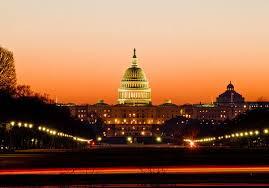
It is said that everyone in Washington "works for the government" (in some manner) whether or not he or she carries a specific portfolio. Much of Ward Just's novel is geared to illustrating this notion. Another character laments that he has never found the opportunity to travel outside the country but then confides that every place outside of Washington, D.C. is "just a suburb".

In reading Echo House I was reminded at times of other works set in the nation's capital, Advise & Consent and Gore Vidal's stage play & film, The Best Man and somewhat more recently All the President's Men. The constant through the changing times is always the home of the Behls, Echo House, a place where their wives & confidants always seem to feel estranged. The wife of one of the Behls comments that living there, one always felt a guest & not really a part of the house itself, "like living at the Reichstag".

Alec Behl, the 3rd & last generation to reside at the house, initially wanted no part of this milieu but over time functions as a kind of diplomatic fixer, someone who knows how to use his rather submerged talents to connect people with a variety of needs. It is said that "when you enter the swamp, you need a friendly guide". Even in 1997 when Echo House appeared, the nation's capital was being compared to a morass.


Ward Just spent many years as a journalist and he has a keen eye for detail. The female characters are not without interest but tend not to be nearly as well developed. There are also several interesting subplots that need not be detailed here. However, in the main this is the story of Echo House and the men who dwelled within it & were in large measure defined by its stature over the generations.

The novel's ending seemed quite melodramatic & the story does not seem enhanced by it. Echo House contains some excellent writing & memorable passages detailing the process of government & the manner in which power is wielded but seems somewhat less effective in conveying human qualities.

Of course, much has changed in the ensuing years since 1997 when the book was published & the period when Ward Just's novel ends but I also suspect that very much has remained the same. In spite of the noted limitations, I found the book well worth the investment of time.

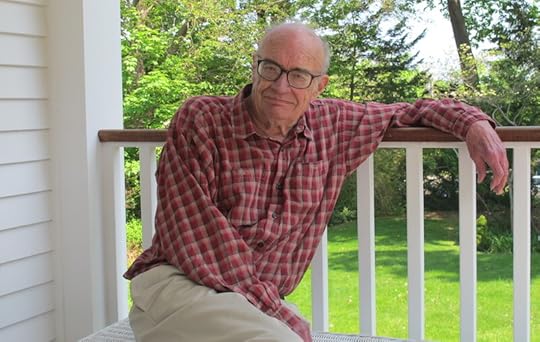
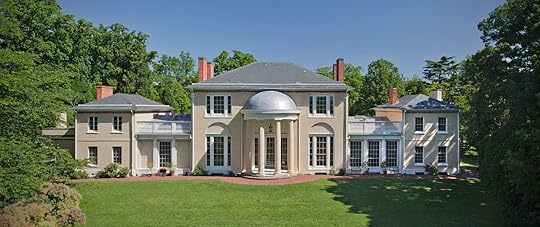
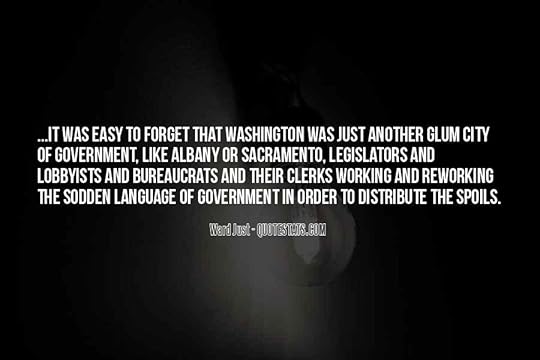
*Within my review are images of author, Ward Just; a quote from the author; a stately Georgetown home that once belong to kin of Martha Washington.
Profile Image for Lobstergirl.
1,924 reviews1,440 followers
January 14, 2009
This is a strange book. I was hoping to like it, since it's about Washington and politics, and it was a National Book Award Finalist. But none of the characters seem real (or likeable), and though it was published in 1997 it feels like it was written in the 1940s. It is a musty read. You just plod through the pages waiting for people to die, and eventually some of them do.
Profile Image for Robert Wechsler.
Author 10 books146 followers
February 17, 2020
I read this novel because Just died recently, I’d never read him, and I has this novel on my shelves. Well, better late than never. Just is an excellent writer and, at least by the time he wrote this, he had the courage to break the rules with a Washington novel that consists not of schemes and affairs, but rather vignettes that take place on the sidelines of politics, back stories, unknown stories, not really character sketches but where character plays an important role. The novel is even multi-generational in interesting ways. Just is best when describing, and his monologues are better than his dialogue, which is ordinary; but there is far less dialogue here than in most such novels.

The only problem is that the novel is long-winded at times, a serious issue when there is so little plot.
Profile Image for Mal Warwick.
Author 30 books491 followers
April 6, 2017
It’s a commonplace that what transpires “inside the Beltway” that rings Washington, DC, is at best a poor reflection of American views and values. Over the years, scholars, pollsters, and pundits have attempted to understand this contrast, but the mechanistic tools of science and the biases of political analysts fail to grasp the nuances of the way things get done in the nation’s capital. Reading fiction is a better route to understanding the peculiar character of Washington’s insular community. For example, the work of Thomas Mallon (Finale, Watergate) offers more insight into the scandal-plagued years of the Nixon and Reagan Administrations than anything else I’ve read. But the reigning master of American political fiction is Ward Just. Echo House, the eleventh of his eighteen novels, is a brilliant portrayal of three generations of Washington deal-makers.

The real world inside the Beltway

Every second year, the population of Capitol Hill changes a little, and every fourth often witnesses a dramatic shift in the upper reaches of the Administration. But the hundreds of individuals who account for these changes are a tiny fraction of the city’s population. Life goes on, essentially unchanged, for the hundreds of thousands of other citizens — not just the janitors, taxi drivers, housemaids, and others who constitute the city’s working class but also the bureaucrats, lawyers, journalists, lobbyists, spies, consultants, and assorted deal-makers who make government work. In Echo House, Ward Just drills down into the lives of three generations in a family of Washington power-brokers. The picture he paints is troubling even though it’s illuminating.

Where real power lies

Presidents habitually complain they have far less power than the public might think. In fact, scholars and political observers alike have explored the difficulty of bringing about significant change in American policy from the top — sometimes even just making what might seem to be straightforward decisions. Old-school political scientists argue that this is a result of the competition among the many special interests that converge on government. While this is certainly a factor, the power of the permanent bureaucracy and of the private citizens who wield influence from one Administration to the next may be even greater. These are the people who remain in place, regardless of which party or which President is “in power.” Echo House demonstrates the subtle ways the most powerful of these people operate behind the scenes and dictate the course of events.

A saga of three generations

Echo House traces the history of the rich and powerful Behl family from the time just after World War I until close to the end of the twentieth century, when the novel was first published. Senator Adolph Behl is his party’s presumptive nominee for Vice President. Then the presidential candidate reneges on a promise and names someone else. A young boy at the time, the Senator’s son, Axel, takes it all in, resolving to aim for the White House himself. Axel, much like John F. Kennedy’s big brother, Joe, seems destined to achieve his ambition. But, like Joseph Kennedy, his plans are derailed during World War II. Serving as an OSS officer in Occupied France, the Jeep Axel is driving hits a land mine, horribly wounding him and leaving him in great pain for the rest of his life.

Leaving aside the dream of winning the White House, Axel builds a power base through the intelligence community, becoming a confidential adviser of every president and becoming widely acknowledged through the capital as one of the most influential people in town. Axel’s son, Alec, a close observer of his father, takes up the mantle himself in due time. Eventually, he too arrives at the pinnacle of influence, portrayed on the cover of TIME Magazine as “The man to see in Washington.” Along the way we witness the turbulent Roosevelt years, the hard-fought battles under Harry Truman, the years of Dwight Eisenhower, Richard Nixon, and Joseph McCarthy, and all the presidents who follow. The tale is rich with detail and well-informed with insight about the seminal events of all those years. Politics in the nation’s capital looks much different from the perspective the author conveys.

About the author

Ward Just’s eighteen novels include some of the most remarkable political tales of the twentieth century. Echo House is one of those. Just published his first novel in 1970 following a career in journalism. His most recent book appeared in 2014.
Profile Image for Greg.
654 reviews99 followers
March 5, 2015
Echo House is the story about three generations of patrician Washington power brokers, and their descending careers as American politics changed over time. I will be honest, I did not expect to like this novel and only read it because it was a finalist for the National Book Award. I’m glad I read it – fantastic.

The book starts with a disappointment. The first generation was led by Adolph Behl and his wife Constance. “She saw the great boulevards as canals and the White House as a palace, in due course her husband in the Oval Office, her son waiting his turn. It may not happen in her lifetime. But it would happen. You nudged fate; you put yourself in the hunt.” (5) Unfortunately, her husband did not want to be President, he wanted to be Vice President. In this he put his faith in another person, and that person chose someone else. In this moment his son Axel learned much about politics.

Axel grows to become a bit of a playboy, and marries a New York socialite named Sylvia. She never likes Washington, and their marriage seems doomed from the start. They have a child, Alec, before Axel is assigned to London, and then is deployed on an intelligence mission supporting Patton. He and a friend go slightly AWOL to a remote villiage, and Axel becomes enthralled with a woman to whom he never actually speaks who works at the local Chateau. After spending the night, Axel and his friend attempt to drive back to their assignment, but in a town the encounter tremendous carnage, presumably at the hands of French resistance fighters including Nadege. Some German soldiers stir, guns blaze, Nadege falls, Axel and his friend flee, only to be blown up by a landmine on the road. Axel survives but is badly mangled, and his friend dies.

Home, Axel’s affections turn from Sylvia to Nadege. “He thought that when sadness closed its fist around your heart, it would never relax until had squeezed you dry.” (56) He becomes the power in the shadows of Washington, wealthy and influential. “In Washington a man was wise to seek the shade, to dwell in the dark seven-eighths that supported the sunny eighth. The hard, dangerous work went on in the shadows. That was where it belonged, away from public view, because so much could be misunderstood. Europeans knew this instinctively, ingeniously concealing their fortunes and the influence that went with them. Your reward and consolation was knowing that the work was thrilling and of consequence. The darker the shadows, the more consoling and rewarding it was.” (126)

As Alec matures, Axel exposes him to the realities of politics during the defeat of Adlai Stevenson, whom he loved, much as Axel had been exposed when his father had not received the nomination for Vice President. “The most he could do for his son was introduce him to public life so that he could see things at first hand. You had to know what was real before you could identify the propaganda. You had to know how men talked to one another, and then you could begin to understand why one man reacted one way and another man another way to good news or bad. You tested a wooden nickel with your teeth, and character the same way.” (132) When Alec meets a highly ambitious woman, whom he would later marry, named Leila Berggren, he tries to council his son from making a mistake. “All high emotion lives on the margins of chaos, and chaos is the enemy of judgment.” (136)

A shift occurs in Washington, finally exploding with Nixon, an outsider on the inside, and hated by Washingtonians. “The difference between then and now: much was withheld in the old days when there were only a hundred people in the world and they all knew one another. Inside information was similar to a precious stone; its value depended on its purity and scarcity. It was obvious that where there was smoke there was fire, and the ones at the highest elevations of the city disregarded the smoke and investigated the fire in order to extinguish it. It seemed to Sylvia thirty years later that it was the smoke that mattered, the fire be damned; and in the clumsy efforts to scatter the smoke, the fire raged out of control.” (204)

Alec turns into a successful lawyer, and a behind the scenes power broker in the mode of his father. “Willy thought that Alec’s natural role was to represent both at once, Alec a kind of corporation counsel retained by Washington itself, the authority that was here today and here tomorrow and the day after, Alec the nimble mouthpiece seeking to preserve confidence at a time of terrible uncertainty; put another way, he was a bankruptcy referee protecting assets.” (236)

Alec is pursued by a journalist who wants to write a story about Alec’s behind the scenes efforts. She convinces him. “I’d like to start very soon, try to seize the march on the cannibals and the commissars. You see, we’re bringing a new kind of coverage to Washington. We’re interested in texture and nuance. We’re interested in the faces behind the masks. We’re interested in where the power really is as opposed to where it’s supposed to be, and that’s why we’re interested in Alec Behl.” (244)

Alec, like his father’s, watches his marriage crumble, almost apathetically. Like his father, he falls for a French woman, this one a neighbor who worked at the French embassy. He gets his father on a trip on Air Force One to the D-Day ceremonies. “Alec stood in the doorway watching him, trying as always to read his mind and failing, remember when it seemed to him that his father could do anything, the ticket to Wimbledon and all the rest, and then his long absence. So much of his life was wrapped up in France, his Rubicon, a mighty Rubicon; and now he wanted to see it again. Alec wondered how often Axel thought of Nadege; he had not mentioned her name in years. But of course he thought about her all the time, Nadege and Sandrine were the ghosts of Echo House, present everywhere and visible nowhere, like Constance. Probably they had their own conversations late at night when he and Axel were asleep, dead to the world.” (268)

Talking to a friend from the French embassy, Alec is presented with a pithy observation of modern politics. “Remember what Monsieur Jefferson said, that if he had the choice of a government without newspapers or newspapers without a government, he wouldn’t hesitate to choose the latter? He got his wish.” (290) The press controls the information given to the public, and as such, what they write becomes the real power in Washington. The brokers of power behind the scenes can never be successful in the light. Alec could never be confirmed for an Embassy…it is not even a thought. His friends could not either. The ambitions from generation to generation in the Behl family moved from elected public office, to back office power broker, to a more limited form of power broker beholden to the press. Such is the transition of Washington over the same period of time. This is a fantastic novel.

See my other reviews here!
Profile Image for Celia Barry.
964 reviews10 followers
January 31, 2012
This wasn't an easy book to slog through. I even had to take a break and read a mystery before tackling the second half of Echo House.

In this work of fiction, political power in Washington rests with a few men, most of whom are never elected to office. Fortunately, in Just's book, these men are not seeking riches or glory, but are truly dedicated to "good government". The media is mostly a handy tool, the electorate doesn't seem to be very important, presidents come and go. Some presidents are reviled (Nixon), some are revered (JFK).

This is probably a book that I would have enjoyed more if I'd really studied it. Reading this book is probably like listening to a complicated piece of music; it's better understood and appreciated if studied, dissected, and discussed in a graduate level course.

Back to mysteries. Maybe I'll re-read this book sometime when I don't use books like pop music.

Profile Image for Nichola Gutgold.
Author 8 books8 followers
January 1, 2020
The writing and the descriptions are beautiful, and the story has a matriarchal bend, and yet, I could not total connect to this novel. I will try another Ward Just book "just" to make sure. (that was bad).
Profile Image for Len Knighton.
743 reviews5 followers
May 15, 2024
Lobstergirl said it best: THIS IS A STRANGE BOOK.
About two years ago I discovered that I could watch all the SEINFELD episodes back to back; I believe it was on NETFLIX. So I did. The show said of itself that it was about nothing, it just was. ECHO HOUSE just is. Echo House is the centerpiece of the Behl family in Washington, D.C., three generations of political insiders who confound those who love them while existing on the outside.
I lived in the nation's capital for four months in the middle of Nixon's first term. As my notes to my Kindle highlights reflect, I walked the paths of these characters, Wisconsin Avenue past the National Cathedral to Massachusetts Avenue and Embassy Row, eventually to 1600 Pennsylvania Avenue. I fell in love with the city during that fall-winter; she became a close second to my native Baltimore. I can understand the pull it had on these characters. I never wanted to leave but I had to make something of myself, just like Alec Behl.
Echo House is a microcosm of the city in which it dwells. What happens there sends shock waves throughout the world but seems to barely touch the center of the explosions. Life goes on in the city, its intrigues played out and celebrated (or cursed), drinks of choice flowing faster than the Potomac.
One more item: During the past year or so I have been paying particular attention to new words. I am continually amazed at the number of words that are unique to one book, at least to the books on my reading list. Ward Just may be my champion in expanding my vocabulary or my lexicon. Reading ECHO HOUSE on Kindle added to this, as it is a simple matter to highlight a word and instantly read a definition and usage of the new word. Some might say this is another advantage reading a Kindle has over a printed book. However, to maintain objectivity, I must add that there were quite a few typos in the final chapter of ECHO HOUSE on Kindle, a chapter that took about two and a half hours to read. The debate: Printed Book vs. Kindle will continue.
I'm not sure I can recommend this book, but reading it is not a wasted pursuit.

Three stars waxing

Afterword
I recently finished Thomas Cronin’s IMAGINING A GREAT REPUBLIC. This book is a big shoutout to fiction books that reveal our country’s political machinations spanning almost two centuries. Cronin illustrates the power of fiction by reviewing about 40 novels. ECHO HOUSE is one of them.
Profile Image for Nikki.
2,001 reviews53 followers
July 22, 2009
This rather cerebral novel about 20th-century American politics has little incident and a lot of analysis. It follows three generations of a family important in Democratic politics from a disappointing night in the life of Senator Adolph Behl (presumably during the Wilson administration) to a dramatic night in the lives of his son and grandson. Most of the Presidential administrations mentioned are real, although the last one is not. Axel Behl, the Senator's son, is involved in intelligence work (the OSS and later on the periphery of the CIA); his son Alec is an attorney who "fixes things" in the capital. None of them can really imagine living outside Washington, though from time to time they do. As one might expect of men so focused on their work, their love lives are not happy. This book would not be for everyone. I'd advise trying the "page 69 test" -- turn to page 69 and read it, and if you are interested in what goes before and after, you'll like the book, but if not, pass on to something else. I'd like to read at least one more of Ward Just's novels or perhaps a collection of his short stories.
Profile Image for Pooch.
732 reviews4 followers
December 5, 2009
scud:(noun) 1. swift movement: a swift smooth movement
2. clouds driven by wind: low clouds that are driven swiftly by the wind
3. sudden shower or gust: a sudden shower of rain or gust of wind

cross the Rubicon:(noun) to do something that commits you to a particular course of action
[Early 17th century. After the stream in N Italy that Julius Caesar crossed illegally with his army in 49 BC, making civil war inevitable:]
point of no return: a point at which any action taken commits the person taking it to a further course of action that cannot be avoided

This story is splendid generational historical fiction about the unseen family of power players in Washington,DC. Fascinating insight results as the reader begins in the the salon of Echo House with the family scion Senator Adolph Behl and his wife Constance, a demanding perfectionist. Beginning with the Wilson administration, the years unfold. Players and Presidents come and go, but the Behl family remains. The Behl men are the "Invisibles", the men who get things done, who take care of things, who avoid the spotlight. The evolution of the Behls and our nation kept me spellbound and sad to see the book end.
Profile Image for Jeff Gillenkirk.
23 reviews2 followers
September 12, 2012
This is a subtle, resonant portrait of Washington, D.C. when the city was the seat of a functioning government rather than a mosh pit of squabbling ideologues. For Ward Just fans, this is a real treat. His portrayal of the erudite and ruthless members of the permanent governing class is brilliant, a highly evocative passion play against the backdrop of a Washington closer in spirit to a European capital rather than a dysfunctional banana republic. His moving portrait of one complex political family reflects the history of Washington, D.C. from the Depression era to the rise (re-rise, I guess) of Richard Nixon. Beautiful writing, a slow, old-fashioned pace and a deep appreciation for the complexities and nuances of politics and the human condition make this is a memorable read.
Profile Image for Barbara King.
Author 3 books28 followers
December 26, 2019
I only recently discovered the political novelist Ward Just through his obituary and can’t believe it took me so long to find him. I love political novels and Echo House ranks as one of the best. Just had spent time as a journalist for the Washington Post and this book, while fiction, rings true. Echo House, located near Rock Creek Park, was the home of the Behl family which they turned into a political salon for Washington elites. The story spans three generations: Adoph Behl, a US Senator and Vice President wannabe, and his son Axel and grandson Alec, both Washington powerbroker who prefer staying in the shadows pulling strings. It was a finalist for the National Book Award in 1995. Ward Just wrote 17 novels. A Kirkus review called Echo House one of his best books.
Profile Image for Carolyn.
2,018 reviews86 followers
July 10, 2015
The story of a political heritage in Washington, passed from father to son, to son. Hidden loyalties, public embarrassments. All at a time when the scene was shifting. Think I need to read his earlier Washington/politico-focused novel, Jack Gance. Still amazed that I've only known about Just since Christmas [2004] when he's already got so many great books out there just waiting for me to read them!!

He thought that when sadness closed its fist around your heart, it would never relax until it had squeezed you dry. ... You could collect wine or old masters or butterflies or women, but your reputation would rest on your service to the nation.
Profile Image for Jerry.
Author 11 books28 followers
April 9, 2017
I was worried, in the first few chapters, that Echo House would not live up to my expectations after reading The Congressman Who Loved Flaubert. It does. This is, in fact, very much a novel-length story from that collection, populated by the kind of people who could say:

“If only the American people were as good and competent and compassionate as their government.”


Washington is a town of secrets, favors, and people who know where the favors are buried.

“You’re a lucky man, to know people who repay their debts.”
Profile Image for Fergus Bordewich.
9 reviews
March 27, 2020
I have been virtually binge-reading Ward Just's novels since last year. All are penetrating exploration's of powerful Washington politicians, journalists, power brokers, and diplomats during the decades of ascendant American power, mostly ranging from the 1930s through the 1980s. There's something of Henry James in Just's precision and nuance, and in his ability to bring out the depth and subtle drama of intelligent people as they engage with each other intellectually, verbally, and emotionally. Echo House is my favorite of his books so far.
Profile Image for Patricia Williams.
739 reviews209 followers
November 7, 2015
This book was interesting but very hard to read. Lots of facts about politics in Washington,DC. It's a family novel about family was involved in the politics from FDR to Reagen. The father and son area a team and the stories about the people in their lives is very interesting but the story keeps going off on different points, that may interest a lot of people but it was too much for me. If you are really interested in what is going on in Washington this is a great book to read.
Profile Image for Rodger Payne.
Author 3 books4 followers
November 21, 2017
This is an well-written book, exploring Washington from the perspective of a well-connected political family. The first generation depicted includes a US Senator named Adolph Behl who aspires to be Vice President. The second generation is represented by a son (Axel Behl) who works behind the scenes, often in or for clandestine services. He openly backs Stevenson against Ike, but the book rarely dips into electoral politics. Instead, the book is about influence, power, and proximity to the ship of state. The Behls are Democrats, but are ultimately connected to political figures of both parties. In the third generation, Alec Behl is a lawyer who first works in Chicago before moving to Washington to make his mark. He is said to have played a role in brokering the deal that ended Nixon's presidency, though like most of the political drama mentioned throughout the book, the details are shady and information is revealed only in remembered events and third-party conversations. Various marriages fail. There are many talented and interesting women in the book, but their gender clearly limits their access to power. This may be an accurate fictional account of Washington, but it is not especially entertaining.

Another reviewer mentions that by the third generation of Behls, power has been transferred to the press. Truth is created by what they report. This may have been accurate when Just wrote the book in the 1990s, but it does not seem appropriate for the age of Trump. It probably wasn't even appropriate for the age of Karl Rove. Politicians now can seemingly ignore truth, or create a favorable version of events whole cloth out of fantasy with the help of Fox News and other outlets.

It would be accurate to say as Just implies that the voters have lost power and the "wise men" of elite Washington have also been undercut. However, the media has also lost credibility with an ample portion of the electorate. Most American institutions are now unpopular -- the exceptions are the military and perhaps small business. Neither of those receives much attention here.
Profile Image for Jak60.
736 reviews15 followers
October 26, 2019
All in all, I thought Echo House was a fascinating book; this is no Tom Clancy, Vince Flynn or House Of Cards: no kiss-kiss bang-bang here, so if you love action packed thrillers, you should look elsewhere. Echo House is a reflective, introverted novel, and its focus is broader than just political intrigues on Capitol Hill; the novel tells the story, spanning nearly the entire 20th century, of a group of Washingtonians all connected, directly or indirectly, with some type of government work, from administration to intelligence, from lawyering to lobbying. But this world is almost just the backdrop against which much else happens: there's a lot of character development, family saga, complex relationships, war events and espionage; the book is also a prolonged ode to the city of Washington.
So, it is a content rich and sophisticated novel, not without some significant contradictions, which I guess is what contributes to its fascination.
Yes, its prose is at times verbose and slightly antiquated, but this becomes the tone of voice of the story, elegiac and at times melancholy.
Yes, it proceeds at a rather slow pace, with some long digressions, but this gives the prose a certain solemnity and gravitas.
Yes, there's a staggering number of characters and almost none really likeable, but this is part of what makes a large freso, and there is no rule that a good book must only feature nice characters.
And yes, the story uses flashbacks a lot and it is not always easy to determine in which period we are in a given moment of the read; true, and this adds a certain dynamism to the storytelling, keeps you brain engaged, as opposed to a linear, chronological story development.
So, not a book without flaws and definitely not a book for everybody, yet a good book for me.
PS my review and rating is net of the huge annoyance that the too many typos gave me during the reading (especially in the last 50-60 pages); a shameful edition for Amazon
Profile Image for Frank Stein.
1,095 reviews171 followers
September 29, 2025
This book never quite achieves what it set out to do. The novel attempts to portray three generations of "Behls," a powerful political family residing at the so-called Echo House near Rock Creek Park in DC, and show how they interacted with the city and therefore the nation. The eldest, Senator Adolph Behl, narrowly loses out on a chance for the vice presidency in the 1920s and he promptly disappears from the scene. The real focuses of the book are Alex (pere) and Alec (fils) Behl, classic Washington "fixers" who never attain the fame and formal power desired by Adolph, but who become essential parts of the inner workings of government.

Alex Behl is injured in World War II and becomes part of the burgeoning foreign policy and intelligence appartus, populated at the time by wealthy mavens. He supports a bank that funnels money to communist opponents and organizes the DC power centers for Adlai Stevenson and bolsters FDR-style social democracy abroad. Alec becomes a lawyer for the bank and then becomes a go-to counsler for every political scandal and troubled ambassadorial appointment. They both end up divorced from their wives and living together in Echo House.

The problem is most of what the Behls do is left obscure (the obscurity of their work is one of the themes of the book. When the President tries to celebrate Alex, he realizes he doesn't really know anything particular about him), and what is truly distinctive about DC is left unsaid. The book engages too often in circuitious metaphors and comparisons and I left wondering what the point of much of it was. At times the book's characters and scenary can propel it along, but, despite it's clear aim, it does not belong on the small list of great Washington novels.
616 reviews
August 9, 2018
A good historical fiction novel spanning most of the 1900’s, this book includes many tidbits and some thorough explanations concerning how the shenanigans in Washington DC actually take place. It includes interesting asides such as Bernard Baruch coining the term Cold War. “Cold War benefitted the Reds because Cold War was in the shadows, war under the skin, a war for souls, a war of feint and duplicity that suited a dictatorship, where there were no legislatures or courts of law, no free press, and if you spoke your mind they sent you to Siberia.”

In today’s political world so intimately connected to mass media, it was prophetic: “You had supervision over the facts. They were in your care and you could release some and detain others. You could polish the shoes of this fact and comb the hair of that one and slash the throat of yet another. But you could not create them. They were conceived elsewhere and put in your charge, like children enrolled in a nursery … any mischief they created was their own responsibility. … On certain specific occasions the reporter was encouraged to give approval or to withhold it, forcing the children to take responsibility for their own actions…” Some of the players in Washington get burned when there is no fire: “But you know as well as I do that smoke’s fire. There’s no difference between them, except that in some ways smoke’s worse because it’s so formless, you see, like a cloud in the sky that’s Abe Lincoln’s beard one moment and a white bunny rabbit the next. I’m talking perception here.”
Profile Image for Bernadette.
Author 1 book20 followers
September 22, 2020
Thanks to a recommendation from Garrison Keilor's Writer's Almanac blog, I discovered Ward Just, longtime journalist and later political novelist who is the author of 17 fiction books. Echo House is considered his masterpiece, covering most of the 1900s. Published in 1997, the novel portrays the sweep of American government through three generations of the Behl family, residing in the Echo House mansion, in Washington, DC. The Behls and their close circle of friends are fixers, influencers, rumor mongers, politically powerful elite who pull the strings of government through bribes and secrets kept and shared. All this makes for great intrigue as a story that Just takes to a higher level by enabling the reader to see the falseness of what we like to think is democracy in action. Just's comprehensive knowledge of history, literature and art add context and world view, plus his use of strong women characters resonates well today. He seems to enjoy his role as a novelist, (vs journalist) where he is free to comment at will. For example, "Constance liked to say that politicians were like cats: they preferred to do their business in one place and sleep in another." The cat metaphor pops up periodically in the novel referring to the silent, behind-the-scenes doings of the fixers, who say that are not motivated by money, only "good government." Ward Just died in 2019 and left us much to contemplate in his work. I wish I had discovered him sooner because now his books are somewhat hard to obtain in the library.
Author 3 books67 followers
April 8, 2018
I've now read Ward Just's American Romantic, his Unfinished Season, and now Echo House, which I would target as his masterpiece fiction. Just is always mid-western, and his view is from the heartland at the time of Pres. Eisenhower. Remember him? The guy before Nixon, the guy who won the war against war! Just gives us a fascinating insight in his works that pinpoints just how the greatest generation unraveled, leaving us with the sad state of American politics post-Clinton. This is the underpinning of all his books. And is fascinating to see how it progresses, how the system corrupts--inevitably. WWII dominates the consciousness of his characters who are thus blind to the evil that lurks in the hearts of men--and the pre-pill women at the country club. Ward Just is a Washington insider telling the inside story before Deep Throat sang a different tune and JFK was assassinated. Well worth reading.
2 reviews
December 31, 2023
At a time that our national politics is, shall we say at least disheveled, it has been nice to read a big picture story of national politics that covers fifty or sixty years in the telling, that is coherent, thoughtful, realistic, informed, and believable. Mr. Just in a thoughtful and reasonable story teller, who — having written at a somewhat earlier time — manages to spare us the hype we now almost have to be used to, while conveying a sense that people could be, and were, respectful of the other side.

Hopefully we, as a nation, can somehow find our way back to that.
Profile Image for Jeremy.
75 reviews
November 2, 2018
I really struggled with this one. The book did not always hold my attention. Many of Justs books are dialogue heavy and not much is really going on. However in the background there is a lot going on. I always simultaneously that not much is happening and that I can feel the weight of everything going on with the characters. Sometimes I struggled to get into the book but at other times I loved it.
3 reviews
August 30, 2023
Three generation epic, difficult to finish as it became repetitive. The most interesting aspect was the detailed, insightful, and nuanced depictions of individual and city characters. Intriguing attention to things that happened “between the lines” and “in the shadows” that strongly influenced the government. A bit too romantic view of men for my taste, with a somewhat blind insistence on viewing male choices and thinking as rational even with overwhelming evidence to the contrary.
Profile Image for Earl.
163 reviews12 followers
May 31, 2019
Ward Just is a terrific novelist and Echo House is an involving portrait of Cold War Washington.

It's hard to imagine a Washington today where people quote Goethe and, for better or worse, actually believe in and support a sharp-elbowed but not insincere form of democracy. It makes you nostalgic for a complicated and morally compromised era of exceptionalism.
173 reviews
April 12, 2024
Ward Just confuses me. The writing is beautiful and vivid; the characters are fascinating. But his books are such slow reads! This book took me forever to get through, but I somehow still enjoyed it? The book isn’t about plot, but the characters and setting are rich (and I’m sure I’m missing more layers).
Profile Image for Charlene Smith.
Author 39 books15 followers
November 13, 2018
A rare, elegant read about rare times when Washington, DC was elegant and intellectual. It has always been corrupt but in the past it was hidden better instead of the brash, shameful, venality of the present. Well-written with an insider's knowledge.
Displaying 1 - 30 of 86 reviews

Can't find what you're looking for?

Get help and learn more about the design.