

What do you think?
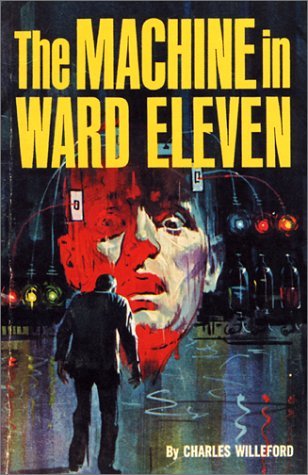
The Machine in Ward Eleven
This reissue of Willeford's 1963 pulp classic is a timely reminder that madness is truly the dark heart of politics. Written at a time when people still had faith in their elected leaders, Willeford's book laid bare the American dream. There is an almost Chekhovian wistfulness in the treatment of his stories, which belies their considerable impact. "The most eloquently brainy and exacting pulp fiction ever fabricated!" -- Village Voice
Contains the stories:
1. The Machine in Ward Eleven
2. Selected Incidents
3. A Letter to A.A. (Almost Anybody)
4. Jake's Journal
5. "Just Like on Television--"
6. The Alectrymancer
Contains the stories:
1. The Machine in Ward Eleven
2. Selected Incidents
3. A Letter to A.A. (Almost Anybody)
4. Jake's Journal
5. "Just Like on Television--"
6. The Alectrymancer
160 pages, Paperback
First published January 1, 1963
About the author
Charles Willeford
80 books437 followersCharles Willeford was a remarkably fine, talented and prolific writer who wrote everything from poetry to crime fiction to literary criticism throughout the course of his impressively long and diverse career. His crime novels are distinguished by a mean'n'lean sense of narrative economy and an admirable dearth of sentimentality. He was born as Charles Ray Willeford III on January 2, 1919 in Little Rock, Arkansas. Willeford's parents both died of tuberculosis when he was a little boy and he subsequently lived either with his grandmother or at boarding schools. Charles became a hobo in his early teens. He enlisted in the Army Air Corps at age sixteen and was stationed in the Philippines. Willeford served as a tank commander with the 10th Armored Division in Europe during World War II. He won several medals for his military service: the Silver Star, the Bronze Star, two Purple Hearts, and the Luxembourg Croix de Guerre. Charles retired from the army as a Master Sergeant. Willeford's first novel "High Priest of California" was published in 1953. This solid debut was followed by such equally excellent novels as "Pick-Up" (this book won a Beacon Fiction Award), "Wild Wives," "The Woman Chaser," "Cockfighter" (this particular book won the Mark Twain Award), and "The Burnt Orange Heresy." Charles achieved his greatest commercial and critical success with four outstanding novels about hapless Florida homicide detective Hoke Moseley: "Miami Blues," "New Hope for the Dead," "Sideswipe," and "The Way We Die Now." Outside of his novels, he also wrote the short story anthology "The Machine in Ward Eleven," the poetry collections "The Outcast Poets" and "Proletarian Laughter," and the nonfiction book "Something About A Soldier." Willeford attended both Palm Beach Junior College and the University of Miami. He taught a course in humanities at the University of Miami and was an associate professor who taught classes in both philosophy and English at Miami Dade Junior College. Charles was married three times and was an associate editor for "Alfred Hitchcock Mystery Magazine." Three of Willeford's novels have been adapted into movies: Monte Hellman delivered a bleakly fascinating character study with "Cockfighter" (Charles wrote the script and has a sizable supporting role as the referee of a cockfighting tournament which climaxes the picture), George Armitage hit one out of the ballpark with the wonderfully quirky "Miami Blues," and Robinson Devor scored a bull's eye with the offbeat "The Woman Chaser." Charles popped up in a small part as a bartender in the fun redneck car chase romp "Thunder and Lightning." Charles Willeford died of a heart attack at age 69 on March 27, 1988.
Ratings & Reviews
Friends & Following
Create a free account to discover what your friends think of this book!
Community Reviews
Displaying 1 - 30 of 30 reviews

May 9, 2020
IL CORRIDOIO DELLA PAURA

Il titolo italiano gioca con i termini macchina e corsia, e io, prima di aprire il libro, ci sono cascato, ho pensato a qualcosa che avesse a che fare con le corse automobilistiche.
In realtà, la macchina è quella per l’elettroshock.
E la corsia, o reparto (in originale ward), è quella di un ospedale psichiatrico.

Di conseguenza anche il mio titolo gioca un pochino, citando un magnifico film del 1963, stesso anno di pubblicazione di questo racconto (racconto lungo o novella breve? – che in verità fu pubblicato sulla rivista Playboy due anni prima) scritto e diretto dal grande Sam Fuller: Shock Corridor. Film terrorizzante per quanto inquietante (un giornalista sotto mentite spoglie entra in manicomio per studiarlo da vicino e finisce col restarci rinchiuso per sempre!).

Come ispira profonda inquietudine, che si trasforma in paura, questa storia allucinata e paranoica di Willeford, man mano che l’ospedale psichiatrico diventa sempre più manicomio, diventa sempre più reclusione forzata, con la terrorizzante presenza della macchina per l’elettroshock che giace in attesa d’essere impiegata accanto al gruppo che svolge terapia di gruppo.
Giustamente viene paragonata alla sedia elettrica: uniche differenze sono la temperatura, e il tempo di esposizione alla scarica elettrica.

Il protagonista è un figlio di Hollywood: regista di poco più di trent’anni non ha ancora imparato a piegare la testa ai capricci della star, o presunta tale, di turno. Finisce ricoverato. Ha paura di perdere la memoria. Rifiuta qualsiasi terapia. Poco prima di finire steso sul lettino dell’elettroshock…
Willeford costruisce la sua storia come un flusso di pensiero, un lungo monologo che contempla bei dialoghi, facendo ampio uso del flashback e con un finale a sorpresa. Che non smorza l’inquietudine.

Nel breve saggio introduttivo il traduttore Matteo Codignola scrive:
Sotto queste frasi ossessionanti, è infatti difficile sentire altro che il riff più persecutorio di tutta la musica recente, fra parentesi scritto solo due anni dopo: se non vi fidate mettete sul piatto il primo movimento di “A Love Supreme” e cominciate a leggere.
A prescindere se sia l’accompagnamento musicale giusto (personalmente dissento da abbinare musica alla lettura, una delle due finisce sprecata), il sax e la musica di Trane sono sempre grandiosi.

Il titolo italiano gioca con i termini macchina e corsia, e io, prima di aprire il libro, ci sono cascato, ho pensato a qualcosa che avesse a che fare con le corse automobilistiche.
In realtà, la macchina è quella per l’elettroshock.
E la corsia, o reparto (in originale ward), è quella di un ospedale psichiatrico.
Di conseguenza anche il mio titolo gioca un pochino, citando un magnifico film del 1963, stesso anno di pubblicazione di questo racconto (racconto lungo o novella breve? – che in verità fu pubblicato sulla rivista Playboy due anni prima) scritto e diretto dal grande Sam Fuller: Shock Corridor. Film terrorizzante per quanto inquietante (un giornalista sotto mentite spoglie entra in manicomio per studiarlo da vicino e finisce col restarci rinchiuso per sempre!).
Come ispira profonda inquietudine, che si trasforma in paura, questa storia allucinata e paranoica di Willeford, man mano che l’ospedale psichiatrico diventa sempre più manicomio, diventa sempre più reclusione forzata, con la terrorizzante presenza della macchina per l’elettroshock che giace in attesa d’essere impiegata accanto al gruppo che svolge terapia di gruppo.
Giustamente viene paragonata alla sedia elettrica: uniche differenze sono la temperatura, e il tempo di esposizione alla scarica elettrica.
Il protagonista è un figlio di Hollywood: regista di poco più di trent’anni non ha ancora imparato a piegare la testa ai capricci della star, o presunta tale, di turno. Finisce ricoverato. Ha paura di perdere la memoria. Rifiuta qualsiasi terapia. Poco prima di finire steso sul lettino dell’elettroshock…
Willeford costruisce la sua storia come un flusso di pensiero, un lungo monologo che contempla bei dialoghi, facendo ampio uso del flashback e con un finale a sorpresa. Che non smorza l’inquietudine.
Nel breve saggio introduttivo il traduttore Matteo Codignola scrive:
Sotto queste frasi ossessionanti, è infatti difficile sentire altro che il riff più persecutorio di tutta la musica recente, fra parentesi scritto solo due anni dopo: se non vi fidate mettete sul piatto il primo movimento di “A Love Supreme” e cominciate a leggere.
A prescindere se sia l’accompagnamento musicale giusto (personalmente dissento da abbinare musica alla lettura, una delle due finisce sprecata), il sax e la musica di Trane sono sempre grandiosi.

May 3, 2024
An odd collection, employing some interesting narrative styles, that is on the whole a dark descent into madness, with endings that generally shock and appall. Not exactly Willeford's sweet spot, but compelling nonetheless.

February 8, 2013
POTENTIAL SPOILER ALERTS!
My 17th Willeford book. There aren't too many left to read now. The remaining ones are rare and very very expensive.
I adored The Machine in Ward Eleven. It consists of six short stories. They may best be described as strange. Willeford experiments with different formats - one sided conversation, a letter, a police interview and entries from a journal. The central themes are intervention in an individual’s life by the man and madness.
The first story is The Machine in Ward Eleven - it is about a famous film director J.C.Blake (I've read that you're supposed to watch out for the initials J.C. in a name) who has retreated into a mental asylum. He is sort of hiding out at the asylum after he breaks down on a movie set and becomes disillusioned with the American dream. But the doctors at the mental asylum decide that they are going to give him electric shocks and send him home. But he does not want to. Willeford once said that madness was a predominant theme and a normal condition for Americans living in the second half of the 20th century. So this film director guy hides out in a mental asylum to escape the mad outside world but the powers that be (the doctors) try to smoke him out of there. I like the way Willeford gets to the central theme in this story. Written in first person, we are treated to the director's daily life in the asylum which involves smoking lots of cigarettes, reminiscing about his days as a director and barely interacting with fellow inmates.
The second story is a long one sided conversation where a producer talks about the mad director Blake. It is a long and candid meditation on the nature of cinema from a producer’s point of view.
The third story is a letter written by an alcoholic about how the system tries to prevent him from joining alcoholics anonymous. I thought it was quite funny.
The fourth story contains entries from the journal of a solitary soldier who is posted at a remote airfield in Tibet (possibly for deliberately murdering his superior's dog). One of the entries had bits from Willeford’s autobiography Something about a Soldier. I liked the setting of the remote airfield and the lonely life of the soldier eating beans and corned beef every day of his life.
The fifth story is about this loser who is inspired by television to become a barroom habitué and answerman. This one was really tongue in cheek.
The final story “The Alectryomancer” was set in the West Indies. I wasn’t sure what it meant. But it was entertaining and intriguing as hell. This collection of short stories is among my favorite Willeford books now.
My 17th Willeford book. There aren't too many left to read now. The remaining ones are rare and very very expensive.
I adored The Machine in Ward Eleven. It consists of six short stories. They may best be described as strange. Willeford experiments with different formats - one sided conversation, a letter, a police interview and entries from a journal. The central themes are intervention in an individual’s life by the man and madness.
The first story is The Machine in Ward Eleven - it is about a famous film director J.C.Blake (I've read that you're supposed to watch out for the initials J.C. in a name) who has retreated into a mental asylum. He is sort of hiding out at the asylum after he breaks down on a movie set and becomes disillusioned with the American dream. But the doctors at the mental asylum decide that they are going to give him electric shocks and send him home. But he does not want to. Willeford once said that madness was a predominant theme and a normal condition for Americans living in the second half of the 20th century. So this film director guy hides out in a mental asylum to escape the mad outside world but the powers that be (the doctors) try to smoke him out of there. I like the way Willeford gets to the central theme in this story. Written in first person, we are treated to the director's daily life in the asylum which involves smoking lots of cigarettes, reminiscing about his days as a director and barely interacting with fellow inmates.
The second story is a long one sided conversation where a producer talks about the mad director Blake. It is a long and candid meditation on the nature of cinema from a producer’s point of view.
The third story is a letter written by an alcoholic about how the system tries to prevent him from joining alcoholics anonymous. I thought it was quite funny.
The fourth story contains entries from the journal of a solitary soldier who is posted at a remote airfield in Tibet (possibly for deliberately murdering his superior's dog). One of the entries had bits from Willeford’s autobiography Something about a Soldier. I liked the setting of the remote airfield and the lonely life of the soldier eating beans and corned beef every day of his life.
The fifth story is about this loser who is inspired by television to become a barroom habitué and answerman. This one was really tongue in cheek.
The final story “The Alectryomancer” was set in the West Indies. I wasn’t sure what it meant. But it was entertaining and intriguing as hell. This collection of short stories is among my favorite Willeford books now.

March 14, 2013
I've been a Willeford fan for years.
I believe it was a review by Alberto (or perhaps Col) that brought this collection of short stories to my attention.
Three of the stories in this collection feature variations on the same character. The others are the kind of "twist ending" stories popularized by The Twilight Zone and Alfred Hitchcock Presents tv series and anthologies of the early 1960's.
The 1st story, "The Machine In Ward Eleven" originally appeared in Playboy Magazine in 1961.
"Selected Incidents" appeared in the 1960's in Gent Magazine. Gent -if memory serves- was a cheesecake magazine with a literary bent.
No sources are cited for any previous publication of my personal favorite story in this collection "Jake's Journal"; the same for "Just Like On Television--!".
The final story in this collection "The Alectryomancer" originally appeared in Alfred Hitchcock's Mystery Magazine in 1959.
To my knowledge this collection (originally published in 1963 in paperback by Belmont Productions) is out of print but copies abound from Amazon to eBay to your local used paperback shack. Prices vary but you can score a copy for under $6 the last I checked.
If you're a Willeford completist, this is a must have.
I believe it was a review by Alberto (or perhaps Col) that brought this collection of short stories to my attention.
Three of the stories in this collection feature variations on the same character. The others are the kind of "twist ending" stories popularized by The Twilight Zone and Alfred Hitchcock Presents tv series and anthologies of the early 1960's.
The 1st story, "The Machine In Ward Eleven" originally appeared in Playboy Magazine in 1961.
"Selected Incidents" appeared in the 1960's in Gent Magazine. Gent -if memory serves- was a cheesecake magazine with a literary bent.
No sources are cited for any previous publication of my personal favorite story in this collection "Jake's Journal"; the same for "Just Like On Television--!".
The final story in this collection "The Alectryomancer" originally appeared in Alfred Hitchcock's Mystery Magazine in 1959.
To my knowledge this collection (originally published in 1963 in paperback by Belmont Productions) is out of print but copies abound from Amazon to eBay to your local used paperback shack. Prices vary but you can score a copy for under $6 the last I checked.
If you're a Willeford completist, this is a must have.

April 13, 2023
I've wanted to read this collection of novellas/short stories for some time. Thanks to Centipede Press for getting the book back in print. Charles Willeford takes the reader on a descent into madness.
This book contains the following:
The Machine in Ward Eleven, Selected Incidents, A Letter to A. A. (Almost Anybody), Jake's Journal, Just Like on Television, and The Alectryomancer.
This book contains the following:
The Machine in Ward Eleven, Selected Incidents, A Letter to A. A. (Almost Anybody), Jake's Journal, Just Like on Television, and The Alectryomancer.

March 18, 2025
Five short stories, three of which were previously published. Three seem to revolve around the same person. Studies in madness. Two could be a Twilight Zone script, and in fact, the last one was published in Alfred Hitchcock's Mystery Magazine.

March 18, 2011
I liked this book of Willeford short stories. I liked it. I didn't love it as much as did some of his novels. It's a must if you consider yourself a Willeford fan. That is if you've seen the movie, The Woman Chaser, read all the Hoke Mosleys, including the manuscript of Grimhaven, and have scoured used book stories for impossible-to-find paperbacks of his then you have to read this. But, if all that is true, then you've already have read this. Sorry. Never mind.

December 16, 2021
Willeford's early writings always remind me of how wryly funny he could be and how ludicrous the directions he was willing to take his stories before he started delivering more polished thoroughly plotted works in his later career. But it's always important to look at the roots.

May 17, 2008
Short story collection from one of my favorite noir authors. Willeford is all over the map here, trying his hand at psychological horror, absurdist fable, and the occasional Twilight Zone piece.
In Willeford's own words: "I had a hunch that madness was a predominant theme and normal condition for Americans living in the second half of this century."
In Willeford's own words: "I had a hunch that madness was a predominant theme and normal condition for Americans living in the second half of this century."

February 2, 2009
psycho/sci fi? Creepy, crazy Kosinsky meets, well, Willeford.

February 22, 2019
La macchina in Corsia Undici di Charles Willeford (Adelphi) è un breve racconto che lascia addosso una sensazione di inquietudine difficile da scacciare. Comprato alla Fiera del libro di Genova, mi ha convito la quarta di copertina: “Il terrore attraverso l’elettroshock, come nessuno ha mai osato raccontarlo.
Un classico dimenticato della narrativa nera. Anche questa volta non mi sono trovata davanti quello che mi aspettavo. Blake è ricoverato in quello che sembra un manicomio, le sue conversazioni con l’infermiere Ruben sembrano surreali e subito ho provato uno slancio di affetto per quest’uomo che vive come un prigioniero.
Ruben mi piace. È un bravo Cristo. Di notte lascia la porta aperta. Insomma, diciamo che non la chiudo a chiave, la costa (è una porta accostata mi dà sempre un lieve, e inebriante senso di precarietà), così durante il giro d’ispezione medici e infermieri non si accorgono di nulla. Sono gesti che impari ad apprezzare, in un posto come questo.
L’indomani arriverà la moglie, peccato che lui non si ricordi nemmeno il nome di quella bella donna che per vivere fa l’attrice. Chissà se sta gli raccontando verità o bugie, chissà… chissà se in questo lungo monologo con se stesso Blake troverà una delle risposte alle decine di domande che si pone.
RECENSIONE COMPLETA SU: www.lalettricecontrocorrente.it
Un classico dimenticato della narrativa nera. Anche questa volta non mi sono trovata davanti quello che mi aspettavo. Blake è ricoverato in quello che sembra un manicomio, le sue conversazioni con l’infermiere Ruben sembrano surreali e subito ho provato uno slancio di affetto per quest’uomo che vive come un prigioniero.
Ruben mi piace. È un bravo Cristo. Di notte lascia la porta aperta. Insomma, diciamo che non la chiudo a chiave, la costa (è una porta accostata mi dà sempre un lieve, e inebriante senso di precarietà), così durante il giro d’ispezione medici e infermieri non si accorgono di nulla. Sono gesti che impari ad apprezzare, in un posto come questo.
L’indomani arriverà la moglie, peccato che lui non si ricordi nemmeno il nome di quella bella donna che per vivere fa l’attrice. Chissà se sta gli raccontando verità o bugie, chissà… chissà se in questo lungo monologo con se stesso Blake troverà una delle risposte alle decine di domande che si pone.
RECENSIONE COMPLETA SU: www.lalettricecontrocorrente.it

February 14, 2024
The title story, and arguably the most famous story in the collection, I found to be just mediocre. The story that followed was even worse, but then the next few offerings were very good. Revolving around unreliable and very strange narrators. I like it a good bit.
September 14, 2025
2.5 stars. 5 short stories, all readable but nothing really stood out.

August 2, 2013
That was a fun read. Willeford was a favorite and inspiration of my father's (Blaster Al Ackerman) and I can totally see the affinity after reading these. The uneasy sense that the stories all wound in on themselves and the dark humor throughout reminded me of Borges. The completely untrustworthy narrators and subtle brutality reminded me of Will Self.

August 13, 2013
#17 from willeford for me.
the machine in ward eleven, charles willeford, paperback, isbn 1568582102...copyright 1961 charles willeford...141 printed pages...and 13 glorious blank pages before the back cover. verily. insert your index here. something to do w/the way they bind books as the scuttlebutt has it.
contents
i the machine in ward eleven 7
ii selected incidents 36
iii a letter to a.a. (almost anybody) 55
iv jake's journal 67
v "just like on television--" 110
vi the alectryomancer 122 to 141
heh! and 6-blank pages...binding? something...comes in handy, insert your own index there
back cover: the re-issue of willeford's 1963 pulp classic features six incisive tales as fresh as the day they were first published. these stories are a timely reminder that madness is truly at the heart of 21st century politics.
that or demon-possession...aliens...crazy works.
four walls eight windows no exit press
there is an "acknowledgments" page:
"chapter i, the machine in ward eleven was published in playboy (1961) in slightly different form; chapter ii, selected incidents, appeared in gent as the sin of integrity; chapter iv, the alectryomancer, appeared in alfred hitchcock's mystery magazine
the machine in ward eleven begins:
i like ruben. he is a nice guy. he doesn't lock my door at night. he closes it, naturally, so that none of the doctors nor any of the other nurses will notice that it isn't locked when they're just walking past, but he doesn't lock it. (an unlocked door gives me a delicately delightful sense of insecurity.) and this is the kind of thing a man appreciates in a place like this.
okee dokee then, as the good doctor said, (bullwinkle moose hockey team, 1968)...onward & upward.
time place scene settings
*a hospital
*the various wards of the hospital...#4...ward ten, a locked ward
*the little kitchen in ward ten
*patients' lounge
*ward fourteen's group therapy session meets in ward eleven, 4 patients, 2 docs
*ward eleven is also where they keep the electro-shock devices, etc
*state hospital...place for the criminally insane
*pasadena playhouse
*ward eleven was an unused ward
characters
*eye-narrator, j.c. blake...jake blake... and jake blake is also a character in Wild Wives from Charles Willeford...but in that one, he is a detective...i think. he is married to maria chavez, the movie star, he is a director, he lost it when he lost the director job on the film the pack rats when red faris, the star, made it so. he is a 32-yr-old. he wants to attain "the bottom of the pile" now. he is an "expert in the field of falsely induced emotions." he drives a porsche...has a redwood retreat in the verdugo woodlands. he is encouraged to solve chess problems to recover his memory, that he may or may not have lost...or regained it though he hides it. he reads The Silent Life by Thomas Merton. he fought in korea, the last three months of that war.
*ruben, a nurse, 25 or 6, good-looking young guy, has been working there at the hospital for two years
*doctors/ nurses
*fred, the day nurse
*privileged patients
*loose patients
*old man reddington in #4
*the gray lady, comes around w/the cigarettes
*the doctor making his rounds
*dr adams
*maria chavez, the eye-narrator's wife, under 30, a beauty
*red faris, star of the movies, the series, 3rd year
*danny olmstead, unit's chief film editor
*jake's agent, weldon "willy" murray
*dick tucker, an actor/patient...dies
*dr. fellerman...and dr. kevin mullinare
*w/narrator, 4 met in ward fourteen's group therapy group w/the above 2 doctors:
*tommy amato, 17-yr-old son of a movie star
*randolph hicks, ex-hotel manager
*marvin morris, pop song writer
*the male nurse, luchessi
*nathan wanless...who tells the eye-narrator about electro-shock treatments...and it it not so much the telling, what is said, as it is what is left unsaid that frightens our hero, jake blake.
*four male nurses who hold down the patient
a word, or two
meridional
camino real...the road to recovery
reminded of
http://www.goodreads.com/book/show/33... by Ken Kesey. what's interesting about this one is that the hero, the eye-narrator wants to attain the bottom of the pile. too, jake blake figures in the next chapter/story of this...collection...as background, as history.
ii selected incidents
there is a quote from anatole france before this chapter/story begins: the only art and the only creation possible to humanity is that of giving new form to an old idea.
well--you're right on time, charlie. come in, come in! sit down. drink?
i'll pour one for you, anyway, whether you drink it or not. it's a sort of stupid rule i have, at least here in the office. i happen to want a drink, and i don't feel right when i drink alone. one won't hurt you; one drink never did anything to anybody.
this one starts out a bit hokey-pinokey...we have that eye-narrator speaking to someone who does not answer...or, charlie does answer, but the reader is not privileged to those answers. or something.
time place scene setting
*eye-narrator's office, elgee productions, hollywood i believe...he is a producer, seems like, confirmation later if it comes...he knows jake blake from the previous chapter. charlie is a ghost-writer, writing the eye's autobiography.
*filling station...abandoned trapper's cabin where jake blake worked on his script
characters
*eye-narrator, as yet unnamed, hollywood producer, elgee productions
*charlie, chazz, carlos...does not speak...or, if he does, it is not included here, but the eye acts like charlie answers him, speaks, etc...the eye-narrator tells "charles" may it do ya fine (willeford?) about jake blake...hiring him as director...firing him as one...hiring him back
*jake blake
*chinese painters...work on scroll...images, images retained on the retina...etc.
*blake's movie, 16 mm, selected incidents
*f. scott fitzgerald...stories...about pat hobby, screenwriter
*ben hecht & selznick wrote the 1st 1/2 of gone w/the wind in a single weekend
*3 hypothetical writers
*john hansen...hypo hero
*tab hunter type (as definition/script...all one needs)
*jake blake was the night man for a filling station on the ridge route between here and bakersfield up in the mountains
*college professor critics...for 'everyman'...play by jake blake who'd gone east after firing
*new york audiences
*mammoth bought script...scenes on wagons..going by. see for instance the chinese scrolls mentioned earlier. too. see. John Barth's, The Floating Opera...appealed to latin americans...spanish...in middle english. heh!
the rise and fall and rise again of jake blake, director...
iii a letter to a.a. (almost anybody)
story begins:
dear sir, or maybe you're a lady, or a disparate group--i don't know. i am an alcoholic, or should that be capitalized? all right. i make you a gift of the capital. i am an alcoholic, and i need your help. at least i think i do; i'm not sure. i'm not sure of anything anymore except that i am an alcoholic, and a sober one at that...
no jake blake in this one...alas.
time place scene setting
*another hospital story...
*a.a. meeetings...rented hall
*brand new supermarket
*herb and the eye-narrator were public accountants, taxes and such
*eye's home, porch, where varous good, god-fearing people dropped off things
*white springs hotel
*mary ellen whiteside's baby blue buick
characters
*eye-narrator, george
*his wife, louise
*herb, w/whom the eye was in bizzness
*doctor
*all the ministers
*social worker...miss whiteside, mary ellen whiteside
*the churches...ladies clubs & auxiliaries
*good, god-fearing people
*fred...who got the eye into a.a.
*those people
*manager of the supermarket
*only 32 cases left in the county relief rolls
*mrs. whiteside's mother
*a twist...fox news has been featuring the drive to sign people up on "food stamps" that are no longer stamps so as to avoid the stigma...yada yada...trying to overcome "mountain pride"...this that the other. this story is interesting for how it portrays a community that brought food, supplies, christmas gifts/trees, etc to this guy's house...and yes, county relief...$55/month? or was it week? week i think. but then, by story end...give me that new-time religion, give me that new-time religion! straight from the all-illinois church of the modern jesus.
iv jake's journal
*this one...is...3rd one now, to-do w/jake...jake blake...eye-narrator.
story begins:
first entry (undated)
this ledger and more than two dozen ballpoint pens have all been here in the tower for a long time. i do not know why i did not start a journal, or diary, long before now. if i had started in the beginning i might have been able to at least put down the date...
time place scene setting
*time involves the immediate past and in brief the distant past of the eye-narrator, jacob c. blake, although the "now" is his journal, an undated time when he writes while alone tending to an airfield:
*the tower...associated w/the air force, w/an airfield of crushed black rock that melts the snow that falls on it...an airfield in tibet...an "evil atmosphere"
*the phillipine islands...where the eye had been prior to being dropped off here, at this place, an auxiliary landing field
*pampanga
*sunday school (the more distant past)
*two miles away from base in the p.i...the barrio of sapang bato...sloppy bottom...an air force settlement
*the hindu's gift shop, where one can purchase "honeymoon lotion"
*the well at the baluga village
*a dead-end street to the house at the end of it
*basic training at lackland air force base
*iron star in angeles, philippines islands
*mount pinatuba
*golf course, air base, tended by a baluga
*church
*orderly room
*major's office
*post #2...other night time places/guard duty
*squadron jeep
*a plane, an 0-19 all fabric prop job
*a small grassy field...an island field...a small diamond-shaped field
*stone shed
*a plane, two-engine job
characters
*eye-narrator, jake blake, jacob c. blake, he is a truck driver in the air forse, reassigned, his job, to change the bulbs in the various lights of the airfield, tower. he is there alone, w/fifty years of argentine corned beef to eat, that and white beans. repeated journal entries, no dates as yet...he is a basic airman/air force
*elena espeneida, a blind filipino girl he knew, the p.i.
*red galvin, bunkmate at pampanga
*our teacher (sunday school)
*sergeants & enlisted crew members
*filipino women
*the hindu
*a slender girl...turns out to be elena...
*an old man...her father
*three men jump the eye:
*1. ducky halpert
*2. airman first class vernon wilson
*3. melvin powell
*the man in the black robe...characterized as he, capital h, eee
*sinkiewicz, the pollack...suicide? or the man in the black robe?
*the charge-of-quarters, c.q....staff sergeant harby
*the mess sergeant, the first sergeant (top), 2 filipino kp-s
*a few other men
*"my house" poem...page 83 may it do ya & do ya well
*several whores from the bull-pen, the moro, two elenas, the igorote and blondie
*the chinaman's...in the p.i.
*a filipino and his girlfriend
*sergeant ratilinsky...pansit...a food i think
*a filipino army recruit
*the old mamasan
*abe harris
*the air police
*jake...w/o a beard...and mr. jake blake...w/a beard
*a baluga...the balugas of pinatuba in the p.i. are a negrito race
*20 families in all
*one of the balugas
*guard duty, 2 nco-s and 4 airmen
*leech hudson...from time to time a prisoner in the guardhouse
*sergeant irby...in the guardhouse...on duty, guard duty
*prince, a dog, boxer, of the squadron commander
*the major, squadron commander
*entire squadron lined up in a hand salute
*a filipino boy
*squadron jeep driver
*the pilot
*the man...a hundu
*an ancient chinaman...who provides jake blake w/the first meal of corned beef the last one he enjoyed
this story is my favorite out of the collection...notice it has more scenes/settings than the others...as it has more characters, this though jacob c blake is stationed in tibet tending a field that sees no action.
v "just like on television--"
begins:
arresting off.:
det. sgt. g.e. rouse, lapd
interviewing off.:
det. lt. e.m. harbold, lapd
statement
i.o.: state your name and address
suspect: billy t. berkowitz, 3428 1/2 south normandy. the half's because i live around to the back. it's a garage apartment, but i don't have a car or anything--
okee dokee then, as the good doctor said...
time place scene setting
*october 23rd give or take a few...the interrogation room apparently, at l.a.p.d. okay then and yeah, billy sign's...october 25, 1962.
characters
*det. sgt. g.e. rouse arresting officer
*det. lt. e.m. harbold, interviewing officer
*steno
*billy t. (for terence) berkowitz, suspect, from 3428 1/2 normandy, makes 45/week at the supermarket...so he wants to be a professional habitue, little accent mark over the "e"...so it sounds like habit-tooey? nessay pass? ummm. he watches television, private eye shows, to study up
*eddie mcswain, figueroa hotel, room 419, bartender, at the dew drop inn, 1425 vermont avenue...(remember the twilight zone/outer limits show..."charles vermont! charles vermont!" no? good show. black & white, the old philco, had to move you self bodily from the floor/couch to tv to change the channel? sounded like a shotgun cocking? nevermind.
*mr bert plouden lives w/mother at 2715 41st place
*man enters w/photo (arresting officer)
*woman: gloria latham, the drexel arms, 2746 santa barbara avenue, apt 307
vi the alectryomancer
*****there's a note prior to story start: originally appeared in alfred hitchcock's mystery magazine as "a genuine alectryomancer," ["c" in a circle] 1959 by h.s.d. publications, inc."
story begins:
where did the old alectryomancer come from in the first place? i didn't see or hear him approach on the soft sand. i looked up from the sea and there he was, waiting patiently for me to recognize him. the blue denim rags covering his shanks were clean, and so was his faded blue work shirt...
time place scene setting
*eye narrator has spent more than three months on the island
*tiny island of bequia, an island in the grenadines
*the seer's shack on mt pleasant
*from the top you can see nine miles distant st vincent
*princess margaret beach
*eye-narrator came here after departing from trinidad
*seer went to baliol college, 1.5 years only
*serviced london's west end
*eye's past...worked two years at the desk of a los angeles hotel
*freddy ming's cafe
*port-of-spain, trinidad
characters
*the eye-narrator, mr waxman, author of cockfighting in the zone of the interior which is really nothing more than a pamphlet. he is a writer, although he has not written anything while on the island. alas.
*two well-heeled cockfighters
*bequian native
*the seer...two moons wainscoting...who went to oxford...etc.
*the alectryomancer...a whitehackle cross...rooster...tied to a stake, a circle described around, corn placed there/letters at the corn, rooster picks a corn, write letter down...m-o-r-t
*bob corbett...
*eye-narrator's maid...who also tastes his food for him.
*m.v. madinina...when she steams into harbor, narrator meets her to get his provisions.
*nattering...a game of trading insults...first to react loses.
*barmaid
*administrator on st. vincent island.
a quote...from red galvin
a man should always observe fanaticism when he gets the chance.
update finished 15 aug 13 thursday evening 6:47 p.m. e.s.t.
good read...quite a variety here...some w/that twilight zone/alfred-hitchcock-presents mode going for them...these are stories that have a beginning, a middle, and an end, some more so than the others.
the machine in ward eleven, charles willeford, paperback, isbn 1568582102...copyright 1961 charles willeford...141 printed pages...and 13 glorious blank pages before the back cover. verily. insert your index here. something to do w/the way they bind books as the scuttlebutt has it.
contents
i the machine in ward eleven 7
ii selected incidents 36
iii a letter to a.a. (almost anybody) 55
iv jake's journal 67
v "just like on television--" 110
vi the alectryomancer 122 to 141
heh! and 6-blank pages...binding? something...comes in handy, insert your own index there
back cover: the re-issue of willeford's 1963 pulp classic features six incisive tales as fresh as the day they were first published. these stories are a timely reminder that madness is truly at the heart of 21st century politics.
that or demon-possession...aliens...crazy works.
four walls eight windows no exit press
there is an "acknowledgments" page:
"chapter i, the machine in ward eleven was published in playboy (1961) in slightly different form; chapter ii, selected incidents, appeared in gent as the sin of integrity; chapter iv, the alectryomancer, appeared in alfred hitchcock's mystery magazine
the machine in ward eleven begins:
i like ruben. he is a nice guy. he doesn't lock my door at night. he closes it, naturally, so that none of the doctors nor any of the other nurses will notice that it isn't locked when they're just walking past, but he doesn't lock it. (an unlocked door gives me a delicately delightful sense of insecurity.) and this is the kind of thing a man appreciates in a place like this.
okee dokee then, as the good doctor said, (bullwinkle moose hockey team, 1968)...onward & upward.
time place scene settings
*a hospital
*the various wards of the hospital...#4...ward ten, a locked ward
*the little kitchen in ward ten
*patients' lounge
*ward fourteen's group therapy session meets in ward eleven, 4 patients, 2 docs
*ward eleven is also where they keep the electro-shock devices, etc
*state hospital...place for the criminally insane
*pasadena playhouse
*ward eleven was an unused ward
characters
*eye-narrator, j.c. blake...jake blake... and jake blake is also a character in Wild Wives from Charles Willeford...but in that one, he is a detective...i think. he is married to maria chavez, the movie star, he is a director, he lost it when he lost the director job on the film the pack rats when red faris, the star, made it so. he is a 32-yr-old. he wants to attain "the bottom of the pile" now. he is an "expert in the field of falsely induced emotions." he drives a porsche...has a redwood retreat in the verdugo woodlands. he is encouraged to solve chess problems to recover his memory, that he may or may not have lost...or regained it though he hides it. he reads The Silent Life by Thomas Merton. he fought in korea, the last three months of that war.
*ruben, a nurse, 25 or 6, good-looking young guy, has been working there at the hospital for two years
*doctors/ nurses
*fred, the day nurse
*privileged patients
*loose patients
*old man reddington in #4
*the gray lady, comes around w/the cigarettes
*the doctor making his rounds
*dr adams
*maria chavez, the eye-narrator's wife, under 30, a beauty
*red faris, star of the movies, the series, 3rd year
*danny olmstead, unit's chief film editor
*jake's agent, weldon "willy" murray
*dick tucker, an actor/patient...dies
*dr. fellerman...and dr. kevin mullinare
*w/narrator, 4 met in ward fourteen's group therapy group w/the above 2 doctors:
*tommy amato, 17-yr-old son of a movie star
*randolph hicks, ex-hotel manager
*marvin morris, pop song writer
*the male nurse, luchessi
*nathan wanless...who tells the eye-narrator about electro-shock treatments...and it it not so much the telling, what is said, as it is what is left unsaid that frightens our hero, jake blake.
*four male nurses who hold down the patient
a word, or two
meridional
camino real...the road to recovery
reminded of
http://www.goodreads.com/book/show/33... by Ken Kesey. what's interesting about this one is that the hero, the eye-narrator wants to attain the bottom of the pile. too, jake blake figures in the next chapter/story of this...collection...as background, as history.
ii selected incidents
there is a quote from anatole france before this chapter/story begins: the only art and the only creation possible to humanity is that of giving new form to an old idea.
well--you're right on time, charlie. come in, come in! sit down. drink?
i'll pour one for you, anyway, whether you drink it or not. it's a sort of stupid rule i have, at least here in the office. i happen to want a drink, and i don't feel right when i drink alone. one won't hurt you; one drink never did anything to anybody.
this one starts out a bit hokey-pinokey...we have that eye-narrator speaking to someone who does not answer...or, charlie does answer, but the reader is not privileged to those answers. or something.
time place scene setting
*eye-narrator's office, elgee productions, hollywood i believe...he is a producer, seems like, confirmation later if it comes...he knows jake blake from the previous chapter. charlie is a ghost-writer, writing the eye's autobiography.
*filling station...abandoned trapper's cabin where jake blake worked on his script
characters
*eye-narrator, as yet unnamed, hollywood producer, elgee productions
*charlie, chazz, carlos...does not speak...or, if he does, it is not included here, but the eye acts like charlie answers him, speaks, etc...the eye-narrator tells "charles" may it do ya fine (willeford?) about jake blake...hiring him as director...firing him as one...hiring him back
*jake blake
*chinese painters...work on scroll...images, images retained on the retina...etc.
*blake's movie, 16 mm, selected incidents
*f. scott fitzgerald...stories...about pat hobby, screenwriter
*ben hecht & selznick wrote the 1st 1/2 of gone w/the wind in a single weekend
*3 hypothetical writers
*john hansen...hypo hero
*tab hunter type (as definition/script...all one needs)
*jake blake was the night man for a filling station on the ridge route between here and bakersfield up in the mountains
*college professor critics...for 'everyman'...play by jake blake who'd gone east after firing
*new york audiences
*mammoth bought script...scenes on wagons..going by. see for instance the chinese scrolls mentioned earlier. too. see. John Barth's, The Floating Opera...appealed to latin americans...spanish...in middle english. heh!
the rise and fall and rise again of jake blake, director...
iii a letter to a.a. (almost anybody)
story begins:
dear sir, or maybe you're a lady, or a disparate group--i don't know. i am an alcoholic, or should that be capitalized? all right. i make you a gift of the capital. i am an alcoholic, and i need your help. at least i think i do; i'm not sure. i'm not sure of anything anymore except that i am an alcoholic, and a sober one at that...
no jake blake in this one...alas.
time place scene setting
*another hospital story...
*a.a. meeetings...rented hall
*brand new supermarket
*herb and the eye-narrator were public accountants, taxes and such
*eye's home, porch, where varous good, god-fearing people dropped off things
*white springs hotel
*mary ellen whiteside's baby blue buick
characters
*eye-narrator, george
*his wife, louise
*herb, w/whom the eye was in bizzness
*doctor
*all the ministers
*social worker...miss whiteside, mary ellen whiteside
*the churches...ladies clubs & auxiliaries
*good, god-fearing people
*fred...who got the eye into a.a.
*those people
*manager of the supermarket
*only 32 cases left in the county relief rolls
*mrs. whiteside's mother
*a twist...fox news has been featuring the drive to sign people up on "food stamps" that are no longer stamps so as to avoid the stigma...yada yada...trying to overcome "mountain pride"...this that the other. this story is interesting for how it portrays a community that brought food, supplies, christmas gifts/trees, etc to this guy's house...and yes, county relief...$55/month? or was it week? week i think. but then, by story end...give me that new-time religion, give me that new-time religion! straight from the all-illinois church of the modern jesus.
iv jake's journal
*this one...is...3rd one now, to-do w/jake...jake blake...eye-narrator.
story begins:
first entry (undated)
this ledger and more than two dozen ballpoint pens have all been here in the tower for a long time. i do not know why i did not start a journal, or diary, long before now. if i had started in the beginning i might have been able to at least put down the date...
time place scene setting
*time involves the immediate past and in brief the distant past of the eye-narrator, jacob c. blake, although the "now" is his journal, an undated time when he writes while alone tending to an airfield:
*the tower...associated w/the air force, w/an airfield of crushed black rock that melts the snow that falls on it...an airfield in tibet...an "evil atmosphere"
*the phillipine islands...where the eye had been prior to being dropped off here, at this place, an auxiliary landing field
*pampanga
*sunday school (the more distant past)
*two miles away from base in the p.i...the barrio of sapang bato...sloppy bottom...an air force settlement
*the hindu's gift shop, where one can purchase "honeymoon lotion"
*the well at the baluga village
*a dead-end street to the house at the end of it
*basic training at lackland air force base
*iron star in angeles, philippines islands
*mount pinatuba
*golf course, air base, tended by a baluga
*church
*orderly room
*major's office
*post #2...other night time places/guard duty
*squadron jeep
*a plane, an 0-19 all fabric prop job
*a small grassy field...an island field...a small diamond-shaped field
*stone shed
*a plane, two-engine job
characters
*eye-narrator, jake blake, jacob c. blake, he is a truck driver in the air forse, reassigned, his job, to change the bulbs in the various lights of the airfield, tower. he is there alone, w/fifty years of argentine corned beef to eat, that and white beans. repeated journal entries, no dates as yet...he is a basic airman/air force
*elena espeneida, a blind filipino girl he knew, the p.i.
*red galvin, bunkmate at pampanga
*our teacher (sunday school)
*sergeants & enlisted crew members
*filipino women
*the hindu
*a slender girl...turns out to be elena...
*an old man...her father
*three men jump the eye:
*1. ducky halpert
*2. airman first class vernon wilson
*3. melvin powell
*the man in the black robe...characterized as he, capital h, eee
*sinkiewicz, the pollack...suicide? or the man in the black robe?
*the charge-of-quarters, c.q....staff sergeant harby
*the mess sergeant, the first sergeant (top), 2 filipino kp-s
*a few other men
*"my house" poem...page 83 may it do ya & do ya well
*several whores from the bull-pen, the moro, two elenas, the igorote and blondie
*the chinaman's...in the p.i.
*a filipino and his girlfriend
*sergeant ratilinsky...pansit...a food i think
*a filipino army recruit
*the old mamasan
*abe harris
*the air police
*jake...w/o a beard...and mr. jake blake...w/a beard
*a baluga...the balugas of pinatuba in the p.i. are a negrito race
*20 families in all
*one of the balugas
*guard duty, 2 nco-s and 4 airmen
*leech hudson...from time to time a prisoner in the guardhouse
*sergeant irby...in the guardhouse...on duty, guard duty
*prince, a dog, boxer, of the squadron commander
*the major, squadron commander
*entire squadron lined up in a hand salute
*a filipino boy
*squadron jeep driver
*the pilot
*the man...a hundu
*an ancient chinaman...who provides jake blake w/the first meal of corned beef the last one he enjoyed
this story is my favorite out of the collection...notice it has more scenes/settings than the others...as it has more characters, this though jacob c blake is stationed in tibet tending a field that sees no action.
v "just like on television--"
begins:
arresting off.:
det. sgt. g.e. rouse, lapd
interviewing off.:
det. lt. e.m. harbold, lapd
statement
i.o.: state your name and address
suspect: billy t. berkowitz, 3428 1/2 south normandy. the half's because i live around to the back. it's a garage apartment, but i don't have a car or anything--
okee dokee then, as the good doctor said...
time place scene setting
*october 23rd give or take a few...the interrogation room apparently, at l.a.p.d. okay then and yeah, billy sign's...october 25, 1962.
characters
*det. sgt. g.e. rouse arresting officer
*det. lt. e.m. harbold, interviewing officer
*steno
*billy t. (for terence) berkowitz, suspect, from 3428 1/2 normandy, makes 45/week at the supermarket...so he wants to be a professional habitue, little accent mark over the "e"...so it sounds like habit-tooey? nessay pass? ummm. he watches television, private eye shows, to study up
*eddie mcswain, figueroa hotel, room 419, bartender, at the dew drop inn, 1425 vermont avenue...(remember the twilight zone/outer limits show..."charles vermont! charles vermont!" no? good show. black & white, the old philco, had to move you self bodily from the floor/couch to tv to change the channel? sounded like a shotgun cocking? nevermind.
*mr bert plouden lives w/mother at 2715 41st place
*man enters w/photo (arresting officer)
*woman: gloria latham, the drexel arms, 2746 santa barbara avenue, apt 307
vi the alectryomancer
*****there's a note prior to story start: originally appeared in alfred hitchcock's mystery magazine as "a genuine alectryomancer," ["c" in a circle] 1959 by h.s.d. publications, inc."
story begins:
where did the old alectryomancer come from in the first place? i didn't see or hear him approach on the soft sand. i looked up from the sea and there he was, waiting patiently for me to recognize him. the blue denim rags covering his shanks were clean, and so was his faded blue work shirt...
time place scene setting
*eye narrator has spent more than three months on the island
*tiny island of bequia, an island in the grenadines
*the seer's shack on mt pleasant
*from the top you can see nine miles distant st vincent
*princess margaret beach
*eye-narrator came here after departing from trinidad
*seer went to baliol college, 1.5 years only
*serviced london's west end
*eye's past...worked two years at the desk of a los angeles hotel
*freddy ming's cafe
*port-of-spain, trinidad
characters
*the eye-narrator, mr waxman, author of cockfighting in the zone of the interior which is really nothing more than a pamphlet. he is a writer, although he has not written anything while on the island. alas.
*two well-heeled cockfighters
*bequian native
*the seer...two moons wainscoting...who went to oxford...etc.
*the alectryomancer...a whitehackle cross...rooster...tied to a stake, a circle described around, corn placed there/letters at the corn, rooster picks a corn, write letter down...m-o-r-t
*bob corbett...
*eye-narrator's maid...who also tastes his food for him.
*m.v. madinina...when she steams into harbor, narrator meets her to get his provisions.
*nattering...a game of trading insults...first to react loses.
*barmaid
*administrator on st. vincent island.
a quote...from red galvin
a man should always observe fanaticism when he gets the chance.
update finished 15 aug 13 thursday evening 6:47 p.m. e.s.t.
good read...quite a variety here...some w/that twilight zone/alfred-hitchcock-presents mode going for them...these are stories that have a beginning, a middle, and an end, some more so than the others.

September 1, 2022
This 1963 book is the first of three published short story collections by Charles Willeford. These stories all deal with some aspect of isolation and madness in modern life. It showcases the author's quirky, penetrating humor and his general disaffection with authority. It is now available again for the first time in over twenty years as an audiobook.
Johnny Heller's superb narration adds unspoken layers of nuance to these tales. I give 4.5 stars for the stories themselves and 5 stars for his rendering of the work.
Here are my individual story reviews:
"The Machine in Ward Eleven" -- A suicidal film director faces the horrors of electroshock treatments administered by uncaring institutional doctors. This is pure pulp peppered with existential observations such as “A noncommittal response is the only kind a headshrinker understands” and "Hollywood films create falsely induced emotions”.
"Selected incidents" -- A television producer relates his experiences with the brilliant director who was the protagonist of the preceding story. There is not much going on in this story except for some light satire of Hollywood and bloviating on what makes a fictional character resonate. Still, I got caught up in the monologue due to its offbeat point of view. I wonder if Willeford was at one point expressing his own personal desire to write a comedy "so finely wrought the audience would not know whether to laugh or cry." This statement pretty much sums up The Burnt Orange Heresy for me.
"A Letter to A. A. (Almost Anybody)" -- George's life has been on a downward spiral ever since he wrecked his car while driving drunk, causing his wife's arm to be sheared off at the shoulder. He lost his job, his money, and is now on county relief. His attempts to go straight are thwarted by a social worker who needs the job delivering weekly checks to his house. "Martyrdom is the way to recognition for people who have no talent or ability." A dark comedy.
"Jake's Journal" -- An Air Force grunt stationed on an abandoned emergency airfield in the mountains of Tibet ruminates on his past. This story is told through his journal entries. His memories become increasingly bizarre and violent as his isolation progresses. The last diary entry is open for interpretation, but there are several clues that point to why he may have been abandoned by his superiors in the first place and to what destination the rescue plane is headed. An excellent tale with numerous surprises.
"Just Like on Television--" -- A man who seems to get most of his ideas from television goes to desperate lengths to be involved in the private eye business. This is the only story in this collection I did not like; it lacks any sort of ending.
"The Alectryomancer" -- A writer on sabbatical in the West Indies has his fortune told by an island mystic. When the voodoo man's rooster spells out the French word for death, the writer becomes paranoid and desperate. No man should know the time of his own demise. But is the danger real--or just part of an elaborate sham?
Johnny Heller's superb narration adds unspoken layers of nuance to these tales. I give 4.5 stars for the stories themselves and 5 stars for his rendering of the work.
Here are my individual story reviews:
"The Machine in Ward Eleven" -- A suicidal film director faces the horrors of electroshock treatments administered by uncaring institutional doctors. This is pure pulp peppered with existential observations such as “A noncommittal response is the only kind a headshrinker understands” and "Hollywood films create falsely induced emotions”.
"Selected incidents" -- A television producer relates his experiences with the brilliant director who was the protagonist of the preceding story. There is not much going on in this story except for some light satire of Hollywood and bloviating on what makes a fictional character resonate. Still, I got caught up in the monologue due to its offbeat point of view. I wonder if Willeford was at one point expressing his own personal desire to write a comedy "so finely wrought the audience would not know whether to laugh or cry." This statement pretty much sums up The Burnt Orange Heresy for me.
"A Letter to A. A. (Almost Anybody)" -- George's life has been on a downward spiral ever since he wrecked his car while driving drunk, causing his wife's arm to be sheared off at the shoulder. He lost his job, his money, and is now on county relief. His attempts to go straight are thwarted by a social worker who needs the job delivering weekly checks to his house. "Martyrdom is the way to recognition for people who have no talent or ability." A dark comedy.
"Jake's Journal" -- An Air Force grunt stationed on an abandoned emergency airfield in the mountains of Tibet ruminates on his past. This story is told through his journal entries. His memories become increasingly bizarre and violent as his isolation progresses. The last diary entry is open for interpretation, but there are several clues that point to why he may have been abandoned by his superiors in the first place and to what destination the rescue plane is headed. An excellent tale with numerous surprises.
"Just Like on Television--" -- A man who seems to get most of his ideas from television goes to desperate lengths to be involved in the private eye business. This is the only story in this collection I did not like; it lacks any sort of ending.
"The Alectryomancer" -- A writer on sabbatical in the West Indies has his fortune told by an island mystic. When the voodoo man's rooster spells out the French word for death, the writer becomes paranoid and desperate. No man should know the time of his own demise. But is the danger real--or just part of an elaborate sham?

August 29, 2023
J.C. Blake is an inmate in a mental hospital who relishes each occasional memory the way other people probe an infected tooth or scratch at a scab. Prior to being sanctioned Blake was a movie director who had higher ideals and expectations than any of his producers, and consequently his career plummeted. In despair he attempted suicide and was institutionalised.
He finds life much easier in the sanatorium, making comparisons to his mother’s womb and a monk’s cell, and finds solace smoking and drinking coffee with the night nurse. But he doesn’t cooperate with his treatment plan and is told he will receive electric shock therapy.
He will stop at nothing to evade the dreaded machine which is ironic, as the struggle changes him into someone willing to accept compromise, a docile mental patient willing to trade his freedom in order to keep his memories.
Though just a short story, it’s a great example of the scope of Willeford’s writing. It has touches of his bleak humour, and almost a noir, though not quite.
He finds life much easier in the sanatorium, making comparisons to his mother’s womb and a monk’s cell, and finds solace smoking and drinking coffee with the night nurse. But he doesn’t cooperate with his treatment plan and is told he will receive electric shock therapy.
He will stop at nothing to evade the dreaded machine which is ironic, as the struggle changes him into someone willing to accept compromise, a docile mental patient willing to trade his freedom in order to keep his memories.
Though just a short story, it’s a great example of the scope of Willeford’s writing. It has touches of his bleak humour, and almost a noir, though not quite.
His memories, his ability to laugh at his follies and stupidities—when the chips were finally down, these were the only things a man had left to him. Otherwise, a man is a pine tree, a turnip, a daisy, a weed, existing through the grace of the sun and photosynthesis during the day, and ridding himself of excess carbon dioxide during the long night.
September 9, 2024
An odd collection of stories, most of which do not fall neatly into any genre. The title story and "Just Like on Televisions" are nice crime stories and Jake's Journal and The Alectryomancer have some supernatural elements, while the remaining two stories are just dramas. None of the stories are bad but I wouldn't say any of them are particularly impressive. The book is just a nice quick read that doesn't tax the brain too much.

September 10, 2018
This wasn't the Willeford style that I had enjoyed in books like "Honey Gal" and "Whip Hand". My favorite stories were "The Alectrymancer' and "A Letter to A.A." and would have given 3 stars. So 2 with 3 stars and 4 with 2 stars average out to 2.33 stars !!

December 29, 2025
Centipede Press edition; published March 2023.
With new Introduction by Jack Seabrook.
With new Introduction by Jack Seabrook.
March 28, 2020
Love that Willeford bite outside of the crime genre.

November 22, 2024
Another worthwhile reissue from Centipede Press. Recommended.

June 2, 2026
Breve ma intenso. Finale inaspettato.

July 27, 2026
uno sguardo su quello che sarà il mio futuro: il manicomio

March 22, 2012
At first I thought maybe all the stories were going to tie back to JC Blake, because both of the first stories are both about him, and I know that Willeford played around with POV shifts in other stories, but it's just the first two that connect, and the others are stand alones. As a whole, this collection is a lot tighter than The Second Half of the Double Feature. I've been reading his earlier stuff lately (Pick Up, Burnt Orange Heresy, Cockfighter, etc.), and this is definitely more of the ilk of his earlier novels: more noir and characters who you aren't quite sure are totally there, less gritty Miami cocaine crime fiction. I dunno, I still like Hoke Moseley the bestest best, but I like these little short stories that are a little off the rocker. Any of these characters might be mentally deranged or not. It was fun to read.

January 28, 2014
I am a big fan of Willeford. I hunted this title down, found it on Ebay, and tore into it. The book, which is very slim, coming in at just over 140 pages, is comprised of six related stories. The titular story is the best in the bunch. While they are all related, some more so than others, they are not all as strong as the first one, and I do not believe they can stand on their own, except for the first story, and the last one in the book. The book was written well over fifty years ago, and I feel that some of the writing is dated. The third piece, is well written and interesting, and fits in with the theme and flow, but I think needs to be tied in better. All in all I was disappointed with the book as a whole.

November 28, 2016
Pulp madness
I hesitate to call this a "redux" of another Pulp category, but it does continue Willeford's excellent work in "Pick Up."
I say this in the sense that in that earlier novel, the hero is also (self)committed to a (nearly)psycho ward. The difference here is a stylistic (and internal logical) consistency where the patient isn't entirely aware of all the details. He says as much, and yet as the teller of the tale, where does that put us to judge the facts on the face of the telling?
Droll.
I hesitate to call this a "redux" of another Pulp category, but it does continue Willeford's excellent work in "Pick Up."
I say this in the sense that in that earlier novel, the hero is also (self)committed to a (nearly)psycho ward. The difference here is a stylistic (and internal logical) consistency where the patient isn't entirely aware of all the details. He says as much, and yet as the teller of the tale, where does that put us to judge the facts on the face of the telling?
Droll.

February 24, 2013
Read the first story. It was okay. Not sure that I feel inspired to continue. It was about a man in a psychiatric ward. It's unclear who he is, but he has memories of being a television director. A woman who says she's his wife comes to visit him every 30 days.
Slowly, one gets the impression that he's in the ward by choice. Then, he's threatened with electroshock therapy, and the story briefly gains some momentum.
Slowly, one gets the impression that he's in the ward by choice. Then, he's threatened with electroshock therapy, and the story briefly gains some momentum.

January 12, 2008
Short stories, observances, add up to an unusual insight into Willeford, the young soldier of fortune.

January 7, 2010
Simply not a good book. I have loved every other Willeford book I have read. There is just nothing in this one. Avoid it.
Displaying 1 - 30 of 30 reviews